Heather Rose in conversation with Sally Pryor

As I’ve written before, Muse Canberra, a restaurant-cum-bookshop or vice versa, offers a wonderful program of book events, year after year. I don’t get to many, but today I attended a conversation featuring Tasmanian author Heather Rose with local journalist Sally Pryor.

The participants

Heather Rose has written three children’s books and five novels, of which I’ve reviewed two, The Museum of Modern Love (my review) and Bruny (my review). Her latest book, the subject of this event, is different, a memoir, Nothing bad ever happens here: A memoir of loss and recovery.

Sally Pryor is the Features Editor of our newspaper, The Canberra Times, which is now part of Australian Community Media. Since that company changed hands in 2019, it is now publishing local reviews once again, after some years in the dark when most of the arts reviewing we got was syndicated from the big city newspapers.

The conversation

After Dan did the usual intros, Sally spoke a little more about Heather and her book, explaining that while Heather had always planned to write a memoir, she hadn’t planned to publish one, for several reasons, one of which was that she was wary of outing herself as a spiritual person and of putting her views onto others. Sally described the memoir – which Heather has indeed published – as the “least predictable and most enticing memoir” she’d read. Heather then read the book’s first chapter, “Sky”. It places herself as a 6-year-old at school, and then concludes with

I could write a memoir about travelling, the writing life, or my love of making cakes. But I’m still that girl under the tree who wants to get to the big conversations, to the heart of things. So here are some stories about life and death. About experiences that have no easy explanation, but which happened, nevertheless. The unknown, that 95% – maybe it’s an invitation for compassion. Life is a process of forgiveness for the choices we make in order to be ourselves.

On what started it all 

Sally suggested they start with the tragedy that, says the back cover blurb, set her on “a course to explore life and all its mysteries”. Heather commenced by describing her idyllic childhood in Tasmania. It was beaches, paddocks and orchards; days spent outside; a “glorious, wild childhood”. There was the family home on the edge of Hobart and a shack on the Tasman Peninsula, built by her maternal grandfather built the shack. He also taught Heather to appreciate nature, telling her, “Look Heather, that’s what beauty is”. But, just after she turned 12, her grandfather and older brother died in a boating accident. It destroyed the family, and by the time she finished year 12, she found herself alone in the family home. She decided to go overseas, to live her life “very fully” because her brother hadn’t.

On life being “a process of forgiveness for the choices we make”

Sally shared a little of that overseas trip, that “thrilling life”, which had it all, from meeting celebrities, including the Queen, to staying in a Buddhist monastery, not to mention romance, drugs and alcohol. But, asked Sally, what did she mean by life being “a process of forgiveness”?

One of the things I enjoyed about this conversation was Rose’s comments on writing memoir, and one of the places she discussed it was here. One of the most challenging things about writing a memoir, she said, is revisiting who you were in the past. Memories are tough to go back to. She was reckless, but didn’t realise then what dangers she’d put herself in. She made many mistakes, and revisiting all those things is “a hollowing out experience”. She wrote a lot, and then had to decide what to leave out to hone it to the things that shaped her. She needed to confront what she’d inflicted on herself, and to not blame others. It was her life she said, and she was going to own it, hence life being a process of forgiveness for all we’ve done. I found this moving – and something worth thinking about a bit more for myself!

On the book’s spiritual journey

Sally then turned to the spiritual journey aspect of the book, calling it a “very religious book”. She asked, in particular, about Heather’s taking part in a Native American ceremony that lasted several years. I won’t detail it here as it’s all in the book, but it was the Sun Dance. The point is that it changed her world-view entirely because after this she did not see herself as separate. She felt connected to everything (animate and inanimate), and “did not see world as a fixed reality”. She writes in the book, “everything was permeable, malleable, responsive” (p. 132).

Sally, continuing this theme, mentioned that she understands Heather always asks people if they’ve experienced anything they can’t explain, and everyone has! Most are post-death experiences – messages from the recently dead that all is ok – but others include warnings (like “don’t go that way”) that people feel have served them, sometimes to the point of saving their lives. For Heather this is reassuring, the idea that we have other senses, while Sally said she finds it frightening, which resulted in Heather teasing her ideas out a bit more.

Heather’s point is that the hardest thing is to think our lives are meaningless. She goes back to Descartes, but instead of “I think therefore I am” she sees it as “I am, therefore I feel”, “therefore I think”, etc. Life is a finite thing, she continued, and our fear is that maybe it’s all for nothing. Perhaps, she said, but we could also think that maybe it’s all for everything. Don’t we all love people, she said, who are vibrant, alive, who give of themselves?

On the book’s title

Sally suggested that the book’s title was “a way of reframing the narrative”. Heather said that in her 50s she visited the place, Lime Bay, where the tragedy had occurred and “felt nothing”, which brought her to think that “if everything just is, maybe nothing bad ever happens”. (Me: Not sure about this.) She then threw out that she “likes being un-evolved”. In my experience, the idea of being “un-evolved” is usually seen as a bad thing, but I like her understanding of the idea, her sense of never being finished, of always being curious and open.

Q & A

There was a brief Q&A, which I’ll summarise:

  • On what she wanted her children to take away from the memoir: Heather shared that her 22-year-old daughter had said that most of her readers were older, but she thought it was a good book for people HER age 22 because it will make them braver. Heather added that it’s not bad for kids to see their parents 360°.
  • On her family’s response to the book given they were not allowed to talk about the tragedy at the time: This was hard, particularly how her parents would feel about it, but she also felt that it was her story, not theirs. Her sister read various drafts, and said she felt it completed her life. Heather was most concerned about her father, who has been a great supporter of hers but whose grief had been “enormous but unvoiced”. His reaction was “I think we all needed you to write about it”. Heather also commented that writing memoir is hard, because you can’t avoid writing about people who are alive, and then quoted Hemingway’s, “writing is easy, you just sit down and bleed”! Sally commented here that most people can’t get their feelings onto a page, so she can see what it meant for Heather’s dad, at which point, Heather observed that she was relieved to be returning to the novel!
  • On whether characters get away from her: Yes, for example her The butterfly man character “didn’t tell her the truth for two and a half years”! She kept stitching up the end to give him redemption, but had to let that go because it wasn’t him, it was her, the writer. That’s what makes good writing, she said, when the writer stops trying to intervene. She also gave a Bruny example.
  • On her reluctance to wear a “spiritual tag”: This was partly because things go very badly when women put themselves out in the world. It can be a “very vicious world” if you stand up and align with a specific perspective. But, she also wants people to take on their own perspective, rather than imposing her own point-of-view. The questioner appreciated that Heather is still exploring, which she saw as the “heart of spirituality”.
  • On the process of writing, particularly re fiction vs nonfiction: With fiction there are rules, responsibilities, and voice. We know, for example, that with Murakami we will get a “distant, hapless” voice, and with Kingsolver, “heart”. There is so much you can build on in fiction. With the memoir, she had to start with nothingness to find who she was, and she found she is still that 6 year old girl looking for the big conversations. Writing the memoir was “harrowing, and hallowing” but she feels braver, and now owns all she is.
  • On returning to the novel: Heather loves writing fiction because she loves her characters, and she also enjoys the research.

Closing the session, Dan commented on the level of attention he’d observed in all our faces! I’m not surprised. It was such an engaging, different and, at times, surprising discussion – and that always gets my vote.

Brona has reviewed this book.

Heather Rose: Nothing ever happens here (with Sally Pryor)
Muse (Food Wine Books)
Saturday, 26 November 2022, 4-5pm
Heather Rose, Bruny (#BookReview)

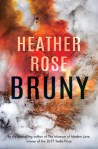
Book coverIf The yield (my review) was Tara June Winch’s passion project, I’d say Bruny is Heather Rose’s. It’s a very different book to her previous novel The museum of modern love (my review). Not only is it a strongly plot-driven novel, but it’s about something that is clearly dear to her heart, the future of Tasmania and, perhaps more generally, of liberal democracy.

Bruny could be described as a genre-bender. Part political thriller, part romance, verging even towards dystopian fiction, the novel tracks the fate of a bridge being built to join the main island of Tasmania with Bruny Island. In it, New York-based UN conflict resolution specialist, and twin sister of Tasmania’s premier, Astrid Coleman returns home at the behest of her twin brother to ensure that the bridge is completed on time after a bomb had nearly destroyed it. It’s not long, however, before she smells a rat. Just what that rat is, who’s behind it and why, is what keeps us turning the pages.

Now, as this is a plot-driven book – and one underpinned by political intrigue – I am fearful of giving too much away. However, fortunately, it’s not all plot, because the plot serves a purpose. The book reminds me in a way – though I’m not sure Rose will appreciate this – of Richard Flanagan’s The unknown terrorist (which I read long before blogging.) It too is a strongly plot-driven novel from a literary fiction author, and it too was inspired by a clearly passionate political concern. In Flanagan’s case it was how government and the media were handling the terrorism threat, engendering fear and consequently facilitating the scapegoating of people with little or no evidence.

Anyhow, back to Bruny. In the Bruny teaser on her website, Rose describes her book as a “political thriller”, “satire”, “love story”, and “family saga”, which, fundamentally, is questioning the “new world order”. Now, Rose has done something clever, I think, in setting her book just into the future. The American president isn’t named in the novel, but the description Rose provides leaves us in no doubt as to the timing of her novel, which would be around 2022. Astrid says:

‘Right now, America has an isolationist, neo-conservative president who doesn’t believe in American strength being used to stabilise the world. Quite the opposite. He considers it the chief weapon to exert dominance. And he’s in his second term. He’s turned his back on American’s allies because he doesn’t believe in that framework. Now we’re seeing the fallout of that approach and it’s crippling international relations, the global economy, the American economy.’

I say the dating is clever because, being just into the future, we can’t say “that didn’t happen”, but Rose can say “this is what might happen”. Readers, of course, have to decide for themselves whether they agree that what Rose proposes could happen, but I must say she was uncomfortably prescient about cruise ships!

It made the whole front page of the newspaper. BIO-SCANDAL! The whole fiasco of cruise ships and no policing, no ability to quarantine sick passengers and get medical help to them on board. The risk of an epidemic, if they were allowed into our hospitals.

So, what are Rose’s concerns? She is concerned that, with America withdrawing from the field, another power – in this case, China – can step in. She sets up a Macchiavellian plot based on this supposition, but this is as far as I’ll go about that. She is concerned more broadly about the increasing conservatism of governments, on their focus on money (“jobs and growth”) over people (“health and education”). She is worried that unimpeded progress – which is already a concern in Tasmania – will be detrimental to community, to society. She sees the destruction of the arts as weakening our culture and laying us open to outside influence. Government official Edward tells Astrid:

‘ … This government, at a state and a federal level, they’ve hammered the arts for years. They’ve eviscerated it … Every theatre company or film production company in this country – unless it’s making a Marvel movie – has been defunded. That’s our cultural expression, and if we don’t have that, it weakens everything. It’s a bit like leaching. We’re wilting with cultural anaemia…’

Ok, so now you might be thinking this is a preachy novel – as political novels can be – and it is to a degree. There are times when the explanations threaten to take over, but Rose manages not to bog it down too much. The story gradually builds up pace, with most of the messages carried through dialogue. Being told first person helps, too, because we don’t have an omniscient third person telling us like it is, but Astrid sharing her thoughts, concerns, and ponderings with us. Is there something, though, that she’s not telling us? How reliable is she? That little niggle also keeps us reading.

And then there are the characters. Astrid’s family is not exactly your typical one. Her endearing but stroke-affected father says little except to – rather perspicaciously – quote Shakespeare at his family; her prickly mother has terminal cancer; and her half-sister, Max, is the Labor leader of the opposition. Her brother, as I’ve already said, is the state premier, while his wife Stephanie has a warmth and intelligence that belies her supportive political wife demeanour. There is also a love interest for 54-year-old divorced Astrid down there on Bruny! The relationships between all these characters not only move the story and ideas on, but they also provide a little human respite from the machinations. Respite also comes from little touches of humour, much of it drawing from Rose’s deep understanding of Tasmania and Tasmanians. You have to laugh, for example, at the plethora of activist groups, like the Pythonesque Bruny Friends Group, Bruny in Action, and the Bruny Progress Society!

Concluding the above-mentioned Bruny teaser, Rose says “I hope you are entertained by this novel; I hope that you are intrigued by it; and I hope that it also makes you think?” She achieves all of this. The plot and the strongly delineated characters, as befits her satire, make it both intriguing and entertaining to read, while the politics certainly make you think. The Chinese government – together with neo-conservative governments – are the villains of the piece. This makes for uncomfortable reading, and not just because of the truth of the issue but because naming villains this way, as we know, can lead to wrong and dangerous assumptions. The Chinese government is not all Chinese people, just like a certain American president does not stand for all Americans. It behoves thinking readers to make that distinction.

And finally, there’s the ending. Without giving it away, I will say that there’s a certain question of the ends justifying the means, of those believing they are right taking matters into their own hands. It makes you think! Bruny, then, is more than an engaging political thriller. It is a book intended to challenge us to think about the world we are making for ourselves, and to consider what we can do about it.

Lisa (ANZLitLovers) enjoyed the novel; Bill (The Australian Legend) also enjoyed it, with some reservations.

Challenge logoHeather Rose
Bruny
Crows Nest: Allen & Unwin, 2019
ISBN: 9781760875169
408pp.

Heather Rose, The museum of modern love (#BookReview)

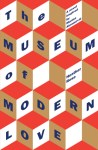
Heather Rose, The museum of modern loveAs I neared the end of Heather Rose’s Stella Prize-winning novel The museum of modern love, I slowed down. I wanted, of course, to know how it was going to resolve, but I wanted to savour it too. It doesn’t seem right to rush the end of thoughtful books like this.

But, I have to admit that I was initially hesitant about reading the book, as I am about any book inspired by a person or work I don’t know. I fear missing something important. However, I did want to read it and my reading group scheduled it. The die was cast. Then, as I was about to start reading, Brother Gums sent me a link to the documentary Marina Abramović: The artist is present about her and the performance piece which inspired this novel. I was set! As it turned out, I think Rose’s writing is evocative enough that it wasn’t necessary to have seen the film, but it did add a layer to the experience.

So, what is The museum of modern love about – besides love, that is? Its centre is performance artist Marina Abramović’s 75-day piece, The Artist is Present, which she performed at MoMA in the spring of 2010, to accompany a large retrospective exhibition of her work. The piece involved her sitting, still, quiet, at a table all day, 6 days a week (MoMA is closed Tuesdays), with gallery attendees invited to take turns to sit opposite her and share a gaze. It was an astonishing success, with, by the end, people camping out overnight to get the chance to sit. Many attended for days just to watch, creating, as Rose describes it, quite a community of spectators. In the end, over 850,000 people attended, with 1,545 people sitting (including Rose). (All are recorded at flickr.)

Anyhow, from this premise, Rose weaves an engaging, thoughtful story about art and love. It has two main narrative strands, telling the real Marina Abramović’s story and that of an attendee, the fictional musician Arky Levin, whose life is stalling, partly due to a restraining order made by his now-unresponsive terminally-ill wife that he not visit her. Interspersed with these, enriching the exploration of the themes, are smaller stories of other attendees, and family and/or friends of the protagonists. It’s narrated by a mysterious third person voice, who starts the novel with

He was not my first musician, Arky Levin. Nor my least successful. Mostly by his age potential is squandered or realised. But this is not a story of potential. It is a story of convergence.

This is a very particular omniscient narrator, some sort of artist’s muse who self-describes late in the novel as a “good spirit, whim … House elf to the artists of paint, music, body, voice, form, word”, one whose job is sometimes just “to wake things up”. This could be cutesy or forced, but it isn’t because Rose doesn’t overdo it. Mostly the story progresses without the intrusion of this narrator, so that when s/he appears we pay attention.

The moral conundrum at the novel’s heart is – is art enough or is love more important? It’s explored primarily through Levin, whose friends suggest he should appeal Lydia’s court order.

I know you’re going to say that she wanted you to do this; she wanted you to make music. But is that enough?

Music, it sounded feeble suddenly in the face of the yawning gap between life before Christmas and life these past four months. (p. 158)

So what does Levin do? Continue to live his increasingly lonely life making music, or follow his heart?

Levin’s story is off-set against other stories, notably that of Jane Miller, a friendly, recently widowed art teacher visiting New York from Georgia. She is lonely, like Levin, missing her husband “achingly, gapingly, excruciatingly. Her body hadn’t regulated itself to solitude.” She becomes one of the mesmerised watchers, but she also connects with others in the crowd, including Levin and Brittika, a PhD student from the Netherlands who is writing her thesis on Marina. Jane forms a natural link between the two themes of love and art.

What, then, is art?

The first time Jane attends the performance, she overhears people in the crowd questioning what the show is about, asking what is art, in fact. There are, of course, the naysayers, the ones who say that “art is irrelevant. If everything goes to crap, it won’t be art that saves us”. But Jane thinks differently, and turns to the man next to her who is, you guessed it, Levin, and says

I think art saves people all the time … I know art has saved me on several occasions.

As the novel progresses, various claims are made for art. Our muse, speaking particularly for artists, believes that “pain is the stone that art sharpens itself on time after time” and that “artists run their fingers over the fabric of eternity”. Marina’s art teacher says to her 16-year-old self that  “Art will wake you up. Art will break your heart”, which causes Marina to consider that “Art … could be something unimaginable”. At one point Marina is reported as saying “I am only interested in art that can change the ideology of society”.

Jane, the viewer, though, has her own epiphany:

And maybe this was art, she thought, having spent years trying to define it and pin it to the line like a shirt on a windy day. There you are, art! You capture moments at the heart of life.

But, I think it is art critic Healayas who makes the clearest, simplest point when she says during a discussion about Marina’s performance:

She simply invites us to participate … It may be therapeutic and spiritual, but it is also social and political. It is multi-layered. It is why we love art, why we study art, why we invest ourselves in art.

… and what has love got to do with it?

Everything, if art, as all this suggests, is about humanity.

Let’s look specifically at Levin. It would be easy to criticise him, as his friends and daughter gently do, for being passive. But, we do get the sense that Lydia encouraged his passivity in their life together, that she liked to be in control, not in a control-freak way but in that way that super-competent people can do. Moreover, Lydia made her order out of love for him, to let him continue creating his art, rather than look after her which she didn’t believe was in him. So, what’s Levin to do? How does he reconcile his love against hers?

The resolution when it comes is triggered by art, by Marina’s performance. And this, as Jane believes art can do, probably saves him. I say probably because Rose, clever writer that she is, leaves the ending uncertain. As she and Levin realise,

the best ideas come from a place with a sign on the door saying I don’t know.

This is an inspired and inspiring book that leaves you pondering. I’ve only touched the surface.

Lisa (ANZLitLovers) also liked the novel.

aww2017 badgeHeather Rose
The museum of modern love
Sydney: Allen & Unwin, 2016
284pp.
ISBN: 9781760291860