Monday musings on Australian literature: Prime Minister’s Summer Reading List, 2024

In early December last year, I started looking out for the Grattan Institute’s Prime Minister’s Summer Reading List for 2024. But somehow, although it was published on their website on 9 December, I missed it. I have no idea how, because I went to their website, but maybe I was a day or two too early, and then forgot in my Christmas-busyness-befuddlement. Anyhow, I believe it still has value, even if the PM is back at work, so here goes …

For those of you who haven’t caught up with this initiative, some background. The Grattan Institute is an Australian non-aligned, public policy think tank, which produces readable, reasoned reports on significant issues. They have also published annually, since 2009, their Prime Minister’s Summer Reading List which, as they wrote back in 2009, comprises “books and articles that the Prime Minister, or any Australian interested in public debate, will find both stimulating and cracking good reads”.

Here is the 2024 list in their order (but with the author first), accompanied by an excerpt from their reasoning, which is available in full on their site):
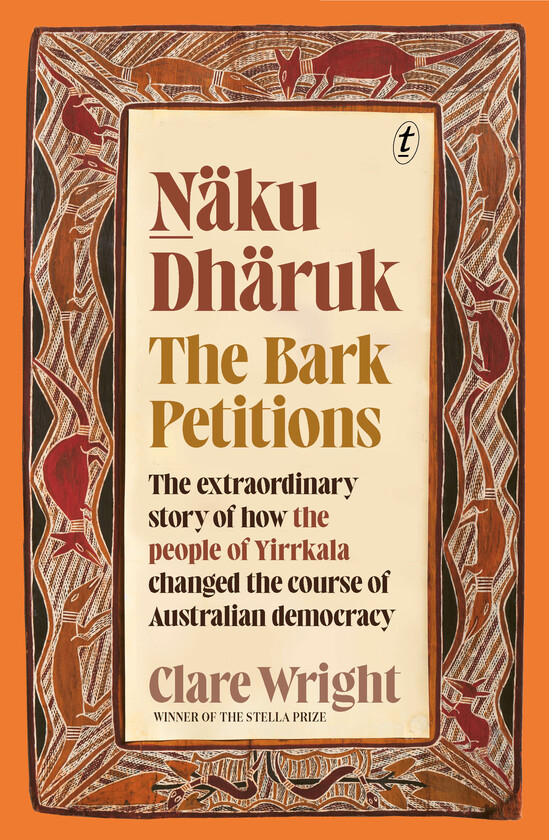
  • Clare Wright, Ṉäku Dhäruk The Bark Petitions: How the people of Yirrkala changed the course of Australian democracy (Australian): “The truths told in Wright’s Näku Dhäruk make it essential reading for the Prime Minister and the Australian people. If studying history helps us learn from our mistakes, Australia’s dismissal of the bark petitions is a chapter worth poring over.”
  • Adam Higginbotham, Challenger: A true story of heroism and disaster on the edge of space (British): “At its heart, Challenger is a human story … The frozen rubber O-rings that ultimately led to the disaster were a known problem. But a flawed decision-making process allowed it to become merely one ‘acceptable risk’ among many. As demands on governments grow even as trust in institutions declines, Higginbotham provides a timely reminder of the role of individual agency in shaping the success or failure of humanity’s greatest endeavours.” 
  • J. Doyne Farmer, Making sense of chaos: A better economics for a better world (American): “Farmer argues that traditional economics fails to grapple with the complexity and uncertainty of real-world economies. He makes the case for complexity economics, a new approach that draws insights from biology, neuroscience, and physics. This framework models the economy from the ground up, simulating the dynamic web of interactions between people, goods, and institutions … With vast data and computational power now available, complexity economics could be the next testbed for evidence-based policy.”
  • Caitlin Dickerson, Seventy miles in hell (American): “In contemporary debates, where migration policies are entwined with political positioning, easy scapegoating, and a way for politicians to signal ‘toughness’, migrants are often treated as numbers, inputs into an economy, or worse, rather than as human beings with their own hopes, strengths, and impossible choices … Dickerson’s message is clear … ‘What I saw in the jungle confirmed the pattern that has played out elsewhere: The harder migration is, the more cartels and other dangerous groups will profit, and the more migrants will die.’”
  • Madhumita Murgia, Code dependent: Living in the shadow of AI (Indian): “as AI is increasingly embedded in our systems and decisions, what does this mean for our society? … Murgia argues that our blindness to AI systems and how they work makes it harder for us to understand when they go wrong or cause harm. And there’s a risk that those harms disproportionately affect marginalised groups … The questions that policymakers must grapple with are almost as numerous as the possible uses of AI: How do we know if AI technologies are safe, or if they are being manipulated or used in discriminatory ways? Which laws need to be amended to take AI into account? More broadly, who is ultimately responsible when AI technologies cause harm?” 
  • Ceridwen Dovey, Only the astronauts (Australian): “Dovey, an Australian science writer as well as novelist, shows us humans as they might appear to the objects we create and use. Like Adam Higginbotham in Challenger, Dovey critiques the masculine bravado of the space race … This inventive collection of stories has moments of beauty, as well as laugh-out-loud fun …”

The selection process, we’re told, was rigorous. The staff book club “read, loved, loathed, and debated an extensive array of novels, non-fiction books, essays, and articles”. They believe their final six are “all cracking good reads”, and summarise their choices as follows:

Ṉäku Dhäruk and Challenger are case studies in how a handful of people can shape the course of history, for better or for worse.

Making Sense of Chaos argues that we can glean new insights into the economy by modelling individuals’ behaviour from the ground up.

Seventy Miles in Hell and Code Dependent remind us of the human consequences of our high-level policy choices on migration and AI.

Our last pick, Only the Astronauts, is a little different: it’s a series of vignettes about inanimate space objects. But it too offers a new perspective on the human experience by looking in from the outside.

It’s interesting – and, I admit, disappointing – that only two are by Australian writers. And again, only one is a work of fiction. Also, while the ongoing challenge of reconciling our colonial past is included, it’s not in a work by a First Nations writer – as excellent as Clare Wright is. However, I do like that, while it may look like some critical issues are not covered, there seems to be some big picture and lateral thinking included here, which is important.

My track record for reading Grattan’s selections is poor. To date, I have read two of 2022’s list, Debra Dank’s We come with this place (my review) and Jessica Au’s Cold enough for snow (my review), and only one of 2023’s list, Anna Funder’s Wifedom (my review), though I had hoped to also read Ellen van Neerven’s Personal score. Let’s see how I go with 2024’s list!

You can see all the lists to date at these links: 2009, 2010, 2011, 2012, 2013, 2014, 2015, 2016, 2017, 2018, 2019, 2020, 2021, 2022, 2023.

If you had the opportunity to make one book recommendation to the leader of your country, what would it be?
Monday musings on Australian literature: Prime Minister’s Summer Reading List, 2023

December is when I start my round of regular end-of-year posts, and a new one I’m adding to the fold is the The Grattan Institute’s annual Prime Minister’s Summer Reading List. The institute is an Australian non-aligned, public policy think tank, which produces readable, reasoned reports on significant issues, like, most recently, the role of hyrdrogen in Australia’s green energy goals and an analysis of the keenly awaited review of the NDIS (National Disability Insurance Scheme).

My focus here, though, is another activity of theirs, their Prime Minister’s Summer Reading List, which they have published annually since 2009. This list, as they wrote on the inaugural 2009 list, comprises “books and articles that the Prime Minister, or any Australian interested in public debate, will find both stimulating and cracking good reads”.

As I wrote in last year’s post, the Institute’s then chief executive, Danielle Wood, said they aimed

to pick books that have something interesting, original, or thought-provoking to say on issues that are relevant to the Australian policy landscape. The books don’t have to be by local writers or about Australia … but they do have to address issues that have relevance in an Australian policy context.

I managed to read, after the event, two of last year’s list, Debra Dank’s We come with this place (my review) and Jessica Au’s Cold enough for snow (my review). Dank’s is an obvious choice, but I love they they also chose something quietly, and perhaps even enigmatically, reflective about life and change in Au’s book.

Here is the 2023 list in their order, with a small excerpt from their reasoning:

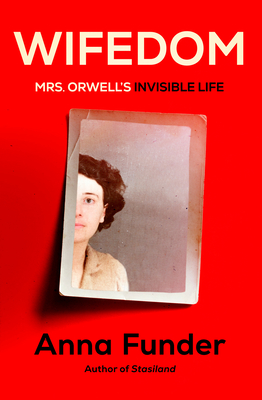
  • Anna Funder, Wifedom: Mrs Orwell’s invisible life (on my reading group’s 2024 schedule, Brona’s review): “People don’t become invisible by accident … a powerful case study of the hidden lives of wives whose contributions are downplayed or entirely disregarded”
  • Ellen van Neerven, Personal score: “highlights the disproportionate impact of a changing climate on Indigenous people, the importance to Aboriginal health of story and being heard, and the complexity of gender and belonging, on and off the field. A new and transformative piece of sports writing … an essential read for anyone wanting to better understand sport, community, and power on sovereign land”.
  • Mark Considine, The careless state: Reforming Australia’s social services: “Australia’s social services are doing a bad job of looking after people … impressively summarises the problems, explains how we got here, and shows that what may seem like separate problems have many shared roots”. 
  • Micheline Lee, Lifeboat: Disability, humanity, and the NDIS (Quarterly Essay 91, September 23): “describes how the NDIS’s disempowering, confusing, and bureaucratic processes have worn out the trust of people with disability and their families … [yet] there is a warming tone of optimism running through Lee’s analysis”.
  • Jennifer Pahlka, Recoding America: Why government is failing in the digital age and how we can do better: “Technology is the front door to many government services … But too often, the design of online services is an afterthought, and users are left to grapple with lengthy, confusing, and duplicative processes … [and] bad design can entrench inequalities … “a compelling call to arms for better design and delivery of government services”.
  • Henry Dimbleby and Jemima Lewis, Ravenous: How to get ourselves and our planet into shape: “explores the complex machinations of modern food systems … details how our food choices are influenced by the industries that make our food, and the environment that surrounds us … shows how our decisions about what foods to put in our shopping baskets are subtly but constantly influenced by a vast food system. The consequences are rarely good for us, our health, or our planet”.

So, one biography, one part memoir-history-poetry, an essay, and three specific-issue-focused non-fiction works, with four by Australians, one by an American, and one from the UK. It’s good to see a First Nations author here again, and to see important issues – like disability, the challenges of the digital age, and modern food systems – front and centre in the Institute’s thinking.

I would, of course, love to see a greater recognition of the value of fiction to addressing “issues that have relevance in the Australian policy context”. Fiction has been included in the past, but not often. I wrote a little about some of their choices last year. We don’t know whether the relevant prime minister reads the suggestions, but some thoughtful or provocative fiction might be better summer reading for our poor top politician needing some break?

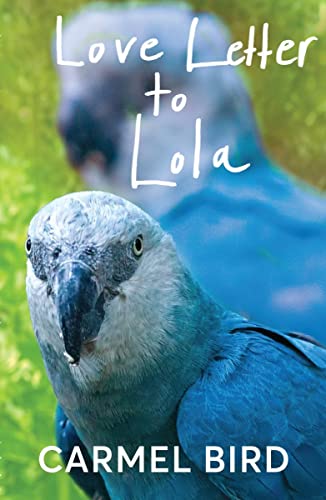
I could suggest Chris Flynn’s short story collection, Here be Leviathans (my review), and Carmel Bird’s Love letter to Lola (my review), to fill that bill. Short stories are perfect for busy people, and these two collections are entertaining but also offer some real meat in terms of thinking about various issues confronting humanity, including the environment and environmental destruction. Also Tony Burke made a good point about Paddy O’Reilly’s Other houses (Lisa’s review) which was shortlisted for this year’s Prime Minister’s literary awards and which is about a group of people we rarely read about, cleaners. Surely a book about the working life, that is, the battlers, the people whom journalists and politicians this year have constantly pointed out are “doing it tough”. Fiction about such lives would be perfect for our PM.

You can see all the lists, by year, to date at these links: 2009, 2010, 2011, 2012, 2013, 2014, 2015, 2016, 2017, 2018, 2019, 2020, 2021, 2022.

If you had the opportunity to make one book recommendation to the leader of your country, what would it be?
Monday musings on Australian literature: Prime Minister’s Summer Reading List

The Grattan Institute is an Australian non-aligned, public policy think tank that was established in 2008. Since 2009 it has published, at the end of the year, their Prime Minister’s Summer Reading List. This list, as they wrote on the inaugural 2009 list, comprises “books and articles that the Prime Minister, or any Australian interested in public debate, will find both stimulating and cracking good reads”.

The first two lists contained 8 titles, but since then it has been 6. A curious number, but then, any number would be arbitrary, so why not? Literary editor, Jason Steger, shared the 2022 list last week, and provided some interesting background. This included sharing Grattan’s chief executive Danielle Wood’s explanation that they “try to pick books that have something interesting, original, or thought-provoking to say on issues that are relevant to the Australian policy landscape. The books don’t have to be by local writers or about Australia … but they do have to address issues that have relevance in an Australian policy context.” 2022’s list, which will be formally launched on 8 December, has two books by Americans.

Steger says that no-one knows, usually, whether the Prime Minister reads any of the recommendations. Grattan rarely receives a thank-you letter from the PMs, which is poor. Don’t they have minders to do those things? Isn’t it good manners to thank people for gifts? One Prime Minister, though, has shown interest. Wood told Steger that:

We did hear from one. It was Malcolm [Turnbull]. He asked for the books to be couriered to his holiday home rather than the Lodge and I think he read at least some of them that year. He was probably the most receptive PM to the idea of the list.

Here is the 2022 list in their order, with a small excerpt from their reasoning:

  • Career & family: Women’s century-long journey toward equity, by Claudia Goldin (American researcher on gender economics; nonfiction): “essential reading for anyone wanting to understand the barriers to gender equality – and how we got here”.
  • We come with this place, by Debra Dank (First Nations Australian writer; memoir): “As Australia contemplates a Voice to Parliament, this book reminds us to listen. Listen when the land tells her story. Hear the voices of the traditional owners”.
  • My father and other animals, by Sam Vincent (Australian journalist/writer; memoir): “about regeneration, sustainability, and legacy… a story of how a son learns about his own family, just as much as how he learns to become a farmer”. 
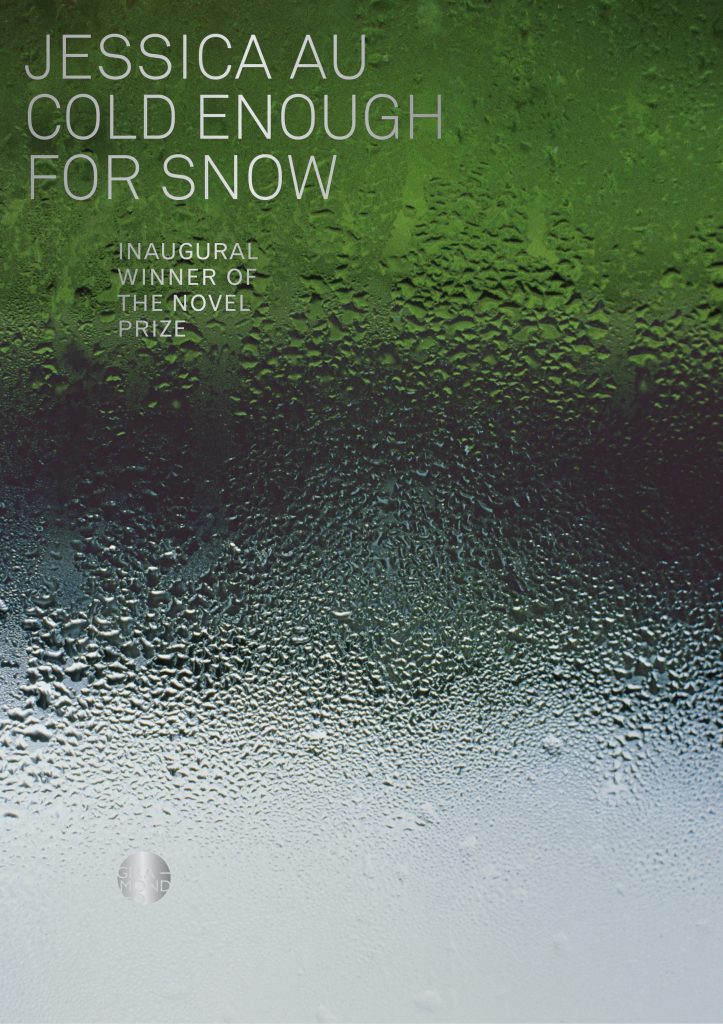
  • Cold enough for snow, by Jessica Au (Australian author; novella): “an inner journey, arriving at the realisation that some gaps can never be bridged, some people will never be fully understood, and some baggage will never fully be shed. And that whether we are ready or not, time carries us forward, forcing our roles to adjust to new circumstances”. (On my TBR; Reviews by Lisa and Brona.)
  • Buried Treasure (in Griffith Review, 77), by Jo Chandler (Australian journalist; essay): on Australia’s million-year ice core project, “a beautiful and hopeful essay about building a collaborative understanding of the rhythms of our planet”
  • Healing: Our path from mental illness to mental health, by Thomas R. Insel (American doctor; nonfiction): “offers a hopeful vision of how we can remake our mental healthcare system”.

So, one work of fiction, one essay, two memoirs and two works of nonfiction.

Here are links to all the lists, by year: 2009, 2010, 2011, 2012, 2013, 2014, 2015, 2016, 2017, 2018, 2019, 2020, 2021, 2022. There are some interesting books in there, of which I’m sharing one or two from each year, in listing year order:

  • Chloe Hooper’s The tall man (2009, creative nonfiction) 
  • David Malouf’s Ransom (2009, novella) (my review)
  • Noel Pearson’s Radical Hope: Education and Equality in Australia (Quarterly Essay 35) (2009, essay) 
  • Andrew Leigh, Disconnected (2010, nonfiction)
  • Judith Brett’s Fair share (Quarterly Essay 42) (2011, essay)
  • Frank Moorhouse’s Cold light (2011, novel) (my review)
  • Adrian Hyland’s Kinglake-350 (2012, creative nonfiction) 
  • Richard Flanagan’s The narrow road to the deep north (2013, novel) (my review)
  • Joan London’s The golden age (2014, novel) (Lisa’s review)
  • Samuel Wagan Watson’s Love poems and death threats (2015, poetry collection)
  • Stan Grant’s Talking to my country (2016, nonfiction/memoir) (my review)
  • Judith Brett’s The enigmatic Mr Deakin (2017, political biography) (Nathan’s review)
  • Michelle de Kretser’s The life to come (2017, novel) (my review)
  • Robbie Arnott’s Flames (2018, novel) (Lisa’s review)
  • Behrouz Boochani’s No friend but the mountains: Writing from Manus Prison (2018, memoir)
  • Jess Hill’s See what you made me do (2019, nonfiction) (my review)
  • Alex Miller’s Max (2020, novel) (Lisa’s review)
  • Alison Whittaker’s Fire front: First Nations poetry and power today (2020, poetry anthology) (Brona’s review)
  • Paige Clark, She is haunted (2021, short story collection)
  • Rick Morton’s On money (2021, nonfiction)
  • Henry Reynolds’ Truth-telling: History, sovereignty, and the Uluru Statement (2021, nonfiction) (Janine’s review)

I’m particularly interested in the fiction choices, because they have often gone for non-mainstream, more reflective works, and they have also, on occasion, included poetry. I like that. But, why these particular choices?

Well, for Ransom, they write “it’s a tale of transformations” and “if only government reports were written in language like this”. For Cold light, a more obvious choice, they say it’s “about power, secrecy, the mortal struggle between capitalism and communism – and urban planning” and conclude with:

Frank Moorhouse once lamented the fact that, despite all their riches of human experience, Australian novelists had disdained the realms of government and business as ciphers too corrupt and foul for their art. But writing by journalists, academics and policy wonks cannot provide a complete understanding of our society. Fiction also has a vital role; for some readers, the vital role…

For readers like us, I’d say.

The other comment I’d like to make concerns themes and subject matter. Equality – gender equality, yes, but also more broadly – features often. First Nations authors and issues appear regularly, as they should while so much remains unresolved. Books about democracy and how it is faring also keep popping up, unsurprisingly. On the other hand, climate change and the environment, while they do appear, seem to have a relatively low profile in the list by comparison.

If you had the opportunity to make one recommendation to the leader of your country, what would it be? My guess is that Bill’s would be Chelsea Watego’s Another day in the colony. Let’s see if I’m right. Meanwhile, what will Albo read?