Thomas King and Natasha Donovan, Borders (#BookReview)

Earlier this year I posted on Thomas King’s short story “Borders” from Bob Blaisdell’s anthology, Great short stories by contemporary Native American writers. The story was written in 1991, but as I noted in my post, it has also been adapted into a teleplay for the CBC, and turned into a graphic novel for younger readers. I was intrigued, and because I loved the story, I bought the graphic novel, on the assumption that we will share it with our grandchildren in a few years.

To recap a little from my original post. Wikipedia describes King as an “American-born Canadian writer and broadcast presenter who most often writes about First Nations”. Born in California in 1943, he “self-identifies as being of Cherokee, Greek, and German descent”, and has written novels, children’s books, and short stories. I also shared from Wikipedia a quote they include from King’s book, The inconvenient Indian, because it’s relevant to Borders:

“The issue has always been land. It will always be land, until there isn’t a square foot of land left in North America that is controlled by Native people”.

In that post I summarised the story, and I’ll repeat that here too. The narrative comprises two alternating storylines, both of which are told first person through the eyes of a young boy. One storyline concerns his much older sister, Laetitia, leaving home at the age of 17 to live in Salt Lake City, Utah, while the other tells of a trip he makes with his mother some five or so years later to visit this sister.

The crux of the story lies in what happens at the US-Canada border. Asked to give her “citizenship”, the mother insists “Blackfoot” and is denied entry. She refuses to offer anything else. As a result, she and her son get caught in a no-man’s land when, attempting to return to Canada, the same response to the same question results in her being refused entry there too. As one of the border officials tries to explain to her, “it’s a legal technicality, that’s all”. Of course, that’s not all. Blackfoot people ranged across the great northwest of America in what is now known as America and Canada. For our narrator’s mother, that land is her “citizenship”, not that she is American or Canadian, and she will not back down.

So, to the graphic novel. The illustrator is Natasha Donovan, who is described at the back of the book as “a Métis illustrator, originally from Vancouver, Canada”. She has illustrated, among other books, “the award-winning graphic novel Surviving the city, as well as the award-winning Mothers of Xsan children’s book series.”

This graphic novel version of Borders is beautiful. It turns what is a perfectly suitable story for pre-adult readers into a book that should appeal to and engage these readers. It contains King’s full text as far as I can tell, enhanced (if I can use that word) with Donovan’s gorgeous drawings. Because it is designed for younger readers, the drawings are simple enough to appeal to younger readers, but they offer a subtle depth which make the story well worth reading in this form by older readers too. The original story is told in a spare style, which leaves the reader to imagine (work out) the ideas and emotions behind the words. In this graphic version, sometimes the illustrations replicate the words, but in many cases they value add. This is not to say that value-adding is necessary, as it’s a gem of a story, but that the drawings encourage the reader to stop, think, and consider what the words might be saying.

An example: of their second night stuck in border-limbo, our narrator says that “The second night in the car was not as much fun as the first, but my mother seemed in good spirits and, all in all, it was as much an adventure as an inconvenience”. The panel following this depicts chicken wire in the foreground with a flock of birds flying off in the background, conveying some of the tension between the constraint of borders and the idea of freedom. The next panel, also textless, shows mother and son companionably sitting on the boot of their car, eating their sandwiches. In the border-guard scenes, the narrator mentions their guns. Donovan picks this up, providing frequent close-ups of guns, gun belts and holsters when the guards are present, which suggests authority and, perhaps, menace without overplaying the idea of fear.

What I liked about this graphic version, too, is how much it encouraged me to “see” things from our young protagonist’s perspective. I saw it in the text, but it becomes more vivid and immediate in this version. We see him report what he is seeing, and his own thoughts; we see him inserting his boy-ish wishes and perspectives. There is a running theme, from the beginning, about food which marks his focus on the concrete, on his needs. He asks Mel, the duty-free shopkeeper, for a hamburger, which he doesn’t get, but the next day:

Mel came over and gave us a bag of peanut brittle and told us that justice was a damn hard thing to get, but that we shouldn’t give up.

I would have preferred lemon drops, but it was nice of Mel anyway.

In this way, King conveys the truth as experienced by our young boy, but the wider truth that is happening around him – the strength of the mother’s identity and her determination to preserve it. Occasionally, our young narrator perceives some of these truths too. He sees the pride – and yes, the not always positive stubbornness – displayed by his mother and sister, but concludes:

Pride is a good thing to have, you know. Laetitia had a lot of pride, and so did my mother. I figured that someday I’d have it too.

Hachette’s promo for the graphic novel version describes it as resonating “with themes of identity, justice, and belonging”. It is exactly that – and conveys so much that is both personal and political, making it a rich book for any age to think about and consider.

Thomas King (story) and Natasha Donovan (Illustrator)
Borders (text from the 1993 published version)
New York and Boston: Little, Brown and Company, 2021
[192pp.]
ISBN: 9780316593052
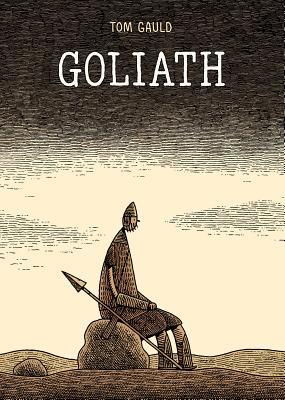
Tom Gauld, Goliath (#BookReview)

It’s probably just me, but I hadn’t heard of Tom Gauld until a member of my little volunteer indexing team sent me a link to some of his “cultural” cartoons in The Guardian. I was immediately enchanted. And then, he lent me one of Gauld’s graphic novels, the above-named Goliath. Being primarily a textual person, I am not a big graphic novel reader, but our son became keen on them in his teens, so I have some familiarity and have read a handful.

Now I’ve added Goliath to that elite bunch. It’s the sort of graphic novel I enjoy – spare, drily witty, a bit melancholic. It is also, as you will have assumed, a retelling of the biblical David and Goliath story. Like many modern retellings, Goliath is told from a different perspective, that of Goliath himself, who is seen as a pawn in the game of war. In a wry touch, Goliath is your quintessential gentle giant. When, out of the blue, he is approached to be measured for some armour, he says to the armour-maker, “Are you sure this isn’t a mistake? I mainly do admin”. As one who doesn’t mind a bit of admin, I’m with Goliath.

Gauld has published well over 20 books, starting back in 2001, but according to Wikipedia he is best known for Goliath (first published in 2012) and Mooncop (2016). I notice that his latest, published just this year, is Revenge of the librarians. Now, that’s one I’d love to read!

Anyhow, back to Goliath. Although he’d rather do admin work, destiny has other plans for him as we know – and so, he finds himself, under the Philistine king’s orders, waiting in a valley, armoured and armed up, issuing, morning and night, a challenge to the Israelites:

I am Goliath of Gath,
Champion of
the Philistines.

I challenge you:

Choose a man,
Let him come to me
that we may fight.

If he be able
to kill me
then we shall be your servants.

But if I kill him
then you shall be
our servants.

Poor Goliath. “I’m not a champion”, he says. In fact, he continues, “I’m the fifth worst swordsman in my platoon … I do paperwork. I’m a very good administrator.” But, in classic political spin, he’s told that there won’t be any fighting. He just has to “look like a champion” and “the enemy will cower”. We all know how that turned out … along came David (albeit in this version, after a very very long time of waiting for poor Goliath).

The reviews on the back cover sum it up beautifully. The New York Times says that Gauld uses “simple, clever images to explore the larger, more complicated issues of war and heroism”, while London’s The Times says, and I particularly like this, that “Goliath is a master class in reduction … a celebration of the Christian underdog becomes a subtle meditation on the power of spin and the absurdity of war”. The rest of the back cover review excerpts are similarly spot on.

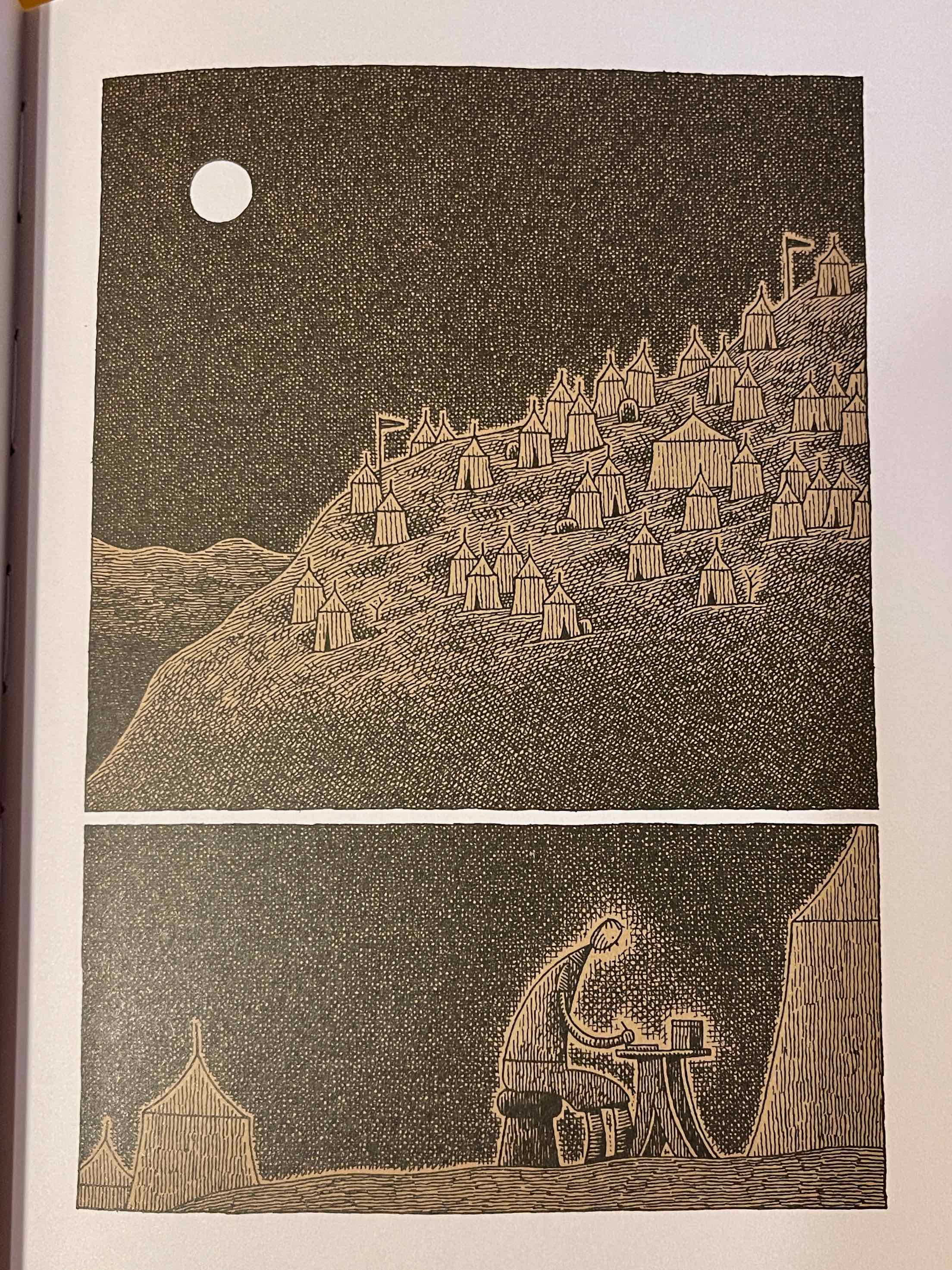
Small reproduction, allowed for review purposes.

So, did I enjoy it? Yes, I did. I liked the spareness of the art and the text. The first five textless pages set the scene – that is, they show Goliath going about his day quietly, peacefully, doing his paperwork, having a stretch at his desk, and trudging down the hill on which the encampment is located to get a drink. One of my challenges with graphic novels is taking in the images and the text, without letting one distract me from the other, but in Goliath the spareness of both made this easy. Making it easy to comprehend, though, is not the main reason for the spareness! It also reduces the story to its essence, encouraging us to engage with Goliath and what he is experiencing.

I also liked the humanity of Goliath and the small boy whose job it is to support him. As they traipse to see the captain, the small boy carries Goliath’s oversize shield. “Are you OK with that?”, asks Goliath. “Sort of” replies the boy. These two, we clearly see, are pawns in the game, potential “collateral damage” as it were, though of course the Philistine leaders believe they have the winning hand.

I also liked the subtle humour, which you have hopefully picked up already. And, of course, I appreciated the anti-war message conveyed through a twist which shows the ostensibly powerful giant as the manipulated underdog – just by changing the perspective. Something we all need to do, eh? See and feel things from another side. Recommended.

Tom Gauld
Goliath
Montreal: Drawn and Quarterly, 2017 (orig. ed. 2012)
[96]pp.
ISBN: 978770462991

Neomad: A Yijala Yala Project

First up, I have to admit that I’m rather challenged when it comes to e-book apps. I did love The Wasteland app which I reviewed a couple of years ago, but it was clearly designed for a, let us say, more staid demographic. Neomad, “a futuristic fantasy” in three episodes, is another matter. Consequently, my aim here is less to review it as a work and more to talk about what seems to be an exciting collaborative project involving 30 young people from Roebourne in the Pilbara, comic artist Sutu and filmmaker Benjamin Dukroz.

We hear so much negativity about indigenous communities in outback Australia that it’s easy to feel the situation is hopeless. However, while we should not forget for a minute that the situation for many indigenous Australians is still dire, things are happening. Not enough, but nonetheless something, and these things can surely be seen as models for further action.

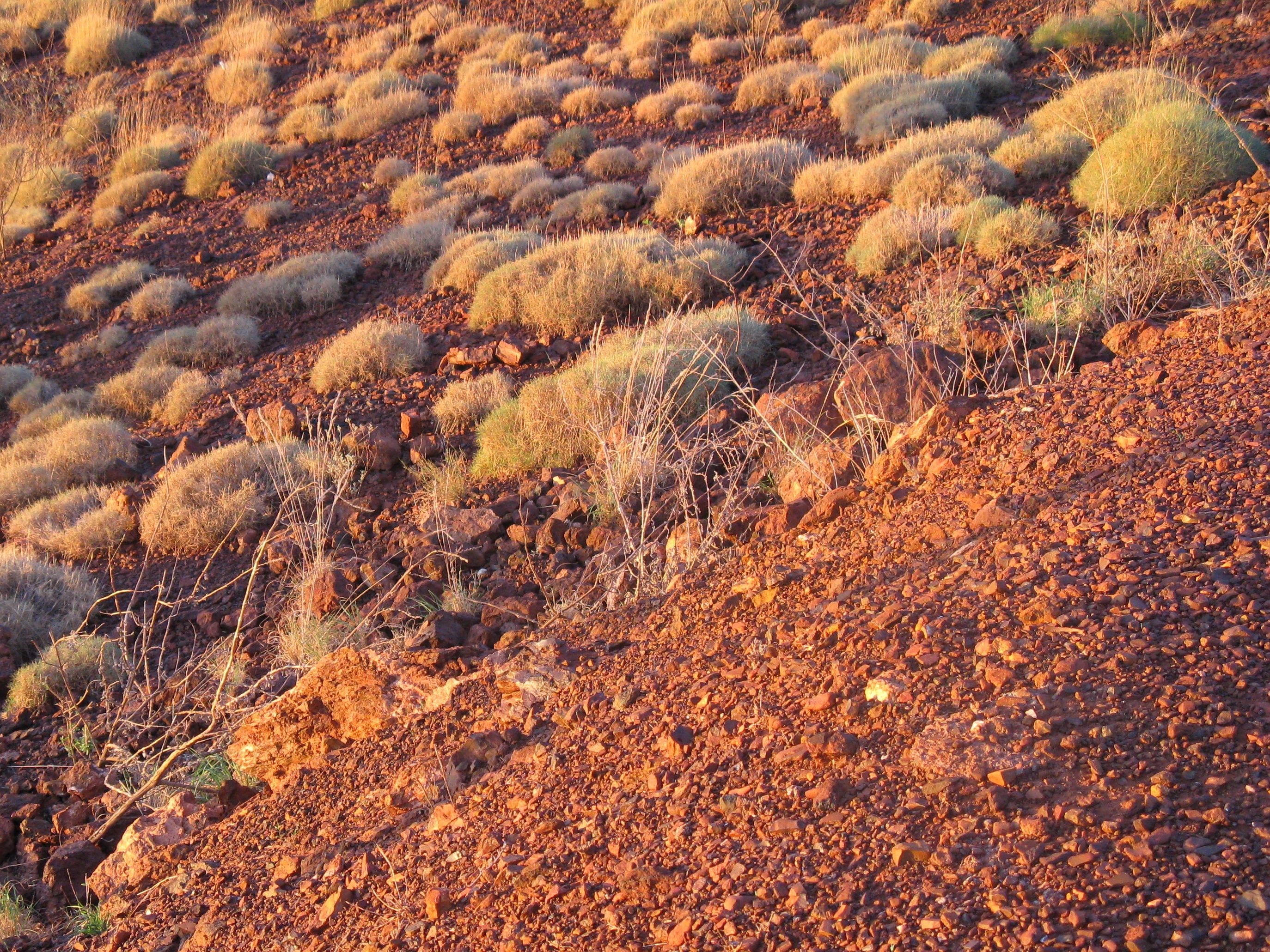
Pilbara landscape, Newman, WA

Pilbara landscape, Newman, WA

So, back to Neomad. Produced as part of the Yijala Yala Project, it’s currently available free from iTunes (or the Apple App store), so I decided to have a look. It’s colourful and infectious. The Facebook site calls it “an interactive digital comic”. Late last year it won Best Game – Multimedia Production in the 2013 ATOM (Association of Teachers of Media) Awards. So what is it? A game? A book? What’s in a name did I hear you say? Fair enough. Let’s not get bogged down in categorisation right now, except to say that it’s an example of what is apparently being described as “interactive fiction”.

Ignoring the categorisation issue, though, the ATOM site is useful for the neat little summary it provides of the story:

Set over three episodes, NEOMAD follows the story of the Love Punks and Satellite Sisters, techno savvy young heroes from a futuristic Roebourne in the Pilbara region of WA, who speed through the desert full of spy bots, magic crystals and fallen rocket boosters branded with a mysterious petroglyph.

The app itself says it is “based on real characters, places and stories that connect people to their country”. This becomes evident when you click “Play” on the Home page, as it starts with a lovely live-action sequence set somewhere in the Pilbara, involving a group of indigenous boys. They are the Love Punks and they feature in Episode 1. They tell us “When you see a star fall at night be sure to welcome it to the land for the star brings new life”. The story is set in 2076 and sees the Love Punks chasing a space robot (oops, space bot) across the sky, only to find, when it crashes to earth, that it bears the image of an ancient petroglyph. What does this mean? Episode 2 begins with quite a different live-action sequence involving indigenous girls, The Satellite Sisters, learning about the importance of their ancestors. Like Episode 1, this sequence progresses into an animated comic, which you can read as text or click on the speech bubbles to hear the characters speak the words.

As an interactive-game-challenged person I wasn’t always sure how much was on each “page”. For example, on some pages extra “things” pop up when you tap to “turn” the page. I presume that you can’t miss anything important, that no matter where or how often you tap or swipe, the app won’t take you to the next “page” until you’ve seen everything on the current page. However, I did find it disconcerting, as pages vary in layout so you never know what might be there behind the clicks! I expect this is not a problem for the people to whom the app is targeted though!

There’s an Extras section, comprising short live-action movies providing background to the project. We hear the kids talk about the meaning – one Satellite Sister tell us “that film is about the Satellite Sisters looking after the country” – and the process, such as how they learnt to use PhotoShop to colour the animation. There is also a “junk percussion” music video in which the Love Punks perform music using found objects such as corrugated iron, old drums and metal bars. I love it!

What is exciting about this project is that, amongst all the glitz and colour, it reaffirms the importance of country. As the name – Neo (new) Mad (nomad) – suggests, it marries respect for tradition with acceptance of change, looking for the points where they coincide:

“You boys need to respect these men and their robots. They’re all part of our community and they’re all looking after our ngurr, our country.”

“Sorry Nanna Tootie.”

This is kids telling a story in their language for other kids – and it is good fun. If you have young children around – and even if you don’t – do check it out. Meanwhile, thanks to E. Teacherlord, as our daughter calls her brother, for introducing me to the Love Punks and Satellite Sisters.