Canberra Writers Festival 2025: 2, What happened in the outback

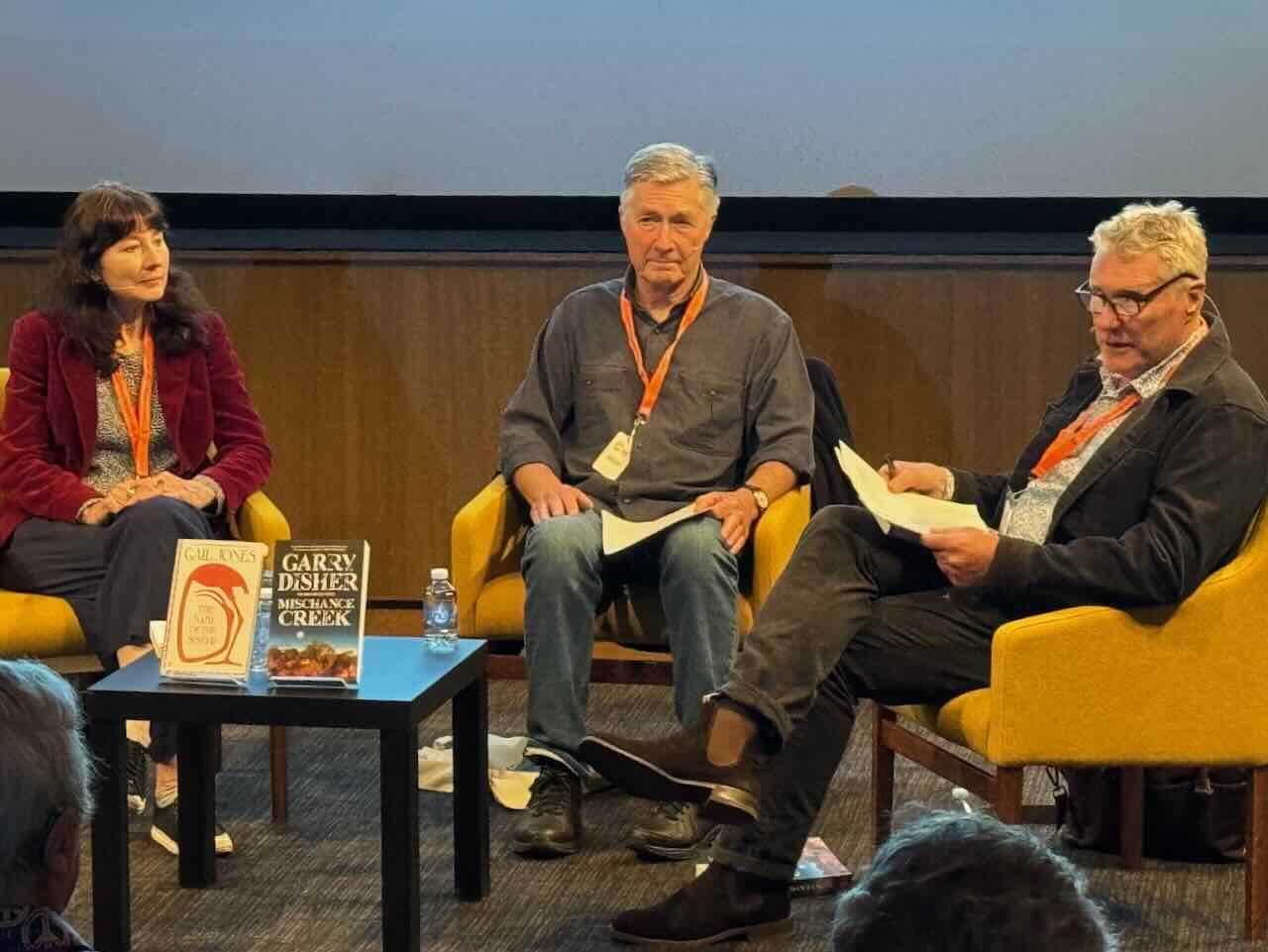
Garry Disher and Gail Jones with Michael Brissenden
The program described the session as follows:

Join two of Australia’s most highly regarded writers speak about the lure of the Australian outback with its landscapes, characters and unsettled complexity. Here we have different tales of desperate searches to uncover what has happened to two women in the outback. Stories multiply. Heart and horror beat in tandem. Cops try to do their best. Gail Jones (The Name of the Sister) and Garry Disher (Mischance Creek: The new Hirsch novel) will together explore the power of beautifully written outback crime. Moderated by Michael Brissenden (Dust)

Journalist and novelist Michael introduced the authors, outlining their work and achievements before getting onto the discussion which centred, of course, around two concepts – the outback and writing about crime. It was an intriguing if sometimes slightly odd discussion, with Gail Jones talking almost as much about Disher’s work as her own, and an underlying (but also explicitly explored) tension between literary writing and crime (or genre) writing.
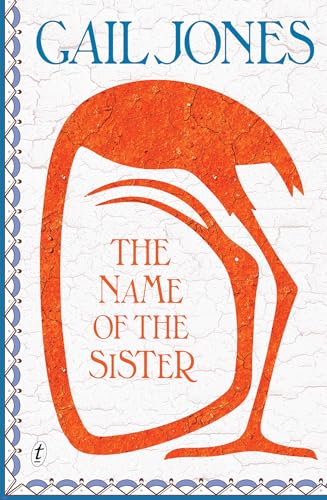
The session started with the usual question asking the writers to précis their novels. Gail Jones described hers as non-genre, and said it was set in Sydney, Broken Hill and Berlin. It starts not with a death of a woman but with a woman being found. It doesn’t have a traditional crime plot, and is about people whose stories and identities are lost.

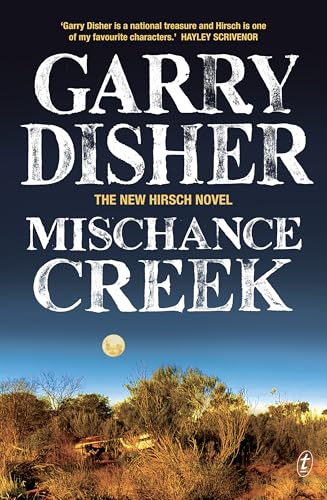
Garry Disher’s book, on the other hand, does have a crime plot. It’s the 5th in his Hirsch series, but Hirsch doesn’t match the common tropes of crime. Most crime fiction, for example, is closely related to place – think Bosch in LA and Rebus in Edinburgh, for example. Hirsch, however, is from Adelaide, and is an outsider in the small town he has retreated to (though of course, the novels are imbued with this new-to-him place). Most crime fiction protagonists are relatively senior in rank, but Hirsch is lowly. And finally, most crime protagonists are troubled, dark, while Hirsch is genial.  The driver for the novel, Garry said – though it was written before the 2025 Porepunkah incident – was the idea of sovereign citizens and their capacity for violence, but there is another plot involving a woman who has come to town, unhappy with the investigation into a case concerning her parents.

The discussion proper then started with that question that won’t go away concerning whether a distinction still exists between literary and crime fiction. Gail said “good writing is good writing”, and that the concept of “literary” is less a judgement of writing than about subject and mode. She is interested in writers who “don’t stay in their lane”. She has also been interested in crime and guilt for a long time, but is less interested in plot than in exploring consciousness, and the covering over or hiding of crime, and secret guilt. When it was suggested to her that she write a crime story, she thought about loss and the dissolution of marriage (which she admitted is probably a more common “literary fiction” subject). Her novel intersects between crime and literary.
Garry addressed Brissenden’s question concerning how crime fiction is changing and where it is now. He delved back into the past, and how in planning for the Spoleto Festival (which has now morphed into the Melbourne Writers Festival) he had suggested inviting Peter Corris, the popular and successful Sydney crime writer at the time, but was firmly told “no, this is a literary festival”. There is still a sense of this divide. He would like to talk about fiction more broadly but he is always invited onto crime panels at festivals – organisers, take note! He senses that there’s a feeling crime writers would embarrass other writers if they appeared together (though didn’t explain what he meant by “embarrass”). His early writing was not crime, and writing craft is important to him. What matters most to him is the characters not the plot.

The conversation then got onto the outback, the session’s subject. Garry said that the term “outback noir” was coined by a journalist talking about the early work of Jane Harper and Chris Hammer, but feels that it has had its day. Writers jumped on the bandwagon, resulting in some copycat (my word) novels that were not necessarily good. Good crime, all agreed, deals with prevailing social values and conditions – well-written and in an entertaining way, said Brissenden.

So, what is this thing called the outback, and to what degree does it play into the concept of place and character? This is where the session became particularly interesting to me, because we bandy around this term, often without a great deal of thought.

Gail thinks it is an antiquated term that she believes began with Lawson’s 1893 poem “Out back”, which has words like “blistering”, “furnace”, and concludes with “Where the bleaching bones of a white man lie by his mouldering swag Out Back”. The poem implies “out back” is homicidal to white men, and “extinguishes”, said Gail, First Nations people. It flattens and reduces the land to one idea, one, more often than not, reduced to a sort of psychodrama. It’s interesting that we (as in non-Indigenous Australians) use “outback” rather than “country”. Our usage – incorporating a sense of being in “the middle of nowhere” – denies the fact that it is other people’s “somewhere”.

Garry agreed with Gail, building on it and adding his own thoughts. Most of us, he suggested, have a vision of the “outback” as vast and encompassing long drives, but also with a mythical overlay, as reflected in “we of the never never” (Mrs Aeneas Gunn) and “the great Australian loneliness” (Ernestine Hill). The sense – also conveyed in paintings by artists like Russell Drysdale and Sidney Nolan – is that it is remote, not pleasant, even though it is home to someone. The outback (like the beach) suggests loss – lost children, lost travellers, the lost women in their novels. On the other hand, there’s the “outback” that is romanticised by travel companies.

Gail added that the challenge is learning about the Indigenous world view, their knowledge of and regard for land. White Australia has not come to terms with the mysticism and animism associated with First Nations’ understanding of the land, a place rich with meaning. The travel idea of “adventure” misrepresents what the land is, but has extraordinary persistence. Similarly, she said, the ideas of “noir” and “gothic” (which originated in 18th century England and Walpole’s Castle of Otranto) come from other lands and cultures, and are a mismatch with the outback. She likes that Garry’s Hirsch is richly human and that his novels include women and Indigenous people.

We then moved onto the idea of loneliness in a sparse place. Garry reiterated that Hirsch is an outsider, without deep friendships (though he has a lover living outside the town). He has to be all things to all people. Gail’s character Angie is a freelancer which can be a lonely occupation, but Gail is more interested in solitariness rather than loneliness.

Gail didn’t want to have cop character in her novel because she doesn’t know police stations and procedures, but she had to “get out of Sydney”. She is interested in mining towns – her father was a miner, one of the “labouring poor” – so she could relate to the harshness of Broken Hill. She commented on the profound masculine overlay there created by films/novels like Wake in fright and the Mad Max movies, while Hirsch, she said, despite being a male cop in a small town, is aware there are other meanings – layers – in the place. She likes crime that has this social complexity.

Talking fathers, Garry said his told him that farming was a mug’s game and to get an education, which he did. This included researching the landscape writers of the 1930s with their complicated messages about the outback (including towards Indigenous people who were either feared or treated as children). However, his brother became a small town cop. He can go to him for practical questions (like would a paddy wagon be air-conditioned?)

There was more, including readings by both from their novels, and a comment from Gail about liking it when policemen/detectives in crime novels are also readers! Hirsch for example mentions Helen Garner’s diaries.

Oh, and for those interested, there will be another Hirsch novel, but he does write standalone novels in between. The next one draws on children’s fears (like his in the 1960s about Russians and communists.)

There was no Q&A. And we didn’t really need it after this thoughtful, deep dive into “the outback”.

Canberra Writers Festival, 2025
What happened in the outback
Saturday 25 October 2025, 10-11am
Monday musings on Australian literature: Writers in the news (1)

Australian writers have been capturing attention – here and overseas – in the last few months. I’ve been noting these stories as they’ve popped up, and kept planning to post on them, but somehow, time just slipped by and more stories kept coming. Consequently, most Aussie readers here will know most of these news items by now, but there might be a surprise, and, anyhow, I’m hoping they might interest non-Aussie readers of my blog. (I am numbering this post because I just might be inspired to write another one sometime.)

Alexis Wright’s multiple awards

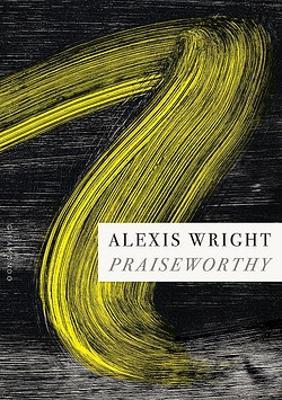
This year, Alexis Wright has won several significant literary awards. She was awarded the Stella Prize in March and the Miles Franklin Prize in August for Praiseworthy, making her the first author to win these two prizes in one year. (Each of these is worth $60,000). In May, it was also announced that she’d won the UK’s James Tait Black Prize for Fiction (worth 10,000 British pounds or $19,000), also for Praiseworthy. Then, this month, she was awarded the triennial Melbourne Prize for Literature which is a body-of-work prize to a writer who has made an “outstanding contribution to Australian literature and to cultural and intellectual life”. It too is worth $60,000.

Melissa Lucashenko’s multiple awards

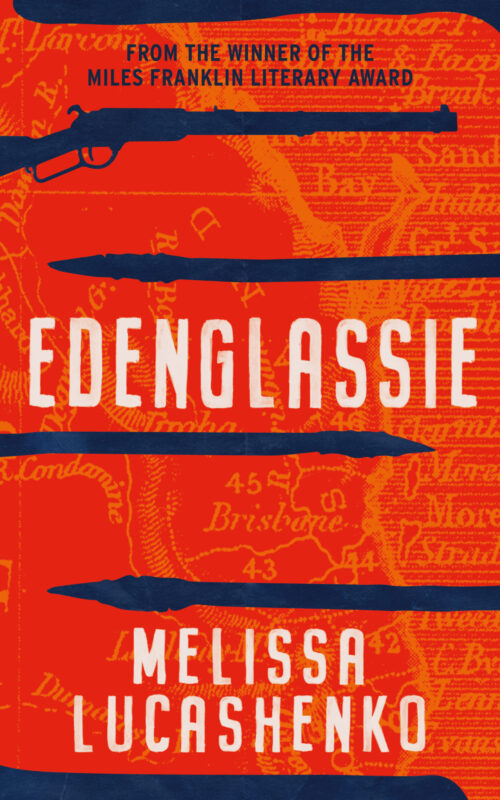
Lucashenko, like Wright, is no stranger to literary awards, but this year, she too has taken out several significant awards, all of them for her first work of historical fiction, Edenglassie (my review): the $100,000 ARA Historical Novel Prize, the $50,000 Margaret and Colin Roderick Literary award; the $30,000 Queensland Premier’s Award for a Work of State Significance, and the $25,000  Premier’s Prize for Fiction. She also won the Fiction award in this year’s Indie Book Awards.

Richard Flanagan’s prize and ethical stand

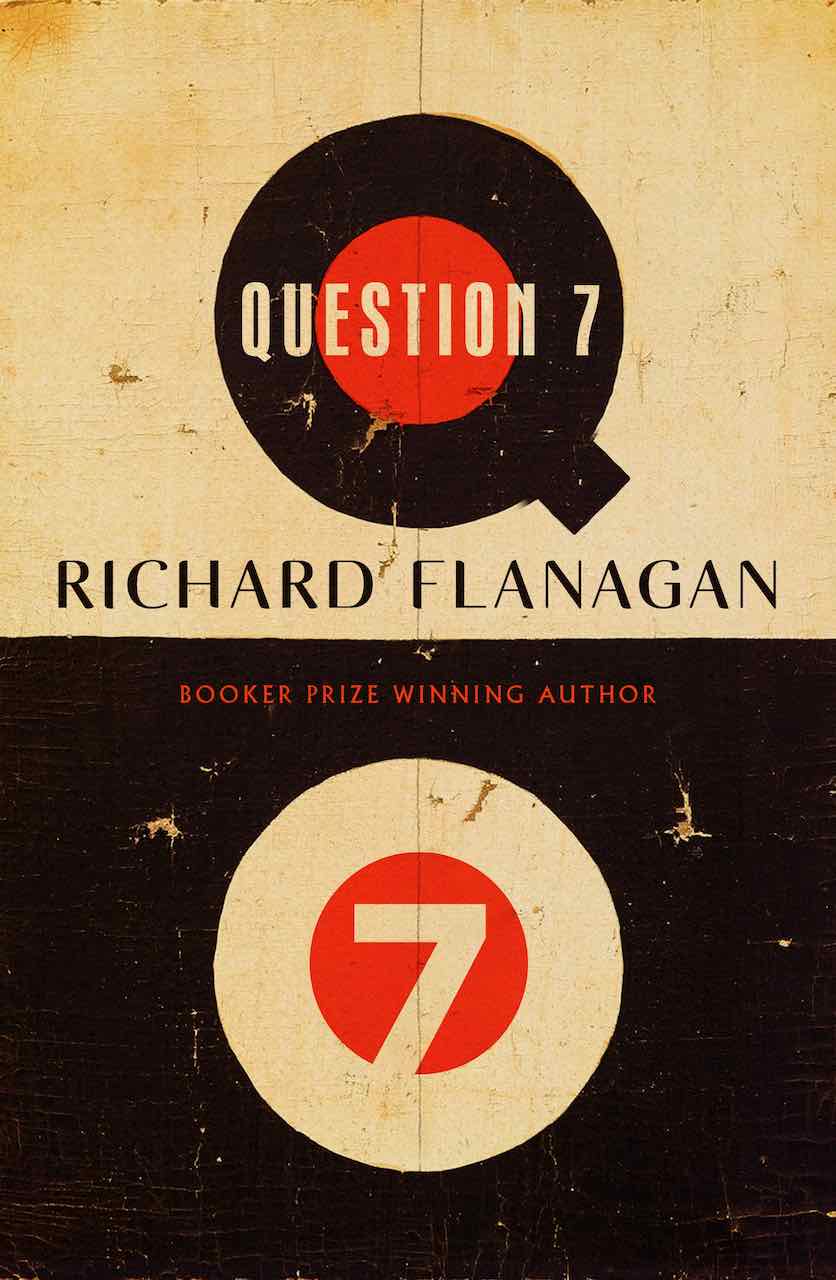
Another recently announced award is Richard Flanagan winning UK’s 2024 Baillie Gifford Prize for Nonfiction for his most recent book Question 7 (my review). This prize is worth £50,000 (or, AUD97,000). If you’ve heard this news, you will also know, as the ABC reported, that Flanagan had pre-recorded his acceptance speech because he was trekking in the Tasmanian wilderness at the time. In this speech, he said he had “delayed” accepting the prize money until sponsor Baillie Gifford put forward a plan to reduce its investment in fossil fuels and increase investment in renewable energy. Flanagan said that “on that day, I will be grateful not only for this generous gift, but for the knowledge that by coming together in good faith, with respect and goodwill, it remains possible yet to make this world better.”

Flanagan is not a rose-coloured glasses idealist. He is not asking for the world, but simply for a plan. The ABC quotes him further:

“… were I not to speak of the terrifying impact fossil fuels are having on my island home, that same vanishing world that spurred me to write Question 7, I would be untrue to the spirit of my book.

[BUT]

“The world is complex. These matters are difficult. None of us are clean. All of us are complicit. Major booksellers that sell my books are owned by oil companies, major publishers that publish my friends are owned by fascists and authoritarians … As each of us is guilty, each of us too bears a responsibility to act.”

I like this honesty and realism. Let’s see what happens next. Will a writer’s stand – which compounds what I believe is already increasing criticism of Baillie Gifford – see a company decide it too can make a stand?

Jessica Au’s novella to be filmed

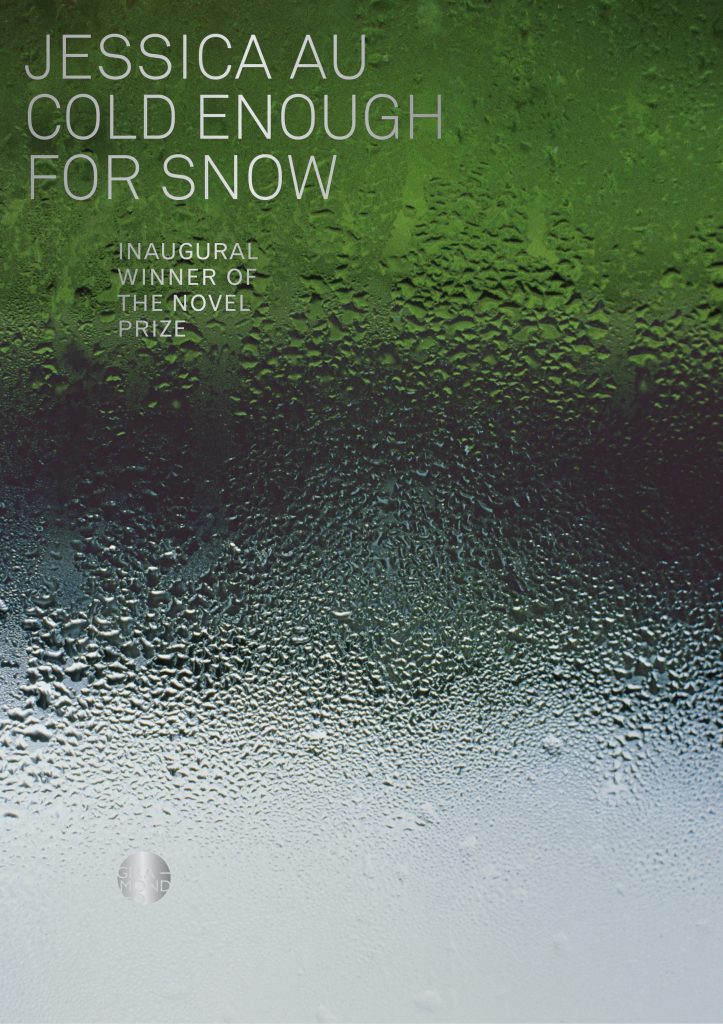
Meanwhile, in non-award news, Jessica Au’s award-wining (ha!) novella, Cold enough for snow (my review), is to be made into a film. According to Variety it will be a U.K.-Japan-Australia-Hong Kong co-production and filming will begin “in fall 2025” (which presumably means next September to December). I first read about it on publisher Giramondo’s Instagram account. They quoted theatre veteran-debut director Jemima James,

I hope the film, like the book, creates space for audiences to think and feel deeply about the important people in their lives, about the relationships that are central to them …I hope it provokes shifts of perspective, new understanding, new compassion for the people they love, however complex or complicated that love might be!

Gail Jones’ Lifetime Achievement Award

I also saw on Instagram – this time Text Publishing’s account – that Gail Jones had received Creative Australia’s Award for Lifetime Achievement in Literature. In other words I’m bookending, more or less, this news post with body-of-work awards. As Text writes, the award “recognises her impressive body of work, and her ongoing mentoring of young writers”.

Creative Australia’s website tells me that Jones was one of “eleven leading artists to receive 2024 Creative Australia Awards”.  They quote their CEO, Adrian Collette AM:

‘It is our immense honour to celebrate these remarkable artists whose work is making an impact in communities across the nation. Each of the recipients contributes their unique voice to our cultural story.’

I recently reviewed Jones’ novel Salonika burning (my review) but I have more on my TBR.

Any comments on these news items? Or, indeed, do you have any to add? (Not that my aim here is to be comprehensive. That would be impossible!)

Gail Jones, Salonika burning (#BookReview)

Australian author Gail Jones’ ninth novel, Salonika burning, is a curious but beautiful novel, curious because she fictionalises four real people for whom she has no evidence that they met or knew each other, and beautiful because of her writing and the themes she explores. The novel is set during World War 1, but its focus is firmly on the interior rather than the grand stage of battle.

It opens dramatically with the burning of the city of Salonika (Thessaloniki). This is another curious thing, because this destructive event was caused not by an act of war but an accidental kitchen fire. Also, the novel is not set in Salonika but some 90 miles off, in and around “the field of tents that comprised the Scottish Women’s Hospital”, on the shores of Lake Ostrovo in Macedonia. It is 1917, and the novel’s narrative centre is this hospital and those working in and around it. Here, not Salonika, is where our four main characters are based — Stella, an assistant cook/hospital orderly; Olive, an ambulance driver; surgeon Grace; and Stanley, an orderly with the Royal Army Medical Corps. They are based on the Australians, writer Miles Franklin and adventurer Olive King, and the British painters, Grace Pailthorpe and Stanley Spencer. In her Author’s Note, Jones makes clear that she has fictionalised these characters, and that while all are known to have worked in the vicinity, there is no evidence that they met or even knew each other. It is “a novel which takes many liberties and is not intended to be read as a history”. This is fine with me. After all, a novel, by definition, is not history. The novel follows these characters over a few months after the burning of Salonika.

“everything was coming apart”

So, why Salonika? I see a few reasons. For a start, its burning sets the novel’s tone. On the first page we are presented with opposing ideas. The sight of the burning city is described as “strangely beautiful” but, on the other hand, “alarm, instant fear, the sufferings of others … were no match for excitement at a safe distance”. As the fire died, “excitement left and in its place was a murky lugging of spirit”. Throughout the novel, Salonika represents these contradictions, this tension between what is ugly, what is beautiful; between what is random, what is not; and in how to respond to, or feel about, what is being experienced.

The Salonika fire also encompasses the idea of witness and representation. In the opening scene, Jones describes a painting made of the fire by William T. Wood. It is a “morning-after scene, brightly calm, with a floaty view from the heavens” done in his “signature pastels, remote as a child’s dream and thinly decorative”. Those who saw this painting later, she writes, “saw the pretty lies of art”, whereas “former residents and soldiers said, No, it wasn’t like that”. This tension too is played out in the characters as they think about how they might represent their experience.

The burning of Salonika, then, embodies several ideas that are followed through in the novel. But, Salonika is also relevant to the plot. The novel’s narrative arc lies mainly in the characters and their emotional reactions to what is happening as the months wear on. Not only is there the war with its injured and dying soldiers, but malaria is rife, and the privations they experience, professionally and personally, are exacerbated by the burning of Salonika and the attendant shortage of essential provisions – food, petrol, medical supplies. However, a plot also unfolds, and it is something that happens on the way to Salonika, well into the story, which sets the novel’s final drama in motion.

Salonika burning traverses themes that are the stuff of the best war literature – themes that expose the “idiocy of this war, of all wars” and its impact on those caught up in it – but it offers its own take. The telling feels disjointed, particularly at the start, with its constant switching between the perspectives of the four characters who interact very little with each other until well into the novel – and even then it’s often uneasy, as befits their temperaments. And yet, the novel is compelling to read, primarily because of these characters. They are beautifully individuated, so flawed, so human, so real.

Olive, who is the first character we meet, and the one who closes the novel, is confident, tough and practical. Grace, too, is tough, doing her “duty” with a “dull vacancy”. Stella, at 38, the oldest of the four, is “cranky and wanting more”, more excitement to write about, but she believes in “chin-up and perseverance”, while the youngest, 26-year-old Stanley, is “ill-fitted … to this life of rough cynical men”.

These are “intolerable” times, and we are privy to their struggle to maintain their sanity. Olive resorts to her German grammar to escape the emotional load, while Stanley has his mules and favourite painters, his “Holy Rhymers”. Stella, “writing jolly accounts in her diary”, thinks about what stories she will tell, while Grace has her favourite brother to think about and write to. The disjointed structure mirrors, I think, their sense of isolation. Contact and the potential for friendship is there, but Matron discourages emotional engagement. There’s “no room for emotion”, she says, just “duty”. Olive, who seems to represent the novel’s moral centre, thinks otherwise:

It seemed another kind of duty, not to forget. Olive wanted to speak of what she had seen and known, though she suffered too much remembrance.

This could neatly segue to that issue of representation, and the post-war work done by Stella, Grace and Stanley, but instead, I want to conclude with another idea. On a supply trip to Salonika, Olive, “driving in her safe foreign aura”, had been indulging in a dose of self-pity, but is suddenly confronted by the loss Salonika’s burning represented for its residents, “and only now understood that it was the woe of others that claimed importance”. Likewise, Stanley, Grace and Stella are confronted with the woes of others through the novel’s closing drama, and must decide where their humanity lies.

I started this post noting some curious things about Jones’ approach to her story, but these didn’t spoil the read. Rather, they added to my interest as I read it. Ultimately, Salonika burning is a true and tenderly written novel that captures the essence of war’s inhumanity, and then goes about extracting the humanity out of it. A worthy winner of the 2023 ARA Historical Novel Prize.

Lisa and Brona also read and enjoyed this book.

Further reading

Gail Jones
Salonika Burning
Melbourne: Text Publishing, 2022
249pp.
ISBN: 9781922458834