Monday musings on Australian literature: Reading for Reconciliation

Funny sometimes how Monday Musings topics suddenly appear to me. I was researching for a future post, when I came across a site called Reading for Reconciliation – and couldn’t go past it for today’s post.

However, the site’s Home Page needs a bit of unpicking. It has a heading, “Finalists in 2012 Queensland Reconciliation Awards”, followed by text which reads “More than a ‘book club’ – we celebrated our 10th Anniversary in August 2014.” At first, I thought the page was going to list the 2012 finalists, but then I realised that they were saying that their bookclub was a finalist in the 2012 awards? Duh, silly me! Anyhow, the accompanying text tells us that the group:

  • is diverse in background and age, and has no political or religious affiliations; and
  • seeks “to expand our knowledge and understanding of current issues impacting on Australia’s First Peoples by reading and discussing works in an informal, friendly setting”.

They are a Brisbane group, which meets every 6 weeks or so – and they welcome new readers. The way they work is for members to take turns in leading discussion of the chosen book, with this leader being expected “to provide some extra background or context, focus the discussion, etc.” I’d be there if I lived in the Brisbane area. A bit more Googling uncovered the fact that they seem to run under the banner of Reconciliation Queensland Incorporated.

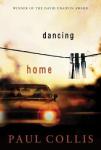
Paul Collis, Dancing homeAnyhow, next on the home page is the list of books they’ve scheduled for 2018:

  • John Newton, The oldest foods on earth
  • Damien Freeman & Shirleen Morris, The forgotten people
  • Anita Heiss, Barbed wire & cherry blossoms
  • Mark Tedeschi, Murder at Myall Creek
  • Mark Moran, Serious whitefella stuff
  • Mark McKenna, From the edge
  • Nonie Sharp, No ordinary judgement
  • Paul Collis, Dancing Home

A varied list, and one that contains some titles and authors I don’t know. However, the best thing about this site is that they also have a page listing every book they’ve discussed since they started in 2004. That’s a great resource for anyone else wanting to read for reconciliation (or start such a group!) It’s worth noting that the books they read aren’t all by indigenous Australians, and they include fiction and non-fiction. They’ve read books by indigenous authors like Kim Scott and Anita Heiss, Bruce Pascoe and Jeanine Leane, for example, all of whom you have met here. Non-indigenous writers they’ve read include novelist Kate Grenville and historians Henry Reynolds and Ann Curthoys.

Understanding the past to comprehend the present

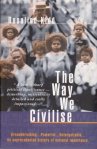
Rosalind Kidd, The way we civiliseAnyhow, I kept Googling, as I wanted to find out how this group started, and up popped an article titled “Six Books for Reconciliation Week” on an Amnesty International site! The article is by the group’s founder Helen Carrick. She starts:

In a Brisbane suburban lounge room in 2004, a diverse group aged from their 20s to 70s gathered to discuss Ros Kidd’s ‘The way we civilize’, which Professor Marcia Langton has described as a “ground-breaking history in the lives of Aboriginal people.”

They may have been diverse but their reason for meeting was not. They “all wished to learn more about Australia’s shared history – all regretted this hadn’t been learned at school.” They believe that they need to understand the past, in order to comprehend the present.

Carrick then describes the group’s history to date – including moving its home from members’ lounge rooms – and lists some of its highlights, including:

  • being a finalist in those awards I mentioned above!
  • establishing their website
  • having authors attend some meetings to discuss their books
  • the establishment of similar groups in Logan City (still Qld – you can see their 2016 list here) and Lismore (NSW)

And with this, I’ll end, making it a short Monday Musings for us all. I’ll just say that it’s great seeing a group like this – and not just seeing it, but seeing it survive for more than a decade and seeing the idea copied by others. Meanwhile, if you’re interested but can’t join a group, there’s always Lisa (ANZLitLovers)’s Indigenous Reading Week. From little things, big things grow – hopefully.

Do you take part in any reading for reconciliation programs?

Canberra Writers Festival 2018, Day 1, Pt 4: Indigenous Australians (2)

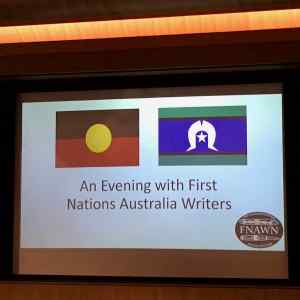
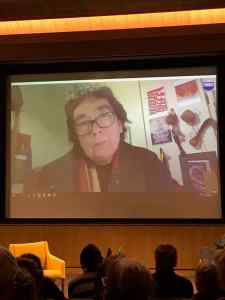
FNAWN screenMy first day of the Canberra Writers Festival ended with a bang – two hours with several of Australia’s top indigenous writers, organised by FNAWN (First Nations Australia Writers Network). It was a not-to-be-missed event, and was divided into two parts:

  • “Because of her I can”: poetry readings with Ellen van Neerven, Yvette Holt, Jeanine Leane and Charmaine Papertalk Green
  • Sovereign People – Sovereign Stories: a panel discussion with Kim Scott, Melissa Lucashenko, Alexis Wright, and moderated by Cathy Craigie

I liked this structure: the poets provided a emotive introduction to panel’s intellectually-focused discussion (not that the poems weren’t underpinned by intellect, mind you.)

“Because of her I can”

I’m just going to list the poets and their poems, as well as I can, as I did for the Canberra poets session earlier in the day. You may like to research them, though I’ve provided some links …

Jeanine Leane

Leane, whose unforgettable novel Purple threads I’ve reviewed here, started off – after acknowledging “the land never ceded” – with four poems:

  • Lady Mungo speaks“: first person poem about the egregious removal in a suitcase of Lady Mungo’s bones: “They spread me out like a jigsaw –/each piece an important part of their/puzzle of landscape and history.” Their puzzle!
  • “Evening of the day”
  • “River memory”: clever poem inspired by Gundagai’s Prince Alfred Bridge representing the idea of Australia’s “longest bridge, shortest history”, and subverting that to an indigenous perspective of “short bridge and long history”
  • “Canberra 100 years on”

Yvette Holt

Holt, a David Unaipon Award winning poet and academic, also read four poems:

  • “Progenitor”, an unpublished poem for her mother
  • “Through my eyes” (from Anonymous premonition), suits this year’s NAIDOC theme
  • ‘My mother’s tongue”, an unpublished poem about her mother who has dementia, exploring the issue of passing language between generations. I loved the line, “mother begins to scribble in her tongue in a language I do not understand”
  • “Motherhood”, a poem dedicated to her daughter Cheyenne Holt, when she was 7

Ellen Van Neerven

Van Neerven is a younger writer who has appeared several times in my blog. She dedicated her poems to black women in her life whom “she loves”:

  • “Orange crush”, for her mother: a found poem using lines from an inflight mag. (That got a laugh.)
  • “Bold and beautiful”, for her nanna: a humorous poem playing on her nanna’s love of the soap opera
  • “Home”, for her girlfriend Tia: a gorgeous love poem
  • “Queens”, for “the black women here tonight”

Charmaine Papertalk Green

New-writer-for-me Green hails from Western Australia. She read published and unpublished poems to honour women in her family:

  • “To the women of the land understand”: encouraging women to “remember your ancestors, remember your elders”
  • “My mother belonged to me”: included lines in language.
  • “Mothers letters”: I love writing letters, so loved this poem about her mother’s letters and the idea of “papertalking” but also that it’s “not just letters on paper”
  • “Grandmothers”: about mining ruining country
  • “Honey lips to bottlebrush”: about intergenerational cultural teaching.

You can hear her on ABC’s The Hub.

Jeanine Leane then returned to the podium, with the other poets, to pay tribute to Kerry Reed-Gilbert for her work with FNAWN, the Us Mob Writing Group, and in organising the Workshop coinciding with this Festival. She then read Oodgeroo Noonuccal’s poem “Song of hope.”

Sovereign People – Sovereign Stories

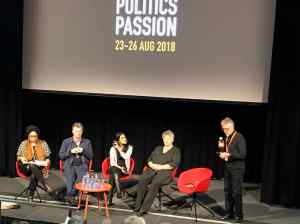
How lucky we were to have the above highly-respected poets, followed by, as moderator Cathy Craigie said, “three of Australia’s most dynamic writers”, Melissa Lucashenko, Kim Scott, and Alexis Wright (on the screen). The auditorium, which seats 300, must have been around three-quarters full, comprising indigenous and non-indigenous people from a range of ages. I hope they were pleased with the turnout. It certainly felt good to be part of it, which brings me to an important issue that came up in the Q&A and was also on my lips. It concerns what “white allies” can do. We can, of course, attend and support events like this, we can listen and learn from these events, and we can read the authors. It’s a challenge, though, I find to do this with the right tone – to not sound condescending, for example, when we try to “help” or empathise; to not assume we know or understand things we really don’t; to know how to communicate what we do know. It’s a fraught (though I recognise privileged) space to be in … but the important thing is to keep trying, isn’t it?

Anyhow, Cathy Craigie introduced the session, explaining that its focus was FNAWN’s theme for the week, intellectual sovereignty. She reminded us of the long history of Aboriginal and Torres Strait Islander writing in Australia – dating back to Bennelong’s letter to the Governor, and Maria Lock in the 1820s – and talked about the négritude movement in 1930s France, which promoted pride in racial identity.

The discussion then to-and-fro’d, with Craigie injecting questions regularly. I loved, again, the calm respect with which ideas were shared. There seemed to be a strong bond of “knowing” between the writers.

Melissa Lucashenko started by sharing some motivational quotes: “we are the authors of our lives” and James Baldwin’s statement that “freedom is not given, you take it.” She said Baldwin’s statement expressed an existential position – don’t wait, take power, and use it wisely.

Alexis Wright

Alexis Wright

Alexis Wright spoke about Tracker (the subject of her Stella-prize-winning book Tracker) and his focus on sovereignty. He was a visionary, she said, who wanted a stable Aboriginal economy, to ensure a secure culture, a secure future. She, like Lucashenko, emphasised the “sovereignty of the mind.”

She then talked about writing Tracker, which she calls a “collective biography”. She couldn’t do a conventional biography, she said, because he was a community man, because “his archive, his filing cabinet was in the minds of other people”.

There was much discussion about Tracker, who was clearly powerful, and significant in the indigenous community, albeit not everyone always agreed with him. Wright said he was a complicated person, with a sharp mind, which he was happy to express. He said, for example, that Native Title was “not big black stallion but a donkey”.

“Stories, songs, language are sovereign” (Scott)

Scott then talked a little about his latest novel Taboo. He said he tries hard not to think about politics and Aboriginal discourse when he writes his fiction, but he is interested in reclaiming older Noongar narratives and bringing in deeper resonance of place. “Stories, songs, language are sovereign” he said, and communities need to keep them strong so they’ll survive. There has been a long attempt to destroy stories and songs but we are moving from “denigration to celebration”.

Lucashenko raised the issue, currently being nutted out, regarding cultural restrictions on writing about other people’s country. I pricked up my ears of course at this, because it’s related to the cultural appropriation issue concerning white people writing black stories. Lucashenko said when she writes her own country she’s writing with rich knowledge. Writing about anywhere else would be superficial.

Wright was more circumspect about this restriction/limitation. Carpentaria, which is based in her country, was the book she wanted to write, but she is still learning about what she wants to write. Her 26 January story could, she said, be set anywhere.

Scott said he wrote Taboo in the “language of the default country”. He feels accountable to the past, to the fragile massacre area he comes from. He wants to build it up, strengthen its heritage. (He spoke about this in last year’s Ray Mathew lecture.) Perhaps we should all deepen our regions he said.

It was interesting here, because Scott clearly feels the need to strengthen Noongar culture, particularly his own area of it, while Lucashenko believes the culture in her country in northern NSW is strong. She lives in a progressive region, and they have “good white allies”. (See “white allies” discussion in the Q&A.)

Wright said that her country, her people, are strong, making it hard to encourage people into militant fighting for rights.

“Pay attention, tell the truth, write towards power” (Lucashenko)

At this point, Lucashenko teased out more about her notion of sovereignty – which she also expressed in the GR 60 session I attended: it doesn’t have to be politics but “can grow inside our heads.” She then said the job of the writer in these times is to pay attention, tell the truth, write towards power.

Scott suggested that sovereignty of mind involved (included) being accountable to ancestors and descendants. He talked about Australian Renaissance being “not digging up shards of pottery but texts buried in the landscape.”

The writers discussed language, words, and meanings – the importance of unpacking language – around this point.  Lucashenko said that the Bundjalung word for river is also the word for story, making the river, in her novel Too much lip a powerful metaphor for stories. Wright said that river means many things in her country too.

Craigie asked whether there was a change in how people are seeing intellectual and cultural sovereignty. Lucashenko seemed positive about young people’s sense of sovereignty within themselves and in their relationship to country, but said the young need to be nurtured with vigilance. She believes the thing is to avoid being reactive, because reaction puts you in a powerless position. She also said it was important not to become distracted by people who “don’t understand us.” Focus, instead, she said, on learning your own civilisation.

Survival

In a way, the whole session was about survival, but around here it came into sharper focus. Wright agreed that young people understand sovereignty and can teach older people about being gutsy. She emphasised the importance of nourishing story, of making story and of keeping it straight. Indigenous people are going to need strong storytellers. We’ve been an oral culture, she said, and need to learn from how the ancestors survived.

Scott agreed that indigenous people need to look after themselves, to “learn the game” (at which point Craigie quoted an African writer on learning to assimilate without assimilating.)

Lucashenko argued that indigenous culture is a knowledge-seeking culture, which is how they have survived. Indigenous people have done what they needed, learnt what they needed – such as learning English – to survive. (This reminded me of my recent Arnhem Land trip, during which we learnt about interactions between indigenous Australians and the Macassans for a few centuries. Indigenous people learnt skills, such as making dugout canoes, and incorporated Macassan words into their languages.)

Lucashenko concluded that indigenous people need to cultivate confidence.

Q & A

One questioner asked an excellent question regarding being good white allies: How best do we consume indigenous stories while preserving their integrity:

  • This is the nub, said Scott. There’s no easy answer, but: be conscious, and have a desire to listen. There is a real issue for Scott in getting the balance right to ensure indigenous people aren’t disempowered by non-indigenous people becoming more knowledgeable about culture than indigenous owners.
  • Lucashenko said there’s a simple test: Who benefits? If the answer is not the indigenous person, then go away and think again.

There were more questions, but I’ll leave it here – with the reminder to myself to always ask:

Who benefits?

Canberra Writers Festival 2018, Day 1, Pt 3: Indigenous Australians (1)

I planned to write a combined post for my last two events of Day 1, given both focussed on Indigenous Australians, but there was so much that I wanted to document (for myself, at least) that I decided to devote a post to each. There was, though, some overlap in terms of issues discussed, albeit from different perspectives. One of these was the fraught issue of “sovereignty.”

GR60: First things first

Sandra Phillips, Paul Daley, Shireen Morris, and Melissa Lucashenko

Sandra Phillips, Paul Daley, Shireen Morris, and Melissa Lucashenko

This event drew from Griffith Review’s 60th issue, titled First things first, which I referenced in my recent introductory post on this year’s festival. The event was advertised to be a panel: Dr. Sana Nakata, Shireen Morris, Paul Daley and Melissa Lucashenko moderated by Dr Sandra Phillips, but, as happened with most panels I attended, one person – here, Dr. Sana Nakata – didn’t appear. It was, however, an excellent session, albeit one which reminded us of the challenges still ahead for Australia. Given the session’s topic, the panel clarified who was (Phillips and Lucashenko) and was not (Daley and Morris) indigenous.

The Voice

Moderator Dr Sandra Phillips was also the co-editor of First things first. She introduced the participants, and briefly described the edition’s genesis in the Uluru Statement from the Heart, and the implications of then PM Turnbull’s rejection of the Voice. She then asked the participants to explain why were taking part in the panel. From there the conversation flowed somewhat organically, with Phillips injecting the odd question as needed …

Melissa Lucashenko said that when it comes to the issue of sovereignty, she’s somewhere in the middle, because she can’t claim to speak on behalf of anyone, beyond her family, until there is an elected model.

Constitutional lawyer and advisor to the Cape York Institute, Shireen Morris, described the Uluru Statement from the Heart, which resulted from an extensive consultative process, as historic. There were only 7 dissenters out of 250 delegates, albeit some dissent is good she said. The delegates coalesced around the idea of a Voice, so Turnbull’s outright rejection has been devastating.

Lucashenko was not as positive as Morris, feeling that the process had been rushed. She wasn’t convinced that the delegates had a mandate to represent all indigenous people. Here, political journalist Paul Daley, responding to her question, confirmed that our original Constitution was developed over 10 years. Phillips, however, felt that the consultation had been thorough and, further, had built on significant work preceding it (and on “the back of continuous failure to resolve things”.)

So, there was a difference of opinion about the Uluru Statement but the discussion remained completely respectful and focused on facts, on exploring ideas, and on sharing information. Lucashenko reiterated several times that she is very interested in the Voice but is concerned about what it would look like, how it would be made representative. Meanwhile, she said, she exerts her own sovereignty everyday.

Morris’ focus is constitutional reform. She strongly believes that getting something significant into the constitution is important because it’s harder to change, harder to get rid of (than something legislated, like ATSIC!) But, of course, this means that change is hard to get into the constitution too! So, the Voice needs to be in the constitution. Morris argued that the idea of a Voice can be enshrined in the constitution (via a referendum of course) with the details worked out and legislated afterwards. This is not an unusual process – but, of course, it requires trust, doesn’t it? Morris said the government should be working on the details now!

Later in the session, Morris said she’d argue that First Nations sovereignty was never ceded, and that the constitution is “squashing down” their sovereignty. Substantial constitutional reform is need to allow First Nations sovereignty to shine through, to express itself in a permanent way.

Daley commented that the Uluru Statement asks Australians to walk together “for a better future” for all, but that the immediate response of the then Deputy Prime Minister was that “that’s not gonna happen” and, of course, Turnbull dismissed the request for a Voice to considered a few months later in a press release. There was general agreement that the “whitefella political position is dire.” There was fury that ATSIC was killed off because of concerns about corruption, but the same thing doesn’t see whitefella institutions pulled down.

Truth-telling

The other important issue coming out of the Uluru statement is the need for truth-telling. The panel discussed Daley’s contribution to GR60, his truthtelling essay “Enduring traditions of Aboriginal protest” about the two indigenous men, Jimmy Clements and John Noble, who “turned up for the royal opening of the new Commonwealth Parliament building in Canberra” on 9 May 1927. Their story has never been properly told, and indeed in most reports and stories, the two men have been conflated into one. Daley sees their attendance as their assertion of Aboriginal sovereignty and as part of ongoing indigenous protest and resistance. Daley said that we have a responsibility to educate ourselves, and that the story of the frontier is there in Trove (yes!), if you want it.

Phillips added that contemporary Australian history is so short, there is no excuse for our not knowing the full story of our country. She argued that literature (meaning, I think, forms like fiction and poetry) plays a role in the truth-telling process.

At this point there was discussion of Lucashenko’s latest novel Too much lip, which Phillips said was about Aboriginal family relationships, about history and how “what happened in the past is with us today.” Lucashenko added that her characters are living in an age of depression and anxiety, but “don’t be depressed,” she said, “be angry.” She talked about the challenge of making these “hard” stories funny. For her next project, she’d like to write about colonial Brisbane. Trove – and archives in general – abound, she said, with “stories of resistance.”

Phillips added, cynically, that despite all these stories we end with lead characters in films that are Red Dogs! (Oh dear, my Red Dog post is still in my top ten posts.)

Daley talked about the novel he is writing. It’s inspired by the 1948 American-Australian Scientific Expedition to Arnhem Land, and in it he explores how the expedition was seen by indigenous and non-indigenous people. He realises it’s a cultural fraught thing to do, but he will, he assured Lucashenko, get indigenous assessment of what he’s written.

Phillips noted that there’d been millennia of successful governance in this country, and 230 years of destruction and oppression. Repairing this needs time, but we all need to be part of the dialogue. Meanwhile, she hoped, the panel had provided some illumination of the issues we are all facing. Yes, it did, I’d say.

Q&A

This is getting long, and there were quite a few questions, so I’m just going to summarise some of the main points that arose:

  • ATSIC represented a minimum model of what indigenous people want/need but she, Lucashenko, has good memories of it. It was killed off because, she said, white people don’t like indigenous people managing resources.
  • The Constitution issue is currently at a complete impasse, because our current (white) politicians appear to have no will to engage with the Uluru Statement.
  • Indigenous groups don’t need to wait for the Federal Government to act and are in fact working at local, regional and state levels to forge agreements.
  • Representation models for the Voice to Parliament could vary across the country depending on the needs and desires of different indigenous groups.

Marie Munkara, Of ashes and rivers that run to the sea (#BookReview)

Marie Munkara, Of ashes and rivers than run to the seaThe stories keep on coming, the stories, I mean, of indigenous children stolen from their families and what happened to them afterwards. I’ve posted on Carmel Bird’s compilation of stories from the Bringing them home report, The stolen children: Their stories, and also on Ali Cobby Eckermann’s memoir Too afraid to cry. Now it’s Marie Munkara’s turn with her excruciatingly honest, but also frequently laugh-out-loud-funny memoir, Of ashes and rivers that run to the sea.

Late in her memoir, Munkara learns that she was born “under a tree on the banks of the Mainoru River in Western Arnhem Land.” But, what she writes next is shocking

‘Too white,’ my Nanna Clara said as they checked me out by the camp-fire light, and everyone knew what that meant. Back in those days any coloured babies in my family were given to the crocs because dealing with these things right away saved a lot of suffering later on. It was better that we die in our own piece of country than be taken by the authorities and lost to our families forever.

Does that remind you of anything? It did me – of Toni Morrison’s novel Beloved, and the slave mother’s decision there. Anyhow, knowing what we know now about the lives of many stolen children, we can surely understand her indigenous family’s actions. Luckily, though, for Munkara – and us – Nanna Clara saw something “special” in her, and she was kept. That was in 1960. Three years later, now living on the Tiwi Islands, the inevitable happened and she was taken from home one day when her mother was at work at the mission laundry. Her mother begged for her to be returned, to no avail.

All this, however, we learn near the end of the book. Munkara starts the book when, at the age of 28 and quite by accident, she came across her baptismal card tucked in a book in her parents’ library. It told her that she was born in Mainoru in Arnhem Land. “In the space of an instant,” she writes, “excitement was replaced with mortification as old geography lessons began to resurface” about a “wild and untamed place where Aborigines hunted kangaroos and walked around butt-naked.” However, she decides to find out more, and soon discovers that her mother was still alive and still living in the Tiwi Islands. She decides to go meet her, with no advance notice.

To say that she was shocked by what she found is an understatement. “This is not the tropical island I had imagined,” she writes, “with luscious vegetation and cute little palm-frond houses. It is a dump.” She tries hard to enjoy her time there, but hates it and three days later returns home. However, it’s not long before she realises that she has to return. This ends Part 1 of the four-part book. In Part 2, she goes back in time and tells of her life as the foster child of two unhappy but highly religious people. Her mother was strict, and cruel, but her father was worse. He molested her for many years. A sad, sad upbringing but Munkara, as she admits herself, is a survivor:

But aren’t human beings amazing creatures and even at an early age we can choose to let the bad things in life devour us and we sink or we can make the most of the good bits and swim. … I chose to swim.

Part 2, then, makes for hard reading, but Munkara’s sense of humour, her ability to believe that things will work out, and her independent mind bring her, and us, through. She’s a great story-teller, which makes this section more manageable than you might expect – but it still leaves you angry!

And then we come to Part 3 in which she tells of her return to Bathurst Island. This is where the real interest of the book lies because it is here that Munkara takes us on her journey into another culture. She is us – to a degree. She has been brought up white – albeit “a dusky maiden” version – and her expectations and initial reactions are very much as ours would be. She describes how she tries to apply her whitefella ways to her new life with her Aboriginal family. She expects privacy, cleanliness, order and, most of all, respect for her possessions. None of these sit well with traditional indigenous values as she found them on Tiwi, but she’s determined nonetheless. We can feel her horror and frustration – but she’s telling this story long after the events, and imbues them with a light touch of self-deprecation and a warmth for her family which encourages acceptance rather than judgement (in herself and us).

Some examples:

I spend the day scrubbing the kitchen and neatly place all my things by themselves on a shelf so everyone can see they belong to me, and then I have a well-earnt nap. I sleep soundly and wake up to the smells of cooking. Stretching and yawning I make my way to the kitchen to put on the billy for tea only to stop at the doorway in horror, my mouth still open from the yawn. The room in an absolute shithole of a mess. My stuff is strewn everywhere […] Everyone tiptoes around me now they know I’m in a bad mood and I’m fine with that, maybe they’ll learn not to touch things that they shouldn’t.

and

They are instantly awake when they see that I’m only dressed in my bra and underpants. Thankfully my underwear is matching…

Haha, as if they’d care! And,

… after going to the footy on the weekend with my family for protection I’ve gotten over my fear of big crowds of black people. I now feel quite foolish for thinking they could be harmful to me and reckon I must have gotten this irrational fear from my white parents.

So much of this section resonated with me because it reflected many of the things Mr Gums and I were learning and experiencing as I was reading it. I’ve already posted on the cars, but there’s also the mess, the confusing kinship (including her having to call various dogs her brother, her son, her uncle and so on), the trust in spirits, the lack of concern for possessions, all of which can result in decisions and behaviours mystifying to us whitefellas.

But Munkara also learnt more seriously confronting things, such as that her mother’s damaged leg was caused by leprosy, something she’d thought only happened in the Bible and poor countries:

I slide my ill-informed thoughts into the rubbish bin and slam the lid down tight, angry that our First World country can live in ignorant bliss of our Third World problems. … I bet there wouldn’t be too many white people afflicted with leprosy in Australia because if there were it would be front-page news.

However, while the memoir is, for us, an eye-opening, necessary journey into another culture, it is, ultimately for Munkara, a journey to her self. By the end of Part 3, she has come to a better understanding of who she is:

But they don’t realise that there is no stolen and there is no lost, there is no black and there is no white. There is just me. And I am perfect the way I am. And I know now that I have to leave this place because I’ve learnt all I can for the time being and this lesson is over now.

She only leaves as far as Darwin, however, so she can remain in contact with her family. And so it is that, late in the book, Munkara writes about her (biological) mother’s dying:

When I asked her if she had any regrets she said there were no words in any of our family languages for regret. To regret something was a waste of time so why make a word for something that you didn’t need.

Munkara’s mother’s comment that her language doesn’t have a word for “regret” encapsulates for me the value of reading this book, which is its chronicling of the meeting of two opposing cultures. I thoroughly recommend the book, because understanding what divides us is critical to reconciliation – and because it is a darned good read. She can tell a story, that one!

ANZLitLovers ILW 2018Lisa (ANZLitLovers) has reviewed this book, as has French blogger Emma (Book around the corner) and the Resident Judge. Read for Lisa’s (ANZLitLovers) Indigenous Literature Week.

AWW Badge 2018

Marie Munkara
Of ashes and rivers that run to the sea
North Sydney: Penguin Random House, 2016
179pp. (print version)
ISBN: 9780857987280 (eBook)

Monday musings on Australian literature: about Arnhem Land

When this post goes live (during NAIDOC Week) I will be in Australia’s Top End, touring a region called Arnhem Land – and will most likely be incommunicado. Located in the north-east of the Northern Territory, it is named after the ship captained by Dutchman William van Colster who visited the area in 1623. The ship, the Arnhem, was named for the city of the same name, in the Netherlands.

According to Wikipedia, the region has a population of around 16,000, of whom 12,000 are Yolngu, the traditional owners. The main town is Nhulunbuy, with other major population centres being Yirrkala, Gunbalanya, Ramingining, and Maningrida. Mr Gums and I will be visiting most of those places during our 12-day tour. Arnhem Land is known for the fact that a large percentage of its indigenous people live on small outstations on their traditional lands, with minimal western cultural influence. Arnhem Land is almost like a separate country – and visitors need a permit to enter.  Many of its leaders continue to push for a treaty that would allow the Yolngu to operate under their own traditional laws.

East Alligator River, western Arnhem Land

Arnhem Land borders, on its west, Kakadu National Park, which we have visited twice in the past. On both occasions we have done short indigenous-led tours of that border area – one on the East Alligator River, and the other into the country as far as the Injalak Art Centre. Those tours introduced us to some of the culture – the law, the art – of the people. It’s gratifying to feel our understanding of our country growing through these experiences.

However, for my Monday Musings of course, I want to share something of the region’s literary heritage, which given that the traditional culture there is oral, includes song. This list is very little, highly eclectic and very selective.

Some musicians

Yothu Yindi

Probably because I lived some of my childhood years in northwest Queensland, Arnhem Land was familiar to me, but it didn’t really, I think, become known to many Aussies until the band Yothu Yindi burst on the music scene in the early 1990s. The group was formed in the mid 1980s, but it was their song “Treaty” (I did mention of treaty in my intro, after all!) from their album Tribal Voice which brought them to national attention in 1991. The lead singer was Mandawuy Yunupingu and his nephew Dr G Yunupingu, about whom I posted last week, was an original member. The song “Treaty” was a collaborative work by the two Yunupingus, and other members of the band, and non-indigenous museum Paul Kelly. “Treaty” has gone on to become one of Australia’s most significant songs, being named in 1991 by Australasian Performing Right Association (APRA) as one of the Top 30 Australian songs of all time, and being added, in 2009, to the National Film and Sound Archive’s Sounds of Australia registry.

Yothu Yindi could occupy a whole post to themselves, so please check the link I’ve provided if you are interested. They have played a major role in promoting and developing Yolngu culture, to both Yolngu and wider Australia’s benefit.

There are many performances of the song, which includes words in language and English, on YouTube, including this one published by mushroomvideos. Here are a few lines:

This land was never given up
This land was never bought and sold
The planting of the union jack
Never changed our law at all

Dr G Yunupingu

I won’t add much here, because I spoke about his legacy in my above-mentioned post on Gurrumul, the documentary film about him. Besides the fact that his music is beautiful, and that he sang about his culture (and lived his culture for all to see), Dr G also made a significant contribution to Australian culture by writing and performing most of his songs in the languages of his region. The pride in culture that singing in language gives to his people can’t be underestimated.

A writer from Arnhem Land

Marie Munkara

Marie Munkara, Of ashes and rivers than run to the seaA member of the Stolen Generations, Munkara was born on the banks of a river in Arnhem Land, but she was taken, at the age of three, to a mission at nearby Melville Island (part of the Tiwi Islands). From here she was passed on to European foster parents, and didn’t see her mother again until she was 28 years old. You can read some of her story at SBS. I have reviewed her glorious David Unaipon Award winning book, Every secret thing, and plan to read her memoir Of ashes and rivers that run to the sea while I’m in Arnhem Land (for Lisa’s ANZlitLovers Indigenous Literature Week which coincides with this year’s NAIDOC Week. This year’s theme is, appropriately, Because of her we can.)

A blast from the past

Of course, I had to check out the digitised newspapers in Trove, and by narrowing my search to “Arnhem Land Literature” I retrieved a small number of hits, all from the 1930s, only two of which specifically related to Arnhem Land. Both were short stories by non-indigenous writers about Japanese pearlers in the region. I’ll just share one, because it’s by one of Australia’s most popular authors of the day, Ion Idriess (1889-1979). According to Wikipedia (the link’s on his name), he spent some time, after returning to Australian after World War I, travelling in the remote Cape York region, and working with pearlers and missionaries in the Torres Strait islands.

His story, titled “The massacre on the No Gawa Maru”, was published in Sydney’s The Sun on July 11, 1936, and clearly draws from his knowledge of pearling. It’s about a Japanese pearl-shell poacher, Captain Toyama of the “No Gawa Maru”, who “knew he was cruising here against the laws of his own Government and the Australian.” He knows about the Three-Mile limit, and he’s also aware of the Australian patrol boat, the “Larakia”, with its machine gun. It’s “nervy” business this pearl-shell poaching, but they are driven by “fatalism and greed and hope”, the idea of “easy wealth, quickly won.” (Something Idriess likens to the Australian gold field mania which also sent men to “lonely graves”.)

Anyhow, Idriess sets the scene:

They had passed Groote Eylandt lying away eastward with its hills rising as if from a great grey cloud upon the sea. Captain Toyama now stared for’ard where along the Arnhem Land coast islands were taking shape in silhouettes of tree-tops. Presently he saw the sun sheen on straw-colored grass.

Toyama’s crew tell stories of brutal indigenous attacks on boats, too, and of indigenous men selling their women “cheerfully” and the women going “eagerly”, but to accept this “is a death trap. Their women are only a snare. They kill for blood lust and loot.” He refers here to King Wongo of Caledon Bay, who was a real person. Idriess’ story is a gruesome, dramatic story about an indigenous attack on Toyama’s boat. According to the Australian Dictionary of Biography (ADB), it appears that Idriess bought into the idea of Wonggu/Wongo as an “evil genius” behind this sort of brutality, but not all agreed. ADB’s article on Wonggu concludes:

A man of influence, authority and charisma, he represented a romantic and little known aspect of Northern Territory history. More importantly, the events in which he was involved drew attention to the issues of Aboriginal justice and rights to land.

Trove, which I’ve only dipped into about this, certainly includes some very positive articles about Wonggu/Wongo.

The other story is by Keith Ellis, and is called “Sampans”. You can read it online if you like.

I hope that by the time we’ve ended our Arnhem Land tour we’ll know not only more about contemporary culture, but about some of its history and past characters too. I’ll report back if we do!

PS: There’s a good chance I will not manage to post a Monday Musings next week. Enjoy the break!

Claire G. Coleman, Terra nullius (#BookReview)

Claire G Coleman, Terra nulliusClaire G. Coleman’s debut novel, Terra nullius, was my reading group’s third book for this year. The first two – An unnecessary woman (my review) and The sympathizer (my review) were well liked – but not so Coleman’s book. In fact that I was the only one who liked it. So, instead of my usual review, I’ve decided to tease out some of the issues my group had with the book, and see where I end up. I didn’t take notes at the meeting, so I’m relying on my memory. I may not have got all the issues down, or down correctly, but I’ll give it my best shot. In doing so, I’ll also draw on GoodReads because its users tend to be general readers, like you finding reading groups.

First though, a brief introduction for those who don’t know the book. Terra nullius starts off reading like an historical fiction novel about the colonial settlement of Australia and the concurrent dispossession of our indigenous people. Coleman’s world of Settlers and Natives, of Troopers and Trackers, of Missions to which stolen children are taken for education, of a Department for the Protection of Natives, and so on, mimics colonial Western Australia in particular, but it’s not long before hints start to appear that all is not as we’ve assumed. Before halfway, all is revealed, and we realise we are not reading historical fiction, but speculative fiction set in some near future. It is, as a result, not about indigenous Australians versus white colonists, but about colonised people of all races versus settler-colonists (“grey fellas”) from somewhere else. This realisation is unsettling, and clever, because it forces non-indigenous readers to switch identification from the colonisers to the colonised.

Now to my reading group’s response. The over-riding criticism was that it was repetitive and tedious. This is the criticism I could most understand, because partway through the novel’s second half I felt the momentum flag a little, which I put down to the structure. It’s multi-stranded, with the stories of different people or groups running parallel for a significant portion of the book. The strands include Native Jacky who is on the run; Settler Sister Bagra who runs a Mission; Settler Sergeant Rohan who leads the posse which is hunting Jacky; Esperance and her camp of free, renegade Natives; and deserter-Settler Johnny Star who is taken in by some rebel Natives. Fortunately, just as I wondered whether the separate groups – the separate strands – were ever going to come together, two things happened. A new character, Father Grark, appeared, and the strands did start to coalesce. These, along with other factors including the writing itself, were enough to prevent the book’s becoming tedious for me.

However, my reading group friends weren’t alone in their criticism. One GoodReads reviewer described it as “gratingly repetitive” and another overall positive reviewer had “some minor quibbles”, of which the main one was that “some elements of the story were repetitive”.

Another criticism made by some of my group was that they weren’t interested in any of the characters. Some GoodReads reviewers concurred. One didn’t “connect with any of the characters” and another said that “the characters, the individuals, are basic, with no complex motivations, no desires”. This surprised me, because I was interested in several of the characters, and I looked forward to their next appearance. One was Esperance, the young woman living with that renegade camp of Natives. Another was Jacky, who is the first character we meet and who, for over half the novel, struggles on alone, trying to survive and keep one step ahead of his pursuers. There are, though, a lot of characters, and I can see the argument that many of them have “no complex motivations”. However, I’m not sure that deep characterisation is always essential for speculative, dystopian fiction, such as this book is. Anyhow, regardless of this point, I can’t accept the argument that none have desires. Esperance and Jacky, for example, certainly have desires. Survival is one, and for Jacky, returning to his home, his country, is a major driving force.

One of the positive GoodReads writers said, and it reflects my response, that “importantly, Coleman’s more ‘extreme’ characters – such as Sister Bagra, in charge of a Native ‘orphanage’ – are frighteningly familiar, and it [is] these elements of the story that will linger.” She is not, in other words, a particularly complex character, but given what I know of colonial history, she is believable. I’d argue that that’s sufficient.

Then there were arguments that the book was too heavy-handed, too obvious, not nuanced enough. Again, there were GoodReads reviewers who agreed, one saying the “messaging was much too overt” and another that it could have been more subtle. However, I’m not sure that I’ve read much dystopian fiction that is subtle. On GoodReads I found a perfect example of how differently we “read” books. One criticised the chapter epigraphs, which come from various fictional “sources”, saying that “the book could have been done much more subtly without the chapter-starters explicitly comparing the colonisation to the colonisation of Australia”, while another said that Coleman’s “use of ‘archival documents’ at the beginning of each chapter gave the book rich perspective.” Again, I concur with the latter, and some in my group agreed that this feature of Coleman’s book was effective and worth exploring further.

It seems that those who are well-versed in speculative fiction’s colonisation stories – in my reading group and on GoodReads – felt that Coleman’s book didn’t offer anything new. A member in my group felt that it was so clearly Western Australia’s story that Coleman may as well have made it Western Australia. I agree that the “facts” aligned closely with the Western Australian experience, but I didn’t see that spoiling its speculative layer. In a way, it increased its effectiveness because, using the GoodReads quote above, it felt “frighteningly familiar”. There is an argument to be had, I suppose, about how “familiar” speculative fiction can be before it’s no longer speculative, but for me it worked.

Other concerns were raised in my group, but there were positives too, particularly regarding the quality of Coleman’s descriptive writing. She knows the landscape well and captures the heat and light, not to mention the weirdness of Australian desert vegetation beautifully:

He [Sergeant Rohan] did not relish another night under the alien trees, the twisted limbs, the hanging bark, the wrong colour: their waxy grey-green leaves too hard, almost glassy.

There’s more to like about the writing than this, however. From the first page when we meet Jacky on the run, I loved Coleman’s voice. It’s direct but evocative, it’s serious but peppered with a light, cheeky touch that uses throwaway lines and afterthoughts to great effect:

Dinner was a disappointment: sure the meat was fresh but it was tough and tasted like all the other Native meats – quite unappetising, only to be relished by the desperate. Good thing they were desperate then.

So, I was impressed by this book. My heart engaged with the characters who were struggling to survive their nightmarish world, while my mind was intrigued by what Coleman was doing, by her layering of historical experience within an imaginative framework, by her grounding us in a familiar story, and then overturning it to force us to see it from a different perspective. I’m not sure I followed all her intellectual twists and turns but I certainly got the point about invasion – and about the cruelty people inflict on each other in its name.

He [Johnny Star] had learned, through his friends, that the bent, broken drugged and drunk state of those surviving near the Settlements was not the habitual state of Natives. The truth was, it was a sort of depression brought on by what they had lost, brought on by being dominated and controlled by another people. Who could not be depressed, being treated like animals in a land that had once been theirs alone.

Without giving away the details, the ending is generally what you’d expect from a dystopian scenario, but it’s not without hope, without defiance too. A great read … at least, I thought so!

Lisa (Anzlitlovers) loved the book, as did Bill (The Australian Legend).

Note: I haven’t cited the individual GoodReads reviewers, but they can be found at the site’s page for the book.

AWW Badge 2018Claire G. Coleman
Terra nullius
Sydney: Hachette Australia, 2017
294pp.
ISBN: 9780733638312

Monday musings on Australian literature: Teaching indigenous texts

This post was inspired by an email I received from Reading Australia announcing a partnership with the Broome-based indigenous publisher Magabala Books for a project that was

inspired by the many teachers who reached out to Reading Australia to ask for more resources on works by Indigenous creators, and particularly units that showed non-Indigenous teachers how to teach Indigenous texts.

Then, quite coincidentally, I read on my Twitter feed this morning about a one-day seminar that had been run last week by AustLit’s BlackWords (about which I’ve written before) called Teaching with BlackWords Symposium – so I decided to broaden this post a little. As someone who is keen to promote and review indigenous writing but is always a bit anxious about it, I’m thrilled to see programs like these offering to help people who feel the same and who have formal responsibilities for teaching and sharing.

Reading Australia and Magabala Books

When I clicked on the link in my email announcing the Reading Australia-Magabala Books partnership, I discovered that this was the second such project, supported because of the success of the first. Both projects are funded by the Copyright Agency’s Cultural Fund.

The first project, implemented in 2017, involved Magabala Books creating resources for 15 books for primary school teachers to use in classrooms. You can access resources for 11 of the nominated 15 books on the Magabala site. I’m assuming that the rest is still to come.

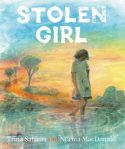
Saffioti, Stolen girlSo, for example, the resource for Stolen Girl (which was written by Trina Saffioti and illustrated by Norma MacDonald) starts with a section titled “connecting to prior knowledge” and points teachers to additional resources like the Bringing them home report. The resource says the book is suitable for around Year 4 (ie around 9-10 year olds). It starts by encouraging children to think about the meaning of “home” and the difference between “house” and “home”. It asks teachers to carry out an Acknowledgement of Country, to discuss its meaning and to talk about the name of the country in which the school is located. It also refers them to use stories from a site called Australians Together. These are just a few of a whole raft of activities helping teachers explore the ideas and history behind this book.

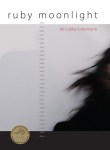
Ali Cobby Eckermann, Ruby MoonlightThe 2018 partnership turns to secondary school teaching. It identifies 8 books (listed in the order used on the site) for which resources will be written:

  1. Becoming Kirrali Lewis by Jane Harrison
  2. Dark Emu by Bruce Pascoe (my review)
  3. Grace Beside Me by Sue McPherson
  4. Jandamarra and the Bunuba Resistance by Banjo Woorunmurra and Howard Pederson
  5. Ruby Moonlight by Ali Cobby Eckermann (my review)
  6. Songs That Sound Like Blood by Jared Thomas
  7. Ubby’s Underdogs: Heroes Beginnings by Brenton E. McKenna
  8. Us Mob Walawurru by David Spillman and Lisa Wilyuka

I’ve only heard of a few of these books, but from what I do know it looks like a good variety.

I wonder how well promoted this program is, and how much it is being used in schools?

Teaching with BlackWords Symposium

Moving up the educational tree, the BlackWords Symposium was geared to secondary and tertiary teachers. The symposium was subtitled Best Practice for Teaching with Indigenous Stories, and promoted as “an important professional development event for teachers.”

The promotion continued:

Have you ever felt concerned, awkward about, or ill-prepared to teach Indigenous authored texts and issues into your classroom?  Would you like advice on how to respectfully use Aboriginal and/or Torres Strait Islander stories and history in your teaching? Do you think your teaching could benefit from a deeper understanding of the concerns and issues that First Nations writers address in their work?

The symposium was apparently sold out. How wonderful is that?

The  speakers were some of our big movers and shakers in promoting indigenous literature, Dr Anita Heiss, Professor Larissa Behrendt, Dr Sandra R. Phillips, and Samuel Wagan Watson. Also, someone I don’t know, Lindsay Williams, described as the “English Teacher Guru”, led a workshop on “using AustLit’s BlackWords resources in the classroom”. The day was chaired by Anita Hess and Kerry Kilner (of AustLit). AWW team member and author Jessica White, whose novel Entitlement I’ve reviewed, tweeted that it was “an amazing day”. Lucky her.

Things are happening, consciousnesses are being raised – but we are a long way, yet, from resting on our laurels.

Tony Birch wins the 2017 Patrick White Award

The Patrick White Award is one of Australia’s very special literary awards, and one that I posted in detail about last year when Carmel Bird was the winner. It’s special for a number of reasons. It is named for Patrick White who is, to date, Australia’s only Nobel Laureate in Literature. But, as I wrote last year, it’s particularly significant because it was established by White himself, using the proceeds of his Nobel prize money. Known for being irascible, White was also a principled and generous person. Having won two Miles Franklin Awards, among others, he stopped entering his work for awards in 1967 to provide more opportunity for other less-supported writers. His award goes to writers who have made significant contributions to Australian literature but who haven’t received the recognition they deserve.

This year’s award, as I heard on ABC Radio National when I was heading out for my patchwork group’s fortnightly cuppa, was announced at Melbourne’s Wheeler Centre last night. It is special for another reason:  the award has been made to Tony Birch, making it the first time the award has been made to an indigenous Australian writer. In one sense I feel uncomfortable about labelling, because Birch has won the award on the merit of his output, but on the other hand such wins can raise awareness and provide encouragement for all those “others” who feel (and, you’d have to say, are) locked out of the mainstream.

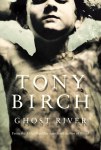
Tony Birch, Ghost riverSo, Tony Birch. He’s a Melbourne-based writer, who has written two novels, many short stories, and poetry. His first novel, Blood, was shortlisted for the Miles Franklin award, and his second, Ghost River (my review) won the 2016 Victorian Premier’s award for Indigenous writing. I have also reviewed one of his short stories, “Spirit in the night” (my review), which was published in the excellent Australian Review of Fiction series.

Australian literary editor Jason Steger, writing about Birch’s win, quotes Birch on White:

“I admired the fact that as a writer in his older age he protested against the Vietnam War, that he was a great supporter of Whitlam after the Dismissal and that he had been involved with Jack Mundey’s protests and the Green Bans.”

Steger continues that this attracts Birch:

because he is “very involved” with the campaign against the Adani Carmichael coal mine in Queensland. And as a research fellow at Victoria University, his work “is essentially about the relationship between climate change and what we now call protection of country”.

The most interesting (and most memorable) parts of Ghost River werefor me, the environmental story about saving the river and Birch’s depiction of the lives of and treatment of homeless men. Michael Cathcart, in his interview with Birch on ABC’s Books and Arts Daily Program, commented that while Birch’s work features indigenous characters, his themes seem broader. Birch responded pretty much as Steger also quotes him:

I suppose my writing is broadly about class, but more essentially about valuing people who might otherwise be regarded as marginalised.

Patrick White would, I’m sure, have been proud.

Stan Grant, Talking to my country (#BookReview)

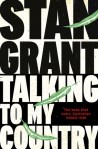
Stan Grant, Talking to my countryHistory is, in a way, the main subject of my reading group’s October book, Stan Grant’s Talking to my country. I’m consequently somewhat nervous about writing this post, because discussions of history in Australia are apt to generate more emotion than rational discussion. I will, though, discuss it – through my interested lay historian’s eyes.

However, before we get to that, I’d like to briefly discuss the book’s form. Firstly, it’s a hybrid book, that is, it combines forms and/or genres. In the non-fiction arena, this often involves combining elements of memoir with something else, like biography, as in Gabrielle Carey’s Moving among strangers (my review). In Grant’s case, he combines memoir with something more polemical – an interrogation of Australian history, and how the stories we tell about our past inform who we are and how we relate to each other.

Secondly, and probably because it’s not a straight memoir – Grant wrote his memoir, The tears of strangers, in 2002 – the book is structured more thematically than chronologically, though a loose chronology underlies it. For example, his discussion of the lives of his grandparents and parents doesn’t happen until Part 3, and then in Part 4 he discusses the government’s policies for handling “the ‘Aboriginal problem'”, particularly that of assimilation (or, more accurately, “absorption”.) This structure enables him to focus the narrative on his theme, so let’s now get to that.

The book opens with an introductory chapter titled, simply, My country: Australia. In it, Grant sets out why he wrote the book, which is to convey to non-indigenous Australians just what life is like for indigenous people, to explain that although history is largely ignored it still “plagues” indigenous people, and to tell us that the impetus for him to finally write the book was the booing of indigenous football player Adam Goodes in 2015. And here, in very simple terms, Grant states his thesis:

This wasn’t about sport; this was about our shared history and our failure to recognise it.

He goes on to explain that while some tried to deny or excuse it, his people knew where that booing came from. From my point of view, it’s pretty clear too.

“the gulf of our history”

Now, I’m not going to summarise all his arguments – or the stories of his and other indigenous people’s experiences – but I do want to share some of his comments about history. As Grant is clearly aware – and what Australian isn’t – history is politicised, sometimes consciously, sometimes unconsciously. My generation, the baby-boomers, grew up learning that Captain Cook discovered Australia and that Governor Phillip established the first settlement. If Aboriginal people were mentioned, it tended to be in passing. They were merely a side-bar to the main story. We may have learnt about the missions (and the “great” work they were doing) and we may have learnt in later years of schooling that many indigenous people lived in poverty, but we weren’t told about the massacres and violence that occurred, and nor was it ever suggested that we* had invaded an already occupied land. However, as we now know, these things we weren’t told are incontrovertible facts, supported by evidence.

Some, unfortunately, still ignore these facts and some try to interpret them differently, while the rest of us accept them but feel helpless about how to proceed. And this leads directly to Grant’s underpinning point, which is that we – black and white Australians – meet across “the contested space of our shared past”. Elsewhere he states it a little less strongly as “the gulf of our history”. I love the clarity of these phrases. They explain perfectly why discourse in Australia regarding indigenous Australians can be so contentious and so often futile. Grant’s point is that we can’t progress as a unified nation until this space is no longer contested, until the gulf is closed or bridged.

Grant puts forward a strong case based on experience, anecdote and hard facts (such as the terrible, the embarrassing, statistics regarding indigenous Australians’ health outcomes, incarceration rates, etc) to encourage all Australians, “my country” as the title says, to understand why, for example, when we sing the national anthem – “Australians all, let us rejoice” – indigenous people don’t feel much like joining in. What do they have to rejoice about? Where is their “wealth for toil”.

Suffice it to say that I found this a powerful book. While in one sense, it didn’t teach me anything new, in another it conceptualised the current state of play for me in a different way, a way that has given me new language with which to frame my own thoughts.

By now, if you haven’t read the book, you’ll be thinking that it’s a completely negative rant. But this is not so. It’s certainly “in your face” but Grant’s tone is, despite his admitting to anger, more generous. His aim is to encourage us white Australians to walk for a while in the shoes of our indigenous compatriots and thus understand for ourselves what our history, to date, has created. He believes that good relationships do exist, that there is generosity and goodwill but that, as the Adam Goodes episode made clear, bigotry and racism still divide us.

Late in the book Grant discusses the obvious fact that this land is now home to us all, that many of us have been here for generations and “can be from nowhere else”. Rather than rejecting “our” claims to love this place, he writes that this should make it easier for us to understand indigenous people’s profound connection to country. He writes:

I would like to think that with a sense of place comes a sense of history; an acceptance that what has happened here has happened to us all and that to turn from it or hide from it diminishes us.

And so, rather than telling indigenous people that “the past is past” and “to get over it”, it would be far better, far more honest, far more helpful, for us non-indigenous people to say, “Yes, we accept what we did and understand its consequences. Now, how should we proceed?” Is this really too hard?

Stan Grant
Talking to my country
Sydney: HarperCollinsPublishers, 2016
230pp.
ISBN: 9781460751978

* And by “we”, I mean, as Robert Manne explains it, not “we” as individuals, but as the nation.

Monday Musings on Australian literature: the Boundless Festival

Boundless Festival panelLast Saturday, the NSW Writers’ Centre and Bankstown Arts Centre presented Boundless: A Festival of Diverse Writers, which they describe as the “first-ever festival focused on Indigenous and culturally diverse Australian writers and writing”. My first reaction was, Really? Surely not. There was Blak and Bright held last year in Melbourne. But, hmm, that was specifically Indigenous. I couldn’t, quickly anyhow (and that’s relevant in itself), think of anything else. So, Boundless does appear to be the first to combine all of Australia’s culturally diverse writers under one umbrella. This is a worry. However, the good thing is, as the post-festival tweets suggest, that it was a stimulating event.

It was also free, and comprised “performances, readings, panel discussions, audiovisual experiences, and workshops for children and adults.” And, if you haven’t guessed, the Festival’s name references the line “boundless plains to share” from Dorothea Mackellar’s poem “My country”. It’s a great title, having both ironic and aspirational connotations.

So, who was there? And what was the program? According to the website, over 40 artists were involved. I have to admit that I’ve only heard of a few, including:

  • Ivor Indyk, an Australian-born editor and publisher of Polish immigrant parents. He founded Giramondo Publishing.
  • Mirielle Juchau, an Australian Jewish writer, whose novel The world without us was shortlisted for the Stella Prize and NSW Premier’s Literary Award.
  • Julie Koh, an Australian-born writer of Chinese-Malaysian parents, whose short story collection, Portable Curiosities, was shortlisted several awards including a NSW Premier’s Literary Award. Koh was also named as a 2017 Sydney Morning Herald Best Young Australian Novelist.
  • Benjamin Law, an Australian-born writer and journalist of Hong Kong Chinese parents. His memoir The family Law was adapted for a television series.
  • Hoa Pham, a Vietnamese-Australian writer whose novel, Lady of the realm, I’ll be reviewing soon.
  • Ellen van Neerven, an indigenous Australian writer whom I’ve reviewed here a few times.
  • Markus Zusak, an Australian born writer of German and Austrian parents. I’ve reviewed  his young adult-adult crossover novel, The book thief, here.

I need to say that the listing of artists in the Festival Program did not provide their origin, which is, I guess, about not labelling. However, I felt that readers here might want to know something about their backgrounds because that, presumably, explains their role as presenters at a festival specialising in diversity. I really hope this hasn’t been insensitive of me.

It was a pretty packed program, with some concurrent streams. The sessions included:

  • GetSmART: An insider’s look into the world of book publishing. It was convened by Jennifer Wong, host of Bookish on ABC iView, and involved publishers Chren Byng (HarperCollins), Ivor Indyk (Giramondo), and Robert Watkins (Hachette).
  • Shaping the horizon: Exploring how new writers are “reshaping the landscape and literature of Australia” and its effect on “how we see ourselves as a community”. Convened by Benjamin Law, and involving Michael Mohammed Ahmad, Julie Koh, Peter Polites, and Ellen van Neerven.
  • All in the family: About how to “write about families without offending your own”. It involved Cathy Craigie, Mireille Juchau, Benjamin Law, Omar Sakr, and was convened by Jennifer Wong.

Other events and activities included a pop-up bookstore with book signings (which you’d expect at literary festivals), panels and workshops for children and young adults, film screenings, and a poetry slam.

Just prior to the festival, The Au Review interviewed Benjamin Law who said about the importance of festivals like Boundless:

By some measures, Australia’s one of the most diverse nations on the planet. We’re home to the oldest living, surviving and thriving human cultures and communities bar none, with Aboriginal and Torres Strait Island storytelling spanning back millennia and continuing to present day. About half of us have parents born overseas and a quarter of us are migrants. One in five speak languages other than English at home. And yet that’s rarely the image of Australia we export or tell ourselves. Showcasing Australian writing in all of its diversity is a vital start.

And answering a question about how he’d define “Australianness” he said:

We’re a happily mongrel nation and one of the most diverse on the planet. And we’re a happy group of contradictions that must be acknowledged: the home to the oldest living human cultures and communities bar none, as well as one of the youngest modern immigrant nations on earth. If you disagree with me, die angry about it.

Nothing fancy here, just plain description. I like it – though perhaps not everyone would use the terms “happily” and “happy”, not yet anyhow.

Sarah Ayoub, Hate is such a strong wordAlso just before the Festival, SBS.com.au wrote about Lebanese-Australian author Sarah Ayoub, who has written two YA novels, Hate is such a strong word and The Yearbook Committee. She speaks about growing up in a mono-cultural part of Sydney where she never experienced racism but, she says, as she grew up:

I started to think about how ethnic enclaves don’t really do much for cultural cohesion. I found that there were so many stereotypes that white people had about my community and there were so many stereotypes that my community had about white people.

Ayoub believes that Australia is now at the forefront of diverse publishing, and names Alice Pung, Randa Abdel-Fattah, Tamar Chnorhokian, Melinda Marchetta, and Michael Mohammed Ahmad as her favourite authors writing about multi-cultural Australia.

So, there’s positivity about how we are going, but to make sure we don’t become complacent, I’ll conclude with a tweet (hashtag #boundless17) from Djed Press:

White facilitation and white programming at festivals is really problematic and not often discussed.

Festivals like Blak and Bright and Boundless are important initiatives on our journey to being a true (and happy) multicultural nation, but as this tweet makes clear we certainly have a way to go yet.

Do you actively seek “diversity” (however YOU define it) in in your reading?