Indigenous Literacy Day 2019

Today, Wednesday 4 September, is Indigenous Literacy Day, which the Indigenous Literary Foundation (ILF) describes as “a national celebration of Indigenous culture, stories, language and literacy”. The day is intended to both promote awareness of disadvantage in indigenous communities, and to  “encourage the rest of Australia to raise funds and advocate for more equal access to literacy resources for remote communities.”

I have been donating annually to ILF for the last few years, but there’s more I can do to support them and raise awareness. Writing this post is one of those ways.

It seems particularly relevant for me to do this this year, because the importance of supporting indigenous literacy, and, related to this, of spreading knowledge about indigenous languages was the impassioned parting message from Tara June Winch, Yvette Henry Holt and Jeanine Leane, at the Canberra Writers Festival Identity session.

Nha Nhunu Nhanjal? project

Book coverA few weeks ago, I received an email from the ILF reminding me about Indigenous Literacy Day and telling me about a book they are publishing, commemorating both this day and this year’s International Year of Indigenous Languages. The book is Nha Nhunu Nhanjal?, and is the product of a special project. It was “written and illustrated by Yolŋgu Matha-speaking students from Nhulunbuy Primary School on the Gove Peninsula in North East Arnhem Land and was launched at this year’s Garma Festival”. An English edition of the book, titled I Saw We Saw, will be launched at the Sydney Opera House today, Indigenous Literacy Day. Students from Nhulunbuy, 4,000 kilometers away, will be present to read and perform from the Yolŋgu Matha version.

In the email, ILF quoted well-known Australian author Richard Flanagan, an ILF Ambassador, speaking at the Garma Festival:

“Every language is a universe, and each universe allows us to understand what it is to be human in a different, larger and richer way. Like a basket woven out of many pieces of grass, many languages make our societies stronger and better.”

ILF says, reiterating Winch and co’s message, that

It is vital for young children to have access to books in their language. And seeing their way of life reflected in books their own children and community have created, ensures that cultural identity and connections to country remain strong.

We all know this don’t we? Many of us love reading about other cultures, but our first home, our starting point has to be, and for most of us naturally was, books about our own culture.

How can you support indigenous literacy and culture?

There are many things you can do, of course, depending on your skills, abilties, interests and wallets. Here are some ways:

  • donate to ILF (here)
  • buy a book (or two) from the National Library of Australia’s Bookshop, online or in store, today, between 9am and 5pm, as they all be donating 5% of all sales made to the  Indigenous Literacy Foundation. (Or from any other bookshop offering a similar donation to ILF today.)
  • buy the English version of the book, to keep, give away and/or donate to your local school.
  • hold your own fundraising activity, such as a Book Swap (doesn’t have to be today!)
  • advocate for ILF on social media, tagging @IndigenousLiteracyFoundation on Facebook and Instagram, and @IndigenousLF on Twitter

Let’s do what we can to help indigenous Australians’ literacy. And let’s also do what we can to increase non-indigenous Australians’ understanding of an ongoing 60,000+ years culture that no other country in the world is lucky to have. I mean, really, how fortunate we are.

Canberra Writers Festival 2019, Day 2, Session 1: Identity (Tara June Winch with Yvette Henry Holt)

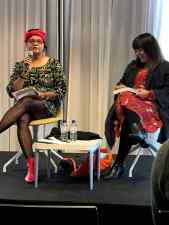
Holt and WinchToday was the day I was able to devote to fiction writers. There were still clashes, but there was never any doubt that I would attend this Tara June Winch session, even though it meant missing a panel featuring Charlotte Wood, Brian Castro, and Simon Winchester. Why were these scheduled opposite each other?! The Festival-goers complaint! Anyhow, fortunately, as you’ll see, I did get to hear Brian Castro too; and I have seen Charlotte Wood before and did see Simon Winchester in a different session.

Anyhow, as I said, I was not going to miss Tara June Winch, and I was not disappointed by my resolve. It was a special session. There was a lightness to it, a joy, a love, a generosity, but also a deep and passionate commitment to indigenous lives and culture.

Poet and current chair of FNAWN (First Nations Australians Writers Network) Holt commenced by jokingly welcoming us to the Boris Johnson Fundraising event at the Canberra Raiders Festival! But she then turned serious, acknowledging the passing of Kerry Reed Gilbert (see my Vale post) whom she called one of “our most imperative voices for treaty in Australia”. She called for a one-minute silence.

Holt then introduced Wiradjuri-born Tara June Winch, who now lives in France. She named Winch’s works to date: the award-winning novel Swallow the air (my review), short story collection After the carnage, script for the VR program Carriberie (which I’ve seen at the NFSA), and her latest novel, The yield. She then handed over to Winch.
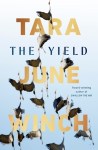
Book coverWinch explained The yield’s genesis. Ten years in the writing, it was inspired by a short course she did in Wiradjuri language run by Uncle Stan Grant Sr (father of Stan Grant whom I’ve reviewed here). Discovering language was transformative. She’s always regretted that she didn’t include more language in Swallow the air.

She then discussed the tussles she had writing the book. She started with too broad a canvas, but her mentor, Nigerian Nobel Laureate Wole Soyinka, encouraged her to focus on 500 acres of land, telling her she could tell her story through that lens. So, she found her 500 acres on the Murrumbidgee and created fictional place names – the Murrumby River, and the towns, Massacre Plains and Broken. These names, Broken and Massacre, which do exist elsewhere in Australia, convey the nation’s brutal colonial history, and thus encompass truth-telling. I appreciated hearing this, because I have started referring to fiction as part of the truth-telling process, and hoped I wasn’t being naive.

She said she wanted her places to be real, but she used fictional names so that she wouldn’t be imposing her story on the specific stories and experiences of people living in a place. I was glad to hear this too, because I think there’s real sense in using fictional place-names, as, for example, Melissa Lucashenko does in Too much lip, Tony Birch in The white girl, and also Karen Viggers in The orchardist’s daughter. It is these sorts of insights that can make attending festivals so meaningful.

Winch then described her three narrators, all of whom tell the story of the same 500 acres:

  • Poppy, first person narrator, dictionary writer and August’s grandfather; he is dying but is also a time traveller, so, Winch said, there are elements of magical realism.
  • August, third person voice; she tells a contemporary story of the 500 acres and the challenges faced, including from mining and river degradation.
  • Reverend Ferdinand Greenleaf, a Lutheran missionary, who’s writing a letter in 1915 about his experiences running the ironically (I assume!) named Prosperous Lutheran Mission from the 1880s. Winch created him to “round” out the story. He’s her villain, but she gives some balance, humanity, to him by sharing his own experience of loss of mother tongue.

At this point, Holt noted that at Hermannsburg, the Lutheran missionaries are remembered more positively than other denomination missionaries tend to be. There was some discussion about religion, and how indigenous people who’ve had positive experiences with Christianity can comfortably straddle the two belief systems.

Winch then did a reading, which was of course special. She read Chapters 1 and 3 – they are short, and in Poppy’s voice. The first paragraph starts:

I was born on Ngurambang — can you hear it? — Ngu-ram-bang. If you say it right it hits the back of your mouth and you should taste blood in your words. Every person around should learn the word for country in the old language, the first language — because that is the way to all time, to time travel! You can go all the way back.

Holt described the novel’s opening, and I think I’ve got this right, as “brushstroked around language”. She then quoted indigenous writer Ellen Van Neerven (whom you’ll find here too) who has said that a recurring theme in contemporary Aboriginal literature is that of returning, which, when I think about what I’ve read, rings pretty true. Holt then said something, and again I think I’ve got it right, about the “circumnavigation of Aboriginal placement” which I guess refers to the way indigenous people, rarely easily, find their way back to their start.

Winch talked about her intentions for the book. She wrote it as a gift for her father who had no language, and for her daughter whom she hopes with grow with language. She wants it to be life-changing for them. She also sees it as a handbook for claiming native title, and for recovering language. She describes her book as “faction”, which of course, with my open-mind to the fact-fiction nexus, I rather like. During the Q&A, she added that she was writing for people who still believe taking children away was a good thing.

She spent some time at Wagga Wagga Writers Writers House (love it!), where she, a coast girl, learnt about Riverina country. She “dragged” the book around with her for years, working on it in various locations.

She worked with indigenous intellectual rights lawyer Terri Janke to make sure all protocols were met, and that she had not included secret/sacred stories. Bruce Pascoe and Eric Rolls helped her with Knowledge about landscape through time. Wiradjuri people, her people on whose land the story is set, have given her good feedback.

Holt shared a favourite quote from the book (at the end of Chapter 2), in which Poppy tells August about memory and history, about the torture of memory versus forgetting. It ends with

He was telling her more – that a footprint in history has a thousand repercussions, that there are a thousand battles being fought every day because people couldn’t forget something that happened before they were born. ‘There are few worse things than memory, yet few things better,’ he’d said. ‘Be careful.’

Holt also mentioned indigenous Australian poet Kirli Saunders who is fostering poetry in first languages at Red Room Poetry.

They talked about the “heartache we carry”. Winch shared the challenge of creating a palatable story, a story with characters “you can root for”. She said she needed to take on the trauma of her research herself. She wanted to be truthful but not dogmatic, not hit readers over the head. She wants the truth to seep into the readers.

Winch conclude with a quote from the Persian poet, Rumi: “Out beyond ideas of wrongdoing and rightdoing there is a field. I’ll meet you there.” This, she said, is her book.

Q&A

The conversation was followed by an engaged Q&A which continued the warm, welcoming, respectful tone set by Holt and Winch. One person, who was only one-third through the book, questioned Greenleaf’s villainhood, but Winch said “read on”! However, she also said that she wanted to take the idea of a villain and turn it on its head. People aren’t black-and-white, she said.

Another question concerned the dictionary, and how good it would be if more indigenous words were everyday parts of Australian language. Winch noted that it’s a sign of respect to use local words when we travel overseas, so why not the same here? Fluency isn’t necessary to show such respect.

There was also a passionate comment from the floor about Adani and the disrespect being shown to indigenous people, particularly to Adrian Burragubba.

Perhaps the most significant question concerned the sense that there is a strong momentum building of indigenous voices. Holt and Winch respectfully, but clearly, responded that these voices have always been there, that the renaissance is not with indigenous people but with non-indigenous Australians. Indigenous writers are now getting an audience which means that Australians have changed! Perspectives, again, eh?

Holt, noting that this Session’s audience comes with an understanding of Indigenous literature, asked what has changed in your (the audience’s) psyche about Aboriginal Australia? There is, she agreed, an explosion of indigenous voices being celebrated, but the voices have always been there! Publishers, though, Winch noted, have played a role. Winch and Holt affirmed their wish for respectful mutual conversations in which we share each other’s skies.

The session ended with more discussion about language. Winch said that she wrote the book for what comes after, that is, to encourage readers to vote well, to get local indigenous languages into local schools. Language heals, and it continues culture. She wants us to have the conversations, to think nationally, act locally. She also commented on the acceptance of apathy in Australia versus France where protest is part of fabric of their nationality.

The last audience question/comment was given to Jeanine Leane (whom I’ve reviewed here), who reiterated the call for more first nations languages and literature in education. It is growing in the tertiary sector, but there is a “sad gap” in primary and secondary education. (Here’s an opportunity for me to donate some books to my son’s primary school.)

Her mantra was: Start reading books and think small picture.

Such a strong but gentle, provocative but gracious, session. (And, I’ve written a lot!)

Vale Kerry Reed-Gilbert

Note: It is traditional in most indigenous Australian communities to avoid using the name of a deceased person, for some time after their death. And so, as is my wont regarding writing about indigenous writers, I checked out what I believed to be authoritative precedents, and found that Wiradjuri woman Kerry Reed-Gilbert’s name has been used on sites such as AIATSIS (Australian Institute of Aboriginal and Torres Strait Islander Studies). I am therefore presuming that her family (probably with her approval) is happy for her name to be used. It is in this spirit that I write this small tribute post.

Kerry Reed-Gilbert (1956-2019) died last weekend, as NAIDOC Week was coming to an end. She was, says Wikipedia, an “Australian poet, author, collector and Aboriginal rights activist”, and anyone interested in the history of Indigenous Australian writing is sure to have heard of her. She had certainly been in my ken for a long time, and has appeared in this blog several times. The first time was in 2013 when I described her as the first chairperson of FNAWN, the First Nations Australians Writers Network, which she co-founded. She appeared again in 2014 as one of the indigenous people recommending books every Australian should read. She recommended:

  • Because a white man’ll never do it, by her father, the author and activist Kevin Gilbert
  • The Macquarie PEN Anthology of Aboriginal Literature, edited by Anita Heiss and Peter Minter
  • Any book by historian Henry Reynolds, because “it’s time for people to know the truth of this country”
  • That deadman dance, by Kim Scott (my review)

Jump a couple of years to 2016, and Reed-Gilbert appeared here again, this time as a participant in the Blak and Bright Festival. And she appeared twice the next year – 2017 – first, as a contributor to the interactive book, Writing Black, and then later in my review of that work.

It was, however, not until 2018, when I attended An evening with First Nations Australia Writers session as part of the Canberra Writers Festival, that I became fully aware of the love and esteem with which this clearly amazing woman was held. Jeanine Leane, in particular, paid tribute to her for her work with FNAWN, with the Us Mob Writing Group, and in organising the Workshop for indigenous writers that coincided with the 2018 Festival. The warmth felt towards her was palpable that evening.

Us Mob Writing, Too DeadlyBut wait, there’s more! Reed-Gilbert appeared again in my blog this year, twice in fact – for her contributions to two anthologies, Growing up Aboriginal in Australia, edited by Anita Heiss (my review), and Too deadly, edited by her and two others for the Us Mob Writing group (my review). As well as being one of the editors, she had ten pieces in the anthology.

If you don’t have a sense by now of what a stalwart she was for Indigenous Australians, and particularly for Indigenous Australian writers, then maybe some info from the AustLit database will help. Reed-Gilbert was a well-recognised, high-achieving poet and editor:

  • receiving funding from the Australia Council to attend a poetry festival in the USA (2010);
  • receiving an ‘Outstanding Achievement in Poetry’ award and ‘Poet of Merit’ Award from the International Society of Poets (2006);
  • touring Aotearoa New Zealand as part of the Honouring Words 3rd International Indigenous Authors Celebration Tour (2005);
  • being awarded an International Residence from ATSIAB to attend Art Omi, New York, USA (2003); and
  • touring South Africa performing in ‘ECHOES’, a national tour of the spoken word (1997)

Her work has been translated into French, Korean, Bengali, Dutch and other languages.

You may also like to read the statement made by AIATSIS upon her death, which speaks of her role as a writer, mentor and activist, and this heartfelt one from Books + Publishing which describes her, among other things, as a literary matriarch.

Book coverNot only is it sad that we have lost such an active, successful and significant Indigenous Australian writer, but it is tragic that we have lost her so soon, as happens with too many indigenous Australians. So, vale Kerry Reed-Gilbert. We are grateful for all you have done to support and nurture Indigenous Australian writers, and for your own contributions to the body of Australian literature. May your legacy live on – and on – and on.

Meanwhile, we can all look out for her memoir, The cherry-picker’s daughter, which is being published this year by Wild Dingo Press.

Monday musings on Australian literature: Listen to Indigenous Australian authors

BannerSome years, I’ve written an indigenous Australian focused Monday Musings post to start and conclude NAIDOC Week and Lisa’s ANZLitLovers Indigenous Literature Week. I have been researching a topic for this year’s second post, but it’s taking longer than I expected, so have decided to hold it over to next year. Meanwhile, having committed to a second post, I decided to change tack and instead share some podcasts comprising interviews with Indigenous Australian authors …
So, I’ve put together a sample list of interviews conducted this year with Indigenous Australian writers. They are from ABC RN programs (AWAYE!, The Book Show, and Conversations) and The Wheeler Centre. You can search those sites for earlier interviews with these, and other writers.

I am listing them alphabetically by author to make it easy for you to see if your favourite is here! And I am providing website links, but most if not all of these will be available through podcast services on tablets and smart phones.

Tony Birch

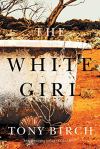
Fighting for family in Tony Birch’s The White Girl, The Book Show, (ABC RN), 24 June 2019, 17mins

Book coverBirch speaks to Claire Nichols “about trauma, bravery and writing stories of the past” regarding his latest book The white girl (my review) He discusses, among other things, the “contradictory and unpredictable” way in which the Act (which limited the freedom of indigenous people to travel, and made children wards of the state) was enforced in towns, and how this increased the level of insecurity and anxiety felt by indigenous people, somehting experienced by his character Odette Brown. The reason for this unpredictability could be incompetence in the local police, or the presence of a genuinely benign policeman, or because there was no law in the place or town.
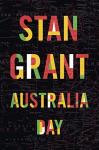
Stan Grant

Book coverConversations: Stan GrantConversations (ABC RN), 24 April 2019, 52mins

Coinciding with the publication of his latest book Australia Day (about which I reported in another conversation with him), Grant talks with Richard Fidler about his book, and specifically his thoughts about the push to “change the date” of Australia Day. He believes, as the show’s promo says, “that … for now, 26 January is all that we are and all that we are not” and thinks that there are deeper questions to discuss about who we are than simply changing the date. I like his comment on protest – his dislike of “certainty” and of “slogans” – because I feel similarly uncomfortable, much as I agree with the heart of most protests. “I like to live in the space between ideas”, he says.

Melissa Lucashenko

Melissa Lucashenko in conversation at Sydney Writers Festival, AWAYE! (ABC RN), 11 May 2019, 33mins

Melissa Lucashenko, Too Much LipConversation with AWAYE!’s Daniel Bowning, including Lucashenko reading from Too much lip (my review). The show’s promo says “we talk about our grannies, the meaning of place, the role of humour in serious literary work, the fetishisation of Black suffering and why she would never kill off one of her characters.” Lucashenko talks about how the book is about oppressed people (of whatever ilk) standing up. (As she says on another podcast, “if you don’t fight you lose”.) Because she included some negative depiction of indigenous lives (particularly black-on-black violence), she expected backlash from the black community, but it hasn’t come. She feared being honest about this issue at this time in Australia’s history – was it the right time, she wondered – but then realised that “silence is violence”. She says the job of the writer being “to see what’s going on and write about it”.  Oh, and she wanted to write a funny book – which she certainly did.
Other interviews with Lucashenko on this book are available on ABC RN’s The Book Show, including one after its Miles Franklin shortlisting (12 July 2019, 10mins).

Bruce Pascoe

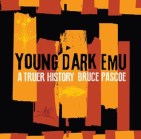
Book coverA truer history of Australia, AWAYE!, 25 May 2019, 12mins

Pascoe talks about Young dark emu, his junior version of his bestselling Dark emu (my review). It includes a reading by Pascoe from the book. He talks about the importance of teaching the true history of Australia to young people in schools, arguing that “ignorance makes you scared, knowledge makes you wonder”.

Alison Whittaker

Book coverAlison Whittaker in conversation at Sydney Writers Festival, AWAYE!, 18 May 2019, 32mins
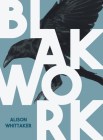
Whittaker talks about (and reads from) her latest work, Blakwork, reviewed for Lisa’s ILW week by Bill and Brona. She talks about the “transformative power of poetry” and says her aim is “to provoke and upset white readers because they are the main readers” of poetry. This issue, that we middle class, white, educated people are the main readers of indigenous writing, is something I often think about. It’s a complex interaction, methinks. Whittaker talks about the paradox of using the English language, the language of the imperialists, to convey feelings and ideas from a very different culture.

An aside. I appreciated her discussion of the word “important” as in, “an important book”. I agree with her dislike of it, and avoid it in my reviews, albeit the temptation can be great. She says that “important is not an interesting thing to say”. The challenge for me, often, is to find the “interesting thing to say” that is also succinct!

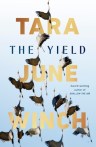
Tara June Winch

Book coverDocumenting ‘the old language’ in Tara June Winch’s The Yield, The Book Show (ABC RN), 15 July

Winch talks to Claire Nichols about her new book, The yield (reviewed by Lisa/ANZlitLovers), and also reads from the book. In the book, the character Albert Gondiwindi is writing a dictionary of Wiradjuri language. He says that “every person around should learn the word for country in the old language, the first language – because that is the way to all time, to time travel!” Given the current interest in reviving indigenous languages, and the criticality of using our own language to express our own culture, this book sounds really timely.

Alexis Wright

Alexis Wright, TrackerAlexis Wright in conversation with Elizabeth McCarthy, Books and Arts at Montalto, The Wheeler Centre, 14 January 2019 (though recorded in 2018), 1hr 3mins
Wright talks to Elizabeth McCarthy about her collective biography Tracker, which won the 2018 Stella Prize and the Non-Fiction Book Award in the Queensland Literary Awards. The interview focuses mostly on Tracker Tilmouth himself, rather than on the form of the book, and the approach Wright took to writing it.

Do you listen to literary podcasts? If so, I’d love to hear your favourites.

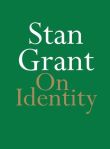
Stan Grant, On identity (#BookReview)

Book coverStan Grant seems to be the indigenous-person-du-jour here in Australia. I don’t say this disrespectfully, which I fear is how it may come across given Grant’s views “on identity”, but it feels true – particularly if you watch or listen to the ABC. He pops up regularly on shows, sometimes as presenter, other times as interviewee. He therefore needs no introduction for Aussies. For everyone else, though, a brief introduction. Grant is described in the bio at the front of his book, On identity, as “a self-described Indigenous Australian who counts himself among the Wiradjuri, Kamilaroi, Dharrawal and Irish.” The bio goes on to say that “his  identities embrace all and exclude none“. He is also a Walkley Award-winning journalist (see my Monday Musings on this award), and the author of Talking to my country, which I reviewed a couple of years ago.
Grant could also be described as a (modern) Renaissance man. I say this because of the way he synthesises his wide range of reading – including philosophy, history, psychology, history, anthropology, and literature – into coherent ideas that support his arguments. He did this orally at the conversation event I attended a couple of months ago, and he does it in this long-form essay called On identity.

In my post on that event, I wrote that his main point about identity was its tendency to exclusivity. In On identity, he explores this “exclusivity”, and its ramifications, starting with those boxes we see on all sorts of forms – including the census – that asks whether you are of Aboriginal or Torres Strait Islander descent. As a person with a keen interest in the pros and cons of “labelling”, I’m aware of the obvious implication of this, that is, that it marks or separates people out. However, as Grant points out, it also, in cases where heritage is mixed (like Grant’s, like many indigenous people’s), forces them to deny other aspects of themselves, to exclude other members of their families.

And so it forces Grant, for example, to deny his Irish grandmother Ivy.

If I mark yes on that identity box, then that is who I am; definitively, there is no ambiguity. I will have made a choice that colour, race, culture, whatever these things are, they matter to me more than my grandmother.

Through her, through this conversation about ticking boxes, Grant introduces his theme of “love”, of growing up surrounded by unconditional love, and how a focus on “identity” becomes a cold substitute for what truly sustains and binds, love. Now, this might sound a bit corny, or simplistic, but bear with me …

Grant then leads us through his argument. He discusses the work and ideas of Noongar author Kim Scott, whose trajectory as an indigenous person, Grant admits, has been quite different from his own. Grant grew up knowing he was indigenous. Scott, on the other hand, was raised with very little contact with Noongar people. On discovering his ancestry and wanting to know more, he felt forced to make a choice – was he black or white? And that decision, Scott writes in his family history, Kayang & me, was a “political imperative”. There are no references to “love” in this book, writes Grant, which confirms, he says, “what I have come to believe is true: identity – exclusive identity – has no space for love”.

Grant “deeply” admires Scott, but feels sad that “in writing himself back into a Noongar identity … it isn’t love that calls him, but politics”. Scott is not oblivious to this, worrying that his decision may strand his children in “no man’s land”, making them targets from both sides of “a historical, racial fault-line”. This concern leads Grant back to his mantra that “identity does not liberate: it binds”. He talks about other writers including Jewish ones (like Kafka) and Irish (like Yeats), about their attitudes to the problematic and limiting notion of “identity”. James Joyce’s Stephen Dedalus, he says, “knows if he is to write anything he must find freedom; he must shake loose the chains of identity.”

Grant turns to other writers of colour, who have found their “identity” limiting. Toni Morrison sees that the “very serious function of racism” is to distract, preventing you “from doing your work”. Writing for her, says Grant, “has been the struggle to live free from the white gaze”. Similarly, James Baldwin sought to be “free of identity” by going to France:

Baldwin did not wish to escape being black, but he desperately wanted to be rid of other people’s ideas of blackness.

Unfortunately, Baldwin returned to the USA, and got caught up in black protest. Thus, argues Grant, the man “who had been raised in the church … had forgotten the lessons of his own childhood. He had forgotten about love”:

When Baldwin turned to politics, his words lost no power–perhaps they grew more powerful–but he made the worst bargain I think a writer can make: he swapped freedom for identity and the identity writer can only write propaganda.

Strong words, for another day, perhaps! For Grant, it is the Baldwin of France he returns to “because he taught me that a black man could have the world”.

And here, really, is the paradox that I see in Grant’s argument. It’s sophisticated, erudite, and elegantly written. He makes a strong case for his belief that identity binds rather than frees, and that in so binding, if this makes sense, it keeps people divided. But, I’m not sure that he answers for me what can be done about the division (that is, the oppression of people on the basis of race, colour, religion, gender, sexuality, etc) that has given rise to “identity” in the first place. It’s all very well to point to the limitations of and the problems inherent in the politics of identity, but what is the answer to the underlying problem?

Grant returns at the end of the essay to love. He discusses the relationship between totalitarianism and love. Antebellum America, Nazi Germany, Pol Pot’s Cambodia and other regimes, he writes, turn unity (collective identity) into totality, and “crush love because it is the surest way to crush freedom”. What he means by this is that “we banish love, when we no longer see ourselves in each other”, when “we see instead an enemy”.

So, Grant eschews any identity that would cage him, any identity that would deny any aspect of himself or that would pit himself against others. But, acknowledging at last my paradox, he does admit that there are privileges in identity – whiteness, masculinity, sexuality – which need to be called out. It’s just that they are political, and he’s not about politics*. All he’ll say is that “we find no liberation behind walls”. Amen to that!

On identity is not simple reading. Neither does it provide answers to the “identity” problem. But what I like about it is that it offers a way to think about identity that is positive not negative, that would bring us together, not divide us. Where to next?

Lisa (ANZLitLovers) and Janine (Resident Judge of Port Philip) have also posted on this book.

* What he actually says is: “I have no desire to be the writer of politics” p. 95.

BannerStan Grant
On identity (Little books on big ideas)
Carlton: Melbourne University Press, 2019
95pp.
ISBN: 9780522875522

Tony Birch, The white girl (#BookReview)

Book coverWe need more novels like Tony Birch’s The white girl and Melissa Lucashenko’s Too much lip. This is not to say that we don’t need all the wonderful Indigenous Australian literature I’ve read and reviewed here over the years, but some of the books, as excellent (and as beloved by me) as they are, can be more challenging to read. The white girl and Too much lip, on the other hand, are accessible, page-turning novels that have the capacity to reach a wide audience, but will they? I sure hope so, because the truths they tell are crucial for all Australians to know if we are to ever become a more mature and united nation.

In other words, it’s not only for their page-turning quality, that I paired these two novels. They have some other similarities, which I’ll briefly address before focusing on The white girl. Both novels are set in rural areas, though Birch’s novel also spends some time in the city, and both have female protagonists, though Birch’s Odette is a grandmother while Lucashenko’s Kerry is a 30-something, not-yet-settled woman. Most importantly, though, both reference long-term issues (the aforementioned truths) that have affected indigenous lives for generations, including, of course, the stolen generations, dispossession and powerlessness, past atrocities, and entrenched institutional discrimination.

However, beyond these, the novels are very different. For a start, Birch’s The white girl, being set in the 1960s, fits into the historical fiction genre whilst Lucashenko’s novel is contemporary. Moreover, Lucashenko’s is more complex and has more humour, albeit of the black sort, than Birch’s more straight drama, so let’s now get to it. Unlike Birch’s previous novel, Ghost river, which is set in Melbourne, The white girl, is set in a fictional town, Deane, and an unnamed city. This effectively universalises the story to suit any part of Australia, making it difficult to shrug off the issues as not relevant to our own places.

The basic plot of The white girl concerns Odette’s determination to save her grand-daughter, Sissy, from falling under the control of white authorities, because this novel is set at a time in Australia when indigenous people came under the Act, an act which meant they could not travel away from where they lived without permission. It also meant that the state was legal guardian of children like Sissy. Things come to a head for Odette and Sissy when a new and more officious policeman, Sergeant Lowe, comes to town to replace the alcoholic, and generally more laissez-faire Bill Shea. Odette feels the time is ripe to reunite Sissy with her mother, Lila, who had left soon after Sissy was born, and who, Odette realises some way into the story, had good reason to disappear.

Birch has set his novel at a time of transition. It’s well into the Menzies era, and indigenous people are becoming more actively engaged in fighting for their rights. Sergeant Lowe, though, is not impressed. When Odette approaches him for the necessary permissions to travel, he refuses, telling her (with the about-to-retire Shea also in his hearing):

‘The whole business of native welfare has been neglected in this district for many years. I will not allow it to continue. Your people need certainty, just as we do, as officers of the Crown. None of this is helped, of course, by those trouble-makers arguing for citizenship of behalf of your people.’

The divisive language (“your people”) and the assertion of absolute power (“I will not allow it to continue”) reflect classic colonial behaviours that ramp up the level of threat felt by Odette. This threat is exacerbated by the presence of a brutal white family in the district, the Kanes, comprising a father and two sons. Lowe is somewhat aware of their trouble-making, but only insofar as it affects another white person in the district, the gentle, brain-damaged Henry who owns the local junkyard. To some extent the book’s characters are stereotypical, but Birch’s story-telling is such that they don’t become – at least not unreasonably so – caricatures. This is partly because they are fleshed out with back-stories. It’s not particularly complex story-telling – the back stories, for example, are common ones – but the novel is believable, perhaps because they are common.

As Lucashenko does in Too much lip, Birch also references traditional culture and its ongoing role in people’s lives. Odette, like many indigenous people, listens to messages from birds (“a morning doesn’t pass without one of them speaking to me”) and to the “old people” from whom she believes her strength comes. Birch also beautifully conveys indigenous people’s resourcefulness in the face of a dominant white culture. For example, Odette’s father tells her, when she’s a young girl, why she should sing in the mission church even though they don’t believe in “their God”:

‘Because it’s best to keep them fellas happy, keep their meanness down.’

And Odette’s response, when asked for her “tribal name” by a patronising white woman who offers her piece-work employment as a card artist, provides a typical example of indigenous response to such self-interested nosiness:

It never failed to surprise Odette how white people were always going on about uplifting Aboriginal people, yet they would demand information about the old ways when it suited them. She looked over to the honey jar sitting on the bread board and read the label to herself. It sounded tribal enough. ‘We’re the Bilga people, ‘ she explained. ‘That’s my tribe. The Bilgas.’

What Birch shows, then, is that survival for indigenous people was (and mostly still is) quite a cat-and-mouse game. It involves “taking a chance with these white people”. This is a risk, Odette and her friends realise, but is often all they have. And that, I think, is the main message Birch wants to leave with his non-indigenous readers. The question is, can we rise to the challenge, and be trusted? Are we prepared to heed the truths being shared? So far, I’d say, the jury is still out.

Lisa (ANZLitLovers) also liked this book. Read for ANZLitLovers ILW2019.

Banner

Tony Birch
The white girl
St Lucia: UQP, 2019
265pp.
ISBN: 9780702260384

(Review copy courtesy UQP)

Monday musings on Australian literature: early Indigenous Australian literature

BannerSince 2013, I’ve written an indigenous Australian focused Monday Musings post to coincide with NAIDOC Week and Lisa’s ANZLitLovers Indigenous Literature Week. NAIDOC Week, for non-Aussies out there, occurs across Australia each July “to celebrate the history, culture and achievements of Aboriginal and Torres Strait Islander peoples”. One way litbloggers can recognise and celebrate it is to read indigenous Australian writers and contribute to the list of reviews maintained by Lisa on her blog. (Lisa also accepts reviews of indigenous authors from other nations.)

NAIDOC Week LogoThis year’s NAIDOC Week theme is VOICE, TREATY, TRUTH. How better to celebrate this than through a post on early indigenous Australian literature which, like that of today, aimed to share truths about indigenous Australian experience. It’s a tricky topic because it’s only been relatively recently that indigenous Australian stories (novels, poetry, short stories, plays, memoirs) have been published. However, indigenous people have been writing since the early days of the colony.
This post can only be a brief introduction. The best source for the topic is, I believe, the Macquarie Pen anthology of Aboriginal literature (2008), edited by Anita Heiss and Peter Minter. Indigenous Australian academic Mick Dodson writes in the Foreword that it contains “a range of works that any serious student of Aboriginal history, life and culture will find valuable”. It also, he says, encapsulates Aboriginal “political and cultural activisms”.

The anthology starts with the first-known piece of written text in English by an Aboriginal author, a letter written by Bennelong in 1796 not long after he returned from England. Editors Heiss and Minter write that the anthology contains

writing ranging from the journalism, petitions and political letters of the nineteenth and early twentieth centuries, to the works of poetry and prose that are recognised widely today as significant contributions to the literature of the world.

They go on to say that “Aboriginal literary writing grew directly from a complex and ancient wellspring of oral and visual communication and exchange”. This is something that at least some non-indigenous Australians recognised. FS, writes in The Age in 1938, for example, about indigenous Australian “rock literature” or “picture writing”. FS is responding to a planned German scientific expedition to northwest Australia which was intending, among other things, to “study … rock carvings, cave paintings and similar work on wood to ascertain whether it is a desultory art or a method of writing” [my emph.] S/he believes this goal is unnecessary, because the “rock literature” clearly demonstrates that indigenous Australians have had a “literature” long pre-dating the English language.

Anyhow, back to Heiss and Minter who discuss the necessary nexus between the literary and the political in indigenous literature. They note that 19th century Aboriginal literature primarily comprised “genres that are common to political discourse” – letters, petitions and chronicles – and that between Federation and the 1960s, political manifestos and pronouncements of Aboriginal activist organisations were added to these genres.

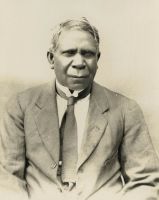
David Unaipon (State Library of NSW, Public Domain)

It wasn’t until 1929, in fact, that the first book by an indigenous Australian writer was published, David Unaipon’s Native legends. A report of the book’s publication appeared in January 1930 in South Australia’s Border Chronicle. The reviewer says (using the sort of tone and language typical of the time):

Not long since there entered the editorial den a full blood aboriginal who said, in that “moistened” voice that the Australian abo always wears, that he was distributing the only book ever written by an Australian aboriginal in the English language … The legends are told in English that will cause wonder in anyone who has tried to master any speech other than his mother tongue. Claudian, the Latin poet, was born an Egyptian, educated as a Greek, and the world has marvelled ever since that he became one of the great masters of Roman speech. Yet Unaipon, is in his way, as great a marvel as Claudian, since his natural atmosphere differs more widely from that in which he works than did the civilization of Claudian’s Egypt and Greece differ from that of Rome. The style of David’s writing is correct by all the formal rules, but differs widely from ordinary written speech. His legends are fairy tales in color, and in “The Song of Hun garrda”, which is an invocation to the God of Fire, he gets into a highly poetic region. Likewise, he is mysticc and writes of “earthly body subjective consciousness”, “earthly life experience”, as if those things had a real meaning to him, which is more than can be said of some of those who talk on such matters in their native speech. It is an interesting little contribution to Australian letters.

Heiss and Minter say the book is “literary in its adaptation of his cultural imagination to particular modes of authorship and narration”. They see his pioneering role in the development of indigenous literature, saying he “gave subsequent Aboriginal writers a significant precedent by which to imagine their authorship of a culturally grounded future literature”.

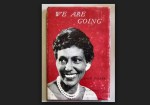
Book coverIt would be over thirty years before another book by an indigenous writer was published, although during that time “letters, reports and petitions” continued to be written in support of “Aboriginal rights and constitutional transformation”. One of these activists was the poet and activist, Kath Walker (later Oodgeroo Noonuccal), and she was the author of that second book. Published in 1964, We are going was mistakenly described by The Canberra Times as “the first book written by an Australian aborigine”. Heiss and Minter again note its pioneering role, saying it “marks the arrival of Aboriginal poetry as one of the most important genres in contemporary Aboriginal political and creative literature.”

It took more time, however, before indigenous writers got a firm foothold. Heiss and Minter argue that it wasn’t until the late 1980s that “Aboriginal writing was firmly established as a major force in Australian letters. David Headon writing in the ANU’s Woroni in 1990 would agree:

Certainly Aboriginal literature is a growth industry of substantial proportions. The sheer number and range of books now available is all the more surprising when one considers that the first [!] published work by an Aboriginal writer, Oodgeroo Noonuccal’s (Kath Walker’s) book of poems, We Are Going, was published in 1964, and at the beginning of the 1980s the only black writers with any kind of national profile were Walker, Jack Davis, Kevin Gilbert, Mudrooroo Narogin (Colin Johnson) and possibly Bobbi Merritt and Faith Bandler. None of these were well-known outside their community. Australian literature has been profoundly altered by the emergence of so many Aboriginal texts in the last 10 hectic years.

He reviews an unknown-to-me 1990 anthology, the gorgeously titled Paperbark. It predates Heiss and Minter’s Macquarie anthology by nearly two decades. Published by the University of Queensland Press and described by them as “the first collection to span the diverse range of Black Australian writings”, it includes writings from the 1840s to 1990. The Aboriginal and Islander authors include “David Unaipon, Oodgeroo Noonuccal, Gerry Bostock, Ruby Langford, Robert Bropho, Jack Davis, Hyllus Maris, William Ferguson, Sally Morgan, Mudrooroo Narogin and Archie Weller.” Like the Macquarie anthology, it also includes “community writings such as petitions and letters”.

Headon’s review is well worth reading for his references to writings, many of which are new to me, but I’m going to leave him on his following point:

Books like Paperbark are in the vanguard of what will surely be one of the great (Australian) cultural debates of this decade: how long can an ex-colony like Australia allow some of its universities to continue to indulge their colonial habits? How long will Old and Middle English, 17th- and 18th-century English literature be the literature major staples at our universities? When will the dominant pressure be post-colonial? Change, Paperbark proclaims, is afoot.

Good question! Interestingly, in 1984, the ANU did offer a 10-week adult education course in ‘Aboriginal Literature’. It may, of course, have only been run that year.

Anyhow, I hope you have enjoyed this little introduction to what I’ll call the first wave of indigenous Australian writing.

Past NAIDOC Week-related Monday Musings

Melissa Lucashenko, Too much lip (#BookReview)

Melissa Lucashenko, Too Much LipMelissa Lucashenko’s title for her latest novel Too much lip conveys a lot about what she is trying to do here. Superficially, the title refers to protagonist Kerry’s refusal (or inability) “to swallow her opinions”, but there are layers to the title which reflect the layers in the novel. Kerry is female and indigenous, and she is lippy, which gets her into trouble, sometimes rightly because she’s not always sensible and measured in her responses, but sometimes there’s a political layer. Sometimes she has something relevant to say but because she’s a woman, or because she’s indigenous, or because, “truesgod”, she’s a woman and indigenous, her “lippiness” is ignored or put down. I’d venture to say – and I don’t think this is a long bow – that this political layer extends to imply that all indigenous people can be seen by white Australians as having “too much lip”. It is this clever, wicked multilayering in Too much lip that makes it such an engrossing and confronting book to read.

Essentially, Too much lip is a contemporary story about an indigenous family living in the small fictional country town of Durrongo in Bundjalung country, in northeast New South Wales. The family struggles to keep it together – and, as the book progresses, we come to see why. And it’s no surprise: colonial dispossession, the massacres, the stolen children policies, not to mention the ongoing racism, result in poverty and dysfunction, in unemployment, drug-taking, violence and withdrawal from wider society. Lucashenko does not shy from exposing violence and conflict within the novel’s indigenous community but she also makes clear that the cause can be found in long-standing, intergenerational traumas experienced by the community – as individuals and as a group.

Now this might all sound very earnest, but it’s not. This is a ripping read with a strong plot about vibrant, beautifully differentiated characters. After a somewhat mysterious opening chapter whose import is not clear until well into the novel, we meet protagonist Kerry, the 34-year-old daughter of Pretty Mary. She’s coming home, riding into town on her stolen Harley, no less. It’s to be a quick trip. She wants to say goodbye to her dying grandfather and then get out of there. It’s clear there’s not much love lost between Kerry and her remaining family in town. However, she is at a bit of a personal crossroads. She’s fleeing a botched armed robbery which resulted in the imprisonment of her partner Allie, who has broken their relationship. Kerry is grieving this. When she and her family catch wind of plans to develop Granny Ava’s island, a sacred place for their people, she decides to stay a bit longer and fight the fight.

So, this becomes, also, a story about land and connection to country versus greedy developers and corrupt politicians who, in this small town, combine in the form of one man, Mayor Jim Buckley. There’s enough thrills and action in the novel, not to mention a romance, to keep lovers of exciting plots engaged, but there’s also enough about characters and their relationships, to keep us more character-oriented readers interested.

This is a confronting novel for non-indigenous Australian readers – but it’s a confrontation we need. It shows (not, didactically tells) what colonial settler societies have done to indigenous inhabitants and how this reverberates through the generations. My back cover blurb calls the novel “gritty and darkly hilarious” – and that’s a perfect description of its tone. Lucashenko privileges us to sit in on an indigenous family’s life. We get to see the world from their perspective, their pain, their frustrations, but also the jokes they make about white people’s ignorance.

Kerry had managed, on the surface anyhow, to rise above the racism she experienced at high school, but

her indifference – part pretence, part real – meant the insults quickly found their targets elsewhere, in the small handful of other Goories who usually decided to fight back, and who were quickly expelled for expecting a bit of common decency in their lives.

Disgusting, isn’t it? Examples of racism abound in the book, but there are also times where Lucashenko’s Goories critique white culture. One of these occurs when policemen, Jim Buckley’s henchmen, turn up at Pretty Mary’s home. The family retaliates by suggesting, at one point in the confrontation, that white people need a refresher on their old ways, and more:

‘How to invade other people’s countries and murder em, and call it civilisation …’ Ken couldn’t remember when he’d enjoyed himself this much.

‘Child stealing 101,’ Black Superman nodded enthusiastically. ‘Interventions for fun and profit.’

‘Globalised capitalism for the one per cent,’ Zippo called out.

Eventually they force the police to retreat, and feel a great sense of victory. They rework the story, savour and analyse it, embellish it, agreeing that “Glenrowan had nothing on Durrongo”. Haha! It’s a wonderfully written scene that makes us whitefellas squirm.

It’s not all hilarious though. The dysfunction is serious. There’s heavy drinking and violence. Brother Ken is irrational, violent, and neglectful of his adolescent son Donny, who is struggling to find his way. Kerry sees this, but is struggling with her own demons, including living in a gendered world where her word counts for little. Even her mother, Pretty Mary, is more likely to turn to Ken than to her daughter. It’s tough. There is hope though, and it comes mainly in the form of two characters – Ken and Kerry’s younger, successful city-dwelling brother, Black Superman, and Uncle Richard.

Uncle Richard, in particular, embodies both strength and wisdom. He’s not a push-over, but he exerts leadership when it’s needed. He says to the incendiary Ken:

‘Yeah, okay. We need to fight. But first I think you’d better come to Men’s Camp this weekend. Get yer head clear, neph. Manage your anger so you use it, not it using you.’

It takes some talking, but he eventually prevails. A little later, Uncle Richard brokers a reconciliation amongst the family, encouraging past hurts to be put into context rather than poison their futures:

‘History’s made us all hard … We had to grow hard just to survive, had to get  as hard as that ol’ rock sitting there. But the hardness that saved us, it’s gonna kill us if it goes on much longer. People ain’t rocks …’

Pervading all this is a strong sense of indigenous culture. Connection to the land is palpable, as is its power to revive the family. Birds, particularly crows, play a subtle role. There’s the “king plate” with a power “too dangerous” to leave lying around. There are references to totems, including tongue-in-cheek jokes that suggest indigenous people are serious but not humourless about their culture. And then there’s the Doctor, a shark which swims around Granny Ava’s island, waiting for a blood debt to be paid.

There are some books you read that you just really want to write about. Too much lip is one such book. I so looked forward to writing this post, but I was challenged at the same time. How to do justice to Melissa Lucashenko’s achievement? By wrapping a rich contribution to truth-telling inside an entertaining story guaranteed to keep you turning the page, she has pulled off something impressive. I really hope I’ve been up to the task. Perhaps you’d better read the book – if you haven’t already – to judge for yourself!

Lisa at ANZLitLovers was also impressed by the book.

AWW Challenge 2019 BadgeMelissa Lucashenko
Too much lip
St Lucia: UQP, 2018
318pp.
ISBN: 9780702259968

(Review copy courtesy UQP)

Us Mob Writing, Too deadly (#BookReview)

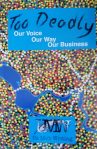
Us Mob Writing, Too DeadlyToo deadly is an anthology of writings by the Canberra-based writing group Us Mob Writing. Comprising Australian First Nations writers, this group was formed in the late 1990s and is, apparently, one of our capital’s longest running writers’ groups. I saw advertising for the book’s launch back in late 2017, but was unable to attend. I was consequently thrilled to be offered a copy to review some months later. Finally, it worked its way to the top of the pile and I have read it. Things happen slowly here at the Gums!

The book comprises works by 11 women writers. It is introduced by Jeanine Leane whose novel Purple threads I reviewed a few years ago. She describes the content as including “prose and narrative poetry; flash fiction, fiction and creative non-fiction; and life writing.

It was interesting to read this just after reading Anita Heiss’s anthology, Growing up Aboriginal in Australia (my review). Heiss’s book, obviously, is all life-writing, while this anthology is more varied in form and subject matter, but, as in Heiss’s book, many of the works are overtly political, not surprisingly, but all writers speak of connection to culture, in some way.

Now, how to do this? I don’t usually discuss every writer in an anthology because doing so, without writing a tome, risks being superficial, but I’m going to try here and see if I can find a fair balance. You be the judge.

Wulli Wulli writer Lisa Fuller: eight pieces, mostly poetry. They deal with her writing practice, her sources of inspiration, and her sense of self. My heart went out to her struggles to accept that she is “good enough” in poems like “Who me?” and “Never enough” (“I will kill myself through/ should-i-n-g and my 20/20 judging”), but I also loved her sense of humour and word plays. “Waking” made me laugh, with the “only clock in the place/ disguised as a phone” as did her wry references to her “Master pieces” in “Electronic inclusions”, which describes her preference for “paper and pen” over keyboard. She also writes of nature and the inspiration it provides, including:

the mist envelops
its cool embrace
blocking everything
making the everyday
more mysterious
(“Surrounds”)

Juru-Kija poet Michelle Bedford: six poems, most of which directly address culture – her connection with it, and/or loss of it. In “Kindred Spirit-so many stories untold”, the refrain at the end of each verse is “so many stories untold”, while “Straight up and back with a certain native pride” tells of a hunting party and how engaging in cultural practice brings contentment and pride. Coming from the beautiful Kimberleys, she has some poems evoking her love of that landscape: “Colour me fine” is a love-letter to the Kimberley that I could relate to. Other poems are more overtly political. “Standing alone with others” and “I promise you … she is worthy” reminded me somewhat of Oodgeroo Noonuccal’s work.

Wiradjuri poet Yullara Reed: one poem, “Catch me if you can”. Told in the voice of a bird, her allegorical poem confronts its reader with the realities of indigenous life, particularly regarding the stolen generations, as the bird watches out for catchers. There’s a cheeky freshness to this poem which makes its message so much starker.

Erubian writer Chella Goodwin, from the Torres Strait: two poems and one prose piece. “Morning dreaming” is a gorgeous poem about yearning for a simpler life. Her irregular use of rhyme here is particularly effective. Many of us can relate to these lines, “microsoft word/ part of the city herd”, and to

divorcing the city
with its traffic and hustle
for straight roads to the horizon
where the kookaburras hustle

Bundjalung writer Samia Goudie: six pieces, mostly poems. They mourn a loss of culture, but also express defiance (particularly “White lie”) and sorrow (“Dirt child”). Her prose piece, “Coming home”, is a short story about a stolen generation daughter meeting her mother for the first time. The insensitivity of the church official, where the meeting is effected, is breathtaking. He wants a photo for, he says:

“… the church newsletter, the story, our story; it is such a great story. The congregation will love it.”

Whose story?

Yuin writer Brenda Gifford: one memoir piece about her life on the road, for ten years, with the mixed indigenous and non-indegnous band, Mixed Relations. Much of the story would be familiar to any band, I guess, except that this one has the added issue of race to deal with. She talks of confronting racism in Moree, and of the opposite in Brewarrina, where the local mob showed them the fish traps (now made famous by Bruce Pascoe in Dark emu.) She also writes of touring North America, and sharing experiences with First Nations Americans (not to mention trying their wonderful fried cornbread!)

Wiradjuri author Kerry Reed-Gilbert (grandmother of Yullara above) has ten pieces, and is the best-known, most published of the group. Reed-Gilbert also appears in Growing up Aboriginal in Australia, with a strong small town story. Some of her poems talk of dark history, such as blood loss and massacres in “The place in the paddock”, while others ask for Australians to work together, as in “Reflections” and “I know you”. Many of her pieces, as do those of others, talk of the wisdom of older people (uncles, grandfathers, grandmothers) and, further back, of the Old or Ancient Ones from whom the laws come.

Ngemba/Barkindji writer Barrina South: four pieces. Her poem “Ghost Gum” describes the ageing and regeneration of a tree, but surely also works as a metaphor for indigenous history – the losses (“pooled blood appears on the surface caused by previous contusions”) and the hope for the future (“She reaches up and gently sways/ Dancing in time with the stars…”) “Baaka” is more overtly political, but also uses nature, the river in this case, to oppose long connection with culture (and the “old people”) against loss (and “they [who] fence rivers”).

Wiradjuri poet Marissa McDowell: three pieces. “By the campfire” is a lovely hymn to indigenous creation spirit Biamie, “the maker of all things”, while “Me” is a plea to be respected “before all is lost/at what human cost”.

Kamilaroi writer Joyce Graham: eight pieces, starting with three haiku which lead into more powerful, pull-no-punches poems. “Proud Uncle” references, I believe, the story of the two indigenous men Jimmy Clements and John Noble who walked miles to attend the opening of Canberra’s provisional parliament house in 1927. It confronts us with our lack of interest (“ignored by white/ present not caring/ not curious/ Dismissive/ ignorant of your importance”). It’s a story most Canberrans didn’t know until recently. Certainly I didn’t – “ignorant”! “Life’s landscape” uses strong language, too, to make its point, describing “the white dust storm” and its aftermath.

Torres Strait Islander writer Samantha Faulkner: twelve pieces, including five prose pieces. Faulkner’s pieces, like many others, explore the history of indigenous experience in Australia. “The Old Man” also reflects on the Jimmy Clements and John Noble story, describing the two men as “compelled to be there”. “Tribute to Mabo” is another straightforward narrative poem about an indigenous hero. “One Day at Walpa (Walpa Gorge, Kata Tjuta/the Olgas” made me laugh at its depiction of tourists visiting this beautiful peaceful, place. And “It’s a small town world” succinctly conveys opposing images of small towns – narrow on one hand, and big-hearted on the other. Faulkner’s is, generally, a lighter touch than some in the book, but no less effective for that.

There are, then, recurring themes in the anthology, as you’d expect – to do with loss and disconnection caused by colonisation and white laws – but while some are angry (and understandably so), many are generous and hopeful, looking to a better future. Motifs recur too. There’s the wisdom of older people and of the Old Ones, and, of course, nature, particularly trees and birds, appears in many pieces.

Too deadly is a challenging book to read with its varied styles and tones, but it is well worth the effort because this very variety provides a breadth of insight that is not easily come by. I’ll close with some lines from McDowell’s “Me”, because, in many ways, it conveys the heart of the book (but apologies for not getting the lines’ layout right):

Images are plastered all over our screens
Scaring the weaker
And empowering the meaner
Open your door and open your mind
move a bit closer
I could be your friend
not an enemy
Who’s portrayed as the end.

AWW Challenge 2019 BadgeUs Mob Writing
(Eds. Kerry Reed-Gilbert, Samantha Faulkner, Barrina South)
Too deadly: Our voice, our way, our business
Us Mob Writing, 2017
172pp.
ISBN: 9780992559823

(Review copy courtesy Sarah St Vincent Welch and Us Mob Writing)

Anita Heiss (ed.), Growing up Aboriginal in Australia (#BookReview)

Anita Heiss, Growing up Aboriginal in Australia

As many others have said, including my reading group, Anita Heiss’s anthology, Growing up Aboriginal in Australia, should be required reading for all Australians. At the very least, it should be in every Australian secondary and tertiary educational institution. Why? Because it contributes to the truth-telling that is critical to real reconciliation between Indigenous and non-Indigenous Australians. Truth-telling comes in many forms. There are formal processes, as through truth-telling commissions, but there are also the informal processes that we can all engage in while we wait for the government to fiddle-diddle around deciding whether it can front up and do the right thing.

Essentially, truth-telling means all Australians acknowledging and accepting “the shared and often difficult truths of our past, so that we can move forward together”. These truths include the original colonial invasion of the country, the massacres, the Stolen Generations, and the ongoing racism that results in continued inequities and significant gaps in almost every health, educational and occupational measure you can think of. Informal truth-telling encompasses all the things we do to inform ourselves and each other of these truths. Heiss’ anthology, Growing up Aboriginal in Australia, which contains 50 stories by indigenous Australians on their experience of growing up indigenous in this so-called lucky country of ours, contributes to this informal truth-telling. Taken as a whole, the book provides a salutary lesson, for all Australians who care to listen, on the experience of being indigenous in Australia. Taken individually, each story has the potential to break your heart. If you think I’m laying it on a bit thick, then you haven’t read the book!

“a stranger in my own land”

The above line from William Russell’s story, “A story from my life”, brought me up short because it replicates a line I read in Atkinson’s book The last wild west (my review). Atkinson describes his Indigenous friend and co-worker Sno as being “an alien in his own homeland”. There is strength in this replication between books, just as there is strength in the repetition of experiences within Heiss’s book, and the strength is this, that every repetition reinforces the truth of the historical (and continuing) injustice faced by Indigenous Australians. The stronger, the more inescapable the truth becomes, the harder it must surely be to ignore.

So, what are the repeated experiences in Growing up Aboriginal in Australia? Well, there are recurring references to the Stolen Generations, to being questioned about identity (“are you really Aboriginal?”, “you look too white to be Aboriginal”), to feeling disconnected from culture, to being called racist names, to being humiliated in myriad ways too numerous to list, and to being physically attacked. These are the experiences that we’ve all heard of, but Heiss’ contributors enable us to feel them. And that’s important. I’ll share just a few quotes from a few stories:

Thankyou for your acknowledging every 26 January with such grace and humility. Thankyou for your encouragement – and advice to me – to let the past be in the past, to simply ‘get over it’ on the day my people’s land was invaded and dispossessed. (Dom Bemrose’s biting “Dear Australia”)

My father cut to the chase. ‘Olly, you can’t go telling people we’re Aboriginal … It isn’t safe’. (Katie Bryan, “Easter, 1969”)

I would paint and draw and sculpt about being Aboriginal. I would see people twitch uncomfortably and sometimes even let their ignorant thoughts out: ‘But you don’t look it’, ‘From how far back’, ‘Do you get lots of handouts?’ (Shannon Foster, “White bread dreaming”)

In Year 2 I was lined up with Aboriginal classmates to be checked for nits and, as I stood there with fingers being raked through my hair, I felt angry and embarrassed as my non-Indigenous classmates watched. I realised that … for some reason it was only supposed to be us Aboriginal kids that had nits. (Jared Thomas, “Daredevil days”)

None of us kids are allowed to go anywhere outside after dark by ourselves. We can’t ever go to the toilet at night: we gotta go in twos, and Mummy stands at the door and watches. She has a big bundi* ready in case there’s trouble … Terror is outside the door, and we can’t do anything about it. (Kerry Reed-Gilbert, “The little town on the railway track”)

It was hard selecting these quotes – not because they were hard to find but because there were so many options that it was hard to decide which ones. That’s the shame of it. And these stories come from all ages – from teenagers to those in their 70s or 80s –  and from all parts of Australia, from, as Heiss writes in her Introduction, “coastal and desert regions, cities and remote communities.” They come from “Nukuna to Noongar, Wiradjuri to Western Arrernte, Ku Ku Kalinji to Kunibídji, Gunditjamara to Gumbayanggirr and many places in between.”

The contributors include many well-known people – writers like Tony Birch and Tara June Winch, sportspeople like Patrick Johnson and Adam Goodes, performers like Deborah Cheetham and Miranda Tapsell –  but there are also lesser-known but no less significant people, many of whom are actively working for their people and communities.

Despite the devastating picture being painted, the book is not all grim. There are also positive repetitions in the book. They include deep connection to country, the importance and support of family, and particularly, the strength of mums. There’s humour in some stories: you can’t help but laugh, while you are also grimacing, at Miranda Tapsell’s story of her friends expecting her to turn up to a party as Scary Spice, but opting for Baby Spice instead (Miranda Tapsell, “Nobody puts Baby Spice in a corner”).

“two divided worlds”

One of the early stories is particularly sad because its 29-year-old author, Alice Eather, took her life before the book was published. In her person, in her story, in her life, she represents the challenge Indigenous people face in Australia today. Her story “Yúya Karrabúrra” starts with a poem. At the end of the poem she writes:

This poem is about identity, and it was a really hard thing to write in the beginning because identity is such a big issue. It’s a large thing to cover. The poem is about the struggle of being in between black and white.

Now Alice, like many in the book, had an Indigenous parent and a non-Indigenous one, but the struggle she names here is faced by every person in the book, regardless of their family backgrounds, because every one of them must contend with white society and culture, and it’s clearly darned hard.

I’m going to close on this idea of identity, because identity is the well-spring from which everything else comes. The stories are organised alphabetically by author, which I’m sure was an active decision made to not direct the conversation. Coincidentally, though, the last story – Tamika Worrell’s “The Aboriginal equation” – provides the perfect conclusion. It constitutes a strong, unambiguous statement of identity. She says:

I will not sit quietly while my identity is questioned. It doesn’t matter how many times you say you didn’t mean to be offensive, that doesn’t dictate whether or not I’m offended.

Then concludes with a hope that she

will live to see a future that is less ignorant, less racist and at least somewhat decolonised. Until then, I’ll continue to be an angry Koori woman, educating those who don’t understand and those who choose not to.

She’s not asking for the moon here is she? The least we can do is choose to understand – and we can start by reading books like this.

Lisa (ANZLitLovers) has also posted on this book, and there are several reviews for the Australian Women Writers Challenge.

* “bundi” is a Wiradjuri hitting stick I believe.

AWW Challenge 2019 Badge

Anita Heiss (ed.)
Growing up Aboriginal in Australia
Carlton: Black Inc, 2018
311pp.
ISBN: 9781863959810