Jasmine Seymour and Leanne Mulgo Watson, Cooee mittigar: A story on Darug songlines (#BookReview)

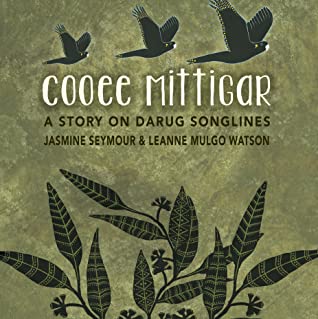
Recently, on a bit of a whim, I bought two books from the Indigenous Australian publishing company, Magabala Books. They were the younger readers-young adult novel, Black Cockatoo (my review), which had been shortlisted for a few awards, and this picture book, Cooee mittigar, which had just won the 2020 Prime Minister’s Literary Award for Children’s Fiction. It is described on the Awards website as “introducing children and adults-alike to Darug ‘Nura’ (Country) and language”. So, a book for children and adults. I’m in …

The book tells the story of the seasons*, as understood or experienced by Sydney’s Darug people, through the eyes of the black swan, Mulgo. It is a perfect example of the generosity of Indigenous Australians. Despite being dispossessed of their country, despite being repeatedly discounted as having anything important to contribute, despite being overlooked or specifically excepted by policy-makers, they come back again and again, willing to share their knowledge – and, particularly, their language – when there’s a real risk that it too might be taken from them. They seem to understand, when so many don’t, that it’s only by sharing and communicating with each other our values and belief systems that we can mature as a nation.

And so, we have this beautiful hardback, written and illustrated by two Darug women, Jasmine Seymour and Leanne Mulgo Watson. Like many recent books I’ve read by Indigenous Australian writers, it incorporates Indigenous – Darug here, of course – language into the story. The technique they use is, in two-page spreads, to tell the story using English and Darug words, immmediately followed (on the same spread) by a glossary for the Darug words used. So, for example, we have:

In the time of yuruka and burara
Elders tell us not to hunt the buru.

yuruku – hot
burara – dry
buru – kangaroo

The glossary words are presented in slightly smaller but still clear text. The illustrations for the page, as you’d expect in a picture book, help convey the meaning. This spread, for example, is dominated by hot-dry looking yellows and tans, with two kangaroos lazing in the grass.

But now, let’s go back to the beginning. The book starts with a welcome: “Warami mittigar. Welcome friend. … Cooee mittigar. Come here friend.” We are then introduced to our guide, the afore-mentioned black swan, Mulgo, who tells us that she will teach us “about Darug life” – and off we go, starting, logically, with an introduction to Biami (dreaming ancestor spirit) and the idea of Darug dreaming and the songlines which tell the story of “Nura” or country. From here, we move through the seasons, starting when the “the darrabura [day] grows long and the weather warms up”. Each step of the way, we are told what to look for, what might be happening, what we can do, with respect to country and the natural environment, such as:

During dagara, gulgadya will bloom –
ready to be turned into spears.

dagara – frost
gulgadya – grasstree

The story ends with the gentle request to “tread softly on our lands”.

The language flows simply – though, as a non-indigenous reader, I’m sure it would take me a few readings to feel comfortable enough with the words to make it sound good aloud. Leanne Mulgo Watson’s illustrations draw mostly from greens, blues and yellows, but with touches of other hues. They are gorgeously evocative of the text, making them a delight for all readers, but they also provide good opportunities for actively engaging younger readers (and listeners).

At the end of the book is a complete glossary of the Darug words used throughout, with a simple pronunciation guide, which is a feature I’ve missed in other books. So, for example, there’s “warami – wara me – hello”. There is also a one-page description of Darug Country, and another page providing brief bios of Seymour and Watson.

Cooee mittigar concludes with a statement of its creators’ intentions, which are “to share Darug language and culture and show that the Darug people are still strong on Country”. They also “hope that Cooee mittigar will contribute to the continuation of stories and culture”. I’d be surprised if they haven’t achieved this, but I hope that in publishing this post I will have made my contribution to supporting their goals.

Challenge logo

Jasmine Seymour and Leanne Mulgo Watson (illus.)
Cooee mittigar: A story on Darug songlines
Broome: Magabala Books, 2019
48pp.
ISBN: 9781925936865

* As many Australians know, Indigenous Australians do not see the year through “our” four-season calendar, but through different seasons depending on the country.

Carl Merrison and Hakea Hustler, Black cockatoo (#BookReview)

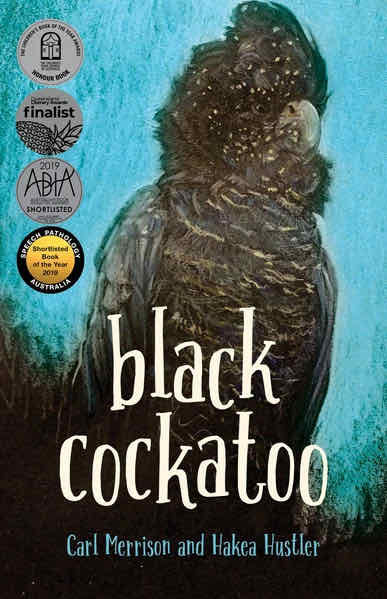
Black cockatoo is a young adult novel written by Indigenous Australian author, Carl Merrison, and his non-Indigenous collaborator, Hakea Hustler, and illustrated by Indigenous Australian illustrator, Dub Leffler. It is a beautiful, little (in size, not value) book that made quite a splash when it was published. It was shortlisted for several children’s literature awards in 2019, including those by the Children’s Book Council of Australia, Readings, the Australian Book Industry Association, and the Queensland Literary Awards. However, it is not the sort of book that I would normally post on here, so I plan to keep this review short.

I say this for a few reasons. For a start, children’s and young adult literature are not my main interest, though I do occasionally make exceptions, as I am making here. My main reason, however, is that not only am I not the typical age demographic for this book, but I am also the wrong cultural demographic, which makes me two steps removed from its target audience. But, I ordered this book from Magabala because I was intrigued about what was being written for young Indigenous readers, and it is on that basis that I’m posting on the book.

The story is set in a remote community in Australia’s Kimberley region, and focuses on 13-year-old Mia. She is disturbed to see her 15-year-old brother, Jy, becoming increasingly alienated from his community and culture, but feels powerless to do anything about it. In the book’s first chapter she rescues a young black cockatoo (dirrarn) which had been injured by Jy who had been target practising with his shanghai. The dirrarn is her totem animal.

What makes this book interesting for someone like me to read is the way it conveys the issues that I, an outsider, am aware of through my reading. One of these is the issue of family breakdown in Indigenous communities. Mia and her brother are being raised by their mother and grandparents, and haven’t seen their father or his family for many years. It’s clear that this is a tough gig for the grandparents. Mia overhears her grandfather (her jawiji) tell her grandmother that he’s “just tired”, and that:

I’m not sure I have it in me to teach him the right ways anymore. He’s just so headstrong.

In one way, of course, Jy is a typical teenager – stubborn and defiant – but concern about this behaviour is magnified in Indigenous communities where disconnection from culture can leave young people, young men in particular, highly vulnerable. In this story, the grandparents, like many in Indigenous communities, do their best to inculcate knowledge of and respect for culture, while also supporting their grandchildren’s need to make their way in a world they don’t know themselves.

This brings me to the main subject of this story, Mia. Her angst stems not only from her concern about her brother, but from having to make a decision about whether to take up her place at “a fancy school down south”. She’s confronting that conundrum faced by young Indigenous people that I’ve also gleaned through my reading, the challenge of straddling two cultures. There is a lovely sense here of Mia being supported and encouraged by her family, but also of her having some agency in what she does:

“You live in both worlds,” her grandmother added. “You will be strong in both ways.”

Black cockatoo is a short story but Merrison and Hustler pack a lot in here about the warmth and humour within extended Indigenous families, which lightens the more serious concerns they confront. The tone is not heavy, which is appropriate given the aim of this book being presumably to support young Indigenous people in making good choices rather than to demoralise them with the challenges they face!

The book is illustrated by Dub Leffler, with stylish, sometimes realistic sometimes more subtle, black-and-white images opening each chapter. Words from Jaru language are lightly scattered through the text:

It had been a proper long barranga dry weather, so to hunt we didn’t have to travel far to find big fat bin.girrjaru bush turkey.

There are two small glossaries at the end, one of Jaru words, and the other of Aboriginal English/Kriol words, that are used in the text.

While not all issues are resolved by the end, as you would expect, the novel’s conclusion, as you would also expect, is positive, with Mia coming to realise both her own inner strength and that she has the ongoing support of family and culture. It’s a good message in an accessible book, it seems to me, but the real proof is whether it works for its target readers, and that, of course, I don’t know.

Challenge logo

Carl Merrison and Hakea Hustler
Dub Leffler (illus.)
Black cockatoo
Broome: Magabala Books, 2018
62pp.
ISBN: 9781925360707

Craig Cormick and Harold Ludwick, On a barbarous coast (“BookReview)

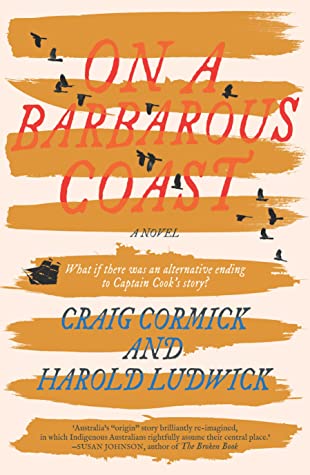
Craig Cormick is a Canberra-based writer whom I’ve seen at various literary events around town, but not read until now, so I was especially glad when Allen & Unwin sent me this book to review. Titled On a barbarous coast, it was written collaboratively with Harold Ludwick, “a Bulgun Warra man whose traditional lands lie west of Cooktown”.

On a barbarous coast offers something a bit different for reviewers. Besides its collaborative nature, there’s its form or genre, which is that sub-genre of historical fiction called alternate (or alternative) history. In this case, it involves looking at a period of Australian history and asking “what if things had happened differently?” Those things, for Cormick and Ludwick, relate to Captain Cook’s exploration of Australia.

The story springs, then, from Captain Cook’s 1768-1771 voyage to Australia to observe the Transit of Venus. During that expedition, in late 1770, the Endeavour was seriously damaged around the Great Barrier Reef, but managed to limp on to Batavia. However, Cormick and Ludwick posit a different scenario, suggesting that the Endeavour was shipwrecked and that only a small number of the crew survived – including Cook, though he remains comatose though much of the story. The survivors make their way to land, and … the question is, as the cover states, “What if there was an alternative ending to Captain Cook’s story?” Would Australia’s history have been different, and how?

While I’ve not read many, I do quite like alternative histories. They encourage us to look at the past from different angles, which can illuminate the implications of decisions made and actions taken.

So, this is how it goes …

The story is told in two alternating first-person voices, Cormick’s being that of American Midshipman James Magra, and Ludwick’s being the young Indigenous boy, Garrgiil.

Magra chronicles the actions and fates of the shipwreck survivors, who very quickly break into two antagonistic camps, while Ludwick shares the thoughts and actions of the local Guugu Yimidhirr people. For the bulk of the narrative, the two cultures remain apart. There is quite a bit of humour in watching Garrgiil’s people trying to decide whether these strange “spirit things” are ancestors or just men. Initially, they feel they must be ancestors, but the way they stumble around, starving while “walking past food every day”, not to mention behaving incorrectly in sacred or special areas, suggests that this may not be the case.

… their presence gives our people great stories of their stupidity and clumsiness to tell around the fire at night. Like the one who stood in the river and let Gandhaar [crocodile] eat him …

Meanwhile, we watch Magra and his co-survivors bickering amongst themselves, trying to plan a solution to their predicament, and sensing the “natives” are out there but not seeing them. The stage is set for a meeting. The question is: how will it go? You will have to read the book for yourselves to find out.

So, how does it all come together?

Magra gets the lion’s share of the story, which could be seen as giving the invaders the upper-hand (yet again) in story-telling. However, I’m going to assume that this was all discussed and agreed between the two authors. Also, I think we could argue that the unequal number of physical pages doesn’t necessarily mean that the emotional impact of the two narratives is similarly unequal. Garrgiil’s voice is strong enough, and compelling enough, to be in our minds, even when he’s not centre-stage.

In the Authors’ Note at the end, Cormick says they “tried to stay as close to known history as possible, both within the known and imagined paths of the story”, which requires a bit of mind-bending but I get what they mean. They drew upon “many existing knowledges” including several journals, such as those of James Cook, Joseph Banks, Sydney Parkinson, and an anonymous journal believed to have been written by James Mario Magra, whom Cormick uses as his narrator. They also looked at the work of Indigenous and non-Indigenous historians, journalists and academics, and at historical accounts of several shipwrecked individuals who had lived with Indigenous people. Cormick notes that while their story divides easily into the two narratives, “it is not so easy to unpick how each of us influenced each other’s work”.

Ludwick adds that his aim was to pull readers into “the world of Guugu Yimidhirr language (which was first recorded in 1770 by Sydney Parkinson and Joseph Banks)”. He says that many of the practices and knowledge he describes in the book are still used by his people. He also says that he wove Dreamtime stories into his narrative to help readers understand his people’s traditional explanations of how the land became what we see today.

The end result is the sort of book I like to read, one that entertains me with its story, while also engaging my mind as I consider what the authors (plural, in this case) were trying to do, how they were trying to do it, and whether they pulled it off. It is an earnest book. Sometimes this comes a bit close to the surface when we are “told” things to make sure we get it (such as “I know the Captain controlled how the stories of our journey would be told”). This – and the strange though interesting little “magical realism” interludes where Magra talks to Gandhaar, the crocodile – creates a little unevenness in the narrative. Also, the use of parenthesis to translate the local language used by Garrgiil felt clunky. Yet, I applaud the book’s extensive use of this language. We need more of it in contemporary Australian literature. As Gandhaar tells Magra:

You create the landscape in your own words. If you don’t know the right words, you will never know the land properly.

But these are minor “picky” things. Cormick and Ludwick have attempted something significant in terms of story, intent, and process, and they pulled it off in a way that engaged me, right through to their considered ending which suggests possibilities, while being realistic about probabilities. Without irony, we could call this book “a grand endeavour”. It is certainly exciting to see such Indigenous-non-Indigenous collaborations happening in our literary sphere.

Lisa (ANZLitLovers) also found this book intriguing.

Craig Cormick and Harold Ludwick
On a barbarous coast
Crows Nest: Allen & Unwin, 2020
309pp.
ISBN: 9781760877347

(Review copy courtesy Allen & Unwin)

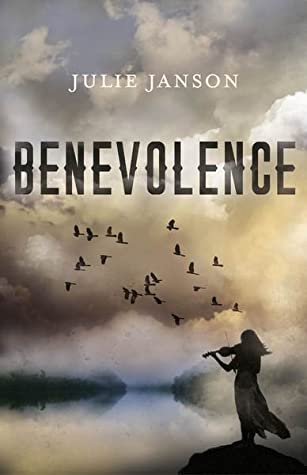
Julie Janson, Benevolence (#BookReview)

In a rather curious synchronicity, the last three books I’ve read have all had single word, multiple-meaning, titles, all relating to the colonial settlement of Australia – Gay Lynch’s historical fiction Unsettled (my review), John Kinsella’s memoir Displaced (my review), and now Julie Janson’s historical fiction Benevolence whose title drips with irony.

Recently, I commented that it would be good to see an Indigenous Australian novel responding to Kate Grenville’s The secret river. Well, it appears that Benevolence is that novel. In her Acknowledgements, Janson, of the Darug Nation, writes that Benevolence is “a work of fiction based on historical events of the early years [1816-1842] of the British invasion and settlement around the Hawkesbury River in Western Sydney, New South Wales”. Protagonist Muraging, renamed Mary by the colonisers, is based on the author’s ancestor, Mary Ann Thomas, just as Grenville’s novel, set around the same place and time, was inspired by, though not exactly based on, her ancestor, Solomon Wiseman. There, of course, the similarity ends, because while Grenville’s protagonist becomes a “big” man in colonial Sydney, Muraging’s experience is very different.

Benevolence starts in 1816, when the motherless Muraging is “about 12 years old” and handed over by her father to the British to be taught English at the Parramatta Native Institution. She is, says her father (naively we now know), “to be an important part of helping their people and she must learn their language and their ways”. Thus begins Muraging’s life of being caught between two cultures. Early on “she thinks she can be in two worlds and not have to choose”. However, she is never properly accepted by the British (of course) and, while accepted by her own Darug people, it is clear very early that Indigenous culture is being dismantled by dispossession, dispersal and death (through disease, murder and massacre), resulting in Indigenous people’s lives (already) becoming one of survival rather than of living fully.

And so, as the novel progresses through the years, we follow Muraging as she leaves or escapes the British settlement to find comfort, support and/or protection within Indigenous communities, only to return for one reason or another to the settlement, with the cycle starting all over again. Each time she returns to the settlement, the brutality and humiliations ratchet up. It’s a terrible story, but a credible one based on Janson’s detailed research, part of it done while she worked as a senior researcher for Professor Peter Read at the University of Sydney. This research resulted in the creation of the History of Aboriginal Sydney website.

However, this book is not history but historical fiction, so the characters are inspired by a mixture of historical fact and Janson’s imagination – and it is her imagination that brings these characters to life as authentic beings, particularly Muraging, her mixed-up friend Mercy, the weak-if-well-meaning reverend Henry Smythe, and to a lesser degree Captain Woodrow. The grotesque reverend Masters is another matter altogether.

Muraging is established from the start as a person with agency. She does not want to be a “servant” or “a fine maid”. Rather, she wants, she says, to ‘”improve my situation” … but she is ignored’. She never gives up her search for an independent life, and, though she makes poor decisions at times, she behaves courageously, loyally (sometimes at great risk to herself), and in a way determined to be true to herself and her people.

“You have no home” (Masters)

While the personal implications of colonialism and dispossession are conveyed through Muraging’s story, Janson reinforces this with historical fact, including references to documented massacres, discussions between characters about current events, and the occasional appearance of a governor (like Macquarie, like Gipps.) Janson also opens selected chapters with specific historical information. Chapter 4 (“1818: White people things”), for example, begins with an excerpt from the Sydney Gazette reporting massacres from, of course, the settler perspective. Chapter 20 (“1835: Deerubbin, The Hawkesbury River”) commences with a statement about Governor Bourke passing “the Proclamation of terra nullius”. And so on. These occasional documentary facts anchor Muraging’s story in the historical timeline.

The biggest villain of the piece is the appropriately named Reverend Masters. He represents the worst of British power, conveying or enacting British policy with little thought for the humanity of those he deals with. Like a certain world leader today, it’s all about him.

And this brings me to the writing. Janson’s descriptions are beautifully lyrical, though not always simply so. The novel opens with:

The grey-green eucalypts clatter with the sound of cicadas. Magpies and currawongs warble across the morning sky as the sun’s heat streams down. It is eaglehawk time …

Almost idyllic Australia, except “eaglehawk” time suggests the idea of violence … of hunter and prey!

There are also wry ironic touches, such as Captain Woodrow’s comment, “I have fought savages on the Indian frontier and I know that no honour exists among savages”. Hmm, who are the savages without honour here? Or, good guy ex-convict Ferdinand, with his Darug wife, defying Masters with “This is my land. My grant.” Whose land? In such ways, Janson encourages us to think behind the words of waibala people.

I also like the way Janson used local Indigenous language throughout the novel, enough to convey (and promote) local culture and language, but not so much as to impede understanding.

I was less comfortable, however, with the writing about actions and events. It can be quite cut-and-dried, with a disjointed or staccato feel that, for me, broke the flow of my reading. Maybe this was intended, as Lisa (ANZLitLovers) has suggested, to convey the violence – or, at least, the instability – of that world. I can see that, though I’m not sure it fully worked that way for me.

And finally, of course, there’s that powerful title. Who thinks they are benevolent, who pretends to be benevolent, who really is benevolent, not to mention what is benevolence anyhow, are the questions that confront us on every page of this timely novel.

“You won’t win, you know” (Masters)

Benevolence, then, is a compelling and worthwhile read. The history is good, offering First Nations readers something that more closely accords with their understanding of what happened, and non-Indigenous readers a corrective to the history we’ve been fed most of our lives. The story is engaging, with Janson treading a fine line between utter negativity and unrealistic hopefulness. I particularly liked the tone struck by the ending, but that’s for you to find out!

We need more books like this …

Challenge logo

Julie Janson
Benevolence
Broome: Magabala Books, 2020
345pp.
ISBN: 9781925936636

(Revieve copy courtesy Magabala Books)

Bill curates: Monday musings on Indigenous Australian writers

Bill curates is an occasional series where I delve into Sue’s vast archive, stretching back to May 2009, and choose a post for us to revisit.

The feature of Whispering Gums that we all most look forward to is Monday Musings. But when did they start? It took me a while to locate – WordPress really needs the ability to scroll through post Titles by Date – but it turns out Sue put up the first one on 9 Aug. 2010 (here). Check it out, it’s only short, not much more than a statement of intent. No. 2 (here) covers 5 Australian novels, of which two would have to be my all time least favourite. So I’ve chosen for today, No. 3, from 23 Aug. 2009.
_______________________

My original post titled: “Monday musings on Australian literature: Indigenous writers”

Tara June Winch

Tara June Winch (Courtesy: Friend of subject, via Wikipedia, using CC-BY-SA 3.0)

It’s important I think that my third post be on our indigenous writers. Again it’s going to be pretty idiosyncratic as my reading in this area has been scattered, not for lack of interest so much as the old “so many books” issue that we all know only too well. I was first introduced to indigenous writing at high school where I had two inspirational teachers who encouraged us to think seriously about human rights. It was then that I bought Oodgeroo Noonuccal’s (or Kath Walker as she was then) book of poetry, My people.

In my first Monday Musings post, I mentioned David Unaipon who is generally recognised as the first published indigenous Australian author. However, it was Oodgeroo Noonuccal, with her book of poetry, We are going (1964), who heralded contemporary indigenous Australian writing. So let’s start with her.

Oodgeroo Noonuccal My people (1970, poetry)

Noonuccal’s poetry is largely political. She wrote to right the wrongs which indigenous Australians confronted every day: the racism, the white-colonial-slanted history, the lack of land rights, and so on. Much of her poetry is therefore strong but accessible “protest” poetry. My people collects poems from her first two books and includes new works as well. Here are just a few lines to give you a sense of what she was about:

… Do not ask of us
To be deserters, to disown our mother,
To change the unchangeable.
The gum cannot be trained into an oak.
(from “Assimilaton – No!”)

Gumtree in the city street,
Hard bitumen around your feet,
Rather you should be
In the cool world of leafy forest walls
And wild bird calls.
(from “Municipal gum”)

I love the way she uses gums to represent her people – who they are, where they should be. Some of the poems are angry, some are conciliatory, and others celebrate her culture. I loved the book then, and I still value it now.

Sally Morgan My place (1987, memoir)

The next book in my collection, chronologically speaking, is Sally Morgan’s memoir My place. Sally Morgan is primarily an artist but her memoir became a best seller when it was first published. In it she chronicles how she discovered at the age of 15 years old that her colour did not come from an Indian but  an Aboriginal background, and her subsequent investigations into her family’s rather controversial story. I don’t want to go into the controversy here. Rather, the point I’d like to make is her story-telling: it is warm, funny, and thoroughly engaging.

Women of the centre (1990, short life-stories); Black chicks talking (2002, short life-stories produced in film, book, theatre and art)

Telling stories is an intrinsic part of Indigenous Australian culture. It’s how traditions have been passed on for 40,000 years or more. It’s probably simplistic to draw parallels between traditional story-telling and the telling of stories in general. After all, we all love stories. Nonetheless it is certainly clear from the little experience I’ve had and the reading I’ve done, that story-telling is an intrinsic part of Indigenous Australian culture and is becoming an important way of sharing their experience with the rest of us. This was powerfully done in Bringing them home: The stolen generation report of 1997 which contained not only the history of the separation of children from their parents and recommendations for the future, but many many first person stories which drove the drier points home.

Two books that I’ve read which contain personal stories by indigenous women are Women of the centre and Black chicks talking. The introduction to the former states that its aim is to help we non-Aboriginal Australian readers to understand lives that are so different from our own and “to provide personal written histories for the descendants of the women involved”. This latter is becoming an urgent issue in indigenous communities today – the capturing of story before more is lost. In Black chicks talking Leah Purcell interviews nine Aboriginal woman – some urban, some rural, some well-known, some not – about their lives. Another wonderful read.

Life stories/memoirs represent, in fact, a significant component of indigenous literature. Another work worth mentioning, though I’ve only seen the film and not read the book (shame on me!), is Doris Pilkington’s “stolen generation” story of her mother’s capture and subsequent escape involving an astonishing trek home, Follow the Rabbit-Proof Fence.

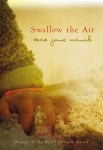
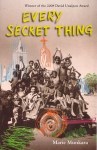
Alexis Wright Carpentaria (2006); Tara June Winch Swallow the air (2006); Marie Munkara Every secret thing (2009)

Finally, a brief mention of three recent fictional works, two of which I’m ashamed to say are still in my TBR pile. These are the two David Unaipon Award winners by Tara June Winch (reviewed since then) and Marie Munkara (reviewed since then). If you are interested in the latter, please check Musings of a Literary Dilettante’s review.

I have though read Alexis Wright’s Miles Franklin Award-winning Carpentaria (my post). It’s set in a fictitious place, tellingly called Desperance, in northern Australia. Its focus is colonialism (ie European invasion of the land), and conflict within black communities about how to respond. To explore these, Wright touches on lot of ground, including land rights, deaths in custody, mining rights, boat people, and petrol sniffing to name just a few. She flips between the real and the magical, she uses language that is image-rich and often playful, and she tells some very funny stories. It’s a big, wild and rather complex read that manages in the end to be hopeful despite itself.

This is just a small introduction to the wealth of Australia’s indigenous literature. It won’t be the last time I write about it. I will also in the future post on white Australians who have written about Aboriginal Australians, writers like Thomas Keneally who wrote The chant of Jimmie Blacksmith but who now says he wouldn’t presume to write in the voice of an Indigenous Australian. A vexed question really. I believe there should be no “rules” for writers of fiction and yet, sometimes perhaps, it is best not to appropriate voices not your own. But that is a question for another day…

Meanwhile, back to Alexis Wright – and stories:

Old stories circulating around the Pricklebush were full of the utmost intrigues concerning the world. Legends of the sea were told in instalments every time you walked in the door of some old person’s house. Stories lasted months on end, and if you did not visit often, you would never know how the story ended. (Carpentaria, p. 479)

____________________

I’m not surprised – and am glad – that Bill chose this one from my early Monday Musings, because this is an area of Australian literature that is dear to his and my hearts (and to Lisa’s who runs her Indigenous Literature Week each year.) And phew, I’m glad I’ve since read those two novels that were on my TBR back there in 2010.

[You can find all my Monday Musings by clicking on the Monday Musings category, or this link]

Would you, wherever you are, like to recommend any indigenous writers?

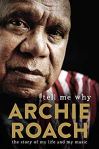
Archie Roach, Tell me why: The story of my life and my music (#BookReview)

Book coverGood things come to those who wait! At least, I hope so, because Lisa has had to wait a long time for a review from me for this year’s Indigenous Literature Week. Finally, though, I finished the main book I chose for this year’s challenge, Archie Roach’s memoir, Tell me why: The story of my life and my music.

Most Australians will know who Archie Roach is, but international readers here may not. A member of the Stolen Generations, Archie Roach is an indigenous Australian singer, songwriter, guitarist, and political activist. The story he tells in his memoir, Tell me why, is not an unusual one in terms of people of his background and generation, but that doesn’t mean it isn’t worth reading, because not everyone can tell this story in the way that Roach can. Perhaps this is because he’s a songwriter, or perhaps, more correctly, he’s a songwriter because he can tell stories.

Roach starts his story with a Prologue set in 1970. He is 14 years old, and receives a letter from one of his birth sisters telling him that his birth mother had died. This is a surprise, because his adoptive parents had been told his parents had died in a fire. He then flashes back in Chapter 1 to tell us about his life, as he knew it, up to 1970. This life involved being stolen from his parents, and being placed in two foster homes, one abusive, before being placed, in 1961, with the Melbourne-based Coxes with whom he was still living in 1970. In Chapter 2 he picks up that point in 1970 when he received the letter, and tells his story chronologically from then on, with some flashbacks to fill in his family’s early life as he learns it himself.

Although Roach had had a good life with the Coxes, who had loved him and whom he loved, the discovery that members of his birth family were still alive brought with it a desire to learn who he was, and he left home. He managed to make contact with his family, but before that he was introduced to drinking (having “a charge”) and life on the streets. Not surprisingly, his story, like those of many young indigenous people who have lost contact with their culture and thus with their bearings, involves alcoholism and related illnesses, run-ins with the police, prison, unemployment, and all-round instability. Archie would obtain work, would be appreciated as a worker, but the demons would return and down he’d plummet again. It’s a common cycle.

However, Archie had a couple of big pluses in his corner. There was Ruby Hunter, whom he met while still a teen and who became the love of his life. It’s not that her appearance resulted in a miraculous turnaround. Real life is rarely like that. But she became the supportive base to whom he would return and who, eventually, did provide the stability that enabled him to turn his life around and become the success he now is. The other plus was music, to which he was first introduced by the Coxes, particularly Dad Cox who loved to sing and who gave him his first guitar. While the stories about his drinking life were distressing to read, the story about how music “saved” him, and how he gradually came to realise that he could tell stories through music, was moving and inspiring.

This brings me back to my opening comment that “not everyone can tell this story in the way that Roach can”. The memoir is beautifully constructed, from the Prologue that vividly takes us into the classroom where Roach receives the letter about his mother, to the use of song lyrics, most of them Roach’s own, to introduce each chapter. Roach uses foreshadowing at the end of several chapters to move the story on, such as this at the end of the chapter in which he arrives in Adelaide – “This would be the last hours before finding Ruby Hunter”. And this one at the end of the chapter where Jill Shelton is recommended to him as a manager – “Jill would end up saving my life at a time when I didn’t see there was any point in saving it.”

Roach also mixes up the narrative, commencing some chapters with the next part of the story, while others he introduces with something more reflective. I particularly liked the opening to the chapter in which Ruby dies:

Some people see time as a river with a steady current. Some people say we get in and move with that current, all of us ageing uniformly. I don’t believe that’s true, though. I’ve seen people age years overnight.

It happens to a lot of our people, and it happens to an awful lot of us drinkers. It doesn’t just happen while we’re drinking, either; we could’ve been years off the stuff and then something might change. We might lose a sister or a brother, and suddenly we have age in our face and in our step.

Sometimes it happens for no reason. Someone will be living their life and all of a sudden time will heap years on their shoulders.

Of course, Roach also talks about politics, about Indigenous opposition to the 1988 Bicentenary, about John Howard’s  opposition to a national apology and his criticism of the “black armband view” of Australian history, about Aboriginal deaths in custody, about the stolen generations, and more. It’s all told through the prism of his own personal experience or through his involvement in political action. Most readers will know these issues, but the personal stamp offered by books like this helps keep the issues real and in front of us. Roach, like so many Indigenous people, amazes me by walking that fine line between anger at what has happened to his people and generosity towards the rest of us.

In the end, Roach’s message is an inclusive one. His songs, he has found, speak to non-Indigenous people too, with many telling him that “that’s what happened to me”. Consequently, his songwriting, he says, now “feels more inclusive, more universal” because “it’s about all of us – you can’t write about yourself without including everyone.”

He writes:

For so long we have been divided by ‘isms’ – racism, sexism, fundamentalism, individualism – but when we come back to the place of fire, I believe we will discover there’s far more that connects us than separates us. I believe we will be one humanity again, that we will find release, healing and true freedom.

I love the hope in this but, let’s be clear, Roach is not letting us off the hook. That is, he doesn’t believe we are there yet. He is, though, choosing an aspirational path, and for that I thank him.

ANZ LitLovers logoArchie Roach
Tell me why: The story of my life and my music
London: Simon & Schuster, 2019
378pp.
ISBN: 9781760850166

Monday musings on Australian literature: Indigenous Australian literature, 1970s

Although Lisa’s (ANZLitLovers) annual Indigenous Literature Week is officially over for 2020, I thought I’d bookend it with a second Monday Musings, this one on how Indigenous Australian literature looked around 50 years ago. Who was writing then, and what were they writing?

My main sources were Trove, of course, and the Macquarie Pen anthology of Aboriginal literature, edited by Anita Heiss and Peter Minter. In their introduction, Heiss and Minter argue that:

Aboriginal literature as we know it today had its origins in the late 1960s, as the intensification of Aboriginal political activity posed an increasing range of aesthetic questions and possibilities for Aboriginal authors.

With the Constitutional Referendum of 1967, and, as they put it, “the election of the reformist Whitlam government in 1972 [that] saw a new radicalisation in Australian politics”, there was a growing interest in land rights and cultural self-determination. In this world, Aboriginal literature “began to play a leading role in in the expression of Aboriginal cultural and political life”.

Heiss and Minter nominate the period from 1967 to the mid-1970s as being “significant for the sudden growth in Aboriginal authorship across a broad range of genres.” Ha! It was in 1967 that I wrote a little piece for my school year book on “Aboriginal equality in Northern Australia”. (It’s a bit excruciating to read now, being the words of an idealistic young teen, but that was when my interest in Indigenous Australian rights really started – and when I started reading authors like Kath Walker, later Oodgeroo Noonuccal.)

Book coverThe writers they name from that time – Kath Walker, Jack Davis, Kevin Gilbert, Monica Clare (who is new to me), Gerry Bostock and Lionel Fogarty – pretty much mirror the writers who cropped up in my Trove search. Heiss and Minter describe them as

active in the political sphere while simultaneously catalysing a nascent publishing industry and writing their own vanguard pieces of creative literature.

There is another name that they don’t mention, but who comes up in Trove, and that’s the controversial Colin Johnson (who also published under the name Mudrooroo.)

The interesting thing about this group of people is that they are primarily poets and playwrights. Davis, Bostock and Gilbert are both, while Walker (Noonuccal) and Fogarty are best known as poets. The exception is Monica Clare. She was primarily an activist, but wrote an autobiographical novel that was published posthumously in 1978, Karobran: The story of an Aboriginal girl. Why were poetry and drama so dominant at that time? Is it because they were easier to publish (or get published) – or perform? Is it because these forms lend themselves more to the activism all these writers were engaged in? A poem, after all, is a powerful tool that can be performed, learnt and quoted again and again – as Noonuccal’s were, I know.

Now, what did the newspapers at the time have to say about Indigenous writing? First, there were several references to the paucity of Indigenous writing and Indigenous characters in contemporary literature, including in children’s literature. Presumably this awareness marked the beginning of the slow change that led us to the last decade or so in which we’ve seen significantly more Indigenous writing being published across all forms and genres.

There was, though, less awareness of the importance of Indigenous people telling their own stories. The sense I get is that it was perfectly alright for non-Indigenous people to tell Indigenous stories. Reviewer Lyndal Hadow, writing in the Tribune about a book of short stories by someone called D Stuart, praises:

his wide and deep knowledge and appreciation of the Aborigine. I believe there is no one who has written with such understanding in all the literature of the subject. His ear and his pen for the subtleties of altered English as used by his Aboriginal friends are not matched by any one I have read, and I have read them all. Again Stuart shows that those of whom he writes are known to him, not as subjects to be studied, but as old friends whose lifestyle he understands, and whose strengths he respects.

I love her confidence in her assessment because she has “read them all”!

The most comprehensive article I found about Indigenous writing in Australia came from the University of New South Wales’ student magazine Tharunka in 1976. The article, written by John Beston, commences:

Who are the Aboriginal writers? The first person to supply an answer to that question was Kath Walker, herself the best known of Aboriginal writers. In an article entitled “Aboriginal Literature,” in the January 1975 issue of Identity, Kath Walker mentions five writers other than herself — Jack Davis, Kevin Gilbert, Colin Johnson, Wilf Reeves and Dick Roughsey — and concludes that there is an exciting time ahead. I agree with her.

Beston comments on the three main poets of the time, Walker, Davis and Gilbert, and shares this:

Kath Walker has graciously acknowledged Jack Davis to be the better poet, but there is no clear superiority of one poet to the other: Davis is the more skilled craftsman, but Walker sometimes has greater emotional force.

This article is worth reading, because it surveys the gamut of Indigenous Australian writing at the time, across all forms and genres. He concludes, though, by returning to Walker and her significant role, saying (in the tone of his times):

The quality of her work and the success she met with — We Are Going went into seven editions — gave other Aboriginals a needed boost and encouraged them to express the creativity that they have always had. So Aboriginal literature is less than twelve years old. The young tree is certainly flourishing.

Another article I found noted Kevin Gilbert’s being awarded a literature grant to write a book. And, there was a 1979 review of the book Literature and the Aborigine in Australia by a non-Indigenous writer, which seemed to be more about “the history of the efforts of Australian writers to come to terms” with Indigenous culture than about Indigenous literary culture itself, though the review does say:

‘There is also, completing the record, the very new group of writers, Aboriginal or part-Aboriginal themselves, who are producing their own literature.’

In the 1970s, then, there wasn’t a lot of coverage of Indigenous Australian writing, but there was the beginning of an awareness that Indigenous Australians were writing – and that Indigenous Australians and their culture should no longer be overlooked. We have a long way to go yet in terms of all Australians reading and appreciating Indigenous Australian writing and culture, but it is useful to see where we’ve come from, don’t you think?

Past ILW/NAIDOC Week-related Monday Musings

Monday musings on Australian literature: Indigenous Australian biographies

Yesterday was the start of Lisa’s (ANZLitLovers) 2020 Indigenous Literature Week, and, as I have done for a few years now, I’ve decided to devote my Monday Musings to an Indigenous Australian literature topic. This year’s topic is Indigenous Australian biography.

I have previously written Monday Musings on Indigenous Australian autobiographies and memoirs. These have flourished in the last decade or so, particularly, it seems, memoirs from Indigenous Australian women. I’ve reviewed several on this blog. However, biographies are a different form altogether, and in researching for this post, I’ve struggled to find many. Readings bookshop, for example, provides a list of Australian First Nations Memoir and Biography but I struggled to find many biographies in their list. It is a positive thing that publishers and readers have embraced memoirs, but I can’t help feeling that the paucity of biography tells us something about the place of Indigenous Australians in Australian culture.

The Australian Dictionary of Biography (ADB), self-described as “Australia’s pre-eminent dictionary of national biography”, aims to provide “informative and fascinating descriptions of the lives of significant and representative persons in Australian history.” This suggests that biography has a formal role in telling the story of a nation. Consequently, the dearth of Indigenous Australian biographies – if my research is right – is surely a measure of the continuing marginalisation or exclusion of Indigenous Australian culture and lives from our national story.

Not surprisingly, I’m not the only one to have noticed this problem. In 2017, the National Centre of Biography launched a new project “to develop an Indigenous Australian Dictionary of Biography“. It’s being led by Shino Konishi who is of Indiengous descent from Broome. She is on the ADB’s Indigenous Working Party which was established in 2015, and which includes “leading Aboriginal and Torres Strait Islander scholars from each state and the territory”. The main aim of the project is to add 190 new Aboriginal and Torres Strait Islander biographies to the ADB which, they say, has published nearly 13,000 biographies since 1966, but “has tended to under-recognise the contribution of Indigenous people to the Australian story”. The end-result of the project will be a dedicated Indigenous ADB.

Alongside this, the National Centre of Biography, which publishes the Australian Dictionary of Biography, also hosts a site called Indigenous Australia which “brings together all entries on Indigenous Australians found in the NCB’s biographical websites–Australian Dictionary of Biography, Obituaries Australia, Labour Australia and Women Australia.” It also supports the Australian Indigenous Autobiography Archive, which is an initiative of the University of Western Sydney. (However, it moves us away from my focus here on biography.)

Of course, the above is all very important, but the ADB is about biographical essays in a dictionary of biography. I’m also interested in full-length biographies. I didn’t find many, but, as always, I’m hoping you will tell me (or remind me of) others?

Alexis Wright, TrackerIndigenous Australian biography – a small selection

  • Max Bonnell’s How many more are coming?: the short life of Jack Marsh (2003): on athlete and first class cricketer, Jack Marsh, who died in 1916.
  • Kathie Cochrane’s Oodgeroo (1994): on poet and activist Oodgeroo Noonuccal.
  • Ruby Langford Ginibi’s Haunted by the past (1999): on Ginibi’s son, Nobby, who spent significant time in prison, and the systemic failures in handling Indigenous young.
  • Kevin Keeffe’s Paddy’s road: Life stories of Patrick Dodson (2003): on activist Patrick Dodson, and his family, and their commitment to reconciliation.
  • Marlene J. Norst’s Burnum Burnum: A warrior for peace (1999): on Burnum, Stolen Generations survivor, sportsperson and activist.
  • John Ramsland’s The rainbow beach man (2009): on Les Ridgeway, Worimi elder, who was a farm labourer, station manager and was eventually recruited by Charles Perkins to work in the Commonwealth Department of Aboriginal Affairs.
  • Peter Read’s Charles Perkins: A biography (2001): on activist, Freedom Ride participant and administrator, Charlie Perkins.
  • Banjo Woorunmurra and Howard Pedersen’s Janadamarra and the Bunuba Resistance (1995): on Aboriginal resistance fighter, Jandamarra, and his resistance against invasion in the Kimberleys.
  • Alexis Wright’s Tracker (2017): on the charismatic ‘Tracker’ Tilmouth, activist, a book which is described by some as a “collective memoir” but which I’ve included here as an example of new forms of “biography”, particularly for Indigenous life-writing.

So, now, please add to this list …

Past ILW/NAIDOC Week-related Monday Musings

Tara June Winch, The yield (#BookReview)

Book coverTara June Winch’s novel, The yield, follows her impressive – and David Unaipon award-winning – debut novel Swallow the air (my review). Ten years in the making, The yield could be described as her “passion project”. It makes a powerful plea for Indigenous agency and culture.
I wrote about The yield’s genesis last year, but will repeat it here. It was inspired by a short course Winch did in Wiradjuri language run by Uncle Stan Grant Sr (father of Stan Grant whom I’ve reviewed here a couple of times). Discovering language was, she said, transformative, but turning her passion into a book proved tricky. She started with too broad a canvas, until her mentor, Nigerian Nobel Laureate Wole Soyinka, encouraged her to focus on 500 acres of land, telling her she could tell her story through that lens. So, she found her 500 acres on the Murrumbidgee, created fictional places – the Murrumby River, and the towns, Massacre Plains and Broken – and her novel started to take shape.

“that unhandsome truth”

But my, what a shape it takes. It has three, roughly alternating, narrative strands, each quite different in style but each reflecting or enhancing the other two. They are:

  • Poppy Albert Gondiwindi, dictionary writer, first person narrator. He is dying but is also a time-traveller, so, Winch said, his story has elements of magical realism. It’s told through the words in his dictionary, starting at the end of the alphabet, “a nod to the backwards whitefella world I grew up in”. “The dictionary”, Poppy says, “is not just words – there are little stories in those pages too.” There sure are. Through them Poppy tells the story of his and his people’s lives; he passes on as much of their culture as he has learnt and can tell; and he shares his hopes and values:

respectyindyamarra I think I’ve come to realise that with some things, you cannot receive them unless you give them too. Unless you’ve even got the opportunity to give and receive. Only equals can share respect, otherwise it’s a game of masters and slaves – someone always has the upper hand when they are demanding respect. But yindyamarra is another thing too, it’s a way of life – a life of kindness, gentleness and respect at once. That seems like a good thing to share, our yindyamarra.

  • August Gondiwindi, Poppy’s grand-daughter, third person voice. She tells a contemporary story of the 500 acres where the Gondiwindis live, and the challenges faced, including from mining and river degradation. Her story is about finding her place after living overseas for ten years. It’s a quest story, in a way, a little like that of Swallow the air’s protagonist. We meet her in Chapter 2 as she hears of the death of Poppy:

She knew that she had once known the beloved land where the sun slapped the barren earth with an open palm and knew too that she would return for the funeral … go back and try to find all the things she couldn’t find so many thousands of kilometres away.

(“Where the sun slapped the barren earth with an open palm”. Winch’s language throughout is gorgeous.)

  • Reverend Ferdinand Greenleaf, Lutheran missionary, first person voice. Winch created him, she said, to “round” out the story. He’s her villain, but she gives some balance, humanity, to him by sharing his own experience of loss of home and mother tongue. His story is told through the letter he writes in 1915 to Dr George Cross of the British Society of Ethnography about his experiences running a mission from the 1880s. The first instalment ends with why he is writing it:

To tell how wrongs became accepted as rights. … I will tell that unhandsome truth, even if it will amount to last words. The circumstances and the times demand it.

His story is the most problematic for readers because he, with good intentions, established the ironically named mission, Prosperous House, near the non-ironically named town of Massacre Plains. Indeed, Poppy writes in his dictionary that the Reverend was “the only good white gudyi” he’d known, gudyi meaning medicine man, priest, conjuror. Greenleaf’s heart is in the right place – having seen the “the vile inhumanity practised by the white-skinned Christian on his dark-skinned brother in order to obtain land and residence, for ‘peaceful acquisition'” – but of course he is a man of his times and his paternalistic actions have their own consequences. August sees the paradox in his “trying to protect those ancestors at the same time as punishing them”, while her aunt Missy takes a harsher stance.

These three stories span over 100 years from the late nineteenth century to the present, with Poppy Albert’s dictionary providing the novel’s backbone, spiritually, culturally, and plot-wise. August’s story, on the other hand, provides its emotional heart, while Greenleaf’s provides important historical context.

The stories don’t, then, just meander along side by side for their own sakes. Each contributes to an overall plot which concerns a proposed mine, and efforts to stop it – a story that is broadly reminiscent of non-Indigenous Australian author Madelaine Dickie’s Red can origami (my review). In both stories the Indigenous people need to invoke Native Title if they are to have a chance of stopping the mine, and in both stories competing interests and loyalties, not to mention a helping of skulduggery, work to prevent the Indigenous owners from progressing their claim.

In Winch’s story, Poppy’s dictionary, which documents not only language but his people’s ongoing connection to the land, together with a collection of artefacts that had been donated to a museum by local rich landowners, and the information in Reverend Greenleaf’s letter, are critical to the Native Title claim. August and her family’s challenge is to realise the relevance of and/or discover and locate these “proofs”, while others try to foil them. It’s the oft-repeated story across Australia when traditional owners, protestors and landowners, with competing or criss-crossing interests, confront development, particularly mines.

Threading through all this is the novel’s heart, August’s journey to find herself and her place of belonging, as she navigates her people’s painful history of being “torn apart”, of massacres and dispossession, of racism, of incarceration, and of abuse from both within and without her culture. These are stories we’ve heard before. However, Winch keeps them fresh and urgent by engaging with contemporary thought (concerning, for example, Indigenous agricultural practice and the idea of slavery) and by creating characters who feel real and authentic, who are complicated like those in Melissa Lucashenko’s Too much lip (my review), rather than simple mouthpieces for ideology.

For all the anger and sadness in the book, it is also a positive – perhaps even hopeful – one. Early on, Poppy’s wife and August’s grandmother, Elsie, tells her, “Please don’t be a victim”. This is, I’d say, Winch’s plea to her people, and is reinforced by Poppy’s dictionary words at the end in which he says the time for shame is over. It is time, in other words, to heal, to be proud, to embrace country with confidence.

The yield is a rewarding read. Its three very different voices challenge our minds to think carefully about what we are reading, while its plot and characters engage our hearts. I would be happy to see it win the Stella Prize next week.

Challenge logoLisa (ANZLitLovers) also loved the book and includes examples from Poppy’s dictionary.

Tara June Winch
The yield
Hamish Hamilton, 2019
344pp.
ISBN: 9780143785750

Nhulunbuy Primary School, I saw we saw (#BookReview)

Book coverA week or so ago, I wrote a post to commemorate this year’s Indigenous Literacy Day. In that post I noted that the book I saw we saw was going to be launched at the Sydney Opera House that day. It was written and illustrated by students from Nhulunbuy Primary School, up on the Gove Peninsula, and a number of them were going to read and perform from the original Yolŋu Matha language version, Nha Nhunu Nhanjal?, at the launch. I ordered my own copy of the book that day.

The books – the original Yolŋu Matha version, launched at this year’s Garma Festival, and the English version – were published by the Indigenous Literacy Foundation, which describes itself as a “national book industry charity”. Their aim is to “reduce the disadvantage experienced by children in remote indigenous communities in Australia, by lifting literacy levels and instilling a lifelong love of reading”. These two books came out of their Community Literacy Project, and were produced through a series of workshops with illustrator Ann Haddon and teacher-librarian Ann James, with local Yolŋu elders helping develop the story.

So, the English-version book. It begins with a brief introduction telling us that the Yolŋu people of north-east Arnhem Land represent one of the largest indigenous groups in Australia. Their main language is Yolŋu Matha, which, it explains, has twelve sub-languages, each with its own name. It also tells us that, for most Yolngu children, English is their second (or even third or fourth) language. I saw we saw, the English language version of their book, is, by definition, written in English, but it uses words from the Dhaŋa sublanguage to name the actual “things” seen. This is a lovely, effective way of introducing indigenous language to non-indigenous people (as recommended at the Identity session of the Canberra Writers Festival). However, this approach also creates a bit of a challenge for the reader – what is being seen, and how do you pronounce it?

Beach, north-east Arnhem Land

Beach, north-east Arnhem Land

Well, there is quite a bit of help for us in this. First, the text and illustrations provide a lot of clues. “I see a waṯu grab a stick from a man” is accompanied by quite a busy drawing with birds, fish, turtle, jellyfish, and a person fishing, but there is also a picture of a dog with a stick in its mouth. So, waṯu is dog! Sometimes, however, it’s not so easy to get it exactly right, either because of the busy-ness of the picture or the (delightful) naiveté of the children’s drawings. You can usually guess, but can be uncertain, nonetheless. In these cases, the illustration on the last page of the story, which shows most of the creatures with their English names, provides most of the answers. Finally, there is also the online Yolŋu dictionary which, in fact, I used to obtain the necessary diacritics since, funnily enough, they are not available on my Apple keyboard!

That’s the “what is being seen” problem solved, but what about the pronunciation issue? How would you pronounce ŋurula (seagull)? Or mirinyiŋu (whale)? This one is easily solved. At the front of the book is a QR code. You hold your tablet or smart phone camera over that to be taken to a website where you can hear the story read by child-speakers of the language. The whole story only takes 3 minutes or so. Of course, being able to then say the words yourself will take some practice.

The story itself is simple, traditional picture-book style. The pages alternate between “I saw …” and “We saw …”, with each “I saw – We saw” pair forming a rhyming couplet:

I saw a maranydjalk leaping high
We saw a ŋurula soaring in the sky

It’s a delightful book. The rhymes are comfortable, not forced; the illustrations are appealing, particularly to young people; and story introduces readers to the rich natural environment of Arnhem Land region. It also conveys the pride the young authors and illustrators have in their country. It would be a wonderful book to use in primary school classrooms. It’s certainly one I look forward to reading to Grandson Gums when he’s a little older (and I’ve practised my Yolŋu Matha).

You can purchase this book directly from the Indigenous Literacy Foundation, for $24.99.

AWW Challenge 2019 BadgeNhulunbuy Primary School students, with Ann James and Ann Haddon
I saw we saw
Broadway: Indigenous Literacy Foundation, 2019
40pp.
ISBN: 9780648155492