Last November, my Jane Austen group read the first volume (my review) of Jane Austen’s Juvenilia, with a plan to read the next two volumes during 2021. This month, we read the second volume, which contains pieces written, it is believed, between 1790 and 1793, when Austen was 14 to 17 years old. As with the other volumes, the pieces were later transcribed by her into three notebooks, with the original manuscripts now being lost (as far as we know). Interestingly, the notebook contents are not presented in perfect chronological order of her writing the pieces, so did she “curate” them in some way? Or did she just transcribe them, randomly, picking up pieces as she felt like it?
Anyhow, volume 2 includes three longer works – Love and freindship, Lesley Castle and The history of England – plus other pieces. The contents are:
- Love and freindship (13 June 1790, dated by Austen) (my separate post)
- Lesley Castle (3 Jan to 13 April 1792)
- The history of England (26 November 1791, dated by Austen) (my separate post)
- A collection of letters (dedicated to a childhood friend, Miss Cooper, who was married on 11 December 1792)
- Scraps (dedicated to niece Fanny Austen, who was born in Jan 1793)
For more intro, including why read the Juvenilia, please check my first post, linked above.
Thoughts
This volume contains fewer – but some longer – pieces than the first volume. As I’ve written separately on two of them (as linked above), I won’t focus on them here. Those two and, in fact, Lesley Castle, have been published in separate volumes and/or in other combinations, so they tend to be better known by Austen fans.
Austen scholar Brian Southam suggests that Austen transcribed these pieces (which, evidence suggests, she was still doing in 1809) in order to “keep” them? Why? One reason is that they were read aloud in family circles as a form of entertainment. We know this because her brother Henry said so in the biographical notice he (most probably, it was he) wrote for the posthumous edition of Northanger Abbey:
She read aloud with very great taste and effect. Her own works, probably, were never heard so much to advantage as from her own mouth; for she partook largely in all the best gifts of the comic muse.
This is supported, say those who have seen them, by the fact that the notebooks look well used.
I’d like to ponder an additional reason for her wanting to “keep” them, the reason used by many novelists – Helen Garner, for example – which is for possible use in future works. This seems to me to be particularly relevant to the section called A collection of letters. These letters could be seen as character studies, she could turn to. The letters are:
- From a mother to her friend: in this letter the mother writes of bringing “out” both her daughters at the same time, which reminds me of all the Bennet girls being out at once in Pride and prejudice (and Lady Catherine’s horror at such an idea!)
- From a young lady crossed in love to her freind: this young lady suffers from acute “melancholy” after being disappointed in love, so much so that her friends are alarmed for her: “They fear my declining health; they lament my want of spirits; they dread the effects of both”. This is closely reminiscent of Sense and sensibility’s Marianne Dashwood and her falling apart after being rebuffed my Willoughy, and, interestingly, the names Willoughby and Dashwood appear in this letter.
- From a young lady in distress’d circumstances to her freind: This young girl is treated with supercilious kindness by the local lady, which of course, calls to mind Lady Catherine in Pride and prejudice.
- From a young lady rather impertinent to her freind: This young lady brazenly admits in a letter to her friend that “I am not wanting for impudence when I have any end in view”. She recounts being very nosy about a new acquaintance’s life “and what had befallen her”. I can’t bring to mind a direct match in the novels but authors don’t reuse all ideas they jot down, do they? And, there are plenty of impudent young women in Austen, including Lucy Steele in Sense and sensibility.
- From a young lady very much in love to her freind: Again, Sense and sensibility comes to mind – and Marianne – with the young lady Henrietta’s comment on instant attraction “… for that is the only kind of love I would give a farthing for–There is some sense in being in being in love at first sight”. The romance, however, is impacted by the love object’s estate not being enough for “Henrietta who has had an offer from a Colonel and been toasted by a Baronet”!
Following this collection of letters is the final group in the volume, just labelled Scraps. It comprises a Dedication to her young niece, Fanny, in which she describes the pieces as comprising her “opinions and admonitions on the conduct of young women”. These are delightful pieces of absurdity and nonsense. I wonder if they are the young Austen’s response to the stuffy conduct books for women that were popular at the time, like Reverend James Fordyce’s conduct book, Sermons to young women (1777) from which Pride and prejudice‘s earnest but stuffy and unempathetic Mr Collins reads to his young cousins.
More themes/concerns
In my last post, I focused particularly on themes and styles in the first volume, and most of what I said there also applies to the second volume. However, I thought I’d mention here some of the issues that I picked up in the second volume that reminded me of her first three novels, in particular. So, in the second volume, she parodies:
- Gothic (seen in Northanger Abbey);
- overactive imagination and sensibility (found particularly in Northanger Abbey and Sense and sensibility);
- snobbishness (pointing particularly to Pride and prejudice)
- self-centredness (found in all the novels, really)
It seems petty clear that in these early writings she was making fun of Gothic and 18th century literature’s favouring of sensibility over sense. I’d argue that she took up these ideas again in the first novels she wrote, Northanger Abbey and Sense and sensibility (though the former was published much later), but, as I wrote in my previous post, her tone in the Juvenilia is one of exuberant exaggeration and parody rather than the more sophisticated wit and irony we have in her adult novels.
I’ll finish here, but will be back with more Juvenilia later, including, perhaps, a separate post on Lesley Castle!
Jane Austen
“Juvenilia. Volume the second” (ed. R.W. Chapman & Brian Southam)
in The Oxford illustrated Jane Austen. Vol VI, Minor works
London: Oxford University Press, 1969 (revision)
pp. 76-178
ISBN: 19 254706 2
 Jane Austen’s Juvenilia, which range over three manuscript notebooks, contain twenty-seven items, which, says Austen scholar Brian Southam, she put together “as a record of her work and for the convenience of reading aloud to the family and friends.”
 I said, when I introduced this series, that Sue began writing Whispering Gums in May 2009. It seems that once begun she could not stop. There are WG posts for May 2,4,5,6,10,14,15,16,19,21,22,27,28,30,31. The May 31 post is titled, prophetically, “When too much Jane Austen is barely enough”, and is in fact the third Jane Austen post for the month. Today I reprise the second. But there will be more.
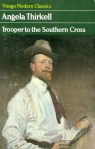 Unlike many, I think, I have not read Angela Thirkell’s Barsetshire novels which, I understand are very different to her only Australian-set novel, Trooper to the Southern Cross, which, in fact, she published under the male pseudonym of Leslie Parker. It has been on my TBR for some time, so I’m grateful that
  Angela Thirkell


 Whispering Gums