Delicious descriptions: Emma Ayres on music

If the bicycle trip gives Emma Ayres’ travel memoir Cadence its chronological spine, it is music which provides its skeleton.

However, before I discuss music, I need to respond to those commenters on my review who noted that “cadence” is also a cycling term. As I’d heard the book rather than read it, I couldn’t quite recollect her mentioning this but felt she must have. I have now checked the book itself and indeed she did. For example, near the end of the book is a paragraph which starts:

Cadence on a bicycle is a vitally important thing. Turn your pedals too slowly, with too hard a gear, and you wear out your muscles and your chain. The trick is to have a light, quick cadence, an allegro cadence, not andante, one where your lungs do the heavy work and your muscles hardly have to strain at all …

But, see how even here some musical imagery slips in! Anyhow, she talks about cadence on the bicycle at other times too, such as the “perfect cadence” when riding downhill one day in Pakistan.

It’s all about the keys

The book’s chapters are named for groups of keys starting and ending with C major/minor, the simplest keys. She writes at the beginning of the last chapter:

Here we are, back at the beginning. The flats have gone and the sharps are yet to come. It is a moment of stillness, before the journey begins again.

This is the aspect of the book that was least familiar to me. What playing one key versus another means to a musician, and how playing different keys varies from instrument to instrument, are not things I can experientially relate to.

That didn’t stop me, however, finding many of her descriptions interesting, if not moving at times. Here she is on C sharp major/minor/D flat major/minor:

This is it. It’s the end of the road for the sharp keys. Every single note is a sharp – FCGDAEB … We have travelled all the way from simple open G major, through the brightness of E major to the unearthliness of B major, and we have arrived in a key that stretches and strains on every instrument, even somehow the even-tempered piano. Music written in C sharp major has a wildness to it, a frenzy even. C sharp major is used by a composer who has seen a new super reality from an escarpment. They are looking through a high window. It’s a shocking key at first, but ultimately I find it very spiritual. It is an extremely brave and rare key.

I suppose it makes sense, then, that this is one of the keys she uses for her trip through Pakistan, the country she’d been warned against, and the one she fell in love with. Another key in this chapter, D flat major, is, she writes, great for the piano:

Easy, like breathing out.

I felt like Pakistan was the right key for me. I didn’t want to ever leave Pakistan, or at least lose the feeling Pakistan had given me.

It helped, of course, that much of her time in Pakistan she travelled dressed as, and was in fact believed to be, a man, Emmett. As a woman, she may not have found it quite so easy, as she implies through one of her musical analogies:

Women in Pakistan, though, were like absent notes in the scale. D naturals in a D flat world.

On composers
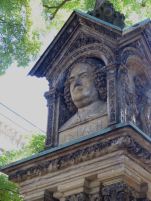
Bach statue in Leipzig, where he wrote the violin pieces!

Bach statue in Leipzig, where he wrote the violin pieces!

Accompanying Ayres on her trip was Aurelia, a 3/4-sized violin, because, she says, “you never feel truly alone, anyway, if you have an instrument with you”. She decided she needed a musical journey to parallel the cycle one. Her choice? To learn Bach’s cello suites, violin sonatas and partitas.

Consequently, throughout the journey she gave little impromptu Bach concerts. It seems Bach is loved the world around. She shares wonderful stories and gives insights into all sorts of composers, not just Bach, but the one I want to share here is Shostakovich. She spends a few pages on his 13th quartet, which was written in B flat minor. She writes, and I’m excerpting furiously:

His thirteenth, though, depicts the horror of life in a way that is unrelenting from beginning to end. In our life, the police often protect us from knowledge of the most horrific crimes, but in this B flat minor work Shostakovich offers us no protection. If you are going to listen to this piece, make sure you have a friend to call afterwards. Seriously.

… This piece is written in one dreadful movement. Listening to and playing this piece dozens of times, I can find no moment of joy, no moment of exhilaration, no relaxation, no optimism.

[…]

… it is a hell on earth. It is a hell of small-minded, picky, tight-mouthed people, people who decide matters of life and death and art; a hell of the violins as they pick out mean, starved sounds from their instruments while the others around them mock and sneer; a hell of music for all the ugly-souled, unthinking, self-serving people in the world, of whom many had power over Shostakovich. This hell never ended for him, neither in his life nor in this piece; it just kept on getting worse.

And she says more – about Shostakovich’s life and this piece. I loved reading these sorts of insights from a practising musician. I also enjoyed her explanations of the modern composers many love to hate, Webern and Schoenberg. She talks of Schoenberg using music’s power to unsettle, and Webern distilling emotion (even if reading a Webern score is “like poring over an ordnance survey”!)

Viola to Violin to Cello to …

The other musical thread I wanted to mention is her discussion of her musical career. The book starts with her mother asking her “the most important question of my life”. What was it? It was to ask her what instrument she wanted to play! She chose cello, but got a violin! Paralleling the story of her cycle journey is the story of her musical life: how she started with violin, then moved to viola – her professional instrument at the Hong Kong Philharmonic Orchestra – but always hankering for the cello. She returned to the violin for the trip, after which she eventually got to play cello. I won’t tell you where, after all that, she has ended up …

I will tell you, though, that for Ayres music saves people’s souls, and it saved her. As a musician, she says, you take people into your care. You won’t be surprised, then, to hear that “to share the value of music is the resolve of my life”.

Ayres is warm, yet fearless, a woman who marries action with reflection, all of which make Cadence the excellent read my friends told me it was.
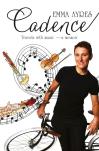
Emma Ayres, Cadence: Travels with music (Review)

Emma Ayres, CadenceAlthough Emma Ayres’ memoir Cadence had been passed around my reading group with much enthusiasm over the last year or so, I wasn’t intending to read it – not because I wasn’t interested, but because there were other books I wanted to read more. However, when I found the audiobook at my aunt’s house while we were clearing it out, Mr Gums and I decided to listen to it on our trips to and from Sydney. It proved to be a great car book. However, a warning: we listened to it intermittently over two months, so this will be more a post of reflections than a coherent review.

Emma Ayres is probably known to most Australian readers of my blog, but perhaps not to others so let’s start with a potted bio. Born in England in 1967, Ayres is a professional musician – a viola player in fact – who has also worked as a radio presenter. She lived in Hong Kong for eight years, playing with the Hong Kong Philharmonic Orchestra, but in 2000 she rode a bicycle, fundraising for charity, from Shropshire, England, through the Middle East and central Asia, to Hong Kong. She moved to Australia in 2003, and worked as an ABC Classical Music radio presenter for eight years, from 2008 to 2014.

Now to the memoir. Cadence is ostensibly a travel memoir, but it covers a lot of ground within its seemingly narrow construct of chronicling her year-long bicycle journey. The ground it covers, besides the story of her travel, which is exciting enough given the regions she rode though, includes her childhood, her reflections on her life as a musician, and her analyses of classical music. Some of her technical descriptions went over my head, but I found her discussions of composers to be not only accessible and eye-opening, but deeply interesting. And it’s all told with a thoughtful philosophical underpinning.

Cadence is an excellent title for a musician’s memoir, and she plays with its meanings throughout, referring, for example, to a “perfect cadence”, or a “slow cadence”, or more frequently to  “interrupted cadences … moments when the direction is changed”. Indeed, the memoir could be seen as comprising almost continuous interrupted cadences because, although the bicycle trip provides her memoir’s chronological backbone, she skips around frequently, going backwards to her childhood and early years as a musician and forwards to her life after the trip when she briefly toyed with being a cellist. It can take a little concentration to keep track of exactly which part of her life she is writing about at any one time, but it’s not too hard. After all …

Cadences are waypoints in the music, places where you can take a breather, readjust your instrument and hurtle on to the next bit of the adventure.

I greatly enjoyed Ayres’ reflections on life and travel. The book is full of her insights, many learnt on the road. For example, regarding the challenge of deciding whether to do the trip she says:

If you are not sure whether or not you should do something, ask your ninety-year-old self.

At another point she discusses how much she loved Pakistan despite all the nay-saying she had received when she was planning her trip. She was treated, she writes, almost without exception, with kindness and generosity everywhere she went. “Do we make our own welcome?” she wonders, and goes on to suggest that before we criticise another country, we should perhaps look at ourselves first.

Being a woman cycling alone is risky business, particularly in some of those male-dominated countries through which she travelled. She frequently took advantage of her androgynous look, helping it along by keeping her hair very short and wearing non-feminine clothes (where she could). Consequently, she was regularly taken for a man. She discusses gender often, commenting on how we are ruled by it and its associated expectations. She sees herself as “a border dweller in the world of gender”, writing:

I do admire people who are by birth penumbral but have the courage and desire to be firmly one or the other and go through a sex change, but I like the fluidity of being able to float around the middle. I really to think that the basic this or that of male and female is shallow and limiting. How simplistic to think, with all those opposing hormones flowing in each of our bodies, that we are one and therefore not the other. And how much better in countries like India and Thailand that they recognise more than two sexes. More variations in the octave, more variations in gender.

Another theme that runs through the book is the idea of being in the moment. She tells the story of being taken to task for reading Anna Karenina when on a bus in Pakistan. Her young seat-mate is mystified by her passionate rendering to him of the story, saying to her “but you are here!” She genuinely sees his point, and puts the book down. Later in the trip, she regrets not spending more time with a fellow-traveller who crosses her path because “I was too focused on destination and again forgot the importance of the here and now”.

Cadence is a generous, warm-hearted book which abounds with travel anecdotes to delight any lover of travel literature. There are scary moments, and funny ones, and others that are just plain interesting. It also contains intelligent, considered insights into music, some of which I plan to share in a follow-up post. For now, I’ll conclude with a comment she makes early in the book:  “Travel”, she says, “goes inwards as much as outwards”. That is exactly what she demonstrates with this book. I can see why all those in my reading group who read the book urged it onto the next person.

awwchallenge2016

Emma Ayres
Cadence: Travels with music – a memoir
Sydney: ABC Books (by HarperCollins), 2014
284pp.
ISBN: 9780733331893

Emma Ayres
Cadence: Travels with music – a memoir (audio)
(read by Emma Ayres)
ABC Commercial, 2014
8 hours (approx) running time (on 7 CDs)