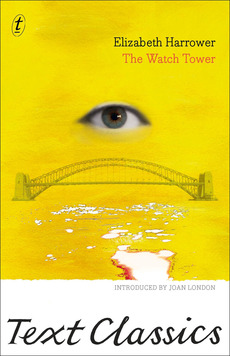
Like many, I was astonished when I read Elizabeth Harrower’s The watchtower (my review), upon its publication by Text Classics in 2012. Astonished not so much for its writing, though that is excellent, but for its subject, which is what we’d now call coercive control. The astonishment comes from the fact that The watchtower was first published in 1966, at a time when domestic abuse was hidden. Harrower recognised it, however, and called it out. The book made a splash at the time, but then disappeared from public view, though not completely from academia. Then, in 2012, Michael Heyward and his Text Publishing Company decided to publish it, and so began what biographer Helen Trinca calls, her “second act”.
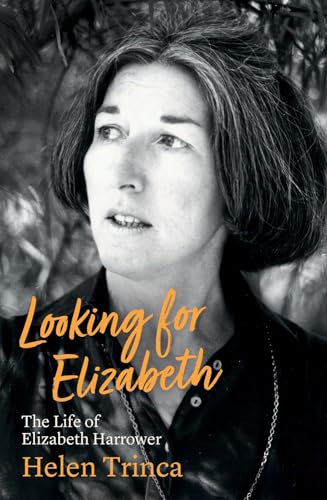
Looking for Elizabeth is the second literary biography I’ve read by Trinca, the first being Madeleine: A life of Madeleine St John (my review). Trinca must like challenging subjects, because Harrower, like St John, was challenging to write about, albeit in Harrower’s case, Trinca had the benefit of knowing her.
So, what made Elizabeth Harrower such a challenge? Trinca had many conversations with her from 2012 on, including formal interviews for newspaper articles, and Harrower had placed her papers (including letters, reminiscences, and novel drafts) with the National Library, to which Trinca apparently had full access. But interviews and papers don’t tell the full story, particularly if the subject has spent her life “curating” or shaping it, destroying many of her papers along the way, including, as she told Text editor David Winter in 2013, “more than 400 foolscap pages of literary thoughts – part journal, part stories, part eye-witness accounts, secrets and so on”.
Trinca’s biography draws on a variety of sources, which she documents in her Author’s Note. Besides her personal connections with Harrower, which included meetings, phone calls and emails, and Harrower’s papers, she used the papers of others (including Shirley Hazzard, Kylie Tennant, and Judah Waten), all sorts of other records, and interviews with family and friends. Gaps in information are frequently noted within the text – and are sometimes speculated about using that thing that many literary biographers do, the works themselves. How much can – and do – they tell us about the person who held the pen?
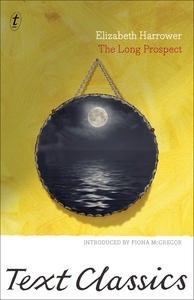
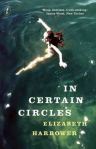
Many writers say they begin their project with a question. In Trinca’s case, the framing question seems to have been, Why did Elizabeth Harrower stop writing at the height of her powers? Because, this is indeed what she did. Having written and published four well-received novels – Down in the city (1957), The long prospect (1958, my review), The Catherine wheel (1960), and The watchtower (1966) – she withdrew her fifth completed novel, In certain circles (my review), from publication in 1971, and never published a novel again, despite many encouragements from her friends including Patrick White and Christina Stead. She wrote a few short stories, but gave up writing altogether by the end of the 1970s.
From this literary trajectory, Trinca weaves a moving and interesting story about a fascinating woman. Like Madeleine, this is a traditional, chronologically told biography. It is well-documented, using clear but unobtrusive numbers pointing to extensive notes at the end, and there is a decent index.
“I’ve lived dangerously” (Elizabeth Harrower)
I am not going to tell the story of Harrower’s life, because the biography does that. Essentially, she was born in industrial Newcastle in 1928, and lived with her grandmother after her parents divorced, before joining her mother in Sydney. She never got over, it seems, being “a divorced child”. It dislocated her. Her mother remarried, and Trinca suggests that her stepfather was behind men like The watch tower’s Felix Shaw. She lived in London from 1951 to 1959, before returning to Australia, rarely leaving Australia after that. She did not marry, but had an intense, emotional relationship with the older, married Kylie Tennant, which raises questions that Trinca isn’t able answer, though she points to other “crushes” on older women. Do we need to know?
Through Harrower’s life she mixed with some of Australia’s significant people, including writer Patrick White, politician Gough Whitlam, and artist Sid Nolan. She had a long correspondence with Shirley Hazzard (about which I wrote after attending the launch of a book of those letters.) She died in 2020, suffering from Alzheimer’s. (Her life dates closely mirror my own mother’s.)
Now, rather than detailing this life more, I’ll share some of the threads that run through Trinca’s story, as they provide insight into who Harrower was, and what makes her writing, and her persona, so interesting. They also give the biography a narrative drive.
These threads include that aforementioned one regarding why she stopped writing. Another concerns what drove her to write. Trinca writes about an interview Harrower had with broadcaster Michael Cathcart in November 2015:
She reprised a comment she had often used in the past: ‘I always had an alarming and dangerous interest in human nature. And so recently, I think I was answering some questions, and I said that I felt I had urgent messages to deliver. I wanted to tell people things’.
These things are the emotional truths we find in her books. In an interview with Jim Davidson for Meanjin in 1980, she discouraged people from finding her life in her books, saying that the “emotional truth” is there but “none of the facts”:
None of the books are actual accounts by any means. They are less extreme than reality because reality is so unbelievable. Besides which, people can only take so much. You don’t want to frighten them do you, or do you?
This is the “wounded wisdom” that critics like America’s James Wood identified. It’s not surprising, given the life that led to this “wisdom”, that Harrower was wary, guarded, in her dealings with people, which is another thread that runs through the book. Harrower was polite and genuinely interested in people – “she listened with intent” – but always turned questions back on them rather than give herself away. In 1985, she admitted that, in interviews, “my whole intention seemed to be to give nothing away, to disguise myself”.
Which brings me to the final thread I want to mention, the idea of having “lived dangerously”. Several times through the biography, Trinca refers to Harrower’s saying that she had lived dangerously, but what did she mean? It seems she meant something psychological, metaphysical even. In 2012, she said to Trinca:
In my own mind I have lived dangerously, dangerously in the sense of finding out more and more about human nature. … At this age, you are aware of some very contrary and dangerous things you have done with your life as if you were going to be immortal. This is the irritating thing, now it is dawning on me that I am not immortal.
She said something similar in 1985, “I consider that in my life I’ve lived dangerously, and I haven’t lived a self-protective sort of life”.
“To have lived dangerously”, writes Trinca near the end of her book, “was a badge of honour for Elizabeth”. I read this as Harrower believing that, for all her wariness, she had let herself be open to life and its difficult emotional challenges.
What it actually means probably doesn’t greatly matter, despite Trinca’s “looking”. Nor do the gaps. What matters is the body of work she left, however she lived her life. It’s beautiful, unforgettable, precious, and Trinca tells that story so well.
I now look forward to Susan Wyndham’s biography which is due out soon. How will she fill in the gaps? Will she delve more into Harrower’s political leanings, and what conclusions will she draw about Harrower, who she was and why she wrote what she did?
Helen Trinca
Looking for Elizabeth: The life of Elizabeth Harrower
Collingwood: La Trobe University Press, 2025
309pp.
ISBN: 9781760645755


 Whispering Gums