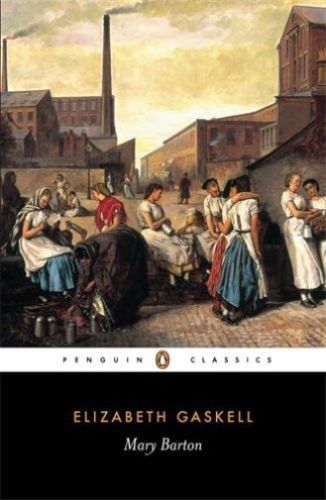
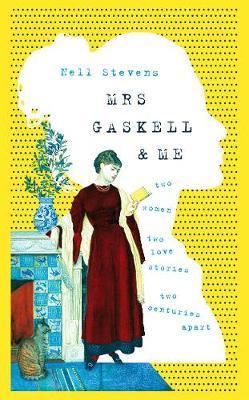
My reading group has a tradition of choosing a “big” book for our January read. We also like to do a classic each year. This year the two coincided when we chose Elizabeth Gaskell’s first novel, Mary Barton, as our 2026 starting book. I have read several Gaskell novels and stories – plus Nell Stevens’ bio-memoir, Mrs Gaskell and me: Two women, two love stories, two centuries apart (my review) – but her first novel has been a gap, so when one of our members suggested Gaskell, I proposed Mary Barton. And phew, it generated a great discussion!
Most of you will know Elizabeth Gaskell (1810-1865), I’m sure, but I’ll briefly introduce her here. She is a significant English novelist, who is best known for her “social problem” novels, Mary Barton (1848) and North and south (1854-5), and for her more comic novel, Cranford (1864-6). Lesser known is her biography of her friend, The life of Charlotte Bronte, which was controversial, and is covered by Stevens in her book. Relevant to this post is that Gaskell married a Unitarian Minister, and lived in Manchester where she worked with the poor.
So, Mary Barton … Admired, apparently, by Charles Dickens, it is set in Manchester around 1840, a time when the cotton trade was facing a serious downturn, with all the flow-on economic ramifications in a newly industrialising society. It focuses on two working-class families, the Bartons and the Wilsons, and on John Barton’s questioning the distribution of wealth and the master-worker relationship. Early in the novel, Barton’s wife dies, leaving him to raise his daughter Mary. Increasingly concerned about the deteriorating economic conditions facing himself and his co-workers, John becomes involved in Chartism and the Trade Union Movement. Meanwhile, Mary tries to make her own way in the world, as a seamstress. Although she has been loved by Jem Wilson since childhood, she is initially attracted to and pursued relentlessly by Harry Carson, the son of a wealthy mill-owner. When Harry is murdered, the plot thickens and in the novel’s second half the personal and socioeconomic issues come to a head.
Now, the common challenge – how to write about a classic? What can we add to discussions about books that have been extensively analysed by academics and students? Sure, Mary Barton is less studied than the Austens and Dickens, the Whites and Steinbecks, but still …
I could focus on my reading group’s discussion, and I will do some of that, but during our discussions I cannot, of course, explore my own thoughts at depth – or even raise them all – so these together with a couple from our discussion will be my focus.
And I’ll start with form. Mary Barton is a mid-nineteenth century novel, and like novels of that time, it is big and baggy. It was Henry James, who, semi-critically, described some 19th-century novels as “large, loose, baggy monsters”. His specific comment was “what do such large, loose, baggy monsters, with their queer elements of the accidental and the arbitrary, artistically mean?” If I understand correctly, he was referring to big story canvases that lacked “composition” or “form”. This is what I was thinking as I was reading Mary Barton. I jotted down that it felt messy and confused between forms – a social problem novel, a romance or sentimental novel, a melodrama, a morality tale, crime fiction, an adventure story – but this was a time when the novel was still relatively new and finding its way.
As for my reading group, most found it slow to start, and very wordy, with several wanting Gaskell to just “get on with it”. However, the second half, when the pace picks up, grabbed everyone’s attention, resulting in most of us greatly appreciating it.
“the grinding, squalid misery”
Certainly, I forgave the book its “messiness”, because it tells a powerful story about inequality and precarity (discussed in this week’s Monday Musings). Gaskell offers a real and moving insight into the society of the time, and into some of the thinking that was happening. She writes with the compassion that came – at least in part – from her dissenting Unitarian background, and she shocked many of her peers with her realistic portrayals of the grimy sides of life. She had strong moral views but was humanitarian in her application of them. Some in my group felt she was a little tough on the women – particularly John’s straying sister-in-law Esther – but I (and others) disagreed, believing Gaskell was prepared to offer redemption to the fallen woman.
This is not to say, however, that Gaskell didn’t bother me at times. An aspect of this novel is its high level of authorial intrusion. Mostly it conveys information that her characters cannot know – or perhaps that she could not find a way for them to impart – about the wider socioeconomic background. But, at times it is attended by what comes across to a modern reader as a patronising tone. Early in the novel, for example, she – the author-narrator – discusses John Barton who has just lost his wife and who sees only himself, and his kind, as sufferers. She writes:
I know that this is not really the case; and I know what is the truth in such matters: but what I wish to impress is what the workman feels and thinks. True that with child-like improvidence, good times will often dissipate his grumbling, and make him forget all prudence and foresight. (p. 24)
She goes on to explain that while “earnest men” like John Barton had seen suffering, he was a good worker, who felt “pretty certain of steady employment”, and so
… he spent all he got with the confidence (you may also call it improvidence) of one who was willing, and believed himself able, to supply all his wants by his own exertions. (p. 24)
However, when his employer fails, and the other mills start failing, he has nothing to fall back on and “his life hung on a gossamer thread”. Gaskell’s obvious compassion is tempered by a middle-class value judgement regarding being “provident”, which reveals a fundamental lack of understanding of what we recognise as “precarity” wrought by capitalism and industrialisation.
the “human condition”
The novel ends with a serious discussion between John Carson’s friend, Job Legh, and mill-owner, Mr Carson, with Job trying to explain to Carson, “the effect produced on John Barton by the great and mocking contrasts” he saw in the “human condition” around him. Eventually, after an open-minded conversation, Mr Carson comes to understand at least something of the other side and attempts to improve how the masters do business.
It is regarding this resolution that one of my reading group members made the point that Gaskell does not offer a radical solution to the problem. Gaskell suggests that people understand each other better – “that the truth might be recognised that the interests of one were the interests of all, and, as such, required the consideration and deliberation of all” – rather than proposing a different economic or political system altogether.
I would add, though, that Gaskell did also believe in some practical reforms, one being in education. She frequently mentions John Barton’s lack of education affecting his ability to think through the issues that concerned him. Indeed, near that end, John admits that he had struggled to find “the right way”, because
“No one learned me, and no one telled me … they taught me to read, and then they never gave no books …” (p. 445)
In other words, he knows that education is more than just learning to read. Job tells Mr Carson, “it was most desirable to have educated workers, capable of judging [my emph], not mere machines of ignorant men” (p. 467).
So much more could be explored in this big book, but I’ll end here by saying that while its dramatic plot and well-delineated, rounded characters make Mary Barton enjoyable reading, it is Gaskell’s depiction of ongoing economic realities that makes it well worth reading.
Elizabeth Gaskell
Mary Barton
London: Penguin English Library, 2012 (Orig. pub. 1848, in 2 volumes)
497pp.
ISBN: 9780141974675 (Kindle edition.)
 Whispering Gums