Jamil Ahmad, The wandering falcon (Shadow Man Asian Literary Prize 2011)

Map of Pakistan

Pakistan, with borders (Courtesy: Omer Wazir via Flickr using CC-BY-SA 2.0))

I’m not sure how to describe Jamil Ahmad’s Man Asian Literary Prize novel, The wandering falcon. Is it a disjointed novel, a picaresque, or a collection of connected short stories? It doesn’t matter greatly – it is what it is – but at least by raising the question I’ve given you a sense of how it feels to read this book.

There’s much to fascinate here, not least of which is that this is a debut novel by an author who was born in 1933. Another late bloomer (though he apparently wrote the stories back in the 1970s). Ahmad worked in the Pakistani Civil Service and spent many years in the region he writes about. The book is set in the decades before the rise of the Taliban and presents – explores – life in the multi-tribal region on the borders of Pakistan, Afghanistan and Iran. Fascinating stuff for a reader whose knowledge of this area is general.

There are nine chapters/stories, each having a unique title like “The sins of the mother”, “A point of honour”, “A kidnapping” and each telling a story from the life of a tribe/clan in the region. What unifies these is the character, Tor Baz, who is the wandering falcon of the title. He is born in the first chapter to a couple on the run for disobeying tribal laws of marriage. This chapter, “The sins of the mother”, sets a rather brutal tone for the novel, a tone that carries through into many of the succeeding stories (or events). This is a region where people live by tribal loyalties (and, of course, rules) and where the imposition of borders cuts across tribal life, particularly for those tribes that are nomadic. In the third story, “The death of camels”, the nomadic Pawindahs want, indeed need, to cross borders as they always have, but are told they need travel documents. Their leader says to the government official:

‘… We are Pawindahs and belong to all countries or to none. [ …] What will happen to our herds? … Our animals have to move if they are to live. To stop would mean death for them. Our way of life harms nobody. Why do you wish for us to change?’

Why indeed?

As you will have guessed from my opening sentence, this is not a strongly plot driven book. Ah, now this is where form becomes an issue. We don’t expect a collection of short stories (connected or otherwise) to have a strong plot and so this, probably, is what it is. But there is a linear chronology running through the book. It’s tracked through our falcon Tor Baz who pops up, for one reason or another, in different tribes, from his birth in the first chapter to the end when he’s a man. We see him in various roles, including informer and guide, but we never really get to know him – and for some reason this doesn’t seem to matter. It simply adds to the feel of the book, which is simultaneously fabular and grounded in reality.

The voice is third person, with the startling exception of one story that is told first person by an outsider, a part Afridi returning to his father’s birthplace. If I have a criticism of the book it’s that occasionally the voice becomes a little didactic, a little inclined to tell us some facts rather than show us, but this isn’t often and it’s not heavy-handed enough to spoil the read.

What makes this book stand out is the writing. It beautifully (if one can use such a word for the world it depicts) evokes the landscape we’ve become familiar with through television news and movies. Here is the novel’s second paragraph, describing a military post:

Lonely, as all such posts are, this one is particularly frightening. No habitation for miles around and no vegetation except for a few wasted and barren date trees leaning crazily against each other, and no water other than a trickle among some salt-encrusted boulders which also dries out occasionally, manifesting a degree of hostility. (“The sins of the mother”)

Hmm … “lonely”, “frightening”, “crazily” and “hostility. With words like this on the first page, you know you are not in for something light and cheery. The interesting thing though is that the book does not read as a diatribe or even as a plea. It’s more a description of people who accept their lives, despite the harshness and difficulty, lives where, for example,

If nature provides them food for only ten days in a year, they believe in their right to demand the rest of their sustenance from their fellow men who live oily, fat, comfortable lives in the plains. To both sides, survival is the ultimate virtue. In neither community is any stigma attached to a hired assassin, a thief, a kidnapper or an informer. (“A kidnapping”)

The book chronicles this life – its unforgiving landscape and sometimes brutal justice – and the changes that are starting to threaten centuries old traditions:

The pressures were inexorable. One set of values, one way of life had to die. In this clash, the state, as always, proved stronger than the individual. The new way of life triumphed over the old. (“The death of camels”)

This is a mesmeric book. We feel the author’s affection for the people, their traditions and the land, and we go with his acceptance of lives whose bases are so different to ours. It’s a book born of the earth but its spirit won’t be pinned down. An eye-opener, in more ways than one – and a worthy contender for the prize.

Note: For other Shadow Man Asian Literary Prize reviews, see Lisa of ANZLitLovers, Mark of Eleutherophobia, and Stu of Winstonsdad.

Jamil Ahmad
The wandering falcon
London: Hamish Hamilton, 2011
181pp
ISBN: 9780241145425

Marie Munkara, Every secret thing

They all nodded, not knowing what the hell curry* was but getting gist of the story all the same.

Marie Munkara leads us a merry dance with Every secret thing, her first book, which won the David Unaipon Award for an unpublished Aboriginal or Torres Strait Islander writer. What exactly is this “thing” she presents to us? A novel? A short story collection? Well, I think it’s a bit of both. It looks like stand-alone short stories, and can probably be read that way. But, the same characters keep reappearing in the stories and there is a chronological thrust to it with a conclusion of sorts in the final story, so I’d call it connected short stories.

Form, though, is not the only way in which she leads us a merry dance. This is a genuinely funny book – sometimes slapstick or ribald, sometimes more bitter, satiric and/or ironic, but pretty well always funny. However, her subject matter is desperately serious – the destruction of indigenous culture through contact with white culture, specifically in this book through contact with missions and missionaries.

Bathurst Island (Tiwi Islands)
Approaching beautiful Bathurst Island (Tiwi Islands)

Marie Munkara was born in Arnhem Land and spent the first few years of her life on Bathurst Island in the Tiwi Islands. She left there when she was 3 years old, and didn’t return until she was 28. These stories, she says, are drawn from those told to her by friends and family, and are set, I think, in the early to mid twentieth century. She explores a wide range of issues reflective of indigenous-white contact at that time, including education and religion, the stolen generation, sexual abuse, the introduction of alcohol and disease, and anthropological research.

Munkara sees humour in everything (more or less) but her more biting humour is reserved for the “mission mob” because, of course, it is they who wield the power over the “bush mob”. The “bush mob” are shown to be intelligent and resourceful but no match for the power of the muruntawi (white people). Her language draws on a wide range of traditions – including indigenous storytelling, biblical, common clichés – and from these she tells stories that are only too believable. Here she tells us about one of the Brothers:

And so time passed and the natural progression of things came to be and the bullied became the bully, and the bully became the misogynist, and the misogynist became a Brother in a Catholic mission in a remote place in the Northern Territory… (“The sound of music”)

A too familiar story, told in a biblical tone. There is a funny story in which the “bush mob” tries to lead an anthropologist astray by feeding him incorrect information (such as obscene or silly names for ordinary objects), but their victory is Pyrrhic, as the end of the story conveys:

And after all, it was difficult sometimes to tell the difference between the missionaries and the madmen and the mercenaries because their eyes all looked the same and their tongues all spoke the same language of greed. If it wasn’t your soul they wanted, it was something else. Until it became an automatic response whenever a strange muruntani appeared to put out your hand for the specimen bottle to piss into or extend your arm for a blood sample to be taken or for the ungracious thought to pass through their mind that here was yet another who had come to take but as always gave nothing in return. (“Wurruwataka”)

Her stories about the stolen generations are particularly bitter, but again she uses humour. She tells the story of Marigold (née Tapalinga) who’d returned “home” after years away, only to find that she no longer fit, but:

Nor did Mrs Jones want the hussy back as their servant having sprung the little slut underneath Mr Jones in the spare room. The poor man was still traumatised by the ordeal. This wasn’t the first time she’d raped him, he claimed. (“Marigold”)

Only an indigenous writer could write something so patently ridiculous on this topic – and so drive the point home!

Munkara neatly tracks the Bishop’s behaviour and impact on his flock by constantly changing her epithet for him. In the first story, “The Bishop”, he is introduced as “his Most Distinguished” but is then referred to by various names including “his Most Garrulous”, “his Most Impatient” and “his Most Impious”. This changing of names for the Bishop is rather unsubtle humour but it carries a sly comment on the “mission mob’s” disrespect for indigenous culture by insisting on naming indigenous people, completely ignoring the fact that they have their own names. And so, in the first story, we are introduced to Matthew, Mark, Luke and John, to Epiphany, Lazarus, and John the Baptist, to name just a few of the cast of characters populating the book.

Another technique Munkara uses is to pepper her stories with white culture sayings and clichés, such as, “misery loves company alright”, “looking on the bright side”, “but you just can’t please everyone”, and this one:

And so it came to be that for the first time ever, the mission mob found themselves sitting where they’d never sat before – between a rock called ‘you didn’t see that one coming did you’ and a hard place called ‘bush mob’s indifference’. (“The good doctor”)

Overall, this is deceptively simple but clever writing that sets up and undermines its premises every step of the way. First “the mission mob” seems to be winning, and then “the bush mob”. However, while it could be said that “the bush mob” were “clever individuals who had learnt to sit on the wobbly fence of cultural evolution without falling off”, the real truth is that

They didn’t have to die to go to hell because the mission had happily brought that with them when they’d arrived unasked on the fateful shores of the place that was their heaven all those years ago. (“The movies”)

A spoonful of sugar, they say, makes the medicine go down, and that’s certainly true of this book. The sugar is not so strong though that you miss the medicine. Munkara makes sure of that – and the end result is a very funny but also very sobering book. I suspect and hope that Munkara has more … because the missions are only one facet of the history of contact in Australia. There is plenty for her to sink her teeth into.

Musings of a Literary Dilettante and Resident Judge have also reviewed this book.

Marie Munkara
Every secret thing
St Lucia: University of Queensland Press, 2009
181pp.
ISBN: 9780702237195

* Reference to the colloquialism “giving them curry”.

Madeleine St John, The women in black

The women in black, Madeleine St John, book cover

The women in black bookcover (Courtesy: Text Publishing)

One thing mystified me as I started reading Madeleine St John‘s The women in black and that is why she would write a book in 1993 about 1950s? It seemed an odd choice. And then, as I read further, it started to become clear. The time period represents one of those cultural watersheds that nations experience. In this particular case, it was a time of social change: not only were things starting to change for women, but the “reffos” or “Continentals” (as the post-war European refugees were disparagingly called) were beginning to impact Australian culture.

St John chronicles these changes lightly, with warmth and gentle humour, but also with determination. It’s not a coincidence, I think, that St John, born in 1941, would have been around the age of the youngest character, Lisa/Lesley Miles, at the time the book is set.

Hmm … having introduced a character now, I’d better talk briefly about the plot. It centres around the women who work in the Ladies’ Cocktail Frocks and the more exclusive Model Gowns sections of a fictional (but thinly veiled DJs) upper crust department store in Sydney called Goode’s, and takes place over the few weeks before and after Christmas. Model Gowns is staffed by one woman, the Continental or reffo, Magda, while Ladies’ Cocktail is staffed by the middle-aged Miss Jacobs, the 29-year-old almost-on-the-shelf Fay Baines, the 31-year-old married-but-so-far-childless Patty Williams. There is also the buyer Miss Cartwright. Overseeing them all is, of course, a man, Mr Ryder. Into this mix is thrown 17-year-old Lesley (who changes her name to Lisa) Miles, who has just finished her Leaving Certificate.

The story is told in short chapters, each one devoted to one or more of these characters. The tone is (almost conspiratorially) conversational, which invites the reader in. St John draws her characters effectively through brief sections of perfectly caught dialogue and succinct but apt descriptions. The style is witty, with light wordplay and irony. Here are some excerpts from Chapter 2:

Mrs Williams was a little, thin, straw-coloured woman with a worn-out face and a stiff-looking permanent wave. Her husband Frank was a bastard, naturally.  [ …]

At the weekends she visited her mother or one of her sisters; Frank drove her there and fetched her, and while she was ‘jaw, jaw, jawing’ he played golf on the public course at Kingsford or drank in the pub. He was a bastard of the standard-issue variety, neither cruel nor violent, merely insensitive and inarticulate.

[…]  as she left the surgery, the physician looking idly at her back view thought, she’d clean up quite well with a new hairdo, some paint on her face and a black nightie; but the husband probably wouldn’t notice, the bastard …

By the end of chapter 2 I was hooked. In three and a bit pages we were told all we needed (and probably more than we wanted) to know about poor little Patty Williams and her bastard of a husband. But Patty’s is just one story. There’s also Fay Baines who’s desperate to be married but meets all the wrong men through her well-meaning night club manager friend, Myra; and Lisa Miles who expects to do well in her end-of-school results but whose father thinks women have no business at university. Into this mix are thrown the outgoing, confident (but “god awful” to the women in black) Magda and her also Continental/reffo husband Stefan.

Magda takes an interest in Lisa and invites her home. She also tries a little matchmaking with Fay. Meanwhile, Patty does try that black nightie, with consequences she would never have foreseen. It could all go horribly wrong but, without spoiling anything too much, I’ll simply say that St John’s book follows, loosely and more lightly, the Jane Austen tradition, that is, it’s a comedy of manners. Unlike Austen though, she’s writing in an historical, rather than contemporary, time-frame, and so has a slightly different goal in mind – and that is documenting the social change I mentioned in my opening paragraph.

Two simple examples of this are “kissing” between friends, and food. Here is Lisa on “kissing”:

And she [Magda] kissed her on the cheek. Lisa smiled shyly at her. I’ve heard she thought, that Continentals kiss each other much more than we do: it means nothing. They do it all the time, even the men. The men even kiss each other.  But how strange I feel.

This little paragraph struck me; I realised that my friends and I kiss each other in greeting but it was not, I think, the norm among my parents’ generation. In one or two generations, in fact, the often-maligned (in the book and in reality at the time) Continentals had effected quite a change. And then there’s the food. By the end of the book, Lisa, Fay, and even Lisa’s father had tasted and enjoyed such exotic foods as salami. And again I reflected on the immense change in diet from my parents’ to my generation.

I won’t tell you more of the story. It’s a gentle one, but there is a drama concerning Patty, and some little tensions surrounding Fay and Lisa, that keep the book moving while it observes a society in change. There are some perfect descriptions of Sydney, such as this of the women coming to do their last minute Christmas shopping:

From the wooded slopes of the salubrious North Shore to the stuccoed charm of the Eastern Suburbs, from the passé gentility of the Western ditto to the terra incognita of the Southern had they travelled by train, bus, tram and even taxi cab to this scene of final frantic activity.

It’s a book almost of vignettes than of fully realised stories, and there’s the odd clumsy or heavy-handed bit, but St John has nonetheless managed to convey a convincing picture of Australian society at the time, while also telling an engaging and generous tale. And, just to show she has a sense of humour, St John, who was a libertarian at university, injects near the end her own little in-joke. Here is Lisa’s father on the possibility of her going to university:

But I’ll tell you one thing: if I decide you can go, and you do go, if I ever hear of you being mixed up with any of those libertarians they have there, you’re out of this house like a shot and I never want to see you again, is that understood? Right then. If you go, no libertarians, not even one.

I wonder what St John’s father – the prickly politician Edward St John – said to her!

Lisa at ANZLitLovers has also reviewed the book.

Madeleine St John
The women in black
Melbourne: Text Publishing, 2010 (orig. 1993)
234pp.
ISBN: 9781921656798

(Review copy courtesy Text Publishing)

Helen Simonson, Major Pettigrew’s last stand

If you like warm-hearted novels with a positive ending you may like this. If you like such novels with a touch of social commentary you will probably like this. If you like books like The Guernsey Literary and Potato Peel Pie Society and Miss Garnet’s angel, then this is definitely for you. But if you like a little more meat in your sandwich, a little more fodder for the brain, then you may like to look elsewhere for your next read.

Major Pettigrew’s last stand concerns one widowed Major Pettigrew and the little, very English village in which he lives. He meets Mrs Ali, the English-born-of-Pakistani background owner of the local shop, and the result is a story of racism, classism and materialism as these two find they have much in common but are confronted by bigotry and cultural expectations (from both sides) that set to derail them. I won’t go into details. There are some interesting characters including the Lord of the manor, some businessmen and a self-centred ambitious son, but most are a little too stereotyped for serious analysis. Some valid contemporary issues regarding English village life are raised, particularly regarding the increasing cultural diversity in the population, and the aristocracy and its role in villages, but the plot becomes a little melodramatic and predictable for my preference.

There are however some nice observations in the book:

…as I get older, I find myself insisting on my right to be philosophically sloppy. It’s so hard to maintain that rigour of youth, isn’t it?

I have no patience with all this analysing of writers’ politics … let them analyse the prose.

Good point. I often – as I’m sure many of us do – wonder how much we should take into consideration the politics of the creator. Is it OK to like TS Eliot? Should we listen to Wagner?

Life does often get in the way of one’s reading…

Ain’t that the truth?

Simonson is British born but wrote this in the USA where she now resides. There are quite a few “digs” at America. The Major, with whom we are supposed to sympathise, if not identify, is critical of American “self-absorption” though he discovers that his potential American daughter-in-law has more substance than he thought. The book, does, in fact  explore the way we stereotype each other in ways that can prevent “true” relationship developing. As the Major recognises at one point, he

knew he was a fool. Yet at that moment, he could not find a way to be a different man.

The novel has some genuinely funny scenes and is lightly satirical in that way that the English tend to do well… And so, while it is not my preferred type of reading, it is nicely written and will provide good reading for those who want a bit of grit without the grimness that often accompanies stories of racial conflict and politics. I know a few people to whom I will happily recommend it.

Helen Simonson
Major Pettigrew’s last stand
New York: Random House, 2010
361pp
ISBN: 9781400068937

(Unpublished proof copy, lent)

Andrew Croome, Document Z

Truth, according to the dictionary, can mean several things including:

  • the state of being the case, fact or actuality; and
  • a transcendent or spiritual reality.

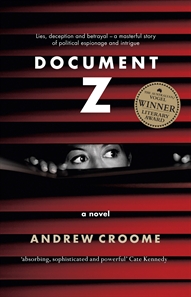
Document Z bookcover

Document Z cover image (Courtesy: Allen & Unwin)

Truth in all its variety and slipperiness is, I think, the fundamental theme of Andrew Croome’s Document Z which won the 2008 The Australian/Vogel Literary Award. This book, which chronicles the famous-in-Australia Petrov Affair about the defection of Vladimir (familiarly, Volodya) and Evdokia Petrov in 1954, began as a PhD Creative Writing thesis. Who needs a PhD in Creative Writing, though, when you have a publication offer instead?

At the end of the novel is a reference to an oral history that was conducted with Evdokia by the National Library:

This historian’s questions give her the space to betray Volodya, to admit his faults, to commit herself finally, to the truth. She doesn’t. The record is no all-important thing, and what exactly would be the point?

What indeed? After all, duplicity is what the book is about. Vladimir and Evdokia are MVD agents at the Soviet Embassy. This is their secret role, in addition to their formal embassy roles, and it puts them in conflict with the ambassador since, in effect, they work for two masters, the ambassador and the MVD headquarters in Moscow. Not an easy position to be in, particularly in a regime that thrived on suspicion.

Croome nicely structures the book, commencing with the dramatic attempt on 19 April 1954 by the Soviet authorities to return Evdokia to Russia. The book’s narrative form is multiple third person subjective, and this opening scene is viewed through Evdokia’s eyes: “Evdokia knew this crowd was for her. They were hunting her…”. She was wrong though. The crowd was with her and were “hunting” those who seemed to be taking her away. This opening chapter ends with the words, “Everything he had betrayed”. The scene is set to tell their story, and the book flips back to 1951 and their arrival in Canberra. From this point on the story is told through several eyes, particularly Evdokia’s, Vladimir/Volodya’s (who, Moscow thought, “could be well and truly trusted [my stress]”) and Dr Bialoguski’s (the man who worked for ASIO and who, through cultivating Petrov’s friendship, engineered the defection).

I enjoyed the book – partly because it was set in familiar territory, which is a bit of a rarity for we Canberrans, and partly because I was interested in the Petrov Affair. Croome seems, to the best of my knowledge, to have captured the era well. I loved the description of the Soviet Embassy wives going shopping…and he nicely evokes the polarisation of views between East and West/Communism and Capitalism that characterised the Cold War period. However, the book was a little unsatisfying too. I think it’s because Croome focusses a little too much on plot machinations for me – and yet the plot is not dramatic enough to support this. He does try to get “into” the characters but, for all his sound characterisation of the Petrovs, they are, at the end, pretty much as shadowy in terms of their “true” natures/desires/motivations as they were at the beginning. In the end, there’s not much drama in either the political or the personal story. It feels, almost, as though they were victims of circumstance – and perhaps they largely were.

And what were these circumstances? Well, they were largely the duplicitous – and fear-ridden – situation they lived and worked in. I had to laugh, early in the book, at the description of the embassy’s secret (MVD) section: “Somewhere, the roof leaked“. The book has many little ironies and paradoxes mostly playing on notions of secrets, lies, deception and betrayals, playing, that is, on a world in which truth is treated with rather careless abandon. By the end of the book we are, I think, no nearer the truth. We perhaps know some of the “facts” (albeit this is fiction!), but we do not “really” know the “spiritual reality” of these two people whose marriage seemed weak and who apparently lived a pretty sad life in exile.

I’d certainly recommend the book … it’s well written, and is a genuinely interesting portrayal of the case. But if you are looking for insights into the affair, I’m not sure you’ll find them here.

Andrew Croome
Document Z
Crow’s Nest: Allen & Unwin, 2008
350pp.
ISBN: 9781741757439

Toni Jordan, Addition

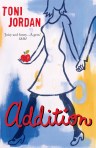
Addition Pb cover, Courtesy Text Publishing

Addition Pb cover, Courtesy Text Publishing

(SPOILERS: FOR WHAT IT’S WORTH)

Looks like, feels like, is it? Chick lit, that is. Toni Jordan’s first novel Addition has all the hallmarks of chick lit. The cover design with its line drawing of a female form invokes chick lit – albeit chick lit with an edge as the heels aren’t quite high enough and the colours not quite girly enough. The plot though is pure rom com and pretty much standard chick-lit: girl meets boy, girl loses (kicks out) boy, girl gets boy back. So why has this book garnered more attention and positive critical response than its sisters?

Well, Jordan is no Jane Austen (who is sometimes called the mother of chick lit) but she has produced something a little fresh. Her heroine, Grace, is not quite the standard chick lit heroine. She has had a breakdown, she is not in employment, she is not upwardly mobile and she is not focused on fashion and appearance (though it has to be said that she’s not oblivious to these latter either). Instead, she’s an ex-primary school teacher (not the most fashionable career, anyhow, in the world of chick lit) and she suffers from an obsessive compulsive disorder that results in her need to count, anything and everything, in order to maintain control over her life. And her hero, Seamus, a happy, ordinary dresser in an ordinary go-nowhere job, is “average”. Fortunately, though, with the help of her smart young niece, Grace realises at the end “that average can actually be unique”.

Grace’s voice is chick-lit-sassy and the book is genuinely funny a lot of the time, but there are also times when it is forced and tips over into being smart-alecky, such as her reactions to the psychiatrist and therapist. Her other hero is Nikola Tesla, the not-properly recognised famous inventor of many things electrical, who also had an obsessive compulsive disorder relating to numbers. It is the presence of Nikola in Grace’s life which sustains her at the beginning, helps ground her at the end and gives the book its real hook – that is, that being different is to be cherished and encouraged, as long as it doesn’t drag you down.

Jordan has a nice flair for language too. I liked the change in tone and pace when Grace’s panic rises, and a similar change in Jill’s speech to Grace when they are in hospital discussing their mother’s future. She’s lightly ironic in places and includes the odd bit of wordplay. It will be interesting to see where she goes next.

In addition (excusez-moi!) to its trying sometimes to be a bit too funny and its somewhat preachy ending (“Listen … Life is ..”), the book’s main problem is it’s too close adherence to the formula. You know she is going to lose him and you know she is going to get him back. It’s just a matter of how. Some level this same criticism at that favourite author of mine, Jane Austen, but her books encompass way more than plot to say some fundamental things about the human condition. I can read her again and again and see something new, or take away another perspective. I can’t see anything in Addition, as delightful as it is, that would afford me that pleasure on multiple readings.

So, read it, enjoy it – as I did – but if you want something a little more sustaining, try Jane.

Steve Toltz, A fraction of the whole

I reckon the voters for the NSW Premier’s Literary Awards inaugural People’s Choice Award got it right when they chose Toltz’s A fraction of the whole as the first winner. Not necessarily because it is the best book of the year, because I’m not sure that it is, but because it is such a life-writ-large book. It is funny – belly-laugh, sometimes, and quiet chuckle, other times – but serious at the same time. Just when you think you have grasped what it is about, it dives off on another tangent and your brain has to start working all over again.

I’m not sure how to describe it. It’s basically a father-son story, told in first person by the son, Jasper. However, Jasper inserts into his story three long sections in his father’s voice: Martin’s life-story (to the age of 22) as he tells it to Jasper in a seventeen hour stint, entries from Martin’s journal describing his relationship with Jasper’s mother, and Martin’s unfinished autobiography. These add some texture to the novel and allow us to know things that Jasper couldn’t know.

Created by Tinette, Wikipedia, under GNU Free Documentation Licence

Created by Tinette for Wikipedia under GNU Free Documentation Licence

The characters are intriguing, with Martin being centre-stage. At my bookgroup’s discussion of the book one of the members wondered whether there could be a bit of yin-yang between Martin and his brother Terry, and she could have a point. Jasper quotes the following from his father’s journal:

No symbolic journey can take place in an apartment. There’s nothing metaphorical about a trip to the kitchen. There’s nothing to ascend! Nothing to descend! No space! No verticality! No cosmicity! … The essential important idea that will shift me from Thinking Man to Doing Man is impossible to apply here. … I am a halfway man …

But, while he tries, Martin never really does move from a Thinking Man, while his brother remains the Doing Man. Jasper seems caught in the middle. Martin’s trouble is that he has “thought himself into a corner”, one where he is so distrustful  of humanity, and so fearful of death, that he can’t trust the ideas that could get him out. As Martin says: “If men are constantly manufacturing meaning in order to deny death, then how can I know I didn’t manufacture that experience myself?”. This corner, this distrust, is to bring tragedy to his life near the end of the novel.

It’s a very funny book, with the comedy being both verbal and situational. It is at different times absurd, ironic or satiric. The satire is aimed at pretty much anything you could imagine – education, politics, media (journalists in particular), philosophy, death and, indeed, humanity. Almost any page you open will provide either a laugh or a description that makes you go “aha” – on many pages you will find both.

So what is it actually about? It is about father-son relationships, and about sons who don’t want to replicate their fathers. It is about Australia (“our demented country”) and Australians – and is not too complimentary about our willingness to put others down, our lack of compassion for those who need our help. It is about the paradoxes that make up our lives and thus humanity and much of the book is expressed in terms of these paradoxes – the good and bad, life and death, pessimism (Martin) versus optimism (Jasper), sanity and insanity, forgiveness and unforgiveness, and so on.

There is so much to write about this book that I think it’s best I end here with, fittingly, a paradoxical statement made by Martin two-thirds through the novel. “Fiction”, he says in his unfinished autobiography, “has a habit of making the real world seem made-up”. Toltz has produced in his novel a world that seems both real and made-up. It is up to us to decide which is which…and act accordingly!