Monday musings on Australian literature: Nonfiction awards 2024

It’s been a very busy weekend, and I have a few posts waiting to do, plus a reading group book to finish for tomorrow, so this post is a quick one. Phew, you are probably saying if you stuck with me over the weekend!

Today’s topic recognises that our litblogosphere’s annual Nonfiction November event, currently coordinated by Liz Dexter, starts today. I don’t usually write a Monday Musings for this event, but I thought it might be interesting to look at what Australian works of nonfiction won awards this year. Most of the awards are specific nonfiction awards, but some are more general awards which can be won by fiction or nonfiction (like the Stella, albeit was won by fiction this year.)

I’ll list the awards alphabetically by title of award:
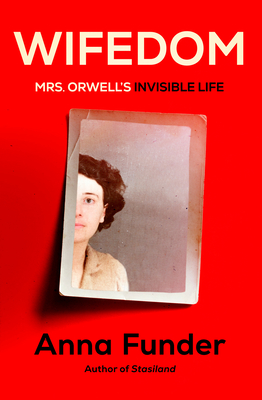
  • ABIA Biography Book of the Year: Anna Funder, Wifedom: Mrs Orwell’s invisible life (biography) (my review)
  • ABIA General Non-Fiction Book of the Year: Thomas Mayo and Kerry O’Brien, The Voice to Parliament handbook (handbook)
  • ACT Literary Awards, Nonfiction: Kate Fullagar, Bennelong & Phillip: A history unravelled (history)
  • Finlay Lloyd 20/40 Prize, Nonfiction Winner: Sonya Voumard, Tremor (I’ll be reporting more on this prize and the Fiction winner next weekend) (memoir/essay)
  • Indie Awards Book of the Year Non-fiction: David Marr, Killing for country: A family story (history)(Jonathan’s post)
  • Magarey Medal for Biography: Ann-Marie Priest, My tongue is my own: A life of Gwen Harwood (biography)
  • Mark and Evette Moran Nib Literary Award: to be announced on 27 November, but 5 of the 6 shortlisted titles are nonfiction
  • National Biography Award: Lamisse Hamouda, The shape of dust (memoir)
  • NSW Premier’s History Prize, Australian History: Alecia Simmonds, Courting: An intimate history of love and the law (history)
  • NSW Premier’s Literary Awards, Douglas Stewart Prize for Non-fiction: Christine Kenneally, Ghosts of the orphanage (history) (Janine’s review)
  • Northern Territory Literary Awards, Charles Darwin University Creative Non-Fiction Award: Dave Clark, Remember (creative nonfiction about truthtelling)
  • Prime Minister’s Literary Award, Australian History: Ryan Cropp, Donald Horne: A life in the lucky country (biography) (Lisa’s review)
  • Queensland Literary Awards, The University of Queensland Non-Fiction Book Award: Abbas El-Zein, Bullet, paper, rock: A memoir of words and wars (memoir)
  • Victorian Premier’s Literary Awards, Prize for Non-fiction: Ellen van Neerven, Personal score: Sport, culture, identity (memoir and polemic)

So 14 awards here, and life writing (biography and memoir) is by far the most represented “genre”, partly because some of the awards are specifically for biography (life writing). History is second, and again, this is partly because there are specific history prizes (some of which are won by biography!) It is noteworthy, however, that other genres – nature writing and eco-nonfiction, for example – rarely get a look-in in these sorts of awards. And yet, there is some excellent writing in these genres being published (by Upswell, for example).

And a little survey

Do you write nonfiction or non-fiction? In my admittedly minimal research, I have read that Americans are more likely to drop the hyphen, and this seems to play out in American versus English dictionaries.

I note that:

  • Liz has nonfiction in her banner, which is how I first titled this post
  • the above Australian awards vary in their usage – some using the hyphen and some not, but the hyphenated form seems to be winning.

I am tending to go with not, just as during my lifetime (or is it life-time!!) we’ve dropped the hyphen from tomorrow and today. (Hmm, a little research into these revealed that Chaucer for example had “tomorrow” – in his form “tomorwe” – unhyphenated. It was then later hyphenated and later again, re-unhyphenated – and I think I really need the hyphen there! Actually, it’s not as simple as this because through much of time the two forms have coexisted!)

What do you do?
Monday musings on Australian literature: Fearless reviewing in 1970

I concluded last week’s Monday Musings by saying that I wasn’t finished with 1970. There are several posts I’m hoping to write, drawing from my 1970 research, but I’m starting with this one simply because it picks up on a comment I made last week.

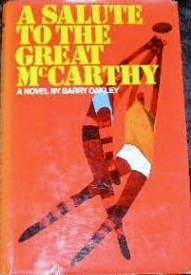
That comment referenced George Johnston, and a review by John Lleonart of Barry Oakley’s A salute to the Great McCarthy in The Canberra Times (8 August). I wrote that Lleonart had some “niggles” about the book but concluded that Oakley had “given us in McCarthy a classic figure of Australian mores to rank with George Johnston’s My brother Jack“. I didn’t, however, share those niggles. He wasn’t the only one with “niggles” about the book he was reviewing, so I thought to write a post sharing some of the criticisms reviewers expressed, because they are enlightening about what was and wasn’t liked in writing and about the art of reviewing itself.

Lleonart starts his review by saying that “it’s a pity Barry Oakley shaped up for his new novel in the cultural cringe position”, and goes on to say that

Oakley could have scored both for Australian literature and the game had he followed the elementary rule that there are no beg pardons.

Instead of striding, chest out and blast you Jack after the ball, he tends to prop, apparently listening for the footsteps of intellectual hatchetmen.

But, these are not his main “niggles” (as he calls them). They include that, while “Oakley has a lot of natural ability with words … sometimes he carelessly drops into cliches”; that some of the characters are “cardboard”; and that the novel’s “social attitudes” look back to those of Lawson. Lleonart concludes, however, on the positives, which include not only the aforementioned reference to Johnston’s novel, but that our footballer protagonist McCarthy “finds in fiercely competitive sport a means of expression and, in its best moments, even a sense of the inner poetry of life.”

Suzanne Edgar, whose poetry collection The love procession I’ve reviewed here, wrote about two recent novels in The Canberra Times (March 7). She suggested that they had “appeared in answer to Thomas Keneally’s demand for acceptable middle-brow Australian fiction”. But,

The trouble is that only people who are serious about reading are likely to pay $3 and more for a hard cover book. If you pay that you are not usually after the sort of light-weight escapist stuff that can be had for 80c from any newsagent’s shelves.

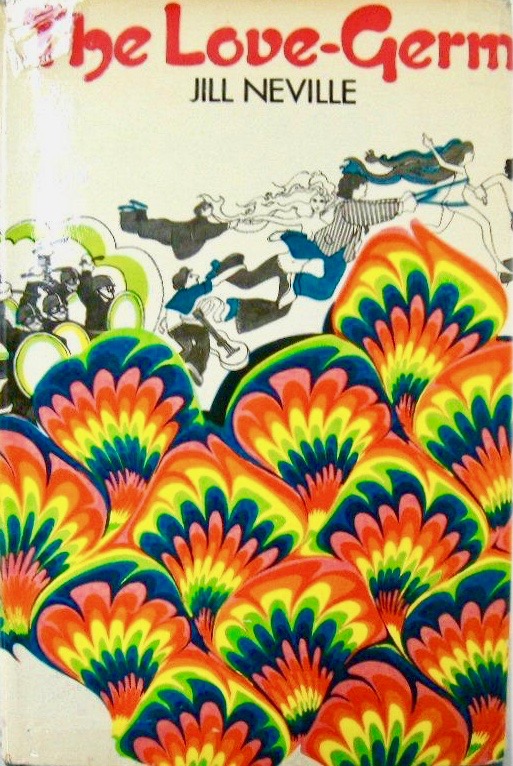
Unfortunately, Jill Neville’s The love germ and Keith Leopold’s My brow is wet are just “simple, uncomplicated bed-time stories”. Neville, Edgar continues, writes “like a slick and practised copy writer slinging words and fashionable ideas around with studied, gay abandon and not too much discretion; ‘desorified’ is one of her more flippant coinings”.

Leopold’s book, on the other hand, is “your academic’s pipe dream, the clever, but of course tongue-in-cheek crime story relieved by satiric treatment of Australian ivory towers. The sort of thing they would all like to write if they were not so busy publishing or perishing six days a week”. Edgar then goes on to say that “Mr Leopold’s unexceptional thesis is that there is dishonesty in all of us”. She gives a brief run-down of the plot – which sounds basic on the face of it – and concludes that it’s “amusing enough, but not really solid value for your money”. So, overall, entertaining enough reads but not worth buying in a $3 hardback. (That said, don’t you think that Weidenfeld and Nicolson’s 1969 hardback cover for The love germ is pretty gorgeous!)

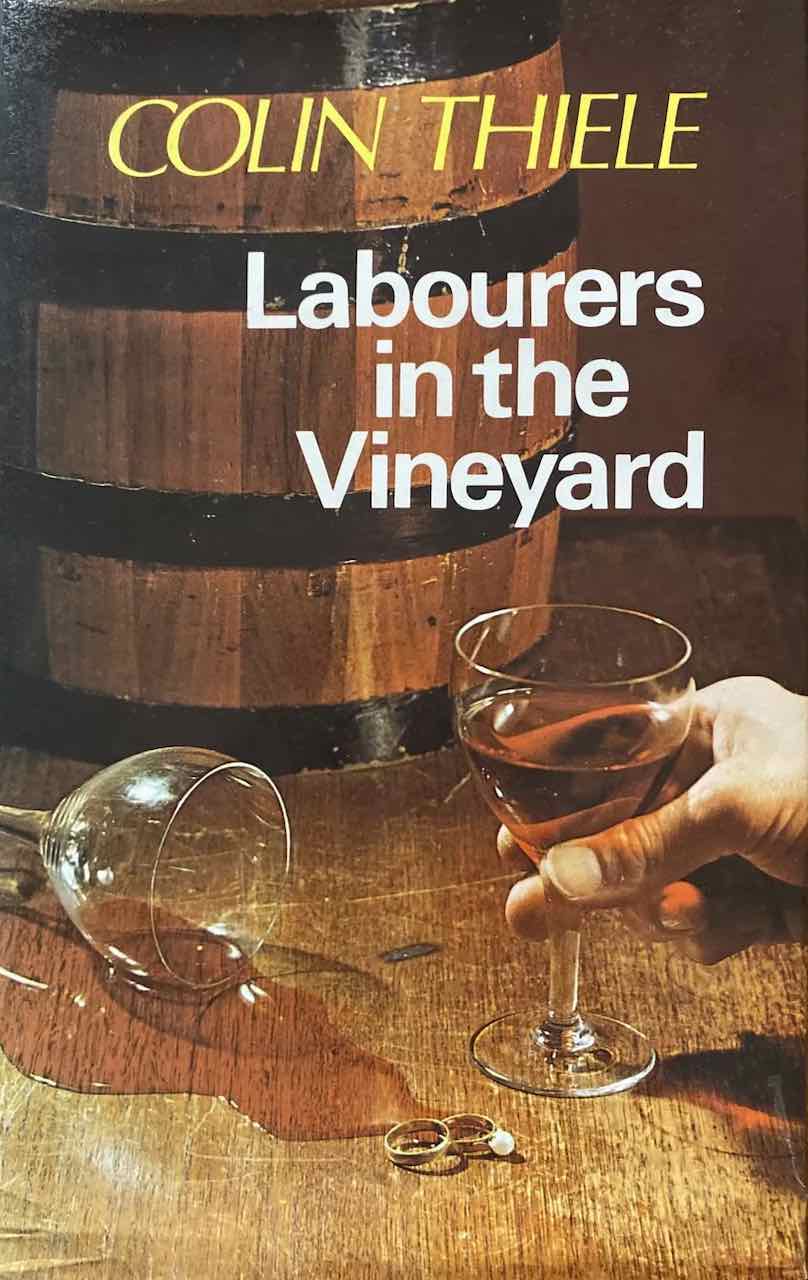
Finally, there’s Margaret Masterman, also writing in The Canberra Times (May 30). She reviews Colin Theile’s adult novel, Labourers in the vineyard. The review is headed “Novel improves as it goes along”. Masterman starts by quoting from the novel, then writes:

After encountering this rhetorical blast on page two of Colin Thiele’s latest novel nothing would have persuaded me to read the remaining 245 pages had I not, as a reviewer, been paid to do so.

But, she is being paid, so she continues:

As Mr Thiele gets a firm grip on his narrative however, it becomes clear that such assaults upon the natural resources of the English language are only the occasional excesses of an eloquent and highly inventive writer, one moreover who is directed by a positive if imperfectly sustained artistic purpose.

She tries to place the novel within a wider literary tradition. She suggests that Thiele “conceived Labourers in the vineyard on the lines of the traditional regional novel”, and says that

Focusing his story on a long-established German settlement in the Barossa Valley … he aims as I see it to invest “the valley” with something of the imaginative presence of Scott’s border country, George Eliot’s midlands, Mauriac’s sands and pine forests around Bordeaux, and above all Thomas Hardy’s Wessex.

She then compares the novel with Hardy’s Wessex novels, writing that

Into a modest 247 pages he has organised a remarkable variety of fictional material, much of which is nostalgically familiar to lovers of the Wessex novels. His plot is highly contrived and marked by melodramatic coincidences. The moods and predicaments of his characters are closely related to their rural environment and commented on by a chorus of humorous rustics.

Masterman discusses the book at some depth, pointing out its strengths but also its failings. Seasonal festivals and country trials, for example, “are vigorously and sometimes brilliantly described” but Thiele fails to “infuse the countryside with any genuine imaginative significance”. Because of his detailed knowledge of the region, he does give his story “an illusion of reality”. Her conclusion, however, is qualified. She’d clearly much rather be reading Hardy!

I enjoyed Labourers in the vineyard as a lavish and well organised entertainment which stirred memories of the people, the woodlands, the heaths and milky vales of a great novelist whose works in these days are too often neglected.

These are just three examples I found in my research, but they nicely exemplify some of the things that are important to me when I think about my reading. What is the writing like? How does the novel fit within its perceived “genre” (defined loosely)? How relevant is the novel to the concerns of its day?

What do you think?

Monday musings on Australian literature: on 1922: 2, Reviewers on Australianness

This is the second post in a series I plan to do this year inspired by articles in Trove from 1922, that is, from 100 years ago. My first post was on the NSW Bookstall Company, and I have several more 1922 post ideas. However, I thought a good choice for the second one would be to share some of the things reviewers/critics/ columnists at that time were saying about “Australianness” in the writing. Representing Australia – writing Australian novels – seemed to be important. But what did that mean to them?

I’ll start by repeating something from my first 1922 post. The columnist from Freeman’s Journal (July), wrote that Vance Palmer’s upcoming book, The boss of Killara, was “an entertaining story, … most entertainingly written, and … true in every detail to Australian bush-life”. I wanted to share this again because, by the 1920s, Australia was (and had been for some time) a highly urbanised nation, and yet bush-life seemed to define us in most reviewers’ (and presumably our own) eyes. It suggests that was our point of difference from the rest of the world, regardless of the truth of our lives.

Note that not all books discussed in 1922 were published that year, but most were.

Historical fiction

I didn’t come across a lot of historical fiction, but there were some, and when I did, reviewers were interested, naturally, in whether the past was properly evoked. The Western Mail’s (November) reviewer approved of J.H.M. Abbott’s Ensign Calder, saying that “The writer’s descriptions of life in Sydney, early in the nineteenth century during the governorship of Macquarie, are very faithfully rendered”. Wikipedia’s brief article on Abbott quotes Miller and Macartney from their book, Australian literature. Miller and Macartney describe his writing as being “of a simple kind, without subtleties or motive or characterization, against a background of the Australian past as revealed by historical records, and introducing actual personages”. So, not great literary writing, but accurate. This assessment (acceptance) was, I found, also a fairly common thread in 1922.

Romance and adventure

I will write more about adventure in a later post, because it seemed to be a popular genre. However, it’s worth sharing here some reviewers’ thoughts relevant to this week’s topic.

One adventure story exponent was Walter G Henderson. He was a country solicitor and grazier, as well as writer, and his novel, Bush bred (serialised in 1918, published 1922), was an adventure romance. J. Penn, who wrote for Adelaide’s Observer, called it (July) “a truly Australian product”, then described the wild adventures of its protagonists, including on the goldfields north of Port Augusta. He notes – and I found it interesting that this is one of the things he chose to emphasise – that “the author’s knowledge of camels and their ways is extensive”. Penn also writes that the 1922 edition included a commendation from Viscount Novar who, says Penn, claims that “the preservation of fugitive incident, illustrating different phases of life in a developing country, is a valuable contribution to literature.” Here, at least, is a reference to the idea of “illustrating different phases of life”.

Another popular adventure book was Jack North’s The black opal, which The Northern Territory Times and Gazette (May), describes as “a wholesome, well-written novel in which the lure of the bush triumphs over the glamor of the city”. See!

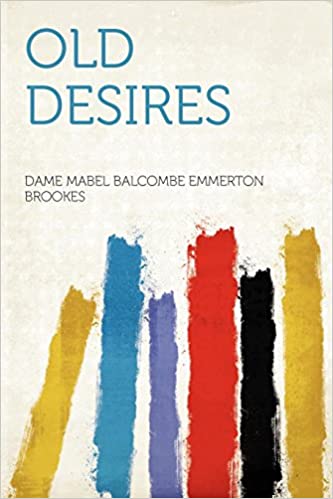
Mrs Norman (aka Mabel) Brookes’ novel, Old desires, is set partly in Cairo, but, writes the reviewer in Adelaide’s The Mail (October),

Separate from its dramatic qualities, the book is most admirable in its prelude chapters of way-back Australian life. Description of the recognisable routine, normal and often exciting, of station experience in the great interior, has, of its kind, seldom been more truthfully achieved. Occasional conventions link it, nevertheless, to a standard of accomplishment more familiar. Harris tweeds here preserve their familiar and apparently irresistible smell. That Mary, climbing through the stockyard fence, should vouchsafe a generous display of stocking is unimpressive to reading mankind inured to daily main street exhibition requiring neither fence nor stile.

As I’ve said before about these older Trove articles, I love their formal language. Formal this may be, but we get the gist that her description of Australian (station) life is authentic, albeit her English origins can’t help creeping in. Oh, and poor Mary, showing off her stocking unnecessarily, given the (city) worldliness of her readers!

What seemed to be mostly admired about “Australian” novels was not so much their exploration of Australian identity, or other themes, or their writing, but their description of Australian life. The reviewer in Brisbane’s Telegraph (August) of William Anderson’s The silent sin says

The great merit of this story in our eyes is that it is thoroughly Australian. The characters are Australian, and for the most part the scenes are laid in New South Wales and Queensland. For the rest it is told without pretension to literary ornament. 

Realist fiction

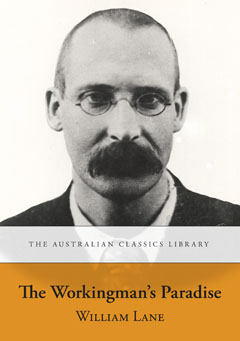
Then as now, older books were given new life, and one such book was William Lane’s 1892 novel The workingman’s paradise (my review). The report is not about a new publication, but about its being serialised in Brisbane’s Daily Standard (August). The columnist writes – remember, this is 30 years after its original publication – that

It is truly a remarkable book, more remarkable now, perhaps, than when it was published, because it is as inspiring to-day as it was intended to be then, and its story of the class struggle and road that lies before the Labor movement has increased in significance by the developments of the last quarter-century.

At last, a book that deals with some critical issues! Yes, yes, I’m showing my colours, I know, but I’m sure that won’t surprise you!

This is a brief, and superficial survey, but it comes from several pages of Trove hits and is a fair representation of what I saw as trends at the time. I have found some, let us say, outlier articles, which I will also share as 2022 progresses!

On John Sinclair

Who is John Sinclair, you are probably asking? Those of you who read my last post, Shy love smiles and acid drops: Letters from a difficult marriage, may remember that he was the husband of the marriage in question, and father of the author, Jane Sinclair. However, as I briefly mentioned in that post, John Sinclair was also a music critic in Melbourne from 1947 to 1985.

As a keen concert-goer I was intrigued, and so did a little digging. I found an interesting man with a passion for some things that might interest us here. This is to say, he had some definite ideas about criticism, and about supporting Australian music and culture. Most of what I’m sharing here came from a 1998 article by Adrian Thomas called ‘“Beware of snakes, spiders and Sinclair”: John Sinclair (1919-1991), Music critic for the Melbourne Herald: The early years’.

If you are interested, read the article, but regarding Sinclair’s background, Thomas tells us that he started out as an artist. In fact, in the early 1940s, newspaper owner Sir Keith Murdoch gave him a stipend over other prominent artists like Sidney Nolan (who was a good friend of Sinclair’s). It was during this time that Sinclair became involved with the Heidi artistic community. Thomas doesn’t know why he didn’t continue with art, but says that his association with this circle and “their artistic beliefs” informed his career as a music critic. He was determined “to encourage a vibrant and enduring musical culture in Melbourne” like that artistic one. He also advocated for contemporary music and championed “those Australian composers and performers whose talents he deemed worthy of support.” In 1947, he was employed as music critic by Murdoch’s Herald, and there he stayed.

The function of the music critic

Sinclair apparently wrote quite a bit about criticism. Re music critics, he argued that, in addition to having the skills necessary to determining “the merit or otherwise of a performance, it is equally important that he [this was 1947] should possess the ability to translate his musical experience into terms accessible to the layman”. He saw criticism as being still “relatively undeveloped in Australia”, and was keen to be part of its development.

He was known, says Thomas, for writing “direct and uncompromising reviews” which “shook the musical establishment”. As is the way of these things, people focused on the negative, but Thomas says that “quality performances were always acknowledged”. I couldn’t resist checking, and I found many positive ones in Trove, alongside some negative ones.

For example, he wrote in 1952 of a young Australian organist, John Eggington, just returned from England, that “certainly, Melbourne organ lovers would find it difficult to recall many occasions on which the playing was as clear, expressive and brilliant as Mr Eggington’s was today”. 

His negative reviews, though, were not gentle. In 1947 he wrote on a recital by Viennese-born Australian pianist Paul Schramm, saying he “sat at the piano, dispassionate and efficient — something of a musical pharmacist dispensing a potion with deft and skilful fingers. He is a natural musician, and a fluid and sensitive interpreter.” However, while it was good playing and musical, it was also “always facile”. Returning to the pharmacist analogy, Sinclair concludes that

Mr Schramm, however, appears more concerned with the effect of his dispensations on his listeners than a personal search in the deeper realms of the composer’s meaning. 

All told, I think Mr Schramm and I were among the few people who weren’t really enjoying themselves last night.

The negative ones caused controversy, which was good for the newspaper business, but even Murdoch himself, writes Thomas, stepped in to give Sinclair his view of criticism.

Anyhow, Sinclair said a few more things about criticism that are more broadly applicable, and appealed to me, such as that it is the critic’s

job to know his subject, to set his standards and then to hold to them so that any thoughtful reader, on the evidence of a series of criticisms, can determine where he and the critic stand in relation to music. Only then can the reader form a worth-while opinion of the music on which the critic has reported. (1952)

I like this point about critics having clear criteria/standards that we can get to know. He also noted in 1952 that “the critic stands between the musician and the public and contributes to the understanding of music by measuring the individual work or performance against the widest possible background”.

And in 1973, in a letter to the Australian Council of the Arts, he said, among other things, that:

I have always believed that my responsibility was to the cause of music in the widest sense [my emph.]; that I had a responsibility not only to make reputable judgements about performance but to understand the many and complex factors that determine the quality of music making in the community.

I like his views on the practice and role of criticism. What about you?

Supporting contemporary music and musicians

Thomas discusses Sinclair’s role in improving what was Australia’s “immature musical culture”, in terms of concert-going behaviour, but my main interest is Sinclair’s ongoing concern with public’s “indifferent attitudes towards Australian composers and performers”. He laid much of this at the feet of the ABC. It was Australia’s main concert organiser and it focused on international performers. He wrote in 1952 that “in the long run it is the quality of indigenous musical activity, and not the playing of visitors that determines the worth of a year”.

The public, he saw, was being trained to prefer the international celebrity. Even worse, the concerts these and local orchestras performed primarily comprised standards from the eighteenth and nineteenth centuries. He argued that “the ABC has an obligation to foster public taste and to provide conditions in which Australian musicians can develop and mature”. He worked hard to promote contemporary music and local composers. I found a 1951 review of a concert conducted by Eugene Goossens in which he praises Goossens for “continuing his very tangible services to Australian composers” by conducting the first Melbourne performance of Margaret Sutherland’s tone poem “Haunted Hills”. Similarly, a review of a 1952 Victorian Symphony Orchestra concert starts:

Much more contemporary music than usual and an excellent standard of performance distinguished last night’s concert by the Victorian Symphony Orchestra under Juan Jose Castro in the Melbourne Town Hall.

Thomas tells us “by the time the ABC tried to change the culture by appointing composer and contemporary music advocate Juan Castro as resident conductor in 1952, a conservative attitude to music was firmly entrenched in audiences”.

Converting audiences to contemporary music has always been a tough ask, but it, like all contemporary artistic endeavour, must be supported if culture is to remain fresh. I have enjoyed getting to know John Sinclair a little more, and greatly enjoyed reading his writing in the Herald.

We don’t hear much about his work in Shy love smiles, but he and Jeannie do discuss music occasionally. I’ll close on something Jeannie wrote to him in 1961 about a concert she attended at Glyndebourne. The work was modern, “Elegy for young lovers” by Henze, with words by Auden. She loved it:

my hair stood on end as the symbols [sic] clashed on and on. You probably read about it. Ah well. Also the audience was more serious and highbrow and sympathetic. Obviously the society ladies were frightened.

They shared some values, it seems. I’ll leave it there.

Adrian Thomas
‘”Beware of snakes, spiders and Sinclair”: John Sinclair (1919-1991), Music critic for the Melbourne Herald: The early years’ in Context: Journal of Music Research, No. 15/16, 1998: 79-90