Living under COVID-19 (2)

Just checking in to see what’s up with everyone in their neck of the woods. How are you coping with your COVID-19 restrictions? Are you getting stuck into those projects that have been hanging around forever? One of our friends is finally sewing clothes out of fabrics she bought on overseas trips years ago, another is starting to scan old photos, while yet another is decluttering one item a day. (Now that’s a goal I could probably meet!)

I haven’t quite been able to get seriously stuck into those sorts of projects yet, but we are gradually rearranging our lives, COVID-19 style. Here are some of the ways …

Exercise stuff

Anyone with any sort of social media account can’t help but come across programs/sites/apps offering to help you stay fit. As a ballet lover, I am particularly seeing programs coming out of ballet companies. My favourite, which I first saw on Instagram but which is also available on YouTube (and perhaps elsewhere), is Dancing with David (that is David McAllister, Artistic Director of the Australian Ballet). The first one is  How to do a plié:

But, he is adding other ballet exercises, including, to date, calf rises and port de bras. These are exercises you can easily do at home. They also introduce those who have never done ballet to some of the fundamentals, while for those who have, like me, they offer such a fun trip down memory lane – made even better by McAllister’s delightful personality. He makes me smile, and that is the best thing of all in thee difficult times.

Of course, we also do some walking, as I mentioned in my first post, and I have continued doing something I’ve been doing for years, Yoga with Adriene (who is also on YouTube, like David, though I have subscribed to her app.)

Finally, last week, our Tai Chi teacher test-drove a Zoom Tai Chi class with our group. It worked – well, enough anyhow – so we have that to look forward to next term.

Social stuff

Gradually, we are increasing our online social life with friends and family, matching the technology to the group – from simple email discussion times with older groups, through WhatsApp for those let’s-keep-in-touch groups, to all sort of Zoom events from committee meetings to classes to Happy Hours! (Almost anyone who is anyone is now a Zoom-pert it seems, though I’m not always sure why other free technologies like Skype and FaceTime aren’t used more! Anyone? For the record, we use FaceTime for our hookups with our Melbourne family members.)

Literary and other cultural stuff

Again, like exercise, opportunities to engage in literary (or other arts) culture abound, so I’ll just share a couple with you here that I’ve had time to check out (or plan to check out).

  • Living in Solitude: Donna Ward & Donata Carrazza: A Zoom conversation inspired Donna Ward’s new book She I dare not name, and focusing on “what it means to live alone during this new era of social distancing”. This was a free event promoted via Facebook, and took place on Thursday 2 April at 7pm. I attended a small part of it, but it was a difficult time for me so I wasn’t able to listen to it all. However, it did work as a good proof-of-concept.
  • Newtown Review of Books started a new series of Friday book extracts, which is intended, I understand, to help promote new books which are missing out on all those launches and Festival appearances the authors were expecting. First up was Kirsten Krauth’s Almost a mirror (April 3) followed by Chris Hammer’s Silver (April 10). It’s a shame they’ve not “tagged” the series so readers can locate them easily.
  • Heather Rose Reads is an initiative by Australian author Heather Rose (see my review of her novel The museum of modern love) in which she … well, I’ll let her explain it:

Book coverDear parents of primary age children! Monday April 6th at 4pm Australian EST its time for Heather Rose Reads. We’ll begin with the first book in the acclaimed children’s series I co-author under the pen name Angelica Banks. Book 1 is Finding Serendipity for children aged 8 – 12 (grades 3 -6). If you have primary school children this is my way of helping you have a break for a little while on Mondays, Wednesdays and Fridays. I’ll also post the readings on YouTube if you’re in a different time zone. See you and your children here on Facebook Live 4pm this Monday April 6th … it’s going to be fun.

As you can see, it started last week, but she is posting them on YouTube too. Her Angelica Banks co-author is Danielle Wood (whose Mothers Grimm I’ve reviewed). What a lovely idea.

  • This is History: The National Library of Australia has produced a video conversation between ACT-based historians Dr Chris Wallace and Professor Frank Bongiorno on “why it’s so important to document everyday life during irregular times” like our current COVID-19 pandemic. They talk about what citizens can do now to help historians of the future document and interpret the life we are living. We often don’t realise we’re living through a major historical moment until the time has passed, but we surely do this particular time. Anyhow, this 20-minute conversation is a lovely introduction to the work of historians and the importance of everyday lives to the study of history.
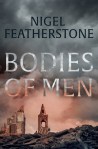
  • Nigel Featherstone, Bodies of menWriting War: A Panel Discussion: Still upcoming – Monday 20 April – but I’m sharing it now in case any of you are interested in attending. It features Nigel Featherstone (whose Bodies of men I’ve reviewed), Melanie Meyers (whose Meet me at Lennon’s I’ve reviewed), and Simon Cleary (whose The war artist Lisa has reviewed) moderated by author Cass Moriarty. This event is not free, costing a whopping $5! To book tickets check this link.

Final thought

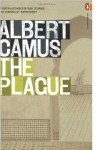
“What’s true of all the evils in the world is true of plague as well. It helps men to rise above themselves.” (Albert Camus, The plague)

Wouldn’t that be lovely!

Meanwhile, how are you faring?
Monday musings on Australian literature: Spanish flu

COVID-19, history tells us, is a one in 100 year event, the last such event being the Spanish flu of 1918 to 1920. This week, I thought I’d share some references to the Spanish flu from Trove – not news reports about the course of the flu itself, but some random references that indicate the flu’s legacy in various ways over the succeeding decade.

Jokes at the time …

Just like we are seeing now. Here is one from the Fitzroy City Press of 3 January 1920:

GETTING EVEN.

It was in the Spanish ‘flu period, and old Oppigar lay at death’s door. The priest came and told him he must forgive his enemies. Oppigar promised to do so with the single exception of Peter Svingen, against whom he had a very special grudge. But the priest insisted that even Peter must be forgiven. “All right then,” said Oppigar, ” I will forgive Peter also – but if I get well I’ll have it out with the old scoundrel!”

References in the following years …

In 1925, Perth’s Sunday Times of 31 May 1925 ran a story about the new cross-word craze that was sweeping the world, even reaching places like France and Italy. The article, ascribed to Twilight, is titled “The cross-word flu”. It takes the form of a conversation between a cynic, a cynosure (how many newspaper readers today would know that word), and others about the cross-word craze. The cynic starts it off:

“It was hardly to be expected,” re-marked our cynic, “that France would embrace the cross-word puzzle. France has suffered too many cross-purposes, double-crosses, and heard too many cross-words because she cannot forget the myriad crosses that dot, like forests, her fair provinces, to become enamored of a game whose name re-minds her of the bitterest things.”

To which the cynosure replies:

“True,” replied the cynosure, “France has puzzles enough at home, and the crosses that everywhere make memorial of her infinite sacrifice in the cause of the world’s liberty are at the same time mute warnings of what lurks threatening at her northern border; and further north in the land of the Bear. The marriage of the Bear with the Monkey has provided too big and perturbing a problem, without the importation of play puzzles from America.”

And here the cynic refers to the Spanish flu:

“As dangerous as Spanish ‘flu,” re-joined the cynic, “is the label French journalists have tagged to ‘cross-words.’ They warn the people to keep away from the new trans-Atlantic craze. One paper reminds its readers of a Frenchman who, before he died in a lunatic asylum, used to carry a paper, and pencil in his pocket and at parties would say, “Help me, my dear. I have lost my appetite and sleep because I cannot solve this problem.'”

I love the idea of cross-words being so popular, so engrossing, they were “as dangerous as the Spanish ‘flu“. The article goes on at some length discussing the craze. “A big tea-room proprietor” suggests “that nowadays all of us had mental worries enough without manufacturing new ones and calling them games”. It’s an entertaining piece – but interesting too with its references to the political situation, to the just-finished war, and also for its discussion about whether cross-words improve your mind or are just fun! Sounds exactly like current discussions about whether doing cross-words and sudokus ward off dementia, or just make you better at doing them!

As the years wore on, other references were made to the ‘flu, including by Canadian-American humorist and poet Walt Mason, whose pieces were published in Australian papers. On 24 April 1927, Brisbane’s Sunday Mail ran a piece of his called “No certainty”,

No man can with safety wager that the luck he knows to-day,
be it minor luck or major will not wilt and blow away.
None can say with show of reason that disease will pass him by,
that he won’t be, for a season, on a sick bed high and dry.
None can say what passing motor may assault and knock him flat,
flatter than a Yarmouth bloater, ruining his Sunday hat.
When we’re feeling strong and nifty, fit to struggle and to win,
it seems folly to be thrifty; better blow the money in.
We feel sure the future’s holding every blessing we desire,
and the wise man’s constant scolding only fills our breasts with ire.
But, behold, we faint and sicken as our labors we pursue,
and our pulses throb and quicken, and we’re down with Spanish flu.
Or perchance an auto climbs us where the hoaking lizzies fly,
and an undertaker times us, figuring on when we’ll die.
Then for weeks we loll and languish, wearing plasters night and day,
thinking in the deepest anguish of the bills we cannot pay.
While the torment racks and rages we resolve, if we get well,
we will listen to the sages and the shining truths they tell.

I’ve quoted the lot because Mason died in 1939 which I believe puts this out of copyright.

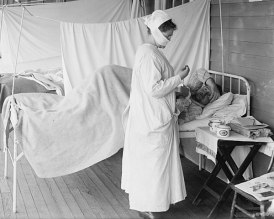
Walter Reed Hospital Flu Ward, 1918-19, Harris & Ewing photographers, via Library of Congress, Public Domain

Two years later, and about a decade after the flu, The Port Macquarie News and Hastings River Advocate published another piece by Walt Mason called “After the ‘flu” (21 September 1929). I found this also-rhyming piece in multiple Australian papers. Only some were attributed to Mason; others had no attribution at all.

The piece starts:

I had nine kinds of Spanish ‘flu, with sundry German brands thrown in; all day I coughed and said, ‘Ker-choo!’, all night I coughed and sneezed like sin.

The doctor said, as at my side he mixed up pills to feed my face, ‘The wonder is you have not died! I never saw so bad a case. I’ve seen a hundred taken down, I’ve seen them like the ripe grain fall; a thousand men are sick in town, but you are sicker than them all. It is a feather in my cap that I have pulled you through the strife; that you still loiter on the map, and breathe the well-known breath of life.’

And on it goes, describing what a wonder it is that he survived. Pronounced cured, he wants to brag to his friends:

There is no sense in being ill unless it gives you an excuse to talk about the doctor’s bill, and boast of pain to beat the deuce.

But they show no interest, calling his sickness fake, or telling him

You have your gall to talk of pain! A tin-horn ailment like the ‘flu. Your talk is frivolous and vain. Just wait until you have the gout, your toe swelled bigger than a brick! Then you may prance around, old scout, and claim that you really have been sick!

Our poor narrator concludes:

Alas, no matter what I do, my friends will never let me brag; in vain I hoped my siege of ‘flu would give a chance to chew the rag.

Simple humour by today’s standards, but interesting to see the lighthearted – but gently moralising – take on what was a terrible scourge at the time. Some describe Mason as a poet-philosopher.

Will we be writing about COVID-19 in similar tones over the next decade?

Monday musings on Australian literature: Authors respond to COVID-19

In last week’s Monday Musings I wrote more generally about COVID-19 and its impact on the Arts. Like that post, this one is not aiming to be a formal comprehensive one either; news and ideas are coming far too quickly. And, anyhow, as I also said last week, most if not all of you are well enough connected to be receiving news and notifications yourselves. You just need to be social-media-connected in some way to your favourite arts organisation, bookshops, publishers, and so on, to see a whole range of ideas and initiatives popping up to keep authors in our field of view.

To give just one example of what formal or organised culture is doing, the National Library of Australia held its first Digital Book Launch on 27 March, featuring our lovely local author Karen Viggers in conversation with Felicity Volk to launch Volk’s new book Desire lines.

The NLA is not, of course, the only organisation finding ways of keeping culture alive. From social media, I see that digital launches, in particular, using a variety of platforms, are quickly becoming popular.

However, what I want to do today is something a bit different, which is share three recent social media posts by individual authors, in which they respond – in their own way – to COVID-19. They are different authors at different stages in their lives and careers, so their response and/or needs are also different. Oh, and it’s coincidental that they are all women writers.

Sara Dowse has appeared in my blog several times, including a reference to her memoir piece about the time she spent as a child with Ava Gardner, which was included in The invisible thread anthology. Since 15 March, she has been daily posting on Facebook an excerpt from her unpublished memoir. She figures she’s never going to bring it to publication, so why not share it for people to read now, when so many of us are at home. Dowse is a thoughtful and intelligent writer, so having access to this is quite a treat for us, I’d say. At the end of the first except, the American-born Dowse introduces her memoir by pondering her complicated family background and falling in love with an Australian:

Was my infatuation an escape from this? It’s frightening to admit that it might have been so, just as it is to contemplate that escaping from difficult situations I hadn’t the sense not to get into in the first place was to become an indelible facet of my nature. An admirable capacity for survival, or a shameful weakness? Perhaps it’s the Hollywood influence that makes me think that you can shift the meaning of almost any story simply by changing the angle of the lens.”

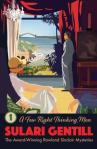
Sulari Gentill, A fete right thinking men

Those who know me will know that I love this idea that you can shift the meaning of stories by changing the perspective.

Sulari Gentill, the historical crime fiction writer who lives in a rural area only a couple of hours from where I live, made me laugh with her homeschooling Instagram post. There was picture of her 14-year-old son reading her novel A few right thinking men. Her caption starts with:

Homeschooling … I’ve decided to cover English and History by making Atticus read my books. It may be the only time I have this power … And it means I can actually discuss both the literary and historical aspects of the novel with him sensibly, as well as be assured that his critiques will be robust (though perhaps a little blunt). It’s not exactly on the curriculum but we can deal with that later …

I loved this so much. You go Sulari! (I have written about a Canberra Writers Festival panel including Gentill, here.)

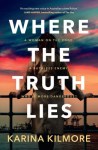
Debut crime author Karina Kilmore wrote (and tweeted) a blog post on the Sisters in Crime site. Her post is titled “Writing in the times of corona”. She talks about having her book tour and promotion activities cancelled. She talks of why she writes, which is to share her stories, but then ponders

But the reality for me as a writer has never seemed more stark. Those dystopian novels, those science fiction scenarios, those terrible crimes by people in desperate situations are no longer pure works of fiction. We have all seen the footage of people fighting each other in supermarkets, hoarders taking more than their fair share and people risking other peoples’ lives by not following the restrictions. This type of realistic crime makes writing my second novel harder.

She also says that while cancelling her book tour was the right decision, the impact is to “somehow” make her doubt herself. You can feel her uncertainty and pain.

(Kilmore’s book, Where the truth lies, is published by Simon and Schuster. It was shortlisted for the Unpublished Manuscript Award in the 2017 Victorian Premier’s Literary Awards.)

I hope you’ve enjoyed these little snippets.

Meanwhile, as I wrote last week, take care and be safe my blog friends.

Do you have any interesting author stories to share?

Living under COVID-19 (1)

This may be the first of a regular, irregular or occasional series of posts about living under COVID-19 , probably occasional because I suspect that, once we settle in for however long it’s going to be, life will become same-same.

Like many bloggers – see Nancy in the Netherlands’ post, and Stargazer in London who said so on my blog – I am finding it hard to settle to reading and reviewing. I have one review half-written and another book read and not reviewed. They will be done, though – and next week, I hope.

Meanwhile, I thought I’d report on what the Gums have been doing.

People Stuff

Coincidentally with, but unrelated to, the start of the COVID-19 problem here in Australia, it became apparent that we would need to rejig my parents’ at-home care package to support their being able to continue to stay in their retirement village home. Using a division-of-labour approach Brother Gums took on negotiation of that care with Mr Gums and I doing the logistics needed to make that care work – all of course in close consultation with our nonagenarian parents who, while needing physical help, are perfectly able to discuss and articulate their needs. Indeed they will probably read this post, Father Gums having noted that my posts have been few lately! Anyhow, all this has made staying-at-home nigh impossible, but we’ve done our best to obey the spirit of the law. Things should be in place next week enabling us all to settle into more normal isolated living!

I just need to add here that Brother Gums has been an absolute Trojan, and we couldn’t have done it without him. Thanks Ian.

Otherwise, we have been keeping in touch with family, friends, neighbours and groups – including setting up new social messaging groups with neighbours and my reading group, and using existing ones with family.

Political stuff

I don’t like to engage much with politics here, as I am not keen to attract trolling or disrespectful commentary. I would just like to put on record that I am disappointed by our political leaders’ (on both sides) inability to be clear in their messaging. It’s impossible, I believe, to be completely consistent – unless, perhaps, you live in an autocratic, black-and-white world – but it is possible to be clear about your vision and priorities. This is exactly what, for example, I understand the Germans are being. Mr Gums, who watches the German news, translated for me that government’s very clear statement of priorities, and it is essentially this: 1. Get health care working well; 2. Look after the well-being of the people; 3. Consider the economy. Whether or not they achieve it, I like the aspiration!

Here is our Australian comedian Sammy J (who also appeared in my last Monday Musings) on the messaging we recently received in Oz:

Exercise Stuff

Social distance walking

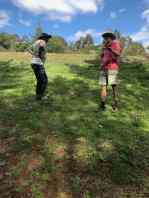
We all know that exercise is important to our physical and mental health, but achieving that under these restrictions is difficult. My lovely little yoga class has had to suspend, and our Tai Chi venue was closed. However, Tai Chi can be done outside. So, on the understanding that the government’s rules allow outdoor physical training for groups of 10, with the proper spacing maintained, we have attended three outdoor Tai Chi classes in a public space (to the interest and amusement of occasional passers-by.) I’m not sure how long that can, or should, continue.

Otherwise, I, with Brother Gums and/or Mr Gums, have done a couple of walks in the section of the Canberra Nature Park across the road from our place, and I have continued my almost-daily at-home yoga practice.

Books and other cultural stuff

As I said, there’s not been much happening in this sphere, but what I have read will appear on the blog hopefully soon. Most of my TV watching has been news and current affairs to keep track of COVID-19 and what we need to know and do, with some light entertainment like Hard Quiz and Doc Martin thrown in.

However, with Ma Gums staying with us for the last week or so while the new care package is put in place, there have also been some Scrabble games, which I’d call cultural, wouldn’t you?

Next

As for how we plan to spend our social-isolation time from now on, well, we have tasks galore, including gardening, digital photo cataloguing, decluttering – as well as, of course, virtual socialising, more reading and listening to/watching favourite and back-logged shows, and doing what we can to support and loved businesses which are still operating (such as bookstores and cafes doing online orders and takeaway food.)

Monday musings on Australian literature (and the arts): COVID-19

I don’t know about you, but I’m finding it hard to settle to read, let alone write thoughtful reviews right now. (I’m sitting on one at the moment that I really want to do justice to, but my brain is all over the place.) Consequently, I’m going to just write a COVID-19 Monday Musings – and try to keep it simple, and focused on the things most important to us, that is, books and the arts.

A couple of days ago, The Saturday Paper (paywalled except for one free article a month) published an article by award-winning essayist Alison Croggon on “COVID-19 and the arts“. In it she discusses the impact on the arts, particularly on small companies and independent artists in the greatest jeopardy, of COVID-19 containment measures. These measures have certainly affected me with various cancellations, including our beloved National Folk Festival. Mr Gums and I count ourselves lucky to have managed to see the Australian Ballet’s last performance of the season of “Volt”, before Melbourne Arts Centre was closed down.

Anyhow, Croggon writes that:

As always, the brunt is being borne by thousands of small companies and independent artists and ancillary workers – publicists, stage managers, technical staff, ushers, caterers and others. Many are in desperate situations, exacerbated by the fact that their major sources of alternative income – teaching, casual work in the hospitality industry and so on – have also dried up.

She shares the experiences of a musician and a theatre designer to put flesh on the facts. And it’s pretty withered looking flesh. One talks of having all those jobs carefully cobbled together to create a living income disappear in one go. It’s important, therefore, that governmental assistance package/s include support for freelancers and independent arts workers, because they are critical to the survival of the industry as a whole.

Meanwhile, “freelancers are calling for institutions to pay out cancelled commissions” but not much of that is apparently happening. I certainly think that those of us who can should do this, and/or not ask for refunds for cancelled events. I figure that I’ve spent the money anyhow. However, I appreciate that life will become more tenuous for some people and that money recouped (or not spent) will make a difference to their surviving this period. All I can say is that each of us needs to do what we can but to not judge what others do – unless we’ve walked the proverbial month in their moccasins!

For up-to-date information on COVID-19 and the arts, the Australia Council for the Arts has a web-page and the Australian Government’s Office of the Arts also has a COVID-19 Update page.

Bookish stuff, in particular

I can’t even begin, really, to offer suggestions about this because ideas and opportunities to maintain our literary culture are coming thick and fast, ranging from ways to keep buying books and supporting our bookstores to potential livestreaming of literary events (like the Yarra Valley Writers Festival). It’s impossible to keep up and, anyhow, I suspect that those of you reading this blog are well enough connected to be receiving news and notifications yourselves. We can’t catch it all, but we can catch enough to keep us well engaged.

My reading group, which was to have met at my place next week, is setting up a WhatsApp group to try out virtual book discussion. There may be better apps, but as this one is known to many of the group already, it’s where we are starting. Within minutes of the group being set up, 8 of the 12 of us had joined, which is a measure, I think, of how much we value each other and our book discussion.

Many bloggers have written COVID-19 posts, including Lisa (ANZLitLovers) with three posts to date, Bill’s (The Australian Legend) more personal one, and Welsh blogger Paula’s “Coronatome” version of her Winding up the Week posts in which she provides a bumper crop of reading, including one of Lisa’s posts and a Books + Publishing article about the expansion of Australian Reading Hour.

Albert Camus, The plagueBooks have been written over the years about epidemics/pandemics/contagions, including our own Geraldine Brooks’ Year of wonders. This is historical fiction inspired by the Derbyshire village of Eyam which, when struck by the plague in 1666, quarantined itself to prevent the spread of disease. An interesting read in the light of what’s happening now. But, my favourite of them all is Albert Camus’ The plague (which I’ve read a few times, including since blogging, so here’s my review!) Camus explores the three main responses to plague – rebel, escape and accept – through the actions of his various characters. Rebelling, of the right sort, is his preferred approach. Read it if you haven’t already! In the end though, whatever happens, I’m hoping that what the lovely Dr Rieux says proves true with our COVID-19 experience:

… what we learn in a time of pestilence: that there are more things to admire in men than to despise.

Finally, if you are finding it difficult to cope with the stresses of the current situation, there’s always Up Lit (check my post from 2018 to get you started.) Seriously, though, many jurisdictions have their helplines, including, in Australia, Lifeline (13 11 14). Do call the one most appropriate to you if you find the impact of isolation or just overall worry about COVID-19 starting to seriously affect your mental health. It’s not easy right now, and we all want to come out healthy and ready to go on the other side.

Take care and be safe my blog friends.