Sofie Laguna, The choke (#BookReview)

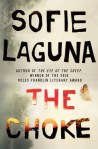
Sofie Laguna, The chokeThere are many reasons why I wanted to read Sofie Laguna’s latest book The choke. Firstly, I was inspired by a very engaging author conversation I attended late last year. Secondly, she won the Miles Franklin with her previous book The eye of the sheep (which I still haven’t read). Thirdly, its setting, the Murray River, is one of my favourite parts of Australia. For these and other reasons, I finally slotted it in this month, despite my growing backlog of review copies, and I’m glad I did. It’s an engrossing, moving read.

The novel is divided into two parts, the first set in 1971 when its first person protagonist Justine is 10 years old, and the second set three years later when she is thirteen years old and starting high school. It’s an effective structure. The first part sets up Justine and her physically and emotionally impoverished situation. She lives with her war-traumatised grandfather Pop on a struggling farm on the banks of the Murray. Her mother is long gone, and her father returns erratically. She has regular contact with her two older half-brothers who live nearby with her father’s first wife. Pop loves Justine, but he does not have the wisdom or emotional resources to guide – or even provide for – her as she needs. She is undernourished and poorly groomed. We are therefore unsurprised when Part 2 unfolds the way it does.

Now, I am a little cautious about first person narratives. It’s not that I don’t like them. In fact they can be highly engaging, but it did seem, for a while at least, that first person was becoming the voice du jour. However, Laguna’s choice here is inspired. She’s known for her ability to write young people and it’s well demonstrated here. Telling the story in Justine’s voice enables her to show Justine’s situation, without resorting to telling, which can so easily turn to moralising. Justine is the perfect naive narrator. She can only describe and explain the world as she knows it, so we readers must read between the lines to work out what is really going on. We work out, for example, that she is dyslexic by the way she describes her inability to read. We learn about the quality (often poor) of the relationships that surround her through her observations.

When I looked at [half-brother] Steve it was as if there was a ditch all around him too wide to jump. If you shone a torch into it, you’d never see the bottom. Steve couldn’t get across by himself; it was only Dad who could help him.

She might not understand the world – and it is this, along with her loneliness, which drives the crisis when it comes – but she’s attuned to the feelings between people.

One of the reasons this book so engaged me, in fact, is that it’s all about character. In the conversation we attended, Laguna said a couple of things about this. She said that it’s the characters and the tensions between and within them that drive the narrative and that character IS the plot.

“I got it wrong from the start”

So, who are these characters who drive the narrative? Justine is the main one, of course. She tells us that she was a breech birth – “I thought that was the right way to come out.” She understands by this that she “wrong from the start”, and she blames herself for her mother’s departure three years later. Her sense of being wrong – and feeling somehow responsible – is a recurring refrain in the novel. The other characters – her Pop, her sometimes-present father Ray, her mostly absent but significant aunt Rita, her friend Michael, her half-brothers, and the similarly dysfunctional neighbouring Worlleys – are all seen through her eyes. It is the tensions, stated and unstated, between them and their impact on her, that drive the narrative and the decisions she makes.

As well as a coming-of-age story, The choke is also a classic outsider story. Part one sets up Justine’s outsiderness, and chronicles, among other things, the friendship that develops between her and another outsider at school, Michael, who is taunted, bullied, because of his physical disability. Justine doesn’t have the words, but his disability appears to be cerebral palsy. The end of this friendship with Michael’s departure for the city ends Part One. This friendship plays multiple roles in the narrative. It helps develop Justine’s character. Her decision to stand up for Michael, having earlier wanted nothing to do with him, not only brings her a friend and marks her outsiderness from the cohort, but also shows her own sense of social justice. However, this friendship also exposes her low self-expectations and further reveals her neglect, because Michael’s family is a “normal” middle-class family. There’s a mum and dad, two kids, a proper house, regular meals and proper care. Justine is intitially embarrassed by the gap between their lives and hers, but when Michael eventually visits her home, she discovers he loves visiting it. He loves, for example, the chooks, Cockyboy and the Isa Browns.

By the time Part Two starts, her father Ray is in jail and Justine is starting high school. With Michael gone, she’s isolated at school and, while loved at home, continues to be neglected. The crisis is revenge-driven for something her father had done, but Justine, as the vulnerable female, is, of course, the target. It’s a gut-wrenching story of damage, neglect, abuse and, yes, also just simple misguidedness. Her Pop means well but is ill-equipped for the caring role thrust upon him. In the end, the story is also one of a failure of people and systems – including education – to identify Justine’s real situation.

And then there’s “the choke” of the title. I don’t always discuss a book’s title, particularly given that the author doesn’t always have last say on this, but for this book it’s highly relevant:

Down at The Choke the river pushed its way between the banks. The water knew the way it wanted to go. Past our hideouts, past our ring of stones, past the red gums leaning close enough to touch – it flowed forward all the way to the sea.

The “choke”, then, is a bottleneck in the river, a place, Justine says elsewhere, “where it would push through and keep going”. It is a physical place (based on the actual Barmah Choke) and a metaphorical one. Physically, it is a place of tranquility, of respite, for Justine. However, it also symbolises the things that threaten to “choke” her life, while at the same time hinting at hope, at the possibility of pushing through.

The choke is a book written by someone who knows exactly what she is doing. As I flipped through it to write this post, I noticed again and again the crumbs laid for us, the signs, in other words, that prepare the groundwork for what comes later. There is nothing wasted here. It is a grim story, but it is enlivened by its resilient young protagonist who finds the resources within herself to “push through” when life threatens to overwhelm. It may not have been shortlisted for the Stella Prize but I’m glad I decided to read it.

AWW Badge 2018Sofie Laguna
The choke
Sydney: Allen & Unwin, 2017
369pp.
ISBN: 9781760297244

Diana Blackwood, Chaconne (#BookReview)

Diana Blackwood, ChaconneDoes a book set in the early 1980s qualify as historical fiction? Does a book about a twenty-something woman’s romantic adventures, and search for direction, qualify as coming-of-age? The answer is probably yes to both. Certainly, it is within these parameters that it’s appropriate to discuss Diana Blackwood’s debut novel Chaconne.

Chaconne, as you can see, has a gorgeous cover. Rather than an image of a pretty young woman, promoting the idea of a “woman’s book”, it features a harpsichord – with an image of a Pershing (or similar) missile inside its open lid – sitting in a golden-lit rural landscape. This clues us into some important aspects of this novel, which are that music and war are involved. Of course, the title, Chaconne, also suggests a music theme. A chaconne, says Wikipedia, is “a type of musical composition popular in the baroque era when it was much used as a vehicle for variation on a repeated short harmonic progression, often involving a fairly short repetitive bass-line (ground bass) which offered a compositional outline for variation, decoration, figuration and melodic invention”. By this description, the “chaconne” works as a metaphor for Eleanor who is “sort of” progressing in her life, though with a deal of repetition, particularly in her way of choosing the wrong men and of  bumbling along, without goal, from job to job. And within this main storyline are several interesting people and events which intervene along the way to add variety and decoration to the whole!

The novel starts with 24-year-old Eleanor arriving in Paris in 1981 to meet her lover, the bourgeois communist Julien whom she’d met a couple of years earlier in Sydney while he was an exchange student in Australia. Eleanor, who has “a fuzzy sense of being shut out of her proper story as if she had failed youth, been found wanting by life itself”, seems to have little direction in her life, though we know from flashbacks that she’s interested in music. One of her complaints against her mother, Mavis, and there are many, is that she’d stopped Eleanor’s piano lessons, replacing them with something she deemed more important for Eleanor’s education, maths tutoring! Escaping to Paris, though, is a bit of out-of-the-frying-pan-into-the-fire, because Julien proves to be rather less than she thought. She finds herself spending much time alone in a tiny flat, relieved somewhat by her English teaching job at a lycée. Fortunately, her loneliness is assuaged a little by some lovely people, such as Rosa and the kind Monsieur Joubert who recognises her interest in music and starts, in a small way, her musical education.

As her relationship with Julien flounders, she meets Lawrence, an American who is flat-sitting for her next-door neighbour. It’s not long before she follows him to Germany, where he, a PhD student in deconstructive theory, is an English tutor on an American airforce base near a German village. The novel is set during the Cold War, when fear of nuclear destruction was high. Here Eleanor also obtains work teaching English. But, Lawrence – as we readers could have told her, just as we could have with Julien – doesn’t turn out to be the man she hoped.

Providing a background to Eleanor’s lacklustre romantic life is the unsettled political situation. Julien is engaged in communist politics, taking part in peace marches and the like, while Lawrence works on a military base where Eleanor keeps her Parisian life quiet and tries not to get too close to the base’s scary off-limit areas. Nonetheless she lives with “the unpalatable truth … that the nuclear umbrella was sheltering her by paying her rent.”

Not only does Lawrence draw her to this uncomfortable environment, but he is also not interested in music. What was she thinking in following him? Luckily, Eleanor finds a choir in the village, and her life gradually starts to change as she finally finds the thing that enlivens her.

And this is perhaps where the novel was a little problematical for me. While Eleanor’s journey to self-discovery was interesting, I never quite “felt” her sadness or her joy. I liked her, but I didn’t fully engage with her. This may be because she makes too many bad decisions that didn’t quite ring true for the intelligent young woman she clearly is. The coming-of-age felt a little late (particularly for the 1980s, which was before our 30-is-the-new-20 age?) But, this could just be sensible me speaking! Still, I would love to have seen more of her gutsy-but-also-life-challenged friend Ruth.

Nonetheless, there’s a lot to like about this book. I particularly enjoyed Blackwood’s obvious love of the English language. Eleanor and her Australian friend Ruth – not to mention her aforementioned mother – are grammar nazis (though that’s an unfortunate phrase given the post-war setting of this novel, a time when Germany was particularly uncertain about its past). The book delights in wordplay (including puns), alongside more serious discussions of grammar. Lawrence pegs Eleanor as “a proponent of prescriptive grammar” while she expects that “traditional grammar was another thing he would like to see tossed on the scrapheap”. The discussions Eleanor has about language are those we have here among the extended Gums’ family. We discuss language with each other, yell at the TV, argue about prescription versus description, ponder how and why language does or should or shouldn’t change. There are no answers but it’s fun exploring the issue.

Blackwood’s writing is also beautifully evocative, such as this description of Monsieur Joubert – “loneliness was close about him like a Parisian winter”. And this of the beginning of spring:

In the last few days spring has retreated. The quickening of the senses, the opening up to life and fate, had been dampened by chilling rain and the need to wear a jumper again.

This is exactly why I’m not a big fan of spring! It taunts with moments of warmth before plunging us all into cold again! Time and again Blackwood captured moments perfectly.

Chaconne, then, is an intelligent, well-written, well-structured book set in interesting times and places. I did like the cheeky metafictional reference to The catcher in the rye’s Holden Caulfield. Eleanor suggests that he needed “a firm but loving grandmother”. However, she also recognises that,

of course, the whole point of being a fictional character was to suffer misadventures and setbacks and humiliations without being bailed out by your grandmother, at least not until you’re sufficiently chastened.

Very true – and in the end our fictional character is – but no, I’ll not give it away.

Chaconne is book that should appeal to those who love Western Europe and baroque music, who remember the 1980s, and who like their romantic novels to be thoughtful and not neatly wrapped up. By the end, Eleanor has grown, but, as in life, we know she has yet more growing to do – and that’s the sort of ending I like.

Lisa (ANZLitLovers) loved this novel and includes two YouTube links to music referenced in the novel.

AWW Badge 2018Diana Blackwood
Chaconne
Melbourne: Hybrid Publishers, 2017
296pp.
ISBN: 9781925272611

(Review copy courtesy Hybrid Publishers)

Jenny Ackland, The secret son (#BookReview)

Jenny Ackland, The secret sonMelbourne-based author Jenny Ackland has tried something rather audacious in her debut novel, The Secret Son. Instead of following the autobiographical route that many first novelists do, she has leapt right in and tackled, albeit from left field, one of Australia’s most controversial legends, Ned Kelly. But, here’s the rub: it’s not exactly about Ned Kelly. It’s far more complex than that.

The secret son spans more than a century, from the 1880s to 1990 and beyond. It is set in both Turkey and Australia, and it weaves two stories. One concerns the 19th-century-born James who ends up living in Turkey, having gone to fight at Gallipoli in 1915, and the other tells of Cem, a 23-year-old Turkish-Australian man who is related to the village where James had lived and who travels there in 1990, ostensibly to learn about his heritage and identity. These two men – James/Jim and Cem/”Jem” – work subtly as foils or parallels for each other. James is intelligent, gentle and hardworking, but somewhat passive. He imagines who his father might have been, what sort of man he was. Cem, on the other hand, is young, directionless, well-meaning but rather self-centred. Turkish taxi-driver, Ibrahim, pins his uncertainty immediately, telling him:

You must know who you are and what man you want to become.

What sort of man he wants to become is something Cem struggles with, making this, partly but by no means primarily, a coming-of-age novel.

This brings me to one of the delights in reading this book, which is Ackland’s depiction of life in the Turkish village she calls Hayat (Turkish, she says, for “heart”). It reminded me of some books I read years ago, such as Beverley Farmer’s stories set in a Greek village. Farmer had married a Greek man and lived for some time in Greece, which explained her convincing insight into village life and relationships. Ackland’s depictions were similarly convincing, so I wanted to know how she’d done it. I found the answer in an ABC Books and Arts interview with her. She too had travelled to Turkey, married a Turkish man, spent time there as a bride and young mother. With this knowledge and experience, and an ability to individuate characters, Ackland creates a world that engaged me.

But now you are probably wondering how Ned Kelly fits into all this. It has to do with a historian named Harry whom Cem meets on the plane. Harry has a theory that Ned Kelly had a secret son who fought at Gallipoli and ended up staying in Turkey. His quest is to prove this theory and, in one of those coincidences that all travellers know about, the village where he believes this son went to is the same one that Cem’s family was from. So the scene is set – but the story that unfolds has less to do with Ned Kelly than with families and secrets, paying debts, and growing up.

I started this post by saying that Ackland has been audacious in this, her debut novel, and I implied that it was because of the Ned Kelly plotline. However, her audaciousness extends beyond this. It’s in the novel’s complex structure, too, in the way she weaves the two men’s stories, to-ing and fro-ing in time. It’s in the recurring motifs like bees and honey, tea and sugar, and woven rugs, that she uses to help keep us grounded. And it’s particularly in the change of voice between the more traditional third person voice used for most of the story to first person for the perspective of Berna, who is the village’s wise woman-cum-fortune-teller. Berna also happens to be Cem’s grandmother and James’ daughter, which effectively connects the two story lines. (The family relationships in this book are, I must say, complicated, and require an attentive reader to keep track!)

Anyhow, Berna provides the main link in the novel’s second plot which is about the “debt” Cem discovers he is expected to pay for something his grandfather Ahmet had done long before he’d left the village for Australia. This plotline exposes dissension in the village, and through it Ackland explores ideas about love and loyalty, truth and lies, revenge and forgiveness, not to mention the application of wisdom versus tradition. As the novel progresses, more of the “truth” about what happened comes out, and the plot thickens as we wonder what will be asked of Cem and what he will do in response. Meanwhile, the Ned Kelly storyline weaves its own path between James, Harry, and the village with the help of a woman pilot called Linda. While complex, it’s sensitively done, with, in the end, enough resolution to be satisfying without being too neat and implausible.

There are many angles from which this book can be talked about, besides those I’ve mentioned. There’s a father-son theme, a cheeky metafictional theme about a book called The secret son, Cem’s family experience in Australia as a child of immigrants, and gender. There’s also the idea of debts due by later generations, which Berna argues is not valid, but which her brother Mehmet supports. It’s relevant, I think, that Berna has the last word in the novel.

Early on Berna tells us that “truth” is not the be-all, that sometimes “life is better with surprises in the recipe”. She’s a wise woman, and this, The secret son, is a wise book. It might be a debut novel, and it might push its readers to keep up at times, but the ideas it explores, and its tolerant, generous treatment of its flawed characters, are those of a humane writer.

Lisa (ANZLitLovers) was impressed by the book too.

AWW Badge 2018Jenny Ackland
The secret son
Sydney: Allen & Unwin, 2015
327pp.
ISBN: 9781925266160

Olive Ann Burns, Cold Sassy Tree (Review)

Olive Ann Burns, Cold Sassy TreeAs I explained in my post last year on Annie Dillard’s The Maytrees, we are slowly listening to some of the audiobooks we gave Mr Gums’ mother in the last years of her life, and have just finished Olive Ann Burn’s epic-length, Cold Sassy Tree. From what I’ve read in Wikipedia, Olive Ann Burns was another late bloomer (albeit not an Australian one of course). Born in 1924, she didn’t publish Cold Sassy Tree, which was her only completed novel, until 1984. It was so successful that her readers pleaded for more, for a sequel, that is. She started it, but died of a heart attack in 1990 before finishing it. It, Leaving Cold Sassy, was apparently published unfinished, but with her notes, in 1992.

Now, when authors write historical fiction – particularly one that is not about a specific event, like, say, World War 2, or a person, like, say, the ever popular Ann Boleyn – my first question is why have they decided to write about a past time? Cold Sassy Tree is set in the American South in 1906, though if I remember back to the first CD correctly, the first person narrator, Will Tweedy, is telling the story some 8 years later (which would make it on the verge of the World War 1 – not that that is relevant given the USA’s delayed entry into the war.) According to Wikipedia, Burns was a journalist and columnist, and it wasn’t until 1971 that she “began writing down family stories as dictated by her parents. In 1975 she was diagnosed with lymphoma and began to change the family stories into a novel that would later become Cold Sassy Tree”. So, I guess, there’s my answer: she was capturing the stories from her family’s past. Will Tweedy, I believe, is based on her father. And it is, fundamentally, a simple, but charming, family story.

But, like all family stories, there is a little more to it than that. The American South is – or was, particularly, at the turn of the twentieth century – conservative, religious and prejudiced against other (coloured folks, poor folks, and so on). This is the society that Will Tweedy is born into. Luckily for him, he was also born into a family with an independent-thinker, live-by-his-own-rules, grandfather, E. Rucker Blakeslee. Early in the novel, Cold Sassy Tree (for that’s the name of the town), and particularly Will’s mother and aunt, are thrown into turmoil when 60-odd-year-old Rucker, just three weeks widowed to a wife he clearly loved, ups and marries the 33-year-old Yankee, Miss Love Simpson, who was working as a milliner in his general store.

Will, just entering adolescence, is the perfect narrator in what is, partly, a coming-of-age novel. He adores his grandfather, and becomes a sometime confidant, sometime unwitting but not unwilling eavesdropper, of the newly married couple. He has a mind of his own but is still obedient enough to mostly do what he is told. He soaks up what is going on around him, and is prepared to take risks and listen to new ways of doing things while also maintaining some of that level of shock about change that his parents have.

I’m not going to write a long post on this, partly because I listened to it over a long period of time and partly because, having listened to it, I don’t have good quotes to share. Burns has written the book in southern dialect, but it’s not hard to follow, and she uses some lovely fresh appropriate imagery – similes, in particular – which adds to the enjoyment. The coloured man, Loomis, for example says that religion is “like silver”, you “must keep polishing” it.

Besides the main story of this “shocking” marriage – which has its own trajectory to which Will becomes privy – we see the introduction of motor cars to the small town, the lack of opportunity for the children of the poor working class, the changing role of women, the economic challenges faced by small towns, and the stultifying effect of narrow religious beliefs. It’s not, in other words, all light. There’s drama – a near train accident, a returned would-be lover, a suicide, to name a few. There is also awareness of racism, but Burns glosses over this a little, preferring to show, overall, positive, more humane attitudes. She doesn’t necessarily gild the situation, but she doesn’t draw out the ugliness either.

This is not, probably, a book I would have picked up and read of my own accord, but as a book to listen to during hours on the road it did an excellent job with its engaging characters, its light touch, its warm but clear-eyed view of small-town life, and its sense that although times have changed people haven’t all that much.

Olive Ann Burns
Cold Sassy Tree (audio)
(read by Tom Parker)
BlackstoneAudio, 1993
12H 30M on 11 CDs (Unabridged)

Sonya Hartnett, Golden boys (Review)

Sonya Hartnett, Golden boysAlthough Sonya Hartnett has written a large number of books, for children, young adults and adults, I’ve never read her, which is something I’ve been wanting to rectify. My opportunity came in May when my reading group scheduled her latest novel, Golden boys, for discussion. It was shortlisted for several awards last year, including the Miles Franklin Award – and has by now, I expect, been reviewed to within an inch of its life, but that’s not going to deter me!

You can tell, with Golden boys, that Hartnett is an experienced writer for young people. The book’s protagonists, the perspectives through whom the story is told, are all pre-teen. The three main voices are 12-year-old Colt, eldest son of the well-to-do Jensons, and almost 13-year-old Freya and 10-year-old Syd, children of the working class Kileys. The set up is that the Jensons have moved into a working class suburb for a reason that starts to become clear as the book progresses.

The novel opens with Colt:

With their father, there’s always a catch: the truth is enough to make Colt take a step back. There’s always some small cruelty, an unpleasant little hoop to be crawled through before what’s good may begin: here is a gift, but first you must guess its colour.

It’s a powerful beginning, and we’re right there. The scene is played out through Colt’s eyes. He’s been through these games before and he doesn’t want to play. He’s starting to realise there’s something darker behind his father’s generosity: “His father spends money not merely on making his sons envied, but on making them – and the word seems to tip the floor – enticing. His father buys bait.”

The second (unnumbered) chapter starts with Freya:

Freya Kiley has started to see things she hasn’t before. Until recently she has lived as every child must: as someone dropped on a strangers’ planet, forced to accept that these are the ways of this world.

But, on the next page we read

Now she’s older and smarter, and she’s starting to see that the world is a castle, and that a child lives in just one room of it. It’s only as you grow up that you realise the castle is vast and has countless false floors and hidden doors and underground tunnels … And as you get older, you’re forced out of the room, whether you want to go or not. Freya wants, with urgency, to go.

This lovely castle motif recurs through the novel. Anyhow, here we have two young people on the cusp of adolescence living in families which are headed (because this is the late 1970s when men still tended to “head” the family) by two problematical fathers – the superficially charming, generous but creepy Rex Jenson, and the detached, sometimes violent Joe Kiley. You have probably guessed what some of the themes are … but they are tied up with the plot, and …

I’m not going to talk about the plot because I have other issues to explore. I’ll just say that it builds slowly, inexorably, as the neighbourhood children gravitate to the well-endowed Jenson home, until we reach the climax . It’s expected – has been cleverly foreshadowed – and yet is surprising in exactly how it plays out. It’s painful, but clever too in resolving little while exposing a lot.

Adult? Young Adult?

Rather, I want to talk about voice and audience. When writers write in the voice of young people, or through the eyes of young people, there’s an immediate assumption, fear even, that the work is for young adults, but this isn’t necessarily so, though it can probably make such books cross more easily between adult and young adult readers. This is where Hartnett’s adult-marketed Golden boys sits. Its subject matter extends beyond a narrow focus on teenage experience, like first romantic relationship, first sexual experience, feelings of alienation or otherness, conflict with parents, and so on, to exploring the experience of awakening awareness to the reality of adult life. Here – this awakening – is the focus of Colt and Freya’s consciousness. How are they going to make sense of the flawed adult world they are now seeing? How are they to move through it? Will they survive their loss of innocence (and we are not talking sexuality here, but that deep shock when your view of the world, your sense of safety, is shaken to the core.) I should reiterate here that there are other youthful perspectives, including that of 10-year-old Syd who provides a neat counterbalance to Colt and Freya. At 10 he still has the self-focus of a child, not yet aware of “adult” life. What he wants for Christmas, whether he can still swim in the Jensens’ pool, and whether being a gangster would be a good career are what occupy his mind!

Hmmm, I’m not sure still that I’ve explained why this is a book that should interest adults – those adults who think, perhaps, “been there, done that”. It’s relatively easy to argue that the book, meaty though it is, would appeal to young adults, but why would a book in which all the perspectives are those of young people appeal to adults? Well, first there’s the subject matter, which addresses pedophilia and domestic violence. Just because we see these events through a young perspective doesn’t mean the exploration is superficial or irrelevant to an adult reader. Indeed, this perspective adds weight, because we see what the children see and the impact on them, how they try to process what they actually see, and how they comprehend the behaviour and responses of the various adults. When traumatic things happen in “real” life, it’s the adults we see and hear – the adults who are interviewed on the radio or television, the adults who write the memoirs or exposés. Hartnett presents the other side, the missing voices of the young – and I found her young people to be psychologically convincing. They are aware, perceptive and curious – but their understanding has limits, such as Freya’s taking the full blame for her parent’s situation because she was the reason they married. Hartnett, though, never sells them short, and neither I think should we.

And then there’s the writing. The imagery fits beautifully. There’s the castle motif for Freya, and a subtle but ominous repetition of the colour “black” from that bike in the opening scene to local bully Garrick’s fringe being described in the last scene as “blown back from his forehead like black grass on a sandy dune”. Descriptions tend to be physical. When Colt is confronted by the boys “the sun becomes an inferno, claws tigerishly at his neck”. On another occasion, one of Freya’s little sisters “skitters off like something twanged from a catapult”. The novel, in other words, is a joy to read – despite the unpleasant subject matter – for the imagery, careful plotting, characterisation, and that ending which manages to surprise despite our basic expectations being met.

Earlier, I quoted Freya as seeing the world or life as a castle. Towards the end, as things become more and more clear, she considers:

If she has spent her life rummaging through a castle of countless rooms, she thinks she must have found the vault at the castle’s core, because inside it there is nothing but her wits.

And that is the lesson, in the end, that both Freya and Colt learn. They will have to make their own decisions, rely on their wits, if they are going to survive this flawed, not always safe, world.

awwchallenge2016Sonya Hartnett
Golden boys
Hamish Hamilton, 2014
238pp.
ISBN: 9781926428611

Tony Birch, Ghost River (Review)

Tony Birch, Ghost river“Some people believe in religion. Well, I believe in stories.” So says Ren to his friend Sonny late in Tony Birch’s third novel Ghost River. Ren and Sonny are two young adolescent boys who live in Melbourne’s old inner-city suburb of Collingwood. It is the late 1960s, when Collingwood was a largely blue-collar neighbourhood. Ghost River is a novel about the power of stories – it’s also about the power of friendship, and the importance of community.

Last year I reviewed a short story by Tony BirchSpirit in the night – but this is my first novel by him. While I can’t, therefore, speak authoritatively on his fiction, I’ve noticed some recurring themes or ideas in these two works. Both have young men as their protagonists, both deal with disadvantage, and both set fundamentalist style Christianity against a more humanist view of the world. Interesting. Relevant here too is that Birch is an indigenous Australian writer*. Indigeneity is an overt issue in Spirit in the night, but in Ghost River it’s present, underpinning the respect for place in particular, but is by no means in your face. It is important, sometimes, to put indigenous issues front and centre, but it is equally important for it to be a given, rather than always identified, teased out, featured.

Now, the plot, because this is a book with a strong plot, a story in other words! The novel starts with Sonny moving into Ren’s neighbourhood, Sonny being around 13 years old and Ren a year younger. Sonny lives with a drunken, abusive father. He’s tough, and wiser than Ren in the ways of the street. Ren lives in a stable, loving home with his mother and stepfather. He’s a dreamer, draws birds in particular, and soaks up stories. Early in the book, Sonny rescues Ren from a bully attack at school and from then on “it became the two of them, for better and worse”. The novel chronicles their friendship, as they explore their world and face its challenges – of which, you won’t be surprised to hear, there are many more for Sonny.

Their world is dominated by the river, a place Ren loves and knows “as good as anyone and better than most”, and to which he soon introduces Sonny. The river becomes their playground – a place to which they escape and where they test their skills. It also introduces them to another community, “the river men”, a small group of homeless men led by Tex. Through these colourfully named men – Tex, Tallboy, Big Tiny, Cold Can, and of course the Doc (there’s always a Doc isn’t there!) – Ren and Sonny learn much. They learn practical survival skills, but mostly they learn about loyalty, leadership and the value of mutual support. And they hear stories,

prison stories, drinking stories, lost dog stories, and tales of their years on the road. … Other stories were sacred, recited in hushed tones and observed in silence, except for the crack and groan of the fire.

Partway through the book, a fundamentalist Christian family moves next door to Ren, comprising Reverend Beck, his wife and their daughter Della. We soon realise that Father Beck’s relationship with his daughter has a dark side (if you take my meaning).

Meanwhile, Sonny struggles at school and is eventually pushed too far by a vindictive, cruel teacher. He leaves and gets a job at the local newsagent. Brixey, the newsagent, is one of those men who can look beneath the surface to see potential and, rightly, sees potential in Sonny. It’s not long before Sonny is working hard – using his nous to work some deals, and subcontracting Ren to help out before and after school. Ren, you see, is saving for a camera so he can photograph, as well as draw, his beloved birds.

And then, completing this cast of characters, are the bad guys. There’s Foy the corrupt policeman, gangster Vincent and his henchman, and Chris the illegal SP bookmaker. Through no fault of his own, Sonny, with Ren tagging along as support, gets caught in Vincent’s net, and things become seriously nasty.

Have you noticed how much I’ve focused on the story in my discussion? It’s rare for me to spend so much time in a review on what happens, but it is hard not to here, given the importance of plot. However, there are other aspects worth talking about, particularly the river. It is the main motif – physical but also spiritual and metaphorical – that runs through the book. Unfortunately the river is threatened by plans to build a freeway. For the boys and the river men this spells disaster, the river being important to their wellbeing:

Walking home from their excursions upriver Ren would feel a little different. He couldn’t make sense of it. He knew it was a feeling he craved, but one in danger of slipping away from him. Even Sonny would be calmer. He would look up at the sky as if he was trying to unravel a mystery.

Tallboy tells the boys stories of the river, of how it had changed over time and of the “ghost river” beneath the existing one. He draws “a swirling snake” in the dirt and says:

‘This is her. And when a body dies on the river, it goes on down, down, to the ghost river. Waiting. If the spirit of the dead one is true, the ghost river, she holds the body to her heart. If the spirit is no good, or weak, she spews it back. Body come up. Simple as that.

And so it comes to pass – but you’ll have to read the book to find out more. Tallboy tells the boys, after hearing the freeway plans, “The river. Now, she needs you most of all.”

This is, essentially, a coming-of-age story. There is humour here, particularly in some of the early descriptions of the characters; the pacing is good; the dialogue believable; and the main characters are well drawn. But does it all work? It might just be me, because I’m more interested in character and ideas than plot, but I did find the plot a bit loose, primarily due to having multiple storylines. I’m not sure whether we really needed the Reverend Beck story, and I didn’t love the gangster-bookmaker-corrupt policemen story either though I suppose (says she, the comfortable middle-class white female reader) young boys can get caught up in nasty business. These seemed to me to get in the way of, dilute even, the save-the-river story. However, these plotlines certainly reinforce the idea that life is tough, and that it often requires difficult decisions. Tough, but not impossible. It’s not a spoiler, I think, to say that the novel’s resolution is cautiously hopeful.

“Books”, Ren’s stepfather Archie tells him, “can take you places”. While Ghost River didn’t work for me on all levels, it did take me to a very interesting place and time. I’m not at all sorry that I went there.

Lisa also reviewed this book, from the perspective of someone who knows Melbourne, the river and the freeway (which was, in the end, built. Of course)!

Tony Birch
Ghost river
St Lucia: UQP, 2015
294pp.
ISBN: 9780702253775

(Review copy courtesy UQP)

* As for many people, his origins are mixed, Irish Catholic on his mother’s side, and Jamaican-Indigenous Australian on his father’s.

Emily Bitto, The strays (Review)

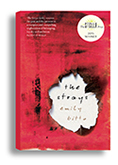
Emily BItto, The strays, book coverLet me start by saying I really enjoyed reading Emily Bitto’s The strays. It was scheduled for my reading group the day after my return from Tasmania, and I suddenly found myself in the last day of my Tasmanian holiday without having started the book. Wah! I read it in two days, helped by several hours in a couple of airports. I haven’t done that for a long time, and what a joy it was to have a real length of time to commit to a book. It helped, of course, that having both a strong plot and an intriguing set of characters, The strays is compelling to read. It reminded me, albeit loosely, of Evelyn Waugh’s Brideshead revisited and Ian McEwan’s Atonement.

This is a debut novel, which also won this year’s Stella Prize. Set primarily in the 1930s, with the last of four parts set in the 1960s, The strays is both historical fiction and a coming-of-age novel. It is also a classic outsider story. Lily, who tells the story first person, is befriended when she is 8 years old by schoolmate Eva, the middle daughter of the Trenthams who, early in the novel invite a number of artist “strays” to form a utopian-bohemian artistic community. The Trenthams are inspired by the Reeds and their Heide group, but The strays is not a Heide story*.  This may be the strength of the novel, but also perhaps its weakness – a strength because it frees Bitto to tell her own story, but a weakness because it removes potential ideas on which to hang her story.

Before I get to that, though, a little more about the story. The first three parts follow the Trenthams for 8 years, from when Lily is 8 to 16. During this time Lily becomes increasingly involved with the Trenthams, in preference to her boring, conservative, middle-class parents, eventually living with them full-time. Some members in my reading group found her parents’ relinquishing of their daughter unbelievable, but this was during the Depression, and Lily’s parents did have some problems of their own to manage. I could suspend my disbelief. From Lily’s point of view, she was in thrall to the excitement of the Bohemian life, telling her parents, “I love you both but I want to be different”.

Her parents, however, should have been concerned, because the Trenthams are rather casual, neglectful parents and the four girls more or less run their own lives, sometimes being fed properly, sometimes not, sometimes, in the case of one in particular, going to school, and sometimes not. The story is as much about them, as about the artists, though we do hear about the artists too. There’s exploration of experimental art and its acceptance or otherwise by society, obscenity charges, mentee supplanting mentor, and so on. There are parties, and other occasions, where artists and children come together. Bitto, through Lily, paints all this beautifully. Indeed, I loved her ability to evoke scenes, people and places with effective, yet tight imagery.

Bitto’s use of Lily as her narrator works nicely. Through most of the novel, we see the story through her child’s point-of-view, but occasionally, with a “later I realised” type of comment, we are reminded that this is an adult telling the story of her childhood:

When was it that I became a voyeur in their midst? I was the perfect witness, an unsuspected anthropologist disguised within the body of a young girl, surrounded by other young girls who were part of the family. Yet I was cuckoo in the nest, an imposter who listened and observed, hoarding and collecting information.

This narrative style keeps the story grounded. We see the dysfunctional dynamics and its effects before Lily, wooed by the excitement, does – though she does have moments of clarity. When the youngest daughter goes missing on one occasion, she writes:

I drew in my breath. These adults were no use in a crisis.

The subtext is that her parents would be.

But, here’s the thing. The book tackles a lot of ideas. There’s the exploration of society’s reaction to experimental art; the idea of coming to terms with the past (for Lily); the utopian artist community and whether it can really work; indulgent or neglectful parenting, creating a dysfunctional family life that comes back to bite; the exploration of girlhood friendships and the whole coming-of-age thread; not to mention those big issues like loyalty and betrayal, envy, sexuality and sensuality. It’s not that these were uninteresting, or even that they weren’t well developed. It’s more that I struggled to find Bitto’s main focus, and I guess I like some sort of central idea on which to hang my understanding of a book.

My reading technique is that when I finish a book I go back and reread the beginning. This usually puts the whole into context, pinpointing what the author was about. However, this technique didn’t work wonderfully with The strays. Bitto’s Prologue starts by discussing the mystery of instant attraction between people, and then moves on to the idea of past life connections and that people’s souls can be twinned from one life to the next. These ideas are used to explain Lily’s relationship with Eva, but I’m not sure that this is fundamental to the book’s meaning. The prologue then discusses the past. Three decades after the main events, Lily receives a letter:

and I become aware of an old compulsive pain I have pressed like a bruise again and again throughout the years.

AND

I feel a tenderness in my chest, and the past rushes in as a deluge I can no longer hold back …

AND

I let my mind turn back once more, to recreate again that distant, still wracked past.

Is it this, the idea of coming to terms with or resolving the past, that binds the book together? It is partly. By the end of the novel, Lily has come uneasily to terms with what happened those three decades ago, and its impact on her life. I say uneasily because – and here we come to the epigraph, by William Pater, which expresses a different idea again to those in the prologue: “To burn always with this hard, gem-like flame, to maintain this ecstasy, is success in life”. Lily’s uneasiness is that she has chosen “conventionality”, but recognises that part of her “is still drawn to the romance of the fully lived life”. Then we have the book’s concluding paragraphs, which are more concerned with mothering and family in Lily’s recognition that it was the Trentham children who paid the debt for their parents’ experiments. See my problem regarding central idea? Or, is it just that I’m being boringly 20th century?!

Whatever it is, they are just niggles. As a read, The strays is up there as one of my most enjoyable for the year – for its lucid writing, for the story and a setting that had such appeal, and, yes, even for that whole raft of ideas that she throws so determinedly at us. Even for that.

Lisa at ANZLitLovers enjoyed the book too.

* Interestingly, a couple of “real” people are mentioned, one being politician and later judge, Herbert Evatt – as a supporter of modern, experimental art.

awwchallenge2015Emily Bitto
The strays
South Melbourne: Affirm Press, 2014
290pp.
ISBN: 9781922213211

Hanif Kureishi, The buddha of suburbia (Review)

Hanif Kureishi, The buddha of suburbiaThe first thing to say about Hanif Kureishi’s 1990 Whitbread award-winning novel The buddha of suburbia is that it’s pretty funny. It’s a comic satire – over-the-top at times, confronting at others. It has its dark moments, but it’s also brash, irreverent and ultimately warm-hearted towards its tangled band of not always admirable but mostly very human characters. I’ve come late to this book, and only read it now because my reading group decided to align one of our books with ABC RN’s bookclub, which this year is featuring novels from the subcontinent. Kureishi’s book was one of the few we hadn’t read, so it got the guernsey.

It’s a coming-of-age novel about Karim, who is seventeen years old at the start and the son of a Pakistani/Muslim father from Bombay and an English mother. He lives in the suburbs south of London, a place populated, in his eyes, by “the miserable undead”. He wants to live “intensely: mysticism, alcohol, sexual promise, clever people and drugs”. The dreams of a young man which, of course, run counter to everything his parents would wish for – except that his parents aren’t watching. His father leaves his mother early in the novel to pursue his own mid-life crisis enlightenment as a “buddha” dispensing wisdom to other suburbanites, while his mother sinks into her misery and her bed. And so the scene is set …

This is a rather raunchy, bawdy read in which characters push the sexual envelope with little concern for consequences. They engage in all sorts of sex for all sorts of reasons that represent a broad spectrum of human experience and behaviour, some loving, some brutal, some exploratory, some exploitative. The novel is set in early to mid 1970s England, before AIDS, at the dawn of punk, and just before Thatcher’s England (1979 to 1990). This could date it, but I don’t think it does, because its concerns remain relevant today: racism, multiculturalism, the stereotyping of “other”, materialism versus the search for meaning, the role of the arts in our lives, and of course, given the title, the urban-suburban divide.

So, what happens? Both a lot, and not much, in that this is a character and ideas-driven novel rather than a plot-driven one. Told first person by Karim, the novel has two parts – “In the suburbs” followed by “In the city”. In the first part Karim talks of his life in the suburbs, of his friends and family, and describes the breakdown of his parents’ marriage as his father moves in with the lively go-get-’em Eva. It’s a life characterised by racism:

The thing was, we were supposed to be English, but to the English we were always wogs and nigs and Pakis and the rest of it.

Aspirations are low, and education is not seen as being useful:

This was the English passion, not for self-improvement or culture or wit, but for DIY, Do It Yourself, for bigger and better houses with more mod cons, the painstaking accumulation of comfort and, with it, status – the concrete display of earned cash.

The city, on the other hand, is a place where you can remake yourself. It seemed, to Karim, like “a house with five thousand rooms, all different”, far from the stultifying dullness of the ‘burbs. But the dichotomy is not as simple as it sounds. Having moved to the city, like his father and Eva, Karim continues to return to the suburbs to see friends and family. He experiences warmth and support there, while the city, where “the piss-heads, bums, derelicts and dealers shouted and looked for fights” can intimidate him.

Nonetheless, once in the city, Karim does start to remake himself – as an actor. But, as elsewhere in the novel, there’s a sting in the tail. The first role Karim is offered is Mowgli in The jungle book. He does well, and his white family and friends praise him, but his honest, feisty childhood friend Jamila sees it differently:

‘And it was disgusting, the accent and the shit you had smeared over you. You were just pandering to prejudices …’.

Karim, who has, earlier and somewhat defensively, described himself as “beige”, moves on to another theatre group where he is chosen because he is “black”:

‘We need someone from your own background,’ he said. ‘Someone black.’
‘Yeah?’ I didn’t know anyone black, though I’d been at school with a Nigerian.

I think you’ve got the drift now. The humour is sharp, with stereotypes being subverted, twisted or just plain skewered. The book is full of witty asides, clever but insightful quips, and some downright absurd situations. There’s tenderness too. I loved the “heart-ambulance”, in the form of a sister and brother-in-law arriving to take Karim’s mother home with them when her heart is broken.

There’s a fascinating subplot involving Jamila and the marriage arranged for her by her father, Anwar. She accedes, but when her husband, the physically disabled hapless but kind-hearted Changez arrives, she lays down the rules for their so-called marriage, and then sets about reinventing herself – in the suburbs – as a strong, independent, liberated woman.

I said at the beginning that this is a coming-of-age novel, but it’s more than that. It’s about transformation and shape-shifting for people of all ages. The only character among the central group, who is unable to accept the challenge of change, is Jamila’s father Anwar, and his ending is not a positive one. By contrast, his friend, Karim’s father, seeks enlightenment. He wants to be something more than a Civil Service clerk who will never be promoted above an Englishman. So, he sets himself up as a “buddha”, a “visionary” who will provide wisdom from the east. I loved the multiple satire here – the joke of suburbanites seeking wisdom from a so-called eastern mystic, and the subversive idea of a Pakistani Muslim setting himself up as that mystic, a buddha.

The novel is about other things too, such as the arts and culture, and the possibility they offer for salvation. While Karim develops a career as an actor, working out how he can or should use his “culture” to further his goals, his friend Charlie reinvents himself as punk star, Charlie Hero. Like Karim, though for different reasons, he discovers it’s not all as straightforward as he thought.

It’s also about love – romantic love, sexual love, parental love, and the love between friends. All the characters seek it, though not all find it. And underpinning all this is the “immigrant condition”, and the idea that, perhaps, “the immigrant is the Everyman of the twentieth century”.

But, in the end, what it’s really about is the desire for a meaningful life and, without giving away details, I think it’s fair to say that most of Kureishi’s characters achieve this, albeit somewhat messily. That said, I can’t help thinking that Karim’s conclusion that “I thought of what a mess everything had been, but that it wouldn’t always be that way” has an ironic edge.

Hanif Kureishi
The buddha of suburbia
London: Faber and Faber, 1990
ISBN: 9780571249398 (epub edition, 2008)

Dymphna Cusack, Jungfrau (Review)

Dymphna Cusack, Jungfrau

Courtesy: Allen & Unwin

Are there some historical periods that particularly fascinate you? There are for me, and one of those is that between the two world wars. It was a complex time encompassing both economic hardship and great social change. A time when many of those Victorian era constraints were being lifted and women, in particular, were starting to enjoy an independence and freedom they hadn’t had before the First World War. Dymphna Cusack’s first novel, Jungfrau, is set in this period and deals with this very subject.

I have written about Cusack before, when I reviewed A window in the dark, her memoir about her time as a teacher. Because of its relevance to this novel, I’ll reiterate a couple of the points I made in that review. Cusack, I wrote, had a finely honed moral and social conscience, and was acutely aware of injustice. She was convinced of the “wickedness of our economic system”, and abhorred the power those with money had over others. She was consequently outspoken on social and economic justice issues, and was particularly critical of the treatment of “that much-maligned creature, the woman teacher”. A window in the dark was written forty years after Jungfrau, and is a memoir, but you can see the genesis of her values and ideas in this, her first novel.

Jungfrau is set in Sydney over a few months in the 1930s. It concerns three young women in their mid to late twenties: the rational, realistic and religious Eve, the emotional, dreamy and vulnerable Thea, and the modern, pragmatic, confident Marc. Eve and Thea have been good friends for several years. Marc is Thea’s friend, but Eve and the free-thinking Marc do not like or understand each other. At the novel’s opening, Eve and Thea are talking about Thea’s interest in a man twice her age, a married university professor. Eve cautions Thea about the risks, but Thea is ready “to take life—use it—now, instead of letting it use me”. Eve gently retorts that “If you leave yourself open to the world, it will rush in on you”.

Indeed, Eve, who has seen first hand in her maternity ward the results of poor, single women taking life, suggests that experiencing life “is much safer in books”. She says to Thea:

When you talk about getting in touch with reality and finding out what life is, all you really mean is following your instincts in spite of the consequence … Only, if you take your friend Marc’s prattling literally, I’d advise you to learn more about physiology than you know at this moment. You can’t safely combine what your modern friends rather euphemistically call ‘experience’ with a degree of ignorance that’s almost mid-Victorian. You’ll need to be practical if you’re going to be a realist. Marc’s evidently both.

The novel, as you’ve probably guessed by now if the title hadn’t given it away, explores what happens when Thea does not heed Eve’s advice and lets this relationship develop. I’d call this a coming-of-age novel but, having been written by Cusack, its themes are as much social as psychological. What did it mean for a woman at that time to have an affair with a married man, and what were her options with the – hmm – consequences?

The trouble is that while obstetrician Eve and social worker Marc are daily faced with the grim realities of life, teacher Thea evades them. Here’s Eve on her ward rounds,

All this rot about reality, this frenzied escape into abstractions, had curiously little to do with life as she knew it. … Here was reality. Tortured bodies, tired minds, birth and death. Nothing vague about this; no escaping from facts; no sheltering behind fancies.

Acerbic Marc has her own view on woman’s lot:

Women are cursed, all right. If you wither on the virgin stem you go all pathological; if you go off the deep end you get some foul disease; and if you marry and have dozens of young you die of exhaustion.

By contrast, here is Thea discussing the real Jungfrau with her professor:

“Yes,” he said almost inaudibly, “white, proud and untouched. But they’ve built a funicular almost to the top of it now, and the tourists swarm all over it like flies.”

“Poor thing! I don’t mind climbers and mountaineers; but it must hate the tourists soiling it—”

“That is usually the fate of the proud and the untouched,” he said, digging his stick in the turf, and she recoiled as though struck, her hands flung out in a gesture of defence.

Oh dear, we readers think – and so would Eve and Marc if they’d heard this conversation. Their lot, though, is to love Thea and to watch in dismay as she takes life to an edge that she is not fit to handle.

The critical thing about this book is that Cusack doesn’t judge these three women for their choices. We might find Marc a more sympathetic, more appealing personality, of the three, but Cusack is even-handed. She understands human psychology and empathises with women. Her ire is focused more on society’s expectations and rules than on any one woman’s decision or behaviour. I described this novel earlier in my review as a coming-of-age novel, but it could equally be called a novel of ideas. In it Cusack exposes “the reckless squandering of human possibilities”, of lives “anaesthetised by half-baked education, political platitudes and doles”. Economic inequities, abortion, women’s independence, and the meaning of freedom are her targets.

I read this book as part of my long-term plan to read classic Australian literature – and I enjoyed it immensely. While the social milieu is very different from now – thank heavens – the emotional truths transcend the particulars of time and place. The language did feel a little overblown at times. It has that DH Lawrence sort of emotional intensity that can sometimes be a little too melodramatic, or declamatory, for my 21st century ears. And yet, paradoxically, one of the novel’s real pleasures came from its descriptions of Sydney. Cusack catches the landscape – the plants, the light, the water – beautifully (but I’ll save sharing a couple of those for a Delicious Descriptions post).

I imagine this was a confronting novel at the time of publication, but I hope it got people thinking, as Cusack surely intended. Cusack, Katharine Susannah Prichard, Miles Franklin, Marjorie Barnard and Flora Eldershaw, to name the best known from that era, were fierce and intelligent writers. We are lucky to have them.

awwchallenge2015Dymphna Cusack
Jungfrau
Sydney: Allen & Unwin, 2012 (Orig. ed. 1936)
ISBN: 9781743431450 (ebook)

Note: I do need to have a little whinge. There were several errors/typos in my kindle edition, which is disappointing and did spoil the read a little.

Charles Hall, Summer’s gone (Review)

Charles Hall, Summer's gone, Margaret River Press

Courtesy: Margaret River Press

When Western Australian writer Craig Silvey set his coming-of-age novel Jasper Jones in the 1960s I was a bit surprised, as Silvey himself did not grow up in that era. I’m not so surprised, though, about Charles Hall’s debut novel Summer’s gone as Hall did grow up in the 1960s. The novel is, from my reading of the brief author biography, somewhat autobiographical, as debut novels often are: both Hall and his main character played guitar in bands, hitch-hiked across Australia, worked in labouring jobs and ended up studying at university. This, though, doesn’t mean the story is Hall’s story. It simply tells us that Hall wrote of a milieu he knows – a wise thing to do!

Summer’s gone is a part-mystery, part-coming-of-age narrative, and is told first person by Nick. It focuses on his relationship with two sisters, Helen and Alison, and another young man, Mitch, with whom he’d formed a folk band in 1960s Perth. The novel starts, however, in Melbourne in 1967 with Nick finding 20-year-old Helen dead (or dying) on their kitchen floor. What happened to her, why it happened, and Nick’s feelings of guilt about it, form the novel’s plot. The theme, though, is something else, it’s about

the trouble with dwelling too much on the past – sometimes you remember other things as well, things you don’t necessarily want to think about.

Except, of course, we do often need to dwell on the past if we haven’t resolved it, we need to think, as Nick does, about the things we did, didn’t do, or might have done differently. We need, in fact, as Nick has come to realise, “to say goodbye to things. And perhaps even to understand.”

To tell his story, Nick slips between the 1960s, the mid 1970s, the 1980s, and sometime around the present from which he is looking back. Hall handles these time-shifts well: it’s not difficult to know where you are, and it effectively replicates the way we often approach the past, that is, in fits and starts as we put together what happened.

It’s an engaging story. Nick, the young version anyhow, is a rather naive and not well-educated – but not unintelligent – young man. He’s not wise in the ways of the world, but he’s decent, and prepared to give things a go. He has a poor relationship with his Perth-based mother, and his only real adult role model is his uncle Clem in Melbourne. The relationship between the four young people is nicely evoked, though because it’s a first person story, the other three characters are only developed as far as Nick understands them, and Nick is not always the most perceptive person. I found this a little frustrating – I wanted to know the other characters more – but I suppose it’s fair enough given the narrative voice chosen.

What gives this book its greatest interest is the social history. Many of the main stories of the period are worked into the narrative – abortion, and the horrors resulting from lack of legalisation; the Vietnam War, conscription, draft-dodging, and the physical and psychological damage experienced by soldiers. Nick also spends time in a hippie commune, and other news events like the Poseidon bubble and crash, the beginnings of women’s liberation, and the release of the Beatles’ Sgt Pepper’s Lonely Hearts Club Band album also get a mention. If you lived through this era, the novel provides an enjoyable wander down memory lane. It reminds us of the hopes and ideals of a generation which felt free to explore life and love, to rebel against the constraints of their elders, even though this freedom wasn’t always all it seemed to promise. I did feel, however, that Hall could have left the social history to this era. The references to Chernobyl and mesothelioma started to feel a little forced, and not really necessary to the plot, even though the mesothelioma issue is used to tighten the noose around one character just that little bit more.

Hall’s dialogue is realistic, and gives flavour to the era, and I did enjoy his descriptions of place – of Perth suburbs, and Melbourne, of travelling the Nullarbor and of country Victoria. These descriptions are kept to a minimum, but are just enough to breathe life into the scene.

Early in the novel, Hall refers to chaos theory and the butterfly effect, to the idea that “a minor detail has the power to change everything”. That’s probably true but I’m not sure it tells us anything we don’t already know! There are many minor details in our lives, and we could go mad worrying about which is the one that will (or did) change everything. Fortunately, I think Nick eventually agrees.

This is not a difficult novel, but it is warm, readable, and sings to us of summers past when the world seemed golden, but when in fact there was, as there always is, much more to it than that.

Lisa at ANZLitLovers enjoyed the book also for its evocation of the era.

Charles Hall
Summer’s gone
Witchcliffe: Margaret River Press, 2014
288pp.
ISBN: 9780987561541

(Review copy supplied by Margaret River Press)