Elizabeth Kuiper, Little stones (#BookReview)

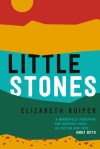
Book coverAnnouncing their 2019 longlist back in February (see my post), the Stella Prize judges said that they “wished for more representations of otherness and diversity from publishers: narratives from outside Australia, from and featuring women of colour, LGBTQIA stories, Indigenous stories, more subversion, more difference”. Elizabeth Kuiper’s debut novel, Little stones, may not exactly fulfil this wish for subversion and difference, but it is set in Zimbabwe, and that’s certainly a start.
The main story concerns 11-year-old Hannah’s life as the daughter of divorced parents – and what ensues when her mother decides to leave Zimbabwe, wanting to take her daughter with her. Her father’s up till then somewhat controlled anger against her mother intensifies, and he does all he can to prevent this happening, despite the fact that he has shown little commitment to the real business of loving and rearing a child.

It’s not a particularly new story, but this one has an added layer; it’s the early 2000s and Hannah and her parents are middle-class white Zimbabweans living under Robert Mugabe’s increasingly violent regime. Life is not easy for her family, which includes her tobacco-farmer grandparents, with African nationalism ramping up against what Hannah comes to recognise as “crushing colonisation”.

The story is told first person by Hannah, and this is both its strength and weakness. Strength because Hannah, though intelligent and observant for her age, is a naive narrator. She can only see through an 11-year-old’s eyes, while we, of course, know or can guess what is really happening, whether this is the political violence and corruption happening in the background (and sometimes even closer) or the more personal conflict happening between her parents. So, for example, early in the novel she hears her mother and grandparents talking, yet again, about the Warvets, whom she understands to be “a big family who wanted to steal farms from everyone in Zimbabwe”. Finally, she insists on being heard:

Mum,’ I insisted. ‘I don’t want us to give our farm away to another family.’
‘Another family?’ Mum sought clarification.
‘The Warvets.”
Mum looked around the room, first at Nana, then Grandpa, and let out a sigh. She explained to me that the War Vets were not an extended family. They are a large group of people called the ‘War Veterans’ who mobilised to take back what they saw as their land.

The naive narrator voice achieves a few things. It conveys how unsettling it is for children to be living under stresses that they don’t fully understand, but it can also keep the tension down a little because the full horrors are not made explicit to us (albeit we can guess them.) Hannah is a lovely character, whose special and sustaining relationships with her best friend Diana Chigumba and the family’s Shona housekeeper (not “maid” says her mother) Gogo, are delightfully conveyed. She can, being 11, be naughty, but she’s at heart a sensitive, loving, well-adjusted child.

However, this voice can be a weakness too. It’s difficult to sustain the voice of a child – and unfortunately, perhaps, I’ve just read Tim Winton’s The shepherd’s hut which does it extremely well. Here, I felt that at times Kuiper’s Hannah used language and concepts that an 11-year-old would not use. We are told she’s intelligent, and good with language, but still I wasn’t always convinced. Here, for example, she talks about the guardianship court case her mother is fighting:

In the past, I would have tried to offer whatever morsel of advice I could manage, but as the court case progressed I came to realise that most of the time she was talking about herself, and so I absorbed her rhetorical questions as a necessary and cathartic part of the process for her.

This, and examples like it, seem rather sophisticated to me in both expression and idea. The question is, are we supposed to believe that this is 11-year-old Hannah telling the story as it happened or older Hannah telling the story? I’m not sure it’s always completely clear, but I felt it was intended to be the former.

All this brings me to the question of whether Kuiper’s story would have been better told as a memoir, because I understand that the novel is, like most debut novels, autobiographical. Of course, I don’t know where the facts of her life end and the fiction begins, but it’s a question that I pondered as I read. And, also of course, memoir would bring its own challenges for Kuiper that she may not have wanted to confront. I don’t blame her for that.

Anyhow, this is a minor quibble if you are prepared to go with the flow, which I decided to do. Kuiper handles well the challenge of conveying the difficulty of the situation for Hannah’s family as white Zimbabweans in an increasingly tense and dangerous atmosphere. She shows that it’s not all about race, or simply about race. There’s the issue of different races – Shona versus Matabele – and there’s class. Hannah’s best friend Diana, for example, comes from a well-to-do black family. Kuiper also handles convincingly the parallel, and perhaps most significant for Hannah, issue of separated parents wrangling over their daughter. The descriptions of Hannah’s father’s increasing manipulation of the system to get his way are infuriating if not chilling – but oh so real. Hannah, in fact, has to grow up fast if she is to survive this dual personal and political unrest she finds herself in.

Little stones is, then, essentially, a coming-of-age story, which also works as a Young Adult-Adult crossover novel. It offers something special to readers in both these areas because its perspective is a rare one for us to read here; because it is told with a lovely vitality and attention to the details of a life lived under complex political and personal circumstances; and because it manages to tread that fine line that shows rather than judges. And that, I think, is impressive.

Lisa (ANZLitLovers) also enjoyed this book.

AWW Challenge 2019 BadgeElizabeth Kuiper
Little stones
St Lucia: UQP, 2019
264pp.
ISBN: 9780702262548

(Review copy courtesy UQP)

Julian Davies, Call me (#BookReview)

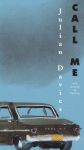
Book coverI wasn’t sure what I was in for when I started reading Call me, the latest offering from that tricksy duo, novelist Julian Davies and illustrator Phil Day. But, it soon became clear that what was before me was a coming-of-age story. What, I wondered, was Davies doing writing such a novel? Then I remembered that this was the author who gave us, most recently, Crow mellow (my review), so I decided to relax and go with the flow. Sensible me, because this is a sophisticated take on the genre, geared to an adult audience.

The story starts in the first person voice of a young woman called Caddie, who is in bed with a young man called Pip. They are both in their last year of school, and the story spans the last couple of months of that year, through their eyes. However, the tricksiness starts here, because Caddie’s voice is first person, while Pip’s is third person subjective. Why? An author doesn’t make these decisions lightly, so I usually want to know why. It’s particularly interesting here because this is a male author choosing to write his female character in first person, and the male in third person. I’ll come back to this because right now you are probably wanting to know more about the actual story than these technicalities!

“This is Australia” (Pip’s friend, Stu)

So, the story. Caddie and Pip have been in a relationship for around a year at the start of the novel, but it’s geographically challenged because Caddie lives in the city (in Canberra, in fact) while Pip lives in the country, an hour or so’s drive away. Davies knows whereof he speaks because he too lives about an hour’s drive from Canberra. Caddie’s parents see themselves, according to Pip, as “high middle class”. They both run businesses, her father’s being an investment business called Capital Capital, and her mother’s an art gallery called Sense and Sensibility (because, as she apparently told Pip, “she was lapping up Jane Austen while her friends were still  playing with their dolls”). They keep “upgrading” their homes, and they fight a lot. Pip’s parents, on the other hand, describe themselves as “feral middle class”. Sydney escapees, they live in the not-quite-finished house they built themselves; they take a loving but laissez-faire approach to parenting; and they get on well. All this introduces the city-versus-country theme that recurs in Davies’ works, including Crow Mellow and his Meanjin piece about building his own home (my review). It’s pretty clear where Davies’ preference lies!

The majority of the novel takes place over 15 days, and chronicles, in lovely nuanced detail, the tensions that develop in Pip and Caddie’s relationship due to Pip’s decision to leave school only weeks before the end. Their thoughts and feelings are told alternately in chronologically named chapters, like “Day One” and “Day Eight (Still Later)”. Although Caddie is critical of her parents, in the way that teenagers often are, she’s following the traditional path of working hard at school and planning to go to university. She is totally into mobile phones and social media. Pip is a more independent thinker. He’s not interested in social media, and only has a phone because Caddie gave it to him. And yet, in a neat paradox, Caddie records her thoughts in a diary, while Pip records his into his phone! This is pure Davies, by which I mean nothing is simple or straightforward.

So, we have the city-versus-country theme, plus a subtle questioning of modern technology, including our reliance on it and its potential for misuse. A third theme relates to education. Pip’s decision to leave school stems from his refusal to live by external expectations that don’t feel authentic to him. He hates the “petty rules” and, as Caddie explains it, “the kind of society we live in that the education system feeds”. He has no alternative plans but feels incapable of “passively endorsing” a system he doesn’t believe in.

“What kind of person am I?” (Caddie)

Accompanying these more sociological themes are personal, psychic ones. Both Caddie and Pip are deeply concerned with their identity, specifically with what it is to be “a person”. Caddie, living in her “sheltered” house and uncomfortably aware of the material benefits provided by her parents, wonders not only “what kind of person” she is, but, more broadly, “what does it mean to be a person.” This question of personhood is frequently burdensome to her. Pip, however, has a different take, recognising that “he is only one person”. One of the challenges they face is negotiating their own and each other’s personhoods. Late in the novel, when their relationship is floundering, Pip wonders “did the new, distant Caddie undermine and diminish his sense of her as the person he thought he knew?” Meanwhile, Caddie “wonders who Pip is that he can hold this view.”

Call me, then, is essentially a book of ideas that questions, in a lightly satirical way, aspects of modern Australian society, but it’s not boringly didactic, partly because the ideas are explored though some engaging characters. These include two we met in Crow Mellow, making this book a sort of “companion piece”. The characters are the wise Phil Day, a teacher who, cheekily, happens to share a name with the book’s illustrator, and the ridiculously named cynic, Dick Scrogum (aka Scrotes). Scrogum’s opinionated banter and Day’s quiet conversations encourage Pip to dig a little deeper into the reasons for his decision.

These characters, however, are only part of why the book doesn’t become mired in earnestness. Another reason is that, surprisingly, as the book progresses, it becomes apparent that there’s more to it than just Caddie and Pip’s relationship; there is in fact quite a plot developing. Who are the mysterious callers on Pip’s phone and what do they want? Should we be worried about them? And what about the gun that Pip has? It is pretty much de rigueur that once a gun is mentioned in a narrative it’s going to be used, but will it? Is this book not what it looks, but, really, some sort of crime-mystery-thriller? You’ll need to read it to find out.

And now, I’ll return to that question I posed at the beginning about voice. Both first person and third person subjective voices offer easy engagement with characters but can only offer limited perspectives. Telling the story through two such voices widens the perspective, by letting us see Caddie and Pip through each other’s eyes as well as their own. In other words, we get a little touch of omniscience alongside close engagement. But, why is one voice first person and the other third? I’m not sure really, but maybe it’s something to do with the fact that Pip is the main protagonist, and that Caddie, as the “I”, represents both herself and the reader (who is, perhaps, likely to be more like her – female, sincere, somewhat conservative, but also open-minded and keen to explore). By being more directly in her head, we are encouraged to question, as she does, certain assumptions and values. I suspect too that there may be something autobiographical about this novel. Is Pip like Davies’ younger self? And does putting Pip at one step remove provide him with a little space to interrogate the boy he was? Certainly Caddie seems to question who Pip is more than vice versa. I’m probably wrong about this, but at least I’ve given it a shot!

As I say all too often, there is so much to say about this book. I haven’t even touched on the gorgeous landscape descriptions of a region I love. Nor on the clever segues, nor Phil Day’s whimsical illustrations, nor the humour, nor, indeed, what a beautiful book is it to look at, hold and read. However, I’ve written enough for now.

Call me, then, is not only an engrossing story about the psychic growing-up of its protagonists, but one that also offers provocative commentary on both humanity in general and modern society in particular. Them’s big boots, but Davies pulls it off, resulting in a book that’s both intelligent and fun to read.

Julian Davies
Call me
Illustrated by Phil Day
Braidwood: Finlay Lloyd Publishers, 2018
363pp
ISBN: 9780994516541

(Review copy courtesy Finlay Lloyd Publishers)

Annabel Smith, Whiskey and Charlie (#BookReview)

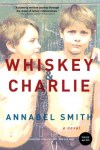
Annabel Smith, Whiskey and CharlieSome explanations first. Western Australian author Annabel Smith’s novel Whiskey & Charlie was first published in Australia back in 2012 as Whisky Charlie Foxtrot, which immediately brings to mind the two-way alphabet (or, as I knew it, the alphabet used by the police on The Bill for communication. The things you learn via TV!) However, as happens, the book was, excitingly and successfully, published in America in 2014, and its title was changed to the less evocative Whiskey & Charlie. What I read – heard, actually – was the audiobook that I won in a Readers’ Pack draw last year. Mr Gums and I listened to it on our recent road trip to Melbourne. It passed the time beautifully.

But, another thing, before I talk about that. I’m not a huge fan of audiobooks as I explained earlier in this blog. I really like to see the text; I don’t like to miss visual clues; and I rarely like readers acting out the voices. All these were challenges with Whiskey & Charlie, particularly the last one. The reader, Gildart Jackson, is English. He did the English accents well, but, oh dear, his Australian accent sounded disconcertingly American. I assume this audio, with its American title, was made for an American audience, but, regardless … I prefer reading!

So now the book itself which, really, is what this is all about isn’t it? It tells the story of two identical twins, Whiskey (born William) and Charlie. It is all told, however, through Charlie’s eyes, as the novel starts after Whiskey has had a freak accident and is lying in hospital in a coma. They are 32 years old, and the trouble is that they have been estranged for some time. Charlie has no idea what music, for example, Whiskey would want played at his funeral should he not awaken. He’s distressed. A procastinator who avoids confrontations, he’d always believed there’d be time to sort it all out. The novel progresses from this point, with the family taking turns waiting by Whiskey’s bedside, while Charlie remembers the past and how they’d got to the point they’re at. As he does so, he gradually comes to some realisations about himself and their relationship that enable him to – finally – mature, to see that it hadn’t all been as one-sided as he’d rather smugly assumed. This could be seen in fact as a coming-of-age novel. Perhaps all novels are, in a way; perhaps none of us stop coming of age until we, well, stop?

Anyhow, what makes this book particularly intriguing, besides the thoroughly engrossing story of an ordinary family with all its ups and downs – emigration from England to Australia, parental divorce, and so on – is its structure. And this is where the two-way alphabet comes in. We learn early on that when they were 9 years old, the then close twins been given a walkie-talkie set, and, to help with communication, they learnt this alphabet. William was disappointed that Charlie’s name was in the alphabet, while his was not. Charlie dubs him Whiskey, which becomes his name from then on. Smith structures the narrative around the alphabet, with each chapter titled according to the words – Alpha, Bravo, Charlie, Delta and so on right through to Zulu – and with each of these words linking to some part of its chapter’s content.

This – and the fact that the flashbacks aren’t completely chronological – gives the novel a somewhat episodic structure, but it doesn’t feel forced. Instead, the story is revealed in the backwards-forwards sort of way, for example, that we gradually get to know new friends while the friendship itself is moving forward. (A not uncommon structure. What makes this one a bit different is being organised by the alphabet.)

I’m not going to write my usual sort of review, mainly because having listened to it, I don’t have the same sort of notes, or the same easy access to check details or find quotes. So, I’ll just make a few comments. It’s quite a page-turner, with the main plot, as you’d expect, turning on whether Whiskey will come out of his coma, and if he does what state will he be in. The secondary plot relates to Charlie’s mental state, and his understanding of himself and his relationship with his brother (not to mention with his long-suffering, angelically patient partner, Juliet). He has always felt inferior – the one who came second, the one who didn’t get the girls or the fancy jobs – but he also felt in the right when it came to their estrangement. However, were things really how he saw them? This is something he has to work out for himself. For this reason, the third person limited voice is a good choice for the novel. It enables us to feel with Charlie, while also providing that little bit of distance which enables us to see that Charlie’s perspective may be just a little skewed.

One of the lovely things about Smith’s plotting is that there’s no melodrama, or over-blown emotionalism here. Sure, drama occurs, and there are some surprises, but it’s all within the realm of possibility. There’s some lovely humour too, particularly in the stories of the boys growing up. One particularly funny section has Charlie describing the “bases” in petting with a girl. There were times, though, when I felt Charlie was too angry, too irrational, particularly towards the end when it seemed he was on the road to growth, but that’s minor and didn’t affect his overall trajectory.

Binding all this together is the description of Whiskey’s medical condition. Smith obviously did quite a bit of research – or already knew – just how extended comas play out. While I knew some of it, there were details that I didn’t, and that I found fascinating. Smith also covers such issues as grief and end-of-life decisions.

Finally, I like the title. At first I wondered why Whiskey’s name was first when Charlie was telling the story, particularly given Charlie also comes first in the alphabet. But, of course, it’s polite to put the other person first, and it also reflects Charlie’s sense of who was first in their relationship.

Whiskey & Charlie (or Whisky Charlie Foxtrot) has been out for a few years now, but it’s still worth reading if you come across it in a library or bookshop. Or, have you read it already? If you have, let me know what you thought.

Lisa (ANZLitLovers) also liked and reviewed this – but way back when it came out!

AWW Challenge 2019 BadgeAnnabel Smith
Whiskey & Charlie (Audio)
(Read by Gildart Jackson)
Blackstone Audio, 2015 (Orig. pub. 2012)
10H30M on 9CDs (Unabridged)
ISBN: 9781504608268


Trent Dalton, Boy swallows universe (#BookReview)

Trent Dalton, Boy swallows universe

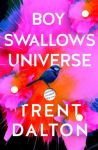
Two books came to mind as I was reading Trent Dalton’s debut novel Boy swallows universe. One was Steve Toltz’s out-there book about fathers and sons, A fraction of the whole (my review), and the other was Tim Winton’s Breath (my post), which explores what it is to be a good man, but more on these anon.

I had three reasons for wanting to read the book. Firstly, it was my reading group’s first book of the year, and secondly, it was recommended by two people whose literary tastes often match mine, my brother and an ex-reading group friend. Finally, there was its Brisbane setting. I spent six special years of my childhood in the Sandgate area of Brisbane, where, I’d read, Dalton had also lived while growing up. Fortunately, all these reasons were justified as this novel is an excellent read – engrossing in content and intriguing in style.

Boy swallows universe covers around six years of its protagonist Eli Bell’s life, starting in 1985 when he is 12 years old and living with his mother, Frankie Bell, and stepfather Lyle. He and his mute older brother August are regularly babysat by Slim (based on the real criminal, convicted murderer Arthur Ernest Halliday) while Frankie and Lyle are out dealing drugs. Slim, for all his apparent criminality, turns out to be one of the most important wise people in Eli’s life – and, while he isn’t always around as Eli grows older, it is to Slim that Eli often speaks, consciously or subconsciously, drawing on his ideas and advice, as he faces life’s challenges. Eli’s relationship with Slim is just one of the threads and refrains that hold this big book together.

a genre-bending coming-of-age crime novel with a touch of magic

Terrible things happen in the book – and Eli and August are pushed around, buffeted by the things that happen in the adult world and over which they have little or no control. Part way through the book, having lived most of their lives with Frankie and Lyle in Darra (Brisbane’s southwest), they find themselves dumped with their damaged alcoholic father Robert Bell, whom they don’t know, and who lives in Bracken Ridge (Brisbane’s north in the Sandgate electorate). While Frankie and Lyle, for all their illegal doings, provide a generally stable home-life, the one provided by Robert is erratic, affected by his alcoholic binges. And yet, here too, the two resourceful boys find love – and more, support.

All this probably suggests to you a straightforward book about dysfunctional families, of which there are many these days. But, you would be wrong, because wrapped around the domestic is a story of drug dealing, drug double-dealing and violence, that takes this book into a whole other realm. In fact, the best way to describe it is as a genre-bending coming-of-age crime novel with a touch of magic. You with me?

Now, I’m going to shift gear a bit and return to those two books I mentioned in my opening paragraph. The book’s opening line is “Your end is a dead blue wren”, and we soon discover that these words have been written in air by August, who is sitting on their brown brick fence while Eli is being taught to drive by Slim. There’s a bizarre edge to all this which, in addition to the fact that the book is mostly about men and boys, fathers and sons, made me think of Toltz’s A fraction of the whole. However, while Toltz’s “bizarre” lies more in the absurd area, Dalton’s is more magical. There’s a red telephone in a secret room, for example, that always seems to ring when Eli is around. Who is at the other end? August at one point says it is he, but is it really? It doesn’t really matter, in fact, because the phone seems to be more about deflecting or, perhaps, relocating fear and trauma than about reality. It works because Eli’s voice and the sort of jaunty in-the-moment tone make it work.

More interesting to me, though, is the link with Winton’s Breath. They are very different books. For a start, Breath is more novella, while Boy swallows universe verges on the big, baggy monster. But, both books are fundamentally about what makes a good man – and, in neither case is the answer simple. In fact, it comes more often than not from flawed, if not sometimes bad, men. From early on in Dalton’s novel, Eli asks various men – family, friends, criminals, strangers – “are you a good man?” Many are surprised and know not what to answer. Gradually though Eli puts together his own picture from their answers and bevaviours, until, near the end, he says (addressing Slim in his mind):

This is what a good man does, Slim. Good men are brash and brave and fly by the seat of their pants that are held up by suspenders made of choice. This is my choice, Slim. Do what is right, not what is easy … Do what is human.

Now, before I get onto the writing, a bit about this genre-bending novel’s plot. As I mentioned above, the novel’s plot-line relates to drug double-dealing. This results, at the end, in quite a suspenseful, page-turning adventure that was much enjoyed by many in my reading group. But, not so much by me who finds reading action pretty boring. Indeed, if I have one question about the book, it’s whether it really needs the final chase. I think the point would have been made had the novel concluded just before it – but that final adventure will help the novel adapt well to film, and to a film that many will want to see, so I won’t be too churlish about it.

And, anyhow, it’s a small criticism because I greatly enjoyed the book. It is so well constructed. Little details dropped in one place are picked up in another; little verbal refrains recur adding both poetry and meaning without being heavy-handed. Even the curious, often cryptic, three-word chapter headings, like “Boy writes words”, “Boy steals ocean”, and “Boy masters time”, are explained late in the book when the Courier Mail editor asks Eli to tell his life in three words.

There’s also lovely descriptive, sometimes lightly satirical writing, such as this from the Vietnamese restaurant scene:

There’s two more tanks dedicated to the crayfish and mud crabs who always seem to resigned to the fact they’ll form tonight’s signature dish. They sit beneath their tank rocks and their cheap stone underwater novelty castle decorations, so breezy bayou casual all they’re missing is a harmonica and a piece of straw to chew on. They’re so unaware of their importance, so oblivious to the fact they are the reason people drive from as far away as the Sunshine Coast to come taste their insides baked in salt and pepper and chill paste.

Then, of course there’s the characterisation, and the first person voice. Eli is such a kind and likeable character. His coming-of-age is a tough one, but he’s positive, loving, open-minded and willing to learn. He’s also courageous. It could almost be schmaltzy except that you see the grit and know that he has been tested. More cynical readers might think Eli is too good to be true, but the book’s light tone and touch of magic remind us that this is not social realism. It’s “true” to the heart of what Eli (and I believe Dalton) experienced, but it’s not fact. It’s about surviving trauma. Dalton has, I’d say, found a perfect recipe for conveying dysfunction and accompanying trauma while also showing how it can be mentally and spiritually survived.

A good read, and a meaningful book that got my reading group off to a rip-roaring start for 2019.

Trent Dalton
Boy swallows universe
Sydney: Fourth Estate, 2018
474pp.
ISBN: 9781460753897

Louise Mack, Girls together (#BookReview)

Louise Mack, Girls togetherWell, that was, surprisingly, genuinely enjoyable. Louise Mack’s Girls together is a sequel to her novel Teens (see Bill’s review), and features protagonist Lennie (Elinor) Leighton. It shouldn’t have been a surprise, given I know something about Mack, through my Monday Musings on her and my review of her debut novel The world is round, but it was, because …

The novel starts with this paragraph:

Square and solid as ever, stood the old brown school, with the fig-trees standing in its playground. The wooded staircase was as firm as even under the rush and onslaught of hurrying feet; the sturdy gate still bore with patience the cruel slammings of girls, big and little, rushing in late when the bell had finished ringing, or hastening homewards before half the school had left the classrooms.

It goes on to describe the chaos and disorganisation attending Lennie who is running late for her train home, and has, besides, lost her ticket. I thought that I was in for a pretty traditional school story. School stories were my favourite stories when I was a young reader, but now, of course, my interests are very different. I was prepared to persevere, however, because I was reading the book for Bill’s AWW Gen 2 Week and because this is a classic written in 1898 by a too-little known Australian woman writer. (You may wonder why I specifically chose it, but it was a serendipitous decision, being one of the books I found in my late aunt’s house when I was managing her estate. Bill’s week proved the perfect opportunity to read it.)

As it turned out, the book is not a traditional school story. School is part of it, but the focus is 16-year-old Lennie at a point of transition in her life – and her relationship with her 18-year-old friend Mabel, who returns in the opening chapters from Paris and is training to be an artist. Now, Lennie belongs to the tradition of some other famous sisters – like Judy in Ethel Turner’s Seven little Australians, Jo in Little women, and even, in a way, Elizabeth in Pride and prejudice. She’s impulsive more than sensible, but is loyal and generous of heart to those whom she loves. She lives with her parents (the Mother and the Doctor), her big brother Bert who is at University, and her little sisters, sensible Floss, gentle obedient Mary and the youngest, 11-year-old Brenda, who is observant, quick and a bit naughty. I’m sure you can recognise some of these “types”.

There is a marriage plot – but not for Lennie. This is more a coming-of-age book than a romance: it’s about Lennie’s transition from self-focused girlhood to adulthood and its associated more mature world-view. This, Mack handles nicely. Her characters may be recognisable types – but they are also individualised. Mack captures how girls feel, how they relate to each other authentically. Here is Lennie meeting her friend Mabel after two years’ separation:

You see they merely hovered on the outskirts of all they meant to say, touching things lightly, with the shyness of their reunion still lingering around lips and eyes. But as the twilight deepened, and darkness came softly into the bedroom, laughs grew more and more frequent with them.

But, there are many writers who capture relationships and communication well. What makes this book particularly interesting to read for us, now – and here I’m repeating the point made by Bill – is the social history, the picture Mack paints of 1890s Sydney, including a reference to the Banking Crisis of 1893.  The reference is brief, but it is used as a plot point in the trajectory of Lennie’s life.

More interesting, though, is the discussion of gender. Louise Mack was not, I understand, an activist in the Australian suffrage movement but she was part of the “women-oriented culture” which was becoming increasingly visible from the 1890s. Gender issues, sometimes directly, sometimes indirectly, underpin much of what happens in Girls together. Indirectly, it’s there, for example, in an assumption that “girls” can go to university. Whether they should or shouldn’t isn’t even discussed. It’s just assumed that they can. Direct references, though, abound. Mabel’s art teacher in Paris tells her:

‘When you go back to Australia, Mees, you just take care you do not marry, for eef you marry you will never paint better than you do now.’

And the girls themselves frequently discuss gender issues, sometimes with Lennie’s brother Bert. There’s a discussion about ambition where Bert suggests that Mabel and Lennie talk about it constantly while men, he says, never do. Does this reflect women’s increasing awareness that they can have goals beyond the domestic? There’s a reference to Lennie’s mother’s anxiety about the potential for girls failing in their push for “public” careers, and, being a woman of her times, she “would have kept them back from success rather than let them face the chance of failure.” All this is told naturally, not melodramatically, giving a realistic sense of a normal family facing changing times. We see parents having their thoughts and concerns, but supporting their children, rather than opposing them.

Nonetheless, this is a book of the 1890s. So, when Lennie is told by Mabel’s art teacher – a character respected in the novel – that “It’s better to be a good woman than a great one, little girl … unless you can be both”, I wondered what Mack really saw as options for her heroine.

All I can say is that the novel has an open ending. This may be because Mack planned to write more about the family – and she did write a third novel, Teens triumphant, in 1933 – but perhaps it also reflects an awareness that girls’ lives aren’t complete at the age of 17 or so, and that Lennie still has a chance at greatness!

Finally, there are lovely descriptions of Sydney, but again this is not overdone. In this week’s Monday Musings, I quoted a reviewer writing in 1917 that Capel Boake had “not made the mistake, very common with our writers, of painting in the ‘local colour’ so heavily that the human element in the picture is lost in what we may call a superficial provincialism of incident and characterisation.” Well, neither did Mack make this mistake, some twenty years earlier. The colour is there and is lovely, but is used sparingly to set the scene – and perhaps convey some attendant emotions:

The year was at September, when suddenly Summer came stepping down from her niche among the seasons, and ousted Spring before her time was well begun. The hot winds from the great inland plains of New South Wales blew down over the mountains to this city at the Harbour’s edge, and suddenly everyone woke from their winter cosiness, and furs and fires, and delightful nights, to find that the time for sleeping was over, and the restless nights and long, trying days of the Australian summer-time had come again, long before their time was due.

Girls together is an entertaining, refreshingly written story that clearly draws on Mack’s own experiences and concerns. It also reflects the social consciousness for which the period is well-known and, as an urban novel, it offers an antidote to the “bush realism” school which largely typifies Bill’s Gen 2 period. Well worth reading if you get the opportunity.

AWW Challenge 2019 BadgeLouise Mack
Girls together
London: The Pilgrim Press [n.d]
[first pub. 1898]
220pp.

Jarrah Dundler, Hey Brother (#BookReview)

Jarrah Dundler, Hey BrotherIs she ever going to write another actual review you’ve been probably wondering but yes, I am – and it’s for the young protagonist book I mentioned in my recent Reading Highlights post. The book is Jarrah Dundler’s debut novel, Hey Brother, which was shortlisted for the The Australian/Vogel Upublished Manuscript Award in 2017 under the title Tryst. Tryst is quite a clever title: it’s the nickname of the 14-year-old protagonist Trysten, and suggests actual and hoped for trysts between the teen couples, but maybe it also has overtones of something more genre-like so was rejected? As it is, the published title conveys both the familial and broader meanings of brotherhood, which are played out nicely in the novel.

Publisher Allen & Unwin categorises Hey Brother as Popular Fiction, and describes it as “a genuine and compellingly portrayed family drama of a tough kid from rural Australia”. I would describe it, however, as a coming-of-age novel, and it reads to me as more Young Adult than Adult. There’s nothing wrong with this, but it explains my uncertainty about how to read it – or, to be more specific, how to write about it.

So, the book. Hey Brother has a first person narrator, the aforementioned Trysten who lives on a property in northern New South Wales with his mother, Kirsty, and his big brother Shaun. His father, Old Greggy, is there too, but prior to the novel’s start he’d been exiled by Kirsty to a caravan down by the river. So, it’s a somewhat fractured family, but not devastatingly so, because it becomes quickly clear that there’s an underlying love and respect between them all. The novel starts with big brother Shaun going off to fight “the Taliban in Afghanistan”, where he’d “been keen to head from the get-go, back when the dust from the Twin Towers was still settling”.

Into this mix comes uncle Trev who turns up to support his sister, Tryst’s mother who is worrying about her son off at war. Her form of “worrying” includes self-medicating with alcohol and letting her other responsibilities fall by the wayside. Unfortunately, Trev, who has some lovely moments of wisdom, also self-medicates his own demons the same way. It’s not a lethal mix, but it creates its challenges, and in fact offers Trev some insights. There is also Tryst’s best friend Ricky, and, as the book progresses, their girlfriends, Jessica and Jade. It’s a tight little community, and Dundler handles the relationships well. They feel real, with the tensions authentic, understandable, and not over-dramatised. In fact, Dundler’s characterisation is a strong point. His people live and breathe from the moment they appear on the page.

Hey Brother, then, features the typical YA narrative – a young teen meets his first love and is desperate to spend more time with her. But this particular story is complicated by the teen’s relationship with his brother whom he hero-worships but who returns from war psychologically damaged, suffering from PTSD. The novel’s crisis is, in fact, triggered by Shaun’s mental distress, and complicated by the conflict confronting Tryst between his love for Jessica and for his brother.

The novel is told first person by Tryst, in the vernacular of a rural, teenage boy. It’s fresh, direct, immediate, full of the profanity and colloquialisms that are appropriate to the context – but, here’s the thing, it is also more descriptive than reflective. Tryst comes across as a loving, heart-of-gold young man, but he is about the moment. To some extent we can see the deeper issues at play here – the PTSD, the complexity in the adult characters’ lives and relationships – but these are not the novel’s focus. The focus is Trysten, his life and, ultimately, his growth. This, to me, makes the novel Young Adult – and makes it quite different from, say, Laguna’s The choke (my review) where, although the story is young Justine’s, the themes focus on the impoverished environment – economically, socially, spiritually – that makes her life the way it is.

Did, then, I enjoy the novel? Yes, in that its protagonist and setting are foreign to my experience and I like to read about lives different to mine, and because the writing was engaging, lively, and appropriate in language and imagery. Here, for example, Tryst describes Trev confessing to past troubles:

It was like he wanted the words to go straight down the plughole after he’d uttered them.

And Trev, late in the novel, gives Tryst some advice:

‘Decisions, mate. That’s what defines you in the end. Some advice for ya–before you make one, try and give it a little thought beforehand, would ya? ‘Cause, believe me, regret’s a f****n c**t of a thing to live with.’

I also liked that late in the novel, we learn, in passing, that Ricky, Tryst’s friend, is indigenous. The reference is somewhat didactically done, but Dundler clearly wanted to do what we need more of, that is, to include indigenous characters without their indigeneity being an issue in the story. How you do this is the challenge.

However, Young Adult Fiction is not really my interest. Young Adult concerns belong to a long-ago part of my life. I appreciated Dundler’s skills in plotting and characterisation, not to mention his heart and desire to give life and air to some big issues, but I did tire at times of Tryst’s concerns, perspective and voice. Not his fault, mine. I would unhestitatingly recommend this book to YA readers – and would willingly check out Dundler’s next work. A good debut.

For a beautiful post on this book, check out Theresa Smith’s (Theresa Smith Writes).

Jarrah Dundler
Hey brother
Sydney: Allen & Unwin, 2018
281pp.
ISBN: 9781760631123

(Review copy courtesy Allen & Unwin)

Note: The asterisked words in the quote are to defect the wrong sort of hits coming my way.

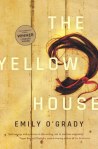
Emily O’Grady, The yellow house (#BookReview)

Emily O'Grady, The yellow house

Although Emily O’Grady’s debut novel The yellow house won this year’s prestigious The Australian/Vogel’s Literary Award for unpublished manuscripts by authors under 35, I wasn’t sure at first that I was going to like it. I think this was because I was feeling I’d read a surfeit of books this year about young people living challenging lives in rural settings – Charlie Archbold’s Mallee boys (my review), Jenny Ackland’s Little gods (my review) and Sofie Laguna’s The choke (my review). I wasn’t sure this was going to have anything new to offer.

However, it wasn’t long before ten-year-old Cub’s voice got me in and I realised that this book had a different spin again, which is that it explores how families of violent or sociopathic criminals, like serial killers, cope in the long years after it all comes to light. It’s a coming-of-age story, in a way, but a very different one. Cub, then, is our narrator. She lives on a “lonely property bordering an abandoned cattle farm and knackery” (back blurb) with her twin bother Wally, her 17-year-old brother Cassie whom she adores, and her parents, Colin and Christine. Within sight of their home is “the yellow house” in which her maternal grandfather, Les, had lived. He had died two years before the Cub and Wally were born – and in the prologue we learn that he had been a serial murderer of young women. The prologue closes with a now wiser Cub telling us:

Now, I know everything he did trickled down and created us all, because it turned out he was the god of all our lives.

So we know at the beginning something that Cub doesn’t know when the narrative “really” starts. Why does O’Grady take this approach? I’m guessing it’s to focus us less on that plot. We know what Cub doesn’t know – or at least enough of it. We can therefore focus on how a family lives with this knowledge rather than on trying to work out, as Cub has to do, what the secret is. It makes Cub a perfect naive narrator: she has the curiosity and loyalty of a child but lacks the wisdom necessary to make the right calls. There’s an added complexity to Cub’s situation which increases her isolation: everyone else in the family knows, including her twin brother. Cub wasn’t told because she’s a girl. It’s no coincidence that she, Coralie, has a baby-ish nickname, while her twin brother doesn’t.

The novel proper starts when Cub is approaching 11 years old, and her aunt, Helena, and 11-and-a-half-year-old cousin, Tilly, move into the yellow house. Tilly’s father, Dermott, we’ve already been told, had driven his car into the dam some time ago and died. It is Helena and Tilly’s appearance which sparks the events that play out in the rest of the novel, events that are “driven” by that violent forbear whose “rotten blood” is in their veins, whose legacy they struggle to shake off.

It’s a horrifying novel. We realise early on that the family is ostracised by the community in which they live, and is struggling emotionally. Cub’s Dad does his best to keep them together but is ill-equipped for the challenge he faces, while her Mum also does her best in her own way, but regularly takes to her bed, with various malaises, many depression-based presumably. Cub and Wally have no other friends at school, something Cub doesn’t fully cotton on to, but we do:

The kids at school were strange; Wally and I played by ourselves at lunchtime, always paired up when we did partner work.

Cub is consequently desperate to make Tilly, so close in age, her friend:

I tried to think of something else to say. I knew we had one chance to make a good impression and I didn’t want to waste it. But the silence felt as deep as the dam, impossible to swim out of. I was annoyed at myself for not practising with the girls at school. I should’ve been prepared.

But, it never quite works. Tilly, dangerously – she’s too much like her mother, Cub’s Mum hints at one stage – is more interested in boys. And, there are boys – besides Wally. There’s Cassie, and his creepy friend Ian. Tilly, like Cub, doesn’t know the story of the “yellow house” and her mother is determined to keep it that way.

The story develops slowly, chillingly, and, it feels, inevitably, as the secrets, parental inadequacy, community prejudice and cold opportunism combine to result in … I’d like to say more, but perhaps should not spoil the plot.

This is not a novel in which everything is explained – as can be typical of naive narrator stories – but there seems to be a specific intention here. At least, I’d say that O’Grady’s aim is not to tease out all the possibilities and permutations of the situation, nor to follow the more usual crime fiction path of restoring order out of chaos. Instead, it’s to encourages us, at each point, to consider what might be happening, why it might be happening, and what might make (or have made) it happen differently. That gives the book a power that those more traditional crime novels don’t have.

Besides this open-endedness which kept me engaged and pondering throughout, there’s O’Grady’s writing. It’s not tricky. There’s quite a bit of dialogue and simple description of what’s going on, as you’d expect, rather than a lot of reflection, but O’Grady has some lovely turns of phrase. At one point Cub is near Cassie’s friend Ian:

Now that I was right up close to him I didn’t know what to do; it was like my brain was wrapped in sticky tape and I couldn’t think properly.

The language and imagery, as this example shows, are appropriate for Cub’s age. And there’s the “yellow house” itself. Yellow has so many connotations. It can suggest something warm, bright, cheery, hopeful, but is also the colour of cowardice and deceit, and can convey sickness. The contrast between these positive and negative meanings of the title underpin the novel’s horror.

Why read this novel? There’s the obvious reason that it explores a subject that many of us must wonder about when we hear of violent crimes – how does the wider family cope, what happens to them? And there’s the associated reason that in so doing it might encourage us to think more empathetically if we found such a family in our midst. But, besides that, it’s an engaging debut novel by a new young writer from whom we will hopefully hear more. It’s always exciting to be in there at the start.

Lisa (ANZLitLovers) also liked this book.

AWW Badge 2018

Emily O’Grady
The yellow house
Crows Nest: Allen & Unwin, 2018
314pp.
ISBN: 9781760632854

(Review copy courtesy Allen & Unwin)

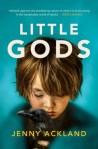
Jenny Ackland, Little gods (#BookReview)

Jenny Ackland, Little godsThe universe is telling me something. Jenny Ackland’s Little gods is the second novel I’ve read in a few months that is set in the Mallee region of northwestern Victoria, the other being Charlie Archbold’s Mallee boys (my review). Interestingly, both are coming-of-age novels, both involve farms, and both have a death at the centre. However, this is where the similarity ends, because Ackland’s protagonist, Olive, is female – and younger than Archbold’s – and Ackland’s death is a mystery to Olive, whereas in Archbold’s novel it’s the mother’s death which precipitates the narrative.

There’s another difference too, and it’s that Mallee boys slots into YA fiction*, albeit also a good read for adults, whereas Ackland’s book, while seen primarily through Olive’s point of view, is adult fiction. This is because although it’s about Olive’s journey, the main focus is on the way children see adults and the way adults completely miss what is going on in children’s minds, on the decisions adults make about what to tell children and how children respond to what they sense isn’t being told.

So, the story. Set in the 1980s, it’s about Olive and her extended family in which two of the sisters, Audra and Rue, had married two brothers, Bruce and William, with a third sister and brother on each side left over. Thistle, the oldest (and left-over sister), lives with Rue and William and their three children, Sebastian, Archie and Mandy, on the sisters’ family farm. Audra and Bruce, with Olive, live close by in town. The action is split between the farm, which Olive’s family visits regularly, and Olive’s home in the neighbouring town.

The novel starts with a little un-named “prologue” which tells us that the book is about the year Olive turned 12, when she was “trapped in the savage act of growing up”. It’s about a time when, uncertain about what was going on, she reached back into her memory, only to find that memory can be deceptive. It all could have ended up far worse than it did. (We know it didn’t because here she is at the beginning, alive, apparently well, but contemplative!)

She is fierce

Anyhow, from this point, the novel proper starts with Olive knowing that the local community thinks her family – the whole family, I mean – “odd”, which entrenches her sense of outsiderness but also fires her sense of agency. The novel starts slowly, with the plot not picking up until we are well in. Before that, Olivia’s character and the family’s complicated relationships, particularly between the sisters, are carefully developed. Olive, we soon learn, is independent and, outwardly at least, sure of herself. She’s “fierce”, as the epigraph from Shakespeare warns us, and bosses her best friend, Peter, and her cousins around. But she is needy too. And for this there is Grace, a wild raven who provides her with the affection that she doesn’t get from her stylish but withdrawn mother. For all her faults, we like her.

And so, here’s Olive, on the cusp of adulthood, wanting to understand the world. She knows which adults in her life will nurture her, mainly Rue, and which are likely to answer her questions, and that’s mostly Thistle. However, Thistle has her own issues and sees life through a particular prism which is not always useful to Olive. It all starts to unravel when Olive finds pictures of her parents and Thistle all holding a baby which is not her. Through insistent questioning, she discovers that the baby had been her sister and had drowned. But, with no more details forthcoming, she decides the baby had been murdered and that she knows who is responsible. She determines on revenge, but needs help. Meanwhile, Thistle is working through her own lost baby problem … You could see this novel as a modern take on the Aussie “lost child” motif.

At times, as the narrative plays out, we are called on to suspend disbelief, but never quite beyond the point of no return. Some shocking things happen but others are diverted, so that by the end Olive has found some answers and also learnt some valuable lessons.

There are several joys in reading this book, one of which is the writing. Ackland’s descriptions of the Mallee, though brief, are evocative:

Sunday morning and the sun rose on the bleached Mallee landscape and lit the distressed greens and greys.

Even lovelier are the ways she captures people, their thoughts and relationships, particularly Olive’s of course:

Olive crept back to the bathroom. It was a startling thing to know that Cleg could be tender with Thistle the sister he seemed to like the least. Standing in front of the mirror it was as if there was an opening inside her mind. A plant, a tall one, with a green stem that was thick all the way around. At the top of it, a tightly bunched bloom, an enormous head of closed, wrapped petals. She didn’t know the colour of the flower yet but it was bright as if illuminated by special lights, and inside the heard of the flower was a quavering, shimmering sensation of coming movement and understanding.

Perfect.

Water also features throughout the novel, which is appropriate given the drowning, but it is also presented as a positive thing. For Olive, water provides respite. At the pool, “her body feels real in the water”, and, submerging herself in the dam she stays “under just to be in that cool distant place for a while longer.” The novel, in fact, opens and closes with references to Olive jumping off the high board – an effective image for the gutsy way she approached life, though the suggestion in the prologue is that having grown up she “was no longer a girl bombing off the high board.”

So, the book is about the challenges of growing up. Olive, the child, sees the world simplistically. People are “little gods” who “have power to do things, like make baddies pay”. She is shocked when lawyer Cleg sees it a little differently, is not so categorical about “bad people”. Ackland explores the clash between child and adult world views by teasing out responses to a family tragedy. As the secret comes out, as the truth is told, some family wounds heal and some lessons are learnt – but at what cost? I thoroughly enjoyed this book.

Oh, and as for what the universe is telling me … it’s that I need to make good my plan of some years’ standing to visit the Mallee!

Lisa (ANZLitLovers) also enjoyed this book.

AWW Badge 2018Jenny Ackland
Little gods
Sydney: Allen & Unwin, 2018
345pp.
ISBN: 9781760297114

(Review copy courtesy Allen & Unwin)

* Mallee boys has just been commended as an Honour Book in the Children’s Book Council of Australia Book of the Year for Older Readers Award

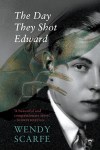
Wendy Scarfe, The day they shot Edward (#BookReview)

Wendy Scarfe, The day they shot EdwardThere’s something about novellas, about the way they can combine the tautness of the short story with the character development of a novel, and then hone in on an idea, undistracted by side-stories. This, in any case, is what Adelaide-writer Wendy Scarfe achieves in her book, The day they shot Edward.

Like her previous novel, Hunger town (my review), The day they shot Edward is a work of historical fiction. It’s set in Adelaide in 1916, in other words, half-way through World War One. Emotions run high, and 9-year old Matthew, through whose third-person perspective we see most of the events, is often uncertain, if not fearful. The plot is simple enough. We know from the title that Edward has died, and we know from the Prologue that Matthew is implicated in his death in some way, but was a child at the time. From the Prologue we move straight into a chronological narrative telling the story of Matthew, an only child who lives with his restless mother Margaret, his wise Gran (Sarah), and his father, the ironically named Victor, who is dying of tuberculosis on the sleep-out. There are three other main characters, the aforesaid Edward, who is an anarchist and whom Matthew idolises, an intimidating man in a cigar-brown suit, and Mr Werther, the German-born headmaster of Matthew’s school.

Matthew’s life is difficult. A sensitive lad, he is caught between his grounded, politically-aware, loving Gran and his self-centred, unhappy Mother. Gran, who approves of Edward’s activism on behalf of disadvantaged people, is constantly disappointed by her daughter’s readiness to put Matthew’s and anyone else’s interests behind her own desire for acceptance by the “better class”. Matthew himself is conscious of his mother’s self-centredness. Out with Gran and Mr Werther, for example, he feels included, part of “the special laughter and talk of Gran and Mr Werther”, but out with his Mother he feels “alone, beside her but separate” because although she sat with him

in reality she skipped out of her chair nodding, laughing, flirting and frolicking around the room. People always looked at her. She insisted that they did.

Complicating all this is that Edward is attracted to Margaret, and she’s happy to flirt with him but, “lost in her dream of social acceptance”, is unlikely to accept him when she does become free. However, lest you are now seeing Margaret as the villain of the piece, she deserves some sympathy. She had chosen poorly in marriage, and her lot is now doubly difficult in having to care for an ill man who hadn’t been a good husband in the first place. Her life is not easy, and her future not assured.

Anyhow, as if this wasn’t enough in Matthew’s life, there are the political tensions – Mr Werther is insulted by his students and is no longer welcomed amongst people who once socialised with him, and, worse, there are people wanting to trap Edward in the act of subversion. The net is closing in on Edward – as we knew it would from the Prologue.

We see these adult tensions and interactions through Matthew’s eyes – but we know the dangers lying behind the things that simply mystify (or, unsettle) him. I would call Matthew a naive narrator but I’m trying to recollect whether I’ve ever read a third-person naive narrator. Regardless, though, this is essentially what he is.

All this is to say that The day they shot Edward makes for great reading. Although we essentially know the end at the beginning, we do not know who the characters are, nor how or even why it happened. We don’t know, for example, who this Mr Wether is who is accompanying the now violin-playing grown-up Matthew in the Prologue. It is all told through a beautifully controlled narrative. There are recurring plot points – from the opening scene when Matthew decides to save the yabbies he’d caught to his ongoing concern about people liking to kill things, from Edward’s little box-gift for Margaret to the boxes of papers he asks them to store. There’s the quiet build-up of imagery, particularly the increasing references to red/blood/crimson colours. There’s the development of the characters through tight little scenes in the kitchen and living room, on the street and in the schoolyard, in cafes and at the beach. And there’s the language which is poetic, but never obscure.

Ultimately, this is a coming-of-age story. Sure, it’s about politics – about how difficult times turn people to suspicion, intolerance and cruelty – and in this, it’s universal. We see it happening now. But it is also about a young boy surrounded by adults whom he doesn’t understand. He’s only 9 when it all comes to a head – young for a coming-of-age – but as he considers in the Prologue:

Had surprise ceased that tragic night? Or did his understanding as a man mark that moment as his step into awareness?

In this, it’s also universal. Matthew learns some difficult truths the night Edward died – but those truths include some positive ones, such as that love can continue after a person dies, that good choices can be made, and that not all people kill things. A lovely, warm, read.

Lisa (ANZLitLovers) also enjoyed this book.

AWW Badge 2018Wendy Scarfe
The day they shot Edward
Mile End: Wakefield Press, 2018
124pp.
ISBN: 9781743055199

(Review copy courtesy Wakefield Press)

Charlie Archbold, Mallee boys (#BookReview)

Charlie Archbold, Mallee boysReading synchronicities strike again. Both my last read, John Clanchy’s Sisters, and this one, Charlie Archbold’s Mallee boys, are family stories with a guilt about the death of a family member at their centre. Both, too, are set in non-urban areas, Clanchy’s in coastal New South Wales and Archbold’s in the dry Mallee region of western Victoria. Here, though, the similarities end. Clanchy’s book chronicles a month in the lives of three late-middle-aged sisters, and the person who died was their four-year-old baby brother – a long time ago. Also, Clanchy is a male writer, writing about women, in third person voice. Archbold, on the other hand, is a female writer writing about men. Her subjects are farmer, Tom, and his two sons, Sandy and Red, 15 and 18 at the beginning. The death they are dealing with is their wife and mother, who died just a year before the book opens. This novel, which spans a year, is told in the alternating first person voices of the two brothers.

Mallee boys, however, also reminds me of another book about a farming father and two sons whose wife and mother had died, Stephen Orr’s The hands (my review), but while Orr’s book sits squarely in the literary adult fiction fold, Mallee boys is Young Adult fiction. Its concerns are, therefore, a little different, but it is worth looking at. It won the 2016 Adelaide Festival Unpublished Manuscript Award, and has now been shortlisted for the Children’s Book Council of Australia Book of the Year for Older Readers Award.

Now, that was a long intro – even for me – but I have managed, I think, to include in it a fair introduction to book and its main storyline. I’ll add that while the story is told in the alternating voices of Sandy and Red, the main protagonist is Sandy. He starts and ends the story, and he is presented as the more thoughtful, more reflective, of the two boys. Also, he is not the one carrying the guilt. This is his brother, who was with his mother when she, a pedestrian, was hit by a car.

Like Clanchy with his women characters, Archbold captures the voices of the boys and their father well, their tensions, their squabbles, and most of all the challenges they face in running their home without a mother’s touch! “Chops” for dinner again tonight says it all. Late in the novel, the father Tom admits to being lonely, but his pain is not the focus, this being a YA novel. Sandy is in Year 10, and as a rural boy, is at schooling cross-roads. Their farm can’t afford to send him to boarding school in the city, but can he get a scholarship? Red, on the other hand, is not the scholastic type. He has left school and works the farm with his father, with the usual father-son tensions. Added to this are the boys’ relationships with their friends – not all of whom are “suitable” but Red, in particular, can’t be told and needs to learn the hard way. And, of course, there are girls.

This is all told naturally, neither sensationalised nor sentimentalised, but with enough drama, and humour, to keep readers, particularly the intended audience, interested. I wouldn’t call this a crossover novel exactly, but I did enjoy the read despite its YA intent.

Underpinning the narrative, the plot, is the setting, and this also the London-born Archbold, who has lived and worked as a teacher in the area, evokes beautifully. The setting is the Mallee, which borders the riverland area in which Laguna’s The choke (my review) is set. It’s a dry area, known for sheep and dryland crops like wheat. Farming is tough here, but communities are close. This comes through too, with locals helping each other out, in the natural way people do, something which is surely good for young readers to see and relate to. I do love to see good – but realistic – role modelling in media!

In addition to this, there’s the language. I enjoyed the descriptions of the Mallee, such as Sandy’s of Lake Bonney:

When the river runs low, the water in the lake huddles to the middle, leaving it fringed with smelly sticky mud. It’s a strange place. Because of the drought a lot of the trees around the edge have died. Bony old river red gums stick in the ground like a perching cafe for pelicans and kookaburras.

Tom, the father, tells Red what’s kept him going, despite his loneliness:

“I know it’s the rhythms of nature that have kept me going. This isn’t a glamorous landscape, but it’s in my veins.”

And I enjoyed how the boys describe feelings. Here’s Sandy describing his brother Red:

He acts hard because it gives him control but I know he’s all mushed up inside. Like a beetle with soft guts crammed in under the shell.

And here’s Red, just after his girl has suddenly broken up with him without explaining why:

And so she’s left me hanging, like a daggy bit of wool caught on a fence. Knotted in with no way to break free.

As you’d expect in a coming-of-age story, lessons are learnt, wisdom gained. Sandy says near the end, and this is surely one of the novel’s themes:

… because time doesn’t heal all wounds, like Dad once told me, but it does scab over them.

It sure does. And every now and then those scabs break off and have to re-form, n’est-ce pas? An effective metaphor I think.

Mallee boys, then, is an engaging book about growing up, about facing some of the hardest challenges, and most of all about being male. It’s a book that has something to offer both rural and urban young Australians, and I hope it gets widely read.

AWW Badge 2018Charlie Archbold
Mallee boys 
Mile End: Wakefield Press, 2017
285pp.
ISBN: 9781743055007

(Review copy courtesy Wakefield Press)