This author talk was not one of my usual series – that is, not ANU/Canberra Times Meet the Author or Muse Canberra‘s conversations. Instead, it was presented by the Friends of the National Library of Australia, of which I am a member. Despite the cold, drizzly night, it was a full house, which is not surprising given the topic was crime fiction and the participants two local-ish, successful crime writers.
The event was MC’d by Nancy Clarke, from the Friends committee. After acknowledging country, she introduced the subject of the evening, and pointed us to a recent post on the NLA Blog on Australian crime fiction. She then introduced our authors and moderator:
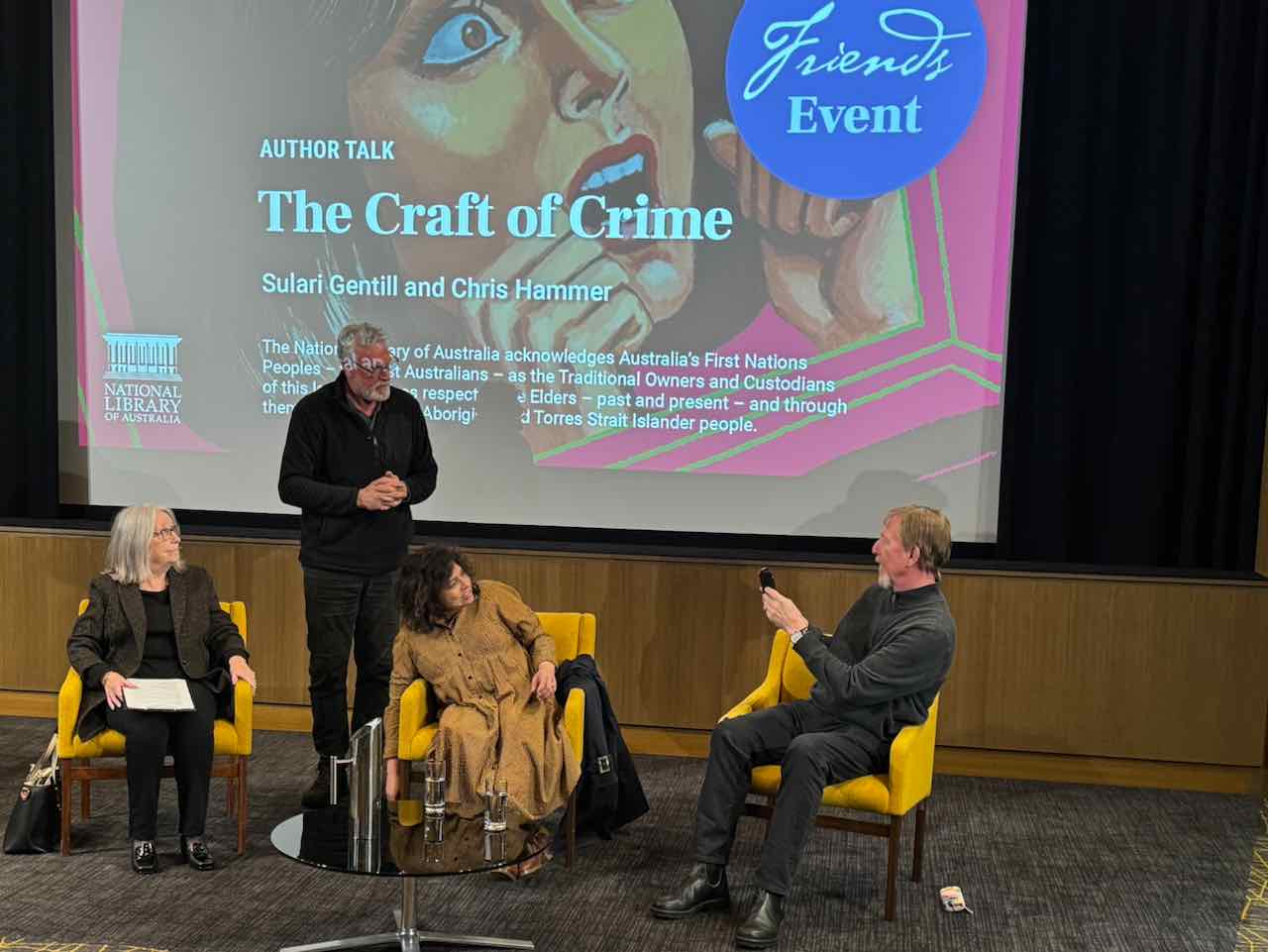
- Sulari Gentill: author of 15 novels, including 10 in her Rowland Sinclair series, since 2010, and winner of Ned Kelly and Davitt Awards.
- Chris Hammer: author of two non-fiction works, and, since 2018, of 6 crime novels. And, winner of several awards.
- Anna Steele: reviewer of crime and other fiction for local newspapers, including, currently, the City News. Before retirement she was Head of English at Canberra Grammar School. (She is also a friend of mine, through our local Jane Austen group).
The conversation
After also acknowledging country, Anna explained that the focus of the evening was the craft of crime writing, and suggested they start with how and why they became successful crime writers.
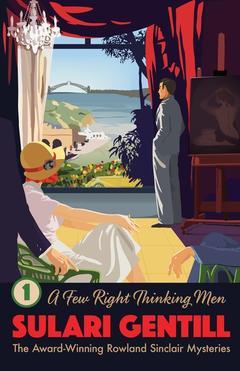
The ever-entertaining Sulari – I’ve heard her before – explained that she had been a lawyer, but also loved hobbies. After trying many, including welding, she thought she’d try writing. Very quickly, it “felt just right”, and she knew she wouldn’t stop. She lost interest in law. Her first foray was writing mythic fiction.
That was the how, more or less. As to why crime, she said that her main reader, her English history teacher husband, found mythic fiction a challenge. He suggested she write “something with names you can pronounce”, and that including a murder might be good. Now, writers, she said, are obsessed, and often “absent”, so living with them can be hard. Given she didn’t want to give up writing or her husband – see what I mean about ever-entertaining – she had to make these two worlds work. So, she looked at her husband’s history thesis on 1930s Sydney and found her subject.

Chris started by quoting Balzac’s “behind every great fortune is a great crime”*. He jokingly said that turning to crime writing was easy because he got sacked! Actually, though, the trajectory was a little more complicated, but the gist is that after writing two low-selling non-fiction works around 2010, he returned to his journalism career. But, he missed writing, so decided to “have a crack at making things up”. He wrote Scrublands (2018) and got a publishing deal after an exciting auction process. His timing was perfect, as he wrote it just after Jane Harper’s huge success with The dry.
As to why crime for him, it was because he didn’t feel he was a good enough writer for literary fiction (his main reading go-to) and he didn’t have an idea. Also, he added – only partly joking – having been a journalist he really “wanted to kill someone”! He liked American hard-boiled writers like Dashiell Hammet, the Australian Shane Maloney, and, in particular, Peter Temple, who had shown the way in terms of combining plot, character, human drama, action.
Anna then asked, Where did their great characters come from?
Chris replied that Martin Scarsden was not based on himself. But, not knowing anything about police work and detectives, and given journalists are experienced investigators who poke their noses into things, he decided to make his protagonist a journalist. Martin, then, is based on his knowledge and experience, but not on his character. However, through his career as a journalist he had met many career war correspondents who were messed up. Scrublands is a redemption story for Martin.
Sulari talked about the challenge of deciding on her character. 1930s Sydney was highly class-based. She needed a character who came from a comfortable background, but who could walk easily among all classes. Then she had an epiphany, he could be an artist, as artists tend to accepted across the social spectrum. Also, she paints, and although she is not a painter, she understands how a painter looks at the world. Authors don’t need to be the same as their protagonist but it is useful to have some link with the character (like Hammer and his journalist.) She talked about some of the other ongoing characters, and why she created them. For example, she didn’t want to write sex scenes, but Martin needed romance, so she created an unrequited love for him.
Are they plotters or pantsers? (Some audience members didn’t know these terms, so for those here who don’t, plotters plan their plots out in advance – albeit to different degrees – while pantsers write “by the seat of their pants”.)
Both laid claim to being pantsers, though there was a little repartee about this at one stage with Sulari suggesting that someone who writes multiple drafts, as Chris does, can’t be a pantser. Chris retorted that if you only write one draft, as Sulari does, you must be a plotter! As Chris said later, if you get 12 writers together in a room together you’ll have 14 different ways of doing things!
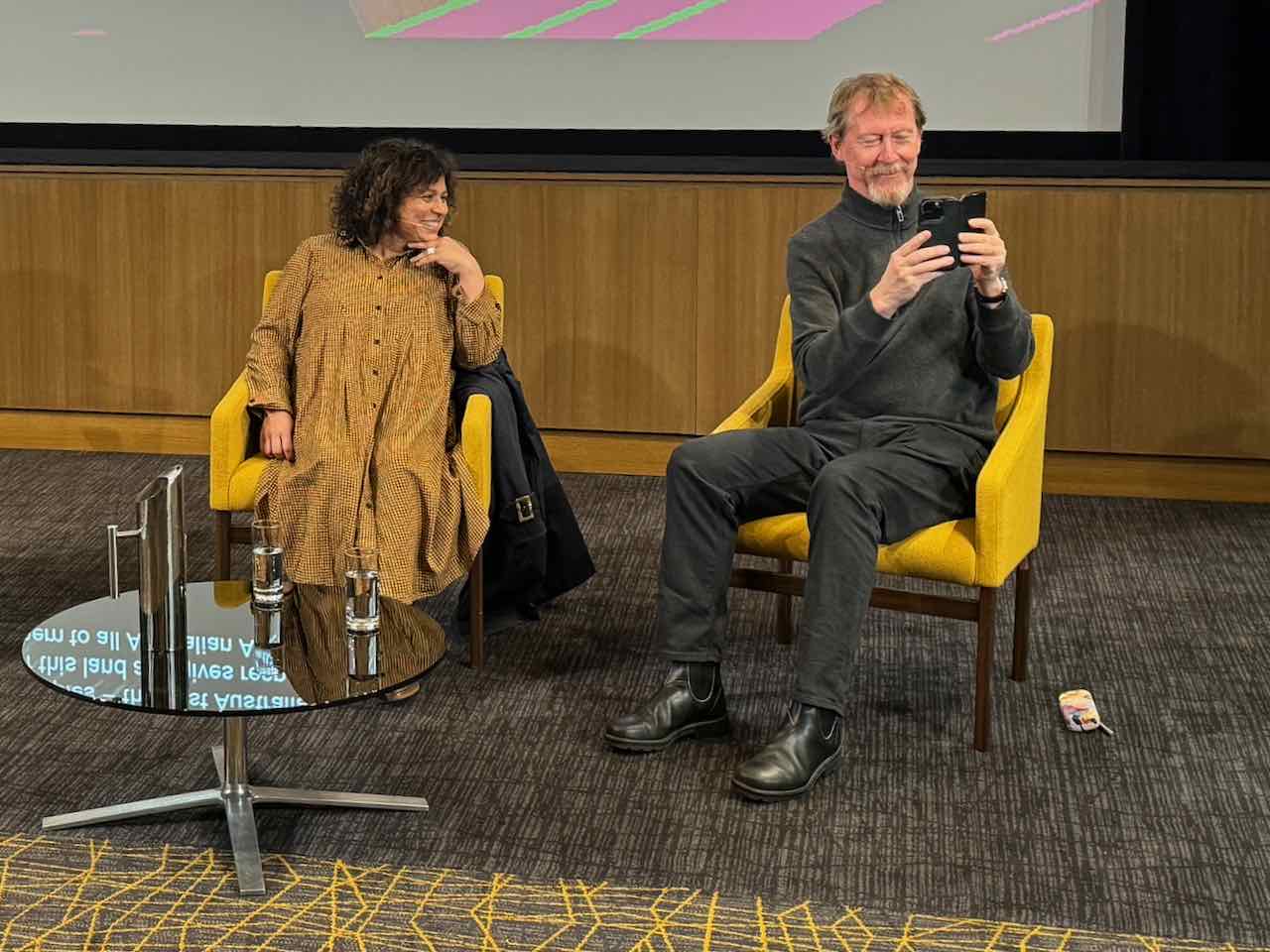
Anyhow, back to the question. Notwithstanding Chris’ dig (and I’ll add here that these two get on very well), Sulari claimed to be an “extreme pantser”. She does no plotting at all; she has no idea who is going to die, let alone who did it. She writes while in bed, watching television shows like Midsomer murders, Lewis, etc. She believes, as author Kylie Ladd suggested, that this distraction enables her prefrontal cortex (our creative centre) to come up with the words. She’s not sure if this really is how it works, but she’s been writing this way for so long she doesn’t want to “poke around” in case it breaks the magic! So, things pop into her mind as she’s writing, and they will “suddenly” drive the narrative. Her novels are conversations with the reader about things she’s thinking about.
Chris is also a pantser, though not quite so extreme. For him setting is the critical thing – it’s how you cast a spell and invite the reader in. He might have a murder in mind, and a framing idea, but he won’t know who did what. He couldn’t be a plotter, because he would find it boring to know all in advance, and just have to “get on with it”. That Hollywood image of a book appearing to authors fully formed rarely happens.
Why leave behind successful characters? (As Sulari did with her metafictional Crossing the lines, and Chris in his shift to a police procedural series.)

Sulari said that her first book had been seen as literary fiction, but from then on they were slotted as genre. This separation of “serious” and “elite” from “just enjoyable” irritated her, so she wanted to try literacy fiction; she wanted to write a novel that explained how characters take on agency, and that explored the line between imagination and reality. Ironically, the book ended up including a crime! She sees this book, Crossing the lines, as her truly “novel” book, because there’s not other like it. She needed to do something different.

Chris was aware that booksellers need to know where to shelve your books. A police procedural is easy in that regard. Hence, Treasure and dirt, which was intended as a stand-alone, but has ended up not being so! Also, by end of third Martin Scarsden book, he could think up more crime but didn’t want just “mechanistic investigators”. He likes them to have “skin in the game”. Martin does appear in this new series, and he will probably return to Martin and Mandy in the future.
Then, Anna just had to ask him about his amusing character names. He said he got bored with plain names; he likes Dickensian names; and his editors didn’t complain! One reader has told him that his distinctive names help her keep track of who’s who in his complex plots.
Q & A
On how their “first readers” and drafting process works: Sulari’s husband – her first reader – sometimes sees a chapter at a time, sometimes sees the whole in a “last minute flurry”. He helps with plausibility. As a historian he can advise on the right tone in the language for her period, but as a grammarian and English teacher he will fuss over grammar and want to add adjectives! For Chris, journalist friends read his first book, but now, with the best editors in Australia, they are his first readers.
On their writing schedule/fitting writing into life: Sulari would rather write than do anything else so it’s easy. She does other things first, then settles down to her writing. She writes 1000 words a day, which results in a novel in 3 months. (Writing is like a relationship: you are passionate at the start; then it’s like a long-term marriage and you have to work. By the end you hate the “damn thing”, but when you come back to it you love it again.) Chris is at the stage where he has no kids, and no other job, so he has time. He is addicted to writing, and writes anywhere, including trains and noisy cafes. In the first part of the year he runs out of steam by lunchtime, but as year wears on, the book captures him and he thinks about it all the time.
On getting started, and what they wish they’d known: Chris said the best thing is to enter unpublished manuscript competitions, many of which are for debut authors. Also, try to find an agent, particularly for fiction. Read the acknowledgements at the end of books to get useful names of publishers, agents, editors. And get used to being rejected! Sulari said that it can be hard to get an agent, and they don’t guarantee getting published, but they can mitigate your gratitude to publishers when it comes time to sign the contract!
Conclusion
This was an excellent conversation because Anna used just a few well-targeted questions which kept it closely to the brief, the craft of crime writing.
Anna concluded by quoting Canberra thriller writer, Kaaron Warren, who recently said at the Bristol CrimeFest:
“I have a theory that people who deal with murder and death are always jolly in person … I mean have you ever met a miserable butcher?”
We all laughed and went off into the cold Canberra night feeling well-pleased with the effort we’d made to come out. Big thanks to the Friends, Anna, and our two writers, Sulari and Chris.
* The actual quote is, apparently, “Behind every great fortune is a crime”.
Author Talk: the Craft of Crime, Sulari Gentill & Chris Hammer with Anna Steele (Friends Event)
MC: Nancy Clarke (Committee of the Friends of the National Library of Australia)
National Library of Australia
Wednesday 5 June 2024
 Whispering Gums