Monday musings on Australian literature: Reading groups aka bookgroups

Many litbloggers, I know, also belong to reading groups or bookgroups. (I use the terms interchangeably.) Jonathan (Me fail? I fly!) regularly writes engaging posts about his groups and their discussions, such as this most recent one on Paul Murray’s The bee sting. And I often refer to mine, though not with the same detail that Jonathan does.

A good bookgroup is a special thing, and those of us in successful groups often receive requests from others to join them. Unfortunately, most of those requests get turned away. There are only so many people a group can sustain – both physically in terms of the homes where most of us meet, and practically in terms of managing discussion. There is a sweet point between too big and too small, but I digress. This post is not about discussing these bookgroups. Instead, I want to focus on what those people looking for a bookgroup can do if they can’t find one or start one of their own. So, here are some ideas that might help you know where to start looking …

Public libraries

Some public libraries, as you would expect, do run or host reading groups. An example is the City of Parramatta library system in Sydney. They meet monthly at different branch libraries to “to discuss books, share ideas and have fun in a casual friendly environment”.

Other public libraries offer book club sets or kits for use by reading groups, but these tend to be for off-site pre-existing reading groups. They can be useful if you are in a group, or even if you want to start a group. The ACT Library Service offers this service, as indeed does the City of Parramatta.

The website, Australia Reads, lists, by state, many such library book clubs, so it’s a good place to start if you are in Australia.

Sometimes, public libraries provide a venue for reading groups that are run by an external group. A special example of this is Melbourne’s (and maybe Australia’s) longest running book group, the Ivanhoe Reading Circle which started in 1920. This group, these days at least, is a large group at which, I understand, a member presents on the chosen book, and then the floor is opened for questions and discussion. One day, when I am in Melbourne, I hope to get to it.

Adult education

Adult education services have been in the business of encouraging and supporting book discussion in Australia since the early days of the colony. Mechanics Institutes and Schools of Art developed libraries for use by their members, who were often workers with few resources for books. Many also ran courses and some have organised, and still do, reading groups. For example the Sydney Mechanics’ School of Arts badges itself as supporting members since 1833. They currently have many members-only interest groups, and these include a Mystery and Crime Reading Group. Likewise, the Ballarat Mechanics Institute offers a reading group (though I’m not sure that it has survived COVID.)

Then, there are discussion groups run or offered by organisations like Sydney’s WEA (the Workers Education Association, established in 1913) and the U3A (University of the Third Age). These groups tend to be member run, so you join and then try to find a group near you. They can have waiting lists, but they are a good option. Teresa, who often comments here, has been running a U3A Landmarks in Australian literature discussion group in Melbourne for years. I notice that on the same webpage is another group which discusses American literature. My mother was a member of a Canberra U3A reading group, until she died.

And, rather like the public library book services mentioned above, there are groups like Victoria’s Council of Adult Education which has been providing books to reading groups, around Australia, since 1947. My own group used this service for a few years. They also offer a reading group finding service. How good is that!

Bookshops

And then, of course, there are bookshops. Pam (the Travelling Penguin) belongs to one at Fuller’s Bookshop in Hobart. They run quite a few groups, in fact. In her most recent post, Pam not only mentions what she’ll be reading next, but shares that Fuller’s has just won the Best Bookshop in Australia at this year’s Australian Book Industry Awards. The judges praised the store for its “first-class events program and investment in fostering literacy”. (It just so happens that I met Pam last year in the Fuller’s cafe when I went to Hobart for my brother’s book launch and exhibition opening.)
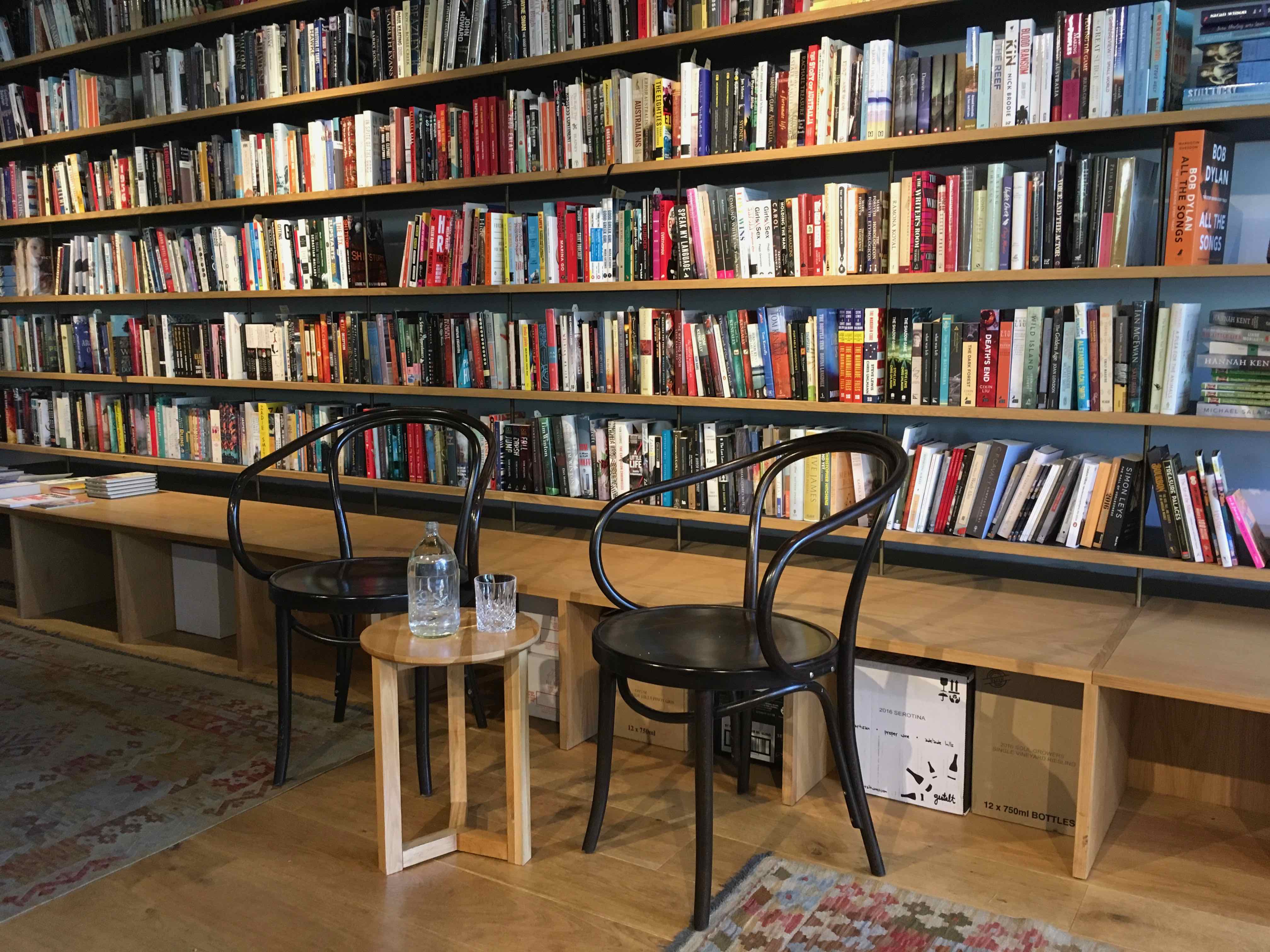
Muse bookshop
Muse bookshop (before an event)

Closer to home is our very own Muse, about which I have posted many times, because they also run author conversations as well as two book groups. Unfortunately, I have not attended the bookgroups because they clash with my commitments. But, I regularly check out what they are discussing and, if I can catch him, talk to bookseller Dan about the chosen books and anything else we are reading. The two bookgroups Dan runs are the Translation Book Club and the OzLit Book Club.

Then, moving north up to Queensland, there’s the active Avid Reader bookshop in Brisbane. They have a Bookclubs Manager, and offer several bookclubs, including Fiona’s Open Bookclub, the High Noon Bookclub, the Her Voice Bookclub and, even, an Online Bookclub. The onsite bookclubs are free if you purchase your book from Avid Reader, or $10 if you don’t.

So…

This is not meant to be at all comprehensive – how could it be – but to provide some starting points for those who might be looking for a reading group. Or, just give you a sense of the breadth and depth of the book-ish world. You – and we – are not alone!

I’d love to know if you have had experience of looking for a reading group, and/or if you can add to the ideas here or just share your favourites.

What my bookgroup will be reading in the first half of 2017

Woman reading with cushion

Courtesy: Clker.com

You may notice that I sometimes identify a review as being for a book I’ve read with my reading group, but only once before in this blog have I dedicated a post to my reading group’s schedule, so I thought it was time to do it again. It’s particularly appropriate now because last night my group chose our first 6 books for next year.

I recently mentioned in a comment to ANZLitLovers Lisa that my group would be choosing its schedule, and she wished me good luck because she knows reading group selections can be fraught. However, that’s never really been the case in my group (at least I don’t think so. Those who read this blog can correct my rose-coloured glasses if they see it differently!).

This is not to say that there’s not discussion about our selections, or that there aren’t some different reading interests in the group. There is always some lively argy-bargy. But, the group was established on the basis that we wanted to read “good” books – books that challenge us, books that have a reputation for quality, books that have something to encourage discussion. Content is part of it, but sometimes you hear people recommending a book as a “good reading group book” because it’s an “issues book” like, say, a Jodi Picoult. We have nothing against “issues books” – many of us read them – but for our schedule, for the sort of discussion we want, the books we choose need to be more multi-dimensional.

Before you think it, I must clarify that this doesn’t mean that we read only “worthy” award-winning literary fiction. We read all sorts – including non-fiction – and we’ve occasionally had poetry nights. The best way to demonstrate this is to share our next 6 books:

  • Jane Fletcher Geniesse’s Passionate nomad: this book was chosen as the result of one of the members reading my recent post on 19th century travellers. In the end, we chose a biography of an early twentieth century “lady traveller”, Freya Stark. It’s probably our riskiest selection, but the biography is respected we believe.
  • Grahame Greene’s Travels with my aunt: we try to do at least one classic each year – such as, most recently, Dostoevsky’s Crime and punishment and Chinua Achebe’s Things fall apart – so when someone suggested Grahame Greene whom we haven’t discussed before, he was in.
  • Madelaine Dickie’s Troppo: this is a debut novel which won the T.A.G. Hungerford Award for unpublished manuscript in 2014. Of course, it helped that the author is the fiancée of one of our founding members.
  • AS Patric’s Black rock, white city: as this year’s Miles Franklin Award winner, Patric’s book was an obvious choice.
  • Ian McEwan’s Nutshell: there are several McEwan fans in the group, and we haven’t done one of his books since Solar in 2010, so it seemed time!
  • Kim Mahood’s Position doubtful: this is author-artist-mapmaker Mahood’s memoir about her experience of place and landscape in the Tanami Desert area of remote central Australia where she grew up and now spends part of her time each year. This book is particularly interesting to us because of the perspectives she can bring from her very particular history as a white woman working and living in what is now indigenous land.

So, three women writers and three men; four novels and two non-fiction works; three Australian writers and three not. No translated works or indigenous writers in this group, but there’s always the second half of the year to increase the diversity. We did do a translated work, an indigenous writer, and an African writer this year.

If you’re in a reading group, have you decided on your schedule for next year yet? And, if so, what criteria do you use?

My literary week (4), or, not a page read

Would you believe that today is the first time in a week that I have opened my current novel? Terrible! But it’s just been one of those weeks of being driven by other things, so much so that reading time has taken a big hit. There have, however, been a few literary moments which I thought I’d share.

My lovely Gran

Gran

Gran, on her 65th wedding anniversary

On Monday I wrote a post based on the introduction to the Golden treasury of Australian verse which I found in my aunt’s house. The book belonged originally to my grandmother, and was given to her in 1914. Gran was the daughter of a Presbyterian minister, and the important thing to her was to live a good (Christian) life. However, she didn’t proselytise God. Rather, she promoted treating people well. We grandchildren all remember her Bambi and Thumper ornaments. They were there to remind us all of Mrs Rabbit’s advice to Thumper who had criticised baby Bambi’s wobbly walk. Mrs Rabbit said, as I’m sure many of you know, “If you can’t say something nice… don’t say nothing at all”. None of us have ever forgotten this, though I suspect we don’t always live up to it!

Anyhow, my point is that written in the back pages of the book, and on sheets of paper tucked inside it, are some sayings or inspirational quotes collected by Gran. One comes from Rudyard Kipling:

If we impinge never so slightly upon the life of a fellow-mortal, the touch of our personality, like the ripple of a stone cast into a pond, widens and widens in unending circles across the aeons, till the far-off Gods themselves cannot say where action ceases.

Another she dated 1/8/24 and noted it as “author unknown”, though using the Internet I’ve tracked it down in a webpage called “Bad Poetry”. The poet is Edgar Guest. The concluding lines read:

I never can hide myself from me,
I see what others may never see,
I know what others may never know,
I never can fool myself — and so,
Whatever happens, I want to be
Self-respecting and conscience free.

It might be sentimental poetry, but I do love my Gran’s heart and aspiration.

There are others, including one from Francis Bacon, but the final one comes from the Koran: “If I had two loaves of bread I would sell one and buy hyacinths for they would feed my soul”.

I’ll be keeping this book, needless to say.

My reading group

My reading group had its July meeting this week, and our book was Charlotte Wood’s The natural way of things (my review). It was a very lively meeting in which the realists in our group faced off against the willing suspenders of disbelief, with a couple of fence-sitters in between. Ne’er the twain did meet, I’m afraid, but while positions were maintained throughout, the discussion was, as always, respectful.

Charlotte Wood, The natural way of thingsThe problem was that the realists couldn’t work out why the ten women hadn’t ganged up to overpower their two guards, why they didn’t work out they could dig their way out under the electric fence. The women were twits, one said. They should have fought back. She also felt the rabbit trapping was far more successful than you’d expect and that the book had the longest mushroom season ever! It just wasn’t plausible. The willing suspenders, on the other hand, talked more about the book in terms of metaphor, allegory and parable, though they didn’t all agree on which of these the book represents, if any! We defenders felt that Wood, in the opening scenes, showed the disempowering of the women, explaining why they didn’t fight back.

I won’t go on, but the conclusion was that any book which garnered such an engaged discussion must be a good book!

More on my Jane

You know of course to whom I refer, Jane Austen of course, and this week Mr Gums and I went to see the latest Austen movie, Love and friendship which, strangely, is an adaptation of her juvenilia novella Lady Susan (my review) and not of her juvenilia piece actually titled Love and freindship (sic) (my review). We enjoyed it. Kate Beckinsale, who played Emma in a 1995 movie adaptation of that novel, played that “most accomplished coquette in England” Lady Susan with a light touch. Austen’s juvenilia is known for its broad humour/satire, though Lady Susan, being a transition work between her juvenile and adult period is more restrained than the earlier works. I thought director Walt Stillman balanced the tone nicely, here. His use of humorous title cards to introduce the characters sets the satiric tone but this is off-set by a more straight playing of the script, except perhaps for the comic relief provided by Tom Bennett as the foppish, silly Sir James Martin.

But, there was another Jane Austen event this week, a talk which members of my group attended. The topic was Austen’s continued popularity, and the speaker started with – coincidentally – Kipling, who praised Austen in 1924, saying “Praise the Lord for making her, and her for all she made”.

The speaker was enthusiastic about Austen, but her focus tended to be more on Austen’s Regency legacy – fashion, food, beauty – whereas my group is more interested in her ideas about, insights into, human nature, insights that we can find even in her early work. I’ll end this post with one of those insights that I love from Lady Susan. It was included in the film. Lady Susan says that “where there is a disposition to dislike, a motive will never be wanting”. Oh dear, this is too true. My Gran would, I’m sure, have had a saying to encourage us not to have such dispositions in the first place … though, she didn’t know Lady Susan!

Meeting Biff Ward

WardMotherAllenUnwinIn her comment on my review of Biff Ward’s beautiful memoir, In my mother’s hands, in which I mentioned that Biff had been present at my reading group, Stefanie (So Many Books) asked if I planned to post specifically about Biff’s presence. While I don’t always do this when authors visit my group – Biff was our sixth author in our 27 years – I did do so for Marion Halligan and Alan Gould. Since our discussion covered a lot of ground that I didn’t include in my review, I figured that this was one of those visits to write up …

The writing process

The most common questions readers ask authors tend to relate to why and how they wrote the book in question. We were no different. And really, I think such questions can be good ice-breakers because “how did you come to write your book” is surely a question most authors can answer without too much angst? For Biff, the answer was quite complex. She said that her father, and others, always assumed that she would write his biography, but she wasn’t interested in biography … and so … WardFatherDaughterGrove

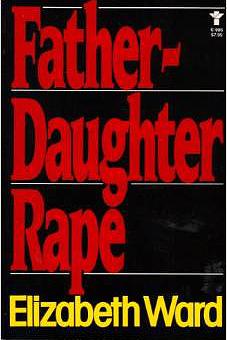
Biff had, she said, been writing for 40 years or more. Her first book was the ground-breaking Father-daughter rape*, published by The Women’s Press in London in 1985. One of our reading group members, a psychotherapist, knows the book and said it is still referred to for its discussion of child sexual abuse. Biff, quite rightly, seemed rather chuffed at this news!

The memoir, though, was written over 15-20 years – in bits and pieces. The first “bit” she wrote was a reminiscence of her mother’s in which she remembered hearing of the assassination of the Romanovs. Uncertain about where Russia was, she asked her father who vaguely said, gesturing, “over there”. For her mother “over there” meant “out of sight beyond the horse paddock”. It’s a lovely anecdote shared between mother and daughter, but it has deeper resonances in terms of her mother’s life, and Biff included it pretty much untouched in the final memoir.

Biff said that she started writing more on the memoir as she transitioned to retirement, but work on it intensified after she attended a writing retreat in Byron Bay in 2009. By the time she presented it to her publisher, Richard Walsh, it was 105,000 words, but it was gradually whittled down to the final 70,000 words. We wondered whether she could publish some good short stories from the bits edited out.

We aren’t, I guess, a very original group because another question we asked is a common one: how did you choose the title? Biff responded that she brainstormed it with her writing group. Her original title had been  Alison, for her parents’ first child who had died at 4 months, but then, through brainstorming, it was decided that the title should refer to her mother. The final challenge was whether to go with At her mother’s hands or In her mother’s hands. We agreed that “In” is better. It feels more inclusive, and less aggressive.

We also talked a little about the sources of her information, but I mentioned some of those in my review. I was intrigued by a reference in the book to how a lover washing her hair brought back childhood memories of her mother washing her hair. It made me wonder what memories don’t come back and the implication of almost serendipitous memory-joggers like this on the final story. I loved Biff’s answer that the “memoir” form is more forgiving than “autobiography”. It is, after all, about memories, so what you do and don’t remember, for whatever reason, is essentially what it’s about.

Writing (and reading) as therapy

If you’ve read the book, or my review, you’ll know that the underlying story concerns mental illness. You won’t be surprised then to hear that the book brought out some painful (but valuable) sharing. It was truly special that we all, including the “stranger” in our midst, felt safe enough to do this – and for that reason, obviously, what was shared in the room will stay there. I can say though that it also brought up the idea of writing as therapy. Biff believes that writing for therapy is valuable – but in journals and diaries, not in published books.

Related to this theme, we asked whether writing the memoir was a painful or traumatic experience but, as Biff mentions in the book, she had undergone extensive psychotherapy so had, she said, worked her emotions through before she came to write the book. We also asked her whether she was angry about her childhood, but she said she was more sad than angry. She said, thinking of her father, that partners can suffer more than children. That’s a generous response I think – but then this is a generous book.

We also talked a little about the way the family had hidden its problems, but we could all relate to the fact that people are generally anxious to say “I’m fine”. People don’t, as Biff discusses in her book, have the words, the language, to express difficult things. Biff did refer, though, to the moment in the book when she and her father had finally been able to talk about “the terribleness” they had experienced. An “odd word” she wrote in the book but it was lovely, she told us, to have been able to be honest about their experiences. Biff’s father had his failings, about which she’s clear in the book, but he was she said “a deeply moral man” and late in his life regretted his less admirable behaviours.

Our reactions

As you will have gathered we all enjoyed the book and deeply appreciated having Biff present for our discussion. We shared our various reactions – profoundly moving, harrowing, kind, a stimulus to remembering our own childhoods, and the like. One member used the word “endearing” for Biff’s portrait of her father, for the way she showed her love for her father while writing “all sides” of him. Biff said she enjoyed finding the words to describe him.

A point that intrigued us was the fact that a country university, the University of New England (UNE), had employed a “communist” academic who had been rejected by the major city universities. Biff told us that UNE had quite a reputation for employing “all the Reds that no-one wanted”! We all loved this.

Near the end of the evening, Biff unveiled the “show-and-tell” she’d brought. It was a beautiful, sensitive portrait of her mother painted when she was in her late 20s. A cropped black-and-white version is in the book (p. 62) but to see the original full version in colour was, well, special. But then again, it was just one more special thing in an evening that was very special.

* Lest you be concerned, this book is not about Biff and her father – there’s no such sexual abuse in the memoir – but about her later research into child sexual abuse after meeting two young abused girls in a women’s refuge.

Andrew Croome, Midnight empire (Review)

Andrew Croome, Midnight Empire

Courtesy: Allen & Unwin

Andrew Croome’s latest novel Midnight empire is yet another read this year that is outside my usual fare. I read it because of my reading group’s focus this Centenary year on Canberra writers. It wasn’t a big ask, though, because I had read and enjoyed his first novel, Document Z. While both deal with spies, they are very different novels: Document Z is historical fiction, while Midnight empire is a thriller. I wonder what Croome will do next. Romance? Interestingly, Croome, who attended my reading group’s discussion, suggested that Midnight empire is more like a first book. This is because when writing Document Z, he could always go back to the historical record when he stalled, but with Midnight empire he had to rely on his own ideas to keep the story going. Croome told us that the inspiration for the book was drones and, developing that, the idea that with drones people can conduct “war” from their office desk. What does this mean for our psyches, he wonders. And where is the line between who is at war and who isn’t? But more on that later.

First, a little about the plot. The protagonist, Daniel Carter, is a rather naive 26-year-old computer programmer whose company’s encryption algorithm has been bought by the US government for its drone program. Daniel is sent by his Canberra-based company to Creech Airforce Base, outside Las Vegas, to install the software and make sure it runs properly. Suddenly he finds himself at war, albeit sitting at a computer terminal in the American desert, a long way from Afghanistan and Pakistan where the actual war is being waged. Unlike the airforce pilots and CIA agents Daniel is working with, he has not been trained for war.

Parallelling the story of Daniel’s professional life is his personal one. He comes to Las Vegas despite the wishes of his long-term girlfriend Hannah. Their relationship has been foundering and his, to her mind, not well thought through decision to go to Las Vegas is the catalyst for her to break up. Daniel is disappointed, but it leaves him free to meet someone new – and he does, of course. He meets the beautiful Russian, Ania, at the poker table. This is Vegas after all!

As you would expect for the genre, things start to go awry. An agent double-crosses them, pilots start dying mysteriously in Vegas, and the drones are sent in to Peshawar to take out their target. Daniel becomes perturbed about the morality of what he sees and decides to leak some information. Meanwhile, his life with Ania becomes complicated when she tells him her brutal husband has come to Vegas looking for her. Daniel is torn between his work and his personal responsibilities, and starts crossing even more lines from which he may not be able to return. As we read on, we are not sure who to trust or believe. Is or isn’t Ania the traditional spy-tale Femme Fatale? And are the CIA starting to suspect him?

Daniel … in the lion’s den

Croome has, I suspect, chosen Daniel’s name for its allusive – and ironic – value: we can see where Daniel is, but he seems pretty oblivious. Fairly early in their relationship Ania questions Daniel about his work. She’s mystified by the fact that he says he’s fighting a war, even though he didn’t volunteer for it and wasn’t conscripted:

‘Then why are you here?’

‘It is simply that I have a job. I am doing my job.’

You are at war because of your job?’

‘Yes’.

She seemed to find this amusing. ‘But that is not romantic,’ she said. ‘How am I supposed to believe that you are my hero, if it is your job?’

She tries to understand this war in which he says that he won’t be killed. It’s not a war, she believes, if he is not in danger of being killed. Daniel sees it differently:

‘We drop bombs on people … They are trying to harm people and we blow them up. I don’t know what else you’d call it’.

At this point, the war is just like a job to Daniel.  He goes to work on the base, they track targets with the drones, and he goes back to his temporary home in Vegas and lives his life. When he is reminded by his CIA boss Gray that “like it or not, you happen to be at war” his reaction is disingenuous:

if people were dying or endangering one another, it had stuff-all to do with him. Gray could shove it. If the alertness of your encryption operator was your primary concern, you needed your priorities set straight.

He has a point – to an extent – and yet, as his ex-girlfriend had clearly understood, he had agreed to be part of it. Not long after this, they attack their target, completely demolishing a building in which people, including children, had been. It’s remote, cold, clinical … Daniel looks for the children hoping they’ve not been taken out too, but “where were they?” And yet, still, the penny hasn’t fully dropped. Ania, as Hannah had before her, wants Daniel to recognise what he is doing:

I am just saying think, Daniel … I am just saying there are choices – there are decisions to make.

I won’t labour this further; I’m sure you’ve got the main theme by now.

The midnight empire …

How do you critique a novel like this, one that is more plot driven than I’m used to? What should my review focus on? Plot, character, setting are, I’m guessing, the critical things – and I’d give them the thumbs up. The plot is plausible, the character of Daniel believable, and the setting chillingly realistic. The resolution – particularly in terms of who is implicated – is a little more ambiguous than Croome apparently intended but that’s probably the risk you take when you start to play with genre formula. I did find some of the technical details – the encryption technology, and the ins-and-outs of poker playing – somewhat uninteresting at times, but that’s more to do with me and my reading focus I think. Overall, it’s a carefully orchestrated and gripping read that should appeal to a wide readership.

‘Aren’t you interested, though?’ she said. ‘That people would be able to do this – exist somewhere beyond the rest of us, surfacing, emerging at night, a strange midnight empire, you would almost say traceless.’

Ania is talking about the people – and they are real – who live in the storm drains beneath the Strip – but what, we wonder, about the other, infinitely more worrying midnight empires? Croome has made very clear in this novel why we should be intersted in them…

Andrew Croome
Midnight empire
Crows Nest: Allen & Unwin, 2012
238pp
ISBN: 9781743311127

Irma Gold (ed), The invisible thread (Review)

The invisible thread, by Irma Gold

Cover (Courtesy: Irma Gold and Halstead Press)

I even get nervous when I open a book, you know, for the first time. It’s the same thing, isn’t it. You never know what you’ll find, do you? Each person, each book, is like a new world … (from Mark Henshaw’s Out of the line of fire, in The invisible thread)

At last, you may be thinking, she’s going to review the whole book. At least, I hope that’s what you’re thinking, because this book deserves a dedicated review rather than the scattered posts I’ve done to date. The book I’m talking about is, of course, Canberra’s centenary anthology The invisible thread.

The aim of the anthology is a little different to that of Meanjin‘s special Canberra issue, which I recently reviewed. While its editor, Sanders, wanted to offer “a taste of Canberra”, Gold’s aim was to present “literature of excellence” from writers, past and present, who have had a significant relationship with Canberra. For her, Canberra is “not the headline act” but provides “the invisible thread” linking the writers to each other and to the rest of Australia. In her foreword, Robyn Archer, the centenary’s Creative Director, puts it this way:

Many of the pieces are not about Canberra, but they reveal a diversity of interest and style among writers in this region, and thus reflect the unique nature of a city which is located rurally, but positioned nationally.

In other words, The invisible thread is not a parochial apologia for Canberra but an intelligent presentation of the city’s and thence the nation’s cultural, political, social and interpersonal life. The nation’s concerns are Canberra’s concerns – at both the macro (war, indigenous-non indigenous relationships, the environment, and so on) and the micro (birth, marriage, death, and everything in between) levels. You would be hard-pressed as an Australian, or even as an international citizen, not to find something in this book to interest and move you.

Reviewing an anthology is tricky though, and this is particularly so with The invisible thread because it comprises highly diverse pieces – poems, short stories, essays, and excerpts of novels and non-fiction works.  The pieces are not grouped by form, like the Meanjin issue, but in a more organic way intended to take us on a journey in which, editor Irma Gold writes in her Preface, “each work is allowed to converse with those beside it”. And so, in preparation for my reading group’s discussion, I went back to the start and read the book in the order presented. What a pleasure that turned out to be because I did indeed discover added meanings that weren’t necessarily apparent from the dipping-in-and-out approach I had been using.

Let me give an example. The anthology opens with an excerpt from war historian CEW Bean’s Anzac to Amiens, itself a condensation of his Official history of the first world war. I knew of Bean but had not read his history. I was surprised by his use of imagery, such as this:

And out on every beautiful fresh morning of spring come the butterflies of modern warfare – two or three of our own planes, low down …

After another war-related non-fiction piece, the anthology segues to a short story (“The Good Shoppers”) by Lesley Lebkowicz, which is about her refugee parents, now old and shopping in the supermarket but still affected by the Holocaust, and then to two poems about age (Judith Wright‘s “Counting in sevens” and AD Hope‘s “Meditation on a Bone”). The “conversation” encouraged by this sequence is complex and, I expect, different for each reader. For me, the juxtaposition suggests an irony: “war” steals “age” from many of the youths sent to it. This is just one small example of the sorts of “conversations” Gold has set up in the anthology. Considering them as I read the book added another layer to an enjoyable reading experience. I like reading that challenges my brain on multiple levels.

Compiling an anthology involves, obviously, selecting what to include. It must be hard enough to choose poems, short stories and essays, but what about writers who are best (or only) known for novels or non-fiction books? They can only be represented through excerpts, but there is the risk that these cut-down pieces will be less satisfying to read. Alternatively, of course, they might encourage us to locate the full work and read it. The Bean example above is an excerpt. There are many others, including those from Kate Grenville’s Sarah Thornhill, Jack Heath‘s Third transmission, and Roger McDonald‘s When colts ran. I have noted many to follow-up, which tells you how I found the excerpts overall!

A trickier challenge, probably, is that of representing diversity – not just regarding chronology, subject-matter, tone, and form or genre, but in terms of the writers themselves, such as their gender, or whether they are of indigenous, migrant or other minority background. What emphasis should be given to these in the selection process? And, anyhow, should the writer’s background be highlighted? I’m not sure what Gold and her committee decided about this but the anthology, while primarily representative of the majority culture, is not exclusively so and probably reflects the writing community it drew from.

This is not the last you’ll hear from me on the anthology. It is much too delicious, much too rich, much too full of “luminous moments”* for me not to continue to draw from it. I’m possibly – probably? – biased, but I believe this book should be on every Australian bookshelf and, without disrespecting Irma Gold’s hard work, I’d say it doesn’t really matter whether you read it in its original order or just dip into it as the spirit moves you. What would matter would be to not read any of  it at all.

Irma Gold (ed)
The invisible thread: One hundred years of words
Braddon: Halstead Press, 2012
256pp.
ISBN: 9781920831967

* from Marion Halligan’s essay “Luminous moments” which concludes the book.

What my bookgroup will be reading for the rest of 2010

Woman reading with cushion

Courtesy: Clker.com

I haven’t done this before – that is, discussed my reading group in my blog – but I thought I’d share the schedule my group decided on last night for the rest of the year. Our practice is to make our selections twice a year: 6 books for the first half of the year, and 5 books for the second half. The last meeting of the year is our Christmas meeting and we’ve discovered that scheduling a book when you are going to dine (not to mention embroiled in Christmas busy-ness) just doesn’t work. There are few rules. We focus on fiction but do occasionally read non-fiction, and the books need to be readily accessible, preferably in paperback. And, of course, it goes without saying that they need to be likely to engender discussion.

The way we create our schedule is to maintain a small – regularly pruned – list of recommendations, and call for more nominations just prior to the meeting. Then, we sit around and bandy the titles around until, through some sort of consensus (which may or may not involve bullying and bribery – of the nicest kind, of course), we come up with our list. If you are not at the meeting you just have to hope that the rest are kind enough to consider your wishes!

So, here is our list for the rest of this year:

  • Solar, by Ian McEwan
  • Truth, by Peter Temple
  • So much for that, by Lionel Shriver
  • The thousand autumns of Jacob de Zoat, by David Mitchell
  • Parrot and Olivier in America, by Peter Carey

I’m looking forward to it. It’s a pretty typical reading group list, though with only one woman and not one translated text, it’s a little more white male anglo-oriented than most of our schedules. However, it’s a list that should, I think, provide for some good discussion. Expect to see these books appear on the blog in coming months.

Are you a member of a reading group? How do you choose your books, and what sorts of books work well with your group?