2025 Mark and Evette Moran Nib Literary Award shortlist

This is a quick post because I’m on the road in Japan, but I do like the Mark and Evette Moran Nib Literary Awards, and their shortlist has just been announced, so here is a quick post.

Just to recap if you don’t recollect my previous posts on this award, it is not limited by genre or form – that is both fiction and non-fiction are eligible. The judging is based on “on literary merit, research, readability, and value to the community”. Research and value to the community are interesting criteria. I have written about it before, so if you are interested in its origins and intentions please check that link. Previous winners include historians Alison Bashford and Claire Wright, biologist Tim Low, novelists Helen Garner and Delia Falconer, and journalist Gideon Haigh.

Each of the six finalists receive the $1500 Alex Buzo Shortlist Prize and are eligible for the $4,000 Nib People’s Choice Prize, which, by definition, is awarded by popular vote. The winner will receive $40,000.

The judges for the 2025 award are Sydney based writer, editor and arts producer Lliane Clarke, publisher and award-winning editor Julia Carlomagno, and author and publishing professional Angela Meyer (whom I’ve reviewed a few times here). They said, according to the email I received from Waverley Council which manages the award:

“In reading the nominations this year, we noted the effort, dedication and often bravery required to delve with such depths into topics of personal, political and cultural significance. The shortlisted books display great passion and commitment on the part of the authors and publishers, often years and decades of work, and they are all thoughtfully constructed, absorbing, moving works of literature with great value to the community”.

The email also said that this is the Award’s 24th year, and describe it as “one of Australia’s most high-profile and valuable book prizes, celebrating the most compelling research-based literature published annually”.

The 2025 shortlist

Last year I had, unusually for me, read two of the six shortlisted books, but this year we are back to the status quo! That is, I’ve read none, though most interest me. There were 174 submissions.
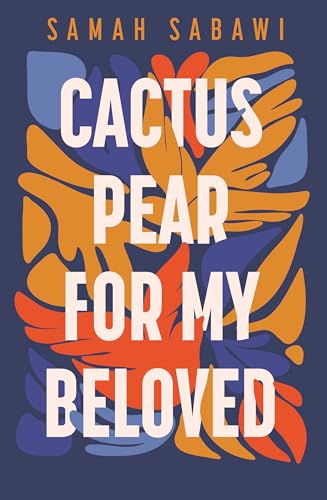
  • Helen Ennis (ACT), Max Dupain (biography)
  • Amy McQuire (Qld), Black witness (nonfiction/essays)
  • Rick Morton (NSW), Mean streak (nonfiction)
  • Samah Sabawi (Vic), Cactus pear for my beloved (memoir) 
  • Martin Thomas (ACT), Clever men (history)
  • Tasma Walton (WA), I am Nannertgarrook (historical fiction)

This list seems to be a bit broader, as in less life-writing heavy, than it has sometimes been, but like last year, there is just one work of fiction.

You can vote for the People’s Choice award at this link, but voting closes on October 9.

Have you read any of these books?
2024 Mark and Evette Moran Nib Literary Award shortlist

Recently, I posted on the shortlist for the Barbara Jefferis Award, which has a very specific goal concerning the depiction of women and girls in a positive way or in a way that empowers the status of women and girls in society. Today, I’m sharing another shortlist for another award with a specific focus. The award is the Mark and Evette Moran Nib Literary Award and its focus is “Australian research-based literature”. It is offered through a municipal council, the Waverley Council in Sydney, which also makes it unusual.

Like the Barbara Jefferis award, and indeed the Stella Prize, this award is not limited by genre or form – that is both fiction and non-fiction are eligible. The judging is based on “on literary merit, research, readability, and value to the community”. I have written about it before, so if you are interested in its origins and intentions please check that link. Previous winners include historians Alison Bashford and Claire Wright, biologist Tim Low, novelists Helen Garner and Delia Falconer, and journalist Gideon Haigh.

Last year, the winner’s prize doubled in value from $20,000 to $40,000, due “to an ongoing multiyear commitment by the award’s principal sponsors, Sydney philanthropists, Mark and Evette Moran, Co-Founders/Co-CEOs of the Mark Moran Group”. This makes it a significant prize. There is also a People’s Choice Prize of $4,000 and the six shortlisted books receive $1,500 each.

The judges for the 2024 award are poet Jamie Grant, publisher Julia Carlomagno, and writer Angela Meyer (whom I’ve reviewed a few times here). They narrowed the shortlist to 6 books, from 175 submissions. The announcement quotes them as saying:

“We were impressed with the breadth and calibre of this year’s entries, which ranged across genres, forms and styles. The six chosen books cast a lens both global and intimate, exploring issues of gender, class, nation and family, and emphasising the importance of community. We congratulate all the shortlisted authors.”

The 2024 shortlist

  • Shauna Bostock, Reaching through time: Finding my family’s stories (Allen & Unwin, First Nations family history)
  • Deborah Conway, Book of life (Allen & Unwin, memoir, kimbofo’s review)
  • Ryan Cropp, Donald Horne: A life in the lucky country (La Trobe University Press, biography, Lisa’s review)
  • Anna Funder, Wifedom (Hamish Hamiliton, biography, my review)
  • Melissa Lucashenko, Edenglassie (UQP, historical fiction, my review)
  • Dave Witty, What the trees see: A wander through millennia of natural history in Australia (Monash University Press, ecoliterature/nature writing)

As commonly happens with this award, life-writing features heavily in the shortlist. Like last year, there is just one work of fiction. But, unlike some years, I’m pleased to have read two of the shortlist!

If you wish to vote for the Nib People’s Choice Awards, you can do so from now until 17th October, so click here to register your choice. For more information on the award overall, check out Waverley Council’s announcement.

The winner of the overall prize and the People’s Choice Award will be announced on 27 November.

Have you read any of these books?

Litblog reviews – What you said

Help Books Clker.com
Courtesy OCAL, clker.com

Two weeks ago I wrote a post about what readers look for in litblog reviews. There were some wonderful responses with a reasonable consensus, so I thought it would be worth reporting on that. Here goes …

Style and format

Most people prefer a “personal and quirky” (to use Stefanie’s description) style to a more formal academic one. They want to hear the blogger’s “voice”. Some suggested that the style can vary with the type of book reviewed.

Readers want analysis – that is, reasons, literary or otherwise, for the blogger’s opinions – over what Catherine, Laura and others described as unsupported gushiness, cursoriness and venom. DKS at Pykk said she was looking for “discussion” about books rather than reviews per se, and Stu welcomes comparison with other works.

Short reviews are preferred, though a couple of commenters like longer ones.  And everyone wants essay-style rather than dot-points.

Few commented on tags, categories and labels, though one did say “author” and “country” tags were useful. This makes me think that tags (or whatever, depending on the blog platform) may help people find a blog but, once there, readers tend not to use them to navigate around the blog. Then again, perhaps I asked too many questions and this one didn’t really engage the commenters.

In addition to my questions, other ideas were offered, including the need for white space to make reading easier on the eye.

As for the Oxford comma? It was a pretty resounding no – except to avoid ambiguity.

Content

Most of my questions were to do with content and so to keep it short I am going to use dot points. Shock! Horror! But, rules are made to be broken, aren’t they!

  • Plot summary and spoilers. There was an overwhelming “yes” for a plot summary – as long as it’s not too long – and “no” for spoilers (though one or two don’t mind spoilers, particularly with a warning).
  • Background information about the author, etc. Again, most people like the inclusion of some background. But there were qualifications. People only want information that adds context to the work being discussed, otherwise a link to another site (such as Wikipedia or an author site) is the way to go.
  • Quotes. Quotes are generally liked too, but not too many or too long, and accompanied by a reason for their inclusion.
  • Images. Not many seem to care about this but Kim did make a point about including picture credits. Ah, a woman after my own heart.
  • Awards won. Again, this was not a hotly contested issue. Some found awards information useful, some didn’t care, and one didn’t want it.
  • Well-known versus lesser-known or hard-to-get books. There wasn’t a lot of discussion on this topic, either, but those who did, such as Karen Lee and Judith, said they read blogs to discover new-to-them works. They didn’t seem to mind whether those books might turn out hard to get. After all, there are always libraries and on-line second-hand booksellers to help with this, aren’t there?
  • Reading challenges. Only one response to this, and it was a no. This suggests to me that challenges are fine for bloggers to take part in, but they are not important to those who read blogs.
  • Publication details: The few who responded on this were generally in favour but didn’t see it as essential.
  • Links to other reviews: Again, there was minimal response to this question.
  • Information about where to buy the reviewed book: There was minimal response here too, and the two who did respond said “no”.

Some other ideas were offered about content. Justine said she particularly wants to know whether a trusted blogger recommends the book being reviewed. Delia and Tracey like to know why the blogger chose that book to read. And John talked of developing a critical culture, part of which involves, he said, relating the reviewed book to other books and identifying its place in the wider culture.

SO, thanks everyone for responding to my post with such enthusiasm and thoughtfulness. You’ve given me much to think about …

Note: I haven’t named every commenter in my response here, but please know that every comment was read and did contribute to this follow-up post.

What do YOU look for in a book review?

Help Books Clker.com

(Courtesy OCAL, via clker.com)

Way back in January 2011, Peter Rose, editor of the Australian Book Review, described what he looks for in new reviewers. Of course, he’s writing about reviewers for a serious journal, but it got me thinking about what blog readers look for when they visit litblogs. And so, I thought I’d ask. I know what I like, but what do you?

First, do you look for something different in a litblog review from one in a newspaper? And, whether yay or nay, what do you want in a litblog review?

  • A summary of the plot or a longer description of the story? How important is it to avoid spoilers?
  • Information about the author and other background material to the book? In the review, or as a link to another site such as Wikipedia?
  • An objective analysis of the book in terms of its literary merit or a more conversational chat about what the reviewer likes?
  • Lots of quotes/excerpts, few or none?
  • Essay-style or headings and dot-points?
  • Long or short?
  • Images?
  • Awards won?
  • A discussion of well-known easy-to-get books or lesser-known and perhaps harder-to-find ones?
  • Tags/Categories/Labels? If so, what sort of categorising do you find most useful for delving into a blog?
  • Reading challenges?
  • Publication details?
  • Links to other reviews?
  • Information about where to buy the book?
  • And, for fun, the Oxford comma or not!

I know most of these are not necessarily either/or propositions, and you don’t have to answer them all, but I’m sure you have preferences.

Mind you, I’m not guaranteeing I’ll do what you say. This is my blog and I’ll write what I want to … but, who knows, we might find a fit, so I just thought I’d ask …