Back in 2013, I wrote about the Hazel Rowley Literary Fund which was set up in 2011 by Rowley’s sister and friends, in association with Writers Victoria. Hazel Rowley was, as many of you will know, one of Australia’s most respected biographers. Her subjects were diverse, and not exclusively Australian. Indeed, most were not Australian, as besides the Australian writer Christine Stead who spent much of her writing life overseas, she wrote on the African American writer Richard Wright, the French writers Simone de Beauvoir and Jean-Paul Sartre, and the American power couple, Franklin and Eleanor Roosevelt (my review). Unfortunately, Rowley, born in 1951, died too young – of a cerebral haemorrhage in New York in 2011.
The aim of the fund was “to commemorate Hazel’s life and her writing legacy through activities that support biography and writing in general”. Its main vehicle was the Hazel Rowley Literary Fellowship which provided money to support a writer researching a biography, or some aspect of cultural or social history compatible with Rowley’s interests. It was offered annually, with the initial award of $10,000 gradually increased to the $20,000 this year’s winner received.
Now, those of you with eagle eyes may have noticed that I wrote “was”. As Wikipedia reports, which I confirmed on the official website, the Fellowship ends with this year’s award. The website summarises its achievements in this paragraph:
The Fellowship has been running for the past 14 years since Hazel died in March 2011. It was created to honour Hazel as a skilled biographer and to encourage others to write with the same care and enthusiasm in this time-consuming and exacting genre. Based on Hazel’s own experience we recognised the need to support a work in progress by providing money for research and travel. Over the past 14 years the Fellowship has supported more than 20 writers to progress and finish their projects.
They do not say why it is ending, but presumably the money has run out. Bequests, even well managed ones, do not last forever. I am guessing, but perhaps it was a case of either offering decent prize money – as in a useful amount – until it runs out, or award small amounts that risk not being enough to make a real difference to the winning project.
So now, the final award … $20,000 is going to Jennifer Martin for her proposed biography of Austrian-born Eva Sommer. She was the inaugural Walkley award winner in 1956 when she was a cadet on the Sydney Sun. She died in 2019 at the age of 84. The fellowship also gave $10,000 to each of three commended writers: Monique Rooney, Theodore Ell and Ashleigh Wilson, who are writing on Ruth Park, Les Murray and Barry Humphries respectively. All good subjects, but I’d love to see Ruth Park done.
You can see the complete list of awards made, including which ones have – to date – resulted in publication, as well as the shortlisted authors and their projects, at the above-listed Wikipedia page.
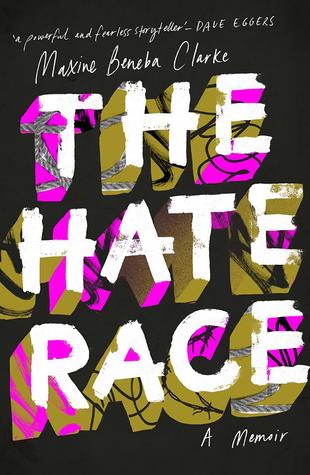
Of the 15 winners to date (including this year’s which, by definition, is presumably still in project stage), 9 have been published, and I have reviewed one of them, Maxine Beneba Clarke’s The hate race. I’d like to read several others, but if I had to choose one, it would be Mandy Sayer’s on Australia’s movie-making sisters, The McDonagh Sisters.
However, there are some on the shortlist that I would also love to see come to fruition, including those on Louisa Lawson (Michelle Scott Tucker), David Malouf (Patrick Allington), Gerald Murnane (Shannon Burns) and Amy Witting (Sylvia Martin). Hmm … given Sylvia Martin was later shortlisted for a different subject, which has now been published – Double act: Eirene Mort and Nora Kate Weston – I fear for my Amy Witting wish.
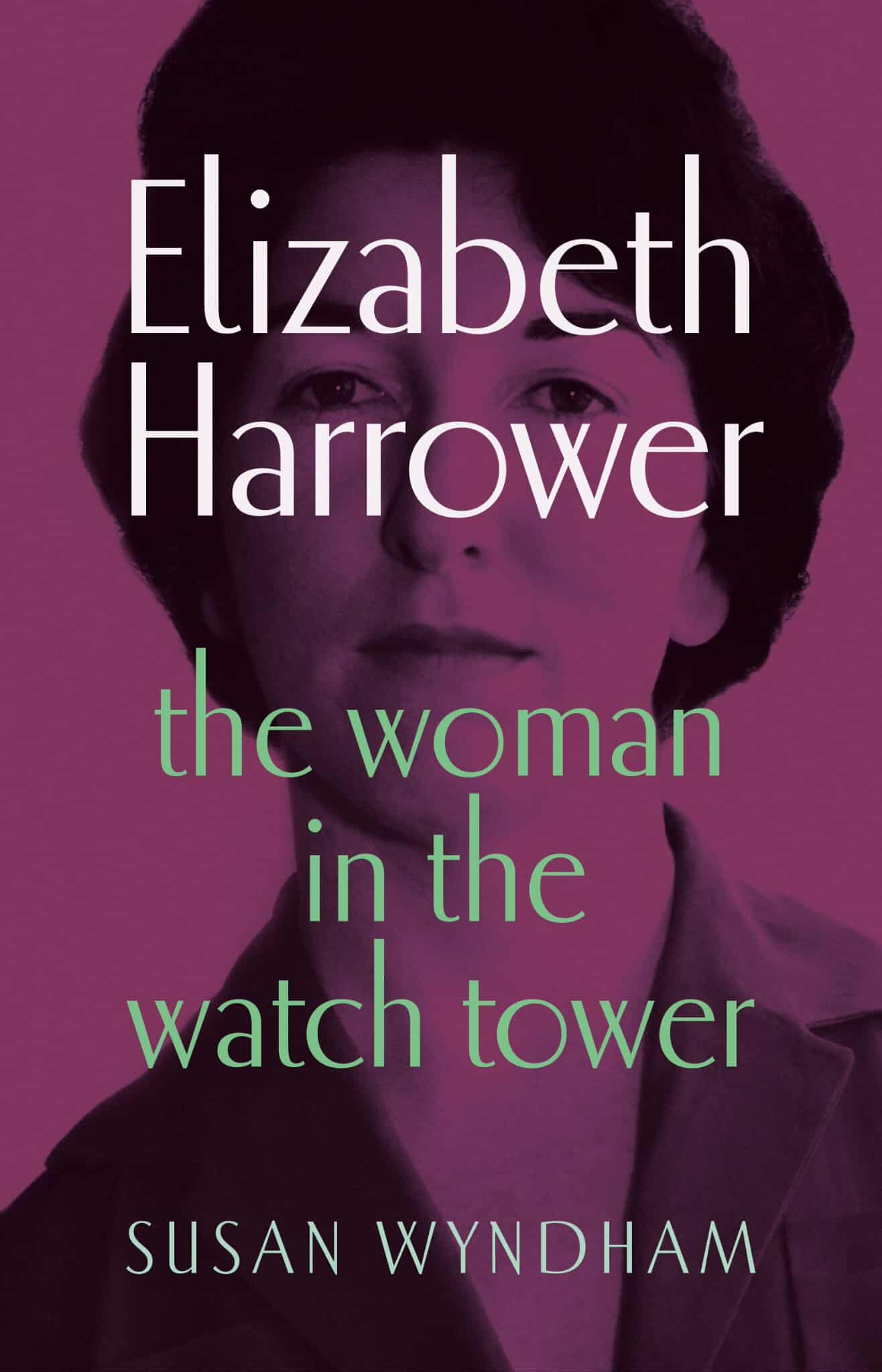
This brings me to the fact that, of course, several on the shortlist have been published, including those on Shirley Hazzard (Brigitta Olubas, on my TBR), Elizabeth Harrower (Helen Trinca, my review), Elizabeth Harrower (Susan Wyndham, on my TBR).
What these lists show is that biography is alive in Australia. How well it is, is another question. Writing a biography is no simple task. It can take years (and years) of research during which authors receive no money – unless they win or obtain fellowships like this one. It’s a shame it has ended, for whatever reason, but we should be grateful for the 15 years of support it did give.
I’d love to hear your thoughts on biographies. Do you like them? Do you have favourites? What do – or don’t you – like in them?
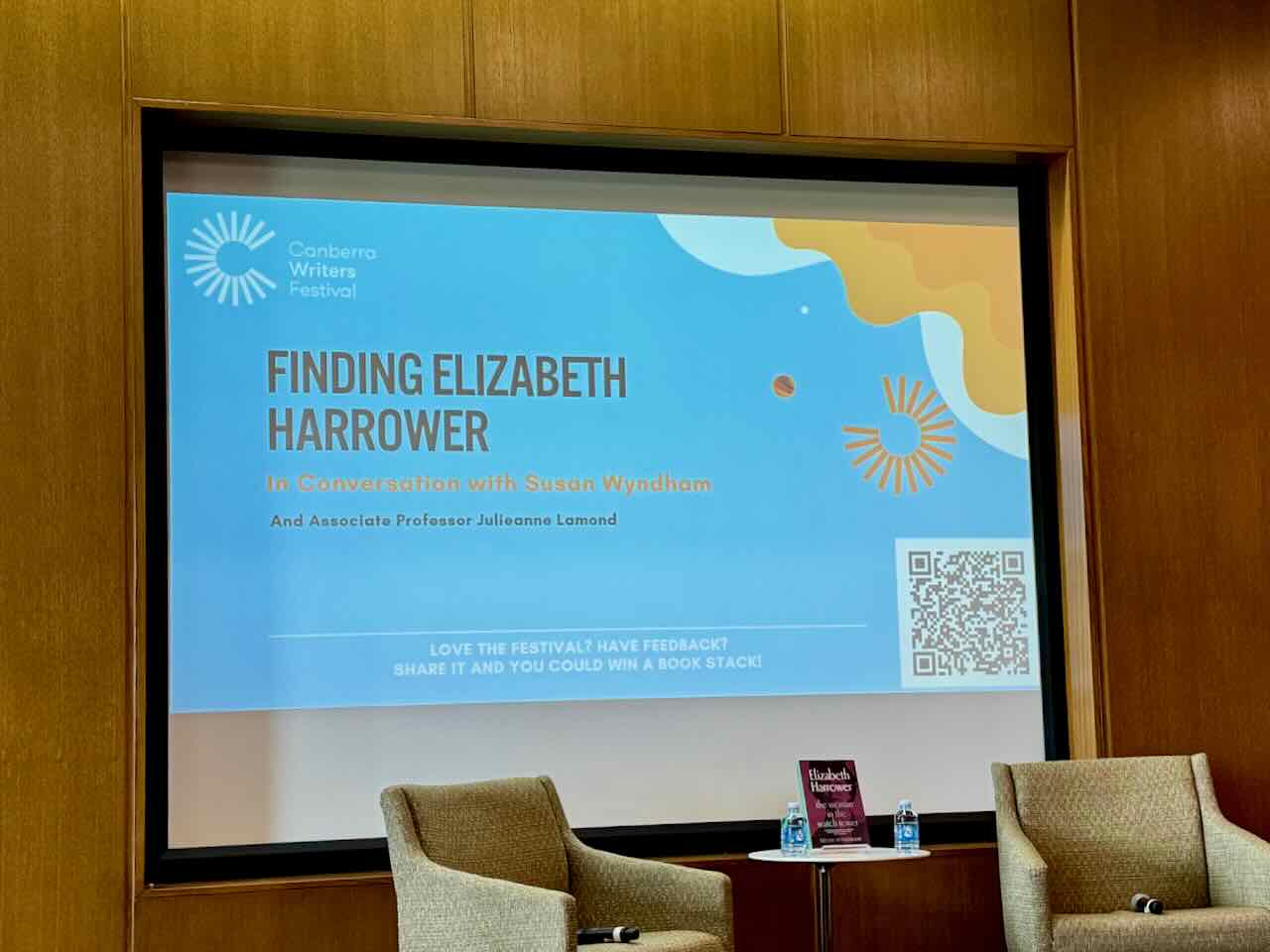
A literary biography can be a truly fascinating exploration of the life of an author beyond their pages, and so it is with Susan Wyndham’s Elizabeth Harrower: The woman in the watch tower. Harrower wrote some of the most original and highly regarded psychological fiction of the twentieth century. Then she abruptly stopped writing in the 1970s and became one of the most puzzling mysteries of Australian literature. Why didn’t she continue? What part did her circle of famous friends play? Why is her work now enjoying a remarkable renaissance? Join ANU Associate Professor of English, Julieanne Lamond and writer, journalist and former literary editor of The Sydney Morning Herald, Susan Wyndham for this conversation.
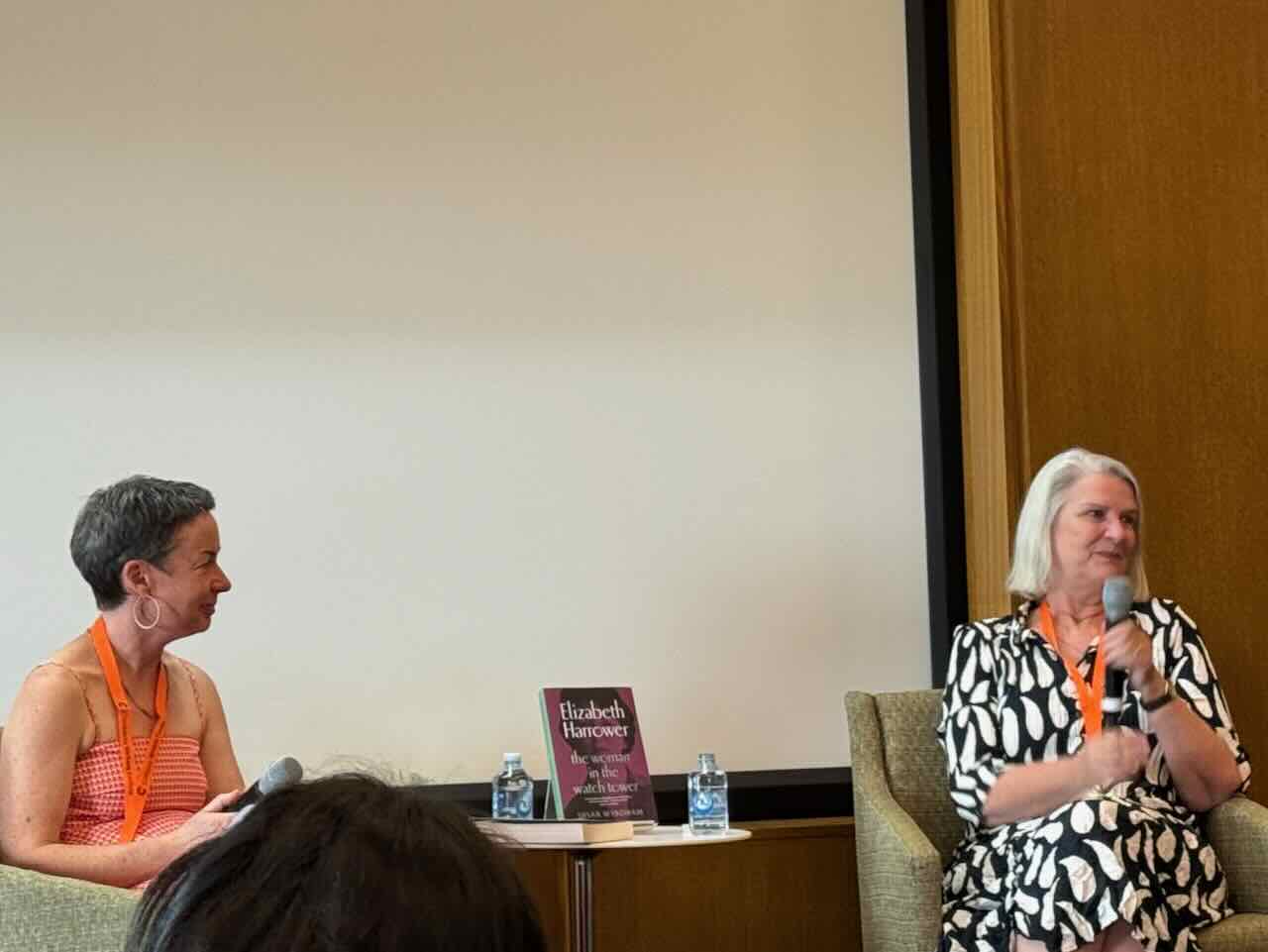
Julieanne Lamond, who teaches English at the ANU, introduced Susan Wyndham, journalist, literary editor and author, most recently, of the biography of Elizabeth Harrower: The woman in the watch tower.
There wasn’t a lot that was new for me in this session, because I’ve read a good proportion of her letters with Hazzard (not reviewed yet, because not finished) and Helen Trinca’s Harrower biography (my review). But I’ll document my notes for the record – and, reiteration always helps the memory.
Julieanne started with the obvious question to a biographer …
Why write about Elizabeth Harrower?
Susan first heard of Harrower when she won the Patrick White Award in 1996, but didn’t read her books until 2014 when Text was publishing her novels, including talking Harrower into publishing the shelved novel, In certain circles. This was Susan’s impetus to read and interview Harrower. She found her novels vivid, and was stunned by their power. But, over the years, she had many questions that were left hanging.
After Harrower’s death in 2020, her papers became available. Susan also knew that Brigitta Olubas was working on Shirley Hazzard with whom Harrower had a long and deep correspondence, so her interest was sealed.
On her childhood– and its influence on her writing
Harrower, like Trinca, found many holes in Harrower’s story. She was able to fill some through her research, but not necessarily fully. Harrower painted over her origins, saying she was born in Sydney not Newcastle. She always called herself a “divorced child” and said she “never saw happy marriage” when she was young.
Susan jokingly said that if you are writing a biography, pray for a messy family, because stories about divorces, crime, deaths will be documented in government and other records. After her parents’ divorce when she was 4, Harrower lived with her grandmother, which inspired her novel The long prospect (my review). She was an only child, and solitary, though Susan did track down a childhood Newcastle friend. Overall, she had to make her own way through her childhood – and was a great reader.
Her childhood was divided in two parts – up to 12 in Newcastle, then she joined her mother in Sydney, with her mother’s new partner (and perhaps husband). This “stepfather”, R.H. Kempley was the model for Felix in The watchtower (my review), a book which still feels modern, and certainly relevant.
Julieanne segued into asking about Felix and Harrower’s intense psychological portrait of a coercive controlling relationship. Susan didn’t want to take away from Harrower’s creativity, because she was a great observer of people – hence the biography’s title. Indeed, Harrower said, “I wouldn’t have survived if I experienced everything in my novels”.
Susan described R.H. Kempley, whose name she tracked down through a brief mention she found in Trove about Harrower’s parents expecting her arrival back from England with her friend (and cousin) Margaret Dick. Her research into him found much evidence of crime – selling moonshine and blackmarket alcohol, debtor’s courts, and the like. Harrower felt shame, but he was a gift to her as a writer if not as a child.
Harrower, Susan believes, ran away from domesticity, determined to be independent and not controlled by anyone, but money was always a problem.
On whether she saw herself as a feminist
Harrower resisted the term, didn’t connect with it, but the way she wrote and lived her life showed she “knew it all”. Anne Summers included her in Damned whores and God’s police in her chapter on women writers.
On the shape of her career or, why she didn’t become the writer she set out to be
Those of you who know Harrower’s trajectory will know that she did not publish a novel after The watchtower in 1966, until Text Publishing republished her novels in the early-2010s, and talked her into publishing her unpublished manuscript, In certain circles (2014, my review).
There is no easy answer to this question said Susan (as Trinca also explored). Her novels were well received critically, and after The watchtower, which was published in Australia, everyone was waiting for her next. She received a Commonwealth grant, but was uncomfortable about it. She always said she wrote under difficult circumstances. She did write short stories and plays, but Susan thinks she’d lost her drive. She was trying something different, but it didn’t “come from her heart or her guts in the same way” as the four published novels had.
She was disappointed not to win the Miles Franklin Award for The watchtower. Also, her mother died, which paralysed her emotionally. She never got her momentum back. She became emotionally involved in politics. Having always been a great Labor supporter, she threw herself into supporting the party with Whitlam’s win in 1972. She was visiting Christina Stead in 1975, when the dismissal happened and was outside Parliament House when Whitlam made his speech. Also, she was enjoying her social life.
On seeing other writers through the lens of Harrower
However, although she only published one novel in Australia after her return from London in the 1960s, she moved in literary circles. She was not a big personality, but people loved her parties and she was a devoted, loyal, “almost too attentive” friend.
This is where her letters with Shirley Hazzard – from the 1960s to 2008 – come in, with their coverage of Harrower’s significant role in caring for Hazzard’s mother Kit. It took up a lot of time. She was willing, but resentment did build up. The supportive picture we see in her letters to Hazzard, is not the same one seen in her letters to and conversations with others. She didn’t like conflict, but she didn’t like feeling put upon, either. This – along with the fact that she was a giver but didn’t like accepting generosity – was probably behind the break in the friendship that occurred during her visit to Hazzard and her husband on Capri.
Harrower had many writer friends, including, significantly Patrick White, Kylie Tennant and Judah Waten. There was some discussion about these, particularly about White who was “a bit of a big brother figure”. They talked on the phone every Sunday, went to shows together, shared an intellectual life together. During the Q&A, Susan added that they had arguments, and shouted at each other, but, although he hurt her at times, she was a peacemaker. It was a genuine friendship.
On Susan’s research, including her Fellowship at the NLA
The National Library not only has Harrower’s papers but those of many in her circle, which provided a wonderful mosaic that offered different ways of looking at Harrower. Cross-referencing enabled her to solve mysteries, such as who she went on a cruise with – a cruise to Japan from which she jumped ship in Brisbane. (Harrower doesn’t provide the person’s name in her Hazzard letters, but did elsewhere. She was “annoyingly discreet”, and didn’t always name people. In this case, she named “Kylie” in a letter to Christina. Her relationship with Kylie was long and fraught.)
Unfortunately, like many writers, Harrower also destroyed papers, such as diaries and letters to her mother.
Q&A
On her relationship with readers: back in the 1950s and 60s, there were no public events, but she was reviewed and did have champions in the literary world. However, after being republished in the 2010s, she did her first ever public events, always with her publisher Michael Heyward, and she loved it. Her responses were always “beautifully formed, but left a whole lot out”. The 2017 Adelaide Writers Week was dedicated to her. She said there, that the greatest human quality was kindness.
On not continuing to write: Susan reiterated some of what she’d said during the conversation, but added that caring for Kit was probably also an issue. Susan thinks nothing was going to get her to write.
On which book to start reading Harrower: Probably The watchtower (her fourth novel), and then The long prospect, which is exactly my order! But Susan is becoming more fond of The Catherine wheel, the only one set in London
I enjoyed the session, though more on biography-writing itself would have been interesting. I could have asked a question, I guess!
Canberra Writers Festival, 2025 Finding Elizabeth Harrower Saturday 25 October 2025, 1-1:30pm
The Michael Crouch Award is part of the National Biography Award (NBA) suite of prizes. I have written about the NBA before, but have never specifically focused on the Michael Crouch Award.
But first, a quick recap … the National Biography Award has been going since 1996, and celebrates excellence in life writing, that is, in biography, autobiography and memoir. It is, apparently, Australia’s richest prize for Australian biographical writing and memoir, with the prize-money being:
$25,000 for the National Biography Award winner
$2,000 for each of the six shortlisted authors
$5,000 for the Michael Crouch Award
Michael Crouch Award
Michael Crouch was one of the original sponsors of the NBA, but died in 2018. In 2019, the award came under new sponsors, who not only increased the prize money for the shortlisted authors, but also created a new prize to honour Michael Crouch. Named, obviously, the Michael Crouch Award, it is for a first (debut) published biography, autobiography or memoir by an Australian writer. It has been awarded since 2019, but most of the NBA reporting focus has continued to be the “main” award.
So, to give these writers some extra air, I’m listing here all its winners to date:
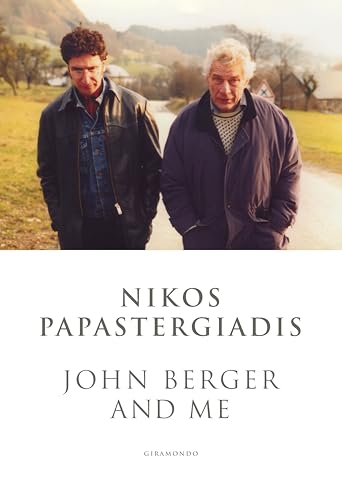
2025: Nikos Papastergiadis, John Berger and me (Giramondo Publishing, biography/memoir)
2024: Jillian Graham, Inner song: A biography of Margaret Sutherland (Melbourne University Press, biography, Lisa’s review)
2023: Tom Patterson, Missing (Allen & Unwin, biography)
2021: Andrew Kwong, One bright moon (HarperCollins, memoir)
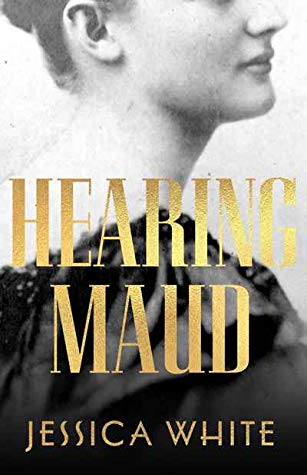
2020: Jessica White, Hearing Maud (UWA Publishing, biography/memoir, my review)
2019: Sofija Stefanovic, Miss Ex-Yugoslavia (Atria Books, memoir)
It’s interesting, but not surprising, that the memoirs have it.
Having read several hybrid biography/memoirs, including Jessica White’s, I am particularly interested in this year’s winner. I enjoy the process – if done well of course – whereby a writer explores another person through some prism of their own life, though this prism varies widely. In some cases, the writer and subject are related (like mother and daughter), or they are friends (like Papastergiadis and Berger), or they have something in common (like deafness in the case of Jessica White and her long-dead subject, Maud Praed). If you want pure biography, these don’t do the job, as they tend not to be comprehensive. But, what I like about these hybrids, is how the writer explores some aspect of their subject’s life story alongside, or through the prism of, their own perspectives or experiences. Done well, and particularly if both writer and subject are interesting, this form can be satisfying – and illuminating.
This was the case with Jessica White’s Hearing Maud, as I discussed in my post, and I can understand its being the case with Papastergiadis’s book. The judges called it “an original hybrid form”. The website continues:
The judges chose John Berger and Me for the Michael Crouch Award for a Debut Work for its originality and clever, non-linear but accessible structure. The quality of the author’s perceptive, lyrical, subtly humorous prose also stood out among a highly competitive field of debut books. A unique and highly readable blend of biography and memoir.
And there, I think, is a major reason why I enjoy reading these hybrids, the fact that there is no set form or formula. Each one can reinvent the wheel, with authors free to choose the approach that best suits the story they want to tell, the ideas they want to explore. It’s exciting to read books like this where authors have to work out from scratch how to start, proceed, and finish!
As for this latest winner, I am particularly interested, because John Berger’s Ways of seeing made a lasting impression on me when I read it – and saw the BBC series – in the late 1970s. I can imagine why such a man would interest a sociologist like Papastergiadis, but I think their friendship and points of contact ended up being far deeper and broader than just sociology. I’m so tempted.
Have you read any of these winners – and/or are you interested in hybrid biography/memoirs?
Eight years ago, I wrote a Monday Musings on Australian literary biographies, but the main focus there was on novelists. With this month being National Poetry Month and with, coincidentally, this year’s National Biography Award going to a biography of a poet, it seemed a match made in heaven. In other words, it seemed appropriate to share some biographies of Australian poets, on those writers, that is, for whom poetry was their main literary output.
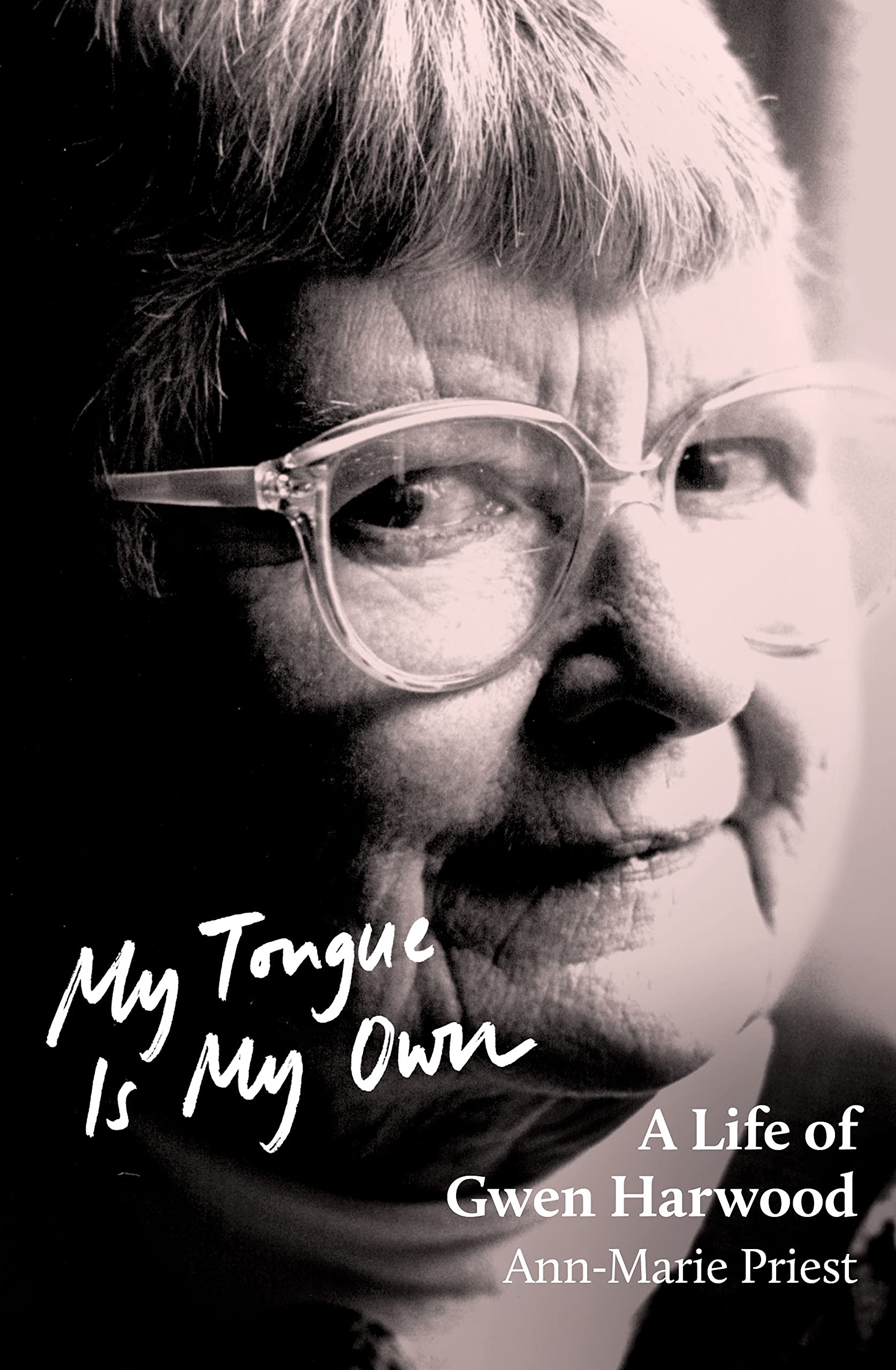
In his latest emailed newsletter, Jason Steger, Literary Editor of the Sydney Morning Herald and The Age, writes about this year’s National Biography Award winner, Ann-Marie Priest’s, My tongue is my own: A life of Gwen Harwood (2020). Harwood, some of you might remember, was one of Edwina Preston’s inspirations for her novel Bad art mother (my review). As a woman poet, she had to fight hard for recognition by the male-dominated publishing world. Steger explains that “Harwood’s was a complex life and Priest had to persevere to sort it all out”. Two would-be biographers, Alison Hoddinott and the late Gregory Kratzmann, who edited her collected poems, were, he explains, defeated by the task. Not Priest, though, for which we should be grateful. One of the judges, Suzanne Falkiner, says Steger, put it this way:
Ann-Marie Priest has captured completely the sprite-like nature of one of Australia’s finest poets; a woman who used a fierce intellect and penchant for trickery to upend dusty institutions that steadfastly refused to see women as capable or talented. Through these pages, the great poet feels so alive.
To completely capture the nature of their subject must surely be a biographer’s goal, by which I mean it is not to fill up the pages with unending chronicling of carefully researched facts, albeit facts are important, but to give readers a sense of who the person was. Sounds like Priest has done this.
Selected biographies of Australian poets
These are listed, in the time-honoured vein of biography sorting, by the last name of the poet being written about. It’s a small select list to get us started:
Sarah Mirams, Coasts of dream: A biography of E.J. Brady (2018): I had never heard of Edwin Brady (as a poet or otherwise) when this turned up in my search, but he was apparently “a socialist and bohemian who knew Henry Lawson and many other well-known writers”. He was mainly a composer of sea ballads. I haven’t read this but I am hoping to do a post on him next week, now that I’m on a Poetry Month roll.
Cathy Perkins, The shelf life of Zora Cross (2019, on my TBR): on poet and journalist Cross, who could be provocative and should, I think, be better known than she is. (See article by Jonathan Shaw on AWW.)
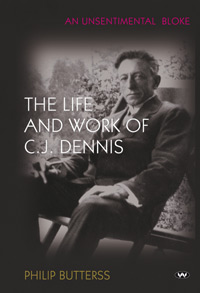
Phillip Buttress, An unsentimental bloke the life and work of C.J. Dennis( 2014): (my review)
W.H. Wilde, Courage, a grace: A biography of Dame Mary Gilmore (1985)
Gregory Bryan, Mates: The friendship that sustained Henry Lawson and Colin Roderick, Henry Lawson: A life (1999)
Deborah Fitzgerald, Her sunburnt country: The extraordinary literary life of Dorothea McKellar (2023, available for pre-order): apparently “the first definitive biography” of the author of one of Australia’s most favourite poems
Kathie Cochrane and Judith Wright, Oodgeroo (1994, on Oodgeroo Noonuccal)
Georgina Arnott, The unknown Judith Wright (2016) and Veronica Brady, South of my days: A biography of Judith Wright (1998)
“Enjoyably controversial” (John Docker)
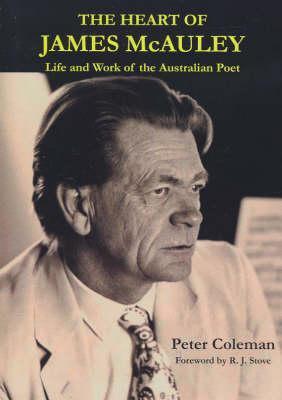
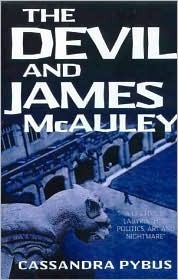
Biographies, of course, can be quite the battleground when there is disagreement about the legacy of the subject, particularly when that subject may have been controversial to start with. I found such an example in my research. It concerns the poet James McAuley, who was known for the Ern Malley modernist poetry hoax. I came across two biographies of him. One, The heart ofJames McAuley: life and work of the Australian poet, was published in 1980 and is by Peter Coleman. He was editor of Australia’s conservative journal Quadrant – which was founded by McAuley – and is on record as saying of McAuley that “no one else in Australian letters has so effectively exposed or ridiculed modernist verse, leftie politics and mindless liberalism”. The other was by Cassandra Pybus who could be described as Coleman’s political opposite. Her biography, published in 1999, was provocatively titled, The devil and James McAuley. Coleman wrote an excoriating review of it in which he detailed multiple inaccuracies and called it “a silly book degrading a great writer”. Literary critic and cultural historian, John Docker, launched Pybus’ “enjoyably controversial” book, concluding with:
Cassandra has written a lively, entertaining and enjoyable book, very alive to the conflicts and differences within conservative groupings. She has the daring to break with the stifling convention of Australian literary criticism, which bizarrely is that critics should abandon the critical function, they should be obsequious to Australian writers living and dead, they should puff and promote and endlessly praise them – as Leonie Kramer, Cassandra points out, has tirelessly effected for her friend McAuley.
Now that was a book launch! Not having read either book, I can’t make any judgements. It is possible that Pybus, writing 19 years after Coleman, had found more information on McAuley’s life that was not available to Coleman. It’s also possible that Coleman’s sharing political values with McAuley affected his assessment, just as Pybus’ different political views may have affected hers. Whatever the merits of this particular situation, it reminds readers of biographies to consider who is writing the biography and why. I do like biographies in which the biographer introduces their book with this sort of background.
(A revised edition of Coleman’s book was published in 2008, and Coleman spoke at the launch. Pybus still rankles. Ignore Tony Staley’s and Tony Abbott’s comments, if you like, and move on down to Coleman. I enjoyed his closing story.)
Last Thursday night we went to our fifth Seymour Biography Lecture at the National Library of Australia. We missed the last one in 2019 because we were travelling. Little did we know then that it would be three years before another one could be held. The Seymour Biography Lecture, which is one of the highlights on the Library’s calendar, is an annual lecture devoted to life-writing. It was endowed by Dr John and Dr Heather Seymour AO in 2005, and provides eminent ‘life writers’ with an opportunity to explore the business and craft of biography, autobiography or memoir.
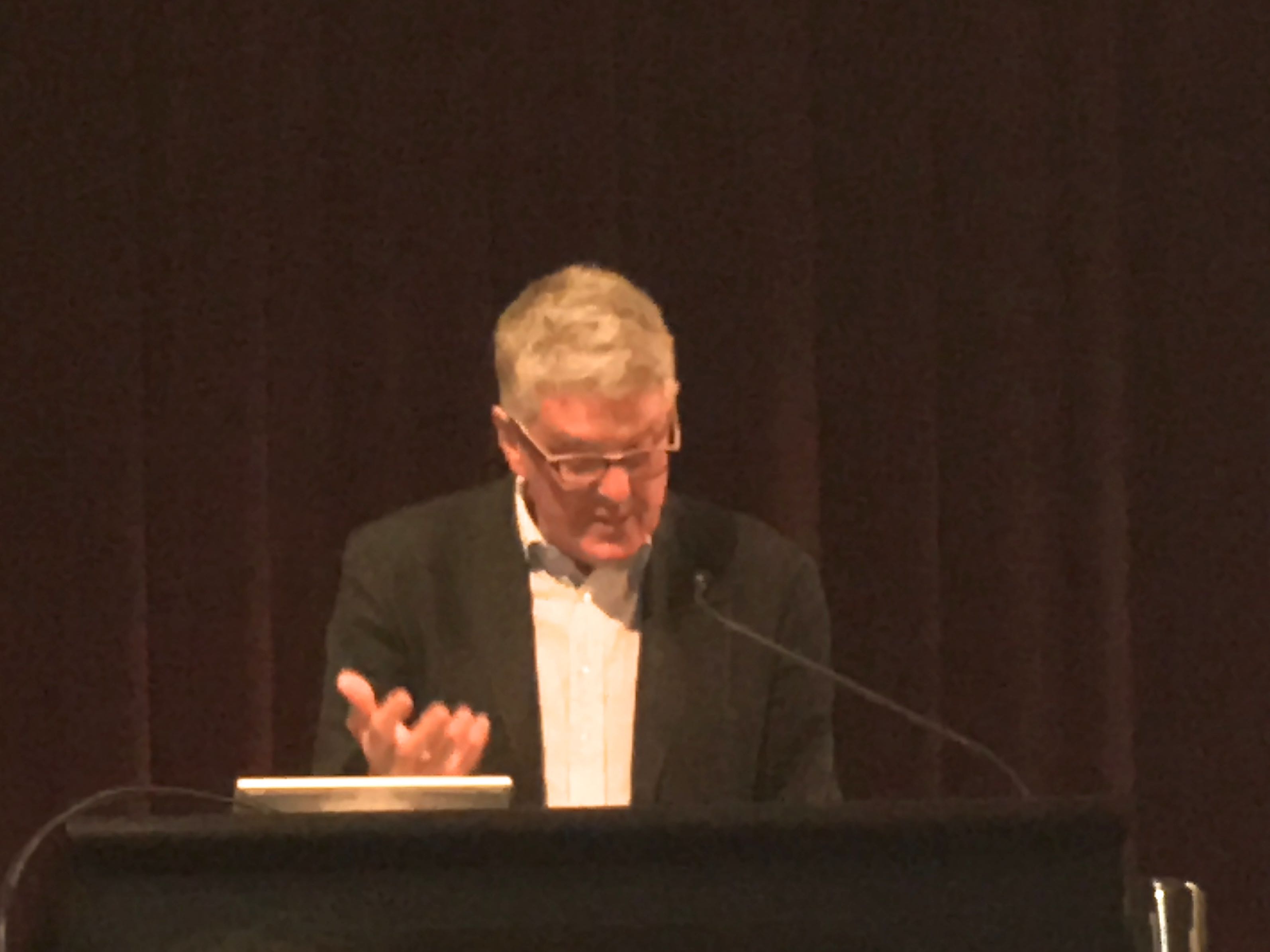
Jacqueline Kent, Sept 2022, National Library of Australia
This year’s speaker, Jacqueline Kent, was introduced by the NLA’s Director-General, Marie-Louise Ayres. She has an impressive life-writing track record, including:
A certain style: Beatrice Davis, a literary life (2001): won National Biography Award and the Nita B. Kibble Award
An exacting heart: The story of Hephzibah Menuhin (2008): won the Nita B. Kibble Award
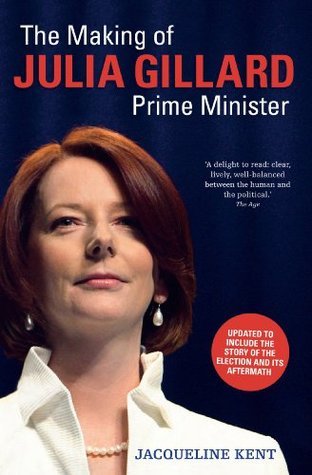
The making of Julia Gillard (2009): written before Gillard became Australia’s first female Prime Minister
Take your best shot: The Prime Ministership of Julia Gillard (2013): covers her Prime Ministership, and her story isn’t finished yet, said Kent.
Beyond Words: A year with Kenneth Cook (2019): a memoir; shortlisted for National Biography Award (Lisa’s review)
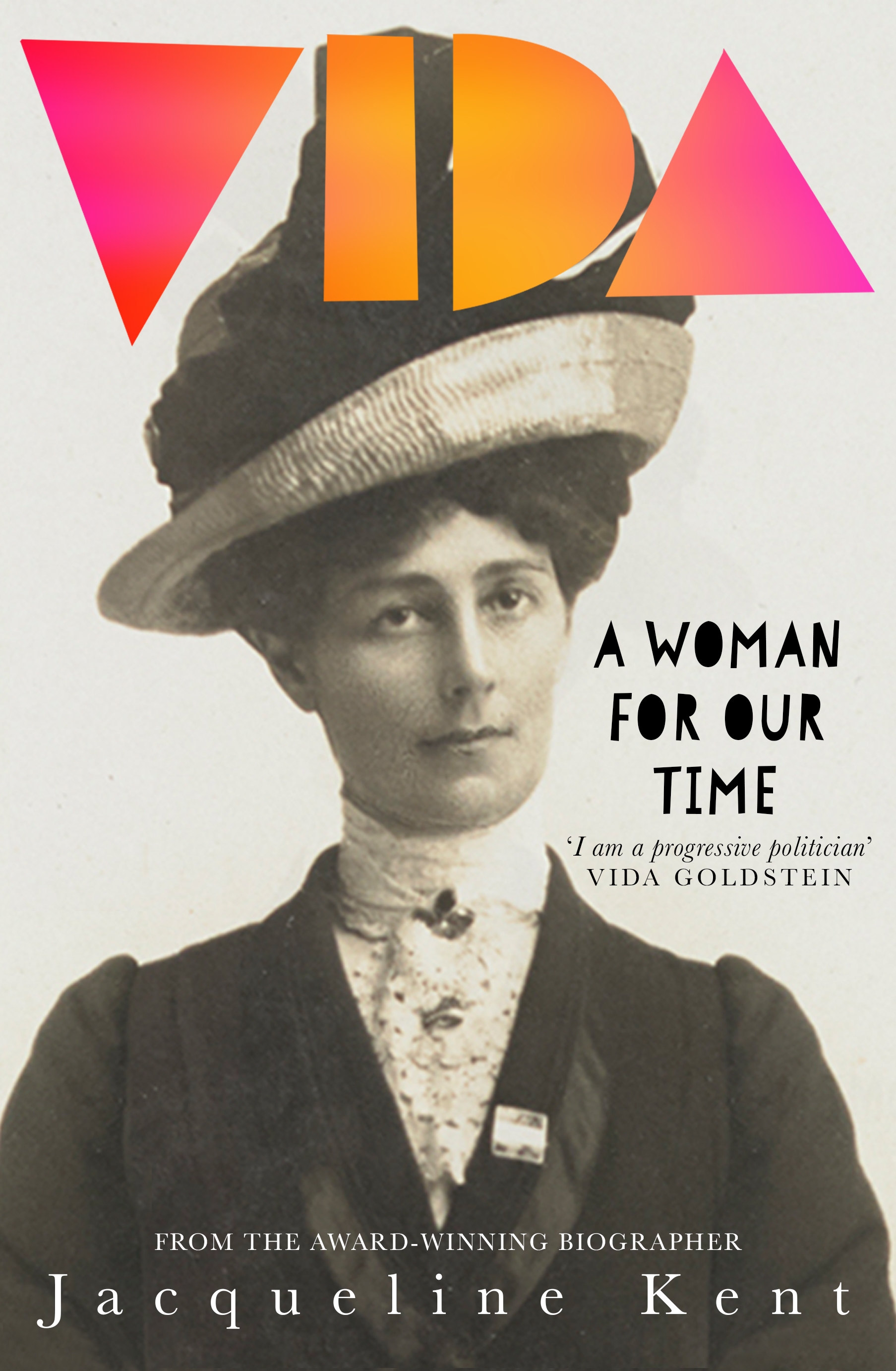
Vida: A woman for our time (2020)
Kent, though, first came to my attention long before these, with one relevant to my work, Out of the bakelite box: The heyday in Australian radio (1983). She trained as a journalist and broadcaster, but has also been a book editor and reviewer, and has written fiction for young adults. She was, I have to say, one of the liveliest Seymour lecturers I’ve heard, and is also the first woman I’ve heard (though 2019’s lecture was also by a woman, Judith Brett).
Kent set the tone she was to take by saying that “biography” is such an important word that maybe she should start with the great biographers of the past, like Tacitus, or Boswell, or Lytton Strachey, but she wasn’t going to. Instead, she was going to “lower the tone” and go to Donald Rumsfeld, which of course brought a chuckle from the audience. You can probably guess what’s coming and you’re right; she was going, she said, to structure her discussion by using Rumfeld’s now famous statement that
there are known knowns; there are things we know we know. We also know there are known unknowns; that is to say we know there are some things we do not know. But there are also unknown unknowns—the ones we don’t know we don’t know.
She said that this oft-maligned statement does contain some truths. (Yes, agree.) It also reminds her of a quote by Artemus Ward, that was loved by Abraham Lincoln: “It ain’t so much the things we don’t know that get us in trouble. It’s the things we know that ain’t so.” For a biographer all these knowns and unknowns can be quite a challenge.
She would these ideas, she said, through what she knows best, her own work.
Known knowns
What you know, said Kent, usually provides the impetus for starting a biography. It’s some interesting fact, or some central mystery (what made them do it, what did they think they were doing) that makes you want to investigate them. You write about them because “they are worth memorialising”. You also want to like your subject because you spend a few years with them.
Her first full biography was of Angus and Robertson’s legendary editor, Beatrice Davis, for whom she had worked. Davis was the “grand dame” – in every sense of the word. She did not like the new writers coming up towards the end of her career, like Helen Garner and Kate Grenville! Kent said that many books about publishing focus on the challenges and problems, but she want to write about what fun it also is. She wanted to give her profession its due. Also, she said, these days a book can be produced without ever seeing paper – writing, editing, publishing, can all be digital – so she also wanted to create a record of an industry that was changing.
As for Hepzibah Menuhin, she and her brother Yehudi were “rock stars” of their time. Kent’s interest here was in people with precocious talent, and what happens to them. Having been nurtured and feted as a musician, Hepzibah suddenly married, at the age of 17, a Victorian grazier and pharmaceutical company heir, and pulled back on her career. Then, she suddenly left her husband and 9- and 11-year-old sons to return to Europe. What someone to do that? She hurt a lot of people, said Kent, but had no idea of this.
Julia Gillard was suggested to her as a subject. Her interest here were what drove Gillard and what were the steps she took along her way. The mystery was what led her, as an up-till-then loyal Deputy Prime Minister, to undermine Kevin Rudd. Kent felt that Gillard had enormous dignity post-parliamentary-career, particularly in not getting involved in Australian politics, unlike others. She was a challenging subject, however, because she was guarded.
Vida Goldstein was a much easier subject because she was dead and she had no family, so there were no descendants to worry about. She had previously been written about in a worshipful way.
Known unknowns
These, said Kent, are the things you know you have to find out, the things that illuminate a subject. Often friends will share things you already know, because they think they have been privileged to know them. But some information can be hard to unearth. With Hepzibah Menuhin, a critical question was her divorce, the events surrounding her divorce. In this case, out of the blue, she had a stroke of luck when, visiting Hepzibah’s niece, she was suddenly given a bunch of correspondence written between Hepzibah and her father around the time of the divorce. This enabled her to finish the book.
Unknown knowns
This was not in Rumsfeld’s list, Kent said, but it refers to the things you don’t realise you know. Regarding her memoir about her life with the author Kenneth Cook, who was her husband for a year and is best-known for the novel Wake in fright. As she wrote the book, she realised that despite its bleakness, it had a jocular tone. It also, in fact, tells the same story as They’re a weird mob, except that this letter was specifically played for laughs. She also realised that Cook’s novel, The wine of God’s anger, is also the same story. It’s not an unusual story – the arrival of a stranger in a place unfamiliar to them – but that Cook told this story more than once was telling.
(Interestingly, she suggested that The wine of God’s anger is “the only complete Australian anti-Vietnam novel”. However, I can think of Josephine Rowe’s A loving faithful animal (my review). Any others?)
Unknown unknowns
These are the worst, said Kent. They can be the things you find out just when you are going into print, or, worse, when it’s too late.
The first is that your knowledge of the past–apart from, occasionally, a limited visual record and the odd unreliable survivor–comes entirely from written documents.
[…]
The second realization that strikes you is, in a way, the opposite of the first: the more material you dredge up, the more elusive the subject becomes … One instinct you need in doing historical research is knowing when to keep dredging stuff up; another is knowing when to stop.
But, you can’t make stuff up she said, and she referenced the controversial case of Dutch: A memoir of Ronald Reagan, by Edmund Morris, which was intended to be a biography but ended up being more fiction than biography. It was “presented as a proper researched biography” but, she said, you have a contract with reader, which means you can speculate but you must flag it.
She also talked about how small incidents you discover in your research can turn out to be real “depth charges”. One example was discovering that Beatrice Davis, working at a time when women couldn’t work after marriage, had got married during lunch in a Registry Office, and went straight back to work as Miss Davis. Hepzibah’s wedding photo revealed a very strange outfit which Kent suddenly realised was Hepzibah emulating Little Bo-Peep. (She was marrying a grazier. This outfit gave insight into her expectations.)
Then there was working out Vida’s washing. Vida was always praised for her looks, not what she said. Who did her washing, to enable her to look so fresh when she was on speaking tours? Questions like this drive you mad, Kent said. Julia had always described how poor she’d grown up, but then her parents bought her a car to drive to Melbourne when she left Adelaide as a young woman. This gave insight into her family’s love and their closeness. Details like this bring your subject alive on the page.
To conclude, Kent, with a bit of a wink, went erudite, sharing a quote from the London Review of Books. She said “this is a bit pay-attention-class”! Unfortunately, I didn’t pay attention, so missed the name of the writer she was quoting, and can’t find the full quote. It started something like, the “past is more unknown than known”. A cautionary point for biographers and historians.
Q&A
There was a short Q&A, which included the following:
On biographer’s role: there’s what biographers know and the public doesn’t. Often the public has a caricatured view. The biographer’s job is to show a multifaceted person (but Edmund Morris couldn’t find one in Reagan!)
On getting family/descendants’ support: people find it flattering to have their relative the subject of a book, but problems arise when questions get close to the bone (as they did for Gabrielle Carey with the family of Randolph Stow, but she managed to get around the issue.) She struck problems with extended family in her biography of Hepzibah, and Kenneth Cook’s children were not happy with her memoir. Families are a minefield.
On whether knowing the techniques of psychology helps: no, she doesn’t find it so; it tends to be too generalised, and can lead to too many rabbit holes, which biography is full of anyhow!
That seems a good point on which close this report. It was an enjoyable and entertaining lecture, which took a fresh, practical approach to the subject.
Time for another in my little Monday Musings sub-series on “supporting” genres. I’ve chosen Biography for this one, since the 2021 National Biography Award winner will be announced this month.
However, I have written quite a bit about Australian biography before:
Given all this, you might think that this post is superfluous, but I figured that it’s helpful to put all these together in one post as a resource for myself (and maybe for others too?) These posts provide significance evidence for the support of and interest in biography in Australia – and they mean that the rest of this post will be a bit different to the first two “supporting genre” posts.
Definition
You may have noticed that I described the Seymour Biography Lecture as “devoted to life-writing” – and here’s the rub, because there is quite a blurring of definitions when we talk about “biography” these days. Traditionally, biography has been seen as a detailed description of a person’s life written by a third person. Autobiography, on the other hand, is the story of a person’s life, written by that person. Then there’s memoir which focuses on a particular aspect or period of a person’s life, and is written, again, by that person. All of these come under the banner of “life-writing”. The problem is that, for example, the Seymour Biography Award is called “biography” but the lectures are, in fact, broader. Indeed, the first lecture we went to was given by Robert Drewe who has written, and who thus talked about, memoir.
This is fine but the nomenclature is strange, don’t you think? Even our National Biography Award is, actually, a national life writing award. It “celebrates excellence in biography, autobiography and memoir writing” says the Award website. Interestingly, though, while all these forms feature regularly in the shortlists, traditional biographies have tended to be the winners. A recent exception was Behrouz Boochani’s No friend but the mountains.
Life-writing now
Life-writing is big business. Search online and you will find many companies offering to help you write your life story, or to write your life story for you. You will also find courses on life-writing. Daughter Gums did one a few years ago at the ACT Writers Centre taught by memoirist Benjamin Law.
The Fellowship of Australian Writers NSW (FAWNSW) has an excellent page on the subject written by Dr Rae Luckie. They quote from La Trobe University’s description of its Unit for Studies in Biography and Autobiography.
Life writing is now one of the most dynamic and rapidly developing fields of international scholarship. It includes not just biography and autobiography, but also diaries, journals, letters, and the use of life narrative in various disciplines: history, anthropology, sociology, politics, business and leadership studies, sport, and others… In addition to its high academic profile, life writing generates great interest among the general public: works of biography and autobiography sell in vast numbers.
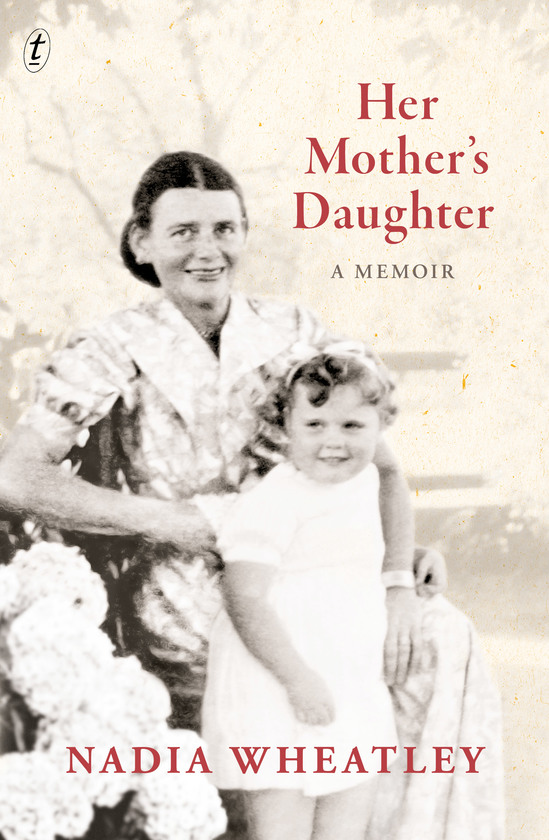
Luckie talks about changes in the field, saying that “writers whose work is included under the umbrella of ‘life writing’ have broken traditional auto/biographical boundaries”. She mentions works I read before blogging, like Inga Clendinnen’s Tiger’s eye, Helen Garner’s Joe Cinque’s consolation, and, even, Robert Dessaix’s “autobiographical novel” Night letters! While I enjoy the traditional biography, and have reviewed several here, I am not averse to reading writers who play with the form, like the hybrid-biography-memoirs I’ve reviewed (such as Nadia Wheatley’s Her mother’s daughter and Gabrielle Carey’s Moving among strangers)
The biggest change, though, is probably that academic historians are now embracing the form in a way they hadn’t previously. If you are interested in a discussion of the topic, check out this in the first issue of the Australian Journal of Biography and History. The authors comment on the fact that “there are now prizes to encourage biographical writing, lectures that feature prominent biographers, biography research centres and courses in universities, public conferences and so on.” Another interesting point they make is the significant role biography played in feminist history.
Biography – and life-writing – are now serious, as well as, marketable business. You heard it here!
Zeitgeist, or Serendipity?
And now for something completely different. It concerns those funny coincidences which happen in the literary firmament, like when David Lodge’s Author, author and Colm Tóibín’s The master, which are novels about Henry James, both came out in 2004. What was that about?
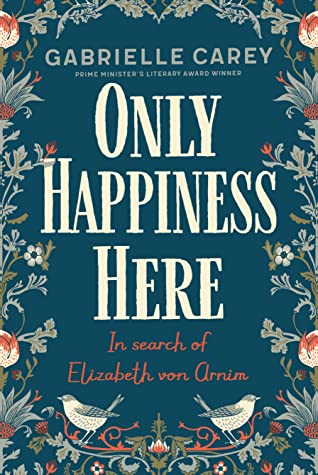
Well, I’ve noticed another strange coincidence: the recent publication of Jennifer Walker’s Elizabeth of the German Garden: A biography of Elizabeth Von Arnim (2017), Gabrielle Carey’s Only happiness here: In search of Elizabeth von Arnim (2020) and Joyce Morgan’s The Countess from Kirribilli: The mysterious and free-spirited literary sensation who beguiled the world (2021). Many of you, I know, have heard of Elizabeth von Arnim. Her best-known works are the satirically humorous Elizabeth and her German Garden and the popular Enchanted April which was made into a successful feature film starring many of our favourite grand dames of English theatre. For those of you who don’t know her, though, she’s a British novelist who was born in Sydney (Kirribilli) in 1866, but who moved to England with her family when she was three and never lived here again. Her connection with Australia is therefore tenuous, but she was a wonderful character who moved among the biggest literary movers and shakers of her time. I devoured many of her novels, and a memoir, back in the 80s and 90s when Virago published her. Why this flurry of interest now? (Not that I disagree.)
Do you read biography? If so, care to share some favourites?
With the US election going, going … but not quite gone it seems … and with a new biography of President-elect Joe Biden, Joe Biden: The life, the run, and what matters now by Evan Osnos, hitting the bookstands, I thought it might be apposite to consider the political biography in Australia. By “political biography”, I mean, not those multitudinous memoirs that seem to come out with mind-numbing regularity soon after a major leader leaves the stage, nor the more formal autobiographies, but those extensively researched, analytical, and hopefully objective presentations of politicians’ lives written not by themselves.
Researching this topic, I found a 2006 monograph documenting a workshop on political biography and administrative histories held at the ANU in May 2005. (This workshop, incidentally, included autobiographies and memoirs.) In the final chapter, it says of an informally generated list of “favourite” political biographies that:
all of them tell us about how we are governed, explain the thinking of past leaders, and contribute to political science by illustrating how personalities affect our political structures and policy. … all have contributed to a greater understanding of how politics works.
However, in the monograph’s preface, the writers recognise that political biography is a tricky beast, often being written by those who have sympathy for their chosen subject and who, therefore, tend to write favourable books. But, they argue,
biographies (and autobiographies) have much to offer the student of politics. Political biography is an alternative narrative of events — a personalised view stressing the familiar and the specific. It contributes the views of political actors — sometimes in a contemporary context, sometimes with the benefit of hindsight. It can reinforce existing accounts of events or produce new accounts. It can add new perspectives and insights to existing accounts. It provides a medium through which the personal ‘take’ on politics is able to be ‘written in’ to conventional accounts. Crucially, political biographies are often the most accessible and widely read form of political writing, attracting readerships beyond the purely scholarly interest or the political junkie market.
One of the most famous and authoritative political biographies of recent times is American Robert Caro’s five-volume The years of Lyndon Johnson, of which four have so far been published. Caro is now 85, which begs the obvious question, but you can read about his progress at the Wikipedia link I’ve provided.
Selected Australian political biographies
Below is a very select, and somewhat randomly chosen, list of recent-ish Australian political biographies. They are listed chronologically by date of publication, although to follow tradition I should perhaps have listed them alphabetically by biographical subject, or, even more interestingly, chronologically by birthdate of subject! Not surprisingly, these are all about prime ministers.
Blanche d’Alpuget’s Robert J Hawke: A biography (1982). One of the rare political biographies I’ve read (because my biographical interest tends towards literary subjects), this biography was published the year before Hawke became Prime Minister. It won the NSW Premier’s Douglas Stewart Prize for Non-fiction in 1983. D’Alpuget, who married Hawke in 1995, wrote a “complete biography” of Hawke, which was published in 2019, the year he died.
Allan Martin’s 2-volume Robert Menzies: A life (1993, 1999). I had to include this one, given Menzies was, in his time, and still remains, Australia’s longest-serving prime-minister.
Jenny Hocking’s 2-volume Gough Whitlam: The biography (2008, 2012). These volumes are just two of many biographies written about Whitlam, and just two of the several books written about him by Hocking. Hocking came to public notice recently for her successful court case to have the embargo lifted on secret correspondence [now dubbed the “palace letters”] between the then Governor-general, Sir John Kerr, and the Queen concerning the controversial dismissal of Whitlam’s government.
Judith Brett’s The enigmatic Mr Deakin (2018). Deakin was Australia’s second prime minister, so Brett’s biography is certainly one of those able to “benefit from hindsight”. This book won the National Biography Award in 2018, with the judges calling it among “the very best political biographies written in Australia”.
Patrick Mullins’ Tiberius with a telephone: The life and stories of William McMahon (2019). Having studied political biographies, Mullins wanted to write one, and McMahon – funnily enough – was there for the taking. So Mullins told the audience at last year’s Canberra Writers Festival. Good decision, because Mullins won two big awards with this – the National Biography Award and the NSW Premier’s Douglas Stewart Prize for Non-fiction. The NSW Premier’s Award judges commented that this was “an impressive work of political biography, an achievement all the greater for its unpromising, though fascinatingly complex, subject”. Poor Billy!
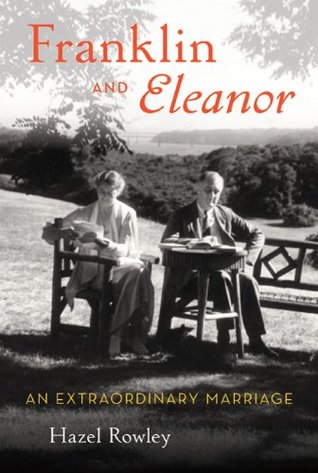
And here I’m going to sneak in one I have reviewed here. The subjects are not Australian, but the biographer is. The book is Hazel Rowley’s Franklin and Eleanor: An extraordinary marriage (2011) (my review).
A matter of definition
But here’s the interesting thing. While Franklin and Eleanor is about two consummate politicians, Rowley’s focus was their marriage. This made me think about who writes political biographies – in Australia anyhow. They tend not to be our “professional” biographers – people like Rowley, Brenda Niall and now, I’d say, Gabrielle Carey – but historians, like Judith Brett, Jenny Hocking and Allan Martin. Is the driver for writing political biographies a little different?
Journalists – like Blanche d’Alpuget, David Marr, Chris Masters – also tend to write biographies with a political bent, though sometimes their subjects are not politicians. Would we call Masters’ biography Jonestown: The power and myth of Alan Jones a political biography? Would we call David Marr’s books, Barwick on Australia’s longest-serving Chief Justice of Australia’s High Court, and The Prince about Cardinal George Pell, political biographies? Not technically, perhaps, but politics surely inspired and drove these books. Your thoughts?
And now the obvious question: Do you read political biographies? And, if so, would you care to share some favourites (or, even, not-so-favourites)?
I’ve not posted on many awards this year, but have decided to post on the 2020 National Biography Award, partly because I attended events last year involving each of the winners.
This Award was endowed in 1996 by Geoffrey Cains, and supported for many years by Michael Crouch, who died in 2018. It is now being supported by the Nelson Meers Foundation whose key objective is “to foster innovative artistic and cultural expression, and to encourage greater engagement with the diversity, complexity and richness of our cultural sector”. They increased the prize money for the shortlisted authors, and created a new prize to commemorate Michael Crouch, all of which started last year. The current prizes are:
$25,000 for the winner
$2,000 for each of six shortlisted authors
$5,000 Michael Crouch Award for a first published biography by an Australian writer
The shortlist for 2020 was announced on 9 July and comprised:
Chloe Higgins’ The girls: A memoir of family, grief and sexuality
Jacqueline Kent’s Beyond words: A year with Kenneth Cook(Lisa’s review)
Russell McGregor’s Idling in green places: A life of Alec Chisholm
Patrick Mullins’ Tiberius with a telephone: The life and stories of William McMahon
These were chosen from 89 entries, which, explained judge Margy Burn, ranged across classic biography, autobiography, intimate life writing and affectionate memoir. The subjects she said were equally diverse. The shortlist contains two biographies (those by McGregor and Mullins) and four works that are more autobiographical/personal life-writing in nature. This was similar to last year’s shortlist, and suggests a change – a loosening up – in our expectation and appreciation of biography and autobiography. Jessica White’s engaging Hearing Maud, for example, is what I’d call a hybrid biography-memoir.
This year’s judges were:
Margy Burn: librarian who has been responsible for Australian special collections at the National Library of Australia, and other state and university libraries; served on working parties for the Australian Dictionary of Biography; a foundation judge for the Kibble and Dobbie awards for life writing by a woman author and a National Biography Award judge in 2019.
MarkMcKenna: one of Australia’s leading historians, who has written several award-winning books, including From the edge: Australia’s Lost Histories, An eye for eternity: The life of Manning Clark, and Looking for Blackfellas’ Point: An Australian history of place.
Richard White: retired Associate Professor in Australian history from the University of Sydney in 2013, who has written or edited many books including Inventing Australia, The Oxford book of Australian travel writing, On holidays: A history of getting away in Australia, Symbols of Australia; has judged the Premier’s Literary Awards and other history prizes, and been involved in Australian history associations and journals.
2020 Winners
The overall winner, announced last night, 28 August, is Patrick Mullins’ Tiberius with a telephone: The life and stories of William McMahon. I attended and posted on a panel at the 2019 Canberra Writers Festival which included Patrick Mullins. He explained that he’d done his PhD in political biography at the University of Canberra in 2014, but hadn’t written one. He looked around and Billy McMahon, he said, “was there for the taking” (with “good reason” he added!) Researching McMahon, he became intrigued by the disconnect between the reputation (the derision) and the reality (twenty plus years covering all major portfolios as well as prime minister.) In his acceptance speech for the Award, Mullins quoted historian Tom Griffiths who says that the great virtue of history is its willingness to acknowledge complexity – and McMahon, and his legacy, surely make for one complex history! The judges wrote:
Mullins’ biography demonstrates a command and surety of voice which sustains the reader’s interest. Political biography can be tedious reading. The author’s study of the genre, impressive research and masterful use of McMahon’s unpublished autobiography does much to recover McMahon’s achievements, despite his manifest flaws. This outstanding book shows there is still a place for classic biography.
The winner of the Michael Crouch Award for a Debut Work was Jessica White’s Hearing Maud, which I have reviewed here (see link above). In her acceptance speech, White talked about how no-one listened to Maud (daughter of Australian novelist Rosa Praed) while she was alive, and that in paralleling Maud’s experience of profound deafness with her own, a century later, she wanted to show that little had changed in terms of discrimination and “the expectations that we hide our deafness.” I attended and posted on a conversation with Jessica White on this book last year. The judges wrote:
The writing, unsentimental and unobtrusive, beautifully evokes White’s life: a sunny Australian farm childhood, miserable London winters, the challenges of her journey to understand Maud. There are shrewd insights into the history of deafness and its treatments, the ideological battles between signing and oralism and sign language’s relationship to the emergence of the telegraph and the fad of automatic writing. But we are also left with a sense of exhaustion: how gruellingly hard it is to be deaf, an often invisible disability in a hearing world. This is simultaneously a contribution to the history of nineteenth-century women’s lives, a revelatory study of deafness, and a fine work of Australian life writing.
You can listen to the awards announcement, with comments from judge Margy Burn and the two winners, on YouTube:
Congratulations to the winners and, of course, the shortlisted authors. A great achievement.
Yesterday was the start of Lisa’s (ANZLitLovers) 2020 Indigenous Literature Week, and, as I have done for a few years now, I’ve decided to devote my Monday Musings to an Indigenous Australian literature topic. This year’s topic is Indigenous Australian biography.
I have previously written Monday Musings on Indigenous Australian autobiographies and memoirs. These have flourished in the last decade or so, particularly, it seems, memoirs from Indigenous Australian women. I’ve reviewed several on this blog. However, biographies are a different form altogether, and in researching for this post, I’ve struggled to find many. Readings bookshop, for example, provides a list of Australian First Nations Memoir and Biography but I struggled to find many biographies in their list. It is a positive thing that publishers and readers have embraced memoirs, but I can’t help feeling that the paucity of biography tells us something about the place of Indigenous Australians in Australian culture.
The Australian Dictionary of Biography (ADB), self-described as “Australia’s pre-eminent dictionary of national biography”, aims to provide “informative and fascinating descriptions of the lives of significant and representative persons in Australian history.” This suggests that biography has a formal role in telling the story of a nation. Consequently, the dearth of Indigenous Australian biographies – if my research is right – is surely a measure of the continuing marginalisation or exclusion of Indigenous Australian culture and lives from our national story.
Not surprisingly, I’m not the only one to have noticed this problem. In 2017, the National Centre of Biography launched a new project “to develop an Indigenous Australian Dictionary of Biography“. It’s being led by Shino Konishi who is of Indiengous descent from Broome. She is on the ADB’s Indigenous Working Party which was established in 2015, and which includes “leading Aboriginal and Torres Strait Islander scholars from each state and the territory”. The main aim of the project is to add 190 new Aboriginal and Torres Strait Islander biographies to the ADB which, they say, has published nearly 13,000 biographies since 1966, but “has tended to under-recognise the contribution of Indigenous people to the Australian story”. The end-result of the project will be a dedicated Indigenous ADB.
Alongside this, the National Centre of Biography, which publishes the Australian Dictionary of Biography, also hosts a site called Indigenous Australia which “brings together all entries on Indigenous Australians found in the NCB’s biographical websites–Australian Dictionary of Biography, Obituaries Australia, Labour Australia and Women Australia.” It also supports the Australian Indigenous Autobiography Archive, which is an initiative of the University of Western Sydney. (However, it moves us away from my focus here on biography.)
Of course, the above is all very important, but the ADB is about biographical essays in a dictionary of biography. I’m also interested in full-length biographies. I didn’t find many, but, as always, I’m hoping you will tell me (or remind me of) others?
Indigenous Australian biography – a small selection
Max Bonnell’s How many more are coming?: the short life of Jack Marsh (2003): on athlete and first class cricketer, Jack Marsh, who died in 1916.
Kathie Cochrane’s Oodgeroo (1994): on poet and activist Oodgeroo Noonuccal.
Ruby Langford Ginibi’s Haunted by the past (1999): on Ginibi’s son, Nobby, who spent significant time in prison, and the systemic failures in handling Indigenous young.
Kevin Keeffe’s Paddy’s road: Life stories of Patrick Dodson (2003): on activist Patrick Dodson, and his family, and their commitment to reconciliation.
Marlene J. Norst’s Burnum Burnum: A warrior for peace (1999): on Burnum, Stolen Generations survivor, sportsperson and activist.
John Ramsland’s The rainbow beach man (2009): on Les Ridgeway, Worimi elder, who was a farm labourer, station manager and was eventually recruited by Charles Perkins to work in the Commonwealth Department of Aboriginal Affairs.
Peter Read’s Charles Perkins: A biography (2001): on activist, Freedom Ride participant and administrator, Charlie Perkins.
Banjo Woorunmurra and Howard Pedersen’s Janadamarra and the Bunuba Resistance (1995): on Aboriginal resistance fighter, Jandamarra, and his resistance against invasion in the Kimberleys.
Alexis Wright’s Tracker (2017): on the charismatic ‘Tracker’ Tilmouth, activist, a book which is described by some as a “collective memoir” but which I’ve included here as an example of new forms of “biography”, particularly for Indigenous life-writing.
It’s been five years since I posted on the National Biography Award. Given that, and the fact that some changes have been made since last year, I figured it was worth reminding you (and me) of it.
First, a recap: The National Biography Award was endowed in 1996 by Geoffrey Cains, and supported for many years by Michael Crouch. Its aims were “to encourage the highest standards of writing in the fields of biography and autobiography, and to promote public interest in these genres”. From 2013 to 2018, the prize was $25,000 for the winner, and $1,000 for the shortlisted authors.
However, Michael Crouch died in 2018, bringing about some changes, as the website explains. It is now being supported by the Nelson Meers Foundation whose key objective is, they say, “to foster innovative artistic and cultural expression, and to encourage greater engagement with the diversity, complexity and richness of our cultural sector”. Hence their taking on this Award. This change has resulted in an increase in prize money for the shortlisted authors, and a new prize to commemorate Michael Crouch. The new arrangement, starting in 2019, is:
$25,000 for the winner
$2,000 for each of six shortlisted authors
$5,000 Michael Crouch Award for a first published biography by an Australian writer
The shortlist for 2019 was:
Behrouz Boochani’s No friend by the mountains: Writings from Manus Prison (Memoir) (Bill’s The Australian Legend’s review): If you are Australian and haven’t heard of this book yet, you have probably been RipVanWinkling it, but for non-Australians, Boochani is a Kurdish asylum-seeker who has been detained on Manus Island for over six years. This is his story, and one I have written about before.
Danielle Clode’s The wasp and the orchid: The remarkable life of Australian naturalist Edith Coleman(Biography) (Theresa Smith’s review): Reclaiming the story of a once well-known but then forgotten early twentieth century Australian naturalist, this book seems to be one of those hybrid biography-memoirs as the author herself, a scientist, is also present in the book.
Sarah Krasnostein’s The trauma cleaner: One woman’s extraordinary life in death, decay & disaster(Biography) (my review): This book is about as well known in Australia as Boochani’s is; it’s a beautifully structured, moving story, about transgender woman Sandra Pankhurst’s life and her current occupation as a trauma cleaner.
Rozanna Lilley’s Do oysters get bored? A curious life (Memoir) (Amy Walters’ post on Capital Letters, and my post on a festival conversation with Lilley): A complex memoir exploring Lilley’s life with her autistic son, her caring for her father with dementia, and her own experience of the trauma of sexual abuse while living with her bohemian parents, Dorothy Hewett and Merv Lilley.
Rick Morton’s One hundred years of dirt(Memoir): A memoir about multigenerational trauma, about which the judges wrote “Not since George Orwell has the grinding, humiliating, life-sapping horror of working-class deprivation and inequality been better portrayed”.
Sofija Stefanovic’s Miss Ex-Yugoslavia: a coming of age memoir (Memoir) (Lisa’s ANZLitLovers’ review): The story of a complex migration, which saw Sofija moving from a comfortable childhood in Belgrade to an unsettled life in Melbourne after the collapse of socialist Yugoslavia, but then returning to Serbia, only to come back to Australia when war hit the region.
So, only two biographies and four memoirs, which is a bit of a shame I think, albeit I enjoy good memoirs. However, from my research and from what I’ve read myself, each book here offers something special in content and/or in the approach taken, which expands our understanding of the forms within which they are written, and which is what you’d expect from a shortlist.
The judges for 2019 were:
Dr Georgina Arnott: Research Associate at Monash University on Australian history projects; author of The unknown Judith Wright which was shortlisted for the National Biography Award in 2017; and a judge also in 2018.
Margy Burn: librarian who has been responsible for Australian special collections at the National Library of Australia, and other state and university libraries; served on working parties for the Australian Dictionary of Biography; and a foundation judge for the Kibble and Dobbie awards for life writing by a woman author.
Professor Iain McCalman: author of several books; former President of the Australian Academy of the Humanities; and currently co-director and co-founder of the Sydney Environment Institute at the University of Sydney.
2019 Winners
The overall winner, announced last Monday, 12 August, is Behrouz Boochani’s No friend but the mountains. The judges said that:
This is compelling storytelling in the samisdat tradition, written in Farsi as a series of text messages sent to his translator and collaborator Omid Tofighian. Collaboration has made this book, which demonstrates how innovative, experimental and creative the work of translation can be.
The winner of the inaugural Michael Crouch Award for a Debut Work was Sofija Stefanovic’s Miss Ex-Yugoslavia, which judges described as “finely observed and ambitious”, a “thoughtful and tender addition to the genre of migration stories”.
For the non-Australians, in particular, I’d love to know about any specifically biography awards in your countries … but am of course happy to hear from anyone.
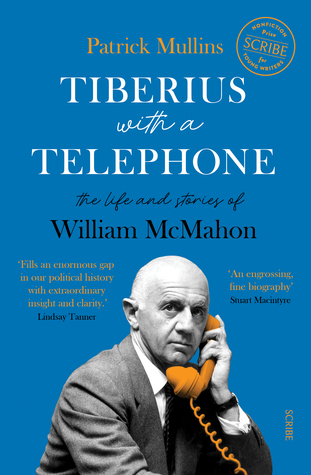
 The overall winner, announced last night, 28 August, is Patrick Mullins’ Tiberius with a telephone: The life and stories of William McMahon. I attended and
  The winner of the Michael Crouch Award for a Debut Work was Jessica White’s Hearing Maud, which I have reviewed here (see link above). In her acceptance speech, White talked about how no-one listened to Maud (daughter of Australian novelist Rosa Praed) while she was alive, and that in paralleling Maud’s experience of profound deafness with her own, a century later, she wanted to show that little had changed in terms of discrimination and “the expectations that we hide our deafness.” I attended and
  Indigenous Australian biography – a small selection
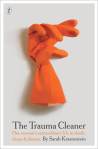 Sarah Krasnostein’s The trauma cleaner: One woman’s extraordinary life in death, decay & disaster (Biography) (
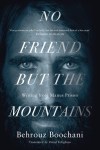 The overall winner, announced last Monday, 12 August, is Behrouz Boochani’s No friend but the mountains.
  Whispering Gums