Author event: Heidi Sze on her book Nurturing your new life

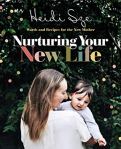
Book coverA book primarily intended for postpartum mothers is not really the sort of book Whispering Gums’ readers would expect to see here, but let me explain. Melbourne-based Heidi Sze started her food blog, Apples Under My Bed, the same year I started mine. However, that’s not our link. Rather, it’s that later that year, Daughter Gums also started a blog, through which she met Heidi – first online, then in person. Through that connection, a few years on, Daughter Gums ended up working in the Melbourne-based company co-founded by Heidi’s husband. Got all that?

Anyhow, the point is that over the last few years, I have been following Heidi, mainly via her Instagram account heidiapples. I have watched her gorgeous two children come into being – and then her third “darling child” (as Jane Austen would call it), her book Nurturing your new life: Words and recipes for the new mother. Note the double meaning of the title, “new life” referring both to a new child, and to a woman’s new life as a mother. “Matrescence, the process of becoming a mother” is, in fact, what the book is about.

Consequently, when I received Paperchain bookshop’s email announcing Heidi’s author tour event there, I knew I had to go and meet her in person. (Of course, Daughter Gums had already given me the heads-up, so I wasn’t going to miss it.)

The event …

I arrived early, hoping to say hello to Heidi before it started, as I had to get off promptly afterwards. I recognised her immediately, and was thrilled to be so warmly greeted when I introduced myself. An added bonus was that her two children, Joan (4) and Walt (18 months), and husband Ben were there too, so I got to meet the whole lovely family. Joan, though, as she should in a book shop, was more interested in finding out where the children’s section was. I approved!

The event basically comprised Heidi telling us about herself, how the book came into being, her intentions for the book, and how she structured and wrote it to meet those intentions. It was a small audience, comprising mostly mums and dietitians/nutritionists, given Heidi is a professional dietitian with a Bachelor of Nutrition and Dietetics from Monash University.

Would-be authors might be interested to know how she came to write this, her first book. She explained that a literary agent, who had been reading her blog and liked what she was writing, contacted her and suggested she write a book! Obviously, this isn’t going to happen to every blogger, but it shows that well-written clearly focused blogs can lead to other things – in Heidi’s case, also to being a recipe columnist for ABCLife (a lovely editor of which I also met at the event.)

Back to the book, though. It took Heidi seven months to prepare her book proposal, which included planning out the chapters and what each one would cover. She obviously did a thorough job because she got a book contract with HarperCollins.

Heidi also shared her career trajectory, explaining how, after the birth of her first child, she moved from general nutrition to a pre and postpartum focus. She also explained how in her early private practice she found she was doing as much counselling as specific nutrition advice. Through this, she had become increasingly aware of the damage that diet culture does. With her awareness of this and of the hard time women give themselves in general, Heidi underpins her book with one important message – that no two experiences are the same, so comparing yourself with others is not helpful. (A message relevant not just to new mums, eh?) She recognises, however, that it’s hard to live by this with “all the noise out there”.

Heidi supports this message in her book with practical advice for new mothers, two of which are that new mothers need support (Chapter 3) and that self-care is critical (Chapter 4). “We are not meant to do this alone”, she realised early in her new-motherhood. Indeed, the trickle-down effects of no support are immense, she said. And she’s right of course. Each generation does it differently, but each generation needs to recognise this important fact. It does take a village to raise a child. You are not a failure as a woman or a mother, if you can’t do it all because, in fact, you CAN’T do it all.

Related to the idea of support is the idea that new mothers need to take care of themselves, that fitting in self-care is not a luxury, but “a necessity and should be treated as such”. So, to tak self-care as an example of how the book works, Heidi not only provides sensible suggestions for how to achieve it, but, understanding from her own recent experience how hard it can be, she nurtures her readers along, encouraging them not to reach for the stars but to work out what’s manageable for them. Analyse your day, she says, to work out when you might slot in some time for yourself; think about when and how your partner can help; and so on. Self-care, she says, can be as simple as having a quiet rejuvenating shower. It’s partly in the mindset. In the end, she says:

Just do what you can and pray the stars align more often than not. And remember, you may need to make sacrifices – be it accepting piles of laundry or cancelling non-essential obligations – so that you don’t sacrifice yourself.

I didn’t find it hard to let the housework go, I must say!

Of course, being a nutritionist/dietitian, she includes recipes. Heidi said her goal was to create recipes that were easy and nutritious, that provided left-over opportunities for later meals, and that use up ingredients to reduce shopping expeditions. The recipes are great, and include things like banana oat smoothie, kedgeree (something I love), and slow-cook beef casserole.

If you have a new mother in your life, this warm, practical, non-judgemental book is for her – and, it wouldn’t hurt dipping into it yourself for ways to help. And, of course, if you are a new mother, this book is definitely for you.
Challenge logoAuthor Event: Heidi Sze on Nurturing your new life
Paperchain Bookstore, Manuka
27 February 2020
Carmel Bird, Field of poppies (#BookReview)

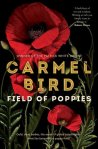
Book coverThere are some writers whose personalities shine through so strongly that I have taken to characterising them in just a word or two. Jane Austen, for example, I think of as wickedly witty, and Helen Garner as heartbreakingly honest. Carmel Bird is another of these. I describe her as seriously cheeky, by which I don’t mean she is really cheeky, but that there’s seriousness beneath her surface cheekiness. The cheekiness makes me chuckle, but ruefully, suspiciously so, because I know that waiting nearby is very often a skewer of some sort. Her latest novel, Field of poppies, is no exception. Even the title is paradoxical, alluding as it does to both Monet’s pretty painting, Field of poppies in Argenteuil 1873, and the poppy fields of Flanders.
Field of poppies, then, has all the hallmarks of Bird’s writing – a light tone, and all manner of allusions and digressions, underpinned by a clearly-focused intelligence. If you are lulled, early on, by narrator Marsali’s chatty, friendly tone, you’d be advised to check the epigrams and preface. The very first epigram tells you, in fact, exactly what this novel is all about:

We are within measurable, or imaginable distance of real Armageddon. Happily there seems to be no reason why we should be anything more than spectators. (Henry Asquith, Secretary of State for War, July 24 1914)

Can’t say plainer than that. The epigrams, which include one by Bird’s signature fictional novelist Carrillo Mean, are followed by an incisive preface which offers a vision of the modern world and where it’s heading. Mixing visions of disaster (“Crops failed, dried out, withered, died”) with those annoyances we love to comment on (“People forgot how to punctuate or spell”), it further cements the book’s intention.

The novel is told first person by retired interior designer Marsali Swift who, with her husband, the semi-retired doctor William, made a tree-change to the perfectly named, prosperous ex-goldfields town of Muckleton. I mean, Muckleton! That suggests something too, doesn’t it? However, in the opening paragraph, Marsali also tells us that she and William had given up their country idyll after seven years and now live in a high-rise apartment in Melbourne, called, ironically, the Eureka. The tree-change hadn’t met their expectations, because of two events, a robbery at their loved home Listowel, and the mysterious disappearance of local eccentric musician, Alice Dooley. The arrival of a new gold-mine doesn’t help, either, with its disruptions and environmental threat.

Now, if you know Bird’s writing, you will know what to expect, but if you don’t, let me say that this is not a book you read for plot – though there is a plot about the missing Alice. Rather, it’s one you read for the joy of engaging with a lively but concerned mind and all the insights such a mind can offer. Isn’t that, really, what we read for? As one member of my reading group described it, reading this book is like having “a conversation with a quirky, artistic, intelligent friend”. That’s exactly how I feel when I read Bird. I feel my mind engaging with hers, pondering where it’s going and what it’s trying to tell me, and really enjoying the ride. She can be so sly, such as this about the missing Alice’s Silver Sisters group of witches:

The Silver Sisters still exist, to the best of my knowledge but Alice certainly does not. I understand the SS were always a harmless lot …

Whoa? The SS, harmless? Well, of course, the Silver Sisters were, but referring to them as SS can’t help but remind us of another SS, can it? This is what Bird does – and I love it. She makes me feel alive as a reader.

“Such a state of affairs is clearly a fantasy”

Various motifs run through the novel, including the aforementioned poppies, dreamhouses, and Alice in Wonderland. Each contributes in its own way to the idea that all is not as it seems, that we may, in fact, be living a fantasy. Marsali spends some time dissecting Monet’s painting, but as she draws us into its seemingly idyllic beauty, she inserts something sinister – not only the poppies and their dark reminder, but the possibility of a gun pointing out of a window in the lovely house nestled in the background. Bird’s meaning is clear: our dreamhouses, our country idylls, may not be what they seem at all. Dreams, she says early in the novel, are dangerous. For a start, they can lure us away from reality.

Later in the novel, Marsali’s description of returning to Muckleton for bookgroup makes her meaning clear:

When I go there for Mirrabooka nights I drive past the gate to Listowel and catch a glimpse of the house itself behind the trees. It’s really so very like the house in the distance in the Monet, the dangerous fool’s gold of the old lost dream house.

For Marsali, there are glimmers like these of the truth beneath the fantasy, but will she and William – who, we must see, stand for many of us – really change their ways?

Bird also refers in the novel to several literary texts, and in particular to Alice in Wonderland. Carroll’s Alice works beautifully as a foil for the missing Alice Dooley. Without spoiling the ending too much, both disappear into the deep, but Alice in Wonderland survives while Alice Dooley doesn’t. However, this foil isn’t a case of simple opposites, because, although Carroll’s Alice survives, the world she enters is chaotic.

“This is my memoir”

Another thing Bird does in this book is play with the idea of fiction. Marsali keeps reminding us that this is her memoir. It’s dangerous, she writes, for fiction writers to include dream sequences in their narratives, but as this is her memoir, she will include some! Similarly, “it’s hard to make coincidence work in fiction”, but again, because this is her memoir, she has them since “coincidences happen quite naturally in real life”. It’s “a nice coincidence”, Marsali writes, that Alice Dooley was called Alice! She pushes our acceptance of coincidence even further by not only involving kangaroos in the two road accidents that start and end the book’s drama, but also having the second accident’s driver spending time at a pub called The Kangaroo before he sets off on his fateful drive:

Look, it was called The Kangaroo. I can’t help that. It just was.

Well, look, that made me laugh. She is so blatantly cheeky.

I’d love to go on, because this book is rich in commentary, satire and jokes about contemporary life – and I’ve barely touched them.

However, I will close here, and will do so on this from the book:

Beauty always falls in love with the Beast, who always turns out to be the Prince, but that’s only the end of the telling, not the end of the lives of Beauty and her Beast-Prince. Life goes on until it doesn’t. Cinderella died in the end, and so did Snow White.

Fantasy, fairy tales, even fiction, in other words, are just that. They do not tell the whole story. Which world are Marsali and William living in, and which, indeed, are we?

Lisa (ANZLitLovers) also enjoyed this novel.

Challenge logoCarmel Bird
Field of poppies
Melbourne: Transit Lounge, 2019
241 pp.
ISBN: 9781925760392

Review copy courtesy the author.


Madelaine Dickie, Red can origami (#BookReview)

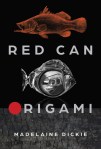
Book coverSome writers, I understand, suffer from a thing called “second novel syndrome”, which describes the fear of writing a second novel after a successful first one. Well, it’s clear that Madelaine Dickie, who won the TAG Hungerford with her first novel Troppo (my review), hasn’t suffered from this particular disorder, because her second novel, Red can origami, is not only another good read but it presents as a confident work from an author who knows exactly what she wants to do.
A confident work

Let’s start with the plot. Red can origami is set primarily in a town in Australia’s north-west called Gubinge, to which Melbourne-based journalist Ava has gone for a job as a reporter. Fairly soon, though, she is offered a significantly better paid job as an Aboriginal Liaison Officer by the Japanese uranium mining company, Gerro Blue, who wants someone to help them negotiate an exploration licence with the local native title owners. Already you can see, I’m sure, some red flags, because this plot is going to require Dickie to create Indigenous Australian characters and, thus, to speak for them. This, of course, raises once again that thorny question of who can write what.

Now, I attended this novel’s New South Wales launch at the south coast just before Christmas (and just before the bushfire situation got out of control). I hadn’t met Dickie before, but her mother-in-law, who held the launch, is a good friend and one of my reading group’s original members. Dickie gave a wonderful speech in which she addressed this question head-on. She quoted Anita Heiss’s statement that the Australian novel needs to be inclusive; she reminded us that there were many Indigenous writers, like Alexis Wright in Carpentaria and Tara June Winch in The yield, who are telling their stories well; and she quoted non-Indigenous author Stephen Hawke who writes Indigenous characters and argues that you need to write well and be respectful. In addition, she, who has lived in the Kimberleys where the novel is set, described some of the work she’s done in recent years for traditional owners, including going “on country with old people”. Her arguments and credentials seem fair enough to me – though of course, in the end, it’s up to each reader, Indigenous and non-Indigenous, to decide for themselves.

The other point I want to make about the confidence of this work is its voice, because it is told second person. This too Dickie confronted in her speech. She was leaving no stone of potential contention unturned. I was impressed. Anyhow, essentially, she said that she’d tried writing it third person but it flowed better when she switched to second. That was her writerly judgement – and certainly I found it easy to read. However, she also had a political reason for this choice, and it’s this, she wanted to involve if not implicate the reader in what’s happening. Second person does this very effectively – at least it does in this book. I won’t spoil the ending, but I’ll just say that the second person voice makes the last line an inspired one.

About the book

So now, I’ve talked a lot around the book, but not a lot about it. Another thing Dickie said in her speech was that she wanted the book to be a page-turner – and that it is. The novel moves at a good pace, as did Troppo, and covers a lot of ground in its 220 pages. It starts with Ava arriving in town and building up a little band of both Indigenous and non-Indigenous friends and aquaintances. These characters include Lucia, an Indigenous reporter on the same paper as she; Ash, a non-Indigenous local TAFE lecturer who is soon attracted to Ava, and who shows her the ropes, taking her fishing and to the local bars in particular; and Noah, an Indigenous station-manager and local Indigenous leader, to whom Ava is attracted. Ava quickly falls in love with the land and the life of the Kimberleys, but equally quickly she becomes aware of local politics – and, with her reporter’s eyes, she notices some suss things going on. Is Gerro Blue already working on the land they haven’t yet obtained the licence to do? What are those bones they’ve disturbed?

It is in this environment that Ava, who has already shown sympathy towards the Indigenous owners, is wooed by Gerro Blue’s smooth CEO, Yuma Watanabe, to be their Aboriginal Liaison Officer. If there is a plot fault in the novel, it could be this – why would she take such a job – but Dickie makes us believe. Not only is Watanabe a shrewd employer, but Ava genuinely, albeit uncertainly, believes she can help the local Burrika people. After all, she thinks, “better you, with your olive-green heart, than someone else”. However, she also admits that being paid real money rather than a reporter’s salary, would set her up. She is, then, a real or flawed character, just as we like our characters to be.

As the book progresses, conflict increases. The traditional owners disagree over whether to grant Gerro Blue the licence, particularly given it’s for uranium mining, with all its implications. (Dickie has specifically set her novel around 2011, the year of the Fukushima disaster.) They don’t all trust Ava either. Protesters, from within and without the Indigenous community, make their own waves. Dickie navigates well this tricky, but real – and not at all unusual – situation in native title negotiations. She clearly knows whereof she speaks. Anyhow, while all this is going on, Ash is keeping an eye out for Ava, while Ava is keeping her eye on Noah. It all, of course, comes to a head, with a powerful ending that is entirely appropriate to the story being told.

And then there’s the writing. This is a novel written in the voice of a young woman living in remote Australia. The voice is, thus, earthy, but also fresh and authentic. Dickie’s writing is expressive, and has been pared to the essential, which is not the same as saying it is bare and plain. It is anything but. Here is Ava describing her sophisticated Melbourne sister:

Imogen’s voice is all sparks. It holds the drunken sequin shine of a Melbourne night.

And here a boab tree in Perth, far from its home (like Ava):

The boab’s bark is cracked, its leaves are withered, and its roots strain from the soil, as if it’s planning on splitting town, hitching north.

So, Red can origami is a good read, as Dickie intended, but it also has an underlying purpose. Dickie is passionate about northwest Australia, and about the challenges faced by Indigenous Australians – and she wants all Australians to understand this better. Red can origami sits within that contemporary literature space comprising works which explore Indigenous and non-Indigenous Australian relationships and interactions. Like Lucashenko’s Too much lip, and similar novels, Red can origami works beautifully as a consciousness-raiser, because it wraps authentic situations and issues in an engaging, page-turning story. In doing so, it teaches us about the beauty of northwest Australia, about the complexities of native title legislation and practice, about the nastiness that happens when politics and business get together, about direct and indirect racism, about dispossession, and, above all, about the diversity of human beings and the challenges we face in getting along together. A book for now.

Lisa (ANZLitLovers) was also impressed by the book, and teases out some different angles.

Challenge logoMadelaine Dickie
Red can origami
Fremantle: Fremantle Press, 2019
221pp.
ISBN: 9781925815504

Anna Goldsworthy, Piano lessons (#BookReview)

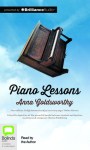
Book coverEver since Anna Goldsworthy’s memoir, Piano lessons, was published, I’ve hankered to read it, but somehow never got around to acquiring a copy. So, when I was casting around for our next road trip audiobook and this one popped up serendipitously in Borrowbox, I grabbed the opportunity.

Now, I have to admit that although I did play drums and fife, briefly, in a primary school band, I have never had formal music lessons. Ballet was my thing as a child. However, Mr Gums learnt piano to Grade 7, and I sat in on our kids’ music lessons, especially their piano ones, for years. I loved it, because I learnt so much about music (and music teachers) as a result. I was consequently primed for this book about the author’s piano lessons and her relationship with her Russian-born piano teacher, Mrs Sivan. Being on the Liszt List, that is, someone whose student-teacher lineage reaches back to Liszt, Mrs Sivan initially comes across as formidable, but very soon her warmth and generosity come to the fore.

Essentially, this memoir is a coming-of-age story. It covers Goldsworthy’s life – specifically her piano-playing life – from the age of nine until her mid-late twenties. It is not, however, the traditional coming-of-age story, but her coming-of-age as a musician and, along the way, as a wiser more rounded person. We see Anna coping with the humiliation of failure, when she gets a C in an important piano exam having been used to always getting As. We see the point at which she realises that, if she is to achieve her concert pianist dream, practising for barely two hours a day is not going to cut it. We see the naiveté of a young woman who, not prepared for a journalist’s questions, manages to hurt the people closest to her, learning, in the process, the importance of “humility and gratitude”. And, we see the brilliant pianist and school dux learning that a “perfect score” is “not proof against disaster”.

But, we also hear the wisdom of her piano teacher who doesn’t just teach her the techniques of playing piano, but also the meaning of music, the value and role of the arts and, more, a deeply humane philosophy of life, one that recognises, for example, the value of competition for learning but not for measuring one’s achievement or worth. Indeed, she tells Anna that she is “not teaching piano playing”, she is “teaching philosophy”. It is some years, of course, before Anna stops seeing piano playing as “obstacle courses for fingers” but as something you feel and express.

Goldsworthy describes this piano teacher, Mrs Sivan, as “less a character than a force”, and she conveys this sense largely through reproducing her teacher’s rapid-fire broken English. This might have been worked well in text, but in the audiobook – which was read by Goldsworthy herself – it was frequently difficult to listen to and was sometimes so fast that we missed words. Unfortunately, I don’t have the text to give you an example, but I found one tiny quote on GoodReads. Here is Mrs Sivan telling student Anna about Chopin:

I tell you a secret about Chopin, piano is his best friend. More. He tells piano all his secrets.

Mrs Sivan preceded this by saying that George Sand was not Chopin’s great love, the piano was! One of the real pleasures of this book is the insight provided into several musicians, particularly Bach, Mozart and Chopin, but also Beethoven, Shostakovich and others. Mrs Sivan knows them and their music so well, and impresses upon Anna that musicians must understand the composer and their lives to understand their music. Mozart, for example, “was born with happy of everything”.  I found her adamance about this interesting, because, in the literary arts, there are those who argue that the author’s life is irrelevant and should not be considered at all. I think there’s a place for it.

Piano lessons is not a long book – just 240 pages or so – but the writing and the structuring of the story are so tight that Goldsworthy conveys this coming-of-age to some depth despite the book’s brevity. She does this by never labouring her points, by knowing which stories to tell and how much to tell of them, and by imbuing it all with a light touch. Sometimes you think you are left hanging – “did she win that audition?” – but the answer always comes directly or indirectly a little later.

There is more to this book about music and musicians, about fostering talent, about forging a meaningful life as a musician, and about teaching being “the highest calling”, but not having it on hand, I’ll close here by sharing Mrs Sivan’s words about the arts. She told Goldsworthy that the arts must be “aesthetically and ethically grounded” and that they embody “unlimited flying of imagination”. I like both of these ideas – particularly that about the arts needing to be both aesthetic and ethical. In one sense, I don’t like to think that the arts “should” be anything, but I also believe that being ethical about what we do – whatever that is – is important. I think I would have liked Mrs Sivan.

Lisa also (ANZLitLovers) loved this book.

Challenge logoAnna Goldsworthy
Piano lessons (Audio)
(Read by Anna Goldsworthy)
Bolinda Audio, 2015 (Orig. pub. 2009)
2:23 e-audiobook (Unabridged)
ISBN: 9781489020260

Charlotte Wood, The weekend (#BookReview)

Book coverAfter reading the first few pages of Charlotte Wood’s latest novel, The weekend, I was starting to wonder how on earth these women, with “their same scratchy old ways”, could be described as “dearest friends”. They seemed so different, and so irritated or, sometimes, cowed by each other’s differences. Where was their point of connection I wondered, besides their late friend Sylvie?
But, let’s start at the beginning. My edition’s back cover describes the set up beautifully: “Four older women have a lifelong friendship of the best kind: loving, practical, frank and steadfast. But when Sylvie dies, the ground shifts dangerously for the other three. Can they survive together without her?” Well, they are going to find out, because the book concerns a weekend – a Christmas weekend, in fact – in which the remaining three come to Sylvie’s beach-house to clean it out for sale. It’s a thankless task at the best of times, so when you get three very different, but still grieving personalities doing it, the stage is set for tension, at the very least.

Who then are these three? There’s retired restaurateur Jude who has had a married lover for over forty years; public intellectual Wendy whose much loved husband died many years ago and who now has the frail, demented dog Finn in tow; and out-of-work actor Adele whose relationship has just fallen apart, leaving her homeless. Wood sets the scene, and establishes their characters perfectly through describing their journey to and arrival at the beach-house (much like the opening title sequence for another house-party story, The big chill.) We quickly learn that Jude is organised, task-focused, financially comfortable and disdainful of other people’s frailties; that Wendy is disorganised and soft, but emotional and loyal; and that vain but always optimistic Adele is seen by her friends as “the child” of the group. While Wendy and Jude work at their Jude-assigned tasks, she can be found reminiscing over Sylvie’s LP collection.

Over the weekend, the women’s friendship is tested to its limits. Early on, Wendy reflects that “it was exhausting, being friends”, while Adele remembers their early years of friendship, and how they “saw their best selves in each other”. But, how honest are they, can they be, should they be with each other? Adele ponders early, that “it was dangerous business, truth-telling”. Over the weekend, of course, some truths come out – what they think about each other, and truths that were supposed to be secrets. And yet, the friendship holds fast:

Because what was friendship, after forty years? What would it be after fifty or sixty? It was a mystery. It was immutable, a force as deep and invitable as the vibration of the ocean coming to her through the sand.

“simple creatureliness”

However, there is a fourth main character in this story – the aforementioned Finn whom Wendy brings with her knowing full well that Jude would not be impressed. But what was she to do? Living alone and unwilling to euthanise him, she had no option. Utterly frail in body and mind, he is a significant character – or, at least, plays a significant role – in the book. This role is bifold. Firstly, we gain more information about the women’s characters and their attitudes to aging and death through their attitudes and reactions to him. His physical and mental frailty, his incontinence, deafness and blindness, confront the women with their own mortality. No-nonsense Jude doesn’t want him and his mess around, and thinks, frankly, he should be put down. She is barely aware of Finn’s importance to Wendy. Adele isn’t enamoured but more tolerant and understanding, while Wendy, for whom Finn was a lifeline after her husband’s death, finds it impossible to think about euthanasia. His presence throughout the novel sometimes mirrors, sometimes opposes the women’s volatile emotional states.

But, the other more interesting role played by Finn has to do with one of the novel’s over-riding themes, one triggered by ageing. It’s the question of what have I lived for, what have I achieved, when have I “finished [my] turn”? Wendy and Adele, for example, both feel they have more to achieve. For Wendy, it’s the intellectual idea she feels she’s moving towards, “the place she had always felt was there waiting for her”, and for Adele, it’s “clawing back her one great moment on the stage”. Jude’s life is more about “gathering experience, formulating opinions, developing ideas” to “fold away and save for” those times her married lover is able to see her. So, the underlying question is: When you no longer have those seemingly limitless goals of youth, what goals do you have, where do they come from, and what happens when you, perhaps, run out of goals or purpose? Finn offers this opposite – “simple creatureliness”, or, just being. This issue of goals and purpose is, I believe, one of the biggest challenges of ageing – alongside the obvious physical ones – and I love that Wood takes it on.

However, she doesn’t stop there, because her women also confront other ageing-related issues – increasing homelessness for older women, the threat of loneliness that often attends age, and coping with technological and cultural change not to mention with children who start to parent you.

To keep this story and its tensions focused, Wood uses the house-party setting, as many other authors have done before including John Clanchy in his novel Sisters (my review). I didn’t much like the melodramatic party scene, involving two interlopers, that occurs near the end, but this is a common trope, I think, in the house-party sub-genre. Overall, I loved the writing. It’s tight. We shift seamlessly between the characters without getting lost, each one nicely differentiated, and there are some spot-on images:

Every time Jude had to hold her tongue, every time she didn’t tell Wendy she should pay him the kindness of letting him die, she felt falsehood pulled tighter like a plastic bag, closer, closer over her mouth and nose. She couldn’t bear it.

AND

Outside the cicadas were filling the still summer air with sound. You must shed the dead skin … The bush was full of insects and snakes reborn, shining with newness. The dried carapaces rustled as the resurrected creatures slithered out of, away from, their dead selves. You had to struggle free from what had protected you.

By now, you may be thinking that this a grim book, but while its intent is serious, Wood’s touch is light, using some humour – sometimes generous, sometimes satirical or ironic – in the telling. This humour – as in the scene describing Adele, in the park, having just peed, running into a theatre producer – keeps these women real and relatable, and the tone edging to hopeful.

You would think that The weekend would be the perfect pick for my reading group, given we are all women not much younger than Wood’s protagonists and that many of us have been friends for thirty years plus. And yet, the responses of the twelve members present at our meeting were mixed. One group was ambivalent, arguing that the characters were too much like types, while the other loved it, believing it captured the dynamics of longtime women’s friendships with heart and humour. You know which group I belonged to – for all the reasons I’ve described above.

Lisa (ANZLitLovers) also enjoyed the book.

Challenge logoCharlotte Wood
The weekend
Sydney: Allen & Unwin, 2019
256pp.
ISBN: 9781760292010

(Review copy courtesy Allen & Unwin)

Angela Thirkell, Trooper to the Southern Cross (#BookReview)

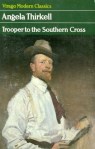
Book coverUnlike many, I think, I have not read Angela Thirkell’s Barsetshire novels which, I understand are very different to her only Australian-set novel, Trooper to the Southern Cross, which, in fact, she published under the male pseudonym of Leslie Parker. It has been on my TBR for some time, so I’m grateful that Bill’s AWW Gen 3 Week provided the impetus for me to finally pull it off the shelves and read it.
That said, Angela Thirkell is a bit of a ring-in. Wikipedia describes her as an Australian and English novelist, but really, she, who lived from 1890 to 1961, only lived in Australia from 1920 to 1929. All her novels were published after her return to England, so, although she did some journalistic writing in Australia, it’s a bit of a stretch to call her an “Australian” novelist. Nonetheless, I’d argue that this book, which has an Australian protagonistwas and was published in 1934, is worthy of Bill’s week, and the Australian Women Writers Challenge.

Before I get on with the book, I should tell you that Thirkell’s father was William Morris’ good friend and biographer, and her maternal grandfather was Pre-Raphaelite painter Edward Burne-Jones. She had Rudyard Kipling and Stanley Baldwin as cousins, JM Barrie as godfather, and Beatrix Potter as a neighbour. She moved, then, in interesting circles.

Hilarious and affectionate satire

GoodReads writes that in Trooper to the Southern Cross, Thirkell “assumes the voice of an Australian army officer and relates an amusing, rough-and-tumble sea story about an eventful, post-World War I journey on a troop-carrying vessel deservedly labeled a ‘hell-ship.’ Thirkell’s keen ear for dialogue, and her skillful use of her own first-hand experience of a voyage on a similarly rumbustious vessel, combine to create an amusing and spirited yarn.” This is a fair description, but Virago’s back cover does a better job, describing it as “an hilarious and affectionate satire on the manners and mores of Australia”, “satire” being the operative word.

I make this point because, as Bill will be interested to know, HM Green, in his History of Australian literature, believed, says Virago, this book was written by a male, and described it as an example of “unconscious humour” rather than as satire. It’s an easy mistake to make, particularly if you don’t know the full story. At this point, of course, I had to check out Trove, where I found two contemporary reviews. One, from Sydney’s The Sun (18 November 1934), is scathing, describing it as “without literary merit, with just a touch of sardonic humor and a good deal of unrestrained nastiness”. The main complaint is that the book “portrays the Australian soldier as something between a savage and a simpleton”.

The other review, from The Sydney Morning Herald (29 September 1934), is a little more positive. It has its criticism, though, saying that the “language and outlook” of its army doctor narrator “is that of the common soldier and rather difficult to reconcile with his rank and the assumption that he is a graduate in medicine of an Australian university. Our Medical Faculties hardly turn out their diamonds quite as rough as this unpolished specimen.” However, this reviewer finds the book funny, and concludes:

The voyage was full of incident, and the episodes, tragic, thrilling, or amusing, lose none of their interest in the free manner of telling. From the major’s mouth came artless revelations of opinions on all subjects that are reminiscent of “Gentlemen Prefer Blondes,” though the artlessness has not the subtlety of the art of Anita Loos. Diggers will chuckle over this book.

Hmmm … not The Sun’s diggers, perhaps.

“a reserved kind of chap”

Trooper to the Southern Cross is based on Thirkell’s own trip to Australia in 1920 on the requisitioned German troopship SS Friedrichsruh which, like the novel’s fictional Rudolstadt, had been ingeniously sabotaged by the Germans. For example, the toilets flushed boiling water and salt water flowed from freshwater taps. Not surprisingly this added to the havoc on a ship that was carrying officers with their wives and families, “ordinary” diggers, and prisoner diggers who soon had it over the soldiers guarding them. As Thirkell tells it in her novel, there was much violence on board and at the only two stops made en route, Port Said and Colombo. All this is told in the voice of Major Tom Bowen, who is modelled on Thirkell’s husband, albeit her husband wasn’t a doctor or a major. Bowen’s wife, Celia, however, is not based on herself, says Tony Gould in Virago’s introduction, but Mrs Jerry, the Colonel’s wife, is.

The novel is interesting to read for a number of reasons, one being simply for its history, its being, according to its publisher, the first book to deal with “the repatriation of Australian troops after the war.” A very particular repatriation one would hope, but a story of such nonetheless. Mostly, though, it’s interesting for the voice of its narrator. He is quite something, and I can imagine different readers responding very differently to him. He, like George Thirkell, served in the war from the Gallipoli Campaign right through to Armistice. He’s reasonably educated, having done medicine in Sydney, but he uses Australian vernacular and his cultural tastes are popular. Virago’s Gould notes that Thirkell “became extremely well versed in Australian literature and culture and uses it to comic effect” in the book. Here, for example, is Bowen soon after meeting “the wonderfully pretty little thing” who was to become his wife:

The girl didn’t know what back-blocks were, so I had to explain that they were way out beyond everything. I asked her if she’d read ‘On Our Selection’, because that gives you some idea of the back-blocks. But she hadn’t. And she hadn’t read ‘We  of the Never Never’, nor ‘While the Billy Boils’, so I knew she wasn’t literary.

You can imagine the female Thirkell enjoying writing this male character – and she does it so well. He makes you cringe – with his frequently smug patronising manner, sexism, racism, and general all round chauvinism – and yet you can’t help liking him too. He has nous dealing with men, particularly the diggers for whom he has a clear-eyed affection; he is resourceful; and he shows tenderness to others in need, regardless of who they are. He’s even open to having his mind changed, such as when the Roman Catholic padre helps him out:

To think of an R.C. showing me what Christianity really was. It gave quite a shock to a lot of my ideas.

As a document of 1920s Australian manners and culture, told with a lightly satiric eye, Trooper to the Southern Cross is a surprisingly entertaining read.

Challenge logoAngela Thirkell
Trooper to the Southern Cross
London: Virago, 1985 (Orig. pub. 1934)
(Virago Modern Classic No. 171)
177pp.
ISBN: 0860685926

Ruth Park and D’Arcy Niland, The drums go bang! (#BookReview)

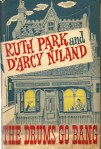
Book coverVolume 1 of Ruth Park’s autobiography, A fence around the cuckoo, covers the period of her life up to when she lands in Australia to marry D’Arcy Niland. Not being sure, perhaps, that there’d be a sequel, Park concludes with:
We lived together for twenty-five years less five weeks. We had many fiery disagreements but no quarrels, a great deal of shared and companionable literary work, and much love and constancy. Most of all I like to remember laughter.

That autobiography was published in 1992. The drums go bang, written collaboratively by Park and Niland, was published in 1956 and covers the first five or so of these years to just after the publication in 1947 of The harp in the south.

The first thing that struck me was its point of view: it slips astonishingly between third person and first person plural, sometimes in the middle of a paragraph. And then the penny dropped, its collaborative nature. When they are talking about one of them, Tiger (Ruth’s nickname) or Evans (D’Arcy’s), third person is used, but when they are talking about them together, first person plural is used. Here is an example about their delayed honeymoon:

We didn’t mind the delay. Tiger was crazy to see Sydney, and besides she wasn’t too keen on going away to the Blue Mountains with a strange man. While Evans was away at the Railway she went around the city on her own …

Once you work out what’s going on, it works very well. However, to understand this particular paragraph, and the “strange man” comment you’ll need to read their story for yourself, as I want to move on to other things. Suffice it to say that this comment, while containing an element of truth, given the way their relationship developed, is also an example of their light, self-deprecating humour. As Park said in her autobiography, “most of all I like to remember laughter”.

The drums go bang is a short and often funny book, but it manages to cover a lot, including their struggles to find accommodation in 1940s Sydney when accommodation was scarce, their decision to go freelance and the resultant struggle to survive, their work in the outback, two pregnancies, their lives in Surry Hills and other Sydney suburbs, and their relationships with a wonderful cast of characters. The aspects which interested me most were of course Surry Hills, because it inspired The harp in the south, the writing life, and the writing itself, which provides such an insight into their skills.

Although they tell it with such humour, Park and Niland are very clear about how difficult the freelance life is. For most of the five years covered by the book they live a hand-to-mouth existence, experiencing poverty at close hand. However, there’s also good advice here for would-be writers. For example, early in the book, Tiger expresses frustration at Evans’s belief that a good story will sell regardless, but even this is told with humour:

He was convinced that if the story were good it must sell. He bailed up an amiable Salvation Army major and tried to persuade him that “The Other Side of Love” was just what was needed for the War Cry. He submitted “The Menace of Money” to the Business Man’s Monthly, and a sentimental animal story to the house magazine at the Abattoirs.

They share their Minor Carta, their manifesto for writers who wish to make a living writing. Its eight articles include some hard learnt truths, such as that you have to “write anything and everything”, you cannot afford to be “snobbish” about your art, and you can’t let rejection slips get you down. They talk about the variability of payment systems for freelance work, unscrupulous writing schools, and the importance of marketing, of needing to “shape it to fit”. They write articles, songs, short stories, radio plays, children’s radio, comedy sketches, and more – anything that might bring in a cheque (and they do it sharing one old typewriter.)

I’d love to share more about their lives, and particularly the characters in it, like Evans’ brother Young Gus, the generous freelance publisher Mr Virtue, and colourful relations like Aunt Nibblestones and Uncle Looshus, but I want to get onto something that is most relevant to Bill’s AWW Gen 3 Week, their time in Surry Hills and how it inspired The harp in the south. Initially scared by “the place, with its brawling, shrieking life”, abusive drunks and fighting prostitutes, Park started to adapt, and

… began to study the people for what they were, and not what they did. Their true kindness, their generosity and charity filled her with shame. They were so much more genuinely loveable than she had given them credit for being, and she began to understand how the incredible congestion of their lives, the rabbit-warren houses, the inescapable dirt of an area which is built around the big factory chimneys all contributed to their innately lawless, conventionless attitude towards life. She began to understand that in such a place dirt ceases to become important, morals are often impracticable, and privacy is an impossibility.

As it turned out, though, The harp in the south was written, almost, you could say, accidentally. In New Zealand for some needed R&R after the birth of their second child, they are sent a clipping by Uncle Looshus which announces a Sydney Morning Herald competition for a novel, short story and poem. Park tries to convince Niland to write a novel but he refuses, saying he only writes short stories, and tells her to have a go. So, she does, and of course Surry Hills is her inspiration:

… she felt she understood them. She certainly liked them, mostly because in the midst of all their dirt and poverty and fecklessness they contrived to be happy.

She wrote down a sentence that seemed to sum up their philosophy: “I was thinking of how lucky we are”.

That sentence, the last line in the book, was the key that opened the door. From then on the story grew by itself.

This book, published serially in 1947 to both acclaim and vituperation, has become a classic of Australian social realism, albeit, as Paul Genoni says, “tempered with romanticism”. The same could be said of this delightful memoir.

Challenge logoRuth Park and D’Arcy Niland
The drums go bang!
Illustrated by Phil Taylor
Sydney: Angus and Robertson, 1956
195pp.
ISBN: None

Chloe Hooper, The arsonist: A mind on fire (#BookReview)

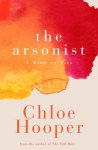
Chloe Hooper, The ArsonistIt may not have been the most sensible decision to read Chloe Hooper’s book, The arsonist, during Australia’s worst-ever bushfire week, but in fact I picked it up a few days before the crisis became evident, and once I started I couldn’t put it down. The arsonist tells the story of the man arrested and tried for one of the major fires in the Black Saturday series of bushfires that ravaged much of Victoria in February 2009. I have often wondered how you identify how and where a fire started. Hooper answers much of this.

However, what made this book unputdownable was that Hooper adopted, as she did in The tall man, the narrative (or creative) nonfiction style to tell her story, and proved herself, again, to be a skilled exponent of this genre. For those not sure about this genre, Lee Gutkind’s definition, quoted in Wikipedia, is a good start: “Ultimately, the primary goal of the creative nonfiction writer is to communicate information, just like a reporter, but to shape it in a way that reads like fiction.” In other words, the information must be true or factual, but presented like a story.

Car in fire burnt bush

Bush, eastern Victoria, 9 mths after Black Saturday, 2009

Hooper structures her story like a classic three-act drama: I The detectives, II The lawyers, III The courtroom, followed by the Coda. She provides the facts – the whos, whens, wheres and whys – as much as they are known, but forms them into a narrative. So, after an opening paragraph which evocatively describes a fire-destroyed bush landscape, the second paragraph reads:

At the intersection of two nondescript roads, Detective Sergeant Adam Henry sits in his car taking in a puzzle. On one side of Glendonald Road, the timber plantation is untouched: pristine Pinus radiata, all sown at the same time, growing in immaculate green lines. On the other side, near where the road forms a T with a track named Jellef’s Outlet, stand rows of Eucalyptus globulus, the common blue gum cultivated the world over to make printer paper. All torched, as far as the eye can see. On Saturday 7 February 2009, around 1.30pm, a fire started somewhere near here and now, late on Sunday afternoon, it is still burning several kilometres away.

You can see, in this, that we are being invited in to see what her “character” Detective Henry is seeing, but we are also given very specific facts. The next paragraph, provides some personal background to this first “character” in her story:

Detective Henry has a new baby, his first, a week out of hospital. The night before, he had been called back from paternity leave for a 6 am meeting …

As Part I progresses, we meet other police officers and forensic experts; we travel with them as they investigate the fire itself and then follow leads to the most likely suspect; and we are with them as they interview this suspect and arrest him for the crime. We also meet many victims who lost family members and/or property. Their stories are heartrending – excruciating, in fact, as I wrote in the margins – and were particularly hard to read, with similar losses occurring in Australia right now.

Using a similar narrative technique in Part II – providing facts, and describing the “characters” and their feelings – Hooper then introduces us to the Legal Aid lawyers, or one lawyer in particular, brought in to defend the accused. As she does this, our allegiance and sympathies shift a bit from the hardworking police to the hardworking lawyer – and, perhaps even, to her client who, only now, at this point in his life, is finally diagnosed as autistic, which provides a previously missing context for his strange responses and behaviours. And then, finally, in the third “act” or part, these two – the police and the legal team – come head to head in court, with our allegiances swaying between the two as they tussle it out, until the jury delivers its verdict.

The Coda, “set” some years later, contains Hooper’s reflections on the aftermath and some commentary on the process. For example, it’s clear that she had researched the case, had visited the fire region many times, including soon after the arrest, and had interviewed many of the participants, but, like Helen Garner in her three major narrative nonfiction works, had not managed to speak to the person at the centre, in this case, Brendan Sokaluk, the arsonist. Her request is refused, for understandable reasons. She was, she writes, both “disappointed” and “relieved”. Would speaking to him, she wonders, answer the book’s central question of “why”, and, even if he were able to explain why,

would understanding why Brendan lit a fire make the next deliberate inferno any more explicable? Or preventable? I now know there isn’t a standardised Arsonist. There isn’t a distinct part of the brain marked by a flame. There is only a person who feels spiteful, or lonely, or anxious, or enraged, or bored, or humiliated: all the things that can set a mind – any mind – on fire.

And there, I suppose, is the multiple tragedy of this story: the tragedy of a man ridiculed and bullied all his life for being different; the tragedy of a community that isn’t very good at managing people who are different; the tragedy of the conflagration (in this case a fire, but it could be anything) that can result when the two collide; and the overriding tragedy that there are no simple answers to arson.

Now, I fear you might think that I have given the “story” away and that you therefore need not read it. But, you don’t read The arsonist for the “story”. After all, this is nonfiction and the basic “story” is known. You read it for the insights that a fine mind (not a mind on fire!) like Hooper’s can bring to the situation. What she brings is both clarity about the facts and a nuanced understanding of what they mean. The arsonist is, as everyone’s been saying, an excellent read.

Lisa’s (ANZLitLovers) review of this book includes information from a festival conversation session featuring Hooper.

Challenge logoChloe Hooper
The arsonist: A mind of fire
Hamish Hamilton, 2018
254pp.
ISBN: 9780670078189

Monday musings on Australian literature: Australian Women Writers Challenge 2019

AWW Challenge 2019 BadgeFor some years now, I have devoted my last Monday Musings of the year to the Australian Women Writers Challenge* – and this year I am continuing that tradition! Sorry, if you hoped for something else. With the New Year – I love the sound of 2020 – just two days away, I wish all you wonderful Whispering Gums followers a wonderful year to come in whatever form you would like that to take.Thank you, too, for supporting my blog with your visits and comments.
Now, the challenge … it has continued to go very well. The full database now contains reviews for nearly 6,100 books across all forms and genres, from all periods, of Australian women’s writing. This means that the number of books reviewed on our database increased in 2019 by 900 books, or 17%, which is about the same increase as last year. In my area of Literary and Classics, we had roughly the same number of reviews posted as last year.

My personal round-up for the year

It was not, I have to say, my best Challenge year, as I posted only 25 reviews over the year, about 25% less than last year. I’m not sure how that happened, but c’est la vie. It was clearly a different sort of reading year. Anyhow, here they are, with links to my reviews:

Book coverFICTION

Book coverSHORT STORIES

ANTHOLOGIES

Book coverCHILDREN’S PICTURE BOOKS

  • Nhulunbuy Primary School, with Ann James and Ann Haddon, I saw, we saw (picture book)

NON-FICTION

Book coverThis year, fiction (including short stories) represented around 57% of my AWW challenge reading, which is similar to last year. I read no poetry or verse novels again this year, and I read fewer Classics than last. However, I did read three classic short stories by Capel Boake for Bill’s (The Australian Legend) Gen 2 week as well as Louise Mack’s novel. On the plus side, I read more indigenous writing this year – two anthologies, a picture book, and Melissa Lucashenko’s Miles Franklin award-winning Too much lip (as well as some male authors who shall not be mentioned here!)

If you’d like to know more about the Challenge, check it out here. We are also on Facebook, Twitter (@auswomenwriters), and GoodReads. Do consider joining us. All readers are welcome.

Finally, a big thanks again to Theresa, Elizabeth and the rest of the team. I love being part of this challenge, not only because it equates with my reading goals but also because the people involved are such a pleasure to work with. See you in 2020.

And so, 2020

Challenge logoThe 2020 sign up form is ready, so this is also my Sign Up post for next year. As always, I’m nominating myself for the Franklin level, which is to read 10 books by Australian women and post reviews for at least 6 of those. I expect, of course, to exceed this.

Do you plan to sign up?

* This challenge was instigated by Elizabeth Lhuede in 2012 in response to concerns in Australian literary circles about the lack of recognition for women writers. I have been one of the challenge’s volunteers since 2013. Theresa Smith (of Theresa Smith writes) now oversees the day-to-day management of the blog, but Elizabeth is still an active presence.