Linda Neil, All is given (#BookReview)

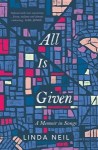
Linda Neil, All is given, coverLinda Neil’s second book, All is given, is subtitled “a memoir in songs”.  I wondered if this meant her memoir would be structured around specific songs – but that’s probably way too prosaic an idea. Certainly, it’s not what I got! I’m somewhat embarrassed to say that I didn’t know of Linda Neil, who is described in the brief author bio as “writer, songwriter and documentary-producer”, but I did enjoy getting to “know” her through this book.

The memoir starts with “Prologue: Songbook”, and immediately I had one of those glimmers of enlightenment because she opens with the end of a house concert. Now, friends of ours hold house concerts. They are such wonderful to-be-treasured occasions, which provide a beautiful way of enjoying music away from big formal concert halls or noisy popular venues. For the performer, however, there are challenges. The concert that Neil opens her memoir on finished at 11pm, and she was hungry, not to mention “spent” after nearly three hours of “singing and telling stories”. Not so, necessarily, the audience. They were energised, inspired, and wanting to talk with her in this lovely intimate venue! So, with food from her host in her hand she sits to chat with one of these people – and discovers that what the woman really wanted to do was share her own stories, which had been stimulated by the concert. Neil, as it turned out, enjoyed hearing her stories – but I learnt a lesson about house-concert etiquette!

Another issue comes up in this opening chapter which attracted my attention. She says that many people think love songs, which she was singing, are autobiographical. However, she writes,

in my experience, they may well be inspired by real people, but the form of a song means that, from this basis of fact, changes need to be made. A bass line is added perhaps. Something high is included. A man becomes a woman. A five-letter name expands to eight …

and so on. The point is, “the facts may not always be true, but the feelings certainly are”. “YES”, I wrote in the margin. And I loved her rider: “and if some events did not happen exactly the way they are described, perhaps they should have”. Haha! Love it. That is what creativity, and living, are about…

Hence, she writes in the last paragraph of this opening chapter:

So think of this collection of stories as a book of songs that contains improvisations and variations on themes of truth. If you listen closely enough you might even be able to hear the fabric of facts and fiction as they are stitched together.

What follows are delightful, non-chronological, stories of travel. This book, in fact, is as much travel memoir as a musical one, and as much about travel to the self as about the places she visits – Shanghai, Paris, Kathmandu, Kolkata, Ulaanbaatar, to name a few – though she writes engagingly about them too.

… a pilgrim of the imagination …

All is given is just a lovely read. Neil presents as a person with such an open heart and curious mind, with such a willingness to give things a go and to test her own preconceptions, that she can’t help but be interesting to read. And when you add to this, her clear, fresh prose, well, you have a book that is a winner on multiple levels. Here, for example, she’s in Paris:

Sometimes a city is the kind of place where, despite being on your own, you are never alone.  Where sitting under a statue or leaning over a balustrade of a bridge is an invitation. You have to discern very quickly, though, who might waylay you, who might waste your time and who might be, like you, a pilgrim of the imagination on a voyage through change. But if your antenna is working properly, the chance encounter with a stranger might bring you something you need at that particular moment in time, something that might not come in any other part of the world, but exactly where you sense of wonder and curiosity has led you, across oceans and skies, out of safety into the unknown.

I wanted to share all of this, but particularly that phrase “a pilgrim of the imagination on a voyage through change”.

This is what the book is about. It’s partly, of course, about the places she goes, the people she meets, the seemingly serendipitous discoveries, such as the recording studio in Kathmandu and the YWCA in Kolkata where she meets a group of people volunteering at Mother Theresa’s Missionaries of Charity, but it’s mainly about the things she learns.

She learns, for example, on her first solo trip, which paradoxically is the last one described in the book, not to travel with the Lonely Planet Guide, because “travel was best unplanned”. It’s a lesson I’m starting to learn. I can’t imagine giving up the guides altogether – not being, clearly, a complete “pilgrim of the imagination” – but I’m gradually freeing myself from the shackles of “musts” to the wonders of “let’s explore”. She experiences the “gift of stories – of listening to and receiving them, of being in the right place at the right time”. This is “the magic of travel”. She learns that she can sometimes be “prim”, when she lectures a young girl on modest dressing in India, where she was “once open-minded”, but on the other hand, that she could be “free”, in opening up to people, where once she “might have felt more cautious”. These are the surprises of travel.

She learns, too, in Mongolia that “freedom” is not the simple concept we like to think it is, that for many Mongolians the initial liberation from Russia was “a catastrophe”. Her Mongolian friend reminds her, once again she says, that:

western narratives of history aren’t the only ones, and that … there are many ways to tell the story of our collection past.

A lesson we Australians are very slowly learning now as we come to grips with different versions of our colonial past. She learns, through this and other experiences, “not to romanticise places” where the reality for the locals is very different, but also to “be happy with tiny moments”.

And so the memoir goes. I’ve focused on travel’s lessons because those reflections spoke to me. Another reviewer could very well pick up the musical motifs, her journey through sound, or perhaps explore the organic way she intersperses moments from her youth with those from travel. The point is, whatever your interest, All is given is an engaging, enjoyable read by a writer-musician who sees that being “real and true” is sometimes different from “being perfect or even good”, but who often manages to achieve both.
aww2017 badgeLinda Neil
All is given: A memoir in songs
St Lucia: UQP, 2016
238pp.
ISBN: 9780702254093

(Review copy courtesy UQP)

Jill Roe, Our fathers cleared the bush (#bookreview)

Jill Roe, Our fathers cleared the bushAs that old pop song goes, what kind of fool am I? I went, you see, to Macquarie University, which I chose for its then modern approach to tertiary education. It was great, but somehow, I didn’t end up in tutorials taught by Thea Astley, nor did I study Australian history in which Jill Roe was one of the University’s foundation lecturers. What was I thinking? Hindsight is a marvellous thing, eh?

Most of you will know who Thea Astley is, but non-Australians, in particular, may not know Jill Roe. She is best known for her comprehensive award-winning biography of Miles Franklin (see a review by Lisa, ANZLitLovers), but she wrote many books and was, among other things, a regular contributor to the Australian Dictionary of Biography. The book I’m reviewing here, Our fathers cleared the bush, was published last year, only months before her death early this year.

Old and new regionalism

What a fascinating read it was – for its content, which tells the story of Eyre Peninsula, a part of Australia I don’t know, and for its form and style. This latter is what I’m going to focus on mostly in this post. The book’s subtitle, “remembering Eyre Peninsula”, provides some clue to its form, which I’d describe as an amalgam of memoir/family history, regional history and historiography. Roe seems, overall, to be exploring an approach to writing the history of regions.  In her introduction she writes:

The aim is not so much to tell my own story – though I often start there – nor to fill a gap in the literature – though there is one – but rather, on the basis of personal reflections and a now quite extensive range of materials, to capture some key aspects of, and moments in, the regional experience over time.

“Extensive range of materials”. Hold that thought, because I’ll come back to it. For now, though, I’m sticking to the regional history idea. Chapter 7, one of my favourites in fact, is titled “I danced for the Queen”. In it she writes quite a bit about regionalism and regional histories. She suggests that as Australian history established itself in the 1950s and 60s, “some fine regional studies appeared” and she names a few. It was “a golden age of regional history when it seemed the national story was becoming clear”. But, she argues, that was “old regionalism”. Since the 1970s, new issues and factors have arisen. These include the understanding of “regionalism” itself; the rise of interest in local and family history which is adding “new building bricks, even new layers” to the undertaking and appreciation of regional history; the role of the environment; and that major factor, the recognition of Aboriginal history, which she says introduces a discontinuity into held narratives. She suggests that exploring Aboriginal history “seems to work best in regional frameworks”. Perhaps, but there is also need to include Aboriginal history in the overarching national story. I presume she would argue that too?

She teases out the Aboriginal history issue a bit more. She says:

On a grander scale, the history of the Kimberley in Western Australia is being transformed by research into the Aboriginal experience, much of it distressing, none of it yet settled or fully integrated into the national story. This history may be hard for some to take in, but that is because it adds new data and a challenging dimension to taken-for-granted narratives. In time, along with environmental and the other histories, Indigenous history will most likely lead to a new regional history in this country.

She then makes what could almost be a manifesto:

… my firm belief that any history in which people cannot recognise themselves – whether proudly or ruefully, in surprise or dismay – is not good history.

Beautifully said, and hard to argue with – at least these days when we don’t accept that history begins and ends with great deeds by big men (and occasionally women).

“a now quite extensive range of materials”

Now, histories can often be rather dry, but Our fathers cleared the bush has a lovely conversational tone. It almost felt like she was talking to me as I read along. We learn a lot about life on the Peninsula from the 1840s to the 1960s and beyond. We hear about farms and schools, churches and sport, transport and the country show. I laughed at her comment that when she turned her mind back to the Peninsula in 1998, she “paid no attention to sport as a source of social life and values, a mistake I mustn’t make again”. Anyhow, all these are features of country life, and many are shared through the prism of her and her family’s experience, but while we come away knowing the skeleton of her life, this is definitely not a memoir. The focus is the history.

However, as well as telling the history, she also shares her methodology and her sources. She says that “the discovery of a new source is the historian’s delight”. She mentions women’s diaries and school records; and she talks about the value and limits of census data. She uses anecdotal evidence but carefully notes the unreliability of recall. She notes there are limits to what personal memories can offer the large picture. In her family, for example, there were no sons so the daughters “did more than usual of the outdoor work.” It would be not be valid to generalise, then, she’s saying, from her family. For some readers, Roe’s historiographical discussions might get in the way of the history itself, but I enjoyed getting to know the historian’s mind.

Finally, she also points to histories that are still waiting, such as “a comprehensive account of the Aboriginal experience of the Eyre Peninsula”. Others include “the coming of service stations” to Australia or the role of Greek Orthodox churches in fishing communities. Anyone looking for a PhD topic might like to start here!

So, I’m at the end of my post and I’ve told you very little about the Eyre Peninsula. All I can say is that if you are interested in the Peninsula, or in the history of rural Australia, you should find what you’re looking for in this book (particularly given its index and extensive end-notes) but if you are interested in approaches to modern history writing, this would also be a good book to read. Roe says, early on, that her approach to history is “post-modern, in the sense that it can’t come to a definite conclusion”. That is certainly what she has presented here – a story about a region that tells us much but which also leaves many questions to be answered – because life goes on and there’s always more historical research to do.

PS For a lovely tribute to Jill Roe written just after her death, please read blogger (and historian) Yvonne’s post.

aww2017 badgeJill Roe
Our fathers cleared the bush: Remembering Eyre Peninsula
Mile End: Wakefield Press, 2016
249pp.
ISBN: 9781743054291

(Review copy courtesy Wakefield Press)

Sara Dowse, As the lonely fly (#BookReview)

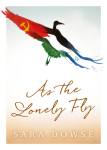
Sara Dowse, As the lonely blySome books grow out of their author’s desire to engage the reader in an issue they feel passionate about, such as Jane Rawson on climate change in A wrong turn at the Office of Unmade Lists (my review) and Charlotte Wood on the scapegoating of women in The natural way of things (my review). Sara Dowse’s latest book, As the lonely fly, falls into this category, but for Dowse the issue is the Israel-Palestine problem, the “rightness” or otherwise of establishing a Jewish state. This doesn’t mean, however, that books so inspired are boringly earnest or stridently polemical. It’s a risk, of course, but in the hands of good writers, like the three mentioned here, issues are turned into stories that engage us, while simultaneously raising our consciousness.

Unlike Rawson and Wood’s more dystopian novels, Dowse uses historical fiction, with a hint of mystery/thriller, to explore her ideas.  The novel is set in the first half of the twentieth century, and follows the lives of two Russian-Jewish sisters, Clara and Manya, and their niece, Zipporah. We start, theoretically at least, with Clara (who changes her name to Chava when she arrives in Palestine), but are immediately introduced to her younger sister Manya (who had migrated to the US with their parents and who becomes Marion).  Niece Zipporah, the committed Zionist who followed Clara to Palestine, opens Part Two.

The story is divided into 6 parts in fact, the first labelled “Clara begets Chava 1922-1925” and the last “Tikkun? 1967” (“tikkun” being, significantly, a Hebrew word for “fixing/rectification”). The narrative has an overall forwards momentum, but the chronology is not linear and the perspectives change. Following all this requires an alert reader, but it enables Dowse to fill in backstories at the relevant moment (such as Clara’s experience of the 1905 Odessa uprising) and to link various characters and ideas. Her goal is to explore the difficult situation confronting Eastern European Jews in the early 20th century and the concomitant creation of Israel. In so doing, Dowse raises bigger questions about idealism and justice, and exposes the challenges of migration, particularly of migration that is politically charged.

While Part One is labelled 1922-1925, the first chapter is headed “Marion 1967”, ensuring an important, comparative, role for the American experience. However, the bulk of this part tells of socialist Clara/Chava’s early days working to create a new Jewish state. It’s not long before the hard-working Chava starts to question what they are doing, to see the difference between the political Zionism of Herzl and the cultural (or spiritual) one of Ahad Ha’am. She starts to agree with Ha’am, as she writes to Marion,

that there shouldn’t even be a state like the one Herzl advocated, but a centre in Palestine where Jews reconnect with our culture and from there would disseminate it through the Diaspora. That the land wasn’t empty as Herzl had us believe, that it would be difficult to find land that wasn’t already cultivated, and the Arabs wouldn’t be overjoyed about the space we’d taken up in what happened to be in their land too. Or ecstatic about losing their jobs. The Marxist in me is increasingly uneasy about this … (Pt 2, Ch. 11, Uncorrected proof copy)

If you are an Australian, this idea of taking up space that’s not empty will resonate, as I’m sure Dowse intends it to do!

… too much head …

Eventually Chava finds occupying this already occupied land too difficult and, after supporting an Arab uprising, willingly returns to Russia where, unfortunately, she finds anti-semitism on the rise. Meanwhile, Zipporah provides a foil to Chava, retaining her commitment to the Zionist ideal, albeit seeing the trauma that can be caused by commitment to a political idea. The story of her student, Talli, provides this insight. Dowse, in other words, provides no easy answers, but forces us to face, through stories of real human beings with whom we fully engage, the complexity of the situation.

Chava meets in Jerusalem, a cobbler, Ha-Kohen, a spiritual rather than a political Hebrew man. He says to her:

You and your chaverim, those pals of yours, can you really believe all those things you read? It’s all from the head. And the source of all evil on this earth is too much head, my dear, and not enough heart. (Pt 2, Ch. 10, Uncorrected proof copy)

A little more empathy, in other words, is what is needed.

As the lonely fly could be described as a family saga. There are many characters besides the three women I’ve introduced here – including another sister (Zipporah’s mother) and her family, various friends and colleagues, and a love interest or two – and the novel spans six decades from 1905 to 1967. There’s also a thriller element including some espionage, and a nod to the mystery genre too. What is wrong with Talli, and what does happen to Clara? Through these Dowse explores her themes while involving us in real lives – via lovely domestic details of rooms, meals and close relationships, and vivid descriptions of place. By the end of the novel I was deeply engaged with her characters and their dilemmas, whether or not I agreed with all their decisions.

… the passion for justice …

Manya/Marion is a somewhat more shadowy character than Clara and Zipporah, and yet, as the one who migrated to America, the land of the free, she provides an important counterbalance to the lives of the other two. On the surface, her ambition to be an actor, and her oh so western focus on colouring her hair, on “the showering, the creaming, the makeup’, are as “exasperating” to us as they are to Zipporah, but she is the character who opens and closes the novel, so we need to heed her. Her idealistic, bookish husband, Sidney, dies a very American death, and leaves her with two young sons. It provides a counterpoint to the high drama that was occurring in Israel.

In the loneliness of her later years, she finds herself still struggling to understand him, but she comes to see that both his and Clara’s idealism was really “a passion for justice”. In the book’s final chapter, she and Zipporah, whom she visits in Israel, attend a Hebrew performance of a favourite play of hers, O’Neill’s The iceman cometh. Now, I don’t know this play – besides knowing of its existence – but I presumed Dowse had chosen it for a reason, so I checked Wikipedia. It told me that the play’s main themes are the self-deceptions, the pipe-dreams – the lies, in other words – that we tell ourselves to keep going. The play references, apparently, political ideals such as anarchism and socialism. Certainly, Clara discovers her socialist ideals being undermined when the factory managers in Soviet-era Moscow start employing capitalist techniques to increase production. However, I’m sure Dowse intends us to read O’Neill’s theme in terms of how we behave today – in relation to Israel/Palestine and to all the other injustices that we see around us, but try to justify away.

The past is not, in fact, the burden we thought, says Zipporah to Marion. It’s the future we need to worry about. Like all good ideas novelists, Dowse has not bombarded us with answers but, instead, has intelligently and compassionately given us plenty to think about.

aww2017 badgeSara Dowse
As the lonely fly
For Pity Sake Publishing, 2017
327pp. (Uncorrected proof edition)
ISBN: 9780994448576

To be published: June 2017

(Advanced review copy courtesy For Pity Sake Publishing)

Maxine Beneba Clarke, The hate race: A memoir (Review)

This is how it changes us. This is how we are altered.

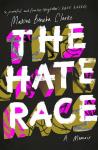
Maxine Beneba Clarke, The hate raceMaxine Beneba Clarke’s Stella Prize short-listed memoir, The hate race, is one powerful book. I’ve been reading about racism since my teens during the Civil Rights years, and have read many moving novels and memoirs. Clarke’s book holds its own in this company.

The book chronicles Clarke’s life from early childhood through to the end of high school, but she bookends this chronological story with a prologue and epilogue which are set later, during her son’s first year of school. This approach to structuring her story is effective, because it enables her to reflect on what’s changed a generation later. And the answer is, not much, which is such an indictment on Australian society.

Before saying more, though, I need to back-pedal a bit, and make sure you know who Clarke is – besides being the writer of a well-reviewed collection of short stories, Foreign soil. She’s the Australian-born daughter of West Indian-born parents who migrated to Australia from England in 1976. As a young girl she was mystified by people asking her where she was from, and confounded when these same questioners became angry when she responded, honestly, Australia. This is, I know, a common story, but is not, I think, well-documented in our literature. However, as Clarke would say, what’s a story for, if not to tell how it went.

And that’s what she does, tells us how it went – and went, and went. The bulk of the story is, as I’ve said, told chronologically but Clarke hangs each chapter, each step in her chronology, around a specific topic, such as her involvement in sport or debating, or that transition period between primary school and high school. She captures beautifully the trajectory of thirteen years of schooling from the early 1980s to the mid 1990s. Although everyone’s experience is different, much of what she describes is universal: the first day of school, the yearning for a specific toy (like a Cabbage Patch Kid), parties, first love, getting braces, and so on. What isn’t universal, though, is her experience of being a child of colour.

This is how …

Reading her story is gut-wrenching. She faces racism – direct and indirect, intended and unintended – from her first day of pre-school to the end of high school. One high school class-mate, who ranks the girls in the class (as if that’s an acceptable thing to do anyhow), doesn’t rank her at all “because animals didn’t count. Greg Adams said that would be bestiality”. She’s called every name you could possibly think of – and more you probably couldn’t. She’s spat at and threatened. Luckily, she has friends too – otherwise it’s hard to imagine how she could have survived.

The disappointing thing is the inept handling by the schools, because it’s clear that for all the work ostensibly being done in schools to promote tolerance and harmony, only some of it is getting through*. There’s only so much schools can do, of course, given students’ main role models are their parents, but the least teachers can do is take the racist behaviour seriously and respond in a meaningful and supportive way. This, however, is not always the case: “He’s trying to wind you up. It’s just a little bit of nonsense. Don’t give him the satisfaction, Maxine”, says one high school principal, for example. That’s not good enough. Writing about her early primary school years, Clarke says this:

I knew before I started big school that, for me, the playground would always be a battlefield: a world divided into allies and enemies. At five and a half, racism had already changed me.

After a while, you start to breathe it. Another kid’s parents stare over at our family on the first day of school with that look on their faces. You make a mental note to stay away from that kid … You tell a teacher someone is calling you names. Blackie. Monkey girl. Golliwog. The teacher stares at you, exasperated, as if to say: Do you really expect me to do something about it? The next time you have a grievance, you look for a different teacher. This is how it changes us. This is how we’re altered.

Towards the end of the book, her boyfriend asks her to come to his place to swim in his family’s pool. She’s uncertain:

I had no reason to believe Marcus’ family would have an issue with the two of us, based on what I knew of them, but I wasn’t sure I wanted to put myself through the stress of finding out.

This is how we edit our lives.

How we brace against the blows.

The book isn’t unmitigated misery. Clarke mixes up the tone, sometimes using humour to make her point – it never hurts, after all, to see the absurd side of things – but the book is a memoir, not an autobiography. This means that it is not about the whole life but a part of it, and in Clarke’s case the part that she wants to share, to expose, is her experience of racism while growing up. Her goal was not vindictive. She writes in her Acknowledgements that she loves Australia, but she wanted to show “the extreme toll that casual, overt and institutionalised racism can take: the way it erodes us all”. That, she certainly does.

There are things about the book that I could quibble about, but they are petty in the face of its overall power. I don’t like to describe books as “important” or to say that everyone must read them, but for a readable and devastating understanding of how racism, in all its guises, impacts on a personal, rather than a theoretical or historical level, The hate race is essential. It’s a story that needs, as indeed Clarke aimed, to be “written into Australian letters”. It deserves the accolades it has received.

Kim (Reading Matters) also admired this book.

aww2017 badge

Maxine Beneba Clarke
The hate race
Sydney: Hachette Australia, 2016
261pp.
ISBN: 9780733632280

* This is the 1980s and 1990s I know, but I use present tense here about schools because it’s pretty clear that not a lot has changed.

Carmel Bird, Family skeleton (Review)

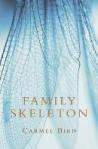
Carmel Bird, Family skeletonI love a cheeky writer, and Carmel Bird must be the doyenne of cheeky writers, so it goes without saying, really, that I thoroughly enjoyed her latest novel Family Skeleton. The cheekiness starts with the epigraph, which, as she is wont to do, is a quote from her fictional character Carillo Mean. As Bird has said in an interview, “he always has something interesting to say”. But that’s just the start of the cheekiness. The story is narrated by “the skeleton in the wardrobe”. Now, I know many readers don’t like what they see as cute or contrived narratorial devices – like girls in heaven or dead babies – but please don’t let that put you off here, because in the hands of a skilled writer such a device can lift a story to a whole new level.

So, when I tell you that the novel’s framing idea is an obsession with family history, you might start to understand where our narrator comes in – except that the story is not really about the skeleton, whose identity is never divulged, nor is it about family history. What it’s about, really, is family secrets and betrayal, and the tipping point. It’s about the recently bereaved and well-to-do Margaret O’Day, whose family, through her husband, has been involved in the funeral business for generations. Such a setting is, of course, ripe for black comedy and that’s what we get in this novel. But, back to Margaret. Her husband Eddie, “a philistine” according to our skeleton, was also a philanderer and died in the arms of his mistress. Margaret had been betrayed – more than once, in fact – but she knew this, and even accepted this last mistress, and her children with Eddie, at the funeral.

From this set up, the story progresses, mostly chronologically but with a couple of significant time-shifts along the way. It is mainly told by our omniscient skeleton, but Margaret starts a journal, which she calls – hmm, note this – “The Book of Revelation”. Her entries in it form some of the book’s chapters. This title, “The Book of Revelation”, is another of Bird’s jokes, for the novel is about things revealed and not revealed – particularly the latter, because as the story progresses Margaret discovers an even bigger betrayal than her husband’s, and she is desperate to hide it from visiting O’Day family historian Doria Fogelsong.

The novel, then, as I said, is about secrets and betrayals. For the “virtuous” Margaret, who has put up with much throughout her marriage and who has become very good at “concealing her true feelings from people”, this lately discovered betrayal is the last straw. It takes all her resources to keep going. The family history motif compounds the tension. Will the story come out? Will Margaret be able to keep Doria (“with her iPhone on her left, iPad on her right”) from finding it out.

There’s satire here, surely, on the current obsession with family history. Our skeleton tells us

I happen to know that one of the little violinists was the son of Eddie O’Day and a gorgeous Hungarian dress-designer. Evan didn’t realise that, not that it makes any difference to anything, although it is a nice detail for a family tree. Doria missed out there.

So cheeky, these little jibes dropped in. Bird also skewers fashions in family history – such as how it is now a positive thing to uncover a convict or an Indigenous ancestor – while also exposing its underbelly, that is, the pain discovery can cause. The obvious question, of course, is whether it is better to know the truth or not.

However, it’s not only family history which catches Bird’s eye, but the pretensions and self-absorption of contemporary middle-class life, from designer clothes to electronic devices, from shallow parties to theme park cemeteries. It’s all here, providing background to the main fare.

But there’s more to the novel too, because it is also about writing and reading fiction, a storytelling masterclass in a way. The skeleton does more than narrate. S/he engages with the reader, reminding us of things we’ve already read, making sure we are keeping up with any plot hints or twists. Oh, how I loved this. I felt Bird was right there, having fun, playing games with us, while at the same time teaching us about how writers write and, more significantly, how we should read. Early on, for example, our skeleton presents us with a future auction advertisement for Margaret’s house, Bellevue, and says:

I realise that the eye of the reader can easily slide carelessly across such elements of the text. However, I suggest you take your time and study this document carefully.

The joke, though, is on us because at this stage in the story we have no idea what “secrets” are contained within. (At least, that’s my reading of what Bird is doing.) At another point, after telling us that “nothing bad ever happened at Bellevue these days”, the skeleton teases us with, “I trust you are alert enough to hear a faint bell ringing”.

Bird also plays with the archetypes of popular fiction – the betrayed wife, the philandering husband, and “the archetypal stranger who rides into town … the harbinger of fate” – but she gently subverts our expectations. The betrayal that most disturbs Margaret is not her husband’s, and it’s not Doria, the stranger, who brings the news that so distresses Margaret, albeit, given Margaret’s discovery, Doria can certainly ramp up the pain.

And then there’s the writing, with its gorgeous descriptions, pert sentences, delicious irony, entertaining word-plays and its smart, cheeky tone which leaves you in no doubt about who or what is being targeted but is good-humoured rather than bitter. Here is Margaret preparing to have Doria for lunch:

When Margaret asked for just a plain omelette, Lillian [her housekeeper] understood that the guest was someone who gave Margaret no joy, and who was to be more controlled than entertained. It was control by omelette. A sliver here, a sliver there, and a quiet soft squashing with the tongue against the palate. Desultory conversation, meaningless smiles. Plain omelette.

What more can I say? Family skeleton delights on so many levels. It is in fact quite a shocking story, but one told with a spoonful of sugar that has just the right amount of spice. I can’t help thinking that Bird chuckled and chuckled as she wrote it. I certainly did reading it.

Lisa (ANZLitLovers) also enjoyed the novel.

aww2017 badgeCarmel Bird
Family skeleton
Crawley: UWA Publishing, 2016
228pp.
ISBN: 9781742588902

Janette Turner Hospital, Orpheus lost (Mini-review)

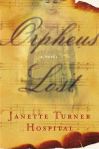
Janette Turner Hospital, Orpheus lostLast year I did a mini-review of Elizabeth Jolley’s An innocent gentleman using some scrappy notes from when I read the book long before blogging. This post on Janette Turner Hospital’s Orpheus lost has similar origins. I’m keen to add it here because I’ve read several of her novels, but none since blogging, and I really want her represented here.

Orpheus lost commences in Boston and is about Leela, a mathematician from the South, and the Australian musician, Mishka the subway-playing violinist, whom she meets.  They become lovers, until suddenly, after a subway explosion in which terrorism is suspected, Leela is taken to an interrogation centre where an old friend Cobb tells her that Mishka isn’t who she thinks he is. Meanwhile, Mishka is looking for his missing father, and heads off to the Middle East. The scene is set for what becomes, in fact, a literary thriller.

In a conversation* with Jason Steger on The Age online book club, Hospital said she had no political agenda but was interested in how people emotionally handle the shock of being randomly caught up in political action, and in what moral decisions they make. In other words, she’s interested in the moral and emotional repercussions of what happens when people get caught up because what they do looks dangerous but actually isn’t. (This is similar, in fact, to what happens in Richard Flanagan’s The unknown terrorist). It’s nightmarish stuff. Hospital talked about the trading of civil liberties for safety in the post-9/11 world, something she sees as a dangerous response. It makes it rather relevant still today doesn’t it?

However, she also talked about Orpheus and Eurydice being one of the great love stories of all time, and suggested that it is as much about loss, grief and yearning, as it is about love. But she was tired, she said, of the women always being the rescued ones. So she decided to give it a feminist twist and invert it. Consequently, in Orpheus lost, the man’s the one snatched away, and she’s the rescuer. Now that’s surely political!

The novel is a multiple-point-of-view novel and opens with Leela’s voice. We learn that she is fascinated by maths (numbers) and on the second page she quotes a seventeenth century mathematician saying ‘Obsession….is its own heaven and hell’. This theory is played out in the novel. The three main protagonists all have obsessions: Leela is obsessed with maths (which she believes always provides an answer to things) and with Mishka; Mishka is obsessed with music and with his identity (which involves his missing ‘father’); and Cobb is obsessed with Leela. There are other obsessions in the novel, though, too – the Islamic fundamentalists, Leela’s father with his religious fundamentalism, and other obsessive musicians and mathematicians.

Into this world of obsessed people, comes terror – and alongside terror, as we all know only too well, is the desperation for safety. Safety is a constant issue throughout the book. For example Cobb describes two types of people – those who take safety for granted and those who know it’s a precious thing. He suggests that the former create risks for the latter.

Unfortunately, I seem not to have the book anymore – which is unusual for me. Perhaps I’d borrowed it! So what I want to focus on is my experience of reading Hospital, rather than on the plot. She’s one of our more structured or tightly-styled writers. This means that I read her with my head as much as with my heart because she always has a lot going on. There is, for example, her strong use of recurring motifs and metaphors, such as, in this novel, photographs. They play several roles: they represent love, connections between people, surveillance, evidence, and the idea of truth vs fiction. I enjoy teasing out these sorts of things. Music and maths are other significant motifs. For some readers, and for me on occasions, Hospital can push her metaphors too hard but I thought they worked here.

And then, alongside multiple points of view and these recurring motifs and metaphors, there are structural devices, such as her use of parallels to set up points of likeness and tension between her characters. The three main protagonists all lost a parent early (Cobb and Leela their mothers, and Mishka never knew his father); Cobb and Leela both have ‘damaged’ fathers; the main characters all have small town upbringings in ‘odd’ places (the Deep South in a town called Promised Land, and the Daintree which is described as ‘the promised land’). The whole idea of “promised lands” is rich for exploration in our modern world of nationhoods!

Anyhow, to conclude this mini-review, lessons are learnt in the novel. Cobb, who initially wants to make Leela fear, comes to regret his actions. And Leela, who has to confront the reality of fear, also learns that random events which you can’t always control do occur. Steger says the book is about redemption – but, despite what Hospital says, I can’t help thinking it is also about politics. Like most of her novels, it’s challenging to read, because she’s a writer who extends, probes and pushes – occasionally, perhaps, a little too much – but that, to me, makes her always worth reading.

Bill (The Australian Legend)‘s review will fill you in nicely on more of the details.

aww2017 badgeJanette Turner Hospital
Orpheus lost
Sydney: Fourth Estate, 2007

* I couldn’t get the actual conversation to load when I checked this old link, but I’m adding it here in case it was just a temporary gremlin.

Madelaine Dickie, Troppo (Review)

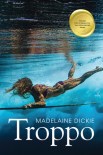
Madelaine Dickie, Troppo“Write what you know” is the advice commonly given to writers, and this is exactly what Madelaine Dickie has done in her debut novel, Troppo, which won the City of Fremantle TAG Hungerford Award. For readers, on the other hand, the opposite could be true, as in “read what you don’t know.” This is certainly what I’ve done by reading Dickie’s novel because I’ve barely travelled in southeast Asia, where the novel is set, and all I know about that risky business of surfing, which frames the novel, comes from Tim Winton’s Breath (my review).

So, where to start? Well, to begin with, it’s a while since I’ve read what I might call a “youth culture” novel. I’ve read novels by young authors, such as Hannah Kent’s Burial rites (my review), Brooke Davis’ Lost & found (my review) and Tara June Winch’s Swallow the air (my review), but these novels have different drivers. One is historical fiction, one was inspired by grief over a mother’s death, and the other explores indigenous identity issues. The closest to Troppo that I can recollect reading is Andrew O’Connor’s The Australian/Vogel Award-winning Tuvalu, about a young Australian teaching English in Japan, but I read that long before blogging.

I say all this to give Troppo a context – a sort of sub-genre, if you will – of young writers writing about a young person’s experience of the world, an experience that is post-coming-of-age but encompasses a degree of uncertainty about one’s place. I don’t intend this to mean, though, that the novel is autobiographical. While it obviously draws on Dickie’s knowledge of southeast Asia and surfing, for example, I wouldn’t presume to say protagonist Penny is she. Indeed, in an interview on the publisher’s website, Dickie says that:

Some of the anecdotes are almost true, certainly stemming from my own experiences as a traveller and surfer … The texture of Troppo is also very true, the intoxicating smell of kretek cigarettes, the nights bleary on Bintang beer, and the way the call to prayer from the mosques drift down through mountain valleys.

Further, “the characters are entirely fictional”, she says, as is the setting, Batu Batur.

But now, preamble done, let’s get to the book. Set in southwest coastal Sumatra, it starts a couple of months after the bombing of the Australian Embassy in Jakarta in September 2004 and ends just after the tsunami hit Aceh on 26 December 2004. Penny, around 22 years old, had lived in Indonesia as a teen, but is returning to have “a break” from her significantly older boyfriend Josh. She has lined up a job on a surfing resort run by expat Shane, but arrives early to have a holiday. That’s the set up. The novel then explores the personal and political relationships that develop (or pre-exist) between the locals and the expat community, and within the expat community itself, in a tense situation where corruption and bullying is rife, and fundamentalist Islam is on the rise, threatening a culture that has traditionally accommodated different values and beliefs.

Troppo is a good read that gets you in quickly. Its fresh, lively but also reflective, first-person voice is engaging, and the various supporting characters are well-drawn. They include Ibu Ayu, the manager of the tourist bungalows where Penny stays in the beginning; young Cahyati, her niece; Penny’s soon-to-be-boss, Shane; and the “hot” but somewhat mysterious expat Matt. We soon sense mystery, with the locals not liking Shane, and the expats suggesting he won’t be around much longer. There’s a thriller element to the novel, but it’s not “just” thriller.

The novel’s over-riding concern is Penny’s uncertainty about her life. She’s not sure, exactly, why she’s fled Josh (except that his routine stultifies her), or why she’s “always jerked along by whim and the conviction there’s something better just ahead”. And yet, we readers know why, just as Belle in Disney’s (original and recently remade) Beauty and the Beast does!

I want much more than this provincial life,
I want adventure in the great wide somewhere.
(lyrics by Howard Ashman)

It’s not our culture (Matt)

In addition to the personal, however, the novel also explores social and political themes. One concerns tourists and cultural differences, expats and First World guilt. Penny sees “men whose bodies are halved over new rice” and “old women buckled under bundles of sticks” while she and friends are “off to surf, off to play and play and play, for months if we want.” It’s two-edged of course: the tourists bring money but their lives can inspire resentment.

Another theme concerns changing politics in Indonesia. When asked in the interview (linked above) about the novel’s timing, Dickie responded that:

Troppo is set two years after the Bali bombings, a year after the bombing outside the JW Marriott Hotel, and two months after the bombing of the Australian embassy in Jakarta. This context is important for Troppo, as some of the themes explored are the rise of fundamental Islam and the coexistence of Islam and traditional beliefs. … I was also aware of the two dimensional depictions of Islam in the media, and wanted to create rounded characters and discussions based on some of the stickier topics I liked to discuss with my Muslim friends. Has the relationship changed? Of course, things are always in a state of flux. However, our news media is now less concerned with Jemaah Islamiyah, and more concerned with the rise of Islamic State, which no one had heard of ten years ago. So the shape of fundamental Islam has also changed.

This theme pervades the novel through a growing sense of menace, not only against the corrupt expat, Shane, but against the “bule” (foreigner) in general. Moreover, Marika, a young New Zealander who runs an internet cafe, tells Penny that “the vibe has changed”, Matt tells her “there are bigger issues at play”, and locals in a bar tell her of imams “only wanting mosques, not churches”. Dickie handles this well. Suspense builds slowly – in fits and starts – and the plotting is sure. The crisis, when it comes, is swift but believable because the groundwork has been done.

Overall, in fact, Dickie proves to be a skilled writer. The novel feels tight and honed. Sometimes first-time novelists can overdo imagery, but Dickie keeps it under control, mixing up evocative descriptions with dialogue and action. It’s the lovely little descriptions that pop out of nowhere which delight the most, like this of a middle-aged expat’s hands being “like sea-creatures that have been left out on the sand. Dried out and peppered with sunspots”. Or this, “The night is young. The mozzie coil has only just begun its inward inch.”

Dickie also handles well that challenge of writing a story about a place whose language is different from her own. Her strategy is to sometimes translate Indonesian words and phrases, but other times to let the context make it clear. This can be an effective approach, and Dickie makes it work, using enough local language to convey place, but not enough to stall our reading.

Partway through the book, Penny says that “Risk always makes things sharper, throws into contrast the highs and lows, gives clarity”. Troppo, in the end, is about this. Yes, it comments on tourist and expat life, and yes, it exposes the beginnings of a dark political underbelly in the region, but the main point, really, is the personal. Penny recognises by the end that she is “living, by choice, on a fault line”. She finds living in “extreme places, among extreme people”, “intoxicating”. The challenge, I’d say, is how to live such a life authentically and respectfully. I’d love to see Dickie explore this theme further.

aww2017 badge

Madelaine Dickie
Troppo
Fremantle: Fremantle Press, 2016
263pp.
ISBN: 9781925163803

DISCLOSURE: I have not met Madelaine Dickie, but her fiancé is the son of one of the founding members of my bookgroup (not to mention of my now long-past playgroup and babysitting groups).

Mena Calthorpe, The dyehouse (Review)

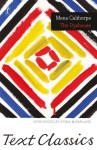
Mena Calthorpe, The dyehouseMena Calthorpe’s novel The dyehouse was, as I wrote in a post last year, Text Publishing’s choice for its 100th Text Classic, which surely says something about its quality or worth, wouldn’t you think? And yet, as Lisa (ANZLitLovers) pointed out in her post, it is not mentioned in recent books discussing the history of Australian literature, such as Geordie Williamson’s The Burning Library and Jane Gleeson-White’s Australian Classics.

However, it is listed in bibliographic and encyclopaedic works like Debra Adelaide’s Australian women writers: A bibliographic guide, Joy Hooton and Harry Heseltine’s Annals of Australian literature, and William Wilde, Joy Hooton and Barry Andrews’ The Oxford companion to Australian literature. It has also captured the attention of others, including Introduction-writer Fiona McFarlane (whose The night guest I’ve reviewed here). She writes of coming across a secondhand copy in a Sydney bookshop and says that she’d never heard of Mena Calthorpe, but as soon as she’d read the opening sentences, she decided to buy it. I can understand that. I would have too.

Now, before I get to the book, I’m going to bore you a little more with what people have or haven’t said about the book. In my above-linked 100th Text Classics post, I noted that while most reviewers were favourable, one from my city’s paper was less so. S/he, RR, called it “badly written and pretentious”, though conceded that if Calthorpe focused on “telling a story simply, economically, and honestly” she could be “a force … on the Australian literary scene”. Marian Eldridge, reviewing a reprint in the same paper, two decades later, had quite the opposite opinion. She praised Calthorpe’s “spare, clear prose and jaunty dialogue”, and called the book …

“a fine example of the social realist genre”

Well, I’m with McFarlane and Eldridge. The book got me in from its first paragraph, and I enjoyed it immensely. It is, what Lisa would call, a book that matters because its subject is, to put it broadly (and baldly!), the impact of capitalism-at-all-costs on workers. That could make for a dry, didactic book, but Calthorpe’s writing and characterisation bring the story to life. Her political message is unavoidable but it’s tempered by a cast of believable people (ranging from the cold chairman-of-the-board to the lowliest labourers), a well-controlled story that contains tragedy and romance without turning into melodrama, and writing that’s fresh and lively.

I’ll start with the writing first. The novel starts in 1956 and takes place over about a year. It’s told third person, in short chapters which move between the many, but not hard to keep track of, characters. It starts with Miss Merton arriving at the Dyehouse and meeting the on-site boss, Mr Renshaw. In chapter 2, we meet the Chairman of the Directors Harvison, the General Manager Larcombe, and Company Secretary Cuthbert. They’re discussing problems in the Dyehouse: it’s not keeping up with production. We quickly get a sense of the characters of these three men. Harrison’s lips tighten as he wonders “Where’s the firing squad?” Larcombe is ineffective – wary, unexciting, and full of excuses – while Cuthbert is “sharp-featured, pleasantly mannered”. We soon learn that he has some humanity, some empathy, but too easily lets his accounting distract him from troubling people issues. Then, in the same chapter, we shift to the General Office, and this (which McFarlane loved too):

Clack! Clack! Up came the carrier and ejected papers onto Mr Dennet’s table. There they lay: the Fanfolds! the Ledger Copies!
The Debits!
Mr Dennet took up his pen and began entering into the Control Book. The Comptometers sprang to life. Two young women with painted nails fell upon the papers.
Tic-tac, tic-tac. Now over to the files.
OK, Miss Brennan, you sort them out. City, Country, Government. Now break them up. A to K, L to Z, and then into the files with them.

There are other short interludes like this – a paragraph on worker Barney running for the morning train, for example – which break up the rhythm and convey the life better than any straight descriptive text could do. I have no idea what RR was thinking. Pretentious? No! Instead, I’d agree with McFarlane’s description of it as “formally experimental … with its episodic structure and its restrained lyricism …  its playful attention to sound.” It all makes for delicious reading.

“The trap’s set for us all” (Miss Merton)

Next, the well-controlled story. Told over a year, Calthorpe explores how the Dyehouse manages with its production crisis. We see Renshaw scapegoating the skilled, experienced but not certificated Hughie, moving him from his beloved dye-room to working on the vats. We also see Renshaw sexually preying on pretty young women in his employ, including the initially gullible Patty. We see the workers, their lack of security – those on “Staff” versus those brought in as needed – and their struggle to sustain their lives. We see the bosses turning a blind eye to the struggles of their people, or, not even noticing these struggles. We see nascent attempts to “organise” for better conditions. Along the way there’s an unplanned mid-life pregnancy, a tragic death, physical assaults and sexual abuse. The novel is nicely structured, beginning and ending with the calm, mature Miss Merton.

All this might suggest that the characters are stereotypical, designed simply to serve the “idea” but, while they do serve the idea, they come across as real, authentic human beings. Larcombe and Cuthbert, for example, are not simple villains. They are, in Larcombe’s case, for example, a bit lazy, a bit self-protective, a bit uncertain, resulting in his being a bit ineffective! Even the biggest villain of the piece, Renshaw, is shown to to have the odd ounce of humanity. Similarly, the workers. Hughie, Barney, Patty, Miss Merton and Oliver Henery, to name a few, are all rounded out with succinctly presented backstories, which establish their authenticity while also adding depth to the plot.

It is, essentially, an ensemble cast, but the stories of two characters primarily carry the plot – Hughie (whose love of his job “had given purpose and dignity to his labour”) and Patty (a naive young women who believes Renshaw will marry her, until she discovers otherwise).

The ending, which I won’t give away, is inspired, striking the right balance between realism and hope.

I really can’t recommend this book enough. It slots well into other books exploring the struggles of the working poor of the early post-war period, like Ruth Park’s Harp in the South series. And it is a thoroughly engaging read which is relevant today, not only because its humans reflect universals of human behaviour as well as the life of the period, but because we are currently seeing new threats to worker security which ensures that this book’s concerns do not feel dated. A worthwhile read on multiple counts, in other words.

Mena Calthorpe
The dyehouse
Melbourne: Text Publishing, 2016 (Orig. pub. 1961)
299pp.
ISBN: 9781925355758

(Review copy courtesy Text Publishing)

David Carlin and Francesca Rendle-Short (eds), The near and the far: New stories from the Asia-Pacific region (Review)

David Carlin and Francesca Rendle-Short, The near and the far

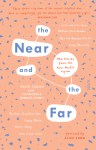
Anthologies, almost by definition, have a unifying theme, something that explains their existence. There are the “best of” type, as in best of a year or of a genre, for example. There are those drawn from a prize, such as The trouble with flying, and other stories (my review) from the Margaret River Short Story competition. And of course there are subject-oriented ones like Rebellious daughters (my review) or Australian love stories (my review). David Carlin and Francesca Rendle-Short’s anthology, The near and the far, is another type. Its origin is a project called WrICE (Writers Immersion and Cultural Exchange) which, the editors tell us, is “a program of reciprocal residences and cultural events focused on writers and writing from Australia and the Asia-Pacific”. The residencies and events occurred in such places as Singapore, Malaysia, Vietnam and Australia. The aim was to enable Asia-Pacific writers to immerse themselves in the face-to-face exchange of ideas and collaborative experiences, in order to build cultural understanding and find, as one participant says, “sustainable ways of speaking amongst ourselves and relating to one another as cultural practitioners”.

The result is that the stories – and even the forms of the pieces – are varied. The book has been thoughtfully presented. There’s a foreword by Alice Pung and an introduction by the editors at the beginning, and some notes on WrICE and a list of contributors with mini-bios at the back. The stories themselves are organised into three groups – The Near, The Far, and The Near and The Far – though I’d probably have to think hard about why certain stories have been allocated their particular group. There are 21 stories, 15 of which, if I’ve counted correctly, are by women. There’s a lovely extra touch, which is that at the end of each story is an author’s reflection – on the writing process, the goals and/or the experience of WrICE. They were often illuminating.

Before we get to the stories – and of course I’m only going to be able to focus on a few – I’d like to share some comments from the foreword and introduction. In her foreword, Pung calls the book a travel anthology, and I suppose it is, in a sense, though I may not have described it that way if I hadn’t read her foreword! She says

The near and the far is one of those rare travel anthologies, combining fiction with poetry and longform essays, each piece revealing a real insider’s experience of inhabiting a different world without exoticising the foreign. Each story has a centre – whether philosophical, moral, or political – and yet none of them are didactic.

The editors talk of how our different colonial experiences had “left long shadows across our imaginations”. They refer particularly to “settler” Australians who live in what was seen as an “outpost” – further than the “Far East” – and yet who still tend to look to Europe and America for our main cultural input. “The far feels near”, they write, “and the near feels far away”. That makes a lot of sense – to me.

You think you know (Omar Musa)

Now the stories. They come from, as you’d expect, a diverse group of writers, from Australia and Vietnam, from the Philippines and America, and from many places in between. Some I knew – like Melissa Lucashenko, Omar Musa, Cate Kennedy, and of course Francesca Rendle-Short – but most were new to me. Many of the pieces explore in some way the idea of what we know and don’t know. They may be about ignoring what we know because it’s too painful, or because we fear the rejection of others. They may be about the disconnect between what we assume and what we find. Or they may simply be about facing something new or unexpected.

I loved that indigenous Australian writer Melissa Lucashenko’s story, “Dreamers”, was chosen to start the anthology. Set in rural Australia in 1969, two years after the famous referendum, it’s a beautifully structured and told story about the relationship that develops between indigenous woman and her non-indigenous employers. It’s a story about love, loyalty and tolerance, but manages to quietly reference, without being polemical, social change issues such as environmental protest and the stolen generations.

Not surprisingly, the theme of accepting – welcoming, hopefully – diversity runs through the book. In “My two mothers”, Singaporean Suchen Christine Lim shares a story about a young adopted girl’s shame at having two mothers, her unwillingness to appreciate their love and tender care, and her eventual recognition of what they had given her.

If you have ever read or heard Australian-Malaysian performance poet Omar Musa, you won’t be surprised to hear that diversity underpins his contribution, “You think you know”. In this first-person story he explores “the deeply troubling issues” regarding sexual identity in Malaysia through his narrator’s (presumably himself) friendship with a young Malaysian man met on a bus. It’s a quiet, reflective, wrenching story – quite different from the higher octane wordplay of his performance poetry.

A story using a completely different tone and pace is Chinese-Indonesian, now American writer Xu Xi’s “BG: The significant years”. In a time when scientists and historians argue about dating nomenclature – BCE/CE anyone? – Xu Xi has come up with her own, BG or Before Google! Google (created 19 August 2004, if you want to know) provides for her a significant life marker. In short chronological sections, starting with “BG 43 (circa 1961 to ’62)”, she chronicles her life – in a lightly satirical tone – from applying to go to university in America, to becoming a US citizen, and getting a job and then losing it in the 1986 stock market crash. Her commentary on life in the US is enlightening. Joining the unemployment queue meant, she writes, that “for once I wasn’t a minority, because the minority was the majority in that government office”! Telling eh?

There are many more stories I’d like to share: Laurel Fantauzzo’s second-person-told story, Some Hints About Travelling to the Country Your Family Departed, about going back to the place (in her case the Philippines) a parent came from; Francesca Rendle-Short’s “1:25,000” on the geologies of time, on memories, regrets and saying “no”; and Maxine Beneba Clark’s short, painful, 9/11-inspired “Aviation” in which accepting “other” is put to the test.

And then there’s David Carlin’s gender-bending, mind-bending “Unmade in Bangkok”. Inspired by Thailand’s ladyboys, he explores ideas about identity and gender. The story is told in ten sections, mostly in third person but slipping between male and female personas. In section four, “she” considers:

Women make themselves up, men do not. This is curious when she thinks about it. To be a woman, in this culture, is to be a creature dipped in fiction, whereas to be a man is to be altogether real or at least natural, unconstructed.

So she dresses up and considers: “What is she becoming? Ever more fictional? A character in drag?” I enjoyed how Carlin explored gender identity, using broader ideas about “fiction”. “Some fictions trap us”, he writes, “but other fictions free us”. For ladyboys the implications are serious. It’s a complex story which covers a lot of ground. I need to read it again.

I titled this section “you think you know” because in all the stories, the writers are seeking to know, not so life can be assured, or complete, but in the spirit of understanding, of growing. Alvin Pang, in the note to his story “The Illoi of Kantimeral”, discusses the invented language he used:

Their precise meanings may or may not be immediately discernible from context, but neither is the experience of engagement, negotiation, resistance, and mystery within the Asia-Pacific itself as straightforward as we might wish the world to be. There is humility and pleasure in earnest encounter, and in listening out for the inherent humanity of what we do not fully recognise.

Perfect! This is a book which confronts us with many ways of seeing and experiencing. Different stories will appeal to different readers, depending on experiences, but I hope I’ve given you a taste. Books like this deserve a bigger audience than they often get.

aww2017-badge

David Carlin and Francesca Rendle-Short (eds),
The near and the far: New stories from the Asia-Pacific region
Melbourne: Scribe, 2016
288pp.
ISBN: 9781925321562

(Review copy courtesy Scribe)

Maria Katsonis and Lee Kofman (eds), Rebellious daughters (Review)

Maria Katsonis and Lee Kofman, Rebellious daughtersTo rebel or not to rebel, that is the question. At least, it’s the question that interested memoirists Maria Katsonis and Lee Kofman who, having written their own stories about “conservative upbringings and subsequent rebellions”, wanted to discover what other women could reveal about that “universal life experience”, the rebellion against parents. This book, Rebellious daughters, is, obviously, the end result – and it makes for fascinating reading.

In their Introduction, Katsonis and Kofman quote American author Gordon Lish’s statement that the  best thing writers can do is to get themselves “in trouble”, to “make it hot” for themselves. This is what they wanted from their contributors, they wanted them to take risks – and it’s what they got.

Like most anthologies, Rebellious daughters has been carefully ordered. It starts with one of the grand-dames of Australian literature, Marion Halligan (“The daughters of debate”) who describes herself as “well-behaved”, as the “good girl” that so many of the later contributors rebelled against. But this is not to say that she didn’t engage in her own little subversions, such as reading forbidden books. They didn’t do her any harm, she writes, “the delicate ones were my parents.” I related to Halligan’s story because, like her, I was the eldest, “the one who came before, who paved the way” and didn’t rebel dramatically. But, enough of that, I’m talking order, structure, here.

The book ends with author-journalist Jane Caro (“Where mothers stop and daughters start”) who shares her daughters’ rebellions, the loud in-your-face one and the withdraw-and-don’t-engage one. Her motherly perspective provides a satisfying, logical conclusion to the anthology. And then, right in the middle, the ninth story of seventeen, is author-publisher Rebecca Starford’s “Who owns my story”. Drawing on her own life and memoir, Starford grapples with the form, with the ethics and practice of memoir writing. I was intrigued by the placement of this contribution, but it’s clever. Having read eight already, I was ready to think about the issues Starford posed, and then, as I read the final eight, I had them in mind.

So, what are the issues? Starford starts by quoting author JP Dunleavy, who said that “The purpose of writing is to make your mother and father drop dead with shame”. Starford likes this quote because

it reveals, simply and with a degree of sharp comedy, the risky nature of memoir writing.

She touches on several issues. One is the idea of shame, and whether it is “an emotion women memoirists suffer from more acutely than our male counterparts.” She thinks it is, and wonders if this is due to girls being taught that they should never speak out. She also explores “a nagging moral quandary”, that is, “the right” to tell stories that involve others. It is, she admits, “the biggest ethical question a memoirist faces” particularly when the memoir portrays these others “in an unflattering light”. She discusses the option of writing the story as fiction. (But we all know cases where people “see” through that – or think they do – don’t we!) Anyhow, she says that she couldn’t choose the fiction option:

For me, the act of writing a memoir was important to the process. If I’d written my experiences as fiction, I would have been hiding behind the genre, and that would have been self-defeating, less courageous, and less honest.

This makes sense to me – and implies that many memoirs are a form of catharsis or, at least, of resolving one’s past. This seems to be the case for Starford who concludes that her memoir has resulted in improved communications with her father. And, she says, while her memoir might have seemed like rebellion to him, for her it was about “seeking to understand him and my mother” and how her experiences as a child had shaped her.

Starford’s analysis of the personal and ethical implications of writing memoirs provides a wonderful grounding for understanding of the other “stories”. There’s a lot of pain here, but there’s also humour, occasionally laugh-out-loud, more often wry. Lee Kofman’s story (“Me, mother and Sexpo”) about taking her conservative Hassidic mother to the Sexpo exhibition is hilarious, but is also a lesson in the assumptions we make – particularly about our parents. Michelle Law’s (“Joyride”), on the other hand, perfectly captures her pain of rebelling only to discover that she’d misread the feelings of the boy in question.

Not surprisingly many of the stories are about tension over boys and sex. Krissy Kneen (“Wundermärchen: A retelling of my grandmother”), whose Steeplechase I’ve reviewed, comes to realise in the end that instead of being the rebellious granddaughter she thought she was, she had taken on her grandmother’s mantle, she’d become a storyteller who likes to shock the innocent. It’s just that her grandmother used death, where she uses sex.  In “Resisting the nipple”, Rochelle Siemienowicz, whose memoir Fallen I’ve reviewed, tells of her struggle against the “good girl” expectations of her strict Seventh-day Adventist family and then of her complicated feelings, particularly regarding her mother, when becoming a mother herself.

In many of the stories, the youthful rebels are shocked to discover things aren’t as they thought they were or would be. Jamila Rizvi (“The good girl”) is confused when she realises that a girl (like her baby sister for example) could be not-good but liked. Jo Case (“Rebelling to conform”), in her desperation to be popular, starts to do poorly at school only to realise, later, that some of those popular girls she was trying to emulate got good grades. And Amra Pajalic (“Nervous breakdowns”) is frustrated by her out-of-touch migrant mother’s nervous breakdowns until she realises the cause is a mental illness.

Not all the rebellions in the book are against mothers – some are against fathers and grandmothers – and not all are resolved but, in most of the stories, age and experience eventually bring rapprochement. That doesn’t mean of course that the daughters capitulate. Rather, they come to understand their mothers (or whomever) a little more and their mothers likewise learn to accept the daughter they have. As Susan Wyndham (“A man of one’s own”) concludes

life is a long lesson and from this distance I prefer to look back with tenderness on those riotous years … And for both of us I say, no regrets.

And that seems the perfect point on which to end my post on this engaging, sometimes shocking, but thoroughly generous and warm-hearted book.

Note: A percentage from the book’s sales is going to the Women’s Legal Service Victoria.

aww2017-badgeMaria Katsonis and Lee Kofman (eds)
Rebellious daughters: True stories from Australia’s finest female writers
Edgecliff: Ventura Press, 2016
322pp.
ISBN: 9781925183528

(Review copy courtesy Ventura Press)