Monday musings on Australian literature: Some little recaps (2)

Last year, my last Monday Musings of the year fell on Christmas Day, so I did what I called a little recap post. This year, my last Monday Musings occurs the day before my big two end-of-year posts – Reading Highlights and Blogging Highlights – so I’ve decided to do another little undemanding Recap Post.

Recap 1: Some All-time Tops

Back in May I celebrated fifteen years of blogging, but in that post I didn’t share much in the way of overall statistics. However, trends and stats interest me so I’m sharing a couple here. Do you ever look at long term stats and trends on your blogs? See anything interesting?
Book Cover

My top review post of all time is one I wrote back in 2010 on Edith Wharton’s short story “A journey”. It was a Top Ten post for a long time, and continues to garner enough hits each year to keep it in the top 30. Close on its heels is my top Australian review post of all time, the one on Red Dog, the movie and the book. Like Wharton’s story, it was a serial Top Ten post, but was a bit of an outlier because, for many years, my Top Ten was dominated by my posts on older short stories. The last few years, though, have seen a gradual switch to more recent posts on more recent works occupying the top. I wonder why?

My strangest Top, though, comes from the list of sites that “refer” (sends visitors) to my blog. Next in the list after obvious sites – WordPress Reader, WordPress Android App, Facebook and Twitter – comes mumsnet.com! It’s the “UK’s biggest network for parents” and for some reason my posts, such as one on Germaine Greer, seem to get discussed there, resulting in visitors to my site. Is it just me?

Recap 2: Australian Women Writers Challenge

I’ve been involved in the Australian Women Writers blog since 2012. In January 2022, it changed from being an all-encompassing challenge to a blog/website devoted to promoting older, often under-recognised or overlooked, women writers, from the 19th- and 20th-centuries. This year, Elizabeth Lhuede and I tried a new “twist” for our posts, and featured a work by authors who had published something in 1924. Some of the writers were so fascinating that I also wrote them up for my Forgotten Writers series.

We made another change in 2024, which was to reduce our posting from twice a week to once a week. For Elizabeth and me, this post comprised an introduction to our chosen writer followed by a piece published by that person, while Bill continued with his survey of the Independent Woman in Australian Literature (with posts by himself and some guest contributors). Bill has written a useful wrap-up of his AWWC posts over the year on his blog.

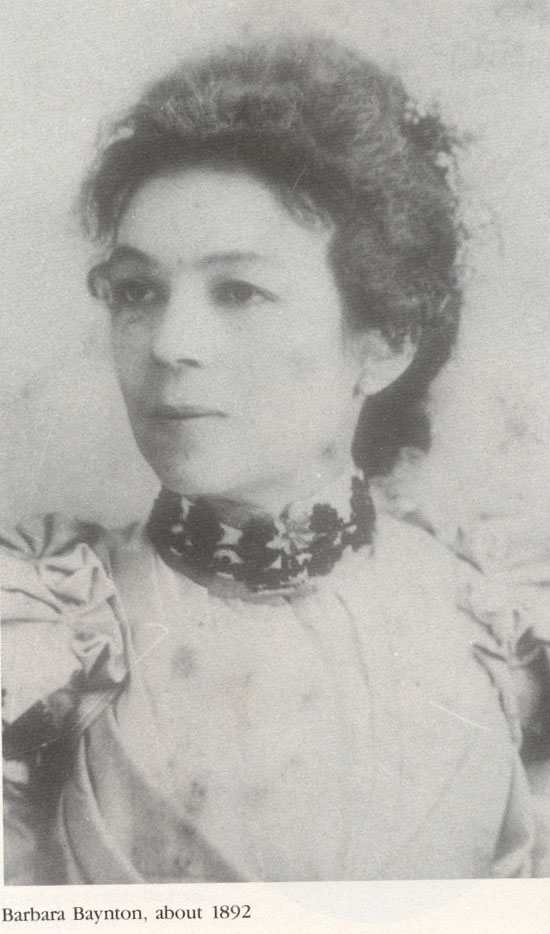
Despite these changes, including fewer posts, our stats continued to increase, after dropping in 2022. As last year, my post on Barbara Baynton’s short story “A dreamer” was the blog’s most visited post during the year.

The blog does take a lot of time, and we are currently talking about future plans. Bill has decided to hang up his commissioning editor’s hat after three hardworking years. We are hugely grateful for all he did, including finding guest contributors. Those contributors produced some of our most popular posts of the year. Michelle Scott Tucker’s post on the Billabong series, for example, was our third most-visited post for 2024.

Recap 3: Books given this year

As I wrote last year, this is not, technically, a recap, but I have often in the past shared the titles of Australian books I’ve given as Christmas gifts. This year I’m including Australian books I have given during the year – for birthdays, giveaways, and Christmas. They are not necessarily my favourite reads – indeed, I haven’t read them all – but were chosen to suit the recipients’ likes. Those I have read I did enjoy, otherwise I wouldn’t have given them to someone else, and some of those I haven’t read are on my TBR.
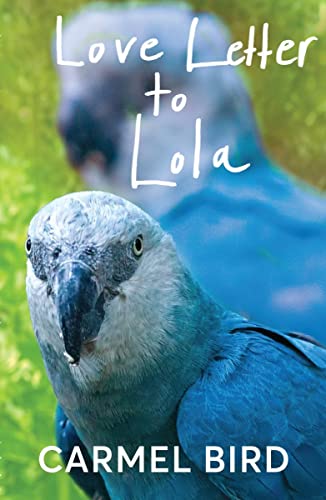
  • Carmel Bird, Love letter to Lola (my review, short stories; also in my gift list last year)
  • Carmel Bird and Jace Rogers, Arabella (my review, children’s picture book)
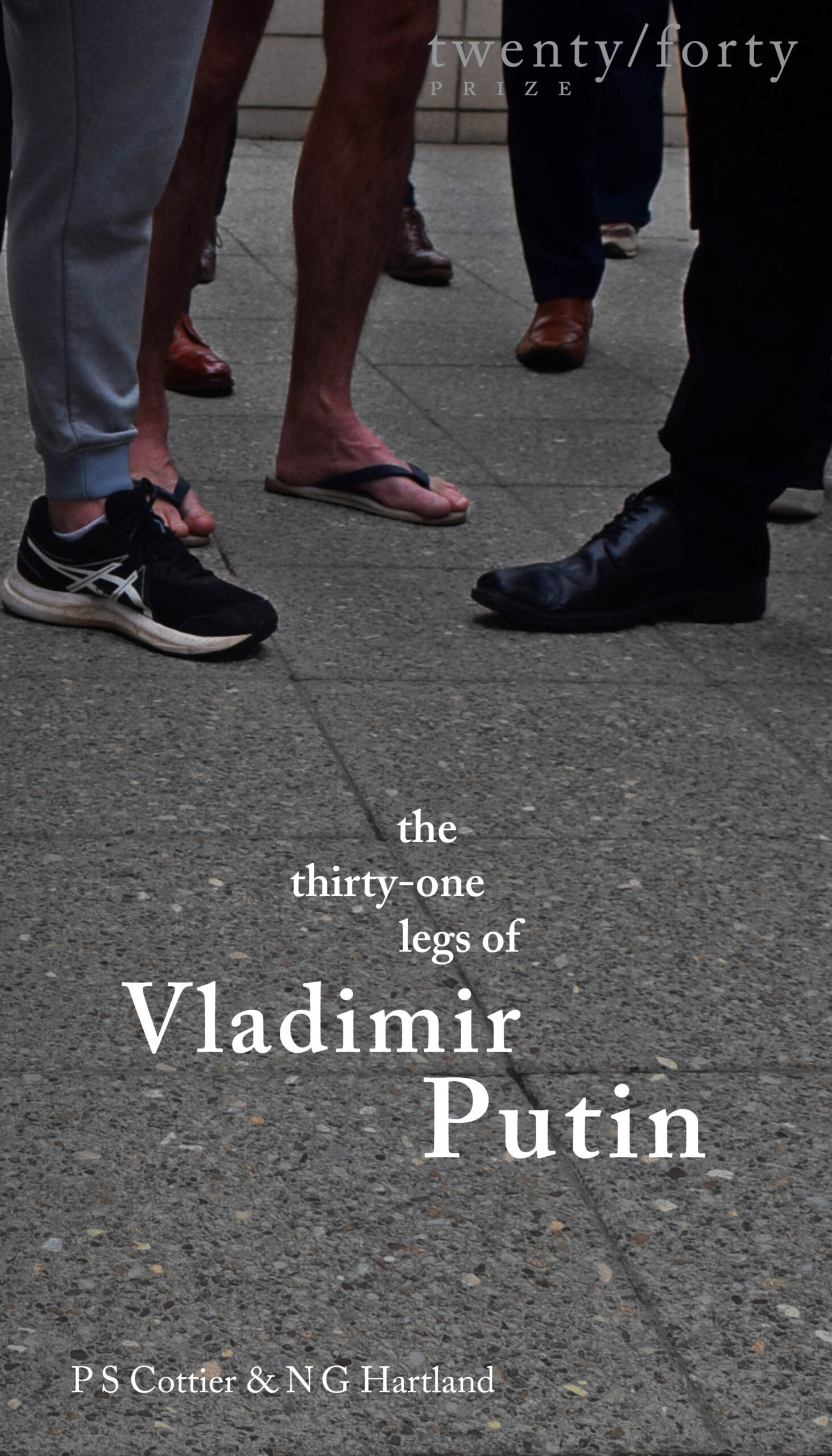
  • P.S. Cottier and N.G. Hartland, The thirty-one legs of Vladimir Putin (my review, novella)
  • Ceridwen Dovey, Once were astronauts (to Melanie of Grab the Lapels – her review, short stories)
  • Ali Cobby Eckermann, Ruby Moonlight (my review, verse novel)
  • Anita Heiss, Barbed wire and cherry blossoms (novel)
  • Tania McCartney, Wildlife compendium of the world (children’s nonfiction book)
  • Andrew McDonald and Ben Woods, Hello Twigs: Time to paint (early graphic-novel reader)
  • Emily Maguire, Rapture (my CWF Conversations 1 and 2, novel)
  • Inga Simpson, The thinning (novel)
  • Nardi Simpson, Bellburd (novel)
  • Stephen Orr, Shining like the sun (my review, novel)
  • Benjamin Stevenson, Everyone on the train has murdered someone (novel)
  • Karen Viggers, Sidelines (my review, novel)
  • Sonya Voumard, Tremor (my review, memory/nonfiction)

This year I seem to have given more non-Australian writers as gifts than usual, including Mick Herron, Toshikazu Kawaguchi, Claire Keegan, Thomas King and Natasha Donovan, Seichō Matsumoto, Haruki Murakami, Sigrid Nunez, and the New Zealand children’s writer Pamela Allen. This might not support Australian writers, but it does support our bookshops, and literary culture which is what it’s all about – ultimately, isn’t it.

Care to share your Christmas book-giving?
Monday musings on Australian literature: Some little recaps

It’s Christmas Day, so the the question was, do I do a Monday Musings post or not? Will anyone be looking at blogs. If you take part in this holiday season, I hope you are enjoying it in the way you most enjoy – with family, on your own, at the beach or in front of a fire, around a table or with plates on your laps somewhere comfortable. And, if it’s not a holiday season for you, well, then, you just might appreciate things continuing as normal.

But then, the next question was, what to post, because it needed, I felt to be something non-demanding. So, how about a couple of little recaps.

Recap 1: Top Ten Monday Musings posts

I started posting Monday Musings in August 2010, and since then have written 674 of them, making this one no. 675. I love writing them, though at times I leave it a bit late, and they end up being more rushed than I’d like. I can’t promise this will improve as life just seems to keep being busy, but I hope that even the ones that aren’t as comprehensive as I’d like offer some readers something to think about to look into further.

Now, though, I’m sharing the ten posts that have had the most all-time hits. Most of them are older posts – over half are ten plus years old – which is not surprising, I guess. However, in a sense I am surprised to find how many older posts still have a life. I wouldn’t necessarily call these Top Ten my best Monday Musings, and some feel dated to me now, but they are still attracting some attention. Here they are, with their all-time ranking (out of all my posts), and the year they were posted):

Recap 2: Australian Women Writers Challenge

Over the past decade or so, I have devoted my last Monday Musings of the year to the Australian Women Writers Challenge, largely because it was an actual challenge, so I would report on what I had read and on the challenge’s overall stats for that year. However, in January 2022, it changed from being a challenge to a blog/website devoted to promoting often under-recognised or overlooked women writers, from the 19th- and 20th-centuries. We want to bring them back to wider notice.

Barbara Baynton 1892
Baynton 1892 (Presumed Public Domain, via Wikipedia)

As in 2022, we continued this year to post twice a week: articles or reviews on Wednesdays, and actual writings by women, related where possible to the previous Wednesday’s post, on Fridays. While our change in focus resulted in a drop in stats (that is, in visits to the site) last year, they picked up this year, increasing by nearly 30%. I put this down to the hard work put in by Bill (The Australian Legend), our commissioning editor and writer of monthly posts, and to Challenge founder Elizabeth Lhuede, who prepares all the Friday posts, as well as doing her monthly post. We welcomed a fourth member to our team this year, Stacey Roberts (allforbiblichor), who is doing a PhD in Australian literature. It has been good having another head take part in our discussions and decisionmaking, and she wrote two fascinating posts on female domestic service in colonial women’s fiction, here and here.

Our most visited 2023-published post turned out to be mine on Barbara Baynton’s short story, A dreamer. I don’t take great credit for this, however, because I believe its popularity is due to the story being a set text.

The blog does take a lot of time, and we are currently talking about future plans. We expect to do things a little differently in 2024, but we will be continuing.

Recap 3: Books given for Christmas

This is probably not, technically, a recap, but what better day than this to share the titles of Australian books I gave as Christmas presents this year. They are not necessarily my favourites – indeed, I haven’t read them all – but were chosen to suit the recipients’ likes. (I hope I got it right.) Here they are:

  • Carmel Bird, Love letter to Lola (my review)
  • Rebecca Burton, Ravenous girls (my review)
  • Garry Disher, Consolation
  • Michael Fitzgerald, Late: A novel (Lisa’s review) (on my TBR)
  • Toni Jordan, Dinner with the Schnabels
  • Kim Kelly, Ladies Rest and Writing Room (my review)
  • Mori Ogai, The wild goose (not Australian, but translated to English by the Australian Meredith McKinney) (on my TBR)
  • Tracy Ryan, The queen’s apprenticeship (Lisa’s review) (on my TBR)
  • Benjamin Stevenson, Everyone in my family is a murderer
  • Ian Terry, Uninnocent landscapes (my review)
  • Emma Young, The disorganisation of Celia Stone

And, here I will leave it, as I don’t want to take too much away from my annual Reading and Blogging Highlights posts which are coming soon. In the meantime, I wish all of you reading this, all the best of the season, whether you celebrate it or not. I look forward to seeing you all on the other side, whenever you raise your heads again.

Monday musings on Australian literature: The new AWW, six months on

In February, a new AWW (Australian Women Writers blog) team, comprising its founder, Elizabeth Lhuede, Bill Holloway (The Australian Legend) and me, published our first post in our revamped blog. Six months on we have settled into a nice little routine which I’d like to share with you, but first …

Let me recap what I explained in my last AWW Challenge post for 2021. This challenge was, as many of you know, instigated in 2012 in response to concerns in Australian literary circles about the lack of recognition for women writers. By 2021, things had changed significantly with women writers seeming to be well-established on Australia’s literary scene, at least by observable measures. Because of this and some additional practical reasons, it was agreed that the challenge would change tack in 2022 and focus on past, and often under-recognised or overlooked, women writers from the 19th- and 20th-centuries. The new team decided that we would write articles about and reviews of earlier writers, and publish their actual writings – in full or excerpt form, as appropriate. Our reasoning was that Australia’s rich heritage of Australian women’s writing hasn’t been fully explored and we wanted to nudge it into the limelight.

So, what have we done? We have established the following routine:

  • on Wednesdays we publish essays or articles on relevant writers, works, or topics; and
  • on Fridays we publish actual writings, related, where possible, to that Wednesday’s post.

Bill is our commissioning editor, which means he sets up our posting timetable and approaches others (mostly bloggers we know) to contribute to our Wednesday articles, while Elizabeth schedules the Friday posts, drawing from the work she’s done, and is still doing, on locating and listing online content for past women writers. I have the easy job, being part of the ongoing consultations and keeping an eye on some of the background issues like our category and label policy and practice. Each of us also writes one Wednesday article a month, with the other week/s (given there are three of us) being a guest post.

We have not imposed a structure over the content of the posts. That is, we have not decided to explore past Australian women writers chronologically or geographically or thematically. Instead, we have drawn on contributors’ interests and experiences. This has resulted in an eclectic mix of posts, but, we believe, an interesting one, that should appeal to a variety of tastes and interests.

So, for example, Jonathan Shaw (Me fail? I fly!), who contributed many poetry reviews to the original blog, agreed to write articles on past women poets. His first was on Zora Cross. Brona (Brona’s Books) posted on Mary Gaunt, while author and blogger Michelle Scott Tucker posted on the children’s writer Patricia Wrightson and the issue of appropriation. We have also been thrilled to have contributions from overseas bloggers interested in classic Australian literature, like French blogger Emma (Book Around the Corner) on Catherine Helen Spence’s Mr Hogarth’s will, and Canadian Marcie McCauley (Buried in Print) on Katherine Susannah Prichard’s Goldfield’s trilogy.

Meanwhile, Elizabeth has focused specifically on our goal of finding forgotten and overlooked writers. Putting her research skills to work, she has unearthed writers we really never have heard of – and, along the way, has discovered some fascinating stories. Netta Walker, for example, took her on a merry chase, as did another wonderful find of hers, the case of Eucalypta (or, Mrs H.E. Russell). As for Bill, in between tracking down guest posters, he has been contributing posts on works by some of his favourite independent women, like Miles Franklin and Ada Cambridge.

Posts on topics other than individual writers and works include guest poster and literature honours student Stacey Roberts on Using the AWWC Archives, and mine on Primary and Secondary Sources.

So, six months in, we seem to be going strong, though there’s not a lot of comment engagement on the blog. More of that would be lovely.

We’d love to know whether you’ve looked at the blog. If you have, what have you liked or not liked, and is there anything you would particularly like to see? (We are open to offers too!)