Debra Dank, We come with this place (#BookReview)

First Nations people are advised that this post contains the names of deceased people.

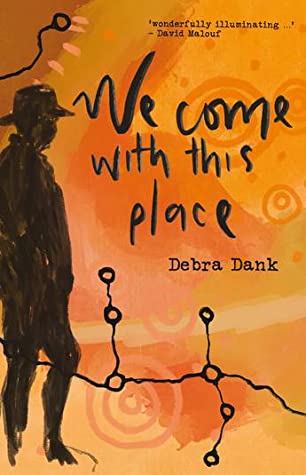
It has been my reading group’s tradition for some years now to read a book by a First Nations writer in July, the month in which NAIDOC Week occurs. Coincidentally, NAIDOC Week’s 2023 theme was “For our elders”, which worked beautifully with our chosen book, Debra Dank’s We come with this place, because a large part of it is about the value and importance of elders and ancestors.

This was not, however, why we chose Dank’s book from the options before us. Its subject matter intrigued us, about which more anon, but we were also influenced by the fact that, at the time we were choosing, it had just won a record number of four awards in the New South Wales Premier’s Literary Awards: the Douglas Stewart Prize for Non-Fiction, the UTS Glenda Adams Award for New Writing, the Indigenous Writers’ prize, and the overall Book of the Year. It was also shortlisted for this year’s Stella Prize, and, after we scheduled it, it won the ALS Gold Medal. These are significant awards and, for most of us, the book lived up to its advance publicity.

I mentioned the subject matter above, but We come with this place is one of those books that is tricky to categorise. It’s a sort of multigenerational memoir that is also a guide to her culture and a community history of her people, before and after colonisation. It grew out of her PhD in Narrative Theory and Semiotics. Dank describes it in her Preface as a:

strange kind of letter written to my place – a recording of events and activities that I and my family have experienced, in order to tell Garranjini that I remember, and I know. It is all based on real events. Some parts have been reimagined, because they happened outside my presence, and several names have been changed. Our relationship with our place, however, is genuine and lives in ways that not easily told in English words or western ways.

She goes on to say that she wanted to show “how story works in my community, and how it has contributed to our living with country for so long”. It also felt imperative, she says, to talk about the “voices, human and non-human, who guided the Gudanji for centuries before anyone else stepped onto this land”. This is a truly generous thing to do, and my group loved that, loved how Dank shared her story, and particularly how she helped us whitefellas “see” how First Nations people understand and relate to Country. I knew much of this from all I’ve read and heard, but this book really grew my understanding.

The other special thing about this book for me is that it is set in an area I know. I spent three formative late-childhood years in Mount Isa, close to Camooweal where Dank’s mother’s family were based. I visited Camooweal several times, and traversed parts of the Barkly Tableland which encompasses her Country. The first First Nations people I heard of were the Kalkadoons, whom Dank mentions in her book. Dank herself, though, is a Gudanji/Wakaja woman, the former through her mother and the latter, her father.

“to see the pain as it lies in the landscape”

We come with this place is a confronting book, from its perfect and defiant title to its chronicling of the atrocities that her people faced. The fear of children being taken away pervades the book. There are stories of massacres, and other appalling brutalities including a rape of her father’s mother. Lucy’s “choices were both dire – a drover’s boy or a special girl. The same, just in different clothes”. There is intergenerational trauma, which Dank exemplifies through her father, Soda. Hardworking and loving, he bears traumas, which she characterises as “newer stories … that pushed and jostled with the older stories” and sometimes “pushed their way out with a violence” that was often directed at her mother, and sometimes herself.

Dank doesn’t hold back; the way she tells it is strong, speaking her truths and segueing between past and present, between brutal history and rejuvenating story, between people and ancestors. Amongst the tough stories are warm-hearted anecdotes about family life. An example is Dank telling of being on country with her grandfather Bimbo and her surprise and joy in learning how to catch fish in arid land. The stories speaking of deep love sit alongside the hard ones, and together convey that the people, their ancestors, and Country are interconnected. This idea is mirrored in the structure.

However, I admit that I did, initially, find the structure a bit confusing, but as I read on, I started to sense an overriding arc similar to that of Bangarra Dance Theatre’s recent offering, Yuldea. Both start with origin stories, then move through colonial history, and conclude with the power of kinship and connection to Country. But it’s not as linear as this sounds. For example, starting the book, and threading through Dank’s narrative are the three Water-women who came from sea in the Gulf of Carpentaria, and travel far to create “the freshwater and hill country” of the Gudanji. They also end the book, giving it an overall cyclical structure which, I think, reflects First Nations’ understanding of life. Other cycles occur within this structure, so there is a continuous sense of moving forwards and back in time, as experiences and stories build on each other to create “Gudanji memory” – for us, and for her people to whom she is writing. This idea of building “memory” from stories, from lines between places and the things that have happened there, is strange to western ways of thinking, but Dank makes it make sense. She shows us how stories are made and passed on through Country.

I’ve been trying to decide how to end this post, and then it came to me that the best way might be with some words from Dr Tyson Yunkaporta’s Introduction to the book. He is a First Nations scholar, founder of the Indigenous Knowledge Systems Lab at Deakin University in Melbourne, and the author of Sand talk. He admits to not being able to face “the through line of history from the savagery of the frontier wars to the interventionist policies of today”. Dank, though, has. He writes:

She hurts us, digs bullets out of old wounds that never healed properly, sucks out the poison and then begins our healing with love and laughter. She does this for everybody, no matter which side of the rifle you’re on.

Dank, in other words, doesn’t pull any punches, but neither does she ram them down your gullet. Her aim is to tell the truth, proud and clear, but to do it in order for healing to take place. Isn’t that what we all want?

Kim (Reading Matters) also loved this book.

Debra Dank
We come with this place
London: Echo, 2022
252pp.
ISBN: 9781760687397

Edwina Preston, Bad art mother (#BookReview)

Edwina Preston’s Bad art mother was my reading group’s June book, replacing our previously scheduled book because we’d heard Bad art mother was to be the featured book in the Canberra Writers Festival session, Canberra’s Biggest Book Club. This suited me, as, coincidentally, I’d just started reading it!

Bad art mother has been shortlisted for two awards this year (so far), the Stella Prize, and the Christina Stead Award for Fiction (in the NSW Premier’s Literary Awards). Not a bad achievement for a book that was rejected by publishers over 20 times before being picked up by Wakefield Press.

The novel is mostly set in 1960s Melbourne, which was a time of social change. While feminism was around the corner but not there yet, the city’s life was being influenced by the postwar influx of European migrants. Preston captures this well, said our Melbourne-born members. The story draws its inspiration from various Australian arts practitioners who were active in the mid-twentieth century – the Heide Circle and the artist Mirka Mora and her husband Georges, in Melbourne, and the Tasmanian poet Gwen Harwood. Bad art mother is the third book I’ve read in recent years inspired in some way by the Heide story, the others being Emily Bitto’s novel The strays (my review) and Jane Sinclair’s memoir, Shy love smiles and acid drops (my review). Interestingly, all of them focus to some degree on the damage done to children.

I enjoyed the experience of reading Bad art mother, not only for its expressive language, but also for its intriguing, complex structure. It is told primarily from the point of view of a young boy, Owen, whose mother, Veda Grey, is struggling to make her name as a poet. However, we also get Veda’s point-of-view through letters she writes to her sister. After opening with Veda’s book launch in 1970, the novel is told in six parts, which to-and-fro in time, but it has an overall chronological trajectory, with part one telling of his parents’ meeting and his birth, and the final part being set around 2016 when Veda’s book is about to be republished in an anniversary edition. The central four parts commence with Owen as an adult in the 1980s, before returning to his childhood in the 1960s. It sounds complicated but it works. Lives, after all, are rarely simple and linear. Owen’s certainly wasn’t. Wanting to be just a kid, he had to be the grown-up more often than not.

The other thing to mention is that Owen tells his story first person, but to a specific person, “you”, whom we soon discover is Ornella, his father’s “sister”. That is, she was the daughter of the Italian family that “adopted” his father when he came to work in their restaurant at the age of 19. Throughout his childhood, Owen is passed between his parents, the rich but dysfunctional Parishes (to whom his mother entrusts him in a deal that buys her more time for her art), and Ornella. It is Ornella who saves him when all the others fail. She is the unimaginative one, the stern one, but also the stable, reliable one, the one who picked him up “on time, every time“. Owen knows that he owes his life to her, and now, as she is failing with dementia, he visits her and tells her his story, expressing what she means to him, while also working through his feelings for his mother.

“I will hang my anger out to dry” (Veda)

The book spans Owen’s life from the 1960s to the 2010s, but with its focus being the 1960s, it is, essentially, a work of historical fiction. Why did Preston choose to write about this time? I like my historical fiction to have some relevance to the time in which it is written. Fortunately, Preston’s novel does – and it concerns the challenge creative women face. There are three such women in the story. Rosa, the muralist, works in Owen’s father’s restaurant, and does it her way. She is not a tortured soul, but it takes a long time for her art to be accepted. Mrs Parish is an ikebana artist who quietly finds her own way by removing herself to Japan. And, of course, Veda, the poet – the only one who is a mother. She struggles big-time with her drive to create and her role as a mother. She writes to her sister:

How does one protect them? Sometimes I think I would throw in every hope of my own, every dream of literary prowess or success, to protect him, even for one second, from any hurt that might come to him.

But would I, Tilde? Would I?

If it came to it, I wonder how I would make such a choice. I should hope that if ever given that choice I would make the right one, but I know I would resent it for the rest of my life. I would never be happy. I would be a bloody, injured banshee who ruined everyone around her.

What sort of a mother chooses a book over a child?

Sometimes I am not sure what I am capable of at all.

The point, then, is that it is hard for women to make art and be recognised for it, and it is especially hard when the woman is also a mother. The tension for Veda is palpable through both Owen’s story and her own letters. And this brings me to the issue which triggers the novel’s crisis, anger. When Veda shows her anger at how she and her work had been treated, things go wrong and her life falls apart. Owen’s partner Julia tells him in 2016 when Veda’s poems are being re-released, that she remains relevant because, for all the progress that had been made in the interim, “it’s still hard to be angry, if you’re a woman. It’s still not allowed”. This was a major takeaway from the book for my reading group.

Bad art mother is an intelligent novel that offers no answers to the quandary it presents, but that asks the right questions. Good on Wakefield for taking it on.

Lisa also enjoyed this book.

Edwina Preston
Bad art mother
Mile End: Wakefield Press, 2022
317pp.
ISBN: 9781743059012

Review copy courtesy Wakefield Press

Tuesday Atzinger, The River (#Review)

Back in January I reviewed two stories from Ellen van Neerven and Rafeif Ismail’s anthology Unlimited futures: Speculative, visionary Blak+Black fiction for Bill’s (The Australian Legend) Australian Women Writers Gen 5 Week. The stories I reviewed were the second and third in the anthology because they were the first two by Australians in it. The anthology’s first story, however, is African in origin. Titled “The River”, it is by Tuesday Atzinger, who is described in the book’s Biographical Notes as “a poet and emerging writer … [who] … explores and celebrates Afro-blackness, queerness, disability and feminism. They peddle in discomfort and their primary goal is to fling words together to make you squirm”. Atzinger currently lives in Melbourne “on the unceded lands of the Wurundjeri People of the Kulin Nations”.

“The River” is worth discussing for several reasons, but specifically because it’s the first piece in the anthology, so was, presumably, chosen for a reason. Some of that reason is explained in the anthology’s introduction, which, by the by, takes the form of a conversation between the two editors. One of the topics they discuss is the cover, which was designed by Larrakia woman, Jenna Lee. Ismail describes it as looking at “the interaction of separate cultures in the most respectful and wonderful way”, and also sees it as suggesting “infinity”. It does, doesn’t it. Van Neerven adds that it also reflects “the movements of water” in the anthology. She says:

We were going to begin the anthology with water to allow those kinds of threads of connection and continuation to flow into each other. For me the cover really kind of feels like rivers connecting and the light that is created through water, but it’s also water that we protect and have a relationship and a responsibility to.

Water! Such a complex element in our lives. Most of my friends adore the sea, but for me it’s the rivers that draw me most. They can be young, direct, and fast, or slow, meandering, and somehow wise, or anything inbetween. They can be critical to creation stories, and this role is part of Atzinger’s opening story, making it particularly appropriate as the opening piece.

The first thing to say about “The River” is its form – it is a short story in verse. The River is not named, but we know it’s in Africa, partly because an African word, Ubuntu, is repeated throughout the story: “Ubuntu/Together”. According to the New World EncyclopediaUbuntu pronounced [ùbúntú], is a traditional African concept. The word ubuntu comes from the Zulu and Xhola languages, and can be roughly translated as “humanity towards others”.’ It has been adopted more widely around the world for its humanistic concepts – and is also, would you believe, “used by the Linux computer operating system” to convey the sense of bringing “the spirit of Ubuntu to the software world”. Valid appropriation? I didn’t find much concern about this use on the ‘net.

Anyhow, to the story itself. We are immediately introduced to the River, and a village that lies near it. The word “prosperous” is used, but we are warned that things aren’t so simple:

Shallow water so clear that the stones beneath it glistened brightly
Depths dark and mysterious, hiding all that lay below
The River, ever a source of sustenance
                                                                      And of danger

The story starts with creation: “Eons ago/The River had rippled in welcome as the people first arrived”. It provided refuge and sustenance; it saw “passion, grief, joy and courage”; it saw, in other words, the life of the community, of “the people who slept under the sun”. It had also seen “a lineage of Chiefs/Some wise, some brave, some imperious” until the present one “Mehluli – the Warrior Chief”. He is described in words like “proud”, “arrogant”, “dominating” and “greedy”. He desires a woman, Thandeka, but she already has a “perfect love” with Amandla, a hunter. Amandla fears the River, fears the aformentioned danger, and while she’s away hunting her fears are justified when the Warrior Chief makes his move on Thandeka.

The problem is that you “cannot refuse the chief”. Violence ensues. The River acts in an unusual way, and a dramatic story follows as Thandeka fights back, as does the River, to right the balance that has been disturbed. It is, ultimately, a story with a moral, a story to teach proper behaviour, right values.

The story is told in a beautiful, poetic style. The changing rhythms and strong use of repetition convey elemental and opposing tones – prosperity and togetherness versus power and greed. “The River” is a thoroughly enjoyable read. It is founded in the sorts of lesson-giving stories that are part of most belief systems, but its queer-love narrative brings the story and its traditional message into modern thinking and times. A worthy first story for the anthology, I think.

Tuesday Atzinger
“The river”
in Ellen van Neerven and Rafeif Ismail (ed.), Unlimited futures: Speculative, visionary Blak+Black fiction
North Fremantle: Fremantle Press in association with Djed Press, 2022
pp. 23-41
ISBN: 9781760991463 (eBook)

Monday musings on Australian literature: Best Young Australian Novelists (5)

Okay, so last week I said that post would be the end of the current little run of awards posts – but then I saw the announcement of this year’s Best Young Australian Novelists award, and decided we could cope with just one more. I really will try to offer something new (or, do I mean old – time will tell) next week.

This award, as I have explained before, was established in 1997 by The Sydney Morning Herald‘s then literary editor, Susan Wyndham. This year is, thus, its 27th. It’s an emerging writers’ award, open to “writers aged 35 and younger” at the time their book (novel or short story collection) is published. They don’t have to be debuts, though they often are. Last year’s winner was Diana Reid’s Love and virtue, with Ella Baxter’s New animal and Michael Burrows’ Where the line breaks being runners-up.

This year we seem to have three equal winners, with each receiving $5,000:

  • Katerina Gibson’s Women I know (debut short story collection)
  • George Haddad’s Losing face (second novel, just longlisted for this year’s Miles Franklin award)
  • Jay Carmichael’s Marlo (second novel) (Lisa’s review)

The judging panel comprised the Sydney Morning Herald’s Spectrum editor, Melanie Kembrey (who also judged last year’s award), plus writers Bram Presser (whose The book of dirt won several prizes including the Christina Stead Prize for Fiction) and Fiona Kelly McGregor (whose Iris was longlisted for this year’s Miles Franklin award). The prize money comes from the Copyright Agency Cultural Fund.

The Herald‘s Melanie Kembrey, writing in the emailed newsletter I receive, said of the winners:

If these books haven’t already found a place on your reading list, they should. Gibson’s short story collection − clever, hilarious and inventive − will have you returning for rereads. Carmichael’s Marlo, the story of a love affair between two men in conservative 1950s Melbourne, will heal and break your heart in equal measure. It’s a slight novel that packs a big punch. Haddad’s Losing Face is alive with the sights and sounds of western Sydney, and deftly tackles the subjects of masculinity, misogyny and sexual violence

The winners, briefly

Most of the information below comes from the announcement in The Sydney Morning Herald (and, presumably, The Age).

Katerina Gibson

Women I know is a debut collection of short stories from an author whose work has appeared in such well-established literary journals as Granta, Kill your darlings, and Overland. She was also the Pacific regional winner of the 2021 Commonwealth Short Story Prize.

The SMH reported that the judges described this collection as showing “astonishing skill with the form – moving easily from actual to fantastical worlds, from sharp, straightforward prose to concrete poetry.”

Gibson herself is reported as saying that she loves the short story form, that “there’s something you can do with a short story that isn’t possible in longer writing. You can take more stylistic risks or try bolder concepts”.

George Haddad

Haddad’s first novel was, in fact, the novella, Populate and perish, which won the 2016 Viva La Novella competition. According to Star Observer, his second novel, Losing face, grew out of his doctoral studies at Western Sydney University “where he was researching the representation of masculinity in contemporary Australian literature, looking to authors like Christos Tsiolkas and Peter Polites for inspiration”. 

The SMH reported Haddad as saying that “It was really important for me to contribute to the conversation and to snapshot characters and situations that reflected contemporary Australian society as accurately as I knew it. The novel was always in me, but it was particularly sparked by my doctoral research on the intersection of masculinities, shame and suburbia.”

Jay Carmichael

Carmichael’s second novel, Marlo, follows his first novel Ironbark. It was about a young gay man coming of age in a small country town, and was, says The Guardian, “so deftly written it made Christos Tsiolkas jealous”. Lisa, in her review of Marlo linked above, writes that it “reveals the hostile environment of 1950s Melbourne for a young man discovering his sexuality when the laws of the land denied him the right to be.  It’s a very powerful, moving novella, tracing the coming-of-age of Christopher, a young gay man escaping the constrictions of the small Gippsland town of Marlo”. 

According to the SMH, Marlo is “a perfectly crafted story” and quotes the judges as saying that it “makes history immediate, every page pulsing with heart and sensuality”.

Have you read any of these books?

Myra Morris, The inspiration (#Review, #1940 Club)

As I have done for some previous “year” reading weeks*, I decided for 1940 to read a short story by an Australian author. After a bit of searching I settled on Myra Morris, and her story “Inspiration”, because … let me explain.

My last two Australian contributions for these reading weeks were works by men – Bernard Cronin and Frederic Manning – so this time I wanted to choose one of our women writers. I found a few in Trove, but the one that caught my eye was by Myra Morris, because she was already known to me: in my Monday Musings for the 1929 year, and back in 2012 in another Monday Musings where she was listed by Colin Roderick in his Twenty Australian novelists. She also has an entry in the ADB. Clearly she had some sort of career at least, even if she is not well remembered now.

Who was Myra Morris?

ADB‘s article, written by D.J. Jordan in 1986, gives her dates as 1893 to 1966. She was born in the Mallee town of Boort, in western Victoria, to an English father and Australian mother. Her literary abilities were encouraged by her mother and an English teacher at Rochester Brigidine Convent, and she had verse published in the Bulletin. From 1930 she was part of Melbourne’s literary, journalistic and artistic circles, and “was active in founding and organising the Melbourne branch of P.E.N. International”. Her circle of friends, it appears, included Katharine Susannah Prichard.

While she wrote book reviews, novels and essays, her favourite form was, apparently, short stories. She was published in newspapers, and her short stories have been anthologised, but there is only one published collection of her stories, The township (1947). Translations of her work were published in Germany, Austria and Switzerland.

Jordan writes that she:

has been acclaimed as one of Australia’s best short-story writers. Her clear pictures of life in country and town contain a wide range of characters and reveal her tolerance and understanding of humanity in its struggles. Like her novels, her stories combine earthy realism, poetic imagery and a broad humour. Sometimes her plots are marred by the demands of the popular market, but her often beaten-down and defeated people always contrast with her lyrical evocation of landscapes. 

“The inspiration”

I picked “The inspiration” primarily because it was by Myra Morris, but I was also attracted to it because it’s set in Melbourne and its protagonist is a musician. Both of these interest me. The plot centres on violinist, Toni Pellagrini, who, as you can tell by his name, is of Italian background. Every afternoon, he plays in a 5-piece ensemble in the cafe at “Howie’s emporium”. It’s when he is happiest, we are told. When he is playing, he is “a different creature entirely from the little dark, harassed person who at other times sorted out vegetables in his father’s fruit shop”. You sense the immigrant life. Indeed, at one point Toni realises that without his music he could be seen as “a fat, oily little Dago”.

Toni is ambitious. He wants to play somewhere better than the cafe, in Kirchner’s Orchestra for example. At the cafe, however, the customers are “indifferent”, and offer only “inconsequential applause”. They are more interested in their chatter, in being seen, than in the music. You know the scene. Toni’s distress starts to affect his playing, so much that the other players notice, until one day a young girl appears. She provides him with the needed inspiration (hence the title). She listens with an “absorbed gaze” and breaks into “furious clapping” when the music ends. Toni has his mojo back. Then, they hear that the famous Kirchner is looking for players and is at the cafe. But, as they begin to play, the girl is not there, and Toni is unable play well anymore without her, his inspiration …

What happens next is largely predictable – except that Morris adds a delightful little twist that doesn’t spoil the expected ending but adds an unexpected layer.

Like Jordan, the Oxford companion to Australian literature particularly praises Morris’ short stories, saying that “her talent for domestic realism and naturalistic description, especially of rural environments, is best suited to the short story”. “The inspiration” is not one of these stories – it is urban set, and is not domestic – but its immigrant milieu (both in Toni’s family and the gypsy-inspired ensemble in which he plays) and its resolution suggest a writer interested in capturing the breadth of Australian life as she saw it.

* Read for the 1940 reading week run by Karen (Kaggsy’s Bookish Rambling) and Simon (Stuck in a Book). This week’s Monday Musings was devoted to the year.

Myra Morris
“Inspiration”
Published in Weekly Times (2 March 1940)
Available online via Trove

Robert Drewe, Nimblefoot (#BookReview)

Nimblefoot is Robert Drewe’s eight novel, but is the first of his that my reading group has done. Drewe is a prolific and versatile writer, having written memoir and other nonfiction, as well as short stories and novels, both. contemporary-set and historical. In other words, he is not easy to compartmentalise. He has appeared before in my blog, with his 2015 Seymour Biography Lecture and in a Monday Musings Spotlight post in 2019, and now, finally, he comes in a review.

Nimblefoot is historical fiction. It was inspired by the story of Johnny Day (1856-1885), who is described by the book’s promotion as Australia’s first international sports hero. He was a “pedestrian” (the fore-runner of racewalking) and, as a 9- and 10-year-old, he won several races, becoming World Champion. But this wasn’t Johnny’s only sporting claim to fame. In 1870, at the age of 14 and by then an apprentice jockey, he won the Melbourne Cup on a horse named Nimblefoot (which was surely a “give” of a title for Drewe, considering Day’s speed-walking career as well!)

Anyhow, here was another situation where I was keen for an author’s Afterword. Drewe explains his inspiration, saying that “several years ago Nat Williams, Treasures curator at the National Library of Australia, and Dr Sarah Engledow, senior historian at the National Portrait Gallery, showed me a portrait of a small boy named Johnny Day”. They clearly knew the reason for this portrait, but continues Drewe, “research into his life after his Melbourne Cup victory proved fruitless”. He thought it strange “that the famous walker and rider had left no cultural footprint”. Hence, his decision to imagine what might have become of him. A member of my reading group pointed out that Wikipedia does complete Johnny Day’s story. However, that page was written in late 2022, after the publication of this novel. Information on Johnny Day is now findable through Trove, but this letter to the editor of Sportsman after his death suggests that there really wasn’t much written about him. Further, Drewe took many years to write this novel so it’s likely that, when he started at least, Trove did not have the content it does now.

So now, that out of the way, on with the post … except that I will say one more thing about Trove. It looks like Robert Drewe loves Trove as much as I do, because Nimblefoot is full of delicious anecdotes from the period – mid-1860s to around 1880 – in which the novel is set. They were so delicious that I checked a couple – including one about the explorer John Horrocks being shot by his camel. Sure enough, there they were. Indeed, if I have a criticism of the novel, it’s that at times it felt like Drewe let his research – let these delicious little stories – get in the way of his own story, resulting in not so quite as tight a novel as, say, Eleanor Limprecht’s The Coast.

However, I did thoroughly enjoy the novel. Nimblefoot, like much of Drewe’s work, is an evocative read about “colourful” (euphemistically-speaking) time in Australian history. Drewe mixes real personages of the time, like Prince Alfred and the Chief Commissioner of Police Frederick Standish, with fictional characters, and takes our hero, Johnny Day, from his home in Ballarat and Melbourne to Perth and southwest Western Australia where he goes on the run after some seedy happenings involving the aforesaid Prince Alfred and Standish put him in danger. Along the way, we glean much social history, particularly about life on the land and in small town Australia, where Johnny takes on many jobs, including yardman, ostler and swamper. It was in some of these sections that I felt Drewe digressed somewhat from his centre, but the picture he built engaged me, nonetheless.

It engaged me not just because of the character of Johnny, whom you can’t help liking and wanting to keep safe, and not just because of his depiction of the times, but also because of his writing (laced, I must say, with wry humour). From his earliest books, Drewe has been able to capture the essence of a place beautifully. Here is a Pedestrian race-day:

It’s a cloudless February afternoon, so still the air’s vibrating. One of those windless country afternoons with cicadas buzzing and crows gagging and whiffs of dead things in the bushes. (“This hot, humming afternoon”)

How can you not “feel” that? In this chapter, Drewe also makes all sorts of social commentary, but subtly, so that you are just aware of it as you pass through:

And around they go. Past the first billboard. Pears Soap. A black kid sitting in a tin bath, while a white boy in a sailor suit, all blond and curls and dimples, scrubs the blackness off him.

What were they thinking? We know, don’t we?

Anyhow, moving on. In the first third of the novel, the scene is set, with Drewe setting us up for Johnny’s life after winning the Melbourne Cup. It’s a story of exploitation (at best) and corruption (at worst) with Johnny being used and abused for the benefit of others, including his father who makes money on his races, Nimblefoot’s owner who manages to not pay him his jockey winner’s fee, and Prince Albert (and his cronies, including Standish) who take him like a trophy to Melbourne’s seamy and seed sites, the bars and brothels frequented by the powerful. It is after this night, when Johnny witnesses violence and murder, that he goes on the run, ending up in Western Australia.

Nimblefoot is many novels in one. It’s an adventure story with a picaresque element, which we takes to many locations and introduces many characters. It’s a man-hunt thriller. It’s a coming-of-age story in which Johnny experiences love and gains wisdom: “Never seen my father looking helpless and weak before. It’s him in another different light. The older I get, the more different lights there are”. And it’s a social history …

But why, besides the inspiration to imagine Johnny Day’s life, did Drewe write this novel? In my Monday Musings Spotlight on him, I refer to a 2009 interview with Drewe which discusses his interest in writing both novels and short stories. He essentially said that in novels he’s “interested in ideas” while short stories are easier for “relationships … and conflicts between people”. So, what are the ideas Drewe explores here? My sense is that it has something to do with exposing Australian society of the period. Larrkinism would be a generous way of putting it, but Drewe delves deeper, showing the way power, masculine power, to be precise, so easily bends to exploitation, corruption and lawlessness. Along the way, references are made to the roles played by women (in brothels, hospitals, and on properties), to Nyoongar history and culture, and to “better” men. It’s a realistic picture and one that feels authentic to the milieu in which the novel is set.

Nimblefoot is not the most perfect novel I’ve read. Besides the many historical digressions, there is also a curious switching between third and first person voices throughout the novel. They surprised at times, but they did give freshness and reality to Johnny’s experience. Overall, Nimblefoot proved to be a good read that managed to keep me engaged from its opening words to its end, despite the moving stress I was under. Not all books would have achieved that.

Lisa has also reviewed this novel.

Robert Drewe
Nimblefoot
Hamish Hamilton, 2022
315pp.
ISBN: 9781760143749 (eBook)

Eleanor Limprecht, The Coast (#BookReview)

I love to read Author’s Notes, Afterwords, or whatever they are called, at the end of novels, and particularly so when the novel is historical fiction. This is because these notes will often explain the author’s thought process, the line they have drawn between fiction and fact, the sources used, the level and type of research undertaken, and so on. It helps me understand “how” to read the book, if that makes sense. I was consequently pleased that Eleanor Limprecht had provided such information at the end of her fourth novel, The Coast, which is set in the former Coast Hospital lazaret in Little Bay, Sydney. This hospital was established in the 1880s for the treatment of infectious diseases, including small pox, tuberculosis, and the subject of this novel, leprosy (or Hansen’s Disease).

The Coast is set primarily in the first three decades of the twentieth century, and focuses on the story of Hilda/Alice who is nine when she is brought to the lazaret. However, while she provides the novel’s narrative and emotional centre, hers is not the only story told. We hear about other members of her family, including her mother Nellie/Clea who is at the Coast when she arrives. We also hear about one of the Hospital’s doctors, Will Stenger, who takes special interest in his lazaret patients. And, we have a story that somewhat parallels Alice’s, that of Jack/Guy, a Yuwaalaraay man, who also ends up at the lazaret, though not until he is an adult. I should explain here the dual names: leprosy patients would be given (or choose) a new name when they entered the hospital because, as Alice’s mother tells her, it’s better for their family if they disappear, “it’s better that no-one can find us”. Leprosy, at the time, was a reviled disease and sufferers were secluded under the Leprosy Act of 1890.

What author afterwords tell us

So, Limprecht’s words. I wanted them because I wanted to know whether she would address her First Nations character and, of course, being the thorough historical fiction writer she is, she does indeed discuss the issue. She had advice and feedback from Yuwaalaraay reader Nardi Simpson (whose Song of the crocodile I’ve reviewed) and Gamilaraay and Yuwaalaraay reader Frances Peters. She visited Angledool, Jack’s home, with the help of local First Nations people, and was shown around the Goondee Keeping Place at Lightning Ridge by First Nations people there. Her manuscript was also read by First Nations people associated with the La Perouse Aboriginal Land Council. All this supports my sense that she has rightly and respectfully included First Nations experience in her story.

Limprecht’s words provide other insights too, but I’ll mention just two of them. One is that she acknowledges various grants, including the Neilma Sydney Literary Travel Grant (see my post), which helped her visit another lazaret location, Peel Island. The other is that she acknowledges the History of Medicine Library at the Royal Australasian College of Physicians where she “found the records that inspired this story”. This interested me because the story contains many details about the lives of the patients at the lazaret, details that were so specific that I felt (and hoped) they were based on documented records – on reports, letters, and so on. This suggests that they were.

“nothing to look forward to” (Alice)

Limprecht also tells us in her words that she got the idea for this novel while researching her second novel, Long Bay (my review), making it before 2015. However, she also tells us that she finished writing it during the pandemic, which helped her “consider the continuing repercussions of stigmatising illness and the long-term effects of isolation”.

So now, the novel itself. The story is told in first person and third person voices – Alice’s in her voice, with the stories of the other three in third person. These four stories are interspersed with each other, and are told chronologically, but each starts at a different point in time, beginning with Jack (1905), then Alice (1910), Nellie (1892) and Will (1910), until they coalesce in 1926. Jack’s story encompasses his experiences as a stolen child and a soldier in the Middle East in World War 1. Through him, Limprecht ensures that First Nations’ lives are part of the life of the time she’s chronicling, something that many of our majority-culture-written histories and historical fiction have consistently omitted.

Jack’s story – of being taken from his family, returning to it, going to war and returning as an amputee who soon after ends up at Peel Island – conveys not just these facts, but the emotional impact of being stolen, of displacement, of racism (albeit his injured returned soldier status sometimes earned him begrudging recognition.) By sending him to Peel Island, Limprecht also documents the differential treatment at that lazaret between “white” and “others” (or, the “coloured camp”). This is a difference that he does not experience at The Coast under the more humane Dr Will.

Alice’s story follows, presumably, a typical trajectory of those who were isolated at a young age and spent the rest of their lives that way. (It’s a coming-of-age story as moving and as tragic as that of Anne Frank’s real one). As quarantine places go, The Coast lazarets – men’s and women’s – are humane. The patients live in cottages, they have access to a beach where they can swim and fish, and they can socialise with each other (though the women’s lazaret does not have a communal cottage like the men’s has!) But, “it’s no place to grow up”. Alice is an intelligent young woman, who quickly engages us with her warmth and honesty, but she also articulates the physical and emotional experience of this disease. Told first person, her story of resilience and resignation carries the novel.

Nellie’s and Will’s stories add additional depth and breadth to the lazaret community and thus the history. Both appear in the epilogue dated 1967. It didn’t feel narratively necessary to me, but historically it rounds out how leprosy treatment progressed and what happened to the Coast lazaret.

The coast is the sort of historical fiction I like, a well-researched, expressively-written story about an historical time and place I know little about, one that is worth knowing. It reminds us how far we have, or haven’t, come in our management of feared diseases, like AIDS, like COVID-19. It evokes with warmth and clarity the costs of ostracism and isolation. And, it puts First Nations people into the historical frame – naturally. A good read.

Lisa (ANZLitLovers) also liked this novel.

Eleanor Limprecht
The Coast
Sydney: Allen & Unwin, 2022
319pp.
ISBN: 9781760879402

(Review copy courtesy Allen & Unwin)

Monday musings on Australian literature: A letter from Mary Gilmore

Gilmore, by May Moore, 1916 State Library of New South Wales (Public Domain)

Mary Gilmore (1865-1962) is, I suspect, not well-known outside of Australia, but she was (is) a significant Australian poet – so significant that she earned herself a dame-hood! Wikipedia describes her as “an Australian writer and journalist known for her prolific contributions to Australian literature and the broader national discourse. She wrote both prose and poetry.” If you are interested in her, check out W.H. Wilde’s excellent entry in the Australian Dictionary of Biography.

Given my recent posts featuring AG Stephens, I will share though that Wilde tells us “she had a long-sustained correspondence with Alfred George Stephens of the Bulletin and was delighted to have her life and work featured in the ‘Red Page’ on 3 October 1903″. I have often thought about writing more about her because she was a mover and shaker in the literary world, as well as being politically radical. In fact, she was a member of the Australian Utopian colony that was established in Paraguay in 1893, about which I’ve written a Monday Musings post. I will write more about her – but today’s post is more personal.

As some of you know, I am in the throes of serious downsizing from a large family home to a three-bedroom apartment. With all of our nearest family now in Melbourne, we are making more trips there, so need to simplify our lives here. It’s a painful process, but there are delights along the way – and today I’m sharing one of them.

Way back in the 1990s, when my lovely mother-in-law downsized to a retirement village, we became the custodians of some family papers which included some from her father-in-law, Mr Gums’ grandfather. He was William Farmer Whyte, a journalist and author of some standing in his time. He wrote a biography of the controversial Australian prime minister, William Morris (Billy) Hughes. He was active in the literary scene of the day – and knew Mary Gilmore. Mary Gilmore was, apparently, a prodigious correspondent, and we have a letter from her to him. I read this letter when those papers were passed to us, but it came to light again during my current sorting. I thought I’d share it with you.

Hotel Wellington
Canberra, F.C.T.
5.12.1929

Dear Mr Farmer Whyte,

How kind of you! And what’s more the article is a good one. I hate the sloppy or the feeble, and there is so much of that. Consequently, yours is doubly appreciated.

While I think of it I would like you to see Mr Watt’s letter on Hugh McCrae in the “S.M.H”. If you wanted a good subject Hugh is one indeed. We are pushing him forward into lectures of remembrances of other writers. So it might serve you something if you were to cut out Watt’s or any other letter on him just now. I have just posted one to the “S.M.H” which shd appear in a few days – unless they sit down on it. I had suggested to the Literature Society here that Hugh be asked up as their guest speaker, as they asked Brereton and me. They ought to ask you to give a pressman’s talk! I will suggest it if you will let me – or whether or no, as you can only refuse if you do not want to talk.

Am just awaiting Mrs Scullin and must hurry to end or be unpunctual.

Again thanking you

Yours gratefully

Mary Gilmore

A poem was also included with the letter, but I’ll save that for another time. I have tried to find the (non-sloppy, non-feeble) “article” Farmer Whyte wrote but so far no luck, even though the date is presumably late 1929.

Notes on names in the letter:

  • S.M.H.: The Sydney Morning Herald newspaper.
  • Hugh McCrae: Australian poet, 1876-1958.
  • Literature Society: possibly refers to the Fellowship of Australian Writers of which she was a co-founder in 1928 (see my Monday Musings on that).
  • (John Le Gay) Brereton: Australian poet, critic and Professor of English (1871-1933).
  • Mrs Scullin: wife (1880-1962) of Australian Labor Prime Minister, James Scullin.

The reference to Mrs Scullin is interesting but not surprising. Less than two months before Mary Gilmore wrote this letter, James Scullin had led the Labor Party into power, and Gilmore was a Labor Party stalwart. Regarding her dame-hood, Wikipedia says that “in spite of her somewhat controversial politics, Gilmore accepted appointment as a Dame Commander of the Order of the British Empire in 1937, becoming Dame Mary Gilmore. She was the first person to be granted the award for services to literature.”

A significant person and one I will return to.

Meanwhile, do any of you have any knowledge or experience of Mary Gilmore? Or, any letter treasures you’d like to share?

Robbie Arnott, Limberlost (#BookReview)

Where should I start my discussion of Robbie Arnott’s third novel, Limberlost? Perhaps with the epigraph. It’s by Gene Stratton Porter, and says, “In the economy of Nature, nothing is ever lost”. I have posted on Porter – on her essay, “The last Passenger Pigeon”. She was, says Wikipedia, an author, nature photographer, naturalist and silent-film producer.

Some of you will know her for her now classic novel, Girl of the Limberlost (1909). My mother adored it, and passed it on to me. I adored it too, and passed it on to my daughter, who adored it in her turn. It is a beautiful book about love of place (Indiana’s Limberlost Swamp) and a young woman, Elnora, living with a wounded, neglectful, widowed mother. It is about how Elnora obtains sustenance (physical and emotional) from nature. Yes, it’s a bit sentimental, in the style of the time, but Porter won me over with her description of the Limberlost Swamp and with her young protagonist Elnora’s strength. (Oh, and with Elnora’s beautiful lunchbox, which, apparently, also impressed author Joan Aiken! I wanted one.)

So, Robbie Arnott’s Limberlost … it draws more than a little – but also not a lot – from Porter and her novel. It is about a teenage boy Ned who, though not neglected like Elnora, is living with a loving but stressed and often remote father. It is set in a stunning and beautifully-rendered-by-Arnott environment, in this case northeast Tasmania, in the Tamar River valley. There are enough similarities to suggest that Arnott also loved Porter’s novel. However, Arnott has taken this kernel – troubled teenager left frequently alone in a beautiful environment – and woven a more subtle story about, well, let’s talk about that now …

Fundamentally, Limberlost is a coming-of-age novel but one that also happens to tell a whole life from childhood to 90s – in just over 200 pages. That’s impressive writing. If you like family sagas, this is not for you, but if you are interested in what makes a life a life then Arnott has written just the book. In this case, we are talking specifically the life of a man. I have reviewed a few books over the years that explore manhood – Christos Tsiolkas’ Barracuda (my review) and Sandy Gordon’s Leaving Owl Creek (my review), being two. Arnott’s book has its own take on this question.

He’d never felt so brotherless

The central narrative takes place over summer, near the end of World War 2, when Ned is 15. With his mother having died within months of his birth, and his two older brothers, Bill and Toby, being away at war, it is just Ned and his father on the family orchard, until big sister Maggie arrives to make it three. The core chronology follows Ned through summer, but the narrative shifts back and forth in time as events segue to other experiences in Ned’s life.

Ned is a sensitive, reflective young man. The novel starts with a scene from when he was 5. The community was awash with rumours and fears about a mad whale causing death and destruction at the mouth of the river, so Ned’s father had taken his three boys out in a boat to the eye of the storm, as it were. This little incident is key to the novel, because it is about facing fears, about checking the truth of stories, about memory – and about fathers and brothers. Throughout the novel, Ned struggles to remember what really happened in the various events of his life, starting with this one. Which brother had given him a coat that night when he’d shivered with cold? This bothers him, but what is more important is that “he remembered the warmth of the wool”.

It is perhaps the challenge of being the baby brother, but for Ned the struggle to feel competent – like his father, like his brothers – is ongoing. At 15, he dreams of having a boat, and he works hard to realise it, by trapping rabbits and selling the pelts. Achieving this dream would bring him two victories: “He’d have the boat, and he’d have people’s shock at the casual totality of his competence”. There is a guilty niggle, though, because his trapping for pelts looks “nobler” – providing pelts for slouch hats, while his brothers are at war – than he knows in his heart it is.

Limberlost, however, is not only about manhood and brotherhood. It is also a work of eco-literature (about which I’ve written before). The novel’s epigraph, along with the opening “mad whale” scene, clues us into this. Nature – the natural world – thrums through the novel – from the whale, the rabbits, and the quoll he mistakenly traps, to the beautiful giant manna gums (or “White Knights”) that Ned logs in a short stint on a logging crew. Many of the descriptions of the animals, plants and landscape are visceral in the way they act upon Ned’s emotions and consciousness. Ned’s relationship with this world is complex – at times it terrifies, at times it nurtures, at times he takes from it (such as logging and rabbit-trapping) and at times he gives back (such as returning the quoll), but it is always there. Arnott’s natural world is beautiful but fierce. It is also threatened – by man’s actions upon it – which Arnott shows graphically but not didactically.

There are many strong, dramatic descriptions of nature in the novel, but I’m gong to share a rare joyful one. It comes during Ned’s honeymoon, after he had experienced the true joys of lovemaking (in one of the best sex-scenes I’ve read for a while):

Afterwards he’d driven them across the plateau through white-fingered fog, through ghostly stands of cider gums, through thick-needled pencil pines, through plains of button grass and tarns, through old rock and fresh lichen, until the road twisted and dived into a golden valley. Here at winter’s end, thousands of wattles had unfurled their gaudy colours. As they descended from the heights their vision was swarmed by the yellow fuzz. Every slope, every scree, every patch of forest, every glimpse through every window was a scene of flowering gold.

The rolling, breathlessly joyful rhythm of this description is very different to that in the next paragraph where Ned’s old fears return, and the sentences become clipped, and staccato-like.

Arnott also refers to the presence of local First Nations peoples, to Ned’s awareness of their knowledge of the land. “At no point, Ned had heard, were they hungry” – not the way he and Callie were as they struggled to make their little orchard work. Some members of my reading group, with whom I read this book, felt this was anachronistic, but the Tasmanians amongst us argued that northern Tasmanians have long been aware of First Nations presence.

The final point I want to make concerns dreams and imagination. Ned, as I wrote above, feels guilty about his boat-dream when others think his rabbit-trapping is war-effort related, but it’s the dream that sustains him. When crisis comes and dreams are shattered – not in the way you are expecting so this is not a spoiler – Ned is devastated:

He wanted something to do, something to love. He had … nowhere to push his imagination, nothing to dream of … nowhere to turn his thoughts from reality … He felt cut loose from the anchors he’d been dropping all summer. He’d never felt so brotherless.

Limberlost is a great read. It is imbued with warmth for its world and characters, but it is not sentimental, nor simplistic, and no answers are given – except for one, the ties that bind, family. The novel starts and ends with father and brothers – but in between are real lives lived authentically in a vividly-rendered landscape that has its own life. Beautiful.

Several bloggers got to this before me, including Lisa, Kimbofo and Brona.

Robbie Arnott
Limberlost
Melbourne: Text Publishing, 2022
226pp.
ISBN: 9781922458766

Meet the Author: Dervla McTiernan

You’ve heard me say it before and I’m sure to say it again, I am not a “crime reader” – but I do read crime novels when something about them catches my attention. I have been interested to read Irish-born Australian writer Dervla McTiernan since her first book started appearing with positive reviews on the AWW database. As it turned out, this conversation brought out a couple of points that particularly interested me, and further spurred my interest in McTiernan’s novels.

The participants

Dervla McTiernan: author of the internationally bestselling Cormac Reilly series (The rúinThe scholarThe good turn), and of three audio novellas The sistersThe roommate and The wrong one. She has won many awards, including an International Thriller Writer Award. Her latest novel is a standalone, The murder rule.

Anna Steele: since retirement has reviewed crime, historical and literary fiction for The Canberra Times and the ACM Press, using her nom-de-plume, Anna Creer. Before that, Anna was Head of English at Canberra Grammar School. I should add that I count Anna as a friend, as for many years we have been active members of our local Jane Austen group, JASACT.

The conversation

Anna commenced by explaining that the conversation would be structured as a retrospective of Dervla’s career so far, meaning it would not be one of those latest-book focused conversations. She also reassured Dervla and the audience that there would be no spoilers!

On how she started

Dervla McTiernan, The ruin, book cover

Anna then mentioned Dervla’s Irish heritage, which is known for story-telling, and yet Dervla has said her writing would not have happened if she’d stayed in Ireland. Why? She followed this up with “why crime?”

Dervla said she’d been a lawyer in Ireland, but the 2007 GFC and its aftermath had been traumatic, with suicides and other serious distress amongst family and clients. By time she and her partner left Ireland in 2011, she never wanted to practise law again. After arriving in Perth and needing to support themselves, she nearly returned to law, but her husband reminded her of their promise to each other to now do it their way, so she got quasi legal work and wrote for two hours every night. The result was a contract with Harper Collins, and The rúin was born.

She said she had not initially intended to write crime, but she had a story she wanted to tell – about two siblings she named Maud and Jack. Up popped a young, uncertain twenty-something cop, Cormac Reilly, whose job it was to save the children. Also, she was a crime fiction reader.

On her detective, Cormac Reilly, and her success

Anna then asked more about Cormac Reilly. He’s not an alcoholic, not tormented, and he arrived on the scene, Anna felt, fully fledged. Dervla has called him, a “man of my generation”. What did this mean, Anna asked. Anna felt that he is one of the reasons for the success of the first novel, but wondered what Dervla thought.

Cormac, said Dervla, was a reaction to the crime fiction she was reading. She enjoys Ian Rankin, and others, but their male heroes tended to not have other responsibilities, which is not true to her generation’s experience of men. She wanted to write about someone she could admire, who could sustain relationships long term, about men who could change nappies, cook meals, and so on. She felt she’d be lying if she wrote an inept man. Love this – though I don’t think it’s only her generation that has “ept” men!

As for the novel’s success, although Anna instructed her not to be modest, Dervla said she really didn’t know. But, she did say that the story has to matter, that writers need to have genuine emotion about what they are writing, otherwise the writing is “dead on the page”.

On place

The next few questions concerned place, about which Dervla feels strongly. Why were her first three novels set in Ireland?

Dervla said that Galway, the setting for The rúin, is the place she knows best. Also, the story of Maud and Jack is an Irish story, and beyond that, she has questions and concerns about various aspects of Irish history.

Developing this, and moving us on to the second novel, The scholar, which is set in a university, Anna quoted Dervla’s statement that “all writers bring their life experience to their books”. Anna wondered what experience she’d brought to this novel. Again, Dervla said that she knows that place, a place that can be both safe and unsafe (particularly for women). The novel involves Cormac’s girlfriend, who is a scientist, which is not Dervla’s experience, but she has dealt with scientific issues in her legal work. Besides these are more subtle things such as how people talk.

Regarding the third Cormac Reilly book, The good turn, Anna, who clearly knows Dervla’s books well, noted that in this novel, policeman Peter Fisher, who had appeared in The scholar, has a much stronger role. She wondered why. She also noted that it is not set in Galway.

Dervla talked a bit about Peter Fisher, whom she clearly enjoyed writing. She was interested in his relationship with his father. Also, Cormac is a good person but is not universally liked, giving Peter a challenge – stick with Cormac or go with the consensus?

She set this novel in a rural area that she also knows well. She has decided to only write about places she wants to spend time in, but she also said that with Irish villages, they may be beautiful but you only have to scratch the surface …

On the trilogy

One of the things I enjoyed learning from this interview was Dervla’s decision to create in Cormac a competent man with outside responsibilities. The other thing I loved was Dervla’s response to Anna’s question regarding whether, given her comment that The good turn “rounds off” the previous two, she always knew Cormac Reilly was going to be a trilogy,

Dervla said that yes, she thinks it’s a trilogy – though she may write about Cormac again later. She didn’t want to write a long procedural series, as they tend to be episodic without overall narrative arcs. She wanted to challenge Cormac, to have a narrative arc which would see him changed by the end. I don’t like series, so I enjoyed hearing her perspective.

More on characters

Anna asked her about the female detective she’d started but not finished, and about the unlikeable Hannah Rokeby in The murder rule. Dervla said that she’d been waylaid from her female detective by the idea that became The murder rule. She was interested in the Innocence Project, which many Irish students get involved in, but felt she didn’t have a story. Then, she had the idea of flipping it: from having the traditional idealistic young woman to an angry, bitter one. She likes Hannah Rokeby. Hannah is “wish fulfilment” for her because Hannah represents the younger generation of women who don’t feel they have to be “the nice girl”, who, when they think something, “they own it”! Hannah’s problems are separate from her competence.

On police abuse of power in her books

Anna asked whether the police abuse of power that threads through the books was conscious or just part of the stories. Dervla felt it was the latter, but commented that in any community where there’s power there’s corruption. She said that teams like the police work very closely together and when something even a little untoward happens the tendency is to support the team rather than remember their true role!

On coming books, adaptations and the pandemic

The interview wrapped up with a number of questions about Dervla’s plans. Dervla explained that due to The murder rule she’d been given a three-book contract by Harper Collins’ American arm for books set in America. Her new book, now completed, is set in Vermont, which she visited. It’s about a young couple, in love and beloved in their community. They go away. He comes back, without her. Her parents want the truth, while his parents want to protect him.

Regarding when she will write an Australian-set novel, Dervla said she is currently working on a novella set in Perth and Margaret River.

Anna also asked her about the screen optioning of two of her novels. She’s not heard about The Rúin, but a miniseries for The murder rule is moving into full script.

Anna then asked whether the pandemic affected her writing, given she’d been writing a book a year until then. Dervla said it had been a weird artificial environment, and was a time of needing to focus more on family. She is usually always thinking of her characters when she is not doing other things, but the pandemic broke that pattern. It’s coming back though!

Q&A

There was a brief Q&A, which I’ll summarise:

  • On staying motivated when starting out: the two hours a night was her present to herself; she gave herself permission to have those two hours. This kept her going.
  • On support, like a writing group or mentor: she’s a solitary person, and so decided to put all her focus on writing, on doing the best writing she could. (It is a lonely profession, she had earlier admitted to Anna, so it is good for writers to make opportunities to engage with each other.)
  • On knowing how a police station works: research and common sense, she said. The Irish police produce useful annual reports.
  • On writing to deadlines: it is important if you are going to be a good publishing partner, but she also wants to write the best story she can, so deadlines are important but sometimes you need to take space.
  • On whether she feels the need to make female characters (like the tough Hannah Rokeby) likeable: no, she’s not driven to make her as likeable as Cormac.
  • On whether there’s a difference writing for audio versus print: can use fewer attributions (he said, she said, etc) and don’t need to describe responses (like “she gasped”) though she might provide a stage-type direction to person doing the reading.
  • On literary critics being scornful of crime: There are two writing worlds “commercial fiction” which is “story and character driven” and “literary fiction” which is not so. Some literary fiction can lift off the page, but not all. There is good and bad in both types, but for some, literary fiction is seen as the “real” writing. However, it is commercial fiction which supports publishing and bookshops. She’d like critics to recognise what people like to read. Anna commented that John Banville who has started writing crime, said that he “found freedom” in writing it.
  • On writing about murky psychological and social issues: she needs to start with character and let the story go from there. She doesn’t like to start with the theme. She doesn’t want to write issues-based books, but she will often write about something she’s angry about.

Another excellent conversation – well-prepared and generously answered.

Meet the author: Dervla McTiernan (with Anna Steele)
Webinar via Zoom, organised by the Friends of the National Library of Australia
Wednesday, 15 February 2023, 6-7pm