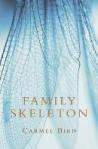
Carmel Bird, Family skeleton (Review)

Carmel Bird, Family skeletonI love a cheeky writer, and Carmel Bird must be the doyenne of cheeky writers, so it goes without saying, really, that I thoroughly enjoyed her latest novel Family Skeleton. The cheekiness starts with the epigraph, which, as she is wont to do, is a quote from her fictional character Carillo Mean. As Bird has said in an interview, “he always has something interesting to say”. But that’s just the start of the cheekiness. The story is narrated by “the skeleton in the wardrobe”. Now, I know many readers don’t like what they see as cute or contrived narratorial devices – like girls in heaven or dead babies – but please don’t let that put you off here, because in the hands of a skilled writer such a device can lift a story to a whole new level.

So, when I tell you that the novel’s framing idea is an obsession with family history, you might start to understand where our narrator comes in – except that the story is not really about the skeleton, whose identity is never divulged, nor is it about family history. What it’s about, really, is family secrets and betrayal, and the tipping point. It’s about the recently bereaved and well-to-do Margaret O’Day, whose family, through her husband, has been involved in the funeral business for generations. Such a setting is, of course, ripe for black comedy and that’s what we get in this novel. But, back to Margaret. Her husband Eddie, “a philistine” according to our skeleton, was also a philanderer and died in the arms of his mistress. Margaret had been betrayed – more than once, in fact – but she knew this, and even accepted this last mistress, and her children with Eddie, at the funeral.

From this set up, the story progresses, mostly chronologically but with a couple of significant time-shifts along the way. It is mainly told by our omniscient skeleton, but Margaret starts a journal, which she calls – hmm, note this – “The Book of Revelation”. Her entries in it form some of the book’s chapters. This title, “The Book of Revelation”, is another of Bird’s jokes, for the novel is about things revealed and not revealed – particularly the latter, because as the story progresses Margaret discovers an even bigger betrayal than her husband’s, and she is desperate to hide it from visiting O’Day family historian Doria Fogelsong.

The novel, then, as I said, is about secrets and betrayals. For the “virtuous” Margaret, who has put up with much throughout her marriage and who has become very good at “concealing her true feelings from people”, this lately discovered betrayal is the last straw. It takes all her resources to keep going. The family history motif compounds the tension. Will the story come out? Will Margaret be able to keep Doria (“with her iPhone on her left, iPad on her right”) from finding it out.

There’s satire here, surely, on the current obsession with family history. Our skeleton tells us

I happen to know that one of the little violinists was the son of Eddie O’Day and a gorgeous Hungarian dress-designer. Evan didn’t realise that, not that it makes any difference to anything, although it is a nice detail for a family tree. Doria missed out there.

So cheeky, these little jibes dropped in. Bird also skewers fashions in family history – such as how it is now a positive thing to uncover a convict or an Indigenous ancestor – while also exposing its underbelly, that is, the pain discovery can cause. The obvious question, of course, is whether it is better to know the truth or not.

However, it’s not only family history which catches Bird’s eye, but the pretensions and self-absorption of contemporary middle-class life, from designer clothes to electronic devices, from shallow parties to theme park cemeteries. It’s all here, providing background to the main fare.

But there’s more to the novel too, because it is also about writing and reading fiction, a storytelling masterclass in a way. The skeleton does more than narrate. S/he engages with the reader, reminding us of things we’ve already read, making sure we are keeping up with any plot hints or twists. Oh, how I loved this. I felt Bird was right there, having fun, playing games with us, while at the same time teaching us about how writers write and, more significantly, how we should read. Early on, for example, our skeleton presents us with a future auction advertisement for Margaret’s house, Bellevue, and says:

I realise that the eye of the reader can easily slide carelessly across such elements of the text. However, I suggest you take your time and study this document carefully.

The joke, though, is on us because at this stage in the story we have no idea what “secrets” are contained within. (At least, that’s my reading of what Bird is doing.) At another point, after telling us that “nothing bad ever happened at Bellevue these days”, the skeleton teases us with, “I trust you are alert enough to hear a faint bell ringing”.

Bird also plays with the archetypes of popular fiction – the betrayed wife, the philandering husband, and “the archetypal stranger who rides into town … the harbinger of fate” – but she gently subverts our expectations. The betrayal that most disturbs Margaret is not her husband’s, and it’s not Doria, the stranger, who brings the news that so distresses Margaret, albeit, given Margaret’s discovery, Doria can certainly ramp up the pain.

And then there’s the writing, with its gorgeous descriptions, pert sentences, delicious irony, entertaining word-plays and its smart, cheeky tone which leaves you in no doubt about who or what is being targeted but is good-humoured rather than bitter. Here is Margaret preparing to have Doria for lunch:

When Margaret asked for just a plain omelette, Lillian [her housekeeper] understood that the guest was someone who gave Margaret no joy, and who was to be more controlled than entertained. It was control by omelette. A sliver here, a sliver there, and a quiet soft squashing with the tongue against the palate. Desultory conversation, meaningless smiles. Plain omelette.

What more can I say? Family skeleton delights on so many levels. It is in fact quite a shocking story, but one told with a spoonful of sugar that has just the right amount of spice. I can’t help thinking that Bird chuckled and chuckled as she wrote it. I certainly did reading it.

Lisa (ANZLitLovers) also enjoyed the novel.
aww2017 badgeCarmel Bird
Family skeleton
Crawley: UWA Publishing, 2016
228pp.
ISBN: 9781742588902

Monday musings on Australian literature: Aussie novels titled with place names

I was searching around for a light, fun idea for this week’s Monday Musings, as life is a bit busy at present, when up popped in my inbox Tony (from Tony’s Book World)’s post on novels with city or town names in their titles. That seemed like just the thing: it demanded a little thinking but not a huge amount of research, and you can all join in with your favourite books (from anywhere in the world).

Tony explained his post by saying that “fiction allows you to travel throughout the world without leaving your own house.” A cliché, he admits, but I’d respond that it’s a cliché because it contains a truth, n’est-ce pas? Tony’s list included fictional towns, but I’m going to stick to real Aussie places – and I’m using “place” here rather than city or town to allow more flexibility. Because I like to have some order, I’m listing my books alphabetically by the name of the place.

Alice Springs

Nevil Shute, A town like AliceNevil Shute, as some of you know by now, was one of my favourite writers in my youth. I particularly loved his World War 2 stories, of which A town like Alice (1950) is his most famous. Alice Springs is the second largest town in Australia’s Northern Territory, and the closest to one of our most famous tourist attractions, Uluru. However, what it is not is the main setting of Shute’s novel. The story concerns young English POW Jean who migrates to Australia to find Aussie soldier and POW Joe whom she’d met during the war. She visits Alice Springs, which impresses her, but ends up in a fictional town which she’d like to make – yes, wait for it – “like Alice”.

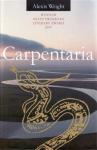
Carpentaria

Alexis Wright, CarpentariaCarpentaria, in northwest Queensland, is a shire named for the Gulf of Carpentaria on which it is located. It also provides the one-word title for Alexis Wright’s Miles Franklin award-winning novel, Carpentaria (2005) (my review). However, although the novel is set in a real shire called Carpentaria, it largely takes place in a fictional town called Desperance. You can probably guess, from that, why she made up the town name. The novel explores black-white relations in the town – relations between the indigenous inhabitants and white settlers, and between the town’s different indigenous groups. It’s about dispossession and its ongoing, destructive impact on people, generation after generation.

Castlemaine

Kerry Greenwood, The Castlemaine murdersCastlemaine is a small city a little north of Melbourne in Victoria. Like many places in Victoria it made its name as a city during the 1850s gold rush and now sports many historic buildings, as well as an active cultural life. The book which features it is in a genre that I don’t read much – but if I did, it would provide, I think, more titles for this post than any other genre. I’m talking crime, and the book is Kerry Greenwood’s The Castlemaine murders (2003). It’s in her popular Phryne Fisher series, which has been made even more popular by a gorgeous (delicious-to-watch) television series.

Mullumbimby

Melissa Lucashenko, MullumbimbyI haven’t read Melissa Lucashenko’s Mulllumbimby (2015), but I have read (and reviewed) the short story which preceded (and I think is incorporated in) the novel, “The silent majority”. Mullumbimby – I love the sound of it – is a small town in the northeastern rivers region of New South Wales. According to Wikipedia, its name is of indigneous origin and means “small round hill”. Lucashenko, in her story, exposes some of the town’s struggles, particularly for poorer people and indigenous people. Her character Jo considers the town’s early white settlers who “had tried to slash and burn their way to freedom here”, and wonders what the place was like before these settlers came.

Surfers Paradise

Helen Garner, Postcards from SurfersAs its name suggests, Surfers Paradise is a seaside resort. Technically it’s a suburb in a city called the Gold Coast, which is the closest thing Australia has to the retirement areas of Miami, Florida. Helen Garner, who primarily focuses on Australia’s southern states, published a collection of short stories titled Postcards from Surfers (1985) (my review). The titular story is about an adult woman coming to visit her retired parents and aunt at Surfers Paradise, having left a broken relationship and a not fully successful life behind her. She, beautifully, as I recollect anyhow, evokes the retired life of her parents and aunt.

Sydney

Christina Stead, Seven Poor Men of SydneySydney is not, as many think, Australia’s capital but the capital of New South Wales. It is, though, where white settlement in Australia commenced. There are several books with Sydney in their titles, but the first that came to my mind was Christina Stead’s Seven poor men of Sydney (1934), her first novel and one I would like to read some time. Luckily, Lisa (ANZLitLovers) has read it. Stead wrote vividly about Sydney in For love alone, which I’ve reviewed here, but that novel moved overseas, whereas this first novel is fully set in Sydney, and particularly explores its poorer side. I gather it focuses on the tenuous lives of workers, much like Mena Calthorpe did in her Sydney-based (but not titled!) novel, The dyehouse (my review).

Next week, I might look at novels with fictional places in their titles. For one thing, they seem more numerous. I’m not sure that this (if my little hypothesis is right) means that more books are set in fictional places, but it feels like fictional places are more comfortable title material.

So now, over to you? What novels with place names in their titles do you like?

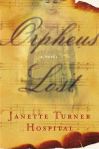
Janette Turner Hospital, Orpheus lost (Mini-review)

Janette Turner Hospital, Orpheus lostLast year I did a mini-review of Elizabeth Jolley’s An innocent gentleman using some scrappy notes from when I read the book long before blogging. This post on Janette Turner Hospital’s Orpheus lost has similar origins. I’m keen to add it here because I’ve read several of her novels, but none since blogging, and I really want her represented here.

Orpheus lost commences in Boston and is about Leela, a mathematician from the South, and the Australian musician, Mishka the subway-playing violinist, whom she meets.  They become lovers, until suddenly, after a subway explosion in which terrorism is suspected, Leela is taken to an interrogation centre where an old friend Cobb tells her that Mishka isn’t who she thinks he is. Meanwhile, Mishka is looking for his missing father, and heads off to the Middle East. The scene is set for what becomes, in fact, a literary thriller.

In a conversation* with Jason Steger on The Age online book club, Hospital said she had no political agenda but was interested in how people emotionally handle the shock of being randomly caught up in political action, and in what moral decisions they make. In other words, she’s interested in the moral and emotional repercussions of what happens when people get caught up because what they do looks dangerous but actually isn’t. (This is similar, in fact, to what happens in Richard Flanagan’s The unknown terrorist). It’s nightmarish stuff. Hospital talked about the trading of civil liberties for safety in the post-9/11 world, something she sees as a dangerous response. It makes it rather relevant still today doesn’t it?

However, she also talked about Orpheus and Eurydice being one of the great love stories of all time, and suggested that it is as much about loss, grief and yearning, as it is about love. But she was tired, she said, of the women always being the rescued ones. So she decided to give it a feminist twist and invert it. Consequently, in Orpheus lost, the man’s the one snatched away, and she’s the rescuer. Now that’s surely political!

The novel is a multiple-point-of-view novel and opens with Leela’s voice. We learn that she is fascinated by maths (numbers) and on the second page she quotes a seventeenth century mathematician saying ‘Obsession….is its own heaven and hell’. This theory is played out in the novel. The three main protagonists all have obsessions: Leela is obsessed with maths (which she believes always provides an answer to things) and with Mishka; Mishka is obsessed with music and with his identity (which involves his missing ‘father’); and Cobb is obsessed with Leela. There are other obsessions in the novel, though, too – the Islamic fundamentalists, Leela’s father with his religious fundamentalism, and other obsessive musicians and mathematicians.

Into this world of obsessed people, comes terror – and alongside terror, as we all know only too well, is the desperation for safety. Safety is a constant issue throughout the book. For example Cobb describes two types of people – those who take safety for granted and those who know it’s a precious thing. He suggests that the former create risks for the latter.

Unfortunately, I seem not to have the book anymore – which is unusual for me. Perhaps I’d borrowed it! So what I want to focus on is my experience of reading Hospital, rather than on the plot. She’s one of our more structured or tightly-styled writers. This means that I read her with my head as much as with my heart because she always has a lot going on. There is, for example, her strong use of recurring motifs and metaphors, such as, in this novel, photographs. They play several roles: they represent love, connections between people, surveillance, evidence, and the idea of truth vs fiction. I enjoy teasing out these sorts of things. Music and maths are other significant motifs. For some readers, and for me on occasions, Hospital can push her metaphors too hard but I thought they worked here.

And then, alongside multiple points of view and these recurring motifs and metaphors, there are structural devices, such as her use of parallels to set up points of likeness and tension between her characters. The three main protagonists all lost a parent early (Cobb and Leela their mothers, and Mishka never knew his father); Cobb and Leela both have ‘damaged’ fathers; the main characters all have small town upbringings in ‘odd’ places (the Deep South in a town called Promised Land, and the Daintree which is described as ‘the promised land’). The whole idea of “promised lands” is rich for exploration in our modern world of nationhoods!

Anyhow, to conclude this mini-review, lessons are learnt in the novel. Cobb, who initially wants to make Leela fear, comes to regret his actions. And Leela, who has to confront the reality of fear, also learns that random events which you can’t always control do occur. Steger says the book is about redemption – but, despite what Hospital says, I can’t help thinking it is also about politics. Like most of her novels, it’s challenging to read, because she’s a writer who extends, probes and pushes – occasionally, perhaps, a little too much – but that, to me, makes her always worth reading.

Bill (The Australian Legend)‘s review will fill you in nicely on more of the details.

aww2017 badgeJanette Turner Hospital
Orpheus lost
Sydney: Fourth Estate, 2007

* I couldn’t get the actual conversation to load when I checked this old link, but I’m adding it here in case it was just a temporary gremlin.

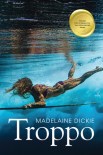
Madelaine Dickie, Troppo (Review)

Madelaine Dickie, Troppo“Write what you know” is the advice commonly given to writers, and this is exactly what Madelaine Dickie has done in her debut novel, Troppo, which won the City of Fremantle TAG Hungerford Award. For readers, on the other hand, the opposite could be true, as in “read what you don’t know.” This is certainly what I’ve done by reading Dickie’s novel because I’ve barely travelled in southeast Asia, where the novel is set, and all I know about that risky business of surfing, which frames the novel, comes from Tim Winton’s Breath (my review).

So, where to start? Well, to begin with, it’s a while since I’ve read what I might call a “youth culture” novel. I’ve read novels by young authors, such as Hannah Kent’s Burial rites (my review), Brooke Davis’ Lost & found (my review) and Tara June Winch’s Swallow the air (my review), but these novels have different drivers. One is historical fiction, one was inspired by grief over a mother’s death, and the other explores indigenous identity issues. The closest to Troppo that I can recollect reading is Andrew O’Connor’s The Australian/Vogel Award-winning Tuvalu, about a young Australian teaching English in Japan, but I read that long before blogging.

I say all this to give Troppo a context – a sort of sub-genre, if you will – of young writers writing about a young person’s experience of the world, an experience that is post-coming-of-age but encompasses a degree of uncertainty about one’s place. I don’t intend this to mean, though, that the novel is autobiographical. While it obviously draws on Dickie’s knowledge of southeast Asia and surfing, for example, I wouldn’t presume to say protagonist Penny is she. Indeed, in an interview on the publisher’s website, Dickie says that:

Some of the anecdotes are almost true, certainly stemming from my own experiences as a traveller and surfer … The texture of Troppo is also very true, the intoxicating smell of kretek cigarettes, the nights bleary on Bintang beer, and the way the call to prayer from the mosques drift down through mountain valleys.

Further, “the characters are entirely fictional”, she says, as is the setting, Batu Batur.

But now, preamble done, let’s get to the book. Set in southwest coastal Sumatra, it starts a couple of months after the bombing of the Australian Embassy in Jakarta in September 2004 and ends just after the tsunami hit Aceh on 26 December 2004. Penny, around 22 years old, had lived in Indonesia as a teen, but is returning to have “a break” from her significantly older boyfriend Josh. She has lined up a job on a surfing resort run by expat Shane, but arrives early to have a holiday. That’s the set up. The novel then explores the personal and political relationships that develop (or pre-exist) between the locals and the expat community, and within the expat community itself, in a tense situation where corruption and bullying is rife, and fundamentalist Islam is on the rise, threatening a culture that has traditionally accommodated different values and beliefs.

Troppo is a good read that gets you in quickly. Its fresh, lively but also reflective, first-person voice is engaging, and the various supporting characters are well-drawn. They include Ibu Ayu, the manager of the tourist bungalows where Penny stays in the beginning; young Cahyati, her niece; Penny’s soon-to-be-boss, Shane; and the “hot” but somewhat mysterious expat Matt. We soon sense mystery, with the locals not liking Shane, and the expats suggesting he won’t be around much longer. There’s a thriller element to the novel, but it’s not “just” thriller.

The novel’s over-riding concern is Penny’s uncertainty about her life. She’s not sure, exactly, why she’s fled Josh (except that his routine stultifies her), or why she’s “always jerked along by whim and the conviction there’s something better just ahead”. And yet, we readers know why, just as Belle in Disney’s (original and recently remade) Beauty and the Beast does!

I want much more than this provincial life,
I want adventure in the great wide somewhere.
(lyrics by Howard Ashman)

It’s not our culture (Matt)

In addition to the personal, however, the novel also explores social and political themes. One concerns tourists and cultural differences, expats and First World guilt. Penny sees “men whose bodies are halved over new rice” and “old women buckled under bundles of sticks” while she and friends are “off to surf, off to play and play and play, for months if we want.” It’s two-edged of course: the tourists bring money but their lives can inspire resentment.

Another theme concerns changing politics in Indonesia. When asked in the interview (linked above) about the novel’s timing, Dickie responded that:

Troppo is set two years after the Bali bombings, a year after the bombing outside the JW Marriott Hotel, and two months after the bombing of the Australian embassy in Jakarta. This context is important for Troppo, as some of the themes explored are the rise of fundamental Islam and the coexistence of Islam and traditional beliefs. … I was also aware of the two dimensional depictions of Islam in the media, and wanted to create rounded characters and discussions based on some of the stickier topics I liked to discuss with my Muslim friends. Has the relationship changed? Of course, things are always in a state of flux. However, our news media is now less concerned with Jemaah Islamiyah, and more concerned with the rise of Islamic State, which no one had heard of ten years ago. So the shape of fundamental Islam has also changed.

This theme pervades the novel through a growing sense of menace, not only against the corrupt expat, Shane, but against the “bule” (foreigner) in general. Moreover, Marika, a young New Zealander who runs an internet cafe, tells Penny that “the vibe has changed”, Matt tells her “there are bigger issues at play”, and locals in a bar tell her of imams “only wanting mosques, not churches”. Dickie handles this well. Suspense builds slowly – in fits and starts – and the plotting is sure. The crisis, when it comes, is swift but believable because the groundwork has been done.

Overall, in fact, Dickie proves to be a skilled writer. The novel feels tight and honed. Sometimes first-time novelists can overdo imagery, but Dickie keeps it under control, mixing up evocative descriptions with dialogue and action. It’s the lovely little descriptions that pop out of nowhere which delight the most, like this of a middle-aged expat’s hands being “like sea-creatures that have been left out on the sand. Dried out and peppered with sunspots”. Or this, “The night is young. The mozzie coil has only just begun its inward inch.”

Dickie also handles well that challenge of writing a story about a place whose language is different from her own. Her strategy is to sometimes translate Indonesian words and phrases, but other times to let the context make it clear. This can be an effective approach, and Dickie makes it work, using enough local language to convey place, but not enough to stall our reading.

Partway through the book, Penny says that “Risk always makes things sharper, throws into contrast the highs and lows, gives clarity”. Troppo, in the end, is about this. Yes, it comments on tourist and expat life, and yes, it exposes the beginnings of a dark political underbelly in the region, but the main point, really, is the personal. Penny recognises by the end that she is “living, by choice, on a fault line”. She finds living in “extreme places, among extreme people”, “intoxicating”. The challenge, I’d say, is how to live such a life authentically and respectfully. I’d love to see Dickie explore this theme further.

aww2017 badge

Madelaine Dickie
Troppo
Fremantle: Fremantle Press, 2016
263pp.
ISBN: 9781925163803

DISCLOSURE: I have not met Madelaine Dickie, but her fiancé is the son of one of the founding members of my bookgroup (not to mention of my now long-past playgroup and babysitting groups).

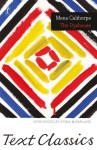
Mena Calthorpe, The dyehouse (Review)

Mena Calthorpe, The dyehouseMena Calthorpe’s novel The dyehouse was, as I wrote in a post last year, Text Publishing’s choice for its 100th Text Classic, which surely says something about its quality or worth, wouldn’t you think? And yet, as Lisa (ANZLitLovers) pointed out in her post, it is not mentioned in recent books discussing the history of Australian literature, such as Geordie Williamson’s The Burning Library and Jane Gleeson-White’s Australian Classics.

However, it is listed in bibliographic and encyclopaedic works like Debra Adelaide’s Australian women writers: A bibliographic guide, Joy Hooton and Harry Heseltine’s Annals of Australian literature, and William Wilde, Joy Hooton and Barry Andrews’ The Oxford companion to Australian literature. It has also captured the attention of others, including Introduction-writer Fiona McFarlane (whose The night guest I’ve reviewed here). She writes of coming across a secondhand copy in a Sydney bookshop and says that she’d never heard of Mena Calthorpe, but as soon as she’d read the opening sentences, she decided to buy it. I can understand that. I would have too.

Now, before I get to the book, I’m going to bore you a little more with what people have or haven’t said about the book. In my above-linked 100th Text Classics post, I noted that while most reviewers were favourable, one from my city’s paper was less so. S/he, RR, called it “badly written and pretentious”, though conceded that if Calthorpe focused on “telling a story simply, economically, and honestly” she could be “a force … on the Australian literary scene”. Marian Eldridge, reviewing a reprint in the same paper, two decades later, had quite the opposite opinion. She praised Calthorpe’s “spare, clear prose and jaunty dialogue”, and called the book …

“a fine example of the social realist genre”

Well, I’m with McFarlane and Eldridge. The book got me in from its first paragraph, and I enjoyed it immensely. It is, what Lisa would call, a book that matters because its subject is, to put it broadly (and baldly!), the impact of capitalism-at-all-costs on workers. That could make for a dry, didactic book, but Calthorpe’s writing and characterisation bring the story to life. Her political message is unavoidable but it’s tempered by a cast of believable people (ranging from the cold chairman-of-the-board to the lowliest labourers), a well-controlled story that contains tragedy and romance without turning into melodrama, and writing that’s fresh and lively.

I’ll start with the writing first. The novel starts in 1956 and takes place over about a year. It’s told third person, in short chapters which move between the many, but not hard to keep track of, characters. It starts with Miss Merton arriving at the Dyehouse and meeting the on-site boss, Mr Renshaw. In chapter 2, we meet the Chairman of the Directors Harvison, the General Manager Larcombe, and Company Secretary Cuthbert. They’re discussing problems in the Dyehouse: it’s not keeping up with production. We quickly get a sense of the characters of these three men. Harrison’s lips tighten as he wonders “Where’s the firing squad?” Larcombe is ineffective – wary, unexciting, and full of excuses – while Cuthbert is “sharp-featured, pleasantly mannered”. We soon learn that he has some humanity, some empathy, but too easily lets his accounting distract him from troubling people issues. Then, in the same chapter, we shift to the General Office, and this (which McFarlane loved too):

Clack! Clack! Up came the carrier and ejected papers onto Mr Dennet’s table. There they lay: the Fanfolds! the Ledger Copies!
The Debits!
Mr Dennet took up his pen and began entering into the Control Book. The Comptometers sprang to life. Two young women with painted nails fell upon the papers.
Tic-tac, tic-tac. Now over to the files.
OK, Miss Brennan, you sort them out. City, Country, Government. Now break them up. A to K, L to Z, and then into the files with them.

There are other short interludes like this – a paragraph on worker Barney running for the morning train, for example – which break up the rhythm and convey the life better than any straight descriptive text could do. I have no idea what RR was thinking. Pretentious? No! Instead, I’d agree with McFarlane’s description of it as “formally experimental … with its episodic structure and its restrained lyricism …  its playful attention to sound.” It all makes for delicious reading.

“The trap’s set for us all” (Miss Merton)

Next, the well-controlled story. Told over a year, Calthorpe explores how the Dyehouse manages with its production crisis. We see Renshaw scapegoating the skilled, experienced but not certificated Hughie, moving him from his beloved dye-room to working on the vats. We also see Renshaw sexually preying on pretty young women in his employ, including the initially gullible Patty. We see the workers, their lack of security – those on “Staff” versus those brought in as needed – and their struggle to sustain their lives. We see the bosses turning a blind eye to the struggles of their people, or, not even noticing these struggles. We see nascent attempts to “organise” for better conditions. Along the way there’s an unplanned mid-life pregnancy, a tragic death, physical assaults and sexual abuse. The novel is nicely structured, beginning and ending with the calm, mature Miss Merton.

All this might suggest that the characters are stereotypical, designed simply to serve the “idea” but, while they do serve the idea, they come across as real, authentic human beings. Larcombe and Cuthbert, for example, are not simple villains. They are, in Larcombe’s case, for example, a bit lazy, a bit self-protective, a bit uncertain, resulting in his being a bit ineffective! Even the biggest villain of the piece, Renshaw, is shown to to have the odd ounce of humanity. Similarly, the workers. Hughie, Barney, Patty, Miss Merton and Oliver Henery, to name a few, are all rounded out with succinctly presented backstories, which establish their authenticity while also adding depth to the plot.

It is, essentially, an ensemble cast, but the stories of two characters primarily carry the plot – Hughie (whose love of his job “had given purpose and dignity to his labour”) and Patty (a naive young women who believes Renshaw will marry her, until she discovers otherwise).

The ending, which I won’t give away, is inspired, striking the right balance between realism and hope.

I really can’t recommend this book enough. It slots well into other books exploring the struggles of the working poor of the early post-war period, like Ruth Park’s Harp in the South series. And it is a thoroughly engaging read which is relevant today, not only because its humans reflect universals of human behaviour as well as the life of the period, but because we are currently seeing new threats to worker security which ensures that this book’s concerns do not feel dated. A worthwhile read on multiple counts, in other words.

Mena Calthorpe
The dyehouse
Melbourne: Text Publishing, 2016 (Orig. pub. 1961)
299pp.
ISBN: 9781925355758

(Review copy courtesy Text Publishing)

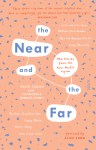
David Carlin and Francesca Rendle-Short (eds), The near and the far: New stories from the Asia-Pacific region (Review)

David Carlin and Francesca Rendle-Short, The near and the far

Anthologies, almost by definition, have a unifying theme, something that explains their existence. There are the “best of” type, as in best of a year or of a genre, for example. There are those drawn from a prize, such as The trouble with flying, and other stories (my review) from the Margaret River Short Story competition. And of course there are subject-oriented ones like Rebellious daughters (my review) or Australian love stories (my review). David Carlin and Francesca Rendle-Short’s anthology, The near and the far, is another type. Its origin is a project called WrICE (Writers Immersion and Cultural Exchange) which, the editors tell us, is “a program of reciprocal residences and cultural events focused on writers and writing from Australia and the Asia-Pacific”. The residencies and events occurred in such places as Singapore, Malaysia, Vietnam and Australia. The aim was to enable Asia-Pacific writers to immerse themselves in the face-to-face exchange of ideas and collaborative experiences, in order to build cultural understanding and find, as one participant says, “sustainable ways of speaking amongst ourselves and relating to one another as cultural practitioners”.

The result is that the stories – and even the forms of the pieces – are varied. The book has been thoughtfully presented. There’s a foreword by Alice Pung and an introduction by the editors at the beginning, and some notes on WrICE and a list of contributors with mini-bios at the back. The stories themselves are organised into three groups – The Near, The Far, and The Near and The Far – though I’d probably have to think hard about why certain stories have been allocated their particular group. There are 21 stories, 15 of which, if I’ve counted correctly, are by women. There’s a lovely extra touch, which is that at the end of each story is an author’s reflection – on the writing process, the goals and/or the experience of WrICE. They were often illuminating.

Before we get to the stories – and of course I’m only going to be able to focus on a few – I’d like to share some comments from the foreword and introduction. In her foreword, Pung calls the book a travel anthology, and I suppose it is, in a sense, though I may not have described it that way if I hadn’t read her foreword! She says

The near and the far is one of those rare travel anthologies, combining fiction with poetry and longform essays, each piece revealing a real insider’s experience of inhabiting a different world without exoticising the foreign. Each story has a centre – whether philosophical, moral, or political – and yet none of them are didactic.

The editors talk of how our different colonial experiences had “left long shadows across our imaginations”. They refer particularly to “settler” Australians who live in what was seen as an “outpost” – further than the “Far East” – and yet who still tend to look to Europe and America for our main cultural input. “The far feels near”, they write, “and the near feels far away”. That makes a lot of sense – to me.

You think you know (Omar Musa)

Now the stories. They come from, as you’d expect, a diverse group of writers, from Australia and Vietnam, from the Philippines and America, and from many places in between. Some I knew – like Melissa Lucashenko, Omar Musa, Cate Kennedy, and of course Francesca Rendle-Short – but most were new to me. Many of the pieces explore in some way the idea of what we know and don’t know. They may be about ignoring what we know because it’s too painful, or because we fear the rejection of others. They may be about the disconnect between what we assume and what we find. Or they may simply be about facing something new or unexpected.

I loved that indigenous Australian writer Melissa Lucashenko’s story, “Dreamers”, was chosen to start the anthology. Set in rural Australia in 1969, two years after the famous referendum, it’s a beautifully structured and told story about the relationship that develops between indigenous woman and her non-indigenous employers. It’s a story about love, loyalty and tolerance, but manages to quietly reference, without being polemical, social change issues such as environmental protest and the stolen generations.

Not surprisingly, the theme of accepting – welcoming, hopefully – diversity runs through the book. In “My two mothers”, Singaporean Suchen Christine Lim shares a story about a young adopted girl’s shame at having two mothers, her unwillingness to appreciate their love and tender care, and her eventual recognition of what they had given her.

If you have ever read or heard Australian-Malaysian performance poet Omar Musa, you won’t be surprised to hear that diversity underpins his contribution, “You think you know”. In this first-person story he explores “the deeply troubling issues” regarding sexual identity in Malaysia through his narrator’s (presumably himself) friendship with a young Malaysian man met on a bus. It’s a quiet, reflective, wrenching story – quite different from the higher octane wordplay of his performance poetry.

A story using a completely different tone and pace is Chinese-Indonesian, now American writer Xu Xi’s “BG: The significant years”. In a time when scientists and historians argue about dating nomenclature – BCE/CE anyone? – Xu Xi has come up with her own, BG or Before Google! Google (created 19 August 2004, if you want to know) provides for her a significant life marker. In short chronological sections, starting with “BG 43 (circa 1961 to ’62)”, she chronicles her life – in a lightly satirical tone – from applying to go to university in America, to becoming a US citizen, and getting a job and then losing it in the 1986 stock market crash. Her commentary on life in the US is enlightening. Joining the unemployment queue meant, she writes, that “for once I wasn’t a minority, because the minority was the majority in that government office”! Telling eh?

There are many more stories I’d like to share: Laurel Fantauzzo’s second-person-told story, Some Hints About Travelling to the Country Your Family Departed, about going back to the place (in her case the Philippines) a parent came from; Francesca Rendle-Short’s “1:25,000” on the geologies of time, on memories, regrets and saying “no”; and Maxine Beneba Clark’s short, painful, 9/11-inspired “Aviation” in which accepting “other” is put to the test.

And then there’s David Carlin’s gender-bending, mind-bending “Unmade in Bangkok”. Inspired by Thailand’s ladyboys, he explores ideas about identity and gender. The story is told in ten sections, mostly in third person but slipping between male and female personas. In section four, “she” considers:

Women make themselves up, men do not. This is curious when she thinks about it. To be a woman, in this culture, is to be a creature dipped in fiction, whereas to be a man is to be altogether real or at least natural, unconstructed.

So she dresses up and considers: “What is she becoming? Ever more fictional? A character in drag?” I enjoyed how Carlin explored gender identity, using broader ideas about “fiction”. “Some fictions trap us”, he writes, “but other fictions free us”. For ladyboys the implications are serious. It’s a complex story which covers a lot of ground. I need to read it again.

I titled this section “you think you know” because in all the stories, the writers are seeking to know, not so life can be assured, or complete, but in the spirit of understanding, of growing. Alvin Pang, in the note to his story “The Illoi of Kantimeral”, discusses the invented language he used:

Their precise meanings may or may not be immediately discernible from context, but neither is the experience of engagement, negotiation, resistance, and mystery within the Asia-Pacific itself as straightforward as we might wish the world to be. There is humility and pleasure in earnest encounter, and in listening out for the inherent humanity of what we do not fully recognise.

Perfect! This is a book which confronts us with many ways of seeing and experiencing. Different stories will appeal to different readers, depending on experiences, but I hope I’ve given you a taste. Books like this deserve a bigger audience than they often get.

aww2017-badge

David Carlin and Francesca Rendle-Short (eds),
The near and the far: New stories from the Asia-Pacific region
Melbourne: Scribe, 2016
288pp.
ISBN: 9781925321562

(Review copy courtesy Scribe)

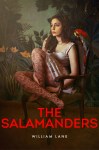
William Lane, The salamanders (Review)

William Lane, The salamandersWilliam Lane’s latest novel, The salamanders, is a book that keeps you thinking from beginning to end. As I started it, I was thinking of it as a cross between Julian Davies’ Crow mellow (my review), a satirical novel about a house party for artists and their patrons, and Emily Bitto’s The strays (my review) about an artist colony, focusing particularly on the founding family. A few comparisons could be drawn, but I soon discovered that this is its own book.

I hadn’t heard of this* William Lane before, but The salamanders is his third novel. In a different version, with a different title, it was apparently shortlisted for the Vogel Prize. The book’s author bio also told me that Lane did his doctorate on Christina Stead. So, he’s been about the place – just not the places I’ve been haunting, clearly!

But now to the book. It starts during a beach holiday on the New South Wales coast. There’s the obsessed artist Peregrine, his ex-wife Naomi, their daughter Julia, his sons, David, Arthur, and George, from his previous relationship – and the adopted Rosie. There are also some visitors, including friend Elizabeth and her husband Johnno. The children range in age down from the 14-year-old David. Arthur, aged around 11, has a crush on the slightly older Rosie, and George and Julia form a happy play unit. Lane sets up the idyll – Naomi says they are “enjoying one another’s company far more than when we were married” – and then gradually pulls it apart, exposing past and present cracks. By the end of the first chapter – the book is told in 5 chapters – the idyll has broken, mostly due to Peregrine’s arrogant and self-involved behaviour, and Naomi departs with the two girls. Chapter 2 jumps 15 years or so. Arthur is around 27 years old, and is back at the beach-house living alone. Rosie comes to visit.

The rest of the book focuses primarily on Arthur and Rosie as they circle each other, coming together, separating, all the while trying to come to terms with their lives, their pasts and their desires for the future. Lane doesn’t over-explain, preferring to show not tell, so we are left to guess exactly what had happened on that holiday and just after, which resulted in changes to the family units. All we know is that the fallout has had long-lasting impact and that Rosie is coming from England, to which she’d run away. She refuses to eat with Arthur. This eating behaviour of hers is one of the motifs running through the novel, and represents an inner discordance, despite the refrain that what happened wasn’t their fault.

Other motifs run through the book. One is the indigenous rock art image, in a cliff near the house, of a falling man. It mesmerises Arthur, and represents his emotional state. The other main motif relates of course to salamanders – and various members of the somewhat-related lizard and snake families. These creatures occur both literally and metaphorically. Rosie, in Chapter 2, says to Arthur:

‘Skinks, salamanders, geckos, frill-necked lizards, water dragons,’ laughed Rosie in her burred and husky way, ‘this is the land of the lizard. When I see a lizard, I think of this country. I never realised that its surface is so lizard-like. That’s what I saw from the plane.

This motif is complex, conveying a range of ideas, many of them unsettling:

… Peregrine glittered, and his eyes grew milky. He might be covered in scales, with discreetly expanding gills. With an absolute, self-preserving, inward rush of energy, Elizabeth removed herself from him.

Lizards also represent the antiquity of the continent – “the young lizard … considered them from some million years ago”. And in this, they also represent resilience. “Lizards are tough”, says Rosie, and toughness, the ability to grow and move beyond their youth, is what Rosie and Arthur are working to achieve.

There’s an underlying Gothic sense to the novel which imbues it with an overall eeriness. Peregrine creates strange paintings in caves. There are mysterious shapes or shadows which appear out of the blue – “Something scurried outside the glass. He looked up, but did not catch its form” or “A liquid slithering passed along the glass of the house …” or “Then that scrabbling again. Something ancient was trying to get in”. There’s Arthur and Rosie’s roadtrip into Australia’s interior, and their uncertain relationship with each other. Not blood-related but brought up as brother and sister, they mystify and concern others.

So, where does all this go? I’m not sure it’s a book you can easily comprehend in one reading. The road trip to the interior and Peregrine’s bizarre painting projects in caves within caves suggest some sort of psyche-seeking but it isn’t completely resolved in my mind. Need it be?

Overall, then, it’s one of those mesmerising books that can be read in different ways, making it a little disconcerting. The first chapter felt a little over-written at times and I feared a clichéd story about dysfunctional artists’ colonies, but it then shifted into something more mysterious, less-defined, slippery, something incorporating a broad, abstract story about our relationship to art, place and nature, and a more personal story about identity and family.

According to myth, salamanders are born of and resistant to fire. Rosie says during her road-trip with Arthur that “we’re salamanders – we don’t feel the fire”. And that, in a way, is the point of the novel, surviving the fires that confront us.

William Lane
The salamanders
Melbourne: Transit Lounge, 2016
255pp.
ISBN: 9780994395849

(Review copy courtesy Transit Lounge)

* I allude to the late nineteenth-early twentieth century Utopian of the same name, whose The workingman’s paradise I’ve reviewed.

Maria Katsonis and Lee Kofman (eds), Rebellious daughters (Review)

Maria Katsonis and Lee Kofman, Rebellious daughtersTo rebel or not to rebel, that is the question. At least, it’s the question that interested memoirists Maria Katsonis and Lee Kofman who, having written their own stories about “conservative upbringings and subsequent rebellions”, wanted to discover what other women could reveal about that “universal life experience”, the rebellion against parents. This book, Rebellious daughters, is, obviously, the end result – and it makes for fascinating reading.

In their Introduction, Katsonis and Kofman quote American author Gordon Lish’s statement that the  best thing writers can do is to get themselves “in trouble”, to “make it hot” for themselves. This is what they wanted from their contributors, they wanted them to take risks – and it’s what they got.

Like most anthologies, Rebellious daughters has been carefully ordered. It starts with one of the grand-dames of Australian literature, Marion Halligan (“The daughters of debate”) who describes herself as “well-behaved”, as the “good girl” that so many of the later contributors rebelled against. But this is not to say that she didn’t engage in her own little subversions, such as reading forbidden books. They didn’t do her any harm, she writes, “the delicate ones were my parents.” I related to Halligan’s story because, like her, I was the eldest, “the one who came before, who paved the way” and didn’t rebel dramatically. But, enough of that, I’m talking order, structure, here.

The book ends with author-journalist Jane Caro (“Where mothers stop and daughters start”) who shares her daughters’ rebellions, the loud in-your-face one and the withdraw-and-don’t-engage one. Her motherly perspective provides a satisfying, logical conclusion to the anthology. And then, right in the middle, the ninth story of seventeen, is author-publisher Rebecca Starford’s “Who owns my story”. Drawing on her own life and memoir, Starford grapples with the form, with the ethics and practice of memoir writing. I was intrigued by the placement of this contribution, but it’s clever. Having read eight already, I was ready to think about the issues Starford posed, and then, as I read the final eight, I had them in mind.

So, what are the issues? Starford starts by quoting author JP Dunleavy, who said that “The purpose of writing is to make your mother and father drop dead with shame”. Starford likes this quote because

it reveals, simply and with a degree of sharp comedy, the risky nature of memoir writing.

She touches on several issues. One is the idea of shame, and whether it is “an emotion women memoirists suffer from more acutely than our male counterparts.” She thinks it is, and wonders if this is due to girls being taught that they should never speak out. She also explores “a nagging moral quandary”, that is, “the right” to tell stories that involve others. It is, she admits, “the biggest ethical question a memoirist faces” particularly when the memoir portrays these others “in an unflattering light”. She discusses the option of writing the story as fiction. (But we all know cases where people “see” through that – or think they do – don’t we!) Anyhow, she says that she couldn’t choose the fiction option:

For me, the act of writing a memoir was important to the process. If I’d written my experiences as fiction, I would have been hiding behind the genre, and that would have been self-defeating, less courageous, and less honest.

This makes sense to me – and implies that many memoirs are a form of catharsis or, at least, of resolving one’s past. This seems to be the case for Starford who concludes that her memoir has resulted in improved communications with her father. And, she says, while her memoir might have seemed like rebellion to him, for her it was about “seeking to understand him and my mother” and how her experiences as a child had shaped her.

Starford’s analysis of the personal and ethical implications of writing memoirs provides a wonderful grounding for understanding of the other “stories”. There’s a lot of pain here, but there’s also humour, occasionally laugh-out-loud, more often wry. Lee Kofman’s story (“Me, mother and Sexpo”) about taking her conservative Hassidic mother to the Sexpo exhibition is hilarious, but is also a lesson in the assumptions we make – particularly about our parents. Michelle Law’s (“Joyride”), on the other hand, perfectly captures her pain of rebelling only to discover that she’d misread the feelings of the boy in question.

Not surprisingly many of the stories are about tension over boys and sex. Krissy Kneen (“Wundermärchen: A retelling of my grandmother”), whose Steeplechase I’ve reviewed, comes to realise in the end that instead of being the rebellious granddaughter she thought she was, she had taken on her grandmother’s mantle, she’d become a storyteller who likes to shock the innocent. It’s just that her grandmother used death, where she uses sex.  In “Resisting the nipple”, Rochelle Siemienowicz, whose memoir Fallen I’ve reviewed, tells of her struggle against the “good girl” expectations of her strict Seventh-day Adventist family and then of her complicated feelings, particularly regarding her mother, when becoming a mother herself.

In many of the stories, the youthful rebels are shocked to discover things aren’t as they thought they were or would be. Jamila Rizvi (“The good girl”) is confused when she realises that a girl (like her baby sister for example) could be not-good but liked. Jo Case (“Rebelling to conform”), in her desperation to be popular, starts to do poorly at school only to realise, later, that some of those popular girls she was trying to emulate got good grades. And Amra Pajalic (“Nervous breakdowns”) is frustrated by her out-of-touch migrant mother’s nervous breakdowns until she realises the cause is a mental illness.

Not all the rebellions in the book are against mothers – some are against fathers and grandmothers – and not all are resolved but, in most of the stories, age and experience eventually bring rapprochement. That doesn’t mean of course that the daughters capitulate. Rather, they come to understand their mothers (or whomever) a little more and their mothers likewise learn to accept the daughter they have. As Susan Wyndham (“A man of one’s own”) concludes

life is a long lesson and from this distance I prefer to look back with tenderness on those riotous years … And for both of us I say, no regrets.

And that seems the perfect point on which to end my post on this engaging, sometimes shocking, but thoroughly generous and warm-hearted book.

Note: A percentage from the book’s sales is going to the Women’s Legal Service Victoria.

aww2017-badgeMaria Katsonis and Lee Kofman (eds)
Rebellious daughters: True stories from Australia’s finest female writers
Edgecliff: Ventura Press, 2016
322pp.
ISBN: 9781925183528

(Review copy courtesy Ventura Press)

Louisa Atkinson, A voice from the country: January (Review)

Louisa Atkinson, as I wrote in a post a few years ago, was a pioneer Australian writer. She was a significant botanist, our first Australian-born woman novelist, and the first Australian woman to have a long-running column in a major newspaper. It was a natural history series titled A Voice from the Country which ran in The Sydney Morning Herald for 10 years from 1860. I’ve shared here a few natural history articles/essays written by Americans, such as John Muir, but never an Aussie one. That’s going to change here, now – for a couple of reasons. Firstly, because I can, given the articles are findable through Trove, and secondly because the Australian Women’s Writers Challenge plans to focus this year, among other things, on classic Australian women writers. You can’t be a more classic Aussie writer than our Louisa!

But, which of Louisa Atkinson’s many columns should I do? I read a few and decided on one from her first year. In fact, I think it might have been the very first in the series. It’s titled “January”, which makes it particularly appropriate this month. Atkinson was living in Kurrajong, on the lower slopes of the Blue Mountains, in “Fernhurst”, the house built by her mother.

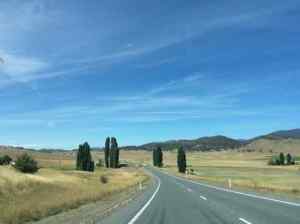
Monaro region, in January

January in the Monaro, 2010s not 1860s

So, the piece is about what it says, January. She describes the birds and plants in particular that you see in January in her region. Here is the opening sentence:

A WARM drowsy month, without the opening promise of Spring or maturing riches of Autumn.

Beautiful don’t you think, and it perfectly catches the middle of the Australian summer, particularly when you read the next couple of sentences:

In dry seasons the grass is scorched and white, the dust flies along the road before the least puff of wind, much to the annoyance of the traveller. The observer of nature finds his field of observation limited, yet not altogether barren.

In other words, it is dry, more yellow I’d say than white, and there’s nothing much happening, nature-wise. “Much” though is the operative word, because it’s “not altogether barren”, as she goes on to show by describing, for example, the activity of various birds such as the “waterwagtail or dishwasher”, laughing jackasses, lowries. Now, here’s another reason I chose this piece – her language. There’s the obvious fact that Atkinson has an engaging way of writing about nature, but what I want to explore here is its unfamiliarity.

By this I mean unfamiliar expressions and names. Regarding the former, I often find in articles I locate through Trove, language that is more erudite than we see in today’s newspapers. It suggests a higher level of literacy in readers. Take, for example, Atkinson’s use of “ferruginous” to describe the colour of a fungus. We might find that word in a novel these days, but not, I expect, in a general interest newspaper column. Of course, it may also suggest that newspapers were geared more to the elite than to the general populace? I don’t know enough about newspaper history to say any more on this. Sometimes, it’s more that word usage has changed. For example, Atkinson writes that some young birds “essay flight”. We rarely see “essay” used in that sense these days. I love that reading these older articles can give us insight into other times beyond the subject matter of the writing.

The other unfamiliarity relates to her naming of things. I know what laughing jackasses and lowries are – kookaburras and crimson rosellas*, respectively – but these names aren’t commonly used now. However, I have no idea what a “waterwagtail or dishwasher” is. Is it the willie wagtail and nicknamed dishwasher because its tail swishing back and forth reminded people of a dish mop? So, I did a Google search, and found an article titled “21 Facts about Pied Wagtails” from UK’s Living with Birds website. Facts 6 and 7 are:

6. Few birds have as many country names as the pied wagtail. They range from Polly washdish and dishwasher to the more familiar Penny wagtail, Willy wagtail and water wagtail.

7. The origin of the washer names is a mystery, but it may be because women once washed clothes, as well as pot and pans, by a stream or village pump, the sort of place that pied wagtails also frequent.

So, not the action of their tail perhaps but the places they frequent? I’m not a bird expert, but my understanding is that this White or Pied Wagtail is a “vagrant” in Australia, and that what we call the willie wagtail is from a different family. Which one – if either of these – is Atkinson talking about? Regardless, my point is that reading past writing can trip us up when the writers described plants, animals or objects using terms or names we don’t use now. We have to be careful – particularly those of us not expert in subjects – about drawing wrong conclusions from our reading.

POSTSCRIPT, 31 Jan 2017: Pam (Travellin’ Penguin) checked out “dishwasher” through her bird contacts, and was pointed to the book Austral English, which says that it’s “an old English bird-name for the Water-wagtail; applied in Australia to the Seisura inquieta … the Restless Flycatcher”. It quotes from the 1827 Transactions of the Linnæan Society, that the bird “is very curious in its actions. In alighting on the stump of a tree, it makes several semi-circular motions, spreading out its tail …”.

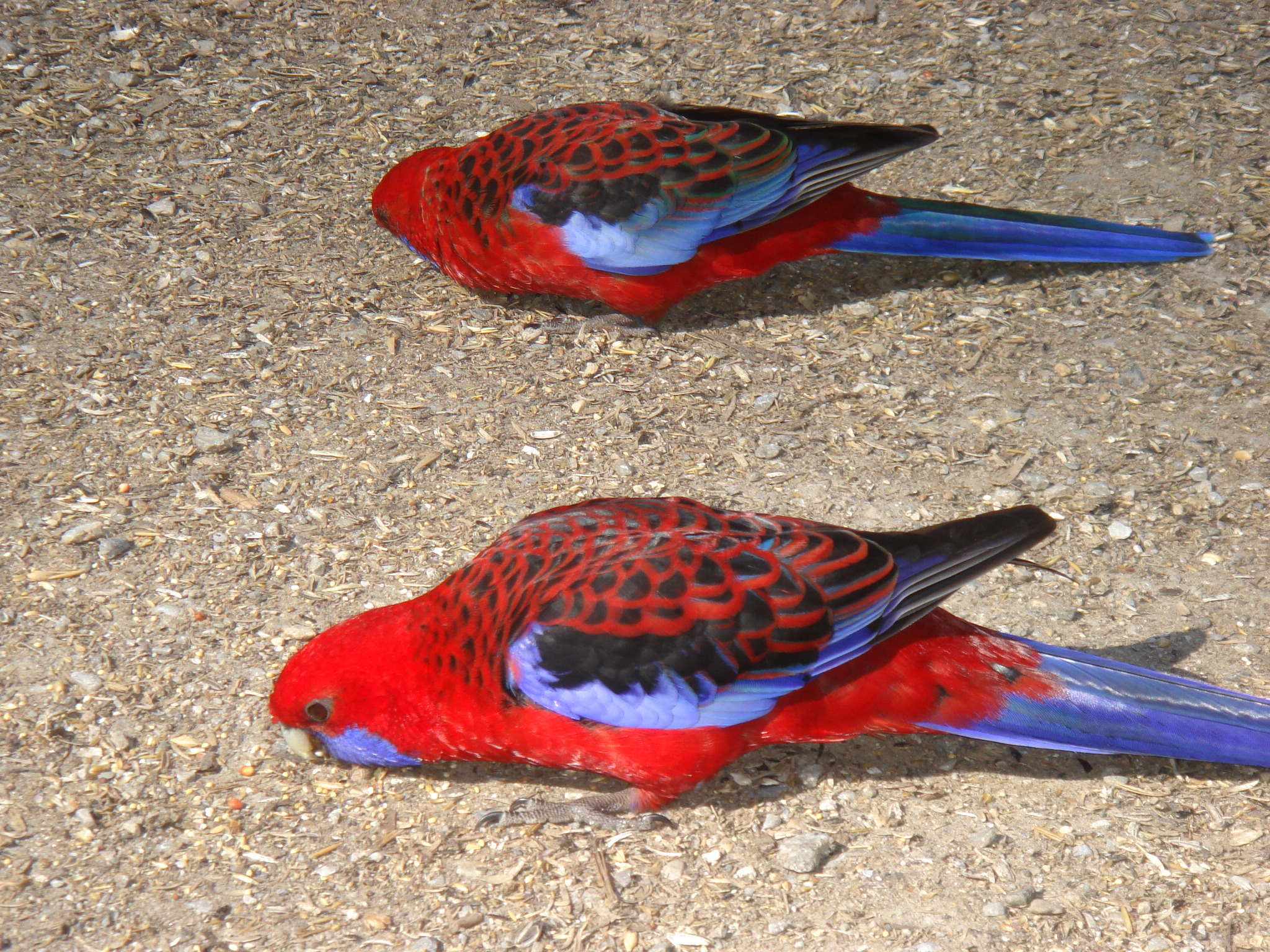
Crimson Rosellas

Crimson Rosellas by Kevin Tostado, using CC BY 2.0, via Wikimedia Commons

Enough of that, though. Let’s get back to Atkinson and her description of the lowries (i.e. crimson rosellas).  They are common to my garden – and her writing captures them perfectly:

A flock of lowries, young and old, frequent the fields, whence the oaten hay was gathered, nor confine their depredations there, assisting themselves liberally to the ripening peas and beans, which the gardener intended for seed, and even pursuing these favourite morsels into a verandah where they are spread to dry. The flock presents a brilliant appearance ; the full plumaged birds are vivid crimson, blue, partially pied with black, whilst the nestlings are variegated with green.

And now to conclude I’m going to jump five years to a report in the The Sydney Morning Herald in January 1865 of a meeting of the Horticultural Society of Sydney. It reports on various attendees bringing all sorts of plant specimens to the meeting, most of them exotic, and then, towards the end, there’s this:

Miss Atkinson, of the Kurrajong, sent a jar of jam, of the Lisanthe sapida, with the following remarks –

“LISANTHE SAPIDA – A small shrub of the Epacris family, bearing a crimson fruit, enveloping a single stone; good bearer, crop lasts about two months or more, coming in in November. To make jelly—boil the drupes, adding a few spoonfuls of water; when soft strain the juice off, add one pound white sugar to a pint, and boil to jelly. The fruit makes a pleasant tart—the Lisanthe Sapida grows in poor sandstone ranges. If any member of the societv would like to cultivate the shrub, and cannot procure the fruits in their locality, it is to be met with in the Kurrajong.”

A vote of thanks was given to the exhibitors, and more especially to Miss Atkinson, who it was remarked had made herself most remarkable for her endeavours to bring colonial productions into notice.

The lisanthe (or lissanthe) sapida, aka native cranberry, is, as you might have guessed, a plant native to Australia. Lovely to see recognition, by her peers, of a woman, and one who clearly loved and promoted the natural environment in which she lived.

* Mountain lowry is an alternative name for the Crimson rosella but is not, I believe, the most common one, particularly in New South Wales, but readers can correct me if I’m wrong.

aww2017-badgeLouisa Atkinson
“A voice in the country: January”
in: The Sydney Morning Herald, 1 March 1860
Available: Online

Monday musings on Australian literature: Some Australian adventurers

Enid Moodie Heddle, Some Australian adventurersRegular readers here may remember that last year I wrote a few posts (this, this and this) inspired by books I found while clearing out my late aunt’s house. Well, here comes another. It’s inspired by a book that was probably a school text because my aunt wrote her name and her school in the front cover. The book is Some Australian adventurers. It was first published in 1944 by Longmans, Green and Co., and was edited by Enid Moodie Heddle.

I’ve never heard of Heddle but she has a Wikipedia page so is clearly of some note (given Wikipedia’s notability requirement). It describes her as “an Australian poet and writer for children”. She moved around somewhat. She was born in Melbourne (in 1904), went to high school in Sydney and university back in Melbourne. AustLit contributes that “As an infant Enid travelled around the world under sail with her Orcadian sea-captain father …”. She taught in South Australia, Victoria and England where she also researched child libraries. She then worked for publishers Longmans and Collins, becoming, after World War 2, Education Manager (for whom?) overseeing the publication of textbooks for schools and universities. So there we have it, the book probably was a school text!

From the title I thought it might comprise mini-biographies of – obviously – some Australian adventurers but, in fact, it’s an anthology of writings by Australians. Its aim, the Introduction explains, is not

to give a comprehensive idea of Australian prose, nor even to picture with any sort of completeness the country, its people, customs and history, but rather, to catch something of the spirit of adventure and joy in discovery which seem to us [who is “us”?] to be not only characteristic of the majority of the writers here represented, but also of Australians as a race.

Hmm … moving right along, the Introduction goes on to tell us that the book doesn’t contain the full stories and is “but a prelude to adventure.”

The book is divided into six sections:

  • In the land of Mirrabooka;
  • The white intruders;
  • Animals and men;
  • Further afield;
  • Strange encounters; and
  • Story and character.

Most sections, except the first one, contain more than one excerpt. Brief biographical details are provided for each writer, plus suggestions for further reading. The authors include those I know, such as Eleanor Dark, Ion L Idriess, Frank Dalby Davison, Vance Palmer and Henry Lawson, and many I don’t such as Elizabeth Bussell, William Hatfield, Hendley Herbert Finlayson. The writings include fiction and non-fiction, including letters. And the non-fiction writers include the famous adventurers, antarctic explorer Sir Douglas Mawson and aviator Charles Kingsford Smith. So, a varied bunch.

“infinite variety” (Parnassus)

I will write later about the content, but first I’ll share some contemporary reviews, though “review” is a generous name for what were mostly a paragraph or two. I found them through Trove of course. Although my copy is dated 1944, the book ran into many editions/reprints, and the earliest review I found came from 1946. The reviewer, “Parnassus” of Western Australia’s Western Mail, heads his/her piece with “there is keen interest just now in works of Australian writers”, which is good to hear given the cultural cringe which commonly typified Australian response to cultural fare. Parnassus has a rather funny formal style, commending the book with the following:

One likes the editor’s selection. It is of infinite variety, and while including extracts from recent publications she has given us a timely reminder that Australian writers have not by any means confined their writing to bush lore and descriptions of the inland …

One does, does one!

I am indebted to Parnassus, however, because s/he paid the book more attention, giving it about 6 paragraphs, than most I found. Victoria’s  Argus called it “a handy little volume” and briefly described the breadth of its contents, while Book News, in 1947, found the excerpts “wisely chosen” but said they were “spoiled by an unworthy cover jacket and frontispiece”. I can’t comment on the cover jacket as Google displays many different editions of the book, but my title page does say “with a frontispiece” without identifying who it is. Strange. Queensland’s Courier-Mail, probably describing the same edition, starts its little paragraph with “Once past an excellent, yet misleading, dust jacket to this bright little compilation, you’ll find here a book true to title”. I’d love to know which dust jacket they are talking about. Finally, one more, this time from South Australia’s Advertiser. It is also generally positive but makes this observation:

Although all of the foremost authors of this country are not represented, and the stories themselves are not indicative of the best their writers can produce, the collection as a whole can be said to be a cross-section of Australian literature.

Interesting point about not being “indicative of the best” but perhaps the best don’t represent the “adventurer” theme well. Overall, though, not a bad recommendation for a volume of less than 180 pages.

“riches in experience” (Introduction)

I like that the book starts with an Aboriginal legend. The bio for the first piece’s writer, K Langloh Parker, commences by recognising that “the first adventurers of whom we know in Australia, the land of Mirrabooka, the Southern Cross, were the Australian aboriginals”. Parker, we are told, “did us a great service by collecting their legends and retelling them in English in a way as near as possible to the original”. How did they know I wonder? Langloh Parker started doing this in the late nineteenth century. The legend included in Heddle’s book, “Beereeun the mirage maker”, came from her 1898 book, More Australian legendary tales, which was, we’re told, illustrated by an aboriginal artist.

This recognition of indigenous Australians continues in the book’s second section, The white intruders, which contains excerpts from four writers, beginning with Eleanor Dark. Her excerpt comes, as we’d expect, from The timeless land. In this excerpt, “Breaking the flag”, Dark imagines first contact from the indigenous point of view, something white writers would be unlikely to do today – and rightly so – but Dark must be admired for what she tried to do in her time.

Another excerpt in this section is from a writer I don’t know, William Hatfield, and his 1933 book, Desert saga. It’s about an indigenous man, Grungunja. Hatfield may not be well-known now, but he clearly was in 1930s  and 1940s Australia, particularly among socialist circles in which the rights and plight of indigenous people were being discussed. The last sentence of the excerpt is uncompromising. It occurs after a confrontation with white pastoralists and police. Remember, we are in Grungunja’s head:

All his generalship, all his valour had availed him nothing, then. True, his tribesfolk were unharmed, they were to be left in possession of their country, but only as a subject people.

Hatfield was, I understand, largely a polemical writer. It’s probably why he’s faded from view, but it’s also something that makes him relevant to those of us interested in the past.

Now, my aim was not to review this book but to use it to add to my project of increasing my knowledge about the history of Australian literature: who was around at different times, what were they thinking and what did others think of them? This book – and my related research of Trove – has furthered that. I could very well return to it to explore some of the other authors and topics it covers.