Mirandi Riwoe, The fish girl (#BookReview)

Mirandi Riwoe, The fish girlMirandi Riwoe was joint-winner of the 2017 Seizure Viva La Novella prize with her book, The fish girl – and it has now been shortlisted for this year’s Stella Prize. As you may already know, it was inspired by Somerset Maugham’s short story “The four Dutchmen”, which I reviewed a few days ago. Indeed, Maugham’s story provides the epigraphs to each of the novella’s three parts. Do you then need to have read Maugham’s story to appreciate Riwoe’s take? I’d say not – and would hate that assumption to put people off reading her book. Nonetheless, I’m glad I read Maugham’s work. How’s that for a foot in both camps?

To recap briefly, “The four Dutchmen” tells of four fat, jolly Dutchmen who work together on a boat plying the southeast Asian seas. Immensely loyal to each other, they plan to all retire when the first of them dies. The only blot on their togetherness is the captain’s penchant for Malay girls. However, the chief officer usually cleans up after him – paying off the girls, in other words, when the captain tires of them – until the day the captain decides to bring one of these girls along on a boat trip. Tragedy ensues.

Now, Maugham’s story is told first person by an observer-narrator, a traveller in the region, rather than one who’s involved in the events. The story has a matter-of-fact tone. Not so Riwoe’s story, which, although told first person, gets into the girl’s heart. Unlike Maugham, Riwoe gives her a name, Mina, and from the start, we realise that Mina’s fate is tied to men. Hers is a world controlled by men – regardless of whether that world is her village or the Dutch Resident’s house.

I should, perhaps, clarify some terminology at this point. Maugham uses the terms “Javanese” and “Malay girl” in his story. These days, we differentiate Javanese, who come from Java which is part of Indonesia, from Malaysians, who come from Malaysia, which neighbours Indonesia. However, in Maugham’s time, Malay was used for Austronesian people, which include today’s Malaysians and Indonesians, amongst others. Mina, Riwoe’s version of Maugham’s Malay girl, is from a Sunda village in this region.

Riwoe tells her story in three acts, each preceded by epigraphs from Maugham’s story. In the first part, Mina is offered by her father to a man who comes searching for “cheap labour for the Dutch Resident’s kitchen.” The barely pubescent Mina doesn’t want to go, has never left home before, but for her parents, her father in particular, there is hope that she will be able to send them things they “need, like more spice and tobacco.” Mina is scared, but we also get an intimation of resilience when we’re told of the “tremor of excitement finally mingling with the dread in her stomach.” Maybe it will work out alright we hope.

By the end of part 1, she has arrived at the Dutch Resident’s place where she works in the kitchen to the unsympathetic, unkind head cook Ibu Tana. She seems to be a favourite of the Dutch Resident who treats her kindly, and requests her to serve table in his house. Is he grooming her? Or is he decent? We fear the answer.

Part 2 introduces the four Dutchmen who dine with the Dutch Resident, and, in particular to the captain – the man described in the epigraph from Maugham as “losing his head over one brazen hussy or another”. That should warn us, though in this part he seems gentle. He wants her to teach him her language. In return he teaches her his, and gives her gifts. Hmm … our antennae are up. Meanwhile, Mina has fallen for Ajat, her village chief’s son who does some work for the Dutch Resident. Her sexuality is awakening, but Ajat treats her cruelly. Part 3 commences with her arrival on the boat with the captain, after which the story plays out pretty much as Maugham tells in his short story.

What Riwoe does in this story – her post-colonial response to Maugham’s – is to look at it from the angle of the colonised, and particularly colonised young women. What she shows is that young women are not only pawns in the hands of colonial powers but also in the hands of their own men (in this case her father who trades her for potential material gain, and the chief’s son who tricks her and uses her ill).

This may all sound same-same, as in “I’ve heard all this before”, and at a simple level that’s so. However, what makes The fish girl such a good read is the character Riwoe gives Mina. She’s young and naive, but she’s not a type. She has dreams and at least an attempt at having agency. Here she is, as she’s about to be taken to the boat by the Captain:

Kanjeng Ratu Kidal (Ocean Queen): By Gunawan Kartapranata (Own work) [CC BY-SA 3.0]


Mina leans against a tree, rolls her head gently against the prickly bark. She takes a deep breath. She will need to be very strong. She will need to be like one of the dhalang’s wayang puppets, as hard as lacquer, enduring.

Also, Riwoe adds a mythical element through Mina’s love of the sea, and her belief in the Ocean Queen. The sea is presented as a curative force – both physically (for her rash, presumably eczema) and spiritually.

She calls for the Ocean Queen. Only when she feels Nayai Loro’s strong, smooth pull, feels the soft arms suckle at her damaged thighs, does Mina scatter the flowers upon the sparkling water.

Finally, although this is short, Riwoe unfolds the story slowly, developing Mina’s character and allowing us to hope that Mina will endure. But that, of course, would be a fairy tale and, despite its heartening mystical conclusion for Mina, this is definitely not that. An engaging but powerful read.

AWW Badge 2018Mirandi Riwoe
The fish girl
Sydney: Xoum, 2017
97pp.
ISBN: 9781925589061
Stephen Orr, Incredible floridas (#BookReview)

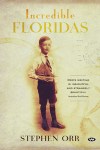
Stephen Orr, Incredible floridasThe good thing about reviewing Stephen Orr’s latest book Incredible floridas is that you know the end at the beginning, so there’s no need to worry about spoilers. The end, the one that you read at the beginning that is, is that Hal, the 22-year-old son of artist Roland and his wife Ena, commits suicide. By the end, the real end that is, you have some understanding of why he does, but you are also left to think about the drive to create art and its impact on family, about parental love and father-son relationships, and about that notion that it takes a village to raise a child.

To make this work, Orr uses a flashback-style chronology. The novel starts in 1962, just after Hal’s death, and then flashes back to 1944, when Hal is 4. From there it moves forward in irregular bunches of years -1948, 1950, and 1956 – until we arrive again at 1962 where it takes us through the events leading up to the death. This, then, is not the book for those who seek excitement and plot. Rather, it’s for those who love character, are intrigued by families and neighbourhood relationships, and like historical fiction.

There’s more to it than this, however – and it relates to the artist-father Roland. He is clearly modelled on the Australian artist Russell Drysdale (1912-1981) about whom I wrote a couple of years ago. Roland’s work and career as described by Orr – his angular lonely figures in stark landscapes, and the decline in his reputation – is similar to Drysdale’s. And Drysdale’s biography – his having a son and daughter, his being rejected for war service because of a detached retina, and his son committing suicide at the age of 21 in 1961 – is similar to our fictional Roland’s.

And then there’s the title. “Incredible floridas” rang a bell with me, and a little research brought it back. Peter Weir made a short film called Incredible Floridas in 1972. (It’s available on YouTube.) It portrays Australian composer Richard Meale (1932-2009) creating his work, Incredible Floridas, which was inspired by the 19th century French poet, Rimbaud. Curiouser and curiouser.

But, how much of this is relevant to Orr’s novel? Well, Meale’s work is an homage to Rimbaud, just as Orr’s is to Drysdale. And Weir’s award-winning short film has been described as “a wonderful tribute to artistic inspiration” which we can see in Orr’s book. Then there’s Rimbaud’s poem, “Le bateau ive” (“The drunken boat), which includes the words “incredible floridas”. It’s about inspiration and ecstasy, and their downsides, disappointment and disillusion. There are, in fact, several references to boats in the novel, paper ones and a painting Roland does of a child in a boat with panthers, another reference to Rimbaud’s poem, in the background.

And, while I’m at it, there are also allusions to Shakespeare’s Henry IV Pt I. Hal is nick-named Prince Hal, and the allusion is underlined by one character telling him to watch out for Hotspur. The irony, of course, is that our Prince Hal does not win out in the end.

I hope all this hasn’t been boring – or worse, off-putting. The book can be read very comfortably without knowing any of this, but I love the layers they contribute. Now, the novel.

“casualty of art”?

Set in mid-twentieth century suburban Adelaide – mostly – the novel tells of Hal’s growing up within a small community comprising, primarily, his family (father, mother and older sister Sonia) and neighbours Mary, her brother Sam, and her lupus-afflicted daughter Shirley who is ostracised and bullied by the neighbourhood kids. Other characters, who appear more sporadically, include Roland’s art school friend James, Mary’s cousin Trevor, and Hal’s grandmother Nan who works for Dr Bailey. These make up “the village” which raises, or tries to, Hal.

From 1944, when Hal is 4, it’s clear that he’s not an easy child. And it’s also clear that Roland is driven by his art – “art was an all-or-nothing proposition”. How these two are related is central to the book. Hal regularly feels he comes second, but Roland is not the stereotypical dark, inward-looking artist. Sure, he thinks about his work most of the time, and sure, he had his “periods … months on end when they barely saw him”, but he is also seen engaging with the family and making time for Hal. Finding the art-life balance is a challenge for creators, particularly when they work from home. Always being there doesn’t mean they are always available. Is Hal a “casualty of art” or are his problems something else?

When Hal is around 16 years old, directionless and acting erratically, sometimes violently so, Roland takes him on the first of several road trips because “he knew that Hal could only be made better under the stars” (albeit Ena thinks Hal “needs a proper doctor”). To a degree it works, but Roland can never quite get it right. Of course he thinks about art and makes sketches – creating a visual diary of the trip – while they travel, but he’s also there communicating with his son, talking about options, and not pushing him to be anything in particular. Unfortunately, Hal doesn’t see the love, the sacrifice, the wish for him to be “happy”. He just sees it as Roland “trying to improve his character”.

Stepping into some of the gaps left by Roland’s busy-ness is next door neighbour Sam. He becomes a second father to Hal, taking him to the racecourse, providing his own thoughtful counsel when Hal comes calling, and making significant sacrifices to help Hal. Nan’s employer, Dr Bailey, is also generous. But Hal just keeps on getting into scrapes – at school and in the neighbourhood. He has few friends because, as he himself realises, he doesn’t know how to be one. As Ena says in the opening section, “Hal was Hal, and his wires were crossed”.

While art and the artist’s life is an overall theme, this is primarily a book about men, about fathers and sons. And Orr portrays them so authentically. There are women here too, but this is the mid-twentieth century and it’s essentially a man’s world in which women’s agency is limited. All they can do, Ena sees, is to follow the men, and try “to make the unworkable work.” Similarly, poor Shirley sees the sacrifices Sam makes for Hal, who has treated her poorly, and wonders where she fits.

So what more is there to say? The writing is clear, evocative and, what I especially love about Orr, includes wonderfully natural dialogue. I’ll just share one excerpt (but it’s so hard to choose!). It comes from 1944 when four-year-old Hal and Roland visit an airforce base with Trevor Grant:

Uniform or not, things were looking up. Hal studied the plane’s wings and asked his dad, “D’yer reckon it’s got guns?”
“No.”
“D’yer reckon I could look inside?”
“Prob’ly not.”
Grant and the other man approached them. The man messed his hair. “This is top secret,” he said. “Has Corporal Grant administered the oath?”
“No, sir.”
“Well, he will, later. And once you’ve taken it you can’t say nothing about this to no one, or else the government will come lookin’ for you. Got it?”
“Yes, sir.”
Roland noticed the same look on his son’s face, as Hal studied the two men. Like he’d just seen a comet for the first time. Something marvellous, new; a boy in a boat in a jungle full of panthers.

Incredible floridas is the third Orr book I’ve read, the others being The hands (my review) and Datsunland (my review). What keeps me coming back is his ability to capture ordinary, day-to-day human interactions, human hopes and fears, with such realism and warmth. There’s no judgement from Orr. He leaves that for the reader to consider.

Lisa (ANZlitLovers) is also a Stephen Orr fan and enjoyed this book.

Stephen Orr
Incredible floridas
Mile End: Wakefield Press, 2017
335pp.
ISBN: 9781743055076

(Review copy courtesy Wakefield Press)

M.L. (Mollie) Skinner, The hand (#Review)

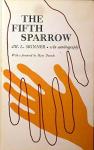
ML Skinner, The fifth sparrow

ML Skinner, The fifth sparrow: An autobiography

Pam of Travellin’ Penguin blog read ML Skinner’s short story “The hand” for a challenge she was doing, and, when I expressed interest in it, very kindly sent me a copy. “The hand” is a mysterious little story – and by little, I mean, little in that it takes up less than 7 pages of the anthology, Australian short stories, that she found it in.

Now, the story is a bit tricky, and I think is best understood within the context of Skinner’s biography. She was born in Perth in 1876, but the family moved to England and Ireland in 1878. Mollie was a keen student and reader but had to abandon formal education in 1887 because of an ulcerated cornea, which resulted in her spending much of the next five years in a darkened room with bandaged eyes. After cauterisation partially restored her sight, she started to write poems and stories. Presumably this was around 1892 (ie 5 years after 1887?) when she was about 16 years old. Later she trained as a nurse, which gave her her main living. And then, the ADB biography (linked to above) says something interesting in terms of our reading of this story:  “she recognized within herself an intuitive power, or sixth sense.” A little later in the biography, we are also told that “Mollie believed that God’s hand on her shoulder guided her life. She dabbled in the occult”. She returned to Australia in 1900, though returned to England later to study. She also travelled to India, and served there and Burma during World War 1.

So to the story, which was first published in 1924. It is set in a “mining hospital back there in the west.” As there was “little doing” and the light too dim to read by, the Matron is encouraged to tell a story which she is “good at” doing. They – presumably the off-duty staff – ask her about her life in “those posts way back in the interior”. Was she ever frightened, they ask?

‘Of what?’
‘Well–the loneliness. And bad white men, and bad blacks. Of patients in delirium. Or some awful maternity case you couldn’t handle.’
‘I didn’t think about it. I did what I could. I was frightened once, though: and that, really, by a nurse screaming. A nurse shouldn’t scream.’

Interesting, the “bad white men, and bad blacks”, but I’ll just take that as another of those ways in which contemporary stories provide us insight into the times, and move on with the story. She then tells the story of the scream. She describes the small outback post, the sense of community they had, and the little L-shaped hospital which was open to the bush on one side, and the road and railroad on the other. There were two other nurses besides herself, one being Nurse Hammer “a regular town girl, very attractive, but unstable, untried.” On the night of the scream, our Matron story-teller was doing accounts while the two nurses were chatting with the patients. Our Matron’s mind kept wandering she says. She’s

very practical, really, and then liable to feel things in the air, things that other people don’t seem aware of. My father called it “unwarranted interference”; and told me to taboo it. But it gets hold of me sometimes: and this evening I was uneasy, aware of “something”. There seemed to be a sound.

But, she can’t identify anything, so continues to try to work. She hears Nurse Hammer go to bed, and then – the scream. The rest of the story concerns locating the scream – it was Nurse Hammer – and working out the cause of it – a hand has grabbed Hammer’s leg.

In the end, there’s a practical explanation for “the hand” but along the way there’s a sense of an awakening or at least, a growing up, for Nurse Hammer. Initially, the Matron is

conscious, not only of Hammer’s terrible fear, but of a deeper source, dark and secret within herself. I remembered how lovely she was. How men in the wards watched with furtive eyes as she walked past. I remembered the way she walked–how she avoided those eyes. I knew then that the girl had herself been tempted, that she was powerless, now, in this dark room, because in her own life she was passing through crisis.

The Matron finds herself praying that “whatever we found in this room would not be evil.”

Skinner builds up the suspense well, the darkness, the lantern going out, until eventually the cause of the scream is determined. Before it is fully explained though, Nurse Hammer has a little more to endure, but, says Matron,

I glanced at Hammer. The Nightingale light was flooding her face …

And the Matron goes on to use words that imply a biblical aspect to Hammer’s enlightenment – but if I say more, I’ll give away the story which I’m not sure I want to do (though unfortunately the story does not seem to be available online).

Interestingly, Skinner attracted the attention of DH Lawrence … but I think I might make this the subject of tomorrow’s Monday Musings! Meanwhile, I think the story is to be understood in the sense of a divine intervention intended to test and try Nurse Hammer, from which she emerges, in a sense, reborn and now a real nurse, like Florence Nightingale. (But, I could be wrong.)

AWW Badge 2018ML (Mollie) Skinner
“The hand” (1924)
in Australian short stories (1951)
ed. by Walter Murdoch and Henrietta-Drake Brockman
(pp. 148-154)

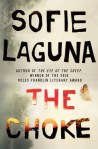
Sofie Laguna, The choke (#BookReview)

Sofie Laguna, The chokeThere are many reasons why I wanted to read Sofie Laguna’s latest book The choke. Firstly, I was inspired by a very engaging author conversation I attended late last year. Secondly, she won the Miles Franklin with her previous book The eye of the sheep (which I still haven’t read). Thirdly, its setting, the Murray River, is one of my favourite parts of Australia. For these and other reasons, I finally slotted it in this month, despite my growing backlog of review copies, and I’m glad I did. It’s an engrossing, moving read.

The novel is divided into two parts, the first set in 1971 when its first person protagonist Justine is 10 years old, and the second set three years later when she is thirteen years old and starting high school. It’s an effective structure. The first part sets up Justine and her physically and emotionally impoverished situation. She lives with her war-traumatised grandfather Pop on a struggling farm on the banks of the Murray. Her mother is long gone, and her father returns erratically. She has regular contact with her two older half-brothers who live nearby with her father’s first wife. Pop loves Justine, but he does not have the wisdom or emotional resources to guide – or even provide for – her as she needs. She is undernourished and poorly groomed. We are therefore unsurprised when Part 2 unfolds the way it does.

Now, I am a little cautious about first person narratives. It’s not that I don’t like them. In fact they can be highly engaging, but it did seem, for a while at least, that first person was becoming the voice du jour. However, Laguna’s choice here is inspired. She’s known for her ability to write young people and it’s well demonstrated here. Telling the story in Justine’s voice enables her to show Justine’s situation, without resorting to telling, which can so easily turn to moralising. Justine is the perfect naive narrator. She can only describe and explain the world as she knows it, so we readers must read between the lines to work out what is really going on. We work out, for example, that she is dyslexic by the way she describes her inability to read. We learn about the quality (often poor) of the relationships that surround her through her observations.

When I looked at [half-brother] Steve it was as if there was a ditch all around him too wide to jump. If you shone a torch into it, you’d never see the bottom. Steve couldn’t get across by himself; it was only Dad who could help him.

She might not understand the world – and it is this, along with her loneliness, which drives the crisis when it comes – but she’s attuned to the feelings between people.

One of the reasons this book so engaged me, in fact, is that it’s all about character. In the conversation we attended, Laguna said a couple of things about this. She said that it’s the characters and the tensions between and within them that drive the narrative and that character IS the plot.

“I got it wrong from the start”

So, who are these characters who drive the narrative? Justine is the main one, of course. She tells us that she was a breech birth – “I thought that was the right way to come out.” She understands by this that she “wrong from the start”, and she blames herself for her mother’s departure three years later. Her sense of being wrong – and feeling somehow responsible – is a recurring refrain in the novel. The other characters – her Pop, her sometimes-present father Ray, her mostly absent but significant aunt Rita, her friend Michael, her half-brothers, and the similarly dysfunctional neighbouring Worlleys – are all seen through her eyes. It is the tensions, stated and unstated, between them and their impact on her, that drive the narrative and the decisions she makes.

As well as a coming-of-age story, The choke is also a classic outsider story. Part one sets up Justine’s outsiderness, and chronicles, among other things, the friendship that develops between her and another outsider at school, Michael, who is taunted, bullied, because of his physical disability. Justine doesn’t have the words, but his disability appears to be cerebral palsy. The end of this friendship with Michael’s departure for the city ends Part One. This friendship plays multiple roles in the narrative. It helps develop Justine’s character. Her decision to stand up for Michael, having earlier wanted nothing to do with him, not only brings her a friend and marks her outsiderness from the cohort, but also shows her own sense of social justice. However, this friendship also exposes her low self-expectations and further reveals her neglect, because Michael’s family is a “normal” middle-class family. There’s a mum and dad, two kids, a proper house, regular meals and proper care. Justine is intitially embarrassed by the gap between their lives and hers, but when Michael eventually visits her home, she discovers he loves visiting it. He loves, for example, the chooks, Cockyboy and the Isa Browns.

By the time Part Two starts, her father Ray is in jail and Justine is starting high school. With Michael gone, she’s isolated at school and, while loved at home, continues to be neglected. The crisis is revenge-driven for something her father had done, but Justine, as the vulnerable female, is, of course, the target. It’s a gut-wrenching story of damage, neglect, abuse and, yes, also just simple misguidedness. Her Pop means well but is ill-equipped for the caring role thrust upon him. In the end, the story is also one of a failure of people and systems – including education – to identify Justine’s real situation.

And then there’s “the choke” of the title. I don’t always discuss a book’s title, particularly given that the author doesn’t always have last say on this, but for this book it’s highly relevant:

Down at The Choke the river pushed its way between the banks. The water knew the way it wanted to go. Past our hideouts, past our ring of stones, past the red gums leaning close enough to touch – it flowed forward all the way to the sea.

The “choke”, then, is a bottleneck in the river, a place, Justine says elsewhere, “where it would push through and keep going”. It is a physical place (based on the actual Barmah Choke) and a metaphorical one. Physically, it is a place of tranquility, of respite, for Justine. However, it also symbolises the things that threaten to “choke” her life, while at the same time hinting at hope, at the possibility of pushing through.

The choke is a book written by someone who knows exactly what she is doing. As I flipped through it to write this post, I noticed again and again the crumbs laid for us, the signs, in other words, that prepare the groundwork for what comes later. There is nothing wasted here. It is a grim story, but it is enlivened by its resilient young protagonist who finds the resources within herself to “push through” when life threatens to overwhelm. It may not have been shortlisted for the Stella Prize but I’m glad I decided to read it.

AWW Badge 2018Sofie Laguna
The choke
Sydney: Allen & Unwin, 2017
369pp.
ISBN: 9781760297244

John Lang, The forger’s wife (#BookReview)

John Lang, The forgers wifeWhen new publisher Grattan Street Press offered me a review copy of John Lang’s The forger’s wife last November, I couldn’t resist, even though it is from their Colonial Australian Popular Fiction series. I say “even though” because, had it been written now, it would probably not have come under my radar. It’s very much in the popular vein. However, as a piece of work first published (in serial version) in 1853, it has much to offer modern readers.

It raises the question, in fact, of why read historical fiction when you can read from the time itself. I’m being a bit flippant here, I know. There is reason – there’s value in looking back, in revisiting the past with eyes from the present – but the question is worth asking, if only to focus our minds on context when we read.

Enough pontificating though, let’s get to the book – or, first, to the author. According to Grattan Street Press, John Lang was Australia’s first locally born novelist. I have in fact written about him briefly before, in a Monday Musings post, but I hadn’t had a chance to read him, until now. I mentioned in that post Victor Crittenden’s biography, because its title says a lot – John Lang: Australia’s larrikin writer: barrister, novelist, journalist and gentleman. Ken Gelder and Rachel Weaver’s Introduction to The forger’s wife provides interesting background to his life, some from Crittenden’s work. Lang, it seems, lived quite a peripatetic life, and had had a few books published by the time The forger’s wife was serialised.

Gelder and Weaver write that it’s generally accepted that The forger’s wife is “the first novel by an Australian-born novelist to feature an Australian detective.” They go on to suggest that it is “the first detective novel in the Anglophone world” arguing that it predates by around ten years The Notting Hill Mystery by Charles Felix which has been seen as the first detective novel in English. The rest of their introduction – naturally, because the series is about popular fiction – focuses on the book as a detective novel. However, I’d like to discuss other things.

The novel is essentially a melodrama which, say Gelder and Weaver, follows “the fairly familiar pattern of a female emigrant’s tale.” It tells the story of Emily Orford, the rather spoilt only child of a well-to-do British army officer. Eschewing more suitable suitors, she falls for a man whom she believes to be Captain Reginald Harcourt, but who is, in fact, the forger Charles Robert. Immediately after their elopement, he is arrested and convicted of forgery, and transported to Australia. Emily, believing that Reginald is innocent, follows him to Sydney. Here, she luckily finds a few friends amongst the colony’s rough and tumble, one being the convict turned policemen-and-thief-taker (our detective), George Flower. She also reconnects with the scurrilous Reginald/Charles, who, despite getting into increasingly outrageous scrapes, manages to keep Emily believing in him. This is a 19th century melodrama so it all turns out alright in the end, though not necessarily exactly as readers might expect.

What I want to talk about now, though, is why this novel is worth reading – besides its credentials as a pioneering detective novel, that is. My reasons have to do with the insight it provides into colonial life. Think how much we learn about life in mid-nineteenth century England from Charles Dickens’ novels. So …

“this uncouth and cruel land” (Emily)

We learn a few things about early to mid-nineteenth century colonial Australia, starting with some vivid descriptions of town and country. We learn about the roughness, the struggle to survive which results in various combinations of theft, corruption, bribery. The novel’s themes include the survival of the wiliest, and the challenge of identifying who you can trust. The naive, trusting Emily would not have survived a minute without the initial help of Captain Dent from Lady Jane Grey, the boat she arrived on, and then George Flower who looks out for her.

We learn about how women make a living – some via the oldest profession. Emily, though, gives piano lessons. However, when she becomes persona non grata because of Reginald, she’s “compelled to do needlework, to knit socks and comforters”. We learn about convicts who become policemen versus those who become bushrangers. We learn about settlers taking the law into their own hands. George Flower, on the hunt for Reginald now turned bushranger, tells a well-to-do settler that settlers need to learn to protect themselves:

The Gov’ment’s a fool for paying for mounted police. You ought to learn the value of combination, and how to protect yourselves.

Later on the same page he says:

I wish to teach you settlers, and the Gov’ment, and bushrangers, a great moral lesson. I want to make you more independent and secure – bushrangers less numerous and daring – and Gov’ment more economic and sensible.

And, of particular interest to me, we learn about attitudes to the original inhabitants. In between the above two comments, Flower says:

You can club up to get rid of the blacks, when they spear your cattle or kill your sheep. Why can’t you capture your own bushrangers?

So, the settlers clearly have no compunction about getting rid of “the blacks” themselves. Presumably they are “easier pickings” and don’t warrant the respect of a lawful process? You don’t always need to read history, then, to know what went on. Sometimes fiction contains useful truths.

There are other references – or not – to Indigenous people. A little earlier than the above scene, Flower is enjoying a lovely moment in a remote spot, where:

he discoursed for some time with [bushranger] Millighan on the grandeur of the scene, and the sweets of liberty. It was a beautiful warm day, and not a cloud in the sky. The foot of man had never before trod the ground on which Flower and Millighan were then standing.

I don’t think Lang was being ironic here!

Later, Flower returns to the same spot, where Millighan’s skeleton now lies. He treats the skeleton of this “brave” adversary with respect, leaving a note to ensure that when, in the future, the remains might be “stumbled across”, the finders will “not suppose he was some black fellow”!

And yet, a page later, there’s recognition of learning from these same “black fellows” when he makes a fire “as the Aborigines do, by rubbing two pieces of dry stick together until they ignite.”

The final reference to Indigenous people also refers to cultural learning. We are told that Flower, now back in England, had become very “‘colonial'” not only in “outward appearance”, but also in “parlance”. “He had mixed a good deal with the blacks” and, while the Aboriginal language was not “thoroughly understood by the Europeans”, it had contributed “sundry worlds and phrases” which Flower used, to the incomprehension of his listeners.

So, while I found the story itself entertaining – indeed a thoroughly enjoyable read – it’s these unconscious insights into the times by a writer of the times that has made this book memorable. I would love to read more in this series.

John Lang
The forger’s wife
Parkville: Grattan Street Press, 2017 (Orig. serialised in 1853)
224pp.
ISBN: 978098762304

(Review copy courtesy Grattan Street Press)

PS: I apologise for overwhelming your inboxes/reader feeds this week. There’s been a lot on. I’ll return to situation normal next week.

Ben Smith Noble, The sands of time (#Review)

Tasmania 40 South Issue 78Ben Smith Noble is the second young writer I have reviewed here, the first being Leah A with her 10 silly poems by a ten year old (my review) which came to my attention via Son Gums. Ben Smith Noble’s short story “The sands of time”, on the other hand, came to me from Mother Gums via Brother Gums who lives in Tasmania and knows the young writer. Indeed, I believe I’ve met him too, but that was nearly ten years ago, when he was probably around 6!

Many moons have passed since then and it appears that Ben Smith Noble is becoming quite the writer. “The sands of time”, which unfortunately is not available on-line, won the Junior Section (Years 7-9) of the 2015 Young Tasmanian Writers Prize – and what a delightful story it is. It’s a time-travel story about a man who dies suddenly and mysteriously finds himself in a coffin that had been used in England in 1122, during the time of the Crusades. What happens next, as I’m sure you’ve guessed, is that he finds himself in the Holy Land in 1098 “standing between two armies that had a very certain view on who was right”:

The hot sands swirled around Mr Smith as the two armies gave a roar and started moving towards each other at a speed that suggested the sides shared an intense hatred for each other, and further suggested to the out-of-place Tasmanian the idea of being impaled on a lance or scimitar.

He dearly wished he was somewhere else. Heaven for example.

In the next paragraph, things are getting dangerous: “An arrow drifted by in what seemed slow motion, and hit a nice young man who would probably have got along well with his killer had his killer not been holding a bow”.

Mr Smith is not impressed, and starts to run:

He wasn’t sure where he was going, but he was sure anywhere would be better than here.

However, he soon finds an English knight and a Saracen warrior approaching him on horseback from different directions, so he does the only sensible thing he can think of. He calls, “Stop!” The denouement, from this point, is beautifully and succinctly told, and conveys a message about war – something that “happens when people with small brains get big ideas” – that is pure and sensible. It’s an entertaining read.

What is impressive about the story is Noble’s grasp of language, of rhythm and pace, of voice, and of structuring a plot. We are told in the first paragraph that Mr Smith had “a guilty love of Doctor Who” which sets up the time-travel idea, but we are also told in the same paragraph that he likes “staying in the here and now”, and hadn’t, in fact, been anywhere further than Burnie. In other words, he’s a simple, ordinary man, and Noble sets this up effectively in the first paragraph. He also establishes his light tone in this paragraph, and sustains it through to the end. The story made me laugh – at the right times – and yet it has a serious message that’s relevant today. I don’t have a benchmark for what young writers are capable of these days, but this story would not embarrass its creator in adult company.

A search of the Tasmania 40° South revealed that Ben Smith Noble won the Senior Section (Years 10-12) prize last year, with a story titled “Napoleon, or, the musings of Mr Pink”. Clearly someone to watch. You heard it here first, folks!

Ben Smith Noble
“The sands of time”
in Tasmania 40° South, Issue 78?, pp. 85-86

Carmel Bird, The dead aviatrix: Eight short stories (#BookReview)

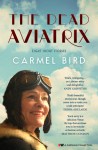
Carmel Bird, Dead aviatrix

Carmel Bird, whose latest short story collection, The dead aviatrix: Eight short stories, I’m reviewing here, has to be the consummate writer. She can turn her hand to fiction and nonfiction, to short and long form writing, to formal and more informal voices, and to both serious and witty or satiric tones. She’s also an editor/anthologist in addition to being a writer. And now she’s experimenting with a digital platform. So, when she hesitantly offered me The dead aviatrix to read and review, there was only one answer, yes.

Her hesitation related to its e-book form. She feared that we Gums’ people aren’t much interested in ebooks, but, she wrote, “they are a growing part of the literary landscape”. Then, using a very Bird-like expression, she continued, “so maybe one day you will write a bit about them, and if and when you do, The Dead Aviatrix will be idling on the tarmac.” Well, how could I resist, even if I had wanted to, an aviatrix idling on the tarmac? And anyhow, as you know, I do read and write about e-books. Annabel Smith’s The ark (my review) is a good example, but I’ve reviewed several e-books here including Dorothy Johnston’s Eight pieces on prostitution (my review).

Like Dorothy Johnston’s book, which was a digital publishing initiative of the Australian Society of Authors, The dead aviatrix is the first Capsule Collection, a new platform by digital publisher Spineless Wonders. Subsequent titles in the series will, the book’s “About” says, include works “selected from The Carmel Bird Digital Literary Award”. You clearly can’t keep a good writer down. I love that this doyenne of the Australian literary scene is still exploring and experimenting.

However, it’s all well and good to explore and experiment with form, delivery platform, and so on, but in the end you need to produce the goods, and this Bird has done with her eight stories. I should say, before discussing them, that all have been published before – in publications like Southerly, Island Magazine, and Review of Australian Fiction.

So now, at last, the stories themselves. They are a wonderful lot. Bird regularly makes me laugh, and she does so again here. It’s not empty laughter though, because her targets are serious. It’s just that she frequently presents her ideas with a cheeky, often satirical approach.

The first story is “The dead aviatrix and the Stratemeyer Syndicate”. It’s written in the sort of style Bird used in Fair game, her memoir of Tasmania (my review). By this I mean it digresses or, as she says, becomes “productively sidetracked”. However, as “The dead aviatrix” is “a publishing story”, the opening digression about the prolific Edward Stratemeyer – creator of a childhood favourite of mine The Bobbsey Twins – is relevant in a way (of course!). Actually, it’s very relevant because she finds a quote about an aviatrix in a Stratemeyer book, and uses it to springboard her story. Oh, she’s a character! The tone of the story, like several in the book, is chatty. She talks directly to us, the reader, leading us along, often lulling us into a false sense of security. In this case, it’s a little satire on the publishing industry – on proofs going astray, on distracted publishing interns – but along the way it invokes or references all sorts of ideas, including the Australian aviatrix Nancy Bird Walton who “unlike the great and mysterious Amelia … did not disappear in the skies.” Sometimes it is hard to keep up with Bird (our Bird, I mean!) but I love trying. This story is, partly, about the art of writing stories.

The second story, “The Whirligigge of time brings its revenges”, draws from a Shakespeare quote, and is also a publishing story, this one more satirical about first and second novels, the notion of “literary” novels, awards, and not using agents. Again, it has a similar, chatty story-telling tone. Here’s an example:

The history of this novel (The Heat of Summer) is the real subject of my tale. That, and the wheel of fortune and the quirks of fate. The book takes its first inspiration from Camus’ famous L’Etranger, and its content is drawn from the aforementioned history of Joseph Tice Gellibrand, the disappearing Attorney-General of Van Diemen’s Land. Well, you can see that what Frankie was doing here was risky. It was what is often described as literary fiction.

There’s more delicious satire about publishers and their slush piles, but I’ll finish with a quote about promotion:

The media hype for The Heat of Summer is huge, what with the glamour of Frankie’s Paris life, and the deep fascination with gothic Australian bush stuff and so forth. Based around the tragic life of her ancestor. Smash hit. Frankie turned out to be a publicist’s dream, having, as well as the attributes I have alluded to, long legs, a face that could sell cosmetics and airline tickets, and an engaging lisp.

Delicious isn’t it?

And so the stories continue, addressing issues like missing children (“Cold case”), dying towns and New Age shops (“Cactus”), shallow suburbanites and their prejudices (“The matter of the mosque”), surrogacy (“Surrogate”), and species extinction (“Letter to Lola” and “The tale of the last unicorn”). All the stories could be lessons in writing – in tone, in varying form, in how to make words and language work for you, in being absurd without being absurd (if you know what I mean), in addressing serious matters with a light but pointed touch. I enjoyed every one.

While several stories are written in the chatty, satirical tone of the first two. Not all are. “Dear Lola” takes the form of a love letter from a Spix’s Macaw to his lost mate. It’s sad, and pointed, but the whole idea of a bird writing to its lover gives it a whimsical touch too. “The matter of the mosque”, on the other hand, is written in little scenes, comprising mostly dialogue between two mothers in which it’s clear that whether to use hairspray or mousse is more important than opening their minds to different ways of being. Bird’s control of language and narrative here, together with her use of repetition and recurring ideas or images, makes this a little gem.

Now, I know many of you aren’t short story readers, because you want to get lost in character. These stories won’t give you that. However, what a mind, what ideas, what fun and, ultimately, what heart, you miss by ignoring a book like this. It’s only available in e-format and costs a whopping $4.99! Why not give it a go?

AWW Badge 2018Carmel Bird
The dead aviatrix: Eight short stories
Spineless Wonders, 2017
50pp.
ISBN (e-version): 9781925052343

(Review copy courtesy the author, but available from Spineless Wonders)

Diana Blackwood, Chaconne (#BookReview)

Diana Blackwood, ChaconneDoes a book set in the early 1980s qualify as historical fiction? Does a book about a twenty-something woman’s romantic adventures, and search for direction, qualify as coming-of-age? The answer is probably yes to both. Certainly, it is within these parameters that it’s appropriate to discuss Diana Blackwood’s debut novel Chaconne.

Chaconne, as you can see, has a gorgeous cover. Rather than an image of a pretty young woman, promoting the idea of a “woman’s book”, it features a harpsichord – with an image of a Pershing (or similar) missile inside its open lid – sitting in a golden-lit rural landscape. This clues us into some important aspects of this novel, which are that music and war are involved. Of course, the title, Chaconne, also suggests a music theme. A chaconne, says Wikipedia, is “a type of musical composition popular in the baroque era when it was much used as a vehicle for variation on a repeated short harmonic progression, often involving a fairly short repetitive bass-line (ground bass) which offered a compositional outline for variation, decoration, figuration and melodic invention”. By this description, the “chaconne” works as a metaphor for Eleanor who is “sort of” progressing in her life, though with a deal of repetition, particularly in her way of choosing the wrong men and of  bumbling along, without goal, from job to job. And within this main storyline are several interesting people and events which intervene along the way to add variety and decoration to the whole!

The novel starts with 24-year-old Eleanor arriving in Paris in 1981 to meet her lover, the bourgeois communist Julien whom she’d met a couple of years earlier in Sydney while he was an exchange student in Australia. Eleanor, who has “a fuzzy sense of being shut out of her proper story as if she had failed youth, been found wanting by life itself”, seems to have little direction in her life, though we know from flashbacks that she’s interested in music. One of her complaints against her mother, Mavis, and there are many, is that she’d stopped Eleanor’s piano lessons, replacing them with something she deemed more important for Eleanor’s education, maths tutoring! Escaping to Paris, though, is a bit of out-of-the-frying-pan-into-the-fire, because Julien proves to be rather less than she thought. She finds herself spending much time alone in a tiny flat, relieved somewhat by her English teaching job at a lycée. Fortunately, her loneliness is assuaged a little by some lovely people, such as Rosa and the kind Monsieur Joubert who recognises her interest in music and starts, in a small way, her musical education.

As her relationship with Julien flounders, she meets Lawrence, an American who is flat-sitting for her next-door neighbour. It’s not long before she follows him to Germany, where he, a PhD student in deconstructive theory, is an English tutor on an American airforce base near a German village. The novel is set during the Cold War, when fear of nuclear destruction was high. Here Eleanor also obtains work teaching English. But, Lawrence – as we readers could have told her, just as we could have with Julien – doesn’t turn out to be the man she hoped.

Providing a background to Eleanor’s lacklustre romantic life is the unsettled political situation. Julien is engaged in communist politics, taking part in peace marches and the like, while Lawrence works on a military base where Eleanor keeps her Parisian life quiet and tries not to get too close to the base’s scary off-limit areas. Nonetheless she lives with “the unpalatable truth … that the nuclear umbrella was sheltering her by paying her rent.”

Not only does Lawrence draw her to this uncomfortable environment, but he is also not interested in music. What was she thinking in following him? Luckily, Eleanor finds a choir in the village, and her life gradually starts to change as she finally finds the thing that enlivens her.

And this is perhaps where the novel was a little problematical for me. While Eleanor’s journey to self-discovery was interesting, I never quite “felt” her sadness or her joy. I liked her, but I didn’t fully engage with her. This may be because she makes too many bad decisions that didn’t quite ring true for the intelligent young woman she clearly is. The coming-of-age felt a little late (particularly for the 1980s, which was before our 30-is-the-new-20 age?) But, this could just be sensible me speaking! Still, I would love to have seen more of her gutsy-but-also-life-challenged friend Ruth.

Nonetheless, there’s a lot to like about this book. I particularly enjoyed Blackwood’s obvious love of the English language. Eleanor and her Australian friend Ruth – not to mention her aforementioned mother – are grammar nazis (though that’s an unfortunate phrase given the post-war setting of this novel, a time when Germany was particularly uncertain about its past). The book delights in wordplay (including puns), alongside more serious discussions of grammar. Lawrence pegs Eleanor as “a proponent of prescriptive grammar” while she expects that “traditional grammar was another thing he would like to see tossed on the scrapheap”. The discussions Eleanor has about language are those we have here among the extended Gums’ family. We discuss language with each other, yell at the TV, argue about prescription versus description, ponder how and why language does or should or shouldn’t change. There are no answers but it’s fun exploring the issue.

Blackwood’s writing is also beautifully evocative, such as this description of Monsieur Joubert – “loneliness was close about him like a Parisian winter”. And this of the beginning of spring:

In the last few days spring has retreated. The quickening of the senses, the opening up to life and fate, had been dampened by chilling rain and the need to wear a jumper again.

This is exactly why I’m not a big fan of spring! It taunts with moments of warmth before plunging us all into cold again! Time and again Blackwood captured moments perfectly.

Chaconne, then, is an intelligent, well-written, well-structured book set in interesting times and places. I did like the cheeky metafictional reference to The catcher in the rye’s Holden Caulfield. Eleanor suggests that he needed “a firm but loving grandmother”. However, she also recognises that,

of course, the whole point of being a fictional character was to suffer misadventures and setbacks and humiliations without being bailed out by your grandmother, at least not until you’re sufficiently chastened.

Very true – and in the end our fictional character is – but no, I’ll not give it away.

Chaconne is book that should appeal to those who love Western Europe and baroque music, who remember the 1980s, and who like their romantic novels to be thoughtful and not neatly wrapped up. By the end, Eleanor has grown, but, as in life, we know she has yet more growing to do – and that’s the sort of ending I like.

Lisa (ANZLitLovers) loved this novel and includes two YouTube links to music referenced in the novel.

AWW Badge 2018Diana Blackwood
Chaconne
Melbourne: Hybrid Publishers, 2017
296pp.
ISBN: 9781925272611

(Review copy courtesy Hybrid Publishers)

Monday musings on Australian literature: Australia’s most successful writer, ever

The obvious question to ask when someone makes a “best ever” claim is by what criteria? The easiest way to justify “best” is with numbers. And so it is here, as it’s with numbers that Australian publisher Allen & Unwin’s blog, Things Made From Letters, suggests that Morris West is “Australia’s most successful writer, ever.” The numbers are sales of course. According to Allen & Unwin (A&U), West’s books have sold over 70 million* copies around the world – more, apparently, than any other Australian author.

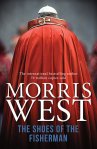
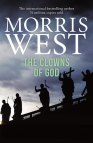
Morris West, The shoes of the fishermanAnd yet, I wonder how many readers here know – or have read – Morris West. He wrote nearly 30 novels, not to mention radio serials, plays and non-fiction, and his work was translated into 28 languages. His most famous novels were The devil’s advocate  (1959), which made him an international best-seller, and The shoes of the fisherman (1963). These, and a few others, were adapted to film.

West was born in Melbourne in 1916, and died in 1999. The Oxford companion to Australian literature says that he was a member of the Christian Brothers order for 12 years, but that he left in 1940 before taking his final vows. This is relevant because he was known for writing about the Roman Catholic Church, particularly regarding its role in international affairs. During World War 2 he worked as a cipher officer and was briefly private secretary to ex-PM Billy Hughes. After the war, he worked in radio, and founded, in fact, Australian Radio Productions.

However, as the A&U blog says, he “was determined to build a career as a writer, and as for so many artists, musicians and writers before the 1980s, the only way to do that was to move overseas.” And so he did, living in Europe and the USA from 1955 to 1980. He clearly maintained contact with Australia during this time because in the early 1960s, he helped found the Australian Society of Authors. The A&U blogger is particularly interested to know why such an apparently successful writer is barely known today, indeed completely unknown to her “younger colleagues”. She offers a few reasons. One is that except for a couple of early novels, all his books are set overseas. “Is Australian literary culture reluctant to acknowledge a novelist who doesn’t write about Australia?”, she asks. Or is it that “an increasingly secular Australia is now uncomfortable reading fiction which takes religion seriously?” Even though he wrote this fiction with a critical eye?

But then there’s the issue of “literary” quality. The A&U blogger quotes the AustLit database as stating that his fiction “has not received a great deal of literary attention.” Kerryn Goldsworthy, writing about Australian fiction from 1900 to 1970 in The Cambridge companion to Australian literature, names West, along with Ion L. Idriess and Jon Cleary, as writers who were very popular in their time but who “tended to be dismissed by their ‘serious’ peers and by later literary historians as middle-brow.”  She describes his books as looking at public institutions, usually political or religious ones, on the international stage and dealing with “the moral dilemmas they pose for the individual”. These three writers are probably the equivalent of my generation’s Colleen McCullough and Bryce Courtenay?

Morris West, The clowns of GodSo, why the interest now? Well, you may not be surprised to hear that Allen & Unwin is re-publishing most of his work – in print and e-version. (The book covers here are from this new series). Author Simon Caterson writing in The Monthly refers to this reissue and asks what West has to offer contemporary readers. Good question. He talks about the subject matter, suggesting that the “fascination with church politics and influence” is of continuing interest. Books keep coming out dealing with these, he says, just think The Da Vinci Code!

What makes West worth reissuing is, he suggests, West’s ability “to turn the intellectual and emotional struggles within his faith – his own and that of others – into gripping melodrama.” Moreover, he says that

it makes commercial sense to bring back the books of Morris West, whose big themes – conscience versus power, the individual versus the institution – are as relatable to the struggles of secular – as much as religious – life.

And finally, there’s the writing. Caterson sums it up this way:

It is also important to note that West could not have sold tens of millions of copies of his books without knowing how to make the pages turn. The prose may sometimes be prolix and the endings not always satisfying, but his writing is always full blooded and, for the most part, remarkably fluent.

Middle-brow perhaps, but a good read it seems. And as someone who loves seeing older Australian writers being read again – even those who didn’t write about Australia! – I’m happy to see this blast from my past being published again. Good on Allen & Unwin. I hope, just as I continue to hope for Text Classics, that they do well.

* Wikipedia says 60 million, but I think that might be based on figures around the time of his death.

Lynette Washington, Plane Tree Drive (#BookReview)

Lynette Washington, Plane Tree DriveLynette Washington’s debut collection of short stories, Plane Tree Drive, reminded me a little of Rebekah Clarkson’s Barking dogs (my review). Both are collections of stories revolving around a location, and in both the location is in the Adelaide region. There are differences though. Clarkson’s book is a little grittier with an overall theme of community undergoing social change, while Washington’s book is the portrait of a suburban street. There is change, of course, but the change is more broadly human – breakups, ageing and retirement, generation gaps, friendship and dementia, illness and death – although contemporary issues are also touched on.

Like Clarkson’s book too, Washington’s has some continuing storylines – such as Jennifer who is unhappily married to Dan while pining for her first love, Alexander – that are interspersed with the stories of other people. I liked this. Not only do these ongoing storylines provide a lovely sense of cohesion for the whole, but they also reflect a typical neighbourhood street. By this I mean that in any of our neighbourhoods there are people we know well, those we know a little, and others whom we only know passingly. And so, in Plane Tree Drive, there’s Jennifer who appears regularly; there are others like Maurice, Alice, Amily and Faraj who appear more than once, sometimes as a reference in another person’s story; and there are those who only appear in their own story.

To make all this work, Washington pays careful attention to structure. The overall order is chronological, driven primarily by Jennifer’s story, but the collection starts and ends with the other main continuing story, that of musician Maurice. His final section cleverly but light-handedly brings several of the characters together, but I won’t tell you how! The book is divided into sections – I think that’s the best way to describe it – which are named for the characters they cover, but some sections comprise small chapters. For example, a section titled Faraj, Coralie and Ruby, which focuses on Afghani asylum-seeker Faraj, has two short chapters, “Housing Needs Assessment” and “The Bay”. And this brings me to form …

Many of the stories are short, in fact very short, and most are told first person, but there’s some interesting variety, some experimenting with form, too. There’s a dialogue between Maurice and his wife Jacqui (“He said/She said”), some diary entries by the teenaged Poppy (“Dear diary”), several government employee reports on Faraj’s application for housing (“Housing Needs Assessment”), some social media commentary (in the cheeky “Scarlett’s shed”), and even a flow-chart from IT expert Sarah (“Oma’s fruit cake”). This playing with form – which brings with it changes in tone – break up what could, in other hands, become a tedious and melancholic parade of first person voices.

Oh dear, I’ve spent a lot of time describing the book and how it works but not much on whether I enjoyed it – so I’ll do that now. Of course I enjoyed it! How could any reader who is interested in the lives of people not enjoy a book which pokes into the nooks and crannies of all our lives? There are stories with a political bent, albeit told from personal not political perspectives. These include the aforementioned Faraj and his search for a home, a couple (Stella and Graham) who travel overseas to access euthanasia legally, and a woman (Coralie) watching the demolition of a loved theatre. I like that Washington doesn’t proselytise, but simply shows how people are affected by and react to these situations. There are lighter stories, such as Marg who talks to animals, particularly her neighbour’s badly behaved cat (“That cat”).

And there are, dare I use that cliché, “poignant” stories, such as, to give an example, Martha and Charles (“Gaps between boxes” and “So much sand and so much water”). They are a retired couple who have been together since childhood but who, at this point in their lives, suddenly find themselves at odds. She wants to adventure – to “seek out the gaps between the boxes” they’ve been ticking all their lives – but he just wants peace. He thinks “the boxes made a darn good life”. This story is gently and warmly told. No fireworks, just hope and acceptance on both sides.

There’s exploration in the writing – in form in particular – as I’ve already said, but the stories are accessible. This is the sort of short story collection that should have wide appeal. The use of recurring characters makes it appealing to those who prefer novels, while the playing with the short story form and structure provides interest for the short story lover.

Washington, who has appeared here before as editor of Breaking beauty (my review), precedes her book with an epigraph from F. Scott Fitzgerald’s The great Gatsby. The quote concludes with “I was within and without, simultaneously enchanted and repelled by the inexhaustible variety of life.” I wouldn’t say I was repelled, albeit some characters are more appealing than others, but Plane Tree Drive does contain a wide variety of life which makes it an engaging and yes, enchanting even, read. Like many books from smaller publishers, it deserves a wider audience than it will probably get.

AWW Badge 2018Lynette Washington
Plane Tree Drive
Rundle Mall, MidnightSun Publishing, 2017
245pp.
ISBN: 9781925227345

(Review copy courtesy MidnightSun Publishing)