Tania McCartney and Christina Booth, The Gum Family finds home (#BookReview)

As many of you know, I recently became a grandmother – and if you know anything about becoming a grandparent you’ll know that THE critical question is “what are you going to be called?” Well, I would like to be called Gummie – the name given me here by one of my favourite bloggers Guy (His Futile Preoccupations.) However, the family is looking at me a bit askance, given other images conjured by the word, particularly in relation to, let us say, older people. I haven’t given up yet, though …
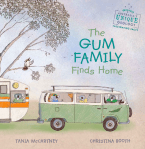
Tania McCartney and Christina Booth, The Gum Family finds home

And my cause received a fillip last night when a friend gave me the gorgeous children’s picture book, The Gum Family finds home, written by local author Tania McCartney and illustrated by Christina Booth, because surely a Gum Family would think Gummie a perfectly good Grandma name, don’t you think?

Anyhow, I was intrigued by the book for other reasons too. For example, there’s the author, Tania McCartney. I hadn’t heard of her until the last couple of years when she started popping up in my social media feeds with another children’s author, Irma Gold, who has appeared several times on my blog. McCartney is currently an ambassador for our (ACT) Chief Minister’s Reading Challenge. She was also, back in 2012, an ambassador for the National Year of Reading. In other words she’s more than “just” an author-illustrator. She’s an active proponent of reading and literacy – and in my city – so well worth getting to know
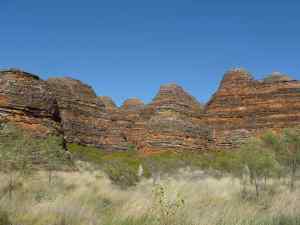
Domes in the Picaninny Gorge area, Purnululu
Decorative Bungle Bungles

But now, let’s get to the book. The cover provides a hint that it’s more than a story. It includes, it says, “fascinating facts” about “Australia’s unique geology” and this becomes immediately clear when you open the book and find, on the front (and back) endpapers, illustrations of places in Australia, each one with dot points. Pretty soon I was laughing because these dot points read like a house-hunter’s list of pros for a new home. So, for example, the points for Butterfly Gorge near Katherine include “on-site security (crocs!)”; for The Bungle Bungle Range there’s “decorative silica and lichen features” and “close to gorges, pools and walking tracks”; and for the Nullarbor Plain “lots of space” and “very private”. Haha, love it.

The endpapers, then, got me in before I even started the book. The narrative is straightforward, befitting the child audience it is geared to. It is about a family of koalas, the Gum Family, who decide that they need a safer, more “rock solid” home than their gum tree. So, they hitch up a caravan, pack some “gum leaf sandwiches and eucalyptus juice”, and set off around Australia to see what they can find. The story is told with lovely humour, as place after place doesn’t quite suit their needs, such as the Twelve Apostles:

Over the years, these limestone stacks will tumble into the sea. Mum is looking for something a bit more stable.

This trip, then, provides an excuse for McCartney and Booth to introduce their readers to, as McCartney’s website says, “the sheer variety and imposing grandeur of the Australian geological landscape, from Uluru to King’s Canyon, from gorges and limestone pillars to precariously placed boulders and sweeping plains.” There are two main themes – or ideas – here. One is this showcasing of Australia’s landscape, as McCartney explains on the National Library’s blog:

As a land of enormous geographical distance, enjoying these sites firsthand can be difficult for many children, so featuring them in children’s books is a wonderful way to encourage kids to learn about these sites and inspire them to visit.

The other is a more personal one about home, about the fact that home is where you feel most comfortable, where you can live with the people you love in the way that best suits you. For the koalas, this is, of course … but, no, I’m not going to spoil the ending!

The book ends with a lovely value-add – eight pages of basic facts about “Australia’s unique geology.” These facts comprise a photograph or two of the place, and a paragraph giving information about its formation and history. These are kept simple to suit an early primary-school-age audience, but they made the geology nicely comprehensible to me too. (I do find geologic time scales almost impossible to get my head around.) I can imagine a teacher suggesting students choose one of the places to research further, and do a project on or write their own story about … In other words, it’s a book that doesn’t really end when you finish reading it.

I do, however, have one little query. It concerns nomenclature. In some cases, the creators have used the now-agreed indigenous Australian names for the places, such as Uluru and Kata Tjuta, but in others, such as Kings Canyon (now Watarrka) and the Bungle Bungles (now Purnululu) they don’t. I’m assuming they are making some fine distinctions here between the landform and the name of the national park in which they sit, but it would have been good, at least, to include the indigenous name in the facts at the back, as they do for Katherine Gorge (or Nitmiluk.) This is a little quibble, and one, I’m sure, that they discussed thoroughly, but still …

The Gum Family finds home was, I understand, just published this month. I do hope it sells well as the story is delightfully told and the information engagingly presented. I look forward to reading it to Grandson Gums one day.

Meanwhile, though, what do you think about my grandma name?

AWW Badge 2018

Tania McCartney and Christina Booth
The Gum Family finds home 
Canberra, National Library Publishing, 2018
ISBN: 9780642279255
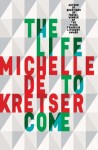
Michelle de Kretser, The life to come (#BookReview)

Michelle de Kretser, The life to comeMichelle de Kretser’s Miles Franklin shortlisted novel, The life to come, makes for great reading but difficult blogging because, like her Miles Franklin Award winner, Questions of travel (my review), it is big, and covers a lot of ground. Where to start is the problem. However, I’ll give it my best shot, starting with its form.

The novel comprises five distinct, almost standalone, parts, except that one character, the Australian novelist Pippa, appears in each one, providing a continuing narrative thread for the whole. She is introduced as a rather naive student in the Part 1 (“The Fictive Self”). We then move through Part 2 (“The Ashfield Tamil”) about Ash and Cassie, Part 3 (“The museum of romantic life”) about Céleste in Paris, and Part 4 (“Pippa Passes”) about Pippa and her in-laws, to end with Part 5 (“Olly Faithful”) about Christabel and Bunty. These characters are Australian, French, British and Sri Lankan.

But something intrigued me. The title of Part 4, “Pippa Passes”, rang a bell, of Robert Browning’s poem “Pippa Passes”. I don’t recollect much about the poem, but its form, interestingly, is similar to de Kretser’s novel. “Pippa Passes” is also the origin of the famous lines “God’s in his heaven/All’s right in the world”. However, while Pippa in the poem acts as a positive force, our Pippa does not. She thinks she’s a “good person”. As Céleste says, “Pippa would always need to demonstrate her solidarity with the oppressed – Indigenous people or battery hens, it scarcely mattered.” In fact, though, she regularly tramples on others, not necessarily intentionally, causing them pain. Presumably de Kretser intended this ironic allusion to Browning’s Pippa. I also wonder whether Christabel alludes to Coleridge’s poem Christabel, which explores the relationship between two women. Hmmm … I may be drawing long bows here as I don’t think Bunty is anything like Coleridge’s Geraldine. Still …

Anyhow, moving right along, I’m going to divide my remaining comments into two main strands – the personal and the, for want of a better word, sociocultural.

The personal

The novel’s title, The life to come, comes from Samuel Beckett’s Endgame, as quoted in the epigraph. It provides a clue to the novel’s main theme. It’s the theme that most touches our hearts, because it’s about the hope for or belief in “the life to come”. It’s about the search for meaning, for transformation, for a full life.

Cassie, for example, realises that her relationship with Ash is about trying to work out “How was she to live?”. She thinks, self-centredly, that “the two Sri Lankans”, Ash and the Spice Market man, “had entered her life to change its course”. Paris-based Céleste, who is fifty-something, single, and having an affair with thirty-something Sabine, is confronting ageing. “Is this all there is?” she wonders, as she sees her future shrinking “to a single point of solitary, penny-pinching old-age.” Pippa, our ongoing character, imagines a glorious future for herself as a writer: “her future was as vast as the light beating its wings in clifftop parks.” Céleste, though, sees something quite different in Pippa; she sees “Excess so far in excess of achievement.” Finally, single, Sri Lankan immigrant Christabel, looks, from the beginning, for that moment of transformation when her real life will begin. At 34, “she had believed, briefly, that her life could be joyful.” She keeps on hoping, however, and even when she accepts, “humbly, that it might never exist for her (“I am ordinary”) … she needed to know it was there“.

De Kretser provides her characters with life’s reality check, that gap between what you imagine and what you achieve. Best to learn it sooner rather than later!

The sociocultural

While that personal strand touches our hearts, the other one provides more of the laughs, albeit rueful ones, because many of them are turned on us. The life to come, in other words, contains a healthy dose of satire, skewering our assumptions and pretentious. When I say our, I’m particularly referring to us left-oriented middle-class earnest do-gooders. Like all good satire, it makes you think …

Eva, Pippa’s mother-in-law, is a good example. She “likes rescuing things”. For example, she employs refugees from a “not-for-profit catering group” to serve food at her parties, while wearing “garments stiffened with embroidery and beads. At throat and wrists she wore silver set with gems, some the colour of butter, others the colour of blood. These tribal ornaments lit Eva’s face, and proclaimed her solidarity with the wretched of the earth.”

In another example, her osteopath Rashida, who also happens to be a Muslim Indian immigrant, dines with Eva and her family. They quiz her about her background:

‘My parents thought that India wasn’t the best place for Muslims,’ said Rashida. ‘I love these potato pancakes, Eva. Could I have the recipe?’

‘Were you persecuted for your faith?’ Eva asked, hushed and hopeful.

‘Not really.’

Keith [Eva’s husband] said, ‘So you were privileged migrants.’

Rashida said nothing. She seemed to be turning the sentence over in her mind, trying to work out its shape.

De Kretser skewers Australians’ naiveté and blindness again and again, particularly regarding the horrors experienced by others, offsetting actual history against the idea of stories. Cassie, who is “postmodernly tutored”, thinks history is “just a set of competing stories” but Ash, born of a Scottish mother and Sir Lankan father, knows the difference between history and story, and understands exactly “the historical sequence that … brought a Tamil civil servant to the counter of a shop in the west of Sydney.” Cassie, Ash sees, “clung to an idea of Australia as a place where kindness prevailed over expediency”, her face denying “the existence of evil, the possibility of despair”. Ash, however, gobsmacked by her lack of awareness, wonders

What is wrong with you Australians? You eat curries without rice, a barbarism. You fear being attacked by people you’ve killed. You stole their land for animals that you slaughter in their millions, when you don’t leave them to die by the side of the road.

Pippa is no better than Cassie. She “saw Europe, momentous and world-historical, magnifying eventless Australia”, oblivious, clearly, to the barbarism enacted on our own shores. After all, as Ash is told when taken to his friend’s country home, “there’s no actual historical [my emphasis] record of a massacre.”

There are lighter, though no less satiric touches, such as Pippa’s telling Christabel about dining out with her literary agent:

We went to this amazing new Asian place at Darling Harbour. It’s been quite controversial because they do live sashimi. But Gloria and I talked about it, the cruelty aspect, and we decided it was Japanese cultural tradition so it was OK.

Where do we draw a line on cultural relativism?

The life to come is an uncomfortable book, particularly for Australians, because it suggests we are generally naive, and blundering, in our assumptions about and behaviour towards others, no matter how hard we try to be “good”. It’s also uncomfortable for us all as humans, because it exposes the gaps between our dreams and hopes for large lives and the reality that more often than not confronts us. The result is something that’s touching but also a bit pitiful.

Is this a Miles Franklin winner? I’m not sure. It may in fact try to do too much. But, is it a great read? Absolutely. I’d recommend it to anyone.

Lisa (ANZLitLovers) also enjoyed the book. And, for a non-Australian blogger, check out Guy’s post at His futile preoccupations.

PS I read this with my reading group.

AWW Badge 2018Michelle de Kretser
The life to come
North Sydney: Allen & Unwin, 2017
375pp.
ISBN: 9781760296568

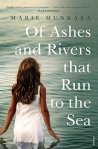
Marie Munkara, Of ashes and rivers that run to the sea (#BookReview)

Marie Munkara, Of ashes and rivers than run to the sea

The stories keep on coming, the stories, I mean, of indigenous children stolen from their families and what happened to them afterwards. I’ve posted on Carmel Bird’s compilation of stories from the Bringing them home report, The stolen children: Their stories, and also on Ali Cobby Eckermann’s memoir Too afraid to cry. Now it’s Marie Munkara’s turn with her excruciatingly honest, but also frequently laugh-out-loud-funny memoir, Of ashes and rivers that run to the sea.

Late in her memoir, Munkara learns that she was born “under a tree on the banks of the Mainoru River in Western Arnhem Land.” But, what she writes next is shocking

‘Too white,’ my Nanna Clara said as they checked me out by the camp-fire light, and everyone knew what that meant. Back in those days any coloured babies in my family were given to the crocs because dealing with these things right away saved a lot of suffering later on. It was better that we die in our own piece of country than be taken by the authorities and lost to our families forever.

Does that remind you of anything? It did me – of Toni Morrison’s novel Beloved, and the slave mother’s decision there. Anyhow, knowing what we know now about the lives of many stolen children, we can surely understand her indigenous family’s actions. Luckily, though, for Munkara – and us – Nanna Clara saw something “special” in her, and she was kept. That was in 1960. Three years later, now living on the Tiwi Islands, the inevitable happened and she was taken from home one day when her mother was at work at the mission laundry. Her mother begged for her to be returned, to no avail.

All this, however, we learn near the end of the book. Munkara starts the book when, at the age of 28 and quite by accident, she came across her baptismal card tucked in a book in her parents’ library. It told her that she was born in Mainoru in Arnhem Land. “In the space of an instant,” she writes, “excitement was replaced with mortification as old geography lessons began to resurface” about a “wild and untamed place where Aborigines hunted kangaroos and walked around butt-naked.” However, she decides to find out more, and soon discovers that her mother was still alive and still living in the Tiwi Islands. She decides to go meet her, with no advance notice.

To say that she was shocked by what she found is an understatement. “This is not the tropical island I had imagined,” she writes, “with luscious vegetation and cute little palm-frond houses. It is a dump.” She tries hard to enjoy her time there, but hates it and three days later returns home. However, it’s not long before she realises that she has to return. This ends Part 1 of the four-part book. In Part 2, she goes back in time and tells of her life as the foster child of two unhappy but highly religious people. Her mother was strict, and cruel, but her father was worse. He molested her for many years. A sad, sad upbringing but Munkara, as she admits herself, is a survivor:

But aren’t human beings amazing creatures and even at an early age we can choose to let the bad things in life devour us and we sink or we can make the most of the good bits and swim. … I chose to swim.

Part 2, then, makes for hard reading, but Munkara’s sense of humour, her ability to believe that things will work out, and her independent mind bring her, and us, through. She’s a great story-teller, which makes this section more manageable than you might expect – but it still leaves you angry!

And then we come to Part 3 in which she tells of her return to Bathurst Island. This is where the real interest of the book lies because it is here that Munkara takes us on her journey into another culture. She is us – to a degree. She has been brought up white – albeit “a dusky maiden” version – and her expectations and initial reactions are very much as ours would be. She describes how she tries to apply her whitefella ways to her new life with her Aboriginal family. She expects privacy, cleanliness, order and, most of all, respect for her possessions. None of these sit well with traditional Indigenous values as she found them on Tiwi, but she’s determined nonetheless. We can feel her horror and frustration – but she’s telling this story long after the events, and imbues them with a light touch of self-deprecation and a warmth for her family which encourages acceptance rather than judgement (in herself and us).

Some examples:

I spend the day scrubbing the kitchen and neatly place all my things by themselves on a shelf so everyone can see they belong to me, and then I have a well-earnt nap. I sleep soundly and wake up to the smells of cooking. Stretching and yawning I make my way to the kitchen to put on the billy for tea only to stop at the doorway in horror, my mouth still open from the yawn. The room in an absolute shithole of a mess. My stuff is strewn everywhere […] Everyone tiptoes around me now they know I’m in a bad mood and I’m fine with that, maybe they’ll learn not to touch things that they shouldn’t.

and

They are instantly awake when they see that I’m only dressed in my bra and underpants. Thankfully my underwear is matching…

Haha, as if they’d care! And,

… after going to the footy on the weekend with my family for protection I’ve gotten over my fear of big crowds of black people. I now feel quite foolish for thinking they could be harmful to me and reckon I must have gotten this irrational fear from my white parents.

So much of this section resonated with me because it reflected many of the things Mr Gums and I were learning and experiencing as I was reading it. I’ve already posted on the cars, but there’s also the mess, the confusing kinship (including her having to call various dogs her brother, her son, her uncle and so on), the trust in spirits, the lack of concern for possessions, all of which can result in decisions and behaviours mystifying to us whitefellas.

But Munkara also learnt more seriously confronting things, such as that her mother’s damaged leg was caused by leprosy, something she’d thought only happened in the Bible and poor countries:

I slide my ill-informed thoughts into the rubbish bin and slam the lid down tight, angry that our First World country can live in ignorant bliss of our Third World problems. … I bet there wouldn’t be too many white people afflicted with leprosy in Australia because if there were it would be front-page news.

However, while the memoir is, for us, an eye-opening, necessary journey into another culture, it is, ultimately for Munkara, a journey to her self. By the end of Part 3, she has come to a better understanding of who she is:

But they don’t realise that there is no stolen and there is no lost, there is no black and there is no white. There is just me. And I am perfect the way I am. And I know now that I have to leave this place because I’ve learnt all I can for the time being and this lesson is over now.

She only leaves as far as Darwin, however, so she can remain in contact with her family. And so it is that, late in the book, Munkara writes about her (biological) mother’s dying:

When I asked her if she had any regrets she said there were no words in any of our family languages for regret. To regret something was a waste of time so why make a word for something that you didn’t need.

Munkara’s mother’s comment that her language doesn’t have a word for “regret” encapsulates for me the value of reading this book, which is its chronicling of the meeting of two opposing cultures. I thoroughly recommend the book, because understanding what divides us is critical to reconciliation – and because it is a darned good read. She can tell a story, that one!

ANZLitLovers ILW 2018

Lisa (ANZLitLovers) has reviewed this book, as has French blogger Emma (Book around the corner) and the Resident Judge. Read for Lisa’s (ANZLitLovers) Indigenous Literature Week.

AWW Badge 2018

Marie Munkara
Of ashes and rivers that run to the sea
North Sydney: Penguin Random House, 2016
179pp. (print version)
ISBN: 9780857987280 (eBook)

Michelle Scott Tucker, Elizabeth Macarthur: A life at the edge of the world (#BookReview)

Michelle Scott Tucker, Elizabeth MacarthurThere’s something special about reading a good, engaging history – and this is how I’d describe debut author Michelle Scott Tucker’s biography Elizabeth Macarthur: A life at the edge of the world. There are, in fact, three prongs to my statement, namely, it is history, it is good history, and it is engaging history. I plan to tease out each of these in my post.

First though, a bit about Elizabeth Macarthur, particularly for non-Australians who may never have heard of her. She arrived in Australia on the Second Fleet in 1790, at the age of 23, with her husband John Macarthur who had an army commission with the New South Wales Corps. Their aim was for John to gain a promotion, and then return to England. However, they soon started making their mark in the new colony as farmers – including pioneering the Australian wool industry – and Elizabeth never did return to England, though John did twice. The first time (1801 to 1805) was to stand trial over a duel with Colonel Paterson, and the second (1809 to 1817) to stand trial again, this time for his role in the rebellion against Governor Bligh. Now, have you noticed those dates? Four years away and then eight years. So, who ran the famous pioneer farming enterprise? Yes, Elizabeth of course. It was partly to correct the longstanding image of Elizabeth as helpmeet to her husband that inspired Tucker to write this biography.

Now, my three prongs, starting with that it is history. This is easy to explain. In form this is a biography, but like most biographies of historical figures it also operates as history, because the reason it has been written, the reason we are interested, is the subject’s role in an historical period. This is somewhat different from literary biographies which don’t necessarily engage with wider historical issues relating to the subject, though you could argue, I suppose, that all biographies are history. I’m good, you’ve probably learnt by now, at this on-the-one-hand-but-then-again-on-the-other sort of argument! Still, the story of Elizabeth Macarthur is ingrained in the history of the early British settlement of Australia.

Next, that it is good history. Now, I readily admit that I’m not a trained historian. I did a little history at university – in fact just one subject on historiography – but I’m interested in history and like to read it when I can. So, what do I mean by “good history”? I mean that the history is, or at least appears to my lay eye, to be trustworthy. For it to appear this way, it needs to be well-researched, well-documented and well-presented. And this, Elizabeth Macarthur is. That it is well-researched is evidenced by the extensive bibliography containing significant primary and secondary sources, many of which I am aware and know to be authoritative. That it is well-documented is evidenced not only by this bibliography, but by the comprehensive, but unobtrusive end-noting. Very few facts that I wanted to check were not supported by a source. I read this book with a bookmark at the end-notes so I could easily check sources (or additional explanatory notes), which I did fairly frequently, not because I didn’t trust Tucker but because I was interested to know where she’d got her information. As for the presentation, this is also excellent with evocatively titled chapters, each headed with a quote, usually from Elizabeth or John’s own writings; the detailed index and the use of end-notes rather than foot-notes; and the sensibly selected and ordered pics.

These aren’t all that make it good history, though, because of course the “story” needs to be well-argued, and it is. Tucker marshalls the facts together clearly and logically to prove Elizabeth’s significant role in the family’s farming, but what I particularly liked was the way she handles her sources, and, in particular, the gaps, because of course there are gaps. There are, for example, letters not kept, information not documented in private journals, personal conversations not, of course, recorded. Tucker is careful to flag these, with words like “probably” and “maybe”, making it clear when she is presenting her own assessment of the situation. On one occasion when the frequently disputatious John Macarthur sends off a messenger with an inflammatory letter, that messenger is waylaid by his son Edward. Who sent the son, Tucker asks before exploring the possibilities, deciding in the end:

No. The most likely source is Elizabeth Macarthur, once more trying to mitigate her husband’s wilder misjudgements. But we have to imagine it: a hushed yet heated conversation with Edward to send him flying out after Oakes and then a vain attempt to placate and soothe John …

And finally, the last prong – that it is engaging history. It’s engaging partly because of the subject. Elizabeth Macarthur is an interesting woman, who lived long, achieved much, and left enough documentation for a story about her to be told. She was a woman of her times, as Tucker makes clear. She was aware of her social status, and wasn’t much into “good works” like some of the other leading women of the colony, but she and John were known to treat employees well. She was well-respected in the colony, and many times played conciliatory roles, but she and John were always driven, in the end, by money. And, of course, she was an excellent farm manager.

It’s also engaging history because of the writing. This story has a large cast. Elizabeth had seven children, for a start, but also, she lived in the colony for 60 years, so knew a large number of the often-revolving movers and shakers of colonial society. Tucker manages to keep the story moving despite all this, using some of the techniques more often found in fiction, including foreshadowing, clear character development, and succinct but evocative turns of phrase:

Yet for all their emphasis on the rewards of heaven, the gentlefolk of Georgian England maintained a steely gaze on the rewards of this earthly life.

AND

When the court sat at 10am the scene was more circus than circumspect.

Why, though, should we read this now? Well, there are several reasons, the main one being to re-balance the historical record to properly recognise women’s roles. There’s also the discussion about indigenous relationships in the colony, with Tucker chronicling the Macarthurs’ early good relations with local people followed by their changing attitudes as “their” land and livelihood began to be threatened. There’s John Macarthur’s mental health and the role it played in his behaviour (and thus history.) Did he suffer, for example, from bipolar disorder as Tucker and others suggest? And then, there’s the insight Tucker provides into the daily life of the early colony – the relationships in such a close community, the economic ups and downs, the communication challenges caused by distance from England, and so on. If you like social history, there’s much here for you.

I did laugh at Tucker’s concluding comments that Elizabeth Macarthur, born 9 years before Jane Austen, is “a real-life Elizabeth Bennet who married a Wickham, instead of a Darcy – albeit one who loved her as much as he was able.” I’m not sure I agree, but I applaud her for taking on the Austen fans of the world this way!

Meanwhile, for other bloggers’ reviews of this book, do check out Lisa’s (ANZLitLovers) and Bill’s (The Australian Legend).

AWW Badge 2018Michelle Scott Tucker
Elizabeth Macarthur: A life at the edge of the world
Melbourne: Text Publishing, 2018
xxxpp.
ISBN:

(Review copy courtesy Text Publishing)

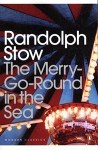
Randolph Stow, The merry-go-round in the sea (#BookReview)

Randolph Stow, The merry-go-round in the sea

Randolph Stow is a writer I’ve been meaning to read for the longest time – since, would you believe, the 1970s? Embarrassing, really, given his significance. My plan had always been to read his Miles Franklin award-winning novel To the islands first. However, the first I actually bought was The merry-go-round in the sea – back in 2009 when it was re-released as a $10 Penguin classic. It’s taken me until now to read it – and I read it with my reading group, which made it an extra special experience.

BEWARE SPOILERS, albeit this is a classic with minimal plot so, you know …

The merry-go-round in the sea was Stow’s fourth novel, published in 1965 when he was 30 years old. It has a strong autobiographical basis, but is, by definition, fiction. It is essentially a coming-of-age story about a young Western Australian boy, Rob, who, like Stow, was born in Geraldton in 1935. It covers eight years of his life from 1941, when his favourite cousin, the 21-year-old Rick, leaves to fight in World War 2, to 1949, when Rob is 14-years-old and the now-returned Rick is about to leave again, this time to live in London. The plot is not a particularly dramatic one, but rather a lot happens nonetheless.

It all starts in 1941 with Rob and his family moving (“evacuating” is the strange word his mother uses) to a family station in the country, due to fears of Japanese invasion. There Rob enjoys the life of a “bush kid” and is unhappy to find, upon his return to town, that he is really a “townie”. Meanwhile, Rick is at war, ending up a POW on the Thai-Burma railway. His experience is told in three or four brief but vivid digressions from the narrative’s main focus on Rob’s life. We are told enough to prepare us for a changed Rick on his return. In the second part of the novel, the focus is on Rob’s growing up, on his gradual loss of childish innocence, and on Rick’s struggles to come to terms with his life after his experience of war. Nothing is the same for Rick, and Rob worries about his idol.

Now, this is a 400-page novel (in my edition, anyhow) and can be discussed from multiple perspectives, so I’m going to hone in on a couple that most interested me.

One of these is heralded by the book’s structure, by the fact that, although the protagonist, the person through whom we “see” most of the book, is young Rob, the book’s two parts are named for Rick, “1 Rick Away 1941-1945”, and “2 Rick Home 1945-1949.” Superficially, this can be explained by the fact that Rick is a major focus of Rob’s interest. However, I’d argue there’s something more here, that these two characters represent conflicting forces – a duality – within Randolph Stow himself, one being his love of place, of the land and country he grew up in, and the other being his discomfort with that same place and his need to get away, which indeed he did. This duality was, as I recollect, discussed by Gabrielle Carey in her book Moving among strangers: Randolph Stow and my family (my review).

So … through Rob’s third person eyes, Stow writes gloriously, authentically, about Geraldton and the surrounding areas in which he grew up. The language is lyrical, poetic, conveying an emotional intensity in addition to pure description:

By rock pools and creeks the delicate-petalled wild hibiscus opened, and the gold-dust of the wattles floated on water. Wild duck were about, and in trees and in fox-holes by water he looked for the nests, staring in at the grey-white eggs but touching nothing. Climbing a York gum, he was startled when a grey broken-off stump suddenly opened golden eyes at him. He gazed into the angry day-dazzled eyes of the nesting frogmouth and felt he had witnessed a metamorphosis.

There’s repetition of colours, plants, and landforms, but rather than becoming tedious they convey a deep familiarity with and love of place – and make the novel sing.

However, through Rick’s eyes – albeit eyes damaged by his war experience – we see a more conflicted, and arguably more adult, understanding of this place. At the end, he explains his decision to leave to Rob:

‘Look, kid,’ Rick said, ‘I’ve outgrown you…

[…]

‘I can’t stand,’ Rick said, ‘this – ah, this arrogant, mediocrity. The shoddiness and wowserism and the smug wild-boyos in the bars. And the unspeakable bloody boredom of being in a country that keeps up a sort of chorus. Relax, mate, relax, don’t make the place too hot. Relax, you bastard, before you get clobbered.’

Stow wasn’t the only intellectual to leave Australia in the 1960s. Others include Germaine Greer, Clive Robertson, Barry Humphries and Robert Hughes.

My other issue is trickier to discuss: it concerns Stow’s references to Indigenous people in the novel. It’s complicated to tease out, and to do so properly would require a re-read, but I can’t leave the novel without saying something about it, given our heightened awareness these days. As I’ve already said, the book was written in 1965 about the 1940s. In 1957, Stow had spent three months as a storeman at the Forrest River Aboriginal mission in the Kimberleys. His biographer, Suzanne Falkiner, argued (on ABC RN Late Night Live) that this experience created some conflict for him:

‘[His family] had achieved a lot: they had been colonists in America, in the West Indies, the earliest settlers in that region of Australia,’ she says. ‘But as he grew older and as he got to know Aborigines, having worked in the Forrest River mission, I think the conflict became a real source of pain for him.’

I believe that Stow tried to convey some of this in The merry-go-round in the sea. Several times, Rob quotes his family’s racist attitudes, including here:

Rob did not mind the blackn*****s, some of the older ones he rather admired. But his mother was furious because Nan [Rob’s sister] was sitting next to a blackn****r in school. ‘They’re dirty,’ said his mother. ‘They all have bugs in their hair.’

It was funny about blackn*****s. They were Australian. They were more Australian than Rob was, and he was fifth generation. And yet somehow they were not Australian. His world was not one world.*

In other parts of the novel, he describes seeing Aboriginal art in caves, and ponders the people who made them. Not all are so sensitive or interested, however. When he’s taunted at school with having “n****r blood”, he reacts defensively, but when he’s a little older, and schoolfriends once again express racist attitudes, he responds:

‘I like them,’ the boy said, ‘There’s some nice boong kids at school.’

A poor choice of words, but at least Rob stands up for his beliefs. If we take Rob as Stow’s mouthpiece, then it’s pretty clear that Stow is conveying in this novel some disquiet about prevailing attitudes to Australia’s Indigenous people.

There is so much more to explore in this book – including the motif of the merry-go-round itself. As a young boy Rob had been shattered by the discovery of “time and change”, leading him to cling to the idea of a merry-go-round, which revolves and revolves around a solid centre, his family, never changing. By the end, however, with Rick about to leave, he realises that this too is illusion, that the world is not quite as he’d seen it. A bittersweet ending – one that must come to us all at some time!

Several bloggers have posted on this novel in the last few years, including Lisa (ANZ Litlovers) and Kim (Reading Matters), and offer additional perspectives to mine.

Randolph Stow
The merry-go-round in the sea
Camberwell: Penguin Books, 2009
400pp.
ISBN: 9780143202745

* I have blanked out this word to, hopefully, deflect the wrong sort of “hits” on this blog.

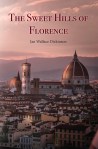
Jan Wallace Dickinson, The sweet hills of Florence (#BookReview)

Jan Wallace Dickinson, The sweet hills of FlorenceThere are several reasons why I enjoyed Jan Wallace Dickinson’s historical novel The sweet hills of Florence, the first being Florence itself. I fell in love with Italy in Florence. Brunelleschi’s dome, Giotto’s belltower, the Uffizi and all the other gorgeous places of art and architecture, not to mention the food, combined to capture my heart. It was the first foreign place to do so, and so remains today a special memory. Dickinson, who has apparently lived and worked in Italy for many years, clearly loves Florence too, because it is described in this book with such love.

However, that’s not the only reason for liking this book. Another is the history. I’ve read many, many novels set during the second world war, but not many set in Italy, let alone in Florence. When I visited Florence way back in 1980, it was the art that drew me. I knew very little of its war history, and I don’t recollect its being much on display. Dickinson, though, tells a fascinating story, one that captures both the horror and chaos, the brutality and bravery of war, and particularly of Italy’s war, well.

In some ways, the book could be described as historical romance, except that it doesn’t fit the bodice-ripper formula that I, of admittedly limited experience, see as the definition of this historical fiction sub-genre. What I’m saying in other words, is that in this book, although the love story underpins the plot, it doesn’t drive it in a suspenseful way. This enables Dickinson to explore the main relationship in a more subtle, dare I say, more nuanced way – and to focus on other themes as well.

The story, then, concerns two cousins, Enrico and Annabelle, who are in their late teens to early twenties, during the period of war – 1941 to 1945 – covered by the book. It’s clear from the beginning that Annabelle loves Enrico, and it doesn’t take long before we realise her love is reciprocated. The story follows their lives as partisans, with the Giustizia e Libertà movement within the Italian resistance movement. It’s a story of love, loyalty and camaraderie, but also of courage, deprivation, brutality, and chaos. Dickinson writes this convincingly, though I must say that all the names and places sometimes made my head spin! Here are a couple of examples of her descriptions, describing the German occupation of Florence:

There was no shortage of good citizens ready to settle a score by denouncing someone to Major Charity. The war lifted a rock and from under it, unimaginable creatures emerged, creatures who could not survive in the sunlight, who could thrive only in the dank shady corners of a civil war.

AND

This was the real Florence, the Florence of sobbing and wailing and tearing of hair, not the painted and decorated Florence put on show by the authorities to distract the popular, like the dance of a painted harlot before an audience of terminally ill patients in a madhouse.

Another aspect of the book which made it interesting reading is its structure. The novel is divided into 6 parts, and flips between war-time and the 2000s (up to 2008). The main war action is told chronologically through the middle parts of the novel, while at the beginning and end, we alternate somewhat between past and present. Again, this structure forces us to focus on the characters and their development, on the ideas and themes, rather than the plot.

There’s also paralleling of Annabelle’s love for Enrico, with Clara Petacci’s love for Benito Mussolini. I enjoyed this too. Dickinson spends some time describing Clara and Ben’s relationship. In her Acknowledgements she describes them as “fictionalised characters constructed from my interpretation of diaries, reports and histories.” Clara and Ben’s story serves a few purposes in the novel besides being a focus for Annabelle’s thinking about love. It humanises the two characters, for a start; it encourages us to consider the complexities of their relationship; and it makes the manner of their deaths all the more shocking.

We have no choice, do we?

In the end though, the ideas and themes were what I most enjoyed about the book, particularly those regarding the brutality of war and the lessons learnt or, to be more precise, not learnt. Dickinson makes very clear several times through the novel that there are no saints in war – and that Enrico and Annabelle themselves were capable not only of “justifiable” killing but of more brutal acts:

We cross a line. We decide killing os justified. We have no choice, do we? After that, nothing is taboo. Nothing is unthinkable. We are Freedom Fighters. We are heroes. We have rights on our side. Then wars end. We sleep and try to forget. But beneath it all we are still killers. We stand on the other side of the line. (from Annabelle’s diary)

Dickinson’s main theme, though, concerns the lessons of war. Annabelle’s reaction on the brutal death of Mussolini and Clara, and the subsequent way the bodies were treated, was

I wept for what we have become. Have we learned nothing?

Then, late in the novel, she makes a similar comment, quoting a partisan colleague who’d said:

“Italians … do not learn from the past. They live in the continuous present.”

There were times when I wondered about the reason for the epic nature of this novel, for its spanning so many decades and for, something I haven’t mentioned before, also spanning two countries, Italy and Australia to which Enrico went after the war. Dickinson, through Annabelle and her beloved niece Delia, consider the differences between Italy and Australia, seeing, for example, the former as kinder and the latter as more free. I’m not sure I agreed with all their conclusions, and I’m not sure what these discussions added to the novel, but …

… what did add to the novel were the references to the leering Berlusconi’s re-election in 2008 despite his increasingly fascist tendencies. Seen by a horrified Delia and Annabelle as “a leap back into the past”, it leaves us with, indeed, the question, “have we learned nothing?” The sweet hills of Florence, then, is an engrossing read if you like a strong story about “real” characters, that asks the important questions.

Lisa (ANZLitLovers) also enjoyed this book – I promise I hadn’t read her review when I wrote my introduction, which is suspiciously similar!! I decided not to change it.

AWW Badge 2018Jan Wallace Dickinson
The sweet hills of Florence
Melbourne: Hybrid Publishers, 2018
401pp.
ISBN: 9781925272840

Review copy courtesy Hybrid Publishers.

Elizabeth Jolley, Poppy seed and sesame rings (#Review)

In her introduction to Learning to dance: Elizabeth Jolley, her life and work, a book that was intended to comprise only non-fiction to create a sort of autobiography, literary agent Carolyn Lurie wrote that Jolley would sometimes “draw so directly on her life” for her stories “that it seemed illuminating to include a small selection of her fiction.” From what I know of Jolley, this seems like a sensible decision.

For example, in “Poppy seed and sesame rings”, the first person narrator says:

I often heard Mother crying in the night. When I called out my father always explained in a soft voice, ‘She is homesick, that is all.’ So I always knew what was the matter.

Compare this with the opening piece in another compilation, Central mischief: Elizabeth Jolley on writing, her past and her self, which contains only non-fiction. The piece is titled “What sins to me unknown dipped me in ink”, and in it Jolley writes that “because of her marriage, my mother was an exile. I remember that her homesickness lasted throughout her life.”

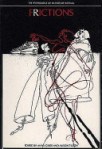
Anna Gibbs, FrictionsHowever, before I discuss the story itself, a little about its background. Jolley, born in 1923, started writing novels and short stories very early in her life. Although her first book wasn’t published until 1976, she’d written her first novel around 1939, and had had short stories published by the 1960s. As far as I can tell from a list of her papers at the University of Western Australia, the story “Poppy seed and sesame rings” was written around 1965, and was initially titled “Pumpernickl, poppy seed and sesame rings”. So, it was an early story, and has been published at least three times, twice in anthologies and once in a collection of her stories, and has also been broadcast on radio:

  • Frictions: an anthology of fiction by women, edited by Anna Gibbs, Alison Tilson (1982) (contains three Jolley stories)
  • The Oxford book of Australian stories, edited by Michael Wilding (1994)
  • Fellow passengers: collected stories: Elizabeth Jolley, 1923-2007 (1997)
  • Read on BBC Radio 4, by Kerrie Fox, 26 Oct 1997

I wonder how many of Jolley’s other stories have had such exposure?

And now, the story. As I said above, it’s clearly autobiographically based, but of course that doesn’t mean that what happens in the story happened in real life. It simply means that the story’s broad outline and main themes draw from Jolley’s experience of being the daughter of an Austrian immigrant mother. In the story, the family, comprising her father, mother, aunt and grandmother, has migrated to the “New Country” from an unidentified Germanic country. In reality, Jolley was born in Birmingham to an English father and an Austrian immigrant mother.

The main theme of the book is the immigrant experience, and particularly the mother’s homesickness. Initially, the mother tries to make it work. She is generous with their shop’s customers in a desire “to be accepted”, and she feels supported by the company of her sister and mother. However, gradually things deteriorate. The sister and mother die; her daughter (our first-person narrator) leaves home for nurse training; she continues to miss her favourite foods like “poppy seed bread and sesame rings”; and the shop struggles to make a living so her help is not needed. Her life becomes a lonely one, spent largely “in the dingy room at the back.” She becomes more set in her old ways and attitudes while the daughter, finding her own way in the world, feels less and less inclined to visit. It’s a common story in migrant families.

There are other things in this story, though, besides these ideas of exile and loneliness, that give it the Jolley imprint. The story starts with the sudden death of the narrator’s aunt while the two are visiting an Art Gallery and Museum. The daughter describes her aunt’s death on the steps of the museum:

I tried to pull her from the step but she only sighed and, making no attempt to get up, she simply leaned forward and died. I ran straight home leaving her there with the pigeons and the coming darkness.

‘Tante Bertl wanted to walk,’ I told them so they did not expect her for a time.

This sort of shocking moral failure – plainly stated, and often never discovered – is not uncommon in Jolley, and reflects her acknowledgement of our darker natures. It’s part of the surprise of her work – and so at odds with her appearance! Such a sweet-looking, unassuming little old lady in a cardigan, she was!

There’s also a hint of lesbian attraction. The daughter brings a friend, Marion, home to cheer up her mother, a “friend” she “hardly knew” and “had chosen … because she looked healthy and very clean and the nearest one to speak to in the hospital administration department.” The visit goes badly, due to the mother’s refusal to be welcoming to the visitor. Afterwards, the daughter finds herself thinking about Marion:

Upstairs I sat at my table and tried to read and write and study but I kept writing Marion’s name everywhere.

I thought about her. I kept thinking about her without being able to do anything about it.

These thoughts cause her to digress from her nursing study to write from her heart “about quiet lakes and deep pools which have no reflection and no memory”, to express the “unknown store-house of feelings” she had found within herself. There’s a double whammy here, it seems – a discovery of attraction and also, perhaps, of the power of writing. No wonder this early story has had several outings.

Read for Lisa’s (ANZLitLovers) Elizabeth Jolley Week.

AWW Badge 2018Elizabeth Jolley
“Poppy seed and sesame rings”
in The Oxford book of Australia short stories (ed. Michael Wilding)
Melbourne: Oxford University Press, 1994
pp. 177-183
ISBN: 9780195536102

Elizabeth Jolley, The orchard thieves (#BookReview)

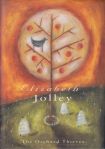
Elizabeth Jolley, The orchard thievesElizabeth Jolley’s twelfth novel, The orchard thieves, is a little different from most of the other Jolleys I’ve read. It’s a little less black, a little less about alienation, but it’s unmistakably Jolley in style and preoccupations.

By preoccupations, I mean her interest in family relationships and dynamics – and, related to that, her humane, but clear-eyed, understanding of human nature. The orchard thieves was written when Jolley was in her early seventies, and revolves around a grandmother contemplating the meaning of family and children. It feels very much like the meditations a woman of her age would be having – which is not to suggest that the story itself is autobiography. Still, I can see once again, why Helen Garner loves Jolley (and doesn’t love Thea Astley). Jolley and Garner both draw from their lives, albeit Garner more so, and both focus on life’s interior challenges. They also both do so in spare but loaded writing.

The orchard thieves, then, has a minimal plot, and no named characters. Told third person from the grandmother’s perspective, it concerns a family whose members are identified by their roles: the grandmother, the grandsons who belong to the youngest sister, the granddaughter who belongs to the middle sister, and the aunt (who also happens to be the eldest sister who lives with the grandmother). There is also the son-in-law (the youngest sister’s husband.) The novel (novella, really) is constructed in three parts, and the plot, such as it is, revolves around the return from London of the middle sister with her daughter.

So, what is it all about? It’s about the family at a point in time, from the grandmother’s point of view. It’s about parents and children, about love and worry, and about age and wisdom – not that the grandmother pontificates her wisdom or is even really sure that she has it. She worries about the aunt, her eldest unmarried daughter, fearing she’s lonely. She worries about the grandsons, their safety now and their future. And she worries about the middle sister’s health and happiness when she returns home – for how long? – clearly pregnant but saying nothing. It is this sister’s return that ripples the surface of the family’s finely balanced relationships.

Jolley prepares us for this “rippling” with an initially mysterious Preface, which commences

‘If you have the house,’ the middle sister said to the aunt, the eldest sister, ‘if you have the house you’ll have to pay us each one-third of the current market price. One-third each of the value of the place.’

We immediately think of course that someone has died, and then, as the book commences we realise that the owner of the house, the grandmother, has not died. We then wonder if she will die, but Jolley’s purpose is more subtle. This is not an inheritance-fight plot. Instead, the conversation tells something about the sisters’ characters. It also suggests underlying tensions, and introduces some ideas which, when they re-appear in their correct chronological sequence, become clear.

This is not a depressing book. The tensions are real, but the grandmother’s hard-won wisdom re-stabilises without offering pat solutions – and it’s all done in a quietly meditative, but by no means dry, tone. I found it absolutely delicious reading, with its Jolleyesque references to pear trees and birds, orchards and gardens, music and myths, sexuality and lesbianism; its sly humour; and, dare I say it, its relevance to my own musings. I haven’t reached my seventies yet, but am soon to join the world of grandmas and am certainly the mother of adult children. Jolley captures the concerns, the lessons learnt and still being learnt – about raising children, about relating to adult children, about being a grandmother, and above all about love – so economically but with sensitivity and insight.

Here’s a scene, early in the book:

Alone on the grey rug in the deeply shaded garden, the grandmother began to understand that it was not until she was a grandmother herself that she, because of her own love for her grandsons, realised how much she, as a small child, had been loved. And the pity was that it was too late to acknowledge this to anyone. It was no longer possible to offer, unsolicited, a kiss, a caress or a tender phrase backwards, as it were, over her shoulder. Recalling momentarily the pain of a telephone reprimand, well deserved she was sure, and only one of many, the grandmother came to a very real truth, which was that the great love which holds the mother to the child does not necessarily travel in the other direction, from the child to the mother. She understood also that she would not be the only person in the world to have discovered this.

Such spare writing. With the exception of the descriptions in the opening phrase – “grey” and “deeply shaded” – which set the melancholic, reflective tone, the language is direct and largely unadorned, and powerful as a result.

There are several references to myths and legends, which the grandmother believes “were attempts to explain happenings which were too painful and hard for human endurance.” Wanting to share these with the grandsons, she starts to tell them the story of Ceres/Demeter and her daughter Persephone/Proserpina, but it gets all too dark and boring for them, so they

simply slipped from the grandmother’s hands and disappeared with a slight rustling of dry leaves into the surrounding bushes.

You can just see it can’t you? Elsewhere, this gorgeous elegant language is subverted when the grandmother, walking with her grandsons, uses their language:

The grandmother hoped that the river paths unlike the roads and houses and the trolleys in the supermarket, were not crap. She hoped they were not crappy crap. She hoped that the aunt’s game and the secret paths, the rocks and the rock pools along the river beaches would remain uncrapped for as long as possible.

Oh, I could go on, sharing more and more. There’s so much more to say about, for example, the imagination and how it can lead you to worry and worry, about mothers’ regrets for things they could have done differently, about the time when children need to grow out of thieving orchards, about the reality that the

little rogues and thieves … would, during their lives, do something perfect and noble and wonderful and something absolutely appalling.

And appalling is pretty much how we could describe the middle sister’s behaviour when she arrives!

Helen Garner concludes her tribute to Jolley*, “To my dear Lift-rat” (which she wrote after Jolley had succumbed to dementia), with this:

But it was too late for me to say goodbye, or to thank her for the last sentence of The Orchard Thieves, where an old woman points out comfortingly to her daughter that the difference between a bad haircut and a good one is only a week.

Garner’s right. It’s somehow the perfect, grounding ending for a book which is about both the importance of “the unseen things, the real feelings and the deep needs” and the business of “push[ing] on with living.” It’s a timeless book.

Read for Lisa’s (ANZLitLovers) Elizabeth Jolley Week.

* You can read Garner’s essay on-line and in her collection Everywhere I look (my review).

AWW Badge 2018Elizabeth Jolley
The orchard thieves
Ringwood: Viking, 1995
134pp.
ISBN: 9780670865505

Monday musings on Australian literature: Australian ghostwriters

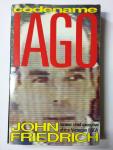
John Friedrich, Codename IagoIf you’ve read my blog recently, you’ll know exactly what inspired this post. Yes, Richard Flanagan’s novel First person (my review), which was inspired by his experience of ghostwriting Australian fraudster John Friedrich’s memoir. The book was called Codename Iago.

You probably all know what a ghostwriter is, but just to make sure, here’s the definition from the editors4you blog:

A ghostwriter is a writer who writes books, stories, blogs, magazine articles, or any other written content that will officially be attributed to another person – the credited author.

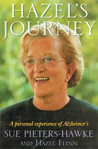
So, how much do you know about Australia’s ghost-writers? Did you know, for example, that crime-fiction bestseller Michael Robotham once made his living as a ghostwriter, or that published author Libby Harkness currently spends more time on ghostwriting than her “own” writing? Did you know that Anh Do’s best-selling memoir started out with a ghostwritten manuscript? Or that the two biographies of Hazel Hawke, Hazel: My mother’s story and Hazel’s journey, were written by her daughter, Sue Pieters-Hawke, with the assistance of ghostwriter Hazel Flynn. As I started to delve into this shadowy – ghostly, let us say – area, I uncovered a fascinating world of professional writers who help people who have stories to tell to, well, tell them.

My focus here is Australia, for obvious reasons, but I’ll be including information from further afield, starting with an article in The Guardian from 2014. Titled “Bestselling ghostwriter reveals the secret world of the author for hire”, it’s about English ghostwriter Andrew Crofts who at the time had written 80 titles over 40 years, and sold some 10 million copies, but mostly under “more famous names”. The article, which you can read at the link, names many of them. That year, he published his “own” book, Confessions of a ghostwriter.

Rober McCrum, the author of The Guardian article, says that the term

was coined by an American, Christy Walsh, who set up the Christy Walsh Syndicate in 1921 to exploit the literary output of America’s sporting heroes. Walsh not only commissioned his ghosts, he imposed a strict code of conduct on their pallid lives. Rule one: “Don’t insult the intelligence of the public by claiming these men write their own stuff.”

American ghostwriter David Kohn was interviewed by the ABC Book Show in 2009. He said it suited introverts like him. He doesn’t have to go to book signings or do promotional tours!

Not just memoirs

McCrum notes, as we probably would all guess, that the types of works best known for being ghostwritten are the “misery memoir, sporting lives and celebrity autobiography”. We have examples of all of these in Australia.

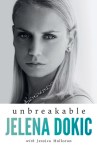
Jelena Dokic, UnbreakableSporting lives, for example, to pluck out just a few Australian examples, include footballer Wayne Carey’s The truth hurts, which was cowritten with Charles Happell who is credited on the cover; cricketer Brad Haddin’s My family’s keeper which Hazel Flynn “helped” write though she is not on the cover; and tennis player Jelena Dokic’s Unbeatable (my report) which was cowritten with Jessica Halloran who is credited on the cover.

However, another area well known for being ghostwritten are the “how-to” books, including cookbooks. Google “ghostwritten cookbook” and you’ll find articles galore. And, apparently, as I found on a comprehensive American website on ghost-writing, medical ghostwriting is a big thing. I also found references to ghostwriters doing fiction, too. Fascinating, eh?

Crediting ghostwriters

Sue Pieters-Hawke, Hazel's Journey

Hazel Flynn credited on the cover

Not all ghostwriters are credited. Some appear on title pages, or even on covers, and some might be mentioned in acknowledgements (as happened with Anh Do’s book), but others are not mentioned at all. Where credited, their names are usually preceded by “and” or “with” or “as told to” (with the ghostwriter’s name less prominent to indicate the “lesser” role). As the editors4you blog says, credit depends on the nature of the ghostwriter’s contract with their client. They note that the client can ask the ghostwriter to sign a nondisclosure contract forbidding them from revealing their role. This is fair enough I suppose. It’s a fee-for-service business deal. However, as a reader, I’m another sort of client of that service, and I’m not sure I like the idea that I don’t know who really wrote, or contributed significantly, to the work I’m reading.

Reading around the ‘net, I found, not surprisingly, quite a bit of sensitivity about this issue. Read, for example, this article about Gwyneth Paltrow’s cookbooks. There’s sure to be ego involved, but also, just plain lack of clarity.

Finally, some Australian ghostwriters

Here are three of Australia’s “top ghostwriters”, from the 16 in this article):

  • Michael Collins has had various jobs, including undercover cop and photo-journalist before turning to full-time writing around 20 years ago. He has written in several genres, he writes on his blog, including self-help, fiction, biographies and memoirs, though I’m not sure whether all these are ghostwritten. One of his recent books is Carolyn Wilkinson’s Blood on the wire about prison escapee Daniel Heiss.
  • Libby Harkness has been ghostwriting in several non-fiction areas since 1992, and in 2013 was a guest at the first international ghostwriters conference in California, as she writes in this blog post for the NSW Writers Centre. Her most recent book, for which she is credited on the book’s cover, is Simon Gillard’s Life sentence: a policy officer’s battle with PTSD.
  • John Harman is English-born but West Australian-based now it seems. He has written crime fiction, television and film scripts as himself. However, ghostwriting is a major part of his work. On his website, he says that he has ghostwritten “a number of books, from popular romantic fiction to corporate histories, biographies and autobiographies.” His most recent ghostwritten book is Arthur Bancroft’s WW2 memoir, Arthur’s war, on which Harman is identified on the cover.

Many of the ghostwritten books I found were published by the big publishers like Allen & Unwin, HarperCollins, and Penguin, indicating it’s a well-entrenched segment of the industry.

Are you aware of having read ghostwritten books? Does it matter to you whether the book you read has been ghostwritten or not – and do you like to know?

Richard Flanagan, First person (#BookReview)

Richard Flanagan, First PersonRichard Flanagan’s latest novel First person, which I did with my reading group, is a challenge to read. By this I don’t mean it’s “hard” to read but that it requires careful attention to pin down. On the surface, its subject is straightforward. It’s the story of struggling as-yet-unpublished writer, Kif Kehlmann, who accepts the job of ghost-writing a memoir for a con-man, Siegried Heidl. It’s autobiographically-based in that Richard Flanagan himself did just this for the fraudster or imposter John Friedrich, who headed the National Safety Council of Australia. However, the novel takes off in directions far removed from Flanagan’s life. At least, so I believe, though as Kif very quickly learns, how do we know what to believe! Who to trust!?

Anyhow, why write this now, 25 or more years after the events? Well, the title might give you a hint, as well as the subject matter … but, it is a tricksy book, starting from its very nature as a pseudo-memoir about a ghost-written memoir. If you know Flanagan, you’ll know he’s setting himself – and us – up for quite a ride. It’s a complicated ride, and perhaps got a little sidetracked at times, but is nonetheless fascinating …

“ceaselessly self-making”

The story describes, in Kif’s first person (ha!) voice, his experience of ghostwriting Heidl’s memoir and its aftermath. The ghostwriting task doesn’t go well, with Heidl evading Kif’s attempts to obtain the information he needs. Flanagan describes this with the wonderfully evocative language that we love reading him for. “I may as well have used a pair of scissors to pick up spilt mercury”, he writes of his early attempts to get some facts. He tries a different method: ask some direct questions, write up his understanding of the answers, and then check his version with Heidl:

The more outlandish, the less related my story was to the few, vague facts he had outlined, the more ludicrous I was, the more pleased Heidl seemed, and the more he would claim that it accorded exactly with his own memory.

After which, apparently, Heidl would contact 60 Minutes or some other program or newspaper, to line up “paid interviews about himself on the basis of such inventions.”

You can perhaps see where this is going in terms of my Why now question. It’s that Heidl (Friedrich) was continuously reinventing himself. Sound familiar? Heidl lived “in a constant state of transformation”. The end result, as Kif sees it, is that Heidl, “the great story maker … was everywhere present in his creations but nowhere visible”. He was not, as Kif tells it, “so much a self-made man as a man ceaselessly self-making”. This narcissism, this solipsistic way of being in the world, this mania for self-invention, makes this book relevant now.

“Trust is the oil that greases the machine of the world”

The other main issue relating to the Why Now question concerns trust. Heidl was a con-man, which means of course that he played on people’s trust. And my, he did it with bells on. He managed to defraud banks of $700 million by, for example, convincing them that he had a fleet of shipping containers (CIRILs) full of the technology and equipment required for responding to disasters. Heidl says, continuing the heading quote above:

Even people we hate we trust. That’s how it is. And, amazingly, mostly it works. The bankers trusted that the CIRILs were real, that ASO was real, until finally it was real. Like you trust the mechanic did service the car or that the bank is honest; like you trust that the people who run the world know what they’re doing …

Every day now, every single day it seems, we are confronted with organisations and individuals failing to live up to our trust – the churches, the banks, the police, the politicians. This is why, it’s patently obvious, Flanagan wrote this story now.

The novel, then, is about what happens when we buy into this world of make-believe. And it’s not pretty. In the book it is most vividly exposed, at the personal level anyhow, through what happens to Kif during and after his writing of the book. The more time he spends with Heidl, the more he finds himself, against his will, being drawn into Heidl’s world and starting to “think like Heidl”, until finally “all that divided him from me evaporated.” You’ll have to read the book yourself, if you haven’t already, to see how this plays out.

“The novel is dead”

The book is also an apologia for fiction. Like Flanagan, Kif was a struggling novelist when he accepted the ghost-writing job. It’s something that Heidl regularly throws back in his face, whenever Kif questions his truths. Why is a fiction writer, Heidl asks him, concerned about truth and facts when what he does in fact is lie? Hmm … I’d tell him there’s lying and there’s story, and that the former obfuscates while the latter illuminates, but he probably wouldn’t believe me!

Near the end, an entertaining (there’s much humour in the book in fact) but significant set piece occurs when, visiting New York decades later, Kif meets a young writer. She’s in her late twenties and has just published the third volume of her autobiography. The novel, she says, “as a mode of narrative“, is dead:

It’s fake, inventing stories as if they explain things … Just the thought of a fabricated character doing fabricated things in a fabricated story makes me want to gag […] Everyone wants to be the first person. Autobiography is all we have.

Kif says he doesn’t agree … and nor does Flanagan, which he demonstrates most obviously through the very act of writing this story as a novel not a memoir. Fiction, he shows, facilitates the exploration of alternatives, the asking of questions.

Overall, I loved Flanagan’s exploration of our current mania for self and of the issues surrounding truth and our desire (need, even) to trust. I also enjoyed Flanagan’s language. But when I got to the end, I couldn’t make it fully cohere. This is partly to do with the breadth of targets and topics, of which I’ve only touched the surface here. It felt at times that Flanagan had a few points to make – scores to settle even – regarding, for example, publishing and writing in Australia. These confused the main thrust a little – though maybe I have conflated Kif with his author! Finally, the second part of the novel, post Heidl’s death, could have been tighter. Kif’s life diverges significantly from that of his model, Flanagan, and is explored at some length. It’s perfectly logically developed, but the “message” started to feel a little laboured.

Nonetheless, First person is well worth reading – for its (novelistic) insight into that time in Flanagan’s life not to mention into a fascinating episode in Australia’s history; for its intelligent exploration of some critical issues that don’t seem to be going away; and for Flanagan’s marvellous prose. I should probably read it again.

Lisa (ANZLitLovers) loved this book.

Richard Flanagan
First person
North Sydney: Knopf, 2017
392pp.
ISBN: 9780143787242