Paddy O’Reilly, Other houses (#BookReview)

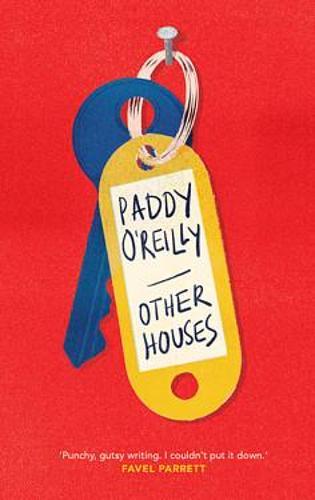
It’s not totally coincidental that this week’s Monday Musings post was about a publisher of realist or social novels, that is, of novels which aim to explore social problems of their time. My reading group’s March book, Paddy O’Reilly’s Other houses, belongs to this tradition. I have been wanting to read it since it was published in 2022.

Searches of the Internet, including of Wikipedia, retrieve various definitions of the social novel (also called social problem or social protest or social justice novel), but they essentially agree that these are works of fiction which tackle some sort of inequality, prejudice, or injustice, through the experiences of their characters, and that their intention is to encourage social change. In Other houses, O’Reilly interrogates the idea of social mobility. Her protagonists, Lily and Janks, are “battlers“, working class people who struggle payday to payday, but they want more for their now 15-year-old daughter, Jewelee, who had started to run wild, heading down the path of delinquency.

“Good people live here” (Lily)

So, they move from their working class suburb to one they “could barely afford”, and enrol Jewelee in “a good school”. Jewelee might now behave as though she’s “too good” for her “bogan” parents, but they believe it was worth it. The problem is, Janks, now working in a food-factory, has mysteriously disappeared. The novel opens with Lily driving through her old neighbourhood at night, hoping to find Janks there. “Good people live here”, she says. “They try”.

From here the novel is told in the alternating first person voices of Lily and Janks, with Lily’s story occupying the greater part of the narrative. Having worked as a supermarket cashier in her old home, she is now a cleaner, which is where the title comes in. The novel is beautifully constructed around the cleaning jobs Lily does with her cleaning partner, the older, and wearing out, Shannon. While they clean houses, Lily reflects on her current and past lives, on the “entitled” Jewelee, on the lives and aspirations of the people they clean for, all the while worrying about Janks, and trying to find him. She prints “have you seen” leaflets and scours all the places he might possibly be. She does not believe he has deserted her willingly.

And, we know that he hasn’t. Having borrowed money from a bikie gang, he’d been “snatched” off the street, and coerced into paying off the loan by doing a job for them. The novel’s plot comes from this: will Janks get the job done, without being caught, and be allowed to return safely to the life they are building? Many of us in the group called this book a page-turner, but some disagreed. The plot is too straightforward, they said. It doesn’t have the breath-catching twists and turns of a thriller. Others of us, however, define page-turners differently. Ours don’t require an edge-of-the-seat plot. Rather, they are books that compel us on, because of the characters, or the writing, or the ideas, or the plot, or any combination of these. What do you think?

“Things, world, wrong” (Shannon)

Anyhow, there is a plot – whether you see it as a page-turning one or not – and there is also lightness, despite the seriousness of the protagonists’ plight. Much of the lightness comes from the house-cleaning scenes. Lily and Shannon name the houses they clean, such as the House of Hands (with its profusion of chrome dirtied by sticky hands), the House of Doom (whose owners see the world as “blighted”), Horror House (inhabited by a hoarder), and Lily’s favourite, the House of Light (which lets the sun shine in). They share their thoughts about the inhabitants and the lives they know (or think) they lead. If anyone knows how we live, it’s likely to be cleaners, eh? Lily’s and Shannon’s perspectives – their observations, opinions and reflections on how others live – are what gives this book its real heart.

Lily speaks with the dignity of a worker, when she says:

We know things no one else knows about our clients. I sometimes pick up objects in the places we clean – a vase, a notebook, a scarf … I give them attention, these things that I believe hold meaning for someone … It’s my moment of saying what I can’t say to their faces. I respect what you hold dear, even when you’re rude to me or barely acknowledge I exist. (p. 30)

Meanwhile, the older Shannon has her own mantra for how things are going, says Lily:

Something has gone wrong in the world … Shannon uses it about the eating habits for the population, the number of appliances in the kitchens we clean, leaf blowers, hair straighteners, so-called superfoods, weird weather events, toilets that wash your bottom, plastic wrapping on fruit that already has its own natural wrapping, quiz shows where she disagrees with the answers, tap water sold in plastic bottles and so much more. (p. 29)

Most definitions of the social novel say “through the experiences of their characters”, and this is true here. Telling her story through the experiences of Lily, Shannon and Janks enables O’Reilly to show what she wants to explore, without being didactic. Through these authentic characters we come to see just what the much-touted upward social mobility really is, means, and feels like. We see Lily and Janks recognising that the poverty faced daily in their old working class suburb results in lives that are lived on the edge with little opportunity to improve one’s chances, but we also see that it’s not easy to simply transplant yourselves into a different life and, essentially, culture:

Tonight my water-stained ceiling and the creeping draught taunt me that although we’ve adjusted to living here, it might be because we brought things with us when we crossed: rental damp and rot, clothes that fall apart, bank accounts that bounce between payday and zero. (p. 74)

For Lily, Broadie feels like “home” and it’s where she returns to find a solution to the problem of the missing Janks.

Other houses is a slim and accessible book, but it offers no simple answers. Rather than support the comfortable view that upward social mobility is the answer to the problems posed by socioeconomic inequity, it asks us to consider instead, how do we overcome the problems caused by inequity – indeed, how do we remove inequity – without expecting people to give up everything they hold dear about where they come from? It’s a quietly provocative novel that speaks to one of the most urgent issues of our time.

Paddy O’Reilly
Other houses
South Melbourne: Affirm Press, 2022
245pp.
ISBN: 9781922626950

Monday musings on Australian literature: Forgotten writers 10, Ruby Mary Doyle

Unlike my last forgotten writer, Dulcie Deamer, today’s writer, though a prolific contributor to newspapers in her day, has slipped into the shadows. Neither Wikipedia nor the Australian dictionary of biography (ADB) contain articles for her, but the AustLit database does. As with many of my Forgotten Writers articles, I researched and posted a versions of this on the Australian Women Writers’ site.

Ruby Mary Doyle

Ruby Mary Doyle (1887-1943) wrote short stories and serialised novels, newspaper articles including travel and nature pieces, and plays, mostly publishing as Ruby Doyle or Ruby M. Doyle. Much of her writing was published in Fairfax’s weekly magazine, The Sydney Mail. By the 1930s she had, says AustLit, gained a reputation as a writer of some standing. She was also active in the Lyceum Club and the Pioneer Club in Sydney. And yet, there are no articles for her in Wikipedia or the Australian Dictionary of Biography.

Doyle was born on the 20 February 1887 in Gunnedah, New South Wales, to Joseph McCormick Doyle, a bank manager for the Commercial Bank, and Annie (née Hooke). She was the first of six children. In 1935, in an article titled “The making of the writer”, Doyle wrote of how she came to writing:

As a child, when I walked through the bush, well behind the family party, every tree seemed an enchanted castle. Birds, butterflies, flowers talked, and I understood them. Imagination — that blessed gift from the gods — had come to me from every side of my family, and finally led me, whether I would or not, into the realm of writing.

According to Kingston, of the Dungog Historical Society, her first published serial was The Dragon, which appeared in The Sydney Mail from 4 June 1913, and was later published in book form as The mystery of the hills. Promoting the book form, which was published in 1919, The World’s News wrote that:

Those who love a story which is thoroughly and typically Australian and of the country will enjoy this tale of love and adventure … The “mystery” we shall not, of course, say anything about, except that it has to do with men who defy the law and have a chief, who is a man of importance. There are several love stories, and they have the usual course, and there is quite a fund of information as to how we Australians live in the country, and how we manage to enjoy ourselves there. 

This little piece says much about how Australia saw itself. “How we manage to enjoy ourselves there [ie “in the country”]” suggests that Australia was well on the way to urbanisation, but fascinated by its bush self.

Further stories and serialisations appeared, including The winning of Miriam Heron in The Sydney Mail in 1918, which was published in book form by Edwards Dunlop in 1924. Announcing this new serial in 1918, The Sydney Mail wrote:

She [Doyle] has already contributed to the ‘Mail,’ and has disclosed literary and dramatic ability of a high order. It is gratifying to note that she shows no disposition to ‘write herself out.’ On the contrary, ‘The Winning of Miriam Heron’ reveals that she has mastered the art of construction, and thus gives her readers a better chance than previously to fully appreciate her literary powers.

From 1924 to 1926, Ruby travelled overseas a few times – to the United Kingdom, the continent, Canada and America – during which time she regularly submitted travel articles to the Dungog Chronicle, which, according to that paper, “were reprinted in many country papers throughout the State.”

Doyle wrote for local papers through the 1920s and 1930s. AustLit lists over 30 works of hers published over this time. She also tried her hand at playwriting. Kingston writes that her play The Family Tree came second in a competition at the Independent Theatre, Sydney, in 1933, and that the following year, The Man from Murrumbidgee, was produced at the Kursaal Theatre, also in Sydney. I believe these are the same play, given The Man from Murrumbidgee is about a status-seeking wife who tries to find “a worthy ancestor” on the family tree.

Doyle’s writing reflects the versatility of the working writer. Her short stories dealt largely with domestic subjects, while her serialised novels included historical stories about the colonial days, and romantic adventure stories. Her non-fiction focused particularly on nature, travel and local history, rather than on social or political commentary. Many of her local history pieces drew on her own family’s long history in the region, and include some delightful touches of humour. For example, she describes a pioneer family (hers it seems), coming out to Australia in 1828 with various things, including merino sheep and

rolls and rolls of beautiful silks, Mr. Hooke having an idea that he would be able to deal successfully in such merchandise. It proved only a supposition, and for the rest of her life Mrs Hooke had a marvellous collection of silks from which her dresses were made. 

There is also some recognition of the original people of the land. Writing in The Sydney Mail 1931 on the town of Gresford, she says that:

Most of the homes in the vicinity bear English and Welsh names — Norwood, Clevedon, Goulston, Camyr ‘Allyn, Caergule, Penshurst, Tre vallyn, etc. The river, named Paterson by the white man, was called Yimmang by the aborigines; one of our poets has written a very beautiful poem, “Ode to the Yimmang,” in which he extols its beauty.

Ruby Doyle was regularly written up in the local Dungog Chronicle, clearly being of interest to the community. She went to England, again, in 1935, planning to be away for two or three years. On 1 March, the Dungog Chronicle,reported on a farewell for this “gifted novelist”, and named Flora Eldershaw – one half of the M. Barnard Eldershaw collaboration – as a co-guest at the event. This suggests Doyle was known to the literati of her time. Doyle died in England in 1943, having never returned home again. A small obituary appeared in various local newspapers, including The Gloucester Advocate (see under Sources). The obituary noted her three published works, but also commented on her writing overall, commenting in particular that

a keen observer of nature, she had the gift of translating her thoughts on paper in an easy readable way.

The piece I posted for the Australian Women Writers Challenge is titled “The flame” (linked below). It is an intriguing story about a disgruntled wife, and invites – particularly from modern eyes – a variety of readings. I’d love to hear your thoughts.

Sources

  • Miss Ruby Doyle, The Gloucester Advocate, 12 January 1943 [Accessed: 14 January 2025]
  • Ruby Doyle, “The flame“, Sydney Mail, 24 July 1935 [Accessed: 3 February 2025]
  • Ruby M. DoyleAustLit [Accessed: 3 Feb 2025]
  • Maureen Kingston, “Was Ruby Doyle our first local travel writer?”, Dungog Chronicle, 25 August 2021 [Accessed via the NLA eResources service: 3 February 1924]

Andra Putnis, Stories my grandmothers didn’t tell me (#BookReview)

Cover

Local writer Andra Putnis’ book, Stories my grandmothers didn’t tell me: Two women’s journeys from war-torn Europe to a new life in Australia, was my reading group’s February read. Not only was it highly recommended by two members who had read it, but we were told the author would be happy to attend our meeting if we chose it. That was an offer too good to pass up, so we scheduled it.

We’ve had a few authors attend our meetings over the years, and it has always been worthwhile. Yes, it risks constraining discussion if people have any reservations about the book, but that has never really been a problem, either because there haven’t been serious reservations or because the value of having the author present has far outweighed any perceived impact on free discussion. In Putnis’ case, the story is so powerful and so well-told that it was unlikely there’d be any reservations that wouldn’t turn into questions about why or how she wrote her story.

“hidden pasts, still very much present”

Stories my grandmothers didn’t tell me is a family biography centring on the author’s two Latvian-born grandmothers, her maternal Grandma Milda (1913-1997) and paternal Nanna Aline (1924-2021). Teenage Aline was separated from her parents around 1942 to go serve in Germany’s war-time labour force. Meanwhile, in late 1944, with the war ending and the Soviet army looking set to return, 7-months pregnant Milda left Latvia with her parents and 18-month old son, enduring a tough, desperate journey. Both women ended up in UNRRA-managed Displaced Persons camps in Germany, where they experienced years of hardship before arriving in Australia in late 1949/1950. Milda, and later Aline, settled in Newcastle in the early 1950s, and met there through its tight-knit Latvian migrant community.

That’s the rough outline, but of course their stories – what they endured – are far more complicated, and Putnis wanted to understand. She told us that as a young child she had a sense of Latvia as almost an unreal fairytale place with beautiful forests, music and dancing, but she had also sensed, through family murmurs, a darker side, one that encompassed sadness and pain not only about Latvia but also about the family’s own story. She likened it to being on a boat, where you can see the surface but have no idea of what lies in the deeps below. She feared, as a granddaughter, that it wasn’t her place to go there, and worried about upsetting people. However, she did go there because she wanted to know and because Nanna Aline was willing. But, she said, she was always cognisant of just how far a granddaughter – even an older one – could, or should, go.

“moving between darkness and light”

I have read several hybrid war-related biography/memoirs written by family members, and this one is as good as any of them. This is not only because of the power of the story, and the honesty with which it is told – but also because of the structure Putnis uses. It is told chronologically, which is logical, but through the voices of Milda and Aline interspersed with those of others including, of course, Putnis’s own. I wanted to know about this and Putnis was happy to explain.

The structure was driven by Aline who told her story chronologically. She had thought deeply about and “understood the arc of her life”, said Putnis. So, with this in hand, Putnis started to piece Milda’s story – which was gathered less systematically – along the same lines. The challenge came in making the “weave” work, in getting the balance right, between them and their stories, and the wider historical, community and family framework.

Putnis worked on her book for nearly 20 years – with the occasional gap when life took over. Aline lived a long life so Putnis was able to spend a lot of time with her. Aline had also had the toughest life, particularly in terms of her personal choices and circumstances. Our hearts went out to her. Milda, on the other hand, died when Putnis was 19 years old, before she started working on her book. However, Milda had lived for nearly a decade with Putnis’s family, so Putnis had spent a lot of time talking with her, getting to know her. Putnis enhances both stories with information gleaned from conversations with other close family members, from secondary reading, and from primary research through letters, in archives, and so on.

The result is a coherent story of these two women told from more than one perspective, which has the effect of varying the intensity as we read – of mixing the light and the dark – and of enhancing authenticity, because the perspectives reinforce each other. It’s sophisticated and highly readable.

“the world is in tears” (Aline’s father)

It is a powerful and often heart-rending story, and it is to Putnis’s credit that she is able to convey both the individual personalities of her very different grandmothers and the universality of their experiences. Their experience of living under multiple invasions is both personal but, as we know too devastatingly well, political and general. Same for their experience of living in camps for years – of having your life on hold while you just survive. And for their experience of being migrants – “reffos” – in 1950s Australia. The negatives abound, with any positives achieved being hard fought. It’s a lesson in how ordinary lives are changed irrevocably by political actions way out of their control.

So, the book raises many questions – about the past and about what is happening now. Putnis also specifically raises the issue of protecting children, and I wanted to know about this too, because, given our knowledge of intergenerational trauma, how do you protect children from horror without laying them more open to ongoing trauma within? There is no easy answer, we concluded, but awareness and consideration about where to draw the line can only help.

Finally, Stories my grandmothers didn’t tell me, is fundamentally a book about the importance – and limits – of stories. Early on Putnis talks to Aline about her project, and Aline is clear about her intentions:

Alright then, I don’t remember everything. But I have my own point of view. Some old Latvian women go on about how wonderful things were before the war … You heard these stories? Well, it was not always like that. Not all the boys were good and I was not as kind to my māte [mother] as I should have been. If you want that story, you are talking to the wrong grandma.

Aline was brave, and this is a brave book about survival that doesn’t shy away from the tough and sad stories. But, more importantly, it conveys something about stories, which is that individual stories are very important, but they are not the whole story. In other words, the more stories we have the better picture we have – of history, and of the complexity of humanity that makes us who and what we are.

Putnis concludes with Aline’s funeral, and shares the words she spoke, which also encapsulate this book:

Nanna taught me nothing less than what it means to be human, to earn the grace and wisdom that come from surviving darkness and celebrating light.

I’d like to tell more stories about the book, including about Milda and the strong woman she was, but this post is long enough, so I’ll just encourage you to read the book for yourselves.

Andra Putnis
Stories my grandmothers didn’t tell me: Two women’s journeys from war-torn Europe to a new life in Australia
Crows Nest: Allen & Unwin, 2024
292pp.
ISBN: 9781761471322

Lisa Kenway, All you took from me (#GuestThoughts)

With my Review TBR pile teetering on the brink, I decided to call in a favour from Mr Gums, and handed him Lisa Kenway’s debut novel, All you took from me, thinking it might be up his alley.

Now, a word about Mr Gums. He is an engineer by training, and not the world’s biggest reader. When he does read – in the past at least – his go-to has been Jane Austen (whose books he has read multiple times, including more than once in German) and other classics. However, with more time at his disposal since retirement, he has started reading a little more broadly. He likes to be “entertained”, not overly challenged in his reading. (Apparently, reading Mansfield Park in German is not challenging!) Life is challenging enough, he says. So, crime fiction seemed to be a good fit, and he’s been trying out several authors with varying success. Chris Hammer is a big hit. Garry Disher goes down pretty well too. Peter Temple not so much. He has also read non-Australian crime writers – English, and others, including, recently, a Japanese author (thanks to JacquiWine). As you can tell from his Austen love, he is more than happy to read women writers, and has crime by Dervla McTiernan and Shelley Burr, and recently, Dinuka McKenzie’s first novel. So, why not Lisa Kenway?

So, Lisa Kenway. According to the media release that came with my review copy, she is an Australian writer and anaesthetist. This debut novel, All you took from me, was “inspired by her longstanding fascination with memory and consciousness”. An earlier manuscript version was longlisted for Hachette’s Richell Prize for Emerging Writers in 2020 (out of over 800 submissions). That must have given her confidence to keep working on it, because here it is, published by Transit Lounge in 2024.

Anyhow, the novel is set in two places – the Blue Mountains (which I love) and Sydney. The protagonist, Clare Carpenter, is an anaesthetist – write what you know! – whose husband has died in a single-vehicle car accident which also caused her to lose her memory. Soon after, she senses she is being followed by a stranger. Why? Finding the answer becomes her mission, but it is hampered by her loss of memory. Can she reverse that? Of course nothing is simple, and the risks and threats mount. This novel is not Mr Gums’ (nor my) preferred type of crime, which is the police procedural. It is, instead, as the blurbs say, a psychological thriller.

Mr Gums was intrigued by this debut, but he had reservations. He particularly liked the set up – the protagonist as anaesthetist. It was different, and an interesting idea. He enjoyed reading the technical details about anaesthesia, and liked the attention paid to details in those parts of the story. (Like me, he enjoys it when novels teach him about a world he doesn’t know much about.) However, this is also where his main reservation came, because, scientifically trained himself, he found Clare’s behaviour hard to believe. The risks she took, her foray into unscientific ideas, lost him. Mr Gums, though, has not been in the position Clare found herself in. Perhaps, in the same desperate circumstances, he might try anything too?

All you took from me is told first person, and the voice rings true. Clare is articulate and intelligent, and honest, as she starts to uncover less pleasant things about herself. The novel opens in the hospital a month after the accident, with Clare starting to return to her – new – consciousness. From here, the plot picks up, becoming increasing dramatic and sensational, as you’d expect for its genre, with Clare’s shaky memory, and her attempts to recover it, underpinning much of the intrigue. There are the usual red herrings and misleading threads, which kept Mr Gums challenged as he tried to work out what was true and what wasn’t.

Overall, Kenway’s novel is not Mr Gums’ preferred crime genre. He prefers more dogged analysis in his crime to the stress and tension of a thriller. However, he did conclude that All you took from me was “strangely entertaining”, which suggests to me that Kenway’s debut should not be the last novel she writes. I’d love to know if anyone else has read it?

Lisa Kenway
All you took from me
Melbourne: Transit Lounge, 2024
328pp.
ISBN: 9781923023123

[Review copy courtesy Transit Lounge (via Scott Eathorne of Quikmark Media)]

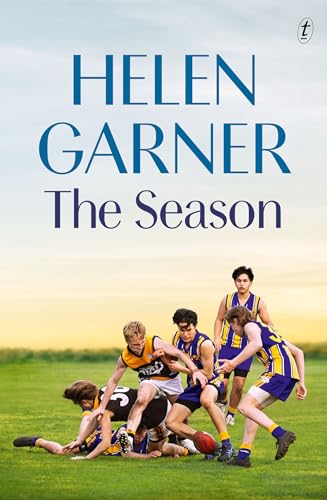
Author Talk: The season with Helen Garner

It is a measure of the love and respect readers have for Helen Garner that this event, held in the National Library of Australia’s 300-seat theatre, had a 200-strong waiting list. And, it was well worth booking early for.

The evening was emceed by Luke Hickey, the National Library’s Assistant Director-General Engagement. He started with a welcome, acknowledgement of country and an introduction of the participants, who were:

  • Helen Garner (my posts): multi-award winning author of novels, stories, screenplays and works of non-fiction.
  • Beejay Silcox: writer, literary critic and about-to-retire Artistic Director of Canberra Writers Festival.

The conversation

This was a joyful but engaged conversation that flowed easily, while gently getting to the nub of some great ideas.

Beejay started by reminding us that “Canberra” means “meeting place” and that for millennia people have met here to “talk about things that matter”. She then tried to define what Helen Garner means to us. She is a writer who destablises and discomforts us, who energises us, who provokes us but not for provocation’s sake. She’s a writer who doubts, is uncertain, and who, because of this, brings us along with her.

On writing The season

Beejay called The season a graceful book, a love letter from a grandmother to boys and men. Some see it as very different from her previous work, but Beejay was not so sure. What did Garner think?

Garner said this was the most fun writing she had done. It was an “extraordinary experience” and came at a time when she felt burnt out. Preparing her three diaries had involved many “squirmy 2ams”. She also saw it as her last chance to get close to a grandchild.

Contrary to her normal practice, which is not to ask permission, Garner had asked her grandson and his coach whether it would be ok for her to attend training sessions with a view to writing about the experience.

Beejay commented on Garner’s reference in the book to being an invisible older woman. Was it a superpower or curse. Oh, superpower, said Garner! She didn’t want to interview the players, just observe.

Garner didn’t know anything about teams, so she’d sit back, an invisible figure in her straw hat and overalls, and watch. The boys were, generally, oblivious of her presence, and had no sense of this being rude. She was fascinated by their behaviour versus that of girls, with which she is more familiar. They would dump their stuff any which way – bags, bikes, phones – and keep on walking to wherever they were going. Girls, by comparison, place their bikes, say, neatly against a tree. Women scan the territory, whereas these boys had tunnel vision, a “tremendous ability to concentrate” or focus.

She observed that during training the coach would exhort the boys to widen their field of vision. It was “thrilling to watch”. Garner conveyed such joy about watching the young men. I remember feeling the same about watching my son’s cricket team. Those boys were so enthusiastic, so sure, after getting out for a duck, that they’d hit that six next time. Their confidence was infectious.

On football, and writing about it

Garner admitted to being a Western Bulldogs fan, and talked about her love of footy. She “can’t stand it when it’s not footy season”, which drew some perhaps surprised but warm-hearted laughter from the audience.

Beejay spoke of Garner’s “narrative love of the game”, of her anchoring her writing about it in terms of writers like Blake, and Homeric epics, of her referencing “elemental” ideas like mercy, triumph, vengeance.

Garner talked about her introduction to the sport – her origin story as Beejay framed it – via the 1997 documentary Year of the dogs. It was a time of great change in the sport, and she was moved by the decisions made by some players to not chase the money.

While she knows the rules and understands the play, she will “never” understand the game, but doesn’t care. She didn’t want to take a position on football. Some expected her, for example, to take a feminist position, and explore the brutal aspects, but she wanted to glorify.

Beejay asked how hard it was to not write what people expected. Garner didn’t know how to write a polemical book about football. In fact, she struggled to turn her experience into a book. She started writing it in the past, but that gave it an historical feel. As soon as she changed to present tense, she knew she had her story.

Beejay asked her to read the opening two paragraphs:

I pull up at the kerb. I love this park they train in. I must have walked the figure-of-eight round its ovals hundreds of times, at dawn, in winter and summer, to throw the ball for Dozer, our red heeler-but he’s buried now, in the backyard, under the crepe myrtle near the chook pen.

The boy jumps out with his footy and trots away, bouncing. it. Boy? Look at him. He’s been playing with our suburban club since he was a tubby little eight-year-old; I have never paid more than token attention to his sporting life. But this year he’s in the Under-16s. The shoulders on him! He must be almost six feet tall. He’s the youngest of my three grand-children. The last, and there will be no more.

Beejay described this as a masterclass in writing. Everything is in these two paragraphs – relationships, rhythm of life, her sense of place, death.

Garner said, simply (modestly, some of us would say):

“What I’m good at is saying what happens”.

On Garner, the writer and grandmother

Garner loves being a grandmother, and got more laughs when she admitted that after three marriages she was no good at being married, but had found a place to be in the world. She sees the role of a grandmother as being “a servant”, that is, as serving the family, helping the family grow, being the backstop.

Beejay returned to her introduction of Garner as self-effacing, as a writer who doubts. In this book, she describes herself as “a bore”. Is this questioning of herself a whim, and what is the gap between the book she imagines and the one she creates.

Garner never has an idea of what her book is to be. She writes sentence by sentence. She talked about being “a small piece of shit”. While one husband told her he didn’t feel that way, she thinks most of us feel small, at least sometimes. They are valuable times; they balance “the insane moments of triumph”.

On values, lessons, manners

Garner loves football because the discipline of sport puts boundaries around the urge to fight. (She referenced the Iliad with its sense of enormous power). Garner and Beejay discussed a photo Garner loves of two footballers at a moment of defeat, with its Homeric sense of valour and duty, of intimacy, loss and pain. Garner sees these footballers as young, and perfect. She loves “noble postures of defeat” rather than Achilles-style roaring, bellowing triumph.

Garner thinks football can teach boys manners. There can be moral teaching, to not think of themselves and to trust each other .

Beejay also noted that The season is a love letter to volatile youth but is also about age. What did Garner mean by feeling envy. Was it of youth? Of boys doing things she couldn’t? Or related to the presentism of youth, and being unweighted by the past? A bit of all of this. Garner envies youth, its fearlessness. The discussion then turned to what happens to boys who are tender when young but are forced to harden when they get older. Garner hates “the clamp” that is put on emotion in boys.

For all the talk about youth envy, Garner also accepts her age. At 82, she is bothered that people try to deny her age, as in “you’re not old”!

Q & A

On boys and masculinity: a couple of questions/comments concerned this. One audience member thanked her for her “lovely writing” about boys compared to all the “toxic masculinity” talk that confronts them today. Garner hates that those two words – “toxic” and “masculinity” – are glued together, and that boys have to face it. Another questioner wondered how parents can help boys become the boys we’d like them to be. Garner shared an experience she had of Tim Winton calming his distraught 4-year-old by simply sitting with the child and repeatedly naming his feelings, “you’re so angry, you’re so sad”, rather than telling him to get over it, etc.

On Garner being a great observer of human emotions and whether she has questions in mind when she is observing. Nope! Garner just barges in! She’s no good at planning. People love it if you are interested in their work. She realises she is “completely un-bore-able”. (I can relate to this.) She quoted a French writer who said “ignorance and curiosity” form the basis of their writing.

On whether writing The season cured her feeling of burnout: Garner has signed a contract to deliver another book in December but “has nothing say”!

Conclusion

I loved this conversation, not only because Beejay asked perceptive, interesting questions and because Garner is – well, Garner – but also because Garner confirmed my own feelings about sport. It is life – it’s narrative, character, drama, emotion. It can play out so many of the big things we feel and experience.

Beejay clearly liked this too because she concluded the conversation on the idea that football is bigger than just the game. Was there one lesson we could take away from it. Garner’s response?

”Don’t turn your back on the play”!

And with that the session closed to enthusiastic and appreciative applause.

Author Talk: The season with Helen Garner
With Beejay Silcox
National Library of Australia, presented in partnership with the Canberra Writers Festival
Thursday 20 February 2025

Melanie Cheng, The burrow (#BookReview)

You may have heard the announcement by Sean Manning, of Simon & Schuster’s flagship imprint in the US, that he will “no longer require authors to obtain blurbs for their books”. Australian media academic Julian Novitz discussed the decision in The Conversation in a piece titled “Brilliant, moving, thought-provoking! Simon & Schuster is dispensing with book blurbs – will it make any difference?” I considered writing a post on this, asking for your thoughts on these blurbs. Do they influence you in any way? But I didn’t. Instead, I am using it to introduce Australian author, Melanie Cheng’s latest novel, The burrow.

As you can see from the cover of my edition, it is beautifully spare, but it does have two blurbs. At the top is Christos Tsiolkas’ “stupendously good” and at the bottom, Helen Garner’s “how rare this delicacy – this calm, sweet, desolated wisdom”. Tsiolkas and Garner are respected, robust writers who don’t flinch from uncomfortable truths, so their commendation carries some weight with me. However, there are readers who don’t like these authors. Will that turn them away from the novel? I’d be interested to know. Meanwhile, I’ll get onto the book, which, at 184 well-spaced pages, is surely a novella.

The back cover tells me that it’s about a family confronting “long-buried secrets”, and that it “tells an unforgettable story about grief and hope”. Oh, and that the family buys a pet rabbit. There’s not a lot to go on here besides the usual cliches about secrets, grief and hope, but I was interested because I have had Melanie Cheng in my sights for some time, and it has just been shortlisted for this year’s Victorian Premier’s Literary Award.

It does seem, however, that grief is following me around this year, as the heart of this novel concerns the drowning death of a six-month-old baby girl some four years before the novel starts. The family – parents Amy and Jin Lee, and their remaining daughter, 10-year-old Lucie – is surviving intact, but only just. The novel is set in Melbourne during the pandemic, just as lockdown restrictions are being relaxed, so the family is needing to confront the outside world a little more. Reminding me somewhat of Charlotte Wood’s Stone Yard devotional (my review), our threesome is disturbed by two new additions, the pet rabbit bought for Lucie, and Amy’s mother Pauline who has broken her wrist and cannot live alone for a while. These two, along with the relaxing of lockdown, offer potential catalysts for change. Will it be for the good or will the family implode?

Cheng tells her story through the alternating third-person perspectives of the characters. The writing is beautifully spare, but also engaging and moving. Having experienced a devastating death in my own family – my sister, not my child – I am interested in how people traverse such grief, particularly when there is potential for blame and guilt. Every situation is different, but there are, I think, some universals – love, generosity, and communication (or lack thereof). The Lee family has some of each of these, but not enough, and hence the just-surviving-but-not-really-living state they find themselves in. It’s realistic, believable.

I am always impressed by writers who can unfold a story slowly, but in few words, and Cheng is one of these writers. What exactly happened is divulged gradually in such a way as to make us think about how it affected – and is still affecting – the person whose perspective we are reading. It lets us feel the different ways grief can stall us. It also gives us time to get to know the characters, and to understand and relate to them. For these reasons, the story is tricky to talk about because if I explain what happened, I undermine all Cheng’s good work, so I’ll leave the story here and get back to the two additions.

As actors in the story, the rabbit and Pauline are opposite ends of the spectrum. The rabbit is a quiet, largely passive presence which interacts minimally with the family but provides a focal point for their thoughts. He brings a “sparkle” back to Lucie’s eyes that had been missing for some time. However, as a prey animal he also reminds them of the fragility of life. A rabbit is an interesting choice, one that kept me thinking about in terms of his significance. The novel is titled “The burrow”, but it’s not a simple literal reference to the rabbit. A burrow is also referenced in the epigraph from Franz Kafka’s short story “The burrow”:

The most beautiful thing about my burrow is the stillness. Of course, that is deceptive. At any moment it may be shattered and then all will be over.

How are we to read this? The family has already been shattered, and at the opening of the novel it does feel as though all is over, that they are mainly going through the motions of living. But of course it’s not all over. Sure, they are not doing very well. They are isolated from others (and not just because of the lockdown which had given them “a reprieve”, excuses to not engage). But they are still together, and they haven’t completely given up. They buy the rabbit for Lucie when she shows interest in something; they invite Pauline back into their lives when it appears she needs them.

And this brings me to Pauline. She sweeps in, injecting much needed energy, whether they want it or not. She can’t help herself, and for death-focused Lucie it’s energising, “a good thing”. However, it’s also clear that Pauline is involved in Ruby’s death in some way, that it’s not only the pandemic that has separated her from the family for four years. Now, though, she might make the difference.

But, there’s no guarantee. The family suffers several setbacks, literal and metaphorical, on their journey – sickness, an intruder, conflict, and more. Their journey reflects that in Richard Adams’ classic, Watershed Down, which Pauline reads to Lucie and which she characterises as “the epic story of an odd group of rabbits and their quest to establish a thriving warren”.

There is so much to like about this book, and it starts with the characters. With almost as few brushstrokes as artist Phil Day used for the cover rabbit, Cheng has created characters who represent some big ideas and thoughts, who embody the humanity of unspeakable grief, but who are yet so very individual. It’s a great read, with an ending that captures hope and fragility at the same time.

Melanie Cheng
The burrow
Melbourne: Text Publishing, 2024
185pp.
ISBN: 9781922790941

Review copy courtesy Text Publishing

Frank Dalby Davison, Dusty (#BookReview)

It’s a strange coincidence that my second review for Bill’s Gen 1-3 Aussie male writers week is for a novel titled Dusty, when my first was for a short story titled “Dust”. One of those funny little readerly synchronicities. The title, however, is about the only synchronicity because, although both stories allude to the dusty Australian landscape, Casey’s short story is about miners’ lung dust disease while Davison’s novel is about a part-kelpie part-dingo named Dusty.

A bit about Frank Dalby Davison

Davison (1893-1970) was best known as a novelist and short story writer, and was a significant figure in Australian literary circles of his time. There are useful articles for him in Wikipedia, and the Australian dictionary of biography, and I plan to devote a Monday Musings to him soon. Meanwhile, as background to this post, it’s relevant to say that he was born and schooled in Melbourne, but left school in his early teens to work on his father’s farm near Kinglake. The family moved to the United States in 1909, when he was 16. After working there in the printing trade, he travelled more, eventually enlisting for World War 1 in England. After the war, he took up a Soldier Settlement selection near Injune, in central western Queensland. 

Davison wrote several novels, but his best known is probably Man-shy (1931), which won the Australian Literature Society Gold Medal. Featuring a red heifer, it was my introduction to Davison in my first year of high school in the 1960s. Dusty (1946) is also about an animal – this time a dog – and has been in my sights for some time. Both novels drew on his experiences in Injune. AustLit reports that the manuscript of Dusty, ‘entered under the title “Stranger”, and the pen-name “Tarboy”, won the Melbourne Argus and Australasian Post 500 pound Novel Competition in 1946′. 

Dusty

At the end of my edition of Dusty is a promotion for Man-shy which quotes from H.M. Green, the literary historian who inspired Bill’s “generations”. Green writes:

Although other novelists have made animals their principal characters and drawn them realistically, Davison is the first to make a serious attempt to get inside their minds. The red heifer and the mob of wild cattle to which she belongs stand for the spirit of freedom and dogged, untameable resistance; their struggle is made extraordinarily real to us … Davison has a genuine and individual talent.

This could equally apply to Dusty, which tells the story of a dog, sired by a kelpie to a dingo mother. Violently wrenched from his lair when he was a few weeks old, he is sold to a decent man, a bushman named Tom. Tom is no fool. He recognises the mixed blood, but also sees potential in the pup, and trains him to become a champion sheep dog. Their bond is strong but is tested when Dusty’s “dingo blood” starts asserting itself, and he turns sheep-killer by night. This will not do, and Tom knows it. The novel, however, does not play out quite the way you’d expect, and we are left guessing until the end about what will, indeed, happen to Dusty.

That’s the plot, but like many plots it doesn’t tell you much about what the book is really about, or what makes it a good read. Told in three parts, Dusty is a realist novel, detailing life on Australian sheep stations and cattle properties, and told mostly through the perspectives of Tom and Dusty. Yes, you heard right, Dusty, the dog. I was completely engaged because not only is there none of the sentimentality common in stories about a man and a dog, but there’s also nothing anthropomorphic in the dog’s point-of-view. He feels pure dog, which I thought quite a feat. Early on, for example, Tom, having previously given Dusty his dinner without ceremony, puts the food down and starts some training:

Then followed a series of mystifying events. A hand appeared just above the dish and twitched, giving forth a series of soft snapping sounds; then there was a little soft whispering, and then a voice that, like the hand, kept repeating a small noise over and over again. He could make nothing of it …

This dog’s-eye view of the world, based on his experiences to date, continues through the novel.

Soon, though, bigger issues are at play involving the two parts of Dusty’s being, “the ancient battle between conflicting heredities, and between early influence and present environment; the mother against the father, nature against art”. Then Davison adds something interesting. The dingo is the product of nature, while the kelpie, the working dog, is “a product of art”. But, Davison adds, “nature, if man fails in toil or vigilance, hastens to reclaim her own”.

In other words, beneath this deeply interesting story about a man, his dog and outback farming, is a wider story about “nature”, or the essence of our beings. Contained within Dusty is the struggle between the two forces – that of freedom, of following his instinct, and that of living by his training, by rules and responsibilities. After Dusty’s dingo side becomes apparent to all, Tom knows what must be done but chooses to change his life rather than kill his dog. He becomes a self-employed possum scalper in cattle country, and finds, “without meaning any ingratitude for past kindnesses”, that he relishes his new situation in which he is invited to share a meal as “a guest and not just the hired man”. In other words, as a possum scalper, Tom is freer to be his own man.

But, while I think Tom’s life is part of this wider theme, the main focus is animals, and the idea that, in them, “is a whole scheme of values outside those familiar” to us.

There is no easy ending for Tom and Dusty, and we are left, three paragraphs from the end, with a dingo howl, “a cry of mournfulness and dark mirth, of drollery and love and hate and longing, of the joy and sorrow of life, of the will to live, of mockery and despair”.

Dusty is not a didactic book. There is no moralising, no subjective pronouncements about choices. Instead, with its objective tone, and plain but expressive prose, it feels more elemental, something that examines the essence of who we are and what we do to live. And that makes it feel timeless.

Frank Dalby Davison
Dusty
Sydney: Angus & Robertson, 1983 (Arkon ed., orig. 1946)
244pp.
ISBN: 0207133891


Gavin Casey, Dust (#Review)

I have had to put aside the novel I was reading for Bill’s Gen 1-3 Aussie male writers week, as my reading group book called. I will get back to it, and post on it later, but in the meantime, I wanted to post something in the actual week.

So, I turned, as I have for other Reading Weeks, to The Penguin century of Australian stories, an excellent anthology edited by Carmel Bird. Given Bill’s week encompasses writers working from 1788 to the 1950s, Bird’s anthology offered almost too many choices. Besides the obvious Henry Lawson, there were Steele Rudd, Tom Collins, Vance Palmer, and more, ending with Judah Waten’s 1950 story, “The mother”. I considered several, but Gavin Casey captured my attention because in her Introduction to the anthology, Kerryn Goldsworthy, looking at the 1930s and 40s, commented that Gavin Casey’s “Dust” and John Morrison’s “Nightshift” exemplified the more overtly political stories of this era. She added that:

they are stories in simple, unadorned language … that focus on workers and workplace disasters, on the physical dangers lying in wait for working men and women.

I have been interested in this period – and its socialist-influenced political thinking – for some time, so it had to be Casey or Morrison. Casey it was because I have listed him in a couple of Monday Musings posts but knew nothing about him.

Who was Gavin Casey?

Casey (1907-1964) was an author and journalist, born in Kalgoorlie, Western Australia, to an Australian-born father and Scottish mother. 

He doesn’t have a Wikipedia article but there is a useful biographical entry for him in the Australian dictionary of biography (ADB). Written by Anthony Ferguson, it says he had a sketchy education before obtaining a cadetship with the Kalgoorlie Electric Light Station. However, he left there to work in Perth as a motorcycle salesman, only to be “forced” back to Kalgoorlie in 1931 by the Depression. He then worked “as a surface-labourer and underground electrician at the mines, raced motorcycles and became a representative for the Perth Mirror“. He married in 1933, but “poverty plagued them, long after their return to Perth next year”.

By 1936, he was publishing short stories in the Australian Journal and the Bulletin, and in 1938 he was foundation secretary of the West Australian branch of the Fellowship of Australian Writers. His two short story collections – It’s harder for girls (1942), which won the 1942 S. H. Prior memorial prize and in which “Dust” appeared, and Birds of a feather (1943) – established his reputation. Ferguson writes:

Realistic in their treatment of place and incident, his stories showed—beneath the jollity and assurance of his characters—inner tensions, loneliness, unfulfilled hopes, and the lack of communication between men and women.

You may not be surprised to hear that his first marriage failed!

Overall, he wrote seven novels plus short stories and nonfiction works. His novels include Snowball (1958), which “examined the interaction between Aborigines and Whites in a country town”, and Amid the plenty (1962), which “traced a family’s struggle against adversity”. There is more about him in the ADB (linked above).

Ferguson doesn’t specifically address the political interests Goldsworthy references. Instead, he concludes that critics liken Casey’s earlier works to Lawson, seeing “a consistent emphasis on hardship that is tempered, for the male at least, by the conviviality of mates”. Ferguson also praises both for “their perceptiveness” and “their execution”.

The reality of Casey is a bit more nuanced, I understand. For a start, his men are not bush-men but suburban workingmen. Consequently, I plan to write more on him in a Monday Musings Forgotten Writers post, soon. Meanwhile, on with “Dust”.

“Dust”

“Dust” features male characters only, and there are some mates but, while they are important, they are not central. “Dust” also must draw on Casey’s experience of working in Kalgoorlie’s mining industry. It’s a short, short story, and is simply, but clearly constructed. It starts with a physical description of dust swooping through the township, over housetops and hospital buildings, and “leaving a red trail wherever in went”. It sounds – almost – neutral, but there are hints of something else. Why, of all the buildings in town, are “hospital buildings” singled out with the “housetops”, and does the “red trail” left behind signifiy anything?

Well, yes it does, as we learn in the next paragraph. Although this dust comes from “honest dirt” and can do damage like lifting roofs off, it is “avoidable” and is nothing like the “stale, still, malicious menace that polluted the atmosphere of far underground”. Ah, we think, so the “dust” we are talking about is something far more sinister than that flying around the open air.

And here is where the hospital buildings come in. Protagonist Parker and his miner friends are waiting for their six-monthly chest x-rays checking for the miners’ dust lung disease which killed his father. Things have changed since his father’s times, Parker knows. Not only are there the periodic medical examinations, but there are mechanisms to keep the dust down, and a system of “tickets” and pensions for affected miners. But, the risk is still there, and Parker’s anxiety increases as he watches his mates go in one by one, while he waits his turn.

This is a story about worker health and safety – but told from a personal not political perspective. It’s left to the reader to draw the political conclusions. However, it is also a highly relatable story about humans, health, and risky choices and behaviour, because it seems that Parker does have a choice. I won’t spoil it for you, but simply say that the ending made me smile – ruefully.

Gavin Casey
“Dust” (orig. 1936)
in Carmel Bird (ed.), The Penguin century of Australian stories
Camberwell: Penguin Books, 2006 (first ed. 2000)
pp. 86-90

Gideon Haigh, My brother Jaz (#Review)

When I posted my first review of the year – for Marion Halligan’s Words for Lucy – I apologised for starting the year with a book about grief and loss. What I didn’t admit then was that my next review would also be for a work about grief and loss, Gideon Haigh’s extended essay, My brother Jaz. This does not herald a change in direction for me, but is just one of those little readerly coincidences – and anyhow, they are quite different books.

For a start, as is obvious from its title, Haigh’s book is about a sibling, not a child. It was also much longer in the making. Halligan’s book was published 18 years after her daughter’s death, and was something she’d been writing in some way or other all along. Words are also Haigh’s business, but he ran as far as he could from his grief, and it was only in 2024, nearly 37 years after his 17-year-old brother’s death, that Haigh finally wrote, as he says in his Afterword, “something I had always wanted to write, but had suspected I never would”.

Before I continue, I should introduce Haigh for those of you who don’t know him. Haigh (b. 1965) is an award-winning Australian journalist, best known for his sports (particularly, cricket) journalism, but also for his writing about business and a wide range of social and political issues. He has published over 50 books. I’ve not read any, but I am particularly attracted to The office: A hardworking history, which won the Douglas Stewart Nonfiction Prize in 2013. However, I digress …

Unlike Halligan who, to use modern parlance, leant into her grief in what I see as a self-healing way – as much as you can heal – Haigh did the opposite. He did everything he could to avoid it; he worked, he writes, “to flatten it into something I could roll over”. And it affected him. If he, just 21 at the time, was a workaholic then, he doubled down afterwards and work became his refuge, his life:

It was the part of me that was good; it was the only part of me I could live with, and that sense has quietly, naggingly persisted. Go on, read me; it’s all I have to offer. The rest you wouldn’t like. Trust me. You don’t want to find out.

If this sounds a bit self-pitying, don’t fear, that is not the tone of the book. It is simply a statement of fact, and is not wallowed in. It represents, however, a big turnaround from someone who admits early in the book that he was known for his “pronounced, and frankly unreasonable, aversion to autobiographical writing”. This aversion was despite the fact that, “at the same time, trauma, individual and intergenerational” was something he’d written about – and been moved by – for a long time. So, in this first part of his six-part essay, we meet someone who had experienced deep pain, but had shrunk from indulging in a certain “kind of confessional nonsense”, and yet who increasingly found himself “backing towards an effort to discharge this story” to see if it made him “feel differently”.

What changed? Time of course is part of it. Haigh shies from cliches, as he should, but grief will out. It just can’t be bottled up forever, no matter how hard he tried, and so in early 2024, during the Sydney Test Match no less, “something previously tight had loosened” and over 72 hours he wrote the bulk of this essay. A major impetus was the break up of a relationship. It was time for a “reckoning”, he writes on page 76, but much earlier, on page 47, he alludes to it:

Why did I even start this? The only reason I can think of is that it has to be done. It can’t remain unwritten, just as I could never leave Jaz unremembered. I have myself to change, and how am I to do this unless I examine this defining event in my life face on?

This idea of the examined life is something Halligan mentions too in her memoir. She writes near the end of her book that “I do believe that the unexamined life is not worth living, and that an enormous part of that is the recollected life”.

What I hope I’ve conveyed here is the way this essay is driven – underpinned – by a self-questioning tone, more than a self-absorbed one. Even as Haigh writes it, he is interrogating his reasons (and perhaps by extension anyone’s reasons) for writing about the self. That this is so is made evident by the way the narrative, though loosely chronological, is structured by the writing process rather than by the “story”:

“OK it’s getting on to dawn, and I’m going to click on ‘Jasper Haigh [inquest] Reports for the first time” (p. 29)

“It’s raining, but I’ve just returned from a walk. I often walk when I have something to turn over in my head.” (p. 33)

“I’m at the point right now where I just wonder what the hell I am doing.” (p. 47)

“I have picked this up again after putting it aside to draw breath, to consider what next … So, I’m going to stagger on, with the excuse that this is no memoir: this is less a geology of my life than a core sample.” (p. 61)

This approach helps us engage with a writer who prefers to push us away. It finds, in a way, the art in the artifice, and enables Haigh to write something that questions the memoir form while at the same time paying the respect that the best memoirs deserve. It’s a juggling act, and I think he pulls it off.

By the end, Haigh is not sure whether writing this work – this raw “reckoning” to re-find his emotional bearings – has achieved anything. It is, he believes, “too early to tell”, but I wouldn’t be so sure. He is a writer, and he has put on paper the defining event – the “core sample” – of his life. That has to mean something.

Gideon Haigh
My brother Jaz
Carlton: Melbourne University Press, 2024
87pp.
ISBN: 9780522880830

Marion Halligan, Words for Lucy (#BookReview)

For my reading group’s tribute to Marion Halligan last year, I had planned to read one of her older novels, Wishbone, which I did (my review), and her last book, the memoir Words for Lucy, which I didn’t. But, I have now. I guess a book born of a mother’s grief for a daughter who died too young doesn’t make the cheeriest start to this year’s reviews. However, such is the life of a reader so you’ll just have to bear with me!

Lucy, for those who don’t know Halligan’s biography, was born in 1966, with a congenital heart defect. She was not expected to survive more than a few days, but she did – for nearly 39 years. In the end, however, in 2004, her heart gave out. I’ve read two other memoirs written by a mother about her seriously ill daughter, Isabel Allende’s Paula and Joan Didion’s The year of magical thinking. They are very different books and in fact, in Didion’s case, her daughter did not die during the book, though she did die young (and Didion wrote a book about that, Blue nights). The reason I am sharing this is that Halligan, Allende and Didion were all published authors, and it shows. As Halligan writes in the opening to her book, “My business is words”. For these three writers, the process of writing was an important part of how they processed their feelings. Halligan’s book might have come out some 18 years after Lucy’s death, but she’d been writing all that time.

While confirming my memory concerning Allende and Didion, I came across the Wikipedia article on Blue nights. It includes a quote from Rachel Cusk’s review of the book. She says “Didion’s writing is repetitive and nonlinear, reflecting the difficult process of coping with her daughter’s death”. While I don’t know about the reason, the “repetitive and nonlinear” description could equally be applied to Words for Lucy. The book is divided into twelve parts (plus a postscript), with each part comprising many small sections. There is an overall chronological arc to the book, in that after briefly describing Lucy’s death, Halligan does start with her birth, and tells of the funeral and wake near the end. What comes in between, however, is, writes Halligan, like “box of snapshots. You find your own way through the story, from random details”. In other words, if you are looking for a traditional grief memoir in which the memoirist works chronologically through the “stages” of their grief, you won’t find it here.

Carmel Bird and Marion Halligan
Carmel Bird and Marion Halligan, 2016

What you will find is a book about mothering and “daughtering”, about living with a chronically-ill child, about making memories and living with memories, about sadness and joy, about loss and grief (because Halligan has had more than you’d think fair), and about writing. It’s also about friendship. Having experienced my own devastating loss (of my sister in her early 30s), I know very well the value of friends. For Halligan, a great friend was the writer Carmel Bird. I was much moved by the role Carmel played in Lucy’s life, and by the love and support she clearly gave Marion.

Now, returning to Halligan’s “snapshots”, I enjoyed how, within a broad thematic structure, Halligan wanders through family life – from the lighthearted like Lucy’s love of things to the serious like her long and complex medical journey that cramped her life so much, from the family’s experience of living overseas to travelling there together later. From these, and more, so many truths emerge. For example, Halligan writes on page 2,

Love is so important to us. We so much need it. We can’t do without it. What we don’t realise at the beginning is the price it comes at.

Right there I knew I was going to like this book, because I was immediately taken back to my first pregnancy, and the fear I had that something would happen to this child I was bringing into the world. Ah well, I reassured myself, I didn’t have him (as the child turned out to be) before and I was fine, so I’d be alright! But of course, as soon as that child came into the world, my life changed and I realised things would never be the same, that if anything happened to him, I would not – indeed, could not – go back to how I was. The price of love…

The price of love isn’t all bad of course, even when the loved person dies, because there are the memories, and it is through memories that Halligan charts both Lucy’s life and her own grief. There is, though, a sort of paradox here that Halligan admits to. It’s what she calls the Janus face of grief. There’s the grief we feel for the person who has gone, for the life they are missing, the things they’ll not see or experience, and there’s that selfish grief the bereaved person feels, the loss, the misery, the wanting that person back in your life to make you happy (in effect).

It’s a complex thing grief – not linear, which Halligan knows and hence her book’s structure, and not all misery either, which Halligan also knows. Happy, joyful memories do pop up. You do laugh. Halligan describes some special memories, and then writes this beautiful thing about them:

Those are perfect memories, I can take them out whenever I like and run their cool and sparkling shapes though my fingers, look at their brilliant colours, the light refracting through them.

These memories may not be “factual”, may not be the same as those of others who experienced the same person or event, but as Halligan would tell her sisters who questioned her memory of some family event, “Write your own narratives … this is mine and I’m sticking to it”.

Throughout Words for Lucy there is the writer’s eye on what is fact and what is truth. Truths can be “different” (indeed, “many”, as Emmanuelle learns in Wishbone) while facts are “another matter”. And so, in the final pages of the book, Halligan, paying her due to “a memoir’s desire for honesty”, shares one last painful fact so that we don’t go away believing some wrong truths about her family.

Words for Lucy was Marion Halligan’s last book. It’s a memoir, and has the honesty that form demands. However, I see it as also containing her apologia, her final statement on what fiction is. For her, and she understood the slipperiness of this, it’s about truth, which is different from fact. “Fiction is always life”, she writes in this book. It means writers using life – including their own – “in all sorts of imaginative ways”. Think Jane Eyre, David Copperfield, and her own, somewhat controversial, The fog garden.

Ultimately, whether Halligan was writing fiction or nonfiction, words were her business. And these, her final ones, represent a fitting legacy for a brilliant career as well as a beautiful tribute to a beloved daughter.

Marion Halligan
Words for Lucy: A story of love, loss and the celebration of life
Port Melbourne: Thames and Hudson, 2022
218pp.
ISBN: 9781760762209