Dorothea Mackellar, Elena Kats-Chernin and the Vienna Boys Choir

I’m guessing most of you have heard of the Vienna Boys Choir, but you may not, particularly if you’re not Australian, have heard of Dorothea Mackellar and Elena Kats-Chernin. Mackellar (1885-1968)  was an Australian writer, best known for her poem “My country”. Kats-Chernin (b. 1957) is an Australian composer who was born in Tashkent (in what was then the Soviet Union). She has been in Australia since 1975.

You’ve probably guessed now what this post is about. It’s about Elena Kats-Chernin setting Dorothea McKellar’s “My country” to music for the Vienna Boys Choir to perform (on their 2012 tour to Australia). According to the program, producer Andrew McKinnon, who commissioned the piece, wanted a poem that would both resonate with Australian audiences and “promote the beauty of Australia to international audiences on the choir’s future travels”.

And yet, as I sat down to the Choir’s concert on the weekend and looked at the 25 mostly European-born boys ranging in age from 9 to 14, I wondered what they could make of such a poem. For those of you who don’t know the poem, its most famous verse, the second, goes like this:

I love a sunburnt country
A land of sweeping plains
Of ragged mountain ranges
Of drought and flooding rains
I love her far horizons
I love her jewel-sea
Her beauty and her terror
The wide brown land for me

The program answered my question. After Kats-Chernin had drafted her composition, she went to Austria to workshop it with the boys. What fun that must have been. Kats-Chernin says that while that poem with that choir might seem an odd combination, it also makes sense:

The piece is about a country that’s still really young, but at the same time has been around thousands of years. At the same time they [Vienna Boys Choir] are only young boys, but the tradition they are part of is really old*.

Dorothea Mackellar's My country

Final two verses of Dorothea Mackellar’s My country (Public Domain from the State Library of NSW, via Wikipedia)

And so Kats-Chernin workshopped her ideas with the boys. Here is an excerpt from one of the choristers, Anton (12 yo), as reported in the program:

She read us some of Dorothea Mackellar’s poem. She said Australia is beautiful, and very dangerous. Which key did we think meant danger? Felix suggested B minor, David thought of F sharp. Immediately Ms Kats-Chernin started playing the right chords.

She gave each of us a word to sing, on a sequence of notes, floods, famine, sunburnt country. We were all doing it at the same time, and it was sounding like a fabric of music. That was a total surprise to me, and I could feel myself smiling. It just happened. I think some of this is in the finished piece.

It was a beautiful piece – not schmaltzy or cliched as it so easily could have been. She broke up the words at times, repeated some, left others out (if I remember correctly), all of which gave the poem new power for those of us who know it well. I like Kats-Chernin. She’s able to express a modern sensibility in her music (different or unusual rhythms and harmonic combinations, using my layperson’s language) while retaining lovely melody as well. (Hmm … that statement may imply more about modern music than I really intend, but you know what I mean!). The piece is called “Land of Sweeping Plains” but its most powerful, memorable section focuses on the first line of the 4th and 5th verses, “Core of my heart, my country”. “Core of my heart” was apparently the poem’s first published title. I like that … from “Core of my heart” to “My country” to “Land of Sweeping Plains”. It’s clever – or sensible, at least, I think – to give the piece a more descriptive, less nationalistic/patriotic title, if it is going to become an internationally performed piece. And I hope it does become so.

Meanwhile, if you are interested, you might like to check out this You Tube about Kats-Chernin and the Choir.

* Historians date the choir from 1498!
The Griffyn Ensemble’s paean to the weather

It’s pretty much a given that a Griffyn Ensemble concert will be both entertaining and challenging – and their latest concert, Cloudy With a Chance of Rain, was no exception. But this concert had an added fillip: it was unashamedly political in addressing the thorny (for some) issue of climate change. Good on the Griffyns I thought.

Before I continue though, I’ll list the current line-up:

  • Kiri Sollis (Flute, etc)
  • Matthew O’Keeffe (Clarinets)
  • Wyana O’Keeffe (Percussion – hmm, it seems there’s been another wedding amongst the Griffyns as Wyana was previously Etherington)
  • Meriel Own (Harp)
  • Susan Ellis (Soprano)
  • Michael Sollis (Director, Composer, and Mandolin, etc)

That’s six, where there was once seven. I wonder what has happened to Carly Brown, their French Horn player? Anyhow, for this concert there was a seventh – geomorphologist and ex-weather presenter, Rob Gell.

So to the concert, which was described in the program as including works “spanning geography and genre contextualised through the four seasons, from the ancient ice ages to the distant future.” It commenced with Rob Gell introducing the climate theme by talking about the ice age and leading us nicely into the first part of the concert, labeled Winter, because the concert was organised by the four seasons. It was, in fact, the four seasons without the Four Seasons! Now that’s original programming, though poor old Vivaldi probably turned in his grave!

The music itself was highly varied, as we expect from the Griffyns. The concert started with a moody, contemporary piece, “White Scenery”, by Latvian composer, Pēteris Vasks. Originally a piano piece, it had been arranged by the Griffyns for harp, mandolin, flute and vibraphone. The other wintry pieces were Debussy’s “Snow is Dancing” played on harp, and Schubert’s song “The Linden Tree”. We then moved through the seasons, hearing a mix of traditional classic, contemporary, jazz and popular music. I can’t possibly list all the pieces now (which, in addition to Europe, came from places as varied as Japan, Uruguay and the southern US) … so will move onto …

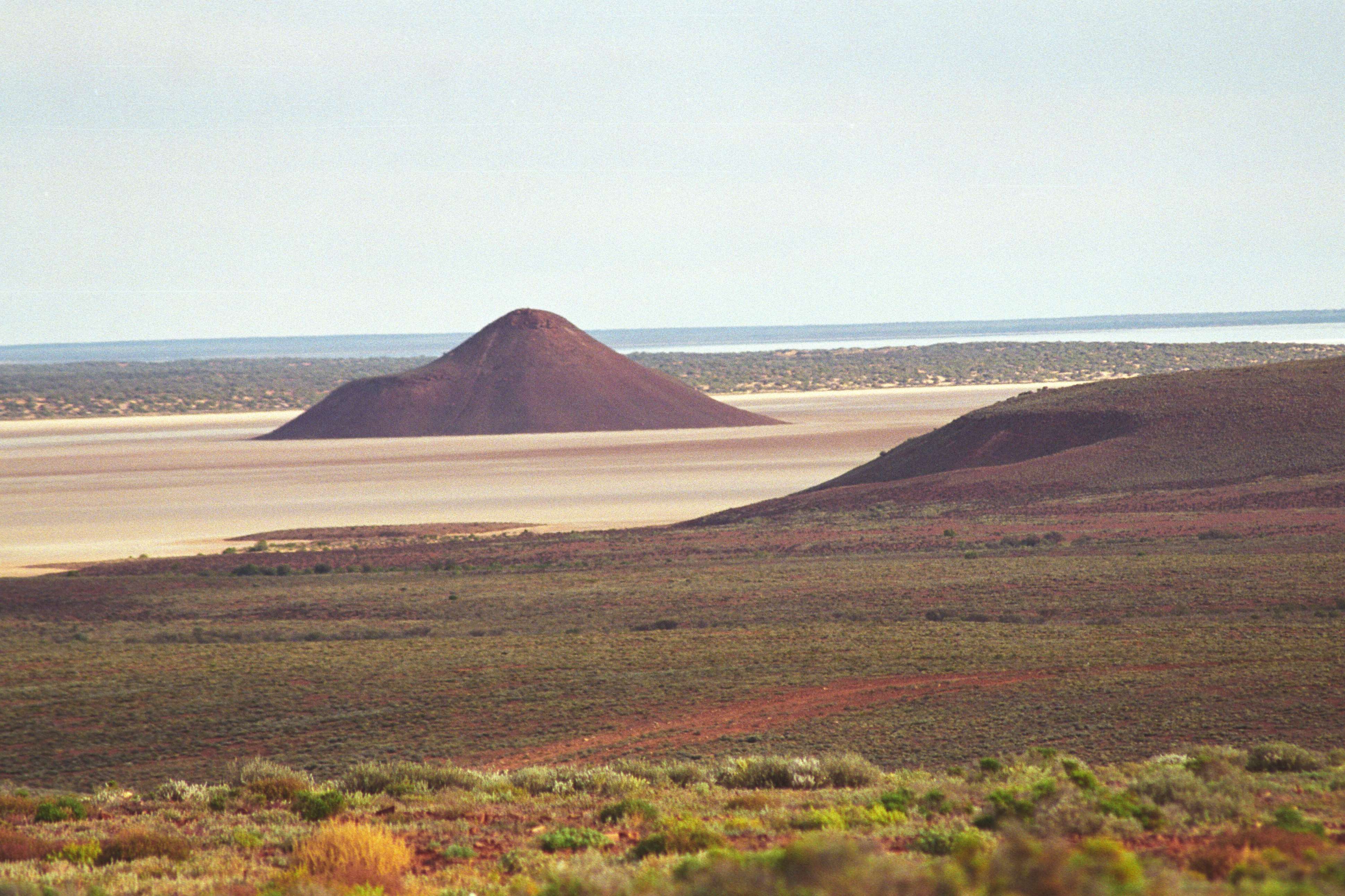
Desert south of Woomera, South Australia

Desert south of Woomera, South Australia

What I, a reader who enjoys music, particularly love about the Griffyns: there’s always a literary element to their concerts and they always credit writers in their simple but useful programs. In this concert there were songs set to works by Wilhelm Müller (“The Linden Tree”), Ruth Valadares Corrêa, Rainer Maria Rilke and Herman Hesse among others, as well as an original work inspired by Patrick White. This work, “Mirage”, was composed by the group’s director, Michael Sollis, for piccolo and glockenspiel. It was inspired, the notes say, by “Patrick White’s image of the harsh Australian desert landscape – full of emptiness, desolation, relentless heat, and an unnerving sense of ritual”. Now, if I was intrigued and impressed by how the comparatively high registers of the flute could convey the depths of winter in Vasks’ “White scenery”, I thoroughly enjoyed the piccolo’s representation of a mirage for this summer piece. The piece played out a little like a cat-and-mouse game between the two instruments, with, surprisingly for the subject matter, an element of humour. Kiri Sollis and Wyana O’Keeffe did a lovely job with what was a musically and intellectually challenging but evocative piece. It was in the Summer narration that Gell made his strongest points about climate change, sharing some now well-known but still scary data about increasing temperatures, increasing rain, and the havoc these will cause.

I would love to list all my favourite pieces from the concert, but that would be most of them. While Vivaldi, thankfully really, wasn’t there, another obvious selection was – “Summertime”. I also loved Susan Ellis’ rendition of another favourite of mine, “Autumn Leaves”. The notes describe it as a 1945 French song made famous by Edith Piaf, but I know it best in a version by the lovely Eva Cassidy.

It was a good concert. It may have had a rough spot here and there, but it had life, and it teased our minds and moved our hearts. I’ll close with some words from Wilhelm Müller’s “The Linden Tree”:

When dreaming there I carved
Some words of love upon the bark
Both joy and sorrow
Drew me to that shady spot

“Joy and sorrow” in a “shady spot”. That just about says it all.

Introducing the Griffyn Ensemble

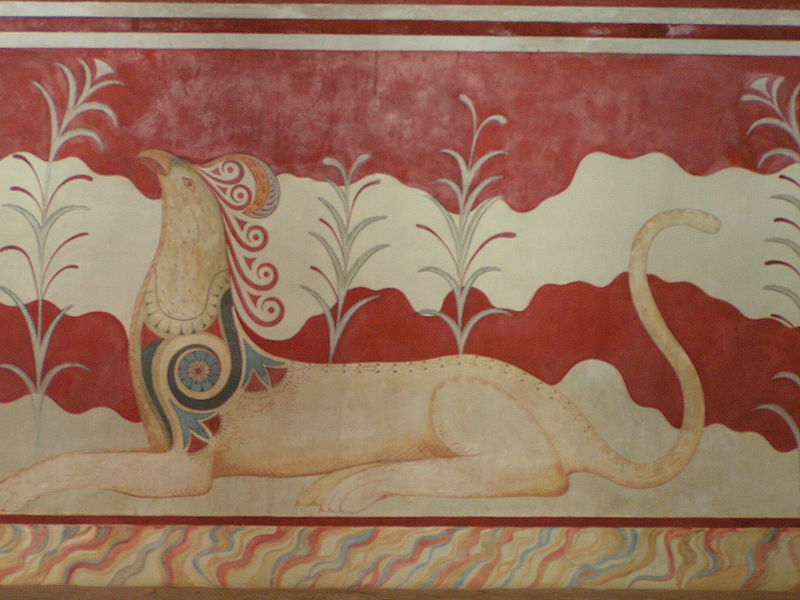
Griffin from Throne Room, Knossos

A painted Griffin, Knossos (Courtesy: Paginazero, via Wikipedia, using CC-BY-SA 3.0 Unported)

The Griffyn Ensemble is an exciting chamber music ensemble based right here in our (that is downunder’s) national capital. The ensemble is named, in a fun wordplay, after Walter Burley Griffin, Canberra’s designer, and the mythical beast (the griffin, gryffin, or gryphon).

The group  was founded in December 2006 and its members are mostly, I believe, graduates of the ANU’s School of Music. It has had various make-ups over time including violin, viola and cello, but it currently comprises:

  • Kiri Sollis – Flute
  • Matthew O’Keeffe – Clarinet
  • Carly Brown – Horn
  • Laura Tanata – Harp
  • Wyana Etherington – Percussion
  • Susan Ellis – Soprano
  • Michael Sollis – Musical director and composer

Fascinating line-up eh? And the result is that they play some rather fascinating music – which focuses on the 20th and 21st centuries. The music, for those of us who have not had a lot of exposure to more contemporary classical music, can be a little obscure. But that’s fine with me, because I like to be introduced to more modern works as well as hear the old favourites, just as I love to read classic novels alongside the latest literary release.

Tales from Heaven and Hell

We’ve heard members of the ensemble a couple of times before, but on Saturday night we went to a concert performed by the current full ensemble at the lovely, new-ish Belconnen Arts Centre. It was a challenging but also enthralling program*:

  • Madrigals Book III (1969), by George Crumb (Soprano, harp, percussion)
  • Perelandra Piccolo Concerto (2010), by Michael Sollis (the full ensemble, with Kiri Sollis featuring on piccolo)
  • A Dybbuk Suite (1995), by The Klezmatics (the full ensemble)
  • Good Night (1989), by Henryk Mikolaj Górecki (Soprano, alto flute, harp, three tam tams)

I was intrigued by Crumb’s Madrigals which comprises three very short accompanied (though that word doesn’t do justice to the harp and percussion) vocal pieces of a style that was unlike anything I’ve heard before. The lyrics are drawn from Federico Garcia Lorca. All I can say is that it was a nicely controlled and expressive performance by the three musicians involved. Sollis’ Perelandra Piccolo Concerto is a 4-movement piece inspired by CS Lewis‘ novel Perelandra – and featured, of course, the piccolo. The novel, which I haven’t read, tells the story of Elwin Ransom, who is sent to Perelandra (Venus) to prevent the Fall of a new Adam and Eve. The piece includes spoken text, effectively read by soprano Ellis. I must say that the piccolo is not my favourite instrument – particularly as a major solo instrument – as I tend to like something a little more mellow (like, say, the alto-flute in the last piece) but Kiri Sollis (the composer’s wife) did play it with both verve and skill. All in all a work that made you think while entertaining you at the same time.

However, it was probably the second half of the concert that moved me the most. I think this is because the first half had a more intellectual appeal – my brain had to work to enjoy it – while the second half appealed more to the emotions. A Dybbuk Suite contains all that paradoxical joy and melancholy that you tend to find in klezmer music and I found my foot tapping at times. Lovely. Good Night, on the other hand, mostly comprises a mystical, moody dialogue between harp and alto-flute with some voice and percussion near the end. It was quite mesmerising: Kiri Sollis and Laura Tanata seemed perfectly attuned to each other and played the piece at a controlled and measured pace. It quietly but gorgeously concluded what was a truly delightful concert.

(*This is not a formal music review – that is not my skill as I’ve said before – but simply my lay music-goer’s response to the concert)