Jane Austen, Lady Susan, revisited (#BookReview)

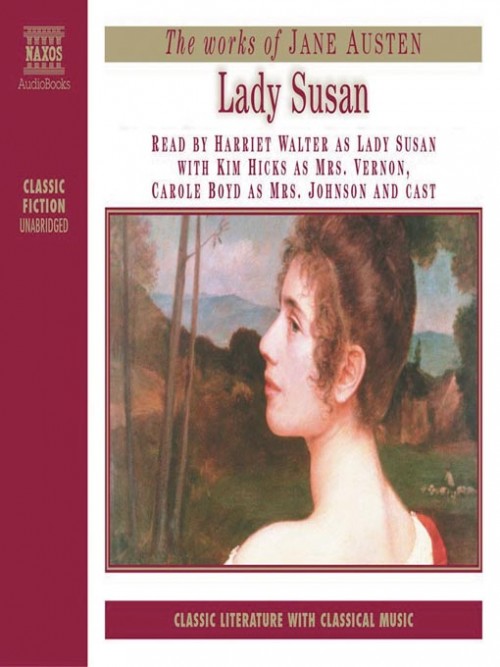
I have read Jane Austen’s Lady Susan several times, including with my local Jane Austen group in 2014 (my review). That now being ten years ago, we decided it was time to read – and consider – it again. However, as my time was tight, I decided to try an audiobook version, and found a Naxos edition in my library. Mr Gums and I listened to it on our 650+ km drive home from Melbourne, and found it excellent.

For those of you unfamiliar with Austen’s minor works, Lady Susan is, as far as we know, the first novel (novella) that Austen completed, but it was not published during her life-time, for the simple fact that she never sent it to a publisher. Written, scholars believe, in 1793/94, when she was still a teen, it was not published until 1871, decades after her death, when her nephew James Edward Austen-Leigh included it in his memoir of her. It has since been adapted to film, television, stage and book. The best known of these is probably the 2016 film, which was titled Love & friendship, a strange decision given that is the title of another work of Austen juvenilia (my post).

I gave a brief plot summary in my previous post, but will again here. Lady Susan is a bewitching, 35-year-old widow of four months, who is already on the prowl for a new, wealthy husband. The novel opens with her needing to leave Langford, where she’d been staying with the Manwarings, because she was having an affair with the married man of the house, and had seduced his daughter’s suitor, Sir James Martin. She goes to stay with her brother-in-law Charles Vernon and his wife Catherine, whom she’d done her best to dissuade him from marrying. She’s not long there before Reginald, Catherine’s brother, arrives to check her out because, from what he’s heard,

Lady Susan possesses a degree of captivating deceit which must be pleasing to witness and detect.

After all, she is “the most accomplished coquette in England”! Of course, the inevitable happens and the artful Lady Susan captivates him. Meanwhile, Lady Susan wants her shy, 16-year-old daughter, Frederica, to marry Sir James, the man she’d seduced away from Miss Manwaring – but sweet, sensible Frederica wants none of this weak “rattle” of a man. And so it continues …

Lady Susan, then, is a fairly simple tale, containing the deceits and silliness common to its 18th century genre, but also showing restraint and innovation which hint of the novelist to come – her wit and irony, her commentary on human nature, and her themes. I wrote about this too in my last post and don’t plan to repeat it here. There are many angles from which the book can be considered, and this time I’m interested in another, its form as an epistolary novel.

The epistolary novel was common in the eighteenth century. It’s something Austen tried again with Elinor and Marianne, which she wrote around 1795 to 1797, but later rewrote in her famous third person omniscient voice. Retitled Sense and sensibility, it became her first published novel in 1811. Pride and prejudice’s precursor, First impressions, may also have started as an epistolary novel. It’s interesting, then, that although she made a “fair copy” of Lady Susan in 1805 she didn’t rewrite it too. Why she didn’t is one of the many mysteries of Austen’s life. Perhaps it was the subject matter, because this is not Austen’s usual fare. Lady Susan belongs more to the 18th century tradition of wickedness, lasciviousness and adultery, forced marriages, and moralistic resolutions. Characters tend to be types rather than complex beings, and the novels are racily written, with a broad brush rather than a fine pen. This is true of Lady Susan, but there are departures. For a start it’s a novella not one of those 18th century tomes!

I might be going out on a limb here, because, while I have read a couple of 18th century epistolary novels, including Samuel Richardson’s, my memory has faded somewhat. However, Wikipedia helps me out a bit. Its article on the epistolary form says that there are three main types: monophonic (comprising the letters of only one character); dialogic (using letters of two characters); and polyphonic (which has three or more letter-writing characters). Lady Susan is an example of the last one. The main letter writers are Lady Susan (mostly to her friend Alicia Johnson in London) and her sister-in-law Catherine Vernon (mostly to her mother Lady De Courcy), but we also see some letters back from these correspondents, making four letter writers. But wait, there’s more! There are also letters – albeit just one in two cases – from others, namely Reginald De Courcy, his father Sir Reginald De Courcy, and Lady Susan’s daughter Frederica.

So, in this short book, we have 7 letter writers. But wait, there’s even more. To conclude the novel, Austen discards the epistolary-form and writes a first person denouement, which includes commentary like this:

Whether Lady Susan was or was not happy in her second Choice — I do not see how it can ever be ascertained — for who would take her assurance of it on either side of the question? The World must judge from Probability; she had nothing against her but her Husband & her Conscience.

The thing that intrigued me most as I was “reading” Lady Susan this time was the form. Austen used it for Love and Freindship, Lady Susan, Elinor and Marianne, and perhaps First impressions. But she abandoned it for the style for which she is recognised as a significant innovator – a third person narrative characterised by free indirect discourse, meaning the narrator’s voice embodies the perspectives of the characters. As John Mullan, writing primarily about Emma, explains: “Before Austen, novelists chose between first-person narrative (letting us into the mind of a character, but limiting us to his or her understanding) and third-person narrative (allowing us a God-like view of all the characters, but making them pieces in an authorial game). Austen miraculously combined the internal and the external”.

So, my thinking is that she started by using a form with which she was familiar as a reader and which was popular with readers of the day, but whose limitations she soon started to feel. Her using a relatively large number of letter writers, enabling us to see Lady Susan in particular from different perspectives, and her turning to an over-arching first person narrator for her conclusion, suggests that she understood the limitations of writing a novel-in-letters in terms of developing complex realistic characters, of managing plot, and of incorporating narratorial commentary. The rest, as they say, is history.

Thoughts anyone?

Jane Austen
Lady Susan (Classic Literature with Classic Music)
Naxos Audiobook, 2005
Duration: 2hrs 30mins

Available in e-text.
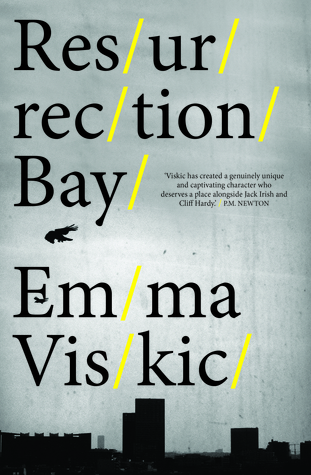
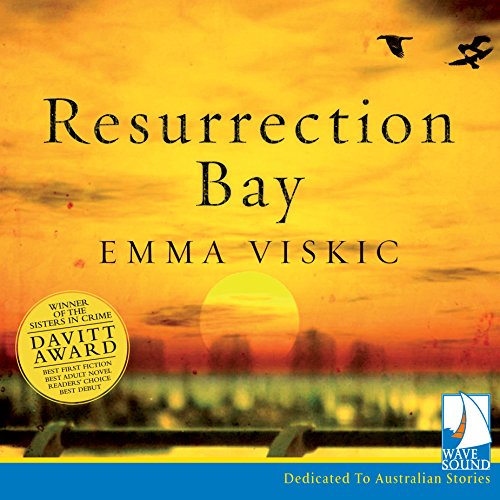
Emma Viskic, Resurrection Bay (#BookReview)

Back in February, I said I planned to “read” more audiobooks this year, and slowly I’m achieving that goal with Emma Viskic’s Resurrection Bay being my third for the year. In fact, it makes a particularly special contribution, because it is the first book I wanted to hear when we bought our new car with Apple CarPlay functionality back in 2019. That might sound strange for someone who claims to not read crime, but here’s the thing …

While I don’t, as a rule, read crime, I do like to keep up with new Australian works. Emma Viskic’s 2015-published debut crime novel featuring a deaf investigator captured my interest at a time when we were looking for more fiction featuring differently abled protagonists. I wanted to read it, but I thought my best bet would be in audiobook form, because crime is the sort of writing that can work well in the car. The problem was that every time I checked my library audiobook catalogue there was no Emma Viskic, until a couple of months ago. Consequently, Resurrection Bay was the novel of choice for our last road trip. And it was a good choice, except …

There are certain things you need in a car audiobook, we’ve found. One is that straightforward narratives work best. After all, one of the listeners is a driver who should be focusing mostly on the road. Drivers do not need to be trying to follow multiple strands or unpicking abstract language, for example. Viskic’s novel worked well in this regard. However, another is that the sound needs to be good, and easy to hear above road and car noise. Here is where we struck problems. The reader for this audiobook, Lewis Fitz-Gerald, was a great reader – and I am fussy about audiobook readers – but he used a wide dynamic range to convey emotion and meaning through his voice. This made hearing in the car very difficult at times. It would not be a problem, I expect, if you were listening to it through ear-pods while walking.

And now, I really should get to the book – but one more proviso. Because I experienced it in audio form, my comments will be general and briefer than usual.

Resurrection Bay is the first in Viskic’s Caleb Zelic series. He is a private investigator who has been profoundly deaf since early childhood – from meningitis (which was also behind author Jessica White’s deafness). Unlike Jessica, though, Caleb did learn to sign. GoodReads describes the plot as follows:

When a childhood friend is murdered, a sense of guilt and a determination to prove his own innocence sends Caleb on a hunt for the killer. But he can’t do it alone. Caleb and his troubled friend Frankie, an ex-cop, start with one clue: Scott, the last word the murder victim texted to Caleb. But Scott is always one step ahead.

“silence safer than words”

Fictional detectives, I have come to learn, are not usually easy people. They tend to be loners, or to have some personal problem/s which add to the challenge and interest of the narratives featuring them. Caleb, of course, has his deafness. He’s an outsider, not because deafness necessarily makes him so, but because he, as his Koori ex-wife Cat tells him, lets it make him so. He refuses to admit his hearing impairment to others when communication difficulties occur, and this desire to “appear normal” not only impacts his ability to do his job, but it impacts his relationship with her. He also, frustratingly, refuses to “hear” what she is saying, jumping to the wrong conclusion because he is not listening. His deafness, in other words, is more than physical. It is also mental and emotional. Communication is, then, an underlying theme or motif in the work.

However, I’ve gone off on a tangent, because of course the main story is the crime investigation, which Caleb undertakes with his business partner, the aforementioned Frankie. She has her own difficult past which includes having been an alcoholic. This Caleb knows. Their investigations take them from Melbourne to Caleb’s childhood home, the fictional Resurrection Bay, and in the process Caleb discovers things he didn’t know about his friend, the murder victim; jumps to conclusions about his brother Anton; and learns more about Frankie.

Resurrection Bay is a page-turner, as you would expect. It’s well-written, with good crime-characterisation, and vivid evocation of place. It’s emotionally moving because Viskic makes you invest in her characters, but it also has some very violent and bloody moments. I guessed what the twist might be, but I was never completely sure until the end – and how it all actually fell out contained surprises.

Now, though, I want to address the elephant in the room – the deaf protagonist, the Koori wife, and the whole whose-story-is-it-to-tell issue? Here’s the gen, from The Age. Viskic

says being half-Slav gave her an outsider status that honed her power of observation.
Her husband was raised in a Koori family and they have two grown daughters. One of her primary school classmates was deaf and the disability – and particularly the refusal to accept it as a disability by the deaf community – has always intrigued her. She learned Auslan for the novels.

Later in the article, she is quoted as saying that

writing from outside your own experience is dangerous … not just because people can shoot you down, but because you can do the wrong thing by people. But I wanted my nieces and nephews to have characters like them in a book. And also, it would have felt cowardly not to have done it.

I am not a hard-and-faster on this whose-story issue. I do think that where longterm disempowerment is involved, own-stories are the better and fairer way to go, but it’s grey. If writers have reasons for writing a particular story that is not their own, then they wear the consequences, as Viskic is clearly aware. Ultimately, it’s not for me to say, but I felt Resurrection Bay was written with sensitivity and respect. The rest is up to those who own these stories.

In 2016, Resurrection Bay won the Ned Kelly Award for Best First Fiction; and the Davitt Award for Best Adult Novel. An impressive debut.

Kimbofo enjoyed this novel too, and Bill has posted on Viskic’s fourth Caleb Zelic novel, Those who perish.

Emma Viskic
Resurrection Bay
(Read by Lewis Fitz Gerald)
Wavesound from WF Howes, 2017 (Orig. pub. 2015)
Duration: 7hrs 9mins
ISBN: 9781510064140

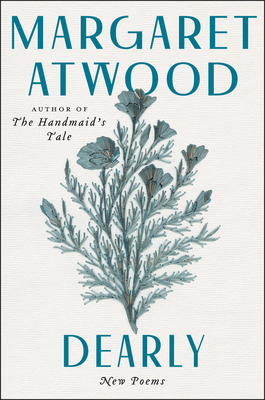
Margaret Atwood, Dearly (#BookReview)

Earlier this year, I decided to try audiobooks more regularly – and thought short stories would be a good way to go. Julie Koh’s Portable curiosities was my choice. It was, overall, a positive experience. Then I thought poetry might be worth trying given it’s such an aural form. I chose Margaret Atwood’s latest collection Dearly for my first foray into audio poetry since, although I’ve been an Atwood fan, I’ve only reviewed her once on my blog. Also, Atwood was a poet before she was a novelist. An added benefit was that the audio version was read by her. 

It worked really well – as a reading experience. For blogging, it was tricky. I found it difficult to capture the details I like to have for a review, much harder than remembering the plot, characters and themes of a novel experienced in audio form. Short stories fall somewhere in the middle. Anyhow, all this is to say that this post will share my overall thoughts, and a little about a few poems that I managed to jot down notes about or find online.

Overall, the collection came across as melancholic in tone, which is not to say the poems are uniformly grim, as there’s also plenty of Atwood’s cheeky humour. The worldview tends to the dystopian, reflecting Atwood’s concerns, but it felt realistic rather than hopeless. The subject matter is both political, dealing with issues like climate change and war, and personal, exploring ageing, grief and mortality. All of these speak to me.

Many of the poems draw on nature for their imagery, if not their subject matter. There’s a sense that nature is bearing the brunt of our wilfulness, that it shows evidence of our wilfulness, and, conversely, that it may also provide the answer. But, there are other poems which explore her themes through worlds I know nothing about, like zombies, aliens and werewolves.

And, of course, there’s Atwood’s love of language. The poems are accessible rather than obscure, but they’re not simple, because Atwood understands the weight of words and loves to play with them. This comes across really well in the audio version.

The collection is broken into five parts, starting, perhaps counter-intuitively, with “Late poems”. Many of the ideas here appealed to me, such as the idea in “Salt” that we don’t recognise the past was good until later. But, the poem that most touched me in this part was “Blizzard” in which Atwood talks about her nearly centenarian mother, asking “why can’t I let her go”? I could tell her why.

I enjoyed poems in Part 2, like “Health class (1953)” and “A genre painting”, but in Part 3, we find many poems inspired by nature. “September mushrooms” talks of fungi bringing “cryptic news of what goes on down there”. Halloween is the ostensible subject of “Carving the jacks”, which concludes with such a great line, “After we’re gone, the work of our knives survive us”. Atwood can do last lines.

In “Update on werewolves” (read it online), Atwood riffs on the masculine threat inherent in werewolves, then expands it to explore the empowerment of women. “Zombie” is prefaced by a lovely epigraph by Rilke, that “poetry is the past that breaks out in our hearts”. In “The aliens arrive”, Atwood runs through various movie aliens and their actions:

We like the part where we get saved.
We like the part where we get destroyed.
Why do those feel so similar? 

I love these pointed, paradoxical lines.

“At the translation conference” toys with language and culture, and how different cultures have words (or don’t) for different things. Some languages have “no word for him her … have no future tense”. There’s a wry reference to women and the word “no”, and, more scarily, to translation as a dangerous activity where punishment can result if the translation is “wrong”.

Part 4 also contains many nature-inspired poems. It continues the concerns and questions about where we are going, particularly regarding the environment. Finding a “Feather” causes Atwood to think of the “calligraphy of wrecked wings” and of the feather’s owner being “a high flyer once as we all were”. (This is one of many references to birds, which are a particular passion of Atwood’s.) “Improvisation on a first line by Yeats” continues the exploration of our rapacious attitude to land, as does “Plasticine Suite” with its word play on ages – the Pleistocene, the Myocene, now the Plasticine, “evidence of our cleverness, our thoughtlessness”. It addresses the arrogance of proselytising developed nations disregarding the needs of the less rich. “Oh children” ends with “Oh children … will you grow up in a world without ice … will you grow up?”

The collection concludes on the personal, with Part 5 devoted to ageing and loss, largely inspired by the death of Atwood’s husband in 2019 from dementia. There are some really lovely meditations here. In “Sad utensils” she writes of “the word reft/ who says that anymore?” despite its being honed over years and used by many. As words pass, so do our own lives, and the people we love. In “Silver slippers” she reflects on ageing and the things we give up along the way, “no dancing anymore … all my wishes used up … where did you go and when/ it wasn’t to Kansas”.

The second last poem is the titular poem, and it speaks directly to her loss of her husband, starting with the loss of the word “dearly”:

It’s an old word, fading now:
Dearly did I wish.
Dearly did I long for:
I loved him dearly.

Moving, and to the point – as is the final line of the book, from the poem “Blackberries”: “the best ones grow in shadow”. More paradox. I will leave my thoughts there and pass you over to Margaret Atwood herself in her essay for The Guardian on this collection. She says it all far more eloquently than I ever could.

Margaret Atwood
Dearly
(Read by Margaret Atwood)
Bolinda Audio, 2020 (Orig. pub. 2020)
1hr 48mins (Unabridged)
ISBN: 9781867504009

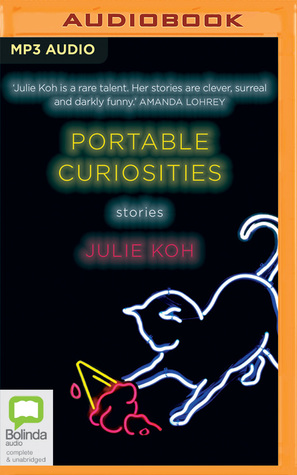
Julie Koh, Portable curiosities: Stories (#BookReview)

I’ve decided to try reading more audiobooks this year, despite not being a big fan of this mode of consuming books. I’m a textual person. I like to see the print on the page, how it is set out. I like to see the words. I like to see how the names are spelt. Given my reservations and the fact that I expect to “read” in short stints, I thought short stories might be the way to go. I think they are, though my overall reservations still stand.

My first book was one that was well-reviewed when it appeared in 2016, Julie Koh’s Portable curiosities. It won the SMH Best Young Novelists Awards in 2017, and was shortlisted for several other awards, including the Steele Rudd Award for Short Story Collections (Queensland Literary Awards) and the Glenda Adams Award for New Writing (NSW Premier’s Literary Awards). I checked to see who won the Steele Rudd Award that year, because Koh’s collection is great. It was clearly a strong year. There were co-winners, Elizabeth Harrower’s wonderful A few days in the country, and other stories (my review) and Fiona McFarlane’s High places, which I’ve also been wanting to read.

So, Portable curiosities. I had no idea what this collection was about, and was delighted to find a lively, engaged and engaging interrogation of contemporary Australia, particularly as it intersects with Chinese-Australian experienceIt is highly satirical, penetrating the myths and assumptions that underpin our shaky existence.

The order of stories in a collection is always worth thinking about, and it is notable that this twelve-story collection opens with a story called “Sight” which satirises immigrant Chinese mothers who are so ambitious for their children to fit in and achieve success that they discourage any sort of individuality or creativity. Many of the stories have a surreal or absurdist element. They start realistically but suddenly we find ourselves in another realm or dimension. “Sight”, starting off the collection, is an example. Here, we suddenly find our young narrator having a “third eye” painted on her navel. This eye represents her imaginative self, so her mother organises for it to be removed in an operation.

From here, having satirised Chinese immigrant culture, Koh moves on to critique, with biting clarity, aspects of Australian culture, from misogyny (in “Fantastic breasts” where our male narrator looks for “the perfect set of breasts to have and to hold” at a conference on “The difficulties of an objective existence in a patriarchal world”) to crushing, soulless workplaces that pay lipservice to their employees’ mental health (in “Civility Place”). “Satirist rising” mourns the end of the civilised world, with a bizarre travelling exhibition that aims to ensure the continuation of the “landscapes of our mind”, while the cleverly titled “Cream reaper” (you have to read it to see what I mean) tackles foodie culture, turning foodie-ism into an extreme sport. Along the way, it also skewers multiple aspects of our capitalist culture, like the housing bubble, the commercialism of art, institutional banking, and the plight of the tortured writer.

As a retired film archivist, I loved “The three-dimensional yellow man” which takes to task the stereotyping of Asians on film. There’s “no need for a back story”, our one-dimensional (yellow man) Asian actor is told, “you’re evil”. He belongs, after all, to the “cruel, meek blank-faced race”. Again, the satirical targets are broad-ranging from film festival panels to Pauline Hanson – and embarrassingly close to the bone.

Many of the stories, like “Two” and “Slow death of Cat Cafe”, explore success, materialism and power, while the 2030-set “The Sister Company” exposes a cynically commercial “mental health industry” through the application of androids to the problem. All these stories, despite, or because of, their laugh-out-loud moments and forays into absurdity, hit their mark. A couple, such as “Two” and “Cream reaper”, felt a bit long, even though I thoroughly enjoyed their imagination, but this might have been a product of listening rather than reading, so I’m reserving judgement on this.

My favourite, however, was probably the last, “The fat girl in history”, which opens on a reference to the popular (in Australia) CSIRO Total Well-being Diet. The narrator is Julie, and, although this story also moves into surreal realms, there is a strong sense of autofiction here. Remember, though, that autofiction is still fiction so … Our narrator is a fiction-writer experiencing a crisis of confidence. She has written about a depressed girl, androids and the future – all of which appear in this collection. She’s been told that she writes like Peter Carey, though she admits she’s never read him. She reads an article telling her that contemporary literature is “in the throes of autofiction”, that the “days of pastiche are over”, and then informs us that she’s going to write autofiction titled “The fat girl in history.” Australians will know that Peter Carey has written a short story, “The fat man in history”, and that his debut collection named for this story started his stellar career. I will leave you to think about the portents and threads of meaning Koh is playing with here, but her outright cheekiness in daring us to go with her made me laugh – particularly when I saw where she went.

Portable curiosities deals with serious, on-song subjects, and I so enjoyed seeing her address them through satire, absurdity and surrealism with a healthy dose of black humour. At times the lateral thinking in these stories, not to mention Koh’s interest in satire, reminded me of Carmel Bird. A most enjoyable collection, that was expressively read by Lauren Hamilton Neill.

Julie Koh
Portable curiosities: Stories
(Read by Lauren Hamilton Neill)
Bolinda Audio, 2018 (Orig. pub. 2016)
5hrs 48mins (Unabridged)
ISBN: 9781489440808

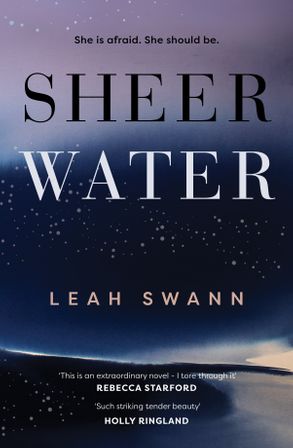
Leah Swann, Sheerwater (#BookReview)

Book cover

I’ve been wanting to read Leah Swann’s Sheerwater, having read and enjoyed, a few years ago, her short story collection, Bearings (my review). However, I didn’t get around to buying a copy, so was pleased to see it available as an audio book when I was looking for listening matter for our recent Melbourne trip. I thought we’d finish it on the trip but, in the end, the sightseeing was so interesting that we listened less than we thought we would. We’ve finished it now!

But, how to write about a crime book in which the main mystery – the disappearance of two boys – is resolved for us early on. At least, resolved in the sense that we discover what has happened to them and who was involved. As it turns out, though – and we learn this quickly – there’s another story to tell, and it’s a powerful, terrifying and unfortunately only too relevant one, a story of domestic violence, of power and control that isolates those who are vulnerable.

Interestingly, the novel’s opening reminded me strongly of the unforgettable opening to Ian McEwan’s Enduring love, which, as it happens, is also about dysfunctional love, albeit a different sort. There is also an ironic allusion to Australian literature’s “lost child” motif, when Ava thinks “this was a Continent where you could still get lost”, because these children aren’t “lost” – per se!

Anyhow, the story takes place over three days, and is told in alternating 3rd person voices, primarily those of the mother Ava, father Laurence, and 9-year-old Max who is the older of the two sons. Swann does an impressive job of getting into the heads of these disparate characters. Each one feels psychologically real, and their stories are compelling – well, most of their stories. Laurence is way too chilling to be compelling, but he is scarily real.

Now, I’m not going to write my usual sort of review, because listening to a novel (particularly while driving) doesn’t provide the same opportunity for reflection (and note-taking) that reading does, and certainly not for recording quotes, though I did jot down a few when I wasn’t the driver. The novel falls into the literary crime category, I’d say, for several reasons: it’s not a traditional crime novel; it’s told from multiple points of view; and the language is highly descriptive, if not poetic.

The title Sheerwater, for example, has multiple meanings. There’s the literal one, it being the name of the town that Ava is escaping to, and a literal and metaphorical one in that shearwaters (or, mutton birds), at the time the book is set, are doing their big migration south. They start the novel and each of the three days (if I remember correctly). There’s a sense that their impressive endurance mirrors that of women like Ava, and their arduous journey that of the boys. If we push it, there could also be a play on the words “sheer water” given the multiple meanings of “sheer” (pure, perfect, precipitous) and the role of water and the sea in the novel.

“We become evil when we hide the truth from ourselves” (Mother)

Swann creates a melancholic tone early on with phrases like “no pity under its wings”, and “sea of shipwrecks and stolen lives”. The no-nonsense but ultimately supportive policewoman Ballard is described by Ava as having a face like the “impermeable slap of seawashed stone”. It’s not all completely grim though. There is a lot of love, and Ava’s comment on one person’s kindness being enough to sustain a whole childhood is beautiful albeit, in a sense, prophetic.

So, was this book good to listen to? Yes, and no. Katherine Tonkin reads it well, including bursting into little verses of song when required. I didn’t find her voice intrusive, which can be a problem with audiobooks. However, for me, such highly descriptive books are better read than listened to. Somehow, when listening, there’s a greater sense of wanting to get on with the story. The descriptions and internal ruminations got in the way of that, whereas reading it would have allowed me to better absorb the language and descriptions, to feel and consider them, so I’m sorry about that.

Still, the narrative is strong, and it grabbed our attention, forcing us to think hard about each character, their truthfulness, their motivations, and the soundness of their actions. Who would you believe, and what would you do (if you were any of the characters involved), are the questions you confront as you read. The ending is also strong, emotional – and, dare I say it, appropriate.

In Sheerwater, Swann uses fiction to put flesh on the media stories we hear about domestic violence, encouraging us to see behind the stories to feel the confusion, roller-coaster emotions, helplessness and terror that those involved experience. Sheerwater is a book that says something.

Read for Reading Matters Southern Cross Crime Month

Challenge logo

Leah Swann
Sheerwater
(Read by Katherine Tonkin)
Bolinda/HarperCollins Audio, 2020
8hrs 44min (Unabridged)
ISBN: 9781460782354

Anna Goldsworthy, Piano lessons (#BookReview)

Book coverEver since Anna Goldsworthy’s memoir, Piano lessons, was published, I’ve hankered to read it, but somehow never got around to acquiring a copy. So, when I was casting around for our next road trip audiobook and this one popped up serendipitously in Borrowbox, I grabbed the opportunity.
Now, I have to admit that although I did play drums and fife, briefly, in a primary school band, I have never had formal music lessons. Ballet was my thing as a child. However, Mr Gums learnt piano to Grade 7, and I sat in on our kids’ music lessons, especially their piano ones, for years. I loved it, because I learnt so much about music (and music teachers) as a result. I was consequently primed for this book about the author’s piano lessons and her relationship with her Russian-born piano teacher, Mrs Sivan. Being on the Liszt List, that is, someone whose student-teacher lineage reaches back to Liszt, Mrs Sivan initially comes across as formidable, but very soon her warmth and generosity come to the fore.

Essentially, this memoir is a coming-of-age story. It covers Goldsworthy’s life – specifically her piano-playing life – from the age of nine until her mid-late twenties. It is not, however, the traditional coming-of-age story, but her coming-of-age as a musician and, along the way, as a wiser more rounded person. We see Anna coping with the humiliation of failure, when she gets a C in an important piano exam having been used to always getting As. We see the point at which she realises that, if she is to achieve her concert pianist dream, practising for barely two hours a day is not going to cut it. We see the naiveté of a young woman who, not prepared for a journalist’s questions, manages to hurt the people closest to her, learning, in the process, the importance of “humility and gratitude”. And, we see the brilliant pianist and school dux learning that a “perfect score” is “not proof against disaster”.

But, we also hear the wisdom of her piano teacher who doesn’t just teach her the techniques of playing piano, but also the meaning of music, the value and role of the arts and, more, a deeply humane philosophy of life, one that recognises, for example, the value of competition for learning but not for measuring one’s achievement or worth. Indeed, she tells Anna that she is “not teaching piano playing”, she is “teaching philosophy”. It is some years, of course, before Anna stops seeing piano playing as “obstacle courses for fingers” but as something you feel and express.

Goldsworthy describes this piano teacher, Mrs Sivan, as “less a character than a force”, and she conveys this sense largely through reproducing her teacher’s rapid-fire broken English. This might have been worked well in text, but in the audiobook – which was read by Goldsworthy herself – it was frequently difficult to listen to and was sometimes so fast that we missed words. Unfortunately, I don’t have the text to give you an example, but I found one tiny quote on GoodReads. Here is Mrs Sivan telling student Anna about Chopin:

I tell you a secret about Chopin, piano is his best friend. More. He tells piano all his secrets.

Mrs Sivan preceded this by saying that George Sand was not Chopin’s great love, the piano was! One of the real pleasures of this book is the insight provided into several musicians, particularly Bach, Mozart and Chopin, but also Beethoven, Shostakovich and others. Mrs Sivan knows them and their music so well, and impresses upon Anna that musicians must understand the composer and their lives to understand their music. Mozart, for example, “was born with happy of everything”.  I found her adamance about this interesting, because, in the literary arts, there are those who argue that the author’s life is irrelevant and should not be considered at all. I think there’s a place for it.

Piano lessons is not a long book – just 240 pages or so – but the writing and the structuring of the story are so tight that Goldsworthy conveys this coming-of-age to some depth despite the book’s brevity. She does this by never labouring her points, by knowing which stories to tell and how much to tell of them, and by imbuing it all with a light touch. Sometimes you think you are left hanging – “did she win that audition?” – but the answer always comes directly or indirectly a little later.

There is more to this book about music and musicians, about fostering talent, about forging a meaningful life as a musician, and about teaching being “the highest calling”, but not having it on hand, I’ll close here by sharing Mrs Sivan’s words about the arts. She told Goldsworthy that the arts must be “aesthetically and ethically grounded” and that they embody “unlimited flying of imagination”. I like both of these ideas – particularly that about the arts needing to be both aesthetic and ethical. In one sense, I don’t like to think that the arts “should” be anything, but I also believe that being ethical about what we do – whatever that is – is important. I think I would have liked Mrs Sivan.

Lisa also (ANZLitLovers) loved this book.

Challenge logoAnna Goldsworthy
Piano lessons (Audio)
(Read by Anna Goldsworthy)
Bolinda Audio, 2015 (Orig. pub. 2009)
2:23 e-audiobook (Unabridged)
ISBN: 9781489020260

Steven Carroll, The lost life (#BookReview)

Audiobook coverLast year, Mr Gums and I bought a new car to replace our loved but aging 15-year-old Subaru Forester. We’ve been keen to move into the hybrid world but wanted to stay with the SUV-style for various practical reasons, so, as soon as a reasonably-priced hybrid SUV appeared on the market here – the Toyota RAV4 – we were in, and so far so good. However, the real reason I’m sharing this is because another impetus for buying a new car was all the new technology, including the audio systems that enable you to play music – and books – via your phones. And so it was that I borrowed my first ever e-audiobook from our local library, Steven Carroll’s The lost life. The technology worked a treat.
Long-term readers here know that I’m not a huge fan of audiobooks, for reasons I’ve explained before. Fortunately, the reader here, Deirdre Rubenstein, did an excellent job. She was expressive, appropriately English-sounding, but read more than played the characters. That helps a lot.

So now, the book. I chose it for two reasons – it was short, making it a good test case, and it was by Aussie author Steven Carroll, whom I haven’t read yet, and whose Eliot Quartet series I’ve been wanting to read. The lost life, the first book in this series, is inspired by the poem “Burnt Norton”, the first of Eliot’s Four Quartets. Makes sense, huh! “Burnt Norton” was published in 1935, and most of Carroll’s novel is set in September 1934. The novel is framed by the story of Eliot and Emily Hale*, who did, in fact, visit Burnt Norton manor in 1934, but their love is paralleled by that of a young couple, 18-year-old Catherine and 22-year-old Daniel. Eliot, himself, is a fairly shadowy figure in the story, with the focus here being on Miss Hale and Catherine.

The story starts at Burnt Norton, a country estate to which Catherine and Daniel have gone for a romantic picnic and maybe a swim. It’s summer, and Carroll beautifully evokes the passion beating in the “ardent” young Catherine’s breast as she looks forward to further development of their physical relationship, which has not yet been consummated. But, they are interrupted by the appearance of two older people, who turn out to be, of course, Eliot and Miss Hale, and they scurry away because they are trespassing. However, they do observe, from behind the shrubs, a little lovers’ ceremony between the older couple, one that Daniel later violates, fortunately unbeknownst to Eliot and Miss Hale, but distressing to Catherine.

Here, I might pause and refer to the poem which inspired this novel. It starts:

Time present and time past
Are both perhaps present in time future,
And time future contained in time past.

A little later come the lines that I remember so well from my university days:

At the still point of the turning world. Neither flesh nor fleshless;
Neither from nor towards; at the still point, there the dance is,
But neither arrest nor movement.

I don’t know what it is about Eliot’s lines that move me so, but I think it’s their almost confounding spareness and mesmerising rhythm. Putting that aside though, it’s this sense of timelessness, of past, present and future being tied to the here and now, of both stillness and movement, of almost suspended animation too, that pervades Carroll’s novel as the protagonists work through their ideas about love and life.

“a felt experience”

Now, Catherine and Miss Hale know each other, as Catherine’s summer job is cleaning the house in which Miss Hale is staying. The plot is, to a degree, predictable. However, it is not the point. The point is how the characters react and feel about what happens. This is an introspective novel in which the two women reflect on love, their own attitudes to it, and what they see, or think they see, in each other. Miss Hale sees her young self in Catherine, her eighteen-year-old self whose disappointment she does not what to see repeated, while Catherine sees wisdom but also sadness in Miss Hale. She comes to realise, in fact, that Miss Hale, who describes her love with Eliot as “a different kind of love”, is a virgin. It is this experience of love, this mystery that endows a special knowledge, that drives the plot.

There is, though, so much to this novel. The tone is gorgeously melancholic, mirroring the poem that inspired it. Carroll also uses images from the poem – sunlight, roses, light – to suffuse his book with a sense of lost time. Repetitions like “young man of whom great things were expected”, “ardent ways”, and “the woman who won’t let go long after she has any right” add to the melancholic tone, while also anchoring our understanding of the characters.

There is also a link drawn between performance and reality. Catherine sometimes feels she is in a play or story, and this contributes to the theme of “the lost life”. Literally, it is the life Miss Hale lost by waiting all those years for Eliot rather grabbing life herself, but more broadly it can encompass all those lives we never have. Even if we, as Miss Hale realises we should, “grasp our moments as they arrive”, there will always be other lives not taken or lived. As Eliot writes in “Burnt Norton”:

Footfalls echo in the memory
Down the passage which we did not take
Towards the door we never opened.

Ironically, Catherine, who delivers “a felt experience” for Miss Hale, becomes an actor who can “deliver a felt experience on cue”, offering up other lives to her audiences, while living her own moments as they arrive. It’s an inspired conclusion to a book about love, living, and the biggest of them all, time.

Lisa (ANZLitLovers) loved this book.

Steven Smith
The lost life (Audio)
(Read by Deirdre Rubenstein)
Bolinda Audio, 2010 (Orig. pub. 2009)
5:57 e-audiobook (Unabridged)
ISBN: 9781742333830

* Check Wikipedia for more on the relationship between Eliot and Hale.

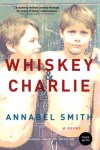
Annabel Smith, Whiskey and Charlie (#BookReview)

Annabel Smith, Whiskey and CharlieSome explanations first. Western Australian author Annabel Smith’s novel Whiskey & Charlie was first published in Australia back in 2012 as Whisky Charlie Foxtrot, which immediately brings to mind the two-way alphabet (or, as I knew it, the alphabet used by the police on The Bill for communication. The things you learn via TV!) However, as happens, the book was, excitingly and successfully, published in America in 2014, and its title was changed to the less evocative Whiskey & Charlie. What I read – heard, actually – was the audiobook that I won in a Readers’ Pack draw last year. Mr Gums and I listened to it on our recent road trip to Melbourne. It passed the time beautifully.

But, another thing, before I talk about that. I’m not a huge fan of audiobooks as I explained earlier in this blog. I really like to see the text; I don’t like to miss visual clues; and I rarely like readers acting out the voices. All these were challenges with Whiskey & Charlie, particularly the last one. The reader, Gildart Jackson, is English. He did the English accents well, but, oh dear, his Australian accent sounded disconcertingly American. I assume this audio, with its American title, was made for an American audience, but, regardless … I prefer reading!

So now the book itself which, really, is what this is all about isn’t it? It tells the story of two identical twins, Whiskey (born William) and Charlie. It is all told, however, through Charlie’s eyes, as the novel starts after Whiskey has had a freak accident and is lying in hospital in a coma. They are 32 years old, and the trouble is that they have been estranged for some time. Charlie has no idea what music, for example, Whiskey would want played at his funeral should he not awaken. He’s distressed. A procastinator who avoids confrontations, he’d always believed there’d be time to sort it all out. The novel progresses from this point, with the family taking turns waiting by Whiskey’s bedside, while Charlie remembers the past and how they’d got to the point they’re at. As he does so, he gradually comes to some realisations about himself and their relationship that enable him to – finally – mature, to see that it hadn’t all been as one-sided as he’d rather smugly assumed. This could be seen in fact as a coming-of-age novel. Perhaps all novels are, in a way; perhaps none of us stop coming of age until we, well, stop?

Anyhow, what makes this book particularly intriguing, besides the thoroughly engrossing story of an ordinary family with all its ups and downs – emigration from England to Australia, parental divorce, and so on – is its structure. And this is where the two-way alphabet comes in. We learn early on that when they were 9 years old, the then close twins been given a walkie-talkie set, and, to help with communication, they learnt this alphabet. William was disappointed that Charlie’s name was in the alphabet, while his was not. Charlie dubs him Whiskey, which becomes his name from then on. Smith structures the narrative around the alphabet, with each chapter titled according to the words – Alpha, Bravo, Charlie, Delta and so on right through to Zulu – and with each of these words linking to some part of its chapter’s content.

This – and the fact that the flashbacks aren’t completely chronological – gives the novel a somewhat episodic structure, but it doesn’t feel forced. Instead, the story is revealed in the backwards-forwards sort of way, for example, that we gradually get to know new friends while the friendship itself is moving forward. (A not uncommon structure. What makes this one a bit different is being organised by the alphabet.)

I’m not going to write my usual sort of review, mainly because having listened to it, I don’t have the same sort of notes, or the same easy access to check details or find quotes. So, I’ll just make a few comments. It’s quite a page-turner, with the main plot, as you’d expect, turning on whether Whiskey will come out of his coma, and if he does what state will he be in. The secondary plot relates to Charlie’s mental state, and his understanding of himself and his relationship with his brother (not to mention with his long-suffering, angelically patient partner, Juliet). He has always felt inferior – the one who came second, the one who didn’t get the girls or the fancy jobs – but he also felt in the right when it came to their estrangement. However, were things really how he saw them? This is something he has to work out for himself. For this reason, the third person limited voice is a good choice for the novel. It enables us to feel with Charlie, while also providing that little bit of distance which enables us to see that Charlie’s perspective may be just a little skewed.

One of the lovely things about Smith’s plotting is that there’s no melodrama, or over-blown emotionalism here. Sure, drama occurs, and there are some surprises, but it’s all within the realm of possibility. There’s some lovely humour too, particularly in the stories of the boys growing up. One particularly funny section has Charlie describing the “bases” in petting with a girl. There were times, though, when I felt Charlie was too angry, too irrational, particularly towards the end when it seemed he was on the road to growth, but that’s minor and didn’t affect his overall trajectory.

Binding all this together is the description of Whiskey’s medical condition. Smith obviously did quite a bit of research – or already knew – just how extended comas play out. While I knew some of it, there were details that I didn’t, and that I found fascinating. Smith also covers such issues as grief and end-of-life decisions.

Finally, I like the title. At first I wondered why Whiskey’s name was first when Charlie was telling the story, particularly given Charlie also comes first in the alphabet. But, of course, it’s polite to put the other person first, and it also reflects Charlie’s sense of who was first in their relationship.

Whiskey & Charlie (or Whisky Charlie Foxtrot) has been out for a few years now, but it’s still worth reading if you come across it in a library or bookshop. Or, have you read it already? If you have, let me know what you thought.

Lisa (ANZLitLovers) also liked and reviewed this – but way back when it came out!

AWW Challenge 2019 BadgeAnnabel Smith
Whiskey & Charlie (Audio)
(Read by Gildart Jackson)
Blackstone Audio, 2015 (Orig. pub. 2012)
10H30M on 9CDs (Unabridged)
ISBN: 9781504608268


Olive Ann Burns, Cold Sassy Tree (Review)

Olive Ann Burns, Cold Sassy TreeAs I explained in my post last year on Annie Dillard’s The Maytrees, we are slowly listening to some of the audiobooks we gave Mr Gums’ mother in the last years of her life, and have just finished Olive Ann Burn’s epic-length, Cold Sassy Tree. From what I’ve read in Wikipedia, Olive Ann Burns was another late bloomer (albeit not an Australian one of course). Born in 1924, she didn’t publish Cold Sassy Tree, which was her only completed novel, until 1984. It was so successful that her readers pleaded for more, for a sequel, that is. She started it, but died of a heart attack in 1990 before finishing it. It, Leaving Cold Sassy, was apparently published unfinished, but with her notes, in 1992.

Now, when authors write historical fiction – particularly one that is not about a specific event, like, say, World War 2, or a person, like, say, the ever popular Ann Boleyn – my first question is why have they decided to write about a past time? Cold Sassy Tree is set in the American South in 1906, though if I remember back to the first CD correctly, the first person narrator, Will Tweedy, is telling the story some 8 years later (which would make it on the verge of the World War 1 – not that that is relevant given the USA’s delayed entry into the war.) According to Wikipedia, Burns was a journalist and columnist, and it wasn’t until 1971 that she “began writing down family stories as dictated by her parents. In 1975 she was diagnosed with lymphoma and began to change the family stories into a novel that would later become Cold Sassy Tree”. So, I guess, there’s my answer: she was capturing the stories from her family’s past. Will Tweedy, I believe, is based on her father. And it is, fundamentally, a simple, but charming, family story.

But, like all family stories, there is a little more to it than that. The American South is – or was, particularly, at the turn of the twentieth century – conservative, religious and prejudiced against other (coloured folks, poor folks, and so on). This is the society that Will Tweedy is born into. Luckily for him, he was also born into a family with an independent-thinker, live-by-his-own-rules, grandfather, E. Rucker Blakeslee. Early in the novel, Cold Sassy Tree (for that’s the name of the town), and particularly Will’s mother and aunt, are thrown into turmoil when 60-odd-year-old Rucker, just three weeks widowed to a wife he clearly loved, ups and marries the 33-year-old Yankee, Miss Love Simpson, who was working as a milliner in his general store.

Will, just entering adolescence, is the perfect narrator in what is, partly, a coming-of-age novel. He adores his grandfather, and becomes a sometime confidant, sometime unwitting but not unwilling eavesdropper, of the newly married couple. He has a mind of his own but is still obedient enough to mostly do what he is told. He soaks up what is going on around him, and is prepared to take risks and listen to new ways of doing things while also maintaining some of that level of shock about change that his parents have.

I’m not going to write a long post on this, partly because I listened to it over a long period of time and partly because, having listened to it, I don’t have good quotes to share. Burns has written the book in southern dialect, but it’s not hard to follow, and she uses some lovely fresh appropriate imagery – similes, in particular – which adds to the enjoyment. The coloured man, Loomis, for example says that religion is “like silver”, you “must keep polishing” it.

Besides the main story of this “shocking” marriage – which has its own trajectory to which Will becomes privy – we see the introduction of motor cars to the small town, the lack of opportunity for the children of the poor working class, the changing role of women, the economic challenges faced by small towns, and the stultifying effect of narrow religious beliefs. It’s not, in other words, all light. There’s drama – a near train accident, a returned would-be lover, a suicide, to name a few. There is also awareness of racism, but Burns glosses over this a little, preferring to show, overall, positive, more humane attitudes. She doesn’t necessarily gild the situation, but she doesn’t draw out the ugliness either.

This is not, probably, a book I would have picked up and read of my own accord, but as a book to listen to during hours on the road it did an excellent job with its engaging characters, its light touch, its warm but clear-eyed view of small-town life, and its sense that although times have changed people haven’t all that much.

Olive Ann Burns
Cold Sassy Tree (audio)
(read by Tom Parker)
BlackstoneAudio, 1993
12H 30M on 11 CDs (Unabridged)

Annie Dillard, The Maytrees (Review)

Annie Dillard, The MaytreesI am not, as I wrote in my recent post on Emma Ayres’ memoir Cadence, a big “reader” of audiobooks. In fact, until Cadence, I hadn’t listened to one for a few years. However, we do have a few here that we had given Mr Gums’ mother as her sight started to fail and which we retrieved after she died back in 2011. I bought them for her, so am rather keen to see what I think of my choices!

Now, I’ve never read Dillard, though of course I’ve heard of her. The Maytrees, published in 2007, is her second novel, her first being the Pulitzer prize-winning novel Pilgrim at Tinker Creek published over thirty years earlier in 1974. Fascinating … but I’m not surprised. The Maytrees is such a quiet, deeply thoughtful book, it could only have grown out of years of living and contemplation. It reads like a lifelong meditation on the meaning of life at its very foundation – on how and why we love, on how we should live our lives.

WARNING: POTENTIAL SPOILERS

Provincetown, 1983

Provincetown, 1983

There is very little plot, though there is a storyline which tracks the relationship, through various ups and downs, of Toby Maytree (called Maytree in the book) and Lou, the woman he marries. This story is imbued with the place they live, Provincetown, Cape Cod, a place I visited in the 1980s. I loved reliving my experience through Dillard’s gorgeous evocation of it. Anyhow, the time spans from Maytree’s childhood in the late 1920s and 1930s through several decades to, I guess, the 1990s or so. Paradoxically, while the place is woven closely into the story – you get to know, intimately, the dunes, the tides, the beach shack, and even the bed that is moved, as needs change, up and down the floors of their home to bring the outdoors in – the story is absolutely universal. It’s the quintessential boy-meets-girl story but one that doesn’t end at “happily ever after”. It takes us through the long years of their marriage, the birth of their child, a devastating betrayal, a huge-hearted forgiveness, and their deaths. The book shifts around a bit in chronology, making you work a bit, but you usually know where you are.

While the main themes of the book relate to love and life’s meaning, many other ideas come through. There’s a lot of discussion of reading and literature. We are told early in the novel that “He read for facts, she for transport”. When she, Lou, finds love, here is her reaction:

Love so sprang at her, she honestly thought no one had ever looked into it. Where was it in literature? Someone would have written something. She must not have recognized it. Time to read everything again.

Later in the book when love is lost and recovered, she wonders again about love and life’s meaning. There might be a point to life, she wonders, and there might be an answer in books. She feels, however, that she had only moved a millimetre on these questions in her lifetime. She reflects on how life with Maytree had felt complete – until she’d had her baby, Petie, after which she couldn’t imagine life without him. But, inevitably, he too moved on, and in time had his own child presenting him to her as if she didn’t know the experience or feeling!

In other words, it’s a wise, knowing book, a book which sees how people think and behave. Here is Lou, newly alone:

She ignored whatever did not interest her. With those blows she opened her days like a piñata. A hundred freedoms fell on her. She hitched free years to her lifespan like a kite tail. Everyone envied her the time she had, not noticing that they had equal time.

I loved that little kick – “not noticing they had equal time”. How often do we see the other grass as greener, not seeing our own!

There’s also sly – or perhaps not so sly – commentary on American politics. Dillard describes Hoover, in 1947, warning Americans about artists, and asks “Did America have a culture besides making money?” There’s reference to a “Strictly for profit hospital”, and, at another point, when Maytree ponders the idea of shooting himself to save getting too old, we are reminded that “this was America”. These scattered political jibes provide interesting intrusions into what is mostly a philosophical novel.

The language is quietly beautiful. As I was listening to it, I could only really capture phrases to share, such as “he rummaged her spare comments”, or a description of one of Maytree’s earlier girlfriends as “a great handful of a girl out west”, or a description of the sea as a “monster with a lace hem”. Little motifs run through the book. Lou’s various red items of clothing like a scarf or a dress and Maytree’s red-speckled notebooks, for example, provide colour and continuity, and hint too at the passion of their love.

Maytree and Lou are drawn at depth. We move inside both their heads at different times. At the time of Maytree’s betrayal – which I must say is the point in the book that is hardest to grasp – gentle, but strong and resourceful Lou decides that “if this was not shaping up to be Maytree’s finest hour it might as well be hers”. The other main characters populating their Provincetown world include Deary, Reevadare Weaver, Cornelius Blue and Jane Cairo, all of whom add depth and diversity to the close community Dillard depicts.

I must say though that I found it quite a difficult book to listen to. In some ways it was too slow – we read faster than we can listen, I’ve been told. As the reader, David Rasche, read pages and pages of admittedly beautiful description and contemplation, I felt held back. I wanted to read it at my pace, faster. And yet, it was also too fast, because at times I wanted to stop and mull over the words and ideas.

I could go on, but without having the book itself to bring it all together the way I’d like, I’ll just close here and say that I found it a thoroughly satisfying book. It is warm, non-judgemental, generous and wise. And if that sounds like it’s also sentimental and corny, you’d be wrong. One day I’ll read more Dillard.

Annie Dillard
The Maytrees (audio)
(read by David Rasche)
Harper Audio, 2007
5.5 hours on 5 CDs