Tara June Winch, Swallow the air (Review for Indigenous Literature Week)

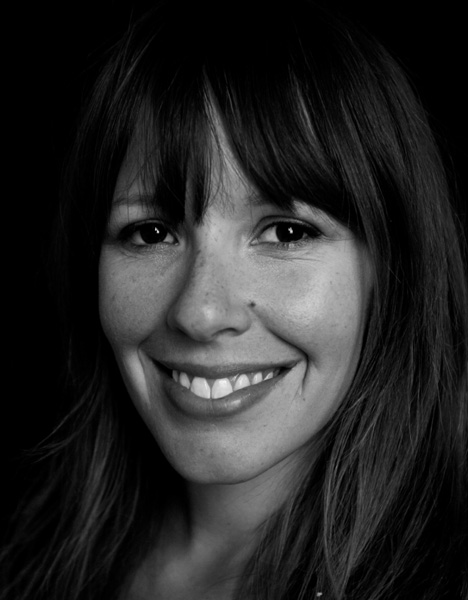
Tara June Winch

Tara June Winch (Courtesy: Friend of subject, via Wikipedia, using CC-BY-SA 3.0)

Tara June Winch’s Swallow the air is another book that has been languishing too long on my TBR pile, though not as long as Sara Dowse’s Schemetime. For Swallow the air, it was a case of third time lucky, because this was the third year I planned to read it for ANZLitLovers Indigenous Literature Week. Like the proverbial boomerang, it kept coming back, saying “pick me!” Finally, I did.

Winner of the 2004 David Unaipon Award for unpublished indigenous writers, Swallow the air made quite a splash when it was published in 2006, winning or being shortlisted for many of Australia’s major literary awards. (See Tara June Winch’s Wikipedia entry). I believe Winch is working on another novel, but it hasn’t appeared yet.

Now, though, to the book. The first thing to confront the reader is its form. It looks and even reads a little like a collection of short stories*, but it can be read as a novella. There is a narrative trajectory that takes us from the devastating death of narrator May Gibson’s mother, when May was around 9 years old, to when she’s around 15 years old and has made some sense of her self, her past, her people. May’s mother is Wiradjuri, her father English. At the novel’s opening, she is living in coastal Wollongong, which is not her mother’s country, in a single-parent household with her mother and her brother, Billy, who has a different and indigenous father. Absent fathers are, I should say, disproportionately common in indigenous families.

In fact, one of the impressive things about this debut novel is how subtly, but clearly, Winch weaves through it many of the issues facing indigenous people and communities. Poverty, loss of connection to country, the stolen generations, mining and land rights, alcoholism, drug addiction, racism, rape, child abuse by the church, imprisonment and the tent embassy are among the concerns she touches on during May’s journey. Listing them here makes it sound like a political “ideas” novel but, while Swallow the air is “political” in the way that most indigenous writing can’t help but be, its centre is a searching heart, for May has been cast adrift by the suicide of her mother. Life, which was tenuous anyhow, becomes impossible to hold together as her brother and aunt, both loving, struggle with their own pain.

This is where I become a little uncomfortable as a non-indigenous person making a generalisation about indigenous literature, but I’m going to do it anyhow, because I think I’m on firm ground. I’m talking about story-telling and what I understand to be its intrinsic role in indigenous culture. It imparts – or can do – a different flavour to the writing. Marie Munkara’s David Unaipon Award winning Every secret thing (my review) has some similarities in form to Swallow the air, and covers some similar thematic territory, but is very different in tone. Munkara’s novel also presents as a bunch of stories, with a uniting narrative thread. Swallow the air is more subtle, but nonetheless it’s the idea of stories that underpins the narrative.

What particularly impressed me about Winch’s writing is the way she manages tone and structures her story. She understands the Shakespearean imperative to offer some light after dark. For example, there’s a lovely little chapter/story called “Wantok” about family closeness which occurs after a story about a difficult work experience. In another situation, with just one word at the end of a story (“Mission”) – “Seemed [my emphasis] all so perfect, so right” – she prepares us for the opposite in the next (“Country”).

This flow – with shifts in tone that are sometimes subtle, sometimes dramatic, and with a narrative that is mostly linear but with the occasional flashback – kept me reading and engaged until the end. As did the writing itself. It’s deliciously poetic. Sometimes it is tight and spare, as in:

I do not cry, my eyes are hardened, like honey-comb, like toffee. Brittle, crumbling sugar. He puts his hand out toward me; we shake hands, a pact that I won’t be here digging up his past when he gets back.

And I’m not.

And in this description of life in the city: “Suits and handbags begin to fill the emptiness of the morning”. Other times it is gorgeously lyrical (a review buzz word, I know, but sometimes there’s no other word):

The river sleeps, nascent of limpid green, tree bones of spirit people, arms stretched out and screaming. And at their fingertips claws of blue bonnets, sulphur-crested cockatoos and the erratic dips and weaves of wild galahs, grapefruit pink and ghost grey splash the sky.

But back now to the story. As May makes her journey, we meet many characters – her brother, aunt, women like Joyce who care for her but also know when to push her on, men with whom she hitchhikes, to name a few. None of these characters are developed to any degree, but we learn what we need to know about them by how they relate to May. Most are kind, generous, nurturing. May’s journey, in other words, is not challenged so much by human barriers, but by emotional, social, political and historical ones. It is a generous thing that when she starts to understand her place, it’s an inclusive understanding, one that encompasses all of us who occupy this land:

And it all makes sense to me now. Issy’s drawing in the sand, boundaries between the land and the water, us, we come from the sky and the earth and we go back to the sky and the earth. This land is belonging, all of it for all of us.

However, while May comes to a better understanding of the land and her relationship to it, there is no easy resolution to the ongoing struggle of living in a place in which there is still “a big missing hole” created by the loss of connection to culture. It will take a long time to refill that hole, if indeed it can be done, but books like this will help communicate just what it means, and how it feels, to be so disconnected.

awwchallenge2014Tara June Winch
Swallow the air
St Lucia: UQP, 2006
198pp.
ISBN: 9780702235214

* One chapter/story, “Cloud busting” was published in Best Australian Stories 2005.
Monday musings on Australian literature: In conversation with Black Words

Today* marks the first day of NAIDOC Week 2014, which will run through to July 13. In honour of this, and of Lisa’s Indigenous Literature Week at ANZLitLovers, I thought I’d devote this week’s Monday Musings to indigenous Australian writers – and specifically to Anita Heiss’s “In conversation with Blackwords” series.

This series is described on the AustLit website as follows:

In late 2013 Dr Anita Heiss sent a series of questions to contemporary Aboriginal and Torres Strait Islander writers. The responses she received are at times funny, sad, moving, and always deeply insightful. Universally an important piece of advice was to ‘Read, read, read’ if you want to write. As an ambassador for the Indigenous Literacy Foundation, Anita was very happy to see that advice coming from some of Australia’s most admired and read authors.

As far as I can understand from the website, some 20 interviews were gathered, and posted on the site between November 2013 and May 2014. The last interview (to date anyhow) is with Heiss herself. The writers interviewed include some well-known to me like Melissa Lucashenko, Kim Scott, and Bruce Pascoe, and some I’m not at all familiar with like Dub Leffler and Sue McPherson. Heiss starts by asking them about their mob and where they are from, and then asks them about their writing and their reading – about, in other words, all those things other readers and writers love to know.

I haven’t read all the interviews, as they are pretty extensive, but have at least dipped into most, and will read more in the coming days. Here, in no particular order, are some of the things they say:

Samuel Wagan Watson (internationally recognised poet and storyteller) said this in response to “what makes a good writer”:

As far as what makes a ‘good writer’ … I don’t know? I’m an ‘established writer’ yet I wouldn’t consider myself a ‘good’ writer. Should we define a ‘good writer’ as someone who publishes a novel every year or an artist who simply falls in love with language and is a skilled technician who writes a sentence now and then that simply smokes with pearly-wings of an epiphany in the midst of your mind’s eye?

Anyone who can write “smokes with pearly-wings of an epiphany in the midst of your mind’s eye” must surely make some claim to being a good writer?

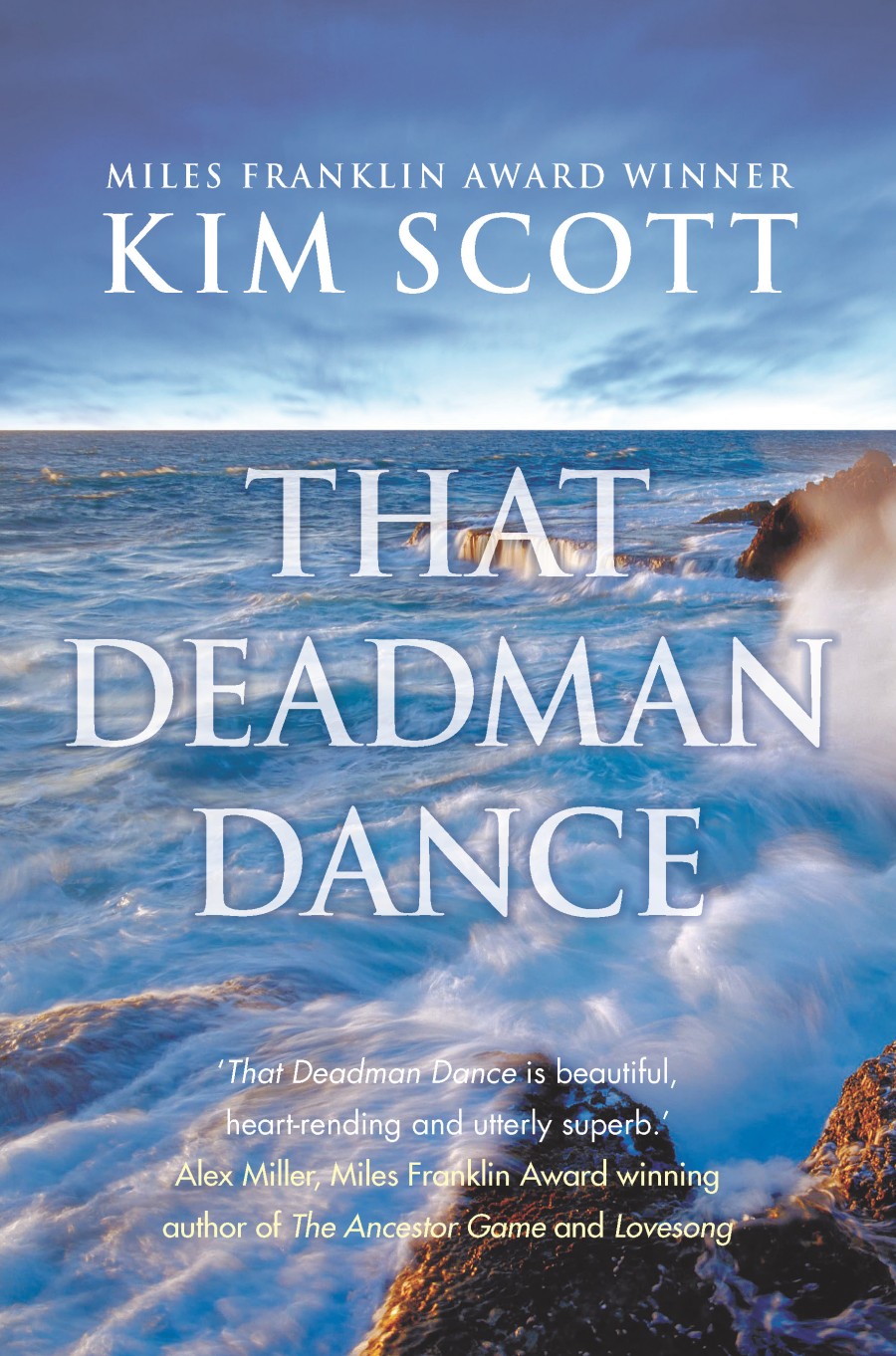
Kim Scott That Deadman Dance

(Courtesy Picador Australia)

Kim Scott (author of That deadman dance, among other things) said this about his aims as a writer:

To reach and connect. To provoke, sometimes. To transform, if only a little. As Elizabeth Jolley said, to provide ‘places where people may meet’.

To touch on greater truths. Language and stories shape the world; I sometimes want to flex and remake it again.

He’s won me over, first, by referring to one of my favourite writers, Elizabeth Jolley. But, I also like his desire to “touch on greater truths”. It’s not surprising that an indigenous writer might also want to “flex and remake” the world.

Ali Cobby Eckermann (poet, and author of Ruby Moonlight) offered this advice to writers:

My advice is to be creative! Turn the telly off and be creative. A half an hour each day has the capacity to achieve remarkable results. Be relentless, and find happiness in honouring your story, the legacy of your cultural knowledge.

Being creative, I think, is easier said than done, but I do love her suggestion to “find happiness in honouring your story”.

Ellen van Neerven (winner of David Unaipon Award in 2013) is a writer I hadn’t heard of before. She said in answer to “who do you write for?”:

Sometimes I could be writing for my younger self. I want people to feel less alone. I want people to feel less confused.

Now, that’s an answer from the heart.

Bruce Pascoe (writer of fiction, non-fiction and YA fiction). I had to finish with Pascoe’s response to the question about his writing process:

Get up, go into room and work arse off. Break for lunch, tour of vegetable garden, back into room. In good weather I write down by the river, especially if it’s a job I’m writing longhand. In my room I’ve got a growing gallery of dead Black friends to watch over me and all the birds who come to the door and want to know if it’s ok if they tell me a story. The Willy Wagtail is good but the Scrubwren is profound, the Powerful Owl haunting, the pelican a bit superior on occasions and the cormorants are always good for a laugh. I get a hell of a lot of story from birds and animals.

With such an imagination, you can sure see why he’s a prolific writer.

I plan a follow-up post on this series of conversations for next week’s Monday Musings to conclude NAIDOC Week.

* Hmm … just realised today is 7 July! NAIDOC Week started officially on 6 July!

Monday musings on Australian literature: Indigenous Australian memoirs

As Australians would know, this week – July 7-14 – is NAIDOC week. NAIDOC originally stood for an organisation – ‘National Aborigines and Islanders Day Observance Committee’ – but the acronym has now become the name of the week itself. Fascinating how acronyms can take on lives of their own, isn’t it? Anyhow, the theme for this year’s celebrations is We value vision: Yirrkala Bark Petitions 1963.

This theme commemorates the 50th anniversary of two bark petitions which were sent by the Yolngu people of Yirrkala in northeast Arnhem Land to the Australian Parliament. The petitions concerned the Commonwealth Government’s granting of mining rights on land excised from Arnhem Land. They asked the Government to recognise the Yolngu peoples’ traditional rights and ownership of their lands. These petitions were the first indigenous Australian documents recognised by the Government and helped, the NAIDOC website says, to “set into motion a long process of legislative and constitutional reforms for Aboriginal and Torres Strait Islander people”. Many Australians know of Eddie Mabo and the Native Title Act of 1993, but I wonder how many know of actions like this which occurred decades earlier?

In this spirit of commemorating the past, I thought today’s Monday Musings could focus on indigenous Australian memoirs/autobiographies. I’ve written on this topic before, and so will try to avoid repeating myself too much. Interestingly, all of the books I mention below are by women. The Cambridge companion to Australian literature says, in fact, that since the 1970s, Aboriginal women have dominated indigenous autobiography.

A number of themes run through indigenous memoirs/autobiographies and, of course, identity is a big one. One of the best known examples of a memoir about identity is Sally Morgan‘s My place which was published in 1988, Australia’s bicentenary year – the bicentenary, that is, of white settlement in Australia. It was not a year that was universally celebrated by indigenous Australians, for good reason. My place was, possibly, the first book by an indigenous Australian that many non-indigenous Australians had read – and it became a best-seller. Morgan, also an artist, told the story of her family – and of their shame that was so strong that she had not been told she was indigenous. She’d been let think she was of Indian (that is, from the subcontinent) extraction, until she was well into her teens. I haven’t read My place since 1988, but I expect it would still stand up well today. Morgan is a great story-teller.

Anita Heiss‘s Am I black enough for you, which was published in 2012, is also about identity, but in a different more confident way. I’m reading this one now. In it, Heiss aims to educate Australians about the breadth of indigenous life and experience in Australia, to show us that people do not have to be living a traditional indigenous life in the desert to identify as indigenous.

A big topic for indigenous memoirs is the experience of the Stolen Generation. Many of these also deal with identity, but from a specific point of view. I mentioned one – Doris Pilkington‘s Following the Rabbit Proof Fence – in my previous post. While I’ve read a couple of novels dealing with this issue since that post, I haven’t read more memoirs. There are many out there, though, including Rosalie Fraser’s Shadow Child: A Memoir of the Stolen Generation (1998), Doris Kartinyeri’s Kick the tin (2000), Donna Meehan’s It is no secret: The story of a stolen child (2000).

As Australians would know, the most comprehensive study of the Stolen Generation appeared in the government report Bringing them home (1997). This 700-page report contains excerpts from the testimonies of over 500 indigenous people about their or their families’ experiences of being stolen.

A common style of memoir – for indigenous and non-indigenous people alike – is what I’d call the “success memoir”. You know, those chronicling major success or high achievement. Sydney 2000 Olympic Games gold medallist Cathy Freeman wrote Cathy: Her own story in 2003. As often happens with memoirs written by non-writers, she had a co-author, the sportswriter Scott Gullan.

Last but not least is the simple story-of-my-life memoir, though most memoirists wouldn’t be writing their stories if they really were simple! Ruby Langford Ginibi would fall into this category – I think, as I haven’t read her yet. Ginibi published her first book, the gorgeously titled Don’t take your love to town, in 1988 when she was 54. She won a Human Rights Literary Award for it. Ginibi was a lecturer in and historian of Aboriginal history, but her start was way different. She married young, had nine children, lived and worked in the bush, and also worked as a clothing machinist. One of the obituaries written after her death says:

Through her numerous books, short stories, poetry, interviews and public appearances and her commitment to ‘edu-ma-cating’ non-Aboriginal people about Indigenous peoples’ circumstances and struggle she made a distinctive and substantial contribution to Australian history and literature.

 “‘Edu-ma-cating’ non-Aboriginal people”. That’s what all these writers are doing in their different ways … I’m glad they are, and will continue to read a few each year.

Unfortunately, many of these books are likely to be out of print but most should be available in libraries – in Australia at least. If you’d like to read one, I suggest you do so now and join ANZLitLovers Indigenous Literature Week. Lisa will, I understand, accept reviews after the week has finished.