When my 2018 New Territory blogging mentee Amy (of The Armchair Critic) suggested that we do some sort of joint end-of-year blog post I loved the idea. The only question was what would we talk about, and how would we do it? It wasn’t too hard to decide former, as the subject matter was obvious: we would write about our favourites reads of this year, what we’d like to read over summer, and the ACT Writers Centre’s New Territory program which brought us together
As for how, we tossed around various formats, but settled on something simple: each of us would write a post responding to our agreed topics, and would then post the other person’s answers on our own blog. This means that you can read Amy’s responses below, and mine on Amy’s blog.
I do hope you enjoy Amy’s thoughts. We would both love to hear your comments on her reading.
Amy’s highlights
Best Fiction
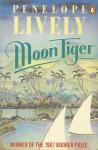
I’ve managed to narrow it down to three. All of them happen to have won prizes but this is a coincidence; I take an interest in prizes but I don’t let my reading habits be defined by them. First up is Moon Tiger by Penelope Lively. This won the Booker Prize in 1987. It tells the story of Claudia, a journalist, who mentally revisits her life as she is dying. The fluidity of Lively’s prose reminds me of Virginia Woolf, and, like Woolf, it encapsulates multiple perspectives of the same event. It is a short book but extremely dense, though in a good way – it is emotionally and historically rich, spanning events throughout the twentieth century including the second world war.
My other favourite novel was The bookshop by Penelope Fitzgerald which coincidentally is also a previous Booker winner. I read it after seeing the movie, which I reviewed on my blog. I loved Fitzgerald’s witty turn of phrase and the sense of quiet devastation that her understated prose leaves you with. A hard-hitting meditation on justice, personal culpability and the cost of pursuing a life in art.
My final fiction read is The museum of modern love by Heather Rose which won the 2017 Stella Prize. This book centres around a performance work at MONA in New York by Marina Abramovic and weaves aspects of Abramovic’s life with the contemporary life of the protagonist, Arky Levin, whose wife is seriously ill. It explores themes including the purpose of art, and the nature of human connection.
Best Non-fiction
Again I have to pick the top three. First up is Murder without a motive by the Saturday Paper’s chief correspondent Mart McKenzie Murray. Murray investigates the murder of schoolgirl Rebecca Ryle in Perth’s northern suburbs in 2004, and how her family manages to live in the knowledge of what happened to her. Mckenzie-Murray and I both grew up in Perth’s northern suburbs around where the murder took place, so I identified strongly with his (not so flattering) evocations of it. What clinched the book for me was how Mckenzie-Murray explored how the life trajectory of Ryle’s murderer was conditioned by his stultifying surroundings which were characterised by toxic masculinity.
Next up is Draw your weapons by Sarah Sentilles. I heard Sentilles at this year’s Adelaide Writer’s Week, and I highly recommend these podcasts for summer listening. Sentilles, a pacifist and former art history professor, writes about the ethical entanglements we all have with our society’s violent structures, and how we can take both a moral and practical stand against being implicated in perpetuating such violence. The book is held together by the stories of two men; a conscientious objector from World War Two and a soldier who worked at Abu Graib. Saying a book changed your life can be a throwaway line, but in this case it is true.
Lastly is Small wrongs: How we say sorry in life, love and the law by Kate Rossmanith. Rossmanith is an academic with degrees in theatre and anthropology. The book is “hybrid,” as she examines remorsefulness and redemption in her own life, as well as in other spheres such as the law. Her writing is beautiful and she is brutally honest about her own actions, which is very compelling and refreshing. I literally could not put this book down.
Best biography
I reviewed Do oysters get bored by Rozanna Lilley for New Territory. Lilley is such a talented writer, and I enjoyed the way she teased out her complicated relationships with her parents and the artistic community she grew up surrounded by. As I wrote in my review, I really believe Lilley has done Australian society a major service by demonstrating the moral conundrums and aftermath of artists’ delusional or egocentric behaviour.
My other favourite was Twin by Allen Shawn. Shawn is a composer and musician whose father was William Shawn, the long-serving editor of the New Yorker. Like his father, Allen has many anxieties and phobias which he has also written about. Twin is an account of how Shawn’s autistic twin sister Mary was removed from the family at the age of five and has spent her life in an institution. The dynamics of Shawn’s family are complex – there is a major twist about his parents’ relationship, and it really demonstrates the extent to which self-deception and sacrifice, mostly on the part of mothers, are necessary to maintain a bearable home life. Shawn’s writing is poetic and devastating.
Highlights of my summer reading list
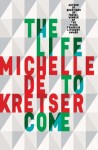 The life to come by Michelle de Kretser and No more boats by Felicity Castagna: I heard these two authors together at Adelaide Writers Week and am really looking forward to getting into their work
- The helpline by Katherine Collett: Collett is co-creator of the podcast The First Time and this is her first book. Apparently it is hilarious, and revolves around a mathematician who works on a senior citizens’ helpline …
- Shell by Kristina Olsson: set during the building of the Opera House, a building I am fascinated by. It is billed as a moving reflection on art and shame.
- Giving up the ghost by Hilary Mantel: I came across this while researching Mantel’s views on historical fiction for my first New Territory piece. It is about her relationship with her family history.
- Any ordinary day by Leigh Sales: I picked this up in a bookshop and was totally compelled by the first few pages.
What has New Territory meant to me?
New Territory has been great for many reasons. I’ve spent time with the amazing Sue Terry and have built relationships with the wonderful staff at the ACT Writers Centre, whose advice I really value. I’ve been exposed to rehearsals at The Street and have come to understand what it takes to produce theatre. I have attended some great events at the National Library, not to mention being able to speak to Rozanna Lilley courtesy of the Canberra Writers Festival.
From a craft point of view it was helpful to have the experience of being edited, and seeing how a good editor can really improve your work. I was also really privileged to attend the Hard Copy conference, where I heard from writers, agents and publishers about the publishing industry and how to get people to read your writing. This was invaluable, and helped me develop my goals for next year, which include pitching to a writers festival as a presenter, and networking with the writing community both online and at events.
 Whispering Gums