Kate Chopin, Fedora (Review)

Kate Chopin

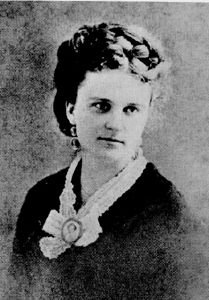
Kate Chopin (Public domain, via Wikipedia)

Time methinks for another Library of America (LOA) Story of the Week, particularly since one of their recent offerings was one of my favourite American authors, Kate Chopin. “Fedora” is the sixth story by Chopin I’ve discussed here, and is probably the shortest, more of a “sketch”. In fact its original title was apparently ““The Falling in Love of Fedora. A Sketch”

If you’ve read any of my previous posts, or her novel The awakening which I read a couple of times before blogging, you’ll know that Chopin was not afraid to tackle confronting subjects, like suicide, adultery, and miscegenation. LOA’s notes briefly discuss the controversy surrounding The awakening. Words such as  “morbid,” “sex fiction,” “poison,” were applied to it, and the clearly more conservative, younger, Willa Cather, whom I’ve also reviewed here, said that “I shall not attempt to say why Miss Chopin has devoted so exquisite and sensitive, well-governed a style to so trite and sordid a theme.”

Well, of course, many of us do know why she explored the themes she did in puritanical late-nineteenth century America, and we admire her for doing so. LOA explains that while her stories were usually sought after, some were a little too hot to handle. “Fedora” was one such, being “turned down by the national magazines that often competed for her work”, only appearing “in an upstart literary journal in her hometown of St. Louis”.

So, what is it that was so shocking about “Fedora”? Well, there’s the rub, because it’s one of those short stories that leaves you wondering. Fedora is 30 years old – and is described pretty much as the quintessential spinster:

The young people—her brothers’ and sisters’ guests, who were constantly coming and going that summer—occupied her to a great extent, but failed to interest her. She concerned herself with their comforts—in the absence of her mother—looked after their health and well-being; contrived for their amusements, in which she never joined. And, as Fedora was tall and slim, and carried her head loftily, and wore eye-glasses and a severe expression, some of them—the silliest—felt as if she were a hundred years old. Young Malthers thought she was about forty.

The story concerns her going to the station – driving the horse and cart – to pick up young Malthers’ sister who is returning from college. Young Malthers is, we are told, 23 – and Fedora has become fascinated by him, suddenly realising he is a man – “in voice, in attitude, in bearing, in every sense — a man”. Now, early in the story, we’d been told that:

Fedora had too early in life formed an ideal and treasured it. By this ideal she had measured such male beings as had hitherto challenged her attention, and needless to say she had found them wanting.

But, suddenly she is aware of him, she watches him:

She sought him out; she selected him when occasion permitted. She wanted him by her, though his nearness troubled her. There was uneasiness, restlessness, expectation when he was not there within sight or sound. There was redoubled uneasiness when he was by—there was inward revolt, astonishment, rapture, self-contumely; a swift, fierce encounter betwixt thought and feeling.

Fedora could hardly explain to her own satisfaction why she wanted to go herself to the station for young Malthers’ sister. She felt a desire to see the girl, to be near her; as unaccountable, when she tried to analyze it, as the impulse which drove her, and to which she often yielded, to touch his hat, hanging with others upon the hall pegs, when she passed it by.

It seems, then, that she is in love with him, as the original title encourages us to think – or that she, at least, feels a desire or passion for him. So, when she picks up Miss Malthers, why does she do what she does? That is the question – and it’s one I’m not going to answer, because that would be a spoiler and because the story is so short that you can read it, and ponder it, yourself. And anyhow, I’m still thinking about it myself, given the way Chopin teases us. Suffice it to say that, however you read it, Chopin was challenging her readers to think about desire – its origins, its expression, and its impact on the person who desires.

This is a beautiful and intriguing little “sketch”, though to call it that doesn’t fully do it justice.

Note: My other Kate Chopin reviews are A pair of silk stockings, After the winterA respectable womanDésirée’s baby and Morning walk. My, they are building up aren’t they?

Kate Chopin
“Fedora”
First published: Criterion, February 20, 1897
(Under the pseudonym, La Tour)
Available: Online at the Library of America

Jane Fletcher Geniesse, Passionate nomad: The life of Freya Stark (Review)

Jane Fletcher Geniesse, Passionate nomad, book coverMy reading group came to read Jane Fletcher Geniesse’s biography, Passionate nomad: The life of Freya Stark, by a somewhat circuitous route – and it started with my blog. One of our members had read my Monday Musings post on 19th century travellers, and suggested that we read a 19th century travel writer. Somehow, as the discussion developed, this morphed into reading a biography of a twentieth century travel writer. As young people say today, whatever!

Some of you probably know of Stark, but to clarify, she was a British-Italian travel writer, explorer/adventurer and historian, who was one of her time’s “most respected experts on the Arab world”. She lived and travelled in the Arabic states from the late 1920s to the mid 1940s, in particular, and was one of the first non-Arabians to travel through the southern Arabian deserts. Amazingly – well, it seems amazing when you’ve read the book and see what she experienced and endured – she lived until she was 100 years old, dying in 1993. Geniesse tells us that her parents both “placed a strong emphasis on stoicism”. She clearly learnt that lesson well!

Stark, Geniesse also tells us, moved among her era’s movers and shakers, including politicians, diplomats and a wide range of intellectuals. Geniesse shows her to be a strong, spirited, canny, resourceful and hard-working woman who took significant risks in order to achieve some remarkable, if not astonishing, feats. This is particularly impressive, given those highly gendered times when women had to fight for independence and recognition. She was, for example, one of very women to be accepted and recognised by the august Royal Geographical Society.

Geniesse traces in excellent, and well-documented detail Stark’s exploration of the Middle East, including, for example, her journeys into remote regions of Yemen which had seen few Europeans before. Unfortunately, the maps in my e-version are impossible to read and I didn’t have time to research every place she visited, so my comprehension of the detail is a little superficial. This excerpt, though, will give you a sense of Stark’s style and approach:

She reentered Luristan on a donkey, draped in native clothing, three Lurs at her side as guides. She bluffed her way past the border guards. (“The great and almost only comfort about being a woman,” she said, “is that one can always pretend to be more stupid than one is and no one is surprised”). (Ch. 8)

She spoke multiple languages, and was prepared to eat and drink what the locals did, sleep where they slept, and respect their beliefs, all of which facilitated her travel into remote, rarely visited lands.

Given the Middle East’s subsequent history, I was more interested in her theory about how the region should be “handled”. It was a theory she started developing when she was quite young, but further expanded over time. She promulgated it to the British and, in 1944 on a bruising British-government-suported lecture tour of the mostly pro-Zionist America. Stark wrote during this trip:

I have been thinking with more and more certitude on the wrongness of all our ways on becoming utilitarian at the expense of human relationships … the human relationship is what counts: and now that I have had time to think it all over, this has come to me so clearly that I feel I can lay hold on it as a definite philosophy and guide.

Respecting people’s sovereignty was a critical point for her, and she believed that any decisions had to be made with the Arabs’ consent. “We musn’t impose solutions,” was her mantra. That view, as we all know now, didn’t prevail.

Concluding the biography, Geniesse argues that while Stark

had not been able to affect British policy in a direct way, she had kept the flag aloft for decency, civility, and compassionate understanding.

Yet, Stark, like most people really, was a complicated person. She achieved a lot, but she also had her moments. One of the strengths of this biography is its even-handed portrayal of its subject. Geniesse shows Stark in all her glory – charming and petulant, wise and imperious, intelligent and petty – and does it with warmth, recognising Stark’s achievement and attraction for others, but also seeing her failings and sorrowing for their impact on her.

Geniesse argues that much of Stark’s paradoxical behaviour stemmed from growing up within an unhappy marriage that had broken up by the time she was 10 years old. She adored her self-centred mother, Flora, and yearned for her approval, but by the time she got it, with her successes in adulthood, the die was cast. She felt insecure about her appearance, and yearned throughout her life to be beautiful. She was also naive about some things, seemingly unaware for example, of the gay men in her midst and, disastrously accepting, later in life, a marriage proposal from one of them.

Stark made long-standing friends, and yet would also use people (and her health) to get what she wanted. She was surprisingly anti-feminist, like some other high achieving women before her, including (predecessor and self-imposed rival) Gertrude Bell. She preferred male company, and was keen to have male bosses (in preference even to being the boss herself, though she still fought for, and won, equal pay for herself from the British government). She was competitive and could be venomous, which her long-suffering but supportive publisher, in particular, tried to tone down.

Geniesse uses primary evidence – Stark’s letters, the writings of others, and interviews with people who knew her – to create her own psychological portrait of the sort of person she thinks Stark was, and why. As readers, we need to be aware that there could be other interpretations, but we can be comfortable, because the end-noting is there, that Geniesse’s picture is thoroughly researched and well-considered.

Geniesse also takes care in structuring her narrative. She starts with a Prologue summarising Stark’s significance, and then in Chapter 1 takes us to 1927/28 Lebanon when Stark was in her mid 30s and on her first trip to the Middle East. Having captured our attention by introducing Stark on the cusp of the grand adventure that became her life, Geniesse returns to her birth and childhood in Chapter 2 and thence tells the story chronologically. She uses foreshadowing, but not over-done, to make links between times and events “(“If Freya could only have known how close she now was to a fascinating life she might have been less depressed by the family responsibilities that again crashed down upon her”) or to focus the narrative (“but this was still a few years off”). Geniesse also finishes some “stories” even though Stark had left the picture, such as what happened post-war to the “ikwan” Stark had established in war-time Egypt to encourage local support for the British, and what happened to her husband after they separated.

In her philosophical book, Perseus in the wind, Stark wrote that:

the art of learning fundamental common values is perhaps the greatest gain of travel to those who wish to live at ease among their fellows.

I’ve really only touched on Stark’s life, and on Geniesse’s biography, but that’s all I can – or should – do. I’d certainly recommend it if you are interested in Freya Stark in particular, or in the Middle East, or in pioneer women travellers.

Jane Fletcher Geniesse
Passionate nomad: The life of Freya Stark
Random House, 1999
ISBN: 9781407053394 (eBook)

Delicious descriptions: Freya Stark on a studied absence of curiosity

Jane Fletcher Geniesse, Passionate nomad, book coverUsually I post a Delicious Description after my main post on the book in question, but I’m reversing my practice this time, for no other reason than time. I haven’t quite finished my main post but am going to be out of town for a few days, so I thought I’d whet your appetite while I’m away.

The description comes from Jane Fletcher Geniesse’s biography, Passionate nomad: the life of Freya Stark. For those of you who don’t know, Stark was, among other things, a travel writer. She lived for 100 years, from 1893 to 1993, and was, a respected Middle East expert. Geniesse, here, quotes from Stark’s second, and highly regarded book, The valleys of the Assassins, about her travels in western Iran where few or no outsiders had been. She is commenting on how the ordinary villagers are fascinated by her, asking her multiple times to stand of the roof so everyone can see her, while the Elders withdraw, not wanting “to show interest in so negligible an object”. She draws the following conclusion:

It is a remarkable thing, when one comes to consider it, that indifference should be so generally considered a sign of superiority the world over; dignity or age, it is implied, so fill the mind with matter that other people’s indiscriminate affairs glide unperceived off that profound abstraction: that at any rate is the impression given not only by village mullahs, but by ministers, bishops, dowagers and well-bred people all over the world, and the village of Shahristan was no exception, except that the assembled dignitaries found it more difficult to conceal the strain which a total absence of curiosity entails.

This is one of the best types of travel writing, I think, that which sees the particular and then draws out the general or universal, showing us that regardless of our “exotic” locations and dress and customs, we are all much the same. Don’t you agree?

Olive Ann Burns, Cold Sassy Tree (Review)

Olive Ann Burns, Cold Sassy TreeAs I explained in my post last year on Annie Dillard’s The Maytrees, we are slowly listening to some of the audiobooks we gave Mr Gums’ mother in the last years of her life, and have just finished Olive Ann Burn’s epic-length, Cold Sassy Tree. From what I’ve read in Wikipedia, Olive Ann Burns was another late bloomer (albeit not an Australian one of course). Born in 1924, she didn’t publish Cold Sassy Tree, which was her only completed novel, until 1984. It was so successful that her readers pleaded for more, for a sequel, that is. She started it, but died of a heart attack in 1990 before finishing it. It, Leaving Cold Sassy, was apparently published unfinished, but with her notes, in 1992.

Now, when authors write historical fiction – particularly one that is not about a specific event, like, say, World War 2, or a person, like, say, the ever popular Ann Boleyn – my first question is why have they decided to write about a past time? Cold Sassy Tree is set in the American South in 1906, though if I remember back to the first CD correctly, the first person narrator, Will Tweedy, is telling the story some 8 years later (which would make it on the verge of the World War 1 – not that that is relevant given the USA’s delayed entry into the war.) According to Wikipedia, Burns was a journalist and columnist, and it wasn’t until 1971 that she “began writing down family stories as dictated by her parents. In 1975 she was diagnosed with lymphoma and began to change the family stories into a novel that would later become Cold Sassy Tree”. So, I guess, there’s my answer: she was capturing the stories from her family’s past. Will Tweedy, I believe, is based on her father. And it is, fundamentally, a simple, but charming, family story.

But, like all family stories, there is a little more to it than that. The American South is – or was, particularly, at the turn of the twentieth century – conservative, religious and prejudiced against other (coloured folks, poor folks, and so on). This is the society that Will Tweedy is born into. Luckily for him, he was also born into a family with an independent-thinker, live-by-his-own-rules, grandfather, E. Rucker Blakeslee. Early in the novel, Cold Sassy Tree (for that’s the name of the town), and particularly Will’s mother and aunt, are thrown into turmoil when 60-odd-year-old Rucker, just three weeks widowed to a wife he clearly loved, ups and marries the 33-year-old Yankee, Miss Love Simpson, who was working as a milliner in his general store.

Will, just entering adolescence, is the perfect narrator in what is, partly, a coming-of-age novel. He adores his grandfather, and becomes a sometime confidant, sometime unwitting but not unwilling eavesdropper, of the newly married couple. He has a mind of his own but is still obedient enough to mostly do what he is told. He soaks up what is going on around him, and is prepared to take risks and listen to new ways of doing things while also maintaining some of that level of shock about change that his parents have.

I’m not going to write a long post on this, partly because I listened to it over a long period of time and partly because, having listened to it, I don’t have good quotes to share. Burns has written the book in southern dialect, but it’s not hard to follow, and she uses some lovely fresh appropriate imagery – similes, in particular – which adds to the enjoyment. The coloured man, Loomis, for example says that religion is “like silver”, you “must keep polishing” it.

Besides the main story of this “shocking” marriage – which has its own trajectory to which Will becomes privy – we see the introduction of motor cars to the small town, the lack of opportunity for the children of the poor working class, the changing role of women, the economic challenges faced by small towns, and the stultifying effect of narrow religious beliefs. It’s not, in other words, all light. There’s drama – a near train accident, a returned would-be lover, a suicide, to name a few. There is also awareness of racism, but Burns glosses over this a little, preferring to show, overall, positive, more humane attitudes. She doesn’t necessarily gild the situation, but she doesn’t draw out the ugliness either.

This is not, probably, a book I would have picked up and read of my own accord, but as a book to listen to during hours on the road it did an excellent job with its engaging characters, its light touch, its warm but clear-eyed view of small-town life, and its sense that although times have changed people haven’t all that much.

Olive Ann Burns
Cold Sassy Tree (audio)
(read by Tom Parker)
BlackstoneAudio, 1993
12H 30M on 11 CDs (Unabridged)

Eudora Welty, A curtain of green (Review)

This week I received the Library of America’s annual email in which they list their “Top 10 Story of the Week selections of 2016″. I’ve only read eleven of their selections this year, but two – Kate Chopin’s “A pair of silk stockings” (my review) and Willa Cather’s “Enchanted bluff” (my review) – are in their Top Ten. More interesting to me though is that it contains another writer I like, Eudora Welty. I read her book One writer’s beginnings and what is probably her most famous short story, “Why I live at the P.O.”, before I started blogging, so I decided to read this Top Ten story, “A curtain of green”.

weltycurtainofgreenWelty was a short story writer and novelist who wrote mostly about the South. She won the Pulitzer Prize in 1973 with her novel The optimist’s daughter and, according to Wikipedia, was the first living writer to be published by the Library of America (LOA)! “A curtain of green” was one of her early stories. It provided the title for (and was included in of course) her first published collection of short stories (1941), which also includes “Why I live at the P.O.”

However, before I get to the story, I want to share a little from One writer’s beginnings. This book originated in a series of lectures, the inaugural ones apparently, she gave in 1983 at Harvard University, the William E Massey Sr. Lectures in the History of American Civilisation. The cover of my 1984 edition claims that it was on the New York Times Bestseller List for 46 weeks! Pretty impressive for a series of essays I think. She was born in 1909 in Jackson Mississippi, the eldest of three. From the opening pages of the book she tells us how her growing up contributed to her writing.

For example, in the first paragraph she mentions growing up “to the striking of clocks”. She’s not sure whether it’s because of her father’s Ohio family “having been Swiss back in the 1700s” but her family were all “time-minded” all of their lives:

This was good at least for a fiction writer, being able to learn so penetratingly and first of all, about chronology. It was one of a good many things I learned, almost without knowing it; it would be there when I needed it.

Surely there’s a little bit of the tongue-in-cheek in her reference to the Swiss origins? Anyhow, two pages in, and she’s talking about her parents’ respective reactions to the weather, her father’s caution regarding storms for example and her mother’s rejection of that “as a character failing”:

So I developed a strong meteorological sensibility. In years ahead, when I wrote stories, atmosphere took its influential role from the start. Commotion in the weather and inner feelings aroused by such a hovering disturbance emerged in dramatic form.

And so the book continues in this delightful manner, sharing her childhood with affection, perception and a wonderful sly wit … but now to “A curtain of green” in which meteorological conditions do, in fact, feature!

“A curtain of green” is about grief, but it starts

Every day one summer in Larkin’s Hill, it rained a little. The rain was a regular thing, and would come about two o’clock in the afternoon.

One day, almost as late as five o’clock, the sun was still shining …

It tells the story of Mrs Larkin whose husband had died the previous summer in a terrible accident – a tree, “a fragrant chinaberry”, had come crashing down on his car as he was arriving home. She had seen it happening, had believed her love would keep him safe. And so now, while the other women of the town sit inside “fanning and sighing, waiting for the rain”, Mrs Larkin is out in her garden, where she is now all the time, because “since the accident in which her husband had been killed, she had never once been seen anywhere else”. It’s a fertile garden, needs “cutting, separating, thinning and tying back” to keep the plants from “overreaching their boundaries and multiplying out of all reason”. But, Mrs Larkin is deranged with grief. She does none of this, just works incessantly, obsessively, planting

thickly and hastily, without stopping to think, without any regard for the ideas that her neighbours might elect in their club as to what constituted an appropriate vista, or an effect of restfulness, or even harmony of colour. Just to what end Mrs Larkin worked so strenuously in her garden, her neighbours could not see …

She doesn’t offer flowers when they’re sick or die, for example. I love how the language in this story just piles on, driving us forward this way and that, just like Mrs Larkin’s grief does to her. The garden, to the neighbours who had initially tried to support her, “had the appearance of a sort of jungle, in which the slight, heedless form of the owner daily lost itself”. It’s oppressive to us, but Mrs Larkin has isolated herself behind her “curtain of green”. The only person she tolerates in this garden, and then only occasionally, is Jamey, “the coloured boy who worked in the neighbourhood”.

At this point in the story, which is told third person, the perspective shifts from omniscient to subjective, to Mrs Larkin’s point-of-view, that is. We are now in the garden with her as her memory returns her to the day of the accident. Suddenly all is still, “everything had stopped again, stillness had mesmerised the plants …” Jamey infuriates her, with his “look of docility”, of being “lost in some impossible dream of his own”. She watches him – her hunger for his innocence suddenly overtaken by a fury at his youthfulness, at his being able to be lost in this, to her, “impossible dream”. She’s overwhelmed by the unaccountability of accident, of life and death, by the meaningless of it all, and wants to smash his innocent absorption – but then comes the rain. There are two more pages in the story after this, but I’ll finish here.

This story was written in 1938 – quickly written and easily published, according to LOA. LOA also tells us that in 1931, Welty and her mother had been present when her father died of leukaemia, and they quote Welty’s biographer Suzanne Marrs as saying that her mother “discovered solace in gardening”. She spent hours in her garden, most days, often with Eudora by her side. Welty, says Marrs, wrote in an unpublished essay that “its [the garden’s] peace and fragrance are soothing to frayed nerves when we are weary from contact or perhaps conflict with the everyday world.” This memory clearly informed her story of the grieving Mrs Larkin.

“A curtain of green” is a great read, for its exploration of how grief can derail you, making you, temporarily at least, a little mad; for its evocative writing which captures that sense of derailment, taking you right into that garden with Mrs Larkin; and for its resolution which offers hope without being simplistic about it. After such a year as this has been, it seems just the right story to end on. Happy New Year everyone!

Eudora Welty
“A curtain of green”
First published in: Southern Review (Autumn 1938).
Available: Online at the Library of America

Ted Chiang, Story of your life (or, Arrival) (Review)

Image for Story of your life

Illustration for “Story of your Life”, by Hidenori Watanave for Hayakawa’s S-F Magazine. [Permission from the artist: CC BY 2.0, via Wikimedia Commons]

Whenever I see a film, I go to Arti’s Ripple Effects blog to see whether she’s reviewed it. Sometimes she has, sometimes she hasn’t. As with books, I don’t read reviews before I see films, so I can never remember whether I’ve seen a review post pass through my inbox. Consequently, when we saw the intriguing, mind-bending sci-fi film Arrival, recently, I had to see whether she’d reviewed it, and she had. She had also provided a link to the long short story from which the film was adapted. The story, Ted Chiang’s “Story of your life”, won the Nebula Award in 2000. Having enjoyed the film, but having questions about its meaning, of course I had to read it. What a fascinating story it is …

But here’s the thing … I usually prefer to read a book or story before I see its adaptation. I don’t hold fast to this rule, particularly if it’s something I probably wouldn’t have read anyhow, like, say, Girl on a train, but if I have an interest in it, reading-before-seeing is my preference. This didn’t happen – obviously – with Arrival, mainly because I hadn’t realised it was an adaptation. So, when I set off reading “Story of your life”, I had the movie freshly in my head. Not ideal and a little distracting at first, but in fact, as I kept reading, I realised that the movie was a “true” adaptation, and I relaxed into the story.

The set up is simple enough. A bunch of aliens – dubbed “heptapods” by the humans because of their octopus-like tentacles – have landed in various spots around the world, including nine locations in the US. They do not appear to be aggressive, but why are they here. The world’s governments naturally wish to discover their purpose, and so they send physicists and linguists to try to find out.

Now, here’s the challenge, as Arti also says in her post: how do we talk about this story without giving some critical things away, because this is one of those stories where much of the meaning is in the telling, even if you don’t know it at the beginning. Arti handles this challenge by talking more about the adaptation, which was indeed well done. I, however, will take a different tack and talk more generally about why I liked the story.

I said at the beginning that I’m not really into sci-fi. I’m not keen on quest films or invasion battle scenarios, but there are sci-fi stories I’ve enjoyed, and they tend to be ones which focus closely on human concerns and issues rather than on fantasy or adventure. I’m talking John Wyndham whom I enjoyed in my teens, and Kurt Vonnegut’s Cat cradle which I read in my twenties. “Story of your life” fits loosely into this sort of sci-fi (in my mind anyhow).

The story is narrated by linguist Dr. Louise Banks, but in two threads. One is the chronological (sequential) story of her work with the heptapods, told in a traditional first person voice, while the other, which jumps around in time, comprises her memories of her daughter who we learn early on dies in her 20s. It’s also told first person, but addresses “you” as if telling this daughter about her life. There are, as you’d expect, connections between the threads, so that the transitions reflect or expand on ideas developed in the other thread.

It’s an intelligent story that demands intelligence of its readers. Chiang uses words and concepts from physics and linguistics and expects us to keep up. The discussions of Fermat’s Principle, for example, and of causal and teleological ways of understanding the world, not to mention of various linguistic forms, demand concentration of the reader, concentration that I might not, in another situation, have been bothered with – but the writing is so clear, and the story so intriguing, that I stuck with it. Here, for example, is Louise’s description of heptapod writing (which was beautifully depicted in the film):

When a Heptapod B sentence grew fairly sizable, its visual impact was remarkable. If I wasn’t trying to decipher it, the writing looked like fanciful praying mantids drawn in a cursive style, all clinging to each other to form an Escheresque lattice, each slightly different in its stance. And the biggest sentences had an effect similar to that of psychedelic posters: sometimes eye-watering, sometimes hypnotic.

One of the things I particularly enjoyed was the exploration of the idea that the language we use correlates closely with how we think. (Not a new idea I know but the implications are interesting here.) So, as Louise starts to learn the aliens’ language, dubbed Heptapod B, she finds herself starting to think differently. Instead of thinking in the traditional human “sequential” (cause-and-effect or linear) mode of awareness, she starts to appreciate the heptapods’ “simultaneous” mode of awareness in which they “experienced all events at once, and perceived a purpose underlying them”.

I found myself in a meditative state, contemplating the way in which premises and conclusions were interchangeable. There was no direction inherent in the way propositions were connected, no “train of thought” moving along a particular route; all the components in an act of reasoning were equally powerful, all having identical precedence.

It’s the idea that you have to know the effects before you can know the causes, that all the components of an action or event, in other words, are simultaneously there. I did say mind-bending didn’t I?

Anyhow, I expect the non-linear/non-chronological second thread of her narrative is meant, in part anyhow, to reflect or illustrate this more holistic or teleological way of thinking.

Ultimately, “Story of your life” is a philosophical story that gets to the nub of how we understand time, of what we know, of what we can (or would change) if we could. And that’s about as close as I’m going to get to giving it away. I do recommend you read the story and see the film.

Oliver Wendell Holmes, The deacon’s masterpiece: Or the wonderful “one-hoss-shay” (Review)

Oliver Wendell Holmes 1879

C1879, By Armstrong & Co. (Boston, Mass.), Public domain, via Wikimedia Commons

Oliver Wendell Holmes is one of those wonderful names that, once you hear it, you can’t really forget it – at least, I can’t. But, the thing is, I often hear wonderful names of people who’ve “done things” without actually knowing what they’ve done. Oliver Wendell Holmes is one of these, and so when he popped up in the Library of America’s Story of the Week series a few months ago I made a note to check it out. The story – actually a narrative poem – has the title heading this post, with the additional subtitle, “A logical story”.

Holmes Sr – his son, Oliver Wendell Holmes Jr, became a Supreme Court judge – was one of those multi-talented men. Wikipedia says that he was a “physician, poet, professor, lecturer, and author” and that “his peers acclaimed him as one of the best writers of the day.” His friends included Ralph Waldo Emerson and Henry Wadsworth Longfellow, which helps me put him into perspective. He was a medical reformer, and was dean of the Harvard Medical School. Indeed, Wikipedia reports that “his essay on puerperal fever has been deemed ‘the most important contribution made in America to the advancement of medicine'”. With this focus on medicine, there was a big gap between his early published writings in early to mid 1830s and his return to writing in the late 1850s, but he returned to it with vigour, so much so that, as Wikipedia says, he is now best known as “a humorist and poet”.

So now let’s get to the post’s topic. He returned to writing around the age of 50, encouraged by a friend to become a founding contributor to a new magazine, The Atlantic Monthly. He wrote a monthly column reviving his earlier creation, Autocrat of the Breakfast-Table. LOA’s notes describe the column:

each piece is written as a table conversation monopolized by the unnamed Autocrat, with interruptions (including poetry, stories, and jokes) from other residents—including the Professor, the Landlady’s Daughter, the Schoolmistress, the Poet, the Old Gentleman, the Divinity-Student, “the young fellow called John,” and others. The new and improved “Autocrat of the Breakfast-Table” appeared in the debut issue of The Atlantic (November 1857) and immediately became the most popular feature in a magazine that boasted works by such celebrities as Emerson, Whittier, and Longfellow.

The eleventh column is the one the LOA published as their story of the week. It describes a “one-horse chaise” (the “one-hoss shay”) that is built to last. The poem became so popular, apparently, that it was published separately in 1892 as an illustrated book.

As the story goes, a deacon builds a one-hoss shay “in such a logical way” to ensure it would not break down. He uses the very best of materials – “the strongest oak/that couldn’t be split or bent or broke” – and makes sure there is no weak spot. The shay lasts for a hundred years:

Colts grew horses, beards turned grey,
Deacon and deaconess dropped away,
Children and grandchildren–where were they?
But there stood the stout old one-hoss-shay
As fresh as on Lisbon earthquake-day!

Built, then, on the day of the Lisbon earthquake, 1 November 1755, it breaks down while being ridden by the current parson on 1 November 1855:

How it went to pieces, all at once,–
All at once, and nothing first,–
Just as bubbles do when they first.

It is a delightful read in terms of tone, voice and rhyme. I particularly love that the rhyming pattern varies, which helps keep it fresh and the reader interested, and prevents it, I think, from reading like doggerel.

Conceptually, though, it’s also interesting: this idea that you could logically work out how to build something that won’t break. You find, as Holmes describes in his introduction to the illustrated edition, “what point any particular mechanism is likely to give way” and make sure that part/point doesn’t. Then you “find the next vulnerable place, and so on”, until you arrive “logically at the perfect result attained by the deacon”.

LOA describes the work as a “semi-farcical ode to Yankee ingenuity and New World rationality”, but also says it’s been seen “as an allegory on the demise of Calvinism”. LOA also says that “the poem’s fame was such that one-hoss shay became a term used in economics and statistics, designating ‘a capital asset that exhibits neither input decay nor output decay during its lifetime’.” However, in terms of economics, I can’t help thinking about his image of what “bubbles do when they burst”.

Describing his old age, and the fact that his friends – like Emerson, Longfellow and Nathaniel Hawthorne – predeceased him, he apparently said “I feel like my own survivor … We were on deck together as we began the voyage of life … Then the craft which held us began going to pieces.” I wonder if in saying this he thought about his “one-hoss shay”!

Oliver Wendell Holmes
“The deacon’s masterpiece: Or the wonderful ‘one-hoss-shay’”
First published: The Atlantic Monthly, September 1858.
Available: Online at the Library of America

Willa Cather, The enchanted bluff (#Review)

I’ve reviewed a few Willa Cather stories on this blog now, as well as her gorgeous novel, My Antonia, but as I love her stories, I can’t resist reviewing the latest to have been shared by the Library of America (LOA), albeit that was a couple of months ago now. The story is titled “The enchanted bluff” and was published in 1909, making it the latest of the stories I’ve reviewed to date. Between the previous latest story, “A Wagner matinee” published in 1904, and this one, Cather had moved to New York and started working for, writes LOA, “the notoriously difficult” editor, S.S. McClure, at the eponymously named McClure’s.

LOA explains that her years working there were “both rewarding and gruelling”, but that she “proved a perfect foil to her boss’s temperament and was even ghostwriter of his 1914 autobiography. McClure praised her as “the best magazine executive I know”. However, the downside was that she had little time left for her own writing. A common author-problem eh? The work you do to keep you alive takes you away from the work for which you live!

Enchanted Mesa
Enchanted Mesa, By Ethan (orig. posted to Flickr as Enchanted Mesa) using CC BY-SA 2.0, via Wikimedia Commons

She did though manage to write several short stories, of which “The enchanted bluff” is regarded the best. It appealed to me, not just because it is a Cather story and is imbued with her wonderful description of place and landscape, but because its focus is the legend of the lost tribe of the Enchanted mesa, a high sandstone butte in New Mexico. LOA tells us that “like the boys in her story, Cather had been fascinated by the legend” since childhood but had never been there (at least not by the time she wrote this story). Now, I’ve been to New Mexico and fell in love with its culture and landscape, so reading this story took me back to a most enjoyable time in my life …

“Enchanted bluff” feels a bit different from many of Cather’s stories. It has the nostalgic or melancholic tone common to many, and it has what I’ve described before as “her evocative, careful use of landscape and nature”, but it is more reflection than even a character-driven story. This however didn’t bother me because it does what I most like: it presents a bunch of ordinary people (in this case 6 boys and young men) going about their ordinary lives (in this case a last summer camping trip before they all head back to school.)

Camping trip, do I hear you say? Surely something dramatic happens there? Well, no, not really. The six boys, ranging in age from around 10 to 17, swim, cook their supper, and sit around the campfire talking. There’s an “angry” moon, and the loud “scream” of a whooping-crane, but nothing untoward happens. However, there is a point, to which I’ll come soon.

Cather starts her story by setting a rather idyllic scene. It’s Nebraska, where many of her stories are set, and the “brown and sluggish river”, contains little sand islands created during spring turbulence:

It was on such an island, in the third summer of its yellow green, that we built our watch-fire; not in the thicket of dancing willow wands, but on the level terrace of fine sand which had been added that spring; a little new bit of world, beautifully ridged with ripple marks, and strewn with the tiny skeletons of turtles and fish, all as white and dry as if they had been expertly cured. We had been careful not to mar the freshness of the place, although we often swam out to it on summer evenings and lay on the sand to rest.

You can feel the boys’ love of and joy in the place can’t you?

Anyhow, having set the scene, Cather then describes the boys – brothers Fritz and Otto, sons of the German tailor, and the youngest in the group at 10 and 12; fat Percy Pound who loved to read detective novels; hard-working Tip Smith, the “buffoon” in their games; tall 17-year-old Arthur Adams whose “fine hazel eyes … were almost too reflective and sympathetic for a boy”; and our narrator who would soon be leaving “to teach my first country school in the Norwegian district”. Quite a diverse group, but this is common perhaps in small country towns.

Having set the physical scene, and described her boys, Cather then shares their conversation. We soon realise that this is a story – as many of Cather’s are – being told about the past. Our narrator, in other words, is reminiscing about this last summer camp. And here is where the point starts to become apparent, because after general talk, including discussing the mystery of where the river goes after leaving their area, they start to talk about where they’d like to go. Tip tells them about Enchanted Bluff. They are all fascinated by its “dolorous legend” and discuss, as boys do, various possibilities. All are intrigued and would like to visit it, so agree that whoever “gets to the Bluff first” must tell the rest “exactly what he finds”. The summer ends, the following Christmas the boys catch up and renew their resolution, and then it’s twenty years later, from when the narrator is telling this story. None of them, he tells us, had climbed the Enchanted Bluff. Instead …

It’s a beautifully rendered story about the dreams of youth and the reality of adulthood. There’s a nostalgic glow, a sense of “enchanted youth”, but it’s offset by the reality of what happened to the boys. And this is supported by the language in which warmth and beauty are counterpointed by hints of other forces, not malevolent ones but ones which remind us that few things are as they seem or turn out the way we might dream. A good read.

Willa Cather
“The enchanted bluff”
First published: Harper’s Magazine, April 1909.
Available: Online at the Library of America

Anthony Doerr, All the light we cannot see (Review)

Anthony Doerr, All the light we cannot seeJust when you thought that there couldn’t possibly be another angle to writing about World War 2, up comes another book that does just that, like, for example, Anthony Doerr’s Pulitzer prize-winning All the light we cannot see. I had, of course, heard of it, but it wasn’t high on my reading agenda until it was chosen as my reading group’s September book. I wasn’t sorry we chose it, because I do, in fact, like World War 2 stories, and Doerr’s turned out to be an engaging one – warm, generous but not sentimental, and highly readable despite its alternating time-frames, locations and characters.

I’ve read several and reviewed some World War 2 novels and memoirs. Many have been about Jews and the Holocaust, such as Imre Kertesz’s Fateless, Hans Bergner’s Between sea and sky, Marcus Zusak’s The book thief, and two memoirs, Halina Rubin’s  Journeys with my mother and Anna Rosner Blay’s Sister, sister. A couple have been about the fighters, such as Alan Gould’s The lakewoman and Richard Flanagan’s The narrow road to the deep north. Some have drawn on the perspectives of children and young people – Zusak’s The book thief, Ursula Hegi’s Stones from the river and, of course, Anne Frank’s The diary of a young girl. Doerr’s book fits into this last group, but is different again. Zusak’s and Hegi’s girls are non-Jewish Germans, and Anne Frank is of course a Jewish girl in Amsterdam. These books focus on the Holocaust. Doerr’s does not. His interest is the personal experience of his young people – a blind French girl, Marie-Laure, born around 1928, and an orphan German boy, Werner, born around 1927. Their stories – Marie-Laure’s birth in Paris and flight with her father to Saint-Malo after Paris is occupied, and Werner’s childhood and youth in Germany followed by his war experience in Russia, Central Europe and France – are told in parallel until they inevitably meet.

Marie-Laure and Werner are nicely realised characters. They are ordinary young people trying to make a life for themselves in terrible times, but are extraordinary too. Marie-Laure’s childhood-onset blindness makes her initially helpless but she becomes a resourceful and imaginative young girl. Werner, the orphan, is a clever boy who develops a fascination with radios and things electrical. This leads him to a particular role in the war – tracking down partisan-resistance transmitters – that is different from most “soldier” stories.

All the light we cannot see is a big book. It has a wide, but not unwieldy, cast of characters, and a complex structure comprising two chronological sequences, within each of which the stories of our two young people alternate. This might sound difficult or confusing to read, but Doerr handles it well.

I’m not going to write a thorough review of this. Being a top-selling prize-winner, it has been reviewed widely. Instead, I’d like to share some of its themes, or ideas, because these are what interests me most. Before that though, I want to raise one issue. One review I read and some in my reading group expressed irritation at Doerr’s use of American idiom (such as people going “to the bathroom in their pants”). For some reason this sort of issue rarely worries me. Does that make me a bad reader? Perhaps. But it’s difficult, I think, to write in the language of another place and time, and when writers try to do it, it can feel forced. Some manage it (like Peter Carey’s True history of the Kelly Gang) and some compromise by relying on some well-placed words from an era. Generally, I’m happy for the author to use contemporary-to-them expression.

What you could be (Volkheimer to Werner)

What interests me most as a reader is not whether authors get these sorts of details right but questions like why is the author writing this, why has the author structured the story this way, what does the imagery mean, and so on. It is to the first of these that I’ll turn now. The novel’s overall subject matter is the obvious one – the tragedy of war, the way war destroys people’s lives – but within this are some interesting ideas.

One relates to logic and reason. Early in the novel, Marie-Laure’s locksmith father believes (or, perhaps, wants to believe) in logic:

Walk the paths of logic. Every outcome has its cause, and every predicament has its solution. Every lock its key.

This idea is reiterated in the book Marie-Laure is given by her father, Verne’s Twenty thousand leagues under the sea:

Logic, reason, pure science: these, Aronnax insists, are the proper ways to pursue a mystery. Not fables and fairy tales.

The opposing view, however, is put by Werner late in the war when he is tracking resistance transmitters:

Everybody, he is learning, likes to hear themselves talk. Hubris, like the oldest stories. They raise the antenna too high, broadcast for too many minutes, assume the world offers safety and rationality when of course it does not.

Logic and reason may work well enough in “normal” life, but during war they can stand for very little.

Somewhat related to this are the discussions about curses and luck. A major plot line concerns an ancient gem, the Sea of Flames diamond, which is said to carry a curse. It’s surely not by chance (ha-ha) that Doerr hides this stone behind the 13th door in the museum, and that his novel has 13 sections! Anyhow, here is Marie-Laure’s father on curses and luck. There are, he says:

no such things as curses. There is luck, maybe, bad or good. A slight inclination of each day toward success or failure. But no curses.

AND

Stones are just stones and rain is just rain and misfortune is just bad luck.

Later though, when her father has been arrested and Marie-Laure is scared and alone, she conducts an imaginary conversation with him:

You will survive, ma chérie.
How can you know?
Because of the diamond in your coat pocket. Because I left it here to protect you.
All it has done is put me in more danger.
Then why hasn’t the house been hit? Why hasn’t it caught fire?
It’s a rock, Papa. A pebble. There is only luck, bad or good. Chance and physics. Remember?
You are alive.

In almost every story I’ve read about war – fiction and non-fiction – luck has played a significant role. It’s one of the things that makes war so scary. You cannot expect reason to prevail.

Finally, related to these two ideas is that of choice:

Frederick [Werner’s friend at Schulpforta, the Nazi training school] said we don’t have choices, don’t own our lives, but in the end it was Werner who pretended there were no choices …

Frederick, in fact, chose to exercise his choice by refusing to follow orders and he suffered the consequences, while Werner did as he was told – at school and later in the field (“they do as they’re told”) and suffered the consequences in a different way. Late in the novel, Werner meets Marie-Laure:

He says, “You are very brave.”
She lowers the bucket. “What is your name?”
He tells her. She says, “When I lost my sight, Werner, people said I was brave. When my father left, people said I was brave. But it is not bravery; I have no choice. I wake up and live my life. Don’t you do the same?” 

These and similar discussions thread through the book. They remind us that in war survival is largely a matter of “luck”, that reason and logic will only get you so far when you confront the chaos of war, and that, perhaps paradoxically, you do have choices even if they are between two unappealing alternatives. The ultimate tragedy is that war destroys “what you could be” – all those talents, all those dreams, are subsumed into the business of survival.

This is not a perfect book. It’s a bit sprawling, trying to do a lot with imagery that I haven’t been able to completely untangle. And I wonder about the necessity of the final decades-later chapters. However, it is a page-turning read and produced a lively discussion in my bookgroup. I’m glad I read it.

Anthony Doerr
All the light we cannot see
London: Fourth Estate, 2014
531pp.
ISBN: 9780007548682 (eBook)

John Muir, Save the redwoods (Review)

Giant Sequoia, Yosemite

Giant Sequoia, in the Sierras

Any fool can destroy trees. They cannot defend themselves or run away. And few destroyers of trees ever plant any; nor can planting avail much toward restoring our grand aboriginal giants. It took more than three thousand years to make some of the oldest of the Sequoias, trees that are still standing in perfect strength and beauty, waving and singing in the mighty forests of the Sierra.

“A wind-storm in the forests” by American naturalist/environmentalist John Muir (1838-1914) was the first Library of America (LOA) story of the week that I ever reviewed here. I was consequently keen to read his short essay “Save the redwoods” when it popped up as an LOA story-of-the-week three weeks ago. It’s an interesting piece, partly because it was found amongst his papers, posthumously, so was not published during his lifetime.

As LOA’s notes say, Muir spent four decades writing articles for the national press which argued for the “protection of such natural wonders as the Petrified Forest, the Grand Canyon, and—above all—Yosemite.” Yosemite was a particular love of his. LOA tells how it was his and Robert Underwood Johnson, associate editor of The Century Magazine, alarm about the “substantial damage caused by lumbering, sheepherding, and tourism” there that eventually resulted in the creation of Yosemite National Park.

It is this issue of lumbering that Muir takes up again in “Save the redwoods”. It was apparently written around 1900 when there were concerns that the Calaveras Grove of Big Trees or Giant Redwoods (Sequoiadendron giganteum) was at risk of being sold and cut down for timber because the owner, James Sperry who had protected them, was old and no longer able to maintain it. A lumberman, Job Whiteside, planned to buy it – but there was a public outcry. This is when Muir apparently wrote his piece, arguing that the various scattered groves of redwoods not included in Sequoia National Park should be protected..

In his piece Muir, as was his style, draws on religious imagery, analogy and personification, amongst other devices, to argue his case. He discusses the destruction of a couple of Big Trees in the grove back in the 1850s:

Forty-seven years ago one of these Calaveras King Sequoias was laboriously cut down, that the stump might be had for a dancing-floor. Another, one of the finest in the grove, more than three hundred feet high, was skinned alive to a height of one hundred and sixteen feet from the ground and the bark sent to London to show how fine and big that Calaveras tree was—as sensible a scheme as skinning our great men would be to prove their greatness. This grand tree is of course dead, a ghastly disfigured ruin, but it still stands erect and holds forth its majestic arms as if alive and saying, “Forgive them; they know not what they do.”

He then comments on the new plans to mill this grove, saying

No doubt these trees would make good lumber after passing through a sawmill, as George Washington after passing through the hands of a French cook would have made good food.

That’s an analogy to get our attention! He argues that if one of these

Sequoia kings [could] come to town in all its god-like majesty so as to be strikingly seen and allowed to plead its own cause, there would never again be any lack of defenders.

He describes the proliferation of sawmills and the ongoing destruction of these big trees, and sets this activity against Mr Sperry’s protection of the sequoias in his Calaveras Grove. Muir notes that when news starts to come through of this Grove being bonded to the lumberman, there is suddenly a “righteous and lively indignation on the part of Californians”. This, he says, seems strange given “the long period of deathlike apathy, in which they have witnessed the destruction of other groves unmoved”. However, he writes, public opinion had been rapidly changing in recent years and there had always been a special interest in the  “Calaveras giants [because] they were the first discovered and are best known”.  Moreover:

  • they have a worldwide reputation;
  • they are visited and admired by “travelers from every country”; and
  • the names of great men have long been associated with them (including Washington, Humboldt, Torrey and Gray, and Sir Joseph Hooker)

He argues that “these kings of the forest, the noblest of a noble race, rightly belong to the world” but, as they are in California, Californians “cannot escape responsibility as their guardians”. Then comes some patriotism and buttering up! He writes:

Fortunately the American people are equal to this trust, or any other that may arise, as soon as they see it and understand it.

It is here that we find the excerpt I opened my post with. It’s followed by his brief description of a bill being put before congress to protect the Calaveras Grove. He argues that not only will the bill protect this particular grove of trees but the resultant/concurrent “quickening interest in forest affairs in general” will result in improved chances for other groves and forests.

The piece feels a little rushed and unfinished, which is probably why he never submitted it for publication, but the work of Muir and others did eventually result in most of the west coast’s major sequoia and coastal redwood groves being “gathered under the jurisdiction of the National Park Service”. I saw many of these trees in the 1980s and again in the 1990s. They are unforgettable.

“Any fool”, Muir wrote, “can destroy trees”. Saving them is much harder. It takes passion, patience and persistence, something Muir exemplified in his life-time. Luckily, a long succession of environmentalists – around the world – continue this tree-saving work today.

John Muir
“Saving the redwoods”
First published (posthumously): In Sierra Club Bulletin, January 1920.
Available: Online at the Library of America