Rayna Green, High cotton (#Review)

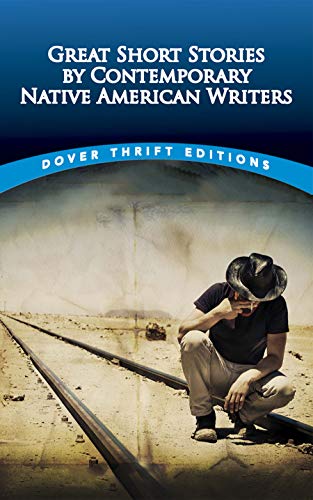
With Rayna Green’s short story, “High cotton”, we pass the halfway mark in that anthology I’ve been posting on over the last few months, Great short stories by contemporary Native American writers. We are also getting closer to the anthology’s publication date of 2014, so these chronologically listed stories are starting to bunch up in their dates. The previous two were both published in 1983, with “High cotton” being published just a year later in 1984.

Rayna Green

Again, I’m mostly using anthology editor Bob Blaisdell’s intro and Wikipedia to introduce the author. Blaisdell’s intro is brief, as usual, but it is he who formally clarifies Green’s identity as a Native American, explaining that her “Native background, through her father, is Cherokee”. Identity, as we’ve come across already in this collection, can be problematical so I was a bit unsure when Green’s Wikipedia article didn’t explicitly provide her tribal affiliation, as I’ve found for our preceding authors. As this anthology specifically contains stories by Native American writers, I do want to identify how each writer fits into this.

Wikipedia’s article on Green (b. 1942) isn’t completely silent. It does imply her heritage, describing her as the “first American Indian to receive a Ph.D.” in Folklore and American Studies, and stating, near the end, that she was “a founding member of both the Cherokee Honor Society and the American Indian Science and Engineering Society”.

Continuing with Wikipedia, I was also surprised that, unlike for our previous writers, Green is not introduced as a writer, but as a curator and folklorist – at the Smithsonian Institution, among other organisations – and as having worked in academia. Duke University is more useful regarding her writing career. In 2008, it said that she had written or edited four books and published “many essays on American Indian representations, American Indian women, American identity, American Indian material culture, and American Indian food and foodways”. The page also says, and this was of particular interest to me, that

Several of her short stories and essays on Native women and American identity have been widely reprinted and have served as standard reading for twenty years in courses in women’s studies, American Indian studies, and American studies (e.g., “The Pocahontas Perplex: The Image of American Indian Women in American Culture,” “The Tribe Called Wannabee: Playing Indian in Europe and America,” “Magnolias Grow in Dirt: Southern Women’s Bawdy Humor,” and “High Cotton”).

This seems like a good point to move to today’s short story …

“High cotton”

“High cotton” is a tricksy story. For a start, it is framed as a story within a story, which suggests that storytelling is one of its concerns. There is also the challenge of the Oklahoman Tahlequah vernacular that is used in the telling. Finally, there are complicated relationships, and, dare I admit it – identities – to unravel. I’m not sure I completely got them all, but that I think it part of the point about identities: To what extent are they what you are born as and to what extent what you choose?

The story-within-the-story concerns Rose who, in effect, gets the better of those who have made her life hell – the Baptist Church and her abusive alcoholic white husband Will – by emulating Jesus to encourage said husband to convert to Christianity and preach the word. The story turns to almost pure farce at this point as Rose prances around the bedroom in a cloudy, white nightgown exhorting her out-of-it husband to repent his ways. She can’t believe that he doesn’t recognise her, but she does such a good job of it that he does indeed repent and go on to preach the word while, in a pointedly ironic twist, she goes on to support herself by selling the very liquor that had made her life a misery. And, she stays away from the church.

Framing this is Grandma (Rose’s sister, I think) telling the story to Ramona (a great-niece, I think). Green opens her story with:

Is everything a story? Ramona asked her.

To which Grandma replies, somewhat cryptically:

It is if a story is what you’re looking for – otherwise it’s just people telling lies and there’s no end to it.

While Grandma waits for Ramona’s response, Ramona is watching some “purple cockscombs” through the kitchen door. This ends the opening paragraph so, hmmm, what do these “purple cockscombs” signify, as they seemed too deliberately placed there to mean nothing. They are flowers, but my first thought was of the cockscomb strutting about in foolish pride. My web search retrieved several, often paradoxical meanings. Symbolsage.com provides a good description, summarising them as symbolising “love, affection, silliness, partnership, individuality, strength”. Green could be calling on some of these, and/or on that “cockscomb” image of showy emptiness.

Perhaps more relevant to focus on is the black snake that runs across another character’s foot out in the cotton fields. The snake doesn’t bite her – a Cherokee named Gahno – but the event results in pandemonium and change that involves, over time, the women working on the cotton fields leaving. This infuriates the German plantation-owner Poppa, particularly when his daughter (Ramona’s mother) marries Gahno’s son: “Betrayal was bad enough, but race mixing was worse”.

It is only after we are told all this, and after Ramona has doctored Grandma’s iced tea with some “boogered Indian” whiskey, that we hear the story of Rose and Will. Grandma is quite the storyteller:

Rose got all the church women to pray and pray over him, week after week, and they kept poor Jesus awake yelling about Will’s sinful state. The more they prayed and hollered over him, the more he cussed and drank. And that made them pray more. You know how them prissy Baptist women is, honey—wouldn’t say shit if they had a mouthful—and they like to drove everyone to the ginmills and shake dance the parlors before long. But everyone was more disgusted with Will.

By the end of the story Will has been dead some years, and Rose “had turned Indian just as sure as she’d turned away from Christians”.

To conclude, we return to the aforementioned snakes. Grandma tells Ramona that Rose “always figured, just like Gahno, that snakes were meant to warn you, and she took the warning”. As for stories? Well, they may be lies or they may be what Grandma calls them, “snakebite medicine”. “High cotton” is an intriguing story. Green evokes a lively scene, and explores with dark humour the complexities of multiracial communities where personalities and cultures clash, but I did have to read it several times to work out who was who. If anyone else has read it, I’d love to hear your thoughts.

Rayna Green
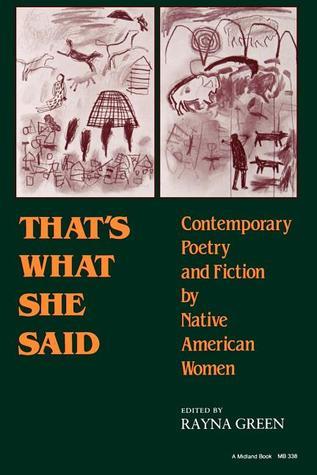
“High cotton” (orig. pub. 1984 in That’s what she said: Contemporary poetry and fiction Native American women, ed. Rayna Green)
in Bob Blaisdell (ed.), Great short stories by contemporary Native American writers
Garden City: Dover Publications, 2014
pp. 59-64
ISBN: 9780486490953

Jack D. Forbes, Only approved Indians can play made in USA (#Review)

The title of the next story in Great short stories by contemporary Native American writers is almost as long as the story itself. Well, not quite, but, occupying just two pages in the anthology, it is a short short story. It was first published the same year, 1983, as the previous story, “Turtle meat” by Jospeh Bruchac III, but is very different in tone.

(I apologise to those of you who were expecting my next post to be on Chris Flynn’s Here be Leviathans. It is coming, soon, but I had to put it aside for my end-of-July reading group book, and I do want to do it justice.)

Jack D. Forbes

Again, I’m using anthology editor Bob Blaisdell’s intro and, mostly, Wikipedia to introduce the author. Forbes (1934-2011), says Wikipedia, was an historian, writer, scholar and activist who “identified as being of Powhatan-Renapé and Lenape descent”. He is best known for his role in establishing one of the first Native American studies programs at the University of California Davis. He also cofounded D-Q University, “a prominently Native American college in Davis, California”. His activist career started in the early 1960s, when he became involved in the Native American movement, which, Wikipedia explains, “asserted the rights to sovereignty and resisting assimilation into the majority culture”.

Blaisdell introduces his story with this: ‘”Only approved Indians can play made in USA” is almost too sad to be funny, but funny it is’. Or, is it?

“Only approved Indians can play made in USA”

I enjoyed this story because of the way it addresses that issue that can dog First Nations peoples in colonial settings, that of proving indigeneity, which feeds into ideas about identity. It’s an issue I’ve discussed here before, including in First Nations writer Anita Heiss’ Am I black enough for you (my review), and in the essay “Channelling Mannalargenna” (my review) by the non-Indigenous journalist Kathy Marks.

In her book, which is a few years old now, Heiss shares the working definition of an Aboriginal or Torres Strait Islander person used by Australia’s Federal Government:

An Aboriginal or Torres Strait Islander is a person of Aboriginal or Torres Strait Islander descent who identifies as an Aboriginal or Torres Strait Islander and is accepted as such by the community in which he “or she” lives.

I share this purely for background purposes to this story. I am not going to get into the Australian situation because it’s not an issue I have followed recently. It was particularly problematical in Tasmania in recent decades, but I believe that much of that has now been resolved, to the extent that self-identifcation and community recognition are the accepted criteria.

Meanwhile, though, Heiss’s comment is relevant to Forbes’ story which concerns an All-Indian Basketball Tournament, and the two teams that are about to play, one from Tucson and one from the Great Lakes. Many people had come to watch, “mostly Indians” we are told, with many being relatives or friends of the players. There was betting, and “tension was pretty great”. The issue is that the Tucson players are, in general, much darker. Many also have long hair, and some have goatees or moustaches. A rumour starts from the Great Lakes camp that they are Chicanos, not Indians. (If you know your American geography, you will know that Tucson is in southern Arizona, so not far from Mexico, while the Great Lakes are up there near Canada.)

Anyhow, this is a serious point because, as the story goes, the Indian Sports League’s rule is that “all players had to be one-quarter or more Indian blood and that they had to have their BIA [Bureau of Indian Affairs] roll numbers available if challenged”. The Great Lakes players, coming from a big Midwestern city, are all over this:

they all had their BIA identification cards, encased in plastic. This proved that they were all real Indians – even a blonde haired guy. He was really only about one-sixteenth but the BIA rolls had been changed for his tribe so legally he was one-fourth.

You can feel the tongue firmly planted in the cheek – the satirical tone – here can’t you! They challenge the Tucson players, many of whom, as it turns out, can speak their language. None of the urbanised Great Lakes players could, but they claim this proved nothing. Only the BIA card did! The story is short and you can read it at the link below.

“Only approved Indians can play made in USA” is a clever, and oh-so succinct story that draws on recognisable conventions of competitive sport to produce a satire that explores the role of regulation and law in people’s lives, the way power can be wielded, and its potential for destabilising cultural heritage and disrupting solidarity. The ending is particularly biting because after the Great Lakes team has had its way, the last word is given to a white BIA official. That tells you all you need to know about this story.

Jack D. Forbes
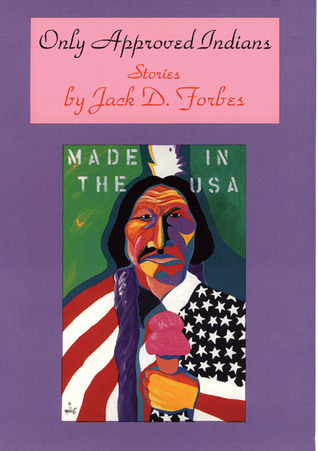
“Only approved Indians can play made in USA” (orig. pub. 1983; also published in Forbes’ collection, Only approved Indians: Stories, 1995)
in Bob Blaisdell (ed.), Great short stories by contemporary Native American writers
Garden City: Dover Publications, 2014
pp. 57-58
ISBN: 9780486490953

Available online at genius.com

Joseph Bruchac III, Turtle meat (#Review)

I’m continuing to work through the stories in Great short stories by contemporary Native American writers. With this post, we jump from 1968 to 1983, which mens we are getting close to contemporary territory. The story is “Turtle meat” by Jospeh Bruchac III.

Joseph Bruchac III

As before, I’m using anthology editor Bob Blaisdell’s intro and Wikipedia to introduce the author, though in this case Blaisdell is extremely brief. Bruchac was born in 1942 and, says Wikipedia, “identifies as being of Abenaki, English, and Slovak ancestry” with his Abenaki heritage coming from his grandfather. He writes poetry, novels and short stories, with “a particular focus on northeastern Native American and Anglo-American lives and folklore”, and is the director of a press which publishes new Native American writers. He is also a performing storyteller and musician.

This post’s short story, “Turtle meat”, was first published, according to Blaisdell, in 1983, in an anthology titled Earth power coming: Short fiction in Native American literature, which was published by the Navajo Community College Press. It was published again in Bruchac’s own collection, Turtle meat and other stories, nearly a decade later in 1992.

“Turtle meat”

Wikipedia’s description of his focusing on “northeastern Native American and Anglo-American lives and folklore” certainly rings true for this story. Blaisdell introduces the story this way, “In this strange great story about an elderly Native American who has been living for years with a debilitated woman, Bruchac writes one of the most extraordinary fishing scenes in literature”. That sure sets up some expectations. It is also a bit misleading because “the debilitated woman” is simply old. She hadn’t always been so.

The story concerns Homer LaWare who, when the story opens, had been Amalia (Mollie) Wind’s hired hand for decades after she had kicked out her husband and come for him. There’s a little sense of “Driving Miss Daisy” here except we are on a farm and life is more earthy than Miss Daisy’s refined life with her Black American chauffeur. To start with, Homer and Mollie have been lovers from the beginning, even though Homer always slept in his cot in the shed – his decision it seems, because “it’s the Indian in me”.

The point at which the story starts, both are showing their age. The story opens with Mollie calling out to him because she needs help getting off the toilet. He comes in from the once-farmed but now overgrown field, and “gently” lifts her, reassuring her that she’s not old, that it “must of was just a cramp. Nothing more than that”. This opening scene tells us a few things – that they are old, of course; that they are comfortable with each other; and that he is sensitively attentive to her physical and emotional needs. We also learn that she has retained ownership of the farm that had originally been her father’s, and that Homer is happy with that: “It’s the Indian in me that don’t want to own no land”. Her grasping husband, Jack Wind, had been sent packing, and her “no-good daughter” had not been seen for years.

The central part of the story describes Homer’s fishing expedition – his catching (and cleaning) several yellow perch, and then an old snapping turtle. It’s a battle – it was easier when he was young “and his chest wasn’t caved in like a broken box” – but he does it. Finally, having been out longer than he’d expected, he returns home, muddy and bloody, to find Amalia missing. Where is Amalia, and why is her daughter – who has “Jack Wind written all over her face” – sitting in Amalia’s rocker?

In one sense, “Turtle meat” is a traditional story of ageing parents and grasping children, but it is imbued with a different sensibility. Homer’s battle with the turtle recalls other literary battles between fishermen and their prey, but in this case it is not only about Homer confronting his age, but is also symbolic of the battle Amalia simultaneously faces. I suspect, too, that the choice of a turtle has specific cultural references for Bruchac, given turtles seem to feature often in his writing.

It’s a great story, as Blaisdell says, but what makes it particularly so is the writing. The characters are more than just types. There’s a natural dignity to them, with an individuality that is conveyed mostly through dialogue – and in Homer’s case, also through his thoughts expressed via italics. The descriptive writing is tight and fresh. And it has a quiet humour. Take, for example, Homer out on his boat:

He looked in the water. He saw his face, the skin lined and brown as an old map. Wattles of flesh hung below his chin like the comb of a rooster.

“Shit, you’re a good-looking man, Homer LaWare,” he said to his reflection. “Easy to see what a woman sees in you.”

How can you not warm to such a character and such writing?

Unfortunately, I don’t think this story is available online so you’ll just have to believe me that it’s another one worth reading from this anthology.

Joseph Bruchac III
“Turtle meat” (orig. pub. 1983)
in Bob Blaisdell (ed.), Great short stories by contemporary Native American writers
Garden City: Dover Publications, 2014
pp. 50-56
ISBN: 9780486490953

Leslie Marmon Silko, The man to send rain clouds (#Review)

After a two-month hiatus, I return to my reading from Great short stories by contemporary Native American writers with a three-decade jump from D’Arcy McNickle’s 1936-published “Train time” to Leslie Marmon Silko’s “The man to send rain clouds”, which was published in 1968 .

Leslie Marmon Silko

Again, I’m using anthology editor Bob Blaisdell’s brief intro and Wikipedia’s article to introduce the author. According to Wikipedia, Leslie Marmon Silko (b. 1948) is one of the key figures in “the First Wave of what literary critic Kenneth Lincoln has called the Native American Renaissance“. I don’t know much about the trajectory of Native American writing, within the larger American culture, so this gives me a bit of a guide to how it has gone.

Silko was born in Albuquerque, of Laguna Pueblo ancestry, and grew up on the Laguna Pueblo reservation – which I visited with my family on a memorable road trip through New Mexico in December 1991. (For those of you who haven’t been to New Mexico, I recommend it as a special place to visit – physically, historically and culturally.) Silko, says Wikipedia, was schooled at local Indian schools, before attending the University of New Mexico from which she graduated with a BA in English Literature, in 1969. She then briefly attended law school, before deciding to pursue a literary career full-time, which has included teaching at several universities.

This post’s short story, “The man to send rain clouds”, was published while she was an undergraduate. It earned her a National Endowment for the Humanities Discovery Grant, and continues to be a popular anthology choice, apparently. She has, since then, written several novels, a “poetic memoir”, and many essays. In one of those essays, Wikipedia says, she criticised Louise Erdrich for abandoning “writing about the Native American struggle for sovereignty in exchange for writing “self-referential”, postmodern fiction”. Interesting. I’ve only read two books by Erdrich, and one so long ago I can’t recollect the details, but The bingo palace (1995) does confront the challenge of marrying tradition with contemporary life.

Blaisdell’s introduction includes a statement by Silko on why she writes, which is

to find out what I mean. I know some of the things I mean. I couldn’t tell you the best things I know. And I can’t know the best things I know until I write.

I understand what she means here. I don’t find talking easy. I find it easier through writing to work out what I know and mean.

“The man to send rain clouds”

Wikipedia summarises Silko’s themes as being grounded in a wish “to preserve cultural traditions and understand the impact of the past on contemporary life”. Her career, it says, “has been characterised by making people aware of ingrained racism and white cultural imperialism”. Many of her characters “attempt what some perceive a simple yet uneasy return to balance Native American traditions survivalism with the violence of modern America”. This is all part of a continuing theme in the Southwest regarding “the clash of civilisations” and “the difficult search for balance that the region’s inhabitants encounter”. Much of this is already evident in this early short story of hers.

“The man to send rain clouds” concerns the interaction between Pueblo Indians and Christianity. It reminded me in a small way of Marie Munkara’s Every little thing (my review) except that Munkara’s is a full-length and often laugh-out-loud work versus Silko’s more wry short story. However, both show the power-play between the original people of a land and the churches that came in to save them, and also how the oppressed First Nations people can sometimes, at least, work it to their advantage.

Silko’s story concerns the death of an old man, Teofilo. It opens with his body being found under a “big cottonwood tree” by brothers-in-law Ken and Leon. It describes their going through some traditional death rites, including preparing the old man’s body with face-paint, before bringing him back to the pueblo. It’s here that the title is explained: they say to the old man, after scattering cornmeal, “Send us rain clouds, Grandfather”, which specifically introduces the importance of rain to them and suggests its role in their rites. On their way back into the pueblo, they meet the priest who asks whether they had found Teofilo, but they give a noncommittal reply, telling him that “everything is OK now”. When the priest replies that they “shouldn’t allow him to stay at the sheep camp alone”, they continue with their obfuscation:

“No, he won’t do that any more now”.

I loved Silko’s subtle use of humour in the story. In this brief conversation, Silko sets up exactly how the locals deal with the priest, politely but also determined as much as possible to keep him out of their business. The rest of the story concerns their funeral business, including another delightful encounter with the priest when one of the pueblo’s members feels that some “holy water” wouldn’t go astray.

It’s a quiet story, but a strong one. The tone is measured, the pace unhurried, mirroring the values and attitudes of the pueblo people who are doing their best to preserve their customs while maintaining peace with those who have the power. The same tone is used for the priest’s non-confrontational response, and his own decisionmaking, reflecting, presumably, his need to work with rather than against the people. It’s a story ripe for discussion.

The imagery is beautiful, evoking the snow-capped mountains, the arroyos, mesas, and sandy flats that characterise that part of New Mexico. There is a strong use of colour, which is mostly muted, supporting the tone, with a touch of red to herald something bigger. And of course there’s the rain motif that runs through the story, reflecting its importance to the pueblo’s survival.

A moving story, that I commend to you. It’s a quick read.

Leslie Marmon Silko
“The man to send rain clouds” (orig. pub. 1968 under the name Leslie Chapman)
in Bob Blaisdell (ed.), Great short stories by contemporary Native American writers
Garden City: Dover Publications, 2014
pp. 45-49
ISBN: 9780486490953

Available online via the University of New Mexico.

Bonnie Garmus, Lessons in chemistry (#BookReview)

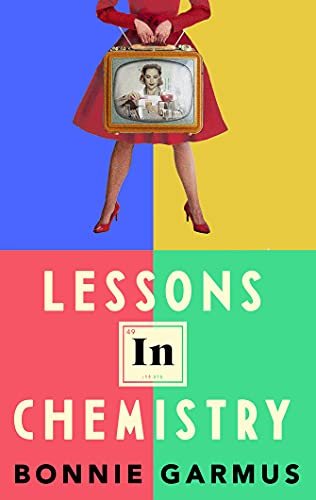
Bonnie Garmus’ debut novel Lessons in chemistry made a splash on best-of-2022 booklists last year, resulting in my reading group scheduling it this year. It is an enjoyable read, but the intriguing thing is that more than one reader I know couldn’t remember what it was about a few months after reading it. Each remembered enjoying it but could not recollect the details. Why is this? Why, in fact, are there some books that we read and enjoy but forget quickly, while others linger long after we’ve turned the last page? I will leave this for you to ponder. Meanwhile, I’ll get onto the book.

Most of you will know the basic story, but I’m going to document it anyhow – because, you know, I might forget it down the track. It is historical fiction set in the 1960s, and tells the story of female scientist, Elizabeth Zott, whose only ambition is to be a research chemist but whose career is constantly derailed by powerful men’s determination to keep women out of the laboratory. She ends up in the most unlikely job, the host of an afternoon cooking show which, despite her best efforts not to fit the female-TV-star mould, becomes a hit.

Everyone in my reading group thoroughly enjoyed the read, despite some reservations, to which I’ll return later. Our overall assessment was that, with its stereotyped, larger-than-life characters who don’t really change, it read like a fairytale, fantasy or, revenge comedy. But, we also recognised that it dealt with some relevant and serious topics, particularly regarding the inequitable treatment of women – in science, and in life. So, here is the question: given my earlier comment regarding readers forgetting its details not long after reading it, how effective is its light, comedic approach to making the message stick? Humour is a tricky thing. We love reading it, but does it move us to take its target seriously?

Like all writing, some humour is more effective than others. Satire, for example, with its characteristic clever, ironic wit engages my brain and, in doing so, can help the message go down. Lessons in chemistry has some of these elements, but it felt more situational and laugh-out-loud than satiric. This is what makes it so enjoyable, but such humour can sometimes bury the message. Time will tell for me!

And now, let’s look at its humour. Some of my favourite scenes came from the cooking show which Elizabeth Zott uses to teach her housewife audience chemistry, but more than that, to empower them. In one show, she describes different chemical bonds, one being the hydrogen bond:

“I call this the ‘love at first sight’ bond because both parties are drawn to each other based solely on visual information: you like his smile, he likes your hair. But then you talk and discover he’s a closet Nazi and thinks women complain too much. Poof. Just like that the delicate bond is broken. That’s the hydrogen bond for you ladies — a chemical reminder that if things are too good to be true, they probably are.”

“See?” a woman in Santa Monica demanded as she turned to her sullen seventeen-year-old daughter, the girl’s eyeliner so thick, it looked as if planes could land there. “What did I tell you? Your bond with that boy is hydrogen only. When are you going to wake up and smell the ions?”

Her poor producer Walter Pine, whose boss is demanding sexy clothes and cocktails with the cooking, tries in vain to rein her in.

Rowing is another topic that recurs through the novel. Obstetrician Dr Mason wants to get single-mother Elizabeth back in the boat when her baby, Mad, is just one year old. He discovers that she has a keen, helpful neighbour, and suggests that she ask this neighbour to help out:

“At four thirty in the morning?”
“This is what is so unsung about rowing,” Dr. Mason said, turning to leave. “It happens at a time when no one’s really that busy.”

That made me splutter my coffee – as did so many other observations throughout the book. It is a chuckle-inducing read, replete with funny one-liners and surprising similes alongside its array of set pieces.

But, as I said, my group did have some reservations, though they varied. One, for example, didn’t like the anthropomorphism involving the dog, Six-Thirty, while others of us appreciated his astute commentary on his human companions. Another felt it read a bit like a catalogue of issues – suicide, rape, domestic abuse, single-parenthood, and plagiarism, among others. And a couple of us found it somewhat anachronistic. I usually give historical fiction authors a lot of leeway in this regard, but the novel felt imbued with a strong 21st century sensibility. For example, Elizabeth Zott’s young daughter responds to minister Wakeley’s question about her age with “I’m not allowed to give out private information.” Most of us remember the 1960s, but we don’t remember this sort of idea being promulgated. It was just “don’t talk to strangers”.

“Chemistry is change” (Elizabeth)

Garmus was 65 when the book was published, making her a late-bloomer in terms of a novelistic career. However, it also means that she has a lot of life experience to share. She – through Elizabeth – believes that science has much to offer human beings. Elizabeth is infuriated that “too many brilliant minds are kept from scientific research thanks to ignorant biases like gender and race”. She believes that science can be empowering – “when women understand chemistry, they understand how things work”. Indeed, for her science encompasses

the real rules that govern the physical world. When women understand these basic concepts, they can begin to see the false limits that have been created for them. 

Beyond this, however, is the over-riding philosophy that life, like chemistry, is all about change. Through the book Elizabeth has to cope with a range of challenges, some of them serious, and some, in fact, tragic. It is her faith in science – plus the support of some decent people, it has to be said – that see her through.

Lessons in chemistry is not a perfect book, but it is great fun to read and it has a big heart. I can forgive it its little failings for these.

Brona (Brona’s books) and kimbofo (Reading Matters) both enjoyed this book too.

Bonnie Garmus
Lessons in chemistry
Transworld, 2022
391pp.
ISBN: 9781473594531

D’Arcy McNickle, Train time (#Review)

Continuing my reading from Great short stories by contemporary Native American writers, we now jump a decade from John M. Oskison’s 1925-published “The singing bird” to D’Arcy McNickle’s “Train time” which was published in 1936 .

D’Arcy McNickle

As before, I’m using both anthology editor Bob Blaisdell’s brief intro and Wikipedia’s article to introduce this author. D’Arcy McNickle (1904-1977) was, like the previous authors, of mixed parentage. He was born on the Flathead Reservation in Montana to an Irish father and a Cree-Métis mother, and was an enrolled member of the Salish Kootenai nation. He attended schools on and off the reservation, then went to the University of Montana, before studying at Oxford University and the University of Grenoble.

He wrote a few novels, but is probably best known for his first, The surrounded, which was published in 1936, the same year as the piece I’m reviewing here. From the summary I’ve read, it sounds like it draws from his own life, like so many first novels. However, that same year, 1936, McNickle started working at the Bureau of Indian Affairs, a US federal agency. He worked under John Collier, Commissioner of Indian Affairs, who encouraged self-government for Native Americans. McNickle became knowledgable about Native American policies, and in 1944, helped found the National Congress of American Indians in 1944. By 1950, he was publishing non-fiction works on Native American history, cultures, and governmental policies. Later, he worked in academia as an anthropologist.

Of his short stories, Blaisdell writes that “his quiet and intense stories seem to have been informed by a deep experience of Chekhov’s and Hemingway’s short fiction”. “Train time” is certainly quiet and, depending on your perspective, intense – with an ending that leaves many questions hanging.

“Train time”

“Train time” takes place on a train station, where twenty-five Native American (“Indian”) children from the local Reservation are waiting for a train to take them to an off-reservation boarding school. This has been organised by the local white Indian agent, Major Miles, who believes he is doing a good thing. He is, we are told, “a man of conscience. Whatever he did, he did earnestly”.

The trouble with earnest people – as I know a bit too well – is that they can lack imagination. He is thinking about these children who are about to leave the Reservation “and get a new start. Life would change. They ought to realise it, somehow-” It’s hot and stifling, the children are restless, and he is stiff and soldier-like. Not a recipe for the sort of inspirational words the situation needs. Then, he spies a young boy, “little Eneas”.

The Major remembers the moment, six months earlier in the depths of winter, when he had visited Eneas’ home to find out why his grandfather had not started the wood-cutting job he’d been employed to do. Turns out the grandfather and grandmother were no longer capable of such work. Not only that, they seemed ill, and the Major felt trapped. He feared catching pneumonia; he felt unable to help personally out of his salary, as where would it stop; and government resources were limited. Then, he had spied “little Eneas” who was doing his best to help the old people. Eneas’ “uncomplaining wordlessness”, his “loyalty to the old people”, had got the Major thinking. Here was “a boy of quality”. Surely he’d be “shirking his duty” if he failed to help him. So, he had come up with a plan to have the old people cared for and send Eneas off to boarding school. The trouble was that Eneas didn’t like the plan.

But, our Major was not to be dissuaded (so much so that “against his own principles” he had even bought “a week’s worth of groceries” for the old people):

Whether the boy understood what was good for him or not, he meant to see to it that the right thing was done…

You can imagine what that right thing was. The story concludes with our returning to the Major and the children on the railway station, and the Major trying to find those words to inspire the children. The Major knew that “none had wanted to go”, so he wanted to make them see “what this moment of going away meant”. What it meant of course, in the well-meaning Major’s mind, was a bright future.

There is no epiphany for the Major but the powerful imagery in the closing paragraphs, in which “a white plume flew upward” while the “flying locomotive loomed blacker and larger” conveys what the author thinks.

McNickle does a great job of evoking the Major. We see his good intentions, but we also see his stiffness and his obliviousness to the humanity of those he wants to help. This sort of well-meaning paternalism was pretty rife amongst those who wanted to do “the right thing” wasn’t it? I’d love to know how the story was received at the time. Did stories like this get the message across?

D’Arcy McNickle
“Train time” (orig. pub. Indians at work 3, from the Bureau of Indian Affairs, March 15, 1936)
in Bob Blaisdell (ed.), Great short stories by contemporary Native American writers
Garden City: Dover Publications, 2014
pp. 40-45
ISBN: 9780486490953

John M. Oskison, The singing bird (#Review)

From Zitkala-Ša’s 1901-published “The soft-hearted Sioux”, Great short stories by contemporary Native American writers jumps a quarter of a century to 1925, and John M. Oskison’s “The singing bird”.

John M. Oskison

Again, anthology editor Bob Blaisdell provides a brief intro to the author, but it’s Wikipedia that is able to provide more detail. John M(ilton) Oskison (1874-1937) was, like our two previous authors, of mixed parentage. He was born in Cherokee Nation to an English father and part-Cherokee mother. He went to Stanford University (where my friend who gave me the anthology went, in fact!) and was president of the Stanford Literary Society. Wikipedia says he was Stanford’s first Native American graduate. He apparently went to Harvard for graduate school but he left to become a professional writer after he won a short story competition.

By his death he had published novels, short stories and many pieces of journalism. A novel titled The singing bird was found in his papers in 2007 and subsequently published. Timothy Powell, writing about this novel, suggests it is “quite possibly the first historical novel written by a Cherokee”, and argues that it offers “an interpretation of indigenous history that stresses survival and empowerment over removal and despair”. It is set in the 1840s-50s, after the Cherokees had been removed to Indian Territory, and in it, Powell says, Oskison ‘skilfully blends fiction and reality, thoughtfully demonstrating how literature can rewrite the master narrative of “history” and bring to life moments in the past that remain outside the scope of the written records maintained by the dominant white society’. This sounds like the sort of historical fiction that is starting to appear in Australia, like Julie Janson’s Benevolence (my review) and Anita Heiss’s Bila Yarrudhanggalangdhuray (my review), novels that correct the colonial historical perspective that has been prevailed for too long. Oskison was, like our previous two authors, an activist.

Blaisdell focuses more on the story. He describes it as an “exciting, densely plotted story” but suggests the reader needs to “hold tight” because it is “dotted with odd, struggling phrasings that make it seem as if Oskison were translating it”. The title, he explains, refers to “cuckolding”, with “singing bird” being a term used by “full-bloods” for a “deceiving wife”. He suggests that ‘the issue of “full-bloods” versus half-breeds” is a messier theme’.

“The singing bird”

Powell says that it is not known when Oskison started writing his novel The singing bird. However, he does mention that this story was published in 1925 and wonders whether Oskison began to formulate the novel around this time. From Powell’s description of the novel, the characters names are different, it has a multilayered narrative structure unlike the story, and the narrative is very different, so let’s leave the novel there.

Wikipedia says of Oskison that “his fiction focused on the culture clash that mixed-bloods like himself faced”. “The singing bird” is interesting in this regard because, as Blaisdell suggests, a significant issue in the story concerns “full-bloods and half-breeds”. The story opens with Big Jim (Jim Blind-Wolfe) sending his wife Jennie away because it is time for the men to talk. They make up “the inner, unofficial council of the Kee-too-wah* organisation” and they are “self-charged with the duty of carrying out the ancient command to maintain amongst the Cherokees the full-blood inheritance of race purity and race ideals”.

This “council” is concerned about the “alarming late growth of outlawry in the tribe, an increase in crime due to idleness, drink and certain disturbing white men who had established themselves in the hills”. As they discuss this serious business, Oskison writes that “paradoxically … They would pass a jug of honest moonshine – but they would drink from it discreetly, lightly, as full blood gentleman should!” Nice touch!

Meanwhile, the ousted wife Jennie, takes herself to the “out cabin” with its “inviting pine-log room”. Here she awaits, we are told, Lovely Daniel who has already been introduced to us by the men, as their “wild half-breed neighbour”. Jennie, though, is expecting to “know shivery terror, the illicit thrill of the singing bird”. And so in the first two pages, the story is set up: Big Jim has sent his wife to the out cabin so that his little council can talk men’s business about half-breeds and white men, and that wife is waiting for one of those half-breeds to visit her in the cabin. Simple story of a dominating husband and unfaithful wife? Sounds it, but all is not as it seems. Oskison unfolds the plot well. We flash back to how Jennie and Lovely Daniel had come to know each other (including the development of his “wonderful plan, a credit to his half-breed shrewdness, if not to his name”), and to how enmity had developed between Big Jim and Lovely Daniel, before returning to the main narrative. There is a revenge theme to the story, one involving Lovely Daniel wishing to avenge having nearly been killed by Big Jim after a political altercation that had turned violent.

So if it’s not a simple unfaithful wife story, what is it? Well, it’s political. There is tension between the full-blood Kee-too-wahs and the half-breeds over whites, and the issue of leasing land to them. The full-bloods (through Big Jim) see leasing land as the thin end of the wedge, while the half-breeds (through Lovely Daniel) see the white man coming as inevitable anyhow. Big Jim, then, represents the Cherokees’ fight for their land, their fight “against “race deterioration and the decay of morale in the long years of contact with the White in Georgia and Tennessee”, while Daniel is the bad, wild man. As Blaisdell says, the theme of “full-bloods” versus half-breeds” is messy, particularly given Oskison was himself of mixed-descent. Perhaps we are intended to see this story – this conflict – more in terms of symbolism than realism, as a story about the primacy of protecting land and culture. (This suggests it’s an anti-assimilation story, though I believe there’s much discussion about Oskison’s attitude to assimilation.)

I found the writing a bit heavy-handed at times, but it also has an interesting tone. There is a sense in Oskison’s language, for example, that the full-blood Kee-too-wah men are not the whole answer either (as they sit “like remote, secret gods, in judgment on the conduct of a community”). And, although Jennie takes significant agency in the story, she is still expected, when it’s all over, to make breakfast for the men!

“The singing bird” is an intriguing story. It’s one that seems to raise as many questions as it answers, particularly when seen within the context of Oskison himself, of his oeuvre, and of course of his times – times I know little about.

* See Wikipedia.

John M. Oskison
“The singing bird” (orig. pub. Sunset Magazine, March 1925)
in Bob Blaisdell (ed.), Great short stories by contemporary Native American writers
Garden City: Dover Publications, 2014
pp. 25-39
ISBN: 9780486490953

Zitkala-Sa, The soft-hearted Sioux (#Review)

Zitkala-Ša’s “The soft-hearted Sioux” is the second story in the anthology, Great short stories by contemporary Native American writers, sent to me by my American friend. I posted on the first one, Pauline Johnson’s “A red girl’s reasoning”, a couple of weeks ago.

Zitkala-Ša

As he does for all the stories, anthology editor Bob Blaisdell provides a brief intro to Zitkala-Ša and her story. Also known by her married name, Gertrude Simmons Bonnin, Zitkala-Ša (1876-1938) was born at the Yankton Sioux Reservation in South Dakota. She was educated at a Quaker missionary school and then, because she wanted to be more than the presumed-for-girls job of housekeeper, she went to the Quaker-run liberal arts school, Earlham College. She went on the teach at the Carlisle Indian Industrial School. As with Johnson, Wikipedia fleshes out the details. It tells us that she hated being stripped of her culture at the Quaker missionary school, that she learnt piano and violin there, and that when she graduated from it in June 1895, “she gave a speech on the inequality of women’s rights”.

Wikipedia chronicles her life well, so do read it if you are interested. I’ll just add here that, it introduces her work with: “She wrote several works chronicling her struggles with cultural identity, and the pull between the majority culture in which she was educated, and the Dakota culture into which she was born and raised. Her later books were among the first works to bring traditional Native American stories to a widespread white English-speaking readership”. And it concludes that her “legacy lives on as one of the most influential Native American activists of the 20th century”.

Regarding “The soft-hearted Sioux”, Blaisdell explains that “it is narrated by a young Christianised man who returns to his Sioux reservation as a missionary” at which time his father says to him that “your soft heart has unfitted you for everything”. In this story, in other words, Zitkala-Ša exposes some of the iniquities of colonialism.

“The soft-hearted Sioux”

According to Wikipedia, Zitkala-Ša had a fruitful writing career, with two major periods, the first being 1900 to 1904, during which our story was published. In this period, she published legends from Native American culture – which she apparently started collecting while she was at Earlham – and autobiographical narratives. “The soft-hearted Sioux” has an autobiographical element, I guess. The protagonist is male, and I don’t believe she returned from college a missionary, but she did go to a Christian school. Other stories published in this time were clearly more autobiographical: “An Indian teacher among Indians”, “Impressions of an Indian childhood”, and “School days of an Indian girl” (all in 1900).

The story is told first person. At the opening, our narrator is in his “sixteenth year” and is sitting in the family’s teepee with his parents on either side of him, and his maternal grandmother in front. The grandmother is smoking a “red stone pipe” and it is passed around as they provide him with advice. It is time for him to find a woman, to learn to hunt and bring home meat, to become a warrior. We then jump nine years. He had not, he tells us, grown up to be “the warrior huntsman, and husband” expected of him. Instead, the mission school had taught him that killing was wrong. For “nine winters” he had “hunted for the soft heart of Christ, and prayed for the huntsman who chased the buffalo on the plains.” In the tenth year, he is sent back to his tribe

to preach Christianity to them with the white man’s Bible in my hand and a white man’s tender heart in my breast.

He no longer wears the buckskin clothes and blanket on his shoulders as he does at the opening. Now, “wearing a foreigner’s dress”, he walks “a stranger” into his father’s village.

The story then is about the impact and implications of assimilation, the dislocation it causes for both individuals and society. Our young man, thoroughly inculcated with Christian thought, arrives home to find his father ill, and being tended by the “medicine-man … the sorcerer of the plains”. He is disturbed about his father’s “unsaved soul” and tries to banish the “sorcerer”. So begins his life as a missionary. He knows it will be hard, but is confident he will succeed. I’ll leave the story there, as you can read it online (link below) but, knowing who is writing this story and why, you won’t be surprised to discover that he doesn’t succeed. The story is sentimentally told, in the style of the time, but its subject-matter is strong and emotive. Zitkala-Ša uses the motifs of the opposing Native American and Christian cultures well – the dress and customs, the knife of the brave versus the soft heart of the Christian, with softness here, equating less with gentleness than with weakness – to make her points.

Zitkala-Ša, herself, of course, was Christian-educated like her protagonist, but she went on to use the tools of that education to fight for the rights of First Nations people. She did that in various ways, including through politically activism. She was involved with the Society of American Indians (SAI) which, says Wikipedia,”was dedicated to preserving the Native American way of life while lobbying for the right to full American citizenship” and went on to found, with her husband, the National Council of American Indians. She also actively promoted women’s rights, through a grassroots organisation for women, the General Federation of Women’s Clubs.

But, an important part of her activism was through her writing. By publishing stories like “The soft-hearted Sioux” in majority-culture journals, like Harper’s Monthly and Atlantic Monthly, she hoped, I believe, to educate that culture in its impact on her people. The story is still worth reading today. Its style is dated, lacking some of the subtlety and nuance we are used to, but it nonetheless conveys truths that still stand and it provides us with a window on how long this fight has been going on. I’m loving being introduced to new-to-me writers and activists, like Pauline Johnson and Zitkala-Ša, through this book. They are women well worth knowing about.

Zitkala-Ša
“The soft-hearted Sioux” (orig. pub. Harper’s Monthly, March 1901)
in Bob Blaisdell (ed.), Great short stories by contemporary Native American writers
Garden City: Dover Publications, 2014
pp. 17-24
ISBN: 9780486490953
Available online at upenn

Gwendolyn Brooks, Maud Martha (#BookReview)

I came across Gwendolyn Brooks’ 1953-published novella, Maud Martha, on JacquiWine’s blog last year, and was confident it was a book for me – so I bought the e-Book version and read it slowly on my phone and iPad whenever I was out and about. This sort of reading doesn’t work for all books, but it did for Maud Martha because it is told in short vignettes (or “tiny stories” as Brooks’ called them) which cover the protagonist’s life from her childhood to motherhood. Her voice is so fresh, so honest, so real that I was completely captivated.

Gwendolyn Brooks (1917-2000) is a new author for me, perhaps because she was primarily a poet. In fact, Maud Martha is her only novel. She was the first African American to win the Pulitzer Prize (1950) and the first African American woman to be inducted into the American Academy of Arts and Letters (1976), but these are just two from an honours-filled career.

My edition of Maud Martha has an excellent introduction by the American critic and academic, Margo Jefferson. She ponders the novel’s disappearance from view, and posits that “it sank beneath the weighty canonical force of first novels by two of Brooks’s Black male peers”. Ralph Ellison’s Invisible man appeared in 1952, and James Baldwin’s Go tell it on the mountain in 1953, the same year as Maud Martha. By comparison, Maud Martha “looks” slim but, in real weight, it is anything but. Jefferson quotes from Brooks’ memoir in which she discusses the autobiographical element of the novel: ‘It is true that much in the “story” was taken out of my own life, and twisted, highlighted, or dulled, dressed up or down.’ I read this as meaning that what she describes is “true” though not necessarily factual. It’s “a novel”, says Jefferson, “by a Black woman about working-class Black life in the twenties, thirties and forties”.

“But dandelions were what she chiefly saw”

The book opens with an exquisite description of seven-year-old Maud Martha. It introduces us to a young girl who has dreams but also has her feet on the ground:

She would have liked a lotus, or China asters or the Japanese Iris, or meadow lilies—yes, she would have liked meadow lilies, because the very word meadow made her breathe more deeply, and either fling her arms or want to fling her arms, depending on who was by, rapturously up to whatever was watching in the sky. But dandelions were what she chiefly saw.

And, she was happy with them, those “yellow jewels for everyday”:

She liked their demure prettiness second to their everydayness; for in that latter quality she thought she saw a picture of herself, and it was comforting to find that what was common could also be a flower. And could be cherished! 

These opening paragraphs are telling: we learn a lot about Maud Martha – as you can see – and we are introduced to Brooks spare, poetic style. It is because of language like this that Brooks can tell Maud’s story from the early 1920s to the 1940s in barely 100 pages. Jefferson describes Brooks’ style as “like a sonnet sequence, each story delights in sensory and emotional details and each reveals another aspect of Maud Martha. Poets take liberties with prose notions of a story arc”.

So, through the stories Maud Martha grows up, questioning the real world while dreaming of New York, which is “a symbol” for her of “what she felt life ought to be. Jeweled. Polished. Smiling. Poised. Calmly rushing! Straight up and down, yet graceful enough”. She knows it’s a dream, but she stands by her right to dream. And, anyhow, “who could safely swear that she would never be able to make her dream come true for herself? Not altogether, then!—but slightly?—in some part?” This is a young woman, in other words, still with her feet on the ground but with imagination as well. 

Meanwhile, life goes on. She marries Paul who is fairer than she, enabling him to “pass” among whites or, at least, be more easily accepted by them. She knows her darkness pulls him back, “makes him mad”, but she’s not cowed. She knows who she is and what she can offer.

What she wanted was to donate to the world a good Maud Martha. That was the offering, the bit of art, that could not come from any other. She would polish and hone that.

And so she soldiers on through the bright moments and the disappointments, like settling for a kitchenette with a shared toilet when she marries Paul. Moments like these are universal. Other moments, though, are less so, because, of course, she faces racism – again and again – at the movies, while shopping for a hat, at a beauty parlour. A particularly painful occasion occurs when Santa Claus treats her little daughter Paulette differently from the white girls – and Paulette notices.

Another occasion concerns Maud Martha’s taking work as household help, because Paul is out of work. However, the way her employer and employer’s mother-in-law assume her inferiority causes her to understand “for the first time … what Paul endured daily … as his boss looked at Paul, so these people looked at her. As though she were a child, a ridiculous one, and one that ought to be given a little shaking …”. She decides to leave the job. Her employer won’t understand, but that doesn’t matter. What matters is that she’s “a human being” too, and she will not be treated otherwise if she can help it.

What makes Maud Martha special then is her – to use a cliche – resilience. No, it’s more than that, it’s her level-headed sense of self and a willingness to call what she sees. What’s remarkable in Brooks’ telling is the humanity and, often humour, with which she does it. Take, for example, Maud Martha’s description of her first beau:

He was decorated inside and out. He did things, said things, with a flourish. That was what he was. He was a flourish.

She was desperate to have a boyfriend, but not that desperate.

Maud Martha is just delicious to read. It is deeply, distressingly insightful about Black American experience in all the horrific ordinariness of ingrained, oblivious, white superiority, but the combination of intelligence, dignity and humour with which Brooks tells her story takes your breath away.

Gwendolyn Brooks
Maud Martha
London: Faber & Faber, 2022 (orig. pub. 1953)
126pp.
ISBN: 9780571373260 (e-Book)

Anthony Doerr, Cloud Cuckoo Land (#BookReview)

There was a collective cheer from the four librarians in my reading group when one of our members read Anthony Doerr’s dedication for his latest novel, Cloud Cuckoo Land. It goes like this “For the librarians then, now, and in the years to come”. Thank you Anthony! Cloud Cuckoo Land, at over 600 pages, is a big book and, like most big books, is about a lot of things, but threading through it is the idea of the book – and of the role played by librarians in fostering knowledge and reading. Indeed, the central event of the book takes place in a public library.

Those of you who have read the novel will know what I’m talking about, but for the rest of you I’ll take a step back. Anthony Doerr, from my limited experience of two novels, seems to like two things – multiple-points-of-view and young protagonists. All the light we cannot see (my review) has two protagonists from the same era, but Cloud Cuckoo Land takes it to another level with five protagonists spanning multiple centuries.

“It’s like we’re about to walk into the book” (Alex, fifth-grader)

The critical thing about these five characters is that they are outsiders – subversives, even – each confronting the received wisdom of their times. All live precarious lives. In the fifteenth century, in the Rhodope Mountains of Bulgaria, Omeir is born with a cleft palate. Those were superstitious times, so he, his siblings, mother and grandfather are ostracised and find themselves living in a ravine miles from their village. Omeir “imagines the adventures that might lie beyond”. Over the way, in Constantinople, is Anna, a poor orphan, living with her sister in a great embroidery house where they sew for a living. She daydreams about a better life than this, and, as Constantinople falls, sets about achieving it. Meanwhile, in 20th century Idaho, Zeno is born – in 1934, to be exact. He, too, is ostracised, an “undersized orphan with foreigners blood and a weirdo name. Ahead is what?” In the same state, born early in the 21st century is Seymour, living with his impoverished, hard-working, single mother. From birth he is difficult – fussy about food, textures and sounds – suffering, the school decides, from some sort of “disorder” or “combination thereof”. Nature is his sanctuary, “amazing … Big. Alive. Ongoing”. Out there, inspired by the great grey owl he calls Trustyfriend, “lifelong knots deep inside the boy loosen”. Finally, some time into the future, on the spaceship Argos, is Konstance, stuck in a life not of her choosing, and condemned to live all of it on board. She’s imaginative and suffers for it, mystifying her mother who believed their “imaginative faculties” had been “suppressed”.

Threading through each of their stories is a fictional codex from the real Ancient Greek author, Diogenes. It features Aethon, who, having all his life “longed to see more”, wants to become “a fierce eagle or a bright strong owl” and fly to the “city in the clouds”, the titular “Cloud Cuckoo Land, where no one wants for anything”. This codex plays different roles in the lives of our protagonists but for all of them it represents, at some time, hope, dreams and the value of books.

I’ve focused a lot on these characters, but that’s because they are the book. From these introductions you can see that Doerr has chosen young people who have little agency over what happens to them. The novel explores what they do to survive and make meaningful – authentic – lives for themselves in an imperfect world. What does it take to cope?

Fundamentally, the book is about challenge and change. For Aethon, our unifying character, the journey is not simple, and he is changed into undesirable creatures like a donkey and a “humble crow”. For our other characters, life also does not go to plan, with each surprised by what it dishes up to them. There are tricks in store for them – as well as for the reader – including in the codex itself which, in the course of its journey from Ancient Greece to the future, becomes jumbled, so its true ending is lost. However, in 2020, 86-year-old Zeno’s fifth-graders, who are rehearsing his translated and dramatised version in the public library, decide on an end, one that encompasses life’s reality.

Cloud Cuckoo Land, then, is also about books, but they too are vulnerable, as the scholar Licinius tells Anna:

“… books, like people, die. They die in fires or floods or in the mouths of worms or at the whims of tyrants. If they are not safeguarded, they go out of the world. And when a book goes out of the world, the memory dies a second death.”

Fortunately, though, Doerr clearly believes enough of us will safeguard them, and the novel ends way into the future with Aethon’s book being read to a young boy:

“And the tale I have to tell is so ludicrous, so incredible, that you’ll never believe a word of it, and yet”—she taps the end of his nose—“it’s true.”

As many of you will know, I love this.

Now, I’ll return to the title. “Cloud Cuckoo Land” is, literally, the name of an idyllic place in a real Ancient Greek play, Aristophanes’ The Birds, the place Aethon seeks in our codex. But, for me, the title also encompasses some interesting imagery. Cuckoos are birds, and all sorts of birds feature throughout the novel, representing nature, and freedom, amongst other things. Cuckoos, themselves, are sacred in some cultures, but some species, as we know, lay their eggs in other bird’s nests forcing, we could argue, those young to be resourceful outsiders. Then there are the “clouds”. As I read this book I couldn’t get the Joni Mitchell song “Both sides now” out of my head, with its line “it’s clouds illusions I recall .. I really don’t know clouds at all”, progressing to “life’s illusions … I really don’t know life at all”.

These two ideas – resourceful outsiders and life’s illusions – encapsulate for me this truly engaging book. Doerr presents for us life’s challenges – historic, economic, climatic – but he also offers the dreams and resourcefulness of humans in confronting these challenges. Zeno’s friend Rex describes the codex as “part fairy tale, part fool’s errand, part science fiction, part utopian satire”. This could also describe Doerr’s novel, but it is more too. Rich, complex, and highly readable, it contains multiple treasures and connections for engaged readers to find and make on their journey. I have barely skimmed its surface. It was a very popular start to my reading group’s year.

Anthony Doerr
Cloud Cuckoo Land
London: 4th Estate, 2021
627pp.
ISBN: 9780008478308 (e-Book)