William Wells Brown, Madison Washington (Review)

William Wells Brown,

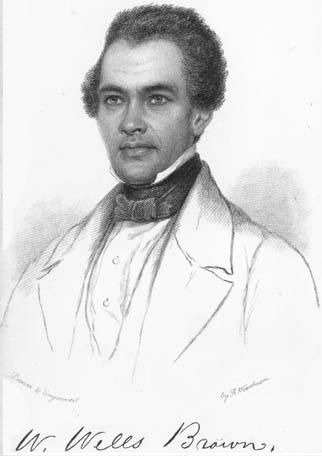
William Wells Brown, 1852 (Courtesy Project Gutenberg, via Wikipedia)

Having recently reviewed Harriet Ann Jacobs’ story “The lover” in the Library of America‘s (LOA) Story of the Week program – and also having seen the movie 12 Years a Slave – I couldn’t ignore William Wells Brown’s story, Madison Washington, when it appeared last month as an LOA offering.

Brown (1814-1884), like Jacobs, was born into slavery. He managed to escape to Canada when he was 19. LOA’s introductory notes tell us that within a decade he’d married, moved to Buffalo, and taught himself to read and write. He lectured against slavery in both Europe and the USA. In 1847, he published Narrative of a fugitive slave which apparently sold so many copies that four printings needed to be done in less than two years. Wikipedia tells me that his novel Clotel, published in England in 1853, is considered to be the first novel written by an African-American. He lived in England from 1849 to 1854, due to the increased risk of recapture posed by the 1850 Fugitive Slave Act.

During and after the American Civil War, Brown continued to publish fiction and non-fiction, earning a reputation as one of the most prolific African-American writers of his time. He apparently actively recruited black Americans to fight in the Civil War, and supported African-American migration to Haiti.

The story published by LOA is just one from his book, The black man: His antecedents, his genius, and his achievements, which contains sketches of the lives of individuals who, Brown writes in his “Preface”,

by their own genius, capacity, and intellectual development, have surmounted the many obstacles which slavery and prejudice have thrown in their way, and raised themselves to positions of honor and influence.

He concludes his Preface with:

If this work shall aid in vindicating the Negro’s character, and show that he is endowed with those intellectual and amiable qualities which adorn and dignify human nature, it will meet the most sanguine hopes of the writer.

The sketch chosen by LOA concerns Madison Washington. But, before I write about that, I must say something about his name. I’ve often been intrigued by how many African-Americans were, and are, named “Washington”. Presumably this has something to do with George Washington, but what exactly? According to the Huffington Post, the 2000 US Census reported 163,036 people with the surname Washington, of whom 90% were African-American. This is apparently a far higher “black” percentage than for any other common name. The article describes a rather complex situation regarding the name. It tells us that during the early post-abolition period, when slaves were allowed to have surnames, many chose Washington. This is most likely linked to the president. However, George Washington had, the article explains, a complicated relationship with slavery, and so the reasoning behind the use of the name is not totally clear. Interestingly, in the case of Madison Washington, his first name is also the name of a slave-owning president? Coincidence?

Now to “Madison Washington” the story! It starts with a description of the man:

Among the great number of fugitive slaves who arrived in Canada towards the close of the year 1840, was one whose tall figure, firm step, and piercing eye attracted at once the attention of all who beheld him. Nature had treated him as a favorite. His expressive countenance painted and reflected every emotion of his soul. There was a fascination in the gaze of his finely-cut eyes that no one could withstand. Born of African parentage, with no mixture in his blood, he was one of the handsomest of his race. His dignified, calm, and unaffected features announced at a glance that he was one endowed with genius, and created to guide his fellow-man.

The story proper then begins six months into his time in Canada when his employer, pleased with his work, realises that Washington is discontented. Upon his enquiry, the story comes out. Washington had a wife with whom he’d planned to escape, but the escape plans had gone awry and he alone had got away. His aim was to work hard, and save the money to purchase her freedom, but he’d begun to realise that it would take him five years to save the required money. So, what does he do? He decides to return to the south, ignoring advice to the contrary and risking recapture, to effect her escape. As Brown reports, “Liberty is worth nothing to me while my wife is a slave”.

Well, the inevitable happens, but Washington manages to escape again, this time by orchestrating a mutiny on the “Creole” which was carrying him and other slaves to the New Orleans slave market.  Via this mutiny, he effected the freeing of 128 slaves, resulting in what is recognised as the most successful slave revolt of the period, more successful than the more famous Amistad mutiny which freed only 53 slaves.

Brown’s telling of the story shows Washington to both a principled and resourceful man – principled because of his treatment of the sailors once the ship was under slave control and resourceful because of the careful planning he’d done to prepare for an escape. It is also, though, rather melodramatic, which is typical of the times, and involves the amazing coincidence of his wife, the “majestic, “beautiful and accomplished” Susan, being on the boat. According to LOA this is “an almost certain apocryphal addition” that appeared in an article a year after the mutiny. It makes for a good story, however!

Interestingly, in 1853, Frederick Douglass wrote a novella, The heroic slave, presenting a fictional account of Madison Washington. Wikipedia, which told me that Brown’s 1853 published Clotel is considered to be the first African-American-written novel written, also states that Douglass’s novella “is now considered the first known piece of African-American fictional literature”. Let’s let Wikipedia fight it out because, in the end, I don’t think it really matters. What matters is that African-Americans were writing and being published, and that we can still access to their works today.

William Wells Brown
“Madison Washington”
First published: In his book, The black man, his antecedents, his genius, his achievements, 1862.
Available: Online at the Library of America or in Documenting the American South

Harriet Ann Jacobs, The lover (Review)

It’s a while since I read a story from the Library of America‘s (LOA) Story of the Week program, but when I saw Harriet Ann Jacobs’ story “The lover” appear in its list of Top 10 stories from 2013 I felt it was time to rectify my tardiness – particularly with the movie, 12 Years a Slave, about to be released here. This story is, in fact, a chapter from her memoir Incidents in the life of a slave girl.

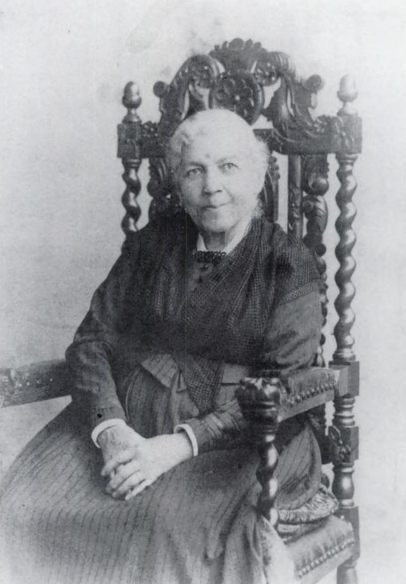
Harriet Ann Jacobs, 1894 (Presumed Public Domain, via Wikipedia)

Harriet Ann Jacobs, 1894 (Presumed Public Domain, via Wikipedia)

Last year was the bicentenary of Jacobs’ birth. Her mother died when she was 6 years old, making her an orphan-slave. Her first masters, LOA says, taught her to read and write, but that mistress died when Jacobs was 12, and she was left in the will to a 3-year-old! That brought her into “a household that introduced her to the true barbarities of slavery”. Jacobs eventually escaped to the north in 1842, when she was nearly 30 years old. Her memoir was published in 1861 by best-selling author of the time Lydia Marie Child, under the pseudonym, Linda Brent. According to LOA, the book and its author enjoyed some minor celebrity in the north at the time, but disappeared pretty quickly, probably due to its being “overwhelmed by the war and later by emancipation”.

LOA goes on to say that it was then “largely forgotten”. Most academics, they say, believed it had been written by Child, suggesting that it may have been “loosely based on Jacobs’s life but ‘too melodramatic’ … to be an actual slave narrative”. However, in 1971, historian Jean Fagan Yellin uncovered the truth of its authorship. She eventually published a biography of Jacobs in 2005, Harriet Jacobs: A life.

The chapter published by LOA as “The lover” gives us a sense of Jacobs’ feisty, resilient nature. It starts with:

Why does the slave ever love? Why allow the tendrils of the heart to twine around an object which may at any moment be wrenched away by the hand of violence? When separations come by the hand of death, the pious soul can bow in resignation, and say, “Not my will, but thine be done, O Lord?” But when the ruthless hand of man strikes the blow, regardless of the misery he causes, it is hard to be submissive. I did not reason thus when I was a young girl. Youth will be youth. I loved, and I indulged the hope that the dark clouds around me would turn out a bright thing. I forgot that in the land of my birth the shadows are too dense for light to penetrate.

I love the way this paragraph confirms that the young-in-love are the same at any time, in any place. Hopeful. Optimistic. How universal. But, how not universal was the situation Jacobs found herself in! She goes on to tell how she’d fallen in love with “a young colored carpenter; a free-born man” in her neighbourhood. She loved him “with all the ardor of a young girl’s first love”. He proposed to her and wanted to buy her from her masters.

Knowing her masters, Jacobs held out little hope for his success, but writes of how “this love-dream had been my support through many trials”. So, she enlisted a sympathetic white woman to plead her case. How nice to read that there were sympathetic white people. Of course the white woman had little to lose other than perhaps the respect and friendship of her peers. I won’t tell you the rest of the story. It’s short and is more powerful in her own words. You can read it at the link below.

A decade or so after her escape (a story in itself) to the North, and over some period of time, Jacobs wrote her book. Then, in the 1860s, she began a career as an activist newspaper journalist. She also worked as a relief worker amongst refugee slaves in Alexandria (Virginia). It was tough work – not only because of the work itself, but because Alexandria, on the border between North and South, had a largely secessionist population. The terrible conditions described by Scott Korb, associate editor of The Harriet Jacob Papers, in his articles “Harriet Jacobs’s First Assignment” and “Harriet Jacobs’s War” reminded me of Geraldine Brooks’ scenes of the Washington DC area in her novel March:

All I could notice was the blight of this place: the pigs wandering the street and dead horses bloating by the roadside … Washington is flooded by the ragged remnants of slavery, contraband cast up here to eke out what existence they may. I felt a pang for the little bootblacks, crying our for trade and going without …

So, I checked. Brooks did, it seems, draw from Jacobs’ book to create her slave character. Now I feel I should read Jacobs’ whole book.

Harriet Ann Jacobs
“The lover”
First published: As Chapter VII of her book, Incidents in the Life of a Slave Girl, 1861.
Available: Online at the Library of America

Bill McKibben, Oil and honey (Review)

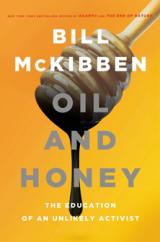
Bill McKibben, Oil and Honey

Courtesy: Black Inc

It’s coincidental, but nicely appropriate, that the World Meteorological Organisation (WMO) published its Provisional Statement on the Status of the Climate in 2013 last week, just as I was finishing US environmental activist Bill McKibben‘s latest book, Oil and honey: The education of an unlikely activist. It’s likewise coincidental that, three days before WMO’s announcement, Stefanie (of So Many Books) published a post titled Gardening for Climate Change* containing her thoughts on her garden and how climate change might affect it.

WMO’s statement says, among other things, that “During the first nine months of 2013, most of the world’s land areas had above-average temperatures, most notably in Australia, northern North America …”. As you know, I live in Australia; Bill McKibben and Stefanie live in the northern part of the USA. We are seeing (feeling) the changes, and are concerned. What I’m going to say next is pretty obvious, but I’m going to say it anyhow because I always like to start with the basics in discussions like this. There are two critical issues in the climate change debate: Is the climate changing and, if it is, Is it human-caused? It’s hard to imagine, given all the data available, that there’s anyone out there who really believes the climate is not changing, though I believe there are still some who think it’s simply a case of “climate variability”. These people think that the climate will get back to normal (some year soon, they hope). The trickier issue, however, is the causal one. Most of the deniers are not so much denying that the climate is changing, but that we are causing it. This brings me to Bill McKibben.

McKibben does not, in Oil and honey, spend time trying to prove that humans are causing climate change. For him it’s a given. Rather, he shares how he changed from being an environmentalist, who researched and wrote books, to an environmental activist who campaigns (and writes books). It’s an interesting, clearly written book about one man and his path, but can also be read as a how-to for those who want to get active.

You may now, though, be wondering about the title. Oil and honey? I’m sure there’s an ironic allusion here to the biblical “land of milk and honey” (which we are not heading towards), but there is also a literal meaning to the title. The narrative shifts pretty seamlessly between his two main passions. One is to do with bees, honey and good farming practice. The other is oil, or the fossil fuel industry, and how to stop its impact on the climate. Oil and honey, climate and farming. It’s all related.

You may also be wondering, particularly if you’re not American, who Bill McKibben is. As the blurb on the back of my edition says, he has written over a dozen books including the New York Times bestselling Eaarth and The end of nature. He also founded the environmental organisation 350.org and “was among the first to warn of the dangers of global warming”. Despite all this, he did not until recently see himself as an activist. After graduating, he worked as a journalist for The New Yorker for five years, but quit in 1987 when its long-term editor was forced out of his job. Since then he has been a freelance writer.

Oil and honey is his latest book. I’d call it part-memoir part-manifesto, because it is both the personal story of his transition to full-blown activism and the story of his passion for saving the planet. The personal aspect of the book helps make it a good read. We get to understand his thinking, we feel his anxiety about becoming not only an activist but a leader of activists, and we learn that his activist philosophy is inspired by the non-violent resistance ideas of Gandhi and Martin Luther King Jr. We see his love for nature and for working close to the land on the bee-farm he bought for his friend Kirk Webster to run. This farm functions both as respite and as a place for him to see land stewardship working.

That’s the memoir aspect. In the manifesto aspect, he shares with us the development of his ideas and strategies. We learn of various campaigns he has been involved in since 2009, including Step It Up, Keystone XL,  Do the Math. And he explains how he and his co-activists have shifted from focusing on politics and politicians – through such activities as sit-ins at the White House and lobbying politicians – to directly tackling the fossil fuel industry. He came to realise, he says, that the situation was/is becoming so dire there’s no time “for slow graceful cultural evolution”. Consequently, the last part of the book deals with the goal of encouraging educational institutions to divest their investment portfolios of fossil fuel industries. They’ve targeted educational institutions because students represent a significant percentage of climate change activists. For these students the question is simple:

are you paying for our education by investments in an industry that guarantees we won’t have a planet to make use of that learning?

I’ve only touched the surface of what this book covers. Like many books of its type, chances are that it will only be read by the converted. That’s a bit of a shame, but it’s not useless says McKibben:

You might think it’s a waste to preach to the choir, but the truth is, you need to get the choir fired up, singing loudly, all out of the same hymnal. The choir is there, but most of the time it’s just humming in the background, or singing so many tunes that no distinct harmony emerges.

So, if you’re part of the choir, this book is still for you. And if you’re not, think about joining. It could be the most important thing you do.

Bill McKibben
Oil and honey: The education of an unlikely activist
Collingwood: Black Inc, 2013
255 pp.
ISBN: 9781863956178

(Review copy supplied by Black Inc)

* Stefanie has since posted a link to a British blog called Climate Change Garden.

Ann Patchett, The bookshop strikes back (Review)

I’m not normally an impulse buyer except, it seems, when I visit the bookshop at the National Library of Australia! I tell myself I’m not interested in little books – you know, the sort bookshops put on their sales counters – but somehow the National Library of Australia regularly manages to break down my resolution. Last year I reviewed Dorothy Porter‘s On passion which I bought from their counter. Today, I’m going to write about Ann Patchett‘s essay “The bookshop strikes back”.

My purchase went like this. I was standing at the counter a few days ago making my purchases when this tiny little 20-page off-white booklet caught my eye. I picked it up, and said to the bookseller, “This looks interesting”. “Oh yes”, she said, “we had them in for National Bookshop Day?” Well, I knew then what I had to do …

I’ve been trying to remember when I first heard that the book was dead, but I think it was back in the 1970s when it was argued that the easy availability of video would spell the end of reading. I wouldn’t be surprised if the same was said when movies appeared, when radio came on the scene, and so on. Surprisingly, though, books seem to survive! Except, it’s not surprising to us readers is it?

Books are facing a new challenge in our digital world – but, so far, the main issue seems to be more about the form of the book (as in print vs digital) than the survival of reading. However, bookshops do seem to be at risk. Ann Patchett suddenly found one day that her town, Nashville, Tennessee, no less, had no bookshops (other than a used bookshop and stores like Target). Apparently the last one to go – an independent that had been bought out by a chain – had been profitable “but not profitable enough”. Patchett’s discovery, albeit on a smaller scale, replicates the situation at my local mall, which is one of my city’s main shopping centres. Fortunately, though, we do have some great bookshops in other parts of the city.

Patchett doesn’t spend a lot of time discussing the whys, though the prevailing view seems to be that the combination of online bookselling giants like Amazon and the rise of e-books are causing the demise of bookshops – both chain stores and the independents. But, Ann Patchett believes things may be changing. She writes:

… all things happen in a cycle, I explained – the little bookstore had succeeded and grown into a bigger bookstore.  Seeing the potential for profit, chains rose up and crushed the independents, then Amazon rose up and crushed the superstore chains. Now that we could order any book at any hour without having to leave the screen in front of us, we realised what we had lost: the community center, the human interaction, the recommendation of a smart reader than a computer algorithm telling us what other shoppers had purchased.

This may be a little simplistic but history does have a habit of repeating itself doesn’t it! So Patchett, who was later “dizzied by the blitheness that stood in place of any business sense”, established, with two other women,  a new independent bookshop in Nashville … and found that on book tours for her most recent book, State of wonder, interviewers were more interested in asking her about her bookshop plans than about her book. She laughs that on the day the bookshop opened in November 2011, the New York Times ran a story with a picture of her on page A1, something that her agent and publisher would never expect to achieve on the basis of her role as a literary novelist.

This is not a highly analytical essay, but it’s a lovely read about the love of books and bookshops. It provides a nice contrast to the fascinating but ultimately sad story of a bookshop I read a few years ago – Annette Freeman’s semi-self-published Tea in the library. Freeman, like many booklovers, dreamed of having a bookshop – one in which readers could come, buy books, stay for a cuppa, and meet authors. She had a lovely vision, but it failed after a couple of years, something she explores openly and honestly in her book.

For Patchett though, so far so good. She’s not sure why they’ve been successful but she says

my luck has made me believe that changing the course of the corporate world is possible.

I hope she’s right – but I guess for her to be so, we need more brave (or blithe) booksellers and more readers who want the personal touch, because, after all, we are in this together.

Ann Patchett
“The bookshop strikes back”
London: Bloomsbury, 2013
20pp
ISBN: 9781408847497
Originally published in Atlantic Monthly, November 2012
To appear in This is the story of a happy marriage (Bloomsbury, later 2013)
Available: Online at Atlantic Monthly

Willa Cather, Peter (Review)

Surely a whole year can’t have passed since I last wrote about a Library of America short story? But yes, it has. My last one was Robert Frost’s “The question of a feather” in July last year. Many times I’ve chosen one to read, and many times I’ve let other things get in the way – but finally I sat down to read a short piece by Willa Cather, one of my favourite American writers. The story is “Peter” and was apparently her very first published piece. It was published when she was 19 as the result of her university professor sending it off to a magazine.

LOA’s notes, as usual, provide some interesting background, including the information I’ve just provided above. They say that she went on to publish it two more times in 1892 and 1900, each with some revisions, and then incorporated its essence into her novel My Antonia which I’ve reviewed here. No wonder it felt familiar!

English: Willa Cather's childhood home in Red ...

Willa Cather’s childhood home in Red Cloud, Nebraska. (Photo courtesy: Museumsparrow via Wikipedia)

It is, essentially, a character sketch. Its focus is Peter, an old man – now 60 – who emigrated to Nebraska from Bohemia with his wife, oldest son Antone, and other children five years before the story starts. In Bohemia, Peter had been a second violinist “in the great theatre in Prague”.  Without belittling the important role of second violinists, I think in terms of Cather’s story, “second” is meant to convey something about Peter:

He could never read the notes well, so he did not play first; but his touch, he had a touch indeed …

Why he could never read the notes well, we are not told, but we can guess because his neighbours in Nebraska see him as “a lazy, absent-minded fellow”. In fact, it is his son who runs the place:

… people said he was a likely youth, and would do well. That he was mean and untrustworthy every one knew, but that made little difference. His corn was better tended than any in the country, and his wheat always yielded more than other men’s.

There is no love lost between these two rather unappealing men. The story starts with Peter telling his son that “thou shalt not sell it [the violin] until I’m gone”. From his son’s point of view, Peter can no longer play due to trembling and the money would be useful. For homesick Peter though it’s his link to happier times. He doesn’t like “the country, nor the people, least of all he liked plowing”. Cather’s characterisation is effective. We are forced to choose between the hard but hardworking Antone who is trying to support the whole family in a harsh land, and the rather pathetic Peter who, even in his past, was “a foolish fellow, who cared for nothing but music and pretty faces”. Antone and Peter are set up as foils for each other, opposites, and Cather wants us, I think, to see and understand but not judge.

This is a classic migrant story, in which the old find it harder to adapt than the young, for whom the immigration was usually made in the first place! It’s also a father-son/generational clash story. Neither understands each other, and neither seems inclined, it seems, to make many concessions. Given all this, the ending is both shocking and not surprising.

It’s an impressive debut for a 19-year-old writer. However, according to LOA’s notes, Cather regretted allowing her professor to publish it before her style matured. Her biographer Phyllis Johnson wrote that the older Cather “warned aspiring young writers against too early publication”. I wonder why? What damage does she think it did to her? As a reader, I love having access to early works like this – or, to say, Jane Austen’s juvenilia. They illustrate, as LOA suggests, the writer’s “the literary journey”.

What do you think? Do you like to read early/youthful works of favourite writers, or would you rather only read their mature works?

Willa Cather
“Peter”
First published: The Mahogany Tree, May 1892.
(Published several times after this, in various revised versions)
Available: Online at the Library of America

David Foster Wallace, Twenty-four word notes (Review)

David Foster Wallace got me in with the first few words of his essay “Twenty-four word notes”. They are:

Utilize A noxious puff word.

Oh yes! “Utilise” (as we down under spell it) is one of my pet peeves. Why use “utilise” when “use” is a perfectly good word? I regularly mutter.  Wallace is a little more direct:

Since it does nothing that good old use doesn’t do, its extra letters and syllables don’t make a writer seem smarter; rather, using utilize makes you seem either like a pompous twit or like someone so insecure that she’ll use pointlessly big words in an attempt to look sophisticated.

I wouldn’t quite have put it that way myself, but have quoted him so you can see the strength of Wallace’s feelings on the matter of words and usage. (By the way, did you notice the use of “she” here?)

Before I continue, though, I should say that I’m not sure that I’d call “Twenty-four word notes” an essay since it is exactly what it says it is, that is, it’s a set of musings and arguments about twenty-four rather ad hoc words. They do not seem to be presented in any particular order and there’s not really a coherent argument, but for those of us interested in language they are great fun to read … even if he touches the odd nerve or you don’t agree with his perspective. I was interested to discover in the Copyright Acknowledgements at the end of the book that this essay/article was originally published in the Oxford American Writer’s Thesaurus (in 2004, 2008 and 2012).

I enjoyed the piece for a number of reasons. Firstly, there are the pet peeves, of which “utilize” is just one. Another is “that”. There are two issues, as he says, with “that”. One is the “that” versus “which” issue, but I won’t go into that (ha) now. It’s the other “that” issue which (or, is it that!) intrigues me. You see, I had been given to understand by some Americans, that “that” can be used for people as in, say, “Wallace is the writer that wrote Infinite Jest“. Over here, down under, we learnt that “who” and “whom” are for people, and “that” and “which” are for things. Wallace agrees and in fact calls misuse of “that” for “who” or “whom” as a class marker! Hmm … that’s a bit strong … but, class marker or not, I know that I always cringe (internally anyhow) when I hear “that” used for people.

My other pet peeve that Wallace addresses is, hallelujah, “loan”. Wallace says, and I quote, because once again I’d only be muttering under my breath:

If you use loan as a verb in anything other than ultra-informal speech, you’re marking yourself as ignorant or careless.

But now here’s the thing. I have felt for a decade or more now that this loan-the-noun/lend-the-verb distinction is a losing battle. Language is, after all, a living thing. It changes. It has to, and, really, we want it to. This makes writing anything prescriptive like Wallace has done here a risky thing. Wallace doesn’t specifically address this issue of change but he does imply it. For example, immediately after the above statement about “loan”, he continues

As of 2004, the verb to lend never comes off as fussy or pretentious, merely as correct.

“As of 2004”. There’s his recognition, subtle though it is, that there are limits to prescription. I’m glad he makes that concession.

While there are other words about which he is similarly scathing regarding their misuse, not all words have been chosen for this reason. For example, there’s the word “pulchritude”* which he describes as an ugly word that is the complete opposite of its meaning. “Pulchritudinous” is even worse he says! I have to agree. He then goes on in this particular word note to list other words that are the opposite of what they denote, such as “big”, “diminutive” and “monosyllabic”. It is this sort of thing that makes language such fun, isn’t it?

Another word he discusses is one of my daughter’s favourites, “myriad”. I was anxious about reading this one for fear that he would be scathing about it too, but fortunately not. Rather he writes of the right and wrong ways to use it … and I’m pretty confident my word-loving, writing daughter gets it right.

Almost every word he discusses provided me with some entertainment or education – yes, I did learn “stuff” too – but I’m going to finish here on the last word he writes about. It’s “hairy” and his discussion of it is relevant to the book the article was written for – a thesaurus. This note – which in fact occupies some three pages – is about the huge number of descriptors for “various kinds of hair and hairiness” in the English language. I had heard of a few of them – such as “hirsute”, “glabrous” and “flocculent” – but others were a revelation. For example, the “cirrus” we use for clouds comes from the Latin for “curl” or “fringe” and gives rise to words like “cirrose”. And what about “hispidulous”? He describes this as a “puffed up form of hispid” and recommends avoiding it. I think I will. Then there’s “pilimiction”, which refers to an affliction we’d all like to avoid I reckon …

It is difficult to write on words and usage without being somewhat prescriptive, and Wallace isn’t afraid to be that. It is possible, I think, to write about words and usage without offending your readers, but this is not an example of that! Nonetheless, taken in the right spirit, it’s an interesting read and one which offers some good advice on writing. I enjoyed it.

David Foster Wallace
“Twenty-four word notes”
in Both flesh and not
Melbourne: Hamish Hamilton, 2009
ISBN: 9781926428185

*Wordpress’s spell-checker didn’t like this word either. Can you blame it?

David Foster Wallace, Federer as religious experience (Review)

David Foster Wallace‘s essay “Federer as religious experience” is several years old now. I did plan to read it a couple of years ago when I first came across it but, somehow, I didn’t. However, this week, Lisa at ANZLitLovers reviewed a David Foster Wallace essay collection which includes this essay*. She decided not to read it because tennis “is just running around on a court hitting a ball with a racquet”. I suggested in my comments that there’s some congruence, affinity perhaps, between sports and the arts in that sport is (can be) about drama, beauty and character. She dared me to review the essay on my blog, so here I am! Never let it be said I’m a wuss!

Roger Federer, Master Series Monte Carlo 2007

Roger Federer, Master Series Monte Carlo 2007 (Photo credit: Lijan Zhang, using CC-BY-SA 2.0, Wikipedia)

Unlike Lisa, I have read David Foster Wallace. Hmm, I’m cheating a little when I say this – something Roger Federer, the god of modern tennis, would be above I’m sure – because I’ve only read one short story, “All that”, which I reviewed two years ago. A couple of commenters on that post suggested that Wallace’s essays and magazine articles are a good place to start. I enjoy essays, so liked the sound of that.

Wallace does not specifically discuss the “drama” and “character” aspects of tennis, although drama is implied at times such as in his description of the 2006 Nadal-Federer Wimbledon final as a “revenge-narrative” and he does touch on some players’ personalities. However, I was thrilled to find the following discussion of “beauty” on page 2 of my printed out version:

Beauty is not the goal of competitive sports, but high-level sports are a prime venue for the expression of human beauty. The relation is roughly that of courage to war.

[ …]

Of course, in men’s sports no one ever talks about beauty or grace of the body. Men may profess their “love” of sports, but that love must always be cast and enacted in the symbology of war: elimination vs. advance, hierarchy of rank and standing, obsessive statistics, technical analysis, tribal and/or nationalist fervor, uniforms, mass noise, chest-thumping, face-painting, etc. For reasons that are not well understood, war’s codes are safer for most of us than love’s…

Beauty is not, really, the goal of literature either, but those of us who love reading love it best when the writing is “beautiful”. That beauty can take many forms, but we all know it when we see it – not, of course, that we all agree, but that’s partly the fun and challenge of it all. I’d say that Wallace’s writing in this essay is beautiful. It’s there in the way his language slides between the formal, the journalistic and the colloquial; in the way he slips in appropriate classical, literary and pop culture allusions expecting us to get them all even though he’s writing about something as pedestrian (!) as sport. It’s there in the touches of satire, the slices of tongue-in-cheek wit, and the sly digs at some of the hallowed aspects of the sport. (“Wimbledon is strange”, he writes. “Verily it is the game’s Mecca, the cathedral of tennis; but it would be easier to sustain the appropriate level of on-site veneration if the tournament weren’t so intent on reminding you over and over that it’s the cathedral of tennis”.) And it’s also there in the essay’s very structure and its shifts in tone. Despite all this beauty, though, I did get a little lost in the blow-by-blow description of an actual point played between Roger Federer and the hunky Rafael Nadal. Wallace is clearly a connoisseur of tennis.

Robert Atwan, the man behind Best American essays, defines the best essays:

To my mind, the best essays are deeply personal (that doesn’t necessarily mean autobiographical) and deeply engaged with issues and ideas. And the best essays show that the name of the genre is also a verb, so they demonstrate a mind in process–reflecting, trying-out, essaying.

Wallace’s essay embodies all of these. Wallace clearly loves the sport and knows his stuff. Not only can he identify all the tennis strokes, from cross-court backhands to forehands with topspins, but he knows the history of the game and has his own views on who was the progenitor of the power-baseline game. I particularly enjoyed his analysis of the game’s trajectory in the modern era and his assessment of Federer’s impact on it. There is also a sense, as Atwan likes, of his working out as he goes along what makes Federer Federer.

I would, though, add to Atwan’s definition, that the best essays have to be interesting (durr) and, I think, they need to surprise the reader with some new angles or fresh ways of seeing. Wallace does this too. He doesn’t knock Federer-worship – in fact he’s a worshipper himself – but he explores Federer from what he calls metaphysical and technical points of view. And he entertains us while doing so. That to me is a good essay.

David Foster Wallace
“Federer as religious experience”
Published in The New York Times’ Play Magazine, August 20, 2006
Available: Online nytimes.com

* The essay is apparently retitled “Federer Both Flesh and Not” in this collection.

Robert Frost, The question of a feather (Review)

Well I never! Never knew, that is, that Robert Frost wrote prose as well as poetry. I suppose I didn’t know that he didn’t do it, either, but now I know that he did! And how do I know? Through the Library of America of course! This week’s story is “The question of a feather” by Robert Frost.

LOA’s notes, as usual, provide some interesting background. It appears that in 1899 Frost was chronically ill with, the doctor thought, tuberculosis which had caused his father’s death. The doctor’s advice? Go work outdoors, young man! And so Frost, “a born-and-bred city boy”, and his wife, decided to take up poultry farming, first on a rented farm and then on a farm bought for them by Frost’s grandfather. Robert and Elinor farmed for around nine years at the beginning of the 20th century.

Still wanting to write, Frost wrote poems which were, apparently, regularly rejected for publication so, LOA says, “he eventually lit upon the idea of writing pieces for the regional poultry-farming papers”. “The question of a feather” was one of these pieces. Frost scholar, Mark Richardson, amusingly wrote of these pieces:

In regards to Frost’s writing for poultry journals, it must be acknowledged first that they are certainly the best poultry-stories written by a modern American poet.

I bet they are!

Now, I have to be honest here and say that I really only know a couple of Frost’s famous poems – “the road not taken” and so on – so this is not going to be an analysis of how this sketch illuminates or represents his work. Rather I’m just going to introduce it a little, and hope you decide to read it yourselves using the link below. It’s a short piece. (LOA’s notes say that there are hints of this story in his poem “A Blue Ribbon at Amesbury”).

It is subtitled “How an editor got out of the frying pan and into the fire” and concerns the editor of the poultry journal, Hendom, who receives a letter from a reader stating that their poultry farm

is the result of following your instructions to the letter … You have been our only teacher, and we want you to be the judge whether it has been to our advantage.

Now, our editor is not thrilled about this. He tells his readers not to follow him exactly, but to “use judgment in keeping hens”. However, he’s been stuck in his office all day “and he was tired of it” so decides to visit the two sisters “though he did not feel he was to blame”. He fancies the result will be “bad” or “amusing”. He assumes he will be confronted by “a failure to make money in hens”. There’s a mock-heroic sense to all this, which I liked:

He considered himself as having one of the good times incident to his calling. He liked nothing better than visiting a farm, and visiting this one had a spice of real adventure.

Of course, what he finds is not what he – the superior male editor – assumes. And he is confronted with an ethical question regarding poultry showing:

“… you are just in time, Mr Fulton, to help us with that feather on the leg of, I think, our best pullet.”
“Pull it?”
“Yes, pullet.”
“Help you pull it, I mean.”
“Tell us whether it is right to pull it,” she answered, flushed and serious.

There is quite a bit of sly humour in the piece … and a lovely description of character. You know exactly what sort of man the editor is – pompous and patronising towards women, particularly spinsters, and yet his unwillingness to be definite about anything gives away a degree of wishy-washiness, a lack of confidence perhaps. And you know the sisters too, their conscientiousness, openness, and willingness to confront the difficult questions. It’s an odd little piece, really, but shows to me a Frost interested in the details of everyday life, in how people do or don’t communicate, and in describing character. It also provides a little picture of New England at the time.

Robert Frost
“The question of a feather”
First published: Farm-Poultry, July 15, 1903.
(Library of America’s text is from Mark Richardson, The Collected Prose of Robert Frost: A New Critical Edition, Rutgers University doctoral dissertation, 1993. Reprinted by permission)
Available: Online at the Library of America

Djuna Barnes, Come into the roof garden, Maud (Review)

English: Djuna Barnes, writer

A stylish Djuna Barnes (Presumed Public Domain, via Wikipedia)

Okay, I’ll admit it, I’ve never heard of Djuna Barnes (1892-1982). However, I was intrigued when I saw her pop up in the Library of America‘s (LOA) Story of the Week program last month, and so decided to investigate. I discovered that, while I didn’t know her, many did, such as, oh, ee cummings, TS Eliot, Carson McCullers, and other contemporary literary luminaries. She even interviewed, apparently, James Joyce. She was a modernist writer, and, according to Wikipedia, a key figure in 1920s-30s Bohemian Paris.

LOA’s notes state that she wrote around 100 articles for various newspapers, and that these articles “straddle the line between fiction and journalism”. That’s certainly how I’d describe “Come into the roof garden, Maud”. I decided to categorise it, according to my minimal blog taxonomy, “Review – Essays”. It’s an uncomfortable fit, but it’ll do!

Anyhow, to the article I’m reviewing today. LOA’s notes describe it as “fictionalised, comic snapshots of the fashionable crowd chasing the latest craze of the 1910s: rooftop dancing”. I did enjoy it – partly because reading about New York in the early 20th century is a treat in itself, but mainly because it is so deliciously satirical and I do like a bit of satire.

I don’t usually do this, but I think I’ll quote the beginning paragraphs of the article:

First of all, enter the atmosphere.

And this, the atmosphere of a roof garden, is 10 per cent soft June air and 10 per cent gold June twilight, and a goodly per cent of high–hung lanterns and the music of hidden mechanical birds, swinging under the tangle of paper wistaria, fifty feet above, where, between guarding panes of glass, shine electric signs, plus a few stars, of Broadway.

A good deal of the grace of God is there, too. It is a majestic something that keeps a distance east of the champagne bucket, and goes out upon the dancing space not at all.

The thing that is really lacking is a sense of humour. There are not ten people with a really good laugh in their systems in a whole evening on a roof garden.

Doesn’t this – together with the clever title – want to make you read on? It did me …

She goes on to describe the “beautiful people” (though that’s my term, not hers of course) who frequent the roof gardens, skewering their superficiality and inability to have a good time because they are too “hung up” (oh, dear, another anachronistic 1960s term from me) on appearance and being seen. Her language and writing are delicious as she describes this one and that one attending roof garden events. Dancing is a big thing in (or is it “at” or “on”) roof gardens. I loved this description of a band conductor:

The conductor, a great, towering figure in white flannels, stands knee-deep in green foliage, which may or may not be false, but which looks extremely like asparagus gone to seed, fine and green and feathery – a soft accompaniment to a fearsome pair of legs.

And her description of those women “who can come in without looking interested – the very essence of refinement”. (Hmmm … Is this still the case? Are “refinement” and “enthusiasm” mutually exclusive? I fear they may be, at least in the eyes of those who define “refinement”.) There is, though, a couple who throw themselves into dancing … but they’re not American. Her criticism of refined New York is a little reminiscent of Edith Wharton – but reminiscent only. Wharton was three decades older, and her style rather different.

Do read the story: the link is below.

Meanwhile, my question to you is: Have any of you read Djuna Barnes, in particular, her novels? If so, I’d love to hear what you think.

Djuna Barnes
“Come into the roof garden, Maud”
First published: New York Press, July 14, 1914
Available: Online at the Library of America

Kate Chopin, After the winter (Review)

Kate Chopin

Kate Chopin (Public domain, via Wikipedia)

I am, as many of you know, a Kate Chopin fan and I therefore tend to keep an eye out for her in the Library of America‘s (LOA) Story of the Week program. “After the winter”, one of her earlier works, was an LOA story in April and so here I am for the fourth time writing about Kate Chopin.

According to LOA’s notes, “After the winter” was written in late 1891, expressly for Easter, and was bought by Youth’s Companion. However, they never published it. LOA writes:

Chopin’s story includes a mention on the very first page to [?] the calamity that had turned the main character into a misanthrope; while he was away fighting in the Civil War, his wife had grown “wanton with roaming” and had left him. It was Chopin’s first reference in her fiction to an unfaithful spouse, and it’s possible, one biographer [Emily Toth] suggests, that youth in the 1890s needed to be protected from even a passing reference to adultery – especially one that describes “women whose pulses are stirred by strange voices and eyes that woo”.

Chopin sold it again a few years later and it was finally published in 1896.

Despite the apparently risqué reference to “wanton” women, “After the winter” is a lighter story than most of her work that I’ve read. It is also a more straightforward read, but this doesn’t mean it’s not a good read. Chopin has a wonderful ability to engage readers with strong characters and effective imagery.

The story is set at Easter, which of course symbolises rebirth. As we read the story, we wonder whether this symbolism is going to play out literally or ironically, and Chopin manages to maintain our interest and suspense about this right to the end. The plot is fairly simple. Monsieur Michel had returned from the Civil War some 25 years prior to the time of the story to find his wife gone and his child dead

But that was no reason, some people thought, why he should have cursed men who found their blessings where they had left them

or, indeed, why he should have “cursed God”. However, he did and still does, so that by the time of the story he is living pretty much as a hermit, engaging with people as little as possible. Consequently, exaggerated stories had built up about things he’d done and was capable of doing. Enter a young girl, Trézanine, who has no flowers to contribute to the Easter church service. She ventures to the area around Monsieur Michel’s hut and picks all the flowers there, setting off a reaction in Michel that leads us to the story’s conclusion (which I’ll not divulge here).

What this story shows is Chopin’s writing skill and ability to develop a plot, maintain reader engagement, and use effective imagery to convey meaning and tone. The title, for example, is also both literal and metaphoric. Easter, of course, comes after winter, but our misanthrope’s life has, for 25 years, been a wintry one. Chopin makes a clever and ironic link between spring-affected Trézanine and winter-bound Michel. She needs to go hunting for flowers because none can grow in the “bleak, black yard” of her father’s blacksmith shop, while his “low, forbidding” “kennel” that seems to “scowl” is surrounded by “brilliant flowers”.

The story is told in three short acts. In the first we are introduced to Trézanine and Michel, and learn of Trézanine’s plan to go flowerpicking. In the second, Trézanine picks the flowers and Michel comes into town to confront the townspeople, whom he finds in church for the Easter service. The final act resolves the tension … but I won’t give that away except perhaps to say that it has biblical elements.

Another good story from Chopin that I’d happily recommend.

Note: My other Kate Chopin reviews are A respectable womanDésirée’s baby and Morning walk

Kate Chopin
“After the winter”
First published: New Orleans Times-Democrat, April 5, 1896
Reprinted in the story collection A night in Arcadie (1897)
Available: Online at the Library of America