It’s been months since I posted on a Library of America (LOA) Story of the Week offering, but this week’s piece by African American activist, Fannie Barrier Williams, captured my attention. Several LOA offerings this year have been relevant to the times – including stories about infectious diseases – but this one is so spot on for so many reasons that I could not pass it up.
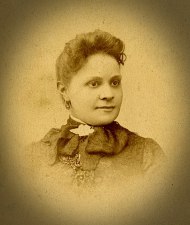
Fannie Barrier c1880, photographer, public domain via Wikipedia
Fannie Barrier Williams (1855-1944) was, according to Wikipedia (linked above), an American political and women’s rights activist, and the first black woman to gain membership to the Chicago Woman’s Club. According to LOA, she was also the first African-American to graduate from Brockport Normal School and “quickly became part of Chicago’s black elite when she moved there with her lawyer husband in 1887”. She was a distinguished artist and scholar.
However, it’s her activism that is my focus here. Wikipedia says that “although many white women’s organizations did not embrace their black counterparts as equals, Barrier Williams made a place for herself in the Illinois Woman’s Alliance (IWA).” She represented the viewpoint of black Americans in the IWA and “lectured frequently on the need for all women, but especially black women, to have the vote”.
And so we come to her little (in size not import) piece, “Women in politics”, which was published 1894. It concerns women voting. Universal suffrage was still some way off in the USA, but Barrier Williams commences by arguing that the “fragmentary suffrage, now possessed by women in nearly all states of the union”, will certainly and logically lead to “complete and national suffrage”. So, with this in mind, she, says LOA’s notes, “challenged women to use their newfound political power wisely”. She asks:
Are women ready to assume the responsibilities of this new recognition of their worth? This question is of immense importance to colored women.
She then poses, provocatively,
Must we begin our political duties with no better or higher conceptions of our citizenship than that shown by our men when they were first enfranchised? Are we to bring any refinement of individuality to the ballot box?
Her concern is that women – but we could read anyone really, giving it broader relevance – should not vote on partisan lines. Her concern is that voting along party lines will achieve nothing, and that
there will be much disappointment among those who believed that the cause of temperance, municipal reform and better education would be more surely advanced when the finer virtues of women became a part of the political forces of the country.
Hmmm … this seems to trot out the belief that women will bring “womanly” virtues, those more humanitarian-oriented values, to politics, which history has not necessarily borne out. However, this doesn’t belie the main point about voting thoughtfully.
She then discusses the opportunity for women to vote in Chicago for the trustees of the state university, but notes that the two women candidates have aligned themselves, respectively, to the republican and democratic tickets. She says that “so far the campaign speeches and methods have not been elevated in the least degree above the dead level of partisanship”. She doesn’t want to discredit these women’s good motives but argues that
this new opportunity for self-help and advancement ought not to be lost sight of in our thirst for public favors, or in our eagerness to help any grand old “party.” We ought not to put ourselves in the humiliating position of being loved only for the votes we have.
It seems that these two women candidates were white women. What she says next reminds me of Aileen Moreton-Robinson’s Talkin’ Up to the White Woman: Indigenous women and feminism (2000), which Angharad of Tinted Edges recently reviewed. Angharad writes that “Moreton-Robinson argues that because of feminism’s inherent but insufficiently examined white perspective, Indigenous women are excluded, minimised or merely tolerated conditionally. She argues that because race is considered to be something that is “other”, white feminists are unable to acknowledge their own race and associated privilege, their own role in perpetuating racial discrimination and are therefore unwilling to relinquish some of that power.”
A similar point was made over 100 years earlier by Barrier Williams:
The sincerity of white women, who have heretofore so scorned our ambitions and held themselves aloof from us in all our struggles for advancement, should be, to a degree, questioned. It would be much more to our credit if we would seek, by all possible uses of our franchise, to force these ambitious women candidates and women party managers to relent their cruel opposition to our girls and women in the matter of employment and the enjoyment of civil privileges.
She continues that “we should never forget that the exclusion of colored women and girls from nearly all places of respectable employment is due mostly to the meanness of American women” and that voters should use the franchise to “check this unkindness”. She urges voters not to focus on “the success of a party ticket for party reasons”. This would make them “guilty of the same folly and neglect of self-interest that have made colored men for the past twenty years vote persistently more for the special interests of white men than for the peculiar interests of the colored race”.
Strong words, but history surely tells us true ones. So, she asks voters “to array themselves, when possible, on the side of the best, whether that best be inside or outside of party lines”.
For Barrier Williams, as for many who fought for women’s suffrage, the vote was not just about equality but about what you could do with the vote. It was about having the opportunity to exert “a wholesome influence in the politics of the future”. The words may be strange to our 21st century ears, but the meaning still holds true – and is a timely one to consider now!
Fannie Barrier Williams
“Women in politics”
First published: The women’s era, 1894
Available: Online at the Library of America
 Whispering Gums