Monday musings on Australian literature: Literary visitors in 1965

Last week’s Monday musings surveyed Australian literature in 1965. As I researched that post in Trove, I came across some fascinating newspaper articles from the year, which I thought worth sharing in separate posts. I’ve divided them into two groups – one on overseas visitors (today’s post) and the other local writers (next week’s, probably!)

An American academic

Bruce Sutherland, Professor of English Literature at Pennsylvania State University, visited Australia to research Miles Franklin’s time in America. He is, apparently, credited with establishing and teaching the first exclusively Australian literature course in the USA – in 1942. (He’s interesting, so I might return to him another day.)

Anyhow, speaking on an ABC program, he said (according to The Canberra Times), that Australian literature was more widely read now than at any time since the 1890s, and that, compared with his visit in the early 1950s, now “every Australian university is encouraging Australian studies to some degree”.  Publishers too, he said, were rising to the challenge:

Not only are many of the older books kept in print, but more and more, the works of promising young authors are being published.

He noted the importance of reprints, to students and the general public, saying that “a literature that is not read can hardly be said to exist”. Good point, and one that publishers like Text have taken on board in their Classics series. Prof. Sutherland was particularly interested in the fact that the biggest change since 1951 had been in drama.

However, Australians shouldn’t rest on their laurels, because

Quite frankly, Australian literature has a long way to go before it attains the pedestal reserved for the English and American in the English-speaking world. … But it has made great strides, and is now well beyond the toddling stage.

Hmm … no wonder we suffered from cultural cringe! Still, he was a great proponent of our literature, and as a result, in 1993 at least, Pennsylvania State University had one of the best research collections outside Australia.

A Soviet novelist

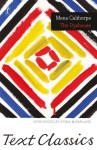
Soviet novelist, Daniil Granin (1919-2017) was visiting Australia as guest of the Fellowship of Australian Writers (FAW), reciprocating author Alan Marshall’s visit to the USSR the previous year. His focus was a bit different, as he was interested in what Australian literature was offering Soviet readers. “Australian literature,” he said at a FAW reception, “is the only window Soviet people have on Australian life.” DK, the Tribune article’s writer, tells us that the attendees included novelist Mena Calthorpe (whose realist novel The dyehouse I’ve reviewed), short story writer Dal Stivens, and poet Kath Walker (later, Oodgeroo Noonuccal).

Mena Calthorpe, The dyehouseGranin told the group that interest in Australia had grown “enormously” in the last decade. In 1964, for example, one and a half million copies of Australian authors were printed and sold in the Soviet Union. Amazing. Did you know? Apparently, writes DK in another Tribune article, this interest is because these Aussie writers’ characters are “flesh and blood” people with an “active attitude to reality”.

Anyhow, he also spoke with various Australian literati including Colin Simpson (who wrote Take me to Russia), Roland Robinson (a poet), Leonie Kramer (the first female professor of English in Australia), Clem Christesen (editor of Meanjin), Alan Marshall (whose memoir I can jump puddles is a classic), and Nancy Cato (author of All the rivers run). That’s interesting, but even more interesting are his comments on some significant, and still remembered, Australian writers at the time:

Of Patrick White: “He is a man who feels a great responsibility for his own literary work, and has a genuine interest in contemporary literature. He has achieved for himself a very high standard of literary craftsmanship.”

Of Katharine Susannah Prichard: “She is a human being who uplifts you from your first meeting. She has an indomitable spirit, throws aside all trifles, and gets down to the main issues.”

Of Kath Walker: “I admire her just because she is the first successful Aboriginal poetess writing in English. She has a keen interest in all new Aboriginal writers and a vital concern with problems facing them.”

Note: For copyright reasons, most of the articles available for the 1960s come only from The Canberra Times and the Tribune, because they made an agreement with the NLA to allow digitisation. For other newspapers, the library must wait until they come into the public domain – and then, I guess, wait their time in the digitisation queue!

Ten Year Blogiversary Giveaway Winners

And so, as promised, I drew the two winners of my one year blogiverary giveaway yesterday, May 10, but I was out of town, so decided to way until I returned home to my proper computing facilities, to write the announcement post.

There were 11 entries in the non-Australian draw and 16 in the Australian draw, and, would you believe that the random number generator at mathgoodies.com generated 5 in both draws! That’s random for you.

The winners are, therefore:

  • 5A (Australian-based address): Louise Allan
  • 5N (Non-Australian address): Nancy Elin
Help Books Clker.com

(Courtesy OCAL, via clker.com)

Congratulations to Louise and Nancy, and commiseration to everyone else. I wish you could all have won, though that would have dented my wallet a little too much! Thanks everyone for playing along, and for all your good wishes for my ten years. You never know, I might run another one for a future anniversary.

Now, to claim your surprise prizes Louise and Nancy, you will need to send me your postal address for delivery of your book by midnight (AEST) on 18 May 2019. (My email address as at the bottom of my Who am I? page.)

If either or both of you don’t email me by the given date then I will re-draw a new winner for the prize/s.

Meanwhile, I will get on to selecting your special prizes!

Amor Towles, A gentleman in Moscow (#BookReview)

Cover for Amor Towles A gentleman in MoscowAmerican writer Amor Towles’ third novel, the best-selling A gentleman in Moscow, generated a surprisingly lively discussion at my reading group last week, because beneath its engaging, accessible exterior are some puzzles. These puzzles relate primarily to Towles’ intentions. What were they? Why did an American investment banker write an historical fiction novel about a Count in Bolshevik Russia?

But, I’m rushing ahead, so I’ll slow down and do the right and proper thing, which is to start  with a plot outline. The novel opens in Moscow in 1922, when our protagonist Count Rostov – once a hero of “the prerevolutionary cause” but now a “Former Person” – is sentenced to indefinite house arrest in the grand hotel, the Metropol, in which he has been living for four years. Not only that, but he is to live in the old servant’s quarters rather than in his luxurious suite. Fortunately, our count is nothing if not resourceful, and he quickly decides that “if a man does not master his circumstances then he is bound to be mastered by them”. The next 450 pages or so chronicle the next three decades or so of the Count’s life under this house arrest, detailing life in the hotel and the relationships he forges over that time. It is, unexpectedly, a thoroughly enjoyable read, but why, exactly? What is it all about?

While most of my reading group loved the book, albeit a couple of us had this niggling “why” question, one member found it “intellectually dishonest”. She could not accept the Count as being in any way representative of Russian aristocrats of the time, and she felt that the novel glossed too easily over the real horrors of the period. Why did she feel so strongly about this, while the rest of us, mostly well-versed in Russian history, did not feel the same way? Well, I don’t know exactly, but I think it might have something to do with form and tone.

I’m going to explore this a little rather than focus on the content, partly because it intrigues me and partly because I presume that quite a few of you will have read the book and know its content. So, here goes. The novel is historical fiction, but what sort? It’s not your bodice-ripping romance nor the swash-buckling adventure that exemplify this genre. But, neither is it the sort of social realism that is the most common alternative to the romance or adventure approach. What, then, is it? Well, as I was reading it, I had visions of Austen. Sorry, but it’s true! It’s not Austen, of course, but it has a comedy-of-manners ring to it, complete with Austen-like commentary, not to mention her satiric and ironic touches.

This means that although, as its own blurb says, it takes place during “some of the most tumultuous decades in Russian history”, the focus is elsewhere. It’s on the Count and the small community surrounding him; it’s on how does one, in fact, adapt to living under such circumstances. Some of you will know Jane Austen’s famous comment in a letter to her niece about her subject matter:

You are now collecting your People delightfully, getting them exactly into such a spot as is the delight of my life – 3 or 4 families in a Country Village is the very thing to work on.

It’s not a stretch to see the story of the Count’s life in the Metropol through this prism. Indeed, the above-mentioned blurb continues to say that the Count, stripped of his luxuries, “is forced to question what makes us who we are”. This journey was the book’s main story for me. We do learn about Stalin’s regime, through characters who come to the hotel and interact with the Count, but the Count’s personal story is the main game.

So, what does he learn? Early on, he vows “to master his circumstances through practicalities”, and this he does by tailoring his life and expectations. His initial change from hotel guest to prisoner sees him still living pretty much the high life, free to relax and dine, but by the end of the novel he is working as the Head Waiter in the main restaurant, for which, in fact, his aristocratic training in etiquette had well qualified him. He had said that “his model for mastering his circumstances” would not be Dantés planning revenge, nor Napoleon imagining his triumphal return, but “a different sort of captive altogether: an Anglican washed ashore. Like Robinson Crusoe”. Crusoe, in other words, adapted, confronting the challenges as they arose.

As with most of Austen’s protagonists, the Count’s “learnings” are not overly dramatic. He’s already a generally decent, sensible sort of person, but late in the novel, he tells his lover, Anna, in a discussion comparing American “conveniences”, like dishwashers, with Russian privations,

“I’ll tell you what is convenient … To sleep until noon and have someone bring you your breakfast on a tray. To cancel an appointment at the very last minute. To keep a carriage waiting at the door of one party, so that on a moment’s notice it can whisk you away to another. To sidestep marriage in your youth and put off having children altogether. These are the greatest of conveniences, Anushka—and at one time, I had them all. But in the end, it has been the inconveniences that have mattered to me most.”

These inconveniences revolve around the deep relationships he develops through his imprisonment and the demands that such relationships entail. They result in a man who is described by his interlocutor at the beginning as being “without purpose” turning into someone very purposeful.

What’s also Austen-ish is the commentary, the astute observations made about human nature, such as:

By their very nature, human beings are so capricious, so complex, so delightfully contradictory, that they deserve not only our consideration, but our reconsideration—and our unwavering determination to withhold our opinion until we have engaged with them in every possible setting at every possible hour …

If there’s one thing Austen recognises it’s the capriciousness of humans. Another Austen-like statement is this one: “It is a fact of human life that one must eventually choose a philosophy”.

But, still, why write such a story? Towles, himself, has said that he wanted to write about someone forced to live in a grand hotel, and that he had “no central theme”. Rather, he wanted to create a work that would be “satisfyingly cohesive” but “prompt varied responses from reader to reader, and from reading to reading.”

Consequently, while my reading of the book encompasses seeing it as critiquing the corruption, hypocrisies and loss of freedoms that characterised the Bolshevik regime, my overall response is a broader one, which is that, unlike the Count’s friend Mishka and the little-girl-turned-mother Nina, we would do better to develop and rely on our personal set of values, to work on our relationships and the attendant responsibilities not to mention on our own adaptability to circumstances, as the Count does, than commit to any single “ism”.

Lisa (ANZLitLovers) thoroughly enjoyed this book too.

Amor Towles
A gentleman in Moscow
London: Viking, 2016
502pp.
ISBN: 9781448135509 (Kindle ed.)

Monday musings on Australian literature: 1965 in fiction

1965 as a topic? What the?! Those familiar with the lit-blogosphere will probably guess what inspired this post, but for everyone else, I’ll explain. Over the last week of April, bloggers Kaggsy (Kaggsy’s Book Ramblings) and Simon (Stuck in a Book) ran a 1965 Reading Week, the latest in their series of reading weeks focusing on books published in a particular year. Needless to say, I didn’t manage to take part – if I had, you would have known about it before now! (For a list of the books read and who read them, check Simon’s 1965 Club Page.)

However, I thought I could play along, in my own way, by writing a – yes, I admit – belated post on 1965 in Australian literature. If it works, I might try it again for their next “year”, whatever and whenever that may be.

My main sources for this post were:

Australian literature and 1965

Kaggsy and Simon’s focus is books published in the year, but I’m going to do a sort of literary snapshot.

Writers born in 1965

An interesting group containing, not surprisingly, many writers in their prime now:

  • Michael Farrell: poet, who has had several books published, mainly by independent publisher Giramondo
  • Gideon Haigh: journalist and author, best known for sports and business writing
  • Fiona McGregor: novelist, whose third novel, Indelible ink, won The Age Book of the Year award
  • Melina Marchetta: novelist, primarily of Young Adult literature, whose award-winning YA novel, Looking for Alibrandi (1992), is an Australian classic
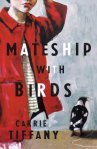
  • Mateship with Birds (Courtesy: Pan MacMillan)
    Carrie Tiffany
    : novelist, whose first two novels, Everyman’s rules for scientific living and Mateship with birds (my review), both won awards, and whose third book, Exploded view, was published this year. Mateship with birds won the inaugural Stella Prize.
  • Christos Tsiolkas: novelist who has written eight novels, including The slap (my review) and Barracuda (my review), as well as plays and screenplays.
  • Charlotte Wood: novelist who has written both novels and non-fiction, and whose dystopian The natural way of things (my review) also won a Stella Prize

Writers died in 1965

Hooton and Heseltine list a small number of deaths for the year (and I’ve added them to Wikipedia), but none are particularly significant in terms of my blog’s interests. However, one of those who died was a significant Australian personage, HV (aka Doc) Evatt. Among other roles, he was President of the UN General Assembly, and helped draft the UN’s Universal Declaration of Human Rights.

Novels published in 1965

By 1965, a goodly number of books were being published in Australia, so I can’t list them all. Hence, I’m focusing on those that interest me! You can check my sources for more.

  • Thea Astley, The slow natives: if I’d taken part in the 1965 Club, this is the book I would have chosen. I love Astley and have written about, or reviewed, her here a few times.
  • Clive Barry, Crumb borne: included because Barry was the inaugural winner of the Guardian Fiction Prize, and was described by the Oxford Companion to Australian Literature as a “vivid stylist with a capacity for dry humour”; his experiences as a POW in Italy in WW2 inform this novel.
  • Nancy Cato, North west by south: well-known for her historical fiction (of which I reviewed All the rivers run) but also wrote biographies and poetry, and was an environmentalist and conservationist; this book is about Lady Jane Franklin.
  • Don Charlwood, All the green year: this would have been my second choice for the club, because I have the Text Classics copy that I gave my late aunt.
  • Catherine Gaskin, The file on Devlinbest-selling romance novelist, whose book Sara Dane, based on the convict Mary Reibey, sold more than 2 million copies.
  • Donald Horne, The permit: one of Australia’s best known public intellectuals in his time, famous for coining the phrase “the lucky country”. Novels were not his main form of writing.
  • George Johnston, The far face of the moon: best-known for his My brother Jack, which won the Miles Franklin in 1964.
  • Thomas Keneally, The fear: prolific novelist who has won both the Booker Prize and the Miles Franklin Award (twice).
  • Christopher Koch, Across the sea wall: best-known for The year of living dangerously, and twice-winner of the Miles Franklin Award.
  • Eric Lambert, The long white night: one of the many left-wing/communist writers who were published in the 1950s and 1960s.
  • D’Arcy Niland, The apprentices: husband of Ruth Park (haha, just had to describe him in relationship to his wife!), and best known for his novel The shiralee.
  • Lesley Rowlands, A bird in the hand: also published two humorous travel books, and short stories.
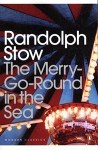
  • Randolph Stow, The merry-go-round in the sea
    Randolph Stow, The merry-go-round in the sea (my review): woo hoo, one I’ve read!
  • George Turner, A waste of shame: best-known for the SF novels he wrote later in his career, but in 1962, he won a Miles Franklin Award with his novel The cupboard under the stairs (reviewed by Lisa)
  • Morris West, The ambassador: a best-selling author in my youth, West is on my list of topics for Monday Musings one day

Selected other publications from 1965

So many well-known writers well-known published poetry, plays, short stories and other works in 1965, but I can only share a few (links on their names are to posts on my blog which feature them, though most have been mentioned in some way, in fact):

  • Rosemary Dobson, Cock crow (Poetry)
  • Frank Hardy, The yarns of Billy Borker (Short stories)
  • AD Hope, The cave and the spring (Criticism)
  • Geoffrey Lehmann & Les Murray, The Ilex Tree (Poetry)
  • Hal Porter, The cats of Venice (Short stories)
  • Kenneth Slessor, Life at the cross (Poetry)
  • Ivan Southall, Ash Road (Children’s novel)
  • Kylie Tennant, Trailblazers of the air (Children’s novel)
  • Colin Thiele, February dragon (Children’s novel)
  • Russel Ward, Australia (History)
  • Patrick White, Four plays (Drama)
  • Judith Wright, Preoccupations in Australian poetry (Criticism)

Literary Awards in 1965

Most literary awards we now know, started in the 1970s or later:

  • ALS Gold Medal: Patrick White’s The burnt ones (this book of short stories was my second Patrick White, the first being Voss)
  • Encyclopaedia Britannica Awards for Literature: Shared between two poets, AD Hope and Robert D Fitzgerald. The chair of the awards committee said: “As a critic [Hope] he is lively and controversial and he has earned the respect of his fellow teachers and intelligent readers, for his determined efforts to reevaluate accepted literary convention.”
  • Miles Franklin Award: Thea Astley’s The slow natives 

In conclusion

The interesting thing, not necessarily obvious from these lists, is the number of left, if not Communist, writers who were active at this time, beautifully reflecting the political activism and idealism of the 1960s.

Oh, and I found some fascinating articles in Trove about Australian literature in 1965. They deserve their own post – watch this space.

Sydney Writers Festival 2019, Live and Local (Session 3)

And now my final event from the Sydney Writers Festival live-streamed (#SWFLiveAndLocal).program at th National Library of Australia.

“I do not want to see this in print”, Sunday 5 May, 4.30pm

Panel: Annabel Crabb (convenor), with Samantha Maiden, Sharri Markson, Niki Savva

Niki Savva, The road to ruinAustralian journalist Annabel Crabb, as cheeky as ever, introduced the session as being one of the last events in this Festival of lying! (You may remember that the festival theme is “Lie to me”) However, she then went on to say that the focus of the session would be modern political reporting. Her panelists were all established Australian journalists (click on their names to see their Wikipedia entries.)

Crabb got the conversation going by asking whether political lying is different now to what it was in the past? That set them off. It was a lively, respectful discussion involving four women who are clearly passionate about political journalism.

One of the issues about “modern” lying concerned politicians saying things at one time that they revoke later. An example was Julia Gillard’s saying there’d be no carbon tax, and then introducing one. The journalists felt the best policy is always honesty: Gillard should simply have said that yes, she had made that statement, but that circumstances had changed and now there would be a tax. A common circumstance where this sort of lying happens are leadership challenges. The problem is that the politician may be planning to challenge, but is not ready at the time the journalist asks, so they feel forced to lie.

But, Savva asked, isn’t it better to just tell the truth, rather than undermine the political process by lying. Crabb noted that we all now know the language of leadership challenges and so no-one believes their denials.

More egregious lies, according to Crabb, are those where a journalist is given information “in confidence” or “off the record” that the politician denies when asked publicly. For example, Peter Costello had told a journalist he would challenge for leadership one day, but when asked publicly he said he would never challenge. The challenge for journalists in all this is protecting their sources, because trust goes both ways. Samantha stated that “you have to hold your nerve” which I felt was code, in part, for “bide your time”! It’s all a game in the end – and not a game I would ever want to play. However, we need journalists to suss out the truth for us.

Of course, journalists aren’t squeaky clean. There are co-dependent and lazy journalists, they said, but there is also the problem of not enough time, the sped-up news cycle, and that there are fewer journalists.

Crabb moved on to the public’s disaffection with politicians and political journalists, as exemplified by the recent social media attack on journalist Patricia Karvelas over a text from politician Barnaby Joyce. A panelist added the propensity of viewers of the ABC’s The Insiders being quick to criticise. Why does the public not recognise that journalists have contact/relationships with politicians in order to obtain information, Crabb wondered? Maiden put a positive spin on these attacks saying that “in the age of social media you have the joy and pain of knowing what people think about you”! You just need to ignore people being mean to you on Twitter. (Easier said than done sometimes, I suspect.)

Markson discussed her story on Barnabay Joyce and his affair. She explained how long her investigation took –  it started long before the pregancy. Journalists must be sure the story can stand up, or they lose their job. Verifying all the information wasn’t easy, she said. She also explained that she needed to clear working on the story with her editor, for both approval and support. After the story came out, and was clearly the “truth”, Joyce apparently considered a defamation case! Later in the conversation, she reiterated the battle involved in getting any story into the paper. So many hoops! (And then, when you finally get there, “you get smashed in Twitter”.)

This sort of detail about the process was illuminating for outsiders, but Savva asked the important question: was the story politically relevant? I presumed she didn’t think it was, and nor, they said, did journalist Peter Hartcher, but Markson argued that it was because it demonstrated hypocrisy, given Joyce’s position on family values, his arguments against the cervical cancer vaccine for fear it encourages promiscuity among women, etc.

The panellists shared many other recent examples of how journalists obtain stories, of their relationships with their sources, and of how they manage confidentiality (which can include obfuscating the “real” source by using generic terms like “senior MP” etc). Their passion for their work was palpable, but so was their sensitivity to the humans involved, to the implications of different behaviours, and their awareness that it’s not sometimes only about “the truth” but how something looks. (Tony Abbott and Peter Credlin’s relationship being a recent example.) Relationships can be misconstrued. There was a lot of detail of interest to Aussies who know these cases, but the bottom line was the balancing act involved. It was a Niki Savva contact who gave the title for the session: “but I don’t know if I want to see this in print”!

We ended with a Q&A, which mostly revealed more of the same. One however asked where were the reports on policies, particularly policy comparisons. Crabb said “on the ABC website”! Maiden said that she liked writing about policy, and did indeed write such articles, but that, realistically, this writing doesn’t get as many clicks!

Another asked about the Fourth Estate’s role in holding the government to account. Why do journalists, then, call Manus Island an “offshore processing centre” when detainee, and award-winning author, Behrouz Boochani, says that he’s never been processed, that it’s a prison. The journalists replied that we could be Orwellian about language, but they do need to use the names used by the government. They gave examples though where journalists – such as Laurie Oakes – have pushed the government, forcing it to account.

Finally, a questioner asked about the role of the public service. Savva explained that public servants provide the facts, and suggest the questions that might be asked, but that the political staff dress up the information “in a more palatable fashion.” Hmm…

The session was, then, packed full of case studies familiar to the audience. The women were articulate, passionate and bold! Indeed, the clear message that came out of the session was that journalists must be bold, tough, and, as Maiden said early on, must be able to hold their nerve. It’s not a pretty job, but, done properly, it’s an important one. The more we readers understand the challenges and the pressures, the more we might support journalists – and be willing to pay for their journalism.

Sydney Writers Festival 2019, Live and Local (Session 2)

I returned to the National Library of Australia today for two more live-streamed events from the Sydney Writers Festival (#SWFLiveAndLocal). As I did last year, I’ll write each event up in separate posts, so here is the first of my Sunday events.

Andrew Sean Greer: Less (Conversation), Sunday 5 May, 3.00pm

Conversation: Andrew Sean Greer with David Marr (Convenor)

Andrew Sean Greer, Less, book coverWhat an absolute joy this session was. Australians will know David Marr as a politically engaged author and commentator, not to mention Patrick White’s biographer, and most readers will know Andrew Sean Greer as the author of the Pulitzer prize-winning novel Less (which also won, last week, the International Book of the Year category in the ABIA Awards.) These two men, one in his early seventies and the other nearing fifty, entertained us with a conversation that was light-hearted and yet managed to convey substance too. What made it particularly enjoyable was that Marr and Greer seemed well attuned to each other resulting in quite a bit of repartee, and no awkward spots.

So, the session felt very much like a conversation between friends rather than an interview, but we still got some nitty gritty, including:

  • the challenges of writing comedy, and how Less starts off quite flatly, which Marr felt was daring. Greer explained that he wanted to strip everything away form the protagonist Arthur Less at the start so he could then “reward him”. The narrator ridicules Arthur, but with warmth. Marr talked about some of his favourite bits, including that Arthur turns out to be a “miraculous kisser”. Are there any literary antecedents for this, he asked, to which Greer responded immediately, vampire novels! Haha!
  • the theme of the book being about joy and discovering joy, but also ageing. Greer said that he wanted it to be about age, but not be autumnal. He wanted it to be more about the idea that “given you are not getting any younger, you should enjoy it”. When Marr asked Greer about his own ageing, he commented on the things he can’t do any more – like drinking – but followed up by saying that John Irving was right, it’s important to have a “clear head in the morning”! Later in the conversation, Greer returned to the idea of age, saying it’s about the narrowing of pleasures, but that since writing is a pleasure, he was going ok.
  • the rules of comedy, being that you find the scariest thing you can, and it is this that releases the comedy. Readers need to be able to identify with the pain, but comedy only works, said Greer, if you know everything is going to be alright.
  • the writing process, including how he went about writing the foreign languages he uses in the book, and how he chose his names. Marr loved the names in the book, but advised that in future a good source for names is war memorials. However, it seemed that Greer had already discovered the value of cemeteries for this purpose!
  • winning the Pulitzer Prize, meant that he’d “won the time to write”, so he left his job. But he also needed some time to bask, he joked! Marr responded that Patrick White would ask “why aren’t you at your desk?” to which Greer replied that Peter Carey had already told him that! (Marr muttered that Carey has had his times of basking!)
  • Joe Keenan, Blue heaven, book coverbeing a gay writer, and finding gay stories. The first gay writer Greer remembers admiring is Edmund White, albeit some of his writing was too sophisticated for him at the time. He also named Blue heaven by Joe Keenan who went on to write the Frasier TV series. He had even turned Blue heaven into a musical, and had invited Keenan to it, but Keenan didn’t like it! Greer also named Armistead Maupin as an influence on his writing.
  • whether only minorities can write about minorities, to which Greer had an open mind, saying that he remembered a time when there were no gay characters in the books he read. Silence or invisibility is death, he said. He is therefore happy for non-gay people to write gay characters, but they must think about them as humans, not present stereotypes. He wouldn’t want “straight” books not to have gay characters. I like this response – that invisibility is a worse problem, and that the important thing is for writers to think about their characters as “humans” not types – but recognise different minorities, different writers may feel differently.

There was a Q&A, which included:

  • Did he feel a pressure to represent gay people? Greer said that there is always a tension for writers between representing “your people” (whoever they are) and telling the truth, the tension between the “legend” and the “reality”.
  • He’d spoken elsewhere about reading books relating to his writing, so what books had he read while writing Less? Nabokov’s Pnin, Updike’s Bech stories, Muriel Spark, and Proust (who finds that desired balance between sentimentality and cynical detail.)
  • Had he been to all the places he writes about in the book? Yes. He had two rules writing this book: everything had to come from his notebooks where he’d written his experiences, as he didn’t want to write fantasy about another country; and the joke always had to be on Arthur because he’s the outsider in the various countries.

All this sound may sound dry, but the repartee really was something. It was a joy seeing Marr in this different, lighter, but as astute as ever, mode. All in all, thoroughly entertaining, and informative.

Sydney Writers Festival 2019, Live and Local (Session 1)

Pic of farm at Williamsdale

A day in the country at Williamsdale

As in 2018, selected Sydney Writers Festival events were live-streamed this year to 35 sites, including Canberra’s National Library of Australia (#SWFLiveAndLocal). I had planned to attend most of Saturday’s events, but then our annual day-trip to our friends’ place in the country came up, and that’s unmissable, so I only attended the last event of the day.

This year’s theme is Lie to Me, which means participants “will discuss the white lies and deceptions that are necessary for survival, as well as malicious lies that are spun with darker intent. They’ll explore the ways that writing can be used to deceive others in an increasingly post-truth world, and look at the lies that we tell ourselves, each other, and those we collectively tell as a country.” A perfect theme, don’t you think?

Boys to Men: The masculinity crisis, Saturday 4 May, 4.30pm

Panel: Clementine Ford, Adam Liaw, Janice Petersen (Convenor)

Book cover of Clementine Ford's Boys will be boysClementine Ford is the feminist author of Fight like a girl, and, more recently, Boys will be boys. An obvious choice, then, for the panel.

Adam Liaw is a lawyer who came to fame as a winner of Australia’s Masterchef. The festival program describes him this way: “As the author of six cookbooks and host of the award-winning SBS television series Destination Flavour, his approachable and family-friendly recipes are influenced by his global travels, but remain focussed on the casual simplicity of contemporary Australian home cooking. In 2016 the Japanese government appointed Adam as an official Goodwill Ambassador for Japanese Cuisine.” Not such an obvious choice, eh? However, he has been appearing recently on some ABC-TV current affairs programs and has impressed us with his sensible, thoughtful, comments. He didn’t disappoint in this panel.

Janice Petersen, the convenor, is an SBS journalist and news presenter.

Firstly, although the panelists didn’t say this specifically, the topic was a natural for the Lie-to-me theme, since so much of gender is constructed on lies – on assumptions, beliefs and attitudes about what makes a man or a woman. This session focused on these, and how they impact, particularly, contemporary ideas about masculinity. Convenor Petersen did an excellent job, asking such questions as:

  • Why is masculinity in crisis?
  • Why does the mentioning word “masculinity” seem “to set off a bomb”, engendering negative responses?
  • What does it mean to have a son (as both panelists do) and do the panellists fear the influence of peers?
  • Are men and women different?

Clementine Ford spoke, naturally, from a feminist perspective. She argued that masculinity is in crisis, defining toxic masculinity as men being unable to have platonic relationships with each other, being unable to express their feelings. She argued that boys bond over negative attitudes to women because they can’t relate to each over other things. Men, she said, are hostile to discussions about feminism because they don’t see that it works for all, that its aims are to free all people to be themselves. The problem is that although many men hate much about their lives, they don’t want to “see what patriarchy inflicts on them” (at work, say) because they fear losing the benefits of being “men” (such as being the boss at home!)

However, Ford also said that she doesn’t see “masculinity” as negative. She is invested in “healthy masculinity” and has faith in men, but sees the issue being masculinity and power propping each other up.

Adam Liaw spoke, he said, from a non-scholarly perspective, but I must say that I really liked the way he thought. He talked about how every society defines its own understanding of masculinity, and that in our society today, we don’t have a clear idea of what that is. He sees this lack of clarity as a structural problem, one that creates a high level of insecurity in many men. He talked about various male “role models”, like James Bond and Batman. James Bond doesn’t have close friends which is something men can relate to, while Batman is rife with problems, which men can also relate to. Modern men, on the other hand, can’t relate to Superman as they once did. In other words, men are now defined more by their insecurities than by positive ideas or values.

Liaw returned repeatedly to this insecurity issue, and it made sense. When Petersen asked whether men and women are different, Ford was initially a little flummoxed and referred to Liaw, who without hesitation said yes we are different. We are, for a start, physically different, but, he said, we should not weaponise gender. Our biological differences don’t, for example, translate into meaning that men are better CEOs than women. Liaw’s most important point was, for me, that the issue is not things like men spending more time with children – which men have always liked to do – it’s about overcoming their insecurity, meaning, for example, being comfortable with their partners earning more money than they.

I found the conversation about raising children interesting. Ford expressed a more ideological approach, one I related to because of my own child-rearing days. Indeed, it was hard not to feel a bit of “been there, done that”, since we second-wave feminists had tried exactly what she was talking about. In fact, when I look around at our sons, I think we did a pretty good job! They aren’t the men evincing the toxic masculinity that was being discussed, which begs the question in my mind about whether a few enlightened parents raising their children to be free (free to be … you and me, and all that) will effect the change we need.

Both Ford and Liaw, albeit they expressed it slightly differently, eschewed imposing gender expectations on their children – on what they wear, play with, etc. Liaw spoke of wanting his son to be a “good person”, a “good man”. He is not in favour of forcing “reverse” gender activities on children, but on encouraging all children to be able to do all things. (This was in response to a clip Petersen showed from an SBS Dateline film of an Icelandic school.)

Ford spoke of structural oppression (much as Liaw had earlier referred to structural problems). This results in such things as her being trolled if she speaks of boys doing anything “feminine”, like pushing a doll in a pram. It’s seen as her forcing a boy to be a girl, rather than as letting him explore life. We need to “dismantle gender” but Australians, she feels, can’t get their heads away from narrow definitions of what “men” and “women” are. Worse, they don’t actively condemn men for treating women badly. Much trolling comes from packs of teenage boys. (This reminded me of a recent interview I heard with a female Uber driver who said that one drunk young man was manageable, but in a pack they can become abusive to women, showing off in front of their mates.) Toxic masculinity!

If Liaw’s most important point, for me, was about overcoming male insecurity, Ford’s concerned the malleability of humans. If we have learnt, she said, not to smoke, and not to drink and drive, we can also learn not to be racist or sexist, but these latter mean giving up power – and we resist that.

The session ended with a brief Q&A, from which I’ll just share the last question. It concerned overcoming the sense of entitlement (which I understood as encompassing more than male entitlement.) Liaw said it starts with understanding our own weaknesses and biases, while Ford said it’s about listening to others, and checking our responses to what they say. Which is to say, I suppose, that we need to look past the lies we so easily tell ourselves in order to forge more truthful relationships with each other!

PostscriptJonathan Shaw (Me fail? I fly!) has reported on some Friday sessions, which you may like to check out.

Six degrees of separation, FROM The dry TO …

Well, my record for 2019’s Six Degrees of Separation meme continues, that is, I still haven’t read a starting book! By comparison, last year I’d read three of the first five (which may have been a record in the opposite direction!) However, I have always read the books in my chain. And now before I share my chain, the formalities, which are simple:  if you don’t know the rules of the meme, please click on meme leader Kate’s blog name – booksaremyfavouriteandbest – and you will find them.

Book cover of Jane Harper's The DrySo, this month’s starting book is Jane Harper’s The dry, a book which got her career off to a rip-roaring start, and that’s been followed by two more, Force of nature and The lost man. These are all in the crime genre, I believe, which is not a genre I gravitate to.

Book coverThere are some books that “everyone” reads, but that I don’t, for various reasons, usually to do with genre. Occasionally though, something happens to change my mind. This may happen one day with The Dry, but for today’s post, I’m choosing Vicki Laveau-Harvie’s The erratics (my review), which won this year’s Stella Prize. It had not been on my TBR list, but winning the prize tipped it over … and, of course, I’m glad it did.

Emma Ayres, CadenceNow, The erratics was written by an Australian-based writer who was born in Canada. Another memoir written by an Australian-based writer who was born elsewhere (this time, England) is Emma (now Eddie) Ayres’ Cadence: Travels with music (my review). This is a travel memoir in which Ayres cycled from England to Hong Kong with her violin.

Linda Neil, All is given, coverSticking with memoirs, though I promise we’ll leave them soon, I’m choosing another travel memoir with a music focus, Linda Neil’s All is given: A memoir in songs (my review). Neil describes her travels in the usual and unusual places, the songs she wrote and how music helped her make connections she may never have made otherwise.

Melissa Lucashenko, Too Much LipAnd now, finally, we move onto fiction! Neil’s book came to me as a review copy from the wonderful UQP (the University of Queensland Press). The most recent book I reviewed from them is Melissa Lucashenko’s Too much lip (my review). It’s another excellent book from UQP, which has a marvellous track record in publishing indigenous Australian writers.

Oh, oh! I’m back to memoirs! You would think from this post that memoirs comprise the bulk of my reading! Not so. Just under 8% of my reviews are for memoirs. ‘Nuff said? Now, on with the chain … Lucashenko is the most recent indigenous Australian author I’ve read and reviewed. The first book by an indigenous Australian author that I read for my blog was Boori Monty Pryor’s Maybe tomorrow (my review), in June 2009, just one month into my blog.

Anita Heiss Paris DreamingBoori Monty Pryor was an author ambassador in Australia’s 2012 National Year of Reading program. Many authors from around Australia were nominated as ambassadors, but I’m going to end this chain on another indigenous Australian author who was one of these ambassadors, Anita Heiss. You’ll be pleased to know, however, that although I’ve read a memoir by her, one that came out in 2012 no less, I’m going to choose her novel, Paris dreaming (my review), because I heard her speak about it at the Canberra Readers Festival in 2012. Fair enough?

Hmmm … we’ve been everywhere this month, starting in Canada, then travelling all over the globe with Ayres and Neil, before landing in Australia, albeit ending on a foray to Paris with the Aussie protagonist of our last book. And for those who like chains to end in circles, you may like to know that the author of my opening book, The erratics, lived in France, before moving to Australia!

… over to you: Have you read The dry? And, regardless, what would you link to? 

Ten Year Blogiversary for Whispering Gums, with a Giveaway

Today, my blog turns 10! I can hardly believe it. I really didn’t expect to be still writing it ten years on when I started way back there in May 2009, but it can become addictive, as many of you know yourselves!

I must say that I started shyly. I was nervous about sharing my opinions/ideas publicly, so I did very little to advertise myself, but you can’t be on-line for 10 years without becoming at least a little known, or so I’ve discovered. Fortunately, the responses have been positive and supportive. Litblogs, in fact, are remarkable for the absence of nastiness, proving that people can be polite on-line even when they don’t always agree.

Some highlights

So, I have written over 1600 posts, or, around 13.5 a month, which is not a stupendous number, but a comfortable rate for me. Of these, 442 have been Monday Musings’ posts which I started in mid-2010 as an experiment. Never did I believe I would still be finding topics to write about nearly nine years later, but the interest of readers here has encouraged me to continue. I have hosted a number of guest posts – and thank the generosity of those writers who wrote those posts – and I’ve guest-posted for others. I’ve taken part in other bloggers’ reading weeks and memes, and am also involved in administering or editing four or five other blogs.

Whispering Gums has been archived on the National Library of Australia’s web archive, Pandora, since 2012, which means it will be there, along with other litblogs, for researchers of the future who are interested in how we in the early 21st century shared books and reading, how we communicated on-line, and what we said about our literary culture and environment. I was “freshly pressed” in November 2010 – for a travel-oriented post (hmm) – resulting in my biggest single day of hits ever. (I don’t believe WordPress does this anymore.)

Because of my blog, I have been involved from the start, as a mentor, in the ACT Writers Centre’s arts blogging program. This is a joy, which brings me to the best highlight of all ….

My blog has introduced me to some wonderful people – bloggers, readers, writers, publishers – who have enhanced my understanding of literary culture immeasurably. I won’t name names because I’m sure to miss one, but you know who you are – don’t you? You mean a lot to me. Talking with other readers, as well as with practitioners and professionals in the arts, has added depth and breadth (too) to my own reading experience. I love that I’ve read and engaged with bloggers on every continent – oops, I lie, I don’t think I’ve ever engaged with a blogger from Antarctica! I’m not sure that Emperor Penguins read, though it would certainly give them something to do while they stand around nurturing those eggs!

Finally, for those who joined me later in the piece, here is a link to my first post which explains my name.

This slideshow requires JavaScript.

To mark this anniversary

To express my gratitude to all of you who have made this blogging journey such a fun and meaningful one, I would like to do a book giveaway, in fact, two book giveaways – one to an Australian-based reader and another to a non-Australian-based one. The book I send to each winner will be a surprise, making this a bit of a lucky dip.

The rules. Express your interest in the comments below, noting whether your postal address is Australian or not, and early on May 10 (in my AEST-zone), I’ll draw from each list using a random number generator. If you win, you will need to provide me with your mailing address (privately) as specified in the post announcing the winner. If you don’t, I’ll redraw. We can’t let a book gift go to waste, after all.

Meanwhile, a huge thanks to you all. You make this blog what it is – well, the positive things about it, anyhow. The rest, as they say, is mine! I look forward to sharing more with you in the future.


NSW Premier’s Literary Awards 2019 Winners; and Vale Les Murray AO (1939-2019)

I decided to replace today’s Monday Musings with an awards announcement, because the NSW Premier’s Literary Awards were being announced tonight, and they comprise a swag of prizes, many being of particular interest to me. But, then I was shocked to hear that Australian poet Les Murray had died, and I couldn’t let that pass either, so you have a double-barrelled post tonight!

NSW Premier’s Literary Awards

I will only report on a selection of the winners, but here is a link to the full suite. And, if you are interested to know who the judges were, they are all listed on the award’s webpage.

Michelle de Kretser, The life to comeBook of the Year: Billy Griffiths’ Deep time dreaming: Uncovering ancient Australia

The Christina Stead Prize for Fiction: Michelle de Kretser’s The life to come (my review).

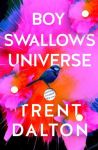
People’s Choice Award for Fiction: Trent Dalton’s Boy swallows universe (my review)

The Douglas Stewart prize for Non-Fiction: shared between Billy Griffiths’ Deep time dreaming: Uncovering ancient Australia and Sarah Krasnostein’s The trauma cleaner (my review)

Trent Dalton, Boy swallows universeThe UTS Glenda Adams Prize for New Writing Trent Dalton’s Boy swallows universe (my review). I love that in his thank you speech, he spoke about the time he spent with Les Murray in 2014. Murray, he said, shared his poem Home Suite, telling Dalton not to be afraid to go home. Going home, he said, is exactly which he did in his novel.

Multicultural NSW Award: Michael Mohammed Ahmad’s The Lebs.

Translator’s Prize (presented every two years, and about which I posted recently): Alison Entrekin.

Behrouz Boochani, No friend but the mountainsSpecial Award: Bherouz Boochani’s No friend but the mountains (translated by Omid Tofighian). This award is not made every year, and is often made to a person, but this year it went to a work “that is not readily covered by the existing Awards categories”. The judges stated that it

demonstrates the power of literature in the face of tremendous adversity. It adds a vital voice to Australian social and political consciousness, and deserves to be recognised for its contribution to Australian cultural life.

Some of you may remember that I recently wrote about taking part in a reading marathon of this book.

Congratulations to all the winners – and their publishers – not to mention the short- and long-listees. We readers love that you are out there writing away, and sharing your hearts and thoughts with us. Keep it up!

Vale Les Murray

As I said in my intro to this post, I was shocked to hear this evening that one of Australia’s greatest contemporary poets, Les Murray, aka the “Bard of Bunyah”, had died. He was only 80.

His agent of 30 years, Margaret Connolly, confirmed the news, saying that

The body of work that he’s left is just one of the great glories of Australian writing.

Les Murray, Best 100 poemsI don’t think that’s an exaggeration.

Black Inc, released a statement saying

Les was frequently hilarious and always his own man.

We mourn his bundles of creativity, as well as his original vision – he would talk with anyone, was endlessly curious and a figure of immense integrity and intelligence.

Although I don’t write a lot about poetry, Les Murray has appeared in this blog before, most particularly when Mr Gums and I attended a poetry reading featuring him. What a thrill that was. He was 75 years old then, and the suggestion was that these readings were probably coming to an end due to his health. I have just two of his around 30 volumes of poetry – The best 100 poems of Les Murray and an author-signed edition of Selected poems, both published by Black Inc – and dip into them every now and then.

His poetry was diverse in form, tone, subject-matter. He could be serious, fun, obscure, accessible. You name it, he wrote it. He was often controversial, being, as Black Inc said, “his own man”! In other words, he was hard to pin down, not easy to put in any box. David Malouf, interviewed for tonight’s news, said that he could be “funny”, he could be “harsh”, but that he said things “we needed to hear”. And that, wouldn’t you say, is the role of a poet, particularly one considered by some to be a candidate for the Nobel Prize for Literature?

If you would like to find out more about him, do check out his website, and if you’d like to read some of his poetry (though it would be better to buy a book!), you can check out the Australian Poetry Library. Lisa ANZLitLovers) has also written a post marking his death.

Meanwhile, I’m going to close with the last lines of a poem called “The dark” in his Selected poems (which he chose in 2017 as his “most successfully realised poems”):

… Dark is like that: all productions.
Almost nothing there is caused, or has results. Dark is all one interior
permitting only inner life. Concealing what will seize it.

Seems appropriate for today.