Time for another post inspired by Trove, this one, as often happens actually, discovered while researching something else. What I discovered was the discussion that went on in the 1930s about Australian fiction’s coming of age – and the fact that much of this was down to the women writers of the time (about which I have written before).
This post will focus on what critics and reviewers were saying about the Australian novel and its creators, and I’ll start with an intriguing competition that was run by Sydney’s The Sun in 1934. The competition was, apparently, for “a short comment on the progress of Australian fiction since the war”. What a fascinating competition idea? The competition report sums up the entries as follows:
Nobody expressed regret at the passing of the “gumleaf and goanna” phase — that tiresome exploitation of externals, of the obviously distinctive things in the Australian scene. Contestants commented on the decline of blood-and-thunder melodrama, and on the entry into Australian prose of high imagination and feeling for style (notably in the works of Henry Handel Richardson). Several commented on the success of women writers (H. H. Richardson, Kathleen Pritchard [sic], G. B. Lancaster, Helen Simpson, and others), and the use of themes of universal interest, even if the setting be Australian.
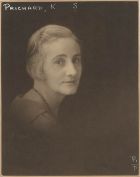
Katharine Susannah Prichard (1927/8) (State Library of New South Wales [Public domain], via Wikimedia Commons)
This idea that Australian prose was moving away from a focus on melodrama and simple plots to exploring deeper issues and concerns runs through all the articles I read from the decade. As
The Sun’s writer says, the setting, for most, was still Australian, but the core issues were becoming more universal. (Also running through the articles, unfortunately, was an ongoing issue with getting Katharine Susannah Prichard’s name right – something I’m sure biographer
Nathan Hobby knows all about, and then some!)
Anyhow, the winner of the competition, a Miss Constance Wallace of Roseville, wrote that:
The Australian novel at last has broken from the convention of gum-trees and wide open spaces. It is losing its colonial, narrow atmosphere for a more vital and a broader national—and International—outlook. It has achieved a deeper humanity and a more virile quality. No longer is it mere landscape painting; the canvas begins to glow with the warmer tones of human emotions.
She names, among others, Henry Handel Richardson, Helen Simpson, G.B. Lancaster (pseudonym for Edith Joan Lyttleton), M Barnard Eldershaw, and a man or two, including Ion Idriess.
Meanwhile, back in 1931, The Canberra Times reported on two talks given to the Canberra Society of Arts and Literature by eminent men of letters of the time, Kenneth Binns and Harold White. Binns discussed M Barnard Eldershaw’s Green memory. He described the plot as “strong, dramatic and dignified” and as proceeding “with that quality of inevitableness which is characteristic of all great dramatic writing”. He liked the characterisation, describing the interest being in “the pull of character against character, instinct against instinct” in the two main characters, but he also commended the authors’ ability to delineate their minor characters. In terms of style, he described the pair as “masters of vivid, picturesque yet dignified writing”, likening them to Robert Louis Stevenson, “in their use of picturesque and arresting words and metaphors, and also in their command of highly pregnant short sentences”. Binns believed that Marjorie Barnard and Flora Eldershaw had “produced a book which not only delights but which also adds dignity and significance to Australian letters”.
 White talked about Henry Handel Richardson’s The fortunes of Richard Mahony (1930), starting by contesting some of the criticisms from Australian critics. He described the trilogy as having “a structural harmony found only in very great novels” and he dispensed with “the question of whether the author had produced a typicallv Australian book or not” by saying it was “a universal work, and that should be enough”. (So there!) White, like Binns, then went on to talk about the work in detail – plot, characterisation, style, and so on, concluding, our reporter says, that
with this one book, Australian fiction took its rank with European conception of the novel as a form of art through which the real experiences of life are recorded sincerely and honestly. At the same time the author had recreated a period in our social history and added two living creations to the world’s great characters in fiction.
In 1934, a writer in The Age reviewed a later work by Henry Handel Richardson, The end of a childhood, which s/he described as “a collection of odds and ends”. Some of this the reviewer felt would “add little to the author’s reputation”. However, the work includes some sketches of girlhood, in which, says the writer, “slight as they are, Mrs. Robertson [sic!!!] displays a penetrative knowledge of the mentality of young girls”. The book concludes with four stories, which, our writer finally praises, reveals the “psychological subtlety which has proved a valuable asset in her portrayal of characters on a larger canvas”.
Moving on, in 1937, an article in Adelaide’s The Advertiser discussed Katherine [sic] Susannah Pritchard’s [sic] (honestly!) novel Intimate strangers, which the writer argues represents a development in Australian fiction because it “gives one the impression that Mrs. Pritchard [sic] is feeling her way towards what one may call the sociological novel”. The writer has some reservations about the book, but also praises it because Prichard
has grasped so well … the essentially challenging nature of marriage — the surrender that it calls for but which cannot wholly be given; the individual aspirations that, in its infinite demands, it so often submerges; the regrets it cannot completely banish; and the whole complex and unfathomable business of two distinct personalities being required to find a common denominator.
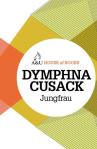 Another writer praised during the decade is Dymphna Cusack. In another 1937 article in Adelaide’s The Advertiser, the reviewer praises Cusack’s Jungfrau (my review). The reviewer starts with:
“IT is not wholly fanciful to suggest that within a decade or so most novels of ideas will be written by women,” a distinguished English literary critic wrote recently. “Modern intelligent men,” he added, “express themselves and their thoughts more easily in autobiographies, biographies, essays, and books of travel than in the form of fiction. And the future of the English novel is already largely in the hands of women.”
Our reviewer goes on to suggest that we should test this idea against the Australian novel, and starts by referencing Henry Handel Richardson. However, “are there”, s/he asks, “any young Australian women writers to succeed her in making the future of the Australian novel a brilliant one?” Well, yes, is the answer, and one of these is Dymphna Cusack as evidenced by her debut novel Jungfrau. I loved the writer’s reference to the cover, when s/he describes it as “a novel that — despite its title and its publishers’ absurd pictorial jacket— is arrestingly Australian in every way as well as being a fine piece of fiction”.
S/he goes on to praise Jungfrau, for its portrayal of Sydney, giving
a valuable picture of our city life that should do much to dispel persistently recurring illusions abroad concerning Australians’ homes, culture, manners, and way of speech.
Not only is Jungfrau “interesting and convincing”, s/he writes, it is also
extremely well-written, the prose having an effortless continuity and forcefulness which make it delightful to read, as, one feels, it must have been delightful to write.
The writer praises Cusack’s “lesser characters”, saying she “has endowed the very least of them with life; they are all so easy to believe in, and so easy to like or laugh at or despise.” And finally, s/he concludes that “altogether, the young writer is very much to be congratulated on her first book; on her irony, insight, and deft handling of human nature”.
So, Henry Handel Richardson, Katharine Susannah Prichard, Marjorie Barnard and Flora Eldershaw, and Dymphna Cusack … all praised, with clear argument, for progressing Australian fiction through the quality of their writing and their characterisation, and by tackling bigger and more universal ideas.
Have you read these authors, and, if so, what would you say?
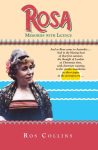 Memoirs are tricky things. There are readers who love them, readers who hate them, and readers like wishy-washy me who sit in the middle. I sit in the middle because, for a start, I don’t like to say “never” when it comes to reading. I sit in the middle because I couldn’t cope with a steady diet of memoirs, particularly those how-I-got-over-my-[whatever trauma or challenge it was], which is certainly not to say that I don’t admire those memoirists or don’t enjoy some of their fare. And, I sit in the middle because I don’t like formula, because I like books that try to tackle their subject or their form a little differently. So, the memoirs I mostly read are those which play with form or whose subject matter offers something different. Ros Collins’ memoir, Rosa: Memories with licence, does both of these.
 Ros Collins
 Their diverse writers program, for example, supports “writers who face barriers in the development of their writing careers”. The programs are, well, diverse, catering for women of colour, Asian Australian writers, Aboriginal and Torres Strait Islander people, refugee writers, and so on. The program recognises that money can be an issue for these writers, so among the support it offers are bursaries, and paid commissions. The indigenous writing program has used writers you’ve met here – Tony Birch, Anita Heiss and Bruce Pascoe.
 For each month – they are up to September – a Victorian writer comments on what Writers Victoria means to them. The writers to date are:


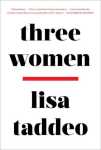 It all starts, of course with Kate setting our starting book, and this month’s is – well, back to usual after a record run – that is, back to a book I’ve not read. Kate described it as a book everyone is taking about, Lisa Taddao’s Three women. I initially commented that maybe everyone is, but I’m not one of them. However, on reading a bit about it at GoodReads, I realise that I have heard the author interviewed. Her name and title just hadn’t clicked.
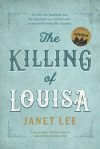 So, Lisa Taddao’s Three women, for those of you who don’t know, is a non-fiction book in which the author spent nearly ten years researching the sex lives of three American women. It is, says the GoodReads blurb, “the deepest nonfiction portrait of desire ever written.” This year I read an historical fiction work in which a woman’s desire – or, at least society’s attitudes to/assumptions regarding her desire – resulted in her execution. The book is Janet Lee’s The killing of Louisa (
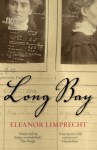 Another historical fiction work inspired by the story of a real Australian woman who was sent to gaol, this time for performing abortions, is Eleanor Limprecht’s Long Bay (
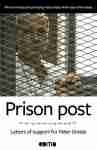 Since we are talking questionable or unjust imprisonments, I’m moving next to a highly questionable and unjust one, that of Australian journalist Peter Greste who was arrested in Egypt in 2013 for “spreading false news, belonging to a terrorist organisation and operating without a permit”. He spent over a year in prison there before his release was effected. While he was in gaol, a letter-writing campaign was organised to keep his spirits up (to which Ma Gums contributed). The book Prison post: Letters of support for Peter Greste contains a selection of those letters.
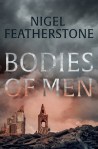 I think that’s enough of prisons for a while – though in my next book one of the characters was, in fact, close to being sent to military prison so perhaps this is a double link1 The book is Nigel Featherstone’s Bodies of men (
 And now, just because I can, I’m going to take the easy path and link on title, so my next book is Hilary Mantel’s Bring up the bodies (
 Another trilogy that was published over almost as long a time-frame is Marilynne Robinson’s Gilead trilogy, which started with Gilead (
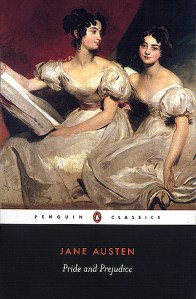 First up is Jane Austen’s Pride and prejudice, of course. You knew there had to be a Jane Austen in my list didn’t you. It was hard to choose which one, in a way, because all of Austen’s books teach me about people, and they keep teaching me every time I read them, because every time I read them I’m at a different point in my life. The richness of her observation and understanding is timeless and unsurpassed. I chose Pride and prejudice because it was the first one I read, in my early teens, and is the one that hooked me on her. teaches me so much about life, about people’s – a book that I can read again and again
 Next is Albert Camus’ The plague/La peste (
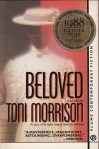 And then there’s that terrifying book, Toni Morrison’s Beloved, which I first read with my American reading group in 1992, when I was living there, and then again with my Australian reading group a few years later. If you want to read a book about the devastating impact of slavery – of its horror, of the way it destroys all sense of self, of agency, of hope – then this is the book to read.
 And finally, I wanted to choose a book that has moved along my understanding of Australian history. There are many I could have chosen – so many great books by indigenous writers – but I think Kim Scott’s That deadman dance (
 Whispering Gums