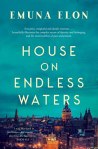
 I’ve said before that I’m surprised by how many takes there can be on World War II, and on the Holocaust, in particular – and once again I’m here with another such story, Emuna Elon’s House on endless waters. I hadn’t heard of Elon before but, according to Wikipedia, she’s an Israeli author, journalist, and women’s rights activist. Her first novel translated into English, If you awaken love, is about life on the West Bank, where she lived for many years.
House on endless waters, however, is historical fiction – or, at least, one of those novels which flips between the present and the past. It tells the story of successful Israeli author Yoel Blum who had been told by his late mother to never go to Amsterdam, from which they’d emigrated. However, the time comes when the middle-aged and internationally successful Blum is urged to Amsterdam by his literary agent to promote his latest Dutch-translated novel. While there, he and his wife visit the Jewish Historical Museum, and here, in a little looping video, he catches an image of his mother Sonia in Amsterdam during the war. Next to her is a man holding a little girl, his sister Nettie, but the baby she is carrying is not he! Who is this baby, and where was he?
Yoel returns to Israel, but, after obtaining the incomplete information his sister is able to provide (which is not divulged to the reader), he goes back to Amsterdam, alone, to research his past and write a novel about it. The result is one of those novels within a novel, as we follow Yoel’s journey alongside reading the story he is writing as he uncovers his family’s – and his – past. How much is “true” and how much Yoel imagines is not the point. We are carried along in the horrors of war-time Amsterdam, in stories of decent hardworking people’s disbelief that life could change so horribly so quickly, of Jewish collaborators, of the hidden children, of the most difficult choices people have to make. Elon conveys viscerally the shock felt by Jewish citizenry as one by one their rights are removed and as the foundations of their lives – something they thought immutable in such a place as Holland – crumble.
Much of this story has been told before. Anne Frank comes to mind of course, and many novels have dealt with the ways in which Jewish people were gradually ostracised and betrayed by their own society (the yellow stars, the loss of jobs, the resumption of homes, the rounding up, the transporting to concentration camps, and so on). What makes this one a little different – at least in my reading to date – is its exploration of the hidden child phenomenon, within a larger story of collaboration, betrayal, resistance and difficult choices.
The important thing, however, is less this difference than that it is a deeply absorbing read. Elon’s ability to manage her two story threads, and maintain our interest in both, speaks to a practised, skilled writer. There is no rigid chapter by chapter alternating of stories. Rather, as Yoel becomes increasingly invested in the life of his mother, Elon starts to blend the two stories, with Yoel sometimes feeling himself in both stories at once. As his sense of self becomes increasingly discombobulated, the line between past and present starts to blur:
Yoel would have liked to write about the architectural significance of Amsterdam, about the implication behind the labor invested in the rows of tiny reddish bricks, about the stylized cornices above the windows and the artistic embellishments that adorn every single building. But early the next morning, Sonia is walking along the street, and across the road the police are evicting a Jewish family from their beautiful art-nouveau-design house. The members of the banished family are trying to walk proudly to the truck that has come to take them away …
For Yoel, unlike the tourists he sees blithely enjoying the sun and culture of Amsterdam, “the past is still here” and it begins to overwhelm him.
Why a story-within-a-story?
This bring me to the question of why would Elon use the story-within-a-story-device? I can think of three reasons, the most obvious being that it draws the reader into the story, engaging us in its unravelling along with the protagonist. Secondly, in this case, it also mirrors how many children of the Holocaust generation didn’t know their parents’ stories – weren’t told them – and therefore had to work out those stories piece by piece. Finally, also in this case, it enables Elon to expose the personal development of her narrator, Yoel, who is initially revealed to be decent but emotionally remote. Very early in the novel, we learn this about him:
Perhaps the day will come when he’ll even train himself to live, a day when he will walk the earth like everyone else without being overcome by the thought that in fact it’s odd , even ridiculous to be a human being …
He is, says his wife, “scared of living”. This novel, then, is partly about identity. Yoel didn’t know his past but it’s clear that the traumas of that past had unconsciously impacted him, as we now know they do. Slowly, as he comes to understand who he is, he also starts to live, to be an engaged human being.
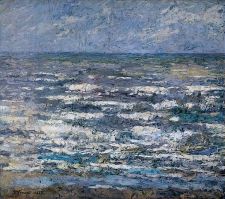
Jan Toorop, The Sea at Katwijk, 1887 (Public Domain)
There is much to this book, with Elon and her novelist Yoel drawing on art and music to reflect both Holland’s cultural achievements and its darker side. A motif running through the book is a stolen work of art – Jan Toorop’s The Sea at Katwijk – that had belonged to Sonia’s friends, Anouk and Martin, who are implicated in what happens. Martin suggests to Sonia that the painting is more about Toorop – “every painter evidently knows only how to depict himself” – than place. However, Sonia also sees herself in it: “there she is in black, there in red, there she is borne from wave to wave, moving in the infinite.” For Yoel, this sea “is a huge finite vessel containing infinite waters”. All this contributes to the novel’s message, one which Yoel finally realises Sonia was telling him:
Whatever was, was. Those waters have already flowed onward.
The trick is to know when to fight those waters, and when to let your “heart encounter the heart of the sea” and be at peace.
House on endless waters came to me out of the blue, but what a find. A Holocaust novel, it contains the horrors of that time but is also imbued with a generous, philosophical spirit that, without excusing atrocity, recognises the humanity of those who made selfish decisions and those who had to live with them. We need perspectives like this.
Emuna Elon
House on endless waters
Translated from Hebrew by Anthony Berris and Linda Yechiel
Sydney: Allen & Unwin, 2020 (Orig. ed. 2016)
309pp.
ISBN: 9781760877255
(Review copy courtesy Allen & Unwin)
 They sound and look highly self-promotional, but who teaches their courses? Well, there are some well-known names there, including published (many of them internationally successful) Australian authors, such as
 Not included in the above list is Heidi Sze’s book Nurturing your new life, which I have not specifically reviewed. However, I have read a significant proportion of it, and did write up
  Considering this concept, The Conversation authors Larissa McLean Davies, Sarah E. Truman, Jessica Gannaway and Lucy Buzacott, came up with their list of five books for young Australians. They are:

 Once again, the starting book is one I haven’t read, though unlike last month’s, I have heard of the author. The book is American author Curtis Sittenfeld’s Rodham. According to GoodReads it “imagines a deeply compelling what-might-have-been: What if Hillary Rodham hadn’t married Bill Clinton?” However, this is not where I’m going to go.
 I said that I have heard of Curtis Sittenfeld, and the reason is because of her involvement in
  Longbourn was, I discovered, one of many books presented in England’s BBC4’s Books at Bedtime program. I was surprised to discover that another book broadcast on this program was our own (I mean Australia’s own) Elizabeth Harrower’s In certain circles (
 And now, just to mix it up a bit, I’m going to link on circles and the fact that the circle is a symbol of infinity. This brought me to John Banville’s The infinities (
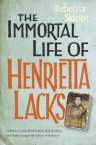 Two main characters in The infinities can be described as infinite, meaning, in part, that they are immortal – the gods Hermes and Zeus. Gods aren’t the only things that are immortal. Cells can be too, as I learnt in Rebecca Skloot’s fascinating, heartrending, The immortal life of Henrietta Lacks (
 The story of African-American Henrietta Lacks’ cells should be a good one. After all, her cells have gone on to produce some significant medical advances. However, the way the cells were taken and used is a story of both ingrained medical arrogance and ongoing racism whereby the human behind these cells and her family were continually ignored and discounted. A closer-to-home book about the experience of racism is Maxine Beneba Clarke’s The hate race (
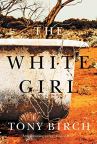 Maxine Beneba Clarke’s heritage is mixed, her mother being Guyanese and her father Jamaican (Caribbean). Indigenous Australian author Tony Birch, like many of us, has mixed heritage. He claims a Barbadian (Caribbean) convict amongst his ancestry! I can’t resist making that my last link, though I could also link on the fact that Birch’s writing deals with racism. His most recent novel, The white girl (
 Introducing
  In many cases, authors refer to libraries or librarians positively, often to establish a character as thoughtful, considered, intelligent, open-minded. Craig Silvey’s Charlie in Jasper Jones (
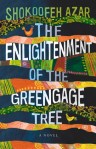 In the opening chapter of Shokoofeh Azar’s The enlightenment of the greengage tree (
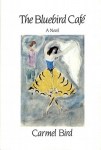 Jolley talks about library-book tickets, prerequisites for borrowing library books. Carmel Bird’s The Bluebird Cafe features another library based on a private collection – The Charles Dickens Library, which is classified as a “national treasure” – but there’s also reference to a library-book reading barmaid who gets “so bored” on her days off “when there’s nothing to read”. I haven’t read this novel, but the excerpts on Google Books show me it’s another delightful, cheeky Bird. Commenting on Angela’s request for this post, Carmel also mentioned her novel The white garden. GoodReads describes it as follows:
 Dymphna Cusack also mentions a library building in her debut novel Jungfrau (
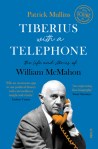 The overall winner, announced last night, 28 August, is Patrick Mullins’ Tiberius with a telephone: The life and stories of William McMahon. I attended and
 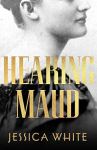 The winner of the Michael Crouch Award for a Debut Work was Jessica White’s Hearing Maud, which I have reviewed here (see link above). In her acceptance speech, White talked about how no-one listened to Maud (daughter of Australian novelist Rosa Praed) while she was alive, and that in paralleling Maud’s experience of profound deafness with her own, a century later, she wanted to show that little had changed in terms of discrimination and “the expectations that we hide our deafness.” I attended and
 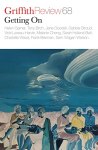 I love reading the Griffith Review, though have mostly only reviewed individual articles on this blog. It’s a meaty quarterly, with each edition being devoted to a particular theme. Edition 68’s theme, Getting on, seemed apposite for my reading group and so was our August selection. Although it was confronting at times, it was a universally approved choice, and our discussion was lively and engaged.
 By all accounts, Louisa Lawson was quite a force. A poet, writer and publisher, as well as a suffragist and feminist, she was fully engaged in the country’s literary and political life, but is most remembered now for the latter, particularly her feminist causes.
 Both Olga and her son Chris Masters were journralists. Chris still is. Olga commenced work as a journalist when she was only 15 years old, but through her relatively short career, she also wrote novels, short stories and drama. Her career as a published writer of fiction was very brief, with The home girls short story collection being published in 1982 and Loving daughters, her wonderful first novel, published in 1984. It is Australian literature’s loss that she died just as her fiction career was taking off.
 Multi-award-winning author Thomas (Tom) Keneally has published over 40 novels, from his 1964 debut novel, The place at Whitton, to his most recent 2020 novel, The Dickens boy. He is best known for his Booker prize-winning novel, Schindler’s ark, which was adapted to the Academy Award winning film, Schindler’s list.
 Whispering Gums
