Monday musings on Australian literature: FAW Activities (1)

FAW, or, the Fellowship of Australian Writers, was established in Sydney in 1928. Its exact origins are uncertain but the Oxford Companion of Australian Literature believes that the poet Dame Mary Gilmore was encouraged by another poet Roderic Quinn, to hold a meeting of writers. Poet, critic and professor of literature John Le Gay Brereton became the president. I have written before about the triumvirate – Marjorie Barnard, Flora Eldershaw and Frank Dalby Davison – who were actively involved in the Fellowship in its early days. Indeed, in 1937, Davison was elected President, and Eldershaw, one of the vice-presidents.

My aim today is not to discuss the origins, but I will just share this from an early 1929 newspaper report about the Association’s early days:

it is evident, that before very long the organisation, in a numerical sense, will be remarkably representative, and in a position to increase in a practical way the popularity of Australian literature. At the present time local unattached writers, with very few exceptions, have an extremely hard row to hoe, but it is hoped that the efforts of the Fellowship, will materially alter this position and open up new avenues of hope and actual success.

Now to today’s topic which is to have a look at what events and talks FAW ran for its members over its first decade, from 1928 to 1937. I found the information in Trove, of course, mostly from announcements of coming meetings rather than reports of meetings held, so the detail is minimal.

Most of the “events” in these early years were part of their regular meetings, rather than being offered as separate events (like today’s festivals, workshops, and so on). And most were speakers, but there were also discussions, readings and performances. Below is a small selection of those I found, with the year-links being to the appropriate newspaper article.

Talks and papers

The talks and papers varied, with the most common topics being the lives of writers or other figures in the arts, the practice of writing, and the state of the Australian literary scene. I’ve listed my selection alphabetically by speaker.

  • Fred Broomfield, a journalist, on “Henry Lawson and his critics” (1930): according to the ADB “Tradition has it that Broomfield accepted Henry Lawson’s first Bulletin contribution”.
  • Jack Adrian Clapin, a solicitor, on literature and copyright laws (1929)
  • Winifred Hamilton on “Critics and Gloom” (1929)
  • Professor Le Gay Brereton on “Some Australian books” (1931)
  • Dr. G. Mackaness, President of FAW, on the progress made in the quality and quantity of Australian art and literature (I wonder what he said?) (1932)
  • Dorothy Mannix and John Longden, of Cinesound Studio, and Eric Bedford, of United Artists, on “Writing for the Talkies” (1935)
  • Sydney Elliott Napier, writer and poet, on “Books, Libraries, and Places I Have Visited.” (1930)
  • Rev. Father Eris O’Brien, “an authority on early Australian literature”, on “The Work of Dr. Ullathorne” (1930)
  • Very Rev. Dr. M. J. O’Reilly on “John O’Brien” (author of Round the Boree Log“): A report on this meeting said that “Dr. O’Reilly said that O’Brien’s poetry was not great. It provided recreation, however, and also preserved the image of the old type of Irish settler”. Is this a case of being damned with faint praise? (1931)
  • Peardon Pearce Packham on the life of past Bulletin editor, JF Archibald (1929)
  • Roderic Quinn on his associations and friendships with various Australian writers and editors (1929)
  • Steele Rudd on “How I wrote On our selection” (1929)
  • Sir Keith Smith, who, with his brother Ross, was the first to fly from England to Australia, on “The Pen and the ‘Plane” (sounds intriguing, eh?) (1931)
  • Percy Reginald Stephenson, writer, publisher and political activist, on “The Future of Literature in Australia” (1932)
  • E. M. Tildesley, honorary secretary of the British Drama League, on “The British Drama League and the Australian Dramatist” (1937)

There was an interesting report of a 1933 meeting. It’s not clear whether the meeting comprised a discussion or three papers, but it notes that:

  • Cecil Mann, journalist and short story writer, said, regarding what editors wanted that “there were no standards; it was all a matter of appropriateness. Each paper had an inner spiritual character, and every freelance writer must make an acquaintance with this if he hoped to have his articles accented”.
  • Percy Reginald Stephenson said that ‘there was no recipe for a “best seller.”‘ He said that only one book in a hundred was a good seller, and only five or six out of 15,000 published became best sellers. “To be successful, he said, books must be deliberately constructed, filled with inspiration, and polished and repolished before they were published. The public was not interested in anything not original, and the publisher was not running a correspondence course in authorship. The author must sub-edit his work, knock out about one-third of his words, “ring the bell” every five chapters, and round off a great character.” (Your heard it here!)
  • Eric Baume, journalist, novelist and radio personality, suggested there things were currently good for the freelance writers, that was “a greater call for Australian stories”, and that “Australian short stories were just as vital as those from elsewhere”.

Performances, readings, etc

Other sorts of meetings included discussions and debates. At an early 1929 meeting “an enthusiastic discussion took place on ways and means of winning the Australian public over to a practical interest in Australian literature”, and in 1936 the Fellowship debated the Sydney University Union on “That literature should be romantic rather than realistic.”‘ I would love to have been there!

There were also play readings (such as in 1930, the reading of Harry Tighe’s four-act play, Open Spaces), short story readings, poetry recitations, and even, sometimes, musical performances.

In 1931, FAW was behind a benefit concert for “distressed Australian authors”. Supporting Australian authors, particularly those who were struggling at the end of their lives, was an important FAW objective (at least from my past FAW research).

And now a question for you: Do you think literature “should be romantic rather than realistic”?

Six degrees of separation, FROM Redhead by the side of the road TO …

What a strange summer we’ve had. Last year it was fires and smoke, and this year, lower temperatures and rain. I rather like the heat, but it has been good to have a calmer time. Now though to that thing that stayed with us unchanged all through 2020, come hail or shine, come fire or covid, and that thing of course is our Six Degrees of Separation meme. If you don’t know this meme and how it works, please check out meme host Kate’s blog – booksaremyfavouriteandbest.

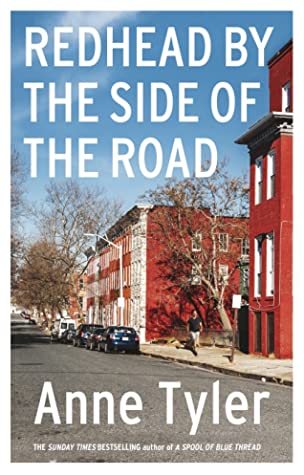
Book cover

The first rule is that Kate sets our starting book. This month, she’s chosen a book that I’ve actually read – Anne Tyler’s Redhead by the side of the road (my review)! I rather like Anne Tyler, but I bought this for my Mum not long before she died, and ended up reading it myself. The titular redhead is not what you might think.

Book cover

This was a fun choice for our starting book, because I could think of all sorts of options to follow, but in the end, I decided to go with another redhead, this one in António Lobo Antunes’ The natural order of things (my review). His redhead is a real one, although there are those who have imaginings about her.

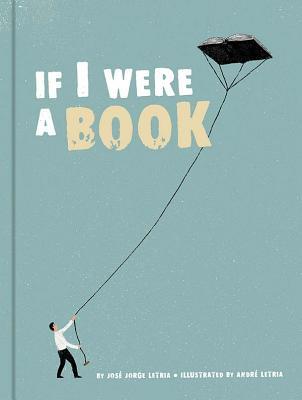
Book cover

My links are hopping about quite a bit this month. The obvious one would have been Charlotte Wood’s similarly titled The natural way of things, but instead I’ve chosen another Portuguese author with a triple barrel name, José Jorge Letria and his lovely book, If I were a book (my review), which is a quirky little love letter to the book and reading.

Title page for Ch. 16, Sylvia Nakachi
Writing black, Ch. 16 by Sylvia Nakachi

And now, I’m using the title “If” to move to the Queensland Writers Centre and its innovative If: Book Australia program, which Im not sure is still going but was about exploring the future of the book and digital literature. One exciting project it supported was Writing black, edited by Ellen van Neerven (my review) and published as an Apple iBook.

Us Mob Writing, Too Deadly

Writing black is an anthology of new writings by Indigenous Australians. For this next link, I am using content, and choosing another innovative anthology of Indigenous Australian writing, Too deadly: Our voice, our way, our business, by a Canberra- based writing group, Us Mob Writing (my review).

Book cover

I am going to stick with content again, by choosing another anthology. However, this link is a double one, because this particular anthology, The near and the far, Volume 2, edited by David Carlin and Francesca Rendle-Short (my review), comprises pieces written by another (sort of) writing group. The group is WrICE (Writers Immersion and Cultural Exchange) which brings writers from Australia and Asia-Pacific together in writing residencies.

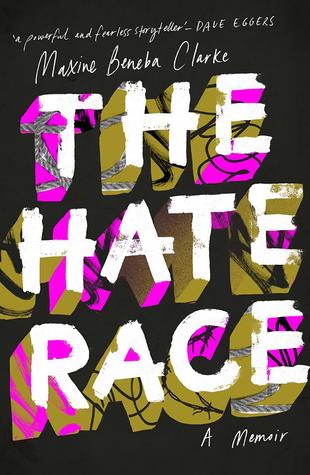
Maxine Beneba Clarke, The hate race

And finally, a rather cheeky link from the writer of the Foreword of The near and the far, Maxine Beneba Clark, to her memoir of growing up in western Sydney, The hate race (my review). It’s a powerful book about how cruelly people who are different, particarly those with non-white skins, can be treated in Australia.

So, an unusual and highly political month this time, with several books having overtly political messages or content. Three of the books are anthologies, which is also unusual for me, and only the first of my six links is a novel. We have though travelled widely from Baltimore in the USA, though Portugal, Australia, Asia and the Pacific, and back to Australia again.

Now, the usual: Have you read Redhead by the side of the road (or any other by Anne Tyler)? And, regardless, what would you link to?

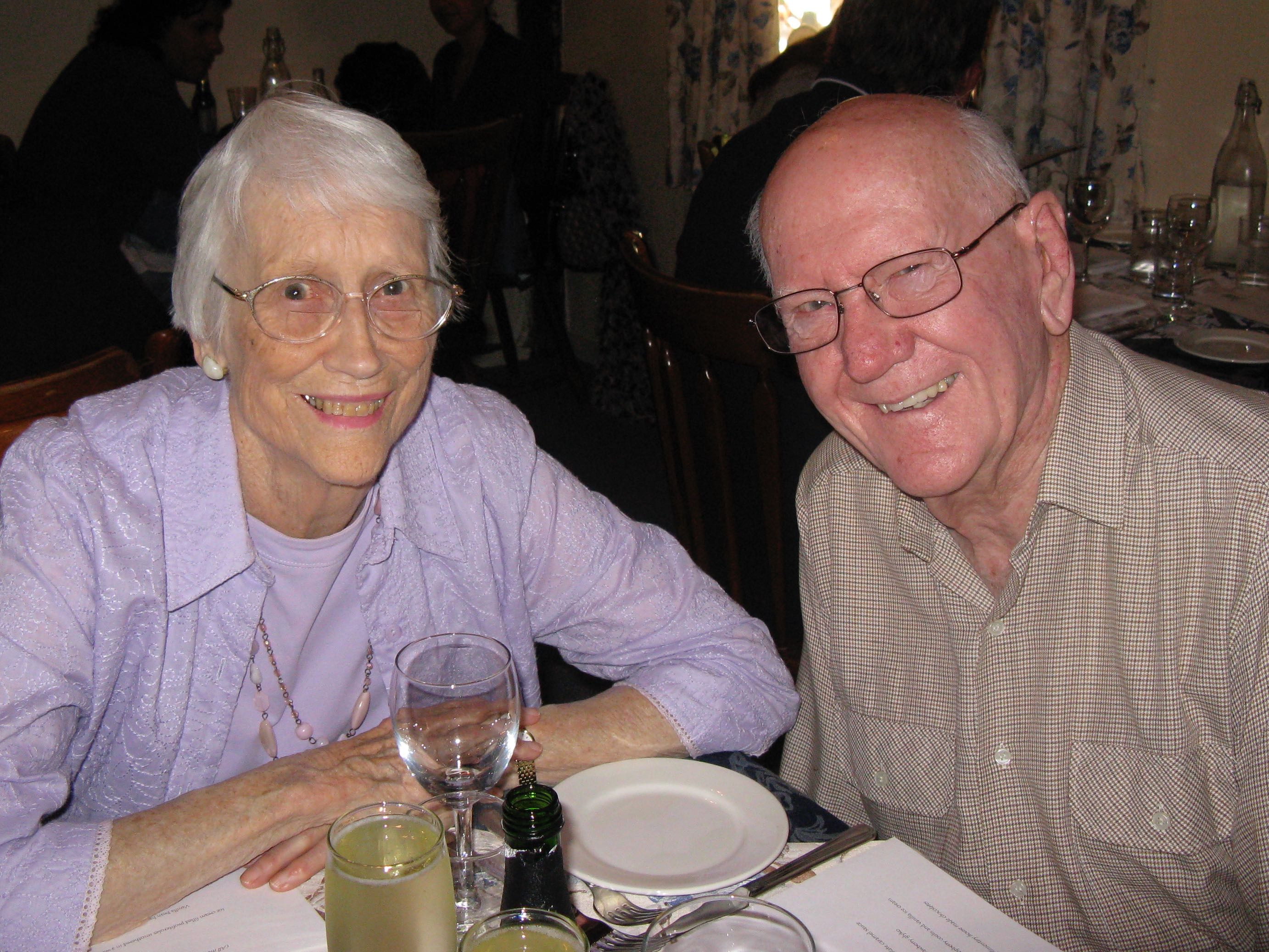
Vale my dear old Dad (1920-2021)

If it was my Mum who introduced me to Jane Austen and the classics of English literature, together with a love of language (and thus Scrabble and cryptic crosswords), it was my Dad who introduced me to Australiana, starting in my youth with the verse (as the poet himself called it) of Banjo Paterson. The grandson of a Presbyterian minister, my father never swore, but he’d read with great gusto the lines ‘”Murder! Bloody murder!” cried the man from Ironbark’. And we kids loved it. As Dad’s eyes deteriorated in his last years, he gave up reading books, but the book he kept by his chair-side, and the book he was last seen dipping into, was a book of Paterson’s verse.

Born in 1920, and living through the heyday of Australia’s development in the twentieth century, Dad loved stories about Australian pioneers of all sorts, from the exploits of Charles Kingsford-Smith to those of cattle kings like the Duracks. Mary Durack’s Kings in grass castles was one of his favourites, at least from the time when I was old enough to be aware of his reading. In later years, he became more aware of the politics of Australia’s colonial settlement and appreciated our need to revise our understanding of frontier life, but I don’t think that ever completely removed his love of these ventures. Dad, of course, also lived through the Depression and Second World War, with the latter inspiring another major reading interest, the history of the War. (He didn’t read a lot of fiction, being of that generation of men who felt fiction wasn’t quite as worthwhile as non-fiction).

My other main memory of Dad and books comes from the days when, as a very little girl, I would go to my parents bedroom in the morning – much to my mum’s chagrin as she loved a sleep-in – with my “twenty-eight books”. It wasn’t 28 of course, but for some reason, that was the number I would say. One of those books featured Jiminy Cricket, and Dad would feign great fear as I shoved this terrifying creature under his nose! This became a lasting in-joke between us for the rest of his life.

Now, though, Dad has gone – peacefully, at the excellent age of 100 years and 8 months – and I am left with these memories, along with the enduring knowledge of a man who loved me very much, who never failed to support me and compliment me, and who set an example of integrity, honesty, acceptance, stoicism, and love of and responsibility for family. He, like all of us, had his moments, but his, like Mum’s, was a life well-lived, one that will continue through our memories and through the lives of all those who loved him.

Vale, Dad. Go well, and thanks.

Gene Stratton-Porter, The last Passsenger Pigeon (#Review)

I have passed up reading and/or posting on so many Library of America (LOA) Story of the Week offerings over the last months – sadly, because there have been some excellent selections chosen for their political relevance. However, when I saw a sentimental favourite, Gene Stratton-Porter (1863-1924), pop up, I knew I had to break the drought.

Gene Stratton-Porter (Uploaded to Wikipedia, by gspmemorial; used under CC-BY-SA-4.0)

Some of you may not be familiar with this American Midwest author who wrote, says LOA, “sugary (and extremely popular) fiction to underwrite her work in natural history”. It was one of these works, The girl of the Limberlost, that I loved, and later introduced to Daughter Gums who also loved it. Yes, it was sentimental, though it has its tough side, but it did also leave an everlasting impression on me of its setting, Indiana’s Limberlost Swamp. According to LOA again, it was the immense success of this book, and Freckles which I also read, that resulted in her publisher agreeing to also publish her less saleable nature books. She was, writes LOA, “a fighter for the world she saw disappearing around her, as Standard Oil of Indiana drilled new wells and farmers drained more land”.

Interestingly, LOA’s as usual excellent introductory notes focus not on Stratton-Porter but on her subject, the Passenger Pigeon. LOA discusses others who have written about this bird – novelist James Fenimore Cooper, a chief of the Potawatomi Indians Simon Pokogon, and naturalists John James Audubon and John Muir – before eventually getting to Stratton-Porter herself. LOA’s point is to document the extinction of these birds from the early 1800s, when they were still seen in immense flocks, to a century later in 1914 when the last one died in captivity. Stratton-Porter wrote her piece just 10 years after that.

So Stratton-Porter’s piece. She commences by describing the beauty of her childhood farm, including its woods and forests where birds, such as the Passenger Pigeon, loved “to home”. She writes, introducing her environmental theme, that:

It is a fact that in the days of my childhood Nature was still so rampant that men waged destruction in every direction without thought. Nature seemed endlessly lavish …

When people started to clear land they “chopped down every tree on it” without, she says, having any “vision to see that the forests would eventually come to an end”. She writes – and remember, this was 1924:

… as the forests fell, the creeks and springs dried up, devastating winds swept from western prairies, and os the work of changing the climatic conditions of the world was well under way.

She talks of animals and game birds “being driven farther and farther from the haunts of civilisation”, but she also talks of people who did not believe in living so rapaciously, preferring instead to live in log cabins in small clearings. She describes her family’s own hunting practices, including of quail. As their numbers decreased, her minister father forbade the family’s trapping and egg-gathering. He’d noticed that when bird numbers were low, grain-damaging insect pests were high.

He had never allowed, however, the hunting of Passenger Pigeons, despite their being significantly more numerous in those days than quail. Stratton-Porter thinks this stemmed from his having “a sort of religious reverence” for pigeons and doves. Others, though, had no such qualms, and she describes some brutal hunting practices involving wild pigeons, which apparently made good eating. Gradually, it became noticeable, writes Stratton-Porter, that their numbers were decreasing. Not only did her family miss the sound and beauty of these birds, but

The work that they had done in gathering up untold quantities of weed seeds and chinquapins was missed and the seeds were left to germinate and become a pest, instead of pigeon food.

Once again, she notes the wider ecological or environmental implications of species reduction or loss. She then writes of the death of the final two birds in captivity before sharing her own searching for any remaining wild birds. It was while she was watching and photographing, over a period of time, a brooding goldfinch, that she heard the unmistakable “wing music of a bird that should reasonably have been a dove, but was not”. She describes this beautiful bird, but says “it had not the surety of a bird at home; it seemed restless and alarmed”. This was, she argues, “one of the very last of our wild pigeons”, a male bird “flying alone, searching for a mate and its species”.

Stratton-Porter closes her essay with a cry from the pigeon, whose song she says sounds like “See? See?”:

Where are your great stretches of forest? Where are the fish-thronged rivers your fathers en- joyed? Where are the bubbling springs and the sparkling brooks? Why is this land parching with thirst even in the springtime? Why have you not saved the woods and the water and the wildflowers and the rustle of bird wings and the notes of their song? See what you have done to me! Where a few years ago I homed over your land in uncounted thousands, to-day I am alone. See me searching for a mate! See me hunting for a flock of my kind! See what you have done to me! See! See! See!”

And that was written in 1924! Nearly 100 years ago, and yet we still destroy habitat including, here in Australia, that of one of our most popular native animals and national symbols, the koala. Will we never learn?

Gene Stratton-Porter
“The last Passenger Pigeon”
First published: Good Housekeeping, 1924 (Collected in Tales you won’t believe, 1925)
Available: Online at the Library of America

Monday musings on Australian literature: Contemporary responses to Coonardoo

Book cover

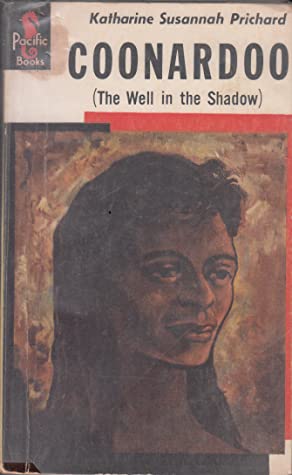
Ask and you shall receive, they say, and so when Lisa (ANZLitLovers) expressed interest in what Prichard’s contemporaries thought of her novel Coonardoo, I thought I’d love to know too. However, I’m sure Nathan Hobby will cover this in some detail in his upcoming biography of Katharine Susannah Prichard. I don’t want spoil that, so will keep this to a brief survey of some of the reactions I found in Trove.

First though I was horrified by the frequency with which Prichard’s name was spelt incorrectly. This must have driven Hobby mad in his research. She is frequently written as KathErine, not KathArine, and occasionally Catherine, and even Kathleen. Really? Then, there’s her last name, which was often reported as PriTchard not Prichard. It must have driven HER mad too, at the time. Sometimes, too, her married name, Mrs Hugo Throssell, is used.

Because I was looking for contemporary responses, I narrowed my search to 1928 to 1930, covering the time when Coonardoo won the Bulletin Prize (shared with M. Barnard Eldershaw’s A house is built). Most of the pieces I read came from literary and book pages (or B.P.s), with a couple of more extended articles or reviews, and one or two letters to the editor to round out the response!

Humourless and sordid

I’ll start with the comments relating to ideas about what literature should be, or, should not be: it should not be, many argued, grim, humourless or sordid. Heaven forbid, it seems, that writers address society’s serious issues. Much better to entertain with romance and humour. Of course, those can leaven serious books, I know, but we shouldn’t eschew grim pieces – Barbara Baynton is a good example – which can make important points.

A.T.C., writing in Perth’s Sunday Times (27 January 1929), calls Coonardoo “sordid and utterly destitute of romance”. Socialist and journalist S.A. Rosa writing in The Labor Daily (10 August 1929) was also critical:

Both Coonardoo and Hugh wasted their lives. Why? Is it really necessary, too, that there should be a persistent atmosphere of gloom in a novel dealing with Australian life in the interior? Is there no humor in such a life?

In Perth’s The Daily News (3 August 1929, the Books and Authors writer compares Coonardoo unfavourably with its Bulletin prize-winning mate:

‘A House Is Built’ is the more enjoyable, and the more robustly Australian than the sun-dried desolation of Katharine Prichard’s unhappy story of the North-West.

There are more, including “Austral” in Adelaide’s The Advertiser (4 September 1929):

I, at any rate, have never read a book which combines so much dreariness, sordidness, and monotony with such an utter lack of humor.

 Not all were so negative, however. The West Australian‘s (27 July 1929) Book Reviews page writer accepts that “there is a good deal that is undeniably squalid” in Prichard’s image of station life in the North-West, but argues that there is also great descriptive beauty and profound knowledge of “the Australian aboriginal in his native state”. (See below for more on this issue.)

Representative?

Closely related to the above criticisms, and often contained in the same article, were accusations that the book is not representative of the bush. Some of these express concern that books like Coonardoo gave a bad impression of Australia for overseas readers, particularly the English. They are defensive about Australia, wanting to maintain the notion of “the wonderful personality of the outback man, his unbounded generosity, his unconventional hospitality, his self-sacrificing bravery and unostentatious generosity” (Capricornian, 10 October 1929).

A.T.C. (mentioned above) comments in the same piece on the Coonardoo‘s being published:

There should be a foreword in the book pointing out that it is but a phase of life in the North-west of Western Australia, and does not picture the real white social existence in that part of WA. It deals with the natives and their contact with rather dissolute whites … The pity of it is that a book of this nature will be accepted in England as typical of the country …

Similarly, the writer in Rockhampton’s The Capricornian (25 July 1929), quotes a friend in England, “a journalist of no mean order and a clever writer of book reviews”: 

‘If that is the class of story that is going to win the big Australian prizes I think it’s a darn bad advertisement for Australia, and Australians generally, and I’ll be frank, give me the failures rather than another “Coonardoo.” I would hesitate to think all Aussies were like the hero, or treated the natives so, and from comments heard from moving about amongst people, it does not appeal. It opens strongly but its end is woeful, almost disgusting.”

The aforementioned “Austral” picks up this theme too:

Australian life is not the dreary, hopeless affair outsiders are given to understand it to be, nor are our outback people the cheerless, despondent creatures such as some of our writers seem to delight in depicting. It is a pity that this type of literature should be given to the world as typical of the life and people of our glorious country, and I for one, being Australian born, of Australian parents, feel exceedingly resentful of the slurs which are cast upon both our country and our people.

“Austral” goes on to criticise Australian writers who ignore “the beauty and wonders of our great continent, the courage, cheerful optimism, and achievement of its outback people” to focus on “the gloomy, the sordid, and the depressing”.

It appears that there was some excited discussion among the B.P.s about Prichard’s depiction of “half-castes”, with various columnists weighing in with (unsupported) “facts”. One in The Capricornian (19 September 1929) argued that

One man of this class is often responsible for the existence of perhaps, a dozen or more half-castes, so why write a book that may lead strangers to believe the practice is common? Further, the book is devoid of humour and a book to be really entertaining must have, at least, a little humour. Mrs. Gunn’s “We of the Never Never” is absolutely true to life. It also has a vein of humour and there is not even the most delicate hint of such a being as the half-caste. 

Who said a book has to be “entertaining” (however we define that overused word)?

Again, not everyone agreed. The Ladies Realm writer (Adelaide’s Chronicle, 1 August 1929) claims that “the story is a truthful reflection of the lot of the pastoralist when seasons are against him”. Similarly, HH Ryall, in Sydney’s Evening News (12 October 1929), says

Brutal, lecherous individuals exist in every country where white men live among black, brown, or yellow. But then, so do others, who understand them, and play fair. […]

Australians should be proud of Mrs. Prichard’s effort to interpret for the outside world this outback phase of their country’s development. “We of the Never Never” left a fragrant memory. “Coonardoo” is not a pleasant sequel, but it is a story that demanded to be written.

On the “natives”

This brings me to commentary on Prichard’s treatment of Indigenous Australians in her book, but first it’s worth mentioning that Prichard’s research primarily comprised observation of station life, and information from white men. She is quoted:

‘About two years ago, […] I spent some time on an isolated cattle station in the NorthWest, and took the opportunity of gaining material for my book by studying the natives at close quarters. I wished to be as accurate as possible, and obtained very valuable help from Mr. Ernest Mitchell, inspector of aborigines for the whole of this State. Mr. Mitchell has been closely associated with the blacks for 30 years or more and is a recognised authority on the subject.’

She also says in this article that she “benefited by the long experience of Mr. James Withnell, a well known squatter, who had helped her with particulars of native songs and folk-lore. Through his aid she had been able to obtain the actual words of aboriginal songs, always a difficult task, and had incorporated such songs in her story.”

An “inspector of aborigines” and a “squatter”. This would not, of course, be acceptable now.

Some of the commentary is shocking, such as:

  • the previously cited SA Rosa who suggested that “it may be that it is easier to plumb the depth of the character of a member of a primitive race than of a race more complex”.
  • the previously cited Ladies Realm article which comments that “the lot of Coonardoo is sad reading at the last, but her young days reflect the childishly happy mind of the contented aboriginal”.
  • “Bush-Woman” who wrote in a letter to the editor in Adelaide’s Register (27 December 1928) that “at present there is far too much rash, sentimental sympathy for the blacks. Taken en masse, they are talking animals with a fair sprinkling of the types depicted in Coonardoo, which it takes a couple of generations of careful handling and working to produce. 

Not everyone thought like this, however. The West Australian (10 May 1930) quotes from a review in The New York Times, including this:

Nevertheless, ‘Coonardoo’ stands as a forceful piece of social documentation and bids fair to do for Australia what ‘Uncle Tom’s Cabin’ did for America, and Mrs. Millin is doing for South Africa— to make the white race face the facts of its treatment and study of the black descendants of the aborigines, through an authentic piece of national literature which raises a parochial problem to the level of the universal.

Finally, there’s our own Nettie Palmer who, in an extended essay on the state of Australian literature, included a paragraph on Coonardoo, commenting that in all the books she discussed, there was “hardly … a glance at the aboriginal life of Australia. It remained,” she writes, “for Katharine Prichard, in her Coonardoo, to experiment with this theme”.

This is a superficial response to Lisa, but that’s ok, because Nathan Hobby is coming! We just have to be patient a little longer. Meanwhile, I hope you enjoyed this little taste of what the popular media, at least, was saying.

A belated contribution to Bill’s AWW Gen 3 Week.

Bill curates: Dymphna Cusack’s A window in the dark

Bill curates is an occasional series where I delve into Sue’s vast archive, stretching back to May 2009, and choose a post for us to revisit. During the latter part of January we will look at some of Sue’s older posts which have relevance to my Australian Women Writers Gen 3 Week, Part II, 17-23 Jan, 2021

Dymphna Cusack was a central writer of the Gen 3 period. I (Bill) recently reviewed her Say no to death (1951) which with its focus on TB gives us some perspective on the plagues like Covid-19 which regularly sweep around the world. Here, in a post from 2013, Sue reviews Cusack’s memoir of her years as a teacher, written in the 1940s but published posthumously.

______________________________

My original post titled: Dymphna Cusack, A window in the dark

Dymphna Cusack‘s A window in the dark has been glaring at me from my TBR pile for many years now. Not being able to stand it any longer, I decided to sneak it in before my next reading group book, Michelle de Kretser‘s Questions of travel. Posthumously published by the National Library of Australia, A window in the dark is Cusack’s chronicle of her teaching years, spanning 1922 to 1943.

For those who haven’t heard of her, Dymphna Cusack (1902-1981) is an Australian writer best known for her collaborative novel (with Florence James), Come in spinner (1951), and Caddie, the story of a barmaid (1953), which was made into a successful feature film in 1976. According to Debra Adelaide‘s comprehensive introduction, Cusack was not interested in writing her autobiography but, in the mid-1970s, three decades after she finished teaching, she decided to write about this part of her life. While much has changed since 1975/6 when she wrote it (let alone 1944 where the story ends), A window in the dark – “my job was opening a window in the dark for the minds entrusted me” – is an interesting read. It is not, though, a typical writer’s memoir; its focus really is teaching and education.

The book is well produced with an excellent introduction and explanation of its genesis by Debra Adelaide (though I would have loved an index). It was prepared from the version included with her papers held by the National Library of Australia. This version is probably the final draft, but Adelaide believes that Cusack would have done more work on it, had it found a publisher. Certainly, it does have some rough edges, but not enough to spoil the content nor to prevent our getting some sense of Cusack as a person, as a writer, and of course as a teacher.

Cusack tells the story of her years as a teacher chronologically, starting with university and her decision to accept a bonded Teachers College Scholarship. However, a number of themes run through the book and I’m going to frame the rest of this post through some of them.

Format: Photograph Notes: Dymphna Cusack (1902...

“The sum total of my years of teaching in Broken Hill and Goulburn was the conviction that the high school curriculum was insane”

Cusack decided very early in her career that the curriculum she was required to teach was unsuitable for all but the minority who planned to go on to university. She rails, in particular, against the teaching of ancient languages (Latin) and against the focus on British history and English (as in from England) literature (both only to the end of the nineteenth century, what’s more). She criticises educational practice which relied heavily on examinations and argues against dependence on IQ assessment for identifying capable students. She is disgusted by corporal punishment. She does become a bit repetitive, as she moves from school to school, but that simply reinforces her passion for relevant education and humane methods. Being personally interested in local and contemporary history, she’s distressed that students weren’t taught about their own places. Students in Broken Hill were taught nothing about that city’s origins, nor its geology and botany. Students in Parkes learnt nothing about William Farrer and his pioneering work with wheat. And so on … Students learnt, well, I’ll let her tell you:

It was the same in every country town I lived in. An essential part of our history was ignored, whether massacres of whites by blacks or blacks by whites, while we got bogged down in the Hundred Years’ War or the Thirty Years’ War or the Seven Years’ War – all taught with no reference whatever to the basic economic causes underlying them.

She was happiest when, for various reasons, she was given non-examination classes to teach. Then she could teach what she thought was useful. A playwright herself, she was renowned for her drama classes, and the school plays she produced.

“I look so middle-class; it’s my nose”

Despite her ongoing frustrations (not to mention chronic health issues), she had, you can see from this quote, a sense of humour. Cusack belonged to that wonderful cohort of left-leaning writers in early to mid-twentieth century Australia, a cohort which included Miles Franklin (with whom she collaborated on books), Flora Eldershaw and Frank Dalby Davison.  She had a finely honed moral and social conscience, and was acutely aware of injustice. She was not above using her “middle-class” look to get a hearing on issues important to her. She was distressed that Australia, which, by the 1850s was

politically and socially the most advanced country in the world … should by the middle twenties be bogged down into a morass of social and sectarian bigotry and educational conservatism.

Cusack became convinced of the “wickedness of our economic system”, which could not fund milk for children of unemployed parents but could, somehow, find the “money for everything for war”. She abhorred the power those with money had over others. She became unpopular with the Department of Education for her outspokenness on social and economic justice issues, and was particularly critical of the treatment of “that much-maligned creature, the woman teacher”.

“What we want is the warmth, the humanity, the feeling for Newcastle that is inherent in everything you write about …”

So said BHP’s Newcastle manager Keith Butler to Cusack in 1943 as he offered to pay for a novel about Newcastle and the steelworks. Not surprisingly, Cusack would have none of it. She did, however, write her novel, titled Southern steel (1953), and it was, apparently, a positive portrayal. Cusack wrote throughout her teaching career – mostly plays, many of which were performed on the ABC but only some of which have ever been published. She tackled tricky-for-her-times issues such as racism, workers conditions’ and war. Her second novel, Jungfrau (1936), which explored young women, their sexuality and abortion, was runner-up in the Bulletin’s S. H. Prior memorial prize. It was shocking for its time.

“… I found in my teaching life teachers are sublime optimists – why, I never knew.”

And yet, she must have known, for she stuck to teaching through years of ill-health and poor treatment by those in power. She did it, partly of course to support herself, but partly too because she loved her students. She was still receiving thankyou letters from them in her last years. That surely says something.

Why, though, read a book written in the mid-1970s about education in the 1920s-40s? It is not, after all, a memoir, so there are gaps in the story of her life – particularly in terms of her significant relationships. And while she mentions some of the plays and novels she wrote during the time, she does this mostly in relation to something happening in her teaching life. Moreover, it’s not particularly interesting in terms of form. That is, she doesn’t play, as some writers do when writing non-fiction, with narrative style or voice or perspective. Yet, there are reasons for reading it. It works as social history and a history of education. It provides insight into the development of her political philosophy and social values. It shows off her skills as a writer, particularly her ability to evoke people and place. And, for all its seriousness, it contains many entertaining anecdotes.

I’m so glad I finally read what turned out to be a fascinating book about (and by) a compassionate, funny and feisty woman whose intelligence is displayed on every page. Would that every child had teachers like this.

Dymphna Cusack
A window in the dark
Canberra: National Library of Australia, 1991
175pp.
ISBN: 9780642105141

___________________________

Dymphna Cusack was an interesting woman who was passionate about economic fairness and social justice. For that reason, she fits in very well with the wonderful cohort of women writers who were active, particularly in the 1920s to 40s, such as Katharine Susannah Prichard, Marjorie Barnard, Flora Eldershaw, to name a few. I’m glad Bill chose this post to bring up the rear of “my” contributions to his AWW Gen 3 Week.

We’d love to know whether you’ve read any of Cusack’s novels or other writings, and what you think?

Wendy Scarfe and Allan Scarfe, A mouthful of petals: Three years in an Indian Village (#BookReview)

Husband and wife writers, Wendy and Allan Sharfe, first published A mouthful of petals, the story of their three years in the remote Indian village of Sokhodeora, in 1967. It is not, however, their only book. Wendy Scarfe has written poetry and several novels, two of which I’ve reviewed here, Hunger town and The day they shot Edward, while her late husband, Allan, also wrote some novels and short stories. Collaboratively, they wrote several books besides A mouthful of petals, including a biography of Indian independence activist Jayaprakash Narayan.

It was Jayaprakash, or JP as he was known, who invited the Scarfes to return to Sokhodeora in 1960, after their 6-month volunteering stint, because he believed serving India was in their hearts. Their service would, he wrote, be “of great value to us and would add to that international good-will and understanding that are so badly needed”. In their opening chapter, the Scarfes write poetically of the place that was to be their home for three years:

Sokhodeora is a dot that is part of the plain: beautiful, serene, full of a sense of continuity with the very beginnings of human civilisation.

But to enter the narrow, zigzag alleys between the congested houses is to lose much of the impression of beauty and to realise the antiquity of man’s anxiety, poverty and misery.

Their role was to be education-related, though on their arrival JP admitted that “frankly” he didn’t know “what specific, clear-cut work” to give them! Ah, the days before KPIs! (Or, more likely, as the Scarfes say, the difference between Western and Eastern world views.) The big picture, the ideal, was that education was needed, and that the villagers needed to see that education was about more than gaining Government employment, which, of course, most villagers would never do.

And so, the Scarfes set about developing their own goals and schedule of work, regularly calibrating with the supportive JP. Uppermost was starting a school for children and night classes for adults. However, they also responded to the practical reality of village life which was characterised by extreme poverty, which in turn meant problems like hunger and poor health. How can children learn, for example, if they are not reasonably nourished? When Jayaprakash comments on the villagers’ apathy, Wendy replies that she believed it was “nutritional”:

People can’t have physical and mental vitality on two meals of rice and pulse a day. A huge proportion of village women suffer from anaemia and they must be just dragging themselves around.

Here is where we realise that aid work like this requires not just the necessary professional skills – in this case, teaching – but resourcefulness and entrepreneurship. The Scarfes, for example, discovered the existence of a supply of powdered milk, and developed a program for its distribution. They wrote many appeals for foodstuffs, eventually landing a winner with the American Meals for Millions Foundation, which provided an awful-sounding but highly nutritional product called “Mysore Multi-Purpose Food”. Again, they were heavily involved in distribution and teaching how to use it. They looked at other issues too, including the provision of toilets, family planning, the building of a classroom, and so on. All this is macro-level. They also worked at the micro-level, supporting individual villagers in all sorts of ways, especially in obtaining the medical help and pharmaceuticals they needed. It’s no wonder that, as this edition’s Publisher’s Note says, this book served, for years, “as a primer for intending field workers”.

None of this was easy of course, and the challenge was exacerbated not only by the usual infrastructure problems – such as transport – but also by cultural and personal issues, particularly the challenge of engaging the villagers in an environment characterised by caste prejudice, gender inequality and inter-family quarrelling.

A mouthful of petals, then, has plenty of interesting content, but I would also like to comment on the writing. It’s a collaborative book, but what voice do you choose to write a book involving both authors’ lives? Ruth Park and D’Arcy Niland, in their memoir The drums go bang (my review), used first person plural when writing about joint experiences, and third person when writing about the experience of one of them. The Scarfes took a different approach, narrating the book in first person from Allan’s point of view, with Wendy spoken of in third person. It works, but I rather like Park and Niland’s approach.

Overall, the writing is straightforward, as it has to be to impart all the information it does, but there are lovely flourishes all the same, like the description of Sokhodeora I cited early in this post. The book is also enhanced by the people populating it. Not only are we given some insight into JP, but the Scarfes tell stories about several villagers, including the initially apprehensive but willing Mahadev who works for them from the start and the ultimately tragic Kesurwa whom they choose to train as their kindergarten teacher. These people give life to the bigger picture being told.

Now, when I read a book like this, by which I mean a book that is about a different place and time – after all, we are talking India of 60 years ago – I think about its relevance (beyond any intrinsic interest in the subject matter) to my place and time. This book provided a few such points, one being the importance of education. There’s literacy, of course, but the Sharfes specifically discuss the value of understanding cause-and-effect, of the ability to draw logical or useful conclusions from observation and experience – regarding pain and illness for example – and how this lack impeded village and villagers’ development. This made me think, rightly or wrongly, of what has been happening in the USA recently where there seems to be just that lack of ability in some of the populace. A failure of education?

Then there’s the big point: the idea of having global responsibility for each other. The Scarfes write:

We are all responsible for the human condition and those who are educated are responsible to those who are not.

I like the use here of “responsible to” not “for“. It shifts this idea of responsibility from a patriarchal notion to something more cooperative or service-oriented.

A mouthful of petals is a passionate book that still offers much to think about. It is well worth reading.

Lisa (ANZLitLovers) also enjoyed and reviewed this book.

Challenge logo

Wendy Scarfe and Allan Scarfe
A mouthful of petals: Three years in an Indian village
Mile End: Wakefield Press, 2020 (rev. ed. with Epilogue; orig. ed. 1967)
275pp.
ISBN: 9781743056844

Review copy courtesy author and Wakefield Press.

Bill curates: M.L. Skinner’s The hand

Bill curates is an occasional series where I delve into Sue’s vast archive, stretching back to May 2009, and choose a post for us to revisit. During the latter part of January we will look at some of Sue’s older posts which have relevance to my Australian Women Writers Gen 3 Week, Part II,17-23 Jan, 2021

Mollie Skinner is a little known Western Australian who served as a VAD (nurse) during WWI. Her importance to Australian Literature is that she co-wrote a novel with DH Lawrence, The Boy in the Bush (1924). She also wrote an account of her time as a VAD, and some other novels as well, at least two with some assistance from Lawrence.

_______________________________

My original post titled: “M.L. (Mollie) Skinner, The hand (#Review)”

ML Skinner, The fifth sparrow

Pam of Travellin’ Penguin blog read ML Skinner’s short story “The hand” for a challenge she was doing, and, when I expressed interest in it, very kindly sent me a copy. “The hand” is a mysterious little story – and by little, I mean, little in that it takes up less than 7 pages of the anthology, Australian short stories, that she found it in.

Now, the story is a bit tricky, and I think is best understood within the context of Skinner’s biography. She was born in Perth in 1876, but the family moved to England and Ireland in 1878. Mollie was a keen student and reader but had to abandon formal education in 1887 because of an ulcerated cornea, which resulted in her spending much of the next five years in a darkened room with bandaged eyes. After cauterisation partially restored her sight, she started to write poems and stories. Presumably this was around 1892 (ie 5 years after 1887?) when she was about 16 years old. Later she trained as a nurse, which gave her her main living. And then, the ADB biography (linked to above) says something interesting in terms of our reading of this story:  “she recognized within herself an intuitive power, or sixth sense.” A little later in the biography, we are also told that “Mollie believed that God’s hand on her shoulder guided her life. She dabbled in the occult”. She returned to Australia in 1900, though returned to England later to study. She also travelled to India, and served there and Burma during World War 1.

So to the story, which was first published in 1924. It is set in a “mining hospital back there in the west.” As there was “little doing” and the light too dim to read by, the Matron is encouraged to tell a story which she is “good at” doing. They – presumably the off-duty staff – ask her about her life in “those posts way back in the interior”. Was she ever frightened, they ask?

‘Of what?’
‘Well–the loneliness. And bad white men, and bad blacks. Of patients in delirium. Or some awful maternity case you couldn’t handle.’
‘I didn’t think about it. I did what I could. I was frightened once, though: and that, really, by a nurse screaming. A nurse shouldn’t scream.’

Interesting, the “bad white men, and bad blacks”, but I’ll just take that as another of those ways in which contemporary stories provide us insight into the times, and move on with the story. She then tells the story of the scream. She describes the small outback post, the sense of community they had, and the little L-shaped hospital which was open to the bush on one side, and the road and railroad on the other. There were two other nurses besides herself, one being Nurse Hammer “a regular town girl, very attractive, but unstable, untried.” On the night of the scream, our Matron story-teller was doing accounts while the two nurses were chatting with the patients. Our Matron’s mind kept wandering she says. She’s

very practical, really, and then liable to feel things in the air, things that other people don’t seem aware of. My father called it “unwarranted interference”; and told me to taboo it. But it gets hold of me sometimes: and this evening I was uneasy, aware of “something”. There seemed to be a sound.

But, she can’t identify anything, so continues to try to work. She hears Nurse Hammer go to bed, and then – the scream. The rest of the story concerns locating the scream – it was Nurse Hammer – and working out the cause of it – a hand has grabbed Hammer’s leg.

In the end, there’s a practical explanation for “the hand” but along the way there’s a sense of an awakening or at least, a growing up, for Nurse Hammer. Initially, the Matron is

conscious, not only of Hammer’s terrible fear, but of a deeper source, dark and secret within herself. I remembered how lovely she was. How men in the wards watched with furtive eyes as she walked past. I remembered the way she walked–how she avoided those eyes. I knew then that the girl had herself been tempted, that she was powerless, now, in this dark room, because in her own life she was passing through crisis.

The Matron finds herself praying that “whatever we found in this room would not be evil.”

Skinner builds up the suspense well, the darkness, the lantern going out, until eventually the cause of the scream is determined. Before it is fully explained though, Nurse Hammer has a little more to endure, but, says Matron,

I glanced at Hammer. The Nightingale light was flooding her face …

And the Matron goes on to use words that imply a biblical aspect to Hammer’s enlightenment – but if I say more, I’ll give away the story which I’m not sure I want to do (though unfortunately the story does not seem to be available online).

Interestingly, Skinner attracted the attention of DH Lawrence … but I think I might make this the subject of tomorrow’s Monday Musings! Meanwhile, I think the story is to be understood in the sense of a divine intervention intended to test and try Nurse Hammer, from which she emerges, in a sense, reborn and now a real nurse, like Florence Nightingale. (But, I could be wrong.)

ML (Mollie) Skinner
“The hand” (1924)
in Australian short stories (1951)
ed. by Walter Murdoch and Henrietta-Drake Brockman
(pp. 148-154)

_____________________________________

Bill has also posted on Mollie Skinner – on her collaboration with DH Lawrence – so please check out his post, ‘Writing The Boy in the Bush’ too.

As always, we would love to hear your thoughts, particularly whether you have read Mollie Skinner or any of DH Lawrence’s Australian writing?

Monday musings on Australian literature: Realism and Modernism

Now that’s an aspirational title for you, and one that I will not live up to in terms of expectations. However, I wanted to write something for Bill (The Australian Legend)’s AWW Gen 3 Week (Part 2). As its focus is, primarily, Realism and Modernism in Australian literature from post-WW1 to 1960, and, as my plan is to contribute a review of an Elizabeth Harrower novel, I figured I could leap into this Realism-Modernism murk and see what I could find!

Essentially, of course, most of us readers just want to read good books, and not worry too much about the trends and “isms” that the academics love, but it is sometimes interesting to think about them – at least a little. Bill has written clearly on the subject on his AWW Gen 3 page, so I’m just going to add a few thoughts and ideas that I’ve gleaned from around the place.

Mena Calthorpe, The dyehouse

Realism – social realism, which is really what we are talking about here – is fundamentally a sociopolitical movement which was concerned about the oppression of the working class by capitalist forces. Its drivers are social rather than psychological, group-focused rather than individual-based. It was the main fictional approach of the first half of the twentieth century, and was a driving feature of Australian literature of the 1920s to 1950s. Mena Calthorpe’s The dyehouse (my review), published in 1961 but set in the mid-1950s, is a good example. In my post, I noted that the characters are types, reflecting the various “players” in the worker-capitalist struggle, but are also authentic, psychologically real human beings which helps make it such a good read. There’s no escaping the fact, though, that Calthorpe’s intent is political.

Book cover

Modernism, on the other hand, focuses more on the individual – on, as Bill quotes, “decay and a growing alienation of the individual. The machinery of modern society is perceived as impersonal, capitalist, and antagonistic to the artistic impulse”. A significant exponent of modernism in Australia was Patrick White. A whole slew of Australian women writers are identified with Realism, but there’s also a good representation of them who worked in the Modernist style, such as Christina Stead, Eve Langley and Elizabeth Harrower (all of whom I’ve reviewed here.) Modernism, the theory goes I believe, eschewed realism.

Realism, or Modernism – or, both?

However, as with all things, real life doesn’t always suit theory, and writers, in particular, don’t always “know” that they are supposed fit the prescriptions of the theorists! So, it was with interest that I read an article about Elizabeth Harrower that discussed this very problem. The article, which appeared in Australian Literary Studies, 15 (3) 1992, is by Nicholas Mansfield, and is titled “‘The Only Russian in Sydney’: Modernism and Realism in The Watch Tower“. Mansfield opens with

Elizabeth Harrower The watch tower

In the post-war period, the dichotomy between Realism and Modernism seemed to summarise all the important rivalries in Australian fiction — nationalist enthusiasm and political responsibility lined up against cosmopolitan sophistication and formalist experimentation. Given the approximate and tendentious nature of the terms of this dichotomy, it was inevitable that writing that could not fall easily into one or other of its broad categories would be met with some uncertainty and perhaps eventually ignored. The aim of this article is to show how a novel which met such a fate, Elizabeth Harrower’s The Watch Tower, both discusses and defies the simple dichotomy that Australian literary critics in the 1960s were so keen to maintain as their paradigm.

It’s a long article, but the gist is that while there is a Realist aspect to Harrower’s novel – a study of power, and a quest for freedom – it is Modernist by refusing to “definitively explain the basis of power” and by refusing to rely on an “essential truth”, on, I suppose, an absolute reason or answer. These refusals “radically contradict the traditional purposes of Realism” which he called “the most social and rational of all literary modes”. Mansfield argues that

Harrower’s novel, like the work of Christina Stead before her and Helen Garner after her, attempted to subject the techniques and concerns of the traditional social novel — especially the question of the nature and function of domestic power — to the self-consciousness that modernism demanded, without giving in to the temptations of either formalist machismo or realist belligerence.

Mansfield believes, however, that because Harrower’s novel combined “Realist” issues with more “Modern” responses, it confounded critics of the time:

Harrower’s novel not only rejected the quest for essential truth that had such poignancy for writers and readers of fiction in Australia at this time, but also confounded the binary opposition on which much criticism rested. For these reasons, even when it was positive, the critical reception of this novel was tentative, and soon ended in uncertainty and silence.

A case of critics trying to make the work fit the theory, rather than look at the work on its own terms? Anyhow, it probably didn’t help, as he also implies, that Harrower was a woman writing about women’s experience.

Interestingly, I also found an article (from Studies in Classic Australian fiction) that outlined why Patrick White’s works, which can look like “traditional, bulky, realist fiction”, are modernist. The writer, Michael Wilding, however, also admits that White “is playing with the realist tradition”, that he “gestures at realism” which he then denies or inverts. Voss, of course, is an excellent example of this, but Wilding discusses several White novels to support his argument.

I like Wilding’s definition of realism, as:

a committed left-wing realist mode: democratic in its sympathies, egalitarian in its perceptions, naturalistic in its causality and motivation, precise and laconic in its verbal manner.

However, while naming Katharine Susannah Prichard and Vance Palmer as purveyors of this style, he also includes Christina Stead! Just shows the limits of theory?

The question is …

Jane Rawson, A wrong turn at the office of unmade lists

Does all this mean anything? Well, not to our individual reading experiences I think. But, if we believe the arts are (partly) about reflecting and/or responding to our times, then these “trends” mirror what was happening. Social realism recognised a growing concern with the inequalities and oppression wrought on people by increasing industrialisation under capitalism, while modernism reflected a sense of alienation and meaninglessness that the times (progress, industrialisation, war, technology, urbanisation) were effecting in people. In current times, we are seeing, for example, a rise of “cli-fi” and climate-related dystopian literature in response to you-know-what. Literature, in other words, tells us about ourselves and these theories are a way of articulating that.

Anyhow, back to Bill. It will be interesting to consider how these traditions “behave” as we move into Bill’s Gen 4 next year. Meanwhile, I’ll just say that both these “isms” appeal to me. I love the reformist heart behind realist novels, but there’s also that part of me that relates to the modernist’s sense of alienation in an uncomprehending and incomprehensible world. I didn’t fall in love with TS Eliot in my youth for nothing!

Bill curates: Monday musings on Australian literature: The future of Australian literature

Bill curates is an occasional series where I delve into Sue’s vast archive, stretching back to May 2009, and choose a post for us to revisit. During the latter part of January we will look at some of Sue’s older posts which have relevance to my Australian Women Writers Gen 3 Week, Part II,17-23 Jan, 2021

Gen 3 covers the period from the end of WWI to the end of the 1950s, so first up I’ve chosen a Monday Musings from 22 Nov 2010 on Vance Palmer’s thoughts, in 1935, on the Future of Australian Literature. Doubly relevant as I began Gen 2 with a review of Palmer’s Legend of the Nineties. 

_______________________________

My original post titled: “Monday musings on Australian literature: The future of Australian literature”

‘If their [Australian writers’] work is so interesting,’ comes the query, ‘why isn’t it known here [London]?’

This query was put to Australian novelist and literary figure, Vance Palmer, in 1935! When I read it, I couldn’t help thinking plus ça change. A few months ago I wrote on Hilary McPhee‘s concern about the continued low profile of Australian literature overseas. She said that, while the situation has improved since the 1980s when she first wrote on the issue, it is uneven because Australian writers are “cherry-picked”. In other words, Tim Winton, Peter Carey and maybe David Malouf are known, but who else?

Anyhow, back to Palmer and 1935. His response to the question was

No use to reply that it [Australian writers’ work] is hardly known on their native heath!

That was probably so … and during the 1930s and 1940s, Vance and his wife Nettie Palmer, along with writers like Flora EldershawMarjorie Barnard and Frank Dalby Davison worked hard to raise awareness in Australia of Australian literature, and to secure good funding support for writers. The Palmers personally mentored writers like Eldershaw, Barnard and Davison. Nettie Palmer, in particular, corresponded regularly with writers, advising and encouraging them. Vance Palmer wrote for newspapers and journals, and lectured widely, on Australian literature.

Why do we need a national literature?

In the article “The future of Australian literature”, Palmer discusses why it’s important to have a national literature. He asks, “Why all this fuss about having a literature of our own? Why waste time writing books when ‘all the best and the latest’ can be imported from overseas?” His answer is not surprising to we readers:

The answer, of course, is that books which are revelations of our own life can’t be imported, and that they are necessary to our full growth. … since the world is divided into nations and societies, it is necessary that these shall find their own forms of expression, each subtly different from the others.

… we have to discover ourselves – our character, the character of the country, the particular kind of society that has developed here – and this can only be done through the searching explorations of literature. It is one of the limitations of the human mind that it can never grasp things fully till they are presented through the medium of art. The ordinary world is a chaos, a kaleidoscope, full of swift, meaningless impressions that efface one another; the world of a well-pondered novel or drama is designed as an orderly microcosm where people and things are shown their true significance. And so, unless a country has its life fully mirrored in books it will not show a very rich intelligence in the business of living.

He goes on to suggest that through literature, we

  • learn to understand and adjust to our surroundings or landscape (the physical, I suppose). In Australia at that time this meant learning “to live with our bonny earth with a spirit of affection. It is not the same haggard landscape our ancestors looked on with loathing” but has its own beauty in its, for example, wattle and gums.
  • discover our roots, find out who we are (what he calls, the social). In Australia at that time, that included exploring themes of exile and immigration, “the theme of the vanishing race, with its wild charm and its tragic doom”, and themes related to Australia-at-war and coping with universal economic conditions.
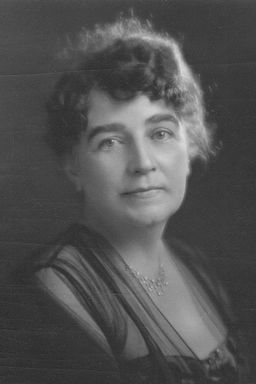
Katharine Susannah Prichard
Katharine Susannah Prichard (1927/8) (Courtesy: State Library of New South Wales [Public domain], via Wikimedia Commons)

He argues that change was occurring, that a national literature was developing – and gave many examples including works by those mentioned above, as well as writers like Katharine Susannah Prichard and Christina Stead.  He suggests that one of the reasons for improvement was the growth of publishing in Australia. What these publishers produce might be uneven in quantity and literary value, he said, “but at least they have taken the Australian background for granted, and that has marked an advance”. However, he bemoans the lack of “lively and intelligent [literary] criticism” which he believes is essential to writers finding “their proper audience”.

Palmer concludes positively, believing that there has been “a bubbling in our drought-scaled springs”. He says that the new literary pulse will have a significant impact on Australia in the next 50 years and will “quicken its imagination, stimulate its powers of introspection, and make it as interesting to itself as every country should be”.

There’s a lot to think about here – in terms of how Australian literature has progressed (within and without the country) and how we see the role of national literatures in our more globalised world. How important is national literature? My answer is that while nationalism, taken to exclusionist extremes, can be rather scary, we still do need to understand our own little corners of the world, in both their local, unique and their wider, universal meanings and implications.

What do you think? And how important is it, particularly with so many writers on the move, to define nationality?

Vance Palmer
“The future of Australian literature”
First published in The Age, February 9, 1935
Availability: Online

_____________________________________

When we finished the Bill Curates series a few months ago, Bill and I discussed reviving it occasionally, and thought one such occasion might be his AWW Gen 3 Week. So, here we are again. Bill has chosen three for us to post for his Week, with this one seeming the best one to go live on Day 1. We’d love you to join us in the project!

Meanwhile, we would love to hear your thoughts – and, particularly, whether you have ever read any Vance Palmer.