Monday musings on Australian literature: 1954 in fiction

Some of you know that Karen (Kaggsy’s Bookish Rambling) and Simon (Stuck in a Book) run “reading weeks” in which they choose, somewhat randomly, a year from which “everyone reads, enjoys, posts and shares wonderful books and discoveries from the year in question”. The next one is 1954, and is happening this week, 18-24 April.

I’ve taken part a couple of times, the first time being the 1936 Club for which I also wrote a Monday Musings. I’ve decided to do this again for 1954.

By 1954, World War 2 was over, and the now infamous baby-boom was well underway. Australia was welcoming migrants from war-torn Europe and life was, generally, looking good. However, the war was still close, and the Cold War was being well felt. The war featured heavily in popular literature, but writers were also looking at who we were as Australians, and at our near neighbours.

My research located a variety of books published that year across all forms, but to keep this simple, I am going to focus on fiction. Here is a selection:

  • Jon Cleary, The climate of courage
  • Dale Collins, Storm over Samoa
  • L.H. Evers, Pattern of conquest
  • Miles Franklin (as “Brent of Bin Bin”), Cockatoos (Bill’s review)
  • Catherine Gaskin, Sara Dane
  • Nourma Handford, Coward’s kiss
  • T.A.G. Hungerford, Sowers of the wind: A novel of the occupation of Japan
  • Barbara Jefferis, Contango Day
  • Eric Lambert, The veterans and The five bright stars
  • Henry George Lamond, The manx star
  • Eve Langley, White topee (Bill on The pea pickers and White topee)
  • Kenneth Mackenzie (as “Seaforth” Mackenzie), The refuge
  • Alan Moorehead, A summer night
  • Tom Ronan, Vision splendid
  • Arthur Upfield, Death of a lake
  • Judah Waten, The unbending
  • Don Whitington, Treasure upon the earth

Many of these authors have been forgotten, while others, like Alan Moorehead, are more remembered for their non-fiction work. Some, like Jon Cleary and Arthur Upfield, were successful writers of popular fiction, and are still remembered, albeit probably little read. Women are less evident here, than they were in 1936.

However, this list also includes some significant “literary” writers, like Miles Franklin, Eve Langley and Judah Waten, and others who are remembered today for awards established in their names, T.A.G. Hungerford and Barbara Jefferis. I like the sound of Jefferis’ debut novel. It was set during a single day in Sydney about Miss Doxy, a confidential filing and records clerk. The Barbara Jefferis Award was endowed by her husband in 2007 to commemorate her. 

There were very few literary awards at the time. One that did exist, the Australian Literature Society Gold Medal, was awarded in 1954 to poet Mary Gilmore for her collection Fourteen men.

Writers born this year included two poets, Kevin Hart and Dorothy Porter, and the novelist Kerry Greenwood. Deaths included, significantly, Miles Franklin.

Overland magazine, to which I often refer, was established in 1954 by Stephen Murray-Smith and Eric Lambert, who had also co-founded, with Frank Hardy, Melbourne’s Realist Writers’ Association.

The state of the art

Of course, I checked Trove to see what newspapers of the time were saying about Australian literature, and the fiction in particular.

Some specific issues

A recurring issue was the cost of books in Australia. A brief article in Adelaide’s Advertiser (January 25) reports on a visit to Australia by Desmond Flower of the large British publisher Cassell & Co. Flower said that English publishing costs had dropped slightly because of reductions in the price of cloth and paper, and the cost of printing was also likely to fall which should bring book prices down in England, “and consequently Australia”. (As an aside, he also noted that book business in Australia had trebled since 1939, which represented a greater increase than anywhere else in the Empire.)

Another discussion concerned the Little Golden Books, and Americanisation of Australian culture. (Nothing new, eh?) Jill Hellyer writing in the Tribune (July 21) argues not only that these cheap books had “pushed Australian authors even further from their precarious position”, when there are excellent Australian books available, but that the books were “full of loose phrases, bad grammar and cheap American slang”. She admits some in the series are good, but is particularly scathing about the Disney versions of classic children’s stories. There was a riposte, in the Tribune (August 11) from a “West Australian mother” who argued that “it is possible to select, from among these books, ones that can be good and useful for our children”. She didn’t mind ‘reading the words “sidewalk” or “cookies” because it provided her the “opportunity to explain this is how people talk in America”. From her point of view, these understandings help us get to know other people and cultures. However, while she disagreed with Hellyer’s specific cultural concerns, she agreed that “some [Golden Books] are very unpleasing, notably the ones based on Walt Disney’s films that were mentioned by the author of the article”.

Censorship was also discussed. The highly-respected Australian librarian John Metcalfe was quoted in Sydney’s The Daily Telegraph (August 10) as arguing against proposals (from both the right and the left) to extend censorship. The particular target was comic strips and books believed undesirable for children. Censorship, he said, is against the “liberal tradition” and was a “negative approach to the problem”. The Children’s Book Council, he said, “shows that a positive approach can be made in encouraging children to tackle a better type of literature.”

Similarly, a commentator in Wagga Waga’s Daily Advertiser (September 2) expressed concern about plans to extend censorship. Accepting that there there was a “a plethora of cheap and sexy trash on the market” and “an emphasis in some publications on crime and violence”, and agreeing that these can present “a danger to the younger generation and the lesser intellects [defined how?] among the adults”, this commentator believed that “a ban on ‘obscene’ literature is too dangerous to be countenanced”, and goes on to argue the case. There must be other ways, our commentator says, because

Once books are banned or burned, freedom is on the way out.

Some specific books

I could write screeds on reviews of particular books – even though I only read a tiny percentage of the articles I retrieved in Trove – but that’s not practicable, so, I’ll just share a few.

Brent of Bin Bin’s Cockatoos was much approved – and was also recognised by then as the work of Miles Franklin. IM (Ian Mair?) summarising the year’s books in Melbourne’s The Age (December 11) wrote “In the year’s fiction, first must come The Cockatoos … Like all her novels of country life, it has a wonderful feeling for place and period”. Earlier in the year, the writer of the Books Received column in Townsville’s Bulletin (April 18), wrote:

The theme is the universal one of the conflict between the artist and the practical majority who do not take the arts seriously, but the novel is also another Brent of Bin Bin’s memorable recreations of place and period in Australian country life. It is concerned particularly with the problem if the “exodists” — the restless young Australians who fifty years ago sought art of adventure, and in so doing suffered uprooting and exile. 

Oh dear – “the practical majority who do not take the arts seriously”!

There’s superlative praise for popular writers of the time like Jon Cleary and EV Timms. T.A.G. Hungerford‘s Sowers of the wind was also much liked. Interestingly, Wikipedia says that this novel won the 1949 Sydney Morning Herald prize for literature but was held back by publisher Angus & Robertson until 1954 “because it dealt with the economic and sexual exploitation of the Japanese after the War by Australian occupation forces”.

But I’ll save my last discussion for Eve Langley’s White topee. There were many reviews for this book, which continues the story of Steve from The pea pickers, but most seemed to be variations on a theme, which is to say, they praised its creativity but expressed some uncertainty too. Langley remains a challenging author for many, but her contemporary reviewers did value what she offered.

The Newcastle Sun’s (August 5) reviewer perhaps puts it best, opening with

It is impossible to judge White Topee by Eve Langley according to the established standards as the author has embarked upon the adventure of writing in a way that is completely original and individual.

The review uses headings like “poetic passages”, “heady style”, and “impressionistic”, but also gets Langley:

There are so many strands in this study of the country that the author’s impressions come tumbling with enough dazzling rapidity to suggest eccentricity, but the work on closer examination is revealed to be composite and, the result of shrewd observation and searching frankness.

M.P. in Queensland Country Life (August 5) is more measured, writing that it “could have been an outstanding book” but “is full of ego”. M.P. admires much in Langley’s passion and the writing:

Her love of Australia is deep and emotionally strong, and on the too rare occasions when Eve Langley forgets the poets and calls on her own descriptive powers she gives passages that, with their beauty and strength, are pure classics.

M.P. concludes that when Langley “extricates herself from the morass of sentimentality and confusion of mind she will write a book that is truly great”.

R.J.S., reviewing in Cairns Post (August 14) admired the book. S/he starts by saying “it has brilliant descriptive passages and much originality of thought but lacks a plot and is not a novel when judged by the usual standards”. S/he make a strong case for the work’s value:

To date no one has interpreted Australia and its people as Miss Langley has done in “White Topee.”

R.J.S. advises that the novel “cannot be skipped through” and suggests that “the careful reading it deserves will disclose that the writer has opened a new furrow in the field of Australian literature”.

I’ll leave White topee there, and will conclude my introduction to 1954 in Australian fiction with popular non-fiction author, Colin Simpson, who is quoted in Grafton’s Daily Examiner (December 23) as saying:

If one person in three would make one of his or her Christmas gifts a book by an Australian author, that could sufficiently enlarge the market to make authorship economic for more than just a few of us. The effect on our national literature could be very considerable.

Plus ça change?

Additional sources:

Meanwhile, do you plan to take part in the 1954 Club?

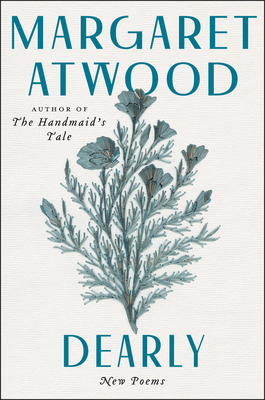
Margaret Atwood, Dearly (#BookReview)

Earlier this year, I decided to try audiobooks more regularly – and thought short stories would be a good way to go. Julie Koh’s Portable curiosities was my choice. It was, overall, a positive experience. Then I thought poetry might be worth trying given it’s such an aural form. I chose Margaret Atwood’s latest collection Dearly for my first foray into audio poetry since, although I’ve been an Atwood fan, I’ve only reviewed her once on my blog. Also, Atwood was a poet before she was a novelist. An added benefit was that the audio version was read by her. 

It worked really well – as a reading experience. For blogging, it was tricky. I found it difficult to capture the details I like to have for a review, much harder than remembering the plot, characters and themes of a novel experienced in audio form. Short stories fall somewhere in the middle. Anyhow, all this is to say that this post will share my overall thoughts, and a little about a few poems that I managed to jot down notes about or find online.

Overall, the collection came across as melancholic in tone, which is not to say the poems are uniformly grim, as there’s also plenty of Atwood’s cheeky humour. The worldview tends to the dystopian, reflecting Atwood’s concerns, but it felt realistic rather than hopeless. The subject matter is both political, dealing with issues like climate change and war, and personal, exploring ageing, grief and mortality. All of these speak to me.

Many of the poems draw on nature for their imagery, if not their subject matter. There’s a sense that nature is bearing the brunt of our wilfulness, that it shows evidence of our wilfulness, and, conversely, that it may also provide the answer. But, there are other poems which explore her themes through worlds I know nothing about, like zombies, aliens and werewolves.

And, of course, there’s Atwood’s love of language. The poems are accessible rather than obscure, but they’re not simple, because Atwood understands the weight of words and loves to play with them. This comes across really well in the audio version.

The collection is broken into five parts, starting, perhaps counter-intuitively, with “Late poems”. Many of the ideas here appealed to me, such as the idea in “Salt” that we don’t recognise the past was good until later. But, the poem that most touched me in this part was “Blizzard” in which Atwood talks about her nearly centenarian mother, asking “why can’t I let her go”? I could tell her why.

I enjoyed poems in Part 2, like “Health class (1953)” and “A genre painting”, but in Part 3, we find many poems inspired by nature. “September mushrooms” talks of fungi bringing “cryptic news of what goes on down there”. Halloween is the ostensible subject of “Carving the jacks”, which concludes with such a great line, “After we’re gone, the work of our knives survive us”. Atwood can do last lines.

In “Update on werewolves” (read it online), Atwood riffs on the masculine threat inherent in werewolves, then expands it to explore the empowerment of women. “Zombie” is prefaced by a lovely epigraph by Rilke, that “poetry is the past that breaks out in our hearts”. In “The aliens arrive”, Atwood runs through various movie aliens and their actions:

We like the part where we get saved.
We like the part where we get destroyed.
Why do those feel so similar? 

I love these pointed, paradoxical lines.

“At the translation conference” toys with language and culture, and how different cultures have words (or don’t) for different things. Some languages have “no word for him her … have no future tense”. There’s a wry reference to women and the word “no”, and, more scarily, to translation as a dangerous activity where punishment can result if the translation is “wrong”.

Part 4 also contains many nature-inspired poems. It continues the concerns and questions about where we are going, particularly regarding the environment. Finding a “Feather” causes Atwood to think of the “calligraphy of wrecked wings” and of the feather’s owner being “a high flyer once as we all were”. (This is one of many references to birds, which are a particular passion of Atwood’s.) “Improvisation on a first line by Yeats” continues the exploration of our rapacious attitude to land, as does “Plasticine Suite” with its word play on ages – the Pleistocene, the Myocene, now the Plasticine, “evidence of our cleverness, our thoughtlessness”. It addresses the arrogance of proselytising developed nations disregarding the needs of the less rich. “Oh children” ends with “Oh children … will you grow up in a world without ice … will you grow up?”

The collection concludes on the personal, with Part 5 devoted to ageing and loss, largely inspired by the death of Atwood’s husband in 2019 from dementia. There are some really lovely meditations here. In “Sad utensils” she writes of “the word reft/ who says that anymore?” despite its being honed over years and used by many. As words pass, so do our own lives, and the people we love. In “Silver slippers” she reflects on ageing and the things we give up along the way, “no dancing anymore … all my wishes used up … where did you go and when/ it wasn’t to Kansas”.

The second last poem is the titular poem, and it speaks directly to her loss of her husband, starting with the loss of the word “dearly”:

It’s an old word, fading now:
Dearly did I wish.
Dearly did I long for:
I loved him dearly.

Moving, and to the point – as is the final line of the book, from the poem “Blackberries”: “the best ones grow in shadow”. More paradox. I will leave my thoughts there and pass you over to Margaret Atwood herself in her essay for The Guardian on this collection. She says it all far more eloquently than I ever could.

Margaret Atwood
Dearly
(Read by Margaret Atwood)
Bolinda Audio, 2020 (Orig. pub. 2020)
1hr 48mins (Unabridged)
ISBN: 9781867504009

Monday musings on Australian literature: Bibliomemoirs

Book cover

At the end of my post on Gabrielle Carey’s Only happiness here, I mentioned that Brona (This reading life) had described it as a bibliomemoir, which was a new term for me. As it turns out it is a reasonably new term, full stop. Readings Bookshop says that

defined by Joyce Carol Oates in the New York Times in 2014 as ‘a subspecies of literature combining criticism and biography with the intimate tone of an autobiography’, the bibliomemoir offers unique and personal insights into people’s relationships to their books.

This is not to say that the “genre” is new – because it certainly isn’t – but that it now has its own name.

Website/blog Book Riot also wrote about them recently, saying

Most readers love books about books. We also love snooping through other people’s bookshelves for the thrill of the possibility of discovering a whole person in a stack of books that they chose to read. Bibliomemoirs offer both. These books combine the confessional, intimate tone and personal approach of memoirs and autobiography with, well, books, and sometimes literary criticism.

And, apparently, says Kate Flaherty in The Conversation, Gabrielle Carey has, herself, described the genre:

Carey described bibliomemoir as a piece of writing that shows literary criticism is “best written as a personal tale of the encounter between a reader and a writer”.

It’s not surprising, then, that Only happiness here is a good example. In it Gabrielle Carey looks at Elizabeth von Arnim’s life through the prism of her works and draws conclusions about her own life through those same works. In doing so, she also offers literary criticism, through both her own views and those of others on von Arnim’s books.

The first example of this genre that I can remember reading – before it had its name – is non Australian, Azar Nafisi’s Reading Lolita in Tehran: A memoir in books (2003)*. Such an intelligent, moving – and political – book.

For keen readers, the bibliomemoir, when done well, and particularly when written by and/or about favourite writers, can be engaging (if sometimes disheartening!) reading. They can also be enlightening because they explore the way we use books to understand our own lives and/or to understand the lives of others. They are about the way we use books, for example, for solace, for self-education, for the safe exploration of other ideas and feelings.

Readings, in the page linked above, shares a few bibliomemoirs selected by their Hawthorn store bookseller, Mike Shuttleworth. Not all were Australian, but as most of you know by now, these Monday posts are devoted to Australian literature, so my list here includes his two Aussie selections and others selected by me:

  • Debra Adelaide, The innocent reader: Reflections on reading and writing (2019) (on my TBR, Lisa’s review)
  • Carmel Bird, Telltale: Reading, writing, remembering (to be published July 2022)
  • Ramona Koval, By the book: A reader’s guide to life (2012) (Lisa’s review)
  • Michael McGirr, Books that saved my life: Reading for wisdom, solace and pleasure (2018) (Brona’s review)
  • Judith Ridge (ed.), The book that made me: A collection of 32 personal stories (2016)
  • Jane Sullivan, Storytime: Growing up with books (2019) (Lisa’s review)
  • Brenda Walker, Reading by moonlight: How books saved a life (2010)

Book Riot says, “A bibliomemoir is like an insightful, bookish dinner guest — and a recipe for an exploding TBR”. On the other hand, bibliomemoirist herself, Jane Sullivan, shared a different viewpoint in The Sydney Morning Herald back in 2014. She wrote that British journalist Rachel Cooke, while liking what bibliomemoirs were doing, was also worried. Cooke, wrote, she says:

These books, however endearing, funny and insightful, strike me as just another form of talking about books rather than actually reading them. Go to the text! I want to shout, bossily.

So, with all this in mind, do you like bibliomemoirs? And, if so, care to share any favourites, Aussie or otherwise?

* Coincidentally, while researching this I discover that Nafisi has a new book out this year, Read dangerously: The subversive power of literature in troubled times.

POSTSCRIPT : An interesting, brief discussion of bibliomemoir at Boston Bookfest. Argues that:

Much like microhistory, bibliomemoir upends a specific, traditional cultural structure—in this case the kind of authoritative perspective (rooted in entrenched power structures) that conventional criticism upholds. In this sense, it is an inherently political genre—a liberal or democratic genre.

A little note on dark literature

Book cover

I ended my post on Gabrielle Carey’s Only happiness here: In search of Elizabeth von Arnim with Carey’s point that, although at her death there was a belief that von Arnim’s work would live on, “her style of conventionally plotted novels, however rebellious, insightful or entertaining, soon went out of literary fashion”. This was because, claimed English novelist Frank Swinnerton, “her talent lay in fun, satirical portraiture, and farcical comedy” and these, he said, were ‘scorned by the “modern dilemma”‘. He was referring to Modernism, which, as Carey says, “didn’t believe in happiness” – and this, she added, is a value that has carried through to today.

Modernist writer, Albert Camus, for example, wrote

Man stands face to face with the irrational. He feels within him his longing for happiness and for reason. The absurd is born of this confrontation between the human need and the unreasonable silence of the world. (1 January 1942)

Anyhow, Carey writes just a little more about this issue of our focus on gloom. She quotes literary theorist Terry Eagleton from his 2015 book Hope without optimism. Eagleton comments that it can be “arresting” when contemporary novels “fail to be suitably downbeat”. He said that for a contemporary novel to end on a “joyfully transformative note” – as Jose Saramago’s Blindness does – “is almost as audacious as if Pride and Prejudice were to conclude with a massacre of the Bennet sisters”. Love his example of course.

Eagleton goes on to say that

In this era of modernity, gloom appears a more sophisticated stance than cheerfulness.

Carey picks up this idea, suggesting that this attitude is the key to von Arnim’s demise. She says:

It has become more respectable to be depressed, an attitude that signals virtue, and almost socially irresponsible to be happy – a state that is associated with vacuousness. After all, if you aren’t depressed by the mess the world is in – ravaged by fire, flood and plague – you are clearly insensitive or uninformed. Perhaps that is precisely why no one reads her novels anymore, because amid our infatuation with darkness, being cheerful has become not only unsophisticated but morally suspect.

This made me stop and think … because, while most times have been difficult in one way or another, it does seem to be particularly so now. The pandemic, climate change, the current war in Ukraine, not to mention, in Australia, our government’s refusal to meet our First Nation’s people half-way, their inflexible hard-hearted policy regarding refugees and asylum-seekers, and the continuing violence against women, are all a bit overwhelming. No wonder we feel gloomy.

But, here’s the thing. My personal life here and now is going OK. Of course I’m concerned about all the things I’ve just mentioned – I’d be “insensitive” and “uninformed” if I weren’t – but in my daily life they are (with perhaps the exception of the pandemic) “just” concerns. What I mean by this is that I have the luxury of choosing whether to worry about them or not, rather than that they are issues that spoil my generally comfortable life. It should therefore, theoretically speaking, be easy for me to be cheerful. This is something that, coincidentally, I’ve been pondering rather a lot lately, so Carey’s comment hit a nerve. I DO feel it would be “morally suspect” of me to be cheerful.

This is because – to use the word du jour, if it’s not already passé – we are now “woke”. We are acutely aware of our privilege in a way that past generations may not have been, and this is not only uncomfortable, but we feel uncomfortable about being uncomfortable because, well, we are not really uncomfortable. It’s too easy, in the situation, to become smug in our “wokeness” …

So, where does that leave us? Cheerfulness in itself is not a bad thing. We achieve nothing by being gloomy all the time, but can we truly be happy being cheerful? I’m not sure I can. The best, I think, I can aim for, is to have a laugh every now and then – and what better way than through the arts – before I get back to the difficult job of living in this challenging, uncertain world.

What do you think?

(Meanwhile, for a different take on happiness in modern literature, check out this 2013 article from The Guardian.)

Elizabeth von Arnim, Vera (#BookReview)

After a run of tough reads in 2021, my reading group wanted something gentler, so I suggested that for our “classic” we do a novel by Elizabeth von Arnim, whose works I’ve loved for their pointed wit, delightful humour, and astute commentary on marriage and the relationship between men and women. As is my wont, I nominated one from my TBR shelves, Vera. To my delight, they agreed.

Then, before reading it, I decided to remind myself of von Arnim’s life, so I read Gabrielle Carey’s Only happiness here: In search of Elizabeth von Arnim (my review). Imagine my horror when, two-thirds through, Carey wrote that Vera was her “darkest” novel, “a haunting portrait of psychological tyranny”. What? Too late by then, but I did hope my reading group would, one, forgive me, and, two, not be turned off von Arnim. As it turned out, all those who attended the meeting liked the book and pronounced it “not too dark”. Was I pleased!

Nonetheless, Vera is a dark novel, one that reminded me of a book written four decades later by Elizabeth Harrower, The watch tower (my review). Both novels are about narcissism and coercive control, about older men who marry and tyrannise vulnerable and inexperienced much younger women.

Wuthering Heights by Jane Austen”

When Vera was published, readers and reviewers were, says Carey, confused. How did “playful, witty Elizabeth von Arnim, author of light social comedies” become “a gothic writer of macabre tragedy”? Von Arnim was distressed but cousin Katherine Mansfield’s husband, John Middleton Murry, is reported to have said to her, on the appearance of a negative review in The Times Literary Supplement, “Of course my dear, when the critics are faced with Wuthering Heights by Jane Austen, they don’t know what to say.”

This is an apposite comment for a few reasons – besides its intention to reassure. Firstly, von Arnim pointedly has Lucy, our young wife, read Wuthering Heights even though husband Everard calls it “morbid”. It’s an effective allusion, given the darkness of Brontë’s novel and its focus on obsessive love. However, Murry’s comment also conveys something about the experience of reading this novel, because, while it is dark and distressing, it still bears von Arnim’s Austen-like light touch, and that, I think, is what my reading group appreciated.

By now, if you haven’t read it yourself, you may be wondering why this novel is called Vera when the two protagonists I’ve named are Lucy and Everard? So, let me do a quick plot summary.

The novel begins with 22-year-old Lucy Entwhistle leaning on the front gate of the house in Cornwall that she and her father had taken for the late summer. Her father has just died suddenly and Lucy is in shock. Into view comes another – apparently – grieving person, the mid-forties Everard Wemyss, whose wife Vera had died a week or so ago. Things, though, are not quite as they seem. A shadow hangs over Vera’s death, with a suggestion that it may not have been accidental but a suicide. Lucy, unfortunately, is naive and vulnerable, and despite the best efforts of her wise Aunt Dot, she is swept into marriage, with socially unacceptable haste. After the honeymoon, Everard takes her to his county mansion, “The Willows”, where Vera had died. He makes no attempt to change anything – expecting Lucy to sleep in the same bed Vera did, to occupy Vera’s sitting room, to have breakfast overlooking the flagstones onto which Vera had fallen (or jumped). Kind, head-over-heels-in-love Lucy does her best to justify Everard’s increasingly controlling behaviour but it dawns all too quickly that he expects nothing less than utter servitude . 

And so, Lucy, whose usual state had been one “of affection and confidence”, learns that the “scenes” that she hated could not be avoided “for no care, no caution would for ever be able to watch what she said, or did, or look, or equally important, what she didn’t say, or didn’t do, or didn’t look”. It leaves her “afraid with the most dismal foreboding, that someday after one of them, or in the middle of one of them, her nerve would give out and she would collapse. Collapse deplorably; into just something that howled and whimpered.”

Lucy starts to think kindly of this Vera she’d never met.

“It’s wonderful, wonderful … what love will do” (The doctor)

It’s grim, certainly, but this is Elizabeth von Arnim, so there’s humour – black comedy – here too. There are some truly funny scenes, particularly involving the poor servants for whom Everard has not one ounce of humanity. These servants only stay at “The Willows” because he is in town all week. They can manage his cruelly imperious ways from Friday night to Monday morning, because the wages were higher than any they’d heard of. (They probably had to be!)

So, here is a scene in which Everard confronts the parlourmaid about a missing button on a piano leg cover:

“What do you see?” he asked.
The parlourmaid was reluctant to say. What she saw was piano legs, but she felt that wasn’t the right answer.
“What do you not see?” Wemyss asked, louder.
This was much more difficult, because there were so many things she didn’t see; her parents, for example.
“Are you deaf, woman?” he enquired.
She knew the answer to that, and said it quickly.
“No sir,” she said.

And so it continues, but you get the gist. The scene is indicative of Wemyss’ extreme bullying behaviour, but you can’t help laughing while feeling for the poor parlourmaid.

This black humour is one of the things that kept me reading. Another was von Arnim’s writing. She has wonderful turns of phrase, such as this of Lucy reining in some disturbing thoughts: “Lucy made a violent lunge after her thoughts, and strangled them”.

Von Arnim is also an excellent satirist and ironist. Just look at the doctor’s statement above. He’s surprised and unsure about the marriage to Lucy but, well, look what love can do! Already, however, we are aware that his initial uncertainty is more than valid. One of the points Carey makes in her book is von Arnim’s disappointment in love and marriage. In her experience – including the marriage to Francis Russell which inspired this novel – men change as soon as they are married or, as the heady days of love wane. Vera is at the extreme, but not unbelievable, end of this disappointment.

Finally, there’s Jane Austen. Elizabeth von Arnim – and I’m not the first to say this – owes much to Austen. From my first Von Arnim, Austen’s wit and astute observation of human nature shone through. She nails the way humans think and behave with, sometimes, excruciating accuracy. But von Arnim’s style in Vera is not Austen’s. We don’t have Austen’s omniscient third person voice. Vera is told third person, but von Arnim uses that technique more common to modernists, the interior monologue, with the narrative perspective shifting between the main characters – Lucy, Everard and Lucy’s wonderful Aunt Dot. In fact, a few of the last chapters are with Aunt Dot as she comes head-to-head with Everard and learns just how right she had been to be concerned – but, well, look “what love will do”.

There’s more to discuss in this book. There’s Wemyss’ deeply creepy infantalisation of his 22-year-old wife, calling her “a good little girl” and “my very own baby”. There’s also his insistence that everything can be simplified to one right answer. Initially, the overwhelmed, grieving Lucy finds this comforting but, having grown up in an atmosphere of intellectual enquiry, she starts to not only think that such an attitude might “cut one off from growth” and “shut one in an isolation”, but to doubt “whether it was true that there was only one way looking at a thing” or “that his way was invariably the right way”.

Too soon after her death, Elizabeth von Arnim was relegated to the realms of light romantic comedy, but that denies their value, even when you look at her lighter works. However, when you add Vera to her oeuvre, you have a writer whose work must be seen as relevant now as it ever was.

Elizabeth von Arnim
Vera
London: Virago, 1983 (orig. pub. 1921)
319pp.
ISBN: 9781844082810

Monday musings on Australian literature: Sources for early Australian Women Writers

As I think you know, Elizabeth Lhuede (founder of the Australian Women Writers Challenge), Bill Holloway (The Australian Legend), and I, are behind the re-framed Challenge. Our focus is early Australian Women Writers, by which we mean women writers from the nineteenth and early-to-mid twentieth centuries. We are particularly interested in those women writers who have never received due recognition, but we’ll cover the bigger names too. We publish twice weekly – articles and reviews on Wednesday mornings, and excerpts (mostly) of actual writings on Friday mornings (Australian time of course).

Currently, I post on the last Wednesday of the month, and my first two posts were on sources for researchers and anyone else interested in the topic. I have decided to document them here, for my own records – and, just in case some of you haven’t caught those posts, but would be interested in them:

  1. Early Australian women writers: 1, Primary sources: focuses on where actual writings by the authors can be found… Read on …
  2. Early Australian women writers: 2, Secondary sources: focuses on where information and writings about the authors and the period can be found… Read on …

Clicking on either of the Read on links will take you to the blog. Once there, please potter around to see what else we’ve posted to date. You might find something interesting. We’d love to hear from you if you did, and if you have an idea of something relevant you might like to contribute, please contact Bill who is our commissioning editor, theaustralianlegend[at]gmail.com.

This is a very short Monday Musings this week. Enjoy the respite!

Six degrees of separation, FROM Our wives under the sea TO …

It’s April down under. Actually, it’s April everywhere – I know that – but, down under, April is autumn, not spring. All those Easter cards with baskets of pretty flowers, not to mention eggs with their hints of fertility and birth, have always seemed out of place. Gradually, though, we are making this time our own. Easter Bilby anyone? And now, with that important message off my chest, let’s get onto this month’s Six Degrees. As always, if you don’t know how this meme works, please check meme host Kate’s blog – booksaremyfavouriteandbest.

The first rule is that Kate sets our starting book, and for April it’s a debut novel I’ve never heard of – so clearly I haven’t read it (yet again). It’s Julia Armfield’s genre-bending, from what I can see, Our wives under the sea.

Susan Hawthorne, Limen, book cover

Armfield’s novel is apparently a queer story about a relationship that starts to fall apart after one partner returns from “a deep-sea mission that ended in catastrophe”. I thought a lot about where to go from here, riffing at first on Armfield to Aussie theatre director Armfield who has staged several novelistic adaptations – but that was getting a bit tortuous, even for me. So, I’ve gone with something a bit watery, albeit concerning a flooding river rather than the sea, Susan Hawthorne’s Limen (my review). It’s a verse novel about two women on a camping holiday whose safety is threatened by a rising river, but while there is suspense and tension, there is more here than a simple adventure or suspense story.

Ali Cobby Eckermann, Ruby Moonlight

From here I’m linking on form, because I love to give my favourite verse novels a little push when I get the opportunity. I’ve posted on a few verse novels over the years, but the one I’m choosing is First Nations’ writer, Ali Cobby Eckermann’s Ruby Moonlight (my review). A work of historical fiction about a young Indigenous girl survivor of brutal massacre, this book has a subtlety that I found impressive.

Book cover

Next, I’m staying with First Nations’ writers, but moving to a memoir and linking on name. In Tell me why (my review), Archie Roach pays great compliment to his late wife Ruby Hunter who provided much of the stability he needed to turn his life around and become the success he now is. 

One of the main issues Roach confronted, and for which Ruby Hunter’s support was important, was alcoholism. For my next link, I’m returning to fiction, and Douglas Stuart’s Shuggie Bain (my review) in which alcoholism plays a significant role in the poverty-stricken life that young Shuggie lives.

Book cover

And now, I’m drawing on this very meme to provide my link. Shuggie Bain is one on the many many starting books I hadn’t read at the time of the meme. It is also one of the very few that I read some time after the meme. Another book in this category is Maggie O’Farrell’s Hamnet (my review). If these two books are any guide, I guess I really should try to go back and read more of those unread starting books!

My final link is another one personal one. Hamnet was not one of my reading group’s Top Three picks at the end of last year, but it was one of our two highly commendeds. The other highly commended was Delia Owens’ Where the crawdads sing (my review) and so I’ve chosen it for my last link. Not a perfect book, by any means, but a good, heart-felt story.

And there, I am back to four women writers and two men in my links. I could perhaps argue that we’ve come full circle given the starting book and my last one are set in watery domains. The authors all come from English-speaking countries – the United Kingdom, Australia, and the USA.

Now, the usual: Have you read Our wives under the sea? And, regardless, what would you link to?

Stella Prize 2022 Shortlist announced

The 2022 Stella Prize shortlist was announced, yesterday. But, as I had just posted my review of Gabrielle Carey’s Only happiness here, I decided to hold my announcement post over for a day. Those of you keenly interested will have seen it, but at least I will have it for my records.

Just to remind you, the judges are author Melissa Lucashenko, in the chair, with her co-judges being writer, poet, essayist Declan Fry; author-across-all-forms Cate Kennedy; memoirist and activist Sisonke Msimang; and essayist and screenwriter Oliver Reeson

And remember, this year poetry was added as a form eligible for the prize – and, it seems to have been a popular decision because, well, look at the …

The shortlist

  • Eunice Andrada, Take care (poetry)
  • Evelyn Araluen, Dropbear (poetry) (TBR, Brona’s review)
  • Anwen Crawford, No document (memoir) (Lisa’s review)
  • Jennifer Down, Bodies of light (novel)
  • Lee Lai, Stone fruit (graphic novel)
  • Elfie Shiosaki, Homecoming (memoir) (Lisa’s review)

So, two books of poetry, two memoirs and two novels (one being a graphic novel.) Three of the four I thought might have made it to the longlist – Araluen, Crawford, and Down – have now made it through to the shortlist. The announcement email I received from Stella said the list spanned “fiction, nonfiction, social history, a book-length essay, a graphic novel, and – eligible for the first time in 2022 – poetry”.  It also noted that “half of the shortlisted books written by debut authors.”

I will try to read at least the one I have on my TBR before the winner is announced, but I’d actually like to read all of these.

Melissa Lucashenko says that the shortlist:

is big on emerging voices writing in unconventional ways –  from regions, positions, and literary forms that transcend the mainstream. These authors are writing back, insisting that ‘other’ lives – First Nations lives, poor women’s lives, queer lives, and Filipina lives – matter on the page just as they do in everyday affairs. Although the shortlisted authors vary widely in location, gender, and culture, they all share two things. First, all six shortlistees undertake the essential work of any artist: paying attention to what is happening around them, and interrogating that experience. Second, the authors have produced powerfully beautiful literature, sacrificing no art in their unflinching focus on justice, inclusion, and truth-telling. It has been a great pleasure as well as an honour, to shine a light on these six brilliant talents.”

There’s more on the shortlist on the Stella website.

The winner on 28 April.

Any comments?

Gabrielle Carey, Only happiness here: In search of Elizabeth von Arnim (#BookReview)

I discovered Elizabeth von Arnim (nee Mary Annette Beauchamp, 1866-1941) back in the 1990s when Virago republished her first novel, Elizabeth and her German garden. Published in 1898, this novel, writes Gabrielle Carey, was an immediate hit, turning her, almost overnight, into one of England’s favourite authors. It was certainly a revelation to me.

I went on to read several of her books, including her pseudo-autobiography All the dogs of my life, over the next decade. I was completely charmed by her wit and humour together with her insights into love and marriage, and their impact, in particular, on women’s lives. Anyone who’s a Jane Austen fan couldn’t fail, I’m sure, to see von Arnim’s ancestry. I wrote one of my early Monday musings posts on her.

Book cover

What, a Monday Musings on Australian literature on Elizabeth von Arnim? It was cheeky I know – and I admitted it at the time. Yes, she was born in Australia, but yes, she left here, never to return, when she was three. However, I just wanted to write about her. And so, it seems did Gabrielle Carey, who opens her hybrid memoir-biography with

When I first discovered Elizabeth von Arnim, I found, for the first time, a writer who wrote about being happy. So much of my reading life – which essentially means so much of my actual daily life – had been spent reading miserable literature because, let’s face it, most literature is miserable.

Carey isn’t clear about when she discovered von Arnim in relation to when she started working on this book, but says that once she discovered von Arnim, she became something of a “von Arnim evangelist”. She was “incensed” that von Arnim had been so completely forgotten. I could relate to this, because I felt the same. Unfortunately, my evangelising didn’t go far because no-one in my reading group had heard of her when I recommended that we do one of her novels as our “classic” this year. More on that, then.

If you are among those you don’t know this writer, you might be surprised to hear that several biographies have been written about her, including three in the last decade. I have two of them, Jennifer Walker’s more traditional literary biography, Elizabeth of the German garden: A literary journey, published in 2013, and Gabrielle Carey’s. The third is Joyce Morgan’s The countess from Kirribilli, published in 2021. Just this should tell you something about the fascination with which this woman is held, this woman who published 21 books, whose first cousin was Katherine Mansfield, and who knew EM Forster, had an affair with HG Wells and married (among others) Bertrand Russell’s brother. She had a life – and then some!

OK, so I’ve written quite a bit about Elizabeth von Arnim, but not much about Gabrielle Carey’s book. Only happiness here is the third sort-of literary biography that Carey has written, the other two being Moving among strangers (my review) about Randolph Stow and her family’s connection with him, and Falling out of love with Ivan Southall about her losing faith in this childhood writing idol. Carey, it seems, likes to explore her subject matter through the prism of her own life and experience (a bit like Von Arnim did with her fiction). This is not to everyone’s taste, but when done well, like, for example, Jessica White’s Hearing Maud (my review), it can be both engaging and effective.

I loved White’s book for the way she explored Maud Praed (daughter of novelist Rosa Praed) through their joint experiences of deafness, neatly marrying information with activism. Carey’s book has a very different driver, one I foreshadowed in the opening quote from her book. A few pages on, Carey makes her goal clear:

What did Elizabeth von Arnim understand about happiness that no other writer I’ve ever come across did? And is it something I too might be able to learn?

She wanted to know “the secret to her enviable ability to enjoy life” because it was clear from her novels and journals that she did, despite the many trials she faced. Indeed, the book’s title is the sign von Armin put over the door of her Swiss chalet. Carey argues that von Arnim “was, perhaps unknowingly, one of the earliest proponents of positive psychology”. Carey was so serious about her goal that amongst the end-matter in her book is a page titled “Elizabeth von Arnim’s Principles of Happiness”. There are nine, but if you want this bit of therapy you are going to have to read the book yourself! However, to whet your appetite, the first one is “Freedom”.

Carey tells her story – I mean, von Arnim’s story – chronologically, regularly interspersing her own reflections and experiences in relation to von Arnim’s. An early example occurs when she writes about von Arnim’s first marriage to the much older Count von Arnim, and her novel inspired by this, The pastor’s wife (albeit the Count was not a pastor!) In this novel, von Arnim writes that “Ingeborg in her bewilderment let these things happen to her”. Carey immediately follows this with:

How well I understand this experience of letting things happen. All my life I had let things happen to me, often without my consent.

And she then spends nearly two pages exemplifying this from her life. Mostly this approach of Carey’s was interesting, even illuminating, but there were times when it felt a little too self-absorbed. However, this didn’t overly detract from what is a thoughtful introduction to von Arnim and her work. In under 250 pages, Carey manages to tell us something about almost every one of Von Arnim’s books – how each one fit into her life, what aspects of her life it drew from, and how it was received at the time. In that same number of pages, she conveys the richness of von Arnim’s long and event-filled life. I’m impressed by how succinct and yet engaging the book is, and am not surprised that it was shortlisted for the 2021 Nib Literary Award. I should add here that while the book is not foot-noted – its not being a formal “literary biography” – there are two and a half pages of sources at the end.

So, what did I, as a reader of von Arnim, get from this book, besides a useful introduction to her complete oeuvre? Well, firstly, I got a deeper understanding of how much of her oeuvre drew from her own life, and from that I got to better understand her attitude to marriage and to the relationship between men and women, and to her exploration of, as Carey puts it, “the clash between the concept of the ideal and the real”. I also got to understand more about her times, its literary milieu, and her place within it – and to see how we can never really foretell which writers will survive and which won’t. When von Arnim died, obituary writers were sure she’d not be forgotten. They also believed she’d be far more remembered than her shorter-lived cousin, the above-named Katherine Mansfield. But …

… as Carey sums up, “her style of conventionally plotted novels, however, rebellious, insightful or entertaining, soon went out of literary fashion”, because, wrote English novelist Frank Swinnerton, “her talent lay in fun, satirical portraiture, and farcical comedy”. These, he said, were ‘scorned by the “modern dilemma”‘. We are talking, of course, of Modernism, which, as Carey puts baldly, “didn’t believe in happiness”, a value that has carried through to today.

I will leave this here, because I want to return to it in a separate post. Meanwhile, I’d argue that while von Arnim’s books might be witty, they are not simplistic. They come from an astute and observant mind that was able to comment both on the times and on universalities in human nature. They may not have Modernism’s bleakness, but they aren’t light fluff either. Carey’s simple-sounding quest has, I think, touched on something significant.

Brona (This Reading Life) enjoyed this book, which she ascribes to the bibliomemoir genre.

Gabrielle Carey
Only happiness here: In search of Elizabeth von Arnim
St Lucia: UQP, 2020
249pp.
ISBN: 9780712262975

Monday musings on Australian literature: on 1922: 1, Bookstall Co.

I haven’t done many Trove-inspired posts lately, but, I do enjoy pottering around Trove’s Newspapers and Gazettes database, so thought that for today’s Monday Musings I’d have a little look at what was happening in the Australian book world in 1922. My broad search retrieved around 8,000 articles! I can’t read them all, but I found several items of interest, to me at least, that I’d like to share, which I’ll do over the year.

For my first post, I’ve chosen a new publisher to me. In the Books Received column in the Kadina and Wallaroo Times of 8 March, the columnist refers to the N.S.W. Bookstall Company, writing “now that publishing difficulties have eased, the N.S.W. Bookstall Co. proposes to add rapidly to its popular Australian fiction series”.

Who was this company I wondered? Well, they were “notable” enough to have a Wikipedia page, and the man who turned it into a successful business, A. C. Rowlandson, has an entry in The Oxford companion to Australian literature. The Companion tells me that in 1991, the book, The New South Wales Bookstall Company as a publisher, by Carol Mills, was published. The Publishing History website also devotes a page to them.

So, the company … It was started by Henry Lloyd around 1880 as a newsagent, with its first foray into publishing possibly being racebooks for the Hawkesbury Race Club around 1886. The Wikipedia article stops with a discussion of World War Two, which suggests that the company folded soon after the war, but I haven’t confirmed this.

I have however found out a bit about Alfred Cecil Rowlandson. He started with the company in 1883 as a tram ticket seller, presumably from one on the company’s bookstalls. Wikipedia says that “the greatest part of the company’s business consisted of retailing local, interstate and overseas periodicals, postcards (Neville Cayley produced a series) and stationery from its eight city shops and fifty-odd railway stall outlets”. Rowlandson worked his way up, and in 1897, bought the company from Lloyd’s widow. He ran it from then until his death in, coincidentally, mid-1922.

From the Bookstall series. Image: Publishing History website

He was clearly a visionary, because, as the Companion says, the company became “one of Australia’s most successful book-publishing and selling ventures, publishing in paperback about 200 titles by Australian authors and selling four to five million copies”. The above-linked Publishing History page lists some of its books in chronological order, while the Wikipedia page lists a selection by author’s name. The authors include names familiar to me like Louis Becke, Charles Chauvel, Norman Lindsay,  Sumner Locke, Vance Palmer, and Steele Rudd.

Rowlandson came up with the idea of selling Australian books at one shilling each, and created the Bookstall series in 1904. Wikipedia says that despite his belief in a market for cheap Australian books, the prospects were not encouraging, because Australians had not shown much faith in the the work of their own novelists.

However, Rowlandson put his money where his mouth was. He paid £500 for the publication rights for Steele Rudd’s Sandy’s Selection. It was the largest sum paid in advance for an Australian book at that time. Rowlandson also apparently spent “comparatively large sums in readers’ fees”. And, he believed, it seems, in bright catchy covers, employing artists and cartoonists as illustrators, like Norman Lindsay, Sydney Ure Smith, cartoonist Will Dyson, and war artist George W Lambert.

The Companion says that “the remarkable sales of of these Australian books confirmed Rowlandson’s intuition that the Australian reading public was keen for local reading matter, and the impact of his company on the development of Australian writing was considerable.”

Now, back to Trove. The columnist of the aforementioned Kandina and Wallaroo Times, writing, remember, in 1922, says “now that publishing difficulties have eased, the N.S.W. Bookstall Co., proposes to add rapidly to its popular Australian fiction series”. My guess is that these “publishing difficulties” stem from the war. The Companion says that during the war, due to the shortage and cost of paper, the “bob” (or “shilling”) price was increased by threepence, but Rowlandson – good for him – reverted to the “bob” after the war.

Anyhow, our columnist wrote that three new novels were in the presses, and that “the enterprising publishing house” had nearly 20 more under way. One of the books was S.W. Powell’s Hermit Island. It’s “of the Islands adventure class, but, like its predecessor, is off the beaten track”. Our columnist says that the predecessor, Powell’s first novel, The maker of pearls, was “one of the best of last year’s contributions to Australian fiction”. Still 1s 3d at this stage. 

Rowlandson died in June 1922 at the age of 57. Soon after, in July, Freeman’s Journal advised that the Company’s intention was to “continue the publication of Australian novels at popular prices, as during the life of the founder, Mr. A. C. Rowlandson, the late managing director”. Founder? Not correct. And so inaccuracies creep into the historical record, eh?

Freeman’s columnist goes on to say that

The late Mr. Rowlandson had profound faith in the literary resources of the Commonwealth, and during his life was wholly responsible for the publication of at least 150 Australian novels, the sales of which have totalled nearly four millions. During recent years the standard of the series has been steadily improved; and the manuscripts now in hand show still further improvement. 

And, s/he announces that the next book is Vance Palmer’s The boss of Killara, which is “an entertaining story, … most entertainingly written, and … true in every detail to Australian, bush-life”.

Trove provides information about more books published in 1922, including:

  • J.H.M. Abbott’s Ensign Calder, which contains stories which originally appeared in the Bulletin. These are historical fiction, being set in the nineteenth century during the governorship of Macquarie. The Western Mail‘s correspondent says that the stories “are very faithfully rendered, and … highly amusing”.
  • Hilda Bridges’ The squatter’s daughter, which interests me because it’s an adaptation of a 1907 play pf the same name by Bert Bailey and Edmund Duggan. The play was adapted into film twice, one silent and one talkie, as well as into this novel. The Midlands Advertiser says it’s “capably written, and gives a faithfully and permanent record of the play”
  • Jack McLaren’s Feathers of heaven from, says Freeman’s Journal correspondent, “one of the most popular Australian authors”. It’s set in “the wilds of New Guinea” and is “a novel of stirring adventure written round the illegal hunting of New Guinea’s beautiful birds-of-paradise”. A volume of “wholesome adventure”!

Of course, there were also reports of Rowlandson’s death, funeral and estate, but I’ll end with some comments on his legacy from the The Australian Worker:

Some of the writers taken up by A.C.R. have since capitalised their ‘bob’ start, and made overseas reputations. Rowlandson, by instinct and practice, was a tremendous live-wire hustler, and probably his business intensity contributed to his all too early death—a death which will grieve hundreds of thousands who enjoyed cheap local fiction of exceptional merit as a result of his enterprise, and by scores of young writers who never would have been heard of only for his faith in local literary products, his kindly and sympathetic disposition, and his never-resting determination to give Australian literature a show.