Six degrees of separation, FROM Time shelter TO …

Well, the BIG DECLUTTER is essentially done. Now it is the BIG CLEAN. Boring! So let’s move on to something far more interesting than how to clean ovens, bathrooms and windows. In other words, let’s think about this month’s Six Degrees meme. If you don’t know how it works, please check host Kate’s blog – booksaremyfavouriteandbest.

The first rule is that Kate sets our starting book. In July, dare I say it, it’s another book I haven’t read, Time shelter, by Bulgarian writer Georgi Gospodinov (and translated by Angela Rodel). It won the 2023 International Booker Prize, and it sounds like a fascinating read. In deed, it sounds like one I’d be interested to read, moreso perhaps than some of this year’s other starting books.

Book cover

Goodreads starts its description of the book with: ‘In Time Shelter, an enigmatic flâneur named Gaustine opens a “clinic for the past” that offers a promising treatment for Alzheimer’s sufferers: each floor reproduces a decade in minute detail, transporting patients back in time’. What to link from this? I could have taken the quick way and chosen a book with “Time” in the title, as I’m afraid I haven’t read any Bulgarian authors. However, instead I’ve gone with a book in which Alzheimer’s or dementia plays a part, though it’s not the book’s main feature by any stretch, Carol Lefevre’s Murmurations (my review).

Marie Munkara, Every secret thing

Murmurations is one of those books that is tricky in terms of its form. Is it a novel? Or, is it short stories? Well, it’s probably best described as a book of connected short stories, so I’m linking to another book I’d describe that way, First Nations Australian writer Marie Munkara’s blackly funny Every secret thing (my review).

Now, each year in Australia, we celebrate NAIDOC Week in the first week of July (this year from 2 to 9 July), so in honour of that I’m linking from First Nations Australian writer Marie Munkara to the most recent work I’ve reviewed by a First Nations Australian writer, Claire G. Coleman’s short story “Nightbird” in the Unlimited futures anthology (my review).

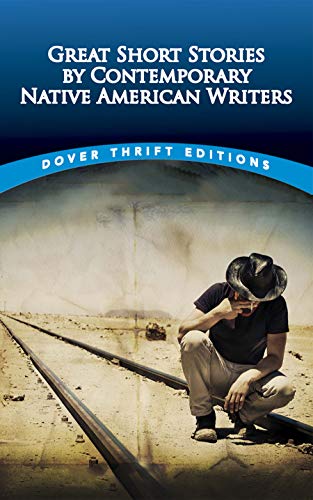
From here I’m linking on two points, another First Nations story in another anthology, this one Native American-based. It’s Leslie Marmon Silko’s “The man to send rain clouds” (my review) in Great short stories by contemporary Native American writers. It is set in a New Mexico pueblo and deals with clashing religious practices over the death and funeral of an elder. Coincidentally, in my review, I wrote that the story reminded me, in a small way, of Munkara’s Every secret thing, so if I hadn’t already linked to that book, I could have done so now! Darn it.

Willa Cather
Willa Cather, 1936 (by Carl Van Vechten; Public domain, via Wikipedia)

So, instead, I’m going to another short story, this one by Willa Cather, “The enchanted bluff” (my review). The story is set, in fact, in Nebraska, and is about six boys on a camping trip at the end of summer, before they return to school. As people do around campfires, the boys share stories and mysteries, and end up talking about the legend of New Mexico’s Enchanted Bluff. They all vow to go there, when they grow up, and to share their experiences when they do so … The story is told by one of the boys from twenty years later.

I can’t resist staying with Willa Cather, and linking to another story by her – this time a novel – in which a man reflects on past events. If you haven’t guessed already, the book is My Ántonia (my post), one of the few non-Jane Austen books I’ve read more than once. That tells you something about how much I like it, despite its completely different style, subject matter and tone to Jane’s.

Hmm … we’ve not travelled very far at all this month, having moved smartly from Bulgaria to Australia and then to North America, but we have traversed a few different cultures and eras, so that’s something at least.

Now, the usual: Have you read Time shelter? And, regardless, what would you link to?

ACT Notable Book Awards 2023

Board Chair Emma Batchelor, and acting CEO Katy Mutton, at the Awards

Tonight I attended the presentation of the ACT Notable Book Awards which are made by Marion (the ACT Writers Centre). It was a well-organised event, but had a wonderfully natural and friendly feel to it at the same time, appeals to me. I’ll take natural over glitz every time. The venue was the Canberra Contemporary Art Space, where the featured exhibition was Bodies without Organs, a group show, says the website, by queer and non-binary artists, exploring “how contemporary artists transgress and subvert our understanding of materiality and form”. There was a little time to view the art before the formalities started, but I’m afraid I used that time to catch up with people.

As I didn’t share the shortlists for these awards, I am listing those, and highlighting the winners in bold.

Poetry

The shortlist:

  • Penelope Layland, Beloved (Recent Work Press)
  • Maurice Nevile, Translating loss: A haiku collection
  • Peter Ramm, Waterlines (Vagabond Press)
  • Kimberly K. Williams, Still lives (Life before man) (Gazebo Books)

Maurice Nevile won the self-published award, and Peter Ramm was highly commended.

Non fiction

The shortlist was:

  • Tabitha Carvan, This is not a book about Benedict Cumberbatch (HarperCollins)
  • Katrina Marson, Legitimate sexpectations (Scribe Publications)
  • Michael Richards, A maker of books: Alec Bolton and his Brindabella Press (NLA Publishing)
  • Helen Topor, Neither king nor saint
  • Biff Ward, The third chopstick (my review)
  • Jan Williams Smith, The glass cricket ball (Big Sky)

Helen Topor won the self-published award, and Katrina Marson was highly commended.

Children’s

  • Jackie French and Bruce Whatley, Diary of a rescued wombat: The untold story (HarperCollins Australia)
  • Irma Gold and Wayne Harris, Seree’s story (Walker Books Australia)
  • Dr Bryan Lessard (Dr Bry the Fly Guy), Eyes on flied (Pan Macmillan)
  • Stephanie Owen Reeder and Astred Hicks, Swifty the super-fast parrot (CSIRO Publishing)
  • Barbie Robinson and Ian Robertson, Charles the gallery dog (For Pity Sake Publishing)
  • Krys Saclier and Cathy Wilcox, Camp Canberra (Wild Dog Books)

Barbie Robinson and Ian Robertson won the self-published award. Two highly commendeds were announced: Irma Gold and Wayne Harris, and Stephanie Owen Reeder and Astred Hicks. It’s interesting, but perhaps not unusual, how many of the shortlisted books feature, as an American friend of mine would say, “critters”.

Fiction

  • S G Bryant, A death in black and white
  • Paul Daley, Jesustown (Allen & Unwin)
  • Tanya Davies, Then Eve
  • Chris Hammer, The tilt (Allen & Unwin)
  • Peter Papathanasiou, The invisible (Hachette)
  • Inga Simpson, The willowman (Hachette)

The self-published award went to Tanya Davies.

Marion Special Book Award

This award is not limited by genre, and this year’s was won by Dylan van Den Berg’s play, Whitefella yella tree.

Other awards

Two other awards were made:

  • The Anne Edgeworth Emerging Writers Award, now in its 11th year, is made to an emerging writer and this year’s winner was a screenwriter, Linda Chen.
  • The June Shenfield National Poetry Award for an individual poem was won by Rhian Healy from Western Australia for her poem “The gunshot”. ACT poet Rebecca Fleming won third prize for her poem “Anticipation”.

Canberra (the ACT) is a small jurisdiction, but has an active, engaged and, I’ve found, warm literary community that was well in evidence despite the awfully chilly evening outside. I’m glad I made the effort to go.

Monday musings on Australian literature: A question about things

A different sort of Monday Musings this week …

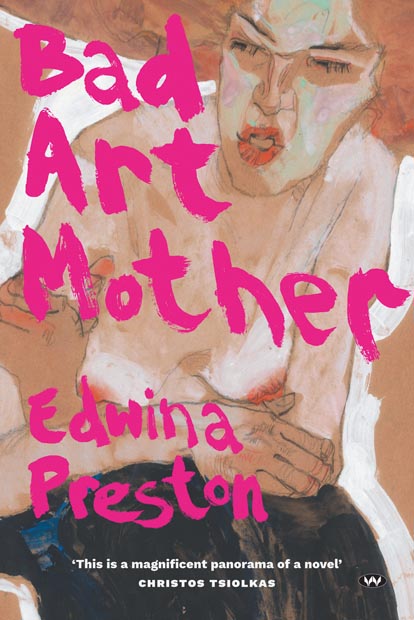
My reading group’s June book is Edwina Preston’s Bad art mother, which was published by Wakefield Press last year and which I’ll be reviewing soon. (If you don’t know it and are interested, you can check out Lisa’s review.) It was shortlisted this year for the Christina Stead Prize for Fiction (in the New South Wales Premier’s Literary Awards) and for the Stella Prize. Wakefield Press’s website describes it as being “set in the Melbourne milieu of Georges and Mirka Mora, Joy Hester, and John and Sunday Reed”. The same milieu, in fact, that inspired Emily Bitto’s The strays (my review) although that’s a very different book. However, I digress … because my little question for you today is not central to the book, just something that caught my attention. It comes from Owen talking to his aunt:

Why did you throw out everything when you sold the house in Coburg, Ornella? Was it because you knew all those things didn’t matter in the end, that without memories attached they were just junk shop rubbish? You put Nonna’s things out on the grass for the neighbours to pick through. You didn’t even keep a teapot, or a pair of earrings. You filled your place with glossy new things … But what are you now without all those things?

There’s a bit more, but the question Owen asks is one I’ve been confronting in my current big downsizing project – a project that is almost done, thank goodness. Still, it has been difficult, a wrench, to part with things that are part of the story of my life, things I haven’t used in decades but that, every time I see them, remind me of some person or event. They gave me joy, so Marie Kondo’s criterion just didn’t work!

However, to use a cliche, you can’t take them with you, and we don’t want to leave more of a headache to our kids than we have to, so decisions had to be made. And, they have been. I do expect some gnashing of teeth in the future, as well as some “I kept that!”, but overall I think we’ve done ok. My choices were not based on value, but on meaning, so out went some fine art porcelain and in stayed Mum’s funny little no-brand donkey that she kept with her through her many moves, for as long as I can remember. I never did ask her why – why didn’t I? – but I couldn’t let it go. And, of course, I kept her copy of Pride and prejudice.

I could go on, sharing all my little decisions, but will leave it there, and return to the opening question: what do our things mean to us, and does letting them go change who we are?

What do you think?

Tuesday Atzinger, The River (#Review)

Back in January I reviewed two stories from Ellen van Neerven and Rafeif Ismail’s anthology Unlimited futures: Speculative, visionary Blak+Black fiction for Bill’s (The Australian Legend) Australian Women Writers Gen 5 Week. The stories I reviewed were the second and third in the anthology because they were the first two by Australians in it. The anthology’s first story, however, is African in origin. Titled “The River”, it is by Tuesday Atzinger, who is described in the book’s Biographical Notes as “a poet and emerging writer … [who] … explores and celebrates Afro-blackness, queerness, disability and feminism. They peddle in discomfort and their primary goal is to fling words together to make you squirm”. Atzinger currently lives in Melbourne “on the unceded lands of the Wurundjeri People of the Kulin Nations”.

“The River” is worth discussing for several reasons, but specifically because it’s the first piece in the anthology, so was, presumably, chosen for a reason. Some of that reason is explained in the anthology’s introduction, which, by the by, takes the form of a conversation between the two editors. One of the topics they discuss is the cover, which was designed by Larrakia woman, Jenna Lee. Ismail describes it as looking at “the interaction of separate cultures in the most respectful and wonderful way”, and also sees it as suggesting “infinity”. It does, doesn’t it. Van Neerven adds that it also reflects “the movements of water” in the anthology. She says:

We were going to begin the anthology with water to allow those kinds of threads of connection and continuation to flow into each other. For me the cover really kind of feels like rivers connecting and the light that is created through water, but it’s also water that we protect and have a relationship and a responsibility to.

Water! Such a complex element in our lives. Most of my friends adore the sea, but for me it’s the rivers that draw me most. They can be young, direct, and fast, or slow, meandering, and somehow wise, or anything inbetween. They can be critical to creation stories, and this role is part of Atzinger’s opening story, making it particularly appropriate as the opening piece.

The first thing to say about “The River” is its form – it is a short story in verse. The River is not named, but we know it’s in Africa, partly because an African word, Ubuntu, is repeated throughout the story: “Ubuntu/Together”. According to the New World EncyclopediaUbuntu pronounced [ùbúntú], is a traditional African concept. The word ubuntu comes from the Zulu and Xhola languages, and can be roughly translated as “humanity towards others”.’ It has been adopted more widely around the world for its humanistic concepts – and is also, would you believe, “used by the Linux computer operating system” to convey the sense of bringing “the spirit of Ubuntu to the software world”. Valid appropriation? I didn’t find much concern about this use on the ‘net.

Anyhow, to the story itself. We are immediately introduced to the River, and a village that lies near it. The word “prosperous” is used, but we are warned that things aren’t so simple:

Shallow water so clear that the stones beneath it glistened brightly
Depths dark and mysterious, hiding all that lay below
The River, ever a source of sustenance
                                                                      And of danger

The story starts with creation: “Eons ago/The River had rippled in welcome as the people first arrived”. It provided refuge and sustenance; it saw “passion, grief, joy and courage”; it saw, in other words, the life of the community, of “the people who slept under the sun”. It had also seen “a lineage of Chiefs/Some wise, some brave, some imperious” until the present one “Mehluli – the Warrior Chief”. He is described in words like “proud”, “arrogant”, “dominating” and “greedy”. He desires a woman, Thandeka, but she already has a “perfect love” with Amandla, a hunter. Amandla fears the River, fears the aformentioned danger, and while she’s away hunting her fears are justified when the Warrior Chief makes his move on Thandeka.

The problem is that you “cannot refuse the chief”. Violence ensues. The River acts in an unusual way, and a dramatic story follows as Thandeka fights back, as does the River, to right the balance that has been disturbed. It is, ultimately, a story with a moral, a story to teach proper behaviour, right values.

The story is told in a beautiful, poetic style. The changing rhythms and strong use of repetition convey elemental and opposing tones – prosperity and togetherness versus power and greed. “The River” is a thoroughly enjoyable read. It is founded in the sorts of lesson-giving stories that are part of most belief systems, but its queer-love narrative brings the story and its traditional message into modern thinking and times. A worthy first story for the anthology, I think.

Tuesday Atzinger
“The river”
in Ellen van Neerven and Rafeif Ismail (ed.), Unlimited futures: Speculative, visionary Blak+Black fiction
North Fremantle: Fremantle Press in association with Djed Press, 2022
pp. 23-41
ISBN: 9781760991463 (eBook)

Monday musings on Australian literature: Trove treasures (9), Pro-novel reading, early 20th century

Last week, in my Trove Treasures series, I shared some ideas published in the 19th century arguing for reading novels. Now, I am sharing some from the first decades of the 20th century. The articles range from 1903 to 1928, with many, again, coming from London.

Diversion and instruction

Two papers – Brisbane’s The Telegraph (18 December) and Perth’s The Spectator (31 December) – reported in 1903 on the annual address given by Professor Dicey to the Working Men’s College in London. Dicey argued that the main benefit of novels was “to take a man out of himself — to afford some relief from the petty and tiresome thoughts of every-day life by substituting a world of larger and more varied interest”. (We must forgive him and the others below their gender specificity – I suppose.)

Interestingly, The Spectator says, and this seems to be its own reflection, that it’s not always “the highest class that serves this purpose best” and goes on to share a variety of novels from penny novelettes, like the Deadwood Dick novels, to Scott, Thackeray and Balzac. This idea of novels as valid – indeed useful – recreation is refreshing. The Spectator goes so far as to say that

That degree of mental absorption and excitement to be found in works of fiction, fine and trashy alike, and more often in the trashy ones, has become part and parcel of the home life.

But, this sort of reading must not be “indulged too far”. The Telegraph reports a month or so later (8 February) that Prof Dicey does comment on the issue of quality, making this recommendation:

take good care that you read novels of a good kind — each good of its kind. If you like a detective story take care you read a good detective story, and think about what you have read.

Dicey also believed – and here we are in more familiar territory – that novel reading provides “an introduction to life and thought”. This idea though, says The Spectator, is one few – including itself – “will be prepared to admit”. It fears that novels might teach readers what to expect in life but not how to meet it.

Moving to 1905, we have another Englishman’s point of view, this time Sir Richard Henn Collins*, Master of Rolls in England. The Armidale Express and New England General Advertiser (7 February) reports Sir Richard’s argument that much useful knowledge can be acquired through reading fiction. Indeed – are you listening Bill – he argued for the value of the historical novel, saying, “that he himself had won a scholarship mainly through having imbibed French history by reading Dumas’ famous Three Musketeers and other French novels of a similar class”. Even I think that might be going a bit too far – as does our newspaper. It argues that while this might be an appealing way of learning, the fact is that the public service and many professions require the passing of examinations. This means that the “the greater part of the schoolboy’s career must necessarily be occupied in the process of stuffing with dates, syntax rules, and other learned matter. The novel as an educator cannot, therefore, be recommended as an essential part of the ordinary public school curriculum”.

A year later, on 16 March 1906, The Hebrew Standard of Australasia, picks up the argument favouring the reading of novels. It suggests that “many people, especiallv men between twenty-five and forty-five, men in responsible positions, serious people engrossed by the details of a large business, consider novels simply as a kind of dross”, but this, it argues, is a “mistake”:

To read a good novel and read it with undivided attention is a means of instruction and education, which very few men below fifty can afford to entirely neglect. We have met not one, but many business men, excellent, successful and commanding our admiration in a very high degree, in whose manner of conducting business we have noticed defects, not to say faults, which most probably, would never have occurred if they had been in the habit of reading, now and then, a good novel, and had been able to extract from that reading the good which it can yield [my emph].

It then spends some time elaborating exactly what businessmen can learn from novels. It’s a thoughtful article, well worth reading.

Varying the diet

William Makepeace Thackeray, Vanity Fair

Support for novel reading continued in the 1920s, but I found some qualifications. For example, Leeton’s The Murrumbidgee Irrigator (20 March 1923), shares an argument put forward by Thackeray, half a century previously, “that all people with healthy literary tastes love novels” but “that overindulgence in them in youth spoils the taste for them in after-life, even as a schoolboy outgrows his love for pudding and jelly”. He goes on to discuss the truth of this in his era, particularly regarding those decadent modern novels which cannot hold his attention. Yet, speaking for himself and his fellow-sufferers, he admits that, regardless of having over-indulged in their youth, they can still “find a corrective in those romances which used to entrance us — ah! how many years ago”.

And in 1928, Brisbane’s Daily Standard (17 March) shared an argument from London’s Evening Standard that “the habitual novel-reader should sometimes vary his mental diet”. Indeed, the Evening Standard suggests that this is important given that the other works of literature, which preceded the novel and continue alongside it, “will no doubt be still vigorous when the novel has had its day”. Little did it know!

It then goes on to say something rather interesting:

There is no good novel which is not veiled autobiography, either from the emotional or from the intellectual standpoint; but a writer can under the protection of the veil, be franker than he could possibly be in a ‘Confession’ or ‘Apologia pro vita sus.’ There is perpetual complaint of the indecent novel; but in a sense all novels are indecent —that is, they reveal thoughts and feelings that the writer would never dream of exposing to a company of even close friends.

It says more, arguing that there is value in wide reading – hard and low-brow, fiction and nonfiction – but I’ll leave you with its closing remarks because they tickled me:

it is neither polite nor grateful to many excellent modern writers in non-fiction genres to talk as if ‘books’ were only another name for novels.

So there!

* Collins was the judge in the Wilde vs Queensberry libel case.

Leslie Marmon Silko, The man to send rain clouds (#Review)

After a two-month hiatus, I return to my reading from Great short stories by contemporary Native American writers with a three-decade jump from D’Arcy McNickle’s 1936-published “Train time” to Leslie Marmon Silko’s “The man to send rain clouds”, which was published in 1968 .

Leslie Marmon Silko

Again, I’m using anthology editor Bob Blaisdell’s brief intro and Wikipedia’s article to introduce the author. According to Wikipedia, Leslie Marmon Silko (b. 1948) is one of the key figures in “the First Wave of what literary critic Kenneth Lincoln has called the Native American Renaissance“. I don’t know much about the trajectory of Native American writing, within the larger American culture, so this gives me a bit of a guide to how it has gone.

Silko was born in Albuquerque, of Laguna Pueblo ancestry, and grew up on the Laguna Pueblo reservation – which I visited with my family on a memorable road trip through New Mexico in December 1991. (For those of you who haven’t been to New Mexico, I recommend it as a special place to visit – physically, historically and culturally.) Silko, says Wikipedia, was schooled at local Indian schools, before attending the University of New Mexico from which she graduated with a BA in English Literature, in 1969. She then briefly attended law school, before deciding to pursue a literary career full-time, which has included teaching at several universities.

This post’s short story, “The man to send rain clouds”, was published while she was an undergraduate. It earned her a National Endowment for the Humanities Discovery Grant, and continues to be a popular anthology choice, apparently. She has, since then, written several novels, a “poetic memoir”, and many essays. In one of those essays, Wikipedia says, she criticised Louise Erdrich for abandoning “writing about the Native American struggle for sovereignty in exchange for writing “self-referential”, postmodern fiction”. Interesting. I’ve only read two books by Erdrich, and one so long ago I can’t recollect the details, but The bingo palace (1995) does confront the challenge of marrying tradition with contemporary life.

Blaisdell’s introduction includes a statement by Silko on why she writes, which is

to find out what I mean. I know some of the things I mean. I couldn’t tell you the best things I know. And I can’t know the best things I know until I write.

I understand what she means here. I don’t find talking easy. I find it easier through writing to work out what I know and mean.

“The man to send rain clouds”

Wikipedia summarises Silko’s themes as being grounded in a wish “to preserve cultural traditions and understand the impact of the past on contemporary life”. Her career, it says, “has been characterised by making people aware of ingrained racism and white cultural imperialism”. Many of her characters “attempt what some perceive a simple yet uneasy return to balance Native American traditions survivalism with the violence of modern America”. This is all part of a continuing theme in the Southwest regarding “the clash of civilisations” and “the difficult search for balance that the region’s inhabitants encounter”. Much of this is already evident in this early short story of hers.

“The man to send rain clouds” concerns the interaction between Pueblo Indians and Christianity. It reminded me in a small way of Marie Munkara’s Every little thing (my review) except that Munkara’s is a full-length and often laugh-out-loud work versus Silko’s more wry short story. However, both show the power-play between the original people of a land and the churches that came in to save them, and also how the oppressed First Nations people can sometimes, at least, work it to their advantage.

Silko’s story concerns the death of an old man, Teofilo. It opens with his body being found under a “big cottonwood tree” by brothers-in-law Ken and Leon. It describes their going through some traditional death rites, including preparing the old man’s body with face-paint, before bringing him back to the pueblo. It’s here that the title is explained: they say to the old man, after scattering cornmeal, “Send us rain clouds, Grandfather”, which specifically introduces the importance of rain to them and suggests its role in their rites. On their way back into the pueblo, they meet the priest who asks whether they had found Teofilo, but they give a noncommittal reply, telling him that “everything is OK now”. When the priest replies that they “shouldn’t allow him to stay at the sheep camp alone”, they continue with their obfuscation:

“No, he won’t do that any more now”.

I loved Silko’s subtle use of humour in the story. In this brief conversation, Silko sets up exactly how the locals deal with the priest, politely but also determined as much as possible to keep him out of their business. The rest of the story concerns their funeral business, including another delightful encounter with the priest when one of the pueblo’s members feels that some “holy water” wouldn’t go astray.

It’s a quiet story, but a strong one. The tone is measured, the pace unhurried, mirroring the values and attitudes of the pueblo people who are doing their best to preserve their customs while maintaining peace with those who have the power. The same tone is used for the priest’s non-confrontational response, and his own decisionmaking, reflecting, presumably, his need to work with rather than against the people. It’s a story ripe for discussion.

The imagery is beautiful, evoking the snow-capped mountains, the arroyos, mesas, and sandy flats that characterise that part of New Mexico. There is a strong use of colour, which is mostly muted, supporting the tone, with a touch of red to herald something bigger. And of course there’s the rain motif that runs through the story, reflecting its importance to the pueblo’s survival.

A moving story, that I commend to you. It’s a quick read.

Leslie Marmon Silko
“The man to send rain clouds” (orig. pub. 1968 under the name Leslie Chapman)
in Bob Blaisdell (ed.), Great short stories by contemporary Native American writers
Garden City: Dover Publications, 2014
pp. 45-49
ISBN: 9780486490953

Available online via the University of New Mexico.

Monday musings on Australian literature: Trove treasures (8), Pro-novel reading, 19th century

Édouard Manet, The Reading (1865-1873), Manet’s son reading in the background. Public domain, via Wikimedia Commons.

Continuing my Trove Treasures series, I am turning this week to some of the discussions I found about the value of novel-reading. Three months ago, I shared some of the arguments made against novel-reading, but in fact, in the papers I found, there seemed to be more arguments pro such reading. So much so that I’m planning two posts – one on the mid-to-late 19th century, and the other on the beginning of the 20th century.

Today’s 19th century articles range from 1867 to 1899, and they traverse the topic from some interesting angles.

Prose vs Poetry

The earliest article was published in the Geelong Advertiser, on 7 May 1867, but appears to be from London’s Saturday Review. So, not Australian-written but published here. Several of the articles I’ll discuss comment on what reading novels can teach us, but this one did surprise me. It commences:

As every novel turns upon love and matrimony, the first effect of universal novel reading must necessarily be to familiarise the young imagination with the idea of both. 

What’s this assumption that “every” novel is about love and matrimony? Was this so at the time? Well, not “every”, because then our writer offers exceptions. Regardless, the writer recognises that novels aren’t the means by which people become aware of the “matrimonial adventures to come”. Fairy tales, for example, contribute to the construction of “masculine and feminine ideals”. What is “left” for novels to do is “to train and develop an instinct which is already in existence in the germ” but, says our writer, this knowledge must “ripen gently”. Indeed,

premature cultivation tends to every species of social mischief. Nobody ever yet knew a very sentimental boy, unless indeed he came under the exceptional category of a genius, arrive at much good; and though to pass the same general censure upon sentimental girls would be hard upon the sex; it may be believed that women who go through life most happily whose capacity for sentiment has flowered late.

The language is convoluted but I think you get the gist. Basically, the article claims that sentimentality stimulates imagination at the expense of observation:

Sentimental boys and girls seldom notice nature, keenly, and with the eye of a student or an inquirer. They get into a lazy habit of liking sunsets, and deriving a number of prematurely solemn impressions from them; but they have no healthy interest in butterflies, birds nests, and fossils.

The problem, according to the article, is that this sentimentality – that comes, remember, from understanding “matrimonial adventures” too quickly – results in high sensitivity to natural phenomena but limited understanding of how it all works. For these reasons, the writer does not greatly like poets – particularly Byron. Wordsworth is acceptable, because the writer believes his “sentimentality” is that “of a middle-aged genius, not of an overgrown and morbid boy”.

Was this a common view of romantic poetry? The article then describes the value of novel-reading:

a fairly good novel presents young minds with a better and more correct notion of the relations between men and women than they would be likely to form if left to their unassisted efforts. It does away with a good deal of unnecessary mystery in which young people are inclined to clothe the idea of love. Marriage is not what it appears to be in most romances, but it is more like the literary pictures than it is like the vague and hazy conception which emanates from the youthful brain. Fiction in prose is truer to nature than fiction in verse, and novelists may be trusted more than poets. 

Take that, poets! The reason, says our writer, is that “prose fiction is generally written by less morbid people”. The article then discusses the sorts of people who write novels. Its point is that novelists (aka “literary men”) mix in the world while poets live in the closet or within garden walls. Surely a generalisation! Anyhow, then he gives a recommendation – Mr Trollope. Our writer is concerned about

flirtation with married women becoming an unnecessarily frequent ingredient in his literary conversaziones; but life is life, and it is probably difficult to produce monthly humour without a little impropriety. On the whole, the bent of his pen is to sketch love and matrimony as healthy domestic pleasures, and not to depict them in the artificial colours in which diseased imaginations dress them.

Basically, Trollope is a good example of the “better class of novel writers” and is much better for the English youth than French romance! I’ll leave you with that thought and move to the 1890s …

A practical education

The two articles from the 1890s were published in Queensland’s Darling Downs Gazette (17 December 1890) and Sydney’s Sunday Times (26 February 1899). The first article quotes two British men on the value of novel reading. The first was Sir Edward Clarke QC MP, who, opening a “free library” in London, said that reading novels “was not a mischievous but a good thing”. “Good novels”, he believed, contain “elements of history” that are more valuable and easier for readers to digest than can be found in other books.

The other was the Scottish poet, biographer and translator, Sir Theodore Martin, who was presiding at the annual meeting of another free library, this one in Wales. That year, 2,492 novels had been read versus 811 of everything else combined. This disproportion was similar in other libraries, and Sir Theodore had some qualms. He didn’t criticise “reasonable indulgence in the delights of good novels and romances” because they widen our sympathies, and, he hoped, they inculcated a taste for reading which might lead readers to more demanding studies in areas like natural history, biography, poetry, and science. (He, clearly, saw poetry as having a higher value than prose fiction!) For Sir Theodore, reading fiction does not leave the lasting impression or give the satisfaction that other reading does.

The 1899 article was titled “The reading of novels and the morals of the public” and came from Women’s World, edited by Vivienne. Vivienne’s interest is in whether reading novels is “a judicious measure of education” and whether it should be encouraged. Her response? She failed to see that such reading caused “any great harm or moral wrong”. Indeed, she argued that novel reading provided “a kind of practical education”.

Novels illustrate the mechanism of the world at large, and show the various points of the machinery of life. They tell of every-day episodes; of the romance of days gone by; and, in fact, deal with life in all its forms, from the lowest to the highest grades of society, and from the earliest ages to present times. 

Sounds right to me, but the passing comment at the end did stop me: “of course, children should not be allowed to read novels, for obvious reasons”. 

So, there you have it … there were those who viewed novel reading positively, even where they had some reservations. This is a tiny sample, but you can see some progression from the idea mid-century that novels were primarily about marriage to the end of the century when they were seen to have broader relevance to understanding the world. I’ll be interested to see if things change in the next few decades …

Bonnie Garmus, Lessons in chemistry (#BookReview)

Bonnie Garmus’ debut novel Lessons in chemistry made a splash on best-of-2022 booklists last year, resulting in my reading group scheduling it this year. It is an enjoyable read, but the intriguing thing is that more than one reader I know couldn’t remember what it was about a few months after reading it. Each remembered enjoying it but could not recollect the details. Why is this? Why, in fact, are there some books that we read and enjoy but forget quickly, while others linger long after we’ve turned the last page? I will leave this for you to ponder. Meanwhile, I’ll get onto the book.

Most of you will know the basic story, but I’m going to document it anyhow – because, you know, I might forget it down the track. It is historical fiction set in the 1960s, and tells the story of female scientist, Elizabeth Zott, whose only ambition is to be a research chemist but whose career is constantly derailed by powerful men’s determination to keep women out of the laboratory. She ends up in the most unlikely job, the host of an afternoon cooking show which, despite her best efforts not to fit the female-TV-star mould, becomes a hit.

Everyone in my reading group thoroughly enjoyed the read, despite some reservations, to which I’ll return later. Our overall assessment was that, with its stereotyped, larger-than-life characters who don’t really change, it read like a fairytale, fantasy or, revenge comedy. But, we also recognised that it dealt with some relevant and serious topics, particularly regarding the inequitable treatment of women – in science, and in life. So, here is the question: given my earlier comment regarding readers forgetting its details not long after reading it, how effective is its light, comedic approach to making the message stick? Humour is a tricky thing. We love reading it, but does it move us to take its target seriously?

Like all writing, some humour is more effective than others. Satire, for example, with its characteristic clever, ironic wit engages my brain and, in doing so, can help the message go down. Lessons in chemistry has some of these elements, but it felt more situational and laugh-out-loud than satiric. This is what makes it so enjoyable, but such humour can sometimes bury the message. Time will tell for me!

And now, let’s look at its humour. Some of my favourite scenes came from the cooking show which Elizabeth Zott uses to teach her housewife audience chemistry, but more than that, to empower them. In one show, she describes different chemical bonds, one being the hydrogen bond:

“I call this the ‘love at first sight’ bond because both parties are drawn to each other based solely on visual information: you like his smile, he likes your hair. But then you talk and discover he’s a closet Nazi and thinks women complain too much. Poof. Just like that the delicate bond is broken. That’s the hydrogen bond for you ladies — a chemical reminder that if things are too good to be true, they probably are.”

“See?” a woman in Santa Monica demanded as she turned to her sullen seventeen-year-old daughter, the girl’s eyeliner so thick, it looked as if planes could land there. “What did I tell you? Your bond with that boy is hydrogen only. When are you going to wake up and smell the ions?”

Her poor producer Walter Pine, whose boss is demanding sexy clothes and cocktails with the cooking, tries in vain to rein her in.

Rowing is another topic that recurs through the novel. Obstetrician Dr Mason wants to get single-mother Elizabeth back in the boat when her baby, Mad, is just one year old. He discovers that she has a keen, helpful neighbour, and suggests that she ask this neighbour to help out:

“At four thirty in the morning?”
“This is what is so unsung about rowing,” Dr. Mason said, turning to leave. “It happens at a time when no one’s really that busy.”

That made me splutter my coffee – as did so many other observations throughout the book. It is a chuckle-inducing read, replete with funny one-liners and surprising similes alongside its array of set pieces.

But, as I said, my group did have some reservations, though they varied. One, for example, didn’t like the anthropomorphism involving the dog, Six-Thirty, while others of us appreciated his astute commentary on his human companions. Another felt it read a bit like a catalogue of issues – suicide, rape, domestic abuse, single-parenthood, and plagiarism, among others. And a couple of us found it somewhat anachronistic. I usually give historical fiction authors a lot of leeway in this regard, but the novel felt imbued with a strong 21st century sensibility. For example, Elizabeth Zott’s young daughter responds to minister Wakeley’s question about her age with “I’m not allowed to give out private information.” Most of us remember the 1960s, but we don’t remember this sort of idea being promulgated. It was just “don’t talk to strangers”.

“Chemistry is change” (Elizabeth)

Garmus was 65 when the book was published, making her a late-bloomer in terms of a novelistic career. However, it also means that she has a lot of life experience to share. She – through Elizabeth – believes that science has much to offer human beings. Elizabeth is infuriated that “too many brilliant minds are kept from scientific research thanks to ignorant biases like gender and race”. She believes that science can be empowering – “when women understand chemistry, they understand how things work”. Indeed, for her science encompasses

the real rules that govern the physical world. When women understand these basic concepts, they can begin to see the false limits that have been created for them. 

Beyond this, however, is the over-riding philosophy that life, like chemistry, is all about change. Through the book Elizabeth has to cope with a range of challenges, some of them serious, and some, in fact, tragic. It is her faith in science – plus the support of some decent people, it has to be said – that see her through.

Lessons in chemistry is not a perfect book, but it is great fun to read and it has a big heart. I can forgive it its little failings for these.

Brona (Brona’s books) and kimbofo (Reading Matters) both enjoyed this book too.

Bonnie Garmus
Lessons in chemistry
Transworld, 2022
391pp.
ISBN: 9781473594531

Monday musings on Australian literature: Trove treasures (7), What police read

Number 7 in my Trove Treasures series was inspired by a little piece that appeared in Sydney’s Daily Telegraph on 6 December 1946. It was titled, “Men join police force after reading novels”. Naturally, I was intrigued. What novels, for example?

The story’s subject was one Constable J. Simons who had just resigned the police force, after having served for 17 years. He was speaking at a Police Association meeting and he said, to quote the Telegraph, that “most men joined the police force for adventure after reading detective stories”. (The rest of the piece was about why he is was resigning, which related to pay and and conditions, particularly regarding slow promotion due to the system operating at the time.)

It made sense that detective reading might inspire young men to look to the police as a career, but I wanted to find out more. Unfortunately, this proved quite difficult because it was hard to find specific search terms to get what I was looking for. As it turned out, in the time I gave to it, I didn’t find much, but what I did find was illuminating.

What I found were articles about what policemen (as they were mostly then) read – rather than about what caused them to join the police force. One article came from New York in 1914, and another two came from Queensland in the 1930s. All indicated that policemen did not read detective stories. Neither talked about what might have inspired them into the force, but both stated very clearly what they read once in the force.

New York New York

The 1914 article appeared in Sydney’s The Sun on 4 August. It commences with:

Whatever the world at large may think of detective stories, they do not win the esteem of those whose business it is to follow up crime. The police care least of all for this line of literature — a fact discovered by reports of books most favored among those consigned by the New York Public Library for use at the police stations. 

This story, then, is about the NYPL’s providing books to police stations for police reading. The article implied that what the police read might be affected by the sorts of books selected! They’d be, the article said, “standard and classic books” chosen by the library authorities “as to what they ought to read, that being an inclination of librarians everywhere”. (Oh dear, but I think this sort of high-minded prescription was more the case then, than in modern libraries!) Nonetheless, the article does explicitly discuss detective stories:

According to report, these particular readers find little of interest and nothing of profit in the ‘detective stories’ which have such a wide sale with the ununiformed public. The policemen say that ‘real’ detective work is not done after the fashion of the sagacious heroes of Conan Doyle and his predecessors, and therefore they scorn romantic crime-hunting. This condemnation involves the assumption that the methods of ‘practical’ men cannot be bettered — an assumption wildly fallacious, but entirely natural. The police antagonism to detective novels may be due in some part to the fact that in almost every such book it is the scientific amateur who works all the miracles, while the ‘headquarters man’ is usually a comic character who laboriously follows a false clue while the other fellow gets the results.

The article goes on to defend the writers of these books, suggesting that errors in detective work “may be intentionally made by an author for the sake of attaining some higher end of emphasis or excitement”. Indeed, says the article, “all the great advances in the task of crime-detection have been made, not by policemen, but by scientists”. Lest, however, we feel that the police were being unfairly targeted, the article continues that this is true of many professions and trades, so ‘that “the force” need not be humiliated by it”. Still, the article ends with a little sting in the tail for the poor copper, which I’ll leave for you to read.

Caring for police in Queensland

We then skip a couple of decades to Queensland and the creation of a library in that state’s Police Welfare Club. I found two articles on this initiative. One appeared in Brisbane’s The Courier Mail (24 November 1937), titled “Policemen’s reading: Logic, forensic ballistics: Why thrillers are unpopular”, and the other, nearly two years later, in that city’s The Telegraph (19 June 1939), titled “Our policemen study the classics”.

The 1937 article commences with

Few of Queensland’s detectives read detective stories. They find the novelists’ supermen unreal to the point of irritation.

The article quotes the C.I.B. man who showed the writer around the Club’s “fine new library” as saying that “We don’t detect that way”. This new library, the article claims, indicates “the higher education of the modern policeman”.

Both articles describe the broad content of the library, but it’s the second one that provides more detail about its genesis, noting something that harked back to that first article I found. It says that “a policeman’s pay does not ordinarily permit him to possess as his very own a library of any consequence”. Our detective novel reading Constable from 1946 would probably agree! Anyhow, the article’s writer, a “special correspondent”, explains that Queensland’s Commissioner of Police (Mr. C. J. Carroll), who had been appointed in 1934, had immediately set about creating a club “to give his men better facilities for recreation, educational advancement, and departmental advancement”. In 1936, after fundraising had got the club going, he turned to creating a communal library for the police and their families, in Brisbane and state-wide via mail.

Both articles write about the breadth of the collection, and engage in discussion about was being read, which ranged widely from poetry and the classics to political satire and books reconstructing real crimes and trials.

Towards the end of the second article, the writer asks the wife of a detective:

“Does he go in for detective stories?” 
“No, he reads to relax” she replied. Adventure stories—the lighter the better—were first favourite with him for recreational reading. 

The earlier article says that “Wild West books are the most popular in the relaxation class of reading”, so maybe this is what her husband was reading!

Much of the second article is anecdotal so it’s impossible to say just what “real” impact the library had on the state’s policing, but I’d like to think that our “special correspondent”, who concludes by quoting Arnold Bennet on the value of reading, is right when s/he says that

… with the aid of their library the men in the police force are developing greater understanding of mankind; consequently they must surely become better policemen.

Six degrees of separation, FROM Friendaholic TO …

My posting continues to be irregular and erratic, but things are looking up, and we are coming to the end of the BIG DECLUTTER. I really hope to get back to reading more books, and writing more posts very soon – and, to reading all the other blog posts that I’ve been so neglecting. Meanwhile, let’s move on from, and get onto Six Degrees. If you don’t know how it works, please check host Kate’s blog – booksaremyfavouriteandbest.

The first rule is that Kate sets our starting book. In June, it’s yes another book I haven’t read, Elizabeth Day’s Friendaholic: Confessions of a friendship addict. It sounds like a book I would enjoy because friends have always been a very important part of my life, but do I need to read a 400+ page book about friendship? Probably not right now, but I’d be interested to read some reviews by bloggers who do read it.

It’s a while since I’ve done Six Degrees title poem but Elizabeth Day’s Friendaholic seemed to be asking for it – and, I could do it in the time I had available. Hope you enjoy. (Links on the titles are to my reviews).

Friendaholic
Mrs Spring Fragrance,
Warming the core of things
In certain circles,
But now, Summer’s gone,
And we’re Paris dreaming
For A stolen season.

With thanks to the authors of my chosen works – Edith Maude Eaton, Elizabeth Harrower, Norma Krouk, Charles Hall, Anita Heiss and Rodney Hall. All are Australian, I’ve just realised, except for Edith Maude Eaton. She was an English-born Chinese American writer who wrote under various names including Sui Sin Far. The work of hers I’ve linked here is a Library of America published short story, hence no book cover.

Now, the usual: Have you read Friendaholic? And, regardless, what would you link to?