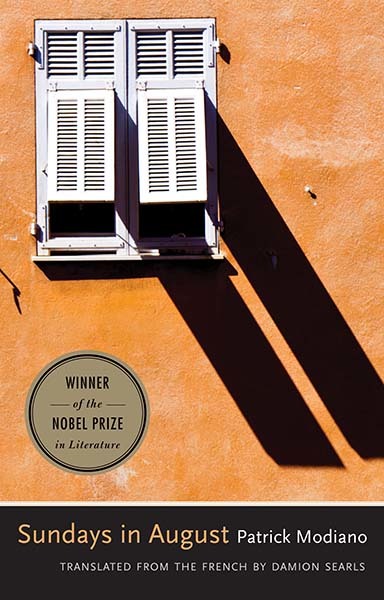
Patrick Modiano, Sundays in August (#BookReview)

Disappointingly, I ended up missing my bookgroup’s discussion of the book I had encouraged us to read, Sundays in August by 2014 Nobel prize-winner Patrick Modiano. I have no-one else to blame but myself, since I did the schedule and should have remembered that I was going to be in Hobart for my brother’s exhibition. C’est la vie.

I recommended this book for a couple of reasons, one being high praise from Kim (Reading Matters) and the other being to include translated fiction in our reading diet. Also, the book intrigued me. Kim described it as a “jewel heist”, albeit qualified by “with a difference”. That seemed unusual subject matter for a Nobel prize-winner. Having now read it, however, I see that he is a skilful writer. I loved reading it. But the subject matter?

According to Wikipedia, Modiano (b. 1945) is “a noted writer of autofiction, the blend of autobiography and historical fiction”. He has published over 40 books, and in them, Wikipedia continues, has “used his fascination with the human experience of World War II in France to examine individual and collective identities, responsibilities, loyalties, memory, and loss. Because of his obsession with the past, he was sometimes compared to Marcel Proust”. I’m not sure about the “was” here, as he is still alive. Anyhow, it is this obsession with the past, with its associated exploration of memory and loss, that made Sundays in August (Dimanches d’août) so fascinating. I am drawn to stories about the past that are told in well-controlled melancholy tones, stories that involve a later reflection on what had happened and the implications for the protagonist’s present. (By the way, this does not appear to be one of Modiano’s autofiction works.)

The novella is set in Nice, and starts with a first person narrator (identified partway through the book as Jean) spotting someone he’d known seven years ago. The man is Villecourt, and he is selling leather goods in the market. Neither man, in fact, has done well in the years since they’d met. Both are alone, and not living the apparently secure lives they had been. We quickly realise that this is not a case of old acquaintances happily re-uniting. Instead, there is palpable tension. After they meet for a drink, Jean makes clear he wants nothing more to do with Villecourt, while Villecourt tries to keep the contact going. He does little to ingratiate himself, however, reminding Jean that he, Villecourt, was the only man someone called Sylvia had loved. He also says that he and Sylvia had not been married. Why had she lied to him about that, Jean thinks to himself?

In this way, in the first few pages, we are drawn into a mystery involving these three. Soon after, the aforementioned jewel – a diamond, with a “long and bloody history”, called the Southern Cross – is introduced, and we learn that Jean and Sylvia had been on a mission to sell it. Then, a little further down the track we meet the mysterious Neals, who seem to live in a grand home named Château Azur, and who all too soon offer to buy the diamond.

It sounds like a simple story involving a love triangle and a heist, but in fact, it is a complex crime story in which it behoves readers to attend carefully for hints and clues about what’s really going on. These are conveyed through the narrative, as Jean tries to “rejoin the invisible threads”, and through gorgeously written imagery that creates an oppressive, foreboding atmosphere, occasionally lightened by the Riviera’s bright sun, and blue skies and water.

“blurred … dissolving”

As we read, the ground constantly shifts beneath our feet. People appear and disappear, and sometimes shapeshift. Virgil Neal, for example, sounds American, then he doesn’t, then he does again, before finally turning out to be someone else. Cars and buildings, too, aren’t always what they seem. Nonetheless, through cleverly managed flashbacks and foreshadowings, we gradually start to see – or, think we see – the set-up. It is all complicated, however, by that tricky beast, memory. Jean writes:

I don’t know anymore whether we met the Neals before or after Villecourt arrived in Nice. I have searched my memory, looking for points of reference, but am unable to sort out the two events. Anyway, there’s no such thing as “events.” Ever. It’s a false term, suggesting something definitive, spectacular, brutal. In fact it all happened gently, imperceptibly, like the slow weaving of a design into a carpet…

Soon after this reference to meeting the Neals, Jean says

The word “meet” doesn’t apply, any more than “event.” We didn’t meet the Neals. They slipped into our net.

Who slipped into whose net is the question. And how many nets were there? Jean will probably never know it all, but by the end he’d learnt that “our anxiety didn’t come from our contact with that cold stone with glints of blue – it came from life itself”.

Typical for a novella, the book is tightly written. Every word counts, and is worth noticing. I loved, for example, that Jean was a photographer who now can’t seem to remember the necessary details, and that Sylvia’s last name is (ironically?) Heureux. These little details aren’t casual, and make us readers think and question at every step, as we are alternately unsettled then proffered glimmers of light.

Sundays in August is an accessible, noir-ish tale about loss and the emptiness that accompanies it. It explores life’s shadows and uncertainties, shows how innocence can be so easily taken advantage of, and it doesn’t wrap everything up neatly, leaving us to ponder the possibilities. I won’t spoil the ending, but it is spot on, and explains, at last, the title, leaving us on a little up despite it all. I’ll be reading more Modiano, if I can.

POSTSCRIPT: I believe we know the main culprit in it all, but the question is, who else was in on it and who else was taken in. It would take more reads to work through that, but in the end I think we can’t ever know it all because we can only know what Jean saw and tells us.

Read for Novellas in November.

Patrick Modiano
Sundays in August
Translated from the French by Damion Searls
New Haven & London: Yale University Press, 2017 (Orig. French pub. 1986)
156pp.
ISBN: 9780300223330 (Read on Kindle)

Monday musings on Australian literature: Uninnocent Landscapes opened and launched

Those of you who know me on other social media will already have seen some of this, but I am keen to spread the message wherever I can about my brother’s wonderful, and significant, project. I introduced it back in September – and later in Nonfiction November I will review the book. That, however, will be after the exhibition has closed, and I want to encourage anyone who is in Tasmania to see it.

Uninnocent Landscapes – the exhibition and book – is the culmination of an idea Ian started thinking about a decade ago, but that he actively worked on over the last two to three years. It involved his following the journey taken by George Augustus Robinson on his 1831/32 Big River Mission, which was a poorly conceived attempt to conciliate between settler and Aboriginal Tasmanians. Needless to say it was a disaster, that effectively ended First People’s resistance in lutruwita/Tasmania (at the time anyhow!) For Ian, who has come to call lutruwita home, there is discomfort in reconciling his privileged life as a middle-class white man with the devastating impact of colonialism on Tasmania’s First Peoples. This is his truthtelling project, and he found a unique way to do it by combining the three big passions of his life (besides family) – history, photography and the bush.

I will write more about this when I review the book because what Ian has done feels original and exciting. Essentially, though, the book and the exhibition comprise photographs accompanied by excerpts from Robinson’s journal, resulting in an experience that is enlightening, engrossing, and sobering. The exhibition contains a selection of 11 from the book’s over 50 photographs.

The venue, Sidespace Gallery, is in a heritage building that dates back to the mid-1800s. This means two things – there are some restrictions on how items can be affixed, and the walls and floors are not what you would call square. However, Ian and his “crack instal team” did the research and, by the time I got there, were ready to go. The photographs – large-scale archival prints – were “hung” through a clever system of special Japanese tape (that doesn’t mark walls), double-sided tape, and magnets. I enjoyed being a little part of it all on the first day of installation, and loved meeting Ian’s delightful, hardworking team, Erica and Nikki, who made me feel so very welcome.

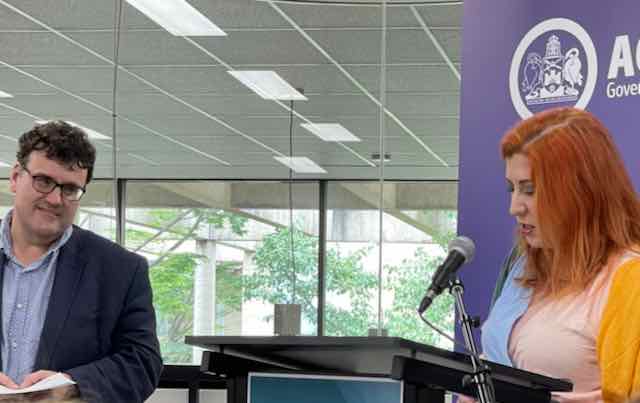
The opening (and book launch) went very well, with 50 or 60 in attendance. The MC was writer and researcher Steph Cahalan, and the exhibition was formally opened by Tony Brown, a First Nations man and museum colleague of my now-retired brother. Ian of course then spoke to his project, explaining, among other things, that he had discussed his project with many in the local Aboriginal community, and had made clear that he was not trying to tell their story, but his own. His good relationships with the community suggest that they accept this.

It was a warm-hearted event attended by historians, artists, museum professionals, bushies, activists, not to mention family and friends. I met and talked with so many interesting, thoughtful people who support Ian’s project and believe in what he is doing. I can’t name them all, but before it all started I had a great chat with the two women who designed and published the book. Our conversation ranged from technical issues like fonts to more personal ones like downsizing and philanthropy. It was truly a privilege to be there.

Ian calls Uninnocent Landscapes a photographic conversation. By this he means, I think – though I didn’t ask him while we were together – that he is using photography to reflect on (to interrogate, in fact) his relationship with the Tasmanian landscape he loves so much but which has been indelibly affected by over two centuries of colonialism. The idea of conversation, however, also encompasses something ongoing and inclusive, something inviting us all to join in as we engage with his photos and, for those of us living in colonised places, as we engage with “our” places. I will discuss this more, and talk about the title, in my review!

Uninnocent landscapes, the book, is published and distributed by OUTSIDE THE BOX / Earth Arts Rights under their imprint An Artist’s Own Book. It costs $65, and all proceeds are going to the Aboriginal Land Council of Tasmania’s Giving Land Back fund. You can order it here.

Ian Terry
Uninnocent Landscapes
Sidespace Galley, Salamanca Arts Centre
3 – 13 November, 2023
Admission is free


Nonfiction November 2023: Your year in nonfiction

My participation in Nonfiction November has been sporadic, until last year when I managed to complete the whole series. Maybe I will again this year, maybe I won’t. We’ll see.

Nonfiction November, as most of you know, is hosted by several bloggers. This year, Week 1 – Your Year in Nonfiction is hosted by Heather at Based On A True Story, with variations on the usual first week questions.

But, here’s the thing. As we come to the end of 2023, I’m having to come clean on what a strange reading year I’ve had. You will hear more in my end-of-year roundups, but by then you’ll have had inklings from posts like this! Last year, I wrote for this post that I’d read about 25% more nonfiction than I’d read in each of the preceding few years. Last year’s (that is for 2022) non-fiction reading had comprised 45% life-writing, 45% essays, with the rest being “other” non-fiction. This year, since the end of last November, I have read only TWO nonfiction works and both have been memoirs.

What were your favorites?

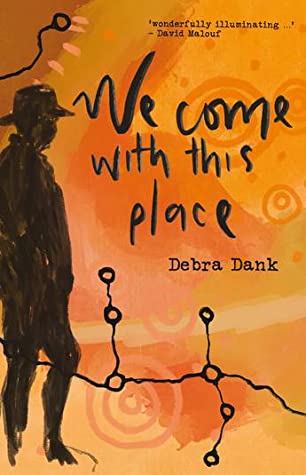
The two books are Debra Dank’s We come with this place (my review), and JD Vance’s Hillbilly elegy (my review). We are asked to name our favourites, which is always tricky for me, as I don’t tend to think in terms of “favourites”. Both these books provided truly fascinating insights, albeit in diametrically opposed directions. Dank is a First Nations Australian writer who conveys with impressive clarity just how the interconnectedness between her people, the ancestors and Country works, and how that translates into knowing Country, while Vance was a poor white hillbilly from Kentucky who is now a Republican politician and, last I heard, a Trumpian. You won’t be surprised I think to hear me say that while I found Vance enlightening in terms of contemporary US politics, Dank’s book is by far my favourite. She bowled me over with her generosity.

Have you had a favourite topic, and Is there a topic you want to read about more? 

I’m bundling there two questions together because clearly I didn’t review enough nonfiction this year to have a favourite topic, but what I’d like to read more are books on my favourite interests areas – literary biographies, nature writing, and works about social justice/social history.

I have several literary biographies, in particular, on my TBR, so maybe next year I’ll have a fuller report to make. In terms of the third area – social justice/social history – I must say that reading more nonfiction from First Nations writers, like Debra Danks’ book, is what interests me right now.

What are you hoping to get out of participating in Nonfiction November? 

As I wrote last year, I am not looking for more recommendations – not because I am not interested but because I have too much on my TBR already without adding to the pile (physical and virtual). However, I always like book talk, and the book talk I most like is that which focuses on areas that interest me (see above), and which talks about wider issues like why do we read nonfiction, what do we look for, and what makes a good nonfiction read?

What do you think?

Six degrees of separation, FROM Western Lane TO …

Time has been tight for me this last month so I’ve rushed this month’s Six Degrees a bit, but I hope it satisfies my regular readers’ different needs! So, let’s just get to it … the Six Degrees meme, I mean. If you don’t know how this meme works, please check host Kate’s blog – booksaremyfavouriteandbest.

The first rule is that Kate sets our starting book. In November we are back to books I haven’t read. Indeed, this is one I hadn’t even heard of, Chetna Maroo’s Western Lane. It’s a debut novel that was shortlisted for this year’s Booker Prize. GoodReads starts its description with “a taut, enthralling first novel about grief, sisterhood, and a young athlete’s struggle to transcend herself…”

Louise Mack, The world is round

I could go with books about sisters, or athletes, as I’ve read a few of those on my blog, but I’m going in a different straightforward direction instead, to another debut novel by a young writer, albeit this one a century or so ago, Louise Mack’s The world is round (my review). It’s not about a struggling athlete, but it is about a would-be writer.

Book cover

Now, I don’t want to go down the content path though that would be easy – and, you never know, we might meet a would-be or struggling writer or two a bit later in this chain. Here though I’m going for a word in the title, and so it’s to Michelle Scott Tucker’s biography, Elizabeth Macarthur: A life at the edge of the world (my review) that I’m linking next. Round worlds, edges of worlds, where to now? Not to worlds, in fact … but to …

Jane Fletcher Geniesse, Passionate nomad, book cover

Another strong woman. Elizabeth Macarthur had to be strong to keep the family farm going in colonial Australia while her husband spent months if not years travelling to and from England. Freya Stark was another strong Englishwoman who made her way in a man’s world, a century or more after Macarthur. The book I’m linking to is Jane Fletcher Geniesse’s biography, Passionate nomad: The life of Freya Stark (my review).

Geniesse’s biography was published in 1999, as was the wonderful Amy Witting’s gorgeous novel, Isobel on the way to the corner shop (my review). Here come the would-be writers! Isobel is a young woman who is struggling to be a writer. Poor, starving and isolated, she ends up contracting TB and, after a dramatic collapse, is admitted to a sanitarium, where she starts to recover in more ways than one.

From Isobel I am taking us to my most recent post, Rebecca Burton’s Ravenous girls (my review) which is about another young woman – starving for different reasons – who ends up as a long stay patient in hospital. Justine is a different person to Isobel, and the story is from her sister’s perspective, but the link still works!

John Clanchy, Sisters

And now, I’m going to do something I don’t usually do, which is to close the circle. Maroo’s book is apparently about sisterhood, and so, in a large way, is Burton’s Ravenous girls, so it’s on sisters that I’m going to conclude, but with sisters at the older end of the spectrum. John Clanchy’s Sisters (my review) are not struggling to find themselves, or to make their way in the world. Instead, they are needing to resolve secrets from the past, which just goes to show that when you solve one of life’s challenges, there’s sure to be another waiting! In fiction, at least!!

I’ve spent far more time in Australia than I usually do, but we did make a quick foray to the middle east, and we have traversed Australia from its early colonial days to through to the present. I have also been, as last month, rather one-sided in author gender, with just one male author again bringing up the rear.

Now, the usual: Have you read Western Lane? And, regardless, what would you link to?

Rebecca Burton, Ravenous girls (#BookReview)

When I announced the two winners of Finlay Lloyd’s inaugural 20/40 Publishing Prize, a few days ago, I said I planned to read them for the Novellas in November challenge/meme/reading month. (What do we call these things?) So here, now, is my post on the first I’ve read, Rebecca Burton’s Ravenous girls.

Rebecca Burton, as I’ve said in previous posts on the prize, is an editor, and author of two young adult novels, Leaving Jetty Road and Beyond Evie, both published by HarperCollins Australia. This book, I’d say, is a cross-over. It could be read by YA readers, but its subtle perspective of looking back from some years later, means that it is particularly geared to adult readers.

Finlay Lloyd writes on their website that

Stories of family dysfunction often expose us to relentless failure. And while Ravenous Girls is about the tensions and growing distance between two sisters—the elder burdened by anorexia, the younger by self-doubt—it is distinguished by its lithe and tender understanding of the complexities of growing up.

It is, I suppose, a story of family dysfunction, but in the sense that most families, dare I say, can be dysfunctional to a point. By this I mean that many families face trauma and challenges that can affect how well they function. Which is the chicken, which is the egg? It’s probably not worth much going there – and this book doesn’t. Nonetheless, there is a bit of backstory to why things may be the way they are.

So, Ravenous girls. It’s told first person from the point of view of 14-year-old Frankie, which puts her slap-bang in the coming-of-age category, and like most her age she is unsure about who she is. She feels “the wrongness of me”, which includes sometimes being “too much me”. She is challenged by her friend “racing away” from her, as can often happen at this time of life, with neither the racer-ahead nor the left-behind having the tools – the experience – to manage it gracefully. Frankie feels the loss deeply, just when friendship is most needed.

Meanwhile, Frankie’s family life is challenged by the fact that Justine, her seventeen-year-old sister, is, as the book opens, about to enter an Eating Disorders Unit as a live-in patient. The third person in this family is Iris, their mother. She – and all of them – still suffer from the premature death of husband and father some eleven years earlier. I have seen this happen – a mother’s grief over the early death of her husband derailing family relationships. That seems to be part of the situation here.

The story primarily covers the months over the summer holidays when Justine is in hospital. Frankie, at loose ends because friend Narelle has secured a holiday job, visits Justine every day. She observes Justine, and thinks about what is happening to her and why. She and her mother attend, with Justine, a poorly-handled family therapy session, and she also attends a family support group. Neither of these provide much help or support. She doesn’t see either Justine or her family in these, so she continues to try to work it out for herself. She sees her mother’s tiredness and pain, and she sees there is no space for her own concerns when Justine’s needs are so great, which is something Justine, bound up in her own growing-up challenges, doesn’t appreciate.

What elevates this reading from what could have been a “woe is me” tale are the occasional foreshadowings or hints from later Frankie, telling us what she now knows, or in some cases, still doesn’t know. These references play several roles, from recognising their naiveté at the time (“It astonishes me now that this is the way we thought”) or her own self-absorbed inattention (“maybe if I’d listened more carefully”) to sharing lessons learnt or hinting that character development had occurred (“But now I think that I may have been a monster too”). Burton handles these later reflections adroitly – they add richness and depth without spoiling the conclusion or losing the tension or reducing our care for the characters.

The novella is set in 1985/1986 Adelaide, and Burton captures the era well – the political happenings from Queensland’s Joh Bjelke-Peterson to America’s Unabomber, the technology (cordless phones appearing, but certainly no mobiles!), the films and music. I could ask why the novel is set then, which is my usual question for novels set in the past, but, for a start, an earlier time-period is necessary to enable the inclusion of that perspective, I’ve mentioned, of the much older Frankie.

There are references during the novella to Frankie and her mum reading books about anorexia and other recovery memoirs – as readers will do when confronted by difficult situations. I liked this comment – or warning – about such memoirs:

It didn’t occur to me that what was truth for one person might not be true for another – or that the truth as people wrote about it wasn’t always the truth as they’d experienced it.

Fortunately, Ravenous girls isn’t a memoir!

As with all Finlay Lloyd books, the design is gorgeous. It has their unique shape, a dust jacket despite being a paperback, and a stylish but minimalist overall design aesthetic with elements that carry through to the other winner.

Before I close I must mention the title, Ravenous girls, which relates to anorexia and the hunger its sufferers experience. In anorexia, as we know, the hunger, and hence the title, is not purely literal. For Justine, as she articulates to Frankie, it’s about “wants”: “I don’t want to want the things I want, you know?” “Ravenous” perfectly encapsulates the intensity of need explored here.

Ravenous girls is a compassionate book that sensitively charts the emotional ups and downs that are part of the anorexia landscape, and explores the helplessness about understanding what is such an individual and complex mental condition. It also conveys something more generally relatable about family relationships – sisterhood and daughterhood, in particular – and about how darned hard it is to grow up. But, grow up we do.

Read for Novellas in November. Lisa (ANZ Litlovers) and Theresa (Theresa Smith Writes) have reviewed both winners in one post, but I am doing them separately. Watch this space.

Rebecca Burton
Ravenous girls
Braidwood: Finlay Lloyd, 2023
103pp.
ISBN: 9780645927009

Novellas in November 2023: Week 1, My year in novellas

I love novellas and have written on and reviewed novellas almost since this blog started, because I love the form, but I have only tinkered around the edges of Novellas in November (run by Cathy of 746 Books and Rebecca of Bookish Beck). Last year, I wrote a Monday Musings on Classic Australian novellas and the year before I did one on Supporting Novellas (here in Australia). Otherwise, I have written a few novella reviews for the month. But I have not focused on the weekly themes suggested by Cathy and Beck. I may not again, because I might become a bit repetitive, but I’m going to start at least.

However, this has been a very strange reading year for me, so I won’t have a lot to say, which is probably good, as it means my posts will be short for you to read! For Week 1, which just runs from 1 to 5 November, the theme is “My year in novellas”. It asks us to write about novellas we’ve read since last November.

Well, I’ve only read one, and that was Jessica Au’s quiet, meditative, award-winning Cold enough for snow (my review). It was the inaugural Novel Prize winner, and also won the Victorian Premier’s Literary Awards prize for fiction (as well as being the overall winner). It’s been shortlisted for more prizes, including, most recently the Prime Minister’s Literary Awards fiction prize. It’s one of those books that’s perfect for the novella form, because it’s an intense, concentrated book rather than a plot-driven page-turner. It says a lot that it has held its own so well in the “novel” world – in terms of awards and overall critical reception – despite its short length. (See publisher Giramondo’s site for its awards to date.)

Cold enough for snow tells the story of a mother-daughter trip to Japan, but its focus is not the trip. Told from the daughter’s point-of-view, it tells about a relationship that is characterised by closeness and distance, by tender caring and frustration, by needs that aren’t always satisfied perhaps because they can’t always be, by a desire to connect. For me it was about the paradoxical nature and mutability of life. But everyone who reads this book – as in my reading group – seems to see something different because it speaks so closely to our individual experiences of life and close relationships. The Prime Minister’s Literary Award judges capture this well in their comment (see the Giramondo site above) that it is “intricately structured and with a flow and reach that, like all remarkable writing, is without boundaries”. “Without boundaries” is a good description …

Au’s book might have been my only novella review in the last twelve months, but all has not been quiet on the novella front. Back in July I wrote a Monday Musings about support for “short novels” from various points of view over the first half of the 20th century – that I found in Trove. And, just a few days ago I wrote about the winners of the new 20/40 novella prize being run by Finlay Lloyd publishers. I plan to read these two winners for this year’s Novellas in November.

Written for Novellas in November 2023

Monday musings on Australian literature: Australian Political Book of the Year

It’s fascinating just how many book awards there are in specialised areas. Last week I posted on the Dame Mary Gilmore Award, which started as a trade union supported award, but is now a more general poetry award. Yesterday I posted about the winners of the 20/40 short form prose award. Another specialised award is the Australian Political Book of the Year Award.

This is a new award that was first made in 2022. It is not a huge award in prize money, but it’s not minuscule either. The winning author (or authors) receives $15,000 and each shortlisted author receives $1,000. It’s great to see, in fact, more and more awards offering a monetary prize to the shortlisted books.

The award’s website says that the award

recognises the vital part political books play in better understanding Australian politics and public policy. Well researched, balanced and compelling political books that engage Australians are vital to the strength or our democracy.

Further, it says, the longlisted, shortlisted and winning books will be those the judges determine to have

provided the most compelling contribution to the understanding of Australian political events and debates.

The award is sponsored by a Melbourne independent bookshop, Hill of Content Bookshop, and the York Park Group.

Last year’s lists (that is winner, short and long for 2022) are available on the site. The shortlist for 2023 is on the site too, but I’ll also share them here:

  • James Curran, Australia’s China odyssey: From euphoria to fear (NewSouth Publishing): looks at the relationship between China and Australia through Australia’s prime minister from Gough Whitlam in 1972.
  • Russell Marks, Black lives, white law: Locked up and locked out in Australia (La Trobe University Press): interrogates the fact that First Nations Australians are the most incarcerated people on the planet. This book has also just been shortlisted for the Australian History section of the 2023 Prime Minister’s Literary Awards.
  • Nick Mackenzie, Crossing the line (Hachette Australia): exposes the story behind the fall of SAS hero Ben Roberts-Smith.
  • Nikki Sava, Bulldozed: Scott Morrison’s fall and Anthony Albanese’s rise (Scribe Publications): self-explanatory, I’d say!

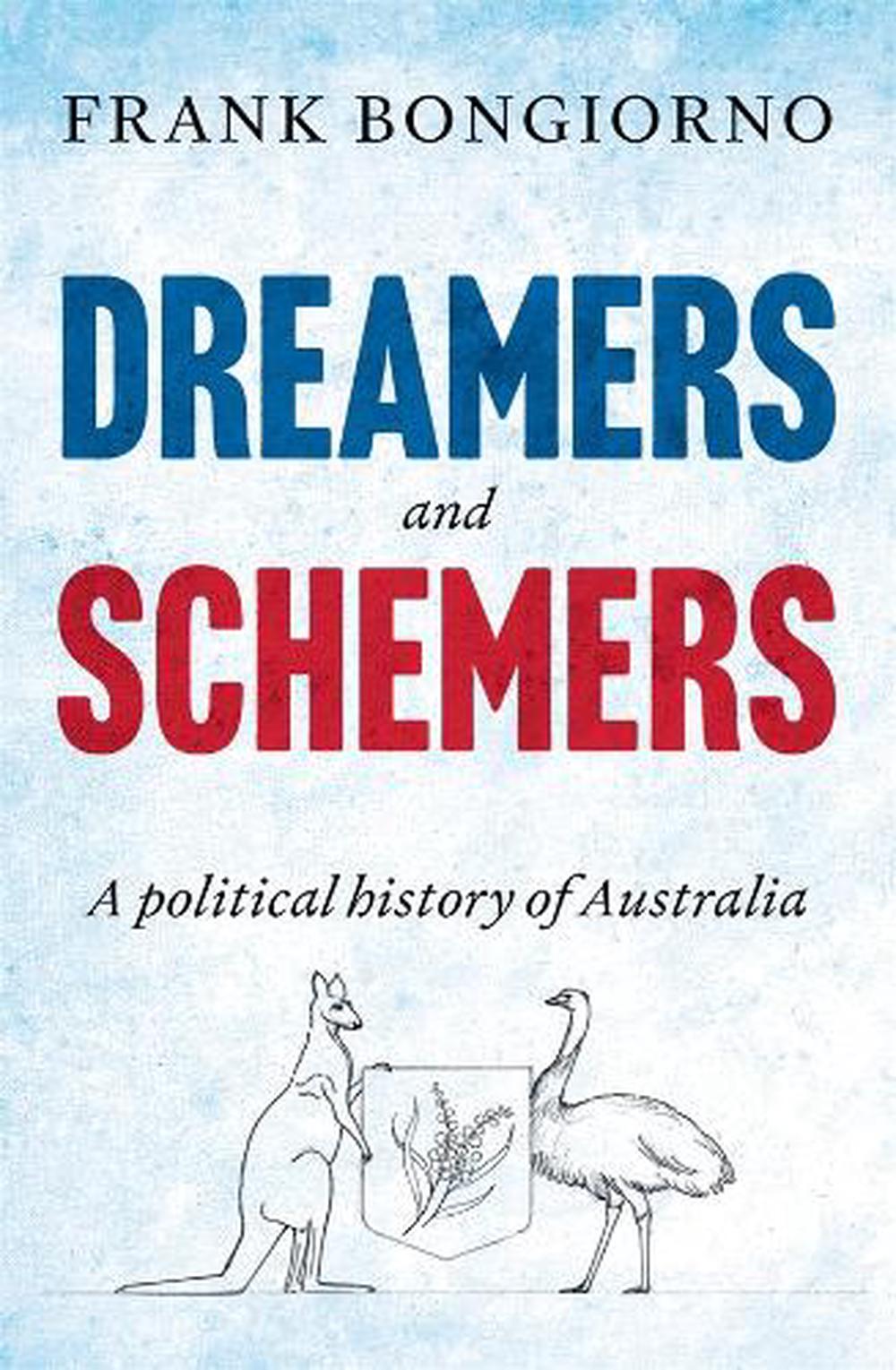
You can see the 2023 longlist on the same page. It includes books by the historian Frank Bongiorno, First Nations author Stan Grant, and author, ex-political advisor and speechwriter, Don Watson. This year’s judges are well-known political journalists Laura Tingle and Barrie Cassidy, and the academic John Warhurst.

Australia’s current treasurer, Jim Chalmers, announced the 2022 winner at a National Press Club event, the winner being Dean Ashenden’s Telling Tennant’s Story: the strange career of the great Australian silence. It’s about Tennant Creek’s, and by extension, Australia’s silence about the past, about the truth of what happened between settler and First Nations Australians.

Anyhow, back to Chalmers … he spoke, of course, about the prize, the judges and the books. I particularly liked this point he made about political books:

A good book is never just a collection of speeches or an extra-long feature piece – it’s a true study of an issue or idea, full of complications and confirmation, and with the pleasure of illustration, story-telling, portraiture.

He says more, but I’ll just share one more excerpt from his speech, in which he talked about “narratives that don’t just help us recognise patterns but also help us question our assumptions about the patterns we think we see”. That’s the important thing, isn’t it – to keep questioning the assumptions we make, because it is too easy to get locked into them, even when the world and/or our own lives and experiences change.

POSTSCRIPT: Nancy Elin noted in the comments that she has read all the shortlist, and has predicted the winner. Rather than link to each post, I’m giving you this link to her blog as she is an assiduous reader of Aussie books.

Had you heard of the Australian Political Book of the Year Award, and, regardless, does such an award interest you?

Winners announced for the inaugural 20/40 Prize

Last November, I announced the creation of the new 20/40 Publishing Prize by independent, non-profit publisher, Finlay Lloyd. And then, early this month, I announced the shortlist for the inaugural prize. Today, I announce the Winners.

First though, I’ll remind you that 20/40 is a manuscript award, with the prize being publication. It is not limited to debut or young or women or any other subgroup of writers, as some manuscript awards are. However, it does have some criteria, in addition to looking for “writing of the highest quality”. Submissions must be prose, and must be between 20,000 and 40,000 words (hence the name). Outside of these criteria, works submitted can be “all genres … including hybrid forms”. The plan is to choose two winners, as they have this year, and they hope to run this prize for many years to come.

And now, the Winners

From six on the shortlist, we now have our two winners:

  • Rebecca BurtonRavenous girls. FL says “Stories of family dysfunction often expose us to relentless failure. And while Ravenous Girls is about the tensions and growing distance between two sisters—the elder burdened by anorexia, the younger by self-doubt—it is distinguished by its lithe and tender understanding of the complexities of growing up.”. Burton is an editor, and author of two young adult novels, Leaving Jetty Road and Beyond Evie, both published by HarperCollins Australia.
  • Kim KellyLadies’ Rest and Writing Room. FL says “Two young women, brought up to expect conventional lives, are thrown together in unexpected circumstances. Each has suffered a devastating loss that challenges their belief in life and themselves. It’s rare to come across a work of deep psychological insight conveyed with such verve and lightness of touch”. Kelly is known to many already, I think, as the author of historical fiction, most if not all published now by Brio Books.

Finlay Lloyd had hoped to make one award to fiction and one to non-fiction, but there were not enough strong non-fiction entries this year. They hope this changes as the prize becomes better known. I hope so too, as I enjoy creative non-fiction.

You can read Finlay Lloyd’s announcement here. Also, Lisa has read the winners, while I plan to read them for Novellas in November. Here is Lisa’s post.

It would be great to see Aussie readers, not to mention others, get behind this publishing prize. You can order the winners at Finlay Lloyd, with a special deal if you buy the two.

There is to be a launch of the books in Canberra on 18 November. If you will be in town that day, and would like to attend, comment here, and I will contact you with the details.

Hal Porter, Francis Silver (#Review, #1962 Club)

Introducing my first review for the 1962 Year Club – Shirley Hazzard’s “The picnic” – I said I had read two short stories and might post on the second one. I am doing so now but, stupidly, I left the book back in Canberra and here I am in Melbourne, so my post will be limited, and without the usual quotes to convey Porter’s writing style. But, it was this, or not at all, because by the time we return home, I will be onto other things. I am cross though, because Kerryn Goldsworthy did write a useful introduction, which, if I remember correctly, placed Porter as part of a change in short story writing from the more realist school that had held on strongly since Lawson.

Like Hazzard’s story, “Francis Silver” appears in the Carmel Bird edited anthology, The Penguin century of Australian stories.

Who was Hal Porter?

Porter (1911-1984) was an Australian novelist, playwright, poet and short story writer. His first autobiography, The watcher on the cast-iron balcony (1963), is regarded as a classic.

The Wikipedia article, linked on his name, is relatively brief, but there is a more thorough biographical entry for him in the Australian dictionary of biography (ADB). Written by literary critic and academic, Peter Pierce, it tells us that he had many occupations, including teaching (on-and-off at many schools), librarian, and shorter term jobs like window-dresser and sheep-station cook. But, cutting to the chase, it also reveals Porter as a problematic figure, because of his pederast behaviour. Peter Pierce writes, for example, that, around 1940, he had “an affair” with a male student at the school where he taught, “an indiscretion that went unpunished”. Those were the days, I suppose. This “affair” – should we grace it with that description? – is apparently fictionalised in his short story “The dream”.

Pierce also writes that, in her 1993 book, Hal Porter: Man of many parts, Porter’s biographer, Mary Lord was, “even-handed in judging an old friend and sensational in revealing Porter’s paedophilia, in particular his sexual relations with one of her sons.” Hard to understand. Moreover, Pierce says that Porter’s third autobiography, The extra (1975),

ventilated many of Porter’s prejudices — against Jews, ‘foreigners’ and Aborigines. The counterpart of Porter’s grace, charm and cultivation was an intense snobbery that, for instance, saw him elevate his father’s occupation from engine-driver to engineer. His facility at winning friends was matched by ceaseless demands on their patience.

So, a difficult man, and one I thought twice about sharing here. However, I read the story, liked it, and as it doesn’t smell of these difficult issues, I am covering it in the uncomfortable spirit of separating the work from its creator. Peter Pierce described him in his 2012 ADB entry as “one of the finest of all Australia’s authors of short stories and a pioneer of the first flowering of autobiographical writing in this country”. (This piece by the late academic Noel Rowe explores the Porter issue in depth.)

“Francis Silver”

“Francis Silver” is a first-person story in which an older man tells of fulfilling a deathbed request from his mother who had died at the age of 41 when he was 18. All through his childhood, he had heard about a man called Francis Silver, who, his mother had implied, had been not only a beau, but an alternative potential husband to the country-living man she did marry, the narrator’s seemingly long-suffering father.

Through our narrator’s childhood, his mother had shared with him an album of postcards sent to her by Francis Silver. Along with sharing this album, she had told stories about this man which suggested he was a worldly, debonair man, who loved the theatre. Her wish was for him to give the postcard album to Silver – but, on no account, was he to also give the lock of her hair that she had kept in an envelope with Francis Silver’s name on it. He was to burn that.

Francis Silver, his mother told him, had worked in a picture-framing shop, and that is where our narrator finds him – but what he finds doesn’t gel at all with the stories his mother had told. The story, then, is about memory, illusion and reality, and the boy’s recognition of the difference. In his own romantic fantasy, he had decided to ignore his mother’s second request and give Francis Silver (whose name works as a mantra in the story, hence my using it in full for each reference here) the lock of hair too. But, as he confronts reality, he changes his mind. The closing sentence vividly conveys his decision in an act that encompasses layers of meaning and feeling.

The father is a less developed figure, because the son was in his lively mother’s thrall, but the sense we get is of a man who loves his wife, and who tolerates her flights of fancy, feeling comfortable, it seems, that she chose – and remains with – him. He seems to recognise (or trust) that Francis Silver is one of those escape fantasies people have to help them cope with the tedium of life, the fantasy that, should it get too hard, there were, or perhaps even are, other options. The narrator, as a boy, doesn’t understand these nuances.

There was a strong autobiographical element, I understand, to Porter’s writing. From the little I read for this post, I am aware that there are such elements in this story. For example, Porter’s beloved mother died when he was 18 years old, as does the narrator’s mother in this story. How much else might be autobiographical though, I don’t know.

Anyhow, just to finish … in the end, the narrator resolves the differences he confronts and is generous to his father for whom Francis Silver had seemed an imagined (if not, as it turns out, real) rival. Our narrator has also learned something about the imagined, illusory past, and its relationship to present realities. A tight, neat, engrossing story.

* Read for the 1962 reading week run by Karen (Kaggsy’s Bookish Rambling) and Simon (Stuck in a Book).

Hal Porter
“Francis Silver” (orig. pub. in Hal Porter, A bachelor’s children, 1962)
in Carmel Bird (ed.), The Penguin century of Australian stories
Camberwell: Penguin Books, 2006 (first ed. 2000)
pp. 186-197

Monday musings on Australian literature: Dame Mary Gilmore Award

In last week’s 1962-themed Monday Musings post, I mentioned that I would post separately on the Dame Mary Gilmore Award. This was because it has an interesting history.

Mary Gilmore, 1927 (Public Domain, State Library of QLD, via Wikipedia)

First though, a bit on Mary Gilmore, for those who don’t know here. She was an Australian writer and journalist, best known as a poet. One day, I will write separately on her, but for now, I will just say that she was highly political, and was part of the utopian socialist New Australia colony set up by William Lane in Paraguay. I wrote about this in another Monday Musings back in 2015.

Gilmore lived a long life, dying in 1962 (in fact!), at the age of 97. She was involved in socialist and trade union movements, and wrote for Tribune, the Communist Party of Australia’s newspaper, though she was apparently never a party member. Her political interests are relevant to the award.

The Award has been known by different names since its creation in 1956 by the ACTU, the Australian Council of Trade Unions. According to AustLit, it was called the ACTU Dame Mary Gilmore Award, and its goal was, ‘to encourage literature “significant to the life and aspirations of the Australian People”‘. Over the years, says Wikipedia, it has been “awarded for a range of categories, including novels, poetry, a three-act (full-length) play, and a short story”. Reading between the lines, I assume this means it was more about content than form.

Since 1985, it has been confined to poetry – to a first book of poetry, in fact – and since around 2019 has been managed by ASAL, the Association for the Study of Australian Literature. Its specific history, I must say, is not particularly clear, but at some time its name was simplified to the Mary Gilmore Award. It was awarded annually until 1998, was then biennial until 2016, but now seems to be annual again. It’s a good example of the challenge to survive that many awards face. The Wikipedia article linked above lists the winners from 1985 to the present.

Pre-1985

It’s the early years of the award that I’m most interested in, mainly because they are less well documented. I’ve tried various search permutations in Trove and have found scattered bits of information, some of which I’ll share here. My first comment is, Wot’s in a name?

I have not found a formal announcement of the award, unless this advertisement in the Tribune of 21 March 1956, the year the award was apparently established, is it. It calls the award the Mary Gilmore Prize, and says submissions should be made to the Victorian May Day Committee. The May Day Committee isn’t the ACTU, but they are closely related, and both support workers’ rights. Indeed, the Victorian May Day Committee page notes that “The labour movement and the trade union movement should continue to build this day as it is the working people’s day”.

Anyhow, the ad invites submissions to the “May Day competitions” and then says that “the best three stories and the best three verses will be eligible for consideration for the Mary Gilmore Prize of £50”. It sounds like May Day literary competitions were already established – the prizes were small, just £5 and £3  – but now a bigger prize was to be offered in the name of Mary Gilmore. And, this year at least, short stories and poetry were the chosen forms. The ad also says that:

The short story and verse most favored by the judges will be those best expressing the aspirations and democratic traditions of the Australian people.

Then, on 12 December 1956, the Tribune announced that “two Mary Gilmore Literary Competitions have been announced by the May Day Committees of Melbourne; Sydney, Brisbane and Newcastle”. For May Day 1957, the “Mary Gilmore Literary Competition” would award prizes for the “first and second short stories and poems, in each of two classes”, meaning four prizes in each class. Class A was for “established” (or )published writers, and B for “new” writers. For May Day 1958, they offered the “Mary Gilmore Novel Competition”, with “a substantial prize, to be announced later” for the “best novel submitted”. The overall announcement added that:

The judges will prefer stories and poems which deal with the life and aspirations of the Australian people.

You can see how tricky the history of awards can be. I have to assume this is the “ACTU Dame Mary Gilmore Award”.

The next mention I found – and I could have missed some – was from the Tribune of 6 January 1960, which, announcing some new publications from the Australasian Book Society, included

Available now, The last blue sea – David Forrest (Winner, Dame Mary Gilmore Award). 

Interestingly, it’s a World War II set story.

Then, again in the Tribune, but this one, almost two years later on 13 December 1961, there is a report on a reception for Ron Tullipan who had won “the 1961 Dame Mary Gilmore Award for his novel, Rear vision“. It’s quite an extensive report which includes references to Jack Beasley, who was “one of the judges of the competition, which is sponsored each year in association with May Day celebrations”. He was concerned about the suggested takeover of the publisher, Angus and Robertson, by Consolidated Press. Read the article if you are interested. The report also noted that:

The Dame Mary Gilmore Award was probably unique in the capitalist world, and a real contribution to Australian literature.

On 22 August 1962, the Tribune announced the presentation of the Dame Mary Gilmore Awards for “poetry, novels and stories”. The winners were Jack Penberthy’s story, “The Bridge”, and Dennis Kevans’ poem, “For Rebecca”. Mysteriously, no novel is named. This report also helpfully names past winners of the award, but without more detail – Joan Hendry, Vera Deacon, Ron Tullipan, Dorothy Hewett, Hugh Mason, and David Forrest. Dorothy Hewett is probably the only one of these still known today.

This article also shared that the Award’s National Chairman, George Seelaf, believed that “in a few years they would be the major literary competitions in our country” but “still more financial support from more unions” was “urgently required”:

“Trade Unionism has always been strongest and literature has always been strongest when writers and unions were closest together. We will encourage writers who tell of the life and aspirations of the  Australian people”.

Don’t you love this conviction about the value of literature?

Also in 1962, another Tribune article (5 September), quotes the Dame herself. She didn’t attend the presentation, but the paper reports

that she was particularly glad to learn of the high standard and the large number of entries. “The more writers, the better expressed will be the thoughts and wishes of Australians,” she says. 

The Canberra Times – for a change – reported on 29 September 1962 that Ron Tullipan had won the “Mary Gilmore Award” with his “hard novel”, March into morning (which I described in my last Monday Musings). Is this the novel not mentioned in Tribune’s August report?

I found more award-winners from the 1960s, and they are interesting in terms of form. In 1963, for example, Hesba Brinsmead’s manuscript of the children’s (young adult) book, Pastures of the blue crane, won. That year, the “Mary Gilmore Award” was for a children’s book, with a second award for a book by a teenager. (Tribune 16 January 1963). In 1967, Pat Flower won the “Dame Mary Gilmore Award” for her hour-long television drama, Tilley landed on our shores. By then, the award was worth $500.

More work needs to be done on this, but it looks like the Dame Mary Gilmore Award Committee would decide each year what the award was for, rather than make it always open to multiple forms. The 1964 award, for example, seems to have been for a novel, while the 1966 one was for poetry. Whatever, the point is that all through this era of the award, the trade unions were behind it, until – well, I haven’t discovered yet how that aspect of it ended. But, what an interesting award.

Thoughts?