Monday musings on Australian literature: Favourite books 2023

Over recent years, I’ve shared favourite Aussie reads of the year from various sources, with the specific sources varying a little from time to time. This year, a significant source – The Sydney Morning Herald/The Age – is unavailable to me as it is behind a paywall, and at this time of year I just don’t have the time to go to the library to access the paper. I have no problem with paywalling. We should pay for journalism, and I do. Just not these ones. (But, I am disappointed as they invite writers to identify their favourites and I always enjoy seeing their choices. I wish I could just buy an article.)

However, I still have other sources: ABC RN’s panel, Australian Book Review, The Australian Financial Review, The Conversation and Readings bookshop’s Ten Best Australian fiction. The picks range widely, with different “pickers” use different criteria, making this more of a serendipitous than an authoritative list. As always, I’m only including their Aussie choices. Do check the links if you’d like to see complete choices.

Last year, I noted that five of the “favourite” novels and short story collections were on my TBR, and this year I read four of those: Robbie Arnott’s Limberlost, Robert Drewe’s Nimblefoot, Kevin Brophy’s The lion in love, and Chris Flynn’s Here be Leviathans. This must be a record for me.

Novels

  • Graham Akhurst, Borderland (Heidi Norman; Tony Hughes-D’Aeth; Tony Birch )
  • Tony Birch, Women and children (“poignant novel about strong women, family, and the loss of innocence…”, Readings; Claire Nicholls; Kate Evans)
  • Stephanie Bishop, The anniversary (“a tense and superb literary novel”, Readings; “addictive”, Carol Lefevre) (Kimbofo’s review)
  • Shankari Chandran, Chai time at Cinnamon Gardens (Jason Steger) (on my TBR)
  • JM Coetzee, The Pole and other stories (Cassie McCullagh; Geordie Williamson)
  • Trent Dalton, Lola in the mirror (Hannah Wootton)
  • Briohny Doyle, Why we are here (Tony Birch)
  • Nicholas Jose, The idealist (“sophisticated and artfully restrained espionage thriller, Tony Hughes-d’Aeth) (Lisa’s review)
  • Simone Lazaroo, Between water and the night sky (Julienne van Loon)
  • Amanda Lohrey, The conversation (Felicity Plunkett) (Lisa’s review)
  • Melissa Lucashenko, Edenglassie (“a tour de force”, Readings; Kate Evans; Jennifer Mills) (on my TBR – see my conversation post)
  • Laura Jean Mackay, Gunflower (“McKay’s prose both illuminates and psychedelically reimagines our world”, Readings)
  • Angela O’Keeffe, The sitter (“execution and reading experience are second to none”, Readings) (Lisa’s review)
  • Matthew Reilly, Mr Einstein’s secretary (Jason Steger)
  • Sara M Saleh, Songs for the dead and living (Jason Steger)
  • Gretchen Shirm, The crying room (James Bradley) (Lisa’s review)
  • Amy Taylor, Search history (“witty and insightful novel of our times”, Readings) (Kimbofo’s review)
  • Lucy Treloar, Days of innocence and wonder (Kate Evans)
  • Christos Tsiolkas, The in-between (changed her mind about the author, Beejay Silcox; “captivating novel by a writer in top form which has already won over new readers and old fans alike”, Readings; Jason Steger; Kate Evans) (Kimbofo’s review)
  • Pip Williams, The bookbinder of Jericho (Readings; Jason Steger) (Lisa’s review)
  • Charlotte Wood, Stone yard devotional (Kate Evans; “the haunting grammar of its title, the restrained artistry of its structure, and the elusive way that it explores modes of memory, grief, and regret”, Kerryn Goldsworthy; James Bradley) (Lisa’s review)
  • Alexis Wright,  Praiseworthy (Tony Hughes-d’Aeth; “resists political simplifications”, Paul Giles; Philip Mead; “magnificent work of politics and imagination”, Jennifer Mills; “epic, addled, visionary examination of the contemporary implications of those foundational crimes”, Geordie Williamson) (Bill’s second post which includes a link to his first)
  • Jessica Zhan Mei Yu, But the girl (“astute and witty coming-of-age novel”, Readings)

In a little shout out to our friends across the ditch – in new Zealand: Eleanor Catton’s Birnam Wood was chosen by AFR’s Hannah Wootton and ABC’s Claire Nicholls, and Pip Adams’ Audition by ABR’s Jennifer Mills and Emma Shortis.

Short stories

  • John Morrissey, Firelight (“already widely considered the first instalment in a [First Nations] career to watch”, Readings)

Poetry

  • Dan Hogan, Secret third thing (“a wildly inventive wordsmith whose work is as playful as it is political”, Yves Rees)
  • Kathryn Lomer, AfterLife (Glyn Davis)
  • Alan Wearne, Near believing (John Hawke)

Nonfiction

  • Dean Ashenden, Telling Tennant’s story (Peter Mares)
  • Ryan Cropp, Donald Horne: A life in the lucky country (Patrick Mullins; Glyn Davis; Mark McKenna)
  • Graeme Davison, My Grandfather’s Clock: Four centuries of a British-Australian family (Bain Attwood; Penny Russell)
  • Sarah Firth, Eventually everything connects: Eight essays on uncertainty (Jen Webb)
  • Hannah Forsyth, Virtue capitalists: The rise and fall of the professional class in the Anglophone world, 1870–2008 (Penny Russell; Marilyn Lake)
  • Kate Fullagar, Bennelong & Phillip: A history unravelled (“an inventive structure and humanistic care”, Patrick Mullins; Frank Bongiorno; Mark McKenna)
  • Anna Funder, Wifedom (Jason Steger; Lisa Murray; Frances Wilson) (on my TBR)
  • Richard Flanagan, Question 7 (Claire Nicholls; Jason Steger; Cassie McCullagh; “meditation on the mutability of family, place, the past, is imbued with wistful nostalgia, one that resonates deeply”, Des Cowley) (on my TBR)
  • Richard King, Here Be Monsters: Is technology reducing our humanity? (James Ley)
  • Catherine Lumby, Frank Moorhouse: A life (Glyn Davis; Mark McKenna) (Lisa’s review)
  • Maggie MacKellar, Graft: Motherhood, family and a year on the land (Anna Clark)
  • Kim Mahood, Wandering with intent (Peter Mares)
  • David Marr, Killing for country: A family story (Geordie Williamson; Frank Bongiorno; Glyn Davis; Kieran Pender; Brenda Walker; Mark McKenna)
  • Walter Marsh, Young Rupert: The making of the Murdoch empire (Patrick Mullins)
  • Thomas Mayo, The Voice to Parliament handbook (Glyn Davis)
  • Gemma Nisbet, The things we live withEssays on uncertainty (Lynette Russell)
  • Brigitta Olubas, Shirley Hazzard: A writing life (“one of the finest literary biographies published in Australia”, Peter Rose)
  • Noah Riseman, Transgender Australia: A history since 1900 (Yves Rees)
  • Alexandra Roginski, Science and power in the nineteenth-century Tasman world: Popular phrenology in Australia and Aotearoa New Zealand (“rich, enthralling account”, Penny Russell)
  • Heather Rose, Nothing bad ever happens here (Tristan Banck) (on my TBR – see my conversation post)
  • Alecia Simmonds, Courting: An intimate history of love and the law (“uniting zest for narrative with immense research and hard-hitting analysis”, Penny Russell)
  • Ellen van Neerven, Personal score: Sport, culture, identity (“unique, poetic memoir and meditation on gender, sexuality, identity, and sport”, Kieran Pender)
  • Chris Wallace, Political lives (Tom McIlroy)
  • Sally Young, Media monsters: The transformation of Australia’s newspaper empires  (Frank Bongiorno)

Finally …

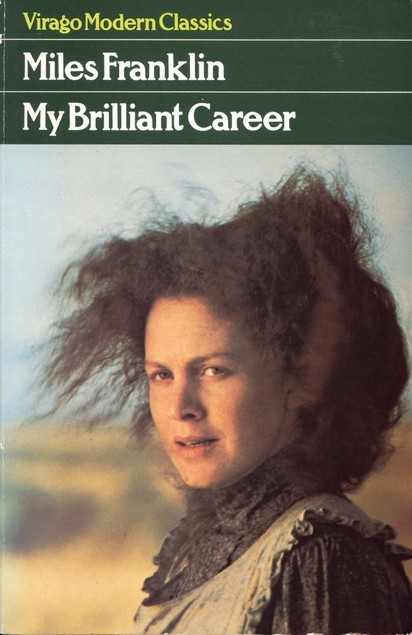
It’s interesting to see what books feature most. Popularity doesn’t equal quality, but it does provides a guide to the books that attracted the most attention in the year. Last year I noted that one of 2021’s most frequent mentions had won the 2022 Miles Franklin. In 2022, the two most frequently mentioned books were Robbie Arnott’s Limberlost and Jessica Au’s Cold enough for snow. Neither won the Miles Franklin, but both won significant awards during 2023 including the Prime Minister’s (Fiction) Literary Award for Jessica Au.

This year’s most mentioned books are fewer this year because that paywall issue significantly reduced significantly my “haul” but we still have some (and all are well-established authors):

Fiction

  • Alexis Wright’s Praiseworthy (5 picks)
  • Christos Tsiolkas’ The in-between (4 picks)
  • Graham Akhurst’s Borderland, Tony Birch’s Women and children, Melissa Lucashenko’s Edenglassie, and Charlotte Wood’s Stone yard devotional (3 picks)

Nonfiction

Did you notice two books in this section were subtitled, “essays on uncertainty”? I’m intrigued.

  • David Marr’s Killing for country (6 picks)
  • Richard Flanagan’s Question 7 (4 picks)
  • Ryan Cropp’s Donald Horne, Kate Fullagar’s Bennelong & Phillip, and Anna Funder’s Wifedom (3 picks)

An advantage of lists like this is discovering new books. I was excited to read about First Nations Kalkadoon writer John Morrissey’s Firelight, because it’s short stories and because the Kalkadoons were the first First Nations people I knew (back in the 1960s). Gemma Nisbet’s The things we live withEssays on uncertainty has also caught my eye.

Besides the books which are already on my TBR, and hence known to me, there are others I had heard about and that interest me. David Marr’s Killing for country feels a bit close to home, but worth reading, as I too have “skin in the game”, as my brother calls it. The literary biographies I missed this year, including Olubas’s Shirley Hazzard and Lumby’s Frank Moorhouse, are also in my sights. And there are several First Nations books here, besides the Morrissey and Lucashenko, that I am keen to read. Birch and Ellen van Neerven, for example.

I could go on because, you know, readers love talking about books we’d like to read, but I also know when it’s time to stop and pass the baton on …

POSTSCRIPT: The day I posted this The Guardian Australia, as kimbofo shared in the comments, published their Top 25, which more or less reinforces these but adds some books not here, including one I’ve read, Rebecca Burton’s Ravenous girls (my review)!

Thoughts, anyone – on this or lists from your neck of the wood?

Claire Keegan, So late in the day (#BookReview)

In her final Novellas in November post, Cathy (746 Books) wrote about Claire Keegan’s short story “So late in the day”, and included an online link to the story. Having not read any of Keegan’s writing, to that point, and feeling the lack, I pounced – and was not disappointed.

“So late in the day” is a beautifully observed story told through the eyes of a man named Cathal. In it, he reflects on his relationship with a woman, Sabine, whom we come to realise is no longer around. Why? The story starts by encouraging us to empathise with him. His work colleagues seem worried about him, and his boss encourages him to go home early. The opening paragraph contains hints of things being a little awry or disturbed. It’s gloriously subtle. Every word carries weight, which makes the reading pure pleasure as you ponder just what the straightforward-sounding words and sentences are really signifying.

Life is clearly discombobulated for Cathal. For example, as he makes his way home, we are told:

For no particular reason, a part of him doubted whether the bus would come that day, but it soon came up Westland Row and pulled in, as usual.

The “for no particular reason” is telling, because there is a reason he feels uncertain, albeit we don’t know it yet, and his unawareness of why he feels this way is part of the issue.

So, the bus comes, and he finds himself sitting next to a woman who seems to want to talk. Hmm… he’s not happy. Soon, however, she turns to her book, The woman who walked into doors. Now, it’s a rare writer who inserts books into their stories randomly, but I didn’t know this book, so off I went to the internet and very quickly found that it is by Roddy Doyle. The Guardian quotes him on why he wrote this book which features a pre-existing character of his: “I had to give Paula a chance to explain why: why she married this man in the first place, and why she stayed with him.”

Gradually, then, the penny drops, but oh so slowly, because Keegan’s story is told from a man’s point of view, and this man is so woebegone, so clueless.

This is the sort of writing I like, writing that challenges the reader to work a bit, to read between the lines and not jump to simplistic responses. Cathal is an unreliable narrator. He does not see the whole truth, but Keegan draws out, from his own mouth, exactly what has happened, so that it all becomes clear to us, the reader, while he remains locked in his cluelessness.

There’s another challenge for the reader, though, besides sussing out what has happened, and it’s to do with how we feel. We start by feeling sympathy for him. He’s sad and lonely. But, as he talks about Sabine, a picture builds up. He is the more passive one in the relationship, but more than that, he is the taker. She organises the outings. She cooks, though he does grudgingly clean up, resenting the mess she makes. She’s generous, doesn’t “mind the cost” of nice food, spending “freely” at the markets, while he either tots up costs or, when he’s paying, makes mean choices. When he proposes to her, it’s devoid of romance. Is he emotionally repressed, and should we continue to feel for him, or is something else going on?

Quite late in the story, in a telling flashback, he remembers an occasion from his childhood. His brother had played a nasty trick at the dinner table on their nearly sixty-year-old mother, and instead of remonstrating with him the father joins the laughter. In this anecdote, and his reaction to it, we see the depth of his disconnect in how to relate to a woman, which adds to our growing awareness of an ungenerous, self-centredness in him. He doesn’t know how to give. There are occasional glimmers of awareness, but by the end, when we know exactly why he is so sad, why this day is so hard for him, we are left wondering what to think about him. Can he change? Or, more to the point, does he realise he needs to change? Does he fully comprehend the depth of his failure?

The French-translated title for this story is Misogynie, which makes no bones about its over-riding theme, but I like the subtlety, the multi-layered meanings behind “So late in the day”. To tease that out here, however, really would spoil the story for any of you wanting to read it.

Meanwhile, I’ll share this from early in the story. As Cathal is leaving work, we are told

He would ordinarily have taken out his mobile then, to check his messages, but found that he wasn’t ready—then wondered if anyone ever was ready for what was difficult.

Good question, but it doesn’t augur well for our narrator’s development does it?

An absolute gem of a story.

Claire (Word By Word) also liked it.

Claire Keegan
“So late in the day”
in The New Yorker, 28/2/2022

Available online at The New Yorker.

My reading group’s favourites for 2023

As I’ve done for a few years now, I am sharing my reading group’s top picks of 2022. This is, after all, the season of lists, but also, I know that some people, besides me, enjoy hearing about other reading groups.

I’ll start, though, by sharing what we read in the order we read them (with links on titles to my reviews):

This year’s schedule was reasonably diverse but with some differences from last year. Our overriding interest is Australian women writers, but not exclusively. And, in fact, this year we read fewer Australian women than is often the case, just Preston, Dank, Au and Throsby. We also, somehow, didn’t read a classic which we try to do each year. However, like last year, we read a translated novel (from France) and a First Nations work. We read five non-Australian books, same as last year; one work of nonfiction (versus two last year); and four by male authors (one more than last year). The status and condition of women’s lives featured particularly strongly in this year’s fiction – with Maggie O’Farrell, Bonnie Gamus, Edwina Preston, Pat Barker and Holly Throsby putting the challenges women face front and centre.

The winners …

This year all of our twelve active members voted, meaning the maximum a book could get was 12 votes, and that there were 36 votes all up. The rules were the same. We had to name our three favourite works, and all were given equal weighting. This year like two of the last three years, we had a runaway winner, with second and third spots being close:

  1. The marriage portrait by Maggie O’Farrell (8 votes)
  2. Cloud Cuckoo Land by Anthony Doerr and Limberlost by Robbie Arnott (5 votes each)
  3. Lessons in chemistry by Bonnie Garmus and We come with this place by Debra Dank (4 votes each)

Very creditable highly commendeds, sharing three votes each were Bad art mother by Edwina Preston and Jessica Au’s Cold enough for snow.

As for my three picks, I’ll start by saying that I found it really tough, though I managed to identify six reasonably easily. Those six were the books by Doerr, Arnott, Preston, Dank, Au and Modiano. No, not O’Farrell, much as I also enjoyed that book. It’s been a very good year. My final three were Robbie Arnott’s Limberlost, Debra Dank’s We come with this place, and Patrick Modiano’s Sundays in August.

At the big reveal last night, some in the group asked me why The marriage portrait wasn’t in my list of tops. I said, off-hand, that it was because it was “just historical fiction”, but that’s not exactly it. As I quickly qualified, I didn’t mean by this that it is typical genre historical fiction, because it’s not, though it does have elements of the historical romance trajectory. No, it’s because it wears its heart on its sleeve. You may not know exactly how it’s going to end, but you know pretty much from the start what it’s about, what the author’s intentions are. I enjoyed it immensely. It’s an engrossing and moving read, but the fiction that earns top billing for me is fiction that has me wondering from the start what it’s all about, fiction that through language, tone, and/or structure challenges my brain to engage with the author and go on a journey with them. Modiano’s and Au’s books, in particular, were like this. This sort of writing can be nerve-wracking because I can worry I’m missing the point. But, it’s the sort of writing that excites me.

[In the end I narrowed my choices down to Arnott because his ability to convey with such brevity a full, complex, oh-so human life was breathtaking; to Dank because among other things her generous truth-telling has helped me better articulate, to myself and to others, my understanding of First Nations connection to country; to Modiano, because, well, I’ve explained that already.]

Selected comments

Not everyone included comments with their picks, and not all books received comments, but here is some of what members said about the top picks:

  • The marriage portrait: Commenters used descriptions like “lush”, “descriptive”, and mentioned the relevance of its themes, particularly regarding the vulnerability of young women.
  • Cloud Cuckoo Land: Comments included “intelligent”, “immersive”, “huge in scope”, “fabulous for its sweep”, “complex”, with a couple enjoying how Doerr created connections between the stories and different eras.
  • Limberlost: Commenters mentioned the quality of its writing, and its evocation of the Tasmanian landscape.
  • Lessons in chemistry: A dog lover in the group loved the dog Six Thirty’s role, and the humour.
  • We come with this place: Commenters loved the generosity of its truth-telling, its explanation of the relationship between story and place to understand country, and found it “deeply moving”.

And, a bonus again

Since 2019, a good friend (from my library school days over 45 years ago (and who lives just outside Canberra) sent me her reading group’s schedule for the year (in the order they read them):

  • Andrew O’Hagan, Mayflies
  • Gabriel Garcia Marquez, Living to tell the tale
  • Tom Kenneally, The Dickens boy
  • Susan Orlean, The library book
  • Andrew McGahan, The rich man’s house
  • Ian McEwan, Machines like me: And people like you
  • Arundhati Roy, The Ministry of Utmost Happiness
  • Claire Thomas, The performance (on my TBR)
  • Maureen Cashman, The Roland Medals
  • Shokoofeh Azar, The enlightenment of the greengage tree

Links on titles (this year, just one) are to my reviews, where I’ve read the book too.

I’d love to hear your thoughts, particularly if you were in a reading group this year. What did your group read and love?

Monday musings on Australian literature: Prime Minister’s Summer Reading List, 2023

December is when I start my round of regular end-of-year posts, and a new one I’m adding to the fold is the The Grattan Institute’s annual Prime Minister’s Summer Reading List. The institute is an Australian non-aligned, public policy think tank, which produces readable, reasoned reports on significant issues, like, most recently, the role of hyrdrogen in Australia’s green energy goals and an analysis of the keenly awaited review of the NDIS (National Disability Insurance Scheme).

My focus here, though, is another activity of theirs, their Prime Minister’s Summer Reading List, which they have published annually since 2009. This list, as they wrote on the inaugural 2009 list, comprises “books and articles that the Prime Minister, or any Australian interested in public debate, will find both stimulating and cracking good reads”.

As I wrote in last year’s post, the Institute’s then chief executive, Danielle Wood, said they aimed

to pick books that have something interesting, original, or thought-provoking to say on issues that are relevant to the Australian policy landscape. The books don’t have to be by local writers or about Australia … but they do have to address issues that have relevance in an Australian policy context.

I managed to read, after the event, two of last year’s list, Debra Dank’s We come with this place (my review) and Jessica Au’s Cold enough for snow (my review). Dank’s is an obvious choice, but I love they they also chose something quietly, and perhaps even enigmatically, reflective about life and change in Au’s book.

Here is the 2023 list in their order, with a small excerpt from their reasoning:

  • Anna Funder, Wifedom: Mrs Orwell’s invisible life (on my reading group’s 2024 schedule, Brona’s review): “People don’t become invisible by accident … a powerful case study of the hidden lives of wives whose contributions are downplayed or entirely disregarded”
  • Ellen van Neerven, Personal score: “highlights the disproportionate impact of a changing climate on Indigenous people, the importance to Aboriginal health of story and being heard, and the complexity of gender and belonging, on and off the field. A new and transformative piece of sports writing … an essential read for anyone wanting to better understand sport, community, and power on sovereign land”.
  • Mark Considine, The careless state: Reforming Australia’s social services: “Australia’s social services are doing a bad job of looking after people … impressively summarises the problems, explains how we got here, and shows that what may seem like separate problems have many shared roots”. 
  • Micheline Lee, Lifeboat: Disability, humanity, and the NDIS (Quarterly Essay 91, September 23): “describes how the NDIS’s disempowering, confusing, and bureaucratic processes have worn out the trust of people with disability and their families … [yet] there is a warming tone of optimism running through Lee’s analysis”.
  • Jennifer Pahlka, Recoding America: Why government is failing in the digital age and how we can do better: “Technology is the front door to many government services … But too often, the design of online services is an afterthought, and users are left to grapple with lengthy, confusing, and duplicative processes … [and] bad design can entrench inequalities … “a compelling call to arms for better design and delivery of government services”.
  • Henry Dimbleby and Jemima Lewis, Ravenous: How to get ourselves and our planet into shape: “explores the complex machinations of modern food systems … details how our food choices are influenced by the industries that make our food, and the environment that surrounds us … shows how our decisions about what foods to put in our shopping baskets are subtly but constantly influenced by a vast food system. The consequences are rarely good for us, our health, or our planet”.

So, one biography, one part memoir-history-poetry, an essay, and three specific-issue-focused non-fiction works, with four by Australians, one by an American, and one from the UK. It’s good to see a First Nations author here again, and to see important issues – like disability, the challenges of the digital age, and modern food systems – front and centre in the Institute’s thinking.

I would, of course, love to see a greater recognition of the value of fiction to addressing “issues that have relevance in the Australian policy context”. Fiction has been included in the past, but not often. I wrote a little about some of their choices last year. We don’t know whether the relevant prime minister reads the suggestions, but some thoughtful or provocative fiction might be better summer reading for our poor top politician needing some break?

I could suggest Chris Flynn’s short story collection, Here be Leviathans (my review), and Carmel Bird’s Love letter to Lola (my review), to fill that bill. Short stories are perfect for busy people, and these two collections are entertaining but also offer some real meat in terms of thinking about various issues confronting humanity, including the environment and environmental destruction. Also Tony Burke made a good point about Paddy O’Reilly’s Other houses (Lisa’s review) which was shortlisted for this year’s Prime Minister’s literary awards and which is about a group of people we rarely read about, cleaners. Surely a book about the working life, that is, the battlers, the people whom journalists and politicians this year have constantly pointed out are “doing it tough”. Fiction about such lives would be perfect for our PM.

You can see all the lists, by year, to date at these links: 2009, 2010, 2011, 2012, 2013, 2014, 2015, 2016, 2017, 2018, 2019, 2020, 2021, 2022.

If you had the opportunity to make one book recommendation to the leader of your country, what would it be?

Novellas in November 2023: Week 5, New to my TBR

You will of course have realised that November is somewhat over, but in the blogosphere we are pretty flexible – at least I think we are – so I am going to do this final Novellas in November post more than a week into December.

The final theme for the month is that we talk about the novellas we’ve added to our TBR since the month began. I strongly resist adding any new books to my TBR, but my willpower failed me – partly because I am partial to novellas.

So, here goes, in alphabetical order by title, some of the books that captured my attention around the month:

  • Rebecca Campbell, Arboreality: Bill Holloway (The Australian Legend) posted on this before NovNov but it is a novella, it attracted my attention and I am in fact reading it right now.
  • Michael Fitzgerald, Late: Lisa (ANZLitLovers) posted on this and I also have it in my review pile to read. It sounds right up my alley, and I have bought it as a Christmas gift for a family member too.
  • Natalia Ginzburg’s The dry heart: Claire (Word by Word) posted on this one, describing it as “this brilliant, page turning feminist classic, originally penned in 1947”. How could I not be in?
  • Margo Glantz, The remains: Claire (Word by Word) posted this before NovNov but it is a novella so I am including it here. She commenced her post by describing it as an “incredible literary masterpiece. A lyrical elegy of tempo rubato.” This and the rest of her review captured my attention.
  • Hans Keilson, Comedy in a minor key: Cathy (746 Books) wrote that this is about “citizens risking their lives to harbour Jews in Nazi-occupied Netherlands but deals with this serious theme with a lightness of touch.” I know some readers don’t like a light touch applied to deadly serious subjects like this, but I do. Sometimes a light touch makes a bigger impact, in fact.
  • Elizabeth Lowry, The chosen: Bookish Beck reviewed this, not in the month, but, during the month, she paired Thomas Hardy’s wife Emma’s memoir Some recollections with Lowry’s novella. Lowry’s book, says Beck, “examines Thomas Hardy’s relationship with his first wife, Emma Gifford”. I like Hardy, so this of course caught my attention
  • Janet Malcolm, The journalist and the murderer: Cathy (746 Books) wrote on this before NovNov, but it caught my attention because I have been wanting to read Malcolm ever since I discovered that Helen Garner admires her. Any one Helen Garner admires is of interest to me. In this book Malcolm apparently explores the relationship between journalist and subject, particularly when that subject is a murderer.
  • Joyce Carol Oates, Black water: Lisa (The Short Story Editor) recommended this book on my NovNov week 2 post calling it “the most quintessential novella on my shelf”. I have read an Oates novella, Beasts (my review), but not this one.

Eight books, one of which I am reading now. I’m not sure how many more I will read, but at least I have now got them on my list?

Has Novella November affected your TBR pile this year?

Written for Novellas in November 2023

Monday musings on Australian literature: Henry Mayer Book Prize

This last week I have become aware, via two different paths, of the Henry Mayer Book Prize. I feel I’ve seen it referenced before, but it hasn’t fully registered. I certainly haven’t written about it before, so, now’s the time.

I’ll start by introducing the person for whom the prize is named, Henry Mayer (1919-1991). He has a well-detailed entry in the Australian Dictionary of Biography, but in a nutshell, he was – surprise, surprise – a professor of politics. German-born, he moved with his father to Nice, France, in 1934 after Hitler had become Chancellor in 1933. From there he went to Switzerland, and thence England, where, after the war started, he was identified as an “enemy alien”. He was among the group of over 2,500 enemy aliens transported on the infamous Dunera from Liverpool to Australia, became an academic, and was a foundation member of the Australasian Political Studies Association (APSA). ADB characterises him as having “wide reading, love of argument, and disdain for sacred cows”.

Now, to the award. Offered by APSA, the Henry Mayer Book Prize is a biennial prize is for “the best book on Australian politics (including political history) published during the previous two years”. It is funded by income generated by the APSA endowment established, in 2009, by the Henry Mayer Trust. The prize is $1000.

To add a little more detail to the criteria, the current website for the prize (linked above) says that book can be “published by a university or commercial publisher (in Australia or overseas)” and that preference is “given to a monograph that focuses on one or more of Mayer’s special interests: the media, political parties or Indigenous affairs”.

The prize, says the same website, judges by a panel which is chaired by a member of the APSA Executive, and will “consist of at least three judges (including the chair), of which at least one will be a woman”. (Interestingly, there’s no similar qualification that “at least one will be a man”. That rather presumes that male judges are a given?)

The reason this prize came to my attention this week was because:

  • On Tuesday, I attended the second Rod Wallace Memorial Lecture, held by the Friends of the National Film and Sound Archive. Our lecturer was Jenny Hocking, whose book, The Palace letters: The Queen, the Governor-General and the plot to dismiss Whitlam, was highly commended for the 2021 award.
  • On Friday, I attended the announcement of the 2023 ACT Book of the Year Award (my post), and the winning book, Frank Bongiorno’s Dreamers and schemers: A political history of Australia, also won the 2023 Henry Mayer Book Prize.

I love it when serendipity strikes like this.

Henry Mayer Book Prize winners to date

  • 2023: Frank Bongiorno, Dreamers and schemers: A political history of Australia, Black Inc, 2022.
  • 2021: Sally Young, Paper emperors: The rise of Australia’s newspaper empires, UNSW Press, 2019.
  • 2019: Paul Strangio, Paul ‘T Hart & James Walter, The pivot of power: Australian Prime Ministers and political leadership, 1949–2016, Melbourne University Press, 2017.
  • 2017: Sarah Ferguson and Patricia Drum, The killing season uncut, Melbourne University Press, 2016.
  • 2015Stephen Mills, The professionals: Strategy, money and the rise of the political campaigner in Australia, Black Inc, 2014.
  • 2013Paul StrangioNeither power nor glory: 100 years of political Labor in Victoria, 1856 – 1956, Melbourne University Press, 2012.
  • 2011: James Walter, What were they thinking? The politics of ideas in Australia, UNSW Press, 2010.
  • 2009: Sarah Maddison, Black politics: Inside the complexity of Aboriginal political culture, Allen & Unwin, 2008 AND David McKnight, Beyond Right and Left: New politics and the Culture Wars, Allen & Unwin, 2007.

Since 2016, the prize has been alternated with the Crisp Prize, which is offered for a similar topic but with a different qualification -“the best scholarly book on political science by an early or mid-career researcher“, which they define as someone who has graduated with a PhD within the previous 10 years.

How many more specialist book awards are there out there?

Holly Throsby, Clarke (#BookReview)

My reading group’s last book of the year, Holly Throsby’s third novel, Clarke, was a popular end-of-year choice. It’s a straightforward but compelling read that was inspired by a story we were all across, the Lynette Dawson story. Inspired, though, is the operative word, as Clarke is not Lynette Dawson’s story.

For a start, while Clarke’s missing woman disappears in the same decade as Lynette, the 1980s, Throsby’s story is set in a different location (a regional town not a capital city) with a different sort of husband (a physiotherapist, not a teacher). Further, there is some sort of resolution a few years, not forty years, later. This was a wise choice by Throsby. It decouples the story from Lynette Dawson, which encourages us to see it as part of a bigger story. And, setting it in a smaller environment lets Throsby explore regional town life. This latter is one of the strengths of the book.

The novel opens with fifty-something Barney being visited by the police at the house he is renting. They have a warrant to excavate the backyard as the result of their having received new information concerning the disappearance of Ginny Lawson five years previously. Clarke tracks this new police investigation through the eyes of the neighbourhood, primarily Barney, his next-door neighbour Leonie, and Dorrie and Clive across the road. Leonie, Dorrie and Clive all knew Ginny and believe her husband Lou, now living in Queensland, is implicated. They have wanted this investigation ever since Ginny disappeared, but the police at the time weren’t much interested in missing women.

The main joy in reading the novel comes from Throsby’s handling of the relationships between her characters, and the way she conveys how neighbours and communities chat or gossip about and try to second-guess situations like these. They phone each other, visit each other, talk over the fence, and discuss it with their workmates. It’s so realistic, you can hear yourself doing the same over similar scenarios.

It’s a fundamentally tough story – a disappeared wife with its hints of domestic abuse, among other griefs – but Throsby handles it with a light touch, including occasional black humour. Here, for example is Leonie talking to her workmates about some concrete in Barney’s backyard that the police are now excavating. It’s clear that it had been a topic of conversation at the time of the disappearance:

The suspicious concrete’, said Varden.
‘Yes, because that’s what you do when your wife and the mother of your child has just disappeared’, said Leonie. ‘You landscape.’

There is also some subtle wordplay. For example, Ginny’s husband Lou’s “disturbing the dirt and who knows what else” in his back yard after his wife’s disappearance mirrors the disturbance felt by the neighbours. And there are some wonderful descriptions, like Leonie’s on her tricky relationship with her mother: “Leonie remembered the warmth of her mother as a heady storm that blew in fast but never stayed long”. Or on sad Barney: “His skin was kind of grey and rough and reminded Leonie of an egg carton”.

“It would be fantastic to be able to choose one’s memories. It would make life so much more bearable.” (Barney)

There are, as I hinted above, other layers to the the narrative besides the disappeared-Ginny plot line. Barney is no longer living with his wife Deb (but why?) and Leonie has her four-year-old nephew Joe living with her (why too?). Both people, it’s clear, are dealing with some sort of grief. Throsby drip-feeds us their backstories as we get to know them, and as they get to know each other. Dorrie, across the road, provides a voice of reason for Leonie, while also engaging in the neighbourhood speculations about Ginny.

I’ll leave the narrative there, and move onto the form. Clarke is fundamentally a crime story or mystery, but it doesn’t fit those genre expectations. It’s a cold case, but the criminal investigation occurs in the background. There is no protagonist detective, and we only meet the police through their interactions with the main characters. There is, admittedly, an element of the amateur-sleuth cosy-mystery going on. Our main characters do a little of their own “amateur surveillance”, as Barney calls it, and we would, of course, like to know what happened to Ginny. But, the main focus is on what is going on for Barney and Leonie, personally, and whether they will resolve the griefs in their lives that are holding them back. It reminded me of that idea that if you scratch just beneath the surface of most people’s lives you will find a sadness or tragedy.

So, my overall assessment? I thoroughly enjoyed the read. Throsby’s language, excellent characterisation, and authentic evocation of suburban 80s-90s Australia made it a compelling read. However, the twist near the end felt a bit forced, and the ending is a bit neat, albeit there was some restraint. Generally, I prefer edgier books, books that keep me thinking about where they are going. With Clarke, I wondered about what happened to Ginny, whether we’d find out, and whether a relationship would develop between Leonie and Barney, but it didn’t, for example, delve deeply into the fundamental issues that brought about the situation in the first place. As a result, it called more on my emotions than my mind, and I do like both.

Nonetheless, Clarke is an enjoyable read – and I’d happily recommend it to readers looking for generous stories about real people grappling with life’s challenges.

Holly Throsby
Clarke
Crows Nest: Allen & Unwin, 2022
346pp.
eISBN: 9781761185540

ACT Book of the Year Award 2023 shortlist and winner

This year I attended, for the first time, the announcement of the ACT Book of the Year award, which was held at the Woden Public Library. For some reason our award doesn’t get the media recognition or attention that it deserves. Sure, it is not one of the wealthiest literary prizes in the country, and it is geographically limited to local authors, but, we have some impressive authors here. They produce good books that are worth shouting about – within and without the ACT.

The ACT Book of the Year is one those broad-based awards, meaning that it encompasses fiction, nonfiction, plays, and poetry. The award is presented by the ACT Government, and was first made in 1993, making this year its 30th anniversary. The first award was shared by poet AD Hope and novelist Marion Halligan. Halligan has won it three times.

The award was announced by ACT Minister for the Arts, Tara Cheyne. She advised that the winner would receive $10,000, and the highly commended authors, $2,000.

I posted last year on the 2022 shortlist. It had seven finalists from 43 eligible nominations, and comprised a play, a short story collection, a book of poetry, a novel, and three works of non-fiction (two histories and a memoir). The novel, Lucy Neave, Believe in me (my review) won.

The 2023 shortlist was very different. It comprised ALL nonfiction, which Tara Cheyne said was not surprising coming from Canberra, the “knowledge capital”. There were 38 entries – books published in 2022 – and they included books which have been shortlisted in other awards over the last year. The shortlist comprised 6 titles.

The 2023 shortlist and winner

  • Frank Bongiorno, Dreamers and schemers: A political history of Australia (political history; winner of the Henry Mayer Book Prize; shortlisted for this year’s NSW Premier’s History Awards)
  • Robert Bowker, Tomorrow there will be Apricots: An Australian diplomat in the Arab world (memoir)
  • Marion Halligan, Words for Lucy (memoir; on my TBR)
  • Julieanne Lamond, Lohrey (literary criticism; Lisa’s review)
  • Katrina Marson, Legitimate Sexpectations: the power of sex-ed (social science)
  • Niki Savva, Bulldozed: Scott Morrison’s fall and Anthony Albanese’s rise (political history; winner of the the 2023 Australian Political Book of the Year)

Cheyne announced that the judges had made two Highly Commended awards, Marion Halligan’s book which the judges described as ““empathetic … and relatable” and Julieanne Lamond’s which they called, among other things, “immersive”. But, the winner was:

Frank Bongiorno’s Dreamers and schemers: A political history of Australia

Bongiorno, who is one of Canberra’s well-loved and generous academics, spoke briefly. He described himself as an academic historian, but one who believes that academics should be writing “accessible and affordable” books. I liked that he included “affordable” because so many academic books have stratospheric prices which put them out of the market for the general reader. The judges’ statement included that:

Through Dreamers and Schemers Frank Bongiorno has skilfully combined multiple elements to deliver a captivating account of Australia’s political history. The book’s perceptive honesty and contemporary sensibility shine throughout the narrative, providing readers with a fresh perspective on the subject.

With this win, Frank Bongiorno joins Marion Halligan as a three-time winner of the award.

This year’s judges were fiction writer Kaaron Warren, writer Adam Broinowski, and playwright Dylan Van Den Berg.

Big thanks to my reading group friend and Marion Board Member, Deb, for inviting me to join her at the announcement.

Tara Cheyne closed the event by encouraging us all to share “literary joy” in 2024! Couldn’t have said it better myself.

Nonfiction November 2023: Worldview Shapers AND New to my TBR

Once again, I am combining my Nonfiction November weeks because this month has been very busy personally as well as blog-wise.(I did Week 1, on its own, and then combined Weeks 2 and 3).

Nonfiction November is hosted by several bloggers, each one managing one of the weeks. This year, Week 4 – Worldview Shapers is hosted by Rebekah at She seeks nonfiction, and Week 5 – New to my TBR, by Lisa at Hopewell’s Library of Life.

Worldview Shapers

This week the questions relate to the fact that

One of the greatest things about reading nonfiction is learning all kinds of things about our world which you never would have known without it. There’s the intriguing, the beautiful, the appalling, and the profound. What nonfiction book or books have impacted the way you see the world in a powerful way? Is there one book that made you rethink everything? Do you think there is a book that should be required reading for everyone?

“Everyone” is a big call but I’m going to say it anyhow. I believe that, in the interests of truth-telling (or, is it, truth-receiving) that everyone in Australia should read more First Nations authors, fiction and non-fiction. I have read a few that I’d recommend, starting with this year’s standout read, Debra Danks’ We come with this place (my review), which I have already written about a couple of times this Nonfiction November. As I wrote in my last post, through it, I learnt new things about First Nations history and culture; I better understand this history and culture, particularly in terms of connection to Country; and, as a result, I can better explain and defend my support for First Nations’ people’s fight for fairness.

So, I thought I would add two more books on the topic that I have read in recent years, books that are readable, confronting but also generous in outlook, like Stan Grant’s Talking to my country (my review) and Anita Heiss’s Growing up Aboriginal in Australia (my review). I have read other First Nations nonfiction, but these two provide excellent introductions to the experience of living as a First Nations person in Australia.

Although written by an old-ish white man, my brother Ian Terry, I’d like to add to this list his book published this year, Uninnocent landscapes (my post, review to come), which is part of his truth-telling journey on the impact of colonialism on the Australian landscape, and thus, by extension, on First Nations Australians.

New to my TBR

Our instruction is obvious, to identify any nonfiction books that have made it onto our TBRs through the month (and noting the blogger who posted on that book).

I’m sorry, but I tried very hard not to be tempted as I have a pile of nonfiction books already on my TBR and I’ve read so very few of them this year. I was intrigued though by Patrick Bringley’s All the beauty in the world: A museum guard’s adventures in life, loss and art posted by Frances (Volatile Rune). I love going to museums and galleries, and often wonder about those people who stand guard in the various rooms. Do they like their job? Are they interested in the collections they are guarding? How do they cope with being on their feet for so long? Bringley apparently answers these questions, and many more, including some I hadn’t thought of.

I am also hoping to read in the next few months two recent Aussie nonfiction books, Anna Funder’s Wifedom (which Brona has reviewed), and Richard Flanagan’s just published Question 7. I think that’s more than enough to keep me out of mischief.

A big thanks to the bloggers who ran Nonfiction November this year. I wasn’t as assiduous as I could have been, but I did appreciate reading the bloggers I did get to, and I enjoyed taking part on my own blog in the little way I did.

Any Worldshapers for you? Or, new nonfiction must-reads?

Monday musings on Australian literature: on 1923: 7, Humour

With 1923 nearly over, I’m running out of time to share more of the thoughts and ideas I found regarding Australian literature in 1923 from Trove. This post, I thought to share some of the ideas expressed about humour in Australian literature.

Humour wasn’t always specifically mentioned in 1923 as being a feature of Australian literature, but was mentioned enough to suggest that some, at least, appreciated its use.

The most frequent mention I found concerned, Steele Rudd, famous for the Dad and Dave stories. He is praised for using humour to make interesting and enjoyable the truths he has to tell about Australian lives. The Queensland Times (2 May) introduced Rudd’s new book, On Emu Creek, and describes it as giving “full play to his whimsical humour, his knowledge of the rural dwellers, and his sympathy with their struggles”. Melbourne’s The Age (5 May) is more measured, but seems also to like the humour, describing it as “an agreeable story, without any affectation of style, and containing points of humor”.

Others, though, are a little less enamoured, with various reviewers qualifying their approval. One of these is J.Penn, writing in Adelaide’s The Register (19 May). There is some satire, he says,

But the main idea of nearly every chapter is someone being knocked over. It is difficult to think of any other humourist who would not seek to find humorous terms in which to describe intendedly humorous incidents. But Steele Rudd is firmly convinced that his readers will find sufficient fun in the mere fact of some one being humiliated or hurt, without the author’s having to worry to hunt for words.

Presumed Public Domain, from the NLA

Ouch … This is not to say that J.Penn doesn’t like humour. He clearly likes satire. And, he critiques another 1923 literary endeavour for lacking “gaiety”. It was a literary magazine titled Vision: A Literary Quarterly, that was edited by Frank C Johnson (comic book and pulp magazine publisher), Jack Lindsay (writer and son of Norman Lindsay), and Kenneth Slessor (poet). The quarterly, which only lasted 4 issues, aimed, says AustLit, “to usher in an Australian renaissance to bolster the literary and artistic traditions rejected by European modernists”, but they also wanted to “invigorate an Australian culture they claimed was stifled by the regressive provincialism of publications such as the Bulletin“. 

Anti-modernist in ethos, Vision, continues AustLit, was influenced by “Norman Lindsay’s principles of beauty, passion, youth, vitality, sexuality and courage” and “consistently provided readers with potentially offensive content”. Penn was thoughtful about the first issue:

It is a welcome guest, as giving outlet for a lot of good work which might not find a fair chance elsewhere. But it has three faults, one of outlook, two of detail. Contemplation of sex matters is not the only way to brighten life; yet they constitute quite four-fifths of this opening number.

Not only that, but, he says, ‘while it would seem difficult to be heavy, even “stodgy,” on matters of sex, that feat has been accomplished here’. Indeed, it has “no spark of gaiety”, which is exactly what Norman Lindsay, in the same issue, accuses James Joyce of. (Excuse the prepositional ending!) However, not all of Vision is like this:

The poetry in this volume, by Kenneth Slessor and others, has much of the desired element of gaiety; and a page of brief quotations from modern writers in other countries, with satirical footnotes, is delightful. There remain the pictures. These are as bright and gay as could be wished—a riot of triumphant nudity, in which Norman Lindsay in particular finds full opportunity.

Overall, he feels that “with some judicious editing, this endeavour to brighten Australia should have at any rate an artistic success”. (Also, he does like Jack Lindsay’s “valuable essay … on Australian poetry and nationalism, with a theory that we must get away from shearers and horses”.) 

A very different magazine is one praised for its cheerfulness, Aussie. It ran from 1918 to 1931, and had various subtitles, The Cheerful Monthly, The National Monthly, and The Australian Soldiers’ Magazine. I had not heard of it before, but AustLit once again came to my rescue. Created for soldiers in Europe, most of its early contents came from them, and comprised, says AustLit, “jokes, anecdotes, poems and drawings” which reflected “the character (most likely censored) of the Australian soldier in World War One”. In 1920, it was revived as a civilian magazine, but “the humour … was maintained”. Now, though, its contributors were established writers and artists, like AG Stephens, Myra Morris, and Roderic Quinn. I found a review of a 1923 issue in The Armidale Chronicle (19 September). It is unfailingly positive, telling its readers that “every page of Aussie breathes cheerfulness, and there is not a joke, a picture, or a story that fails to portray some phase of Australasian humor”. I wish it described what it meant by “Australasian humor” but the word it uses most is “cheerfulness”. This perhaps makes sense, given AustLit’s assessment that “it maintained its position between political extremes, addressing the views of a predominantly middle-class audience”. 

Humour is also mentioned reviews of books for children, such as The sunshine family, by Ethel Turner and her daughter Jean Curlewis. It is described in the Newcastle Morning Herald and Miners’ Advocate (14 December) as having “rare good humour”, but is that unusual for a book for children?

The descriptions of the 100 books chosen by AG Stevens for Canada, that I wrote about earlier this year, include several references to humour – in fiction, such as EG Dyson’s 1906 Factory ‘ands, with its “brilliant satirical humour”; in children’s books, like C Lloyd’s 1921 The house of just fancy, whose pictures “have quaint loving humour”; and in much of the poetry, including JP Bourke’s 1915 Off the bluebush, which contains “verses of sardonic humour”.

Humour is such a tricky thing – from the sort of situational humour in Rudd’s On Emu Creek, through the apparent “cheerfulness” of Aussie, to the more satirical humour liked by J.Penn – but unfortunately, most of the references I found don’t analyse it in much detail. I will keep an eye out as we go through the years.

Meanwhile, do you like humour in your reading? And if so, what do you like most?

Other posts in the series: 1. Bookstall Co (update); 2. Platypus Series; 3 & 4. Austra-Zealand’s best books and Canada (1) and (2); 5. Novels and their subjects; 6. A postal controversy