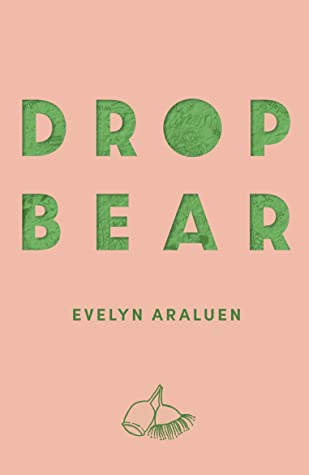
Monday musings on Australian literature: Queensland’s women writers, 1920s

Yesterday, as I was trying to untangle a curly identification for my next Australian Women Writers blog post, I came across an interesting article in The Brisbane Courier. Published on 15 October 1927, and penned by one W.M., the 1300-word article is titled “Queensland Women Writers: Poets and Novelists“. Of course, it caught my attention, and not only because buried within was an important clue for my puzzle (about which I might write next Monday).

Although I’ve written several Trove-inspired posts about Australian literature in the 1920s and 30s, this one caught my attention for two reasons – it is focused on just one state (Queensland) and is limited to women writers. I don’t know whether W.M. wrote separately about Queensland’s men writers, because it’s hard to search on by-lines like “W.M.” I did try to identify him. He may be William Marquis Kyle, whom I came across via an announcement for a lecture to be given by “Mr. W.M. Kyle, M.A.” He was appointed Professor of Philosophy at the University of Queensland in 1938. The best record I found for him included that “he gave public lectures, wrote and reviewed newspaper articles and was well known as a broadcaster”.  So, on this slim basis, I am going to refer to “W.M.” as he/him.

Queensland women writers

W.M. commences by talking about poetry, arguing that

When we contemplate the work of Australian writers, we can hardly fail to be impressed with the large proportion who have chosen poetry rather than prose as their medium. May it not be that a young nation, like a young writer, turns to poetry as more fitting than prose to express wonder and joy in a country which inspires emotions and sensations most appropriately uttered in lyrical form?

He goes on to say that whether his reasoning is true or not, “there is a larger amount of creditable verse than prose in the imaginative literature of Australia” and this is “apparent in any survey of the women writers of Queensland and their work”. But, he says, two novelists do occupy the first and last positions in his chronological list of Queensland women writers: Mrs Campbell Praed and Mrs Dorothy Cottrell. Both have appeared on my blog before.

W.M.’s article starts with brief paragraphs on the older writers. They are (links go to their Wikipedia pages):

For these six writers, W.M. identifies a work or two, and adds some assessment or description. I’m not sure why he allows Sumner Locke her own name, given she married Henry Logan Elliott. Perhaps it’s that most if not all her works were published before she married, and she died the following year. Anyhow, he praises her, saying “her style was forcible and direct, as shown in her novels”.

He has positive words for all these writers. Of Rosa Praed, he says:

Her style was simple and illustrative, and she had the faculty of making her characters “live.” Her descriptions of the social life of early Brisbane, centring in Government House, show that in many respects the social life of the present time still resembles that of 30 years ago.

Mary Hannay Foott’s “poetic style was simple, but distinguished by considerable lyrical power”, and he praises her versatility. Mabel Forrest’s early promise, evident in a story published when she was 10, “has been fulfilled by an exceptionally large output of poetry, short stories, descriptive articles, and novels”. And, while her novels “contain many descriptive passages of outstanding charm and sincerity, upon her verse rests her claim to rank among the foremost writers of Australia to-day.” Her novel The wild moth was adapted to screen by Charles Chauvel in The moth of Moonbi.

Emily Coungeau had, he says, “a mind attuned to the beauty of Nature and the best in human hearts” which enabled her “to produce verse of much charm and sensibility”. Emily Bulcock’s poetry, on the other hand, was characterised by a “strong spiritual note”.

The rest of the writers, listed under the heading “Other writers”, are given one sentence or less, with the exception of the first in the list, Zora Cross. Her reputation has lasted more than most of the above. The reason for the short shrift given to her seems to be that she made her home in Sydney, so, not really a Queensland writer it seems! Few of the others are remembered today, except perhaps for the last on his list, the aforementioned Mrs Dorothy Cottrell. She, he writes, “is hailed by American publishers as a writer of exceptional power”. Her novel The singing gold was first serialised in The ladies home journal. The cover here is the 1956 edition (obvious from the fashion!) which suggests she remained popular for some time. A later story of hers became Ken Hall’s 1936 film, Orphan of the wilderness.

However, I will comment on one other. Wikipedia and the ADB have an entry for Nelle Tritton (1899-1946) whom Wikipedia writes as Lydia “Nellé” Tritton, and ADB as Lydia Ellen (Nell) Tritton. She had an interesting life. She was born in Brisbane in 1899, but in her mid-20s, she went to London and toured Europe, gained “a reputation for knowledge of international affairs”, and married a former officer of Russia’s White Army. The marriage ended in 1936, and in 1939, she married the exiled Russian prime minister Alexander Kerensky in Pennsylvania. ADB writes of their time in America that “their life, when they were together, was idyllic, with numerous visitors and games of croquet”. W.M. tells us none of this – much of which happened after 1927 – but it’s interesting that he’s included her, given she was barely in Australia. All he says of her is that “while still in her teens” she wrote a booklet of “Poems”. Curious – but fascinating. 

W.M. concludes that, from his brief survey, “it is evident that the work of Queensland writers has reached a standard which justifies and claims adequate attention from the reading public”, and he quotes literary critic Bertram Stevens, who had died in 1922 but had apparently said:

Australia has now come of age, and is becoming conscious of its strength and its possibilities. Its writers to-day are, as a rule, self-reliant and hopeful. They have faith in their own country; they write of it as they see it, and of their work and their joys and fears in simple direct language.

Anton Chekhov, The lottery ticket (#Review)

Back in April I posted on Majorie Barnard’s short story “The lottery” for Kaggsy’s and Simon’s 1937 Year Club. Commenting on that post, my American friend Carolyn said that in looking for Barnard’s story she found Chekhov’s “The lottery ticket”, written fifty years earlier in 1887. Of course, I had to read it too. There are enough similarities to make us think that Barnard very likely had read Chekhov’s story, but had decided to put her own spin on it. Whether we are right or not, the two stories make for an interesting comparison. I will try to discuss them without spoiling them, but there will be hints.

Both stories deal with a married couple and their reaction to the idea of winning a lottery, and both stories are told third person from the husband’s point of view. Marjorie Barnard’s is set in suburban Sydney, and explores what happens when a wife wins the lottery. She doesn’t tell him immediately so he finds out from others who had read it in the newspaper. On his way home from work, he thinks about what it all means, how “he” might spend it, and he then starts to find fault with his wife. She “wasn’t cheery and easy going” and hadn’t aged well (not as well as he had, anyhow), and so on. It ends, however, with the wife having the upper hand. Barnard’s story reflects her interest in gender, in how little agency women had, and how constricted their lives were.

This is not Chekhov’s prime interest. He is writing in a different place and time. In his story, it is also the wife who had bought the ticket, but it’s the husband who checks the newspaper and sees that there’s a “probability” that her ticket had won. However, rather than reading on and confirming whether that’s the case he suggests they wait:

Looking at his wife, Ivan Dmitritch gave a broad, senseless smile, like a baby when a bright object is shown it. His wife smiled too; it was as pleasant to her as to him that he only mentioned the series, and did not try to find out the number of the winning ticket. To torment and tantalize oneself with hopes of possible fortune is so sweet, so thrilling!

The hope of course is that they will have a lovely dream about the possibilities, those dreams we all occasionally have (even if we don’t buy lottery tickets!) But, if you know Chekhov, you’ll know that he is unlikely to be interested in unrealistic dreams, but in how ordinary people traverse life and their relationships. So, he lets Ivan dream – of “a new life … a transformation”. “That’s not money,” he says, “but power, capital!” He imagines paying off debts, buying “an estate”, going abroad. Occasionally, he notices that his wife is also dreaming. But, it comes to a head when he realises she’s dreaming of going abroad too. What? She’d be no fun to go with. She’d just talk about the children, complain about the cost of the food, not to mention want to spend money on looking after her relations,

And for the first time in his life his mind dwelt on the fact that his wife had grown elderly and plain, and that she was saturated through and through with the smell of cooking, while he was still young, fresh, and healthy, and might well have got married again.

So the story continues with this man who was, at the beginning, “very well satisfied with his lot” – including presumably, having his wife at home, cooking his meals, caring for the children – feeling very different about his life by the end.

The irony, in Chekhov’s as well as Barnard’s story, is that the lottery ticket was the belittled wife’s. Barnard, however, gives her wife agency, whereas Chekhov’s focus is on how money and greed can destabilise (or, is it reveal?) one’s values. However, the little point is still there, in the irony, in that early description of the husband with his “senseless smile, like a baby when a bright object is shown it”, and in so many of the husband’s attitudes towards his wife. Gender issues are not so forward in the resolution, but they are part of the picture.

Anton Chekhov
“The lottery ticket”
First published 1887
Available online at Classic Shorts

Michael Fitzgerald, Late (#BookReview)

Australian author Michael Fitzgerald’s novel Late owes something to what is known as the alternate (alternative) history genre, or what I call “what if” novels. Here, the underlying story is, what if Marilyn Monroe had not died in 1962 but, instead, had instead escaped Hollywood’s oppressive celebrity culture and moved to Sydney, Australia?

It’s hard to imagine any celebrity who has inspired more books, films, songs – you name it – than Marilyn Monroe. Just check out Wikipedia’s page listing them. There are over twenty works of literature, of which I’ve only read one, Andrew O’Hagan’s The life and opinions of Maf the dog and of his friend Marilyn Monroe (my review).

Now though, I should ‘fess up that nowhere in Fitzgerald’s book does he name Marilyn Monroe. His narrator is unnamed. However, she tells us she is also known as Zelda Zonk, a name once used by Marilyn Monroe, and the biography she gives us is that of Monroe down to her birth and death dates, the details of her marriages, and much more. So, given our narrator is intended to be Marilyn, the question is why? Why write a(nother) story using Marilyn, rather than start from scratch? And why do it using another of her personas, Zelda Zonk? I don’t know, but I’ll have a go at thinking about it.

So, let’s start with the setting. We are in 1980s Sydney, so Marilyn has been in Sydney for a couple of decades. She is living in a modernist (Harry Seidler-designed) building in Vaucluse, not far from some of the cliffs in Sydney which, in the 1980s, were also the site of gay-hate crimes known as the “Sydney cliff murders”. Notwithstanding that darkness, Sydney is beautifully evoked.

Early in the novel, our narrator meets a young man Daniel, who turns out to be gay and who is locked out of the apartment he is house-sitting. The relationship that ensues brought to mind Sigrid Nunez’s The invulnerables (my review) in which an older woman develops a friendship with a young man, but they are different books, so let’s move on. Our narrator and Daniel discover points on which they connect – from something as simple as their mothers’ names (Gladys and Gladyne) to something more fundamental like both having experienced adoption and a sense of being outsiders. Trust and tenderness develop between them, as they walk, ride on a ferry together, and cook a meal for Shabbat.

Now, a little aside: I’m not sure how to refer to the narrator because, as she writes in the opening paragraph of Scene (aka Chapter) 2, “I am not always Zelda, and Zelda is not always me”. Indeed, she writes, “Zelda is everything that I’m not […] She is the me who goes on living”, and later again, she is “the protectress of my spirit, of the shattered sense of me”. If I name her Zelda in my post, I am ignoring the distinction, and I don’t to do that. So, I am going to stick with the term “narrator”.

“What I have to say is important and personal” (Zelda)

Our narrator’s voice is variously wise, funny, erudite, and also at times self-deprecating. She is out to set the record straight in terms of her reputation as the “dumb blonde”, the “beautiful child”, the difficult actress who was always “late”:

You see, I wasn’t late: they were in a God-awful American hurry. Yes, let it be said for the record, being late wasn’t a problem: they were in this crazy rush to the moon. In any case, who aspires to be on time when, for my Art, readiness is all?

And when it really counted, let’s face it, my timing was perfect.

Drop-dead perfect.

So much in those few sentences.

She makes us see her life from a different perspective, such as the time she wore the see-through rhinestone dress to sing Happy Birthday to JFK. I don’t know what Monroe really thought or intended but that is perhaps not the point. Michael Fitzgerald gives her a voice that reflects on her experience, on how the culture manipulated her, on the hurts of being commodified and ignored as a person. Marilyn is a wonderful vehicle for interrogating celebrity, and Zelda for exploring how an escapee might see the experience and move on from it.

There are several questions to ask about this book, besides why Marilyn. Another is, why is she speaking now, a couple of decades after her arrival in Sydney? This one she answers – it’s because “the cliffs have been warning me, for months now, that evil dwells here”. And this is where Daniel as a young gay man comes in. He is the vehicle for exploring the homophobia of the time, the gay-hate crimes and cliff-murders. He is a gentle person with his own crisis, and is drawn to Zelda “like an old person or wounded animal is”. Our narrator empathises with him, and the other young men who have disappeared, and wants to help him. Their cliff-top nemesis is, pointedly, blond.

I won’t say more about the plot, because the novel’s main interest lies in the narrator’s musings. They are what I most enjoyed – her clever allusions to movies, books, poetry, and songs, her witty footnotes, her humanity, and the entertaining wordplay (starting with the multiple meanings of the title itself).

I don’t know if I understood the novel the way Fitzgerald intended, but I enjoyed the voice. It is confident, witty, in-your-face. “Without a sense of humour, we are animals, we are lost,” she says. It is also intelligent and thoughtful. This Marilyn – if I can call her that at this point – has come through and is living life the way she wants to live it, but she has heart too, and cares about the young men. It’s a surprising thing that Fitzgerald has done to put the two ideas together, but I think he has made it work. After all, why not have a gay icon care about saving young gay men?

So, I found it an absorbing to read, one that encourages us to think about who Marilyn might have been had she been allowed to be herself. And who Daniel might be if allowed to be himself!

Right near the end, our narrator comments,

Don’t you think it’s funny? How we still haven’t explored these shadows of the human heart?

Maybe we never will, fully, but books like this encourage us to keep trying.

Lisa also enjoyed and reviewed this book.

Michael Fitzgerald
Late: A novel
Melbourne: Transit Lounge, 2023
208pp.
ISBN: 9781923023024 

(Review copy courtesy Transit Lounge via publicist Scott Eathorne)

Monday musings on Australian literature: Trove treasures (12), A rare humorous novel

I was unsure about whether to make this post part of my Trove Treasures or Forgotten Writers series, but Wikipedia tells me that in 2006, the historian John Hirst, writing in The Monthly, included this author’s book, The colonial Australians, in a brief list of the best Australian history books of all-time. That probably means he’s not quite forgotten, wouldn’t you think? So, a “Trove Treasure” it is. The author is David Forrest, which is the name used by historian David Denholm for his fiction.

David Denholm was born in Maryborough, Queensland, in 1924 – the place where I, also, was born but, more significantly, it was the birthplace of P.L. Travers, the creator of Mary Poppins. Denholm died in Wagga Wagga, just 3-hours drive from where I live now, in 1997. He has an entry in Wikipedia and in AustLit. From these I gleaned that he served in the Australian army, in New Guinea, during World War 2 and worked in the banking industry until 1964. (I can’t resist adding here that Pamela Travers’ father was a banker, as was my own.) He was a mature age student when he went to university, first to the University of Queensland and then the Australian National University, where he gained a Ph.D in history. He ended his career as an academic in history at the Riverina College of Advanced Education.

He wrote two novels. His debut novel, published in 1959, was The last blue sea. It is set in New Guinea during World War 2. It focuses, in particular, on the difficulty the Australians faced in fighting in the heat and rain of New Guinea. Wikipedia shares that it has been called “the classic short novel of the New Guinea campaign.” It apparently won the first Mary Gilmore Prize. I wrote last year about his winning this award, but it wasn’t clear in my research that he was the first winner. Now I know.

However, the book which inspired this post, was …

His humorous novel

The Trove Treasure I found was in Sydney’s Tribune on 12 September 1962 and was written by someone signing as R.W. S/he started with:

Humorous novels are not particularly common in Australian literature, or for that matter in any other. This is all the more reason why we should be grateful for such a deliciously humorous work as David Forrest’s new novel, “The Hollow Woodheap”. Not since Lower’s famous “Here’s Luck” has the Australian reader’s sense of humour been so titillated.

It seems that Forrest took to heart the advice to “write what you know”, because his first novel was set during World War 2 in New Guinea, where he had served, and this novel, says R.W., “deals with life in the branch office of a bank in Brisbane” which is where he was working at the time. Critiquing the book, R.W. says that the “the plot is rather flimsy” with the humour deriving “mainly from the personalities and behaviour of the characters in their office environment”. Forrest “reveals a sense of the ridiculous and a capacity for irony, of which there is not the slightest trace in his war novel”. My question is, does the humour have a point? R.W. continues,

The new novel is not a work of profound social criticism, but in his lightly humorous way, the author makes many a sharp jibe at the snobbery and red tape of banking institutions, and at the soulless careerism which corrupts those who cannot resist the lure of money, power and status.

I found little else about the book, but I did find a review-rebuff in a Letter to the Editor in The Canberra Times (14 August 1962). Unfortunately, I could not find the actual review, but Maria Reah did not agree with some criticisms the reviewer had made. I’ll just share one paragraph from her letter:

It is true that most of the characters—the bank manager (The Keg), the bank inspector (The Drummer), the savings bank officer (St. Joseph the Bloody Worker), and the three models of managerial material (Mark One, Mark Two and Mark Three)—are caricatures, but Forrest is not the first creative artist to use caricature to good purpose. If these characters were developed more fully they would lose their value as symbols. For The Hollow Woodheap is more than an attempt to poke fun at “the establishment,” though it does this very successfully. It presents a novelist’s impression of Australian society. The sociology is impeccable, but unobtrusive. The young man who wrote the book is not angry enough to lose sight of either the patterning of social life or the lighter aspects of this patterning. His humour is never plodding, as it appears to your reviewer.

Finally, I’ll return to R.W. He hopes that Forrest will write more humorous novels. As it turns out, while he lived another thirty or so years, Forrest wrote no more novels, humorous or otherwise. Wikipedia , however, does say that he wrote a notable and humorous short story, “The Barambah mob” (1963), which has been often anthologised.

I could say more about Denholm/Forrest, but my point for this post is simply this little “treasure”. I agree with R.W. that good humorous novels are hard to find, but they add so much to our literary environment.

Do you have a favourite humorous novel, and would you share it with us?

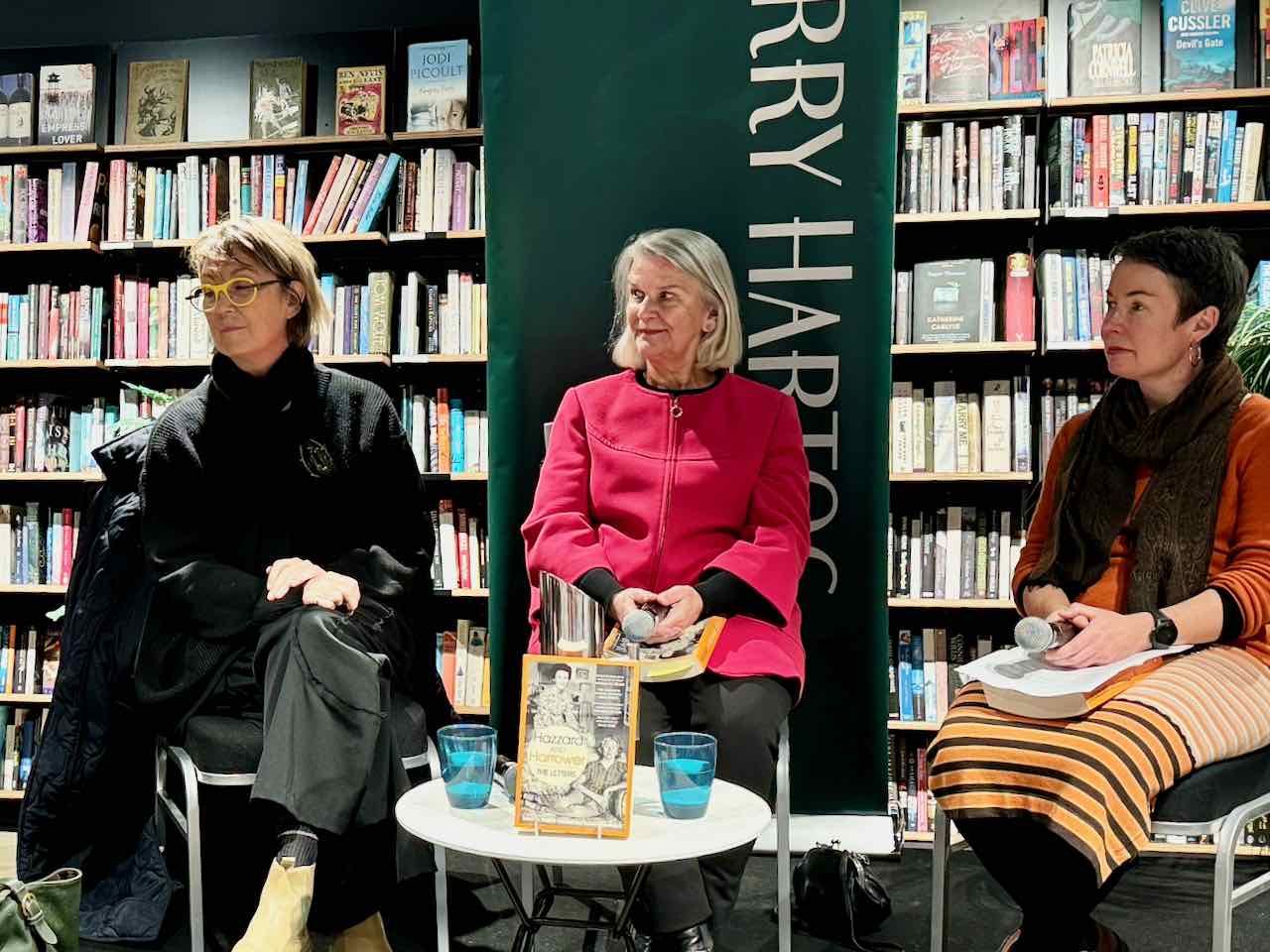
Shankari Chandran in conversation with Karen Viggers

Shankari Chandran’s conversation with Karen Viggers is the second Meet the Author event I’ve managed to attend this year, and it reminded me how much I wish I could get to more of these sessions. This one featured Shankari Chandran, author of the Miles Franklin winning novel, Chai time at Cinnamon Gardens (my review), in conversation with Karen Viggers, who was on the other side of the table at the last session I attended. Karen has appeared several times on my blog, most recently for her novel Sidelines. And Shankari was appearing at this session for her latest novel, Safe haven.

This was a wonderful session, which featured intelligent questions and thoughtful answers from two writers who care deeply about justice and how we find and express our humanity. Their backgrounds might be different, but their hearts not so.

The conversation

MC Colin Steele opened proceedings by acknowledging country and introducing the speakers. He then introduced the conversation, describing Safe haven as appearing to be about displacement and seeking refuge, but in the end, he said, it’s about finding home.

Karen started by congratulating Shankari on winning the Miles Franklin award last year. She wanted to know how Shankari felt the moment she heard she’d won, and its impact on her life and career. Shankari told a funny story about not answering the phone at first – because it came from an unknown number – and then not believing it when she finally answered and got the news! However, of course she was thrilled, and it has been extraordinary for her career. It has affected sales, and it created a spotlight on all her works, not just the winning book, and on her ongoing themes of injustice and dispossession. She also hopes that her win has helped and encouraged other writers of colour.

Shankari also made the point that it was great to win such a prize for a diasporic migrant story, one that is not only set partly elsewhere, but that interrogates who gets to define identity to the inclusion of some and the exclusion of others.

Sticking with the getting-to-know-you theme a little longer, Karen wanted to know how Shankari manages her busy life with four children, a law career, and writing. “Very badly” was the response, accompanied by some self-deprecating humour, followed by a recognition that she has a great team in all aspects of her life.

Karen then moved onto Safe haven, using descriptors like “moving”, “confronting”, “shines a shaming light” on detention, and creating “humans we come to care about”, and noting that the book contributes to an ongoing discussion about racism and exclusion in this country. Shankari talked about the approach she’d chosen, which was to write a romance and murder-mystery set in an off-shore detention centre. Her two main characters are the nun, Sister Fina, who seeks asylum, and special investigator Lucky, sent to investigate the death of a detention guard. Was it suicide, or was it not? Shankari described her book as being about the lengths people will go to to find safety and home.

Wanting to explore the romance-and-mystery approach a bit more, Karen commented that it was a surprising decision. And here a major theme of the discussion came to the fore, Shankari’s belief in storytelling. She wanted to elevate the lived experience of marginalised people, and likes to use fiction/storytelling to take readers into a place of discomfort but one where they can feel safe to reflect and think about the ideas. She wanted a storytelling mode that is compelling, entertaining, interesting. John Le Carre used the literary thriller model to explore macro themes of injustice, so she “wanted to give it a go”.

This led to continued discussion about using fiction to draw people and explore themes, and to the specific question of what Shankari wanted readers to take away from the book. She wants people to not forget the detention centres and what is happening to people in them. Politicians – and the media – too easily appeal to our baser instincts and encourage moral panic. But, she says, there are Australians who see the situation differently – like the people of Biloela for example, people who understand why others get on a boat, risking everything, to seek safety in another country. She wanted to elevate that aspect of what it means to be Australian. (Shankari used the word “elevate” several time during the conversation, and I like it. It’s powerful, and conveys something active and positive, active.)

Shankari talked about her two main characters, and what inspired them. Sister Fina stemmed from her admiration of people whose faith calls them to the sort of bravery seen in religious people during the terrible last days of the Sri Lankan Civil War. Special Investigator Lucky, on the other hand, was fun to write, because she could have Lucky do the sorts of investigation she’d like to do. Of the friendship that develops between these two, Shankari wanted characters who help each other, not one being saviour and the other the saved.

The conversation then moved onto the book’s tougher sections, and how Shankari researched and handled writing them – the scenes at the detention centre, for example. Here, we got a clear sense of Shankari’s ethical and compassionate approach to her work. She set herself some parameters. For example, she would not try to go to a Detention Centre, because she dislikes the voyeurism involved. For this same reason, she did not want to speak to the Biloela family whose story had provided inspiration for the book. At the time of writing they were still in a difficult place. It was not her place to draw fiction from their specific experience. So, she used research undertaken by civil organisations and activists; she read memoirs; and she used her experience of working in justice. If she had a superpower, she said, it would be that through her life people have given her their stories. These recorded truths, she’s been privileged to hear.

But, obtaining these stories, including those she needed for the brutal Civil War flashbacks, requires sensitivity. Interviewing people about their trauma can re-trigger that trauma. When people do want to tell her their story, she is careful about process because they don’t aways know how telling the story will affect them. She is careful, also, to ask whether they want their “lived experience to be conveyed in fiction”. Most respond that there are few safe places in our culture for the truth except in fiction! That feels like an awful indictment on our nation, but a powerful argument for the role of fiction/storytelling in our lives.

Indeed, a strong message I took away from the conversation was absolute belief in fiction being a way to tell important truths, but awareness that those whose truths are being told may not like them fictionalised.

The novel is not all grim, however. Karen turned to the scenes in Hastings (which were inspired by Biloela). What did Shankari want people to glean from them? That strangers can become family, she said, and that we should celebrate that capacity in us. Rural communities are often remote. They only have each other, and can develop an incredible ethos. Hastings offers a moral counterpoint to the other parts of the novel, but also offers readers a place of fun and joy.

Karen raised Australia’s policy regarding asylum seekers, and our use of privatised services to manage detention centres, particularly given these companies can employ people who “have done terrible things”. And why do we not have compassion for asylum seekers? The government’s arms-length management of asylum seekers, said Shankari, erodes accountability and transparency. Her novel asks the questions. It doesn’t provide answers.

As for our lack of compassion, Shankari said she struggled to understand the high level of xenophobia she found in Australia regarding migrants. She was horrified when she returned to Australia with her children – telling them it was “home” – only to find strong racial profiling of “friend” and “foe”. It’s disturbingly easy for politicians and media to trigger xenophobia – and not just in Australia. But she believes we are capable of integrity and intellectualism. This experience, and talking with Aboriginal activists, led her to think about the creation of nation, about the mythology of a nation’s founding and how we construct identity from this, one that involves the inclusion of some and the exclusion of others. She saw a link here with Sri Lanka’s founding mythologies. Does our concept of being Australian really need us to create “other” to maintain it?

Shankari believes that we have a choice in how we want to be – to face the future with fear, or with compassion!

Finally, Karen asked Shankari about how, with such a serious subject, she manages to achieve her light touch. It’s not conscious, but she’s a funny person, said Shankari – and life is tragic and funny. There’s irony too, including in the title. As to whether humour helps keep her sane, Shankari said that a lot of her work deals with trauma. She relies on humour to enable her to keep writing and her readers to keep reading. Writing trauma is traumatic, but she’s writing about the experience of people who have suffered but have survived, who are resilient. Their lives need to be elevated and remembered.

Q & A

On how children of disaporic migrants can broach their background with colleagues and friends. Books and stories, said Shankari, offer a good way in. Also, curiosity and questioning, and trying to meet people where they are. She shared advice she once received from a First Nations Australian, which was to “listen in order to listen, not to react and respond”. (What great advice.)

On how she, not Sri-Lankan born, knew all the details she used in her book, and how she decided on the Cook issue in Chai time in Cinnamon Gardens. For the first, Shankari laughingly credited the talkativeness of her extended family, but regarding the second, she reiterated her point about the creation mythologies in Australia and Sri Lanka and the role they play in forming national identity.

Vote of thanks

Sally Prior, literary editor of The Canberra Times offered a brief but heartfelt vote of thanks. She commented on the lack of curiosity in Australians regarding asylum seekers – who they are and why they want to come – and said she was inspired by Shankari’s persistence. She thanked all involved for an excellent conversation, to which all the audience could say was, hear, hear.

ANU/The Canberra Times Meet the Author
MC: Colin Steele
Australian National University
13 May 2024

Monday musings on Australian literature: Reading groups aka bookgroups

Many litbloggers, I know, also belong to reading groups or bookgroups. (I use the terms interchangeably.) Jonathan (Me fail? I fly!) regularly writes engaging posts about his groups and their discussions, such as this most recent one on Paul Murray’s The bee sting. And I often refer to mine, though not with the same detail that Jonathan does.

A good bookgroup is a special thing, and those of us in successful groups often receive requests from others to join them. Unfortunately, most of those requests get turned away. There are only so many people a group can sustain – both physically in terms of the homes where most of us meet, and practically in terms of managing discussion. There is a sweet point between too big and too small, but I digress. This post is not about discussing these bookgroups. Instead, I want to focus on what those people looking for a bookgroup can do if they can’t find one or start one of their own. So, here are some ideas that might help you know where to start looking …

Public libraries

Some public libraries, as you would expect, do run or host reading groups. An example is the City of Parramatta library system in Sydney. They meet monthly at different branch libraries to “to discuss books, share ideas and have fun in a casual friendly environment”.

Other public libraries offer book club sets or kits for use by reading groups, but these tend to be for off-site pre-existing reading groups. They can be useful if you are in a group, or even if you want to start a group. The ACT Library Service offers this service, as indeed does the City of Parramatta.

The website, Australia Reads, lists, by state, many such library book clubs, so it’s a good place to start if you are in Australia.

Sometimes, public libraries provide a venue for reading groups that are run by an external group. A special example of this is Melbourne’s (and maybe Australia’s) longest running book group, the Ivanhoe Reading Circle which started in 1920. This group, these days at least, is a large group at which, I understand, a member presents on the chosen book, and then the floor is opened for questions and discussion. One day, when I am in Melbourne, I hope to get to it.

Adult education

Adult education services have been in the business of encouraging and supporting book discussion in Australia since the early days of the colony. Mechanics Institutes and Schools of Art developed libraries for use by their members, who were often workers with few resources for books. Many also ran courses and some have organised, and still do, reading groups. For example the Sydney Mechanics’ School of Arts badges itself as supporting members since 1833. They currently have many members-only interest groups, and these include a Mystery and Crime Reading Group. Likewise, the Ballarat Mechanics Institute offers a reading group (though I’m not sure that it has survived COVID.)

Then, there are discussion groups run or offered by organisations like Sydney’s WEA (the Workers Education Association, established in 1913) and the U3A (University of the Third Age). These groups tend to be member run, so you join and then try to find a group near you. They can have waiting lists, but they are a good option. Teresa, who often comments here, has been running a U3A Landmarks in Australian literature discussion group in Melbourne for years. I notice that on the same webpage is another group which discusses American literature. My mother was a member of a Canberra U3A reading group, until she died.

And, rather like the public library book services mentioned above, there are groups like Victoria’s Council of Adult Education which has been providing books to reading groups, around Australia, since 1947. My own group used this service for a few years. They also offer a reading group finding service. How good is that!

Bookshops

And then, of course, there are bookshops. Pam (the Travelling Penguin) belongs to one at Fuller’s Bookshop in Hobart. They run quite a few groups, in fact. In her most recent post, Pam not only mentions what she’ll be reading next, but shares that Fuller’s has just won the Best Bookshop in Australia at this year’s Australian Book Industry Awards. The judges praised the store for its “first-class events program and investment in fostering literacy”. (It just so happens that I met Pam last year in the Fuller’s cafe when I went to Hobart for my brother’s book launch and exhibition opening.)

Muse bookshop
Muse bookshop (before an event)

Closer to home is our very own Muse, about which I have posted many times, because they also run author conversations as well as two book groups. Unfortunately, I have not attended the bookgroups because they clash with my commitments. But, I regularly check out what they are discussing and, if I can catch him, talk to bookseller Dan about the chosen books and anything else we are reading. The two bookgroups Dan runs are the Translation Book Club and the OzLit Book Club.

Then, moving north up to Queensland, there’s the active Avid Reader bookshop in Brisbane. They have a Bookclubs Manager, and offer several bookclubs, including Fiona’s Open Bookclub, the High Noon Bookclub, the Her Voice Bookclub and, even, an Online Bookclub. The onsite bookclubs are free if you purchase your book from Avid Reader, or $10 if you don’t.

So…

This is not meant to be at all comprehensive – how could it be – but to provide some starting points for those who might be looking for a reading group. Or, just give you a sense of the breadth and depth of the book-ish world. You – and we – are not alone!

I’d love to know if you have had experience of looking for a reading group, and/or if you can add to the ideas here or just share your favourites.

Anna Funder, Wifedom (#BookReview)

Anna Funder’s Wifedom: Mrs Orwell’s invisible life is a book with a mission, a mission that is implied in its full title. That mission is to examine the notion of “wifedom”, and the way patriarchy works to construct it, through the example of the invisible – or, as Funder also calls it, erased – life of George Orwell’s wife, Eileen O’Shaughnessy.

To do this, she wrangles Eileen out of the shadows of history to produce an intelligent, funny, warm-hearted, loyal and hard-working woman who, observed novelist Lettice Cooper, loved George “deeply, but with a tender amusement”. It’s an engrossing story, well-told. However, it’s a challenging read too.

Funder explains early in the book that her interest in Eileen came from reading something Orwell wrote about women and wives – after Eileen had died. It’s astonishingly misogynistic, and made her wonder who Eileen was and what she might have thought. Funder set about reading six Orwell biographies written between 1972 and 2003, but she found them unhelpful when it came to Eileen. Indeed, she says, they gave so little that they “started to seem like fictions of omission”. Funder then, logically, went to these biographers’ sources. She found some more bits and pieces about Eileen, but it wasn’t enough. All she had was “a life in facts, a woman in pieces”, so she “considered writing a novel – a counterfiction to the one in the biographies”. But, she was fascinated “by the sly ways” in which Eileen had been hidden, and she felt a novel couldn’t effectively explore this. Then she “found the letters”.

These were six letters that Eileen had written to her good friend Norah from just after her marriage in 1936 until 1944, but they had not been discovered until 2005. These letters gave her Eileen’s voice – and this voice was “electrifying”. Funder believed she could no longer write a novel. She writes,

I wanted to make her live, and at the same time to reveal the wicked magic trick that had erased her, and that still holds sway today. I thought of it as writing a fiction of inclusion.

“it’s hard … for history to find you”

This is where the book gets tricky, because, while I found Wifedom a fascinating read, it raised questions too, and they are intrinsic to what Funder is trying to achieve, and how she goes about achieving it. The book is divided into five parts, with the first part titled “Wifedom, A Counterfiction”. What does this mean? She doesn’t immediately explain what I have described above. Instead, she opens her book on a scene in which she imagines Eileen writing a letter to Norah – and she includes excerpts from that letter. This throws us readers in at the deep end. As we get into the book, we come to recognise these imagined sections, because they are identified by indentation, and opening and closing graphical symbols, but at the beginning it’s a bit mystifying, albeit an engaging way to capture our interest.

Early in the read, then, it becomes apparent that Wifedom comprises a complex mixture of processes and forms. The imagined sections are interspersed throughout the book between more traditional biographical writing about Eileen and George’s life. And interspersed between these are reflections from Funder’s own life, because one of her points is that the patriarchy, the “patri-magic”, which erased Eileen’s life from George’s biography, still exists and is evident in her own life as a wife and mother, despite her supportive husband and “egalitarian” marriage. I’m not going to focus on this aspect of the book, though, because it seems to fade away somewhat as Eileen and George’s story picks up, and is not, anyhow, where I want to go in this post.

Instead, I want to tease out the process. Early on Funder writes that

Looking for Eileen involved the pleasure of reading Orwell on how power works. Finding her held the possibility of revealing how it works on women: how a woman can be buried first by domesticity and then by history.

This is not particularly new. Anyone interested in feminism is aware of how women have been lost in (and thus to) history. However, Funder’s book is enlightening in this regard. She does an excellent job of interrogating how it can happen. It happens when biographers ignore or play down the role of women in their subjects’ lives. Through cross-matching her sources she finds example after example of Eileen’s contributions being downplayed or omitted. She shows how the use of passive voice and terms like “wife” rather than Eileen’s name work to make her disappear. (Orwell does it himself in Homage to Catalonia.) She finds examples where biographers, disconcerted by some of George’s behaviour, excuse it (how often are men excused!), or, uncertain about evidence, will rephrase it. For example, Funder writes that Eileen

noted his extraordinary political simplicity – which seems to have worried one of the biographers, who rewrote her words to give him an ‘extraordinary political sympathy’.

Eileen’s words come from a 1938 letter to Marjorie Dakin. The biographer is Crick. (Another of the textual clues to readers in this book is that Eileen’s words are conveyed in italics, while the words of others are enclosed in quotation marks.)

But here’s the challenge – interpretation. Funder writes early in her book that,

As serendipity would have it, in 2020 Sylvia Topp published Eileen: The Making of George Orwell, which contained much material I hadn’t found, and was thrilled to read, though we interpret it differently, and so build differing portraits of Eileen.

She does not explain what she means here, but in the very thorough Notes at the end of the book, Funder elaborates on Topp’s approach to Eileen. Put simply, Topp, Funder says, sees Eileen as one of those celebrated people’s partners who devoted their lives “joyfully to assisting the talented partners in all their various needs knowing all along that they would be under-appreciated, and often ignored, and yet never faltering in their dedication, or in their willingness to submerge their own personal talents into their partners’ success.” Topp, then, sees Eileen as a “helpmeet of genius” while Funder is interested, as she writes in these Notes, “in examining what it took, perhaps, to be in that marriage, and that dream”.

So, what we have here is interpretation. Topp had the same sources that Funder did. Indeed, she added some to Funder’s arsenal. But, she interprets them differently. As a feminist, I easily aligned with Funder’s interpretation, but as I read I also had this little niggle that Funder was interpreting her sources – from the perspective of her times, values and gender – just as other biographers had before her.

Wifedom was my reading group’s April book. Our conversation focused mainly on the biographical content – on Eileen’s life, on George Orwell and his books, and on the impact of patriarchy on Eileen. We were horrified by the life led by Eileen, as Funder tells it – and the facts seem inarguable. Their relationship appeared to us to have been so one-sided. Eileen did all the domestic work, and it was hard work given the primitive rural cottage that they called home. She was, often, the main breadwinner, and she did his typing, as well as offering editorial comment. She was necessary to him. Meanwhile, he focused on his writing and, we gathered, chasing other women. And yet, Eileen stayed with George. Why, we wondered?

We didn’t delve into the interpretation issue, albeit I would have loved to, but I needed more time to collect my thoughts. We did, however, discuss why we thought Eileen stayed with George which, I guess, was us interpreting what we’d read! Various ideas were put forward, including that Eileen might have been a “rescuer”, or that she knew she was unlikely to have been published herself (in a patriarchal world) and so channelled her energies through George, or, simply, that she loved him and, much like Topp argued, willingly helped him in any way she could.

So, there you have it! History, biography, it’s all a matter of the facts you have, and the way you see them. I don’t mean to devalue the biographer’s art by that statement, but simply to recognise that even the most formal, most rigorously documented biography will, necessarily, be affected by the biographer and their times. For this reason, I found Wifedom an absorbing and provocative read, though perhaps only partly in the way Funder intended.

Anna Funder
Wifedom: Mrs Orwell’s invisible life
Hamish Hamilton, 2023
511pp.
ISBN: 9781760143787

Fifteen Year Blogiversary Giveaway Winners

As promised, I drew the two winners of my fifteen year blogiversary giveaway today, May 10.

There were 4 entries in the non-Australian draw and 12 in the Australian draw. I used the random number generator at mathgoodies.com, and it generated 3 in the non-Australian draw, and 8 in the Australian draw.

The winners are:

Help Books Clker.com
(Courtesy OCAL, via clker.com)

Congratulations to Davida and Tony and commiseration to everyone else. I really wish you could all have won, though that would have dented my wallet rather much! Thanks everyone for playing along, and for all your good wishes for my fifteen years. And, you never know, I might run another giveaway for a future anniversary.

Now, to claim your surprise prizes Davida and Tony, you will need to send me your postal address for delivery of your book by midnight (AEST) on 18 May 2024. (My email address as at the bottom of my Who am I? page.)

If either or both of you don’t email me by the given date then I will re-draw a new winner for the prize/s. And, there is an extra condition – when you receive your surprise book would you please announce it as a comment on this post, as there are some enquiring minds who want to know what I choose.

Meanwhile, I will get on to selecting your special prizes! My thinking cap is working overtime …

Monday musings on Australian literature: Stella Prize 2024 Winner

The 2024 Stella Prize winner was announced last Thursday, the 2nd of May, but that was the also the day my blog turned 15, and I didn’t want to flood cyberspace with too many posts. Then this weekend was the SixDegrees meme which meant another post coming at you. So, I decided to do my Stella 2024 post, this year, as a Monday Musings. It makes sense to do so, in fact, because it’s an historic win. First though, the winner, for those of you who haven’t heard yet:

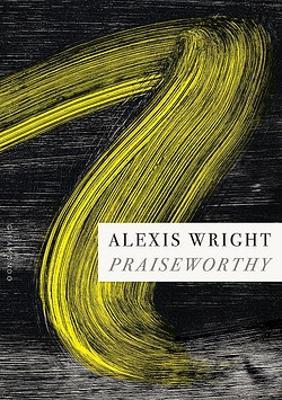
Alexis Wright’s Praiseworthy

Why historic? Again, some of you will already know this, but Alexis Wright, one of our leading First Nations writers, is the first writer to win the Stella twice in its 12 year history. An impressive achievement by any measure. I am embarrassed to say, however, that of the now four Stella winners I haven’t read, Wright’s two are among them. This is not because I don’t want to read them, but because they are big tomes, and my life doesn’t seem to lend itself these days to chunksters. I read and loved her multi-award winning novel Carpentaria (my post), which was big enough – at over 500 pages – but that was before blogging when time pressures felt different! Clearly, though, I should make time for this because, from what I can tell, its subject matter is something I care about and it has the wit and playfulness, passion and imagination, that I loved in Carpentaria.

Praiseworthy has already been recognised by the literary establishment. Last year it won the Fiction Book Award in the Queensland Literary Awards. Further, as publisher Giramondo shares, it has been shortlisted for many other awards: The Dublin Literary Award 2024; the People’s Choice Award, the Christine Stead Prize for Fiction and the Indigenous Writers Prize in the 2024 New South Wales Premier’s Literary Award; The James Tait Black Prize for Fiction 2024; and the Queensland Premier’s Award for a Work of State Significance in the 2023 Queensland Literary Awards.

The chair of the judging panel said this about the book:

Praiseworthy is mighty in every conceivable way: mighty of scope, mighty of fury, mighty of craft, mighty of humour, mighty of language, mighty of heart. Praiseworthy is not only a great Australian novel – perhaps the great Australian novel – it is also a great Waanyi novel. And it is written in the wild hope that, one day, all Australian readers might understand just what that means. I do not understand. Not yet. But I can feel history calling to me in these pages. Calling to all of us. Imagine if we listened.

Giramondo’s (above-linked) page for the book, includes excerpts from other critics and reviewers. Samuel Rutter of the New York Times Book Review describes it as “the most ambitious and accomplished Australian novel of this century”, while Jane Gleeson-White wrote in The Conversation that “Praiseworthy is Alexis Wright’s most formidable act of imaginative synthesis yet…a hero’s journey for an age of global warming, a devastating story of young love caught between two laws, and an extended elegy and ode to Aboriginal law and sovereignty”. More than one references Ulysses, such as Ruth Padel, who describes it in The Spectator as “an impassioned environmental Ulysses of the Northern Territory… Playful, formally innovative, multi-storied, allegorical, protean and dizzyingly exhilarating, it is long, lyrical and enraged”. Several, in fact, praise the language; and many comment on its satirical aspect, its lyricism, its comedy. Lynda Ng, in Meanjin, calls it:

The finest distillation yet of Wright’s themes – a bold assertion of Aboriginal sovereignty that successfully encompasses all areas of life: culture, economy, and jurisprudence.

Of course, Giramondo has selected excerpts that praise, but the sources of that praise are impressive.

There are those who think that she should/may/will be Australia’s next Nobel Laureate for Literature.

Returning to the Stella, you can read more on the Stella website, including a link to Alexis Wright’s acceptance speech, and an expressive video performance of a brief scene from the novel by Boonwurrung actor Tasma Walton.

Just to remind you, this year’s Stella judges were writer, literary critic, Artistic Director of the Canberra Writers Festival and this year’s chair, BeeJay Silcox; Filipino-Australian poet, performer, arts producer, and advocate, Eleanor Jackson; First Nations award-winning poet and arts board member, Cheryl Leavy; novelist, occasional critic and full-time dad, Bram Presser; and writer and historian, Dr Yves Rees.

Wikipedia offers a well-presented complete list of the winners and all the short and longlisted books.

Thoughts anyone?

Six degrees of separation, FROM The anniversary TO …

And so my life settles into its new routine, bouncing between the land of the Wurundjeri Wandoon people of the Greater Kulin Nation (my part of Melbourne) and, where I am this weekend, my home in Ngunnawal/Ngambri country (or Canberra). Autumn is rapidly coming to an end, and it has been mostly a lovely one, weather-wise. But enough small talk, let’s get onto the meme … If you don’t know how the #SixDegrees meme works, please check host Kate’s blog – booksaremyfavouriteandbest.

The first rule is that Kate sets our starting book. This month she set one of the books longlisted for the Stella Prize, Stephanie Bishop’s The anniversary. Kate opens her review of the novel by telling us the novel starts with an author taking her husband on a cruise to celebrate their anniversary, only to have something terrible happen …

There’s also a cruise in Rachel Matthews’ novel Never look desperate (my review), but it doesn’t open the novel and is not dramatic in the way like the one in Bishop’s novel. But it does offer an entertaining satire on cruise holidays and those who go on them. (Which is not to cast aspersions on cruises. I have never been on one, but those who know tell me that cruises can be great. You just have to find the style that matches your needs.)

Matthews’ character who goes on the cruise, Goldie, has a prickly relationship with her son (though he is not on the cruise with her). Another novel in which a mother has a prickly relationship with her son, is local author Nigel Featherstone’s My heart is a little wild thing (my review). The novel opens dramatically with the son leaving his home in a distressed state the day after he’d “tried to kill his mother” – though it’s not as bad as it sounds!

Featherstone’s protagonist runs off to the Monaro where, through a quoll, he meets the first big love of his life. Another novel in which a quoll plays an important role is Robbie Arnott’s Limberlost (my review). Both books are linked not just through the quoll, however. Both also have sensitive male protagonists. Such men can be rare in contemporary literature, but I’ve come across a few.

And here is where my chain stalled a bit, not because I had no ideas but because I wanted to travel out of Australia. Then the link came to me. Robbie Arnott’s title Limberlost reminded me of a favourite childhood book, Girl of the Limberlost by Gene Stratton Porter. I haven’t reviewed that here, but I have reviewed an article/essay by her called “The last Passenger Pigeon” (my review). It’s another dual link because Stratton Porter as a young child, like young Ned in Limberlost, lived close to and loved nature, albeit Ned’s relationship to nature is more complex, as he both uses and loves it at the same time.

But, oh oh, although the Passenger Pigeon was an American bird, we are returning to Australia, and to Carmel Bird’s collection of short stories, Love letter to Lola (my review), because in this collection, which features several stories about extinct animals, we have, yes, a passenger pigeon. (Indeed Carmel Bird commented on my Stratton-Porter post because she was writing this story around the same time!)

With a title like this, I had many options for my final link, and I’ve gone with an obvious one, that is, a book with the word “love” in the title. However, it too is a dual link because it is also a collection (well, an anthology) of short stories, and it takes us around the world, as does Bird with her various extinct creatures. The book is Love on the road 2015, edited by Sam Tranum and Lois Kapila (my review). As I wrote in my post, this collection takes us from Iran to the Philippines, from Zimbabwe to Costa Rica, from New Zealand to the USA – and we see love in all sorts of guises.

So, we stayed mostly in Australia, ostensibly, but in fact two books let us and our imaginations take flight to all parts of the world.

Picture Credit: Gene Stratton-Porter (Uploaded to Wikipedia, by gspmemorial; used under CC-BY-SA-4.0)

Now, the usual: have you read The anniversary and, regardless, what would you link to?