Monday musings on Australian literature: Vale Kerry Greenwood

I was sorry to hear a few days ago that the Australian writer Kerry Greenwood (1954-2025) had died on 26 March, at the too-young age of 70. Her death was only publicly announced week ago, which is fair enough. Families have a right to grieve their loved person in private if they so desire. It appears she had been seriously ill for some years, but was still writing to the end. Once a writer …

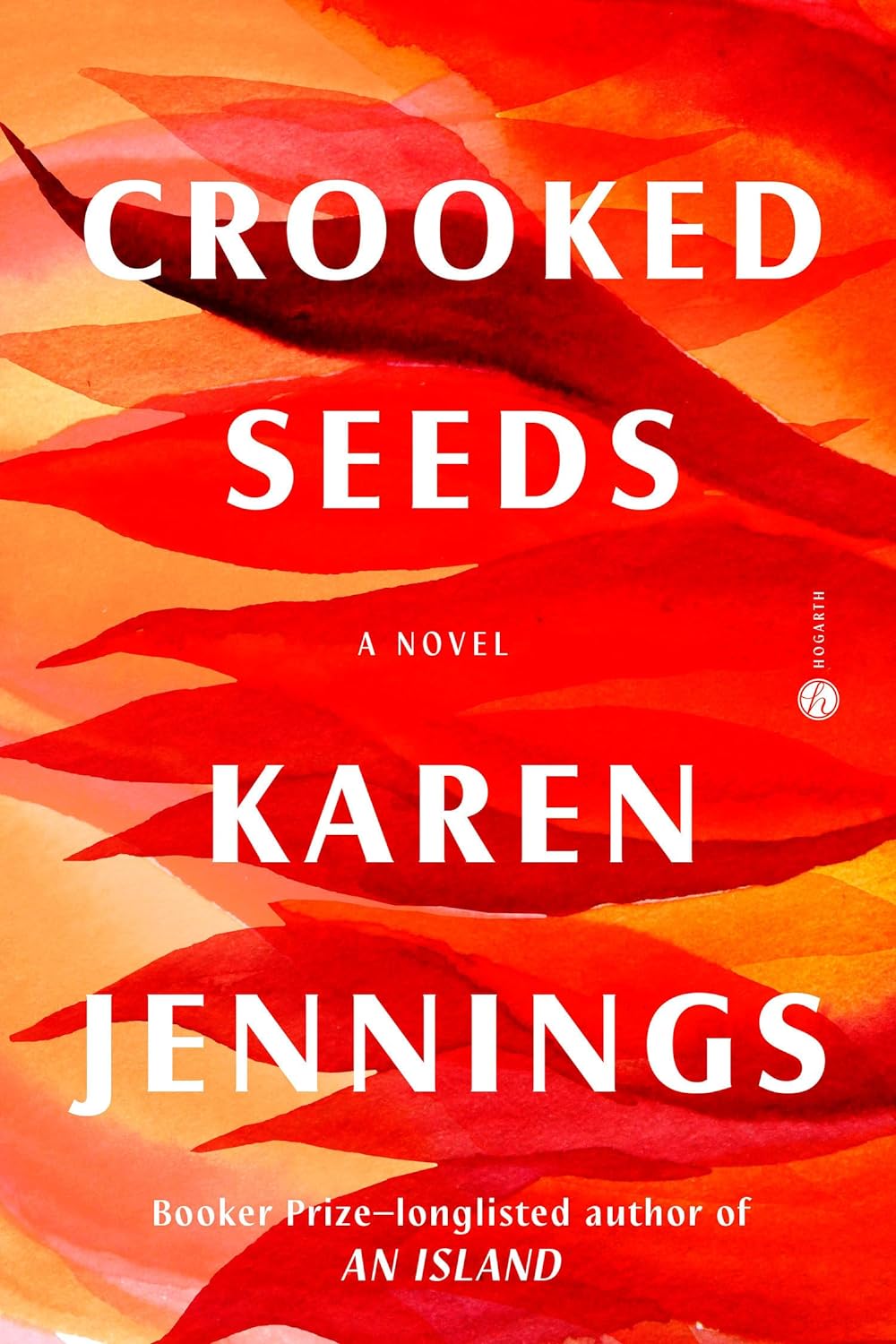
Kerry Greenwood, The Castlemaine murders

Greenwood has appeared a few times on my blog, but more in passing – such as being the inaugural winner of the Davitt Lifetime Achievement Award in 2013 – than as a featured author. This is because she mostly wrote in a genre I don’t tend to read, crime fiction. She is best known for her Phryne Fisher historical crime detective series, which was turned into a very successful television series, and a movie. I saw both the series and the film, which is how I consume most of my crime, rather than through reading.

She was, however, a prolific writer, as you can tell from her Wikipedia page. She wrote across many forms and genres including mysteries, science fiction, historical fiction, children’s stories, and plays. She won many awards for her books, including Australia’s various crime awards, and a few children’s book awards. She was, from what I’ve read, as colourful, brave and inventive as her heroine.

Allen & Unwin, Greenwood’s publisher since 1997, wrote on Facebook that:

Kerry was a gifted writer, a generous spirit, and a fierce advocate for creativity, joy and justice. She brought us the iconic Phryne Fisher and Corinna Chapman—two unforgettable heroines who continue to inspire readers around the world.

Since 1997, we’ve had the honour of publishing her work, with over 1.4 million copies sold globally. A new Phryne Fisher novel, Murder in the Cathedral, will be published later this year.

The Guardian’s obituary shares more from Allen & Unwin, including that she’d said she “had two burning ambitions in life: to be a legal aid solicitor and defend the poor and voiceless; and to be a famous author”. She certainly achieved the latter, and I understand that as a lawyer she did her best to achieve the former. Melbourne’s Her Place Museum shared this little video on Facebook, in which she talks about her decision to become a lawyer. The beautiful obituary on her website, by her partner, the “Duty Wombat” (aka David Greagg), tells more about her legal work.

But, I’ll end with some words from Sue Turnbull’s obituary in The Conversation. Many of her books, she writes

sit within what has often been characterised as the “cosy” genre: a subgenre of crime fiction to which Kerry’s crime fiction certainly belongs. Until recently, cosy crime has tended to be underrated, compared to the kind of “gritty” crime fiction that wins accolades. 

This has obscured the achievement of crime fiction such as Kerry’s, in which historical and contemporary social issues are reflected back to us in ways that give us pause, even as they are presented in a form designed to entertain.

This is Kerry’s legacy: a wealth of entertainment with a heart. Her novels are provocations to care about social justice.

Many tributes are being planned, such as a screening of the outrageously flamboyant movie, Miss Fisher and the Crypt of Tears, at Yarraville’s Sun Theatre, on 16 April.

Vale Kerry Greenwood.

Jane Austen, Emma (Vol. 1, redux 2025)

EmmaCovers

As long-time readers here will know, my Jane Austen group did a slow read of Austen’s novels over several years, starting in 2011. In 2022, we decided it was time to repeat the exercise, and are again reading them chronologically, one each year, making 2025 Emma’s turn.

Our slow reads involve reading and discussing the chosen novel, a volume at a time. We “try” to read as though we don’t know what happens next, to help us focus closely on what we think Austen is doing. Of course, we can’t read like a first-time reader, but it’s a useful discipline.

We always wonder whether this time, after so many reads, we will see anything new or fresh. But, we always do. Just the march of time, with its impact on our knowledge, experience and tastes, means we see the books differently. Take Emma, for example …

Jane Austen, Emma, Penguin

A few re-reads ago, what stood out for me was its beautiful plotting. There’s barely a word or action that doesn’t imply or lead to something telling, even if we are unaware at the time. From my last major re-read, in 2015, I noticed how often the word “friend” or the notion of “friendship” was appearing. The novel starts with Emma losing her governess-then-companion Miss Taylor to marriage. They’ll remain friends but Emma is left alone with her gentle but fussy father. So, she nurtures a friendship with the 17-year-old Harriet. In my post on rereading Volume 1, I explored the idea of friendship, and then watched in Volumes 2 and 3 to see whether the idea continued. It did. This is not to say that what we might identify in a slow read will overtake previous ideas, but that these re-reads enable us to tease out more of the details, which usually results in a deeper understanding of the whole.

So, what would I find this time? I did consider choosing something to look for, like the role of letters or music in the novel, but decided to just see what played out. Sure enough, something popped up, the idea of young people lacking guidance. It relates to issues like character development and to themes like parenting. And, I found it all there in the first few chapters.

The novel begins:

Emma Woodhouse, handsome, clever, and rich, with a comfortable home and happy disposition, seemed to unite some of the best blessings of existence; and had lived nearly twenty-one years in the world with very little to distress or vex her.

This can be teased out in many ways, but, remembering that “very little to distress or vex her”, I’m focusing on where Austen goes next. As explained above, the novel opens with Emma’s governess-then-companion Miss Taylor having just married, so Emma, who lost her mother when she was very young, is left alone with her “valetudinarian” father, “a nervous man, easily depressed”. She indulges him, as only a devoted daughter can, but otherwise, she is untrammelled. Austen describes her life, to this point, in the third and fourth paragraphs:

Emma doing just what she liked; highly esteeming Miss Taylor’s judgment, but directed chiefly by her own.

The real evils indeed of Emma’s situation were the power of having rather too much of her own way, and a disposition to think a little too well of herself.

And there it is, “directed chiefly by her own [judgement]”. Neither Emma’s “nervous” father nor the mildly-tempered Miss Taylor/Mrs Weston question or guide her. However, in the same chapter, we learn that there is one who does, her brother-in-law Mr Knightley, “a sensible man about seven or eight and twenty”. Austen writes that:

Mr. Knightley, in fact, was one of the few people who could see faults in Emma Woodhouse, and the only one who ever told her of them …

We see several examples of his chiding her in Volume 1, including about her interference in Harriet’s response to a marriage proposal. We also see him discussing Emma with Mrs Weston, telling her that she had been a good companion to Emma but had also been better at submitting her will to Emma than in giving Emma the “complete education” he thinks she needed.

Now, moving on to Chapter 2, we hear of another young person, the three or four and twenty, Frank Churchill. His mother, too, had died when he was very young, and, for a number of reasons, he

was given up to the care and the wealth of the Churchills [aunt and uncle], and he had only his own comfort to seek, and his own situation to improve as he could.

The implication here is that he too had been left to his own devices with little guidance other than “his own comfort”. It occurred to me, during this reading, that he is being set up as a parallel and perhaps eventual foil to Emma. But, hold that thought, because Frank does not physically appear in Volume 1. There is, however, a telling discussion at the end of the Volume about his not coming to Highbury to meet his father’s new wife, Mrs Weston. Mr Knightley – note, it’s him again – argues that while Frank’s aunt and uncle are given as the reason:

There is one thing, Emma, which a man can always do, if he chooses, and that is, his duty.

Frank simply needed to use the “tone of decision becoming a man”, and there would have been “no opposition”.

Finally, there is a third example, the aforementioned Harriet Smith, who is introduced in Chapter 4. She

certainly was not clever, but she had a sweet, docile, grateful disposition; was totally free from conceit; and only desiring to be guided by any one she looked up to.

The natural child of an unknown person who had paid for her schooling and now for her boarding at that school, Harriet has no parent to guide her, only school teachers – and now, the flawed Emma. By the end of Volume 1, it is not going well for Harriet, who has lost one real and one imagined suitor due to Emma’s guidance.

So, as Volume 1 progresses through its 18 chapters, we see some of the fallout of Emma’s being a law unto herself and ignoring the wisdom of others. I look forward to seeing if this idea is followed through in Volume 2. Is it important to Austen’s world view? Watch this space …

Irma Gold in conversation with Karen Viggers

The Canberra launch of Irma Gold’s latest book, her second novel Shift (my review), was a joyful affair that reminded me of other launches of books by Canberra writers, such as Karen Viggers’ Sidelines and Nigel Featherstone’s My heart is a little wild thing. Canberra is a comparatively small jurisdiction so when one of our own launches a book, local authors, booksellers, publishers, editors, critics, reviewers and readers turn out to cheer them on. Such was the case tonight when Irma Gold came to town to launch Shift. She now lives in Naarm/Melbourne, but was active in the Canberra literary community for over a decade.

Both Irma Gold and Karen Viggers have appeared many times in my blog, so I won’t introduce them again, but I will remind you that they now jointly produce the Secrets from the Green Room podcast. They are clearly simpatico, and the conversation, as a result, flowed easily while still covering meaningful ground.

The conversation

Karen commenced with an acknowledgement of country and a rundown of Irma’s many achievements, and then led into the conversation with a cheeky question …

Had the several outstanding reviews she’d received in the first month after publication gone to her head? It has been a dream response, admitted Irma, but what means most to her are the supportive messages she’s received from her friends in Soweto.

Karen then briefly summarised the book. It’s about portrait photographer Arlie who goes to Kliptown, in Soweto, partly because his South African mother refuses to talk about it. The sensitive and somewhat lost Arlie needs to know more, to understand his mother, and, he’d like to prove himself to his father. Karen said she found the ending deeply moving.

Why South Africa? Irma’s father was born there, so she’s always been interested. This was further sparked in her teens when she read Biko, resulting in her reading more about freedom fighters and South Africa more widely. She didn’t get to South Africa until her 40s, when she went with her youngest brother. Through a chance meeting, they were introduced to Kliptown, a community with no electricity, school or sewerage, among other things. A seed was sown then. She visited again, with another brother (a trip which I followed through Irma’s Instagram account. It was fascinating, if I can use such a shallow-sounding word for such a poorly supported community.) Karen then asked how dangerous it was. Irma felt safer in Kliptown, despite its reputation for violence, than in other parts of South Africa, mainly because she and her brother were working in and for the community.

On the haves vs have-nots. Karen spoke of how well Irma had illustrated the gap between the haves and have-nots; how she’d shown Arlie displaying his privilege without always being aware of it, while other times he’d catch, and be embarrassed by, his stumbles in this regard. Irma shared an anecdote about giving money to someone who had been their guide, and the difference it had made for him. She felt guilty all the time. As she was writing the novel she reflected constantly on how, by virtue of birth, she lives here in privilege and they live there.

On creating a great sense of place. Irma kept notebooks, and took lots of phots and videos. Watching the videos would take her right back there, and she’d remember more including things she hadn’t written down. People didn’t mind her taking photos. In fact they loved it, but she was working with the community.

On the characters and their names. Irma has no idea where Arlie came from. He was in her head when she made her first trip to South Africa. Also, she didn’t specifically choose photography for him but in retrospect, she realises it’s the perfect choice, because photography is all about different ways of seeing things. She’s always loved photography, but she did have expert advice from a photographer in the Canberra writing community. Jigs, Arlie’s brother’s fiancee, also just came to her, but the spark for Glory came from seeing a gorgeous young woman in a local gospel group. As for her African characters’ lively names, many of the Africans she met know what their names mean, why they were given their names. Being an “over-sharer” herself, she loves their openness and willingness to tell their stories.

On Mandela. Irma was shocked to find that Mandela was not the hero in young Africans’ eyes as he was in hers. They feel they’ve been sold a “broken dream”, that things have not improved as they were promised. Bob Nameng of SKY (Soweto Kliptown Youth) kept telling her that she had to write about the situation because no one is listening, nothing changes. This is not to say that Kliptown is all tragedy. There is also a lot of joy. She saw so much art and music in the community, and an overall “lust for life”.

On relationships. Karen was particularly interested in what Irma was trying to show in Arlie’s difficult relationship with his father. Irma said that Arlie judges his father harshly, but Glory suggests to him other ways of looking at the situation. Forgiveness and openness are important in relationships.

What is she asking of her readers? Irma liked the idea that she was “making the invisible visible”. She grew up in a family that had strong feelings about injustice. Ultimately, the book is about people. They are the most important thing to her. Kliptown is its people. She also likes Charlotte Wood’s idea of following “wherever the heat is”.

Q & A

On the title: It was a complicated process. Her original title was either disliked or deemed forgettable. In the end she produced a list, from which the publisher made a selection, and she chose one of those! She now likes her title.

On being published in South Africa. Currently only Australia-New Zealand rights have been sold. It’s difficult getting books into other jurisdictions.

Karen concluded by asking whether there was a “drive for change” in the novel. Although Irma had said that people and relationships are her over-riding interest, she admitted that change is also part of what it is about. Yes! I remember that Irma also said her first novel The breaking was primarily about the relationships. However, it too is about an issue – elephant tourism – that she would like to see changed. The way I see it is that her novels are inspired by justice-related issues that she would like to see changed, but that relationships are what fascinate her. In truth, you probably can’t solve big issues without having good relationships. Combining a passion for driving change and for good relationships between people makes, I’d argue, for good reading.

Thanks

The evening concluded with Irma thanking many in the Canberra community who had helped her, including of course Karen Viggers, but also John Clanchy who had read many drafts and whose honest feedback was instrumental in the book’s coming into being, Dylan Jones for being her photography consultant, the wonderfully supportive Canberra writing community, ArtsACT for helping her with some funding (again), and the Street Theatre for hosting the event.

Irma Gold – Shift: Book Launch
The Street Theatre, Canberra
9 April 2025

Monday musings on Australian literature: UNESCO Cities of Literature

A year before I started this blog, Melbourne was designated as a UNESCO City of Literature, something I briefly mentioned in a 2010 post on the Victorian Literary Map. The City of Literature program is part of UNESCO’s wider Creative Cities Network which was launched in 2004, and which itself grew out of UNESCO’s 2002 Global Alliance for Cultural Diversity initiative. According to the Cities of Literature website, the Creative Cities Network encompasses seven creative fields: Crafts & Folk Art, Design, Film, Gastronomy, Literature, Music, and Media Arts. Currently there are 53 Cities of Literature, across 39 countries in 6 continents.

Edinburgh was the first City announced in 2004, with Melbourne becoming the second in 2008. Iowa City was also designated that year. Since then 50 more have been added with a second Australian city, Hobart, being among the most recent added to the list, in 2023. The full list is available online at the Cities of Literature website.

What does it mean, and how does a city become a City of Literature? To start with, it is up to cities to apply to be so designated. Once they apply, they are assessed against a number of criteria. These criteria aren’t specifically listed, but the Cities of Literature website says that these Cities “share similar characteristics”, which presumably draw from the criteria? The characteristics are:

  • Quality, quantity and diversity of publishing in the city
  • Quality and quantity of educational programmes focusing on domestic or foreign literature at primary, secondary and tertiary levels
  • Literature, drama and/or poetry playing an important role in the city
  • Hosting literary events and festivals which promote domestic and foreign literature
  • Existence of libraries, bookstores and public or private cultural centres which preserve, promote and disseminate domestic and foreign literature
  • Involvement by the publishing sector in translating literary works from diverse national languages and foreign literature
  • Active involvement of traditional and new media in promoting literature and strengthening the market for literary products.

UNESCO has pages for some of the cities. Melbourne’s (Naarm) commences with:

Celebrated for its vibrant literary culture, Melbourne supports a diverse range of writers, a prosperous publishing industry, a successful culture of independent bookselling, a wide variety of literary organisations, a well-established culture of reading and is actively involved in many events and festivals.

It then lists other facts and figures about Melbourne’s literary credentials.

Hobart’s (nipaluna) page doesn’t seem to exist yet … But its page on the specific Cities of Literature site starts with the state’s First Nations people:

Lutruwita/Tasmania has a strong arts and culture presence, especially around nipaluna/Hobart. Over time, an authentic Tasmanian voice has developed in our literature and storytelling. The Tasmanian Aboriginal community drew on their knowledge, history, resilience and creativity to retrieve and revive their language, palawa kani, a composite of Lutruwita’s original Aboriginal languages. This has seen this island’s First People’s interpreting their own stories in their own language.

Today, nipaluna/Hobart is home to a multitude of award-winning and best-selling authors who have been recognised both nationally and internationally, winning awards such as the Vogel Award, Stella Prize, Commonwealth Writers Prize, Prime Minister’s Literary Awards, and the Booker Prize. From self-published authors to Richard Flanagan, winner of the Booker Prize, Hobartians have taken this special place to readers on every continent. 

Although nipaluna/Hobart was designated in late 2023, it’s at this year’s Hobart Litfest, which is running now (from 3 to 12 April), that they are celebrating the city’s designation, with the litfest’s theme being “Celebrate Hobart’s designation as a UNESCO City of Literature at Hobart LitFest!” If you’d like to check out the program, click here.

Meanwhile, the opening event featured a keynote speech by author Peter Timms in which the promotion said he would focus on how Hobart became a City of Literature & how Hobart sits against other global cities. He also, according to the promotion, was going to “delve” into Hobart’s “rich literary history, cultural influences, and key milestones” that shaped the city’s identity in the literary world, and also identify what sets Hobart apart and what it can learn from the successes of the other cities. My brother attended the keynote and reported (in comments on last week’s Monday Musings) that “he spoke about needing a regular writers’ festival (which we haven’t really had since the 1990s, if ever), support for writers through re-funding a Tasmanian Writers’ Centre and highlighted the foundation and development of the Wheeler Centre by the Victorian State Library to build on Melbourne’s declaration as a City of Literature”. I love it when people offer good, clear and aspirational but also achievable ideas.

Anyhow, do you live in a UNESCO City of Literature? Or one of the other creative cities? What do you think about the concept?

Irma Gold, Shift (#BookReview)

If Australian writer Irma Gold suffered from Second Book Syndrome while writing her second novel, it certainly doesn’t show. Her debut novel, The breaking (my review), is well-written and a great read. However, in Shift, I sense a writer who has reached another level of confidence in fusing her writing, story-telling, and the ideals and beliefs the drive her. She is passionate about her subject matter, as she was in The breaking, but in Shift she ups the ante to encompass wider themes about art. The result is a strong read that offers much for its readers to think about.

Shift is not the first novel I’ve reviewed about post-apartheid South Africa, but it is my first by an Australian author. Published, says MidnightSun (linked below), in the 70th anniversary year of the Freedom Charter, which outlined the principles of democracy and freedom in South Africa, Shift is set in Kliptown, where this charter was signed. Protagonist, Arlie, is a thirty-something art photographer who has just sold his first work to a significant gallery. It’s potentially career-changing and he should be happy, but he can’t “get his shit together”. He can’t keep girlfriends and while he gets on well with his happily established brother, his relationship with his parents is fraught. He feels his successful architect father has expectations he can’t (or doesn’t want to) meet, and his mother refuses to talk about her South African upbringing. But, Arlie wants to know.

So, after yet another relationship break-up, Arlie decides to go to South Africa, and ends up in Kliptown, in Soweto. He becomes immersed in its life, mixing with visionary choirmaster Rufaro, singer Glory and her younger brother Samson, and other locals such as his favourite photographic subject, the 80-something, “sassy as hell” Queenie. Can he create an exhibition out of his experience? Rufaro would like that …

“sold a dream”

The bulk of the novel comprises Arlie’s experiences in Kliptown, where he is the only white person. Through his eyes, we see the dire situation the people find themselves in. Early in the novel, he goes on a date with Glory to a spoken word evening at Soweto Theatre, where he hears some truths:

The people here had been sold a dream and yet more than two decades on they found themselves still in the same relentless poverty. Mandela was the broker of broken freedom.

Which is not, necessarily, to say that Mandela achieved nothing, but that life is far more complex than a “god”, as Mandela was to Arlie’s mother, can ever be. What Arlie sees, then, is poverty, drug addiction, violence and hopelessness. He sees young people, like Samson, not believing there’s any point to school. He sees a settlement without proper sewerage, electricity, or running water to their homes, not to mention with “asbestos sheeting everywhere”. However, on the flip side, he also sees community, hard work and hope.

So, back to my opening claim about Gold and her second novel. Taking the writing and the storytelling first, the writing is tight. It has the confidence of an editor, which Gold is, but mostly of one who is passionate about her material. The descriptions are fresh and vivid. We can visualise the place, with, for example, its “ramshackle tapestry of shacks constructed from discarded materials, each one rippling into the next”. The characters – who are drawn from Gold’s travels to the region (see here) – feel authentic. They are not stereotypes, but breathe life into the story with their thoughts, worries, fears and hopes. Arlie questions his actions, are they that of “a white saviour”? The colourful Glory, with her orange hair and fake orange nails, doesn’t “try to please”. She has her own views, and “plays her own game … take it or leave it”. The visionary Rufaro is passionate about the power of singing. It shows everyone, he says, who they are, that “we will be more … we are more”. Samson is a boy on the cusp of manhood, exuding bravado one moment, begging to play soccer the next.

The novel, too, is well structured. It opens with a shocking event to which we return at the end, and then follows a chronological arc from Arlie’s personal crisis and his decision to go to South Africa, through his time there, to his ultimate return home. There is drama along the way. Arlie’s father Harris visits, and Gold perfectly captures the discomfort between them alongside their unspoken love for each other. There is no simple resolution, just, perhaps, another step along the way to understanding. There is also love, violence and tragedy, but I won’t spoil those.

“make the invisible visible”

Shift is a story about a forgotten, if not betrayed, community, but one that survives all the same. It’s about a man who cannot keep a girlfriend, who is at odds with his father and distanced from his troubled mother, but who wants better relationships. It is a multi-layered love story – to a community and its people, and between Arlie and the people he cares for. But, most of all, it is a story about the power of art – or, if not that, at least about hope for art’s power. From first meeting Arlie, Rufaro has a dream that he will create “an exhibition that will show the world the truth about Kliptown”. He tells his choristers that Arlie

is going to expose what the government is doing here. That they have forgotten us. The pressure must come from outside, because our government does not listen to us.

Arlie, Gold writes later in the novel, “had always believed that art could change minds, that if enough minds were changed then the world changed” but, when it comes to it, he wonders “what could his photos possible achieve?” Can he “make the invisible visible”?

This brings me back to my opening paragraph and Gold’s wider themes. Shift is a strong, moving novel about a struggling community that has been left behind, for all the promises of freedom. However, it is also a novel that believes art can expose truths and, through that, shift our thinking and thus nudge the world towards being a better place. Gold has written her heart out in this novel to “make the invisible visible” – and to make room for hope. The next move is ours.

Irma Gold
Shift
Rundle Mall, SA: MidnightSun, 2025
269pp.
ISBN: 9781922858566

(Review copy courtesy MidnightSun Publishing)

Six degrees of separation, FROM Knife TO …

And so the year rolls on. It’s the first Saturday in April, so here I am again with another Six Degrees. It’s autumn here and we are starting to feel the change in the air. Time to get out my cool weather wardrobe again, more’s the pity! Now, I’ll get onto it … but first, if you don’t know how the #SixDegrees meme works, please check Kate’s blog – booksaremyfavouriteandbest.

The first rule is that Kate sets our starting book. This month, it’s a book I would like to read, Salman Rushdie’s memoir, Knife, in which he shares his experience of a traumatic knife attack, some thirty years after that fatwa that was ordered against him. It’s “a reminder”, says GoodReads, “of literature’s capacity to make sense of the unthinkable, an intimate and life-affirming meditation on life, loss, love, art—and finding the strength to stand up again”.

Susan Varga, Rupture

I have reviewed a Rushdie novel here, but instead of linking there, I’m choosing a poetry collection in which the poet shares her experience of a traumatic event, and of recovering from it. The poet is Susan Varga, and her traumatic event was a stroke. Her collection is titled Rupture (my review). I could also have linked on the fact that both books have stark, dramatic single word titles.

The bee hut, by Dorothy Porter

Susan Varga writes of a poet’s devastation of losing “sounds, words, sentences”. However, as I wrote in my post, it is not a bitter book, which reminded me a little of Dorothy Porter’s poetry collection, The bee hut (my review). It was the last book she wrote before she died of breast cancer at 54, and the final poem, written just two and a half weeks before she died, expresses gratitude for her “luck”.

Bill McKibben, Oil and Honey

Porter was a poet, and for her bees were a metaphor, said her partner, for “danger amid the sweetness and beauty”. I’m linking, however, to a book by someone who was fascinated by real bees, Bill McKibben’s memoir Oil and honey (my review). This book is subtitled “the education of an unlikely activist”, and is about his two main passions, one being bees, honey and good farming practice, and the other being oil, or the fossil fuel industry, and how to stop its impact on the climate. The book is both a memoir, and a manifesto about McKibben’s coming out as an environmental activist.

So, I am linking next to a novel about an eco-warrior/environmental activist, Donna M. Cameron’s The rewilding (my review). It’s a thriller by genre, but as I wrote in my review it’s about values, about the lines you draw, about the life you choose to live, and about what that means personally and politically.

Eco-warrior Nia is one of the protagonists of Cameron’s novel, but it opens with a young man, Jagger, sitting in his office deciding to do something that will lose him his flashy fiancée Lola. Just before I read Cameron, I read Willa Cather’s short story “The bookkeeper’s wife” (my review). It commences with a young man, Percy Bixby, sitting in his office deciding to do something in order to keep his flashy fiancée Stella, so it’s to Willa Cather than I am linking next.

Jane Rawson, A wrong turn at the office of unmade lists

Finally, to close this chain, I’m following two young men pondering problems in their offices to a novel with office in its title, Jane Rawson’s A wrong turn at the Office of Unmade Lists (my review). This novel is partly a time-travel book, and the office appears in the GAP between two worlds. But what makes this book an extra good link for today’s chain is that it’s also a climate change book, which links it back nicely to McKibben’s and Cameron’s books. I’m not sure, however, that I can link it back to Knife.

So, four of my six books are by Australian writers; three are about climate change and activism; and two are by poets. Oh, and four of my six are by women, which is the case in my chains more often than not.

And, have you read Knife and, regardless, what would you link to?

Monday musings on Australian literature: Tasmanian Literary Awards

While some state literary awards are well established – such as the NSW and Victorian Premier’s Literary Awards – others seem to struggle to gain and maintain traction. But, where there’s a will, there’s usually a way, as we saw in Queensland in 2012 when new premier Campbell Newman cancelled the Queensland Premier’s Literary Awards. Private individuals stepped up quickly to create a non-profit association to raise funds and run the awards, until the government returned to the party in 2014. However, in recognition of the more collaborative model that had been forged, the new name, the Queensland Literary Awards, was retained.

Small jurisdictions, like Tasmania, tend to find it harder. The original Tasmanian Premier’s Literary Prizes were established by the Tasmanian Government, and awarded biennially rather than annually. As in the ACT and Northern Territory, the focus was local writers and writing. The first awards were made in 2007.

For the first four award years – 2007, 2009, 2011 and 2013 – awards were made in three categories: Tasmania Book Prize – for the best book with Tasmanian content in any genre; Margaret Scott Prize – for the best book by a Tasmanian writer; and University of Tasmania Prize – for the best book by a Tasmanian publisher. (In 2013, this last changed to be “for the best new unpublished literary work by an emerging Tasmanian writer”).

In 2015, a fourth category was added, the Tasmanian Young Writer’s Fellowship. “Supported by private philanthropists” it was for a young writer (aged 35 years and under). The inaugural award was won by Robbie Arnott, who has gone on the justify the faith shown in him, I’d say! In 2019, the awards were tweaked again to add People’s Choice Awards in the three book categories – the Tasmania Book Prize, the Margaret Scott Prize, and the University of Tasmania Prize.

Change didn’t stop there, however, because in 2021 the name was changed to the Tasmanian Literary Awards, and the categories were expanded and/or renamed. The aim, says the current website, is to “celebrate excellence in the Tasmanian literary sector, raise the profile of Tasmanian authors and foster literary talent in our State”. They are only open to writers living in Tasmania. The first awards under this new regime were made in 2022, in the following categories:

  • Minister for the Arts’ Prize for Books for Young Readers and Children
  • Premier’s Prize for Fiction
  • Premier’s Prize for Non-fiction
  • Tim Thorne Prize for Poetry
  • Tasmanian Aboriginal Writer’s Fellowship
  • Margaret Scott Tasmanian Young Writer’s Fellowship
  • University of Tasmania Prize
  • People’s Choice Awards: Minister for the Arts’ Prize for Books for Young Readers and Children; Premier’s Prize for Fiction; Premier’s Prize for Non-fiction; Tim Thorne Prize for Poetry

I have provided a lot of detail here, but I wanted show how over time these Awards can and do change for various reasons, including government policy and/or politics, funding issues including sponsorship/donor support, and changes in the literary awards environment.

2025 Awards

The 2025 Awards have just been announced (though the biennial timeline suggests they should have been made in 2024, given the previous awards were 2022, but who’s counting). While not the richest awards around, the four book prizes carry $25,000 each, which is a decent sum.

The 2025 Award winners are:

  • Premier’s Prize for Fiction: Kate, Kruimink, Heartsease (Pan Macmillan Australia, 2024)
  • People’s Choice Award for Premier’s Prize for Fiction: Meg Bignell, The angry women’s choir (Penguin Random House, 2022)
  • Premier’s Prize for Non-fiction: Maggie MacKellar, Graft (Penguin Random House, 2023)
  • People’s Choice Award for Premier’s Prize for Non-fiction: Maggie MacKellar, Graft (Penguin Random House, 2023)
  • Tim Thorne Prize for Poetry: Pam Schindler, say, a river (Ginninderra Press, 2023)
  • People’s Choice Award: Tim Thorne Prize for Poetry: Anne Kellas, Ways to say goodbye (Liquid Amber Press, 2023)
  • Minister for the Arts’ Prize for Books for Young Readers and Children: Johanna Bell, illustrated by Huni Melissa Bolliger, Digger digs down (University of Queensland Press, 2024)
  • People’s Choice Award for Minister for the Arts’ Prize for Books for Young Readers and Children: Jennifer Cossins, Amazing animal journeys (Lothian Children’s Books, 2022)
  • University of Tasmania Prize (for best new unpublished literary work by a Tasmanian writer): Johanna Bell, Department of the Vanishing

The judges wrote of the winner, that they “were impressed with the range and depth of the novel, the skilful shifts in time and narration, while remaining perfectly readable and engrossing to the final chapter”. 

You can find all the short and longlists, and judges comments at the Awards website.

For example, the longlist (with the three shortlisted titles identified) for Fiction was:

  • V.C. Peisker, Francesca Multimortal (Ashwood Publishing, 2023)
  • Kate Kruimink, Heartsease (Pan Macmillan Australia, 2024) (Shortlist)
  • Stephanie Hagstrom Panitzki, Hotel Echoed Romeo (Self-published, 2023)
  • Robbie Arnott, Limberlost (Text Publishing, 2022) (Shortlist) (my review)
  • Rachael Treasure, Milking time (HarperCollins Publishers, 2024)
  • Meg Bignell, The angry women’s choir (Penguin Random House, 2022) (Shortlist)
  • Amanda Lohrey, The conversion (Text Publishing, 2023)
  • Leigh Swinbourne, The lost child and other stories (Ginninderra Press, 2024)
  • Lenny Bartulin, The unearthed (Allen & Unwin, 2023)
  • Carol Patterson, Vanishing point (Ginninderra Press, 2023)

As in many of the State awards, Fellowships are also awarded. Indeed, this post was inspired by the first in the list below of the two awarded:

  • Aboriginal Writer’s Fellowship (which is open to all unpublished and published Aboriginal and Torres Strait Islander writers living in Tasmania): Nunami Sculthorpe-Green. You can read the full Judges comments online, but here is the part that resulted in this post: “Nunami Sculthorpe-Green demonstrates outstanding merit and significant potential as a storyteller and writer. This award acknowledges her existing achievements and is intended to provide the impetus for her to strive towards further realisation of her substantial talent. In her published piece ‘It’s not George that we follow’ in Uninnocent Landscapes, Nunami draws her personal life, family and ancestors into a historical context in an immersive and compelling way. She critically engages with the narrative power of colonial history and writes her way into challenging this – through a project of shifting the power to not only Aboriginal voices, but to Country itself. Her critique of Ian Terry is confident and gentle”. The Ian mentioned here is my brother, and the work the judges commend is the essay Ian commissioned for his exhibition-accompanying book, Uninnocent landscapes (my review). Ian was thrilled with the essay, because of her clarity and honesty, and last week alerted me to her winning this award.
  • Margaret Scott Tasmanian Young Writer’s Fellowship (which is awarded to a young Tasmanian young writer – aged 30 years and under – deemed by the judges to have demonstrated the most literary merit): Lars Rogers (see Judges’ comments online).

Past winners can be found on the website.

Writing reviews: How much detail is too much?

Many years ago, I wrote a post on litblog reviews, specifically on what blog readers look for in reviews by other bloggers. That post looked at overall content, and has provided me with a general guide ever since.

Today, however, I have a slightly different question. It relates to detail – and was inspired by my recent post on Paddy O’Reilly’s Other houses. The details in question related to relationships and place, but in a way they serve as examples for the bigger question. I’ll explain … taking relationships first.

The novel’s central family comprises Lily, Janks and teenager Jewelee. In my post, I described their situation as follows, “Her protagonists, Lily and Janks, are “battlers“, working class people who struggle payday to payday, but they want more for their now 15-year-old daughter, Jewelee …” What I didn’t spell out is that Lily had been a single mother to Jewelee for some years, that Janks had been a junkie whom Lily hadn’t dated until he got clean, and that, several years before the novel opens, Janks had moved in with Lily and Jewelee. He had proved to be a good, in fact, devoted, father to Jewelee so when the novel opens they are an established family and he is, by any account, Jewelee’s father. And that seemed to be the important point to know – at least, in terms of what I wanted to say about this novel. However, in the posts/reviews/summaries of the novel that I have seen around the web, this issue has been handled in a variety of ways. Some have gone my way, while others explain the characters’ backgrounds with different levels of detail.

The other decision I made concerns place. In an early version of my review, I wrote something like ‘…they move from their working class suburb along Melbourne’s Western Ring Road to one they “could barely afford”, Northcote, and enrol Jewelee in “a good school”.’ The final version simply read, ‘…they move from their working class suburb to one they “could barely afford”, and enrol Jewelee in “a good school”.’ The point is that for people who know Melbourne, naming the places/suburbs would add meaning, and thus value-add to the post. But, for everyone else, those place names mean very little. In the end, I decided that the majority of my blog readers probably don’t “know” Melbourne and that all the review really needed was to explain what sort of place they’d moved from and to.

So, what do you think? How do you decide which descriptive details to leave in when you write your posts and which ones can be comfortably omitted? Do you worry about misleading readers if you leave some types of detail out? To what degree does your known/expected audience affect your decision about what to include or omit? I’d love to hear your thoughts, so now, over to you …

Paddy O’Reilly, Other houses (#BookReview)

It’s not totally coincidental that this week’s Monday Musings post was about a publisher of realist or social novels, that is, of novels which aim to explore social problems of their time. My reading group’s March book, Paddy O’Reilly’s Other houses, belongs to this tradition. I have been wanting to read it since it was published in 2022.

Searches of the Internet, including of Wikipedia, retrieve various definitions of the social novel (also called social problem or social protest or social justice novel), but they essentially agree that these are works of fiction which tackle some sort of inequality, prejudice, or injustice, through the experiences of their characters, and that their intention is to encourage social change. In Other houses, O’Reilly interrogates the idea of social mobility. Her protagonists, Lily and Janks, are “battlers“, working class people who struggle payday to payday, but they want more for their now 15-year-old daughter, Jewelee, who had started to run wild, heading down the path of delinquency.

“Good people live here” (Lily)

So, they move from their working class suburb to one they “could barely afford”, and enrol Jewelee in “a good school”. Jewelee might now behave as though she’s “too good” for her “bogan” parents, but they believe it was worth it. The problem is, Janks, now working in a food-factory, has mysteriously disappeared. The novel opens with Lily driving through her old neighbourhood at night, hoping to find Janks there. “Good people live here”, she says. “They try”.

From here the novel is told in the alternating first person voices of Lily and Janks, with Lily’s story occupying the greater part of the narrative. Having worked as a supermarket cashier in her old home, she is now a cleaner, which is where the title comes in. The novel is beautifully constructed around the cleaning jobs Lily does with her cleaning partner, the older, and wearing out, Shannon. While they clean houses, Lily reflects on her current and past lives, on the “entitled” Jewelee, on the lives and aspirations of the people they clean for, all the while worrying about Janks, and trying to find him. She prints “have you seen” leaflets and scours all the places he might possibly be. She does not believe he has deserted her willingly.

And, we know that he hasn’t. Having borrowed money from a bikie gang, he’d been “snatched” off the street, and coerced into paying off the loan by doing a job for them. The novel’s plot comes from this: will Janks get the job done, without being caught, and be allowed to return safely to the life they are building? Many of us in the group called this book a page-turner, but some disagreed. The plot is too straightforward, they said. It doesn’t have the breath-catching twists and turns of a thriller. Others of us, however, define page-turners differently. Ours don’t require an edge-of-the-seat plot. Rather, they are books that compel us on, because of the characters, or the writing, or the ideas, or the plot, or any combination of these. What do you think?

“Things, world, wrong” (Shannon)

Anyhow, there is a plot – whether you see it as a page-turning one or not – and there is also lightness, despite the seriousness of the protagonists’ plight. Much of the lightness comes from the house-cleaning scenes. Lily and Shannon name the houses they clean, such as the House of Hands (with its profusion of chrome dirtied by sticky hands), the House of Doom (whose owners see the world as “blighted”), Horror House (inhabited by a hoarder), and Lily’s favourite, the House of Light (which lets the sun shine in). They share their thoughts about the inhabitants and the lives they know (or think) they lead. If anyone knows how we live, it’s likely to be cleaners, eh? Lily’s and Shannon’s perspectives – their observations, opinions and reflections on how others live – are what gives this book its real heart.

Lily speaks with the dignity of a worker, when she says:

We know things no one else knows about our clients. I sometimes pick up objects in the places we clean – a vase, a notebook, a scarf … I give them attention, these things that I believe hold meaning for someone … It’s my moment of saying what I can’t say to their faces. I respect what you hold dear, even when you’re rude to me or barely acknowledge I exist. (p. 30)

Meanwhile, the older Shannon has her own mantra for how things are going, says Lily:

Something has gone wrong in the world … Shannon uses it about the eating habits for the population, the number of appliances in the kitchens we clean, leaf blowers, hair straighteners, so-called superfoods, weird weather events, toilets that wash your bottom, plastic wrapping on fruit that already has its own natural wrapping, quiz shows where she disagrees with the answers, tap water sold in plastic bottles and so much more. (p. 29)

Most definitions of the social novel say “through the experiences of their characters”, and this is true here. Telling her story through the experiences of Lily, Shannon and Janks enables O’Reilly to show what she wants to explore, without being didactic. Through these authentic characters we come to see just what the much-touted upward social mobility really is, means, and feels like. We see Lily and Janks recognising that the poverty faced daily in their old working class suburb results in lives that are lived on the edge with little opportunity to improve one’s chances, but we also see that it’s not easy to simply transplant yourselves into a different life and, essentially, culture:

Tonight my water-stained ceiling and the creeping draught taunt me that although we’ve adjusted to living here, it might be because we brought things with us when we crossed: rental damp and rot, clothes that fall apart, bank accounts that bounce between payday and zero. (p. 74)

For Lily, Broadie feels like “home” and it’s where she returns to find a solution to the problem of the missing Janks.

Other houses is a slim and accessible book, but it offers no simple answers. Rather than support the comfortable view that upward social mobility is the answer to the problems posed by socioeconomic inequity, it asks us to consider instead, how do we overcome the problems caused by inequity – indeed, how do we remove inequity – without expecting people to give up everything they hold dear about where they come from? It’s a quietly provocative novel that speaks to one of the most urgent issues of our time.

Paddy O’Reilly
Other houses
South Melbourne: Affirm Press, 2022
245pp.
ISBN: 9781922626950

Monday musings on Australian literature: the Australasian Book Society

Back in 2023, I briefly mentioned the Australasian Book Society (ABS) in my Monday Musings post for the 1962 Year Club, adding that the society deserved its own post. Finally, here it is, albeit still introductory. There is a lot to research and tease out about this initiative, and I am not planning to write a thesis.

The ABS has a very brief page in Wikipedia, which tells us that it was a cooperative publishing society that ran in Australia between 1952 and 1981. It was co-founded in Melbourne by trade union leader and community activist George Seelaf, at the suggestion of novelist Frank Hardy.

In 2021, the ANU offered a Zoom seminar, titled “The Australasian Book Society: Making a Literary Working Class During the Cultural Cold War”, with Professor Nicole Moore, UNSW Canberra, as speaker. The promotion explained that one of the Society’s “masthead aims”, was

“To encourage mass participation in and responsibility for the publication of progressive Australian literature”.

According to the Zoom promo, it was “a mid-twentieth-century, book-club style, cooperative publisher with a subscription model that promised four books a year to members and distribution through unions, industry associations, education organisations and the communities of the organised left in Australia, including the communist party”. Wikipedia suggests that it was “perhaps a unique venture in Australian publishing history”. The Zoom promo explains that it produced “a long list of notable books by Australian, New Zealand and other regional authors through the polarised years of the cultural Cold War”, and was also a “conduit for Eastern Bloc publishers”.

However, there is apparently still much research to be done into “its model of production and the readership it mobilised”, into how successful it was in “creating a literary working-class readership”, and more. Hopefully someone is out there working on this.

In the meantime, I’ll share some things I found through Trove. Tribune announced the establishment of the society with much enthusiasm. On 28 May 1952 it said that

THE formation in Melbourne the Australasian Book Society is being widely hailed as an event of outstanding importance to every Australian reader and to all our serious writers. 

Six years later, on 4 June 1958, it carried an article by the writer and Communist, Judah Waten, who was the Society’s chairman. He believed strongly in the society and its value to Australian culture. He wrote:

FROM its inception the Australasian Book Society has taken an active part in the great contemporary battle of books and ideas between the forces of reaction and the forces of progress.

On the side of advancement, the ABS, as a co-operative organisation of writers and readers, has published books by writers who have endeavored to describe life truthfully and thus deepen our understanding of human relations and problems.

Unlike today’s fashionable writers who preach pessimism and man’s helplessness, the writers whose books have been published by the ABS look to the future as well as the past, arousing in their readers a determination to end the evil conditions which give rise to unhappiness. 

These writers, perhaps more than any other group of writers in the country, have continued the democratic traditions in our literature and are outstanding exponents of Australian realism.

Back in 1953, however, Melbourne’s more conservative Weekly Times (6 May) noted that not all readers who subscribed to the Society knew who was behind it:

Many people throughout Australia and New Zealand have joined the society unaware of its association with Communists. 

The society’s printed publicity said they would get “worthwhile books at the lowest possible prices.” Instead, they have got books by well-known Communist authors such as Frank Hardy. 

It doesn’t seem like the ABS hid its origins, but it probably didn’t shout it out either.

Anyhow, ten years after its inception, in 1962, the ABS was still going, and newspapers carried little tidbits of news about its achievements, such as:

  • Many Australian books published by ABS were finding their way into foreign translated editions: Dorothy Hewitt’s Bobbin up (see kimbofo’s review), about women factory workers, had already been published in the German Democratic Republic, was soon to appear in a Rumanian edition, and Hungarian and Dutch editions were looking likely (Tribune 17 January 1962); Judah Waten’s Shares in murder, was being serialised in the New Berlin Illustrated magazine, with book editions being published in both Germany and Czechoslovakia, and a Soviet edition expected “at any time” (Tribune 7 February 1962). 
  • Gavin Casey’s Amid the plenty, was, according to R.T. (Canberra Times 24 March), a truly Australian novel that bucked the modern anti-colloquial world-aware trend. “Most of the self-elected realists in Australian writing spend too much of their time explaining their characters”, says R.T., but “Casey lets them explain themselves in rip-roaring, hell-for-Ieather, damn ’em all slang”.
  • Ron Tullipan toured northern New South Wales and southern Queensland with the secretary of the Australasian Book Society Jack Beasley to promote his book March into morning, which won the 1961 Mary Gilmore Award (Tribune 10 October 1962). Tullipan is recorded as saying that “Australian people are very interested in Australian literature — if it is sincere.”

As we move into the 1970s in Trove, there are still articles about books being published by the ABS, but I could find nothing in the 1980s about its demise. This could be because, for copyright reasons, fewer newspapers from more recent decades have been digitised.

I will close with a review from the Tribune (18 July 1979) of another book published by ABS, the memoir, Red letter days: Notes from inside an era, by the above-mentioned Jack Beasley. Beasley covers the writers he knew – including Judah Waten – but also the Society as a whole. Reviewer Bob Makinson discusses the pros and cons of an insider’s view, but suggests that “those who seek to examine Australia’s cultural-political history must be prepared to accept the value of studies like this”.

Makinson concludes:

The ABS has had more than its share of problems since its official formation if 1952. The founding members had different ideas about its aims: should it publish books with “progressive social content” oriented to a trade union readership, or promote Australian literature at a time when it was stifled by establishment publishers? 

He goes on to say that “The ABS was forced to answer these questions during a period of extreme red baiting and sometimes heavy handed interference from the left” and then, concludes – he’s writing in the Tribune after all, that “it came through and still provides many Australian writers with their first publishing break. Tribune readers who wish to join ABS or find out more about it should write to …. In a period of cultural confusion and struggle ABS is worth supporting.”

A fascinating part of Australian literary culture, and one that’s ripe for study.