Stella Prize 2016 Winner Announced

WoodNaturalJust a short post for those of you who read my Stella Prize longlist and shortlist posts and haven’t heard the news – which would primarily be you readers from lands other than mine! The winner was not a surprise, as you may know if you read my response to BookerTalk’s question on my shortlist post. It’s Charlotte Wood’s The natural way of things.

Wood’s book has been garnering such positive reviews, I knew I should have read it before the announcement, but instead I read three others (Tegan Bennett Daylight’s Six bedrooms, Elizabeth Harrower’s A few days in the country and other stories, and Fiona Wright’s Small acts of disappearance.) I will definitely be reading Wood soon, since it is up for other awards this year too.

Charlotte Wood’s acceptance speech is available online at the Stella Prize site. Here are a couple of excerpts:

I know that the measure of a book’s quality, and the measure of one’s worth as an artist, can never be decided by awards. Nor can it be defined by sales, nor even the response of our beloved readers. If there is a measure – and I’m not sure there is – it can only be time.

Partly true. I discovered recently that Elizabeth Harrower missed out on the Miles Franklin Award for her wonderful The watch tower (my review) in 1966 to Peter Mathers’ pretty much forgotten Trap. (Of course, someone could revive it too as Text Publishing has Harrower’s books making me eat my words).  “Worth” though is not only about longevity. That’s one measure, sure. But relevance to the time in which the work is written and relevance to the readers of that time is, I’d argue, surely a “worthy” (ha!) measure of “worth” too. And that’s probably what awards in particular measure. Whether Wood stands the test of time, only time knows, but that she has captured something critical about our times can’t be denied if the universal acclaim this book is receiving is to be trusted. The judges certainly see it that way: they described the book as “‘a novel of – and for – our times” and “‘a riveting and necessary act of critique.”

Wood goes on in her speech to list some reasons to write, which are worth reading, but I’ll conclude with her argument about the importance of art:

Art is a candle flame in the darkness: it urges us to imagine and inhabit lives other than our own, to be more thoughtful, to feel more deeply, to challenge what we think we already know. Art declares that we contain multitudes, that more than one thing can be true at once. And it gives us a breathing space – a space in which we can listen more than talk, where we can attentively question our own beliefs, a place to find stillness in a chaotic world. I hope that my novel has provided some of those things: provocation, yes, but also beauty and stillness.

Now, I’m off to do some of my own form of stillness – yoga. Catch you all later …

Delicious descriptions from Elizabeth Harrower’s country

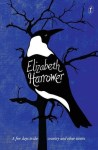
Elizabeth Harrower, A few days in the country and other stories

The hardback cover

In my recent review of Elizabeth Harrower’s short story collection, A few days in the country, and other stories, I included a few excerpts from the stories, but they primarily were chosen to reflect the themes and content. In this post, I want to focus on her use of language, through just a small number of examples as, of course, I don’t want to steal the thunder from the book itself.

Because Harrower’s focus is the psyche and human relationships, her “country” is as much the mind and heart as setting or place. Consequently, my selections here will cover this wider concept of country, but I’ll start with a physical description. It takes place off Scotland Island in Sydney’s beautiful Pittwater, in “The beautiful climate”. The family, Hector Shaw and his wife and daughter, are fishing, at Hector’s command of course. Here is the scene:

Low hills densely covered with thin gums and scrub sloped down on all sides to the rocky shore. They formed silent walls of a dark subdued green, without shine. Occasional painted roofs showed through. Small boats puttered past and disappeared.

I don’t think I need to tell you how our women are feeling, do I?

Here is a description of Alice and her favoured brothers, in “Alice”:

Meanwhile, the boys swam in attention and praise, and at an early age had had so much that they never needed it again, could afford to discard that particular life buoy and plunge out with a glossy confidence in their qualities. Alice never even learned to dog-paddle. Who would notice if she sank? The deep end was too risky for a girl whose brilliant dark-red curls could be so easily overlooked.

I love the sustained metaphor here.

In “English lesson”, protagonist Laura is devastated by a letter (from a man) responding to a letter of hers (which her friends told her she should write). We are not told the content of these letters, just the impact on Laura:

But could shock have the effect of bringing about a permanent physical change? Could she doubt it? Everything about her, physical and metaphysical, had sunk, shrunk. She was shorter, pruned, slightly murdered.

Can we doubt the impact?

And finally, here is Dan from “The cost of things”, unhappy in his marriage, but returning to his wife after a long business trip away during which he has had an affair:

He felt like someone who has had the top of his head blown off, but is still, astonishingly, alive, and must learn to cope with the light, the light, and all it illuminated.

If these don’t appeal to you, then maybe Harrower isn’t the writer for you, but if they do, I say, hop to it … and find one of her books.

Elizabeth Harrower, A few days in the country, and other stories (Review)

HarrowerCountryTextThere’s something about Elizabeth Harrower. I’ve just read her Stella Prize shortlisted short story collection A few days in the country, and other stories – and wow! Really, just wow! If you’re a regular reader here, you’ve probably noticed that I’m not one to effuse excessively about books, anymore than I’m one to pan them. I’m careful about what I choose to read, so most of what I read I enjoy. There are, after all, a lot of good and inspiring writers around. But Harrower – the more I read her, the more I see why Patrick White and Christina Stead liked her. She really is something. Her shrewd intelligence, sharp wit, and ability to penetrate the hearts of her characters in just a few words is breathtaking.

Enough though of the superlatives. They are easy to say, but can I prove they are just? I’ll give it a go. As I was reading – and enjoying – Tegan Bennett Daylight’s collection Six bedrooms (my review) I was thinking, yet again, about the current preference for writing in first person. I certainly don’t reject this narrative voice, because I do enjoy the intimacy of it, but I sometimes wonder whether it has become a little de rigueur, perhaps reflecting today’s me-focus? I don’t mean, in saying this, to criticise contemporary writers, because the self is part of the zeitgeist – and to capture that you have to use its modes. However, there’s also something to be said for standing back a little, and this is what a third person voice can do. It is, in fact, what Jane Austen is admired for – her clear-eyed ability to analytically, but wittily, comment on her society, to skewer its pretensions, entrapments and hypocrisies. Harrower exerts the same clear eye, though her focus is more the psyche to Jane Austen’s society.

Now to the collection, itself. The first thing to say is that this is a collection of twelve stories, ten of which have been published before, some as far back as the 1960s and others as recent as last year. Some have been multiply published in anthologies, and some have been reworked. Oh, and eleven are told in third person, with just one in first! There is a subtle underlying structure to the collection, with the first four being about young people – starting with ten-year-old Janet in the opening story, “The fun of the fair”, then moving on to teenagers and young women – followed by the later stories which feature married couples or single adults facing the lives they have made for themselves. The last shocking story, the titular “A few days in the county”, could only be at the end.

There is, I’d say, an overall theme to the collection, and it is best expressed by Clelia in the penultimate story, “It is Margaret”. Her mother, Margaret, has just died and Clelia is dealing with her step-father, a very controlling man reminiscent of Felix in The watch tower (my review) and Hector Shaw in this collection (“The beautiful climate”). Clelia thinks:

Here it was again–the mystery that pursued her through life in one form, in another, returning and returning, presenting itself relentlessly for her solution: how should human beings treat each other?

This is one of those chilling stories about the power people, men usually, can exert over others, and the way women, more often than not, submit to that power, as Margaret did. But Margaret – the title allluding to one of my all-time favourite poems, Gerard Manley Hopkins’ “Spring and fall” – has died, and “there was no further harm Theo could do”. We hope.

This theme, the way people treat each other, is at the heart of every story, and culminates in the final one, “A few days in the country”. What an unnamed someone did to the protagonist Sophie is not made explicit, only hinted at, but the consequences are devastating for her. An undivulged act having a dramatic impact on the protagonist is also explored in the tenth story, “English lesson”, nicely setting us up for this last story and again suggesting a careful hand in ordering the stories.

The consistent world view regarding power and manipulation in the way human beings treat each other is offset by variety in setting, character, story and tone. I was intrigued, for example, by two that read almost like little fables, “Alice”* and “The cornucopia”. Both are written third person, but with an added layer of distance. That is, they are written from a neutral position (“third person objective”), rather than by a narrator who takes us into the heads of the characters, interpreting their feelings and attitudes (“third person limited” or “subjective”). Regardless of how you describe the technique, however, the change in tone adds variety to the reading experience and forces us to look at humanity from a different, cooler, standpoint.

So, “Alice” then. She is a little girl unappreciated by a mother who prefers her sons:

Luckily for the mother, she also had two sons, younger than the girl–golden, milky boys not made entirely of wood and flames like their mother, nor of guileless life like their sister, but a mixture of both, and somehow not quite enough of either. They were extremely pretty children just the same. Like Alice, the brothers had remarkable hair and eyes, but their great triumph over her was that they were boys. She began to perceive that this, more than curls or thoughtful ways, was what pleased. The question was: could one terribly good girl ever, in her mother’s eyes, equal one boy? And the answer was no. (“Alice”)

The story goes on to chronicle Alice’s life, her struggle to be recognised and accepted in a family, then a world, where boys didn’t have to try, “they were welcome when they arrived.” Alice marries, but still wants her mother’s love. However

If Alice had a fault, dangerous to her survival, it was that she was inordinately reluctant to learn from experience. She would not. Because the lesson would be so sad.

Clelia in “It is Margaret”, by contrast, did learn lessons from her step-father, and you can see why Alice resists learning hers:

She would have known much less about good and evil without his lessons, but she had paid a good deal for them.

Lessons are another ongoing theme in the book.

You have probably realised by now that what I most love about this book is its writing. It just takes my breath away. Besides the variety already mentioned, there’s her language – the economy of her imagery, her tight pointed syntax. She can do irony. There’s not a lot that’s beautiful, for example, in “The beautiful climate”, and in “The cost of things” the real costs are more than monetary. And, yes, she can be funny – albeit mostly with biting wit – like:

The man had a lot to put up with, too, with the world not appreciating him as it should. (“Alice”)

and

Holding glasses, standing in strategic formation, the men were fascinated. Though the sum of money involved was trivial, it was, nevertheless, money, and the whole story began to symbolise some problem, to involve principles … By the instant, they grew harder. (“The cornucopia”)

It might sound from these that Harrower is only critical of men, but Julia in “The cornucopia”, with her Grades I, II and III friends will put you right on that!

You know how some writers just speak to you? Well, for me, it is writers like Jane Austen, Elizabeth Jolley, Thea Astley and now Elizabeth Harrower, writers whose sharp intellect and sly wit get to the nub of human experience and make me laugh and gasp in the one breath. Now, though, I’m stuck. I want to tell you about every story in this book, but I can’t. I’d bore you, and I need to move on. However, I hope I’ve encouraged you to try Harrower, if you haven’t already. Meanwhile, I can feel a Delicious Descriptions coming on!

awwchallenge2016Elizabeth Harrower
A few days in the country and other stories
Melbourne: Text Publishing, 2015
205pp.
ISBN: 9781925240566

* “Alice” was published in The New Yorker last year, and you can read it online. If you do, tell me if it does or doesn’t whet your appetite for more.

Tegan Bennett Daylight, Six bedrooms (Review)

Tegan Bennett Daylight, Six bedroomsI have just read Tegan Bennett Daylight’s collection of short stories, Six bedrooms, in my quest to read at least some of the Stella Prize shortlist before the announcement of the winner on the 19th of this month. I haven’t read Daylight before – she has written three novels, among other things – so I was glad for the added incentive to read her now. It helped, of course, that Brother Gums and family gave me the book for my birthday!

So, Six bedrooms. It’s a collection of 10 short stories, seven of which have been published previously in literary journals and anthologies. Eight are written in first person, and the other two in third. While the stories are all complete within themselves, as you’d expect, one character, Tasha, appears in four of them, the first, fourth, seventh and tenth. Evenly spaced out in other words, providing a nice sense of continuity and a sort of narrative framework for the whole. That, briefly, is the form of the book, but let’s get now to the content.

Most of the stories could be described as coming-of-age stories, as most of the protagonists are in their teens or early twenties. If you define coming-of-age broadly – that is, as a time of growth, transition and establishing identity – almost all the stories could be described as that. In the last story, “Together alone”, for example, Tasha is 36 years old, but while she’s certainly more “together” than her first appearance at 15 years old, she still has unresolved issues in her life, mainly to do with a missing brother and an ex-husband. This brings me to the epigraph. It’s by Tim Winton, and says “… the past is in us, not behind us. Things are never over.” A truism, you might say, but in this world where “closure” seems to be the thing, it’s worth remembering.

Although only the four Tasha stories are linked by character, there are several themes that recur in the book, besides the coming-of-age one. One is closely related to coming-of-age – the idea of the misfit. How many of us felt we were misfits, had that excruciating sense of feeling out of step with everyone else, only to discover later that those who looked so together felt the same! Tasha, in her first appearance in the book’s opening story “Like a virgin”, goes to a party with her friend Judy. She’s 15 years old, and feels ashamed because they showed everyone else how unable they were to deal with a party. Jane, the younger of two sisters in “Trouble”, feels lonely and awkward, a poor copy of her sister, and despises herself. And so on. Rose in “J’aime Rose”, though, has a different take. She calls herself a misfit, then soon after argues that she isn’t because she “didn’t have the courage”. For her a misfit is one who stands out through, say, “triple-pierced ears” or “a radical devotion to a singer or a style”. A rose by any other name I’d say! Anyhow, misfit or not, Rose, like many of the book’s protagonists, is lonely and unconfident, which leads her, like those other protagonists, to behave selfishly or even spitefully at times. The thing is that it’s all so believable! Unfortunately.

Other recurrent themes or motifs include missing people (parents, in particular, but also siblings, who disappear or die) which can exacerbate outsiderness, lack of sexual confidence, and friendships that survive or don’t under the weight of adolescent self-obsession and inexperience. Tasha and Judy remain friends through the jealousies and little lies to the last story when they are in the thirties, while Sarah and Fern in “Other animals” can’t survive a terrible difference in experience that Sarah doesn’t understand until way later. Daylight captures beautifully here the naive narrator who describes what she sees without having the maturity to understand the shadows beneath.

I enjoyed all the stories, but some stood out more than others. The Tasha stories for example. Daylight doesn’t broadcast the continuity, but provides hints – the name of the friend, the alcoholic but loving mother, the brother – that clue you in to the fact these stories are about the same person.

I also particularly enjoyed the title story, “Six bedrooms”, one of the non-previously-published stories in the book. The six bedrooms refer to a share-house. After all, you couldn’t really have a book about adolescents and young adults without one share-house story! The narrator here is 19-year-old Claire. Daylight builds the story with tight, effective narrative control. The residents of five bedrooms are introduced in the first couple of pages leaving us to wonder about the sixth. We learn about him four pages in. And Claire tells us that she has a friend in the house, with whom she’d moved from a previous house, but it’s clear the friendship is not strong. That too is left hanging, unexplained, until later in the story when we realise there are other perspectives besides Claire’s. Gradually, the relationships and their tensions are developed as Claire tries to find her own way and place. She befriends William, the resident of the sixth bedroom, but it never quite goes the way she’d like:

William sat on the one single chair. I smiled at him but it was as though the smile missed him, went over his head.

AND

I waited for him to touch me. I left my hand lying beside him so he could pick it up, but his hands were busy. He was itchy, and he needed to smoke …

AND

I invented a persona for myself: I was a girlfriend. Almost.

The problem is that she, like other narrators in the book, is naive, and there are things about William that she, in her naiveté, missed completely. Her pain of feeling stupid and alone is palpable.

Ultimately, Six bedrooms is about youth’s painful lessons. Its power lies in the way it captures the small (and not so small) excruciating moments in our lives when we know things aren’t right, but we don’t know how to right them. There are no dramatic resolutions or big light bulb moments, but there are glimmers of a forward momentum in many of the characters’ lives, such as Tasha realising in “Together alone” that “I might have been harder to live with than I thought”. Mostly, though, it’s about accepting that “awkwardness and trouble are part of being alive’’ (“Trouble”), that things are, indeed, never quite over. Another good Stella shortlist choice.

awwchallenge2016Tegan Bennett Daylight
Six bedrooms
North Sydney: Vintage Books, 2015
215pp.
ISBN: 9780857989130

Elizabeth Harrower, In certain circles (Review)

Elizabeth Harrower, In certain circlesThere’s an interesting story behind Elizabeth Harrower’s last novel, In certain circles. It was all set for publication in 1971, following her very successful The watch tower (my review), when Harrower pulled it. Why? I wondered about this as I read it, and I have some ideas, but more on that anon. First, the story.

In certain circles chronicles the lives from youth until their forties of five people – well-to-do brother and sister Russell and Zoe Howard, orphans from an impoverished background Stephen and Anna Quayle, and Lily the teenage sweetheart and then wife of Russell. Part way through the novel, Stephen and Zoe also marry, as does Anna outside the circle. The story starts and ends with Zoe, but the perspective shifts a little along the way between the various characters. It’s a story of idealism and wasted opportunities, of the decisions we make (or don’t make) and their unintended consequences. It’s also about the way the past can drive those decisions. The setting is Sydney, not long after World War 2, though it’s never made explicit. Harrower is not interested in time and place, just people – who they are, why they do what they do, and how it impacts their deepest selves.

Commentators discussing Harrower invariably tell us that Australian literary luminaries Patrick White and Christina Stead praised her writing. You can see why – she writes with their intensity, probing deeply into the psyches of her characters to explore motive, feeling and behaviour. I’d also liken her to the recently deceased Anita Brookner, who, coincidentally, was born the same year as Harrower, 1928, and who also intensely explored the psyches of her characters.

The thing about Harrower’s writing here, though, is that while character is her focus, a strong sense of form underpins her style. The novel is, for example, presented in three clearly delineated parts, which facilitates time-jumps without the need for extensive explanation and gives it the narrative arc of a classic three-act drama.

So, Part 1 is set just after the war. Zoe is a bright, “fearless”, world-at-her-feet young seventeen-year-old, who often doesn’t mean what she says and is not known for her “social conscience”. She is, clearly, ready for a fall. A perfect Act 1 set up in other words. Big brother Russell, on the other hand, has been touched by experience, including being a prisoner-of-war, and has a more realistic perspective of the world. He sees disadvantage and he wants to right it. The opening scene is a tennis party at the Howards, to which Russell has invited the orphans and at which his fiancée Lily is also present. Our five characters are thus properly introduced to us and each other.

Part 2 starts eight years later, when Zoe is 25 years old and has just returned, upon her mother’s death, from a blossoming career in film and photography in Europe. The course of her life changes at this point, and she marries Stephen who is now in business with her brother Russell. She finds herself deeply in love with this man who, when she was 17, had both attracted and repelled her with his judgement of and opposition to her. In this part, the characters have settled into some sort of stable routine, but we readers see the cracks even if the characters themselves don’t. Take Zoe, our main character, for example:

Excessively, even for someone in love, Zoe had found a chameleon-like capacity for fitting herself to Stephen’s moods.

Hmm, we think … and this too:

From riding the crest of a wave, from taming tigers, she had turned into this new thing–a suppliant, but a suppliant with a purpose: all to be well with Stephen.

The conversations between them are chilling – because Zoe submits and submits her self to his views and ideas.

Meanwhile, Lily, for whom family is all (“it was not only a sort of pity Lily felt for anyone unrelated to her, but an involuntary antagonism”) and who has given up her career for her children, is becoming frustrated with Russell’s focus on a wider humanity. And Anna, now widowed, realises where her love truly lies – Russell.

Then comes Part 3, as it inevitably must. Zoe is nearly 40, and not happy. (We could have told her!) After 15 years of self-denial and subsuming her self to Stephen, she is a changed woman, to her detriment, and she knows it. That fall we assumed at the beginning has finally come – and not just for Zoe. The denouement is dramatic, rapid and effective in shaking up the characters’ complacencies and self-destructive compromises, just as you’d rightly expect in a narrative of this sort.

Besides this three-part structure, Harrower also employs form in her character handling. The novel starts with two sets of siblings and one outsider, Lily, but by the middle of part 2, they have re-formed into two couples and a different outsider, Anna. This rearranging of pairs-and-outsider creates parallels and counterpoints that keep the story tight and focused, exposing tensions and differences.

“wasted years”

But form, of course, is used for a purpose, which is to explore themes important to Harrower. In certain circles is not as claustrophobic or as chilling as The watch tower, but they have similar concerns, such as loneliness and a feeling of entrapment. These play out differently in In certain circles, where the focus is on wasted talents, through lack of opportunities, and wasted lives, through difficult pasts or poor decisions, but the result is the same – loneliness, desolation, and entrapment, conscious or otherwise.

Early in the novel, when she’s still 17, Zoe escapes a room of older people, “away from miserable white faces and wasted years”. Ironically, this is exactly how Zoe finds herself twenty odd years later, because Stephen has, “without the least desire to deflate or wound”, dissolved the last of her “ideas and ambitions”, leaving her trapped, demoralised, “detesting the person she had become”.

Zoe is not the only one. The other characters too find themselves having wasted at least some aspect of their lives, some because they can’t let go of (or are damaged by) the past, others because they honour decisions and commitments they’ve made.

There are many roads by which these characters come to the wasteland in their lives, and Harrower presents them with an acuity that is also generous. She doesn’t judge. Even when, at the beginning, Zoe is arrogant and self-involved, Harrower encourages us to like her because she’s lively and good-hearted rather than malicious. Stephen would be even easier for us to dislike, but his pain, his genuine love for his sister, and his obliviousness to “the damage he had done”, enable us to understand rather than hate him.

And now, here I am, way past when I should have finished this post, but having barely touched on the writing – and I should discuss it, because it is delicious. Harrower nails feelings, attitudes and motives with a pithiness that takes your breath away. Watch out for a Delicious Descriptions post!

So, returning to my opening para, why might Harrower have pulled her novel? I understand that she submitted it, pulled it and re-worked it, then submitted it again, and pulled it permanently. I can see why she may have done this: the drama that precipitates the resolution is a little far-fetched though she explains it well enough to make it work; Russell is comparatively shadowy even among the less developed characters; and occasionally the perspective feels a little clumsy or laboured, as if she hasn’t fully resolved how to bring all her personages into the frame as she desires. But, are these serious enough for the book not to have been published? I don’t think so. Neither did Text, and neither, we have to presume, did that original publisher. It is literature’s gain that this book has finally seen the light of day.

Lisa at ANZLitLovers also enjoyed the book.

awwchallenge2016Elizabeth Harrower
In certain circles
Melbourne: Text Publishing, 2014
250pp.
ISBN: 9781922182968

Debra Adelaide, The women’s pages (Review)

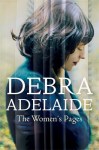
Debra Adelaide, The women's pagesWhen I started reading Debra Adelaide’s latest novel The women’s pages I thought, “Oh yes, here’s another interesting story about women’s lives, how their options are limited, etc etc. I’ll enjoy this but I wonder why it was longlisted for the Stella?” And then, a few chapters in, I started to realise that behind this “interesting story about women’s lives” was a fine and witty intelligence that was playing games with me, that was exploring ideas about creativity and writing, that was looking at how life imitates art (or is it vice versa), as well as at the lives of women! Needless to say, by the end I was fully engaged, enjoying every word while I eagerly turned this woman’s pages.

The embarrassing thing is that I haven’t read Adelaide before – well, that is, I haven’t read her fiction before. I have read some of her non-fiction. Her Australian women writers: A bibliographic guide was groundbreaking and is still highly valuable, and the book of critical essays which she edited, A bright and fiery troop: Australian women writers of the nineteenth century, is a significant work. She also edited and introduced Dymphna Cusack’s A window in the dark which I’ve reviewed here.

But her fiction? I’ve been remiss, but no more, because The women’s pages sure has me intrigued. It starts off straightforwardly enough with protagonist Ellis being asked to a 10th wedding anniversary barbecue. Adelaide sets the scene perfectly. It’s the 1960s and Ellis is a young domestically-competent mother who’s not happy in her marriage. She can’t imagine still being married to her (albeit perfectly decent) husband for another 8 years. So far so good – I’m interested. Then, chapter 2 introduces us to “not yet forty” Dove from current times. She is grieving for her mother and, we discover, is writing the story about Ellis. From here, the chapters alternate Ellis and Dove’s story until around halfway through the book where they start to intrude a little on each other, where in the same chapter we find Dove musing on where Ellis’s story is going or on how Ellis is exerting “maddening autonomy” on her story! What is going on, we start to wonder?

So, as well as being a story – and an authentic story at that – about women’s lives, The women’s pages is also a metafiction about the art and process of writing fiction. Here, for example, is Dove with a sort of writer’s block:

But Dove had run out of ideas. When the baby was born, she had a fair idea, but exactly where, and how, resisted her imagination. Doubtless because she had no experience in this respect, she could not bring herself to visualise a pregnancy and the birth of a baby. She knew this was nonsense, if she were to call herself a writer of fiction, and that she needed to do something about this, even if it simply meant googling the subject.

Write what you know, or else research! I enjoy these sorts of mind-games played by authors; I don’t mind being reminded of the author’s hand.

However, while the metafiction thread is an important part of the novel, there are other threads or themes. Motherhood is a major one. Childbirth and childrearing feature, but the overriding idea is that of missing mothers, the silences about them, the gaps they leave. Ellis’s mother had left her when she was a baby, and Dove was adopted (by a loving mother, but …).  A related thread is the new word to Ellis’s world, “feminism”. There are illegal abortions and adoptions, alongside women striving to develop careers. Ellis gets a job in the magazine industry. By the mid-1970s change is afoot. She senses “the whole country shifting around … with these tall god-like creatures [the Whitlams] in charge”, but she’s not fooled into believing “there was really such a thing as equality”. When she’s offered a promotion, her male boss tells her he expects “absolute commitment”, that is, there must be no “running off to get married, or taking time out to look after children”. Adelaide knows the decades of which she speaks, and her evocation of them is spot on.

Then there’s Adelaide’s exploration of imagination and invention, particularly in the metafiction thread. And this is where another important aspect of this novel comes into view – Emily Brontë’s Wuthering Heights. Brontë’s novel is introduced at the beginning of chapter 2, with Dove blaming it for her decision to write her novel about Ellis (whose name references Emily’s pseudonym Ellis Bell). The “gaps and shadowy images and half truths” in Wuthering Heights “had infected her [Dove’s] imagination” and out of it Ellis’ story emerged. For most of The women’s pages, Brontë’s novel acts as a sort of simmering undercurrent, surfacing every now and then, not always overtly, to impose an added layer on the narrative. But at the end, as Ellis’s complicated family background is finally revealed, it comes to the fore. We even have a Catherine, an Edgar and a Nell, but the parallels aren’t laboured.

Dove writes, around halfway through the novel, that

she had not meant to write the story of women, but that was how it had appeared, that was the only story in her head. The more she delved into the lives of her characters the more it was about missing or silent women and the more it seemed it was her job to find them and open their mouths and lay them across the pages. Ellis had stepped out of a longer story, one in which women were always grasping for some sense of authenticity, and in which mothers in particular were absent. Wuthering Heights had almost no mothers and certainly none whom you could say were good to any degree. They were all dead or dying, or simply blank spaces, unnamed and unacknowledged, as if their progeny – Heathcliff, Catherine, Hindley, Edgar, Nelly – had been produced by magic, or had just sprung up out of the earth …

I said in my opening paragraph that Adelaide’s writing is “witty”. I didn’t mean by this “funny”, though it is wryly amusing at times. No, I meant “knowing”, “astute”, “clever”. Adelaide’s development of Ellis and Dove’s story is beautifully controlled. The women’s pages could, in fact, be read as an expert’s guide on how to write a novel. More interesting to me, though, is the light it throws on the intense emotional investment novelists can make in their work, on the sometimes complex nexus between character and author:

What, Dove wondered, had she done? Or had she done it? Maybe it had happened exactly like this and she was merely recording the facts.

See what I mean? I imagine Adelaide had fun writing about Dove writing about Ellis.

This is a delicious read that engages both the mind and the heart, and has an ending that brings you up with a start. Yes, I can see why it was longlisted for the Stella.

awwchallenge2016Debra Adelaide
The women’s pages
Sydney: Picador, 2015
295pp
ISBN: 9781743535981

(Review copy courtesy Pan Macmillan Australia)

Kate Jennings, Moral hazard (Review)

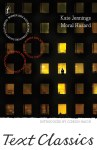
Kate Jennings, Moral HazardHow often do you read a book that connects in some ways with something you’ve recently read or thought about? Kate Jennings’ award-winning Moral hazard, my latest read, links pretty directly to our discussion about autobiographical fiction in my Monday Musings post on Robert Dessaix two weeks ago. Dessaix, you may remember, criticised Garner’s The spare room (and other works) arguing she was just writing her life, but defended his own autobiographical fiction because he changed things around. Garner, though, argues that in her novels she shapes and orders, plays with time, examines motives etc. What is all this about? Why does it matter? The reverse – calling something non-fiction that is in fact fiction – does matter, I think. You all know the cases, I’m sure. But, if a writer draws from his or her life and calls it fiction, does it matter? Really, does it matter? Well, in this case it does matter, because, while Jennings is another of those writers who draws closely from her life, there are parts of the story that could be very tricky, legally, if they were, in fact, “fact”.

I’ve reviewed two of her works here before – Snake, her first work of autobiographical fiction, and Trouble: The evolution of a radical, which she describes as her “fragmented autobiography”. Jennings, like Helen Garner, is a fearless writer, and I love her for it, so when Text Classics published Moral hazard, her second novel, I was ready and waiting.

Moral hazard is about a woman whose husband is diagnosed with Alzheimer’s and who, to obtain the money needed for his care in health-care expensive USA, gets a job as speechwriter for a mid-level investment bank on Wall Street. The wife’s name is Cath (not Kate) and the husband’s name is Bailey (not Bob Cato, the name of Jennings’ husband). Kate Jennings, though, did work as a speechwriter on Wall Street. Fictional Bailey and real Bob are both artists/designers, and both men were diagnosed with Alzheimer’s, but Bailey’s end has a particular drama to suit Jennings’ purpose.

From its very start, in fact, it’s clear that Moral hazard has been carefully written and structured, despite its closeness to Jennings’ life. Take the title, for example, and its pointed word play. Economically, “moral hazard occurs when one person [or organisation] takes more risks because someone else bears the cost of those risks”. Jennings, in the Wall Street component of her novel, explores this very condition with great – should I say scary – clarity. It is particularly interesting to read her description and analysis of escalating greed, because it is set nearly a decade pre-GFC. It’s all there, though, and the cracks were showing even then. For Cath the moral dilemmas are real. Not only does she need to rationalise her personal moral values as a lefty feminist against her financial district job, but she has to be the carer (also decision maker) for her increasingly ill husband. This is complicated care that encompasses not only economic and physical demands, but also emotional, mental and philosophical. And this care also has, not surprisingly, a moral dimension.

The novel (a novella, really) is told in short chapters that alternate, though not rigidly so, between Cath’s life with Bailey and her work life. It is told first person, and Cath tells us, on the first page:

I will tell my story straight as I can, as straight as anyone’s crooked recollections allow. I will tell it in my own voice, although treating myself as another, observed, appeals.

In other words, it’s from life, but there is artifice. The novel opens with this brief introductory chapter, which is followed by a chapter describing her first meeting Mike. He also works at Niedecker Benecke investment bank, and also, like her, is a square peg in a round hole, though he’s been doing it for longer! He becomes somewhat of a teacher to her, as well as a sounding board, and a welcome like-mind.

From this set up, we flash back to Cath, her husband Bailey and his diagnosis, and we don’t return to the bank until Chapter 6. The story continues chronologically following Cath. We watch her work out how to work within the company, and we feel her pain as she tries to manage Bailey as he becomes less and less stable and predictable. Cath chronicles the hedge-fund crisis – the increasing greed, the living on (the belief in) “zero capital and infinite leverage” – in parallel with Bailey’s decline. A true coincidence, perhaps, but a writing choice too.

I loved Jennings’ writing. It’s clear and direct, but has a poetic sensibility. She describes the bank as:

a firm whose ethic was borrowed in equal parts from the Marines, the CIA and Las Vegas. A firm where women were about as welcome as fleas in a sleeping bag.

She describes the financial district, New York’s skyscrapers:

I looked at them and didn’t see architecture. I saw infestations of middle managers, tortuous chains of command, stupor-inducing meetings, ever-widening gyres of e-mail. I saw people scratching up dust like chickens and calling it work. I saw the devil whooping it up.

She sees the New York Fed, after bailing out hedge-funds, behaving “as if afflicted with Alzheimers” sticking with deregulation, letting the industry police itself, despite evidence to the contrary.

Meanwhile, Bailey’s decline is inexorable, he moves from home to an institution. He has a “living will” but it is ignored, so, she writes:

Scar on my soul be damned. He’d asked me to take care of it when the time came. Now I would. Mrs Death.

But far be it from me to spoil Cath’s story – except to say that as well as tackling Wall Street, Jennings also quietly buys into the euthanasia debate.

The good thing about Text Classics, besides their existence and excellent price, is that each classic is accompanied by a commissioned introduction. For Moral hazard it is by sport and business journalist Gideon Haigh. He concludes his introduction, which focuses on the financial aspect of the novel, with the statement that “Modern working life is replete with unpalatable compromises and perverse incentives”. Cath would probably say that this is true of life too. Moral hazard is a rare book in the way it looks not just at our contemporary globalised financial world, but more widely at work, our relationship to it, and the moral choices we make in work and in life. Drawn from life, yes, but a very worthy winner of the 2003 Christina Stead Award for Fiction!

awwchallenge2016Kate Jennings
Moral Hazard
Melbourne: Text Classics, 2015 (orig. pub. 2002)
155pp.
ISBN: 9781922182159

(Review copy courtesy Text Publishing)

Annie Dillard, The Maytrees (Review)

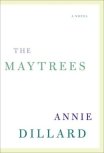
Annie Dillard, The MaytreesI am not, as I wrote in my recent post on Emma Ayres’ memoir Cadence, a big “reader” of audiobooks. In fact, until Cadence, I hadn’t listened to one for a few years. However, we do have a few here that we had given Mr Gums’ mother as her sight started to fail and which we retrieved after she died back in 2011. I bought them for her, so am rather keen to see what I think of my choices!

Now, I’ve never read Dillard, though of course I’ve heard of her. The Maytrees, published in 2007, is her second novel, her first being the Pulitzer prize-winning novel Pilgrim at Tinker Creek published over thirty years earlier in 1974. Fascinating … but I’m not surprised. The Maytrees is such a quiet, deeply thoughtful book, it could only have grown out of years of living and contemplation. It reads like a lifelong meditation on the meaning of life at its very foundation – on how and why we love, on how we should live our lives.

WARNING: POTENTIAL SPOILERS

Provincetown, 1983

Provincetown, 1983

There is very little plot, though there is a storyline which tracks the relationship, through various ups and downs, of Toby Maytree (called Maytree in the book) and Lou, the woman he marries. This story is imbued with the place they live, Provincetown, Cape Cod, a place I visited in the 1980s. I loved reliving my experience through Dillard’s gorgeous evocation of it. Anyhow, the time spans from Maytree’s childhood in the late 1920s and 1930s through several decades to, I guess, the 1990s or so. Paradoxically, while the place is woven closely into the story – you get to know, intimately, the dunes, the tides, the beach shack, and even the bed that is moved, as needs change, up and down the floors of their home to bring the outdoors in – the story is absolutely universal. It’s the quintessential boy-meets-girl story but one that doesn’t end at “happily ever after”. It takes us through the long years of their marriage, the birth of their child, a devastating betrayal, a huge-hearted forgiveness, and their deaths. The book shifts around a bit in chronology, making you work a bit, but you usually know where you are.

While the main themes of the book relate to love and life’s meaning, many other ideas come through. There’s a lot of discussion of reading and literature. We are told early in the novel that “He read for facts, she for transport”. When she, Lou, finds love, here is her reaction:

Love so sprang at her, she honestly thought no one had ever looked into it. Where was it in literature? Someone would have written something. She must not have recognized it. Time to read everything again.

Later in the book when love is lost and recovered, she wonders again about love and life’s meaning. There might be a point to life, she wonders, and there might be an answer in books. She feels, however, that she had only moved a millimetre on these questions in her lifetime. She reflects on how life with Maytree had felt complete – until she’d had her baby, Petie, after which she couldn’t imagine life without him. But, inevitably, he too moved on, and in time had his own child presenting him to her as if she didn’t know the experience or feeling!

In other words, it’s a wise, knowing book, a book which sees how people think and behave. Here is Lou, newly alone:

She ignored whatever did not interest her. With those blows she opened her days like a piñata. A hundred freedoms fell on her. She hitched free years to her lifespan like a kite tail. Everyone envied her the time she had, not noticing that they had equal time.

I loved that little kick – “not noticing they had equal time”. How often do we see the other grass as greener, not seeing our own!

There’s also sly – or perhaps not so sly – commentary on American politics. Dillard describes Hoover, in 1947, warning Americans about artists, and asks “Did America have a culture besides making money?” There’s reference to a “Strictly for profit hospital”, and, at another point, when Maytree ponders the idea of shooting himself to save getting too old, we are reminded that “this was America”. These scattered political jibes provide interesting intrusions into what is mostly a philosophical novel.

The language is quietly beautiful. As I was listening to it, I could only really capture phrases to share, such as “he rummaged her spare comments”, or a description of one of Maytree’s earlier girlfriends as “a great handful of a girl out west”, or a description of the sea as a “monster with a lace hem”. Little motifs run through the book. Lou’s various red items of clothing like a scarf or a dress and Maytree’s red-speckled notebooks, for example, provide colour and continuity, and hint too at the passion of their love.

Maytree and Lou are drawn at depth. We move inside both their heads at different times. At the time of Maytree’s betrayal – which I must say is the point in the book that is hardest to grasp – gentle, but strong and resourceful Lou decides that “if this was not shaping up to be Maytree’s finest hour it might as well be hers”. The other main characters populating their Provincetown world include Deary, Reevadare Weaver, Cornelius Blue and Jane Cairo, all of whom add depth and diversity to the close community Dillard depicts.

I must say though that I found it quite a difficult book to listen to. In some ways it was too slow – we read faster than we can listen, I’ve been told. As the reader, David Rasche, read pages and pages of admittedly beautiful description and contemplation, I felt held back. I wanted to read it at my pace, faster. And yet, it was also too fast, because at times I wanted to stop and mull over the words and ideas.

I could go on, but without having the book itself to bring it all together the way I’d like, I’ll just close here and say that I found it a thoroughly satisfying book. It is warm, non-judgemental, generous and wise. And if that sounds like it’s also sentimental and corny, you’d be wrong. One day I’ll read more Dillard.

Annie Dillard
The Maytrees (audio)
(read by David Rasche)
Harper Audio, 2007
5.5 hours on 5 CDs

Halina Rubin, Journeys with my mother (Review)

Halina Rubin, Journeys with my motherI’ve read a lot of World War 2 literature over the years, but very little from the Polish point of view, so I was more than willing to read Halina Rubin’s Journeys with my mother when it was offered to me a few months ago. Rubin was born in Warsaw on 27 August 1939. Note the date: her mother, Ola, was still recovering in hospital when Germany invaded Poland a few days later. Within two months, her parents, secular Jews, had fled to the Soviet Union, and this is where the young Halinka and her mother saw out the war. It’s a fascinating story – and it’s told in a thoughtful way.

Rubin divides her story into two parts. Part 1 is mainly background. It provide some family history about her parents, Ola and Władek, and their parents before she was born, but it also describes the depth of anti-Semitism with which they lived, long before the war started. It tells how her parents were radicalised early, how for them “the ideals of communism offered a way to solve the twin problems of unemployment and poverty, and put an end to racial hatred”. Oh, such idealism … but her parents, despite experiencing political betrayal, never fully lost their values and commitment to social causes.

Anyhow, part 2, which conveniently aligns with the start of the war, tells the story of her nuclear family after she was born. “I try to imagine” she writes of those opening days of the war, “how abruptly, how without mercy, their world changed”. She describes how, with their faith in the Soviet Union, her parents fled to Białystok, once a Polish town but now under Soviet control, while other members of the family made different decisions or timed their flight decisions differently, with, in most cases, tragic consequences.

Halina and her family lived there for nearly two years, Ola working as a nurse, until Germany betrayed the Soviet, invaded – and the atrocities began. So, they fled again, heading further east for Russia itself. Władek was taken to join the Red Army, but Ola and Halina made it to Oryol where Ola worked again as a nurse. Later, mother and daughter, who were evacuated under German orders from Oryol, went to Lida in Belarus, and from there they escaped into the forests where they joined the partisans – because, remember, Ola was a committed communist. It’s astonishing, really, that Ola and her oh-so-young daughter survived the threats and privations of such a life, but survive they did:

Around us was a forest so dense that even wild animals – boars, deer and wolves – chose to follow the same known tracks. The myriad of lakes made the terrain marshy.

Only the locals knew how to get their bearings, how to keep away from the swamps ready to swallow you up; how to keep the wolves away. It was a perfect place to hide, but tough to survive.

They were wet, cold, and desperately hungry. A truly amazing story of survival against a backdrop of egregious political treachery.

Journeys with my mother doesn’t end with the war, however, but follows her parents as they return to Poland, then move to Israel, and finally, after her father’s death, her mother’s move to join her in Australia. Rubin describes the early days of peace – the adjustments that had to be made as people separated from war-time friends and connections, and reunited, if they were lucky, with family members; the impact of political decisions being made about governance and borders; and, shockingly, the continuing anti-Semitism. She asks:

Who could have predicted that peacetime would be so difficult?

Although a very different book about a different war, this reminded me of Olivera Simić’s book Surviving peace which I reviewed a year or so ago.

But I’ll leave the story here – to move onto the telling.

I’ve categorised this as an autobiography or memoir but it could also be described as biography, since Rubin’s prime focus is the life of her parents. And that required research, as she didn’t manage to capture all she could before they died. This is partly because she didn’t start thinking about (aka wasn’t very interested in) documenting her parents’ lives until after her father had died, by which time her mother was old, but also because the story was so stressful that her mother found it hard to tell. Rubin writes:

As always, whenever remembering her parents or sisters or the years of the war, eventually her voice would turn into a whisper and tears would well up her eyes. In the very last tape, I hear her say, ‘That’s enough, I cannot go on.’ The tape is still recording when I say, ‘Let’s have tea.’ The conversation was never resumed. I did not have the heart to put her through that ordeal again.

Rubin had done this taping before her mother’s death in 2001, but it was not until some years later, with the encouragement of her daughter, that she delved into “two boxes filled with papers, photographs, letters, notebooks and correspondence”. These plus her mother’s stories got her going, but there were gaps, so she travelled back to the places they’d lived, talked to old friends and a surviving cousin, trying to complete the story. She reports this directly and consciously in the book, switching between describing her fact-finding trips (revisiting places, meeting people) and recounting her and her parents’ lives in the places she visits. In other words, she takes us on her research journey – and I like that. It does give the story a disjointedness that might irritate some readers, but for me it adds to the interest and, yes, authenticity.

Like all such research, there are serendipitous finds and wonderful coincidences. One such occurs during a meeting with Valerii Slivkin from a museum in Lida. He shows her a document written by partisans after the war. They mention “the presence of ‘a four-year-old-girl'”. That girl of course was her! Earlier in the book, during one of her discussions of her mother’s stories, she says:

My mother was my first, albeit sketchy, narrator. When talking about the past she would get distressed so her storytelling could be convoluted, meandering around events, places, people. And I had not been a good listener. Perturbed, intent on not missing as much as my mother’s sigh, I could hardly concentrate. Later, however, I would discover how clearly she, in fact, remembered the events of the past.

Slivkin is one of those whose information confirms “how accurate she was”.

However, Rubin is also realistic about the limits of what you can know or discover. Looking at photo of her aunt who died early in the war, she wonders about the story behind the photo:

Ewa looks pregnant. I wonder if this is another family secret or simply a never told story. And if the complexities of our lives are at times impossible to unravel, how much more impossible are the events of the past. Nothing is certain.

It sure isn’t. But that doesn’t mean you shouldn’t look for the certainties – and Rubin, in this book, has given it a red hot go.

Lisa (ANZLitLovers) also enjoyed the book.

awwchallenge2016Halina Rubin
Journeys with my mother
Melbourne: Hybrid Publishers, 2015
251pp.
ISBN: 9781925272093

(Review copy courtesy Hybrid Publishers)

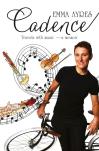
Emma Ayres, Cadence: Travels with music (Review)

Emma Ayres, CadenceAlthough Emma Ayres’ memoir Cadence had been passed around my reading group with much enthusiasm over the last year or so, I wasn’t intending to read it – not because I wasn’t interested, but because there were other books I wanted to read more. However, when I found the audiobook at my aunt’s house while we were clearing it out, Mr Gums and I decided to listen to it on our trips to and from Sydney. It proved to be a great car book. However, a warning: we listened to it intermittently over two months, so this will be more a post of reflections than a coherent review.

Emma Ayres is probably known to most Australian readers of my blog, but perhaps not to others so let’s start with a potted bio. Born in England in 1967, Ayres is a professional musician – a viola player in fact – who has also worked as a radio presenter. She lived in Hong Kong for eight years, playing with the Hong Kong Philharmonic Orchestra, but in 2000 she rode a bicycle, fundraising for charity, from Shropshire, England, through the Middle East and central Asia, to Hong Kong. She moved to Australia in 2003, and worked as an ABC Classical Music radio presenter for eight years, from 2008 to 2014.

Now to the memoir. Cadence is ostensibly a travel memoir, but it covers a lot of ground within its seemingly narrow construct of chronicling her year-long bicycle journey. The ground it covers, besides the story of her travel, which is exciting enough given the regions she rode though, includes her childhood, her reflections on her life as a musician, and her analyses of classical music. Some of her technical descriptions went over my head, but I found her discussions of composers to be not only accessible and eye-opening, but deeply interesting. And it’s all told with a thoughtful philosophical underpinning.

Cadence is an excellent title for a musician’s memoir, and she plays with its meanings throughout, referring, for example, to a “perfect cadence”, or a “slow cadence”, or more frequently to  “interrupted cadences … moments when the direction is changed”. Indeed, the memoir could be seen as comprising almost continuous interrupted cadences because, although the bicycle trip provides her memoir’s chronological backbone, she skips around frequently, going backwards to her childhood and early years as a musician and forwards to her life after the trip when she briefly toyed with being a cellist. It can take a little concentration to keep track of exactly which part of her life she is writing about at any one time, but it’s not too hard. After all …

Cadences are waypoints in the music, places where you can take a breather, readjust your instrument and hurtle on to the next bit of the adventure.

I greatly enjoyed Ayres’ reflections on life and travel. The book is full of her insights, many learnt on the road. For example, regarding the challenge of deciding whether to do the trip she says:

If you are not sure whether or not you should do something, ask your ninety-year-old self.

At another point she discusses how much she loved Pakistan despite all the nay-saying she had received when she was planning her trip. She was treated, she writes, almost without exception, with kindness and generosity everywhere she went. “Do we make our own welcome?” she wonders, and goes on to suggest that before we criticise another country, we should perhaps look at ourselves first.

Being a woman cycling alone is risky business, particularly in some of those male-dominated countries through which she travelled. She frequently took advantage of her androgynous look, helping it along by keeping her hair very short and wearing non-feminine clothes (where she could). Consequently, she was regularly taken for a man. She discusses gender often, commenting on how we are ruled by it and its associated expectations. She sees herself as “a border dweller in the world of gender”, writing:

I do admire people who are by birth penumbral but have the courage and desire to be firmly one or the other and go through a sex change, but I like the fluidity of being able to float around the middle. I really to think that the basic this or that of male and female is shallow and limiting. How simplistic to think, with all those opposing hormones flowing in each of our bodies, that we are one and therefore not the other. And how much better in countries like India and Thailand that they recognise more than two sexes. More variations in the octave, more variations in gender.

Another theme that runs through the book is the idea of being in the moment. She tells the story of being taken to task for reading Anna Karenina when on a bus in Pakistan. Her young seat-mate is mystified by her passionate rendering to him of the story, saying to her “but you are here!” She genuinely sees his point, and puts the book down. Later in the trip, she regrets not spending more time with a fellow-traveller who crosses her path because “I was too focused on destination and again forgot the importance of the here and now”.

Cadence is a generous, warm-hearted book which abounds with travel anecdotes to delight any lover of travel literature. There are scary moments, and funny ones, and others that are just plain interesting. It also contains intelligent, considered insights into music, some of which I plan to share in a follow-up post. For now, I’ll conclude with a comment she makes early in the book:  “Travel”, she says, “goes inwards as much as outwards”. That is exactly what she demonstrates with this book. I can see why all those in my reading group who read the book urged it onto the next person.

awwchallenge2016

Emma Ayres
Cadence: Travels with music – a memoir
Sydney: ABC Books (by HarperCollins), 2014
284pp.
ISBN: 9780733331893

Emma Ayres
Cadence: Travels with music – a memoir (audio)
(read by Emma Ayres)
ABC Commercial, 2014
8 hours (approx) running time (on 7 CDs)