Monday musings on Australian literature: Forgotten writers 13, Amy Mack

In the first decades of the 20th century, a family of sisters made some splash on Australia’s literary scene. I have already written about the eldest of them – Louise Mack – but there were also Amy (this post’s subject) and Gertrude, all of whom appeared in newspapers of the time as writers of interest. They were three of the thirteen children of their Irish-born parents, Rev. Hans Hamilton and his wife Jemima Mack. As with many of my Forgotten Writers articles, I researched Amy Mack for the Australian Women Writers’ blog, where we have several posts devoted to her.

Amy Mack

Amy Eleanor Mack (1876-1939) was a writer, journalist, and editor. She was six years younger than the more famous Louise, and, says Phelan in the Australian dictionary of biography, was “less temperamental … and lived more sedately”, which is not to say she lived a boring life.

Mack began work as a journalist soon after leaving school, and from 1907 to 1914 was editor of the ‘Women’s Page’ of the Sydney Morning Herald. She married zoologist Launcelot Harrison, in 1908, and in 1914, they went to England where he did postgraduate work at Cambridge, before serving in Mesopotamia as advisory entomologist to the British Expeditionary Force. While he was away, Mack worked in London as publicity officer for the ministries of munitions and food.

The couple returned to Sydney after the war, with Launce becoming professor of zoology at the University of Sydney, and Amy continuing her literary career among other roles and activities. They did not have children. According to Phelan, after her husband died she continued to publish occasional articles, but her impulse to write faded as her health declined. She died of arteriosclerosis in 1939.

Works

Amy Eleanor Mack’s subject was nature, and she wrote about it in newspapers and books, for adults and children. Australian ecologist, Manu Saunders, writes on her blog that:

Australia has a wonderful heritage of nature writers, many working before nature writing was ‘a thing’. The national collection of Australian children’s books about native wildlife is inspiring. Even more inspiring, many of Australia’s best nature stories were written in the early-mid 19th century, and mostly by women.

And one of those women, she continues, was Amy Eleanor Mack. (I have written before on one of our early colonial nature writers, the pioneering Louisa Atkinson.)

Book cover for Bushland stories

Mack’s first publications were two collections of essays, A bush calendar (1909) and Bush days (1911), which were compiled from articles she’d written for the Sydney Morning Herald. She also wrote two popular children’s books, Bushland stories (1910) and Scribbling Sue, and other stories (1915). Wikipedia lists 14 books, many of which were first published in newspapers, but all of which have nature-related titles, like The Fantail’s house (1928) and The gum leaf that flew: And other stories of the Australian bushland (1928).

Her books were well-reviewed in the newspapers of the time. Her first, A bush calendar, was described by Sydney’s The Farmer and Settler (26 November 1909), as charming, “a sympathetic review of bird life and plant life in the Australian bush during the four seasons of the year”. But what is interesting is what they say next:

It is the kind of book that ought to be on every girl’s bookshelf, and every thoughtful and intelligent boy’s also, being not only an exceedingly pleasant thing to look at and to read, but one calculated to induce in many a desire to get to know more of nature in some of her sweetest phases.

I’m intrigued by the gender differentiation – “every” girl, but only “every thoughtful and intelligent boy”. These sorts of insights into other times make researching Trove such a joy. Anyhow, the review also suggests that it would be “a delightful remembrancer for Australians abroad”. A year later, on 26 November 1910, Sydney’s The World’s News, reviewed Mack’s children’s book, Bushland stories, calling it an improvement on A bush calendar. It comprises a “collection of fables, allegories, fairy tales, or whatever one chooses to call them” which, the News says, has “created a folklore for young Australians”. In it, Mack personifies nature, with birds, beasts and fish all acting and speaking “like rational beings”. Each story has a moral but there is none of the “preachiness, which many youthful readers shy at”.

Reviews of later books continue in a smilier vein. In 1922, on 6 December, Lismore’s Northern Star writes about Wilderness, which, it says,”tells in a most interesting way of the fascinations of a piece of land which once had been a garden, planted with fruit trees and roses, but which has been neglected until the bush reclaimed it for its own”. This is the book that Saunders writes about in her blog in 2017. The book had been originally published in three parts in the Sydney Morning Herald. Saunders explains that it

tells the story of an unnamed patch of wild vegetation in Sydney (Mack never names the city, but given the original publisher and the wildlife she describes, it seems pretty obvious). Mack describes the plot so vividly and intimately that you imagine yourself there. You can visualise Nature reclaiming this plot of land, left untended after the keen gardener who owned it passed away.

Saunders then describes its content, including examples of the nature Mack describes, as well as her attitude to it and her observations. Saunders was surprised but “weirdly” comforted to find conservation messages that are still relevant today embedded within the book.

Legacy

Australian feminist Dale Spender, in her book Writing a new world, says a little about Amy Mack, though she spends more time on Louise. However, she makes a point about the Mack sisters and their peers, Lilian and Ethel Turner:

Lilian and Ethel Turner, Louise and Amy Mack were part of a small group of spirited literary pioneers who at very early ages adopted public profiles in relation to their work. When they moved into the rough and tumble world of journalism – when they entered competitions, won prizes, and published best-selling novels before they were barely out of their teens – they broke with some of the long-established literary conventions of female modesty and anonymity. They sought reputations and in doing so they show how far women had become full members of the literary profession: they also helped to pave the way for the equally youthful and exuberant Miles Franklin whose highly acclaimed novel, My Brilliant Career (1901), was published when the author was only twenty-one.

Ever political, Spender argues that had it “been brothers (and ‘mates’)” who created the sort “colourful and creative community” these sisters did, and achieved their level of literary success, we would have heard of them. Books would have been written about ‘their “literary mateship” and they would have been awarded a place in the readily accessible literary archives’. But,

because these writers were women, and because they have been consigned to the less prestigious categories of journalism and children’s fiction (both a classification and a status with which I do not agree) they, and their efforts, and their relationships – to rephrase Ethel Turner – go unsung.

Amy Mack is less well-known now than her sister Louise, and certainly less well-known than Ethel Turner, but in her time she was much loved. However, even then, she didn’t always get her due, as a reader wrote to The Sydney Morning Herald on 16 April 1935:

With reference to the articles on Australian women writers in the Supplement, one is surprised at the omission of Amy Eleanor Mack, who surely wrote two of the finest books for children ever published in Australia. In “Bushland Stories” and “Scribbling Sue” the true spirit of our bushland has been preserved with a charm and sincerity all its own, and I think I am right in stating that, with the exception of Miss Ethel Turner’s “Seven Little Australians,” no books published in Australia for children had greater sales.

Four years later, announcing her death on 7 November 1939, The Sydney Morning Herald said that her work “had a mark of reality about them that found for her an increasing circle of readers”, but it was “A.T.” of North Sydney, who wrote to this same paper on 8 November, who captured her essence:

Her culture, wit, and broadmindedness, and her marvellous sense of humour made her a figure in the northern suburb in which she resided.

Sources

Nancy Phelan, ‘Mack, Amy Eleanor (1876–1939)‘, Australian Dictionary of Biography, National Centre of Biography, Australian National University, published first in hardcopy 1986.
Manu Saunders, “The wilderness: Amy Eleanor Mack“, ecologyisnotadirtyword.com, 4 March 1917
Dale Spender, Writing a new world: Two centuries of Australian women writers, originally published by Pandora Press, 1988 (sourced in Kindle ed.)

Helen Trinca, Looking for Elizabeth: The life of Elizabeth Harrower (#BookReview)

Elizabeth Harrower The watch tower

Like many, I was astonished when I read Elizabeth Harrower’s The watchtower (my review), upon its publication by Text Classics in 2012. Astonished not so much for its writing, though that is excellent, but for its subject, which is what we’d now call coercive control. The astonishment comes from the fact that The watchtower was first published in 1966, at a time when domestic abuse was hidden. Harrower recognised it, however, and called it out. The book made a splash at the time, but then disappeared from public view, though not completely from academia. Then, in 2012, Michael Heyward and his Text Publishing Company decided to publish it, and so began what biographer Helen Trinca calls, her “second act”.

Looking for Elizabeth is the second literary biography I’ve read by Trinca, the first being Madeleine: A life of Madeleine St John (my review). Trinca must like challenging subjects, because Harrower, like St John, was challenging to write about, albeit in Harrower’s case, Trinca had the benefit of knowing her.

So, what made Elizabeth Harrower such a challenge? Trinca had many conversations with her from 2012 on, including formal interviews for newspaper articles, and Harrower had placed her papers (including letters, reminiscences, and novel drafts) with the National Library, to which Trinca apparently had full access. But interviews and papers don’t tell the full story, particularly if the subject has spent her life “curating” or shaping it, destroying many of her papers along the way, including, as she told Text editor David Winter in 2013, “more than 400 foolscap pages of literary thoughts – part journal, part stories, part eye-witness accounts, secrets and so on”.

Trinca’s biography draws on a variety of sources, which she documents in her Author’s Note. Besides her personal connections with Harrower, which included meetings, phone calls and emails, and Harrower’s papers, she used the papers of others (including Shirley Hazzard, Kylie Tennant, and Judah Waten), all sorts of other records, and interviews with family and friends. Gaps in information are frequently noted within the text – and are sometimes speculated about using that thing that many literary biographers do, the works themselves. How much can – and do – they tell us about the person who held the pen?

Many writers say they begin their project with a question. In Trinca’s case, the framing question seems to have been, Why did Elizabeth Harrower stop writing at the height of her powers? Because, this is indeed what she did. Having written and published four well-received novels – Down in the city (1957), The long prospect (1958, my review), The Catherine wheel (1960), and The watchtower (1966) – she withdrew her fifth completed novel, In certain circles, from publication in 1971, and never published a novel again, despite many encouragements from her friends including Patrick White and Christina Stead. She wrote a few short stories, but gave up writing altogether by the end of the 1970s.

From this literary trajectory, Trinca weaves a moving and interesting story about a fascinating woman. Like Madeleine, this is a traditional, chronologically told biography. It is well-documented, using clear but unobtrusive numbers pointing to extensive notes at the end, and there is a decent index.

“I’ve lived dangerously” (Elizabeth Harrower)

I am not going to tell the story of Harrower’s life, because the biography does that. Essentially, she was born in industrial Newcastle in 1928, and lived with her grandmother after her parents divorced, before joining her mother in Sydney. She never got over, it seems, being “a divorced child”. It dislocated her. Her mother remarried, and Trinca suggests that her stepfather was behind men like The watch tower’s Felix Shaw. She lived in London from 1951 to 1959, before returning to Australia, rarely leaving Australia after that. She did not marry, but had an intense, emotional relationship with the older, married Kylie Tennant, which raises questions that Trinca isn’t able answer, though she points to other “crushes” on older women. Do we need to know?

Through Harrower’s life she mixed with some of Australia’s significant people, including writer Patrick White, politician Gough Whitlam, and artist Sid Nolan. She had a long correspondence with Shirley Hazzard (about which I wrote after attending the launch of a book of those letters.) She died in 2020, suffering from Alzheimer’s. (Her life dates closely mirror my own mother’s.)

Now, rather than detailing this life more, I’ll share some of the threads that run through Trinca’s story, as they provide insight into who Harrower was, and what makes her writing, and her persona, so interesting. They also give the biography a narrative drive.

These threads include that aforementioned one regarding why she stopped writing. Another concerns what drove her to write. Trinca writes about an interview Harrower had with broadcaster Michael Cathcart in November 2015:

She reprised a comment she had often used in the past: ‘I always had an alarming and dangerous interest in human nature. And so recently, I think I was answering some questions, and I said that I felt I had urgent messages to deliver. I wanted to tell people things’.

These things are the emotional truths we find in her books. In an interview with Jim Davidson for Meanjin in 1980, she discouraged people from finding her life in her books, saying that the “emotional truth” is there but “none of the facts”:

None of the books are actual accounts by any means. They are less extreme than reality because reality is so unbelievable. Besides which, people can only take so much. You don’t want to frighten them do you, or do you?

This is the “wounded wisdom” that critics like America’s James Wood identified. It’s not surprising, given the life that led to this “wisdom”, that Harrower was wary, guarded, in her dealings with people, which is another thread that runs through the book. Harrower was polite and genuinely interested in people – “she listened with intent” – but always turned questions back on them rather than give herself away. In 1985, she admitted that, in interviews, “my whole intention seemed to be to give nothing away, to disguise myself”.

Which brings me to the final thread I want to mention, the idea of having “lived dangerously”. Several times through the biography, Trinca refers to Harrower’s saying that she had lived dangerously, but what did she mean? It seems she meant something psychological, metaphysical even. In 2012, she said to Trinca:

In my own mind I have lived dangerously, dangerously in the sense of finding out more and more about human nature. … At this age, you are aware of some very contrary and dangerous things you have done with your life as if you were going to be immortal. This is the irritating thing, now it is dawning on me that I am not immortal.

She said something similar in 1985, “I consider that in my life I’ve lived dangerously, and I haven’t lived a self-protective sort of life”.

“To have lived dangerously”, writes Trinca near the end of her book, “was a badge of honour for Elizabeth”. I read this as Harrower believing that, for all her wariness, she had let herself be open to life and its difficult emotional challenges.

What it actually means probably doesn’t greatly matter, despite Trinca’s “looking”. Nor do the gaps. What matters is the body of work she left, however she lived her life. It’s beautiful, unforgettable, precious, and Trinca tells that story so well.

I now look forward to Susan Wyndham’s biography which is due out soon. How will she fill in the gaps? Will she delve more into Harrower’s political leanings, and what conclusions will she draw about Harrower, who she was and why she wrote what she did?

Helen Trinca
Looking for Elizabeth: The life of Elizabeth Harrower
Collingwood: La Trobe University Press, 2025
309pp.
ISBN: 9781760645755

Gertrude H. Dorsey (Browne), An equation (#Review)

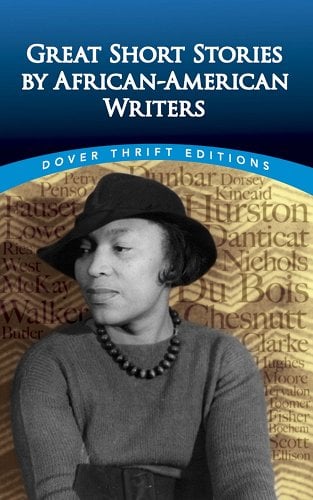
Gertrude H. Dorsey’s short story is the third in the anthology Great short stories by African-American writers, which my American friend Carolyn sent me. It presented an unexpected challenge.

Gertrude H. Dorsey (Browne)

The biographical note at the end of the anthology is one of the shortest provided by the editors. It goes:

Who was Gertrude H. Dorsey Browne? By the evidence of her published work between 1902 and 1907 in Colored American Magazine she was a clever writer of literary short fiction at the turn of the twentieth century; the little romance “An equation” is possibly her first published short story.

She does not appear in Wikipedia, and an internet search found very little, but it did find something, an article published in 2021 by two journalism students, Sarah Barney and Smelanda Jean-Baptiste. They write how an interest in Dorsey was sparked in a Newark reading group in 2017, when they met to discuss ‘a story, a witty romance titled “An Equation”’. Intrigued by the author’s apparent Newark connection, they decided to research her life. They discovered that she was born on 1 August, 1876/77, in Coshocton, Ohio, to Clement Dorsey and Martha Johnson Lucas, and that she died in April 1963 and was buried in an unmarked plot in Cedar Hill Cemetery.

Dorsey graduated from Coshocton High School in 1896, the only African-American student in a class of 11. She maintained honor roll throughout her years and was a member of the school’s Literary Society. While in high school, she had been a sales representative for the Black-owned Cleveland Gazette newspaper, and did this same work when she moved to Newark as a representative for the Colored American Magazine.

Further, the book club found that while Brown (as they spell her name) worked as a sales representative, she also wrote some stories for the magazine. Some was nonfiction but most was fiction, and her writing “often engaged with pertinent issues such as racism and Jim Crow through wry story plots”. They say her stories

transcend, but do not dismiss, class, race, and gender. They often speak to the hidden truths of what makes us human and the pride involved in shielding those commonalities. 

Not much else is known about her life, but the book club women recognised that “Brown had literary talent in a time when graduating from high school was a feat for women, especially Black women, and writing for a leading national magazine was an even greater accomplishment”.

“An equation”

“An equation” was, it seems, her first story. According to Barney and Jean-Baptiste, another story, titled “A case of Measure for Measure,” is about a group of white women who blacken their faces to attend a “blackface ball.” Afterwards, they discover that the paint won’t come off, forcing them to ride in the segregated car on the train, and thus “learn firsthand some hard lessons about racism and class”. 

“An equation” is not so overtly political – perhaps because it was her first – but, whatever the reason, it is a witty romance that slots into that idea of “the hidden truths of what makes us human”. The anthology’s editors say in their Introduction:

All of the stories in part or in whole are necessarily about the human condition, such as Gertrude H. Dorsey Browne’s “An equation”, in which the narrator declares that “the power of loving is not variable”.

It tells of a young 19-year-old woman, Grace, who obtains a job as an assistant to the Principal of her college and as a result meets 26-year-old school inspector, Raymond Turner, to whom she finds herself attracted. The story is told from her point-of-view and progresses through a series of mathematical jokes which start with her describing Turner as an “Unknown Quantity”. Unlike typical romance stories, this romance doesn’t really get off the ground before it seems to be over. In fact, it nearly doesn’t happen at all due to missed communications, hurt feelings and too much attention paid to mathematical theories and concepts like certainties and uncertainties. But, our lovers are brought together at the end and the story concludes with yet another mathematical joke.

Race is not an issue here, and class differences, while evident, are a background factor rather than a major player in the story. It does have interest, however, beyond being an enjoyable story. This relates to the fact that it was published in the Colored American Magazine, which was, according to an article I found, “a Black-owned, -published, and -operated magazine catering to a Black audience”. Tanya Clark, the article’s author, talks about CAM editor Hopkins’ pedagogical intentions for the magazine, which encompassed “challenging the status quo and elevating the race”. However, she also wanted “to provide African Americans with narratives that simply bring them gratification”. This is, I think, where Dorsey’s story comes in. It’s an entertaining and intelligently written story that could be about a romance between any young educated couple. That, of course, is a political point, but it’s subtly made by just being the story it is.

Clark also makes the point that under Hopkins, “CAM was a publishing forum for women writing poetry, fiction, and nonfiction articles”. These women included “seasoned and budding writers, … race leaders who wanted to try their hand at creative writing, … and friends and subscription agents of the magazine” who included Gertrude Dorsey Browne. Clark says “their woman-centered stories honored sisterhood among Black women, showcased Black women’s intellectual capacities, and praised Black women’s desires to work, organize, and fulfill hopes for domesticity”.

“An equation” is one of these “women-centred stories”. The love interest (the “Unknown Quantity”), the romance’s trajectory calling into play questions of probability, and the resolution, draw on mathematical concepts which assume an intelligent, educated readership. It did feel a little clumsy in its exposition, due perhaps to the inexperience of the author, but it has much to offer as an example of African-American writing of the time, besides its being a clever story. I mean, talking of love in such mathematical terms. Who would have thought!

Sources

Tanya N. Clark, “Hagar Revisited: Afrofuturism, Pauline Hopkins, and Reclamation in the Colored American Magazine and Beyond” in CLA Journal, 65 (1): 141-162 (March 2022)

Sarah Barney and Smelanda Jean-Baptiste, “Uncovering a Literary Treasure: Local Book Club Re-discovers Newark’s Gertrude Dorsey Brown”, in The Reporting Project, 20 February 2021

Gertrude H. Dorsey (Browne)
“An equation” (first published in Colored American Magazine, August 1902)
in Christine Rudisel and Bob Blaisdell (ed.), Great short stories by African-American writers
Garden City: Dover Publications, 2015
pp. 36-44
ISBN: 9780486471396
Available online in the digital version: scroll to page 278

Winnie Dunn, Dirt poor Islanders (#BookReview)

Book cover

When my reading group chose our books for the second half of the year, the shortlist for the Miles Franklin Award had not yet been announced. However, wonderfully, the three books we chose from the longlist, all ended up on the shortlist. One of those was Winnie Dunn’s debut novel, Dirt poor Islanders. It is the first novel published by a Tongan Australian, and adds a welcome strand to the body of Australia’s second and third generation migrant literature.

Dirt poor Islanders spans around a year when its protagonist Meadow is approaching 12 years old. It can, therefore, also be read as a coming-of-age novel. It is a raw, earthy, honest and sometimes confronting read that exposes the challenges faced by Australian-born migrant generations, who are caught between two worlds.

This is not a new story. However, what is impressive here is that Dunn, in her first novel, has found her own strong and clear voice. It’s there in the way she gets right into the head of her protagonist Meadow, who is, admittedly, modelled on herself. It’s there in the way she interweaves English and Tongan language, capturing the vitality in her migrant community. It’s also there in her use of repetition, some of it onomatopoeic, to give her writing rhythm and create a tone that’s sometimes melancholic, sometimes humorous. Dunn also doesn’t spoon-feed her readers. She expects us to go with the flow and make the necessary connections. It’s not hard reading, but it does require attention.

“this way of seeing myself as half … and never enough” (Meadow)

So, who is Meadow? She’s a young girl who lost her birth mother at the age of 4. At the novel’s opening she is the eldest of six children in a blended family comprising three children from her birth mother, one from her step-mother, and two from this second marriage. Another is on the way. Her father is 30 years old. Meadow is grappling with what it means to grow up Tongan, particularly one who is hafekasi (half-Tongan half-White) and feeling caught between two worlds, neither of which fully accept her. She is desperate for a mother, and feels closest to her namesake, aunt Meadow, who lives in Mount Druitt with our Meadow’s paternal grandmother and another four aunts.

We follow Meadow through a tumultuous year. Early on, she spends most weekends at her Nana’s house surrounded by the five aunts, but when her father buys a new house in Plumpton, he wants Meadow, her sister Nettie and brother Jared, to call that home. With her birth mother gone, however, Meadow feels “stuck” and insecure. Aunt Meadow, also known as Lahi, is her “mother-aunt” and her rock. The narrative is built around the wedding of this Lahi, who, Meadow believes, is more interested in women. She fears for her boyish aunt, but she also fears for herself, that she will lose this mother figure to whom she clings with all her being.

Now, Meadow wants to be a writer, so she’s an observant girl, well able to express her feelings. She sees the messiness – literal and figurative – of Tongan lives, and she shares the lessons she is learning about being Tongan, not all of which are pretty. For example, “Tongan meant dirty” (p. 37), “being a joke” (p. 73) and “second best” (p. 102). But, there are positives too. “Togetherness was what it meant to be Tongan” (p. 40) and “being Tongan meant eating together and being grateful to eat together” (p. 118).

Dirt poor Islanders, then, depicts a migrant family living under stress. Big families and low-paying jobs with long hours mean a chaotic home. Meadow’s scalp is nit-infested, and her home, decorated with second-hand goods, much picked off roadsides, is cockroach-infested. Her parents work hard to keep the family sheltered and fed, but the mess overwhelms. Flipping between maturity and immaturity, Meadow sees all this – the hard work, the exhaustion, the love – but she struggles to find her place, to accept her Tongan heritage.

It all finally comes to a head, and her father organises for her to go to Tonga, because, he says, “it’s time for youse to know what being a Tongan truly means” (p. 239).

Migrant literature encompasses both memoir and fiction, with the latter mostly being autobiographical or autofiction. Dunn confirmed in her Conversations interview that much of the novel’s family background comes from her life, but the novel diverges from real life in its narrative arc and the resolution of Meadow’s inner turmoil. This answered the question I had as I was reading, which was why Dunn had chosen fiction, like Melina Marchetta did in Looking for Alibrandi, over memoir, like Alice Pung did in Unpolished gem. It’s a choice. What matters are the truths conveyed, not the facts, and Dirt poor Islanders feels truthful.

This truth is not all raw and confronting as I may have implied at the beginning. It is also warm and humorous. Meadow, who doesn’t like rich, fatty Tongan food tells us:

If it came out of a can covered in sugar and sodium, Tongans were eating it. But back then, all I wanted was food that came out of a window. (p. 37)

Preferably at Maccas! There are also funny scenes, many relating to the wedding which occupies the novel’s centre, and which is another nod – besides the title and epigraph – to the book that clearly inspired Dunn, Kevin Kwan’s Crazy rich Asians.

“no one could live as half of themselves” (Meadow)

However, Dunn’s book is fundamentally different from Kwan’s, whose aim, he said, was, to “introduce a contemporary Asia to a North American audience”. Dunn did want to introduce Tongan Australian culture – and counteract the image presented by Chris Lilley in Summer Heights High – but through Meadow, she also explores the excruciating difficulties children caught between cultures face. By the end of the novel Meadow comes to understand a little more the “messy truth” of being an Islander, and that:

No one could live as half of themselves. To live, I needed to embrace Brown, pālangi, noble, peasant, Tonga, Australia – Islander. (p. 275)

Dirt poor Islanders is both shocking and exciting to read, which is probably just what Dunn intended. I feel richer for it!

Winnie Dunn
Dirt poor Islanders
Sydney: Hachette Australia, 2024
293pp.
ISBN: 9780733649264

Andrea Goldsmith, The buried life (#BookReview)

Titles are intriguing things, and we don’t always pay them the attention they deserve, but the title of Australian writer Andrea Goldsmith’s ninth novel, The buried life, is worth thinking about. It is the third novel I’ve read by Goldsmith, and, like the others, is a contemporary story focusing on relationships and the stresses her characters confront, stresses that we will know ourselves or recognise in those around us, stresses that make her characters relatable. The title, however, hints at the direction this novel will take, which is to look at the way these stresses can often be hidden for years. But they will out, one way or another.

This is a confidently written novel, using techniques I love. First, Goldsmith calls on music, art and literature to illuminate her ideas. What reader doesn’t enjoy that? And then, she uses a formal structure, comprising four named parts, each of which contains named chapters that open with a revealing epigraph. Part 3, for example, is titled “The buried life” and its first chapter’s epigraph comes from Matthew Arnold’s same titled poem:

But often, in the world’s most crowded streets,
But often, in the din of strife,
There rises an unspeakable desire
After the knowledge of our buried life

If we hadn’t realised it by this time, the point is clear. This novel, which explores big themes encompassing friendship, love and death, is also about the thoughts and feelings we bury inside – hidden from others, and sometimes also from ourselves. We have three people – 43-year-old Adrian, an academic specialising in Death Studies, his 28-year-old neighbour Kezi, an artist who makes paper by hand, and 57-year-old Laura, a social scientist who works in town planning. At the beginning of the novel, Adrian and Kezi are friends, and do not know Laura. However, a chance meeting between Adrian and Laura in a Melbourne city cheese shop brings her into the fold, and our trio is complete.

the “carefully constructed life”

Each of these characters has things that are buried, just waiting to resurface. For the “temperate” Adrian, suffering the break-up of a 10-year relationship, it’s his parents. They had died when he was very young and he was brought up by loving grandparents – so lovingly, in fact, that he had denied for decades the impact on his life, including his chosen career, of his parents’ early deaths. For the outwardly confident lesbian, Kezi, it is also parent-related. Rejected in her late teens by her highly religious – read fundamentalist – parents for her sexuality, she craves their love and acceptance. And then there’s Laura, a successful career woman who seems to have the perfect marriage. “Seems”, however, is the operative word because very quickly the reader realises that her narcissistic husband is dismantling her, “piece by piece”. But Laura cannot see that her constant modifications to keep Tony happy is self-destructive. It’s worth it, she feels, for what she believes he gives her.

Goldsmith slowly unfolds her characters’ stories in such a way that we, like others in their circles, understand their buried lives long before they do. Adrian’s academic colleague, Mahindra, not to mention his ex-lover, Irene, sees what Adrian doesn’t about his choice of a career in Death Studies, but Adrian continues to insist that his childhood was simply his “normal” and had nothing to do with it. Laura’s sister Hannah and friend Jules constantly point out to her the way her husband undermines her, and the harm it is doing, but, despite knowing she tiptoes around him, she is convinced “she had become a better person with Tony”. He is her “normal”. The younger Kezi is more in touch with her inner self. Her pain and desires are not so much buried as kept at bay. She “wanted her parents’ love … she wanted them to love her as she was, and not as they wanted to her to be”. This want is threatening to sweep away “her carefully constructed life”.

So, three characters, all waiting – in our minds at least – for the trigger that will reveal their inner selves in a way that can no longer be ignored, that will force them to “shed their old skins”. In Part 3, Adrian, thinking that whatever relationship he’d been building with Laura was over, walks to the cemetery, listening to Mahler, whom he has recently discovered. As he sits on a fallen log, the “past rushes in”. Memories of his father and the loss he’d endured come to the fore, and he finds himself “crying for the little boy, crying for the grown-up man … mourning the buried life”. Back home, he picks up Arnold’s poem and recognises that for him

it was not desire, as in Arnold’s poem, that had pulled up the past from ‘the soul’s subterranean depth’, rather he had been ambushed by what insisted on at last being acknowledged.

As the novel progresses from here, Laura and Kezi are also forced to acknowledge the truths they had been resisting. It’s a powerful novel about how hard we work to deny the truths right in front of us, and it works well because it does this through characters that are so utterly believable. We will them to work it out.

However, the novel is also about death. It is never far away, given Adrian’s research and the deaths that surround our characters. Indeed, the final epigraph, which comes from Philip Roth, tells us that “Life’s most disturbing intensity is death”. Those of you who know Goldsmith will know that she lost her beloved partner, the poet Dorothy Porter, back in 2008. Porter’s last poetry collection, The bee hut (my review) ends with a poem written just a couple of weeks before her death from cancer. It concludes with “Something in me / despite everything / can’t believe my luck”. Death is sad, but some writers can write about it with such beauty, as Porter does in this poem. Penelope Lively also does it at the end of Moon tiger. And Goldsmith does it at the end of this novel, because you won’t be surprised to know that in a book with this title and subject matter, someone does die. It brought me to tears, not so much the death, terribly sad though it is, but the writing of it. It is inspired.

The buried life is a moving read, one made even more so if, as you read it, you play some of those Mahler pieces Adrian loves. I dare you to be disappointed.

Andrea Goldsmith
The buried life
Transit Lounge, 2025
321pp.
ISBN: 9781923023253

(Review copy courtesy Transit Lounge via Scott Eathorne, Quikmark Media)

Elizabeth Strout, Olive Kitteridge (#BookReview)

Elizabeth Strout’s Pulitzer prize winning novel Olive Kitteridge has been around for 17 years, but it’s only now that I have managed to read it. And that’s because my reading group scheduled it as our June read. It’s not that I didn’t want to read it – I really did – but other books kept getting in the way. I realise now that I should not have let that happen because Olive Kitteridge is a wonderful read.

Now, how to describe it? The first thing is its form. It’s more like a collection of linked stories, or what its Wikipedia article calls a short story cycle. Although I’ve read many linked short story collections, I haven’t come across this term before. I’d like to explore it some time, but not now, because I’m keen to talk about the book. I will say, though, that some in my reading group found the episodic form somewhat disconcerting at first. However, despite this, almost all of us thoroughly enjoyed the book. Why? Well, as it turned out, the form is partly what makes it such a strong and moving read.

As most of you will know, the novel is set mostly in the late 20th and very early 21st centuries in the fictional small-town of Crosby, in coastal Maine. It comprises 13 chapters – or stories – that explore the life of retired schoolteacher Olive Kitteridge and her relationships with family and friends. In some of the chapters Olive is front and centre, but in others she makes a cameo appearance, sometimes just as a passing reference. The end result is as much a picture of a small town as it is of Olive, though Olive is our lynchpin. As one of my reading group members said, her question as she read each story was, “Where’s Olive?”

everyone thinks they know everything and no one knows a damn thing. (“River”)

So, while my reading group talked about the form and the gorgeous writing, we mostly focused on the picture painted of a small town – which, said one, provides an antidote to the “apple-pie” image we typically get of small-town America – and on the character of Olive. She is complex and not easy for readers to like, but we found her real, and most of us did like her. The opening story, “Pharmacy”, doesn’t pull any punches in its depiction of Olive. She comes across as curmudgeonly, uncompromising. She is cutting about her husband Henry’s new young pharmacy assistant and unwilling empathise with her. She is prickly and vengeful with her son’s new bride, Suzanne (“A Little Burst”), while Bob in “Winter Concert” wonders how Henry can “stand” her.

However, there are many occasions where Olive is kind and compassionate, where she sees need in others and helps or offers to help, where, as Henry describes it, “all her outer Olive-ness” is stripped away. For example, ex-student Julie remembers Olive telling a class

“Don’t be scared of your hunger. If you’re scared of your hunger, you’ll just be one more ninny like everyone else.” (“Ship in a bottle”)

And Rebecca recollects Olive saying to her at school, “if you ever want to talk to me about anything you can” (“Criminal”). Olive also quietly talks a young man, an ex-student, down from suicide (“Incoming tide”) and she and the truly “nice” Daisy try hard to help the young anorexic Nina (“Starving”).

Olive, too, can be insightful. In “Security”, for example, we read that sometimes she had “a sense of just how desperately hard everyone in the world was working to get what they needed”. And she suffers, especially from a “rupture” with her beloved son, and from grief over husband Henry’s massive stroke.

So, what we have is a character who can be tough and acerbic – even engage in a little schadenfreude – but also be sensitive and empathetic. This led me to see the book as being about more than a picture of a small town, much as that is a central and engaging part of it. The form – the interconnected short stories about life in the town – supports this view of the novel. However, this form also supports another way of looking at it, one encompassing something fundamental about our humanity.

In each story, we see characters confronting some crisis or challenge in their lives – some big ones, some quieter ones. We never see these stories fully through. They are vignettes, even those featuring Olive. This made me think about how little we know others, and perhaps even ourselves? We never fully know what others think of us, or what impact we have on others, but in this book – largely because of its form – we do see, for example, how Olive is, or has been, viewed or remembered, both positively and negatively. No one perspective is right, but each contributes to a picture of a person. This is how life goes. We see little parts of people’s lives, and sometimes we are little or big parts of people’s lives, but what do we truly know?

A bleak interpretation of this could be that it exposes our essential aloneness, but a more positive perspective is that it reminds us that we are all “real” people with good and bad, hard and soft selves. Books like Olive Kitteridge encourage us to look around corners, to not take one aspect of a person at face value, to be generous to others and ourselves. It also reminds us that we never stop learning about ourselves (or others). Certainly, at the end of this book, Olive, in her early 70s, is still discovering things about herself and her feelings. She isn’t giving up, no matter how tough things have become.

In my group’s opening discussion, I said that I thought the novel offered many truths, albeit often uncomfortable ones. For example, in “Tulips”, which is a story about things going terribly wrong, Olive reflects, “There was no understanding any of it”. But, my favourite occurs in “Security”, when some rapprochement is being made with her son, and Olive thinks

whatever rupture had occurred… It could be healed. It would be leaving its scars but one accumulated these scars.

One surely does!

There’s so much more to talk about in this book – the spot-on descriptions, the quiet humour, the many beautifully wrought characters and their trials, and the political references such as to 9/11 and George W Bush which provide context. But the main story is the human, the personal. The novel closes with Olive reflecting deeply on her life and her choices, on how much had been “unconsciously squandered”. She realises that, while

It baffled her, the world. She did not want to leave it yet.

I love getting inside the heads of characters like Olive, and so I loved Olive Kitteridge. I’ll be reading more Strout I’m sure.

Brona and Kate both read and enjoyed this long before I did!

Elizabeth Strout
Olive Kitteridge
London: Simon & Schuster, 2008
270pp.
ISBN: 9781849831550

Monday musings on Australian literature: Forgotten writers 12, Catherine Gaskin

Of all my Forgotten Writers posts, this one is the most questionable because I’m not sure she is completely forgotten. For baby-boomer and I think some Gen X readers, Catherine Gaskin was a household name. Just ask Brona who reviewed her 1962 novel I know my love, and said in her post that she’d read her mother’s whole bookshelf of Gaskins. But, Gaskin has, I believe, now slipped from view and is worth a little post. Her big, breakout novel was her sixth, Sara Dane (see Wikipedia), which was published in 1954. It remained popular through the 1960s to 1980s, when it was adapted to a miniseries in 1982. So, who was this writer …

Catherine Gaskin

Catherine Gaskin (1929-2009) was, says Wikipedia, a romance novelist – but I seem to remember her books as being historical fiction so I’d say her genre was mostly historical romance. She also included mystery and crime in her stories, at times. The youngest of six children, she was born the same year as my mother, but in County Louth, Ireland. She was not there long, however, as when she was only three months old, her parents moved to Australia, settling in the Sydney beach suburb of Coogee. She wrote her first novel, This other Eden, when she was 15 and it was published by Collins two years later, while she was still a schoolgirl. It sold 50,000 copies, and she never returned to school.

After her second novel, With every year, was published, she moved to London with her mother and a sick sister, Moira (who also published two novels). Three best-sellers followed, Dust in sunlight (1950), All else is Folly (1951), and Daughter of the house (1952). Wikipedia lists 21 novels to her name. In his obituary, Stephens tells that as a child she had loved reading, and read such authors as Ernest Hemingway, Graham Greene and Scott Fitzgerald. 

According to Wikipedia, she completed her best-known work, Sara Dane, on her 25th birthday in 1954, and it was published in 1955. It sold more than 2 million copies, was translated into a number of other languages, and was made, as I’ve said above, into a television mini-series in 1982. It is loosely based on the life of the Australian convict businesswoman Mary Reibey. Stephens writes that ‘a Herald critic described the novel as “most readable”‘ although the critic also suggested “that Gaskin’s understanding of history was not deep”. He says that “after Sara Dane, many of her books were overlooked by critics, although welcomed by readers”.

At least three of her novels – Sara Dane, I know my love, and The Tilsit inheritance – were adapted for radio, by Australia’s Grace Gibson Radio Productions, and many others besides Sara Dane, were translated into other languages.

Gaskin met the man who became her husband in London, and they married in 1955. He was a TV executive and 19 years her senior. They lived in various places together, including the USA, the Virgin Islands, and Ireland. However, she returned to Sydney at the end of her life, and died there in September 2009.

I was inspired to write this post by some research I did for the #1970 Year Club last year. Journalist Rita Grosvenor visited her in Ireland around the time of the publication of her novel, Fiona. Grosvenor writes that:

She is among the elite of the world’s women novelists, with such a faithful following of readers she can be sure that every time she produces a new book it will sell 50,000 copies in hard-cover – and that’s more than most authors sell with a handful of books. With paperback sales she often passes a million.

Grosvenor’s article was for the Australian Women’s Weekly, so there’s much about her living arrangements and house, but towards the end, she shares Gaskin’s thoughts about her writing. Despite her success, Gaskin is depressed every time she starts a book, fearing that “this time it is not going to work out, but somehow it does”. However, she says:

“I know I can never be a Graham Greene, but I always want to improve within my limitations. I’m a perfectionist.”

As Stephens writes, “she knew her limitations but didn’t like being regarded as a romantic writer”. She saw herself as “an entertainer and good craftswoman who married romance with history and studies of such subjects as trades and places”. 

According to Stephens, Gaskin retired after her last novel, The charmed circle, was published in 1988. She wanted to travel with her husband, without publishers’ deadlines. So, they did travel, apparently, until his death in 1999. She then moved to Mosman, in Sydney, and spent the rest of her life there. Stephens quoted her as saying, ”I am not an Australian by birth but I think like one”.

Have any of you heard of or read Catherine Gaskin?

Sources

Monday musings on Australian literature: Forgotten writers 11, Nancy Francis

Like my last forgotten writer, Ruby Mary Doyle, today’s writer, though also a prolific contributor to newspapers in her day, has slipped into the shadows. Neither Wikipedia nor the Australian dictionary of biography (ADB) contain articles for her, but the AustLit database does and Zora Cross, writing as Bernice May in The Australian Woman’s Mirror, also did a piece on her. As with many of my Forgotten Writers articles, I researched and posted a version of this on the Australian Women Writers’ site in April, but have saved posting here until June because I am in Far North Queensland where she lived most of her life. Seemed fitting.

Nancy Francis

Nancy Francis (1873-1954) was a poet, and writer of short stories, essays and serialised novels. She was born in Bakewell, Derbyshire, England, in 1873. According to the Obituary in The Cairns Post, her mother was the surviving descendant of the Beaton family, which was connected, through service, with Mary Stuart, Queen of Scotland. Her Yorkshire-born father was a well-known musician who had played a cornet solo in front of Queen Victoria. Nancy developed her musical talent, and apparently had “a beautiful and unusual soprano voice”. She also wrote verse as a hobby and contributed to various periodicals.

According to the Obituary, Nancy married Frederick James Francis in 1900. They lived in London and other country centres, before coming to Australia, just before the 1914-18 war. With three young daughters, they travelled to the remote Bloomfield River, in Far North Queensland, where her husband joined his brother in various mining ventures. During this period Francis “acquired her exhaustive knowledge of the North Australian bush and its aboriginal inhabitants, of whose character and folklore she made a sympathetic study”. She increased her output over this time, with her verses, articles and short stories appearing regularly in the Bulletin and other southern periodicals. Much of this writing appeared under the nom-de-plume of “Black Bonnet”, which Bernice May (Zora Cross) ascribes to her love of Henry Lawson (who wrote a poem titled Black bonnet”).

After some time – not specified in the Obituary – the family moved to the small mining township of Rossville outside Cooktown, where Frederick and two brothers continued working in mining and other development. The Obituary says that “among these jungle clad hills she produced some of her best literary work, including many of the poems later collected and published in book form”. In 1927, Bernice May wrote about Francis and her daughters – who all became published writers in their teens – and praised the quality of their verse. May clearly had some correspondence with Nancy and her daughters, and was impressed by what the girls had achieved under their mother’s home schooling. Francis wrote to her, “How I long at times for a creepy novel, a box of chocolates and no bright ideas that nag to be put on paper”, which May says reminded her of Mary Gilmore who “in her first passionate days of great poetry declared she could not take her hands out of the cooking-basin and washing-up dish fast enough to run away to her pen and write some fiery line that had flashed to her across her domestic work”. Bernice May understood the challenge faced by women artists.

In 1928, Nancy and her husband moved to Cairns, but not long after, in 1929-30, she travelled back to England. On her return she “joined her husband at Herberton where she lived until her death”, on 28 June 1954. Her husband, who had also worked as a freelance journalist, predeceased her in 1942.

According to the Obituary, she was actively involved in community activities, including being a member of the C.W.A. from its inception, and President of the local branch for eight years. She also worked for the Red Cross and Patriotic Associations during both world wars. She remained a journalist throughout her life and was keenly interested in politics and world affairs. She also left behind four children, the three daughters (Patricia, Kathleen, and Christobel) and a son. The Obituary describes her as follows: “Generous and warmhearted, and with a vast fund of kindness for the underprivileged, she retained the standards of her English upbringing in a new country and a changing world”.

AustLit focuses on her writing. She wrote under many variations of her name and initials – N. Francis, Nancy Christobel Francis, N. C. Francis, N. C. F, N. F., Nancy C. Francis – as well as her Black Bonnet pen-name. They list 426 works by her under her Nancy Francis name variants, and another 62 under Black Bonnet, so she was prolific. And yet, she does not appear in the plethora of reference books, histories and guides I have on Australian literature. Why? Perhaps it’s because she spent her life in such a remote part of Australia, away from the literary world, though she did have writing published down south. Or, maybe it’s simply that for all her writing, she had only one published book, her poetry collection, Feet in the night and other poems, which was published by The Cairns Post in 1947. All her other writing appeared in newspapers and magazines/periodicals.

Indeed, this book’s reviewer in Mackay’s Daily Mercury (28 August 1948) implies that the ephemeral nature of newspapers is behind obscurity when they write that “beautifully hewn lines of poetry, melodious verses which have stirred the infrequent verse-readers for a morning half-hour, lie … forever entombed in rows of bound newspapers in libraries”. Fortunately, however, Francis had managed to compile a volume from her output, and the reviewer liked the result:

“FEET IN THE NIGHT” is … taken from the first poem of the first section, which deals sympathetically with the vanishing natives of this continent, who move like shadows on the hill, or ghosts in the scrub, along dark green valleys and dim waterways out to where the jungle ends. The other sections celebrate the Galllpoli era, romance, soft and melancholy, the scenic glories of the North, and memories of England and the out-bound voyage

We do not hesitate to express the opinion that almost every poem in the collection was well worth rescuing from its dusty obscurity. These verses have been polished and polished again. All are graceful, delicate and restrained.

According to AustLit, her writing for Queensland newspapers included essays in series, such as her studies of North Queensland Aboriginal culture, titled ‘By Forest, Scrub and Shore’ (1939-1940), which include detailed discussions of customs and practices in the region; a series of historical essays on ‘The Anglican Church in North Queensland’ (1936-1938); and many essays on Captain Cook. AustLit also says that her travels Western Europe and Northern Africa around 1930 inspired several poems which expressed her identification with the North Queensland landscape and a longing for her North Queensland home. It seems she travelled overseas more than once, with The Courier-Mail (26 April 1938) reporting on a planned trip to “the Continent” in 1938.

Nancy Francis may not (yet) have come to the serious attention of those documenting Australia’s literary history, but back in 1927, Bernice May was impressed, writing that,

“One does not know whether her crisp articles on nature study, her accounts of the blacks and their ways, or her verses are the most remarkable”.

She also compared Nancy and her daughters to the Brontë sisters, no less, saying

It was not until the Bronte girls left Yorkshire for Belgium that their hearts turned back to the scenes of their youth and they began to write of them with the wonderful feeling which has never since been surpassed in fiction written by women. I sometimes wonder if when this little outpost moves, when perhaps the mother and daughters become separated from the scenes of their early days, something missing in our fiction will be supplied—the great story of the lonely, mighty North.

This is not all she said, but you can read the rest at the link below.

The piece I shared on the AWW site is “The black snake”, which, as the title suggests, references the “snake” motif frequently found in Australian bush stories (including Henry Lawson’s). It draws on familiar short story tropes to tell a good story, and shows a writer who knows her craft and how to entertain her audience.

Sources

  • Bernice May (aka Zora Cross), “Black Bonnet and her daughters“, The Australian Woman’s Mirror, 3 (26),  24 May 1927 [Accessed: 8 April 2025]
  • Black Bonnet“, Daily Mercury, 28 August 1948 [2 April 2025]
  • Black Bonnet, AustLit [5 April 2025]
  • Nancy FrancisAustLit [5 April 2025]
  • Nancy Francis, “The black snake“, The Cairns Post, 28 December 1935 [Accessed: 8 April 2025]
  • Obituary, The Cairns Post, 10 July 1954 [Accessed: 2 April 2025]

Jane Austen, Emma (Vol. 2, redux 2025)

EmmaCovers

In April, I wrote a post on Volume 1 of Emma, sharing the thoughts that had come to me during my Jane Austen’s group’s current slow read of the novel. This month, I’m sharing some ideas that Volume 2 raised for me.

I wrote in my Volume 1 post that, during this read, what popped out for me was the idea of young people lacking guidance. It relates to issues like character development and to themes like parenting (which Austen regularly explores in her novels.) The question with these slow reads always is, will an idea that pops up in one Volume continue in the next? Well, in this case my answer is yes and no.

Jane Austen, Emma, Penguin

What I mean by this is that this notion expanded for me in Volume 2 to encompass the idea of “nature versus nurture”. Now, I’m not saying that Austen was specifically engaging in that debate, but that she has a lot to say about both aspects of our character. Before I continue, I will just share that I did wonder when the “nature versus nurture” debate started?

My searches, including via Wikipedia and two AI services, revealed that while ideas about innate (nature) vs. learned traits (nurture) can be traced back to ancient philosophy, the “nature versus nurture” debate, as a formal concept, began in the mid-1800s with Francis Galton, a cousin of Charles Darwin, who coined the term in his 1874 publication, “English Men of Science: Their Nature and Nurture”. In case you are interested, Chat GPT advised that philosophers like Plato and Aristotle debated discussed the role of “heredity and environment in shaping individuals” with Plato leaning towards nature (“innate knowledge”) and Aristotle towards nurture (“experience and environment”). And Wikipedia identifies Chen Seng having asked a similar question in 209 BCE. These aren’t the only people to have thought about the question, and Wikipedia’s article is useful if you are interested. But I’ll move on as the history of the debate is not my focus here.

What kept popping up for me – as I looked to see how my guidance-of-young-people theme was developing – were various comments Austen was making about nature and nurture. I’ll share just a few.

The first one to come to my attention in Volume 2, concerned Jane Fairfax, who was orphaned as a toddler and brought up, at first, by her grandmother, Mrs Bates, and aunt, Miss Bates. Austen describes her as a three-year-old

her being taught only what very limited means could command, and growing up with no advantages of connection or improvement to be engrafted on what nature had given her in a pleasing person, good understanding, and warm-hearted, well-meaning relations.” 

So, “nature had given her” a good start, and her relations had nurtured her as best they could with their “very limited means”. However, soon after, the Campbells (the family of a friend) had taken her in:

“She had fallen into good hands, known nothing but kindness from the Campbells, and been given an excellent education. Living constantly with right-minded and well-informed people, her heart and understanding had received every advantage of discipline and culture”.

And then, Austen seems to make the point that Jane Fairfax’s innate character, her disposition, was such that good nurturing had found fertile opportunity: “Her disposition and abilities were equally worthy of all that friendship could do…” Unfortunately, with no money, her destiny looked likely to be governessing, which the Campbells knew and did their best to prepare her for, but that’s another story …

As for Frank Churchill, in my last post regarding guidance, I noted that Austen suggests that, with his guardian family (his aunt and uncle at Enscombe), he had been left to his own devices with little guidance other than “his own comfort”. In this volume, Austen says more about his nature

“He seemed to have all the life and spirit, cheerful feelings, and social inclinations of his father, and nothing of the pride or reserve of Enscombe.”

It seems that at least some of the Churchills’ nature had not been nurtured into Frank. Ironically, it’s Emma’s father, Mr Woodhouse, who identifies some flaws in his behaviour, calling him “not quite the thing”, though his reasons are fussy.

And then there’s the third character whom we meet in Volume 2, Mrs Elton. These are Emma’s thoughts, and she is a snob, but nonetheless, she hones in on some points relevant to my thinking:

and the quarter of an hour quite convinced her that Mrs. Elton was a vain woman, extremely well satisfied with herself, and thinking much of her own importance; that she meant to shine and be very superior, but with manners which had been formed in a bad school, pert and familiar; that all her notions were drawn from one set of people, and one style of living; that, if not foolish, she was ignorant, and that her society would certainly do Mr. Elton no good.

We don’t know how much of this comes from Mrs Elton’s nature, but Emma does lay a much blame for her behaviour and character on her nurture.

Then there’s sweet Harriet, whom we met in Volume 1, and whom Emma considered, then, “not clever, but she had a sweet, docile, grateful disposition” and only needed to be “guided by any one she looked up to”. In Volume 2, her nature is again referenced, in terms of “the many vacancies of Harriet’s mind”! Poor Harriet. What will happen to her? Wait for Volume 3!

Finally, it’s Emma’s brother-in-law Mr John Knightley, who shows particular sense, when he provides these instructions to Emma on caring for his sons while he’s away:

” .. Do not spoil them, and do not physic* them.” 
“I rather hope to satisfy you both,” said Emma; “for I shall do all in my power to make them happy, which will be enough for Isabella; and happiness must preclude false indulgence and physic.”

[* Meaning, don’t medicate them as their mother, Emma’s sister, is wont to do.]

There’s no reference here to specific moral, or any other education, but we can infer from this, and our knowledge of the man, that he is well aware of the importance of good nurturing to his sons.

Of course, there were other issues that intrigued me in Volume 2, but these ideas are the ones I want to document this go round with Emma.

Any thoughts?

Shelley Burr, Vanish (#BookReview)

With Vanish, the third novel in her Lane Holland series, Burr mixes it up yet again, which appeals to me because my main reason for not liking genre fiction is that it can be formulaic. I know this is why many like it, and I understand that need for comforting reading. It’s just not my need.

So, a brief recap. In Wake (my review), we are introduced to a private investigator, Lane Holland, who arrives in a remote, outback, fictional town to investigate an old missing persons case. He’s keen and caring, but he also has his own agenda – and the resolution is shocking. The next book, Ripper aka Murder town (my review), is set in a different country town. It initially looked like something different, as Lane is in prison from Wake‘s fallout, but it soon becomes a dual investigation story that coalesces when it turns into both a murder and a missing persons case.

And now, book 3. It seems you really can’t keep a good PI down, even if he is in prison! Vanish is set a few years later. Lane is still in prison but, because of prison governor Carver’s vested interest, he soon manages to get himself on a pre-parole release program in order to continue the unsolved investigation from Ripper. If you’ve read Ripper you’ll know what that is, and if you haven’t, it becomes clear very soon. My point, though, is that once again Burr has produced a highly readable crime novel that manages to be a bit different from the preceding book, while retaining enough familiarity for those invested in her characters and worldview. It’s a fine balance that Burr has trodden nicely.

Like its predecessors, Vanish belongs to the rural noir sub-genre, and is consequently, noir-ish – or Australian Gothic – in tone. It features characters we have met in the previous novels, including Lane Holland, his sister Lynnie, and his first client Mina McCreery. Further, its plot centres again on a missing person. In Vanish, however, there’s more than one missing person. A serial missing persons case!

Some stay. Some leave. Some disappear.

“Some stay. Some leave. Some disappear” appears above the title in the book’s first Australian edition (as you can see in the cover pic above). What it references is the main setting of the novel – a farm near Hume Weir, southeast of Albury, an area Burr knows well. At the novel’s opening, Lane has tracked down several missing people as having visited this farm, then disappearing from view – hence the tag line. What is this farm, and why have some people disappeared? Lane wants to find out and Carver, with his daughter still missing, is happy to help him do so.

Consequently, with ankle bracelet, a prison guard minder, and an agreement for him to work at the farm, Lane arrives – but not without a mysterious-sounding death having just happened on the road in. This, of course, captures Lane’s attention – and we’re off.

Now Lane is, of course, your suspicious type. He takes nothing at face value, and he closely observes all that’s going on around him. There’s something about this farm that doesn’t feel right. Is it a community of like-minded people who want to escape their old lives and live more simply, growing their own food and reducing their energy impact on the world? Or is it a cult? How genuine is the owner Sam Karpathy, not to mention his recently deceased father? What do the people in the nearby township know, and why do they seem evasive when Lane tries to find out? And, why is a certain person from a previous novel there too?

Oh, and who is the trapped, sick, or injured person whose story is told in short italicised sections interspersed with the main narrative? (It added to the intrigue, and I didn’t guess it at all.)

As in her previous novel, Burr’s builds her crime story around wider issues. In Ripper for example it was “dark tourism”. Here, it is the idea of people wishing to live eco-minded, sustainable lives. So, as the investigation progresses, Burr also interrogates what this sort of life means in terms of whether or not you compromise and why, whether you stockpile for an end-of-world scenario, whether you eschew western medicine, and so on. These are questions Lane considers as he tries to understand the community he is living in. And it starts with the controlling Karpathy.

Lane, as he needs to be, is a trustworthy narrator for us. The novel is told third person, through his eyes, and he brings us along with him, sharing his thoughts and explaining his processes. His awareness of body language and his experience of human behaviour guide his actions. I loved those details. There’s risk and tension, some creeping around the farm at night, a locked room, magic mushrooms, and more. I didn’t find it edge-of-the-seat suspenseful, but I don’t like that anyhow, so the level of stress was just about right for me. The plot builds slowly, sending us off in various directions, and keeping us uncertain as we consider what Lane sees and questions. Is Karpathy, for example, coercive or simply wanting to keep control of a dream he is vested in. The denouement, when it comes, unfolds quickly, and at just the right time.

I enjoyed the read. I have been invested in Lane from the beginning, and he continued to interest me in this book. He’s conscientious, intelligent and decent, but, appealingly, is not always sure of himself, particularly when it comes to relationships. Also, Burr evokes place well. The farm, which is set in mountains just far enough from a little town to feel isolated, feels believable, as do the natural disasters – flood and bushfire – which threaten it.

My only question now is, will we see more of Lane? As a convicted felon he will not be able to renew his investigator licence. There is a hint at the end that there might be a way around it. Time will tell, but if you are a Lane Holland fan, I think you can have hope.

Shelley Burr
Vanish
Sydney: Hachette Australia, 2023
384pp.
ISBN: 9780733652158

(Review copy – an uncorrected book proof, hence no quotes – courtesy Hachette Australia)