Tuesday Atzinger, The River (#Review)

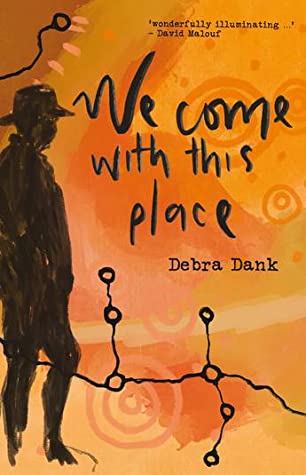
Back in January I reviewed two stories from Ellen van Neerven and Rafeif Ismail’s anthology Unlimited futures: Speculative, visionary Blak+Black fiction for Bill’s (The Australian Legend) Australian Women Writers Gen 5 Week. The stories I reviewed were the second and third in the anthology because they were the first two by Australians in it. The anthology’s first story, however, is African in origin. Titled “The River”, it is by Tuesday Atzinger, who is described in the book’s Biographical Notes as “a poet and emerging writer … [who] … explores and celebrates Afro-blackness, queerness, disability and feminism. They peddle in discomfort and their primary goal is to fling words together to make you squirm”. Atzinger currently lives in Melbourne “on the unceded lands of the Wurundjeri People of the Kulin Nations”.

“The River” is worth discussing for several reasons, but specifically because it’s the first piece in the anthology, so was, presumably, chosen for a reason. Some of that reason is explained in the anthology’s introduction, which, by the by, takes the form of a conversation between the two editors. One of the topics they discuss is the cover, which was designed by Larrakia woman, Jenna Lee. Ismail describes it as looking at “the interaction of separate cultures in the most respectful and wonderful way”, and also sees it as suggesting “infinity”. It does, doesn’t it. Van Neerven adds that it also reflects “the movements of water” in the anthology. She says:

We were going to begin the anthology with water to allow those kinds of threads of connection and continuation to flow into each other. For me the cover really kind of feels like rivers connecting and the light that is created through water, but it’s also water that we protect and have a relationship and a responsibility to.

Water! Such a complex element in our lives. Most of my friends adore the sea, but for me it’s the rivers that draw me most. They can be young, direct, and fast, or slow, meandering, and somehow wise, or anything inbetween. They can be critical to creation stories, and this role is part of Atzinger’s opening story, making it particularly appropriate as the opening piece.

The first thing to say about “The River” is its form – it is a short story in verse. The River is not named, but we know it’s in Africa, partly because an African word, Ubuntu, is repeated throughout the story: “Ubuntu/Together”. According to the New World EncyclopediaUbuntu pronounced [ùbúntú], is a traditional African concept. The word ubuntu comes from the Zulu and Xhola languages, and can be roughly translated as “humanity towards others”.’ It has been adopted more widely around the world for its humanistic concepts – and is also, would you believe, “used by the Linux computer operating system” to convey the sense of bringing “the spirit of Ubuntu to the software world”. Valid appropriation? I didn’t find much concern about this use on the ‘net.

Anyhow, to the story itself. We are immediately introduced to the River, and a village that lies near it. The word “prosperous” is used, but we are warned that things aren’t so simple:

Shallow water so clear that the stones beneath it glistened brightly
Depths dark and mysterious, hiding all that lay below
The River, ever a source of sustenance
                                                                      And of danger

The story starts with creation: “Eons ago/The River had rippled in welcome as the people first arrived”. It provided refuge and sustenance; it saw “passion, grief, joy and courage”; it saw, in other words, the life of the community, of “the people who slept under the sun”. It had also seen “a lineage of Chiefs/Some wise, some brave, some imperious” until the present one “Mehluli – the Warrior Chief”. He is described in words like “proud”, “arrogant”, “dominating” and “greedy”. He desires a woman, Thandeka, but she already has a “perfect love” with Amandla, a hunter. Amandla fears the River, fears the aformentioned danger, and while she’s away hunting her fears are justified when the Warrior Chief makes his move on Thandeka.

The problem is that you “cannot refuse the chief”. Violence ensues. The River acts in an unusual way, and a dramatic story follows as Thandeka fights back, as does the River, to right the balance that has been disturbed. It is, ultimately, a story with a moral, a story to teach proper behaviour, right values.

The story is told in a beautiful, poetic style. The changing rhythms and strong use of repetition convey elemental and opposing tones – prosperity and togetherness versus power and greed. “The River” is a thoroughly enjoyable read. It is founded in the sorts of lesson-giving stories that are part of most belief systems, but its queer-love narrative brings the story and its traditional message into modern thinking and times. A worthy first story for the anthology, I think.

Tuesday Atzinger
“The river”
in Ellen van Neerven and Rafeif Ismail (ed.), Unlimited futures: Speculative, visionary Blak+Black fiction
North Fremantle: Fremantle Press in association with Djed Press, 2022
pp. 23-41
ISBN: 9781760991463 (eBook)

Leslie Marmon Silko, The man to send rain clouds (#Review)

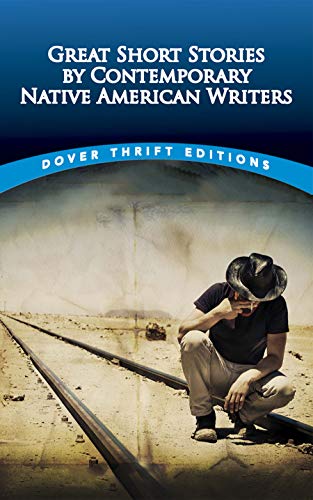
After a two-month hiatus, I return to my reading from Great short stories by contemporary Native American writers with a three-decade jump from D’Arcy McNickle’s 1936-published “Train time” to Leslie Marmon Silko’s “The man to send rain clouds”, which was published in 1968 .

Leslie Marmon Silko

Again, I’m using anthology editor Bob Blaisdell’s brief intro and Wikipedia’s article to introduce the author. According to Wikipedia, Leslie Marmon Silko (b. 1948) is one of the key figures in “the First Wave of what literary critic Kenneth Lincoln has called the Native American Renaissance“. I don’t know much about the trajectory of Native American writing, within the larger American culture, so this gives me a bit of a guide to how it has gone.

Silko was born in Albuquerque, of Laguna Pueblo ancestry, and grew up on the Laguna Pueblo reservation – which I visited with my family on a memorable road trip through New Mexico in December 1991. (For those of you who haven’t been to New Mexico, I recommend it as a special place to visit – physically, historically and culturally.) Silko, says Wikipedia, was schooled at local Indian schools, before attending the University of New Mexico from which she graduated with a BA in English Literature, in 1969. She then briefly attended law school, before deciding to pursue a literary career full-time, which has included teaching at several universities.

This post’s short story, “The man to send rain clouds”, was published while she was an undergraduate. It earned her a National Endowment for the Humanities Discovery Grant, and continues to be a popular anthology choice, apparently. She has, since then, written several novels, a “poetic memoir”, and many essays. In one of those essays, Wikipedia says, she criticised Louise Erdrich for abandoning “writing about the Native American struggle for sovereignty in exchange for writing “self-referential”, postmodern fiction”. Interesting. I’ve only read two books by Erdrich, and one so long ago I can’t recollect the details, but The bingo palace (1995) does confront the challenge of marrying tradition with contemporary life.

Blaisdell’s introduction includes a statement by Silko on why she writes, which is

to find out what I mean. I know some of the things I mean. I couldn’t tell you the best things I know. And I can’t know the best things I know until I write.

I understand what she means here. I don’t find talking easy. I find it easier through writing to work out what I know and mean.

“The man to send rain clouds”

Wikipedia summarises Silko’s themes as being grounded in a wish “to preserve cultural traditions and understand the impact of the past on contemporary life”. Her career, it says, “has been characterised by making people aware of ingrained racism and white cultural imperialism”. Many of her characters “attempt what some perceive a simple yet uneasy return to balance Native American traditions survivalism with the violence of modern America”. This is all part of a continuing theme in the Southwest regarding “the clash of civilisations” and “the difficult search for balance that the region’s inhabitants encounter”. Much of this is already evident in this early short story of hers.

“The man to send rain clouds” concerns the interaction between Pueblo Indians and Christianity. It reminded me in a small way of Marie Munkara’s Every little thing (my review) except that Munkara’s is a full-length and often laugh-out-loud work versus Silko’s more wry short story. However, both show the power-play between the original people of a land and the churches that came in to save them, and also how the oppressed First Nations people can sometimes, at least, work it to their advantage.

Silko’s story concerns the death of an old man, Teofilo. It opens with his body being found under a “big cottonwood tree” by brothers-in-law Ken and Leon. It describes their going through some traditional death rites, including preparing the old man’s body with face-paint, before bringing him back to the pueblo. It’s here that the title is explained: they say to the old man, after scattering cornmeal, “Send us rain clouds, Grandfather”, which specifically introduces the importance of rain to them and suggests its role in their rites. On their way back into the pueblo, they meet the priest who asks whether they had found Teofilo, but they give a noncommittal reply, telling him that “everything is OK now”. When the priest replies that they “shouldn’t allow him to stay at the sheep camp alone”, they continue with their obfuscation:

“No, he won’t do that any more now”.

I loved Silko’s subtle use of humour in the story. In this brief conversation, Silko sets up exactly how the locals deal with the priest, politely but also determined as much as possible to keep him out of their business. The rest of the story concerns their funeral business, including another delightful encounter with the priest when one of the pueblo’s members feels that some “holy water” wouldn’t go astray.

It’s a quiet story, but a strong one. The tone is measured, the pace unhurried, mirroring the values and attitudes of the pueblo people who are doing their best to preserve their customs while maintaining peace with those who have the power. The same tone is used for the priest’s non-confrontational response, and his own decisionmaking, reflecting, presumably, his need to work with rather than against the people. It’s a story ripe for discussion.

The imagery is beautiful, evoking the snow-capped mountains, the arroyos, mesas, and sandy flats that characterise that part of New Mexico. There is a strong use of colour, which is mostly muted, supporting the tone, with a touch of red to herald something bigger. And of course there’s the rain motif that runs through the story, reflecting its importance to the pueblo’s survival.

A moving story, that I commend to you. It’s a quick read.

Leslie Marmon Silko
“The man to send rain clouds” (orig. pub. 1968 under the name Leslie Chapman)
in Bob Blaisdell (ed.), Great short stories by contemporary Native American writers
Garden City: Dover Publications, 2014
pp. 45-49
ISBN: 9780486490953

Available online via the University of New Mexico.

Slow reading: Jane Austen’s Pride and prejudice

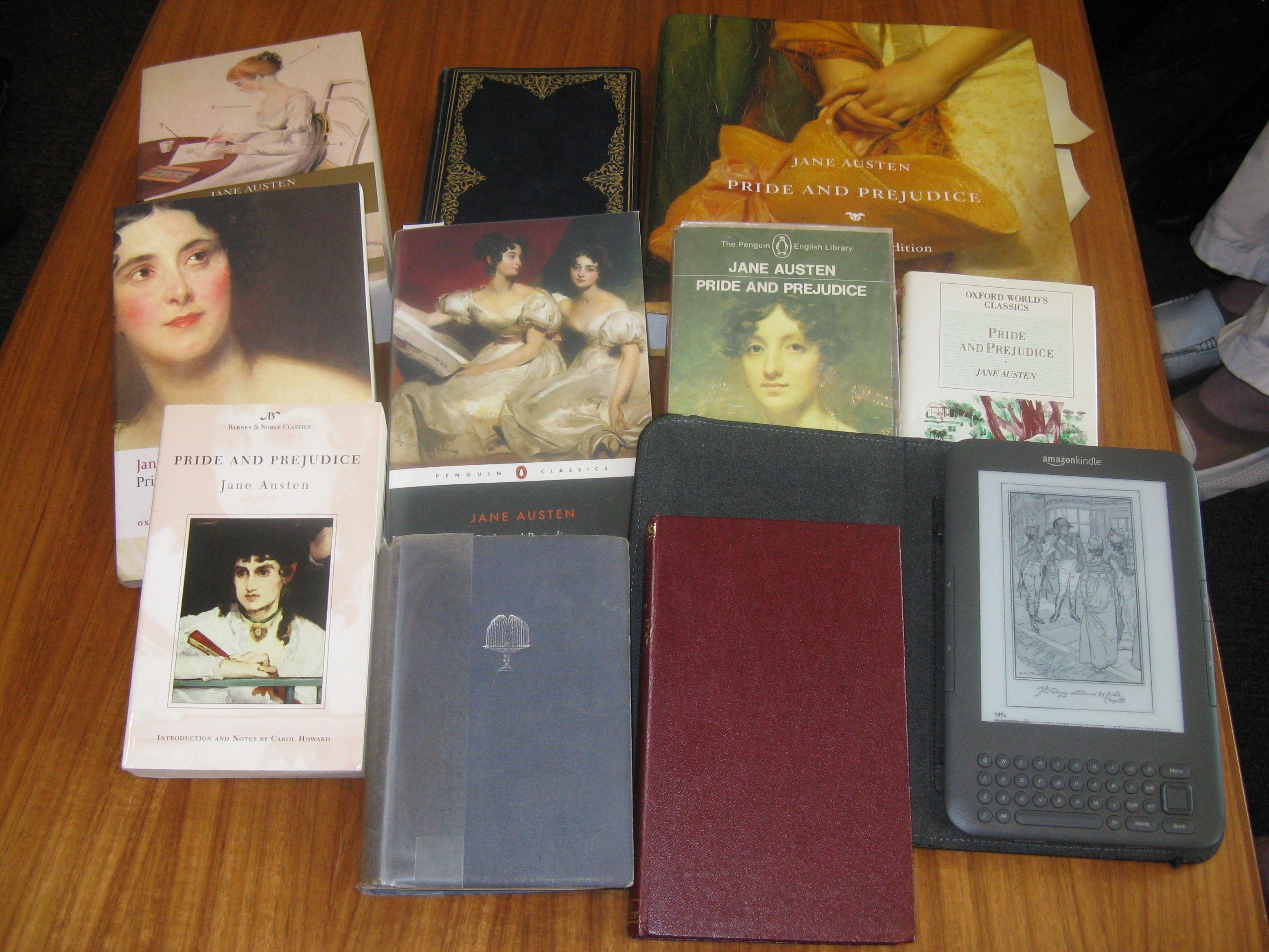
Pride and prejudice book covers
Some of the editions of Pride and Prejudice owned by my JA group

Back in the early to mid-2010s, my local Jane Austen group undertook a program of slow reading Jane Austen’s novels, coinciding with those books’ 200th anniversaries. Given that began around a decade ago, we decided last year that it was time to do another slow read program, and to stick with a chronological approach – that is, chronological in terms of publication. This meant that we did Sense and sensibility last year, and have just completed this year’s book, Pride and prejudice.

It is truly amazing just how much “new” we can find to talk about with books most of us have read not once, not twice, but multiple times, proving I suppose Italian writer Italo Calvino’s definition of a classic. Hmmm, no, not “definition” but “definitions”. He has fourteen of them, but here are the two that are most applicable to my post:

4. A classic is a book which with each rereading offers as much of a sense of discovery as the first reading.

6. A classic is a book which has never exhausted all it has to say to its readers.

These explain why slow reads can be particularly enjoyable with classics: once you know the plot, you are freed to discover how the author did it, to think about why they did it, and to notice more of the things they were telling you that you didn’t notice on the first read in your rush to find out what happens.

So, over the last three months, my group’s discussions have ranged across all of these, including finding some questions that we hadn’t thought to ask before. In Austen there are always those things she doesn’t tell us because they were known to her audience. These are the things we gradually pick up over years of Austen reading and research, such as the entail. But on this read, members raised questions regarding plot events that many of us hadn’t thought to ask before. For example, when Mr Darcy tells Elizabeth, on their meeting accidentally at Pemberley, that his sister “wishes to be known” to her, we wondered what had he told her about Elizabeth? Had he unburdened his heart to this shy young girl? Or, was it just an excuse to encourage Elizabeth to hang around a bit longer? And, when Lady Catherine visits Elizabeth because she fears there’s an engagement (or “an understanding”) between her and Darcy, where had she got this idea from?

We also found – yet again – that we had changed our minds about some of the characters, though sometimes these were diametrically opposed. For example, one remembered that when she first read the book as a schoolgirl, she felt “enormously sorry for ‘poor misunderstood Mrs Bennet’” but now she “would willingly strangle her”. For me, it’s the opposite. I had little sympathy for Mrs Bennet in my first readings, but now, understanding her worries about her daughters’ futures and Mr Bennet’s negligence in providing for them, I feel some sympathy for her – though her behaviour, all the same, is ridiculous. By contrast, in my early readings of Pride and prejudice I was far more sympathetic to Mr Bennet than I am now.

In fact, many of us in fact had little epiphanies regarding different characters that we shared with the group. Sweet Jane Bennet was thought just far too saccharine by one member, but she read some analyses that likened the angelic Jane to the sentimental 18th century heroines. Philosophers David Hume and Adam Smith argued, she told us, that feeling rather than reason provides the grounding for morality – and Jane exemplifies this. She sympathises with everyone, and behaves graciously to all. Our member wondered whether she should temper her view of Jane – though by the end she still felt Jane was just “too nice (to be real)”.

Some of these changes are due to the way slow reading exposes subtle clues that we don’t see on early reads, but some, I’m sure are due to life experiences. Austen is the perfect writer for illuminating (and then informing) our individual experiences of life.

We discussed which characters changed over the course of the novel, and, surprise, surprise, we didn’t all agree. No, let me rephrase that: we all agreed that Elizabeth and Darcy change, but some felt Mr Bennet did too, while others of us felt not – or, perhaps, only for a moment!

And then there’s the writing and the plotting. On each read we find more examples of just how beautifully, and cleverly, Austen writes. As one member said this week, as soon as he starts reading her sentences he’s drawn in – more than with any other writer. And then he shared a funny little quote from the novel that I had picked out too. It’s when Elizabeth first sees Pemberley from the outside, and takes in its beauty and grandness,

and, at that moment she felt that to be mistress of Pemberley might be something!

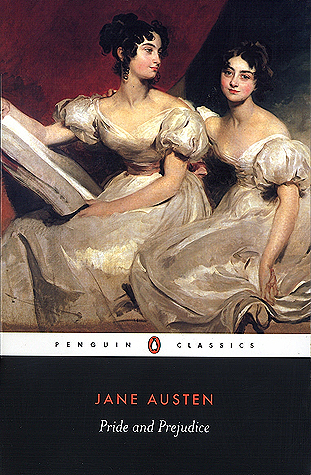
Book cover

Such an understatement … but of course the novel is full of statements like these, of satire and little ironies, of big and little insights. We also found interesting parallels, such as between those two ridiculous women, Mrs Bennet and Lady Catherine, who, said one member, are silly and illogical in different ways. Which brings me back to sweet Jane. Writing to Elizabeth to tell her about Lydia’s running off with Wickham, she says of her mother’s overwrought behaviour that “Could she exert herself, it would be better; but this is not to be expected.“But this is not to be expected” tells us that Jane knows her mother very well – and more, I’d argue, that Jane, while generous towards people, is not so taken in that she doesn’t see what’s what when it’s there in front of her. She just gives people the benefit of the doubt. I like that.

I fear this has been a self-indulgent ramble that hasn’t said much of substance, but it’s the best I can do right now!

Meanwhile, to those of you who do slow reads, why do you like doing them, and what you most get out of them?

Jane Austen on travel

It’s been some time since I posted on Jane Austen, but currently my local Jane Austen group is repeating the slow reads we did a decade or so ago when her novels had their 200th anniversaries. Last year, we did Sense and sensibility, and right now we are doing Pride and prejudice.

There are different ways of doing slow reads, as I know many of you are aware because you do them yourselves. Our way is to read and discuss a volume a month, based on the fact that back in Austen’s day novels tended to be published in three volumes, which makes the volume an excellent demarcation for slow reading. So, last month, we read Volume 2 of Pride and prejudice, or Chapters 24 to 42 in modern editions. This volume starts just after the Bingley retinue has moved to London, and it includes Lydia’s going to Brighton and Elizabeth’s visit to Hunsford, where she receives Darcy’s (first) proposal. The volume ends with her arrival in Derbyshire, in the company of her aunt and uncle, the Gardiners.

As those of you who engage in slow reading know, there are many pleasures to be gained from it, and the pleasures are magnified (with great books anyhow) when you slow read a book you’ve read before because, knowing the story, you can glean so much more. Most of us have read this novel many times, but we are always surprised to find something new in our next re-read. What particularly struck me about volume 2 this read was that it is really about “the education of Elizabeth“. She starts this volume being quite prejudiced. She is very sure of herself regarding Wickham’s and Darcy’s characters. She is prepared to give leeway to Wickham in the marriage stakes – that is, his marrying for money not love – but not to her friend Charlotte. But, she then sees how Charlotte has managed her life with Mr Collins, and we see what poor company her family really were anyhow! She also learns that she had misjudged Mr Darcy, and she recognises her own father’s failings. She castigates herself:

“How despicably I have acted!” she cried; “I, who have prided myself on my discernment! I, who have valued myself on my abilities! who have often disdained the generous candour of my sister, and gratified my vanity in useless or blameable mistrust! How humiliating is this discovery! Yet, how just a humiliation! Had I been in love, I could not have been more wretchedly blind! But vanity, not love, has been my folly. Pleased with the preference of one, and offended by the neglect of the other, on the very beginning of our acquaintance, I have courted prepossession and ignorance, and driven reason away, where either were concerned. Till this moment I never knew myself.” 

However, this is not the reason I chose to write this post! The reason is that I also came across a wonderful comment from Elizabeth about travel, a comment that could be as true today as it clearly was then. It comes in chapter 27, after Elizabeth had been discussing Mr Wickham’s sudden romantic interest in the heiress Miss King with her aunt Gardiner. Mrs Gardiner suggests Elizabeth accompany her and her husband on a holiday to, perhaps, the Lakes. This is Elzabeth’s delighted response:

“Adieu to disappointment and spleen. What are young men to rocks and mountains? Oh! what hours of transport we shall spend! And when we do return, it shall not be like other travellers, without being able to give one accurate idea of anything. We will know where we have gone–we will recollect what we have seen. Lakes, mountains, and rivers shall not be jumbled together in our imaginations; nor when we attempt to describe any particular scene, will we begin quarreling about its relative situation. Let our first effusions be less insupportable than those of the generality of travellers.”

I’ll leave you there, with the wisdom of our Jane!

Maggie O’Farrell, The marriage portrait (#BookReview)

I have mentioned Author’s Notes a few times recently, because I have read a few works of historical fiction. Maggie O’Farrell’s latest novel, The marriage portrait, is another historical novel and so here I am again talking Author’s Notes. The marriage portrait, as you probably already know, is based on the life of Lucrezia de’ Medici, who lived from 1545 to 1561. Her death was ascribed at the time to “putrid fever” (or pulmonary tuberculosis). However, very soon after she died, rumours started that she had been poisoned by order of her husband, Alfonso II, Duke of Ferrara. That suspicion inspired English poet Robert Browning to write his dramatic monologue, “My Last Duchess“. It was this poem and a portrait of Lucrezia that inspired the novel.

O’Farrell writes in her Author’s Note that “I have tried to use what little is known about her short life but I have made a few alterations, in the name of fiction” and goes on to explain some of those alternations and why she made them. I have always argued that historical fiction is just that, fiction. We should not read it as history, that is, we should not rely on it for the facts. However, good historical fiction will provide some truths, and we do find some in O’Farrell’s novel.

The marriage portrait is told in two alternating chronological strands, one starting with Lucrezia’s conception in 1544, and the other a day or so before her death in 1561. In these two strands we are given the whole of Lucrezia’s life. We see her growing up as a resourceful, intelligent but needy middle child in a large family where she felt different from her younger and older siblings. Presumably this is O’Farrell’s invention to enhance her isolation. And we see the last year of her marriage: its deterioration as she fails to bear an heir (to a man who went on to marry twice more without issue) and her realisation that he means to kill her. Not surprisingly, we quickly become engaged in Lucrezia and her plight. O’Farrell knows how to tug our heart strings.

“The ladies . . . are forced to follow the whims …” (Boccaccio)

When I read novels, I believe in reading everything, which here included some matter before the story starts. First is a small paragraph headed Historical Note, telling us of Lucrezia’s death and the rumours concerning it. This is followed by two epigraphs, one from Browning’s poem referring to the portrait, and one from Boccaccio’s The decameron which commences with “The ladies . . . are forced to follow the whims, fancies and dictates of their fathers, mothers, brothers and husbands …” Hence some of the aforementioned truths.

I’m not going to spend a lot of time on the novel but, overall, I found it a readable and immersive story about what was a brutal time period, particularly for women and the serving classes. (I use “serving” rather than “servant” to encompass a wider group of people.) There’s nothing particularly new here, but O’Farrell shows very clearly how women and the serving classes were pawns in the political power plays of the time, with little or nothing to protect them except, sometimes, luck – or the courage of another.

There is more, though, to the novel, than politics and power, gender and class. O’Farrell also looks at that aspect of Renaissance life that we all love, art and artists. Admittedly, politics and class have a hand here too, but Lucrezia herself (the fictional one, anyhow) is depicted as a skilled artist, and her work, materials and technique are described in loving detail. It is through her art that Lucrezia most often can assert herself, albeit that assertion must be hidden from others.

I could argue, too, that the novel suggests the way politics and power can destroy love, loyalty and affection between, in this case, marriage partners and siblings. This could be a modern reading of the situation, but I’m not completely averse to us “moderns” understanding the past through our own lens.

As for the writing itself, it’s gorgeously lush, though verges on the overdone at times. Cosimo’s tigress is described as moving “like honey dropping from a spoon”; she doesn’t “so much pace as pour herself, as if her very essence was molten, simmering, like the ooze from a volcano”. Lucrezia’s husband Alfonso is depicted as “an aquatic creature, half man, half fish, crawling up out of the shores of a river, silvered tail glistening in moonlight”. However, despite this, the rich, descriptive writing seemed appropriate for the opulence of the period. And, there is some more restrained, to-the-point writing, such as this introduction of the man whom those versed in historical fiction will recognise as the likely villain:

The man emerges, shoulder first from the branches, the papers still clutched in his hand. He makes his way through the garden but, unlike Alfonso, he doesn’t pick his way along the paths: he walks through the flowerbeds as if they aren’t there, striding over the low green hedges, through the blooms, scattering bees and petals in his wake. Here is a man, Lucrezia thinks, as she eyes his progress, who waits on no one, who lets nothing get in his way.

His name is Leonello, and Lucrezia recognises him for what he is.

O’Farrell is an experienced writer, so the novel is carefully plotted and structured. I enjoyed her use of parallels to foreshadow later actions. The strangling of the guard Contrari, for example, heralds a later strangling, and our tigress is described by Lucrezia as “a creature captured against its will, a creature whose desires have all been disregarded”, which mirrors her own experience later.

The marriage portrait is not a subtle novel, and it does play somewhat with the historical record, as discussed in the Author’s Note. It’s also excruciatingly brutal at times. But, I did become engrossed in the era and invested in Lucrezia’s plight. A moving read. 

Note: This book was my reading group’s April selection, but due to a COVID-risk I did not attend the meeting.

Maggie O’Farrell
The marriage portrait
London: Tinder Press, 2022
438pp.
eISBN: 9781472223869

Stella Prize 2023 Winner announced

The 2023 Stella Prize winner was announced tonight and, for the second year in a row, it’s a poetry collection …

Sarah Holland-Batt’s The jaguar

Darn it! I nearly bought it last weekend when I was at the National Library but with my move and having stuff everywhere, I put it back down again and thought, maybe later. I guess it’s now not “maybe” but “yes later”. However, I’m pleased to share that a couple of bloggers I know have already read and reviewed it – like Kim at Reading Matters and Jonathan at Me fail? I fly! Check their posts if you are interested.

The judges said that The jaguar “investigates the body as a site of both pleasure and frailty”. The panel chair, Alice Pung, expanded on this saying that

… This is a book that cuts through to the core of what it means to descend into frailty, old age, and death. It unflinchingly observes the complex emotions of caring for loved ones, contending with our own mortality and above all – continuing to live.

It’s a response, I understand, to the death of Holland-Batt’s father. Those who have followed my blog for a while will understand, then, why I really would like to read it. Stella CEO, Jaclyn Booton, describes it as “a gift of a book” that “examines questions of grief and memory and care”.

You can read more on the Stella website, including an excerpt from Sarah Holland-Batt’s acceptance. She commented that she was “thrilled to enter into the company of the extraordinary writers who have received the Stella” and also said:

“It’s both an indescribable joy and a deep honour to receive the Stella Prize for The Jaguar. I wrote this book during an intensely challenging period, as my father was dying, and just after. It was the friendship, generosity, and camaraderie of women that not only saw me through this difficult time, but that has been the sustaining armature of my writing life.

Just to remind you, the judges were author Alice Pung, in the chair, with her co-judges bibliophile and host of The Garrett podcast (among many other roles) Astrid Edwards; essayist and literary critic BeeJay Silcox; writer, editor, broadcaster, and Walkley award-winning journalist Jeff Sparrow; and First Nations poet, essayist and legal advisor Alison Whittaker.

I have read eight of the ten previous winners: Carrie Tiffany’s Mateship with birds (2013, my review), Clare Wright’s The forgotten rebels of Eureka (2014, my review), Emily Bitto’s The strays (2015, my review), Charlotte Wood’s The natural way of things (2016, my review), Heather Rose’s The museum of modern love (2017, my review), Vicki Laveau-Harvie’s The erratics (2019, my review), Jess Hill’s See what you made me do (2020, my review), and Evelyn Araluen’s Dropbear (2022, my review).

Thoughts anyone?

Eleanor Limprecht, The Coast (#BookReview)

I love to read Author’s Notes, Afterwords, or whatever they are called, at the end of novels, and particularly so when the novel is historical fiction. This is because these notes will often explain the author’s thought process, the line they have drawn between fiction and fact, the sources used, the level and type of research undertaken, and so on. It helps me understand “how” to read the book, if that makes sense. I was consequently pleased that Eleanor Limprecht had provided such information at the end of her fourth novel, The Coast, which is set in the former Coast Hospital lazaret in Little Bay, Sydney. This hospital was established in the 1880s for the treatment of infectious diseases, including small pox, tuberculosis, and the subject of this novel, leprosy (or Hansen’s Disease).

The Coast is set primarily in the first three decades of the twentieth century, and focuses on the story of Hilda/Alice who is nine when she is brought to the lazaret. However, while she provides the novel’s narrative and emotional centre, hers is not the only story told. We hear about other members of her family, including her mother Nellie/Clea who is at the Coast when she arrives. We also hear about one of the Hospital’s doctors, Will Stenger, who takes special interest in his lazaret patients. And, we have a story that somewhat parallels Alice’s, that of Jack/Guy, a Yuwaalaraay man, who also ends up at the lazaret, though not until he is an adult. I should explain here the dual names: leprosy patients would be given (or choose) a new name when they entered the hospital because, as Alice’s mother tells her, it’s better for their family if they disappear, “it’s better that no-one can find us”. Leprosy, at the time, was a reviled disease and sufferers were secluded under the Leprosy Act of 1890.

What author afterwords tell us

So, Limprecht’s words. I wanted them because I wanted to know whether she would address her First Nations character and, of course, being the thorough historical fiction writer she is, she does indeed discuss the issue. She had advice and feedback from Yuwaalaraay reader Nardi Simpson (whose Song of the crocodile I’ve reviewed) and Gamilaraay and Yuwaalaraay reader Frances Peters. She visited Angledool, Jack’s home, with the help of local First Nations people, and was shown around the Goondee Keeping Place at Lightning Ridge by First Nations people there. Her manuscript was also read by First Nations people associated with the La Perouse Aboriginal Land Council. All this supports my sense that she has rightly and respectfully included First Nations experience in her story.

Limprecht’s words provide other insights too, but I’ll mention just two of them. One is that she acknowledges various grants, including the Neilma Sydney Literary Travel Grant (see my post), which helped her visit another lazaret location, Peel Island. The other is that she acknowledges the History of Medicine Library at the Royal Australasian College of Physicians where she “found the records that inspired this story”. This interested me because the story contains many details about the lives of the patients at the lazaret, details that were so specific that I felt (and hoped) they were based on documented records – on reports, letters, and so on. This suggests that they were.

“nothing to look forward to” (Alice)

Limprecht also tells us in her words that she got the idea for this novel while researching her second novel, Long Bay (my review), making it before 2015. However, she also tells us that she finished writing it during the pandemic, which helped her “consider the continuing repercussions of stigmatising illness and the long-term effects of isolation”.

So now, the novel itself. The story is told in first person and third person voices – Alice’s in her voice, with the stories of the other three in third person. These four stories are interspersed with each other, and are told chronologically, but each starts at a different point in time, beginning with Jack (1905), then Alice (1910), Nellie (1892) and Will (1910), until they coalesce in 1926. Jack’s story encompasses his experiences as a stolen child and a soldier in the Middle East in World War 1. Through him, Limprecht ensures that First Nations’ lives are part of the life of the time she’s chronicling, something that many of our majority-culture-written histories and historical fiction have consistently omitted.

Jack’s story – of being taken from his family, returning to it, going to war and returning as an amputee who soon after ends up at Peel Island – conveys not just these facts, but the emotional impact of being stolen, of displacement, of racism (albeit his injured returned soldier status sometimes earned him begrudging recognition.) By sending him to Peel Island, Limprecht also documents the differential treatment at that lazaret between “white” and “others” (or, the “coloured camp”). This is a difference that he does not experience at The Coast under the more humane Dr Will.

Alice’s story follows, presumably, a typical trajectory of those who were isolated at a young age and spent the rest of their lives that way. (It’s a coming-of-age story as moving and as tragic as that of Anne Frank’s real one). As quarantine places go, The Coast lazarets – men’s and women’s – are humane. The patients live in cottages, they have access to a beach where they can swim and fish, and they can socialise with each other (though the women’s lazaret does not have a communal cottage like the men’s has!) But, “it’s no place to grow up”. Alice is an intelligent young woman, who quickly engages us with her warmth and honesty, but she also articulates the physical and emotional experience of this disease. Told first person, her story of resilience and resignation carries the novel.

Nellie’s and Will’s stories add additional depth and breadth to the lazaret community and thus the history. Both appear in the epilogue dated 1967. It didn’t feel narratively necessary to me, but historically it rounds out how leprosy treatment progressed and what happened to the Coast lazaret.

The coast is the sort of historical fiction I like, a well-researched, expressively-written story about an historical time and place I know little about, one that is worth knowing. It reminds us how far we have, or haven’t, come in our management of feared diseases, like AIDS, like COVID-19. It evokes with warmth and clarity the costs of ostracism and isolation. And, it puts First Nations people into the historical frame – naturally. A good read.

Lisa (ANZLitLovers) also liked this novel.

Eleanor Limprecht
The Coast
Sydney: Allen & Unwin, 2022
319pp.
ISBN: 9781760879402

(Review copy courtesy Allen & Unwin)

Zitkala-Sa, The soft-hearted Sioux (#Review)

Zitkala-Ša’s “The soft-hearted Sioux” is the second story in the anthology, Great short stories by contemporary Native American writers, sent to me by my American friend. I posted on the first one, Pauline Johnson’s “A red girl’s reasoning”, a couple of weeks ago.

Zitkala-Ša

As he does for all the stories, anthology editor Bob Blaisdell provides a brief intro to Zitkala-Ša and her story. Also known by her married name, Gertrude Simmons Bonnin, Zitkala-Ša (1876-1938) was born at the Yankton Sioux Reservation in South Dakota. She was educated at a Quaker missionary school and then, because she wanted to be more than the presumed-for-girls job of housekeeper, she went to the Quaker-run liberal arts school, Earlham College. She went on the teach at the Carlisle Indian Industrial School. As with Johnson, Wikipedia fleshes out the details. It tells us that she hated being stripped of her culture at the Quaker missionary school, that she learnt piano and violin there, and that when she graduated from it in June 1895, “she gave a speech on the inequality of women’s rights”.

Wikipedia chronicles her life well, so do read it if you are interested. I’ll just add here that, it introduces her work with: “She wrote several works chronicling her struggles with cultural identity, and the pull between the majority culture in which she was educated, and the Dakota culture into which she was born and raised. Her later books were among the first works to bring traditional Native American stories to a widespread white English-speaking readership”. And it concludes that her “legacy lives on as one of the most influential Native American activists of the 20th century”.

Regarding “The soft-hearted Sioux”, Blaisdell explains that “it is narrated by a young Christianised man who returns to his Sioux reservation as a missionary” at which time his father says to him that “your soft heart has unfitted you for everything”. In this story, in other words, Zitkala-Ša exposes some of the iniquities of colonialism.

“The soft-hearted Sioux”

According to Wikipedia, Zitkala-Ša had a fruitful writing career, with two major periods, the first being 1900 to 1904, during which our story was published. In this period, she published legends from Native American culture – which she apparently started collecting while she was at Earlham – and autobiographical narratives. “The soft-hearted Sioux” has an autobiographical element, I guess. The protagonist is male, and I don’t believe she returned from college a missionary, but she did go to a Christian school. Other stories published in this time were clearly more autobiographical: “An Indian teacher among Indians”, “Impressions of an Indian childhood”, and “School days of an Indian girl” (all in 1900).

The story is told first person. At the opening, our narrator is in his “sixteenth year” and is sitting in the family’s teepee with his parents on either side of him, and his maternal grandmother in front. The grandmother is smoking a “red stone pipe” and it is passed around as they provide him with advice. It is time for him to find a woman, to learn to hunt and bring home meat, to become a warrior. We then jump nine years. He had not, he tells us, grown up to be “the warrior huntsman, and husband” expected of him. Instead, the mission school had taught him that killing was wrong. For “nine winters” he had “hunted for the soft heart of Christ, and prayed for the huntsman who chased the buffalo on the plains.” In the tenth year, he is sent back to his tribe

to preach Christianity to them with the white man’s Bible in my hand and a white man’s tender heart in my breast.

He no longer wears the buckskin clothes and blanket on his shoulders as he does at the opening. Now, “wearing a foreigner’s dress”, he walks “a stranger” into his father’s village.

The story then is about the impact and implications of assimilation, the dislocation it causes for both individuals and society. Our young man, thoroughly inculcated with Christian thought, arrives home to find his father ill, and being tended by the “medicine-man … the sorcerer of the plains”. He is disturbed about his father’s “unsaved soul” and tries to banish the “sorcerer”. So begins his life as a missionary. He knows it will be hard, but is confident he will succeed. I’ll leave the story there, as you can read it online (link below) but, knowing who is writing this story and why, you won’t be surprised to discover that he doesn’t succeed. The story is sentimentally told, in the style of the time, but its subject-matter is strong and emotive. Zitkala-Ša uses the motifs of the opposing Native American and Christian cultures well – the dress and customs, the knife of the brave versus the soft heart of the Christian, with softness here, equating less with gentleness than with weakness – to make her points.

Zitkala-Ša, herself, of course, was Christian-educated like her protagonist, but she went on to use the tools of that education to fight for the rights of First Nations people. She did that in various ways, including through politically activism. She was involved with the Society of American Indians (SAI) which, says Wikipedia,”was dedicated to preserving the Native American way of life while lobbying for the right to full American citizenship” and went on to found, with her husband, the National Council of American Indians. She also actively promoted women’s rights, through a grassroots organisation for women, the General Federation of Women’s Clubs.

But, an important part of her activism was through her writing. By publishing stories like “The soft-hearted Sioux” in majority-culture journals, like Harper’s Monthly and Atlantic Monthly, she hoped, I believe, to educate that culture in its impact on her people. The story is still worth reading today. Its style is dated, lacking some of the subtlety and nuance we are used to, but it nonetheless conveys truths that still stand and it provides us with a window on how long this fight has been going on. I’m loving being introduced to new-to-me writers and activists, like Pauline Johnson and Zitkala-Ša, through this book. They are women well worth knowing about.

Zitkala-Ša
“The soft-hearted Sioux” (orig. pub. Harper’s Monthly, March 1901)
in Bob Blaisdell (ed.), Great short stories by contemporary Native American writers
Garden City: Dover Publications, 2014
pp. 17-24
ISBN: 9780486490953
Available online at upenn

Monday musings on Australian literature: A letter from Mary Gilmore

Gilmore, by May Moore, 1916 State Library of New South Wales (Public Domain)

Mary Gilmore (1865-1962) is, I suspect, not well-known outside of Australia, but she was (is) a significant Australian poet – so significant that she earned herself a dame-hood! Wikipedia describes her as “an Australian writer and journalist known for her prolific contributions to Australian literature and the broader national discourse. She wrote both prose and poetry.” If you are interested in her, check out W.H. Wilde’s excellent entry in the Australian Dictionary of Biography.

Given my recent posts featuring AG Stephens, I will share though that Wilde tells us “she had a long-sustained correspondence with Alfred George Stephens of the Bulletin and was delighted to have her life and work featured in the ‘Red Page’ on 3 October 1903″. I have often thought about writing more about her because she was a mover and shaker in the literary world, as well as being politically radical. In fact, she was a member of the Australian Utopian colony that was established in Paraguay in 1893, about which I’ve written a Monday Musings post. I will write more about her – but today’s post is more personal.

As some of you know, I am in the throes of serious downsizing from a large family home to a three-bedroom apartment. With all of our nearest family now in Melbourne, we are making more trips there, so need to simplify our lives here. It’s a painful process, but there are delights along the way – and today I’m sharing one of them.

Way back in the 1990s, when my lovely mother-in-law downsized to a retirement village, we became the custodians of some family papers which included some from her father-in-law, Mr Gums’ grandfather. He was William Farmer Whyte, a journalist and author of some standing in his time. He wrote a biography of the controversial Australian prime minister, William Morris (Billy) Hughes. He was active in the literary scene of the day – and knew Mary Gilmore. Mary Gilmore was, apparently, a prodigious correspondent, and we have a letter from her to him. I read this letter when those papers were passed to us, but it came to light again during my current sorting. I thought I’d share it with you.

Hotel Wellington
Canberra, F.C.T.
5.12.1929

Dear Mr Farmer Whyte,

How kind of you! And what’s more the article is a good one. I hate the sloppy or the feeble, and there is so much of that. Consequently, yours is doubly appreciated.

While I think of it I would like you to see Mr Watt’s letter on Hugh McCrae in the “S.M.H”. If you wanted a good subject Hugh is one indeed. We are pushing him forward into lectures of remembrances of other writers. So it might serve you something if you were to cut out Watt’s or any other letter on him just now. I have just posted one to the “S.M.H” which shd appear in a few days – unless they sit down on it. I had suggested to the Literature Society here that Hugh be asked up as their guest speaker, as they asked Brereton and me. They ought to ask you to give a pressman’s talk! I will suggest it if you will let me – or whether or no, as you can only refuse if you do not want to talk.

Am just awaiting Mrs Scullin and must hurry to end or be unpunctual.

Again thanking you

Yours gratefully

Mary Gilmore

A poem was also included with the letter, but I’ll save that for another time. I have tried to find the (non-sloppy, non-feeble) “article” Farmer Whyte wrote but so far no luck, even though the date is presumably late 1929.

Notes on names in the letter:

  • S.M.H.: The Sydney Morning Herald newspaper.
  • Hugh McCrae: Australian poet, 1876-1958.
  • Literature Society: possibly refers to the Fellowship of Australian Writers of which she was a co-founder in 1928 (see my Monday Musings on that).
  • (John Le Gay) Brereton: Australian poet, critic and Professor of English (1871-1933).
  • Mrs Scullin: wife (1880-1962) of Australian Labor Prime Minister, James Scullin.

The reference to Mrs Scullin is interesting but not surprising. Less than two months before Mary Gilmore wrote this letter, James Scullin had led the Labor Party into power, and Gilmore was a Labor Party stalwart. Regarding her dame-hood, Wikipedia says that “in spite of her somewhat controversial politics, Gilmore accepted appointment as a Dame Commander of the Order of the British Empire in 1937, becoming Dame Mary Gilmore. She was the first person to be granted the award for services to literature.”

A significant person and one I will return to.

Meanwhile, do any of you have any knowledge or experience of Mary Gilmore? Or, any letter treasures you’d like to share?

Pauline Johnson, A red girl’s reasoning (#Review)

As some of you know, I have a close American friend, Carolyn, with whom I correspond weekly. We met in the early 1990s when I was living in California. During that time we started a reading group, so you won’t be surprised that our correspondence always includes reference to what we are – or are not – reading. What we recently realised is that we are not reading Native American literature. I was consequently thrilled to find Great short stories by contemporary Native American writers in my last Christmas parcel from her. I have now read the first three stories but today’s post is on the first one, “A red girl’s reasoning” by Pauline Johnson.

Pauline Johnson

The anthology’s editor, Bob Blaisdell, in his brief intro to the story, writes that Emily Pauline Johnson (1861-1913) was born on Six Nations Reserve near Brantford, Ontario. Her father, he says, was a Mohawk chief, and she was related to the American novelist, William Dean Howells, on her mother’s side. Wikipedia expands on this. It describes her as a Canadian poet, author, and performer. Regarding her parents, it says that “her father was a hereditary Mohawk chief of mixed ancestry and her mother was an English immigrant”.

Blaisdell says that Johnson started writing fiction after her father died to support the family, but Wikipedia again tells us more, focusing on her significance. It says that her poetry was published in Canada, the United States, and Great Britain, and that she was “among a generation of widely-read writers who began to define Canadian literature. She was a key figure … and has made an indelible mark on Indigenous women’s writing and performance as a whole”. Unfortunately, as so often happens, her literary reputation declined after her death, but, Wikipedia says, there has been renewed interest in her since the late 20th century.

If you are interested in her, do read the Wikipedia article because it’s reasonably thorough. Meanwhile, I will move on to …

“A red girl’s reasoning”

CanLit (where you can read the text online at the link below) says that “Red Girl’s Reasoning” was first published in Montreal’s Dominion Illustrated, in February 1893, and then, later that month, as “A Sweet Wild Flower” in Toronto’s Evening Star. Interestingly, CanLit’s online text, and the version in my anthology, both give it as “A red girl’s reasoning”. CanLit gives the author as E. Pauline Johnson. All details perhaps, but they do raise questions.

So, what’s our red girl’s reasoning? The story concerns the marriage between Christine, who is mixed-race (our ‘red girl”), and Charlie, a young white man. It starts with Christine’s white father counselling his “brand new son-in-law” to “Be pretty good to her, Charlie, my boy, or she’ll balk sure as shooting”. Charlie, as any new husband should, reassures him that of course he will, “there’s no danger of much else”. And all goes smoothly – for a while. She’s an asset to him … but, hold this thought because I want to digress to something else Pauline Johnson wrote, an essay titled “A strong race opinion: On the Indian girl in modern fiction”. It was published the year before this story, in 1892 (and is also available online).

In this essay, Johnson argues that people do not equate with their race, even though there are racial characteristics. “The American book heroine”, she writes, is allowed to be an individual. She does not have to have “American-coloured eyes” or an “American mode of dying”. She is allowed “an individuality ungoverned by nationalism”. This is not the case for “the Indian girl in modern fiction”. In an aside, she makes the point re “Indian”, that “there seems to be an impression amongst authors that such a thing as tribal distinction does not exist among the North American aborigines”. She continues:

The term “Indian” signifies about as much as the term “European,” but I cannot recall ever having read a story where the heroine was describes as “a European.” The Indian girl we meet in cold type, however, is rarely distressed by having to belong
to any tribe, or to reflect any band existing between the Mic Macs of Gaspé and the Kwaw-Kewlths of British Columbia…

She wrote this back in 1892 – how much has changed? Anyhow, her point is well-made. Johnson then details the stereotyping of “the Indian Girl” in fiction. She is always “Winona” or a name that ‘has a “Winona” sound to it’; she never has a surname; and her father is always a chief (like, in fact, Johnson’s father.) Further, this “Winona” is often suicidal, even though “suicide is an evil positively unknown among Indians”. She is always in love with “the young white hero”, and will betray her own people, but he “never marries her”. There’s more, but I think you’ve got the gist. (She does provide an exception, Charles Mair’s Tecumseh, in which the Indian Girl Iena “is the one book Indian Girl that has Indian life, Indian character, Indian beauty” – but, like her stereotyped sisters, she is not allowed to live.)

Needless to say, Johnson’s “red girl” does not have a Winona-sounding name and her white hero does marry her. Not only that, she stands up for herself when … but, I get ahead of myself. Before this, there is the wedding, which, Johnson writes, was not much, but fortunately groom Charlie didn’t mind:

in his heart he was deeply thankful to escape the flower-pelting, white gloves, rice-throwing, and ponderous stupidity of a breakfast, and indeed all the regulation gimcracks of the usual marriage celebrations …

This is significant to what follows, because the crisis, when it comes, is about Indian versus Canadian (western) marriage customs. Christine’s parents were married the “Indian” way, that is, there was a feast, but no other ritual. Charlie is aghast because he suddenly realises he has married someone “illegally born”! Her response – her “reasoning” – is that if he can’t accept that her parents are married by her mother’s customs, then she can’t accept that she and Charlie are married by his. And so the rift is wrought.

The story’s progression from here is fairly typical of nineteenth century short stories, but to say more would spoil the plot. I will say, though, that Christine does not die!

Blaisdell concludes his intro to the story that “while stagy” it “achieves some degree of pathos and delivers a strong comeuppance to Christian prejudices”. Yes, it is “stagy” (or, melodramatic, as I wrote in my margin) – but that’s fairly typical of its time. And it does deliver that comeuppance. But there is more to it. There is, for example, satire of white pretentious and superiority, a mockery of white storytelling even, in the way she uses the tropes of western rich man-poor girl stories:

She was “all the rage” that winter at the provincial capital. The men called her a “deuced fine little woman.” The ladies said she was “just the sweetest wildflower.” Whereas she was really but an ordinary, pale, dark girl who spoke slowly and with a strong accent, who danced fairly well, sang acceptably, and never stirred outside the door without her husband.

You can see the tongue firmly planted in Johnson’s cheek here.

Johnson’s story made a great opening to the anthology. It is somewhat dated in style and terminology, but its core concern, cultural clash, still holds true, and it is told with a light touch and a warmth towards its characters that engaged me.

Pauline Johnson
“A red girl’s reasoning” (1893)
in Bob Blaisdell (ed.), Great short stories by contemporary Native American writers
Garden City: Dover Publications, 2014
pp. 1-16
ISBN: 9780486490953
Available online at canlit