On the literary (cultural) road, in the Top End

Last month, Mr Gums and I holidayed in the Top End (of Downunder). I’m not quite sure where the Top End ends as it is a loose description for the northern part of Australia’s Northern Territory, but I believe it encompasses all the areas we visited. For ten days, we explored Katherine and Nitmiluk National Park for the first time, and re-visited Kakadu National Park and Darwin. Besides the fact that we love exploring Australia, it provided a good opportunity to escape the cold. The maximum in our city the day we left was 7.8degC. In Darwin, that same day, it was 32degC. A little different, n’est-ce pas?

Katherine Gorge

Gorgeous gorges in Nitmiluk National Park

Landscape

The landscapes here are ancient (dating back 1650 million years and more) and are home to some weird and wonderful flora and fauna, of which the crocodile is probably the most (in)famous. Like most landscapes, they have inspired many artists: writers, painters, songwriters, filmmakers (think Jedda and Crocodile Dundee for a start) and so on. And there is a rich and fascinating indigenous culture to learn about.

Jedda Rock

Jedda Rock, Nitmiluk National Park, taken from a helicopter

We didn’t really spend much time tracking white culture in the area, as I have in my other “literary road” posts, so I will just mention Charles Chauvel’s film, Jedda. Jedda (1955) is notable for a couple of reasons. Firstly, it was the first Australian film shot in colour. But, more significantly, it was the first to use indigenous actors in leading roles – and to confront some of the implications of white colonisation on indigenous Australians. It was shot on location in the Northern Territory, with the final tragic scene being shot at what is now called Jedda Rock at Nitmiluk. However, that footage was lost in a plane crash, and the scene was re-shot in rather different landscape – the Blue Mountains just west of Sydney! As a retired film archivist, it was special to me to see this rock.

Indigenous culture

Sign re Jarwoyn Rock Art in Nitmiluk

There are stories here ...

We took as many opportunities as we could to learn more about indigenous culture, as there are far fewer prospects for doing so down south.

The best way for short-term tourists like us to do this is to join tours, particularly those which have indigenous guides – and so this is what we did. The most interesting of these tours were:

Through these, we added to our slowly growing knowledge of how indigenous people relate to country and of their food and cultural practices. We dug for yams, threw spears and ate green ants. It was all good!

As KevinfromCanada wrote in one of his posts, indigenous people tend to have a strong oral story-telling tradition, and this is the case with indigenous Australians. No only did we hear some of their creation stories – and saw rock art depicting these stories – but we also heard more recent life stories, some humorous, and some not so. This story-telling reminded me of a rather infectious book recently reviewed at Musings of a Literary Dilettante, Every secret thing by new Australian indigenous writer, Marie Munkara. I have dipped into it, as it’s currently next to my bed, and it reads like an orally told story. Anyhow, it was a real privilege to have these stories shared with us.

… and in conclusion

Crocodile in the Katherine River

...but he can smile at you!

This was our second trip up north and won’t be our last. I could ramble on more about sites seen and lessons learnt but I’d rather leave you wanting… And so, because you know I like a bit of nonsense, I will finish here with the following, rather apposite words for the Top End:

Never smile at a crocodile!
No, you can’t get friendly with a crocodile;
Don’t be taken in by his welcome grin;
He’s imagining how well you’d fit within his skin!
Never smile at a crocodile!
(Words by Jack Lawrence)
On the literary road, in north-east Victoria

Last year I wrote a couple of posts about places of literary interest that we passed through on a road trip. Here is another such post, again using The Oxford literary guide to Australia as my main source.

Yarrawonga, Vic

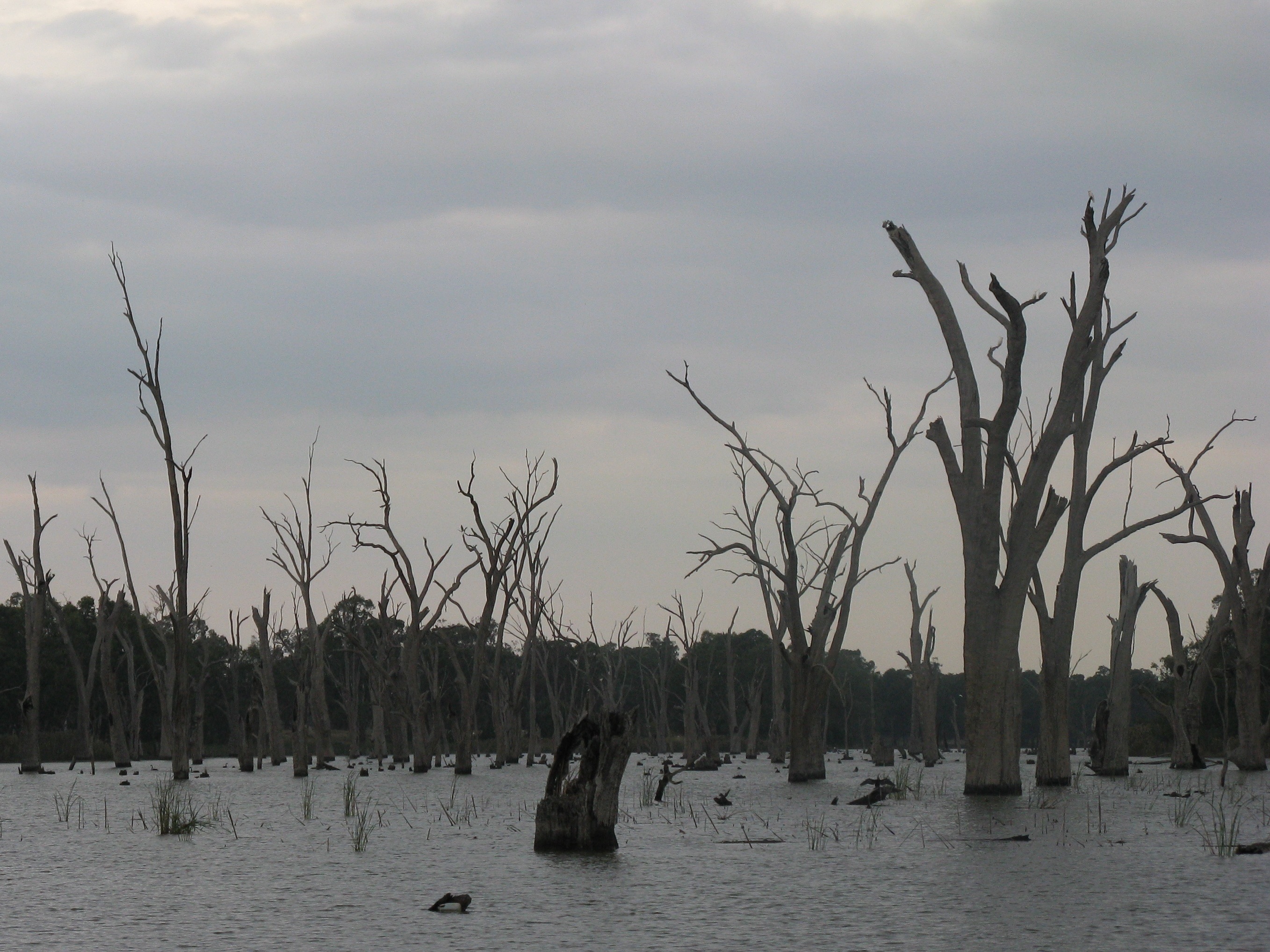
Lake Mulwala at dusk

Lake Mulwala at dusk

Yarrawonga was where, on this trip, we hit Victoria first. It is a twin town with Mulwala which is on the New South Wales side of the border. The border, here, is formed by Lake Mulwala which was created by a dam built on the Murray River in 1939. This lake is rather eerie due to the dead tree trunks protruding from its waters. This however is not its literary connection, which is, really, a bit of a far fetch. The town features in the poem, “Night vision, Yarrawonga” by Christine Churches who, from what I can see, never really lived there.  Oh well, it gets the town in the book – and these lines are rather evocative of the slow flowing Murray and its eucalyptus lined banks:

At sunset we came to the river
slow water feeding through the trees

Chiltern, Vic

Lake View House, Chiltern (built 1870)

Lake View House, Chiltern (built 1870)

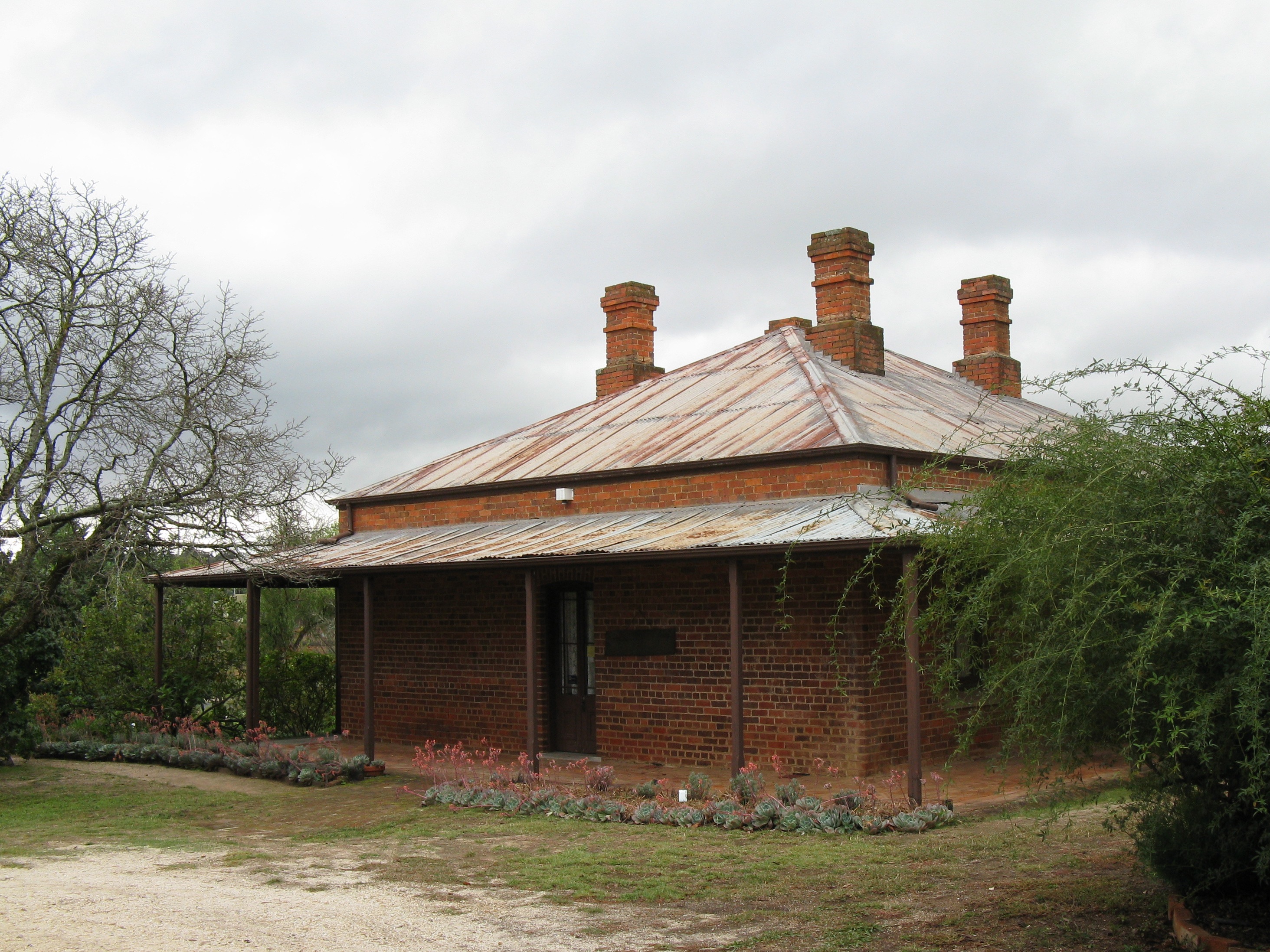
This pretty little town’s literary credential is far less arguable as the significant Australian writer Henry Handel Richardson spent part of her childhood here, and the house, Lake View, in which she lived, still stands. In her autobiography, Richardson says this is where she first smelt wattles in bloom. (For more on Henry Handel Richardson in Victoria, check out ANZLitLovers here).

Beechworth, Vic

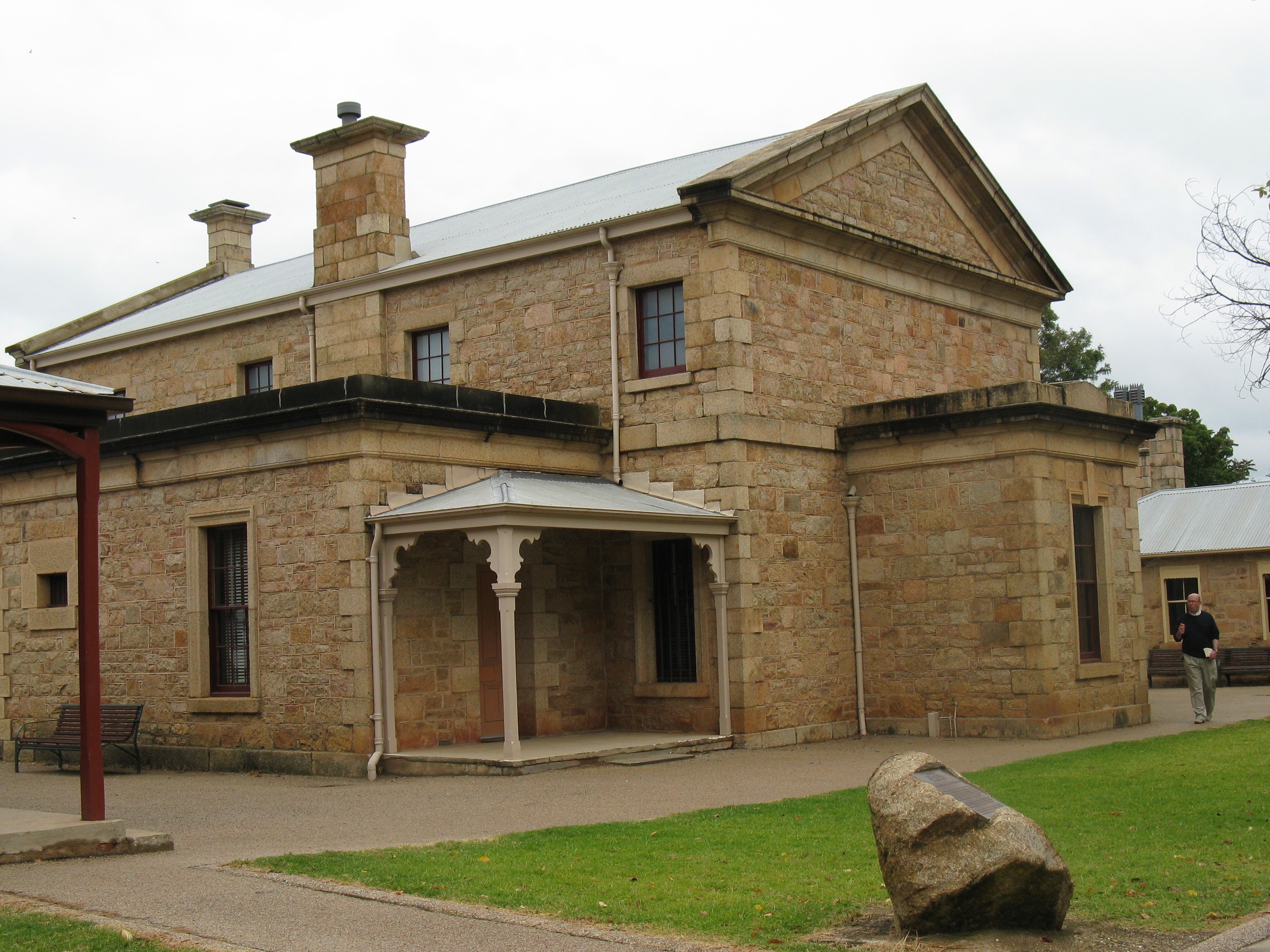
Beechworth Courthouse

Beechworth Courthouse, est. 1858, where Ned Kelly was committed to stand trial for murder

Beechworth’s big claim to fame is that the Australian outlaw, Ned Kelly, was first jailed here! However, it also has “real” literary connections as several novelists lived or visited here, including Henry Kingsley (brother of the English novelist Charles Kingsley), Mary Gaunt, Ada Cambridge, Ronald McKie and David Martin.

I’ve only read one of these, Ada Cambridge. She was a prolific writer but, like many of our early (turn of the century) women writers, receives far less attention than she deserves. She was a strong woman who often tackled issues that were close to women’s hearts but not deemed proper for the clergyman’s wife that she was. I was surprised and delighted when I first read her in the 1980s – and horrified that I had not known of her before.

Here ends the formal literary highlights of this most recent trip! Informal “literary” highlights had more to do with signs and town names. I will leave you with just one that tickled our fancy:

Road sign for Burrumbuttock

Road sign for Burrumbuttock (Photo: Courtesy Carolyn I)

Burrumbuttock, NSW, is, apparently, affectionately known as “Burrum”. Seems sensible to me!

Peter Pierce (ed)
The Oxford Literary Guide to Australia
Oxford: Oxford University Press, 1983 (rev ed)
501pp.
ISBN: 0195536223

On the literary road, in Gippsland

The Gippsland area of Victoria is a particularly rich one in terms of Australia’s literary history. It is also an area I’ve never visited before and so this week we decided to return home from Melbourne via the less common path, that is via Gippsland. Unfortunately our trip through the region was a quick one, with just one overnight stop at the pretty little fishing and tourist town of Lakes Entrance. It has whetted my appetite for a more leisurely exploration of the area in the future. Gippsland is a diverse region with plains, lakes, rivers, mountains and coastal landscapes – the sort-of “something for everyone” place that tourist guides like to promote.

Some of the authors commonly associated with Gippsland are Eve Langley, Mary Grant Bruce, Katharine Susannah Prichard and Hal Porter … Some were born there (such as Porter) and some visited there (such as Katharine Susannah Prichard), but all wrote about the region. The English writer, Anthony Trollope, also visited the area in 1872.

Eve Langley, whose novel The pea-pickers was the subject of one of my early posts, was particularly well known for extolling the virtues of Gippsland. In The pea-pickers, her two main characters travel through Gippsland – to places like Bairnsdale and Lakes Entrance – working as agricultural labourers. Steve, the main character, yearns to return to her family’s glory years as “princes” of Gippsland.

One of my favourite – though rather politically incorrect these days – childhood authors was Mary Grant Bruce. She set several of her lesser novels in the region and drew on her experiences there for her children’s series, The Billabong novels. My literary guide suggests that “the sense of escape and immersion in untouched nature”  are evident in Bruce and Langley. While clearly there is more settlement now than there was in the early to mid twentieth century when these writers were writing, there are still many wild and natural spaces to enjoy in the Gippsland.

One discovery – and a rather embarrassing one for a person who prides herself on her knowledge of Australian geography – was that it is in Gippsland that the Snowy River, of Banjo Paterson fame, has its mouth. How did I not know that? Anyhow, I was pleased to see it at its quieter end!

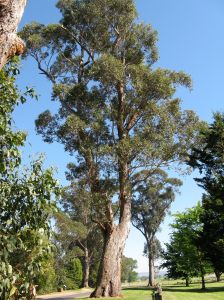
Gum tree, Orbost

Towering gum tree, Orbost

None of the region’s literary heritage was evident to the casual traveller – how I wish we celebrated our writers more. I will finish though with some lines from a poet of the region, Jennings Carmichael, as quoted in the guide under the entry for the town of Orbost:

Each soaring eucalyptus, lifted high,
The wandering wind receives;
I watch the great boughs drawn against the sky,
Laden with trembling leaves.
A soft harmonious music, full and rare,
Murmurs the boughs along–
The voice of Nature’s God is solemn there,
In the deep undersong.

On the literary road

Back in the mid 1990s I bought The Oxford literary guide to Australia. Having not looked at it for a few years, I decided to take it on our current little road trip. Two days ago, for example, we drove through Gundagai and Tarcutta, both of which appear in the guide.

The Dog on the Tuckerbox, GundagaiGundagai, NSW

Most Australians will have heard of Gundagai – there is the famous Dog on the Tuckerbox (which features in many songs and poems) and the well-known song, “Along the road to Gundagai”, by Jack O’Hagan. Its lines include:

where the blue gums are growing and the Murrumbidgee flowing.

The funny thing is that Jack O’Hagan apparently never visited Gundagai! This didn’t stop him writing other songs about the town too including “When a boy from Alabama meets a girl from Gundagai”.

There are several other songs and poems featuring the town – including by Banjo Paterson and Henry Lawson –  but the Guide says it is a mystery as to why this particular town “was such a popular inspiration for songs”. If they don’t know, I don’t know either … but it is a pretty town with a famous old bridge.

Tarcutta, NSW

Not all that far down the road from Gundagai is Tarcutta. According to the Guide it is a popular truckies stop. It also features in the poem “Under way” by Bruce Dawe:

…there would be days
banging open and shut like the wire door of the cafe in Tarcutta
where the flies sang at the windows…

Ah, the flies! Apparently in 1961 Les Murray wrote his poem “The burning truck” in the same cafe. Unfortunately, having already had coffee at Bullocky Bill’s near the Dog on the Tuckerbox, we did not test our muse in Tarcutta.

And yesterday we drove through other towns, including…

Emerald, Vic

Down in the Dandenongs east of Melbourne is the pretty little town of Emerald – quite different from the somewhat drier and dustier Tarcutta and Gundagai. It was a gold town – hmm, wonder then why it was called Emerald! Apparently Katharine Susannah Prichard spent her honeymoon here with Hugh Throssel in a cottage owned by her mother. She wrote her novel Black Opal (1921) while staying in the town in another cottage.

Vance and Nettie Palmer lived there in the early 1920s. Nettie wrote:

You could easily imagine yourself taking root there, developing a local patriotism, bringing up your children to know its history and become attached to its soul.

Having passed through, I can think of worse places to live. Vance Palmer’s novel, Daybreak (1932) is set here and in the Dandenongs in general.

Peter Pierce (ed)
The Oxford Literary Guide to Australia
Oxford: Oxford University Press, 1983 (rev ed)
501pp.
ISBN: 0195536223